“Mrs. Turner, I’m mad at you…”
This was the voice that greeted me the other morning before the first bell to begin school had even rung. I was surprised. Garrett is one of our seniors–a kid who I had taught for two years and who often called me Mom (and sometimes Dad, just to be funny). We are close, and I didn’t know why he’d be mad.
“I finished that book and now I don’t have anything to read and I can’t stop thinking about what happened in Winger and I’m mad at you.”
Ah…now I get it. You see, this young man was an avowed non-reader three years ago. He was almost proud of it–he wore it like a badge. Garrett was not alone. My classroom seemed to be filled with young men and young women who had lots of “better” things to do than to pick up a book. Many (almost proudly) said that they hadn’t read a book since they stopped AR testing in elementary school. Frustrated with lower reading scores than I thought appropriate and encouraged by industry greats like Kelly Gallagher and Penny Kittle, I was determined to change my kids into readers, one kid at a time.
I set out to fill my classroom with books. I bought used books, I bought books from Goodwill, I took donations from friends and family members–there were books everywhere!

Then I took a bigger leap and decided to give up 12 minutes of my instructional time every day. We’re in 53 min classes 4 days a week with 39 minute classes on Fridays–251 min of instructional time; 12 minutes a day 5 days a week is roughly 20% of my instructional time. I believed the literature, though, and, more than that, I believed in the power of books. I’ve been a lifelong avid reader, and as the kid who took a book everywhere (and always had a spare book in the car), I’ve always used books as an escape but also as a way to help me work through whatever issue I was facing.
So back to my grand experiment. Through trial and error, lots of book talks, and lots of reading conferences, we started to see a change. All of a sudden (though actually after quite a lot of intentional hard work), I had 90% of my students reading and excited about it. There were several days a week when even my toughest audience would request more time to read. Garrett, for example, tore through Gym Candy by Carl Deucker, then Runner, then Payback Time, then Swagger. Swagger had the biggest impact, I think. Now it wasn’t just about the sports narrative–he was getting to something with meat and weight. He was also getting a little obsessed with Carl Deucker. After some encouragement and more than a little coercion, he tried Kevin Waltman’s High School Hoops series–Next, Pull, Slump, and Quick. It was somewhere in the middle of Slump when he admitted that maybe he didn’t just like to read Carl Deucker books–maybe he actually liked to read. (For ideas about using great sports writing as a hook for your students, click over to Shana’s mini-lesson.)
Now Garrett’s a senior, and he’s in my room about once every two weeks looking for something new to read. He’s not alone, either. It seems that there’s a constant stream of kids in and out of my room looking for a new book. I get comments in the hall about something new that someone is reading, or a former student stops me at lunch to recommend the book that he just finished. Another student might stop by in tutorials to ask if I’ve read anything about a particular topic that she’s struggling with. I’m not alone, either. My other colleagues in the English department are experimenting with different ways to institute independent reading time in their classes. It doesn’t look the same in any of our classes, but the bottom line is that our kids are getting time to read, and in that time, they’re getting time to think. It’s moving into other departments as well–one of the History teachers is toying with the idea of incorporating some reading time into his class as well. The funny thing is that we’re starting to see results on test scores, too. The Reading component average for ACT scores at my school is slowly moving up–progress! We are creating a community of readers at my school, and, in the process, creating a community of thinkers.
If you are looking for some books that are sure to jump-start even the most reluctant reader, check out this post from Jackie! Charles Moore also has a great list of books and an inspiring story of his own journey here.
Do you have a story of a reading workshop success? I’d love to hear it! I’m also always looking for books that grab your most reluctant readers so that I can be ready with ammunition!
Sinead Turner has been trying to find a balance between reading ALL of the books and reading/grading essays–reading is just more fun! She teaches English 11 and AP English Language & Composition in Alabama at a small Catholic school and has three beautiful girls, a saint of a husband, and a menagerie of animals. She’s also sticking her toe into the proverbial Twitter water at @SineadWTurner.




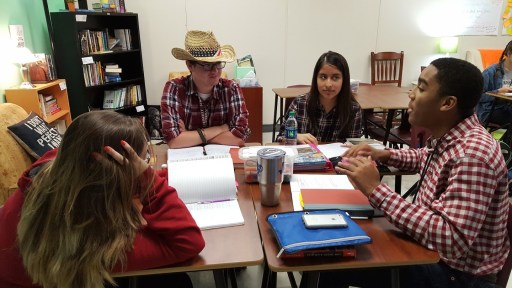

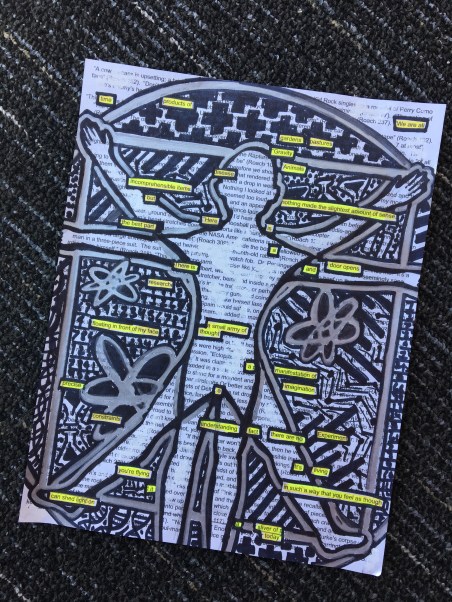
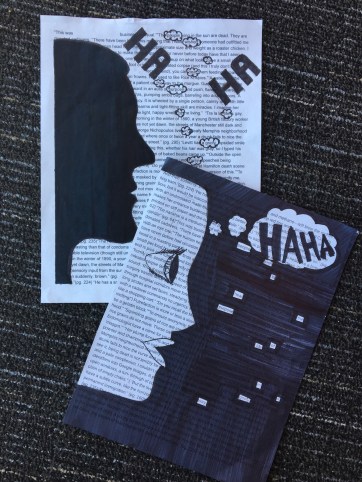 provide appropriate text evidence of the basic terminology of analysis: syntax, imagery, diction, figurative language, and detail. We wanted students to use their left and their right brains. We wanted to students to work together to solve a problem.



 I admit to liking control. I won’t go far as to say I’m a control freak, but I am freakishly close. As I age I realize I like more and more things in neat little rows, even my To-Do lists must be lined up perfectly, so I can make tiny check marks with my Precision pen.
 hotbed topic fires up the nation (sadly, there are so many), my students will know I value their input. They’ll know that helping them make sense of our world is as important to me as helping them love books and become good writers.
 throughout the summer.


 If we do not discuss the hard topics in our classes, where will students ever learn to discuss the hard topics? Sure, we can hope they debate social, economic, and political issues in their homes, but we know many families do not have meals together much less conversations. And it’s the conversations, varied and diverse, that can help us view the world in a different light — sometimes a cleaner, clearer, more empathetic and compassionate light. I think we need more of this light.
 Three Teachers Talk