Our students are too young to remember the events of 9/11. And while we are not history teachers, I do think we have a responsibility and an opportunity to help them try to make sense of the horrors of that September morning and how it impacts their lives today.

Pvt. Hyrum Chase Rasmussen
In church yesterday, the congregation stood and sang three verses of “The Star Spangled Banner.” This song has new meaning for me since my son Hyrum joined the Army this summer. It may have new meaning for you if you’ve been following the Colin Kaepernick-taking-a-knee-event-fall-out-and-discussion. I want my students to be able to make sense of their world and one way I can help them do that is to provide them with thought-provoking pieces that help them make connections. Maybe one of these texts will help them find their own “new meaning.”
In honor of September 11, the every day people and every day heroes who lost their lives, the families who still mourn loved ones, the soldiers who valiantly died facing foes in foreign lands, and the men and women willing to serve today in a time of unrest and war, this is the lesson that I will share with my students today.
Objective: Using the language of the Depth of Knowledge levels, students will react to a first-hand account of 9/11 in their writer’s notebooks. They will formulate ideas on how this one story relates to our growing theme of what it means to be courageously human. Students will then analyze a text and compare the writer’s use of language to a text read previously.
Lesson: We’ve already discussed the question, “What does it mean to be courageously human?” a phrase I borrowed from a text we read last week. (I read Chequan Lewis’ piece as a read aloud, wanting students to just listen and enjoy his use of language. Then, later we read it again and analyzed the literary and rhetorical devices he uses to create the meaning. I modeled how to annotate and asked students to write their own notes in the margins — something I will expect them to do throughout the year.)
Today I will remind students to read texts with pens in hand, noting the writer’s interesting use of language, any points of confusion, any words they don’t know, the structure of the text, and any and all devices the writer uses to craft meaning. Today’s text is the masterful piece Leonard Pitts, Jr. wrote September 12, 2001.
After students have time to read, annotate, and discuss in small groups, we will come together as a class and craft an anchor chart that details the moves Pitts makes in comparison to those craft moves made by Mr. Lewis. I will charge students to model these moves in their own writing throughout the year.
Follow up: The anchor chart will hang in the room as a reminder that writers are intentional in the moves they make as they craft meaning. Students will be expected to be intentional in their own writing as they work on various forms of writing in class and on their blogs this year.

 r, I wasn’t confident that they couldn’t have learned more.
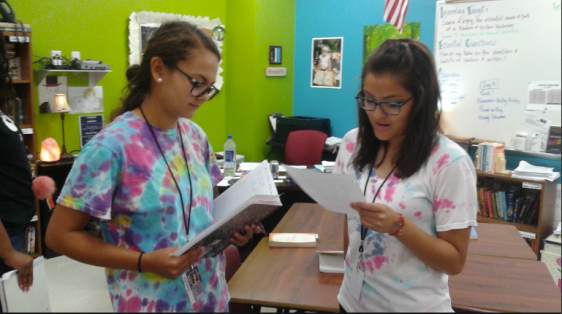

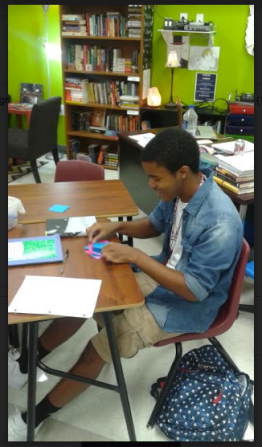
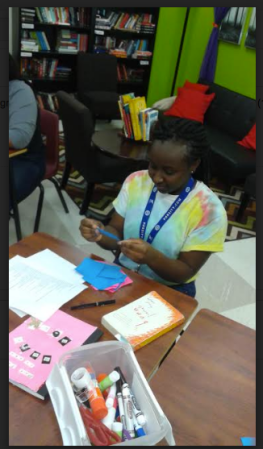
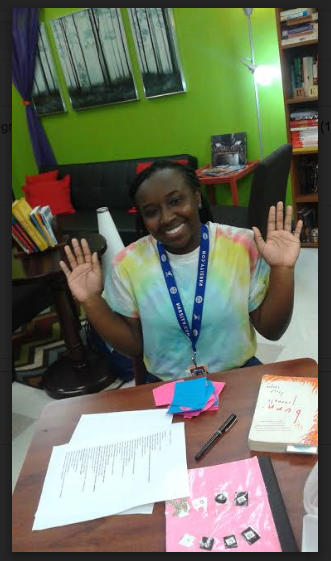



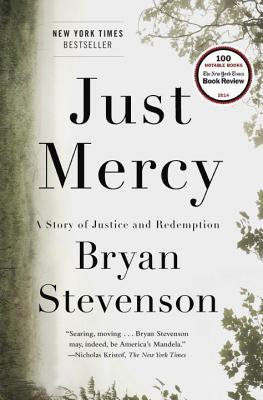 Usually I read about four books at a time. This makes for a mess on the bedside table, the coffee table, the kitchen table. I rarely use bookmarks, which is a shame because I have quite a lovely collection.


 swing. Dogs raise their muzzles in silent howls. Pedestrians are frozen on the dusty streets, their legs cocked as if held by strings. The aromas of dates, mangoes, coriander, cumin are suspended in space.



 York in the 1980s, a time when vagrants and panhandlers were as common a sight in the city as kids on bikes or moms with strollers. The nation was enjoying an economic boom, and on Wall Street new millionaires were minted every day. But the flip side was a widening gap between the rich and the poor, and nowhere was this more evident than on the streets of New York City. Whatever wealth was supposed to trickle down to the middle class did not come close to reaching the city’s poorest, most desperate people, and for many of them the only recourse was living on the streets. After a while you got used to the sight of them–hard, gaunt men and sad, haunted women, wearing rags, camped on corners, sleeping on grates, asking for change. It is tough to imagine anyone could see them and not feel deeply moved by their plight. Yet they were just so prevalent that most people made an almost subconscious decision to simply look the other way–to, basically, ignore them. The problem seemed so vast, so endemic, that stopping to help a single panhandler could feel all but pointless. And so we swept past them every day, great waves of us going on with our lives and accepting that there was nothing we could really do to help.
 Three Teachers Talk