Category Archives: Social Networking

18 Quotes & a Call for Connection

We all know the value of mentor texts. We use them for read alouds, to model thinking, to dig deep and find meaning, to teach an author’s moves, sentence structure, and more. Some of us collect them, storing them safely among other valuable collections.  We keep a stash for studying craft, earmarking books in the hopes of remembering why we saved that page for later.

I have 11.8K tweets “liked” –many saved to read later and think about how I can share them with my readers and writers. I am a constant planner.

I also have a constant need for connection and a way to grow. Maybe that’s why Twitter swallowed me when I first signed on in 2011. Even my children, teenagers then, complained I was “always on the iPad.”

Sometimes it helps to take a step back. Evaluate our surroundings. Get a better grip.

Awhile ago I learned a thing or two about myself. I learned what drives me. Tony Robbins has a TED Talk called Why We Do What We Do I found helpful, as did this quiz What is your driving force? (I’ve shared both with students, and we’ve had interesting and insightful conversations.)

My driving needs are connection and growth. No wonder I have an obsession with mentors. No wonder I like to write and share what I learn and how I teach. No wonder I like you to read this blog and to share what you learn and how you teach. You are my Personal Learning Connection.

Screen Shot 2017-10-23 at 10.21.54 PM

Sometimes teachers get lucky. We work in departments that feed our needs. We find colleagues in Facebook groups and Twitter feeds. We reach out to living mentor texts (Shana coined that term a few years ago) who help us reach higher toward the goals we set for ourselves.

I am blessed to have many living mentor texts. My colleagues on this blog for sure. (We have an ongoing WhatsApp chat that keeps us grounded and sane. Mostly.) And many of you readers who’ve reached out with questions in emails, trusting that I might have answers for your questions. You’ve mentored me, too.

I am blessed to call Penny Kittle and Donalyn Miller both friends and mentors. They’ve shaped me in too many ways to say. There’s Katie Wood Ray and Tom Romano (thanks to Shana’s friendship) who’ve shared experiences and stories over meals at NCTE. There’s all the teacher-writers of the stacks of professional books that weigh down the shelves nearest my desk in my classroom and my bed. They mentor with each page.

And there’s Tom Newkirk — who, as Penny put it, is “the smartest man I know.” I met Tom at the UNH Literacy Institute when Shana, Jackie, and I took his class on Boys and Literacy. He is caring, kind, and oh, so brilliant. When I read his books, I feel his passion for literacy and learning — and I feel smarter.

I wrote last week about teaching as if teaching is story, thoughts that sparked while reading Minds Made for Stories. The sparks continue.

Three Teachers Talk will present at NCTE on Friday, November 17 at 12:30 pm. We titled our session: “Reclaiming Narrative and Amplifying Our Voices: Using Story to Invite Fearless Inquiry and Intellectual Challenge for Our Students and Ourselves.” Tom Newkirk is our chair. How amazing is that?

In preparation for our our presentation, Tom’s agreed to join us for the first ever #3TTchat on Twitter, Monday, October 30 at 8ET/7CT. We will discuss the power of narrative in all types of writing as explained in Minds Made for Stories — and Tom’s new book Embarrassment:  And the Emotional Underlife of Learning

I pulled some quotes from Minds Made for Stories last night in prep for that chat. I think you’ll see the genius in Tom’s thinking and what it can do for us as reading and writing teachers. I thank Tom, a true living mentor text, for shifting my thinking about the way I talk about writing with my students, the way I view writing with my students. The way I teach writing.

From Part I of Minds Made for Stories:

“[Narrative] is the “mother of all modes,” a powerful and innate form of understanding” (6).

“Narrative is there to help us “compose” ourselves when we meet difficulty or loss. It is there to ground abstract ideas, to help us see the pattern in a set of numerical data, to illuminate the human consequences of political action. It is home base” (5).

“Photosynthesis is a story; climate change is a story; cancer is a story, with antecedents and consequences. To the extent these phenomena can be told as stories, readers will have a better chance of taking in the information” (11).

“We don’t read extended texts through sheer grit, but we are carried along by some pattern the writer creates. Even if our goal is to learn information, we don’t do that well if that information is not connected in some way — and as humans the connection we crave is narrative” (13).

“. . . the ‘hamburger’ format with the opening and closing paragraphs being the two buns and the body being the meat. . . is a disservice to students, and to nonfiction writing, but also an insult to hamburgers. . .” (16).

“. . . when we strip human motives from our teaching, I suspect we make learning harder and not easier” (17).

“Nonfiction. . .is all about moves, motion through time. Not static structures” (17).

“Even writing that takes a form we would not call narrative (e.g., the lab report) still is built on narrative, a causal understanding of the world that is as basic to us as, well, our intestines. This claim is true for even the most specialized academic writing; even research reports must tell a story” (19).

“[Narrative] is part of our deep structure as human beings” (27).

“If we view [narrative] as a deep structure of thinking and understanding, it affects all discourse and plays a much bigger role; we have literary minds, primed for story” (28)

“Yes, we need to teach students the conventions of various genres, and we can’t assume that because they can read and write fictional stories or autobiographical pieces that they can write arguments or reports. Only a magician would think that. But it does mean that the narrative thread, the anecdote, the story of human interest, the apt metaphor are crucial tools in all forms of discourse — as they speak to our need for causality and story. They form a deep structure” (28).

“Narrative is not a type of writing, or not merely a type of writing. It has deeper roots than that. It is a property of mind, an innate and indispensable form of understanding, as instinctive as our fear of falling, as our need for human company. Good writers know that and construct plots–itches to be scratched–that sustain us as readers. We are always asking, “What’s the story?” (34).

#3TTchat-2

“Voice is a constant, a human presence, a sensibility, a character, a narrator and guide” (38).

“Openings should be read very slowly, reread if possible. So much is happening. So many commitments are being made–which is why writers often find them so nerve-racking to write. Openings establish the topic, suggest the problem to be examined, convey sense of the narration and tone of the piece, risking at any millisecond that the reader will go elsewhere” (42).

“. . .in all analytical writing there needs to be conflicting perspectives, contending solutions, weaknesses and strengths, even good guys and bad guys. If these positions can be attached to spokespersons, so much the better. Writing is dialogic, involving multiple voices, orchestrated by the author. To comprehend a text is to be attuned to this conflict” (42).

#3TTchat-3

“I am not contending that literary analysis or argument looks like narrative fiction. But arguments that sustain reading must have a dramatic core, a plot. Like a good piece of music, there needs to a be a pattern of tension and resolution, problem and solution, anticipation and fulfillment. When done well, the sensation of reading doesn’t feel like we are working in a tightly contained form, tyrannized by a thesis, the stern father who sits at the head of the table and rules over all. Rather, we feel a mind at work; the sensation is of a journey that may take us to a thesis but invites new questions along the way” (49).


I hope you will join us in our Twitter chat next Monday. Let’s value our connections and share our stories as teachers, writers, and individuals striving to learn and grow and change for the betterment of our students and ourselves. Let’s celebrate the learning we’ve experienced with our students this fall.

We need to be living mentor texts for one another.

This work is hard. When we connect and share, we make it easier.

We already know it is worth it.

Amy Rasmussen connects with friends on Twitter @amyrass and @3TeachersTalk and on Facebook and Instagram. She’d also like to connect her students’ blogs to yours — wouldn’t it be great if they read and commented on each others’ writing? (Email amyprasmussen@yahoo.com if interested.) Amy teaches senior English and AP Language at a large senior high school in Lewisville, TX (Go Farmers!). 

3 Twitter Genres to Try With Students

Screen Shot 2012-12-05 at 8.50.52 AMI’m always fascinated by new writing genres, and Twitter has been offering them up left and right lately. From 280-character tweets to the proliferation of threads, group chats to hashtags, and thoughtful questions posed through photo tagging, I’ve been delighted by the new things happening on Twitter.

I started thinking about Twitter-as-genre when 280-character tweets first began to appear. This delightful literary allusion caught my eye, and I would love to share it with students in the context of a discussion about the power of poetry and brevity:

https://twitter.com/squarelyrooted/status/914128443515609088

What a wonderful quickwrite it would make to take some of the most-liked tweets Twitter has to offer and redesign them to be twice as long. I would also do this same exercise with powerful quotes or poems, excerpts from students’ choice reading books, or lines from pieces of writing we were trying to workshop, with an eye for editing length, diction, and tone.

A week or so after I noticed that delightful bastardization of William Carlos Williams’ work, my poor phone couldn’t hold a charge because of all the notifications my Twitter app was sending. Leigh Anne Eck tagged several workshop teachers in a question about our favorite metaphors for the writer’s notebook, and then Tricia Ebarvia wondered about mentor texts for place. What resulted were rich Q&A threads that kept me thinking about notebooks and beautiful writing for days.

https://twitter.com/triciaebarvia/status/919325738221924352

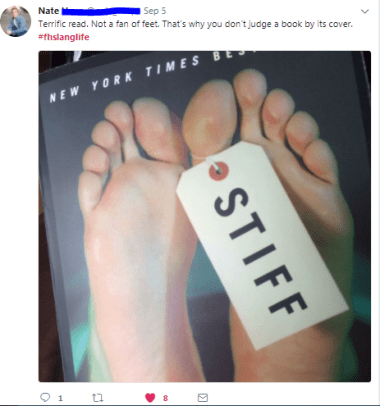
Getting students to pose questions via Twitter, using a hashtag or a photo tag to ask specific audiences, could have delightful results. Lisa’s #fhslanglife has resulted in a beautiful collection of book recommendations, motivational sound bites, and literacy-related links, and the replies to the threads linked above are chock-full of some great resources and ideas. I’d love to have students pose questions related to their argumentative and research writing by tagging classmates, stakeholders, or experts in their queries.

Lately, when I scroll through my own Twitter profile, I notice a trend that shows that I’m part of certain writerly communities. Most recently, #WhyIWrite, #NaNoWriMo2017, and the ever so useful #5amWritersClub have been where I’ve spent lots of my virtual Twitter time. Not only do these groups motivate me–I’m more likely to get more work done once I’ve checked in with my early-bird writer pals–they are a study in a particular kind of writing craft.

#5amwritersclub tweets, for example, are supremely gif-heavy, while #NaNoWriMo tweets have historically been slightly frantic and often unintelligible. The #WhyIWrite hashtag spurred a wide variety of forms, from direct answers to sketches in notebooks to lengthier answers like mine. I’d love to invite students to join a regularly-tweeting writing community, but I’d also study the craft of that community’s tweets with them to see what moves make for an engaging contribution to the conversation.

Twitter is a versatile, valuable collection of writing genres–for teachers and students. I hope, if you’re not already there, that you’ll be joining us in Twitter land soon. At the very least, please join us next Monday, when we’ll be chatting with the amazing Tom Newkirk about narrative, NCTE, and his latest book, Embarrassment.

Screen Shot 2017-10-23 at 6.02.59 AM.png

We hope you’ll give these three Twitter teaching ideas a try and share how they go! Let us know on Facebook, Twitter, or in the comments.

Shana Karnes is getting impatient to become a mom of two girls–in three short weeks! She loves her work with practicing and preservice teachers at West Virginia University, through the College of Education and NWP@WVU. Find Shana on Twitter or at the WVCTE Best Practices Blog.

#WhyIWrite is Why I Teach

As I sat down with my notebook bright and early this National Day on Writing (well, to be honest, it was so early it wasn’t bright out at all, because it was dark), I sketched out a large “WHY I WRITE” across a two-page spread.

download.png

As I jotted down reasons, I began to notice that my responses were synonymous with another WHY in my life: why I teach.

Why do I teach? To change the world. To make people smile. To spread the joy of reading and writing. To cultivate empathy. To get to feel good at something. To create a world that wasn’t possible before the act.

I write for all those reasons, too. Every morning at five (have you checked out #5amwritersclub?), and every time I meet with my students, and every time I feel compelled to say something to myself and no one else.

But I feel compelled, so strongly, to share a writing reason far beyond the confines of my notebook. It’s a reason I received from one of my students, in a random email just bursting with joy and passion for teaching.

Elizabeth sent me this email at 11:19 last night, gushing with lengthy detail about a series of lessons she’d just taught. She’d been experimenting with writing beside her students, leading them into writing poetry about a topic of their choice, in a poetic mode of their choice. They’d worked through a series of lessons as individuals, in pairs, in groups, and as a whole group to craft their writing, evaluate what was important about it, and teach one another whatever they felt most confident about. Elizabeth called it “the height of [her] pedagogy to this date.”

But it was the final lines of her email that propelled me out of bed, eager to grab my notebook and write. Her words made me thrilled to get to see her in class today. They made me want to bring her books of poetry to share with her students and new pens and a big hug and every other manner of teacher/writer joy I could think of.

Here’s what she wrote:

By the end, they asked excitedly to share their poems, and I knew that they had created something they were proud of. What greater measurement can there be of student investment than pride in their work? What greater hook to the essence of why we write?

It was a lesson that made me remember that they are worth this world tilting, burnt out, drudgery of exhaustion. They are worth it.

Elizabeth got to the heart of why we write, and why we teach:

It is worth it. Our students and our work are worth it. Every day.

Do not forget, when you feel like your world is tilting and you are burnt out beyond belief, that we do change lives, that we do show students the essences of why we read and write, and that we do teach children to have pride in themselves, their work, and their words. It is powerful, important work, and is the core of what we do. It is worth it. You are worth it, my friends.

Shana Karnes is so lucky to work with amazing preservice and practicing teachers at West Virginia University. She is three weeks away from welcoming her second daughter into the world, two weeks away from teaching her last class of the semester, and about a week away from no longer fitting into ANY of her maternity clothes. Find Shana on Twitter at @litreader or on the WVCTE Best Practices blog.

#TwitterTeacher

I’m late to the party. This I know. But my enthusiasm for this soirée is genuine, and it fueled some of my first day success.

In an effort to build community as quickly as possible this school year, and to get to know our students a bit over the summer, my colleague Sarah Sterbin and I decided to add some technological play to our AP Language summer homework. Using the hashtag #fhslanglife, students were asked to share their reading life twitter4throughout the summer.

They could snap photos of their trips to the bookstore, their feet in the sand and a book in their hands, and their smiling faces reading the summer away.

They could quip about quotes from required and choice reading, make suggestions to peers on what to read next, comment on the insights of others, follow my reading adventures, and the list goes on.

As often happens with open ended assignments, we got a wide variety of participation. Tweets ebbed and flowed throughout the summer, but each time a student posted, I made it a priority to comment, retweet, like, and/or tag an author to promote connections across the world of reading. When Ishmael Beah, Allen Eskens, and Matthew Desmond interact with your students over the summer, I call that a solid win for starting to build readers and a community with enthusiasm around reading.

twitter5

On the very first day of school, and in the few days that followed, as we quickly collected summer work, set down to work with a quick writes, set up writers’ notebooks, organized editorial speeches for our first speaking opportunity, and took in the surroundings of our room, I asked students to use our hashtag to share their excitement about the work ahead. I love what they chose to share.

twitter3twitter1twitter 2twitter6

Tweeting is a quick and easy way to build community. I sometimes display current tweets our daily PowerPoint/Syllabus to keep the movement afoot, and I love to hear students’ reactions as they come in the room to see their humor, insights, and recommendations on the big screen.

Twitter

How do you use social media to promote reading and writing lives? Please leave your brilliant ideas in the comments below!


Lisa Dennis teaches English and leads a department of incredible English educators at Franklin High School near Milwaukee. Her latest tweet suggests that she thinks about reading 24/7. Follow Lisa on Twitter @LDennibaum 

Learning from One Another – Professional Development is Everywhere

As high school cliques go, I was never a part of the “cool kids” group. I loitered around the exterior, occasionally granted access to view what went on behind the curtain, but knowing people who know people didn’t really make much of a difference in terms of obtaining a season pass to all things elite.

I was a somewhat lovable dork, voted most compassionate of my high school class (please read this amazing post about being nice vs. being kind, because I was far too nice in high school), content to spend time laughing with my band geek friends and the ever flexible crowd made up of people who really tried not to care what went on at the “totally awesome” parties thrown by people too important to acknowledge the existence of 92% of their graduating class.

Now, in retrospect, I was saved from many things:  painful experiences that would have blown my sheltered innocence far before I could handle it, drama related to pecking order and perceived slights over social class, Gatsby-esque flaps fueled by alcohol and beautiful shirts.

These days, in the professional world, having a collaborative group that functions supportively, creatively, cohesively, also has many benefits reminiscent of those true friends from years past who helped get me through, helped raise me up, helped make me better. The teachers in my department are simply amazing, and I am lucky to have a season pass to be a part of their cool.

Across the profession, some of us meet weekly (or more often) in PLC meetings. Some of us meet in spare moments after school, chance encounters in the hallway, and Google hangout planning sessions. Some of us befriend the teacher next door and talk shop at all hours. It’s about growing as professionals, even when it’s sometimes just about what we’re all “doing tomorrow.”

pd1

However, growing as a professional, these days, can also mean connections that are far from the traditional and learning that comes from very surprising places. In these trying professional times, to be a teacher requires hits of rejuvenation whenever and wherever we can get them.

Take, for example, Shana’s post from last week on her professional development enthusiasm and the message she shared with 3TT. I listened to her message and hurriedly wrote down two ideas I wanted to try right away.

That is the magic of connecting with other professionals: learning (or reviewing) what can bring back (or sustain) the spark that every classroom teacher needs in order to weather the slings and arrows of our craft.

Those sessions where you fill up page after page of quotes, insights, lesson ideas, tips, and tricks. Where you are the cool kid, not because you’ve adjusted who you are in any way, but because you have built up who you are and what you do.

Over the course of this year, I have come to see professional development as something that is happening every surprising moment, from all possible angles. pd2

Below, some reminders (that I myself needed this year) of how empowering learning is. If we forget about, resist, or otherwise close ourselves off to new ideas, review of what works, or even the very basics of our craft (Let me hear you : teachers must be readers and writers or we are in the business of false advertising) what unfortunate hypocrisy we make of what we purport to do each and every day.

Embracing PD Opportunities Based on Your Needs

Whether it’s to pursue an advanced degree, get continuing education credits, fulfill a district initiative, or to explore a topic of interest, professional development can be hugely invigorating to daily practice (It can also be a flop and/or downright insulting, but that’s for another post).

For example, I am typing this blog post today, because I was in need. I needed support to help make the move to workshop and to lead my department through that move. I Google searched “readers and writers workshop,” started reading the 3TT blog, emailed Amy to ask her a million questions, and then insisted to my district that 3TT needed to come for professional development in Franklin. It was some of the most authentic PD I’ve received in fourteen years of teaching.

photo2

Sometimes, it can feel like professional development gets overwhelming. We have professional development opportunities at staff meetings, during mandatory extra hours outside of the school day, and in order to fulfill countless professional expectations of record keeping, curriculum development, and reflection.

However, through professional development organized by and for teachers, we learn from those who know best and know now because they are in the trenches. Seek out professional development for yourself that speaks to the needs you feel need to be met in your classroom.

Creating a PLC with Students 

Sheridan lingered after class yesterday. She’s actually the inspiration for this entire post.

Shyly, she asked if it would be alright to share an article with me. “I ran across this article yesterday while I was looking for something else and it intrigued me so much that I read it.”

With a smile on my face I said, “What were you looking for?”

She laughed, “I don’t even know. I never found it! But I think you’ll like this, so I’ll send it to you.”

What arrived was a link to a Washington Post article from a few years back. Alexis Wiggins, the daughter of Grant Wiggins (of Understanding By Design fame), is also an educator and had shadowed a student for several days. Her takeaways in this article about what students experience every day hit home with me in a big way.
Not because her insights were new or because they would change everything I do on a daily basis, but for two reasons.

The ideas were a reminder of a perspective that often falls away in the face of daily routine and that reminder was shared with me by a student of my own.

Sheridan in no way was looking to make me feel bad, but she did exactly what I tell my kids that reading, sharing, and reflecting should do : remind us of what we need to make a priority each day.

Wiggins research on students needing to feel valued, engaged, and physically and mentally present isn’t new to me, but the article was the best kind of professional development: Kid centered, kid inspired, immediately applicable to my classroom.

Look for, solicit, or otherwise beg students to share with you what is making them think. Direct them to places like Austin Kleon’s newsletter or Arts and Letters Daily, so they can study new and unique ideas, talk about those insights in class, connect them to current learning, and expand your repertoire of resources, insights, and enthusiasm.


Hanging with the Cool Kids

Expanding our definitions of professional develop can also be hugely beneficial.

You’re doing it already, you know. Reading this blog. Reading other blogs, following educational news, getting active in political topics that weigh on our schools, our kids, and our jobs.

Go even further:

  • Follow the English rockstars on social media– Kittle, Gallagher, Newkirk, Morrell, Miller, Anderson, just to name a few.
  • Like the Facebook pages of authors your students love – I’ve had Angie Thomas and Matthew Quick like posts my students and I wrote just in the past few weeks.
  • Tag big names in your posts – Opening your insights or questions up to a wider pd3audience.
  • Jump on Twitter chats –  You don’t ever even need to comment, if you don’t want to. You can just read, click on links to other great articles/insights/lessons, and remain anonymous. You can watch a chat as it’s happening, or follow a hashtag back to a conversation that’s already happened and read through what was said. Here is a link to scheduled Twitter chats that educators might find value in.

Keep learning intentionally.

Not only will you open yourself to an even wider world of resources, insights, opinions, and discussion, but sometimes, you’ll hear personally from these teaching megastars, and let this fangirl tell you, that discipleship can take you all the way back to that thrilling peek behind the curtain of the cool kids.

What professional development opportunities have you found most beneficial to your career? Whether it be attendance at a national conference or stalking a Twitter chat, we’d love to have you join the conversation in the comments below! 


Lisa Dennis teaches English and leads a department of incredible English educators at Franklin High School near Milwaukee. Her favorite pens for note taking during professional development are Paper Mate Flair pens in a variety of colors. Follow Lisa on Twitter @LDennibaum 

10 Things Worth Sharing Right Now

I love the little ripple of a thrill that runs through to my fingertips when I find something that I want to share with my students. That borderline codependent excitement that comes with wanting to share a book, an article, a statistic…immediately.

“They NEED to see this,” I think, fumbling around on my phone to figure out how and where to save it.

“They NEED to read this,” I say to my husband, as I make him pause his own life to listen to yet another passage of my latest read.

“They NEED to know about this,” I mutter, linking wildly to our syllabus (just another in a long line of moments where I’m grateful that life happens and we share it in class).

So today, I’m taking a page from one of my newest obsessions, the newsletter put together weekly by the brilliant, inspiring, and wildly creative, Austin Kleon. Each week, delivered to your inbox, arrives a list of “10 things [he thinks are] worth sharing.” Simple. Intriguing. Very, very useful in the classroom.

I’m honestly not sure how I stumbled on this one, but in the month since subscribing, I’ve used three of his images to inspire quick writes, and book talked (loosely) the newsletter itself, suggesting to students that they should subscribe in order to broaden their horizons to current happenings, inspiring visuals, and commentary on books, shows, and cultural phenomenon. In other words, link up to something that delivers items to keep you reading texts other than social media updates (“Made a sandwich guys…bet you’re all jelly. Get it? Jealous, but jelly instead.? God, I am such a genius”).

  1. Austin Kleon’s Weekly Newsletter
    Kleon reflects on a central image each week, along with linking to intriguing articles, a poem of the week, ear candy audio, eye candy visuals, and other noteworthy insights from across the vast expanse of the internet. If someone comes up to you and says, “Hey, did you see…?” chances are Kleon will have it linked on his list for the week.
  2. The Power of Exemplars
    A few weeks back, I was bemoaning to my fellow Three Teachers Ladies, how disappointed I was in a recent project my sophomores had completed. My vision for a poster that brilliantly illustrated their insights on their latest reading, was met with large sheets of paper with haphazard cutouts of text, crudely taped across the page, accompanied by printed book covers in black and white, and the occasional hurried pencil addition to the project (last minute insight for forgotten components). Needless to say, I was frustrated AND without any way to hold students accountable for the quality of the visual they submitted (not the central point, for sure, but a consideration certainly). Take pride in your product, and all that, had fallen short. In my irritation, I searched in vain for something in the Common Core that might suggest students consider carefully how they convey their ideas.

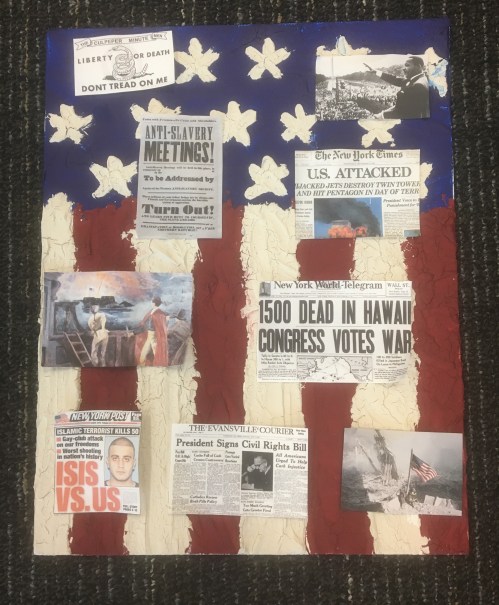
    Then, I took a deep breath. I realized I had what I needed, I just hadn’t used it. See below the power of exemplars. My AP students were completing their community visuals (which I wrote about last year in a reflection on the use of essential questions), and I had no rubric for this work either. However, the power of suggestion, in showing them some of the brilliant work from the year before, was more than enough. They knew the expectation, saw what I thought was praiseworthy when it comes to presenting their insights, and we enjoyed some brilliant symbolism in the presentation of these visuals. Amen.
    img_1163

  3. Musical Genius
    One of my groups took a creative leap for their community unit visual and put together a musical. Franklin’s production of Joseph and the Amazing Technicolor Dreamcoat opened this past weekend. Several members of the cast in my first period class asked if they could complete the project in a slightly different way. Their project would still include analysis, present their ideas to the class, and involve audience feedback after the presentation, but…there would be singing.

    img_1092

    Francesca, Joe, and Parker

    Since I always joke with my kids about presenting their ideas through interpretative dance, this musical idea intrigued me. Their mini musical included several skits that detailed life within the community of a musical cast/crew. Watching students sing their way through a summative, I was reminded that my vision for a project is rarely as broad and brilliant as what students can come up with on their own. My exemplar pool had just expanded in verse.
    img_1095

  4. Bag o’ Books
    Remember to beg for books. Want to build that classroom library? Get down on your knees and remind your students of how good it feels to give back…to you.Maija recommend the book Dangerous Minds a few weeks back. When a fellow student was at the bookshelf looking for it the other day, I asked Maija if she’d be willing to bring it so, AJ could borrow it. I even turned on a sweet smile and said, “If you don’t need it anymore, I’d be happy to take it off your hands.”

    The book was outside my door the next day, in a bag with a sweet note and several other books. Score.

  5. Amy Poehler on Writing
    I’m training for a half marathon. Without audiobooks, I might not make it. Seriously. I need to get lost in a story to pound out the miles. So, when I started 10 miles on Sunday and realized my Overdrive audiobook had expired, I had to quick download something new. Ugh.Enter, Amy Poehler’s Yes, PleaseI smiled for nine miles (it takes awhile to download when you’re actively running down the street). Poehler’s voice is sincere, relatable, and funny as all get out. Easy to book talk.

    Here’s the golden ticket: The Preface. I heard it and knew I needed to play it for my students. Poehler writes with undeniable voice about writing. She says of her text and the writing process that she “had no business agreeing to write this book” and wrote it “ugly and in pieces,” because “everyone lies about writing…they lie about how easy it is or how hard it was.” She says, and students really related to the idea, that “writing is hard and boring and occasionally great, but usually not.” In reflection afterward, students also noted her use of stream of consciousness, aside, and self deprecating banter to tell her story, not just inform her audience about what the book would be about. Classes agreed that they could really get behind her idea that, “Great people do things before they are ready.” Amen, Ms. Poehler. Let’s all put pen to paper.

  6. langchat#17
    I recently started following the brilliant Elizabeth Matheny on Twitter. Her AP insights and resources have helped fuel my work recently and her AP Language slow chat last week was a great opportunity to have my kids practicing analysis with students across the country. I’m thinking of several things to extend this activity:
    – Have students organize a slow chat for peers
    – Get students to live tweet peer feedback during speeches or discussion
    – See #7 below
  7. Tweeting Authors
    I tweeted Angie Thomas to tell her that her book The Hate You Give is stunning and I’d be getting into the hands of as many students as possible.She liked my tweet.Fangirl moment.img_1024
    Have your students reach out to authors. They often reach back.
  8. Creativity Visual
    I love what this suggests to students about the power they possess.
    img_1157
  9. Get it to the Big (or small) Screen
    My students often buy into the idea that great books are made into (sometimes great) movies. The Underground Railroad is being made into a series with the director from Moonlight. Having just finished this intriguing read myself, I book talked the text this week and shared the movie plans.
  10. Quick Write – Psychopath
    This came across my Facebook feed the other day, and I tossed it on my PowerPoint. As is the way in educator, my students surprised in noticing it, and we ended up doing a quick, quick write about changing social norms. AP Language test prep comes in many , many forms.
    img_1122
    What would make your list of 10 things we need to see and share this week? Add your ideas in the comments below! 

Lisa Dennis teaches English and leads a department of English educating gods and goddesses at Franklin High School near Milwaukee. She loves lists, especially lists with links to beautiful thoughts and ideas. Follow Lisa on Twitter @LDennibaum 

disclosure


Quick Writes That Work

QUICK WRITE

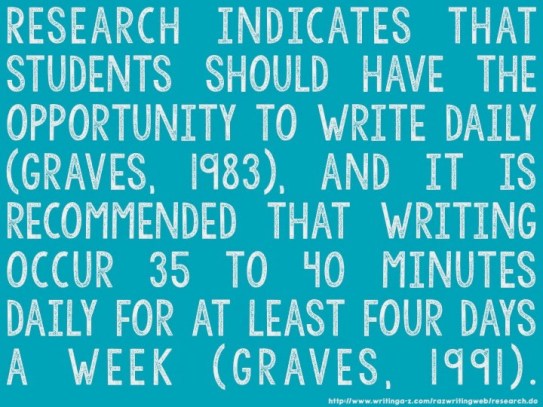
It appears daily on my agenda and often sparks great writing, discussion, and even revision. My bestie Erin said it beautifully: “Quick writes produce pure honesty and they’re a good place for me to “talk” with my students.” The writing is low stakes, the creativity can be high, and we can “talk” with our kids and provide feedback on issues and ideas, over syntax and conventions. Plus, it helps with the endless struggle for volume, volume, volume.

But sometimes, quick writes can end up feeling a bit routine, which is not cool as I am trying to keep writers excited about their writing and producing more and more of it.

writers-block

So, because I’m sometimes known to Google my life (Last weekend my foot hurt after a run and the Mayo Clinic suggested I might have cancer, so there’s that.) I often head to the internet for curricular inspiration.

There are countless sources online that will lead you to quick write topics, if that’s what you are in the market for, and I am often in the market for someone’s fresh thinking to get my students writing when I haven’t left enough time to plan or the same old quick write feels bland.

graves

Quick writes are just the start! 

For example, I was inspired to write this post after I saw our friend Gary Anderson tweeting a journal topic of the day on Twitter. I’ve used several, and loved writing along with my students on his thought provoking prompts.

Here are a few reflections I have on quick writes. The process, their power, and providing writing opportunities to our kids every day.

  1. Link your quick write to what you’re work on in class that day, an essential question you’re studying, or relevant topic to your study. Or don’t! Quick writes can lead naturally into a mini lesson. They can also put that mini lesson on hold as students take off into small group and then passionate/uproarious/contentious whole class discussion. I’ll often have my students go back into their notebooks after discussion to add to their thinking, so even if they didn’t share, they are working with the ideas that class is chewing on and writing more.
  2. Let students write about what inspires them. At the beginning of the year, many students balk at the “opportunity” to write about whatever they like, but by the time you’ve established a rapport and let your students know that they belong to a community of writers, many are excited to be given time to get their thoughts on paper. And when you have them take some time to revise at the end of the writing and share their ideas or powerfully written lines with others, they take more seriously the production of that work.
  3. Give limited choice to guide writing toward a necessary discussion for that day’s mini lesson or topic of discussion. When I do want the quick write to lead into the mini lesson, I try not to lead too much. I want kids to write and discover. I don’t want to slip back into old habits of guiding students to a fixed answer. They feel duped, I feel cheap, the whole thing is a mess. So, when I am heading in a specific direction, I really try to give choice in these instances. Our mini lesson in American Literature the other day was on bias for our argument writing unit. I could have had them write about where they see bias and how it impacts an argument’s credibility. Totally fine. Instead, I asked them to choose:
    • Write on any topic from the perspective of someone who is heavily biased toward a particular outcome. Then, write the same appeal from the opposing viewpoint.
    • Consider the bias of an author you’ve read or a story you know well. How did the bias serve the author? How did the bias impact the story?
    • Defend, challenge, or qualify the idea that media bias is detrimental to a functioning democracy.
  4. Early on, I stole something I heard Amy say during the professional development she and Shana ran at Franklin last year. I always remind my students to “write as much as you can, as fast as you can, as well as you can.”Amy taught me that kids need to outwrite their inner critics, and I’ve coupled that with the discovery that, often times, a student’s inner critic sounds an awful lot like…a teacher. We need to help retrain kids to see the first quick draft of anything as just that, a quick draft. I scrap half of what I write when I consider it for revision. This is something new to most kids, who train themselves to pour writing out on a page and see that as the first, last, and only draft. We work to write quickly, revise in the moment, and later, choose some pieces for further expansion, refinement, and polishing. But in the six or seven minutes I am giving them to write, their job is to write in that moment and to keep moving.
  5. Remind students to write and respond as they see fit. Students can write, jot, draw, change colors, compose a poem…Students often limit themselves unconsciously by the “rules” they have been taught over the years. Quick writes are a place to explore, not fit in the lines or a box. Unless you want to write in boxes.

  6. Have students respond to quotes, images, poems, videos, their own writing (we are doing this today!), the writing of other students, current events, lists, song lyrics, letters to the editor, overhead conversations…You get the idea. Students can creatively explore just about anything and should. Their opportunities for creative expression are often too few and far between. We can be the place where questions, emotions, fears, innovations, and discoveries find a safe place to take root.

Some of my recent favorite topics are below. These are quick writes that generated some fantastic discussion in small groups and whole class debriefs.


From Gary Anderson a few weeks back, I had students choose one and write:

Today…
I am concerned about…
I am upset about…
I do not understand…
I wish I could change…
I am grateful for…


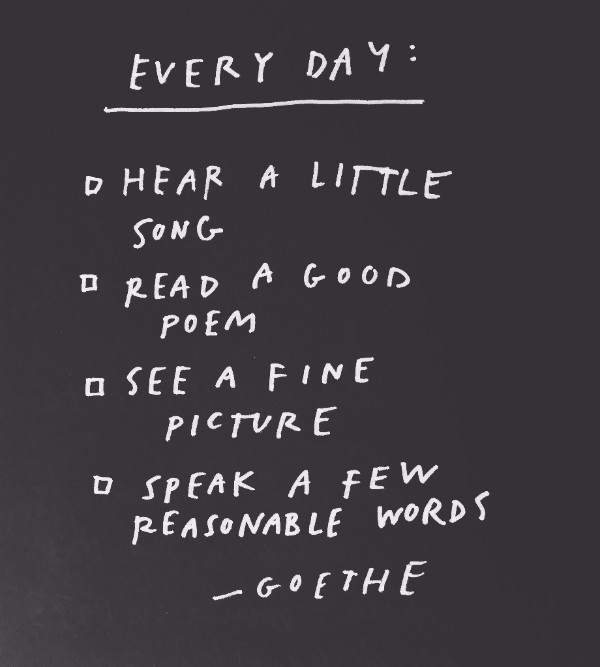
From Austin Kleon’s blog that I started following last week, students took this image in a thousand directions and one class even had a collegiate level discussion on the implications these suggestions (directives? nudgings?) could have for society:

goethe


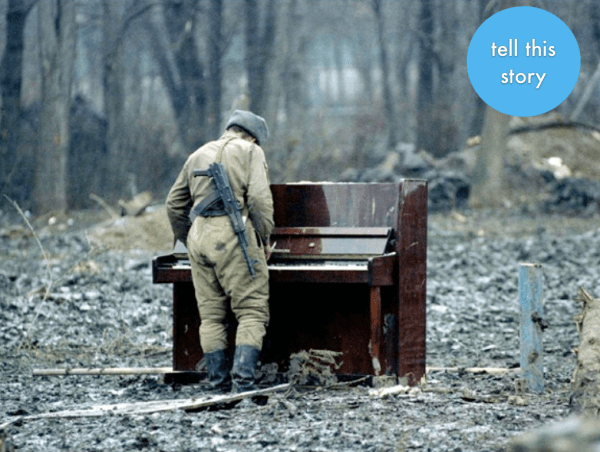
I will sometimes choose several images and have my students respond to one, or try to tie them together, or imagine they are the photographer, or…whatever best suits our purpose for that day. The exploration of the human condition is reason enough to put pen to paper. “Tell this story” is a great search term to yield a wide variety of results.

tell-this-story-2


Quick writes can even be 2-3 minute reflections on the simplest of reading adventures. At the start of the new calendar year, I had my kids search for what their lives would hold in 2017, according to their independent novels.

quick-write

Have a favorite quick write topic that gets the pens moving in your classroom? Please share your ideas and insights in the comments below! 

Lisa Dennis teaches English and leads a department of English educating gods and goddesses at Franklin High School near Milwaukee. She has no fewer than six quick write journals going at once, mostly due to her inability to settle on spiral vs. bound. She added to Goethe’s list that we should smile at the thought of someone each and every day. Follow Lisa on Twitter @LDennibaum 

Try it Tuesday: About that Digital Citizenship

I only had to ask three students to put their phones away on Monday. This is progress.

I know some teachers “outlaw” phones in class. I do not. We use them too often. Besides I have never been in a meeting or in a conference session or anything of the like and been asked to give up my phone. Of course, I know a thing or two about etiquette. Many of our students do not.

Instead of being the phone police, I would rather take the time to teach my students to use their devices appropriately in class — and, of course, with any luck, if the learning sticks, I’d like them to take that “appropriateness” beyond my classroom as well.

If we are not taking the time to teach our students phone etiquette and digital citizenship, we are missing out on important opportunities that may make a startling difference in their lives.

For example, did you see this headline:  “Girl gets kicked out of college for Snapchat photo”? The link lead to a hard sell for why every teacher should take the time to teach students the importance of digital citizenship.

I’ll be sharing it with my students today.

screenshot-2015-09-27-20-18-26-26o2pj7

keystrokes.wonecks.net

What are some ways you teach phone etiquette and digital citizenship in your classroom? Please share in the comments.


#PoetryChat – Boys & Poetry – Monday, August 3 8ET

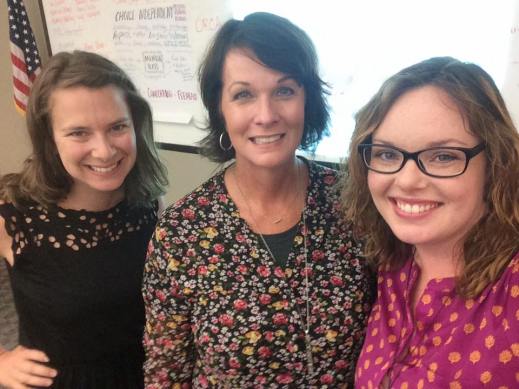
IMG_8888This week, the writers of Three Teachers Talk are together in Durham, New Hampshire at the UNH Literacy Institutes.  For five days now, we’ve learned with Penny Kittle and Tom Newkirk about strengthening our practice and our thinking.

Newkirk’s class, centered around his Misreading Masculinity (2001), is focused on boys and literacy.  We’ve read and discussed issues of violence, humor, personality, sexuality, power, and more–all surrounding boy readers and writers.

Join us to continue this conversation on the topic of poetry.  The four of us will be together in Portsmouth, ready to chat on Monday at 8ET.

1. How do you notice your boys responding to poetry in your classroom?

2. Should boys write poetry in an English class?

3. How is poetry uniquely valuable for boys?

4. How do you hook boys into poetry?

5. What are your best poems, poets, or poetry resources to engage your boys?

Poetry Chat August 3

Shelfie Saturday

sticker,375x360.u1While my last name is Catcher, I’m far from a natural athlete. In fact, my high school softball career ended after I “caught” a stray throw with my forehead, landing me in the ER with a swollen eye and thirteen stitches. Still, I can appreciate a brilliant sports story, the type that moves beyond the game and captures the essence of teamwork, leadership, and friendship. The “Sports” section of my classroom library does just this.

Over the past year, I have cultivated the sports section to reflect the varied abilities, ages, and interests of my students. I teach freshmen, juniors, and seniors ranging from struggling to gifted readers. Because of my diverse students, my library must appeal to 14-year old freshmen and 18-year old seniors alike. Fortunately, sports can oftentimes bridge this age gap while also pushing students to gradually engage with more complex texts.

My somewhat anemic-looking sports section.  Many of the books (particularly the ones not pictured here) have waiting lists and won't return to this shelf until the end of the year.

My somewhat anemic-looking sports section. Many of the books (particularly the ones not pictured here) have waiting lists and won’t return to this shelf until the end of the year.

My younger students (and even some of my older) tend to gravitate towards popular young adult novels at the beginning of the year, like those written by Matt de la Pena and Mike Lupica. After they exhaust the options on my shelves, they inch towards lengthier and more complex analytical or historical books like Moneyball: The Art of Winning An Unfair Game by financial journalist Michael Lewis or The Punch by sports writer and commentator John Feinstein. More than any other genre, these brilliantly crafted pieces serve as strong mentor texts for a wide variety of mediums including nonfiction, narrative, research, and persuasive writing. This year, books like Ice Time by Jay Atkinson inspired many of my hockey players to explore their sport through personal narratives while Shoeless Joe by W.P. Kinsella served as the basis for one of my freshman student’s research papers on the Black Sox Scandal.

Sports hold leverage within our society, particularly amongst teenagers. From die-hard fans to benchwarmers, both athletes and non-athletes can appreciate a sports story, particularly when it transports us into a world packed with suspense and action.

Join the conversation by posting your own shelfies!  Share a shelfie with #shelfieshare and let us know if it’s a #classroomshelfie, #bookstoreshelfie, or other miscellaneous find.