Yes, I’ll Share my Reading List

Awhile back I wrote Aim Higher™: A Case for Choice Reading and a Whole Lot More in AP English. I am pretty sure I thanked everyone individually for the comments. If not, thank you for helping me think through this pedagogy even more. One reader asked for my reading list, and I’ve been derelict in posting that. I am sorry.

Since my classroom instruction centers on helping students identify themselves as readers and writers, I being Readers and Writers Workshop on the first day of school. We read and workshop a short piece — sometimes my AP English Language syllabus one-pager. We write and usually do a short revision workshop. Students learn quickly that writing requires revision.

In years past I’ve even provided each students with a writer’s notebook — just so we could get started taking ownership of it on the very first day. (That was the year composition books were 10 cents. I haven’t seen them so low since.)

I give students the following list of books and tell them that at each quarter they will be responsible for getting their hands on one of the titles. They may purchase the book, borrow it from a library, download it to their device, or in extreme circumstances, check out one of the few copies of each title I keep in my room.

We are a classroom of readers, so reading is the only option.

Note:  I didn’t facilitate four book clubs this year. We only had time for three, and we never got to the first list of books below. It took me a long while to learn how to fit my instruction into the schedule at my new school:  a 90 minute period where I see my students every other day and then every other Friday. I lost some time figuring it out.

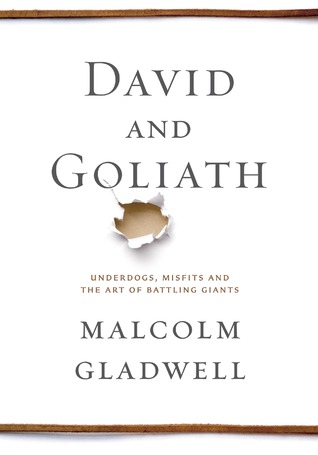
Next year, I am going to put this list first, and we will analyze author’s craft as we learn about argument. I’m also thinking of only introducing Gladwell’s books. I’ll add David and Goliath:  Underdogs, Misfits, and the Art of Battling Giants, and maybe What the Dog Saw: And Other Adventures after I read it this summer. That way students will still have choice as to which book they select, but all students will be reading books by the same author. This should work well as we study the moves of one writer, something I waited way to late to do this year.
Book Club One:

Outliers, the Story of Success by Malcolm Gladwell

Blink, the Power of Thinking Without Thinking by Malcolm Gladwell

The Tipping Point, How Little Things Can Make a Big Difference by Malcolm Gladwell

Freakonomics by Steven D Levitt and Stephen J Dubner

Quiet:  the Power of Introverts by Susan Cain


Book Club Two:

Extremely Loud and Incredibly Close by Jonathan Safron Foer

The Glass Castle, Jeanette Walls (non-fiction)

Swamplandia by Karen Russell

The Curious Incident of the Dog in the Night Time by Mark Haddon

Girlchild by Tupelo Hassman


Book Club Three:

The Namesake by Jhumpa Lahiri

Little Bee by Chris Cleeve

Sarah’s Key by Tatiana de Rosnay

The Kite Runner by Khaled Hosseini

A Thousand Splendid Suns by Klaled Hosseini


Book Club Four:

The Yellow Birds by Kevin Powers

Room by Emma Donoghue

Where Men Win Glory by Jon Krakauer (non-fiction)

The Bell Jar by Sylvia Plath

The Things They Carried by Tim O’Brien

Billy Lynn’s Long Half-time Walk by Ben Fountain
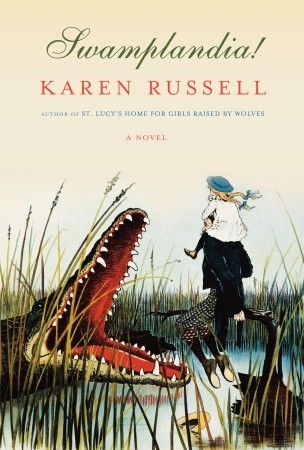
I am always reading some piece of compelling literature, always on the look out for the next book to add to these book club lists. My students did not enjoy The Bell Jar, although many students chose to read it, and no one chose to read The Things They Carried, even though I made as big a deal out of it as all the other titles. I just added Swamplandia this year, and then I forgot to talk about it, so it is still not vetted with students.

If you have any suggestions for compelling, complex, rich literature that engages adolescent readers, please share your titles in the comments. Thank you.


©Amy Rasmussen, 2011 – 2015

5 Ways to Enjoy the Last Month of School

Today we start a fun two weeks. Texas state exams and AP exams dual for the attention and time of most every student and teacher in the building.

Two weeks of juggling tests with students in and out of classrooms. Teachers putting on hats as proctors and hall monitors, shuffling to teach in different rooms so students can test in theirs. Stress can make cranky even the calmest souls.

Two weeks until the end of school after that. June 6 is our last day. Some days that sounds like the equivalent of enduring 12 long winters.

smart-goals1I must make the choice daily to be optimistic, to see the possible in all the end-of-year chaos.

5 Ways to Enjoy the Last Month of School:

1. Talk about Books. I will double the amount of time my students and I talk about books and reading. Summer slide is real, even for students in high school and AP English classes. I wrote some thoughts about summer reading here. I want my students to enjoy the reading they do this summer. Most have read double, some even triple, the number of books they read last year. I cringe thinking that many may not read even one book this summer. (The AP English Literature required summer reading holds little promise with Brave New World and Beowulf.) If we talk about books enough, and if my students write down titles that sound interesting enough, and if maybe I allow them to take enough books from my classroom library home for the summer — maybe even my most reluctant readers will read at least one book before they come back to school in August.

2. Sit and Listen. Last week a student tapped on my door during my conference period. “Mrs. Rasmussen, are you busy?” I was but I waved her inside. I shut my laptop and turned my chair, and Mikaila began to talk. She told me that she’d been in her business class when an idea for her writing project “burst in my brain, and I started writing it down, and the more I wrote the more I imagined and the more I began to cry, and then the teacher looked over my shoulder and got worried about what I was writing. I told her, ‘I’m okay, I just need to go see my English teacher.'” Grinning, she finally took a breath. Mikaila stood and talked with me for the rest of the period. She’s got a lot of hurt in her, and she needed someone to hear it. That is all I did. I listened. I still had essays to read and leave feedback on, but that afternoon with this sweet young woman was the best I have had in weeks. I felt needed. During the next few weeks I will try to be still, open my door, and listen. I doubt Mikaila is the only one who needs to talk.

3. Allow Students to Self-Assess. When my students care about their topics, their writing is always better, but after 11 years of school, so many of my writers care more about the grade they’ll get than about the quality of their writing. I’ve tried to change that all year. For the next few weeks, my students will read and revise their own work again and again. They will read one another’s writing and offer feedback, and then they will revise again. We have done two rounds of this already, and with the exception of just a few kids who put forth little effort and scored their work high, most everyone wrote an honest assessment of their writing process. They are thinking about the thinking they do as they write on the page. That’s the best kind of assessment possible.

4. Begin Planning for Next Year. Not full-on planning, mind you. That would make me crazy, but I have started a list of things I will change. I know I need to do a better job with organizing writer’s notebooks and teaching vocabulary. I know I want to read more poetry, although I added a lot in my primarily non-fiction AP English Language class this year. I know I need to do the lessons we did just last week early in the fall. I’ll add tabs in a writer’s notebook that I can use as a sample with my new students in the fall, and I’ll tinker in Drive as I make notes in my lesson plans. Planning gives me energy, so it makes sense to note changes I want to make now instead of hoping I remember them later.

5. Confer and confer and confer. Like you and your students, the relationships my students and I have built all year are strong and trustworthy. I want to utilize this trust and push my students further in their reading and writing than I would have been able to do earlier. The only way to do this is to talk with them more one-on-one. Every day as students read their self-selected books and write their self-selected projects, I will pull up a chair and we will talk. “What are you thinking?” I’ll ask, and they will open up and tell me. They know I will listen and offer feedback that they can take, or not. That’s the beauty of teaching students to take ownership of their learning.

©Amy Rasmussen, 2011 – 2015

Dumpster Diving for a Book Shelf

shelfieMy husband called, “Hey, there’s a book shelf by the dumpster. Do you want it?”

Funny that he asked. I know he knew I’d say yes.

I put the tall black shelf by the door to my room, which was pretty much the only open spot. But most of my classroom library sat cozy on the opposite side of the room. I did not know what books to put on this new shelf.

It sat empty waiting for three months.

There’s nothing quite so unsettling as an empty shelf in a bibliophile’s classroom, but my husband made me promise not to buy any more books. This is hard.

Finally, I got smart and labeled the shelves “1st period Suggests You Read,” “2nd Period Suggests You Read,” etc.

Slowly, I started moving books that students talked about, the ones they told me they liked. Then I Favorites book shelvesnoticed that a few students started returning their books to these shelves, and after we did Speed Dating with a Book a few weeks ago — we put all of our to-read-next titles on these shelves.

Now, instead of having most of our book choices on the bright green wall across the room, students walk past this shelf as they come and go.

Pretty good deal for a dumpster find.

©Amy Rasmussen, 2011 – 2015

Hey, Do You Want to Hear a Good Poem? #poeminyourpocket

What makes a good poem?

I like to ask my students this question. They usually fumble with an answer.

That is what makes reading poetry with students rewarding. Eventually, even the hardest teenage heart will come to at least appreciate the complexity of language — maybe she’ll never appreciate the beauty of it, but she will appreciate the craft of the poet.

Sharing good poems with students on a regular basis proved a hard goal for me this year. (Better than last; not as well as I wanted.)

One go-to book is Garrison Keillor’s collection of Good Poems, as Heard on the Writer’s Almanac. It is a must for every English classroom. My wish list includes two other volumes:  Good Poems for Hard Times and Good Poems: American Places. 

I especially like how Keillor sets the tone of the selection with poetic lines in the introduction that describe what makes a good poem:

Stickiness, memorability, is one sign of a good poem. You hear it and a day later some of it is still there in the brainpan.

What makes a poem memorable is its narrative line. A story is easier to remember than a puzzle.

[Poems] surprise us with clear pictures of the familiar.

And this beautiful paragraph, an epigraph for Emily Dickinson, really:

To see poetry finding an existence that its maker never imagined, visit Emily Dickinson’s grave in Amherst. Here lies the white-gowned virgin goddess, in a cluster of Dickinsons, under a stone that says “Called Back,” and here, weekly, strangers come as grieving family, placing pebbles on her big stone, leaving notes to her folded into tiny squares, under small stones. Dickinson was a famous recluse who camped in the shadows in the upstairs hall and eavesdropped on visitors, and now there are few graves in America so venerated as hers. She is mourned continually because the quickness and vitality of her poems maker her contemporary, and when you make flies buzz and horses turn their heads and you declaim Wild Nights! Wild Nights! and give hope some feathers, you are going to have friends in this world for as long as English is read.

I just love that, and Dickinson isn’t even my favorite.

I am finding favorites though. So far, my favorites are the poets I know in person: Dawn Potter, and  Meg Kearney.

My students need the chance to find favorites, and that is why I must expose them to good poems. Reading aloud poems on a regular basis has the same effect as talking about books regularly.

Today is Poem in Your Pocket Day.  Will you participate?

Because I know I need to be more consistent with poetry, and even though we are in the middle of a giant writing project, my students and I paused this week and talked poetry. We read and questioned and laughed and loved being immersed in beautiful language.

We pulled the poetry books off the shelves, (I only have about 15, so far, so we had to share) and we wrote out poems on pretty paper to put in our pockets. I challenged students to share their poems throughout the day.

Some balked.

Some said sure

but meant no way.

Others will follow my lead:

“Hey, do you want to hear a good poem?”

©Amy Rasmussen, 2011 – 2015

Not Your Same AP English Summer Reading List

I started counting Mondays. I try not to get overly excited for summer but I cannot seem to help it. I have so many grand plans. I’m lucky that way. I get to travel to conferences I want to go to and see friends I want to see.

My students are not so fortunate. Most of their summer will be spent within a few miles of their homes. That’s usually how it goes for kids in less affluent areas. They hang out. Do nothing. At least that’s what they tell me.

I want them to read. The summer slide goes right on sliding right into high school.

Some of my students will read because they’ve come to identify themselves as readers this year. They’ve crafted lists of books that interest them, and they’ll make their way to the library and check out books that look intriguing. Some will make their way to the book store. Several of my students have spent their part-time paychecks on books we’ve talked about in class.

They are learning what it means to value books. Of course, I’m pleased.

Summer reading is a tricky thing. I know many students will not read if they do not have an assignment that requires it. That is what we’ve taught them to expect. Expectations engrained like this are hard to change.

Change is possible though.

We can change the books we put on our ‘required’ reading lists (I like the word recommended or suggested so much better.)

We can allow choice of titles instead of Screen Shot 2015-04-28 at 9.43.41 PMmandating one specific book.

If we want our students to want to read, we have to make it easy for them. The article Those Tired Summer Reading Lists. Here’s What to Do offers more to this argument. (And it’s got some nice alternatives for reading logs, too.)

I wonder how you are prepping your students for summer reading?

Me? I have already started the pep talk: The senior AP English teachers on my campus are mandating A Brave New World and Beowulf.

I’ll just leave that right there.

I am proud of my AP English Language team. We’re providing an annotated list of paired texts for our incoming juniors: Summer Reading with a Challenge and a Choice. This is not your same AP English summer reading list. I am confident we will win over more readers this way.

Choice always does.

Maybe we can help more teachers remember:  Is summer reading about the reader or about the book?

In the next few weeks, I’ll talk up books with my students. I’ll remind them of the choices they had in our book clubs. Maybe they’ll remember how hard it was to choose just one title at the time and read another this summer. I’ll show some book trailers and encourage students to grow their TBR lists. We talk a lot about readers having reading plans.

I lose a lot of books throughout the year, but I’ve also got a lot of books on my shelves that never move. I’m thinking of having some kind of check out system, maybe a $2 sale (if I can do that). I’d rather have books in student hands than sitting all alone on shelves all summer. Anyone have ideas here?

What are your plans to encourage readers to read this summer?

©Amy Rasmussen, 2011 – 2015

Behind Barbed Wires

sticker,375x360.u1In honor of the recent Holocaust Remembrance Day, I find it befitting to share Room 382’s shelf comprised of pieces in which those, who experienced the nightmare, share their stories.  Each piece on this shelf is dedicated to bringing awareness, and hopefully shed light on how history truly can repeat itself, if we do not prevent it.

While this shelf hosts stories of tragedy, suffering, and insurmountable pain and loss; it serves a purpose. Aside from the devastating, these pieces share with us the true essence of humanity.  Often, this is the first time students are diving into this 80-year-old genocide and trying to make sense of it. Many times we can’t; and other times we are able to connect over the beauty that surfaced. It’s all very complex.

Elie Wiesel’s story (and bravery) is shared via his trilogy starting with Night then moving us through Dawn and eventually through the Day.  See what he did here?

Anne Frank shares her experience as a young woman budding into adolescence in a time where her beautiful spirit defeated the confines of her attic.  Various types of literature have been compiled so IMG_20150424_083609students (and all readers) can experience Anne’s story in various ways: her published diary, actual footage restored via the Anne Frank House (a gift from a friend’s visit to Amsterdam), the play, and many others.

Maus, an incredible two-part graphic novel, utilizes the “Cat and Mouse” metaphor to portray the Nazis
vs. the Jews during the Holocaust.  This two part series is detailed and brings to life the realities of the inner workings; the emotional turmoil yet amazing perseverance of those living through this moment in history.

Those are three pieces among many.  There are books here (and ones that are currently signed out) that chronicle voices of the children of the Holocaust, novels that use real-life situations yet tell a fictional story, perspectives from a Nazi’s Jewish wife, the bravery of a journalist who swapped places with a Jew to ultimately expose the hidden…

Students are typically surprised, fascinated, uncertain, saddened and sometimes hesitant when it comes to this shelf.  Understandably.  This shelf asks us to inquire and then sit with our findings.  Yet, the conversations and rich discussions that float around this shelf are beautiful; truly beautiful and strengthen our understanding of what it truly means to be human.


Launching an Official Monthly #poetrychat

Screen Shot 2015-04-23 at 2.49.34 PM

Evidently, there is not an official #poetrychat, but isn’t it a sweet idea?

Poetry serves as an important and beautiful lens into the literary world, and it deserves more than a hurrah during National Poetry Month.

I find that the more I talk about poetry the more I use poems in my classroom. Not like that’s a big surprise. The more I talk about books the more my students read.

So, I’ve been giving this a ton of thought. Do I want one more grape on my plate? And the answer has to be yes.

Today @JasonCarney5 artistic director of Young DFW Writers gave a pitch to my English department. Would we like to be a school that takes advantage of the Louder Than a Bomb program?

Um, yeah.

Meeting Jason and hearing about how his introduction to poetry changed the trajectory of his life was another testament to the power of poetry and what reading and writing it can do for a young person.

Aren’t we as literacy educators always looking for ways to engage and empower our young people and give them opportunities to grow as readers and writers?

So, yes, even if I get YDFW at my school next year (which I’m pretty sure is a done deal), I still feel the need to join other educators who are passionate about the “art” in language arts for a monthly poetry chat.

The teacher-writers at Three Teachers Talk are starting a monthly poetry chat. We hope to connect educators and poets, and work to infuse poetry into the year-long curriculum of ELA classrooms.

“A Poem about Topics for a Poetry Chat”

Spoken-word poems,

prose poems

found poems

spine poems


Ways to share student-written poems


Poetry to teach allusion,

imagery

syntax

grammar

self-respect


Books in verse

Verses for book talks


We will meet the first Monday of each month at 8:00ET, directly following #engchat at 7. Remember to use the hashtag #poetrychat — and to have links ready to your favorite poems and lesson ideas.

Mark your calendar for Monday, May 4 at 7:00 pm Central Time.

Leave your ideas for topics in the comments. Thanks!

In Search of Hope

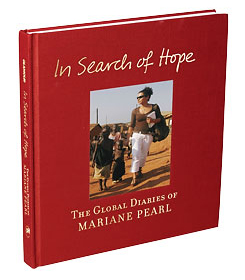
mariane pearl book coverI first fell in love with Mariane Pearl’s writing when I read her memoir: A Mighty Heart where she chronicles the events leading up to her husband’s murder in the Middle East.  It was devastating.  Tragic, really.  Yet, her voice sang from the pages even while sharing the most intimate moments associated with a murder that was so incredibly public.

So, to no surprise, when I came across In Search of Hope: The Global Diaries of Mariane Pearl,  I was thrilled. Pearl, a journalist for Glamour Magazine, took on the world – visiting twelve different countries. She was escorted through these countries by powerful women that are all on missions to bring positivity, safety, and change to countries that are broken.

Pearl visits with courageous women who share the most private details of their work – and passion.  She learns about a Cambodian sex slave’s liberation; Liberia’s presidency from the perspective of President Ellen Johnson Sirleaf (2006); an AIDs orphan turned healer in Uganda; a New Yorker who leads children needing guidance; how justice is getting a voice in Mexico…and so much more.

As you read these short stories full with dynamite photographs, writing that is powerful, and experiences that shed light on women fighting through the injustices associated with their countries, culture, and neighborhoods; you can’t help but to feel as though you are on a year long excursion around the world – one that authentically changes your core as a human being.

Students love this piece.  They are awed by the bravery of these women; Mariane for exposing truths that do not get adequate recognition and the women who are willing to risk their own safety in order to save others.  For every reader, Pearl puts life into perspective.

The richness found within these pages comforts you.  It makes you believe that anything truly is possible.  Well, because it is.  It provides students access to beautiful moments experienced within other cultures and propels them to reflect on their own morals and values – what are they really willing to fight for?

In Search of Hope is a piece that leaves you feeling compelled to explore.  Travel.  Find your own truth.  And when you do, write about it.

Everywhere You Turn

Over the last three years, our Francis Gittens Memorial Lending Library has grown literally by thousands of books.  And, it’s a beautiful sight.  One in which provides comfort, challenge, and dialogue among students and educators.  It propels interest in reading and provides options and choice; students sometimes pull up a chair and use the edge of any given shelf to rest their Writer’s Notebook while they write and find inspiration.  It’s our staple here in room 382.

But, as more and more donations come through the door, I panic: Where will they all go?!  We are currently wall-to-wall with bookshelves (many that tower over us) and the remaining space is either wall-to-wall windows or full of technology.  So, I started to utilize every open surface: our computer cart, window sills, filing cabinets, my own desk.  Now, literally everywhere you turn, your gaze lands upon books…stacks and stacks of books.

Initially I felt overwhelmed by having books everywhere; I thought it felt chaotic.  But, the perceived chaos actually provides students even more choice and an innate awareness of their surroundings. Students have started to become even more in-tune with their reading journeys and have been feeling more compelled to explore.  For more reluctant readers they have access to books without it feeling as though there is the need for any sort of grandiose gesture; trekking across the room to the wildly overwhelming library.  It’s subtle yet powerful beyond measure.  Everything is within their reach.

IMG_20150421_093753

Books resting on technology…

Everything.  Even our mobile technology cart full of laptops. The books on top are stacked in four piles; they are our newest additions.  Because the cart find its way across the room, near different seats, and at various different spots depending on the day; it’s equivalent to an ice cream truck making its rounds – no one is to be missed.  These piles change as the new additions continue to stream through the door.  Many students, as they are accessing the cart for a computer, find themselves pausing for a moment because a book title…or cover…or piece they realized was on their next-to-read list…has caught their attention.  I love the irony that’s often captured here when a student is simply going to return their computer, hears the bell ring, and runs to their Writer’s Notebook to jot the title down; yet forgets to put the computer back!

IMG_20150421_094028

Here is one of three window sills adorned with literature – and some added nature.  During the winter months in room 382 the heat tends to be unbearable (hence the cactus) which is quite unfortunate.  Yet fortunately, students like to get a breath of fresh air.  So, while doing so they find themselves multi-tasking – breathing in the fresh city air while perusing through the new titles that greet them at the window.  Many times, a lesson or writing workshop will be interrupted with, “Miss Bogdany, I found another book about XXX!”

Books decorating ugly steel surfaces...

Books decorating ugly steel surfaces…

Many students have just recently begun to proudly embrace their love for graphic novels. Typically,they believe that they’re for ‘young kids’ because of ‘all the pictures and stuff’.  I whole-heartedly disagree.  So, in the vein of supporting students’ interest in visual literacy, many are found atop an industrial filing cabinet adding color, texture, and accessibility.  Because this surface is also used for additional supplies, students access it often.  Every time they are wanting to find their zen (see butterfly book box on the top left) they happen upon literature that excites them.  Many times, the zen garden and a new book escorts them back to their seat.     

IMG_20150421_093914

Exhibiting my literary interests. The left stack is comprised of pieces I want to read. The ones on the right are my absolute favorites. And, the ones in the middle are a fantastic mix of professional resources, gifts, and tools.

I know students will not produce work if they are not comfortable; both physically and in feeling safe within a community.  I create a visually stimulating space at my desk because it’s what fuels my passion for all things literacy. I also know, when a student needs their own unique space, they tend to gravitate toward wherever it is that I’ve set up shop.  It has been labeled ‘their corner office’ – and yes, they get right down to business!

There are other times when I conduct 1:1 conferences and ask a student to engage in dialogue in our bright back corner.  I watch their eyes drift from their writing to the options resting atop my wooden workspace.  Students will reach across the desk to pick up a piece they have never seen there before and while I try to get their attention refocused on our conference, sometimes the book they’ve chosen is much more convincing than whatever it is I’m trying to do.  I also think some of the intrigue is that students know that what they find there are pieces I can really talk about because I’m passionate about them.

So, as the year starts coming to an end and we start thinking strategically about how we are going to start minimizing our inventory and organizing it for our summer packing; please don’t!  Keep moving things around and keeping it fresh.  Put books in places you haven’t before – students will find them trust me.  Play around with what you have displayed in your area and invite students to engage in conversation wrapped around them.  But, most importantly, enjoy these remaining few months with our inquisitive and dedicated readers as they continue to look around our learning environments and find exactly what they didn’t even know they were looking for.

Where do you keep literature aside from your library shelves?  What successes have students found when they happen upon a book in the most unlikely of places?


An Invitation: Are You Walking the Talk in Your Content?

Now, that is the way to walk the talk.

knowyourphrase.com

knowyourphrase.com

I attended a Vocal Majority concert Saturday. This is one awesome men’s chorus. When the emcee introduced a quartet, I sat up a bit. There, singing with The Essentials was the choir director from my high school. Wow, what a voice.

As he sang, I kept thinking: There is a teacher who walks the walk. His presence on the stage, singing first in a group, then in a quartet, and later even as a soloist, shows that he knows exactly what his students must do — and feel — when they engage in activities and performances in the LHS choir.

Credibility is huge.

I think about this as I talk with other English teachers. I should stop being surprised when I learn that they do not read — “unless it’s a book I’m about to teach, of course.”

I’ve heard that more than once.

Perhaps even a bigger concern than not reading:  many English teachers are not writers.

The thing that has helped me be a better writing instructor — not attending conferences or classes, not reading pedagogy books — the single most thing that’s improved my ability to teach writing:  Becoming a writer myself.

I understand the struggle to think of ideas, the headache of revision, the joy of finally getting something right. My students need to know that I know what all of this feels like.

Like my colleague the choir teacher, I try to walk the walk of my content. I am an individual intent on improving my literacy skills, just like I want my students to be. I talk about my reading life, and I share my writing life with my students, regularly.

I think they trust me more because they know I read as much as I ask them to read. I write as much as I ask them to write, and every major assignment I give to them I write myself (plus this blog and a book I’ve been working on for awhile now.) I even write blog posts about improving my writing: 5 Ways to Meet Your Writing Goals.

It is not hard to have credibility. But it does take commitment.

The Best Writing Teachers are Writers Themselves.

A couple of weeks ago, i joined in a #litlead chat. The topic turned to teacher-bloggers and why and how to become one. A few participants in that discussion spoke out and said they were nervous about starting their own blogs, but they know it is a good idea. I’m sure their reasons for wanting to blog are varied, but there are three possible truths:

Teachers who blog are more likely to 1) reflect on their practices, 2) seek out new ideas for topics to write about, 3) show their students that they practice the craft of writing — like they hope their students will do.

I offered to let those nervous about blogging to wade it a little and publish a piece here at Three Teachers Talk. One stipulation: You have to be an advocate for readers and writers workshop. (That is the main topic of this blog after all.)

So think about it:  Do you walk the talk and walk the walk? Do your students see you as an adult with passion for your content outside the classroom walls?

Would you like to write a guest post? Send me an email with your idea, and I’ll respond and set up a date. (amyprasmussen@yahoo.com)

I’d like to help you walk a better walk.

©Amy Rasmussen, 2011 – 2015