Top Books for Reluctant High School Readers

IMG_2877“I’m not a reader.” I hear this multiple times during my first weeks of conferencing. The non-readers are easily identifiable; their body language alone speaks volumes of their disdain for books.

“You just haven’t found the right book,” I tell them, and they smirk, knowing they’ve heard that statement before.

The first week of school is a vital week of matching students with books, and while I itch to recommend titles, I hold back, giving my freshmen the independence and freedom they so desperately crave in high school. Too often students blindly accept recommendations without so much as a thought to the contents. They lack self-awareness when it comes to their reading interests or style, which is why those first two weeks are essential to not only organizing but also empowering them through choice.

Throughout the week, I book talk popular titles, engage in “speed dating” with books, and provide ample free time for students to explore our classroom library, but I also get out of their way. Instead of telling them what to read, I model ways to find a strong candidate, considering reviews, awards, contents, genres, and summaries.

While the majority of the class tends to quickly settle into their books, there are always stragglers who remain convinced they’ll never enjoy reading. These students sometimes grab the first book they see off the shelf, and oftentimes these books are too dense, difficult, or in some cases “boring.” That is okay! I settle into conferences with these students, getting to know their hobbies and eventually handing them two or three books that might pique their interest. In the end, they still choose what to read, but in the process they might require some initial guidance.

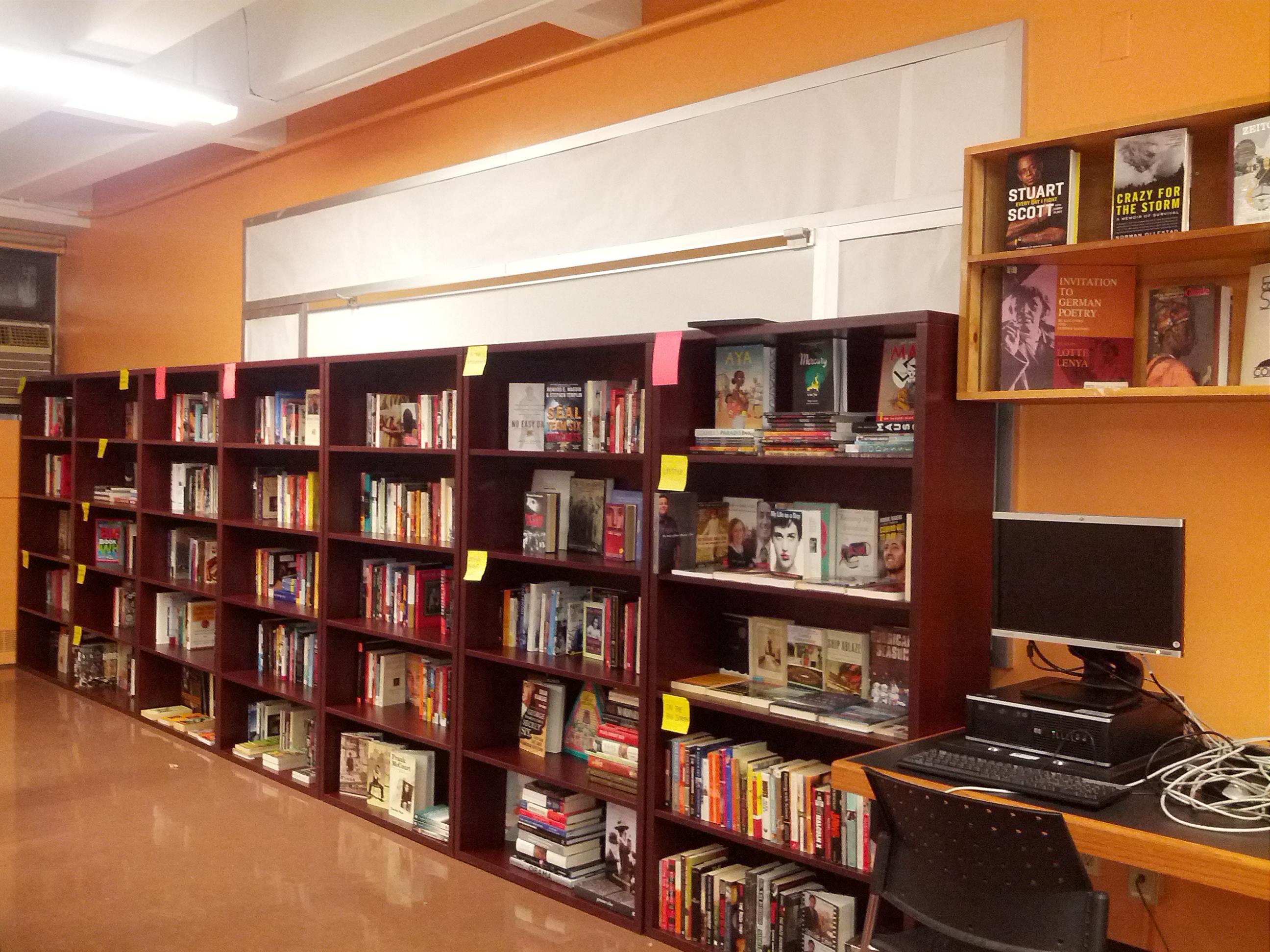
IMG_2870Regardless of who picks the book, the end result remains the same—to find a plot that envelops and consumes students, forcing them into the story. Here are some of my number one titles that tend to break down the shell of even the most reluctant readers.

Ready Player One by Ernest Cline

I’ve already had three students read this book, one of which is Leah, a gamer and self-identified non-reader. When I asked if she has ever had a favorite book, she thought for a second then said, “I think this one might be the only book I’ve ever really liked.”

The Compound by S.A. Bodeen

Adrian initially picked a sequel to a book he read last year. “You must have liked the first one then?” I asked.

“Not really,” he replied. “I just didn’t know what else to read.” The next day he picked up The Compound, which is full of the fast-paced suspense he craves.

Paper Towns and Looking for Alaskaand basically everything by John Green.

I chased Emily up the stairs for this recommendation. When I asked her which one sparked her interest in reading, she said she couldn’t remember which had sucked her in. She just knew that despite her protestations at the beginning of the year, by the end she “loved them both.”

The Eleventh Plague by Jeff Hirsch

Damion had only ever loved one book and he was bound and determined not to like any in my classroom; that is until he came across this futuristic, survival story. Upon sitting down beside him for a mini-conference last year, he looked away from his book briefly to say, “Ms. Catcher, I’m at a really good part and I can’t talk right now.”

Gone Girl by Gillian Flynn

“I’ve had people give me ‘dark’ books before, but they aren’t dark at all,” Sarah tells me. I hand her three options, one of which is Gone Girl. Three days later she tells me, “I’ve spent my whole life hating books, and you’re the first teacher who ever found one I actually liked.”

Unwind by Neal Shusterman

I book talked Unwind second this year. It’s a given crowd pleaser because of its twisted plot and graphic scenes. The fact that I only have one copy of my four originals is a testament to its popularity.

The Perks of Being a Wallflower by Stephen Chbosky

Carter claims he hasn’t read a book cover-to-cover since third grade, but he has fallen in love with Chbosky’s classic on teenage life. He said to me today, “Ms. Catcher, I love that this book talks about real things, things that are actually happening to us.”

“That book is only the beginning, Carter,” I said

What books do you recommend for reluctant readers?  Which titles are most popular in your classroom?

A Writing Workshop Lesson: Inspirational Speech

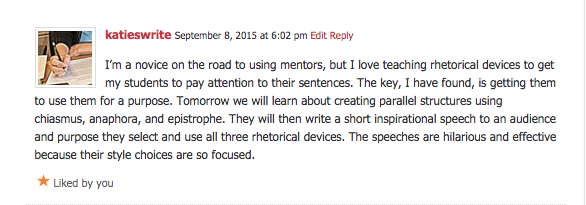
Last week I posted a mini-lesson about using student sentences as models for writing. Katie Bills-Tenney left this Screen Shot 2015-09-13 at 6.12.39 PMcomment. And I asked if she would write a post about her lesson.

She did even better:  she wrote on her own blog, complete with a lesson outline and student writing.

I love what she does here — and what her students do here, too.

Thank you for letting us see inside your classroom Katie.

Follow Katie at @Katieswrite

Mini-Lesson Monday: Self-Monitoring Reading Homework

It’s the fourth week of school, and some students are starting to panic as their weekly reading homework grades are showing up in our online gradebook.  When they come to me, concerned, I ask, “Have you been doing your reading homework?”

Sheepish grins, embarrassed blushes, and nervous giggles follow.  I know I need to give my students some tangible reminder of why they need to be reading two hours per week.

Objectives — Using the language of the Depth of Knowledge Levels:  Calculate how much you can read in two hours; Estimate how your reading rate will change over a two-hour time period; Assess your own reading fluency and growth.  Or, from the Common Core: Read and comprehend complex literary and informational texts independently and proficiently.

IMG_9336

Shailyn, Justin, and Mrs. Karnes’ paint strip bookmarks

Lesson — We begin class, as always, with independent reading.  I ask students to pay attention to what page they’re starting on and start a timer for 15 minutes on the board.

At the end of the 15-minute reading period, I ask students to count the number of pages read and multiply that number by eight to calculate their reading rate.  They complete their calculations and jot down their reading rates as I pass out paint strips and Sharpies.

“Today I want to remind one another about the importance of frequent reading.  We can’t become better readers without lots of practice reading, which is why your weekly homework is to read for two hours.  So, we’re going to make some bookmarks reminding us why we read, and also reminding us how much we should be reading.”

I ask students to take out their phones and look up a quote about reading.  Once we all choose quotes, I model on the document camera, writing my chosen quote on my own paint strip.  Students grab some Sharpies and a paint strip in their favorite color and doodle their quotes on their paint strip bookmarks.

IMG_9335

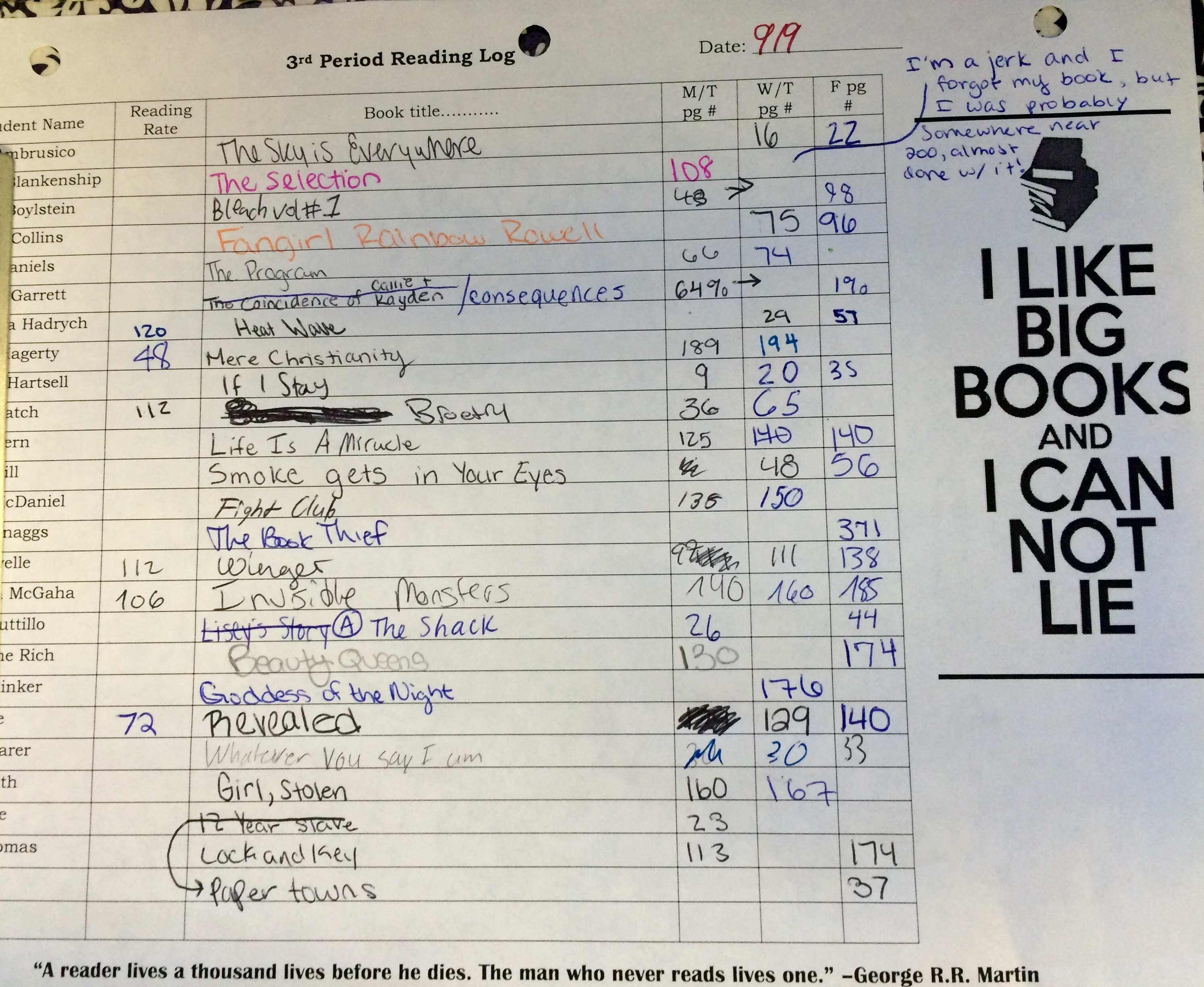
Students modify their reading rates in the Reading Rate column

“Once you’ve gotten your quote down, add your reading rate to your paint strip, nice and small.  You’ll want to change your reading rate whenever you switch books, and you’ll also want to note your new reading rates on the log sheet as it goes around each day.”

Then, I ask students to think about what might happen to their reading rates over time.  Jared predicts, “I think if I sit down for a solid two hours and read, I might read more than my reading rate.  When I really get going I can read pretty fast.”  Shailyn predicts, “My reading rate will increase…majorly!”

“What about if you read a harder book?” I ask.

“Um, I think I’d probably start out slow at the beginning, but as I get into the book, I’ll read it faster,” Shailyn adds.

“Awesome,” I say.  “We’ll have to see what happens.  So, as you use your bookmarks in the coming weeks, keep an eye on how your reading rate changes week to week, and how quickly or slowly you read your required number of pages.  I’ll check in with you in reading conferences soon.”

Follow-Up — Now that students have a tangible reminder of their reading homework to use as a bookmark, they can hold themselves more accountable.  The quotes give them a rationale for reading, and the written reading rates give them a reminder of their reading goals.  By self-monitoring both, students can assess their own reading progress far better than I can, and we’ll confer about that self-assessment during class for weeks to come.

#FridayReads: Matching Reluctant Readers to the Classics

IMG_9287On Tuesday, during a lull in class, Tyler was staring at the ceiling.

This isn’t unusual, or even discouraged, as our ceiling is covered with tiles that represent books.

“What’s that book up there?” he asked, pointing. “The one with the fire?”

“That’s Fahrenheit 451, by Ray Bradbury,” I replied.  I know that Tyler is a volunteer for our fire department.  I also know that he hasn’t had a lot of positive experiences with reading, so I tailored my impromptu booktalk to my knowledge of him specifically.

Fahrenheit 451 is a book about a fireman.  But he’s not an ordinary fireman–instead of putting out fires, he starts them.”

Tyler looked incredulous, and a bit offended.  “So he’s an arsonist?”

“He is, but that’s the job of the whole fire department in this book. Their job is to start fires to burn books and maintain censorship. Anyone whose house has books in it is the target of the department–they burn the house, and the books inside.”

“That’s messed up!” Tyler said, eyebrows raised.

“Right?!?” I agree, equally outraged for his benefit.  I tell Tyler some more of the plot–the corrupt fire chief, the terrifying mechanical hound, the strange professor that Guy happens upon.  “But eventually the main character–his name is Guy–gets curious.  He’s never read a book.  He starts to wonder, do they really need to be burned?  So, one day, at one house, he takes one.”

“The hound goes after him, don’t he?” Tyler predicts.

IMG_9289“He does.  And a lot of other crazy stuff happens.  I love that book so much…the way that Guy changes is so cool.  I really grew to love him by the end.”

Then, he asks the best question:  “Do you have that book?”  We cross to the bookshelf and I thank the gods–it’s there.

I give it to him, and he starts reading right away.

Tyler has abandoned a lot of books, but I think he’ll finish this one.  This was a case of matching the right book with the right reader at the right time, as Teri Lesesne says.

Tyler wants to read this book, despite its difficulty–he has reading strategies to cope with the challenges in vocabulary, sentence structure, and chronology that he’ll encounter.  I have faith that he will employ those strategies and grow as a reader and a thinker, as I have seen many a student do before, with greats like The Poisonwood BibleTheir Eyes Were Watching GodPride and Prejudice, and Brave New World.

We don’t need every single student to read all of those books.  They are gorgeous works of art that I hope everyone will discover, but thinking the only way to expose students to those books is to make everyone read them isn’t the way to do that.  Our student readers will find the classics on their own, if we give them the tools and the hunger to do so.  Tyler has the tools, and the hunger, so he found Fahrenheit–all because of a simple desire to know more, to find out why firemen would act so radically, sparked by the depiction of a flame on our classroom’s ceiling.

How do you match your readers with classic texts?

Kids Want to Write! (and why my writers need yours)

photo(1)Two weeks before the end of summer break Kayla shared a three-page Google doc of writing exercises with me. Yesterday morning Kate showed up at my door at 7:15am, brimming with writing prompts and workshop plans. And yesterday afternoon my writing meeting with two students turned into an impromptu gathering of ten. The odd part is that these aren’t my students. In fact, I haven’t even met the vast majority of these students who show up at my door. But they keep arriving, and the reason is that kids want to write.

I know this because for the last two years, I have co-advised my school’s Writer’s Club, a community of students who set aside time each week to explore words, laugh over prompts, and share their writing.

When I inherited Writer’s Club last year, I didn’t think the concept was unique to many schools. A teacher established the club before I was even hired, but as I grew to know my members, I realized Writer’s Club served a larger purpose. Students ranging from freshmen to seniors and academics to honors showed up at my door with notebooks. Students who had been writing their entire lives arrived with laptops packed with stories. While many of these students had tried out newspaper club, yearbook, and literary magazines, they told me they had found their niche here among like-minded peers. Unlike other clubs that focus on publication, Writer’s Club focuses on the process.

This club provides a safe space free from the pressures of classmates, peer groups, and lesson plans. Even my best classes (and believe me I love my classes) don’t capture the pure acceptance and kindness these students have for one another. Just like with adult writer’s groups, these students rely on each other to explore their thoughts and work. Some students carve out time to work on a book they’ve been writing, others plug away at fan fiction, and the majority dabble in a wide variety of styles and genres. This club gives them their fix of creativity that can’t always be reached within the classroom.

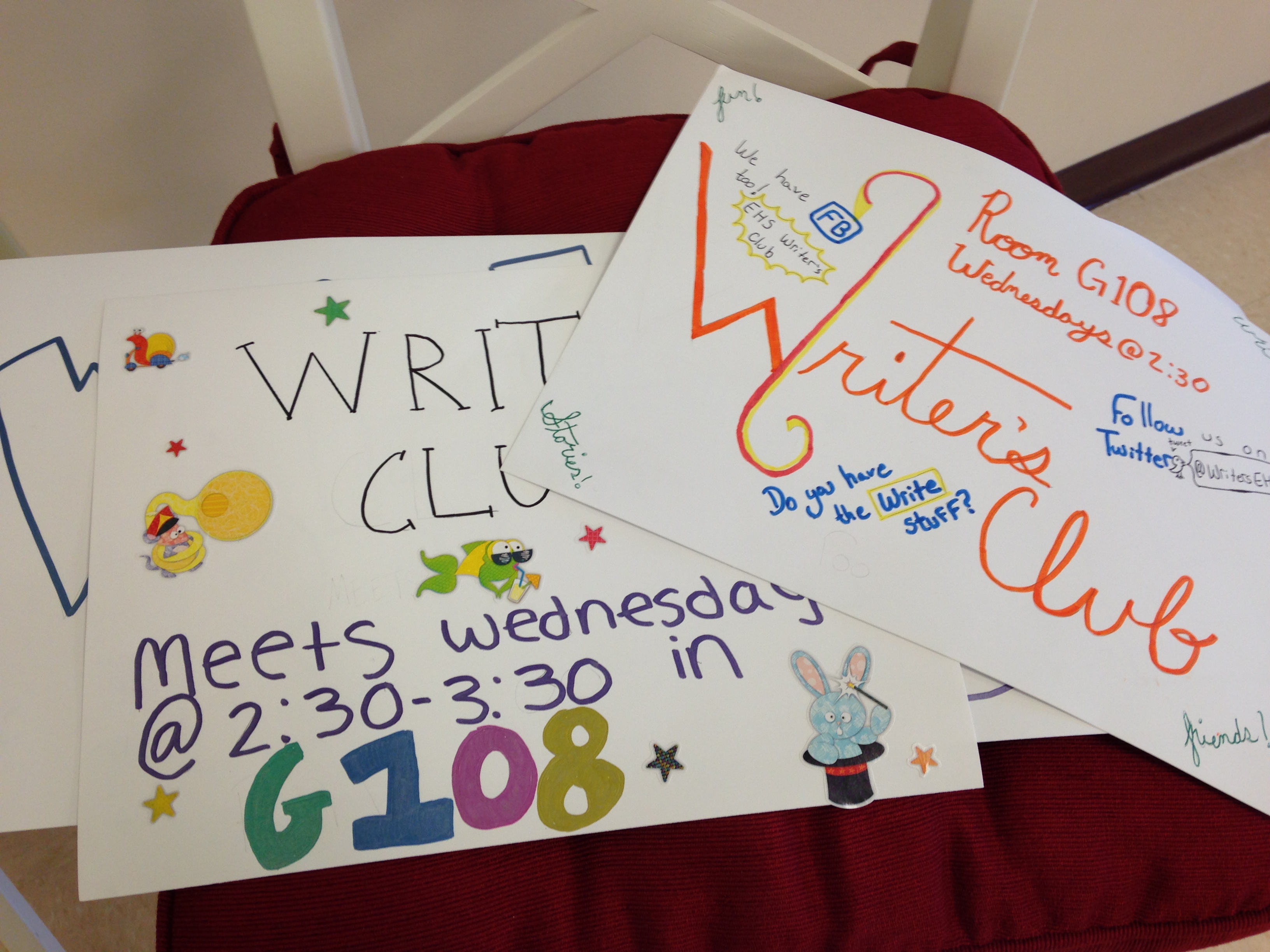
This year we have a variety of activities lined up. We’re already planning to decorate writer’s notebooks and create a colorful display for the club fair. We’re creating lists of workshop dates so members can sign up and discuss one of their pieces with the group. We’ll have lunch with visiting writers and invite local authors to discuss their craft. As the foliage turns, we’re planning a field trip to downtown Exeter where we’ll take a walking tour then settle into the park with donuts, cider, and notebooks in tow. But above all, we will write and share to our heart’s content.

Yesterday afternoon one of my freshmen stumbled into my room to look at the homework board. She froze in the doorway, scanning the room of students who were brainstorming on the white board and sitting at tables painting and coloring club posters. Music was blasting and kids were engrossed in their individual projects, laughing with each other, and telling stories of their summer.

“What is this?” she asked me.

“It’s Writer’s Club! Want to join?” I said.

“Well I’m part of yearbook club. We meet at the same time,” she said.

From across the room a student yelled to her, “Cool sweatshirt! I like that” while another struck up a conversation about writing fan fiction on the student’s favorite TV show Supernatural.

“Do you want to stay?” I asked.

She smiled, looked around, and took off her backpack. “Yeah, I think I fit in here.”

What do you do to inspire writers outside the classroom? Do you have a Writer’s Club or a writing group for us to team up with? We’d love to Skype, e-mail, share, and chat with writers from across the country!

Window Shopping and Writer’s Notebooks

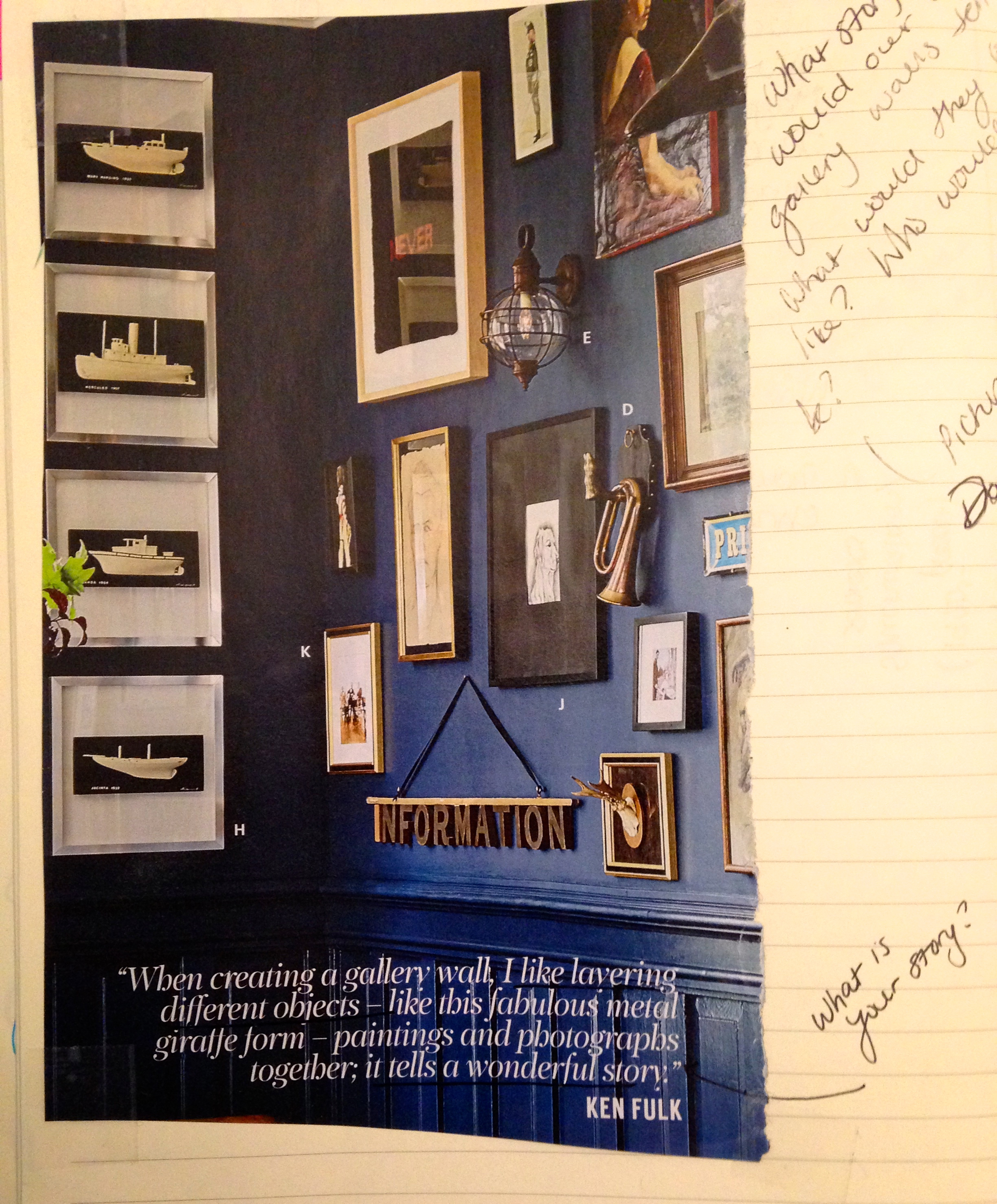
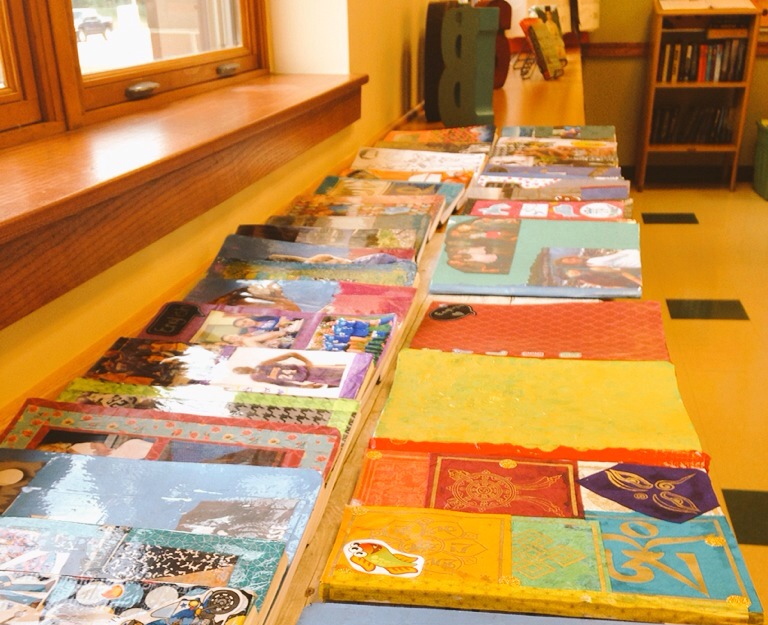
IMG_2848While thumbing through a Pottery Barn catalog, I paused to appreciate a navy gallery wall. Inky prints, gold frames, and brass hardware framed an assortment of images, below them designer Ken Fulk wrote, “When creating a gallery wall, I like layering different objects…paintings and photographs together; it tells a wonderful story.” I looked at the images, trying to decipher the story these antlers, ivory boats, dogs, and pencil sketches communicated. To be honest, I have no idea what he was going for, but I ripped out the page anyway, taped it into my writer’s notebook and started writing around it: “What story would our own gallery walls tell?” “What is your story?”

These are the questions I want my students to answer, and bit-by-bit their stories unravel. But all too often the process of answering these questions through writing intimidates them. In turn, one of the first activities we did this year to establish classroom culture involved designing and decorating our writer’s notebook covers. In the past I had students create inspiration page collages on the inside of their notebooks, but these were hidden and personal. They didn’t distinguish one’s self or serve as a conversational piece between peers. These images, which could serve as gallery walls for my students, were tucked away.

Student notebooks ready for writing.

Student notebooks ready for writing.

In turn, this year I stocked my classroom with scrapbook paper, patterned tape, and stickers. I lined tables with butcher paper and allowed for the messy process of gluing and cutting and painting. Together, my class sat listening to music and chatting about TV shows, cars, sports, summer vacations, and the scary transition between middle and high school. While this artistry and expression is typically celebrated at the elementary level, I encounter few secondary teachers who value setting aside class time for these collages. Some of my colleagues use it as a homework assignment, but I love how blocking out one class period and allowing for exploration becomes an icebreaker in and of itself. After all, these interactions mirror the same writing process students will engage in as they begin filling their notebooks and sharing the stories of their images.

Today we’ll circle around the classroom, sharing our notebooks with each other and highlighting one meaningful aspect of our covers. This activity is low stakes and comfortable; they have a choice in how much or how little information they provide. Hopefully they’ll find that these collages are snapshots in time of who

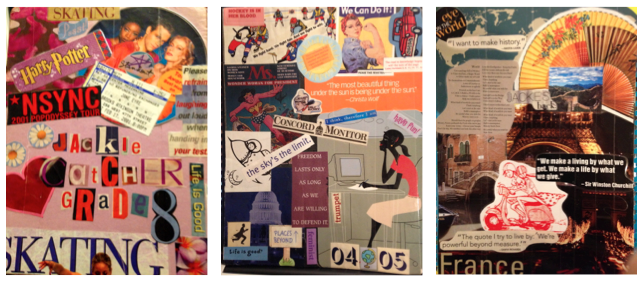
we are, reminders of what we value, and visual hopes for who we’ll become. I know this because as we sit in a circle, I will share, for the first time, the cover I created in 8th grade when I was caught between childhood and adulthood, the cover from 11th grade when I thought I wanted to be a journalist, and the cover from my junior year of college when I left on a great adventure to study abroad in Ireland. In the end, we’ll take a great leap forward in beginning our process of sharing who we are through words and images.

My notebook covers through the ages: 8th grade (far left), 11th grade (middle), junior year of college (far right).

My notebook covers through the ages. 8th grade (far left), 11th grade (middle), junior year of college (far right).

An Authentic Connection: Literacy and Citizenship

IMG_20150904_220827

Room 369: The New Home of the Francis Gittens Lending Library

It is finally time for educators across the state of New York to head back to school. Here in the city, we have one day to organize, get our rooms situated, be professionally developed, catch up on the summer on-goings of our colleagues, and be ready to open our doors and welcome our new students full with promise – tomorrow.

So, as I let this ruminate; I find myself referring back to an article I was sent this summer to keep my mind whirling and my thinking on the edge.  Why are students falling off track?  According to this piece from Education Week the gap that separates students from achieving academic success is staggering.  This is not news.

IMG_20150904_133918

A moment of calm amongst the disorganization…

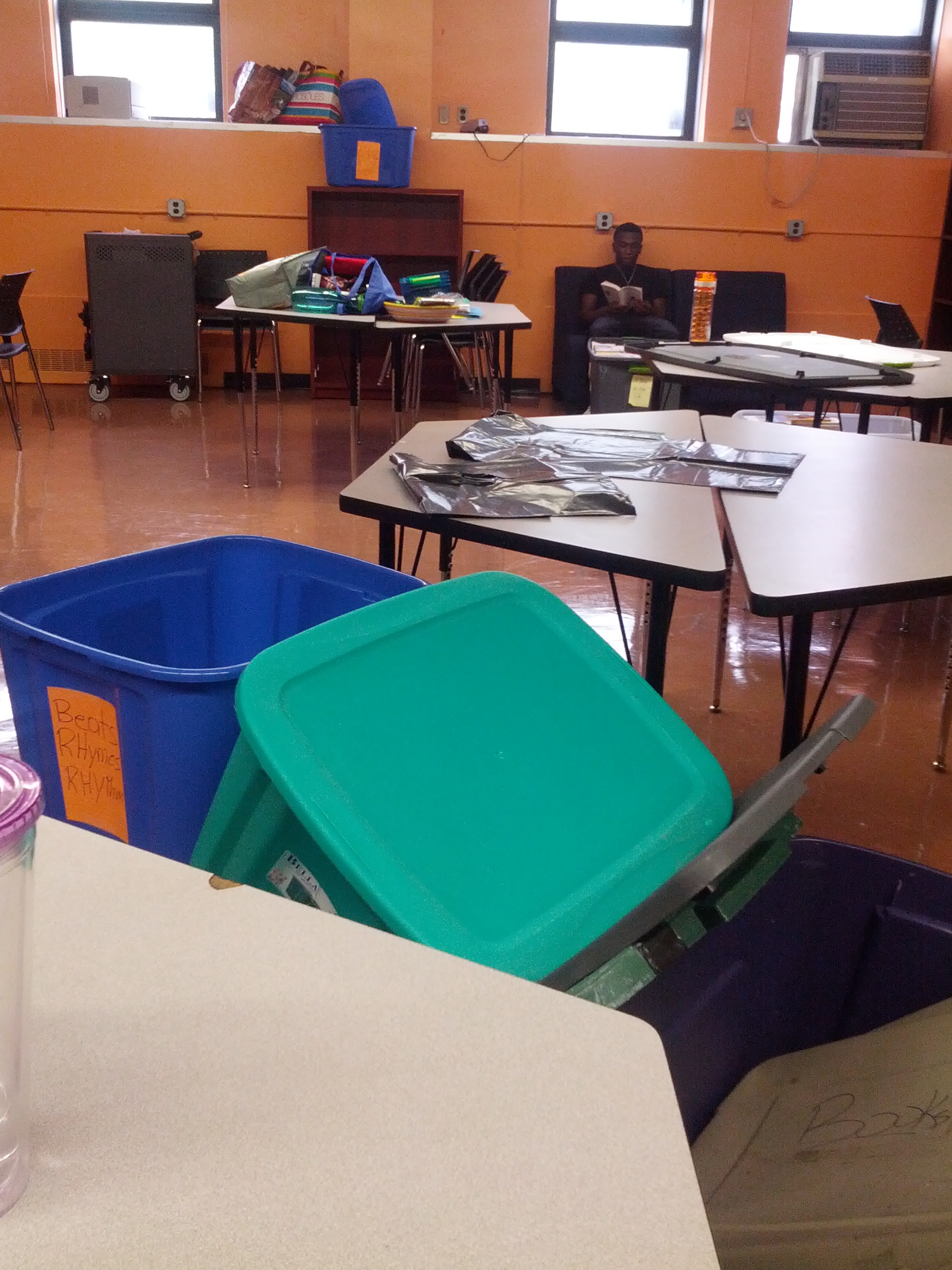
However, as I have had to arduously undergo this move of 3,000 books and their accompanied bookshelves (the entire Francis Gittens Lending Library) from room 382 to room 369; much has come to light.  I’m no stranger to believing that literacy is the key to access, opportunity, and self-worth; or that the Readers Writers Workshop is the venue in which to do so. Yet, this experience — this move, has taught me even more.

Literacy needs to be passed on.  It cannot remain only within our classrooms or the classrooms down the hall.  It must be infiltrated into the homes in which our students live; brought with them on public transportation where book covers are viewed by others; shared with siblings.  It must continually be invited and welcomed into places it does not often find an invitation.  That’s our job as educators.

I’ve been reflecting on this past year, and years prior, to recollect what I believe to be some of the most vital components of the educating that occurs within the Readers Writers Workshop – and I always come back to the same two elements: creating a love and thirst for knowledge through literature and fostering the creation of students’ voices through writing.  This was solidified when Daphtho (pictured above) matter-of-factly stated, “Ms. Bogdany, you don’t have to thank me for helping with the move.  It’s my way of thanking you for helping me receive my diploma.”

So when Daphtho and George (two recent graduates) offered to spend their time among the heat, lifting and moving and organizing and undoing and reorganizing and waiting (for me to make aesthetic decisions); they quietly schooled me.

IMG_20150904_173359

A moment’s pause amidst the move…

Through their actions they showed me that when we are relentless in supporting their thinking and ideas, when we foster them as individuals (not just students) they innately become the young men and women they are destined to become. They are willing to give back to their community (even if they are no longer going to be physically present). They understand what it means to feel safe to take risks, comfortable to allow vulnerability to surface, and the power of giving back.  And, are eager to pass it forward.

During the many hours of this move, there were quiet (if not silent) moments of understanding.  Albeit the towering stacks of boxes that needed unpacking, these young men stopped in their tracks as they found literature that spoke to them – and found themselves comfortable spaces in which to explore. Daphtho will be bringing literature home for his brother entering sixth grade as he works side-by-side with him on his literacy skills (knowing the importance of a strong foundation) and George decided on two pieces that were donated by a friend of mine from high school – ponderings and questions about taking the next steps in our lives.

So no, my urgency for, “Time is ticking” did not kick in.  But what did kick in was, “This is exactly what this time needs to be.  Us. Books.  Connection.  They are ready for their next steps.  How grateful I am to have borne witness to their growth and how wildly fortunate I am to know them as the citizens they have become.”    

What elements of the Readers Writers Workshop do you believe propels your students in becoming robust citizens?


Mini-lesson Monday: Student Writing as Our Mentors for Sentences

I read Learning by Teaching by Donald Murray this summer, and I finally understand the importance of using student writing as the main text in my writing class. While I’ve believed students can learn from

I lurked on this chat. Many positive examples of learning from student writing.

I lurked on this chat. Many positive examples of learning from student writing.

reading one another’s work, and I’ve often asked them to read and give feedback — on drafts and published pieces — I’ve never thought to actually use the text to teach a concept. I don’t know why. I supposed I’ve always relied on mentor texts by The Pros for that.

I am changing my tune. Here’s a bit of a lesson that worked better than I could have imagined.

Objectives:  Using the language of the Depth of Knowledge levels, students will write about their lives, and share their writing. They will recognize a wide variety of sentence structures. They will identify patterns, devices, and/or figurative language and discuss its effectiveness in creating meaning. They will revise their writing, formulate their own sentences, and apply their understanding to future writing assignments.

Lesson: Project the image, and ask students to write in their writer’s notebooks one sentence that answers the question. Remind them about what they know about various sentence structures and how punctuation works within a sentence.

“We can pack a sentence with a lot of information if we punctuate it correctly. Pay attention and see how you do. You can write any sentence, but try to not write a simple one.”

Give students about five minutes to write.

Next, ask for a couple of volunteers who are willing to write their sentences on the board. Be sure they understand that there is no judgment.

“We just want to talk about sentences.”

While two or three students write their sentences on the board, ask the other students in the class to read their sentences to each other.

one sentence

One at a time, read the student sentences on the board. Ask:  “What do you notice?”

Ethan sentenceTalk through the various comments students make, noting parallels, punctuation, clauses, word choice, etc.

Watch for teaching points. Ethan’s sentence on the left gave us a lot to talk about:  parallelism, use of semi-colons, colons, …

Next, ask students to return to their notebooks. “How can you make your sentence better?”

Allow time for revision (and time permitting, more sharing.)

Why this lesson works, especially for a writing lesson at the beginning of the year:  It’s just a sentence!

And sometimes we get a bonus gift like this one my class got from Edward:Edward C sentence

“I am the guy who picks people up when I, myself, am down; I am the guy who cares so much over things so little; I am the missing piece to a puzzle that has been forgotten; I am now by a sad and quiet shell of my former self; I am Edward Campos.”

The class hushed. All eyes turned to Edward.

“Wow,” I said, “Thank you for sharing this writing today. You’ve made yourself vulnerable, and we value that.

“First of all, we need to know that you are okay. Will you explain a little more what you mean here?”

Edward explained that he used to be fun and outgoing. He felt strong and powerful. Then at the end of last year and over the summer he learned his friends weren’t really his friends so much. Now, he feels alone and like he’s not the person he used to be.

“Hey, everyone, how many of you have ever felt like Edward?

“Look around, my friend, do you see all those hands? Everyone here has been where you are. We understand. You have new friends here.”

Two girls at Edward’s table leaned forward and touched his arm. “We’ll be your friends,” they said smiling.

And he smiled back.

Of course, because I am me — and I never leave a teaching moment untapped — we talked about the structure of Edward’s sentence. And we talked about the word choice:  “Why ‘forgotten’ instead of ‘lost’?”

When we watch for teaching moments in student writing, we will find them. Every single time.

Follow up:  In class the next day we did some free-writing in our notebooks in response to the spoken word poem “Hands” by Sarah Kay. Before we wrote I reminded students to pay attention to their sentences. Then instead of sharing the whole of what we wrote with the class, we only shared our favorite sentence. I consider this valuable formative assessment.

Now, I will hold students accountable for crafting their sentences with care in their upcoming writing assignment.

“The words of the world want to make sentences,” said Gaston Bachelard. I say, “We have to help them.”

Please share your best tips on getting students to pay attention to their sentences.


©Amy Rasmussen, 2011 – 2015


Questions for #Poetrychat Monday, Sept 7 at 7:00 CT

Screen Shot 2015-09-06 at 3.48.19 PMWe are excited Aileen Hower will facilitate #poetrychat tomorrow. And we love how our PLN supports us, inspires us, and give us room to grow — we met Aileen through Twitter. Follow her @aileenhower

Here’s a list of questions for our chat Poetry:  the perfect genre for reluctant readers and writers.

Please join us!

Q1. What qualities does poetry have that make it the perfect genre of text to read with reluctant readers?
Q2. What types of poems (style of writing) would you recommend reading with these readers?
Q3. When and how to you introduce poetry effectively with your students?
Q4.What poems would you suggest to accompany which themes, that would be well received among students who were not avid readers?
Q5. How would you introduce writing poetry to reluctant writers (which styles would you highlight first)?
Q6. What have your experiences been with how reluctant writers respond to writing their own poetry?

#FridayReads I Want All My Students to Experience This Kind of Reading

I’m always a bit nervous about how to introduce the volume of reading we will do in my AP Language class. Although students have heard that AP is “hard,” they don’t really know what that means until they start to see some of the texts they must read, understand, unpack, and analyze.

The biggest problem with all this reading:  most 16-year-olds are not readers. At least not when they come to me. (They do change.) Somewhere along their educational journey, the love of reading has gone by the wayside. Most tell me in our very first conference that they used to love to read. Few can tell with any specificity why they stopped. (I have my own theories.)

I’m constantly thinking of ways to help my readers fall in love again. If students are not reading, they are not growing as readers. It’s pretty simple logic.

And frankly, I want to live in a community of people who read. My current students will live on my street, work in the shops I patron, send their kids to my new grandson’s school. I want to be surrounded by families who enjoy literate lives because their lives will rub shoulders with mine.

Literature could change the world if we let it — if more people read it.

If we encourage what Louise Rosenblatt calls a sense of emotion, an aesthetic experience, in our young people, more of them would read. Rosenblatt explains how our readers need transactional experiences with the books they read:

“The transaction involving a reader and a printed text … can be viewed as an event occurring at a particular time in a particular environment at a particular moment in the life history of the reader. The transaction will involve not only the past experience but also the present state and present interests or preoccupations of the reader.” It’s like the letters on the page come to life, and the meaning of the words dance into the reader’s mind and heart. She has an experience with the text that remains long after she closes the book.

I want all of my students to experience this kind of reading.

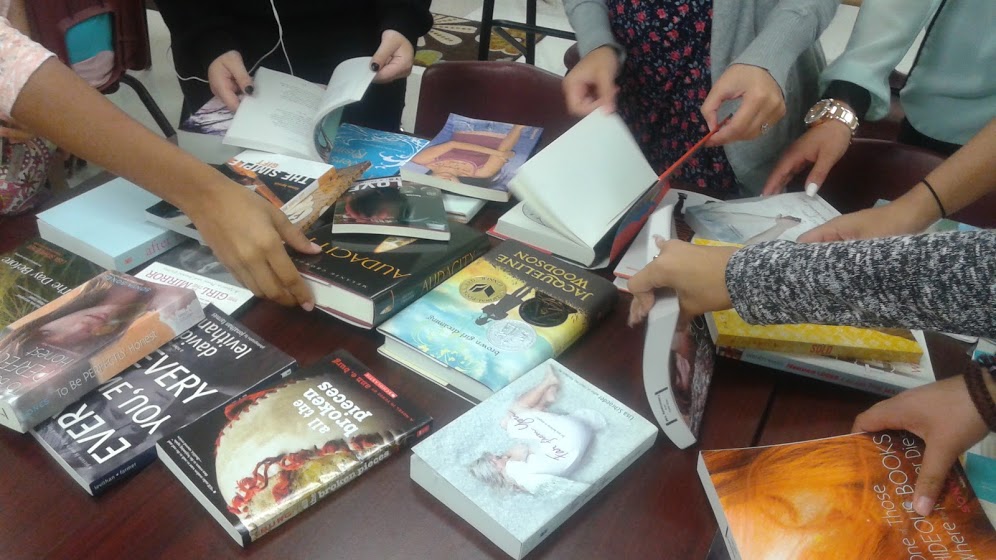
novels in verse 1So the first week of school I opened packages. Thanks to Donors Choose I had package after package arrive at my classroom. Each packaged filled with brand new novels for my brand new students. Most of them novels in verse — a powerful gateway back into reading with next to no stress. Few words on the page, and engaging story, vivid word choice, and a storyline brimming with emotion.

I book talked Chasing Brooklyn. It found a home in eager hands, as did To Be Perfectly Honest, The Crossover, Like Water on Stone,  My Book of Life by Angel, and many more.

If you’d like to build your Poetry shelf, or just add novels in verse to your classroom library, here’s a sampling of the books sweet donors gifted our classroom with this fall:

Like Water on Stone

The girl in the Mirror: A Novel

Audacity

Two Girls Staring at the Ceiling

The Red Pencil

The Vigilante Poets of Selwyn Academy

Perfect

October Mourning: A Song for Matthew Shepard

To Be Perfectly Honest: A Novel Based on an Untrue Story

What My Mother Doesn’t Know

The Simple Gift

The Secret of Me: A Novel in Verse

The Crossover

One of Those Hideous Books Where the Mother Dies

Every You, Every Me

Brown Girl Dreaming

I Heart You, You Haunt Me

Sold

Heaven Looks a Lot Like the Mall

Love, Ghosts, and Facial Hair

All the Broken Pieces

Geography of a Girl

Who Killed Mr. Chippendale?

(Note:  Shana’s the expert on building a classroom library by getting donations. Read about how she does it here. She’s got more ideas than just Donor’s Choose for books.)

Share your ideas on helping students have personal and meaningful experiences while reading…

©Amy Rasmussen, 2011 – 2015