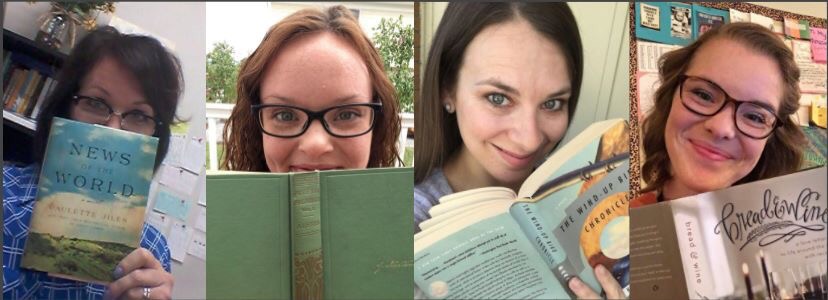
Please, Add Your Questions about Narrative– #3TTchat tonight 8ET/7CT

Last week I asked my students the same question I often ask teachers when I facilitate professional development workshops:  What do students today need?

My students talked in their table groups and then shared their ideas. Most said in one way or another:  We need to feel validated and to share our voices.

I don’t know of a better way to accomplish both then by infusing narrative into every aspect of my teaching.

Tonight is our inaugural #3TTchat with our guest Tom Newkirk, author of Minds Made for Stories and the new book Embarrassment: And the Emotional Underlife of Learning (among others).

Screen Shot 2017-10-23 at 6.02.59 AM

If you are a regular reader of this blog, you’ve certainly noticed we’ve focused on narrative, specifically Newkirk’s books, lately. I wrote about how teaching itself embraces the drama of story and later shared some of the quotes that resonated enough to change the way I talk about writing with my students — and the way I teach it. Lisa shared her beautiful argument Narrative Writing: Giving Voice to the Stories that Matter Most.

We are shoulders deep into planning our session for NCTE:  Reclaiming Narrative and Amplifying our Voices:  Using Story to Invite Fearless Inquiry and Intellectual Challenge for Our Students and Ourselves. (We present Friday at 12:30. We hope you will come!)

If you haven’t had a chance to read Tom’s books, we hope you will still join us as we chat with him on Twitter. And if you have some time between now and then, or any time really, perhaps you’ll find value in this Heinemann podcast with Tom about Embarrassment and how it is the “true enemy of learning,” or a sample chapter of Minds Made for Stories. You’ll see why we at Three Teachers Talk have made such a fuss.

In preparation for our chat tonight — and for our presentation at NCTE, we’d love for you to ask some questions about infusing narrative into our teaching practices, or just share with us some of your favorite ideas or best experiences with students and narrative reading or writing. We’d love to include you in the conversation tonight and in St. Louis at #NCTE17.

While you’re thinking:  This is the quick write my students and I will write today: What’s your story?

Narrative Writing: Giving Voice to the Stories that Matter Most

I’m a fan of literary mic drops. It’s often those last lines of text that make me smile, sigh, or chuck a book across the room. In conjunction with my unending impatience, I often find myself paging ahead to the conclusion of a text to see how the author and I will part ways. What profound bit of wisdom will end the conversation we’ve been having? How will we part? Do I get to hug this book tighter as I read because I know the beautiful place we’re heading together? Have I glimpsed a future I can’t stomach? Do I need to consider ending the relationship early?

Often, I am rewarded:

“Isn’t it pretty to think so?”
“Go, my book, and help destroy the world as it is.” 
“He loved Big Brother.” 
“In a place far away from anyone or anywhere, I drifted off for a moment.”
“All was well.”
“Are there any questions?”
“I wish I felt confident that I have the best words, but I’m glad I wonder whether they’re worth saying” 
“And he was feeling not-unique in the very best possible way.” 

“I don’t know where there is, but I know it’s somewhere, and hope it’s beautiful.” 

haunted

So it goes with my journey alongside Tom Newkirk in his Minds Made for Stories. Spoiler alert, I paged ahead. Spoiler alert, Mr. Newkirk did not disappoint.

In a text deliciously layered with reminders that narrative is the very foundation of our understanding of the world and our place in it, not merely a cute exercise for the early grades, Newkirk ends with:

“But as humans, as time-bound mortals, we must tell stories” (146).

Yes. Humans must tell stories. We must tell stories to explain how we got here, why we need one another, what we’ve suffered and celebrated here. We must tell stories to share who we are, what we need, and where we should never go again.

Creation stories. Quest stories. Comedic stories. Sob your eyes out stories. Monster stories. Our stories. And if our classrooms aren’t the place where these stories are born, or shared, or honored, or revered, where will they gain footing? Where will they take flight? So often, students already feel their ideas aren’t worth much. If we don’t support their experiences, wonderings, and desires to connect to their own humanity (or encourage them to have such desires), who will?

If we are in the business of promoting the beautiful stories of creative thinkers , how can we look at our students and say that their beautiful stories must fit within the constructs of our unit-based curriculum? The stories of our students, their questions, their pain, their searching, must find a home in our classrooms before these same students are convinced that their stories don’t matter. Likewise, if our students are convinced that they must fit their stories into the structural mold that we give them or that the grammatical difficulties therein supersede the story’s worth, our students will continue to be finishers rather than learners, with passions dulled and attention diverted to less complicated or messy endeavors.

In a world of Everything is an Argument a mantra I readily subscribed to when I took over the AP Language and Composition classes at our school almost a decade ago, I needed to read Minds Made for Stories. I needed to remember, as Newkirk says, that narrative is a “property of mind, an innate and indispensable form of understanding, as instinctive as our fear of falling, as our need for human company.” It is “a foundational mode of understanding” (34) that demands so much more attention than it’s afforded as a unit of study or structured paper our students pump out once a year.

In fact, narrative is at the very core of every significant argument and every engaging expository text I’ve ever taught, read, witnessed, or created. Without the drama of human experience, argument falls short and exposition falls flat.

Not long ago, I was listening to a podcast recommended to me by my husband. We were driving home from Lambeau Field, in the pouring rain, after the Packers had lost their first game of the season without Aaron Rodgers, whose broken collarbone will haunt the state of Wisconsin for at least the next nine weeks (See? Narrative).

Anyway, the podcast, Under the Skin, is produced by Russell Brand (stick with me here, I promise we’ll get through this together), who will not be everyone’s cup of tea, but whose brilliance (it was a surprise to me too) extends far beyond raunchy comedy. In this episode, Brand is interviewing Yuval Noah Harari, author of Sapiens: A Brief History Of sapiensHumankind. Throughout this conversation, Harari and Brand explore the idea that life is built on fictional stories that create our nonfiction existence, and if deeply examined provide the cooperative construction for all of civilization as we know it.

Harari hypothesizes that fiction, or in our case narrative, helps determine what the shared goals and values are of a specific group, and thereby their role in or purpose as it relates to society. All of our shared fictions (corporations, money, countries), in other words, are the bedrock of large scale human cooperation.

So if story, whether it be fiction or nonfiction,  is at the very core of who we are, how we interact, what we seek, and what unites or divides us, how can we limit it to a six week unit, the focus of which is a hook to capture the audience, transitions to move seamlessly between chronological points of interest, and the use of narrative techniques as scored on a rubric?

We can’t. It’s unconscionable.

However…we need grades. I get it. I live that too. Gah.

But what Newkirk has awakened within me, with his reminder that narrative is “not simply a structure or plan or outline,” but rather a “deeply embodied invitation to movement” (50), is that narrative needs to be a part of my daily practice and needs to be freed from our check-listed systems of construction. If I am to stroll about my classroom and pontificate on the value of our lives as writers, then I need to provide more opportunity for and reminder of the importance of story within that work. Narrative as a part of all writing, not just a stand alone.

In other words, I can’t on the one hand see the inescapable connection between human experience and our desire to share it, and then tell my students that their narrative writing needs to live neatly in the confines of an MLA formatted page that shall not exceed x number of pages.

Narrative writing needs to weave it’s way into everything we create.

Our students need to be given opportunity to tell stories, their stories and the stories of fellow humans, in a way that connects us to our past, highlights the questions that matter to us in the present, and hopefully provide answers to the issues that will impact our futures.

It can all start with a quick write. In the low stakes freedom that is a blank page in one’s writers notebook. Let students give voice to their stories without the pressure of our expectations and rules. If we value these stories (fiction, nonfiction, fantasy, political opinion, context for expository poetry, and the like), and give them a place to grow, our students will value them too.

-Three Teachers Talk (1)

We as “time-bound humans” must allow narrative to run boundless through our classrooms. If it defines our lives; it must not be relegated to a neatly packaged composition assignment dictated by the Common Core. Rather, it must be woven into our talk, our choice, our writing.

Narrative gives voice to the parts of us that make us human. Let’s give it a more powerful, empathetic, educated, diplomatic, and beautifully crafted voice.


Lisa Dennis teaches English and leads a department of incredible English educators at Franklin High School near Milwaukee. She can’t wait to meet Tom Newkirk in St. Louis at NCTE and have a truly embarrassing fangirl moment. Follow Lisa on Twitter @LDennibaum 

Shouldn’t Students Know How to Assess Their Independent Reading?

I have a love/hate relationship with the word authentic.

A few years ago when I participated in the North Star of TX National Writing Project, I wrote my action research goal to align with North Star’s definition of authenticity: “authenticity is connecting student learning with significant audiences, tasks, and purposes.” Of course, I still believe in this definition; I just struggle with redefining it for the individual students in my classroom.

Let’s take self-selected, independent reading for example. How do we ‘authentically’ assess this reading? Shana’s written about this topic lately in posts about too much measurement and alternatives to reading logs. She even started this google doc, a resource for assessing independent reading sans reading logs. There are some great ideas there.

I’m still not satisfied.

A few weeks ago I wrote about shifting control to invite more learning in which I write about shifting the finding to my students, giving them the opportunity to find mentor texts and create text sets we will study in class. I know this empowers students — they want to feel some element of control.

I decided to take the same idea of shifting and apply it to how I might assess student choice reading. Quite simply, I asked students to help me figure it out.

First, I reminded my readers why I am so adamant about independent reading and determined to hold them accountable. Then, I invited students to talk about how I might actually do it and asked that they write down their ideas. They seemed eager to help me figure it out. I listened in — grabbing my camera just in time — to capture some pretty rich conversation.

These are the ideas my class generated.

  • have reading partners that check each other
  • write a summary of what we’e read once a week (Me: “You really want to write more? Them: “No.”)
  • talk about our books for a minute or two*
  • record ourselves reading aloud (I asked:  “The whole book?” They said smiling: “Why not?”)
  • read together
  • summarize in a Google Classroom Q & A
  • pick a line from the page and write about how you feel about the line*
  • write about first impressions when we start a book
  • set reading goals then determine if we meet them by our reading rates*
  • write small summaries (Me: “You really want to write more? Them: “No.”)
  • talk about our books*
  • check for annotations
  • find our reading style
  • do book talks*
  • read novels in groups (Me: “We already do Book Clubs six times a year.” Them: “Oh, yeah.”)
  • write a blog post every week — what page we’re on and something we learned, not a summary because we can find those online
  • require us to finish at least one book every two weeks
  • book talks with our table — explain it to them*
  • write book summaries (Me: “What’s with the summaries?”)
  • check annotations
  • expand on quotes*
  • keep a reading log
  • write a one page summary every week (Me: “For real? a summary?”)
  • keep a reading log
  • create a sticky note system where we mark each hour, a start and end for that day
  • provide an incentive — candy? (Me:  “This will never happen.”)
  • give us due dates, but some will find this stressful
  • give grades to persuade and motivate (Me: “Exactly what I don’t want to do.” and under my breath: Can we give grades a rest already?)
  • write summaries? (Me, sighing: “At least you questioned it.”)
  • show progression through a book rather than setting a due date

And then these two responses:

  • The only way to actually PROVE someone is reading is if they read aloud.
  • You can’t really force [reading] upon someone; people need motivation.

Honestly, I was hoping for more. Something more — shall I say — authentic.

See? Students don’t really know how to assess pleasure reading either. Maybe that’s the whole point.

On that list above, the ideas with the asterisks? — those are things we already do. Plus, more. We study craft in our choice books:  sentences and passages. We pull ideas for expository and argumentative writing from our books. We review literary terms and analyze ways writers use them to enhance and craft meaning. We even occasionally swoon over a particular passage (well, I usually model swooning. It’s hard to get 17 year olds to swoon.)

I still do not know how to “grade” choice reading, and I’ve decided that it’s okay. Maybe I’ll take participation grades when I see students moving through their books at a fairly decent pace or after I confer with them and check for understanding. Maybe I’ll just keep listening in as my readers talk about their reading and lean over shoulders reading as they update their book lists in their notebooks.

I do know this:  The more I make everyday a reading day, a day we celebrate our lives as readers, the more students want to identify as readers.

And somedays they surprise us with their enthusiasm:

Michael came to class on Monday raving about his book. I pretty much shouted “Stop talking until I get my phone and can record you!”

How’s this for authentic reading assessment?

Please share your thoughts on assessing readers in the comments. Have you shifted yet?

Amy Rasmussen loves to read, and she loves her readers. The first book she remembers falling in love with was Anne of Green Gables, but her first memories of recall vaguely  The Boxcar Children. Amy models her reading life with her senior English and AP Language students by reading about books, talking about books, writing about books, and spending money on books for her readers to explore and enjoy. She firmly believes:  “It takes just one right book to make a reader. It’s just that every reader probably needs a different just right book.” Follow Amy on Twitter @amyrass and @3TeachersTalk


18 Quotes & a Call for Connection

We all know the value of mentor texts. We use them for read alouds, to model thinking, to dig deep and find meaning, to teach an author’s moves, sentence structure, and more. Some of us collect them, storing them safely among other valuable collections.  We keep a stash for studying craft, earmarking books in the hopes of remembering why we saved that page for later.

I have 11.8K tweets “liked” –many saved to read later and think about how I can share them with my readers and writers. I am a constant planner.

I also have a constant need for connection and a way to grow. Maybe that’s why Twitter swallowed me when I first signed on in 2011. Even my children, teenagers then, complained I was “always on the iPad.”

Sometimes it helps to take a step back. Evaluate our surroundings. Get a better grip.

Awhile ago I learned a thing or two about myself. I learned what drives me. Tony Robbins has a TED Talk called Why We Do What We Do I found helpful, as did this quiz What is your driving force? (I’ve shared both with students, and we’ve had interesting and insightful conversations.)

My driving needs are connection and growth. No wonder I have an obsession with mentors. No wonder I like to write and share what I learn and how I teach. No wonder I like you to read this blog and to share what you learn and how you teach. You are my Personal Learning Connection.

Screen Shot 2017-10-23 at 10.21.54 PM

Sometimes teachers get lucky. We work in departments that feed our needs. We find colleagues in Facebook groups and Twitter feeds. We reach out to living mentor texts (Shana coined that term a few years ago) who help us reach higher toward the goals we set for ourselves.

I am blessed to have many living mentor texts. My colleagues on this blog for sure. (We have an ongoing WhatsApp chat that keeps us grounded and sane. Mostly.) And many of you readers who’ve reached out with questions in emails, trusting that I might have answers for your questions. You’ve mentored me, too.

I am blessed to call Penny Kittle and Donalyn Miller both friends and mentors. They’ve shaped me in too many ways to say. There’s Katie Wood Ray and Tom Romano (thanks to Shana’s friendship) who’ve shared experiences and stories over meals at NCTE. There’s all the teacher-writers of the stacks of professional books that weigh down the shelves nearest my desk in my classroom and my bed. They mentor with each page.

And there’s Tom Newkirk — who, as Penny put it, is “the smartest man I know.” I met Tom at the UNH Literacy Institute when Shana, Jackie, and I took his class on Boys and Literacy. He is caring, kind, and oh, so brilliant. When I read his books, I feel his passion for literacy and learning — and I feel smarter.

I wrote last week about teaching as if teaching is story, thoughts that sparked while reading Minds Made for Stories. The sparks continue.

Three Teachers Talk will present at NCTE on Friday, November 17 at 12:30 pm. We titled our session: “Reclaiming Narrative and Amplifying Our Voices: Using Story to Invite Fearless Inquiry and Intellectual Challenge for Our Students and Ourselves.” Tom Newkirk is our chair. How amazing is that?

In preparation for our our presentation, Tom’s agreed to join us for the first ever #3TTchat on Twitter, Monday, October 30 at 8ET/7CT. We will discuss the power of narrative in all types of writing as explained in Minds Made for Stories — and Tom’s new book Embarrassment:  And the Emotional Underlife of Learning

I pulled some quotes from Minds Made for Stories last night in prep for that chat. I think you’ll see the genius in Tom’s thinking and what it can do for us as reading and writing teachers. I thank Tom, a true living mentor text, for shifting my thinking about the way I talk about writing with my students, the way I view writing with my students. The way I teach writing.

From Part I of Minds Made for Stories:

“[Narrative] is the “mother of all modes,” a powerful and innate form of understanding” (6).

“Narrative is there to help us “compose” ourselves when we meet difficulty or loss. It is there to ground abstract ideas, to help us see the pattern in a set of numerical data, to illuminate the human consequences of political action. It is home base” (5).

“Photosynthesis is a story; climate change is a story; cancer is a story, with antecedents and consequences. To the extent these phenomena can be told as stories, readers will have a better chance of taking in the information” (11).

“We don’t read extended texts through sheer grit, but we are carried along by some pattern the writer creates. Even if our goal is to learn information, we don’t do that well if that information is not connected in some way — and as humans the connection we crave is narrative” (13).

“. . . the ‘hamburger’ format with the opening and closing paragraphs being the two buns and the body being the meat. . . is a disservice to students, and to nonfiction writing, but also an insult to hamburgers. . .” (16).

“. . . when we strip human motives from our teaching, I suspect we make learning harder and not easier” (17).

“Nonfiction. . .is all about moves, motion through time. Not static structures” (17).

“Even writing that takes a form we would not call narrative (e.g., the lab report) still is built on narrative, a causal understanding of the world that is as basic to us as, well, our intestines. This claim is true for even the most specialized academic writing; even research reports must tell a story” (19).

“[Narrative] is part of our deep structure as human beings” (27).

“If we view [narrative] as a deep structure of thinking and understanding, it affects all discourse and plays a much bigger role; we have literary minds, primed for story” (28)

“Yes, we need to teach students the conventions of various genres, and we can’t assume that because they can read and write fictional stories or autobiographical pieces that they can write arguments or reports. Only a magician would think that. But it does mean that the narrative thread, the anecdote, the story of human interest, the apt metaphor are crucial tools in all forms of discourse — as they speak to our need for causality and story. They form a deep structure” (28).

“Narrative is not a type of writing, or not merely a type of writing. It has deeper roots than that. It is a property of mind, an innate and indispensable form of understanding, as instinctive as our fear of falling, as our need for human company. Good writers know that and construct plots–itches to be scratched–that sustain us as readers. We are always asking, “What’s the story?” (34).

#3TTchat-2

“Voice is a constant, a human presence, a sensibility, a character, a narrator and guide” (38).

“Openings should be read very slowly, reread if possible. So much is happening. So many commitments are being made–which is why writers often find them so nerve-racking to write. Openings establish the topic, suggest the problem to be examined, convey sense of the narration and tone of the piece, risking at any millisecond that the reader will go elsewhere” (42).

“. . .in all analytical writing there needs to be conflicting perspectives, contending solutions, weaknesses and strengths, even good guys and bad guys. If these positions can be attached to spokespersons, so much the better. Writing is dialogic, involving multiple voices, orchestrated by the author. To comprehend a text is to be attuned to this conflict” (42).

#3TTchat-3

“I am not contending that literary analysis or argument looks like narrative fiction. But arguments that sustain reading must have a dramatic core, a plot. Like a good piece of music, there needs to a be a pattern of tension and resolution, problem and solution, anticipation and fulfillment. When done well, the sensation of reading doesn’t feel like we are working in a tightly contained form, tyrannized by a thesis, the stern father who sits at the head of the table and rules over all. Rather, we feel a mind at work; the sensation is of a journey that may take us to a thesis but invites new questions along the way” (49).


I hope you will join us in our Twitter chat next Monday. Let’s value our connections and share our stories as teachers, writers, and individuals striving to learn and grow and change for the betterment of our students and ourselves. Let’s celebrate the learning we’ve experienced with our students this fall.

We need to be living mentor texts for one another.

This work is hard. When we connect and share, we make it easier.

We already know it is worth it.

Amy Rasmussen connects with friends on Twitter @amyrass and @3TeachersTalk and on Facebook and Instagram. She’d also like to connect her students’ blogs to yours — wouldn’t it be great if they read and commented on each others’ writing? (Email amyprasmussen@yahoo.com if interested.) Amy teaches senior English and AP Language at a large senior high school in Lewisville, TX (Go Farmers!). 

3 Twitter Genres to Try With Students

Screen Shot 2012-12-05 at 8.50.52 AMI’m always fascinated by new writing genres, and Twitter has been offering them up left and right lately. From 280-character tweets to the proliferation of threads, group chats to hashtags, and thoughtful questions posed through photo tagging, I’ve been delighted by the new things happening on Twitter.

I started thinking about Twitter-as-genre when 280-character tweets first began to appear. This delightful literary allusion caught my eye, and I would love to share it with students in the context of a discussion about the power of poetry and brevity:

https://twitter.com/squarelyrooted/status/914128443515609088

What a wonderful quickwrite it would make to take some of the most-liked tweets Twitter has to offer and redesign them to be twice as long. I would also do this same exercise with powerful quotes or poems, excerpts from students’ choice reading books, or lines from pieces of writing we were trying to workshop, with an eye for editing length, diction, and tone.

A week or so after I noticed that delightful bastardization of William Carlos Williams’ work, my poor phone couldn’t hold a charge because of all the notifications my Twitter app was sending. Leigh Anne Eck tagged several workshop teachers in a question about our favorite metaphors for the writer’s notebook, and then Tricia Ebarvia wondered about mentor texts for place. What resulted were rich Q&A threads that kept me thinking about notebooks and beautiful writing for days.

https://twitter.com/triciaebarvia/status/919325738221924352

Getting students to pose questions via Twitter, using a hashtag or a photo tag to ask specific audiences, could have delightful results. Lisa’s #fhslanglife has resulted in a beautiful collection of book recommendations, motivational sound bites, and literacy-related links, and the replies to the threads linked above are chock-full of some great resources and ideas. I’d love to have students pose questions related to their argumentative and research writing by tagging classmates, stakeholders, or experts in their queries.

Lately, when I scroll through my own Twitter profile, I notice a trend that shows that I’m part of certain writerly communities. Most recently, #WhyIWrite, #NaNoWriMo2017, and the ever so useful #5amWritersClub have been where I’ve spent lots of my virtual Twitter time. Not only do these groups motivate me–I’m more likely to get more work done once I’ve checked in with my early-bird writer pals–they are a study in a particular kind of writing craft.

#5amwritersclub tweets, for example, are supremely gif-heavy, while #NaNoWriMo tweets have historically been slightly frantic and often unintelligible. The #WhyIWrite hashtag spurred a wide variety of forms, from direct answers to sketches in notebooks to lengthier answers like mine. I’d love to invite students to join a regularly-tweeting writing community, but I’d also study the craft of that community’s tweets with them to see what moves make for an engaging contribution to the conversation.

Twitter is a versatile, valuable collection of writing genres–for teachers and students. I hope, if you’re not already there, that you’ll be joining us in Twitter land soon. At the very least, please join us next Monday, when we’ll be chatting with the amazing Tom Newkirk about narrative, NCTE, and his latest book, Embarrassment.

Screen Shot 2017-10-23 at 6.02.59 AM.png

We hope you’ll give these three Twitter teaching ideas a try and share how they go! Let us know on Facebook, Twitter, or in the comments.

Shana Karnes is getting impatient to become a mom of two girls–in three short weeks! She loves her work with practicing and preservice teachers at West Virginia University, through the College of Education and NWP@WVU. Find Shana on Twitter or at the WVCTE Best Practices Blog.

#WhyIWrite is Why I Teach

As I sat down with my notebook bright and early this National Day on Writing (well, to be honest, it was so early it wasn’t bright out at all, because it was dark), I sketched out a large “WHY I WRITE” across a two-page spread.

download.png

As I jotted down reasons, I began to notice that my responses were synonymous with another WHY in my life: why I teach.

Why do I teach? To change the world. To make people smile. To spread the joy of reading and writing. To cultivate empathy. To get to feel good at something. To create a world that wasn’t possible before the act.

I write for all those reasons, too. Every morning at five (have you checked out #5amwritersclub?), and every time I meet with my students, and every time I feel compelled to say something to myself and no one else.

But I feel compelled, so strongly, to share a writing reason far beyond the confines of my notebook. It’s a reason I received from one of my students, in a random email just bursting with joy and passion for teaching.

Elizabeth sent me this email at 11:19 last night, gushing with lengthy detail about a series of lessons she’d just taught. She’d been experimenting with writing beside her students, leading them into writing poetry about a topic of their choice, in a poetic mode of their choice. They’d worked through a series of lessons as individuals, in pairs, in groups, and as a whole group to craft their writing, evaluate what was important about it, and teach one another whatever they felt most confident about. Elizabeth called it “the height of [her] pedagogy to this date.”

But it was the final lines of her email that propelled me out of bed, eager to grab my notebook and write. Her words made me thrilled to get to see her in class today. They made me want to bring her books of poetry to share with her students and new pens and a big hug and every other manner of teacher/writer joy I could think of.

Here’s what she wrote:

By the end, they asked excitedly to share their poems, and I knew that they had created something they were proud of. What greater measurement can there be of student investment than pride in their work? What greater hook to the essence of why we write?

It was a lesson that made me remember that they are worth this world tilting, burnt out, drudgery of exhaustion. They are worth it.

Elizabeth got to the heart of why we write, and why we teach:

It is worth it. Our students and our work are worth it. Every day.

Do not forget, when you feel like your world is tilting and you are burnt out beyond belief, that we do change lives, that we do show students the essences of why we read and write, and that we do teach children to have pride in themselves, their work, and their words. It is powerful, important work, and is the core of what we do. It is worth it. You are worth it, my friends.

Shana Karnes is so lucky to work with amazing preservice and practicing teachers at West Virginia University. She is three weeks away from welcoming her second daughter into the world, two weeks away from teaching her last class of the semester, and about a week away from no longer fitting into ANY of her maternity clothes. Find Shana on Twitter at @litreader or on the WVCTE Best Practices blog.

What Are You Reading?

I don’t know about you, but I have a few things on my plate right now. If the number of tearful, fretted, “I can’t do ALL of this” conversations I’ve had in the last few weeks are any indication, your plates are pretty full too.

Teaching does not look kindly on a work/life balance, and I’ve spent 15 years trying. And while minimizing these very real demands on our time doesn’t make any of them go away, take less time, or command less of our attention, I personally could use a little check-in on my reading life.

The first few weeks of school, when establishing a workshop routine in my classroom, I teach students about the brain benefits of reading, the academic benefits of reading, the stress reduction associated with reading, and then…I find myself struggling to find time to read. Well, that’s not true. I find the time, and then I fall asleep. No book is to blame. It’s me. I’m tired. I also feel that I can confidently speak for most of you, in that you’re tired too.

What we need, in my humble opinion is a little book club-esque support. I often have my students quickly share with each other what they are reading in order to promote expanding community around a reading life, provide opportunities to grow our classroom libraries through bankruptcy inducing book purchases, and just talk about books to build excitement around books. It’s fast, it’s easy, and for bibliophiles like you and me, it’s exciting.

Now it’s our turn.

I’ll start:

img_6755

I’m reading Station Eleven by Emily St. John Mandel, and it is SO good. Dystopian in a fresh way (ironic when related to a worldwide flu pandemic!), this story weaves together the lives of several intriguing characters across decades, miles, before the fall of world civilization, and after.

I’m loving the author’s style as she reveals details to start a chapter, but jumps back in time to provide the context. This book is uplifting, soul-crushing, page-turning literature. Seriously…it makes me realize that my full plates might  not be so bad after all, if the alternative is the Georgia flu which arrives on a plane from Moscow and wipes out 99% of the world’s population.

Your turn! Let’s talk about books! #3TTReads

  1. You can comment below

  2. Post a comment on our Facebook page

  3. Tweet your current read and/or a photo of your own shelfie on Twitter, @3TeachersTalk with #3TTReads

Can’t wait to catch a glimpse of your reading lives!


Lisa Dennis teaches English and leads a department of incredible English educators at Franklin High School near Milwaukee. Along with Station Eleven, Lisa is finally reading Jane Eyre by Charlotte Bronte. It is her sincere belief that we become better readers two books at a time. Follow Lisa on Twitter @LDennibaum 

What if We Teach as if Teaching is a Story?

Sometimes I feel like a fraud. I spend all this time thinking, talking, teaching, and writing about workshop, and I love it, honestly– but sometimes teaching beats me up. You know?

Students ignore my feedback on their writing. They refuse to capitalize their i’s. They grab a random book off the shelf during reading time, thinking I won’t notice. They lie.

And usually I shake it off, tighten up the gloves, push off the ropes, and go for another round. But sometimes I don’t wanna.

When I get like this, and thankfully, it’s not too often, I have to stop and remind myself I possibleam teaching children. Teenagers, yes, but still kids who are not intentionally trying to drive me to an early retirement. They just don’t feel the passion for books, reading, writing, and language like I do — yet. Many have played the game of school so long they don’t see that they could actually like it if they’d play a different way.

Teaching is a puzzle, isn’t it? That’s what makes responsive teaching so important. We have to keep trying so all students have the learning experiences they need to grow, to change, to become.

Last week I attended a professional development meeting with George Couros, author of the Innovator’s Mindset. I jotted tons of Couros’ quotes in my notebook, all important to the kind of teacher I keep striving to become:

“How do you cultivate questions of curiosity and not compliance?”

“Data driven is the stupidest term in education.”

“Your childhood is not their childhood. Nostalgia is what gets us stuck.”

“Relationships matter! Nobody in this room is as interesting as YouTube. If you are all about the content, you are already irrelevant.”

“You need to make the positives so loud that the negatives are hard to hear.”

“Would you want to spend the whole day learning in your own classroom?”

“Every day is where your legacy is created.”


I think the workshop classroom IS the innovator’s classroom. It’s process over product and the whole kit ‘n caboodle.

8-characteristics-of-the-innovators-mindset

We are the risk takers in Secondary ELA. We advocate for choice and challenge. We confer with students, reflecting on their needs and on our practice — maybe more than those teachers who reuse lesson packets with their novel studies. We improve our instruction by networking and sharing ideas on mentor texts (check out this thread), assessments, mini-lessons, and how to match students with the just right books. We start with questions and often end with them as well.

No wonder it is hard.

Lately, I’ve been rereading Tom Newkirk’s book Minds Made for Stories (3TT is presenting at #NCTE17 on narrative with Tom as our chair.), and I keep coming back to this little bit on page 43:

Two Absurdly Simple Rules for Reading and Writing

If we had to pass on advice, under the limitation of twitter characters, here would be my advice for writers and readers:

  1. Read as if it is a story.
  2. Write as if it is a story.

More than ninety characters to spare.

Now, what does that have to do with this post on one teacher’s weariness, some student attitudes, and workshop as innovator’s mindset? Maybe everything.

What if we teach as if teaching is a story?

Newkirk asserts, “Reading. . . is not a treasure hunt for the main idea; it is a journey we take with a writer.” He explains that in reading we seek patterns of anticipation, tension, and resolution. We seek experiences.  He states, “. . . it makes basic sense to read dramatically, even when what we read does not easily fall into any dramatic genre… we can dramatize just about any text. We can ask what is at stake. What problem, issue, “trouble” is prompting the writing? What needs to be solved? What are the contending positions or alternatives?” In reading we take action as we link ideas. “Good writing has a sense of motion, pace, anticipation, and . . . “plot.” Critical reading is all about friction–trouble” (44).

Newkirk asserts that this provocation is equally valuable in our own writing: “What situation . . .calls for explanation? What problem [will] my writing solve?” These questions imply “a need to have our say” in response to the “tension, a friction, a puzzle, and incompleteness” our questions provoke. He writes, “If we’re only saying, “Me, too” or “I agree,” endorsing what everyone believes, arguing for the obvious, making no “news,” there would be no call to continue the conversation. Nothing is caused” (44-45).

There’s so much more in this book by Newkirk, and maybe it’s a stretch to think of teaching as if teaching is a story, but try this little exercise:  read that bit from Tom’s book again through the lens of teaching instead of reading or writing. Do you see it?

Workshop teacher-friends, we are on a journey. Many of us take risks on our campuses, going against the norms of traditional practices, feeling the tension when we offer ideas in planning meetings. We feel the friction from students set in routines that have left them weak in literacy skill and lacking in desire. We cause friction. We generate energy. We dramatize everything we love about books and authors and reading. We foster stories of change as young people begin their own journeys into more robust reading and writing lives.

And when we think it’s not working, we must remember we asked for it. (I asked for it.) We “caused” because we care enough to take the path that leads to student growth. I’ll end with this by Newkirk:

“Our best chance to grow, perhaps our only chance, is to travel.”

Amy Rasmussen teaches AP Lang and senior English at Lewisville High School just north of Dallas. She loves to cause a bit of trouble, share her love of books (Have you read John Green’s new one yet? Sooo good!), go on long drives with her handsome husband, hug her grandkids, and share her passion for workshop instruction. Follow Amy on Twitter @amyrass and @3TeachersTalk — and if you’d like to contribute to Three Teachers Talk, send her an email, amyrasmussen7@gmail.com. We are looking for regular contributors.

Too Much Measurement Is Destroying Our Students’ Potential for Growth

“How many pages does our vignette have to be?”

“Wait, how many lesson plans do we have to turn in?”

“When you say one-pager, what exactly do you mean by one page?”

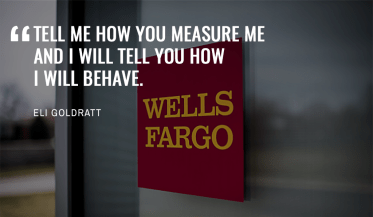
QUOTE_MEASURING-TEAMS.pngMy students cannot seem to get away from quantifying their thinking, this year and every year. To some extent, I understand this compulsion: despite living in a highly individualized culture, our education system prizes standardization when it comes to measuring student achievement. My kids have been indoctrinated into a culture of numerical evaluation for many years.
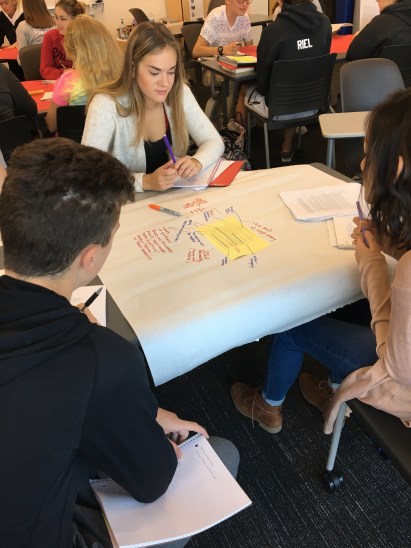
This has always bothered me, and my answers to these questions have varied: “However long it takes you to make your argument.” “Just write until you feel like you’ve said all you want to say, and then we’ll revise.” “Sixteen lesson plans, Joe. One per week. Good grief.” “One page. Single-spaced. Don’t be weird with your margins.”

Lately, I’ve honed in on how often we seem to want to measure the independent reading our students are doing, perhaps to prove the rigor of this practice or perhaps because we just can’t get away from quantification. If our goal is to build fluency and have students reading authentically and for pleasure, we can’t keep grading or measuring or tracking our students’ reading lives so meticulously.

A 2012 study, summarized nicely here, showed that the very act of requiring students to track their reading made them likely to read less than they would have to begin with. In contrast, students who were offered “voluntary reading logs” were actually more likely to enjoy reading, and read more often. It seems that choice is imperative.

Similarly, this article details a 2016 study which found that “the more you quantify something that’s rewarding for its own sake, the less likely you are to enjoy it—and the less likely you are, too, to do more of it.” Reading, for me, has always been rewarding for its own sake. This is what I want for my students, too, and perhaps the very reading logs and booklists I asked them to keep prevented me from helping them get there.

We’ve been thinking about alternatives to reading logs for some time, brainstorming ways to read the room between conferences, and our readers have offered this great list of possibilities, which includes:

  • Student-to-teacher booktalks
  • Padlet reading responses
  • “Status of the class” check-ins
  • Reading “focus discussions”
  • Student-created rubrics for self-assessment

If measuring makes us enjoy things less, but we are bound by the rules of school and have to grade things, it follows that we should do lots of qualitative, formative assessment like the methods listed above. And not just in reading–across the curriculum, in writing and speaking and listening, too. We need to move away from measurement and toward a less quantifiable, test-heavy classroom culture.

In this video (which I could just watch on repeat, because she is such a great combination of brilliant and adorable), Nancie Atwell explains how she “doesn’t believe in tests and quizzes,” and rather evaluates students daily through portfolios, discussions, and one-on-one conferences:

We may not all have an entire school of our own like Atwell does, but we do have classrooms of our own, where we can strive to create communities of individualized achievement and assessment. The goals we have for our students–to be impassioned, informed, lifelong readers and writers–are not goals that can be measured easily. Let’s get away from an obsession with quantification and work to move our students toward the immeasurable joys of becoming real readers and writers.

Please share with us how you and your students assess growth in reading, writing, and thinking! Leave a comment or share on Facebook or Twitter.

Shana Karnes is so over being pregnant, and looking forward to welcoming her second daughter into the world within the month.  She teaches practicing and preservice English teachers at West Virginia University and is fueled by coffee, sour gummy worms (this week), and a real obsession with all things reading and writing.  Follow Shana on Twitter at @litreader and read more of her writing on the WVCTE Best Practices Blog.


If These Walls Could Talk

We spend eight hours a day (Ha! Nine? Ten? Should I just sleep here?) in our classrooms.

Four walls, seating for 30 (Ha! 3img_66735? 78? Does flexible seating come in bunk style these days?), and an endless array of inquisitive minds, needs, and beliefs.
At Three Teachers, we speak with full hearts and buzzing minds about the opportunities that Readers and Writers workshop afford. From choice to challenge, talk to Twitter, and many, many elements in between, we explore, question, wrestle with, and embrace the opportunities that come with relinquishing control over a classroom to instead move together with our students as readers and writers.

As I look around my classroom this year, full of some familiar components (budget-busting classroom library, inspirational posters touting the beauty of words and books, and my space age rolling furniture), I also see evidence of my growth as a workshop teacher.

So, in much the same way that one might suggest that it’s what’s on the inside that counts, the following suggests some of the ideas I’ve collected from great workshop teachers, Twitter searches, fellow colleagues, and my professional reading over the summer to reflect the beliefs of our community and what we value as readers and writers:

img_6116

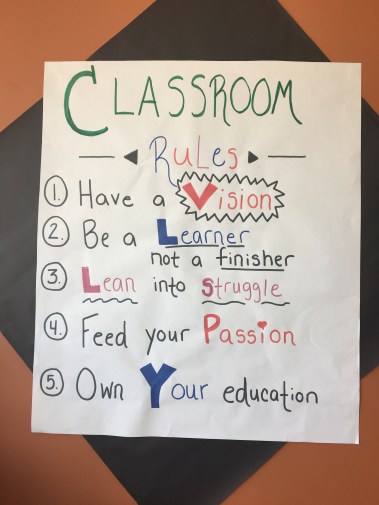
I’ve completely abandoned any traditional rules in the classroom. On the first day of school, I joke with kids about their vast knowledge of how to “play the game of school.” As long as we can, as high school students, keep from putting gum in each other’s hair, we can focus on the more important “rules” that will guide our philosophy of learning and engagement. These rules from Amy Fast, are referenced each and every day. Mostly rule #2. We need a LOT of work there. 

img_6117

I am NOT an artist, by any means. In the past, I’ve let this limit what I try to do when it comes to anchor charts in my room. NO MORE! With a projector and pencil, I am tracing my way to borderline copyright infringement (Don’t worry, I promise not to try and sell them). This beauty comes from the Disrupting Thinking by Kylene Beers and Robert Probst, which rocked my world over the summer. I wanted my students to have a solid reminder of what their books, brains, and hearts mean to their reading. We refer to this chart that I found through Google Images almost daily. 

img_6468

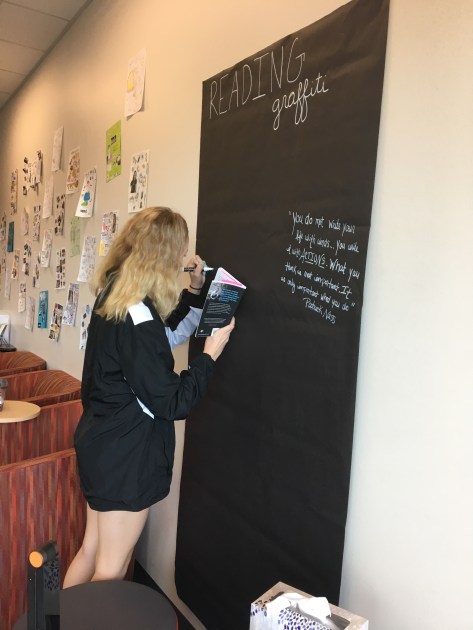
Giving students a place to share what moves them in their reading means we have a constant reminder of the power of words, and motivation to write as we reflect on the great beauty we find through the published word. This reading graffiti poster illustrates the baby steps my students are taking to feel comfortable in sharing what speaks to their hearts and minds while reading. Once I finally broke the seal and put a quote up myself (Thank you, as ever, Patrick Ness), students have added insights such as “When you tell a lie, you steal a man’s right to the truth” and “You can’t take it with you, right?!”I love the brave souls who are sharing their reading lives with us without even being asked. 

The back wall is a revolving homage to mentor text study. Early in the year, my sophomores started their study of narrative by emulating Kelly Norman Ellis’s poem Raised by Women.” These days, creations from my AP Language students grace the walls. They utilized authentic informative writing in the creation of biographies modeled after the work of James Gulliver Hancock in Artists, Writers, Thinkers, Dreamers.

img_6685

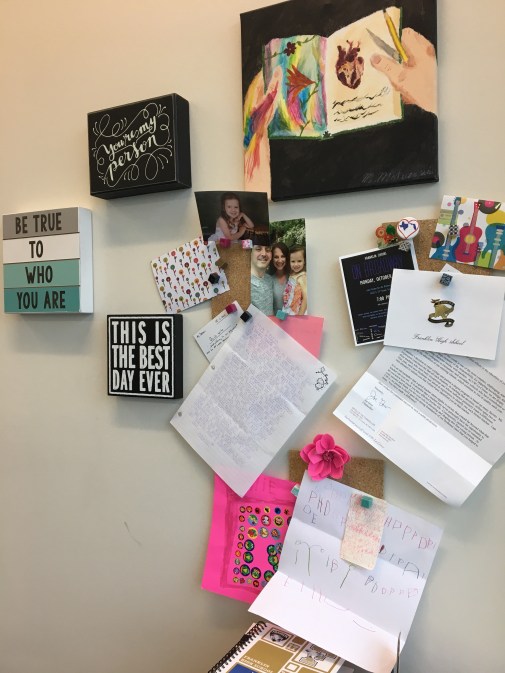
In the space behind my desk, I have inspirational words that help frame my work each day, provided by people that I love and respect. I have pictures of my family, notes of gratitude from students, and art from my daughter Ellie. I am a firm believer that as a reader and a writer in the room, my story matters too. I love to share with students how the belief that we can always improve, grow in reflection, and benefit from a positive attitude, can shape their experience in English class each day. 


Our classrooms, both full of students, and basically empty, suggest who we are as teachers. I love what mine says about the work we do everyday in the workshop.

What does your classroom say about your workshop journey? Please share in the comments below!


Lisa Dennis teaches English and leads a department of incredible English educators at Franklin High School near Milwaukee. One of her classroom walls is painted in a burnt orange color. It’s fall all year. Follow Lisa on Twitter @LDennibaum