Our students are too young to remember the events of 9/11. And while we are not history teachers, I do think we have a responsibility and an opportunity to help them try to make sense of the horrors of that September morning and how it impacts their lives today.

Pvt. Hyrum Chase Rasmussen
In church yesterday, the congregation stood and sang three verses of “The Star Spangled Banner.” This song has new meaning for me since my son Hyrum joined the Army this summer. It may have new meaning for you if you’ve been following the Colin Kaepernick-taking-a-knee-event-fall-out-and-discussion. I want my students to be able to make sense of their world and one way I can help them do that is to provide them with thought-provoking pieces that help them make connections. Maybe one of these texts will help them find their own “new meaning.”
In honor of September 11, the every day people and every day heroes who lost their lives, the families who still mourn loved ones, the soldiers who valiantly died facing foes in foreign lands, and the men and women willing to serve today in a time of unrest and war, this is the lesson that I will share with my students today.
Objective: Using the language of the Depth of Knowledge levels, students will react to a first-hand account of 9/11 in their writer’s notebooks. They will formulate ideas on how this one story relates to our growing theme of what it means to be courageously human. Students will then analyze a text and compare the writer’s use of language to a text read previously.
Lesson: We’ve already discussed the question, “What does it mean to be courageously human?” a phrase I borrowed from a text we read last week. (I read Chequan Lewis’ piece as a read aloud, wanting students to just listen and enjoy his use of language. Then, later we read it again and analyzed the literary and rhetorical devices he uses to create the meaning. I modeled how to annotate and asked students to write their own notes in the margins — something I will expect them to do throughout the year.)
Today I will remind students to read texts with pens in hand, noting the writer’s interesting use of language, any points of confusion, any words they don’t know, the structure of the text, and any and all devices the writer uses to craft meaning. Today’s text is the masterful piece Leonard Pitts, Jr. wrote September 12, 2001.
After students have time to read, annotate, and discuss in small groups, we will come together as a class and craft an anchor chart that details the moves Pitts makes in comparison to those craft moves made by Mr. Lewis. I will charge students to model these moves in their own writing throughout the year.
Follow up: The anchor chart will hang in the room as a reminder that writers are intentional in the moves they make as they craft meaning. Students will be expected to be intentional in their own writing as they work on various forms of writing in class and on their blogs this year.

 r, I wasn’t confident that they couldn’t have learned more.



 buying books the longest.) I bought
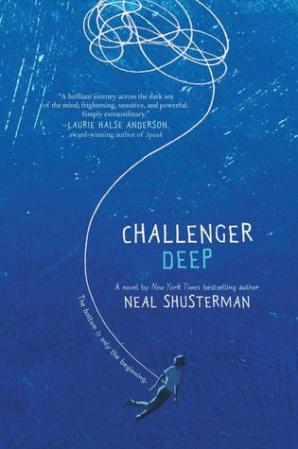 which has three interesting quotes: 1. “A brilliant journey across the dark sea of the mind; frieghtening, sensitive, and powerful. Simply extraordinary.” ~Laurie Halse Anderson, award-winning author of Speak; then two from the book: 2. “The bottom is only the beginning.” and 3. “My feet are on safe, solid ground, but that’s just an illusion.”
 It’s -4 degrees in West Virginia today, which might explain why I’m thinking about the narrative skill of freezing time. I’m also thinking about it because I’m reading the fantastic Dumplin’ by Julie Murphy, the story of an unconventional small-town beauty pageant contestant. As I read, I was aware of how quickly the writing hooked me–I began to look for reasons why, inspired by

 What are you reading now, and/or what are your latest finds that could be strong mentor texts?
 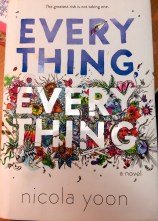 Shana
Shana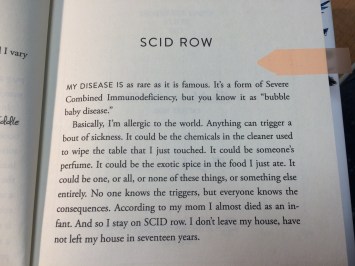 My students asked for more craft study and grammar instruction in their midterm
 What prompted you to begin the process of noticing examples of mentor texts or craft study?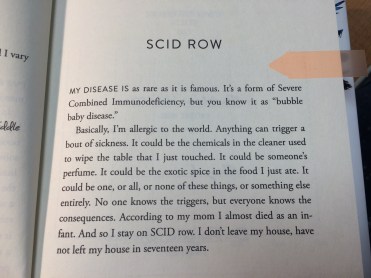


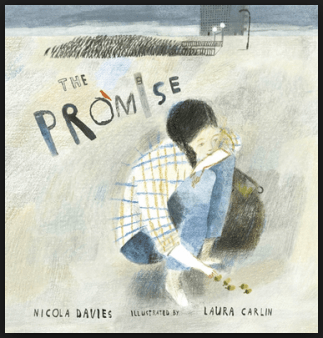 The Promise written by Nicola Davies and illustrated by Laura Carlin is a beautifully crafted story of a girl growing up in a hardened city. After stealing a purse from a pedestrian, the main character makes a promise out of desperation, only to realize that the purse she has stolen has no value and is instead full of acorns, which she must now plant across the city. The story reads more like a poem and has a cyclical ending that allows students to see the succinct structure of a short story.



 Three Teachers Talk