Few books hit me in the gut and make me weep, but ROOM by Emma Donoghue did just that. Told from the point of view of just just turned 5-year old Jack, this story of abuse, survival, and enduring love packs a punch that leaves you gasping.
Soon after I read ROOM, I heard the real life story of Jaycee Dugard and hurried to the book store to buy the book that shares her story, A Stolen Life. Oh, my! Terrifying, horrifying, and. . . hopeful.
I have students, mostly my reluctant readers, who devour the book A Child Called ‘It‘. These kids often enjoy (or at least have a love/hate relationship) with these other titles, too.
What is it within us that makes us want to learn of others’ suffering so?
I wish I could definitively say that I know my students performed better on STAAR because of the activities we did with this zombie project, but that would be a bit like being overconfident in surviving when 200 of the “Undead” are trying to eat my arm off. The English I Reading and Writing tests are hard–at least for my non-readers.
In response to several requests I received via Twitter. Here’s an outline of the project:
First, I did some backwards planning. What are the primary skills students need to master in order to achieve satisfactory scores on STAAR?
Write a literary essay with engaging characters, plot, theme, etc
Write an expository essay with a strong thesis, good organization, solid supporting details, etc.
Respond to reading–literary, expository, poetry, etc.–in paragraph form with embedded textual evidence
Read critically and answer questions about content, text structures, author’s purpose, etc.
No Sweat! Well, actually, a lot of sweat, tears, blood. . . Well, not blood. Not really. But I worry about my students A LOT. They come from homes in poverty with hard-working parents. By and large, they are sweet, good-hearted teens. But– they do not read, and this one thing impacts their learning in pretty much every aspect of my English class.
Thus, Z O M B I E S. I can hopefully get them interesting in the reading, which will hopefully get them interested in the learning.
I set the project up like PBL, but since I have limited training in how to actually carry out a PBL project, and my students have no experience with the requirements of this student-centered approach, which requires strong student leadership, the PBL part of the project was the first victim of our zombie attack. PBL lingered but it didn’t take an active part of the learning process. My students were too needy, and I felt rushed for time.
Introduction: Entry Document/s
Part I. Silent Discussion. In my last post I shared the Intro to Zombie Project I used first to spark student thinking about the project. After students watched the video, they completed a Poster Activity (strategy idea from Bob Probst) where I gave them each a colored marker, and on each table I put a poster-size paper. I told students that they must use their marker to think on the paper. What things did you see in the video that you think you will be required to do in this project? Students wrote their thoughts in a silent discussion for about 15 minutes, and I circled the room, reading their comments and writing comments and questions to promote more thinking on their posters.
Part II. Memorandum. Next, I gave each student a copy of Zombie Apocalypse entry doc. They had to read it, and then I gave them time to talk with their table mates about their thinking. I gave each group a sheet of paper. On the paper, I had them make a T-chart. On the left they wrote what they KNOW about the project, based on their reading of the memo and the video; on the right they wrote what they NEED to KNOW. Finally, we had whole class discussion, and students helped me complete a class KNOW/ NEED to KNOW chart that stayed posted on the wall throughout the project.
[This intro worked better than I could have imaged. We did it on a day I happened to have a group observe my classroom: Student engagement high. Evidence of student thinking high. Collaboration high. Literacy in action high. Higher-level questioning high.]
Reading and Writing
Part III. Self-Selected Reading, Throughout the year I’ve required students to read books of their choosing. If you’ve read other posts, or seen Reel Reading on Fridays, you know I talk YA books incessantly. In an attempt to get students to read something that might tie into the texts and topics we were talking about in class, I wanted to bring in as many books about zombies as possible.
I turned to my Twitter PLN first, and with their help, I build this Zombie shelf at Goodreads.com. I hit the bookstore and spent way too much money on books for my classroom library. Then asked the awesome librarians at my school to pull all the books they had that dealt with zombies. They gave me about 45 titles that I book talked with my kids. The first book to go? World War Z. I had two copies and had to start a waiting list for checkout. Personally, I read the first two books in the Rot and Ruin series by Jonathan Maberry. Good, gory books. Too thick and intimidating for my kids though.
I didn’t care if students read a book about zombies. I just really wanted them reading something. If I do this project again though, I think I would like them all to be reading a book that ties in thematically. I have to think about this more.
Part IV. Expository Reading to Become Better Expository Writers. Expository is a big umbrella, but the state of Texas defines it as INFORMATIONAL. Our students must write an explanation of a topic, using a clear and organized structure and evidence to clarify their points and support their explanation. Essays only have to be 26 lines handwritten, or about 300 words typed. It sounds easier than it is–especially for non-readers.
Students also have to be able to answer short answer reading questions. I kind of hate that we call these short answers–they are really essay questions that require essay responses. You know, with embedded text evidence: Quote something, analyze it, make your response a complete paragraph? Again, it sounds easy, but for my students it is the most difficult thing. Ever.
I know that before I can get students to focus on the writing skill. I have to get them interested in the reading passage. I struck zombie gold when I typed “zombie” and “Valentine’s” into Google. Here’s a sampling of the articles and the questions my students answered to practice writing short answer responses.
We also read the introduction to SAQ Zombies vs Unicorns and practiced short answers. (These folks are serious and even have a Facebook page.)
News Articles. Most of my students have no idea what is going on outside of their own communities. I try to bring news of the world to them as often, and in any way, I can. To prepare them for their expository essay on STAAR, I wanted to expose them to as many types of expository writing, and as many topics in the news that I could. So, under the guise of “You are the survivors of this zombie apocalypse What would people 100 years from now what to know about your civilization?” I had students look up news articles, practice writing summaries, and explain.
Part V. Literary Writing. Another part of the Texas STAAR test for English I is a literary essay. Students are given a prompt, and they must write a little story that shows evidence of their understanding and ability to develop characters, conflict, plot, setting, and theme. Here’s the Literary Story- Zombie Project we used for our project. If you’d like student essay samples, let me know.
Part VI. Poetry. Finally, although students do not have to write poems for their STAAR test, they might have to read and analyze it. We had already read many poems in class, so for this project, I really wanted students to just play with word choice. Most did a zombie-like job on their poems. Plagiarism 5 times. Way below grade level work at least a 100 others. Here’s a sampling of Zombie poems. I especially like a few of the blackout poems:
the helpless
are able
to
be
a little daring
Rubric and Reflection
If I ever do this project again, I will allow for more creative time in class. Most of my students rarely do homework, so if I don’t capture the time I have them, I rarely see work once students leave the room. Most groups did not pay attention to the Zombie Project Rubric. They focused on one area much more than they focused on others. For example, I had one group that did a sensational job on the items in their survival backpack, but they did not take the time to write engaging stories or read and evaluate news articles. Therefore, their overall grade was low. A lot of this was my fault for not allowing equal time in class for each part of the project.
As our final event, the day after our second STAAR test, we watched the first episode of “The Walking Dead.” I wished that the movie “Warm Bodies” was on DVD because that would have been a great lead into our next unit: Romeo and Juliet. It’s loosely based on Shakespeare’s play, you know? Check out this video for a fun re-mix:
Do you have any ideas for Zombie test prep? I’d love to add your resources to my growing file. Who knew zombies could be so . . . well, alive?
A mere five days before the movie comes out, I have finally finished the book! This is now officially my third time to read the classic story and I loved it just as much this time as I did the first two times. I’m not sure if the visual images that I had playing in my head as I read were tainted by the movie previews, but I really think the glitz and glam of this era is purely mesmerizing.
Books I am going to read this week:
Texas Library Association Convention
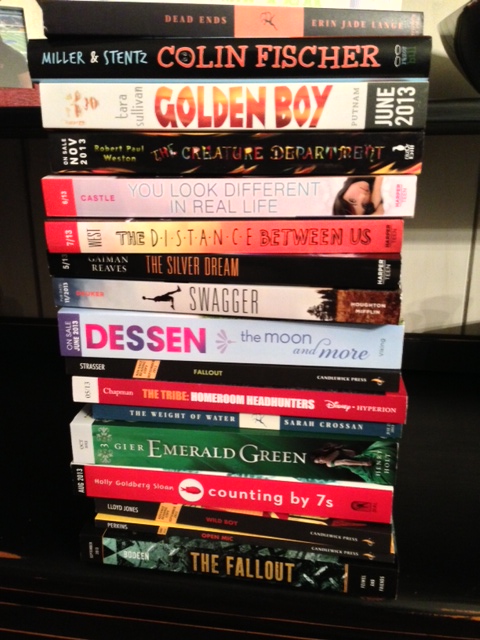
Empty book bag in hand, a couple of weeks ago browsed the isles of the exhibit hall at the annual Texas Library Association Convention. While there I was able to snag some great books that I am so excited about reading. Of course I won’t get all of these read this week. In fact, most of them will move on to my to read pile for the summer, but none the less a new stack of books is always invigorating to a voracious reader. I think of all of these, I will probably start with Dessen’s latest. I can always count on Dessen to provide a nice story with great characters!
I love to watch student-made book trailers, especially when the students are not mine, and I’ve already read the book. I guess I see with a teacher’s eye: Did the student get the gist of the book? Did she love it and want others to read it as much as I did?
I felt a thrill when I watched this trailer for Nancy Farmer’s The House of the Scorpion. The images and music parallel one another nicely, adding that touch of intrigue, which parallels the adventures in the book. The few errors in writing make me smile– my students will do that, too.
My kids will soon start creating their own book trailers. They got to choose the books they read. They get to figure out how to format and create a trailer that will get others to want to read that book. Should be interesting to see what they come up with.
“Progress always involves risk; you can’t steal second base and keep your foot on first,” said Frederick Wilcox. This quote spoke to me this week as I reflected on my role as Liaison, our Professional Development conversations, and the new season for the Rangers.
Taking the job as liaison was a risk. The role of the liaison is to support the work of the principal in improving instruction in every classroom, through coaching, consulting, collaborating, and co-teaching with teachers as well as to align professional learning with district and school goals. In order to take on this role, I had to leave my comfortable team, my comfort zone in teaching a grade level that I had been teaching for a long period of time, and a school that I have been at for more than a decade. Has it been challenging? Yes! Has it been rewarding? Yes! I was comforted at our last get together that we went over the research on change. William Bridges’ “transitions of change” and Michael Fullan’s “implementation dip” assured me that it is normal to grieve an ending and maybe feel some discomfort as I move toward the new beginning. It is normal to feel some disillusionment before finding rejuvenation.
I am also asking teachers to take risks. This might involve letting go of a much-loved unit because it no longer matches the learners of today. This might be trying new technology. This might mean teaching in a new way.
If I want my teachers to take risks, I must model risk taking myself. Recently, I used Nearpod in addition to a PowerPoint presentation that I had planned for my staff. Of course I was a little nervous because I had never used it before. I learned about Nearpod at the last “Appy Hour” hosted by GCISD digital coach, Sarra Smith. What I loved was how the app allows participants or students to have their very own interactive presentation on their own iPad screen. It was very effective. For my presentation, We used the app to view images, and to gain clarity about the design of our work. We also used it to interact by taking a quiz to formatively assess how we plan and to poll the staff about the most important elements of PBL they wanted to discuss in our faculty discussion session at the end of the morning. Yes, there were a few tense moments when loading took longer than anticipated and the transition between two of the slides did not work at first, but I feel that when the staff saw me taking risks and having my own uncomfortable moments, I became more “real” in their eyes. I am not the “one who knows all”, or the expert, or the evaluator, but someone is who learning and taking risks right along side each of them. I might just steal third base next.
I don’t know where the Rangers are heading this season, but it looks hopeful. I am also optimistic about the new risks my teachers will take as I continue to create an environment where it is OK to steal second base.
What makes risk taking so difficult? How can we support each other to take more risks?
For their final project my English I students are to create their own book trailers. We’ve watched enough of them this year that they should have a pretty good idea of what an effective trailer should do: compel someone to read the book.
In a last ditch effort to get my kids to understand the task, we are watching student-made book trailers for the next little while. These are a couple that are done very well about the book IF I STAY by Gayle Forman.
In my experience, if you can get a kid to read just one of Forman’s books, she will read them all.
I’m tired of school and kids and teaching. I’m tired of testing (and my students’ tests has been over for a while now.)
I’m tired of reading YA novels about punk kids, drugs, gangs, and so much angst.
Get it? I’m tired.
So, this Monday? What am I reading? This inspiring book that has helped me see some things clearly for the first time in a very long time. I’ve written inside the front cover: “Stop trying to be God.”
Watching this book trailer, I am reminded of how much I loved this book when I first read it. I passed it off to my son who read it but also lost the book cover. Does anyone else have a difficult time getting kids to read hardback books that have no cover? Dark, thick, foreboding. I cannot get one kid to even try a book unless the cover is at least attempting to be cool.
So, a week ago I’m cleaning out closets, and I find the jacket to SHIPBREAKER by Paolo Bacigalupi, and I’m reminded of its protagonist Nailer and the beautiful girl who changes his life. I love these words in the front cover:
Even at night, the wrecks glowed with work. The torch lights flickered, bobbing and moving. Sledge noise rang across the water. Comforting sounds of work and activity, the air tanged with the coal reek of smelters and the salt fresh breeze coming off the water. It was beautiful.
There’s a mini-lesson on imagery in there, isn’t there?
It all started when I heard my husband and sons talking about that one episode of “The Walking Dead.”
“Oh, man, I didn’t expect that ending.”
“Sheesh, he got it out of the blue, didn’t he?”
“Merle just died. Died. And he was the tough guy.”
I didn’t have a clue what they were talking about, nor why they were so talkative. (I live with four men. It’s true: they usually use up their word allotment by lunch time.)
So, I slipped into my teacher hat and asked some book-chat type questions: Tell me about this show that has you all riled up. Does this character remind you of anyone you know? Why do you think the show ended this way? Did the characters learn anything?
“Really, Mom?”
One thing led to another, and we were talking about how this zombie craze is a pretty good metaphor for our society.
Then, I talked to my friend Trista, and she told me she was doing this zombie project with her students.
Hmmm. I’m thinking.
Then, like a flailing limb, it hit me: Standardized testing. Test prep. Zombies. Pretty good metaphor.
I teach English I to mostly non-readers. They are sweet kids with bright smiles and fun personalities, but they are below grade level when it comes to reading and writing. Many of them need a lot more help than I can give them. We have little time for one-on-one when my class size is 32.
Our state testing date is looming. I know I need my students engaged, and I need them thinking and reading critically, and I need them writing effectively. The Golden Question: HOW?
The creepy, undead, flesh eating answer: ZOMBIES.
First, I made a list of the most pressing skills students needed to review, and then I became a zombie expert.
Did you know there are zombie poets and zombie poems?
Did you know there is an ongoing argument about which is more awesome zombies or unicorns? There’s even a Facebook page.
Did you know that a high school librarian, at a teacher’s request, can find 37 or so books that all have something to do with zombies?
Did you know that there are websites that “match” zombie-loving people to other zombie-loving people? and you can upload a picture and turn your image into a blood oozing zombie?
Really, now. Who knew?
So, I created this Zombie Project that included some pretty intense test prep and a whole lot of fun.
The video below is how I introduced it to my students. They watched it, and then on large poster paper at each table of four students, they did some silent thinking. I gave them each a different colored marker, and they had to write, based on the clues in the video, what they thought they’d have to do in the project.
You try it. Watch the video and see if you can come up with all the parts of the project. I’ll post more –handouts, articles, book lists, etc., as soon as I have a chance.
I’m fully aware that it isn’t Monday – The way I see it is it really is better late than never, right?
Books I read (or am still reading):
Scarlet
For those of you who have been following my posts, you know my feelings about sequels/trilogy/whatever, but I was drawn to continue reading this series because of the indirect relationship the series has with traditional fairy tales. In the first book Cinder, the author weaves the classic tale of Cinderella in a post-modern society. In the second book, Scarlet, the story of Cinder continues to unfold while at the same time a new character, Scarlet, is brought into the frame. Of course, Scarlet’s character is based of the fairytale Little Red Ridding Hood. It truly was fascinating to see how Marissa Meyer was able to intertwine both fairy tales all the while maintaining the futuristic story line. I am certainly curious to see how the series wraps up in the third book.
Books I’m reading (going to try to actually read) this week:
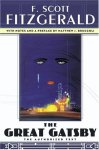
The Great Gatsby
My goal this week is to get through Gatsby. The Great Gatsby is one of the very few books I have ever read more than once and the only book I ever loved being required to read in school. Clearly, I was excited when I saw that the book once again was coming to life on the silver screen. While I have no notion that the movie is going to be an exact replica of the book I am, once again, excited to see someone else’s interpretation of this book that I have enjoyed.
 Few books hit me in the gut and make me weep, but ROOM by Emma Donoghue did just that. Told from the point of view of just just turned 5-year old Jack, this story of abuse, survival, and enduring love packs a punch that leaves you gasping.