Category Archives: Community

Refresh the Recommended Reading List

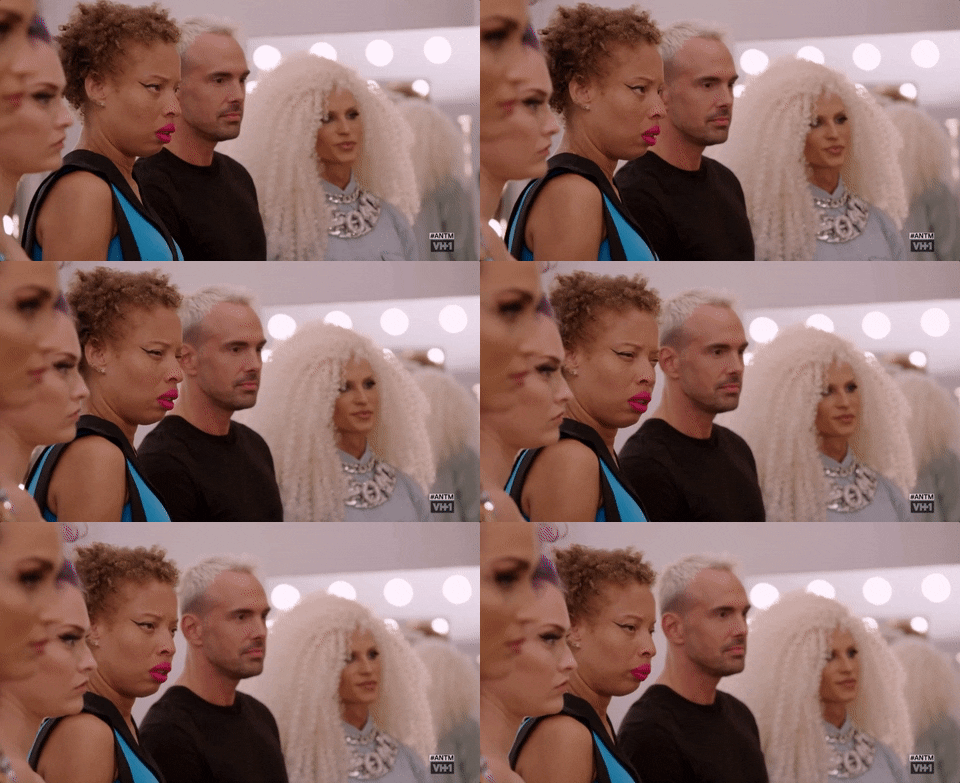
Hey book people: sometimes I feel we could learn a thing or two from the fashion world. (Or, at the very least, the fashion world as I see it from television.)


In the fashion world, trends are always changing, and once we’ve heard about something we know it isn’t hot anymore.  We’re quick to pass judgement on each other’s work and open in expressing opinions like that’s so old and I’ve seen that so many times before.
So if we as teachers are still recommending the same old, same old to our students (and yes, I count The Hunger Games and Twilight as same old) IT IS TIME TO UPDATE OUR RECOMMENDED LISTS.


I update and provide students with a (mostly) fresh list of recommendations about 3-4 times a year.  At minimum, I provide a beginning of school year recommended reading list for parents at Back to School Night and a summer recommended reading list to help students plan ahead for the long break.  Part of that planning is purely practical: I teach seventh graders, and the students’ reading tastes are going to change dramatically over the course of the school year, so I want  to be prepared.

And sure, part of it is my own boredom with reading, recommending, and thinking about the same books over and over again.  Hence I create new lists for students.


If you don’t currently create lists for your students, the easiest ways to make one are:


  1. Ask students for recommendations – what books they enjoyed reading and what books they plan to read in the future.
  2. Read books
  3. Steal other readers’ recommended reading lists.  My three favorite lists to steal from are the ALSC recommended titles YALSA’s book recommendations and the suggestions from the students in Nancie Atwell’s school.


Below is the recommended reading list I recently generated for my students.  Note that I broke the list into several themed sections (Classmates Recommend, Read With a Friend, and Challenge Books.)


You are more than welcome to steal this list in whole or in parts.  The descriptions of books are my own.


Classmates Recommend…


Everything, Everything by Nicola Yoon


This unusually formatted book will have you turning pages as you’ll get to know Maddie and her next door neighbor Olly through drawings, gchats, and short chapters.  Read it before the movie comes out! This book makes readers think more about disobeying authority (adults), falling in love, illness, and family


Michael Vey: The Prisoner of Cell 25 by Richard Paul Evans (part of a series)


High school student Michael Vey has a special hidden power.  He and some friends realize that there’s a conspiracy of adults trying to keep these powers under control. This book makes readers think more about  power, keeping secrets, and difficult decisions.


Masterminds (series) by Gordon Korman


Eli and friends live in Serenity, a perfect town without any crime or unemployment.  There’s only one issue: Eli and his friends can’t leave the town, and they begin to discover that there’s a reason why.This book makes readers think more about right/wrong, fighting back against adults, and friendship.


Once by Morris Gleitzman


It’s right before WWII, and Felix’s parents hid him in a Catholic orphanage so that he wouldn’t be suspected of being a Jewish boy.  Felix, concerned about his parents, escapes the safety of the orphanage and takes off on a dangerous journey to try to find his parents.This book makes readers think more about  risk-taking, growing up, good and evil, and friendship.


Gutless by Carl Deuker


Brock’s a soccer player, not a football player, but the football’s quarterback wants Brock to try out for the team.  Brock isn’t sure this is the best idea.  This book makes readers think more about bullying, friendship, and the risks of playing sports.


Scar Island by Dan Gemeinhart


When all the adults on a prison island die in a strange accident, the teens have to decide what to do next.  This books makes readers think more about risk-taking, heroism, good/evil,  and leadership.

Read with a friend!  Books I have multiple copies of


Goodbye Stranger by Rebecca Stead


Three female friends and the two boys and one photo that could possibly destroy their friendship.  This book makes readers think more about…. Relationships (romantic and non-romantic), cell phone use, growing up, and apologies.


The Seventh Most Important Thing by Shelley Pearsall


Arthur Owens threw a brick at an old man’s head and was sentenced to juvie for it.  Now that he’s out, the old man forgives him and asks Arthur to help him complete a strange task.  This book makes readers think more about forgiveness, family, and connections.


Chasing Secrets by Gennifer Choldenko


Lizzie wants to know why her family’s servant has disappeared.  In order to find him, she has to untangle a web of secrets surrounding the city of San Francisco.  This book makes readers think more about medicine, sexism, racism, and fighting against adult power.


The Absolutely True Diary of a Part-Time Indian by Sherman Alexie


Junior wants to go to a school off of his reservation; his neighbors and friends give him a hard time for acting “white.”  This book makes readers think more about racism, school issues, family, and friendship (especially difficult friendships.)


Piecing Me Together by Renee Watson


Jade is a black girl in Portland, Oregon who wants to travel the world.  Jade’s guidance counselor signs her up for a mentoring program instead.  This book makes readers think more about racism, healthy and unhealthy relationships, school communities, and how art can help bring people together.


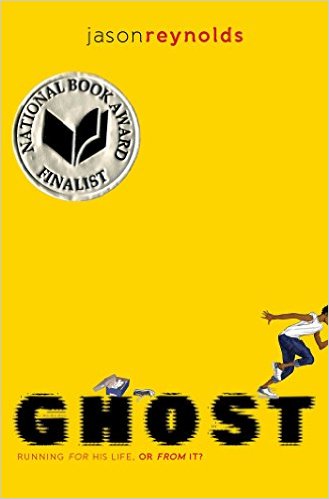
Ghost by Jason Reynolds


Ghost can run fast, but this tough kid doesn’t know how to be part of a team yet.  This book makes readers think more about healthy and unhealthy relationships, communities and teamwork, and forgiveness.


A Matter of Heart by Amy Fellner Dominy


Abby’s a competitive swimmer about to try out for the Olympics when she is told by a doctor that swimming too quickly could kill her.  This book makes readers think more about healthy and unhealthy relationships, good and bad risks, and figuring out who you are.


The Hypnotists by Gordon Korman


Jackson Opus has a strange power — he can hypnotize people to do whatever they want.  Now the brilliant Elias Mako wants to work with Jackson to develop his skill.  This book makes readers think more about power, good/evil, and fighting back.


Challenge Books

Longer, tougher, more complex ideas…


The Sun is also a Star by Nicola Yoon


Daniel and Natasha “bump” into each other and it’s love at first sight.  Was their meeting chance, or was it the universe pushing them together?  This book is by the same author as Everything, Everything, but readers are advised that this book is not a sequel or a companion to E,E.   This book makes readers think more about destiny/fate, love, and immigration.


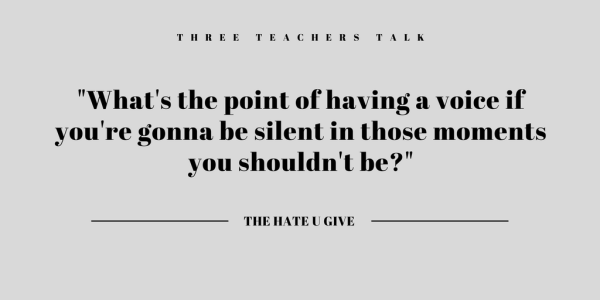
The Hate U Give by Angie Thomas


Starr’s childhood friend Khalil is killed in an unfortunate accident when the police were looking for another suspect.  Khalil’s name is all over the news, and Starr’s private school friends don’t know that she was a witness to the murder.  This book makes readers think more about race, wealth/poverty, and the #BlackLivesMatter movement.


Scythe by Neal Shusterman


Two teens are training to become scythes, carrying out their society’s sacred role of determining who lives and who does not.  Scythe training is demanding, rigorous, and there are rebels within the order of Scythes who are looking to change the way death works … forever.  This book makes readers think more about power, death, and right/wrong.


Monster by Walter Dean Myers


In jail for a crime he didn’t commit, Steve creates a script for a movie that tells the story of his life and his run-in with the criminal justice system.  This book makes readers think more about power, race, art as healing, and the prison system.


All-American Boys by Jason Reynolds and Brendan Kiely


Quinn and Rashad go to the same school but aren’t friends, until a case of violence makes Quinn realize that there’s no such thing as being a neutral bystander.  This book makes readers think more about violence, race, and friendship.


Speak by Laurie Halse Anderson


A teen classic — Melinda is considered an outcast at her high school because she called the cops on a party.  This book makes readers think more about rebellion, fighting for what’s right, and the costs of popularity.


The Family Romanov by Candace Fleming


About 100 years ago, Russia had a royal family that was kicked out and eventually killed.  Learn about the factors that led to the uprising against the Romanov family.  This book makes readers think more about wealth/poverty and war.


Amy Estersohn is a middle school English teacher in New York and a 2016 recipient of the NCTE Gallo Grant.  Follow her on twitter at @HMX_MsE

Audiobooks are Books, Too

Totally honest: only recently did I discover the magic of audiobooks.


Audiobooks are magical because they allow me to READ while I am doing other things, like BEING STUCK IN RUSH HOUR TRAFFIC ON THE GEORGE WASHINGTON BRIDGE.    .

I’ve been using YALSA’S Amazing Audiobooks lists as a starting point for my auditory adventures.  By listening to stories, I’m able to arrive at understandings that I might not get from ink and paper.  For example, when I first read Katherine Applegate’s One and Only Ivan, I felt pity for the Ivan, a gorilla trapped in a shopping mall.  However, when I listened to the book on audio, I heard Ivan proudly talk about “domain.”  I realized then that Ivan is not able to understand his situation well enough to reflect on it the way I (a human adult) do.

Another example is Jason Reynolds’s GHOST, a book about a boy who joins a track team that was love at first page for me when I read it in print.  Guy Lockard’s voice work brings Ghost’s vulnerability to the surface, and his voice for Coach sounds like a teenager trying to impersonate an old man instead of an old man.  As a result, we hear the version of Coach that Ghost tells us about, not Coach as we might hear him if we met him.

41oUcSnuwoL._SX327_BO1,204,203,200_

Not just an award winner for the text, but an award winner for the audiobook, too!

My own studies are making me think more about how I can use audiobooks in the classroom.  I have some ideas about how I might bring these treats into the classroom:


  • Share and compare.  Give students a passage to read silently.  Then play them the audiobook selection for that passage.  Did students hear what they expected to hear?  Did they hear something different?  (The One and Only Ivan and GHOST are terrific mentor texts for this work with middle schoolers; for high school I might recommend a chapter from Wink Poppy Midnight by April Tucholke because the chapters are brief and the book did won an Amazing Audiobooks award.)
  • Inquiry and discussion of  award criteria.  Play a section from an Amazing Audiobook with or without accompanying text.  What makes this reading award-worthy?  Or is it award-worthy? 
  • Create your own mini-audiobook.  Especially if we want students to slow down their reading to notice voice and word choice, giving students an opportunity to read, direct, and/or produce their own mini-audiobooks would invite students to invest in their books and make that sharing public through a podcast or a rehearsed live performance.   Kelly Gallagher already does something similar with the reading minute.


Do you do any work with audiobooks?  Continue the conversation in the comments!


Amy Estersohn is a middle school English teacher in New York and a recipient of the NCTE Gallo Grant.  Follow her on twitter at @HMX_MsE
6 Gut-Punchers to Read After You Binge-Watch 13 Reasons Why

I got a Netflix subscription just so I could watch the 13 Reasons Why miniseries.13-reasons-why_0

The series is graphic and unsettling and leaves a lot to be talked about.  I haven’t even finished the series yet, but I bet my Scholastic Bonus Points that I have a few students who watched it over spring break and now are itching to read this book and others like it.

Here are a few books to steer readers to now…

friends for life

Friends for Life by Andrew Norriss

This book covers similar topics to 13 Reasons Why, but the plotting, pacing, and development of the topics is catered towards a younger teen audience.  Francis and Jessica become close friends quickly, but there’s a problem: Jessica’s a ghost, and Francis can somehow see her.  As readers learn how Francis can see Jessica, readers are also invited to consider the importance of friendship and reaching out to loved ones in times of need.

backlash

Backlash by Sarah Darer Littman


I find myself returning to recommend this book over and over again because it hits so many teen sweet spots.  Once upon a time, Lara and Bree were best friends.  Then Bree started to cyberbully Lara, pushing her to attempt suicide in a highly publicized manner.  Readers watch characters recover from trauma and hear the voices of others who were affected by the ongoing cyberbullying.


optimists die first


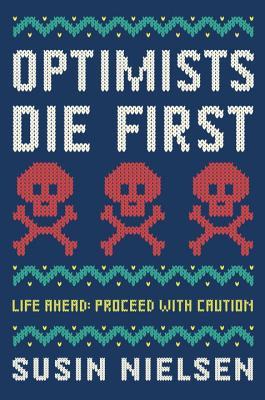
Optimists Die First by Susin Nielsen


Relevant information for adult readers: Susin Nielsen wrote for Degrassi.  If that’s not enough to pique your interest in her books, I don’t know what is!  (Unless, that is, you’ve never seen an episode of Degrassi.  Fix that!)  Nielsen’s book follows Petula, who feels burdened by guilt over a sibling’s death.  Her healing process involves Jacob, a boy who just moved to town who is keeping some secrets of his own.


truth alice

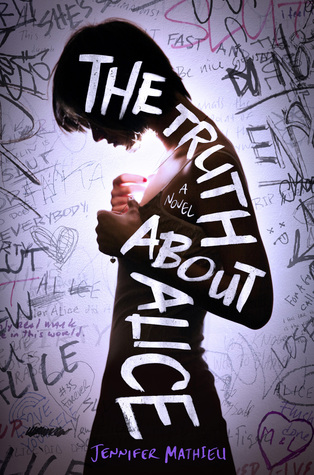
The Truth About Alice by Jennifer Mathieu


Have you heard about Alice and what she did at that party?  With not one guy, but two?  This fast-paced, multilayered story makes readers think more about empowered female sexuality and the pernicious power of the school rumor mill.


gerald faust

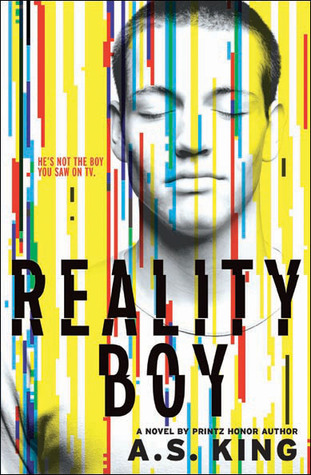
Reality Boy by A.S. King


From the files of deliciously messed up A.S. King comes a book about Gerald Faust, a boy better known to his high school classmates for his early-childhood antics on a reality TV show.   Gerald can’t escape his well-publicized past, and his parents might as well live in a fictional universe.   A.S. King’s talent as an author is developing some of the cruelest family dynamics known to contemporary literature, and this book ranks right up there for unkind parents.

bang lyga

Bang by Barry Lyga


Sebastian, at age four, shot his baby sister Lola by accident.  Now, Sebastian is immersed in homicidal/suicidal ideation.  When a new girl, Aneesa, joins the neighborhood and is unaware of Sebastian’s burning guilt, Sebastian has a chance to remake himself.


What books would you recommend to students who enjoyed watching 13 Reasons Why?


Amy Estersohn is a middle school English teacher in New York.  She is a 2016 recipient of the NCTE/ALAN Gallo Grant.  She laments the loss of the cassette tape.


Without Contact, There Can Be No Impact

Stories

“I had gone off to be a teacher, asking myself from time to time if I could teach English in such a way that people would stop killing each other.” -Mary Rose O’Reilley

As soon as I came across this quote in Peter H. Johnston’s book, Choice Words, I immediately related to it, which then caused me to feel alienated.  You see, this book had been assigned as a school-wide PLC read.  Aside from being one of the few that would complain about having to READ A BOOK (English teachers, anyone?), I also knew that the next day we would have to discuss this reading.  I knew I would bring up this quote.  I knew commotion would stir as everyone discussed what a preposterous notion this was.

OF COURSE we can’t stop murder.  OF COURSE we can’t change the whole world.  OF COURSE we can’t save them all.

Does the fact that we can’t change reality mean we shouldn’t still try?  Does the possibility of not reaching one hundred percent success prevent you from setting a goal in the first place?

I read all of that before it seemed real–the “killing” part, at least.  It was before everything changed.

I saw his name flash by on another student’s Facebook status closely followed by words like too soon, I love you, rest easy, etc.  I quickly went over to check his page as I found myself whispering to myself, “No, no, no, no, no.”  When I found his page, my worst fear was confirmed.  My former student had been shot and killed the night before.

As I stared at his picture, my mind ventured back to almost everyday after school last year, my first year teaching, when this student was in my classroom.

The news story that soon followed confirmed that the altercation occurred to settle a debt of $70.  He went to defend his friend, and as the other kids refused to fight, he walked away and was shot in the back.

$70.

Since that moment, just a few months ago, this quote crosses my mind almost daily.  I find myself thinking, What if we talked more about violence in the classroom?  If he had gone to college, would he have been in this same situation?  If he was not afraid to ask questions, maybe he would have asked someone for the money or helped his friend earn it rather than attempting to settle the debt in another way.  If this… if that…if only.

I know it is not healthy to think of all the things I should have done, but the truth is that I do.  I believe teaching can change lives not because we know things, but because we know kids.  Students want to be known, even if they don’t let on that it’s true.

I don’t only think of what I should have done, but I let it propel me into, What more can I do this time, today, this class period, for this student?

In a conversation with my 3TT friends, we were discussing “worksheet teaching.”  In a very long and broad conversation, I told them another story that happened that week, and then I thought:

You have to get really close to have an impact, but getting close makes things really difficult sometimes.  No wonder teachers sit at desks.  There’s less skin in the game that way.

Honestly, that’s how it feels some days–like I’m scraping off tiny pieces of myself to try and fill what these kids need.

So I write to patch the scrapes, air out the wounds, and find the light breaking through the cracks.

Today I’m not writing to lament about teaching, to share war stories or anything of that nature, but just to heal.

Teachers need to write because it pieces us back together.  We need to write, because others need to see our hurts to know they’re not alone.  

Like Brene Brown says, “Maybe stories are just data with a soul.” Despite the pushes for test scores, data, and measurable growth, we teach souls every single day.  Those stories need to be told.

What do you do to heal from the inevitable trials of teaching souls?  Do you think teachers can “stop the killing,” or should teachers refrain from distracting themselves with such lofty aspirations?  Let’s start a conversation in the comments.

Jessica Paxson is an English IV and Creative Writing teacher in Arlington, TX.  She usually takes on major life events all at once rather than bit by bit, such as starting graduate school, buying a house, going to Europe, and preparing for two new classes next year.  If you enjoy watching her make a fool of herself by being unbearably vulnerable, you can catch more of that over at www.jessicajordana.com. Follow her on Twitter or Instagram @jessjordana.


Want to Be a Better Teacher? Pick up a Book.

teacher

Confession time. Who is with me?

Not long ago, only a few years I’m ashamed to say, I was not the reader I once had been.

I was not really a reader at all.

In that respect, I think I was much like many of our students. A formerly voracious reader with vague intentions of spending more time with good books, but I never quite found that time. I found excuses instead.

I didn’t want to read because “I read all day. All I do is read. Paper after paper after paper. I don’t want to read one more word.” 

I didn’t want to read because “There are far more important things I need to do now. Plan, grade, have a life. If I get half a second to myself, reading isn’t top on my list.” 

I didn’t want to read because “I have plenty of time to read over the summer.” 

I was burned out by work. I was betrayed by years of being told what was important for me to read. I was shackled to loving the books I was teaching.

I had become a reluctant reader.

In this way, it would seem, I was also a complete fraud.

Every day, I would walk into my classroom with genuine passion for my role as an educator. I wanted my students to learn. I wanted them to be inspired by great stories and turns of phrase. If only they would connect with language in the way that made my heart flutter, they too would see the great romantic quest that is English. 

A noble pursuit, to be sure…if one is aiming to enlist 200 some students per year into the ranks of English teachers, the chances of which are as dismal as they are ridiculous.

It wasn’t until I pulled my head out of my well meaning behind that I looked around and really saw what I was creating:

A classroom set to run on my love of a select number of texts. A failing endeavor for countless kids in my classroom.

Trust me. If enthusiasm and/or passion for certain texts was capable of making life long lovers of the written word, I humbly submit that I would have been able to do it.

Daisy’s love of Gatsby’s beautiful shirts, pales in comparison to my love of the irony presented in Nick’s claims not to judge.

Pip’s love of Estella pales in comparison to my love of the tragedy that is Miss Havisham’s crushed soul and engulfed bridal gown.

Two roads diverging in a yellow wood present endless possibilities…to me.

The Lady of Shallot is my patroness.

But which kids does this really hook? The students who are likewise entertained and thereby worthy of my continued energy? The students who will “become something” because they “get it”? The students who are compliant? The students who can successfully fake compliance?

love the books I taught, year in and year out, but you can’t make someone love you, I mean the books you teach (flashback to college there, please excuse me), you can only share your love and encourage your passion for the texts. My passion for the whole class novels we worked with was legitimate, palpable, and just not enough to reach all of my students.

Not unless I helped them see themselves as readers first.

I was far too narrowly focused on the texts I had been told were important and had set about making it my job to make students believed in the importance of those texts too.

And along the way, I stopped reading everything else. Well, not completely. Of course, I still read, but I was no longer a reader. I talked with my students about the difference in those two terms, but I was no longer living it.

I wasn’t until workshop and choice became a big part of my daily practice, that I really returned to my life as a reader. Students would need recommendations for books, which meant I needed to have a lot more under my belt that The Scarlet Letter.

However, this is only part of what it means to improve your teaching by reading.

Our students deserve teachers who understand and live the belief that teaching students to read is vitally important, but so is living the life of a reader and being that model of just how many books, genres, conflicts, poems, and symbolic representations of universal themes (sometimes old school dies hard) can be found beyond the canon.

And that making time to read changes who you are in so many powerful and meaningful ways.

These days, the books I know, love, and share are still classic, in some respects, but they are far more broad than that as well.

I’ve learned the following:

Taking time to read is not cheating

If you are grading so many papers that you can’t imagine picking up a book in your freetime, you are grading far too many papers. Small changes in practice can lift that burden and provide much needed time to connect with texts that you can then share with students.

The tried and true are a springboard

Workshop does not mean abandoning all of the texts you’ve worked with over the years. It means making pointed decisions about your belief in the value of whole class novel work, selecting authors to study for craft through mentor text work instead of reading the whole text together, and moving students to some of the more challenging and classic pieces when they are ready. Build readers and then lay the likes of Bronte, Tennyson, and Plath on them. As options. As texts to achieve, rather than endure.

Without a book(s) in your hand and heart, you are cheating

You are cheating yourself and you are cheating your students. I get so excited to book talk new texts, share audiobook snippets with my students, sit down and read next to them, and even to tell them their summative essays will be returned one day later, because I couldn’t put down The Underground Railroad. Students get excited to then share their own reading, in a way that is only really ever achieved because it’s their reading.

When we share our vast and varied reading life, as opposed to saying these are the few books that matter, we are giving students the opportunity to build the love of reading that captures their hearts and minds with high interest material. Yes, we English teachers find Keats to be a master. Many students, with little reading background, find him infuriating and a reason to suggest that “reading is stupid.”

We must give our students time to read every day.

We must talk about books every day.

We must talk with our students about books everyday.

We must read alongside our students.

We must be readers…otherwise, we are in the business of false advertising.


Lisa Dennis teaches English and leads a department of incredible English educators at Franklin High School near Milwaukee. She is currently reading A Man Called Ove by Fredrik Backmanlistening to At the Water’s Edge by Sara Gruen, and regretting never having read 13 Reasons Why by Jay Asher. She’ll be taking care of that later this week. Follow Lisa on Twitter @LDennibaum 

Keep Talking! Discussion with a Twist, a Tweet, and a Terrifically Fast Pace

While we’re on the topic of talk (please see Jessica’s fantastic insights on discussion techniques that build confidence and community), I humbly piggyback off of yesterday’s post to bring you a few more talk ideas.

Some fresh.
Some fun.
Some follow-up.

Rotating Symbol Discussion:

On Wednesday, I made reference to helping prepare my AP students for their test, by keeping our discussions focused on the real world. So…test prep as a natural byproduct to authentic discussion.

We were wrapping up our unit on Community, and I borrowed a discussion technique from my bestie Erin, that I have now fallen in love with. It was fast paced, kept kids engaged (as they not only participated in the moment, but had to be ready to get called into the conversation at any time), and really honed skills of building dialogue, as opposed to just reporting an idea around a circle.

Here’s how it goes:

Students enter the room and randomly receive a card with a symbol on it. I explained that the symbol would determine their small groups (4-5 people). Throughout the course talk3of the class period, we used our essential question (What is the individual’s responsibility to the community?) to guide a discussion. I used PowerPoint slides to project a symbol and that group went to the front of the room to start talking. Other groups made notes on where they would take the conversation when they were called into the discussion.
On the next PowerPoint slide, I might add a group or switch out groups completely. Students spoke for 5-6 minutes at a time for single groups and 7-8 minutes if I had two groups up there.

Students reported that they liked hearing the ideas of the entire class. Often we do graded small group discussion one group at a time; this however, involved everyone.

From this discussion I heard some beautifully insightful comments:

  • As the discussion expanded from one group, who was discussing the binding forces of similarity in communities, to include a new group of thinkers, Priyanka said, “Maybe a community shouldn’t only be about similarities. Similarities cause us to be more isolated than differences do.
  • Later, along that same theme of isolation, Dani shared that “social media makes it easy to isolate ourselves” as we discussed the communities we partake it through our phones. The group decided that social media lets users hide in a way that is detrimental to civil discourse.
  • Alexis, in response to the idea that communities can be strengthened by tragedy, said that community is vital as it allows us to “come together for a common idea that can heal us.” 
  • Directly relating to the essential question, JJ suggested that when “all individuals put effort in, community succeeds.”
  • Francesca was quiet until she raised her hand at the very end to say: “This unit was hard. In other units [education and gender] you could easily point the finger at other people. The problem is there’s. The problem is because of them. With community you had to speak to yourself. You had to realize that any problem within communities you belong to requires that you turn the finger around and point at yourself.

Twitter Talk

Conversations can go online, as well. I asked my sophomores to extend our Transcendental Experience speeches (take two weeks and embrace a Transcendental tenant in their lives, then tell us about what they learned/liked/loathed by live tweeting after each speech and then responding to some of the insightful ideas from the speeches of their peers. Students reported that they loved seeing their ideas quoted and/or reframed as inspirational by their classmates. It gave me time to write down comments, which was helpful. We then had a phones down policy during the actual speeches.

twitter

My AP students will start their #langbreak experiences today as well. Their excitement to see each other’s tweets was palpable yesterday and one student even said, “Can I post something each day?”

Wait. Can you actively engage with experiences that promote self actualization and growth more than once over a break from school? Amen, Lisa says from her knees.

Amen.

Speed Dating (again and again and again)

whatnext

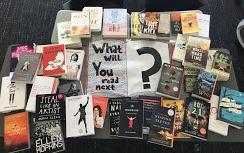
The last day before spring break, I had my students speed date the new books in the room. As Jessica mentioned yesterday, I LOVE conversations and the enthusiasm that occur with speed dating.

talk2

Alexis responds to JJ’s speed date selection, imploring him to read the book in his hands, I’m Thinking of Ending Things 

Students get to judge books by their covers or pick up titles they have heard about but never had in their hands.

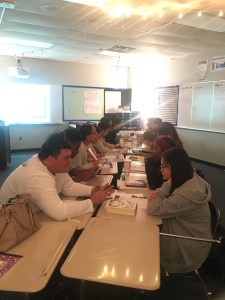
They get to spend just a few minutes “getting to know” the book and then share their insights with their tablemates.

We then share out by having students raise up the books they are intrigued by. We chat around what hooked them and students write furiously on their “I Want to Read” lists.

The only danger of speed dating? Hook-ups. Students meet and fall in love with books they
want to take with them right away. It makes it hard to keep the pool of fresh titles, well, fresh. I LOVE having this problem.

talk1

JJ challenges back, that if he is going to read her selection, she must read Small Great Things by Jody Picoult 


Lisa Dennis teaches English and leads a department of incredible English educators at Franklin High School near Milwaukee. Her favorite student talk is the variety that keeps students talking long after the bell rings. Follow Lisa on Twitter @LDennibaum and follow her students’ AP Spring Break adventures on Twitter #langbreak. 

3 Types of Talk to Boost Confidence and Community

the hate u give

My first day of teaching was going to be great, because I WAS PREPARED.

I wrote a speech, long hand, about 5 pages.  It was going to communicate what students could expect from the class and what they should know about me.  It was going to INSPIRE them.  They would hang on my every word.

Forget all of the appalling things I just mentioned–you haven’t even heard the best part.

After I gave my approximate 35 minute speech, and students were drooling as a result of my awesomeness, we would have A DISCUSSION.

Drop the mic.  Best teacher ever.  My students will have a voice!

Needless to say, having never been in the classroom before, my first day was a shock.  Most students did not want to hear a single word I had to say, much less ABOUT MYSELF.  My voice was gone by the end of the day and I was in tears because I had no idea how to go back and do it for another round of classes the next day.

I had no idea discussions needed planning and structuring.  I thought they just HAPPENED.

Oh–sweet, naive, extremely troubled Baby Mrs. Paxson.

Almost two years later, we never have a discussion without some sort of structure.  The structure can be minor, or it can be massive.  It can simply be planning on my part, planning on the students’ parts, or it can be structure that I pull out of my back pocket to maximize of a discussion that materializes out of thin air.  It can mean a different configuration of desks, or a script to which students can refer if they get stuck.

When we teach literacy, we can’t just command students to “talk.” We have to give them tools and materials and practices so that they are building their houses of reading, writing, speaking, and listening on a solid foundation, rather than a shaky one (insert your chosen Three Little Pigs invocation here).

Here are a few of my favorite ways to structure talk in the classroom, that can really work for ANYTHING from talking about books, to talking about real world issues, to reviewing pieces of writing, to students encouraging each other in passions and endeavors.

AVID Strategy, 30 Second Expert:

I learned this strategy through AVID, and it is so stinking versatile, it kills me.  I’ve adapted it many times to fit what we need, but the underlying concept is in the script.  I used this last during our Life at 40 Unit in which students were exploring desired careers and imagining/researching a possible life path.  In order to get students thinking and talking about career paths, after we did a little bit of preliminary research and decision-making, I posted two sentence stems on the board.

I’m an expert about (desired career) because I found out that __________________________.

I will be an expert at (desired career) because I am (character trait), (character trait), and (character trait).

Now, after they fill out these sentence stems, here is where the magic happens.  Students are required to pair up and repeat this script to a partner.  Their partner must actively listen and repeat what this student said in their own words.

Here are some conversations I got to hear that day:

  • “I will be an expert at physical therapy because I look on the bright side of things and I don’t give up on people.”
  • “I will be an expert at cardiology because I have discovered that I can learn anything, and will work harder than anyone sitting next to me.” (Positive self talk, anyone?)
  • (Repeating back to their partner) “I think you will be a great teacher because every time I talk to you in class, I feel heard and understood.  You stated you were a good listener, and I have experienced that from you.”

This is just a small glimpse into the conversations that can happen with 30 second expert.  Students feel silly at first, and they joke A LOT with these scripts, but even so, if you change your thoughts you can change your world.  Sometimes changing thoughts means changing the way you talk about yourself to others.  This allows students to phrase things they’ve just learned or mastered in a way that helps them realize they have added to their learner toolbox.

Speed-Dating:  

We are major speed daters over here at 3TT.  We speed date books ALL THE TIME.  I’ve also found that the speed dating format is golden for a lot of things such as when students bring in their own news articles for an assignment, giving post-it blessings, reviewing and revising writing, trying different mentor sentences and sharing, or really any situation in which you would like to allow students to have face-to-face time with many different ideas and possibilities.  You could also do 30 second expert in a speed-dating format!Structured Talk


Socratic Seminar:

I am by no means an expert on Socratic Seminar, but many different educators have different ways to get students talking about higher level questioning in a group setting.  B’s Book Love has some of my favorites.  In 822, we’ve tried fishbowl, whole class circle, passing stickies, and inner/outer circle with a live Twitter Chat.  They’re all great.  When my kids hear Socratic Seminar, they know I mean serious business, so this usually elicits slightly more academic talk.

Ultimately, structured talk promotes confidence and community in the classroom because it not only communicates high expectations, but it gives students the building blocks to reach those expectations and with skills they will carry into the real world!

How do you structure talk in your classroom?  Have you learned any tricks along the way?  Share them with us below!

Jessica Paxson is an English IV and Creative Writing teacher in Arlington, TX.  She usually takes on major life events all at once rather than bit by bit, such as starting graduate school, buying a house, going to Europe, and preparing for two new classes next year.  If you enjoy watching her make a fool of herself by being unbearably vulnerable, you can catch more of that over at www.jessicajordana.com. Follow her on Twitter or Instagram @jessjordana.


Ask Your Students: What is Engagement?

Between the World and Me

A few weeks ago I ran into a brick wall with a project in my classroom.  I promised an update, but what I have for you is so much more.

I took Shana’s advice and asked my students, WHAT WILL ENGAGE YOU?!  However, as I thought about asking them that question, I found myself wondering if they would know what I meant.

All teachers aim for engagement, administrators search for engagement and attempt to quantify it, but how many students have been explicitly taught what it is we truly desire from them?

I set out to do just that last week.  I knew we would be working with three different concepts that I think are frequently muddled in the classroom.

Fun.  Compliance.  Engagement.

I also knew we needed a purpose/audience for the discussion, so I explained to the students that they would be assisting me in writing this blog post.

I never knew it would be necessary to define these words, but as I doled out a different word to each table group, I walked around to notice a lot of the same conversations happening at each table.

What would a fun classroom feel like?

It would feel like everyone doing what they want, being productive, and everyone would be happy.

What would a compliant classroom feel like?

A compliant classroom would feel how school is supposed to feel; come in, get your work done, leave. 

What would an engaged classroom feel like?

It would feel like students being able to choose their paths.  It would feel like happiness because the students would know the teacher and classmates cared about them.

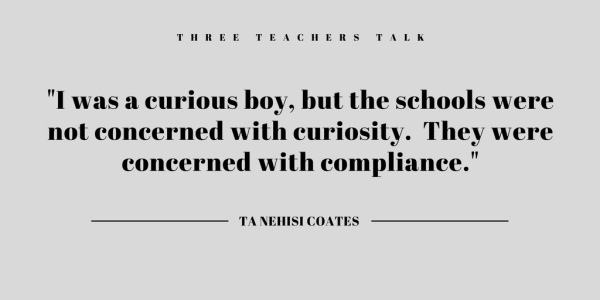
These students have been taught to be compliant their entire educational career.  Sure, it is necessary to be compliant in terms of respect, but if you are ONLY EVER compliant, you’re being robbed of the best part of learning: Recognizing you can push your mind further than you ever imagined.

I want an engaged classroom.  You want an engaged classroom. Oprah wants an engaged classroom.  EVERYBODY WANTS AN ENGAGED CLASSROOM.

So if compliant and engaged classrooms both get work done, what’s the difference?

Engage: (v.) pledge or enter into a contract to do something; establish a meaningful connection with.

Did you catch that?

To engage means to commit and connect.  That doesn’t just change classrooms, it changes lives.

So why is it so hard? Commitment and connection don’t come through passivity or apathy, they require effort and exertion.  They require pushing past the point of comfort (for both students and teachers), and sitting in the pain–not because you want to, but because you committed to it.

As we discussed why a classroom should not be all fun, Andy had an enlightening thought.  He said, “I think the problem is, any time you take part in something, you’re sacrificing something else.  I think a lot of students are afraid to sacrifice their own comfort to make a connection with someone.  There’s always the risk, too, that you won’t connect, and then it’s like you lost twice.”

Sometimes I forget the amount of fear that exists in the classroom on a daily basis.  Commitment asks us to sacrifice the easy path.  Connection asks us to say goodbye to selfishness.  All of this has to take place before engaged learning can happen!

It takes a straight up ninja to pull that out of every student in every class period!

We ended this mini-unit with a Socratic Seminar.  I love me some good structured talk.

PTT5

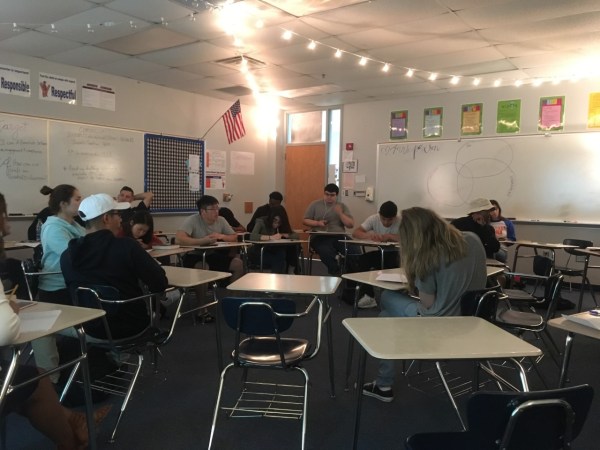
2nd Period Preparing for Socratic Seminar/Live Tweeting

What is the purpose and direction of our learning?  How can we make our classroom a space of authentic dialogue and engagement? (Question credit goes to my emergency lesson-saver, Shana.)

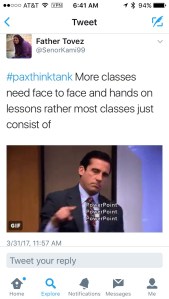
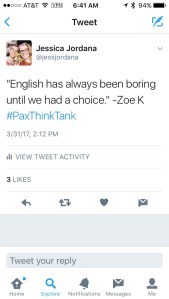
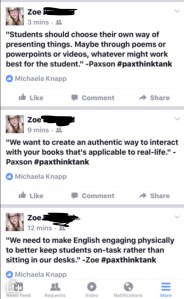
Zoe said she never liked English until she had choice.  She also said she wanted to do more talking about books in a way that connected with her classmates and what they were reading.

Dee said she enjoys higher level thinking.  What might happen if _____ happened to someone you know?  Would you handle things the way this character did?  What would you change? (Her suggested questions.)

4th period agreed they would like to deal with real world issues, and have choice in how they present their findings (poetry, video, podcast, etc.).

2nd period explained it should be about the learning, not about the grades, but it’s been that way for so long that they don’t know how else to operate.

Grady said, “School gives you a chance to do something great with your life, but you have to DO SOMETHING to be great.”

Shahin said, “Compliance is a downfall because you just follow orders and don’t think for yourself.  It makes it to where you will always need a boss, or you won’t know how to operate.”

PTT1PTT4

PTT2PTT6

Listening most often leads to learning, and I sure learned a LOT last week! Thanks for the ideas, #PaxThinkTank!!

Is your classroom one of compliance, engagement, fun, or a mixture?  How do you communicate with your students what you expect from them each day?

Jessica Paxson is an English IV and Creative Writing teacher in Arlington, TX.  She frequently feels as though someone made a mistake in allowing her to hold the futures of over 100 teenagers in her jittery, over-caffeinated hands for the past two years.  If you enjoy watching her make a fool of herself by being unbearably vulnerable, you can catch more of that over at www.jessicajordana.com. Follow her on Twitter or Instagram @jessjordana.


10 Things Worth Sharing Right Now

I love the little ripple of a thrill that runs through to my fingertips when I find something that I want to share with my students. That borderline codependent excitement that comes with wanting to share a book, an article, a statistic…immediately.

“They NEED to see this,” I think, fumbling around on my phone to figure out how and where to save it.

“They NEED to read this,” I say to my husband, as I make him pause his own life to listen to yet another passage of my latest read.

“They NEED to know about this,” I mutter, linking wildly to our syllabus (just another in a long line of moments where I’m grateful that life happens and we share it in class).

So today, I’m taking a page from one of my newest obsessions, the newsletter put together weekly by the brilliant, inspiring, and wildly creative, Austin Kleon. Each week, delivered to your inbox, arrives a list of “10 things [he thinks are] worth sharing.” Simple. Intriguing. Very, very useful in the classroom.

I’m honestly not sure how I stumbled on this one, but in the month since subscribing, I’ve used three of his images to inspire quick writes, and book talked (loosely) the newsletter itself, suggesting to students that they should subscribe in order to broaden their horizons to current happenings, inspiring visuals, and commentary on books, shows, and cultural phenomenon. In other words, link up to something that delivers items to keep you reading texts other than social media updates (“Made a sandwich guys…bet you’re all jelly. Get it? Jealous, but jelly instead.? God, I am such a genius”).

  1. Austin Kleon’s Weekly Newsletter
    Kleon reflects on a central image each week, along with linking to intriguing articles, a poem of the week, ear candy audio, eye candy visuals, and other noteworthy insights from across the vast expanse of the internet. If someone comes up to you and says, “Hey, did you see…?” chances are Kleon will have it linked on his list for the week.
  2. The Power of Exemplars
    A few weeks back, I was bemoaning to my fellow Three Teachers Ladies, how disappointed I was in a recent project my sophomores had completed. My vision for a poster that brilliantly illustrated their insights on their latest reading, was met with large sheets of paper with haphazard cutouts of text, crudely taped across the page, accompanied by printed book covers in black and white, and the occasional hurried pencil addition to the project (last minute insight for forgotten components). Needless to say, I was frustrated AND without any way to hold students accountable for the quality of the visual they submitted (not the central point, for sure, but a consideration certainly). Take pride in your product, and all that, had fallen short. In my irritation, I searched in vain for something in the Common Core that might suggest students consider carefully how they convey their ideas.

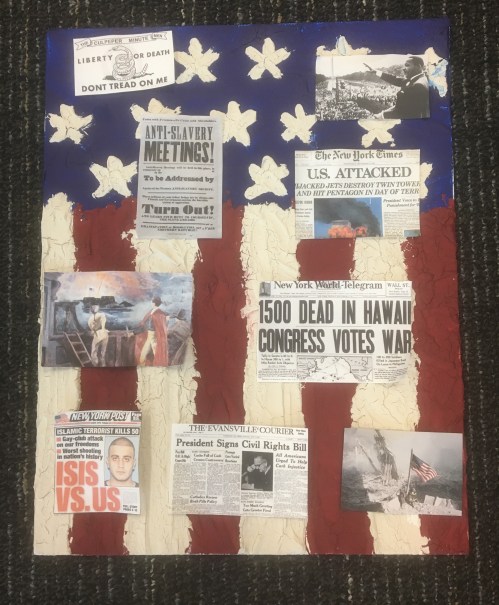
    Then, I took a deep breath. I realized I had what I needed, I just hadn’t used it. See below the power of exemplars. My AP students were completing their community visuals (which I wrote about last year in a reflection on the use of essential questions), and I had no rubric for this work either. However, the power of suggestion, in showing them some of the brilliant work from the year before, was more than enough. They knew the expectation, saw what I thought was praiseworthy when it comes to presenting their insights, and we enjoyed some brilliant symbolism in the presentation of these visuals. Amen.
    img_1163

  3. Musical Genius
    One of my groups took a creative leap for their community unit visual and put together a musical. Franklin’s production of Joseph and the Amazing Technicolor Dreamcoat opened this past weekend. Several members of the cast in my first period class asked if they could complete the project in a slightly different way. Their project would still include analysis, present their ideas to the class, and involve audience feedback after the presentation, but…there would be singing.

    img_1092

    Francesca, Joe, and Parker

    Since I always joke with my kids about presenting their ideas through interpretative dance, this musical idea intrigued me. Their mini musical included several skits that detailed life within the community of a musical cast/crew. Watching students sing their way through a summative, I was reminded that my vision for a project is rarely as broad and brilliant as what students can come up with on their own. My exemplar pool had just expanded in verse.
    img_1095

  4. Bag o’ Books
    Remember to beg for books. Want to build that classroom library? Get down on your knees and remind your students of how good it feels to give back…to you.Maija recommend the book Dangerous Minds a few weeks back. When a fellow student was at the bookshelf looking for it the other day, I asked Maija if she’d be willing to bring it so, AJ could borrow it. I even turned on a sweet smile and said, “If you don’t need it anymore, I’d be happy to take it off your hands.”

    The book was outside my door the next day, in a bag with a sweet note and several other books. Score.

  5. Amy Poehler on Writing
    I’m training for a half marathon. Without audiobooks, I might not make it. Seriously. I need to get lost in a story to pound out the miles. So, when I started 10 miles on Sunday and realized my Overdrive audiobook had expired, I had to quick download something new. Ugh.Enter, Amy Poehler’s Yes, PleaseI smiled for nine miles (it takes awhile to download when you’re actively running down the street). Poehler’s voice is sincere, relatable, and funny as all get out. Easy to book talk.

    Here’s the golden ticket: The Preface. I heard it and knew I needed to play it for my students. Poehler writes with undeniable voice about writing. She says of her text and the writing process that she “had no business agreeing to write this book” and wrote it “ugly and in pieces,” because “everyone lies about writing…they lie about how easy it is or how hard it was.” She says, and students really related to the idea, that “writing is hard and boring and occasionally great, but usually not.” In reflection afterward, students also noted her use of stream of consciousness, aside, and self deprecating banter to tell her story, not just inform her audience about what the book would be about. Classes agreed that they could really get behind her idea that, “Great people do things before they are ready.” Amen, Ms. Poehler. Let’s all put pen to paper.

  6. langchat#17
    I recently started following the brilliant Elizabeth Matheny on Twitter. Her AP insights and resources have helped fuel my work recently and her AP Language slow chat last week was a great opportunity to have my kids practicing analysis with students across the country. I’m thinking of several things to extend this activity:
    – Have students organize a slow chat for peers
    – Get students to live tweet peer feedback during speeches or discussion
    – See #7 below
  7. Tweeting Authors
    I tweeted Angie Thomas to tell her that her book The Hate You Give is stunning and I’d be getting into the hands of as many students as possible.She liked my tweet.Fangirl moment.img_1024
    Have your students reach out to authors. They often reach back.
  8. Creativity Visual
    I love what this suggests to students about the power they possess.
    img_1157
  9. Get it to the Big (or small) Screen
    My students often buy into the idea that great books are made into (sometimes great) movies. The Underground Railroad is being made into a series with the director from Moonlight. Having just finished this intriguing read myself, I book talked the text this week and shared the movie plans.
  10. Quick Write – Psychopath
    This came across my Facebook feed the other day, and I tossed it on my PowerPoint. As is the way in educator, my students surprised in noticing it, and we ended up doing a quick, quick write about changing social norms. AP Language test prep comes in many , many forms.
    img_1122
    What would make your list of 10 things we need to see and share this week? Add your ideas in the comments below! 

Lisa Dennis teaches English and leads a department of English educating gods and goddesses at Franklin High School near Milwaukee. She loves lists, especially lists with links to beautiful thoughts and ideas. Follow Lisa on Twitter @LDennibaum 

disclosure


Goodbye Days: a Craft Study and a Gorgeous Grand Slam

I love language. I love sharing my love of language with students.

When I read a book, I often dog-ear the pages, thinking of how I might use a passage to help my writers. Sometimes a book just does me in — so many beautiful words I cannot keep up. It’s a bonus if the story does me in.

Like Goodbye Days by Jeff Zentner. 30649795

If you haven’t read this book, oh, you’ll want to. Zenter’s first book, The Serpent King, kissed my soul. Goodbye Days took a hammer to it.

In a good way.

I started marking passages at page 36. I think because I forgot to think about it. Just read the first line of this YA novel:  “Depending on who — sorry, whom — you ask, I may have killed my three best friends.”

Mini-lesson opportunity one (whom), two (parenthetical with the dash), three (participial phrase), and four (voice)– all in one sentence.

The first time I really thought about using language from YA novels to teach my writers was in a class at UNH Literacy Institute taught by Penny Kittle. She showed us mentors of sentences and passages, pulled from the books she introduced to her students. She talked about how these craft studies also could serve as quickwrite prompts and book talks. A triple play.

Since then, Shana (who sat with me in Penny’s class) and I upped the ante:  some of our favorite mentors are hard-hitting home runs. But the following passage from Goodbye Days –It’s a gorgeous Grand Slam.


Excerpt from Goodbye Days by Jeff Zentner (p36)

     I feel like I’m watching something heavy and fragile slide slowly off a high shelf. My mind swirls with mysteries. The eternities. Life. Death. I can’t stop it. It’s like staring in the mirror for too long or saying your name too many times and becoming disconnected from any sense of yourself. I begin to wonder if I’m even still alive; if I exist. Maybe I was in the car too.

     The room dims.

     I’m tingling.

     I’ve fallen through ice into frigid black water.

     I can’t breathe.

     My heart screams.

     This is not right. I’m not fine.

     My vision narrows, as if I’m standing deep in a cave, looking out. Spots form in front of my eyes. The walls are crushing me.

     I’m gasping. I need air. My heart.

     Gray, desolate dread descends on me — a cloud of ash blocking the sun. A complete absence of light or warmth. A tangible, mold-scented obscurity. A revelation:  I will never again experience happiness.

     Air. I need air. I need air. I need air. I need.

     I try to stand. The room pitches and tosses, heaving. I’m walking on a sheet of Jell-O. I try again to stand. I lose my balance and fall backward, over my chair, thudding on the hardwood floor.

     It’s one of those nightmares where you can’t run or scream. And it’s happening to me this moment in the dying light of this day of dying. AND I AM DYING TOO.


What writing mini-lessons could you teach with this passage?