Category Archives: Books

Reel Reading for Real Readers: Columbine by Dave Cullen

20130207-190708By far the best book I read this summer was Columbine by Dave Cullen. As part of my class at #UNHLit13, I chose to read this book and study it for craft with three other teachers. Maybe that’s why it’s my favorite.

I’ve been in book clubs before, and I’ve had my students conducting literature circles for a long while now, but I’ve never experienced the power of studying a book like this one.  Maybe it was the subject matter. Maybe it was the amazing group of professionals who were invested in the process as much as I was. Whatever it was, Dave Cullen has crafted a masterful piece that moved me.

I want my students to experience this kind of emotion when they read a book. I also want them to see the art in crafting language. (I’ll use excerpts in mini-lessons throughout the year.)

These are the first clips I will show my students this year, and I guarantee my copy of Columbine will land in a student’s hand, and the waiting list will start out long. I better prep the school library to get their copy ready, too.

OMG! Do You Think You Have Enough Books?

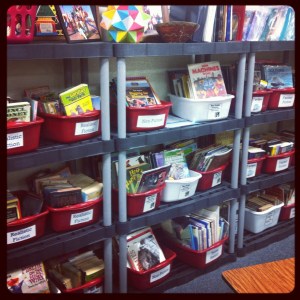
photo-1Last August, as I started in my new role of instructional coach for my district, people often said that I would go through a grieving process as I left behind what I once knew to embrace the unknown. Throughout the year, many have asked if I have missed the classroom, and of course, to some degree the answer is always yes, but there is one specific thing that I miss the most… MY BOOKS!

Walk into my room and more likely you would have asked me, “Jeez, Heather, do you think you have enough books?” Of course, my answer was always, “Uh, NO! How would that ever be possible?” No doubt, the best part about my classroom was my extensive library. If I spent a day and counted, I’d probably total close to 1,500 or more books, all cramped on shelves, waiting to spring into the hands of an unsuspecting reader.

Kids need easy access to books, just like they need easy access to their cell phones. The library can be too intimidating; the book stores are too far away, and often the shelves in their homes are void of books. As the teacher, if I wanted to send the message that books are important, there is no better way than to fill my room with books – good books, colorful books, books that students want to read.

Where I Find Books
* scooped up from a retiring teacher (Why won’t more teachers take early retirement?)
* freebies at conferences (Yes, I lurk in the corners of exhibit halls, executing a flawless freeloader innocence. Note to self: ask Amy to write about her stealing from a vendor experience.)
* purchased at the Scholastic Book Warehouse clearance event (Watch the calendar and pay attention to the Scholastic website)
* given to me by a students – (Please, no more Starbuck’s giftcards and scented candles… I NEED BOOKS!)
* Half Price Books (If near a warehouse, the free give-a-way for teachers is worth it. Otherwise watch for coupons. I just used a $15 off of $50 purchase that meant 21 new books.)

Why I’ll Never Have Enough Books
It’s more effective to walk over to the shelf and hand a student a book than it is to tell her to go to the library or to the bookstore and get it herself. Ever had this happen: a friend tells you about a book, and you think “Oh, I want to read that.” Unless you write it down or make a stop at the bookstore on the way home, you’re not likely to get that title any time soon. Magnify that by 20, and you’ve got what happens with a student. Most often you have to put the book in the child’s hand. Is she guaranteed to read it? No, but I increase the chances exponentially when I grab a book, chat about it, and hand it to a student. And with some students I place one book and another and another, until the student finds the one she wants to read. That’s why my shelves scream with diversity.

In my classroom, I arranged my bookshelves by genre because students may not know what they like to read, but they know what they like. A girl may not know she likes Sarah Dessen novels, but she knows she likes romance. A boy fascinated by the Civil War may search my shelf of war-themed books and discover the writing of James L. Swanson. By placing the books by genre I am able to create a type of comfort zone where my students feel free to explore. Just like no two students are alike, no two readers are alike. The more books on my shelves, the more opportunities I have to get students to read.

How I Kept Track of My Books
I didn’t. I literally have a love relationship with my books. My students know of my affinity, and they quickly understand that the books on my shelves are my personal friends. Friends that will break my heart if I lose the connection. Many a time when a student lost one of my books, he’s replaced it because he knows I care about each of my books. The real deal though– if a book doesn’t make it home to my shelf, I’m okay with it. Maybe it’s altruistic, but I hope she’s happily getting read somewhere by someone. As teachers and librarians we must remember that we cannot be the keeper of the books and the stories they hold (even if they do end up at Half Price Books with your name clearly stamped on them.)

Last May, at the end of the year I carefully selected my most treasured friends, but then I, like someone had once done with me, passed them on to another teacher to share the love of reading with her students. I can only hope her students have found as much pleasure in them as mine once did.

How do you build your classroom library? How do you prevent your books from never returning? (or do you?)

Building a Community of Readers by Sharing Our Own Struggles

booksAt least once a week, if not more, I see some news piece or article about how students these days are spending less time reading. Taking a minute to reflect upon my own reading life, I thought back to how I encouraged a community of reading in my classroom.

Over the course of a school year my students read a lot. Each year when we would count it up, we found that my eighth graders had read between 50-60 books each over the course of the school year.That’s 60 students reading about 60 books. That’s 1200 books. See? A lot! In my classroom, reading is contagious. Walk in the door, and you breathe in the reading bug. If you aren’t reading, you are separating yourself from something important. Reading takes precedence. By making reading a priority, and emphasizing that reading takes us places we’ll never get to, I am able to get even reluctant students to crack a book and creep into the pages. My struggling readers quickly learn that it is not about quantity or speed, but more about the fact that they are reading. Reading opens doors that the world slams shut.

No doubt, the biggest “Why read?” selling point to get my kids reading is my honesty. I openly tell them that when I was in sixth grade I hated to read. I hated to read! In fact, I hated to read so much that I only read one book all year. My students ooh and aah at that: “One book?” they question. Then I go on to tell them that I had a required book report due every six weeks, which meant read one book every six weeks. As you may guess, this discussion quickly turns into a math lesson with students questioning how I could have possibly passed sixth grade reading only one book. Every year I somehow skillfully turn the conversation back to reading. I let them question me: What about now? Do you like to read now? Do you only read because you have to? And my answer: What do you think?

It’s true that kids don’t care what you know until they know how much you care. Establishing rapport at the first of the year requires immediate, daily and purposeful attention, and honesty with students lends well to the building of it. I know it’s my honesty that makes it okay for my students to struggle with reading. We use my experiences, and make connections with their own, to talk about why reading is important and how we can grow as a room of readers. I flood the room with books. I talk about titles that painted pictures in my head. I read while my students are reading. My kids quickly see me as a reader.

Frequently, students want to know what turned me into a reader, like there’s some magic pill that changed my hate to love. They question me when I boast that I read forty-six books over summer vacation or 150 books total for the year. I model being a proud reader, and sometimes this leads to precious moments where my students and I have tender discussions about reading, and I am able to share my reading transformation story. Often students think that because I am their reading teacher I was born with a love of reading, and that it has always been easy for me. Once I dispel this myth, and they find out that I struggled for the better part of my life with reading, students are able to see me as a peer with a similar struggle, and if I work on the rapport right, they begin to envision themselves as readers. Isn’t that the key? If kids can see themselves as readers, maybe even if that seeing requires a high-powered magnifying glass, we can get pages to turn in their hands and characters to come to life. It only takes one book, and that’s a blog for another day.

In the mean time, what made you a reader?

Reel Reading: How about these book trailers?

20130207-190708It’s been a long time coming, but my students have finally produced some pretty good book trailers. I began showing trailers as a way to introduce books and encourage reading at the beginning of the year. Every Friday was silent reading day, and every Friday I chatted with kids about books they’d finished. We wrote on sticky notes and made a “recommendations” wall. We stood up and “testified” to the truth in books and how they touched our souls. No doubt, since I promoted reading more during class time this year, I created more readers.

Evidence? STAAR EOC scores are in. Almost every student who passed their reading test has been vocal in our classroom conversations about books this year. (One kiddo surprised me and scored satisfactorily–his average is a 26, but he passed the reading test. Go figure.)

I know. I know. Test scores are not everything. But… my readers certainly scored better than my non-readers.

On my classroom wall, I have my own six word memoir:  “Reading makes you smarter. Try it.” Those who did have done better than those who have not.

2 reading smarter

Our book trailer project is the culmination of our reading efforts this year. I wish we would have more time to polish them up, make sure we cited image sources, spelled words correctly and all that, but exams are next week, and bell schedules are crazy with awards assemblies, etc. Our time is gone.

Here’s a sampling of the most interesting of my student-made book trailers. Although not perfect, remember, these are 9th graders in an on-level English I class, Title I school. I’m a little proud.

Crackback by John Coy, created by Brandon. He used photos from our own football team.

Brandon Crackback

Unwind by Neal Shusterman, created by Heidi. Look at her hook!

Heidi –Unwind

A Child Called “It” by Dave Pelzer, created by Biridiana. She learned the medium on her own and came up with this!

Child Called It- Biri

The Lifeguard by Deborah Blumenthal, created by Kristen. Okay, so the trailer’s not great, but the video of the girl is Kristen herself. Cool.

The Lifeguard- Kristen

See You at Harry’s by Jo Knowles, created by Brenda. The use of quotes from the book creates the book’s selling points.

See You at Harry’s- Brenda

Reaction by Lesley Choyce, created by Ashley. Other than her characterization using Juno… <smile>

Reaction by Ashley

My Friend Dahmer by Derf Backderf, created by Jonathan. This one got traction when we showed it to the class. Wish it had more umph at the end.

Dahmer- Jonathan

I’d love to hear your ideas of using book trailers to create readers– or anything else you can teach me about books, kids, and reading!

Reel Reading for Real Readers: Summer YA Book Trailers

20130207-190708Pinterest, I love thee!

I didn’t think I would, but when my daughter told me that people were refurbishing and painting “old and ugly furniture like you have in the house, and you can learn how to do it on Pinterest,” I took a peek.

Yeah, ideas galore. (I even took my daughter’s advice, and who knew I could paint such beautiful furniture?)

But, here’s the thing:  There are boards for almost Everything. Even Summer Reading ideas for YA.

Oh, yes, please!

So, #ReelReading will take a break until school starts up next fall, and in the mean time– go check out this awesome board. I’m sharing it with my students next week.

Pinterest

Reel Reading: A Child Called ‘It’

20130207-190708.jpgI’d love to get my students to do some of this cool typography. Since they will be making their book trailers this week, I wanted to show them this option for their creations.

I’ve had great success getting even the most reluctant readers to read A Child Called ‘It’ by Dave Pelzer.

See? Isn’t all that letter and word movement cool?

If students like the topic of abuse (which I don’t quite understand), they might also like Ellen Foster by Kaye Gibbons. I haven’t seen the movie, but this trailer looks like it’s pretty well done.

Maybe next time I’ll look for happy topics.

Sheesh, Amy. This is depressing stuff.

Reel Reading: ROOM. Oh, my sweet Jack!

20130207-190708Few books hit me in the gut and make me weep, but ROOM by Emma Donoghue did just that. Told from the point of view of just just turned 5-year old Jack, this story of abuse, survival, and enduring love packs a punch that leaves you gasping.

Soon after I read ROOM, I heard the real life story of Jaycee Dugard and hurried to the book store to buy the book that shares her story, A Stolen Life.  Oh, my! Terrifying, horrifying, and. . . hopeful.

A Stolen Life

I have students, mostly my reluctant readers, who devour the book A Child Called ‘It‘. These kids often enjoy (or at least have a love/hate relationship) with  these other titles, too.

What is it within us that makes us want to learn of others’ suffering so?

It’s Monday. What are You Reading? Late but not forgotten

Mon Reading Button PB to YA

Books I FINALLY finished this week:

gatsby

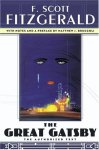
The Great Gatsby

A mere five days before the movie comes out, I have finally finished the book! This is now officially my third time to read the classic story and I loved it just as much this time as I did the first two times. I’m not sure if the visual images that I had playing in my head as I read were tainted by the movie previews, but I really think the glitz and glam of this era is purely mesmerizing.

Books I am going to read this week:

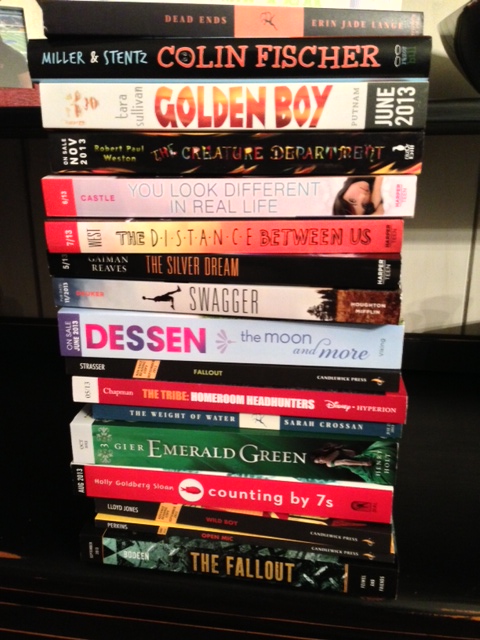
Texas Library Association Conventionphoto

Empty book bag in hand, a couple of weeks ago browsed the isles of the exhibit hall at the annual Texas Library Association Convention. While there I was able to snag some great books that I am so excited about reading. Of course I won’t get all of these read this week. In fact, most of them will move on to my to read pile for the summer, but none the less a new stack of books is always invigorating to a voracious reader. I think of all of these, I will probably start with Dessen’s latest. I can always count on Dessen to provide a nice story with great characters!

Reel Reading: The House of the Scorpion

20130207-190708I love to watch student-made book trailers, especially when the students are not mine, and I’ve already read the book. I guess I see with a teacher’s eye:  Did the student get the gist of the book? Did she love it and want others to read it as much as I did?

I felt a thrill when I watched this trailer for Nancy Farmer’s The House of the Scorpion. The images and music parallel one another nicely, adding that touch of intrigue, which parallels the adventures in the book. The few errors in writing make me smile– my students will do that, too.

My kids will soon start creating their own book trailers. They got to choose the books they read. They get to figure out how to format and create a trailer that will get others to want to read that book. Should be interesting to see what they come up with.

I cannot wait.

Reel Reading: If I Stay by Gayle Forman

20130207-190708For their final project my English I students are to create their own book trailers. We’ve watched enough of them this year that they should have a pretty good idea of what an effective trailer should do:  compel someone to read the book.

In a last ditch effort to get my kids to understand the task, we are watching student-made book trailers for the next little while. These are a couple that are done very well about the book IF I STAY by Gayle Forman.

In my experience, if you can get a kid to read just one of Forman’s books, she will read them all.