Author Archives: Amy Rasmussen

Writing Myself Out of a Wreck

Note: This post was supposed to run this morning. Must not have clicked the right button last night. So, here’s my thinking of late. Better late than not at all. (I think that’s the mantra of many of my students.)

I have a confession:  I am pretty much a wreck.

I could blame it on my son who joined the Army and left for basic training the afternoon of Mother’s Day, or I could blame it on another son who called to say he’s marrying a girl he’s known a month and I’ve never met, or I could blame it on this Empty Nester thing that’s barely three days new and haunting me with shutting doors and creaking floors.

I could blame it on the AP Language exam my students take today.

It’s the same every year — well, not that son part, thank God — but definitely the wreck part.

Every year I wonder if I taught enough, had them write enough, gave enough feedback. I wonder if I helped them grow as critical thinkers and accomplished writers. I wonder if they will read the prompts correctly. I wonder if they’ll answer the questions. (I’d be happy with a thesis statement.) I wonder if they’ll remember we learned to read footnotes. I wonder if they’ll cite their sources. I wonder if they’ll write enough to show they are bright and honest and eager and loving young adults.

Oh, wait.

That’s right.

No matter how my students do on this high-stakes test, the important things — the things that matter to me, and should matter to the world — are the things that cannot be measured in 55 multiple choice questions and three essays.

I just needed to write myself into that reminder.

_________________________________________________________________

Today I read  Enjoy the Best Year Ever with a Mantra by Ruth Ayres and loved her Why I Write mantra. I took up the pen to write my own. It’s still a work in process, but I’m kinda likeing it, and I’m no longer a wreck.

Why I Write

I write to make myself feel better.

I write to discover what I want to say.

I write to hear my voice within the chaos.

I write to play with colorful words (and pens).

I write to show my students I am a writer — and because it’s hard.

I write to share my thinking, my hoping, my planning, my longings.

I write to be remembered and to be worth remembering.

I write to know I belong.

I write to advocate for literacy and learning and the lives of my kids.

I write to become a better reader (and I read to become a better writer).

I write to tell stories.

I write to walk the walk and talk the talk of my English teacher self.

I write because it is better than the spa.


Have a go at it. What is your mantra?


#FridayReads — A Book about Death to Teach Writing?

Last Saturday my niece and I attended the North TX Teen Book Festival.

Hundreds of teens stormed the book sales and stood in lines to get signatures from their favorite authors. Authors shared stories about their craft and their books while grouped in panels with interesting names like “‘Just a Small Town Girl’ Small towns — Big Stories,” and “‘The Book Boyfriend’ Sometimes Boys in Books are Better,” and “‘We’re Young and We’re Reckless, We’ll Take This Way Too Far’ Exploring mature situations in YA.

Raistlyn took notes. She is 14, a prolific poet, and is writing a novel.

Screen Shot 2016-04-26 at 9.09.01 PM

New books added to by to read next list.

For our last event of the day, we crowded in an overflowing room to listen to Holly Black, James Dashner, Sarah Dessen, Gayle Forman, Ruta Sepetys, Margaret Stohl talk about what it is like when books become movies. We oohed and aahed and laughed as they told of their experiences. (Margaret Stohl is funny!)

School busses lined the streets, and I cheered that so many teachers thought to bring their students. I did not. We were out of school the day before, and thanks to my poor planning, I never got around to getting a field trip approved.

I kicked myself after.

But I got a lot of great book recommendations, and my TBR tower is now named Eiffel.

I only bought one book. (Don’t tell. My husband and I have a bet to see who can resist 18883231buying books the longest.) I bought Denton Little’s Death Date by Lance Rubin because I heard the author talk with such excited wonder about this story and his experience writing it.

It’s the story of a boy who knows the date of his death. He knows because that’s the way it goes in his world — everyone knows the day they will die. Morbid, you say? Maybe.

But this is a comedy.

Hooked me. I need more books with laughs in my classroom library, and so far, this one does not disappoint. Here’s the excerpt I will share when I book talk this book:

Excerpt from Denton Little’s Deathdate by Lance Rubin p 66-67

I know different people and cultures have varying approaches to death, so in case you don’t know about the tradition of the Sitting, here’s the deal:  whilst waiting for death, you sit. You generally end up in a room of your house, probably the family room (ideally not the living room because the irony of that is too hilarious and stupid), where you’re joined by your immediate family and whoever else has been invited:  cousins, aunts, uncles, grandparents, girlfriends, best friends, and so on. Everybody communes and celebrates and waits for something to happen.

And something always happens.

Heart attack, stray bullet, seizure, fallen bookshelf or tree, stabbing, tornado, tumble down the stairs, strangling, drug overdose, fire, aneurysm. Not to mention the basics:  old age, cancer, pneumonia, other fatal illnesses. People have gone to great lengths to try and survive, but you just can’t. This guy, Lee Worshanks, in Pennsylvania, spent years working on what he called a Safety Room, the perfect place in which to spend his deathdate:  ideal temperature, rubber walls, dull-edged furniture, the works. When the Big Day rolled around, the room’s complicated security system somehow malfunctioned, and Lee found himself locked out. After hours of failed attempts to get inside his perfect room, he went a little nuts. He ended up electrocuted by some kind of circuit panel in the basement. So pretty much every possible variation on death in a house has happened to at least someone in the past few decades.

But you don’t know what the variation is, and you don’t know when in the day it will happen. That’s why the Sitting has always seemed insane to me. Who would ever want to be sitting in a room with their family for twenty-four hours straight? How is that anybody’s idea of a happy way to die?

Besides liking the narrator’s voice, I love how Rubin structures some of these sentences. This is a great passage to discuss syntax.  Look at that stand alone single sentence paragraph. Look at the lists and the use of the colon. And I love all those sentences that start with conjunctions. My students think that’s a grammatical error, and that leads to interesting discussions about why a writer might start a sentence with and or but or so.

I also love that example:  “This guy, Lee Worshanks, in Pennsylvania, spent years working on what he called a Safety Room, the perfect place in which to spend his deathdate. . .”

My students struggle with developing their ideas by using appropriate and convincing evidence. Here, right in a passage from a YA novel, is an example of an example I will use to illustrate examples with my writers. (My nerd factor is pretty high right now, isn’t it?)

Here’s the thing:  I loved attending that book festival with my niece. I loved listening to authors talk about their writing. I loved getting new ideas for books to share with my readers. And I really love that I found this one little passage in a pretty clever book about how we face and talk about death I can use with my students.

Reading is fun. Isn’t it?

*Note:  Did you know there’s a site that will predict the date you will die?

#FridayReads: Poetry as a Gateway into Reading

Before I started reading novels in verse, I had no idea how important they would be to the readers in my classroom. So many of my students who say they hate reading will read these books of poems that tell a story. (Chasing Brooklyn is one of the girls’ favorites. The Crossover, of course, is one of the boys’.)

This week, Sung, one of my quiet students from Myanmar, asked for a recommendation for her next book. She reads far below that of an 11th grader in an AP class, but she’s tenacious and determined to catch up to her peers. She and I have focused on her fluency since the beginning of the year when in our first conference I learned she could read all the words in a novel, but she understood little of the meaning. (Similar to my ELL student who read every word of The Great Gatsby last year without comprehending any of it. This was before I clued in to her need to save face with their peers.)

“I am reading,” Sung said, “but I don’t know what’s going on.”

I’ve heard this before, and I always celebrate when my readers let me in on this secret. (It takes guts to be vulnerable, especially at 16.) In talking with high school students who struggle with reading, I’ve learned they usually have no idea why. Most of them think they are slow or dumb — or they simply claim reading is boring or dumb because it’s easier to say that than admit reading is hard.

The hard part for me is teaching them to read. My degree is in literature after all, and my Masters in Secondary Ed did little to prepare me for the adolescent reading crisis I face every day. So I teach reading by getting students to read. I talk to them about their reading and get them talking to me about their thinking.

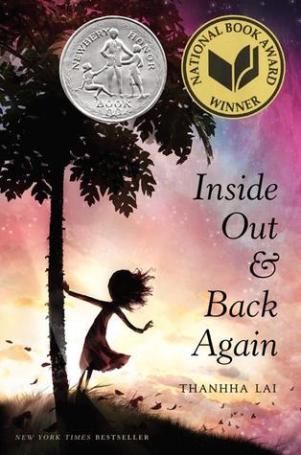
8537327Sung had just finished her 8th novel in verse, her favorite so far, Inside Out and Back Again. As I conferred with this reader, she told me she wanted to try something more challenging that was a ‘real’ novel. What she meant was a story with more words on the page. (Last year I caught one of my ELL students at the book shelf flipping through books. When I asked him why, he said he could tell if he could understand it depending on the “thickness of the words.”)

I walked to my “Explore: It’s Your World shelf” and pulled a few books I thought Sung might like:  Chains by Laurie Halse Anderson, In Darkness by Nick Lake, Copper Sun by Sharon Draper, Letters from Rifka by Karen Hesse, a book of short writings by various authors about human rights, published in association with Amnesty International, and several other titles I cannot remember now.

Then, I gave her time to explore.

A few minutes later, Sung held two books in her hands and quietly told me she wanted to read them both. She left the room with Karen Hesse’s award-winning book and the anthology of stories by writers like these: Paulo Coelho, Yann Martel,  Chimamanda Ngozi Adichie, Ishmael Beah, and more. These are not difficult books. They are not complex. They are way too easy by most high school standards. But they are exactly what this young woman needs to not only grow in confidence as a reader, but to grow as a citizen of her world.

And an interesting insight? Quite often it takes more inferencing skills to understand the story in a novel in verse than it does with a story written in prose.

_________________________________________________________________

For a list of other novels and verse, see this post.

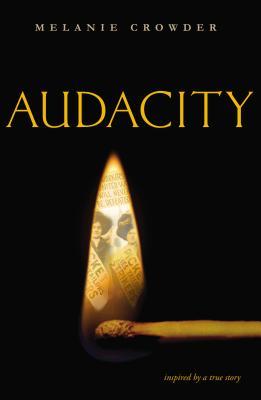
Here’s a highlight from my most recently read novel in verse, Audacity by Melanie Crowder. I think it will make a nice quickwrite at the beginning of the year as we build a reading community:

alight  22521938

I passed my Spelling

and Mathematics exams!


I hurry after work

to the free school

to check the schedule

for the next round:

Geography

History

And Trigonometry.


The thing that separates

rich from poor

in this world

is knowledge.

A person can rise up


if she can read

if she can think

if she can speak.


I cannot attend

every class

every lecture

but if I share what I learn

with the girls in my shop

in between bites

during lunch


ff Pauline shares

with the girl in her shop

in between bites

during lunch

it is as if we all

Were there together.


I see

these lunchtime lessons

spreading like fire

skipping from one box of tinder

to the next

across the shops

through the slums

until the entire city is alight

with small

fierce-burning flames.

#3TTWorkshop — Some Thinking on Feedback and How We Use It


Did you know there are 167 synonyms for feedback? reaction, response, answer, reply, assessment, comeback . . . criticism . . .

By definition, feedback in the business world means: Process in which the effect or output of an action is ‘returned’ (fed-back) to modify the next action.

In the mini-lesson I posted Monday, I mentioned that I’d asked my students to write for five minutes in response to this:  Think about your reading growth and improvement this year. Can you honestly say you are better now than you when you walked in the classroom in the fall?

TTT reader Leigh Anne commented:  “I love this idea. . . I do wonder though, what were some of their responses to how they grew as readers this year. I only teach 6th grade, but answering this question seems to be a struggle for them. I can’t image how junior AP students would answer it.”

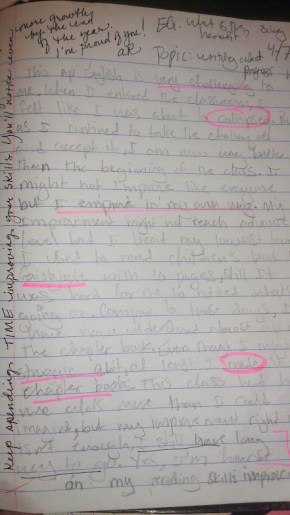
So I took snapshots of four students’ writer’s notebooks and transcribed what they wrote.

notebook response

For quickwrites, I ask students to write as much as they can as fast as they can as well as they can. Then, we always read over our writing and try to revise.

Before you read (in their own quickwrite language), I’d like to suggest that while this simple writing exercise served as self-evaluation for students and set up the personal reading challenge activity, more importantly, it served as valuable feedback for me. We spend an awful lot of time self-selecting books and reading them. One way I know if the investment in time is worth it is to ask my readers. As a result, I now know how my students feel about their progress, and I have ideas on how to “modify the next action.”

“This AP English is being challenging to me. When I entered the classroom, I felt like I was about to collapse. But as I continued to take the challenge and accept it, I am now way better than the beginning of the class. I might not improve like everyone but I improve in my own way. My improvement might not reach advance level but I beat my lowest level. I used to read children’s book, fairytale with 10 pages , still it was hard for me to notice what is going on. Compare to those days, I have now understand almost all the chapter books. This class had helped me more than I could imagine, but my improvement right now isn’t enough, I still have long way to go.” ~Sui

Next action:  Sui said she now understands “almost all the chapter books.” I’ll talk to Sui and find out what she thinks might help her understand all the chapter books. She may be able to tell me where she gets confused. If she does, I will be able to offer strategies and support so she will continue to improve.

“I haven’t done all the required reading in a timely manner, however, I have grown slightly as a reader. My pace has increased with some books, but also slowed down due to difficulty of certain books. That happens to everyone, hopefully, because it could just be me. I still have a focus issue with reading, but it has improved within the time frame of this year. I’m not where I should be as a junior in high school, but it could be worse.” ~ Cerin

Next action:  I’m curious to know if Cerin truly believes she might be the only one who has to slow down when reading more complex books — and I didn’t know she has “a focus issue.” I need to talk with Cerin and find out what she means by this and determine how I might help. I know she’s abandoned several books this year. Maybe she’s one of those expert fake readers, or maybe she still hasn’t found any books she likes enough to finish.

“Honestly, I can say that my reading has improved since the beginning of the school year. I can say this because before I lacked motivation when it came to picking up a novel. It might have had something to do with lack of interest with the topic. Also, I found myself skimming through the text and not critically annotating the pages, but now looking forward this semester my book is tattooed with my thoughts, and each word read one after another.” ~Unity

Next action:  First, I must tell this girl how much I love that “tattooed” bit! I know Unity spent a lot of time reading and annotating the non-fiction book she chose for our research mentors. She shows me here how proud she is of that, and I need to recognize and celebrate her efforts. Our next one-on-one conference may turn into a discussion on the notes she made in her book and why. I need to see her critical annotations.

“I can honestly say that I got so much better at my reading in English classroom. When I enter this year I could not tell if the book is non-fiction or fiction, but after Mrs. Rasmussen talked to me one on one I can tell which one is non-fiction and fiction. I am currently reading the book that is challenge on me but I really want to catch up with my classmate on reading skill and level. I improve so much this year and like reading now. I never like reading in my freshman year or sophomore because I thought reading is useless and it take all of my time. But now I like reading fiction book because I see myself in the book and it get into my head.” ~Siang

Next action:  Siang’s challenged herself for a while now. I need to be sure she is not stuck reading a book that bogs her down too much. She’s been frustrated with reading in the past, and she finally found success with some fairly easy reads. Fluency means comprehension, and that is where the story is. By saying she likes to read fiction, Siang is really saying she likes good stories. I need to make sure she finds another one.

_________________________________________________________________

Were all student responses quite so encouraging? No. These are juniors in high school after all. I’ll say this for them though: they are usually brutally honest when I ask them for this kind of response.

One student wrote that he has not improved as a reader this year, and he does not think he needs to. He feels like he’s as good as he ever needs to be. (I wish this was satire — we are in the middle of that right now.) Alas, it is not. This young man does the bare bones minimum to show he’s learning anything — just keeps his head above passing, goes through the motions. But his response is valuable feedback, too.

“Hey, kid, we have about seven more weeks of school. I’m not done with you yet.”

And that’s the thing, isn’t it? They enter our rooms, and we give them our all. In my case, my all gets charged by the hope I have. I hope my students will grow as competent, confident, intelligent, and compassionate citizens. They can energize the world.

I believe reading more and reading well is the fast track to all of that.

Please share your ideas on getting  — and giving feedback.

Mini-lesson Monday: Personal Reading Challenges

If you’ve ever taught juniors, you probably know my struggle. The third quarter of every year, students hit some kind of mountain of a speed bump. I think they are tired, overwhelmed, a little undone.

Junior year is hard for many of my readers. It’s the first time most have taken an AP class, and some are taking two or three. Competing with APUSH is something I’ve become accustomed to —students choose to do their history homework over English every year. Textbook reading for history looks like homework while the reading I need students to do, reading books that fill their heads with knowledge and stories and vocabulary and empathy does not.

When we hit the wall this spring, I asked a group of my students to help me design a plan to get our reading lives re-energized. They kept it simple:

  1. We should create personal reading challenges.
  2. You should talk to us more about what we are reading.
  3. We should talk to each other more about what we are reading.

This lesson shows how we created our challenges. The more talk part? That was a reminder to up my game with conference and to remember to schedule time for more talk around books.

Objective:  Using the language of the Depth of Knowledge Levels, students will assess their reading lives so far this year, predict how many books they can read this spring, and design a personal challenge that will help them continue to grow as readers.

Lesson:  I projected this question on the board at the beginning of class and asked students to write for five minutes in response:  Think about your reading growth and improvement this year. Can you honestly say you are better now than you when you walked in the classroom in the fall?


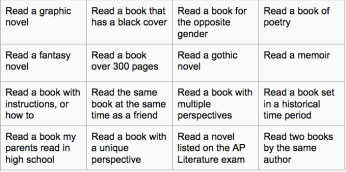
I then asked students to talk to one another about their responses. And then we talked as a group about how we can up our reading game. I explained that a few of their peers had suggested that everyone craft their own reading challenge, and I showed them mine.

Screen Shot 2016-04-17 at 11.25.13 PM

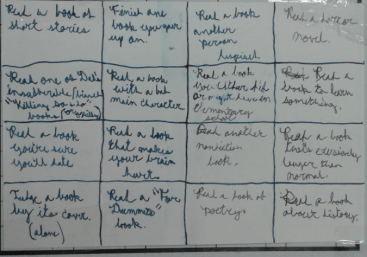
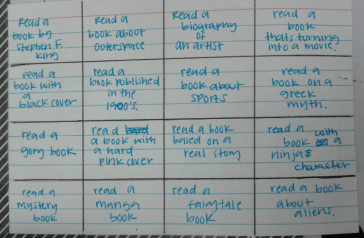
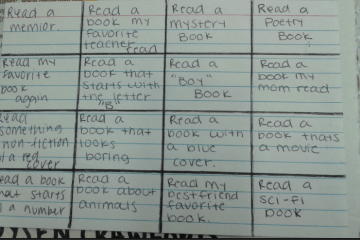
Then, I gave everyone a notecard, and they went to work. Here’s a sampling of some of my students’ personal reading challenges for the end of the year. I think they’ve decided we are playing bingo. (An interesting idea for the beginning of next year, too.)

Read a book that makes your brain hurt. That’s my favorite!

Screen Shot 2016-04-17 at 11.33.17 PM

Screen Shot 2016-04-17 at 11.34.29 PM

Follow up:  I’ve met with more students the past week than I had in the three weeks prior to creating these challenge cards. I appreciate my students reminding me — and wanting me to talk to them more about their reading. The cards serve as excellent talking points for our conferences.

We can never talk to our students one-on-one enough! I know that is true, and I know we get caught up in a million other things that consumes our conferring time. I am recommitted. I want my students to leave me with a sure knowledge that they’ve advances as critical and thoughtful readers who know how to choose books they enjoy and books that challenge their thinking and their abilities. Since students came up with the idea for this little challenge, they have shown much more interest in it than other challenges I’ve created in the past. A good reminder for me. Now, I see kids standing at the books shelves, and when I ask what they are looking for or if I can help them find a book, more often than not, they tell me they need to find a book on their challenge card.


#FridayReads Top 10 Books that will Give You a New Perspective on Death

Back in November Shana and I talked about how to make our assessments more authentic. We seem to talk about assessment a lot. We talk and then write. We wrote about our semester exams and the thinking behind them in response to a query from a reader. One part of our exams included asking students to create top ten lists of books they had read. Shana and I find it beneficial to not only help students find books they will enjoy reading but to use information about our readers to help their peers. We’ve got several of these student-made top ten lists to share as models. Maybe they will help you match books to your readers, too.

_________________________________________________________________

Jessica was already a reader when she entered my AP Language class in the fall. She wrote about herself on the first day of school: “I consider myself to be creative and artistic. I love to draw and write. I wish I could be more prosperous.” I don’t know if writing will make her prosperous, but I think Jessica definitely has a future in it if she chooses to. She’s quirky and sharp. Her wit is a gem, and I love reading everything she writes. She named her blog “Giraffes Make Bad Co-pilots” after all.

“Top Ten Books that will Give You a New Perspective on Death” by Jessica Ortiz

The Book Thief by Markus Zusak

This book sits at number one on my list because of its unique way of portraying death; this story is told from Death’s point of view, recounting the younger days of a girl named Liesel Meminger, who is adopted by a new family in the midst of World War II. Death encounters her a number of times throughout his work, watching as her story unfolds amongst the several tragedies that follow her in her dreams.

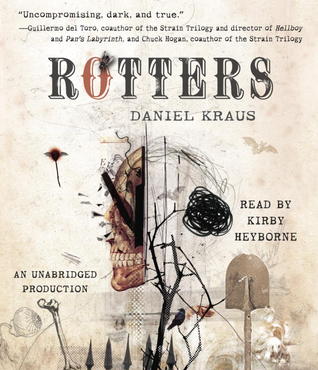
Rotters by Daniel Krausrotters

This book revolves around the strange life of Joey Crouch; a sixteen year old straight-A student whose father just so happens to be a grave robber. After a sudden turn of events take his mother from him, Joey is forced to live with the reclusive man that his mother somehow used to love, and must follow him into a world he would have been better off not seeing. I placed this book at number two on my list because of its thorough imagery, and its immersive walkthroughs detailing the art of burial and reburial.

If I Stay by Gayle Forman

Seventeen year-old Mia Hall is dead; or, at least, she gets to choose whether or not she is.  Facing the aftermath of a devastating car accident that claimed the lives of her entire family, Mia falls into a coma and has an out-of-body experience that leads her to a recollection of her past, reminding her that she still has someone left to live for. This book is third place in my opinion, because it centers on life, death, and how one girl overcame both.

The Death and Life of Zebulon Finch by Daniel Kraus

This story follows a young man named Zebulon Finch who is gunned down at age seventeen, only to be resurrected minutes later for reasons unknown to him. From that point on, he is unable to die; he must live through every era proceeding that one, and can only wish for death. I ranked this one at number four due to its use of historical accuracy and its original twist on the otherwise overused immortality-cliche.

The Lovely Bones by Alice Sebold

Susie Salmon was brutally murdered at age fourteen at the hands of her neighbor, and must now watch her family and friends struggle to overcome her disappearance. Susie herself has trouble moving on, and finds that Harvey’s other victims feel the same; she wasn’t the first one, but the father she left behind is determined to make sure she will be the last. I decided to rate this one at number five because of its unique perspective, and the author’s development of these two separate worlds that are parallel to each other.
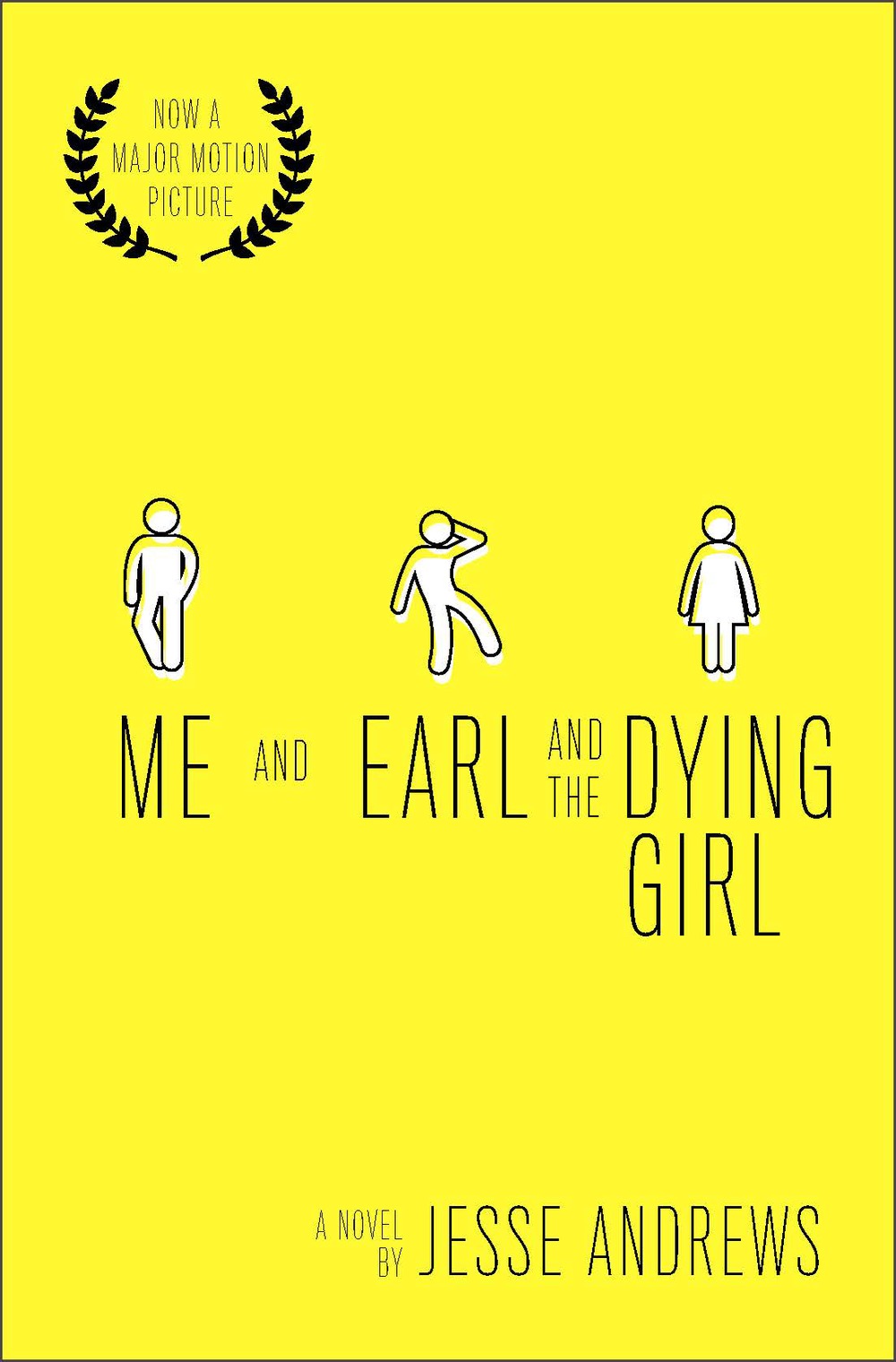
me and earlMe and Earl and the Dying Girl by Jesse Andrews

Social misfit Greg Gaines has only one real friend with whom to share his passion for film with; Earl Jackson. Together, these two spend their time concocting productions that are mediocre at best, and have mutually agreed to reveal them to no one. That is, at least, until Greg is forced by his mother to rekindle his old friendship with a girl named Rachel, who was recently diagnosed with leukemia. I rate this one at sixth  because its story depicts the struggles faced by those who support loved ones with cancer.

The Fault in Our Stars by John Green

This story is told from the point of view of a cancer patient named Hazel Lancaster,

describing her experiences in the ‘Literal Heart of Jesus’ support group, and a certain amputee whom she later fell in love with. The two bond over a shared interest in literature, leading them on a strange adventure that left them with more questions than answers. I chose this book for number seven on my list because despite the loss of the one she loved most, Hazel chooses to take her life into her own hands.

Heaven Looks a lot Like the Mall by Wendy Mass

After Tessa suffers an abrupt  accident in her high school gym class, she believes herself to now be in heaven, which seems to look exactly like the interior of her local mall. It is here where she begins to recall her entire life up to that point; both the good and the bad. This book is my number eight because of its interesting depiction of the afterlife, and the spunky attitude Tessa regards her past with.

Elsewhere by Gabrielle Zevinelsewhere
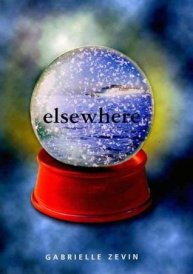
Liz is fifteen years old when she is struck by a taxi and killed, sending her into an afterlife she was not expecting in the least. When she wakes up on the deck of a strange ship called the SS Nile and is to be ferried to an island known as ‘Elsewhere’, she begins struggling to accept the fact that she has died; even as she watches her own funeral take place from the observation deck. I rank this book at number nine because it puts a twist on ideas of reincarnation, and sports a more original picture of the afterlife.

Before I Fall by Lauren Oliver

The very privileged Samantha Kingston lived a rather charmed life, that is, until it ended. She is however, given a second chance at saving herself; seven chances, to be exact, and Samantha has resolved to use them to aid her in unfurling the mystery that surrounds her death. I decided to leave this one for last, because it depicts an image of just what someone can find themself capable of doing in the face of a looming death.


Student Bio:  Jessica considers herself a reader and says, “I am constantly finding reasons to be bored with my otherwise uneventful life. Being the inactive person that I am, naturally, the only adventure that I can find within arm’s reach, lies waiting under a dormant paperback cover. (Always paperback, if possible; I’m too cheap for hardcover.)” She enjoys writing fictional stories, drawing, jamming out for no reason at all, and daydreaming until inspiration strikes her. Three words Jessica uses to describe herself: unconventional, imaginative, and comical

#3TTWorkshop — Assessing Student Work in a Workshop Classroom

What does assessment look like in a workshop classroom?  #3TTWorkshop Meme

Amy:  Interestingly, I just saw a tweet by @triciabarvia yesterday that said “Growth, when ss do something better than they did before (as a result of assignment/lesson, that’s success.” In away that’s really what assessment should be, right? We should be noting growth and improvement, and celebrating successes. I think we forget this sometimes, especially in regard to what we view as assessments and students call grades. Too often we overlook the learning and focus on the 78 or the C+. (That is all most of my students focus on.)

Assessment in my classroom drives my students crazy. I think they feel like I am that elusive balloon they cannot pin down and pop. Poor darlings. I refuse to give in to the grades routine. I want to see improvement. I want to see them take the skill I know I’ve taught and then apply it — better yet, go beyond and do something clever with it. So to answer the question, “What does assessment look like?” is kind of tricky. I think too often teachers spend time assessing student work in ways that is not meaningful. We can waste a lot of time.

But if we’d plan a little differently and make assessment a natural and moving part of our learning journey, we would save time scoring work and enjoy talking to our students more. At least that is always my goal.

In my classroom, assessment takes the shape of written work:  play in notebooks or on notecards, exit slip quickwrites, and sticky note conferences, plus, of course, major writing tasks with formal and informal conferences and oral and written feedback. Assessment also shapes itself into lots of student self-evaluation: “Look at the instructions, the model, the expectations, did you meet them, why or why not?”

If I didn’t have to take grades I wouldn’t, but I assess everything all the time.

Shana:  I go back and forth when it comes to how I value process vs. product vs. what Tom Romano always called “good faith effort.”  There are students who have mastered skills important for reading and writing, but who haven’t fully committed in terms of being vulnerable and trying to advance their skills.  Then there are those students who explore powerful themes and show amazing growth in their abilities, but still can’t spell or use commas to save their lives.

Because I wrestle so frequently with this dilemma, I end up grading not on where each student is at in relationship to our academic content standards, nor on where each student is at in relation to their peers, but rather how far they’ve come since the start of the unit/school year/week.  And I do this by doing what Kelly Gallagher does– “a lot of fake grades.”  🙂

Amy: Me, too!

How do you design assessments?

Shana:  I used a lot of scantrons my first year of teaching.  Those kinds of assessments were pretty easy to make, if time consuming–long, multiple-choice tasks that were topped off by a few essays.  After a year or two of fighting with the scantron machine and my conscience when I noticed that oftentimes a kid’s essay was much stronger than his multiple choice section (or vice versa), I threw tests out the window.  I haven’t given a test in five years.

Now, I focus on designing assessments that are as unique as the units we work through.  A unit of study revolving around the exploration of complex themes cannot be assessed, well enough, in my opinion, using a multiple choice test.  So instead of trying to gauge a student’s interaction with Macbeth that way, I use Socratic Seminars.  Or projects.  Or reflections.  Or presentations.

Amy:  Yeah, I tossed out the multiple choice tests at the same time I introduced choice-independent reading. Even the shorter texts we read together as a class are worthy of much more than a scan tran. Harkness discussions and writing about our thinking allow students room to stretch a bit and show us what they really know.

I design assessments by thinking through my end game. Of course, teaching AP Lang means I must prepare my students for that exam each spring. I know my students have to write convincing arguments, synthesize sources into their arguments, deconstruction other writer’s arguments, and read critically — sometimes some pretty old texts. To design assessments means to start there and then work backwards into the instruction.

For example, I know my students must be able to synthesize sources into their arguments. So I may decide on a couple assessments — say a Socratic Seminar where students discuss three related texts. They must come to the discussion armed with questions, annotated texts, and join the conversation. Then, I may challenge students to find three more texts related somehow to the first three. Now, we move into writing an argument in which they must synthesize at least three of the texts. That essay becomes another important assessment because all along the way I’ve taught mini-lessons:  academic research via databases, proper citation, embedding quotes, transitions between paragraphs, interesting leads, combining sentences, etc.

Everything I teach as a mini-lessons gets a matching mini-assessment somewhere along the line to learning. By the time I read those synthesis essays I have a pretty good idea of which of my students understands and can apply each of those skills. I’ve conferred with them and retaught as necessary, and when I read that final paper I rarely have any surprises.

I think maybe one of the reasons I love a workshop pedagogy so much is because of the grading. It is just not the same as it was when I taught in a traditional model — it is better!


Do you have topic ideas you would like us to discuss? Please leave your requests here.


Choice as the Keystone in Secondary English Classes

Shana and I were privileged to present a session during #TheEdCollabGathering on Saturday. If you joined us live, thank you! If you’d like to see our session, here it is. If you have questions we did not answer, leave them in the comments. We’ll do our best to answer.

Choice as the Keystone in Secondary English Classes

A big thank you to @iChrisLehman and the EdCollab Community.

Poetic Rhetoric — Spoken Word Poems in AP Lang

For a long while now, I’ve wanted to write spoken word poems with my students.

I use Sarah Kay’s “Hands” at the beginning of the year to start students thinking about their lives and the important moments that shape them. We draw hands in our notebooks and fill them with words that represent our memories. Like many of you, I first did this myself with Penny Kittle, and now I draw a hand in every notebook as one of the first pieces I write in it.

I use Shane Koyczan’s “To This Day” and ask students to write a response to it. Sometimes they tell me things that break my heart. Like the fall on the first day of school when two different girls in two different classes wrote about the abuse they experienced from their fathers at home.

These and other poems students find interesting and inspiring, and while they’ve always worked as never-fail quick writes, I wanted to challenge students to use all the skills we’ve focused on this year to write their own poetry. My student teacher, Zach, and I finally figured out how.

And students wrote some powerful poems with some perfectly poetic language.

We called the assignment:  Poetic Rhetoric. what-matters-most-in-life-are-quotes-and-stuff-that-tell-you-what-life-is-really-about_motto

The initial task read like this:  Craft a spoken word poem that addresses a personal conflict and/or a social issue, include rhetorical techniques and literary and rhetorical devices to convince your audience of the need for positive change. Perform your poem for the class live, or create an automated slide show with visuals, or a video recording as a way to digital.

Every day for a week we shared a different spoken word poem. Sometimes we wrote responses as a way to mine for our own ideas for topics. Sometimes we studied the lyrics, closely reading and analyzing structure, tone, and literary devices. We encouraged students to use the work of these poets as their mentors:  “Remember, we learn to write when we study good writing.”

We listened to “Paper People” by Harry Baker, and we talked about theme and sentences that hold the most weight, ones that might be his position statement.

We listened to “Education” by Aadil Malik, and we talked about evidence and examples that support the main idea.

We listened to “Touchscreen” by Marshall Davis Jones, and we talked about repetition, puns, and other literary devices that make language clever and meaningful.

We analyzed the structure of “To This Day,” and we talked about how Koyczan moves from self, to another, to another, to everyone as a way to finally get to his moving plea “to get a better mirror.”

Zach taught mini-lessons, reminding students how to use personification, puns, allusions, and fresh figurative language. We gave students time to write in class, and time to talk with one another, and time to talk with us about their process and their product.

We provided resources on how to write performance poetry like this and this and this.

And students wrote beautiful and meaningful arguments.

Most students performed their poems live in class. (I did allow for a teleprompter since I am the worst at memorizing myself.) We have a slam poetry night coming up on our campus in April. I hope many of my student will perform their poetry again there.

Here are the lyrics to some of the ones I personally enjoyed. I wish I had video of the performances. You’ll have to trust me — they were awesome.

Nefertiti Franklin:  WelcomeToStereotypesAA

Jennifer Melendez:  Find Your Charge, which includes an evaluation of her writing process

Kennedy Jenkins: Use Your Mind

Fabian Gutierrez: ADPoem

And here is an example of one of the poems published digitally. I love her language.

Jessica Ortiz:  People Love to Talk

Reminders to self for when I do this writing unit another year:

A. Take more time with topic selection. As with any writing, if students choose topics that are too broad, or they do not know enough about, the writing is harder to revise.

B. Meet with students more often. Conferring is essential to helping students find what they want to say. Too many students procrastinate and then think they can produce quality writing at the last minute. I must remember to confer at the beginning, the middle, and the end of the writing process. Schedule time for this.

C. Allow time for students to provide one another more targeted feedback. Although they met in small groups and talked about their writing, they did not use their time as effectively as they could have. If I will be more purposeful in modeling what a helpful feedback group looks like, students will be able to help one another more.

I love teaching students to write. I’m not sure there’s a better gift than reading their published work and seeing that they understand the power of their voices. Sometimes they blow my socks off with the force of their wisdom. I love it when they get it.

Have you used spoken word poetry in your writing class? How? What are your favorite poems?

#3TTWorkshop — Why Teachers Must Talk about Their Reading Lives

#3TTWorkshop Meme

Why is it important to talk about our reading lives with our students?

Amy:  If I want my students to be readers, I have to be a reader myself. The same holds true for writing. I am always surprised to meet English teachers who do not read and who do not write. This is our content! Seems like if we want to have any kind of credibility, we must practice the craft we want our students to learn. At least that’s what makes sense to me.

Of course, I’ve grown into this philosophy and this practice. When I first began teaching, I taught literature instead of teaching students. I think when I learned enough about my role as a secondary English teacher, and when I began challenging the status quo, I learned the importance of walking my talk. If I want students to read, I must model for them my life as a reader.

Shana:  Many of my students don’t have a role model who’s a reader.  I know that a large part of my identity as a reader growing up was shaped by my mother who was a reader.

I remember weekly trips to the library, a mom who held up her hand to finish a page before I could ask her a question, and having a bookshelf for a headboard in my childhood bed.  I lived a reading life from day one, because my mother did.  That is not the case for many of my students.  There is no one to model for them self-selected reading, the act of reading for pleasure, or the skill of choosing texts that will absorb a reader.  That’s why I have to be that person for my students–or at least, another person to model those skills for them.

How has your reading life changed since you began sharing it with your students?

Shana:  I know that when I’m tempted to be a lazy reader, remaining on the downhill portion of my reading roller coaster, I think of how often I encourage my students to push themselves with an unconventional genre, an award winner, or a lengthy tome. Then I feel like a hypocrite if I just pick up another trashy romance novel, so I challenge myself with something weightier instead.  Now, during pregnancy, I find myself much more deeply affected by difficult themes in books, so when I’m tempted to avoid them, I remind myself to be a better role model (as I’m doing now with Leaving Time, whose themes of a missing mother and elephant grief make my cry at the drop of a hat).

Amy:  I didn’t know you read trashy romance novels, Shana. Ha. I love a good romance, but I rarely find time for that kind of pleasure of late.  I’ve been a reader since the time I fell in love with Anne of Green Gables way back when. Now, I am a purposeful reader. Maybe that’s why I have a hard time relaxing — I always have some master plan. I cannot even remember the last time I just read for the pleasure of it. Shana, you and I both wrote about that in the past. Here and here. Look at this recurring theme.

While writing this I’m realizing that I have not been a good reading model lately. I haven’t snuggled under the covers with a book and let the language carry me away. I   read because it’s a responsibility. Kinda the way many of my students feel about reading for my class.

Aha! I need to do some things differently. Starting now.

During which portion of class do you tend to share your reading life with your students?

Amy:  Sure, I share my reading life during class, but my favorite time is the impromptu talks that happen with students in the hall or just before class starts. I love talking about books, and students come to know that about me.

Just today, a former student stopped in my room and asked if I could tell him about a book. I said sure, and he proceeded to tell me in a waterfall of words about the midterm this week in his new English class.

“They read The Crucible, and I need you to tell me what it’s about.”

I know, not exactly the same as sharing books for the love of them, but hey, this kid knows I know a lot about a whole lot of books. (I did not tell him about The Crucible. I might have mentioned Sparknotes.)

Shana:  I share mostly during conferences or booktalks.  When I booktalk, I tend to tell the story of my reading of the book (like on the treadmill at the gym, when I cried publicly while finishing We Were Liars), including when and where and how I read it.  During conferences (both formal at a student’s desk, or informal at the bookshelf), I use anecdotes to help illustrate a skill’s development with students.  And, occasionally, I use a snippet of my reading life to introduce a quickwrite–like creating an ideal bookshelf.   

Amy:  I am glad we discussed our reading lives. As always, you’ve pushed my thinking here. I can do more to model and talk about my reading life with my students, especially reading for pleasure. That means I need to walk the talk I give my kids a lot more often. Maybe I’ll take a stroll through the shelves at Barnes & Noble, asking myself:  If you had nothing on your schedule — no expectations from anyone or for anything — what book would you want to curl up and read?

Readers, I’d love your suggestions. Any amazing books you’ve read lately?

Do you have topic ideas you would like us to discuss? Please leave your requests here.