Tag Archives: Readers Writers Workshop

Mini-lesson Monday: Student Writing as Our Mentors for Sentences

I read Learning by Teaching by Donald Murray this summer, and I finally understand the importance of using student writing as the main text in my writing class. While I’ve believed students can learn from

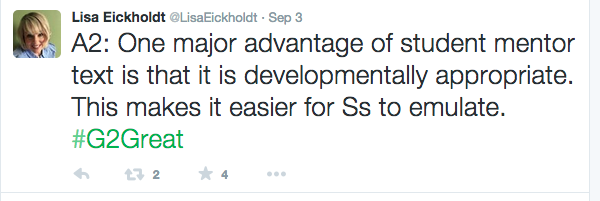
I lurked on this chat. Many positive examples of learning from student writing.

I lurked on this chat. Many positive examples of learning from student writing.

reading one another’s work, and I’ve often asked them to read and give feedback — on drafts and published pieces — I’ve never thought to actually use the text to teach a concept. I don’t know why. I supposed I’ve always relied on mentor texts by The Pros for that.

I am changing my tune. Here’s a bit of a lesson that worked better than I could have imagined.

Objectives:  Using the language of the Depth of Knowledge levels, students will write about their lives, and share their writing. They will recognize a wide variety of sentence structures. They will identify patterns, devices, and/or figurative language and discuss its effectiveness in creating meaning. They will revise their writing, formulate their own sentences, and apply their understanding to future writing assignments.

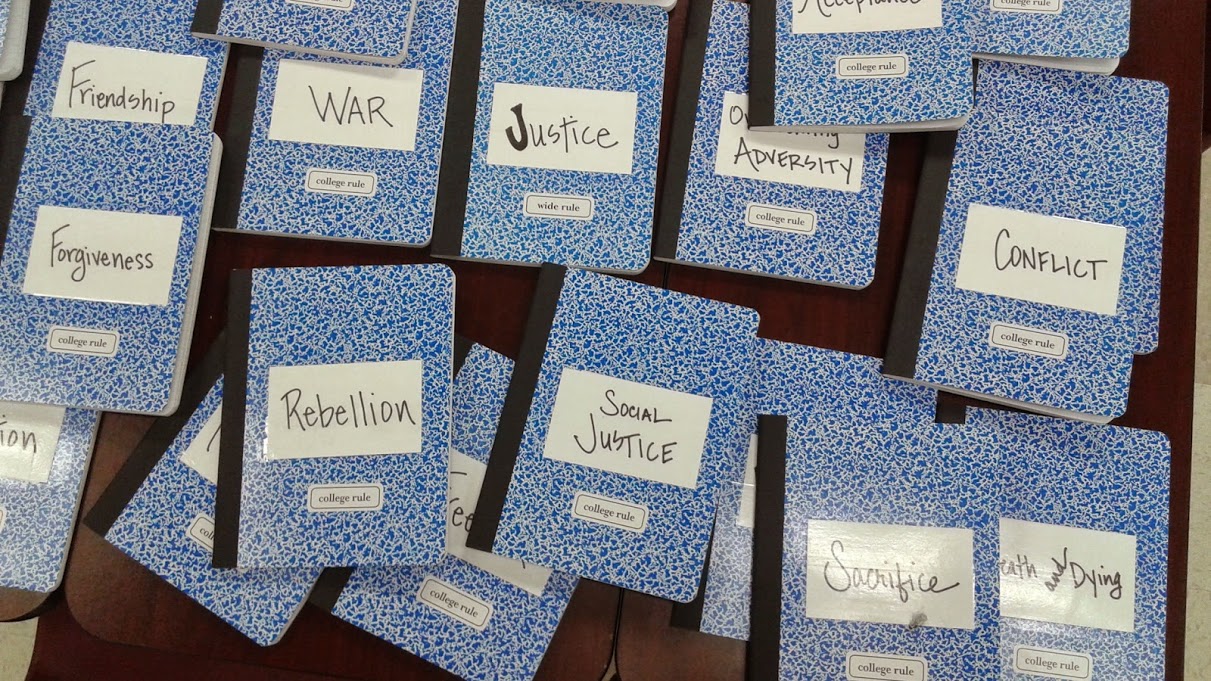
Lesson: Project the image, and ask students to write in their writer’s notebooks one sentence that answers the question. Remind them about what they know about various sentence structures and how punctuation works within a sentence.

“We can pack a sentence with a lot of information if we punctuate it correctly. Pay attention and see how you do. You can write any sentence, but try to not write a simple one.”

Give students about five minutes to write.

Next, ask for a couple of volunteers who are willing to write their sentences on the board. Be sure they understand that there is no judgment.

“We just want to talk about sentences.”

While two or three students write their sentences on the board, ask the other students in the class to read their sentences to each other.

one sentence

One at a time, read the student sentences on the board. Ask:  “What do you notice?”

Ethan sentenceTalk through the various comments students make, noting parallels, punctuation, clauses, word choice, etc.

Watch for teaching points. Ethan’s sentence on the left gave us a lot to talk about:  parallelism, use of semi-colons, colons, …

Next, ask students to return to their notebooks. “How can you make your sentence better?”

Allow time for revision (and time permitting, more sharing.)

Why this lesson works, especially for a writing lesson at the beginning of the year:  It’s just a sentence!

And sometimes we get a bonus gift like this one my class got from Edward:Edward C sentence

“I am the guy who picks people up when I, myself, am down; I am the guy who cares so much over things so little; I am the missing piece to a puzzle that has been forgotten; I am now by a sad and quiet shell of my former self; I am Edward Campos.”

The class hushed. All eyes turned to Edward.

“Wow,” I said, “Thank you for sharing this writing today. You’ve made yourself vulnerable, and we value that.

“First of all, we need to know that you are okay. Will you explain a little more what you mean here?”

Edward explained that he used to be fun and outgoing. He felt strong and powerful. Then at the end of last year and over the summer he learned his friends weren’t really his friends so much. Now, he feels alone and like he’s not the person he used to be.

“Hey, everyone, how many of you have ever felt like Edward?

“Look around, my friend, do you see all those hands? Everyone here has been where you are. We understand. You have new friends here.”

Two girls at Edward’s table leaned forward and touched his arm. “We’ll be your friends,” they said smiling.

And he smiled back.

Of course, because I am me — and I never leave a teaching moment untapped — we talked about the structure of Edward’s sentence. And we talked about the word choice:  “Why ‘forgotten’ instead of ‘lost’?”

When we watch for teaching moments in student writing, we will find them. Every single time.

Follow up:  In class the next day we did some free-writing in our notebooks in response to the spoken word poem “Hands” by Sarah Kay. Before we wrote I reminded students to pay attention to their sentences. Then instead of sharing the whole of what we wrote with the class, we only shared our favorite sentence. I consider this valuable formative assessment.

Now, I will hold students accountable for crafting their sentences with care in their upcoming writing assignment.

“The words of the world want to make sentences,” said Gaston Bachelard. I say, “We have to help them.”

Please share your best tips on getting students to pay attention to their sentences.


©Amy Rasmussen, 2011 – 2015


Questions for #Poetrychat Monday, Sept 7 at 7:00 CT

Screen Shot 2015-09-06 at 3.48.19 PMWe are excited Aileen Hower will facilitate #poetrychat tomorrow. And we love how our PLN supports us, inspires us, and give us room to grow — we met Aileen through Twitter. Follow her @aileenhower

Here’s a list of questions for our chat Poetry:  the perfect genre for reluctant readers and writers.

Please join us!

Q1. What qualities does poetry have that make it the perfect genre of text to read with reluctant readers?
Q2. What types of poems (style of writing) would you recommend reading with these readers?
Q3. When and how to you introduce poetry effectively with your students?
Q4.What poems would you suggest to accompany which themes, that would be well received among students who were not avid readers?
Q5. How would you introduce writing poetry to reluctant writers (which styles would you highlight first)?
Q6. What have your experiences been with how reluctant writers respond to writing their own poetry?

Mini-Lesson Monday: What Will You be Book Talking?

IMG_20140903_204732

At the very beginning of the year, I relish in choosing the books that I want to expose students to via Book Talks to hook ’em, spark an interest, or at the very least; have them raise an eyebrow.  With over 3,000 books on our lending library, it can be a daunting and downright overwhelming process for reluctant readers to choose a book to kick off the year. To start their reading journey.  To be brave enough to try something they haven’t before. To simply engage in the process.

Sometimes a mini-lesson is about exploration; such is the case as students are trying to find their way through the minefields of endless books.  While it’s important to educate students on skills and techniques; it’s also just as beneficial to teach them how to authentically explore letting their interest and intrigue guide their process.

So, we pull back and take it slow…

Objectives – Using the language of the Depth of Knowledge Levels: Students will draw from their own interests and personal experiences to predict the literature that will capture their attention and support their literacy growth.  Students will assess their reading fluency and stamina through analyzing their reading rates, commitment to completing books, and data that supports their movement.

Lesson: To kick off the introduction to the library, I choose a few pieces to Book Talk – share an excerpt, a few paragraphs, sometimes a page or two…but nothing too long.  I keep it short.  To keep the energy high and interest levels peaking, I want the process to flow and be completely full with variety.  (After all, at the beginning of the year, I am unfamiliar with who many of my students are as readers.)  I ask students to jot down titles in their Writer’s Notebooks that have caught their attention as to keep them in mind – now or in the future.

Next, we physically tour the library where I expose students to the themes (not genres) that categorize our books.  Fun ones such as:  No Sleep Till Brooklyn (compliments of the Beastie Boys – books on our favorite borough), Behind Barbed Wires (Holocaust affiliated literature), A Day in the Life (stories of all kind)…  Along the way I show students where I grabbed the books that were Book Talked.  This is essential because, if students are interested in a particular piece, this process provides them with a focus.  With so many books to choose from, initially narrowing down their interest to a section or two makes the process manageable…and quite enjoyable.

Once we’ve toured our library, students are given time to explore.  They choose books that have caught their attention.  Eventually, stacks of books are taken off the shelves and brought back to our tables. Students are then given an opportunity to interview their books of choice by having time to explore them – covers, flaps, table of contents, page 107; whatever they are drawn to.

To guide students along in this process I also provide them with The Six Steps to an Effective Book Interview:

1. Jot down the title and author of the book.

2. Study the cover.  Jot down some of your thinking… What do you think this piece may be about?  What do the colors and visuals represent?  Does the cover alone capture your attention?

3. Read the back of the book or the inside flaps.  What is this book about?  What is intriguing or off-putting about this book?  What questions do you have?

4. Open the book to any page of your choosing.  Read three consecutive pages.  

5. What do you foresee being an obstacle when reading this book? (Language, vocabulary, author’s point of view, etc.)

6. Are you interested in reading this book either now or in the future? Will it be going on your Next-to-Read List?  Explain your rationale.

In the meantime, I am conferring with students all over the room: the ones at the library scoping things out, students who seem a bit disengaged, those who have chosen a piece at lightening speed, ones already interacting with The Book Interview and everyone in between.  There becomes a buzz in the room which signifies the learning process has begun!

Before class rounds an end, I ask students to bring at least one book home with them and read for 45 minutes.  This is a process.  Some students are psyched about their choosings and others are disappointed that they didn’t find ‘the one’.  We talk it through.  It’s imperative for each student to leave with literature, yet we also leave with an understanding that if it does not feel like a right fit after they’ve had time outside of class to ‘play with it’, then we go back to the drawing board again tomorrow – knowing just a bit more about why it wasn’t the one. And the cycle of collecting data on students’ interests and needs commences.

Follow-Up: As the year progresses and students and I learn collectively what they enjoy reading (and what they are willing to be challenged by), Book Talks become more tailored to student interest. Sometimes they are done with specific students in mind, other times they are presented based on big ideas/themes (love, injustice, the power to overcome, etc.).

The beauty of this process is that although Book Talks remain a constant all year, students do not bore of them; every day they are different.  And, students become more in-tune with what they enjoy, are curious about, want to challenge themselves with, etc.  Typically by mid-year, students are no longer needing to use the The Book Interview because, by that point, it has become an innate part of their process.

What initial strategies do you instill in your classroom to make the rest of the year’s learning fruitful?

#FridayReads: Some of the Classics

IMG_20150729_181804

Alice in Wonderland pop-up book – full with rich colors, adventure, and 3D visuals.

“Oh, one of your students is reading Alice in Wonderland?!  I love that.  Are they captivated by it?  I wrote my entire master’s thesis on that piece.”

Last year, a colleague of mine was through the roof to hear about some of the children’s classics that my students were engaging in:  E.B. White’s pieces, Peter Pan, The Secret Garden, The Tao of Pooh, Alice in Wonderland – which holds a very special place in her heart.  But, for some reason students across the board have been guided away from these treasures.  Why are we steering them away from the simplicity of tapping into their inner nostalgia, re-entering times in their lives where there was quiet innocence and a simplicity that innately dissipates as we mature?

IMG_20141208_121037

In between reading The Classroom and The Cell and I Am Malala, this young man enjoyed the layered themes of a charming classic.

Charlotte’s Web was just as powerful for me as a thirty-something adult as it was as a seven-year-old little girl.  The latter was an opportunity to finish a chapter book full with robust (animal) characters and an opportunity to connect with Fern, the moralist. The former was a rich experience as I explored the theme of love, relationships, sacrifice, and an understanding of death (as I had recently lost my grandmother).

One of the important elements of the Readers Writers Workshop model is the idea of roller coaster reading. As Penny Kittle adequately puts it; adults read books on all different levels based on interest – students deserve the same.

I couldn’t agree more.

Think back to a time you dedicated your reading to a piece that was difficult – for you – for whatever reasons affiliated with that experience.  Often times, we decide to ‘take it easy’ once we’ve conquered a book of that caliber.  We’ll play with levels and genres and graphic novels and page numbers…and any other factors that play into our decision making.  But, we typically veer from the intensity.

Until we’re ready to try again.  And, we typically are ready at some point because we experienced the pride that comes with such a challenge.  It just may not be our next book…or the one after that…  But, we will find ourselves back there because it’s important to do so.  Students will too.

Roller Coaster Reading : All readers should have the luxury to go on such a ride!

Roller Coaster Reading : All readers should have the luxury to go on such a ride!

And while there is the push for lexile reading, and all of the other ways to monitor student reading, we must let students read what their souls ache for.  Whether it be luxuriating in a time of childhood innocence or challenging their vocabulary with a much more difficult piece.  When we provide space for students to explore (and yes, children’s books included) students find the roller coaster that suits them – a bit of scare and intrigue balanced with comfort and adventure.

A wonderful way to provide students the opportunity to monitor such reading is through the creation of a Reading Ladder.  (Scroll down to Q1 and Q3 to find information on how to create ladders and see examples.)  Simply, by reading various books on differing levels, students have the opportunity to review their learning, progress, fluency, and stamina…all the while having choice.

This year, I intend to watch our I’ll Always Be A Kid shelf grow as more and more students find themselves drawn to some of the classics from their childhood.  A handful of students love this shelf because they reminisce about reading (or having that book read to them) while others are exploring children’s literature for the first time.  Our adolescent parents are intrigued as they scope for titles that they want to bring home to read to their own little ones – because passing on the gift of literacy is priceless.  Regardless of the rationale, students end up falling in love with the magic.

What hesitations or fears surface when thinking about high school students reading children’s literature?

What is it About Being Mean?

In the past three days I’ve heard two different stories from teachers who are already in high-stress because of encounters with co-workers. What?!

School started just this past Monday. Four days and we’re already mean?

What is is about some people who think they can speak their minds at the expense of being polite, kind, civil even? Isn’t teaching hard enough without having to deal with negative ninnies and downright mean people?

My mother always told me:  “It is the people who are the hardest to love who need it the most.” I believe this is true. Hurt, anger, and fear often manifest as aggressive, catty, spiteful behavior. “A root’s always poking holes in the cellar door.” I get that.

Many teachers who embrace the workshop model do so alone. They are the only teachers on their campuses who’ve “swallowed the Kool aid” and become “too idealistic for [their] own good.”

“You’re not going to have any better success with those kids that anyone else.”

I’ve heard my fair share, and I am fairly certain I’ve heard only a drop of a giant bucket of behind-my-back critiques. So it goes.

“You’re nasty and you’re loud,
you’re mean enough for two,
If I could be a cloud,
I’d rain all day on you.”
Jack Prelutsky

Today I am wondering:  How do we deal with colleagues who are mean, or bossy, or just plain rude? How do we smile with sincerity and stand steadfast in the face of criticism and disdain?

Please join the conversation. What do you do?

Simplify, Simplify: An Invitation

We’re six days deep into the school year here in West Virginia, and I am so happy, fulfilled, and content.  The start of this year has been the smoothest of my seven years, and our readers and writers workshop is coming together more quickly than it ever has.  I think it’s because of all of the invitations and welcomes that have been flying around our classroom, rather than the commands and directives of years past.

Amy’s post on inviting students to just talk helped me simplify the structure of my first week of lessons.  I strove to make our first days together as inviting as possible–as laid back, relaxed, and caring as I could.  Students were drawn to our classroom library with an invitation to check out whatever book they’d likethoreau-simplify.  They were intrigued by an invitation to write daily–nulla dia sine linea, in the words of the inimitable Donald Murray–as we set up our writer’s notebooks.  I invited students to just read for pleasure, to just listen to a poem to enjoy it, and to just write for fun.

My invitations all centered around simplicity.

I want to slow down my thinking this year.  It seems my brain is always flying at a hundred miles a minute, and I bet my students’ minds are too.  I will invite my students to simplify their thinking–to streamline their thought processes, open their minds, and just write.  Just read.  Just talk.

This year, I’m inviting everyone in our classroom–adults and students–to put away their phones.  We read this article to understand why that may be necessary, as our devices can distract us without our consent.  Part of this conviction came after I read M.T. Anderson’s Feed, an award-winning YA novel about the mindlessness technology can fill our lives with.

I’m inviting learners to resist letting their lives be frittered away by detail, to simplify, simplify.  We will do more with less, and we will do all of our reading, writing, and thinking more deliberately.  These first six days have been marked by that simplicity, and I hope to continue that trend all school year long.

What are your goals this school year?  What do you hope to achieve with your learners?

My Classes are Only 45 Minutes — How Do I Do Workshop?

It’s a movement, you know — this instructional practice called Readers and Writers Workshop. More and more educators are catching the vision and clarifying their focus as English educators. (There’s also a lot of nay-sayers, which I think means they are afraid. Let’s be patient with them.)

I received an email that asked a question that I wish I would have had answered for me years ago when I made the leap into choice reading and the workshop pedagogy. It’s important, so I knew it needed to be a post on this blog:

English I teacher asked:  I have a question for you about classroom routine. I felt I needed to ask someone who can answer with authority about this because there is significant resistance from teachers on my campus to the whole idea of workshop, especially from my department chair. For various reasons that I won’t bore you with, we need to do a “by the book” implementation. We will be under a lot of negative scrutiny no matter what we do, but things will go better if we are following some sort of precedent on certain details.

I’ve found specific information about block schedule and the frequency of in-class silent sustained reading, but I haven’t found anything for non-block schedules. We are non-block with 45 minute periods. I think I read on your blog that you used to use Workshop in a non-block schedule. When you did that, how often did you do the in-class reading?

I am glad you asked about non-block scheduling for workshop instruction. Yes, it is doable! I taught class periods of 50 minutes five times a week prior to moving to my current school. When I was first trying to figure it out, the best advice I got was from Penny Kittle. She told me:  “You choose to do this, which means you choose not to do that.” Here’s how I interpreted that:

If I have 50 minutes with my students each day. Every minute matters, so I must be intentional in the choices I make. 

I used to choose whole class novels and read at least part of the novels in class. I used to assign students guided questions to help their understanding of those novels. I used to give lists of vocabulary words and ask students to define, write sentences, create images. I used to give writing prompts and writing homework. I used to expect students to read and write outside of class without ever showing them the messiness, the thinking, the discovering of ideas and emotions and writer’s moves on the page. I used to make all the choices, and I expected my students to go along for the ride.

Some did. Many did not. It finally started to dig at me that many was so much greater than some.

I choose not to do any of those things now.

Now, my students and I choose to read books we find interesting, engaging, and important to our lives. We read, discuss, and write about how the ideas inside these books are windows to the world outside our own, and how they are mirrors into the joys, aches, and heartbreaks we see inside ourselves and within our families.

I wrote about 7 Moves in My Workshop Schedule a while ago. These moves are non-negotiable:  read, confer, talk, write, revise, share, mini-lesson. 

To make these workshop moves work, we must also include these tools as non-negiotables:  writer’s notebooks, mentor texts, high interest books.

As you begin to plan for your 50 minutes, think about this:  How can you ensure that all students read, write, listen, and speak in every class period? (These are best practices for English Language Learner’s, which in my experience means they are best practices for all students.)

You specifically asked about the frequency of in-class independent reading in a class period of 45 minutes.

Read every day. Every day. Every day.

If you want students to become voracious readers, time is the greatest gift you can give them. Students need to know that you trust reading as your ally. If you believe that through reading students will grow in fluency, stamina, vocabulary acquisition, comprehension… and empathy, which has been written about here Scientific American and here Psychology Today you must make it a priority. So how might this look in your classroom:
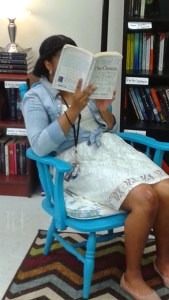
She asked for a book that would help her learn science and accomplish her reading goals. Students will challenge themselves if we let them.

She asked for a book that would help her learn science and accomplish her reading goals. Students will challenge themselves. Really, they will.

Read at the beginning of every class period — 10 minutes. You do not need a bell ringer or any other focusing task when students know that the expectation is to come in the room and get to reading. The first chapter in Steve Gardiner’s book Sustained Silent Reading offers some great information — and quotes Nancie Atwell on the importance of choice. Encourage and challenge students to read outside of school. Help them create goals, and them help them hold themselves accountable to reaching them.

Confer when students are reading. Make this a norm. Conferring moves readers workshop instruction forward. And students want and need us talking to them about their reading, about their thinking, and about their lives. One-on-one instruction happens here, and it is through this teacher move that belonging, identifying, coaching, challenging, and empowering happens.

When you create a classroom culture of reading, discipline begins to care for itself. It’s a matter of setting expectations and then being consistent with them. If I have a student who refuses to read, which happens at times, especially early in the year, I make sure she knows that she has that right, but she does not have the right to interfere with anyone else’s right to read. Sustained Silent Silence instead of Sustained Silent Reading gets boring after a while.

You’ve read, and you’ve conferred. Now, you make other choices about what to include in your instruction. These are ideas that work for my students:

Write about their reading. Now, I’m not advocating for dialectic journals or questions about plot and setting, but it is important that students become reflective about their reading. Find a balance here. We do not want reading to turn to work, and demanding that students write about their reading way too much may turn them off to reading.  Think about the books you and I read. How often do we have to write an essay about a novel we read?
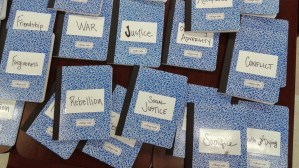
The topic notebooks in my classroom. We write in them about every three weeks. This is a fun way to share our thinking about our books.

Penny Kittle taught me about topic or “big idea” notebooks, and I’ve had a lot of success with these. (That link is to Penny’s Book Love handout, which has other great ideas for students to write about their reading.)

Teach skills in mini-lessons. I decide on mini-lessons based on two things: 1) my standards, 2) student needs based on what I learn in conferences.

Say I need to teach them about using the appeals in an argument, I may teach a mini lesson on logical appeal one day. Then I will ask students to do some flash research and find evidence of this appeal in either their independent reading, a news article, or an online text. We’ll share our findings and do a lot of talking — Why’d the writer use that appeal? How does it contribute to the argument? etc. Then, students will know I need to see them use that appeal in their own writing. We write (and confer) for the rest of the class period. Or, we share our writing in our writers’ groups.

Or, say I’ve conferred with half the class about their reading. I’ve found that half of those students are having trouble finding books with enough higher-level vocabulary to add to their personal dictionaries. I know I need to teach a mini-lesson on text complexity and what it means to challenge ourselves as readers. I may choose a few books with similar topics or themes and show my students a reading ladder:

Tears of a Tiger by Sharon Draper

Dopesick by Walter Dean Meyers

Homeboyz by Alan Sitomer

Tyrell by Coe Booth

The Absolute True Diary of a Part time Indian by Sherman Alexie

Letters to an Incarcerated Brother by Hill Harper

We’ll talk about why one book may be more complex than others. I might challenge students to read all of these titles and then tell me if I have the ladder right. (I may not, I haven’t read every one of these books, but I think I’m on the right track.) I’ll teach students about syntax and how that impacts text complexity as much, or more, than vocabulary. Then, I’ll challenge students to keep track of the complexity of the books they choose, not only by keeping their personal dictionaries up to date, but by adding codes to their reading lists. E – easy, C – comfortable, D – difficult. I show them my writer’s notebook and how this tracking helps me understand my reading habits.

Allow time to work. The greatest indicator that workshop works in my classroom is student engagement. When I allow students time to complete writing in class with me available to talk to and ask questions, they engage in the writing process more efficiently and effectively. I’ve let go of wanting a product, and now we enjoy the process of writing. We discover as we write. We revise because we know our writing improves as we revisit it. We share our writing because all voices in our classroom matter. The only way to accomplish these things is to build time to write right into the class schedule.

I wrote Choose to Become a Classroom of Writers a while ago. I still believe focusing on writing creates the smoothest transition to workshop instruction. Why? Because writers are readers first. Check out this post of 40 Inspiring Quotes about Reading from Writers. (Just a little proof.)

But that’s probably another post for another day.

Best blessings to you as you take off on this wonderful adventure with your students. Write any time: for support, for clarity, for whatever you might need. You’re blessing the lives of children. Our future –our society — needs educators like you.

Press forward (nay-saying department manager and all).

Warmly,

Amy

Dear reader, any advice you can offer our friend?

 ©Amy Rasmussen, 2011 – 2015
3 Creative Resources to Ignite a Writer’s Notebook

As I mentioned in Contagious Creative Concentration: A Week in Reflection on Tuesday, there is so much to gain when we infuse creative outlets and ample time for students to stretch their minds during the learning process.  Amy’s posted comment, “I imagine I am guilty like many others of thinking: “If I only had the time.” Seems time is the enemy of creativity, or at least it is if we let her rule our lives. Thank you for this reminder about inviting creativity into the classroom. Coloring on the edges. I like that,” relates the learnings from the week at UNH’s Literacy Institute to the significance of infusing the Readers Writers Workshop model into our learning communities.

Jackie’s post from yesterday 3 Ways to Jump-Start Reluctant Writers also provides three concrete ways to joggle ideas for our student learners.  And to conclude our weeklong focus on the Writer’s Notebook, tomorrow Shana will be discussing more ideas on how to make them a (creative) staple in all of our classrooms.

So, as the four of us here at Three Teachers Talk continue to write and think and process through the importance of the Writer’s Notebook and our excitement towards implementing them on Day 1 of our new school year…we invite you to do the same.  Here are some resources to spark and intrigue learners of all ages and to support them in embracing their inner originality and individuality:

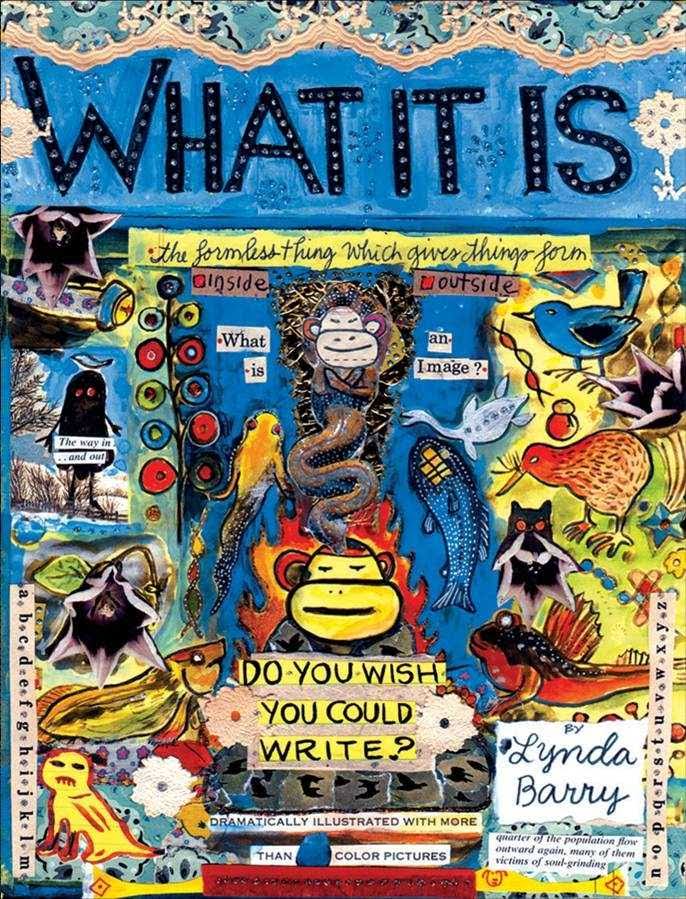
Lynda Barry’s works are phenomenal.  I suggest you hop onto her website to take a look at her thinking, pedagogy, and resources…and to also enjoy an interactive look inside her books. (Some pictured here.)

Syllabus

What it isPicture This


Mindful Coloring


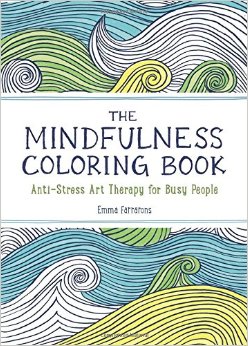
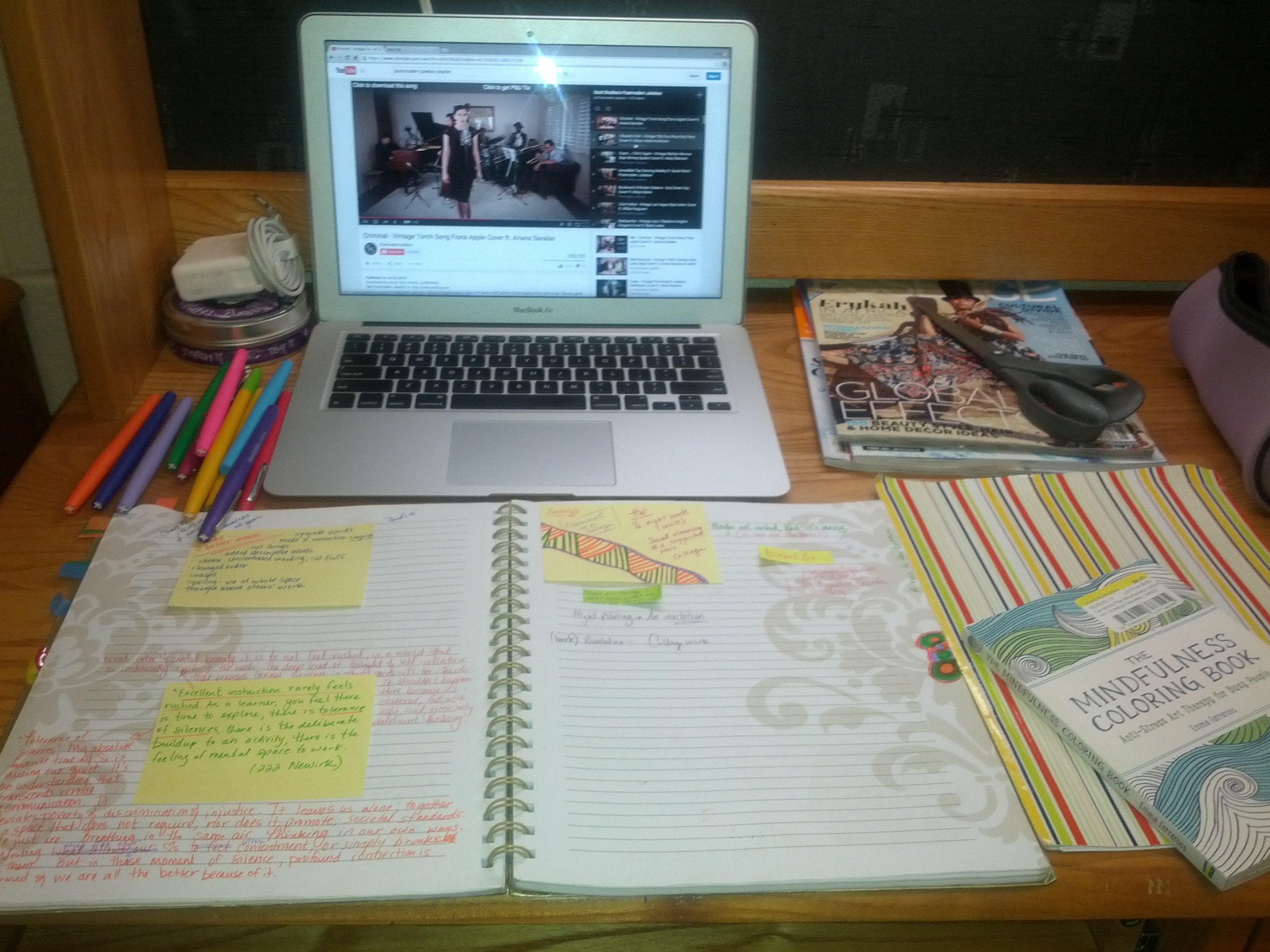
The Mindfulness Coloring Book is a coloring book that provides page after page of innovative visuals to be colored however the user so wishes.IMG_20150727_211908 While doing so, one’s stress decreases and focus increases.  Here’s a peek at how I utilized it while taking a graduate course this summer – in an attempt to balance the workload with an element of zen.


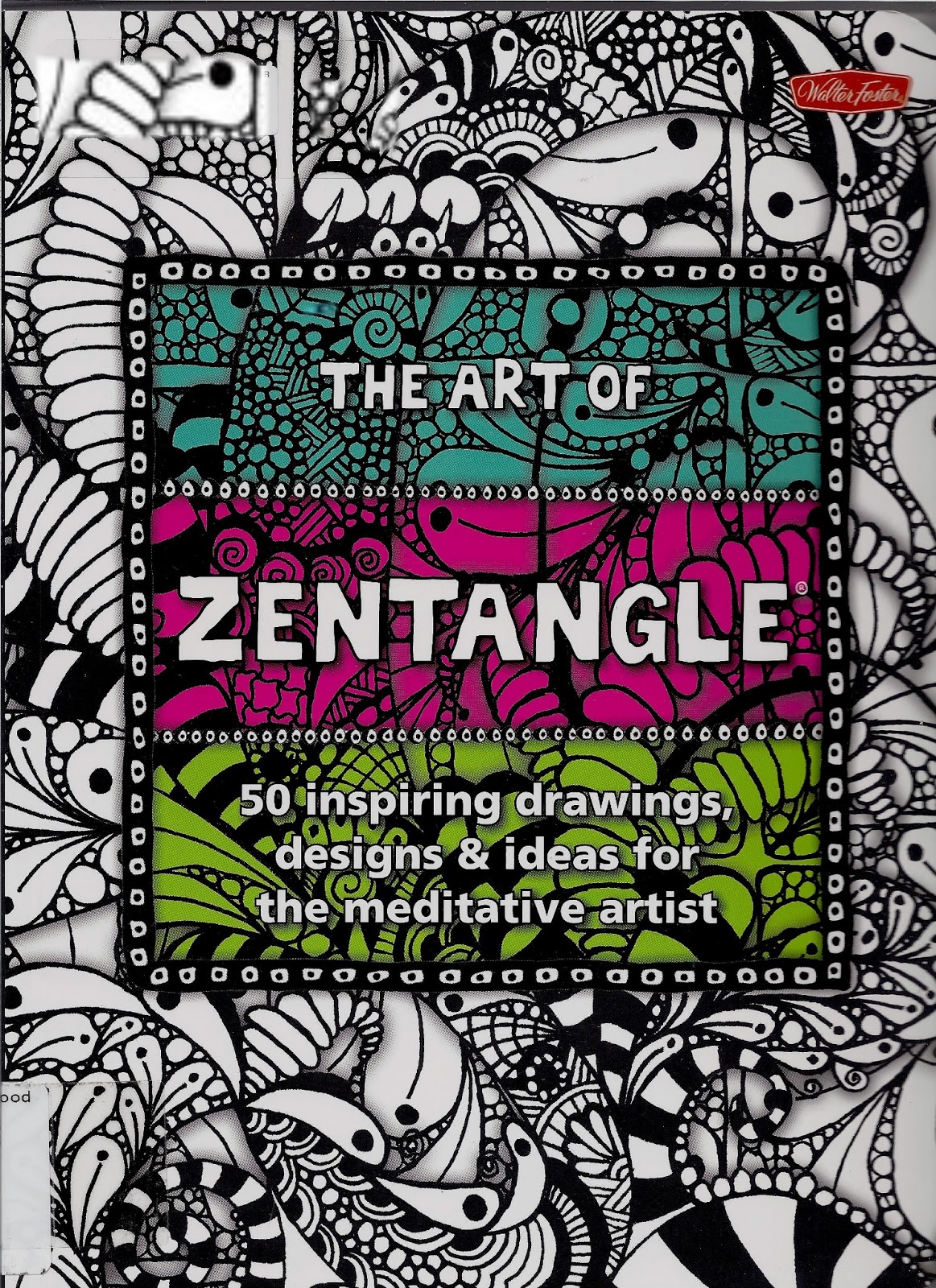
Art-of-Zentangle


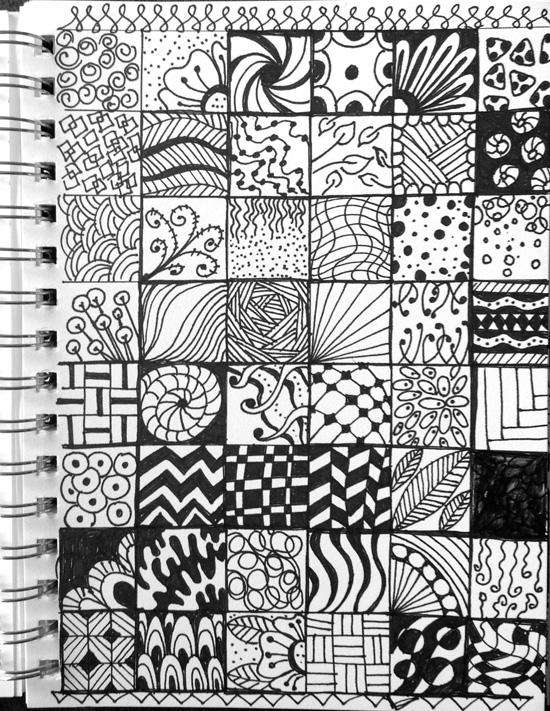
The Art of Zentangle explores the artistry and creativity for those looking for a bit of a challenge – as so many of our students are, yet it is incredibly accessible for doodlers of all levels.  There are a plethora of tutorials on youtube.com for you to start your hand at zentangling while also sharing the process with students.


I hope these resources have inspired you to think about lessening stress levels; providing students an outlet that ultimately drives their focus and concentration; and how to organically and authentically let students explore their inner-most thinking through the art of creating.  And, if you happen to find (or already know of) resources that students are thoroughly enjoying, please leave the titles and anecdotes in the comment section below.  The list of creative resources truly does go on and on!

Contagious Creative Concentration: A Week in Reflection

IMG_20150727_203430 (1)

Creative concentration is most definitely contagious!

This summer at the University of New Hampshire’s Literacy Institute while Shana, Amy, and Jackie were studying with Tom Newkirk in their plight to dig deep into the lives of males and their literacy (needs), I was across the hall studying with Penny Kittle (and other fabulous educators nationwide) in a course titled Contagious Creative Concentration.

The ledges were lined with pieces exposing the truth about doodling, coloring, sketching and zendangling.  The truth is that while reading and writing is foundational to all literacy

The Art of Zendangles: Unique repetitive patterns infused with creativity and focus.

The Art of Zendangles: Unique repetitive patterns infused with creativity and focus.

movement, there is also much need for the art of creativity to be infused into the Readers Writers Workshop – regardless of grade level.  And while we had the opportunity to “play” alongside the rigorous workload we were collectively engaging in, there was a calm that permeated throughout the entire week.  There was color.  There was focus.  There was deep level of inquiry.  Yet, there was rarely a moment that colored pencils or adult coloring books were not being utilized during the process.

An article published in The Atlantic: The Cognitive Benefits of Doodling explores the benefits that enhance one’s performance.  The studies and stats are real – exposing educators everywhere to understand the importance of this type of creative play.

Two women writers who, not only holistically believe in the ideas outlined in the above article, but shared their knowledge and creative process with us during our time at #UNHLIT15 were Lee Ann Spillane @spillarke and Linda Urban @lindaurbanbooks.  Both published authors who embrace the creative process as a means (and a journey) to authentically design and originate their work.

Work in progress

Work in progress: My own thinking

While we were exposed to those who have been finding success throughout their personal creative journeys, we were also asked to think about utilizing collage work to demonstrate our own creative process.  (For educators who employ the format of the Writer’s Notebook suggested by Penny Kittle, it is dedicated to this element of creativity.)

Last March I posted Today We Draw chronicling the day students and I needed a break from the constant push and rigor of our daily work together.  At that time, I recognized the importance of breaking for us to explore a creative outlet, yet what I’ve learned this summer is that it is downright unfair to carve out days for creativity and exploration.  It needs to be a daily constant in all of our classrooms.  Students need to have the freedom to doodle on the corners of pages, zendangle on a post-it, or engage in some good old fashion fun equipped with a coloring book.

So, as I start to plan for the upcoming school year, I find it imperative to ensure that pencils (of all colors) are sharpened, coloring books are displayed, and doodling is not only encouraged but a constant in our community.

What are your thoughts wrapped around the idea of creativity (in all its forms) being invited into your classroom community?  What success have you had in doing so?  


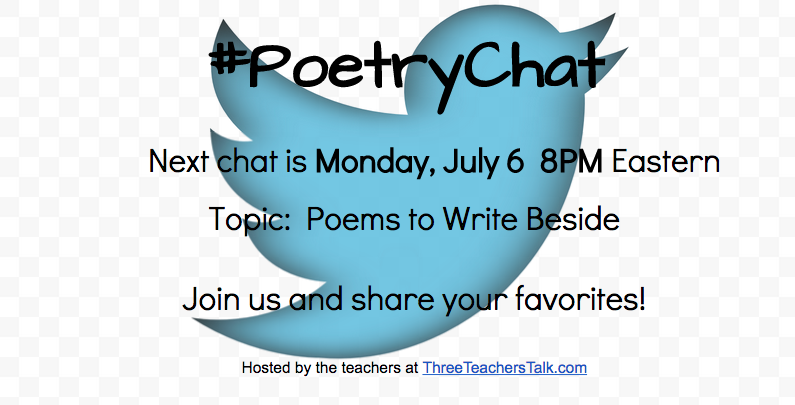
Poems to Write Beside is the Topic for #PoetryChat Monday, July 6, 2015 8ET

My friend posted a link on Facebook that took me to “Life While You Wait” by Wislawa Szymborska. I’d never read it before and loved it so much I stopped what I was doing so I could write it in my notebook. Then I wrote a page about why the poet reached into my heart this morning. That thinking led me to think about my mother who’s been gone over a year now. Bittersweet.

Then I explored a bit, and clicked the link that took me to “Possibilities,” and I pulled the cap off my pen again. I copied the poem in my journal as I listened to Amanda Palmer read it. then I wrote notes on how I might use this poem with my students. I could use it as a mentor text and ask students to write their own “Possibilities,” or I can use it the first week of school (maybe even the first day), and we’ll write a class poem. I like this idea best.

After we write a few lines together, I’ll give each student a line, maybe two, and ask him to think about what the poet does with language there: compare and contrast, advice, internal rhyme, repetition, personification, etc. Then, they will write their own lines, modeled after the poet’s.

We’ll piece our lines together and see what we come up with. Collaborative-type writing on the first day of school…with a poem. Might set the tone for the school year quite nicely.

My simple act of writing beside poetry gifted me with emotion and ideas this morning.

There are a million other ways that poems can bless us with inspiration to write, think, learn, change, mature, grow. . . and teach. Join us for #poetrychat and give and receive.

Questions for our chat:

1. What are you writing this summer?

2. How does poetry inspire you to write?

3. Who is your favorite poet to turn to for inspiration? or what is your favorite poem?

4. What poems inspire your students to write? Any no fail poems out there?

5. Please share links to your own poems and/or other writing.

Screen Shot 2015-07-02 at 3.18.41 PM