Tag Archives: Poetry

Reflection, Rejuvenation, Rebirth

May and June always bring sunnier skies, feistier students, and more hopeful days.  Like Amy, I enjoy the last weeks of school, and often spend many of them feeling proud of my students, making big plans for the next year, and reading a ton in order to ramp up my booktalks.  This time of year is my time for reflection, rejuvenation, and rebirth.

ReflectionFullSizeRender

This spring, I’m excited that I have the opportunity to participate in a National Writing Project course, which is uniting me with other English teachers from my area.  Talking with them has helped to energize me even more so than usual at this time of the year, and some of their words have really helped me reflect.

First, my notebook musings during our first class led me to a powerful play on words–listening is at the heart of our teaching.  I’ve written before about the value of talk, but I’m thinking long and hard now about the power of listening…truly hearing our students’ hopes and strengths and worries and wonders.  I’ve paid special attention to emphasizing listening in my lessons these past few weeks, because I know I won’t get to hear these wonderful students’ words after the year ends.

Later in the NWP class, while assessing some of our students’ written products, we were asked to identify the skill we had been aiming to teach, and then evaluate how well our students internalized that lesson.  Claire, an elementary teacher, said that it was impossible to look for just one thing–“Writing is so…big,” she said.  I couldn’t agree with her more.  As I read my own students’ work, I saw themes of my own pedagogical beliefs running through their writing.  They were using beautiful language, inspired by our daily poem or craft-study quickwrites, in all of their writing–nonfiction too.  They were writing strong pieces thanks to the risks they felt safe taking in their choice of topic, genre, and style.  They were producing prolifically, writing long, short, funny, serious, sad, exciting, fiction, nonfiction, poetry, prose–everything.  Their portfolios are thick with creation.  Writing is big, indeed.
IMG_8049Rejuvenation

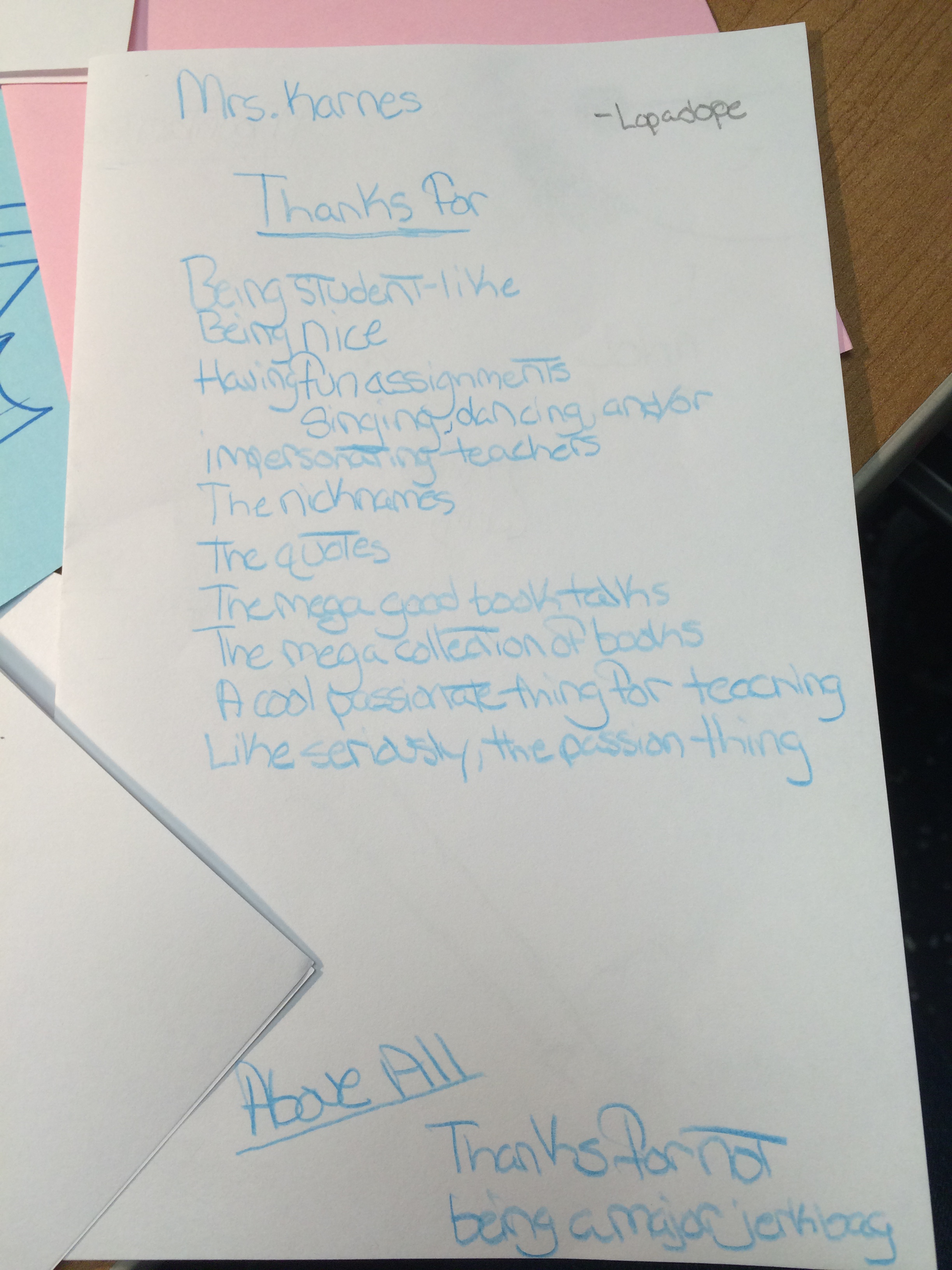
It’s Teacher Appreciation Week, and with that came some delightful thank-you notes from my students.  One student made a list of things he was thankful I did, and he repeated how thankful he was for my “cool passionate thing for teaching…like seriously, the passion thing.”  I recently read an article in the Chronicle of Higher Education that claimed the four properties of powerful teachers were personality, presence, preparation, and passion.  I like to think of passion as fangirling, which I do on a daily basis about books, student writing, authors, and all things bookish.  I’m never sure how much of that passion reaches students, but since this one specifically noted the “mega good booktalks,” I think it gets through to at least some kids.  This thank-you note really rejuvenated me, and now that I know my booktalks are working, I’ll keep at them with new gusto until June 12.
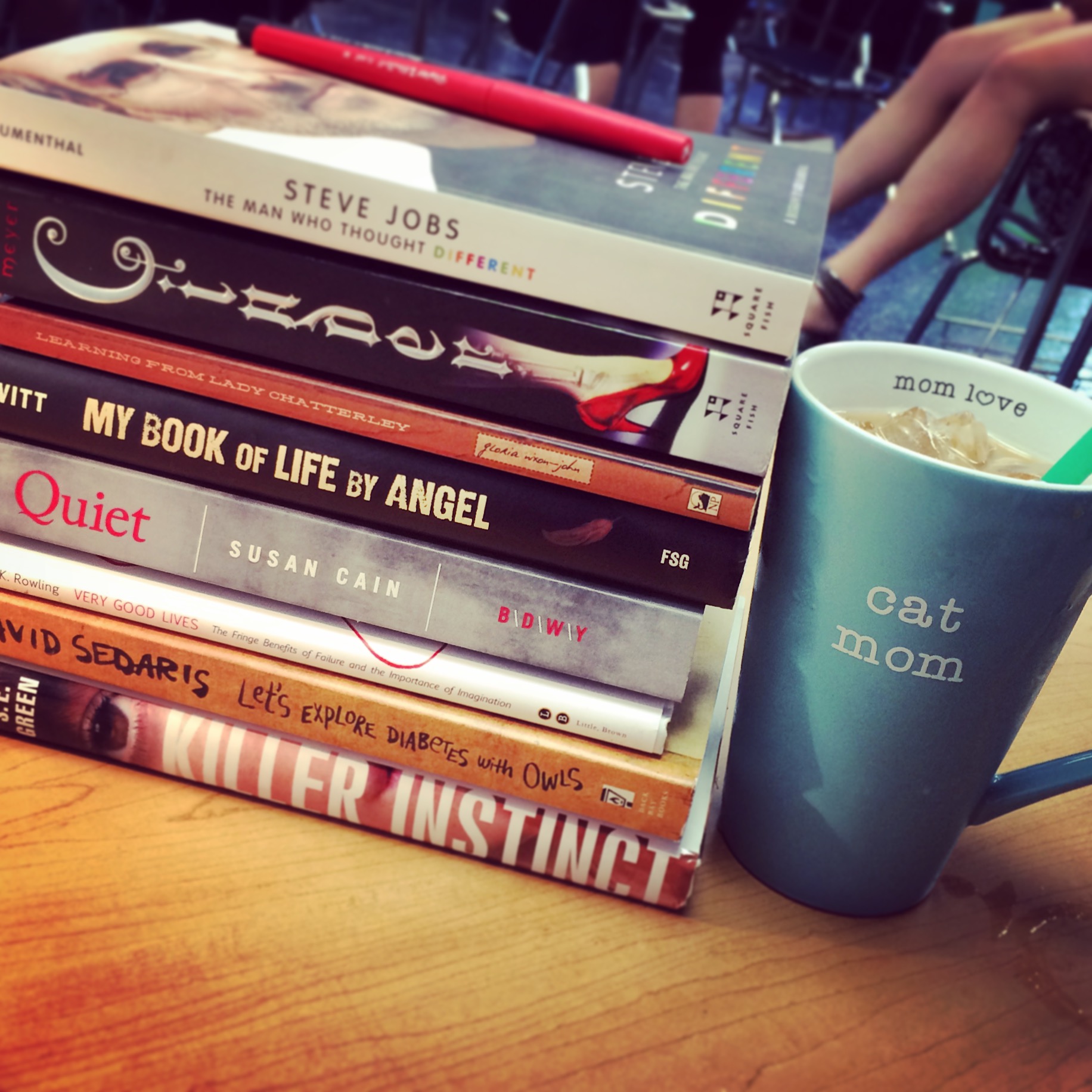
IMG_8027Rebirth

Continuing to revise and change my curriculum doesn’t stop because the year is nearly over.  I’m still wildly out of control on Amazon, buying titles as I get ideas for new units, themes, or genres (like the huge list of novels in verse I jotted down during our #poetrychat Monday night).  A new focus on science fiction, poetry, and nonfiction has been what I’ve noticed in my cart of late.  I am changing as a reader and a teacher, valuing those genres more than I once did, making a strong effort to transfer that new passion to my students.

My teaching philosophy is constantly shifting, evolving, being reborn.  Its biggest shift this year, I think, can be best summed up with a quote from another NWPer from my class last week.  While talking about meeting and learning from great teachers at NCTE, he said he felt like they were “the Wizards of Oz, but they were inviting me to peek behind the curtain.”  I love this analogy, because while great teaching may seem like unattainable magic, I now feel like I understand how to be effective.  I’ve studied living, breathing mentor texts like Penny Kittle, Tom Romano, Amy Rasmussen, Jackie Catcher, and Erika Bogdany, and am looking forward to learning from Tom Newkirk at UNH this summer.  In the past two years, I’ve been reborn as a teacher, whose confidence has grown as I’ve continued to strengthen my practice by dissecting and imitating the successes of others, just like my students do when we analyze mentor texts in class.

Springtime is a time for reflection, rejuvenation, and rebirth.  Nature is no different from my teaching as I think about this year and next, and about the beauty of its constant blossoming and change.  I know our last six weeks will fly by, so I’ll enjoy every moment of them before the luxurious summer begins!

What are you reflecting on this spring?  What has rejuvenated you as the year comes to a close?  What elements of your teaching will be reborn this year or next?  Share in the comments!

Hey, Do You Want to Hear a Good Poem? #poeminyourpocket

What makes a good poem?

I like to ask my students this question. They usually fumble with an answer.

That is what makes reading poetry with students rewarding. Eventually, even the hardest teenage heart will come to at least appreciate the complexity of language — maybe she’ll never appreciate the beauty of it, but she will appreciate the craft of the poet.

Sharing good poems with students on a regular basis proved a hard goal for me this year. (Better than last; not as well as I wanted.)

One go-to book is Garrison Keillor’s collection of Good Poems, as Heard on the Writer’s Almanac. It is a must for every English classroom. My wish list includes two other volumes:  Good Poems for Hard Times and Good Poems: American Places. 

I especially like how Keillor sets the tone of the selection with poetic lines in the introduction that describe what makes a good poem:

Stickiness, memorability, is one sign of a good poem. You hear it and a day later some of it is still there in the brainpan.

What makes a poem memorable is its narrative line. A story is easier to remember than a puzzle.

[Poems] surprise us with clear pictures of the familiar.

And this beautiful paragraph, an epigraph for Emily Dickinson, really:

To see poetry finding an existence that its maker never imagined, visit Emily Dickinson’s grave in Amherst. Here lies the white-gowned virgin goddess, in a cluster of Dickinsons, under a stone that says “Called Back,” and here, weekly, strangers come as grieving family, placing pebbles on her big stone, leaving notes to her folded into tiny squares, under small stones. Dickinson was a famous recluse who camped in the shadows in the upstairs hall and eavesdropped on visitors, and now there are few graves in America so venerated as hers. She is mourned continually because the quickness and vitality of her poems maker her contemporary, and when you make flies buzz and horses turn their heads and you declaim Wild Nights! Wild Nights! and give hope some feathers, you are going to have friends in this world for as long as English is read.

I just love that, and Dickinson isn’t even my favorite.

I am finding favorites though. So far, my favorites are the poets I know in person: Dawn Potter, and  Meg Kearney.

My students need the chance to find favorites, and that is why I must expose them to good poems. Reading aloud poems on a regular basis has the same effect as talking about books regularly.

Today is Poem in Your Pocket Day.  Will you participate?

Because I know I need to be more consistent with poetry, and even though we are in the middle of a giant writing project, my students and I paused this week and talked poetry. We read and questioned and laughed and loved being immersed in beautiful language.

We pulled the poetry books off the shelves, (I only have about 15, so far, so we had to share) and we wrote out poems on pretty paper to put in our pockets. I challenged students to share their poems throughout the day.

Some balked.

Some said sure

but meant no way.

Others will follow my lead:

“Hey, do you want to hear a good poem?”

©Amy Rasmussen, 2011 – 2015

Launching an Official Monthly #poetrychat

Screen Shot 2015-04-23 at 2.49.34 PM

Evidently, there is not an official #poetrychat, but isn’t it a sweet idea?

Poetry serves as an important and beautiful lens into the literary world, and it deserves more than a hurrah during National Poetry Month.

I find that the more I talk about poetry the more I use poems in my classroom. Not like that’s a big surprise. The more I talk about books the more my students read.

So, I’ve been giving this a ton of thought. Do I want one more grape on my plate? And the answer has to be yes.

Today @JasonCarney5 artistic director of Young DFW Writers gave a pitch to my English department. Would we like to be a school that takes advantage of the Louder Than a Bomb program?

Um, yeah.

Meeting Jason and hearing about how his introduction to poetry changed the trajectory of his life was another testament to the power of poetry and what reading and writing it can do for a young person.

Aren’t we as literacy educators always looking for ways to engage and empower our young people and give them opportunities to grow as readers and writers?

So, yes, even if I get YDFW at my school next year (which I’m pretty sure is a done deal), I still feel the need to join other educators who are passionate about the “art” in language arts for a monthly poetry chat.

The teacher-writers at Three Teachers Talk are starting a monthly poetry chat. We hope to connect educators and poets, and work to infuse poetry into the year-long curriculum of ELA classrooms.

“A Poem about Topics for a Poetry Chat”

Spoken-word poems,

prose poems

found poems

spine poems


Ways to share student-written poems


Poetry to teach allusion,

imagery

syntax

grammar

self-respect


Books in verse

Verses for book talks


We will meet the first Monday of each month at 8:00ET, directly following #engchat at 7. Remember to use the hashtag #poetrychat — and to have links ready to your favorite poems and lesson ideas.

Mark your calendar for Monday, May 4 at 7:00 pm Central Time.

Leave your ideas for topics in the comments. Thanks!

See the #Storify of #engchat March 23, 2015 — Fantastic Resources for Poetry

Thanks to @Drama_Chick for this Storify.

For one very fast hour this evening, Twitter blew up with the talk of poetry as English teachers near and far shared ideas for immersing their students in the beauty of words. So many fantastic resources and such great thinking! Thank you to everyone who participated, and thank you for taking a look here even if you didn’t.

I remembered one thing I wanted to share and didn’t. It comes from the book  A Surge of Language–Teaching Poetry Day by Day by Wormser and Cappella. I modify this list a bit and use many of these questions with my AP Language students as we look at non-fiction passages for rhetorical analysis.

Ten Questions to Ask About Words

1. What word intrigues you most?

2. Is there a word that confuses you?

3. What word surprises you?

4. What word seems most metaphorical?

5. Is there a word that seems unnecessary?

6. What word is most important?

7. What is the most physical word in the poem?

8. What is the most specific word in the poem?

9. What is the strongest sound word in the poem?

10. What is the most dynamic verb in the poem? (12)

I believe that poetry can make us better humans. If every person immersed himself in beautiful language, we’d all find much more peace. Be more kind. Loving. Genuine.

Let’s try it.

Challenge on.

They Taught Me the Lesson Here: It’s About Time

Please tell me I am not the only one in a rush. Every spring I feel this pressure to teach more, do more, assign more. I know part of it is the AP exam date creeping closer and closer. I know my students are still not ready.

We still struggle with rhetorical analysis. Most students are getting better at recognizing devices in the texts of others, but when they try to analyze the effect? Well, the light bulb is still quite dim. And I have to practically beg to get students to add a device or two in their own writing. So many are afraid to take risks or to explore with words and sentences.

As a way to help students play with language, I turned to POETRY. (Yes, even in my primarily non-fiction AP Language class.)

We read Meg Kearney’s “Creed” poem together, and we talked through the moves she makes to craft it.

Students noticed the sound devices, the contradictions, the little story, the concrete details. They did a fine job of noticing.

But we have to do much more than notice. And that’s the hard part.

I found this “Creed” assignment by a Mrs. Rothbard online, which fit my hopes for my students exactly, and I asked students to read and study the poem themselves and then mirror the moves of our poet.

I still cannot believe how difficult this was for some of my students. Some simplified the assignment and just wrote their own lovely poems. Others made beautiful lists of their personal beliefs — but that was not the assignment. Others modeled Kearney’s first few lines and then rambled on about angst-filled beliefs that the student writers didn’t even care about when they read them to the class. (Note to self: Revision workshop must last much longer next year.)

But, some…some student writers took ownership of their own craft and composed lovely poems, modeled after our writing coach and poet Meg Kearney.

Here’s the links to JerashiaGuillermoNaWoon, Doreen, Josh, and Sydney-Marie‘s blogs where they posted their poems. They’d love it if you’d read them and maybe leave a comment (actually, they will probably die because they think publishing to the WWW makes them anonymous–so much scarier to read their poems aloud in class, which is a topic of another post I need to write.)

I learned some valuable things as a result of this writing task, and I am glad that my students talked to me about what worked and didn’t work for them. I am glad I took the time last week to let them talk.

The comment that will guide our learning the rest of the year came from a table in the back when one of my quiet ones said:

“Could we slow down? We need more time to write with you in the room to help us.”

Yes, I know that.

If I want to truly help my students grow as critical readers and writers, I must devote the time to letting them think, draft, read, write, revise, re-do, share, and all of this again and again with me in the room as their coach, their mentor, and their cheerleader.

My students need to talk to me and to their peers like I talk to my husband and my collaborators when I am writing.

I thought I had this down by now. But what I think is enough time is obviously not what my students think is enough time, so I’ll listen, and starting today.

Class time will be different.

©Amy Rasmussen, 2011 – 2015

I’m hosting #engchat March 23 7:00ET: We’re Talking Poetry as More Than a Unit

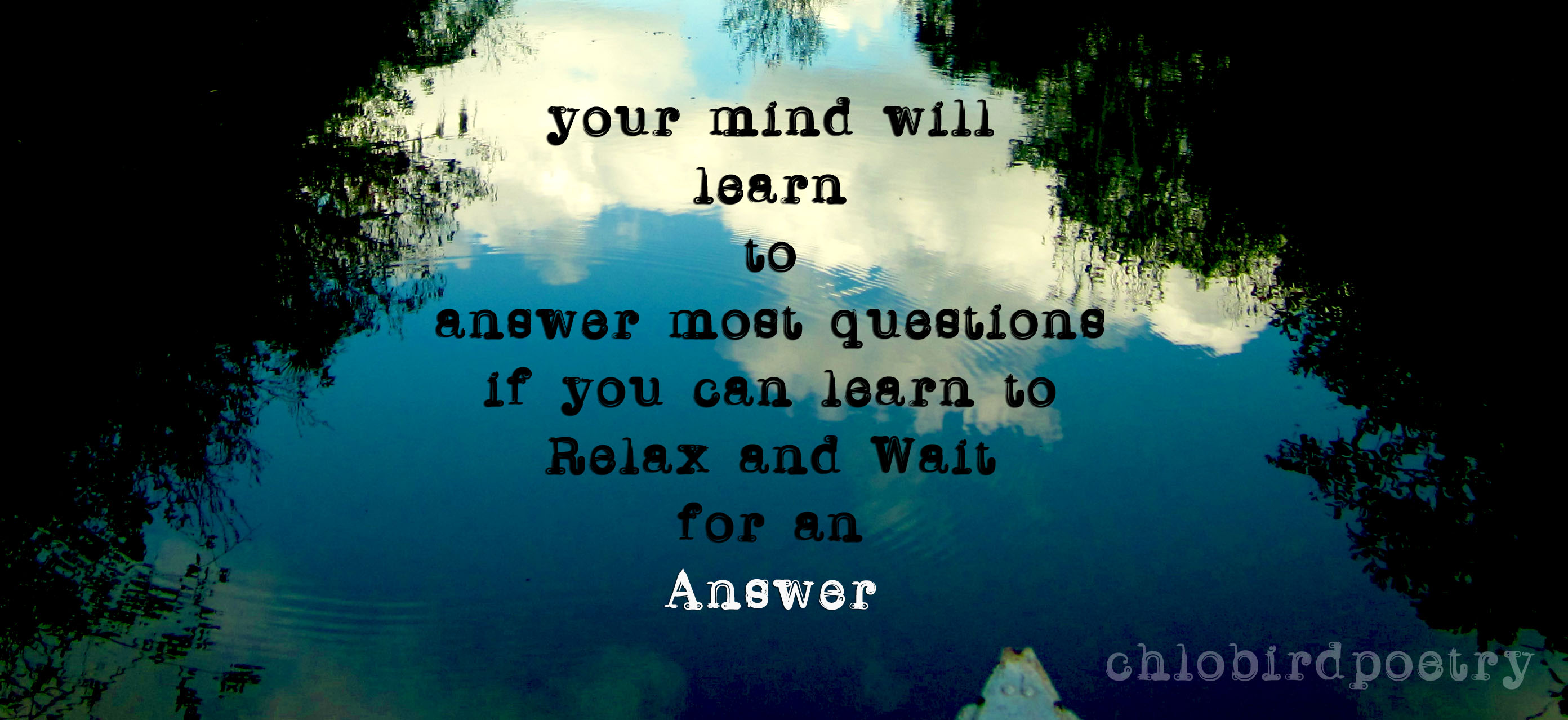
poetry answer-quote

Before I attended The Conference on Poetry and Teaching at The Frost Place last summer, I was a reluctant, resistant teacher of poetry. Sad to say, I never had a memorable experience with poetry until I was in my 50th year.

At The Frost Place, I listened and joined in conversations with working poets about language and their craft. My heart changed. I finally understood because I lived that language for a glorious week surrounded by these people with poetic souls and a view of the White Mountains smiling down on me. Oh, Franconia, NH. (Read about my experience here.)

By no means am I an expert when it comes to poetry in the classroom; however, nobody has to be! Our job as teachers is to help our students grow in literacy skills. Poetry helps us do that.

We bring a beauty into our classrooms, a peace that our world is so often lacking, when we allow poetry to be spoken, heard, shared, and felt.

#engchat is Monday March 21, 2015 at 7:00 ET. That’s 6:00 CT for me, which is why I forget and rarely make it to this chat. The family dinner hour for me in Texas. I’m eating out and early on the 21st though.

TOPIC: Immersing Poetry into ELA Instruction

Questions for Our Chat:

Q1: What are some ways, other than a poetry unit, that you use poetry in your class? #engchat

Q2: “Play is what we want to do. Work is what we have to do,” said W. H. Auden. Poetry is both of those things. How do we use poetry for work and play? #engchat

Q3: We can teach most any skill with poetry that we can w/ prose. Agree/disagree? If agree, what skills do you teach with which poems? #engchat

Q4: Last question. What resources can you share that will help us all immerse our students in beautiful language, daily? #engchat


Do you have any other questions you’d like us to talk about during #engchat? Please leave a comment.

©Amy Rasmussen, 2011 – 2015

6 Ways to Spend Your Snow Day

snow-day2So it’s your fifth snow day this winter…or your fifteenth.  Either way, you’ve done all of your spring cleaning, you can’t grade or lesson plan because you haven’t seen students for a week, and you’ve completely emptied your queues on Netflix and Hulu.  What’s a teacher to do?

1. Read a good book.  If you’re anything like the hundreds of English teachers I know, you love reading.  Use the time you’ve been cooped up to read something you’ve been wanting to but just haven’t had the time to start.  I haven’t stopped hearing about Jennifer Niven’s All the Bright Places, Atul Gawande’s Being Mortal, and Anthony Doerr’s All the Light We Cannot SeeI’ll think I’ll try to tackle the last two this week.

2. Write around a poem.  Penny Kittle shared once that she likes to tape poems into her notebook and write around them–it’s one way to move toward doing your own beautiful writing, she advised.  So, I signed up to receive the Poetry Foundation‘s daily poem via email, and when I read one I love, I print it and tape it into my writer’s notebook.  I’m amazed at the nuggets of written wisdom I arrive at after responding freely to a poem in writing.

3. Read a teaching book.  I’ve been wanting to finish Tom Romano’s Zigzag and Donalyn Miller’s Reading in the Wild for quite some time now, but with the day-to-day craze of the school year, it seems like the only time I find to read teaching books is over the summer.  This is the time of year, though, that I often need a little lift in my teaching spirit, so it’s always rewarding to explore some new thoughts from some of my old favorites.  Since I’m in the middle of a nonfiction book club and writing unit right now, I think I’ll settle down today with Georgia Heard’s Finding the Heart of Nonfiction.

4. Check out that dreaded State Test.  Dana Murphy at Two Writing Teachers reminded me that when our students are accustomed to writing in a choice-based, unit-driven workshop, they are not accustomed to writing to a prompt, and that while standardized tests do leave a bitter taste in our mouths, they are a reality our students must face.  If we want them to feel confident as writers in all environments, we must prepare them for all writing situations–especially the two or three standardized writing tests they may face each year.  Here in West Virginia, we’ve elected to go with SmarterBalanced as our Common Core-aligned assessment.  Today I’d like to spend some time looking at the writing portion of that test and brainstorming some lessons to help my students feel confident writing to those prompts.

5. Catch up with your tweeps. Twitter is a bottomless pit (seriously; you can get lost in it) of resources, ideas, and inspiration for teachers.  I could spend hours perusing the archives of #engchat, #titletalk, and #litlead, just to name a few.  I’d also love to look at the archives of some chats I missed recently–#mindsmadeforstories, for one.

6. Read incredible teacher blogs. I could browse the virtual thoughts of my colleagues forever!  We have so many brilliant and inspirational people in our profession, from the genius team at Nerdy Book Club to the marvelous ladies at Moving Writers; the steady wisdom of What’s Not Wrong to the joyful inspiration of the dirigible plum.  I’ve also been loving the thoughts of Hunting EnglishThe Reading Zone, and countless more…really.  I could never list all the great teacher blogs I’ve stumbled upon.  I feel so grateful to the many, many teacher-writers who have helped me fill my writer’s notebook with thoughts and ideas on dreary snow days like these.

What are your favorite ways to relieve the restlessness of several snow days?  Share in the comments!

Embedding Poetry in Core Literacy Instruction

TCTELA2015

Selfie at our session. –“The Sound of Sense: Putting Poetry at the Core of Literacy Instruction”

Saturday Heather and I presented a session on poetry at the Texas Council of Teachers of English Language Arts. When I wrote the proposal last year, I had been accepted but had not attended The Frost Place Conference on Poetry and Teaching, and I had hope that my life would be transformed through poetry after my stay in Franconia at the end of June. I knew I’d have ideas to share with other teachers at this conference. I was right.

That’s how faith works.

I shared the strategies that have shaped my teaching into fine points for skills acquisition since I learned them at the

Frost Place:

Dictation. When we dictate a poem, slowly, speaking each word and each line with care; when our students write each word, each phrase, each metaphor and simile, they take ownership of the language and see into the craft of the poet. In this ever-moving world, our students need to s-l-o-w-d-o-w-n and feel the beauty of the print on the page. Words become tangible and approachable. Comprehension improves. Analysis advances.

Arguing a Tone. My friend Margaret shared this strategy:  Choose a poem that begins with “how” or “why” or one that you know can be read in opposing tones. (Dickinson’s “How gentle is the little brook” works well.) Divide the class into two teams, and ask one side to read the poem with a tone of anger. Ask the other side to read the poem with a tone of happiness. Instruct students to find text evidence that supports their given tone then hold a debate. After discussing, students can then take their thinking to paper and write paragraphs that show analysis of the tone.

I Wonder for Revision. At the Frost Place, I loved being in the company of working poets. They inspired me with their thinking and their calm. I learned as I listened to their language. One afternoon we sat in a circle as a poet shared his work. We listened and offered feedback in the form of “I wonder…” He listened and took notes. And he left with a page of possibilities that he might have wanted to play with as he revised his poem. I’ve used this strategy with my students and had great success. I wrote about it here: A Feedback Protocol for Revision Workshop.

At the end of our session on Saturday, I read my poem I wrote modeled after Meg Kearney’s poem “Creed.” Just like at the Frost Place, I cried when I read about my mother. Poetry is emotion. And it’s an emotion that we need to help our students see and feel and play with. Sure, we can reserve a unit in our curricular year to devote to poetry, but our students will love it, understand it, and appreciate the wonders of language when we embed poetry in every unit throughout the year.

It is possible, I know, because I do it.

What are some of your ideas for embedding poetry in your core instruction? or, what are some of your favorite poems to share with students?

Unraveling the Mystery of Poetry

My first year of teaching I learned that my students thought poetry was a convoluted, confusing, incomprehensible jumble of words. They believed the more muddled the language, the better the poem. Students would write poetry in their writer’s notebooks and then ask me to translate it for them: “what do you think this means?” or “what do you think I’m saying here?” They’d ask, and I knew it was a dangerous game. I felt like a psychic, asking vague enough questions to pull out some story I could piece together. The students who weren’t writing in garbled tongues were crossing their arms in protest of the poetry unit.

I quickly learned that my students needed to hear contemporary poetry, poetry that pulled them in as readers and allowed them to feel something, anything. Over the years I have sculpted my poetry unit to meet the needs and wants of my students. It has become my favorite unit because it is the one that fits flawlessly into the workshop model; it provides the greatest opportunities for differentiated instruction and unique output. While I integrate poetry into my lessons throughout the year, I eagerly ramp up student exposure during the few weeks that surround our school wide Poetry Out Loud (POL) competition, a national oratory competition in which students perform a poem from the POL website (http://www.poetryoutloud.org/). I have found that four main components within my poetry unit have proven successful in educating students on what poetry has to offer.

 1. Flood students with contemporary poetry

The easiest way to help students connect with poetry is to provide them with examples that speak to them. I begin my poetry unit by playing two songs. They could honestly be any songs that have a story, but my choice this year was “The A Team” by Ed Sheeran and “Wings” by Macklemore. I explain to my students that poetry is all around them. In fact, poetry is the most accessible form of writing they come in contact with on a daily basis because it is used in music, and how many students walk around with ear buds jammed in, listening to the words of poet-musicians.

Students warm up to this thought quickly, but it’s the spoken word poetry that tends to catch them off guard. I lead poem talks instead of book talks during this unit and I expose students to a variety of spoken word performances, my favorites being from Taylor Mali, Sarah Kay, and Shane Koyczan. I also find that spoken word poetry tends to pop up throughout the year. Oftentimes students send me their favorite pieces and I collect these for this unit. This year’s popular video, which was performed by a trio of teenage girls from a program called Get Lit, is called “Somewhere in America.” (http://queenlatifah.com/lifestyle/heroes/get-lit-power-of-poetry/). Last year’s viral video “Look Up” by Gary Turk served as a call to students to put down their technology and start living in the moment (https://www.youtube.com/watch?v=Z7dLU6fk9QY).

Students complete quick writes based on these poems to help them explore the meaning and depth of the poem. I ask them to write about their reaction to the performance, to pick a line from the poem that speaks to them, or to write about memories the poem might stir up; the goal is to get them responding to and talking about poetry in some way while recognizing that their reaction as a reader is valuable.

2. Put Poetry on Display

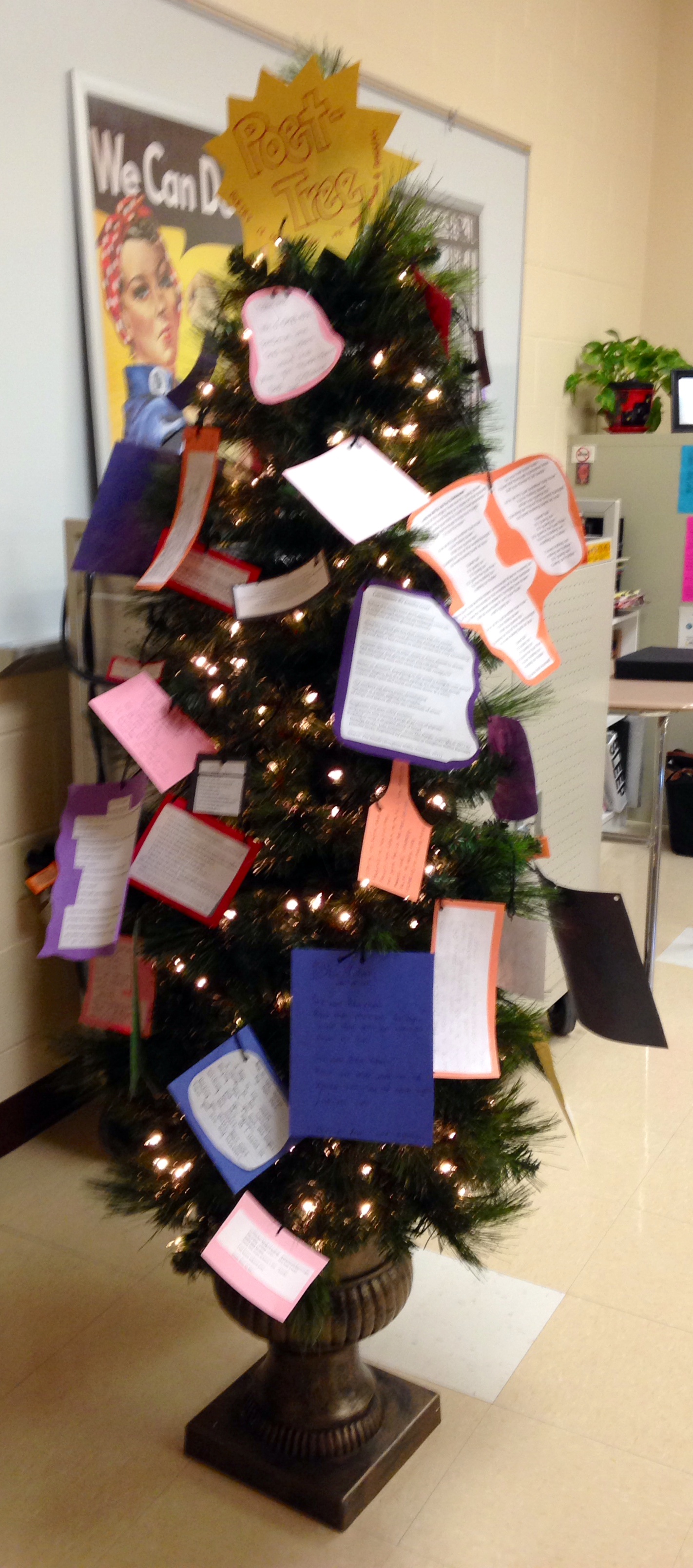
Our class Poet-Tree

Our class Poet-Tree

Part of exposing students to contemporary poetry also involves helping them to recognize poetry within their surroundings. During the poetry unit I make a point to both display and discuss books that include poetry. I like to discuss Ellen Hopkins’ books and use Brian Turner’s war poem anthology Here, Bullet as well Jay-Z’s book Decoded, which includes annotations of his rap lyrics, as mentor texts. I also integrate classic poetry to make sure students are exposed to a wide variety of poets and pieces.

Inspired by a Pinterest pin, I started a Poet-Tree this year. I asked students to take a week to find poetry surrounding them. They could bring in a poem they enjoyed, favorite lyrics from a song, excerpts from a book, or anything they deemed to be poetry. The goal was to reinforce that poetry exists all around us, and judging by the final product, students were able to recognize the larger implications of the poetry unit.

3. Have students Participate in Poetry Out Loud or a poetry reading

Ownership is central to the poetry unit. Students oftentimes give into poetry because they have a say in what poem they would like to memorize, analyze, and perform. Furthermore, they are invested because their peers

A poem displayed on our class Poet-Tree

A poem displayed on our class Poet-Tree

hold them accountable.

I give students ample class time to explore the available poem choices on the Poetry Out Loud website. Once they choose their poem, I lead them through a variety of activities intended to help them fully analyze and understand their poem. We explore the meaning behind the poem, creating a word dictionary to understand the significance of word choice. They research the poet’s background and historical events/facts that might have played a role in the writing of the poem. They learn about the appearance of the poem and how author’s choice plays a role in line lengths and stanza breaks. Finally, we discuss sounds within poetry and how poetic elements affect how a piece is read. This intimate look at the structure and development of the poem prepares students to perform their poetry at our final poetry café.

 4. Create a poetry and post cards match between schools

The post card I traded with the elementary art teacher at one of our local schools.

The postcard I traded with the elementary art teacher at one of our local schools.

Every year our freshmen classes pair up with a group of fifth graders from one of our local elementary schools to participate in a program we call “poetry and postcards.” Fifth graders paint or draw a post card in their art class to send to a high school buddy. In return, our students write a poem to match the post card while also sending a letter to the student with some information about themselves as well as advice for the fifth graders as they move up to middle school. My students are invested in the project and oftentimes receive notes back from their fifth-grade buddy.

While my poetry unit is packed, students move on with an understanding that the process of comprehending and connecting with poetry isn’t so different from the process of reading a novel. They see the relevance and beauty of language and tend to leave with a greater appreciation of an art they otherwise despised.

The school-wide Poetry Out Loud competition

The school-wide Poetry Out Loud competition

Dictation in AP English — It’s a Quiet Your Mind Kind of Thing

The sign on the door of my classroom

I asked my students to turn to a new page in their writers’ notebooks. I told them that I would read aloud a poem. Slowly. I would repeat each line twice. I would spell words that I thought were difficult. I’d tell them where the punctuation went. I’d tell them where the line breaks were. I’d give them time to write.

All they had to do was listen.

You would not believe the moaning.

I explained that to truly understand language they would need to listen to how language works. They needs to hear the words, the rhythm of the sentences, the length of the sentences. They needed to quiet their minds long enough to block everything out but the sounds of each and every word.

“The sound of sense, then. You get that. It is the abstract vitality of our speech. It is pure sound–pure form. One who concerns himself with it more than the subject is an artist. But remember we are still talking merely of the raw material of poetry. An ear and an appetite for these sounds of sense is the first qualification of a writer, be it of prose or verse.” ~Robert Frost

I didn’t expect students to understand so much Frost’s meaning, but I did realize the value of getting students to find a center and make the words their own as they write them down.

I’d experienced this first hand at the Conference on Poetry and Teaching at The Frost Place last summer. Every morning, we’d sit on metal chairs in the small barn behind Robert Frost’s house and listen and write what we heard.

The practice is called DICTATION. “It’s a slowing down and feeling the language in your bones,” says David Cappella, co-author with Baron Wormster of A Surge of Language — Teaching Poetry Day by Day. (Here is a sampling from Heinemann.) Wormster explains, “[Dictation] is a kind of reading aloud to think aloud so you can live out loud. Poetry is life in the slow lane. Poetry tells us to slow down and to pay attention. Poetry directs our attention.”

I have used dictation three times with my students so far this year, and three times we have experienced a calming of the mind that moved us to specific and powerful learning.

1. We focused on word choice, paying particular attention to words we found interesting and unique. This lead to better word choice in our Go World video stories.

2. We focused on sentence length and variety, paying particular attention to the rhythm in the poem. This lead to more purposeful syntax patterns in our next blog post. (All of my students manage their own blogs. See this post here to know more about our blogs.)

3. We focused on figurative language, paying particular attention to the sensory words that created the images. This lead to more colorful, intentional and moving language in our notebook play leading up to narratives.

My second semester starts today. Today I will dictate a poem to get us started, I think it will be this one by Anais Nin:

Screen Shot 2015-01-19 at 5.17.58 PM©Amy Rasmussen, 2011 – 2015