Okay, I Will Share My AP Testing Data

A new friend asked me if I would share any AP testing data that I’ve gathered since embracing Readers and Writers Workshop. I had to think about it since I rarely think about it. I do appreciate the question though because it led to this post.

I need to tell you right up front:  While I appreciate the AP exam as a high-stakes test, I do not lay a lot of value on testing data for many reasons.

So many factors figure into how a group of students tests each year, and looking at figures from one year to the next, and trying to compare numbers with different groups of students has never made sense to me. The only real valid data is the growth I measure from the fall when students walk into my door until they leave me in the spring. However, I can tell you that the first year I implemented Readers and Writers Workshop and gave up whole class novels in favor of encouraging students to read books of their choice and taught skills with short, sophisticated, complex texts, my students’ scores were 12% higher than my students’ scores the year before.

The best I can do to respond to your question is to quote Stephen Krashen in the article “Free Reading:”  “. . .research strongly suggests that free reading is the source of our reading prowess and much of our vocabulary and spelling development, as well as our ability to understand sophisticated phrases and write coherent prose. The secret of its effectiveness is simple: children become better readers by reading.”

And…  “Research has . . .shown that SSR is at least as effective as conventional teaching methods in helping children acquire those aspects of reading that are measured by standardized tests, and pleasure reading provides a great deal that these tests don’t measure.”

The first two years I taught AP, I tried to do it like I learned at my APSI. I assigned the traditional novels taught in American literature: The Scarlet Letter, Huckleberry Finn, The Great Gatsby, The Awakening, The Grapes of Wrath — because the other AP teacher on my campus did. I can tell you, my students did not read. They even told me later that they didn’t — lots of joking about that on Facebook a few years after they left me. They knew how to play the fake-reading game perfectly.

I know Krashen’s research centers on much younger grades than our students in AP English; however, reading is reading, and students gain skills by doing it — skills that improve their lives far beyond those tested on one day in May as they sit for the AP English exam.

My students just wrote end-of-year reading evaluations on their blogs. Here’s a few of the highlights about reading this year in their own words. This is the kind of data I value:

“Being apart of a reading community has benefited me deeply within my entire life. Even though I didn’t read as much as I wanted to, the reading that I did do was very beneficial. Reading helped me expand my vocabulary a lot. Sometimes when I would speak to my mom I would use a word that I learned from the book I was reading and she would just look at me like she didn’t know who I was. Reading also helped me become a better writer. So many different books that I read helped me use different structures, understand how to use rhetorical devices, and use my upper level vocabulary.”  DeDe, currently reading Thirteen Reasons Why by Jay Asher

“Being part of a reading community as a student opened my mind how others thought of the book we were currently reading together. Occasionally, I’m an ostrich that’s always in the ground; thoughts to myself, ideas to myself, and the “this is what this means” mentality. I’ve slowly learned how to use the point of view of others by implementing it into my own work. In addition, this year’s English class did not feel like a burden compared to previous years. The freedom of choice we were given provided us with the decision to pick a book we enjoyed.” Doreen, currently reading The Goldfinch by Donna Tartt

“I believe the place I need to improve as a reader is being able to find the hidden meanings or putting everything together in order for me to understand a book. Sometimes without me noticing I just read to read and I forget what I read and have to read the paragraph or page again in order for me to understand it. I need to read and take everything under consideration and understand what it is that I’m reading and at the end put it back together. Maybe my problem is that I try to read too fast.” Johnny, currently reading The Alex Crow by Andrew Smith

“Being part of a reading community benefited me because I always felt like I needed to be reading a book. It felt splendid being a part of something, especially something I would of never thought I would be a part of.  I understood the importance of reading. The more you read, the better writer you will become. I realized what genre of books I liked and which ones I didn’t. Most importantly I explored a different variety of books and read a minimum of 12 books. Something I had never done before. Usually I would read a minimum of 3 books every year.” Lizbeth, currently reading Playing Dead byJulia Heaberlin

“My journey began with Escape From Camp 14. I moved through different genres and difficulty levels thereafter: Anna and the French kiss, Allegiant, High School Bites, The Glass Castle, The Curious Incident of the Dog in the Night-Time, Where’d You Go Bernadettte, The Art of Secrets, The Hot Zone, Little Bee, The Joy Luck Club, Down the Rabbit Hole, Room, Incendiary, The Wright 3, and most recently, Y. During this time, I abandoned The Kite Runner, The Thirteenth Tale, Ready Player One, Saving Fish From Drowning, Telegraph Avenue, and Station Eleven.   Even I find it odd, that out of the entire list, I enjoyed The Joy Luck Club more than any other. I say this because I’m not the patient type- I like constant action, fueled excitement. The Joy Luck Club almost counters that expectation, and if I had to describe it, I might even consider calling it boring.” Nawoon, currently choosing — just abandoned Station Eleven

This evaluation by Jasmine is too good to not share the whole of it. And this one by Shaniqua.

I just need to share one more thing, a little gift I got today as I read student reading evaluations. I know most teachers get these at one time or another.

It is the thing that keeps us going.

Laura wrote:

“I still need to improve on not judging a book by it’s cover. For us to GROW as people, we must get out of our COMFORT ZONE and pick up a shattered book because it needs someone to appreciate it’s language. As much as reading conference were sometimes nerve wrecking for me, they helped me get a second opinion on my progress in class as a human and not merely as a student. I can never thank Mrs. Rasmussen enough for dedicating chunks of her life to her students. Positivity in a world were criticism is many people’s issue is so rare and pure. She truly cares about each of us and sees past our struggles and attitudes and tries her best to help us understand it’s okay to have emotions and display them for others to see.  I’ve learned it’s more important to turn our conflicts into beautiful gifts instead of becoming a bitter person.”

Don’t you think that is better than any testing data?

©Amy Rasmussen, 2011 – 2015


Our Year-In-Review

As we round out the 2014-2015 academic school year, I would like share our Year-In-Review from us here at TTT and dedicate it to all of our loyal and contributing teacher friends who share in our experiences throughout the year.  Playing with the Reading Writing Workshop model is always exhilarating and fresh and exciting and freeing and thought-provoking.  It’s always propelling us, as educators, to break through barriers and teach with our most authentic teaching souls.

So, to capture the essence of how we have all explored the model this school year; here are highlights that allow us to celebrate the risks, the questions, the stumbles, the ‘ah-ha’s, the setbacks, and of course…the successes.  As we are all still progressing through this last month of our current school year, we hope that resurfacing some of our favorite moments will ignite the fire that keeps us all educating with fierce passion, deep inquiry, and continual evolution.

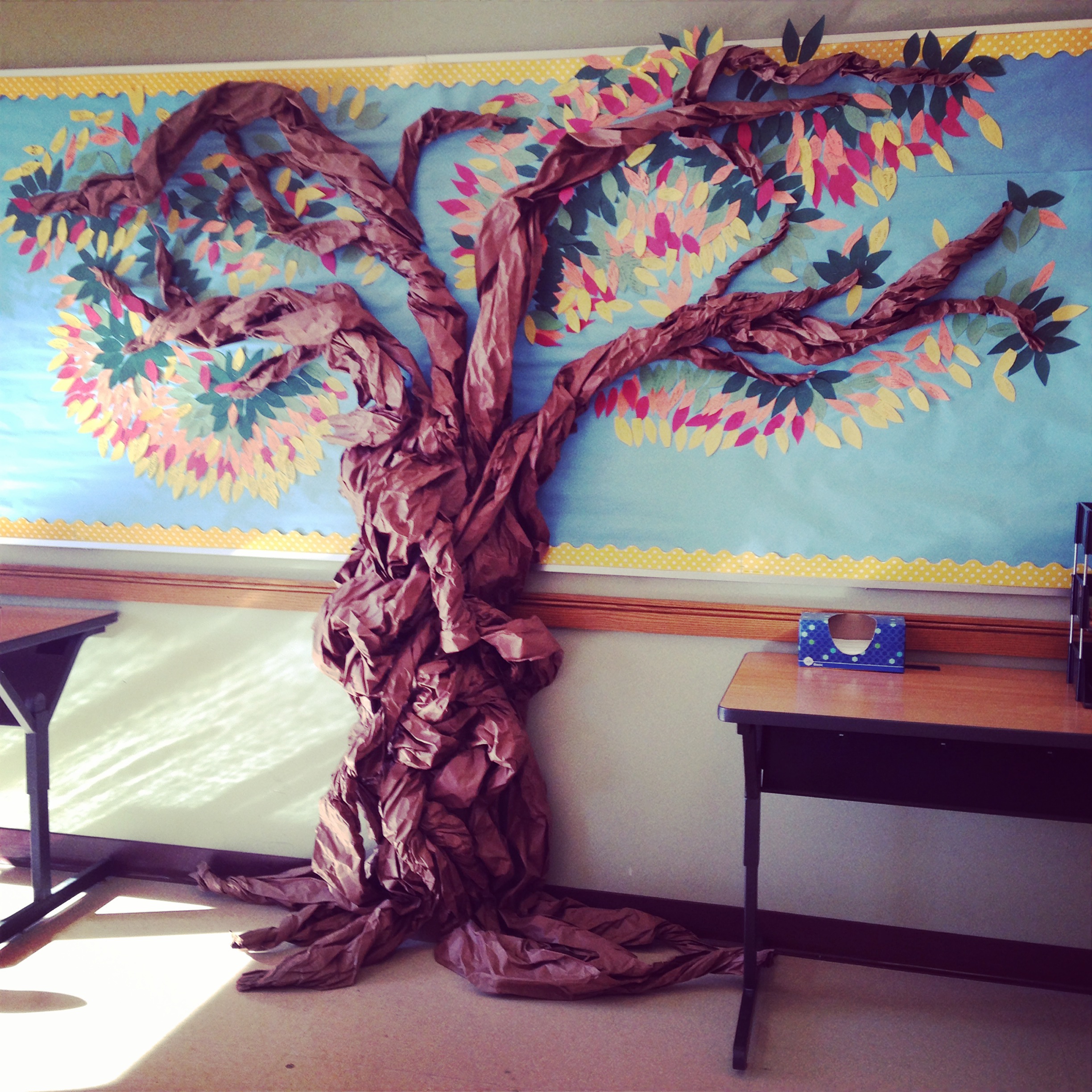
The calm zen of the RWW in Texas.

The calm zen of the RWW in TX.

First up: The lovely Amy Rasmussen who never ceases to amaze all of us with her wit, wisdom, and wildly insightful thinking.  Here is a woman who has taken the RWW by storm and has not looked back; the only time she does is to pick up, dust off, and gently guide those who are trying to find their way through the process.  She is an excellent mentor and extraordinary educator who ensures that her Advanced Placement students are gifted the wonders of the RWW. Here is a collection of how Amy has guided us through the intricacies of customizing the RWW for our own learners:

A Feedback Protocol for Revision Workshop

5 Reasons Why Reading Conferences Matter — Especially in High School English

5 Ways to Enjoy the Last Month of School


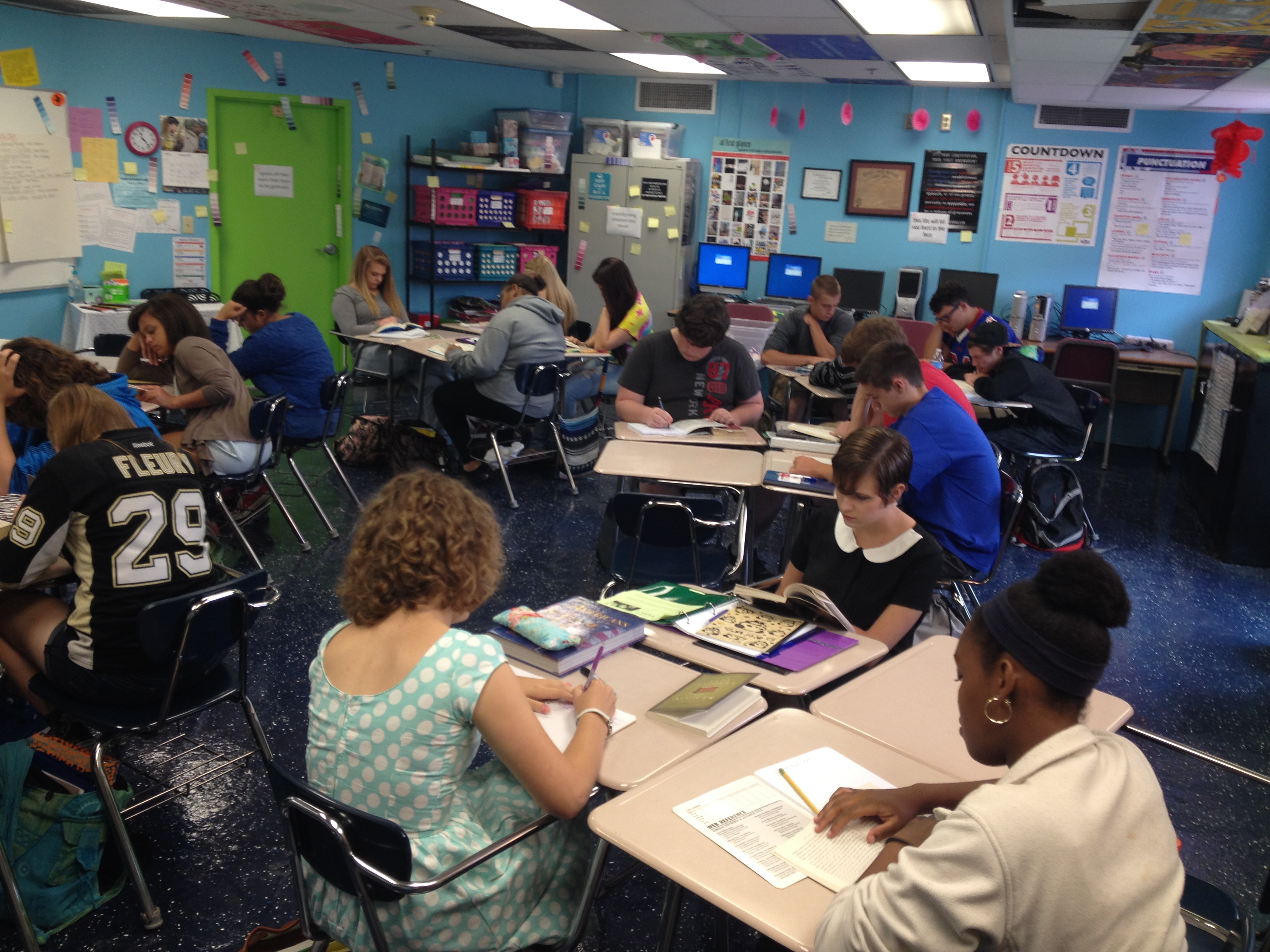
A reminder of student movement and achievement.

A reminder of student movement and achievement in NH.

Next: Jackie Catcher’s name could not be more appropriate.  We know the catcher’s responsibility on the field is to guide the team to strategic success; Jackie does the same infield – in her classroom. She moves her students with her unyielding dedication through continual infused literacy by craftily customizing projects and lessons that engage students. She is a powerhouse who, through all the struggles and obstacles of a second year educator, never ceases to find innovative ways to educate and inspire.  Most importantly, she is always a learner first and shares her inquiry with others to not only think collectively, but to create success-driven solutions.  Here is some of her story:

Building My Library Around My Students

Unraveling the Mystery of Poetry

The Question That Changes My Students’ Writing


A bright and energetic learning environment in WV.

A bright and energetic learning environment in WV.

Thirdly: The always-invigorating Shana Karnes. Shana is a shining light to her students, yet her light shines brightly for the world of evolving educators as well.  She is open to sharing her passion, her innovative thinking, and the way she creatively customizes the RWW for her students in the throws of West Virginia.  Shana never loses sight of how vital piles and piles of literature are for the growth of her young readers and emerging writers.  She knows how to roll up her sleeves and do the work right beside her scholars.  It is through the sheer joy of all things literacy, that Shana explores the world of the RWW:

We Learn Facts from Fiction

Teach Readers, Not Books: A Case for Choice Reading in ALL Classes

The Value of Talk


The shelves where our identities are qualified, our ideas solidified, and our passion realized.

The shelves where our identities are qualified, our ideas solidified, and our passions realized in NY.

Rounding it out: Erika Bogdany.  Through the RWW I have challenged my students, and they in turn, have challenged me.  They push me continually with their own inquiries and want to be more fluid writers.  They challenge my writing by offering suggestions and insight that I have bestowed upon them; the gift of creating a safe community for all learners to read, write, risk, and share.  It is through the RWW that students find pride in their work, volume in their voice, crafted secrets in their writing, and beauty in themselves.  It is with passion and grace that students flutter and flop; yet learn how to fly:

All it Takes is a Tutu and Some Focus

Beyond These Four Walls

Today We Draw


We hope that our moment of reflection and celebration continues to provide you ideas and inspiration throughout the remaining time you have with your unique readers and writers this year.  We’d love to continue hearing your voices, feedback, and generous insight while we round out this school year…and look forward to the year ahead!

7 Moves in My Workshop Schedule

Quite often teachers ask me what the daily schedule looks like in my workshop classroom.

This is a hard one. I think mainly because it is not about the schedule as much as it is about the routines, or manners, we start putting into place at the beginning of the school year.

I’ve had a lot of adapting to do this year. Moving to a new school and adjusting my lessons to fit 85 minute class periods where I see my students twice a week for sure and every other Friday — sometimes. This is quite a change from 50 minute class periods where I saw my students five days a week.

Our normal routines  — and these are non-negotiables that make workshop work — consist of reading, conferring with readers, talking about books, writing in our notebooks, revising in our notebooks, sharing a bit of our writing, and learning or reinforcing a skill, then….it all depends on our workshop task. That’s why writing about my daily schedule is hard.

Here’s the best I can do without going into a long explanation — that has to wait for my book (Penny keeps telling me that my book will never get written if I keep writing on this blog, and I know she is right. Only so much time.)

READ — 10 to 15 minutes. This is sacred and silent reading time. Students choose books that interest them. I CONFER with my readers, always with a specific focus, depending on my reader.

TALK about books. Sometimes I do a book talk, reading a few pages of the book, or holding a book interview like Erika does. Sometimes a student does a book talk, if I’ve talked to her first and know she’s passionate about the book she’s just read. Sometimes I ask my students to just talk about the books they are reading. Shana wrote about the Value of Talk, and I agree completely: “Talk is one of the most valuable tools at work in my classroom.”

WRITE in our writer’s notebooks. Everyday we need to have our students thinking on paper. When I forget, or think we do not have time, to open our notebooks and write — in response to a poem, or a video, or a story, or about the book students are reading, or about whatever — I regret it. Discussions are richer when we write first. Discoveries are more insightful when we write first. Writing is better when we write, just thinking about our ideas, first.

Then, something I learned from Penny Kittle, we always read what we wrote and REVISE. Penny modeled revising with a different color, and I ask my writers to do the same. I simply say, “Read over what you just wrote. How can you make your writing better? Maybe add a phrase or two that develops your thinking more. Maybe change a word or two that adds a punch. Maybe you can remove some words and make your thinking more concise. Where can you add figurative language or a list or an interesting style move?” (When I check writer’s notebooks, I always look for evidence of revision. We work on establishing the habit of revision, daily.)

SHARE some of our thinking. Sometimes we pair up and read our writing to a shoulder partners. Sometimes I ask for volunteers to share out their writing. Sometimes I randomly call on someone (and I usually allow them to opt out at least once if they are uncomfortable reading aloud). Sharing is an important part of our community, and from the first day of school we work on establishing a safe and respectful environment where we can all grow as readers and writers.

Learn or reinforce a skill via MINI-LESSON. (If I introduce something totally new, like one of the AP English Language exam prompts, obviously the mini-lesson will not be so mini. On these days, the mini-lesson time and the workshop time allotment swap places. Sometimes I need the focused direct instruction time because it saves time in the long run.)

Our routines usually take about 35 to 45 minutes. That leaves us about half the class period to hold a workshop. This might be a readers workshop if we are practicing close reading or if we are preparing for a Harkness discussion. This might be a writers workshop if we are composing a piece of writing or studying the moves of a favorite author.

Of course, if we are writing, I change my hat and confer with my writers.

I would love to know the workshop routines you establish with your readers and writers. Please share in the comments.

©Amy Rasmussen, 2011 – 2015


Shelfie Saturday: Book List Bookmarks

shelfieThis year, I am convinced that the patron saint of libraries has arrived at EHS in the shape of a silver-haired spitfire. Kathy Vetter and her crew of library assistants have managed to shift the culture of our library from a stuffy prison in which students got kicked out all too often (for eating, sleeping, talking, breathing) into a warm, inviting space of relaxation. Surprisingly, this transformation and the allowing of food in the library have also ignited students’ interests in reading.

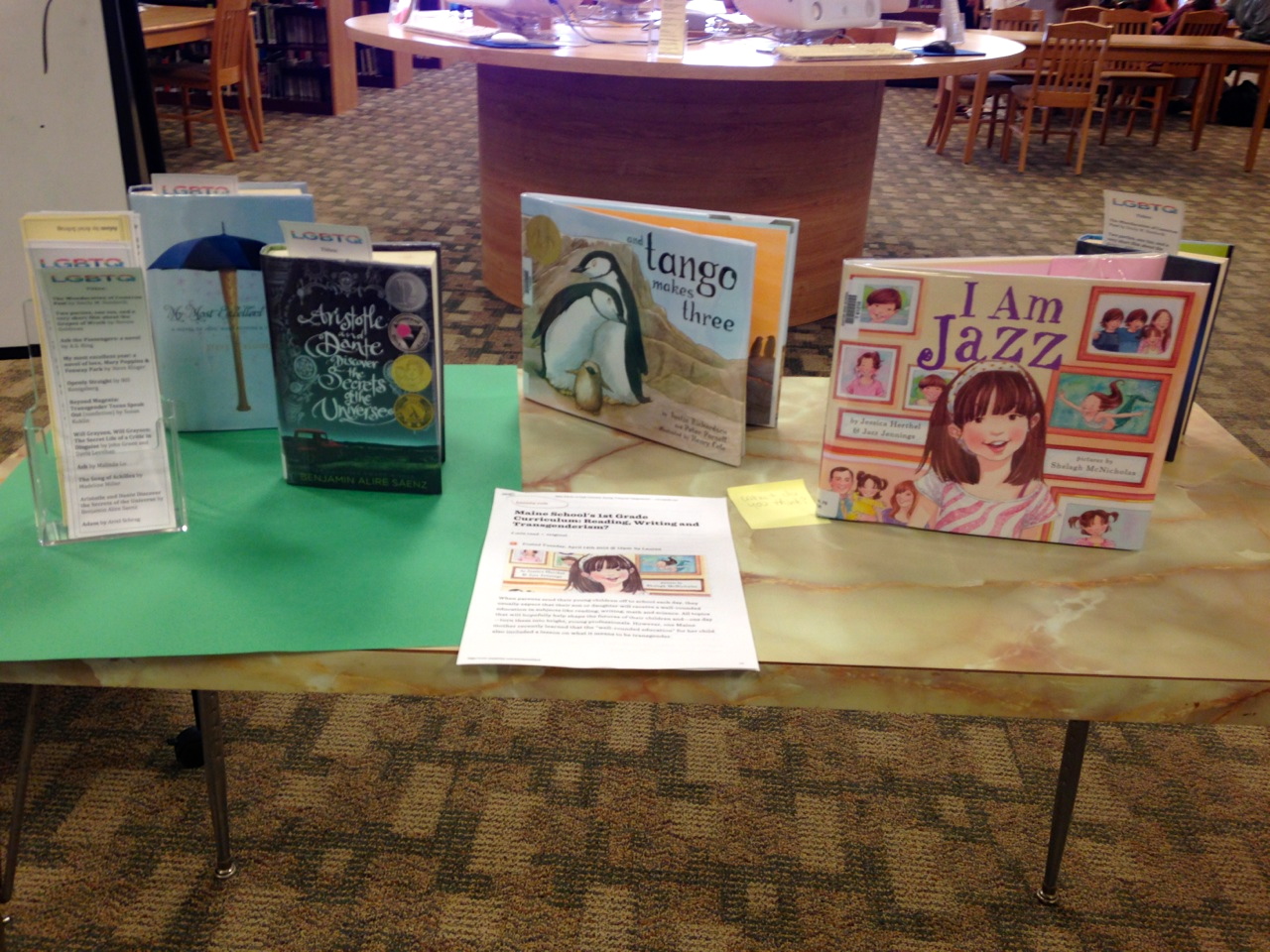
One of the library’s greatest programs for engaging readers has included setting up simple displays to attract students’ attention. While the displays aren’t flashy or ornate, they expose students to a wide variety of books. For example, in honor of June being LGBTQ month, the library set up a small table with a selection of LGBTQ literature. The selection included I Am Jazz, a book about a transgender child that recently sparked controversy in Maine (ourIMG_2153 neighbor) after an elementary school teacher read it to her class. In addition to the display, the library also provided copied articles about the I Am Jazz dispute to educate students. Talk about a teachable moment!

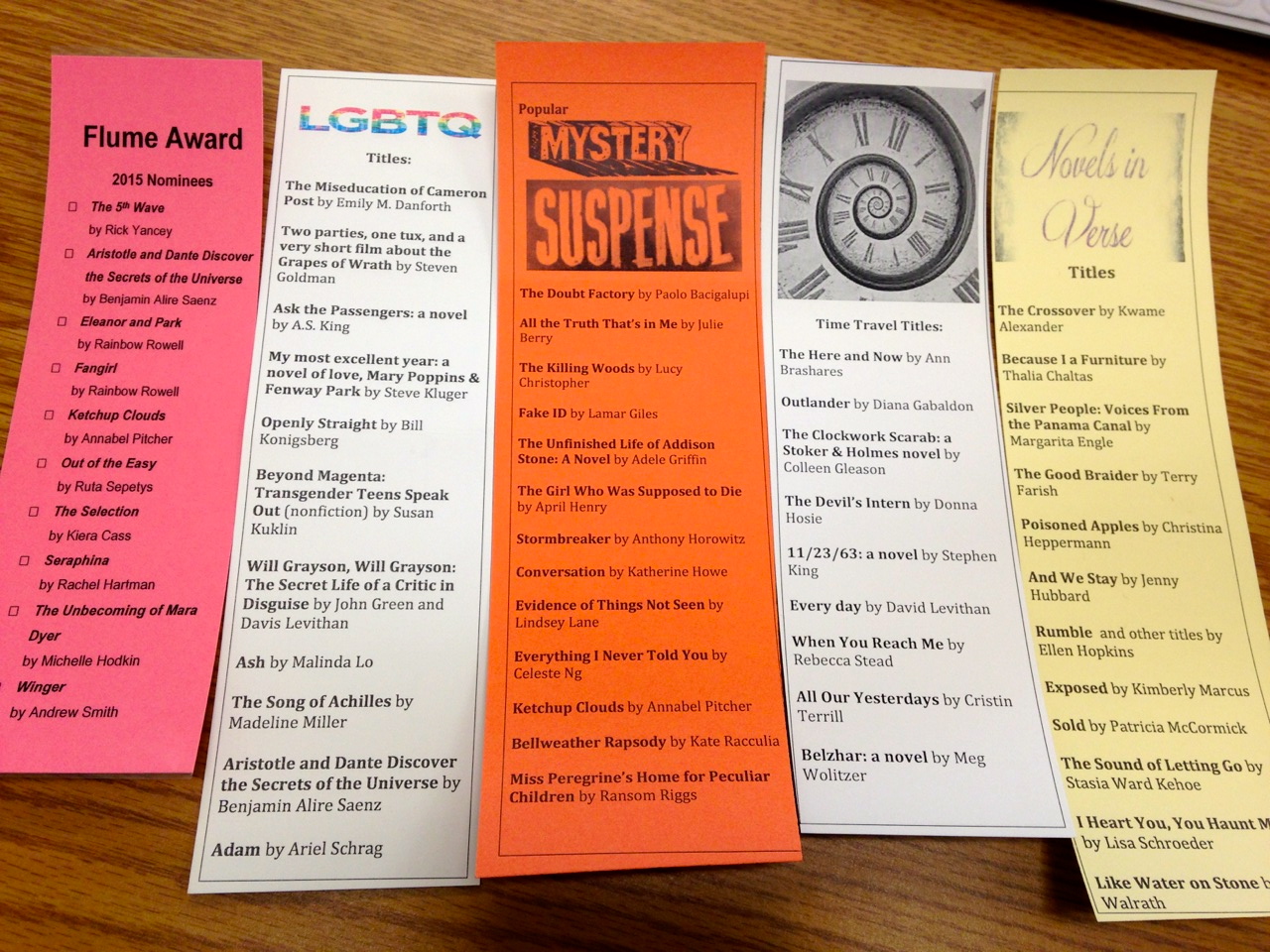
What I love most though is the increasedIMG_2154 availability of book list bookmarks. Throughout the year, the librarians have managed to set up an elaborate display of bookmarks including lists of Flume Award nominees, time travel titles, and novels in verse. Many bookmarks even include suggestions based off popular books; for example, one reads, “If you liked The Fault in Our Stars, you might like…”

As I reflect on my currently library, I look forward to aligning with the library and using their model within my own classroom. I currently use plate stands I bought from a craft store to display books on top of my bookshelves. I am planning to not only steal some book list bookmarks to provide to my students (who are always looking for bookmarks), but I am also going to use these bookmarks to help me develop my book displays

and even my classroom library shelves. In the meantime though, I will certainly count my blessings that such an angel of books not only appeared at EHS but changed the environment that surrounds one of our greatest school resources.

Missing Pieces by Meredith Tate

24903132I love receiving e-mails from students—not the “Is this due tomorrow?” or “Why do I have a zero in PowerSchool?” e-mails—but the ones that are written bleary-eyed, late at night (or sometimes early in the morning) from students who have just finished a book. Recently, Alyssa, one of my Advanced Composition juniors e-mailed me at 10:30pm after finishing Missing Pieces. She wrote:

“Wow, I just finished the book and I am completely shocked! Was definitely not expecting…[Can’t put this in because I don’t want to spoil it!]…I am extremely happy the way it ended! This was most certainly one of my favorite books that I read this year and if any of my friends ask for a recommendation I would without a doubt recommend it.”

As a teacher, finding a book students can connect with is a victory! But in this, case the victory was even sweeter. I grew up with Meredith Tate, the author of Missing Pieces, and even as children playing in the sandbox at our tiny four-classroom elementary school, Meredith knew how to weave a story.

Missing Pieces is the story of Tracey (Trace) and Piren, two best friends growing up in a dystopian world where they are matched with their spouses at six years old based on genetic compatibility. Despite Trace and Piren’s undeniable friendship and eventual attraction, they are paired with different partners. It is a fight between fate and free will.

While the plot might sound generic, resembling the many dystopian romances novels we’ve seen lately, Meredith succeeds in weaving together a distinctly unique story. Trace and Piren are flawed and frustrating and real. They live in a world of messy mistakes. As a social worker, Meredith doesn’t skirt around issues of alcoholism and abuse—instead she confronts them head-on, addressing the harsh, debilitating nature of addiction. I love that this book doesn’t cleanly fit into any distinct genre—it’s a romance, but it isn’t mawkish; it’s categorized as “new adult” but it begins when the protagonist is 14 years old; it’s dystopian yet it distinctly resembles modern society. Despite the numerous questions posed throughout the book (including those in the excerpt below), we learn that life is a series of difficult decisions; it’s the pure beauty of this rawness that makes this book relevant to teenagers.

“What if the one you’re supposed to be with, and the one you want to be with, are two different people? My entire life was mapped out for me before I was born. Is my only choice to silently follow the course already plotted? To blindly accept my future and walk that trail until I die? To smile and pretend everything is okay and I’m happy and in love with my Partner when I’m spiraling downward and drowning in my loneliness? I’m drowning, like in my childhood nightmares. Only this isn’t a nightmare; I can’t wake up from this life.”

Why Assignment Sheets Might Be Killing Your Students’ Writing

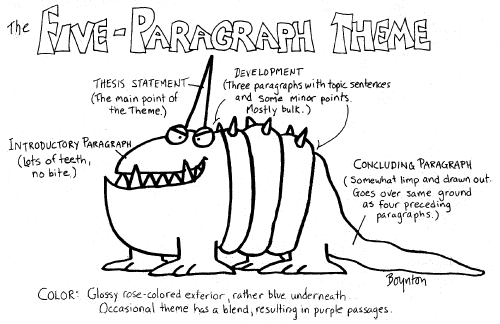
58090ec056811830ee936030edb1c9dbMy first year of teaching, I didn’t realize that the “five-paragraph essay” was a dirty phrase. My  internship year I painstakingly dragged my freshmen through the essay outlining process, watching them regurgitate homogeneous essays about symbolism in Lord of the Flies. At the end of our six-week study of the book, I slogged through 25 nearly identical essays, all of which had eloquent yet oddly familiar intro, body, and conclusion paragraphs. I’ll readily admit that despite the dull content, I felt victorious. My students had completed literary analysis essays and I had taught the foundation of essay structures.

It was that summer that my perception on structured essays changed. Two days into taking Penny Kittle’s writing course at the University of New Hampshire’s Literacy Institute, I realized that I had committed a cardinal sin of workshop teachers. Admitting to teaching the five-paragraph essay (let alone the sandwich method of paragraph-writing) was like confessing to enjoying McDonald’s burgers at an elegant chophouse: the cut (or concoction) of meat might serve the same purpose, to fill me up, but the quality was quite different. In turn, I was feeding my students homogeneous writing, a detailed equation to a subject that couldn’t be distilled down to simple mathematics. If I expected greatness, I needed to break beyond the boundaries of such a restrictive form of writing. After all, an introduction + body paragraphs + conclusion didn’t guarantee a solid essay; if anything, it guaranteed an entirely unspectacular essay.

This process of digesting the material and then providing a summary of the structure was far too easy for students. Not only did it place the onus on me to provide a set guide of instructions, but it also required me to complete the majority of analysis. Instead of my students engaging with the text and delving into the intricacies of structure and craft through individual exploration and group discussions, I was basically pre-digesting the material before offering it to them.

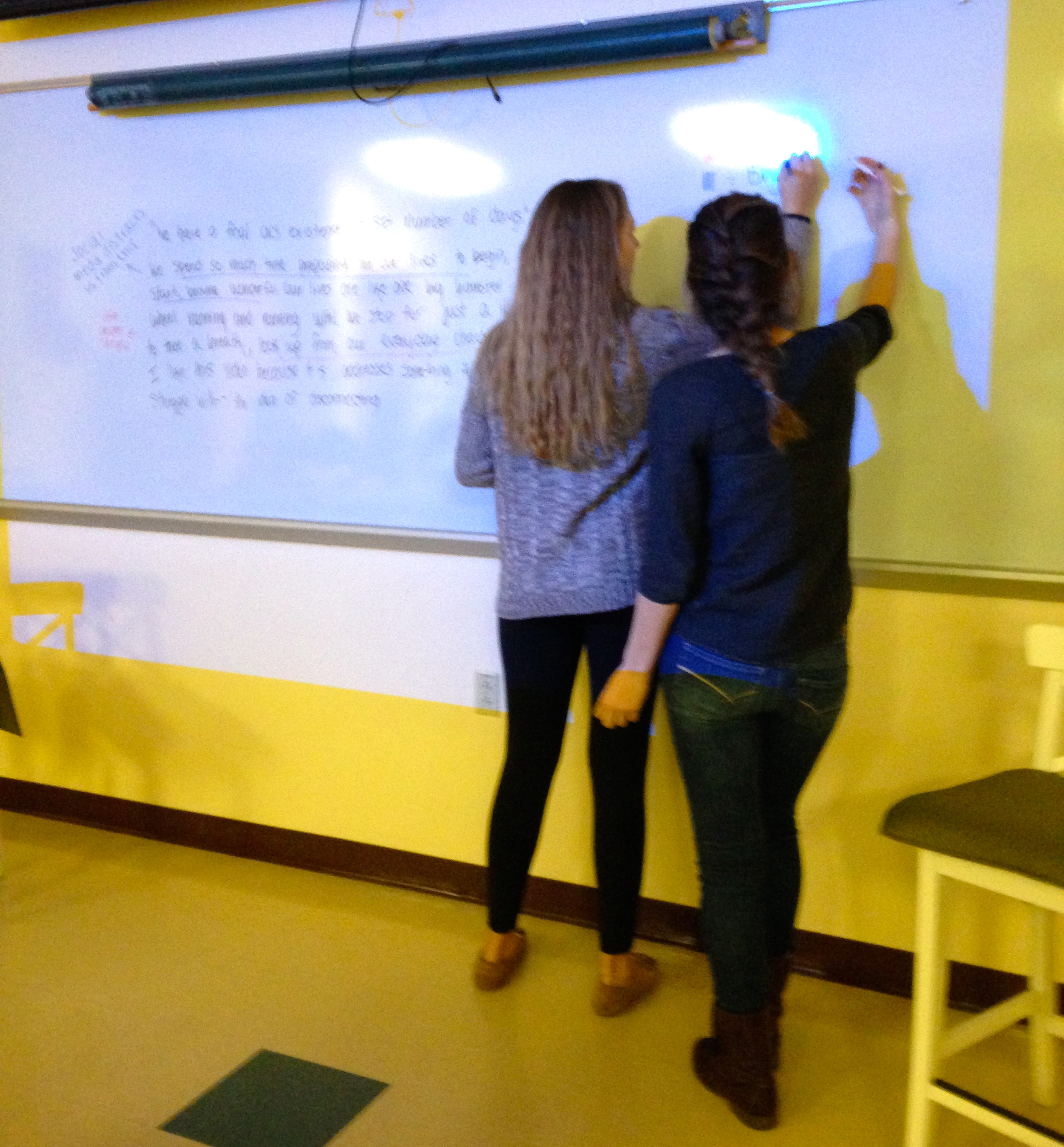
IMG_1845

Students analyzing an author’s craft in front of the class.

This year I have made a point to wean my students, particularly my juniors and seniors, off the assignment outlines they so desperately desire. Instead, my students now receive a half-page sheet simply telling them the type of essay they are writing (cause and effect, definition, personal narrative, etc.), the mentor texts they may refer back to, the page length requirement, and the due date.

Initially, they were frustrated with this format. As one student said during our career building unit in which we practiced writing cover letters and resumes for celebrities, “Ms. Catcher, do you have an assignment sheet for this or something?” When I pointed out the paper I had given to him previously, he replied, “No, I mean something that tells me how to write this paper.” We discussed the numerous mentor texts we had read and dissected and how these as well as our class discussions ultimately provided the basis we to develop our pieces. As a class, we asked questions of the text and author, starting broad by looking at the overall tone, voice, structure, intended audience, and progression of the piece. Then, independently or within small groups, we delved into more of the intricacies—what examples were provided, word choice, sentence structure, punctuation, and transitions. Students have gradually learned that there is no set solution for getting an A, which also means that they are forced to read and reread mentor texts to gain a firm understanding of a piece’s intricacies.

My problem from the beginning was that I was too busy telling my students how to write an essay to allow them to discover the messy albeit enlightening connection between reading, writing, and modeling. As we complete the last six weeks of school, I have noticed a significant difference in the structure and craft of my students’ work. They are relying more readily on mentors to help guide them in their process, and I can see both their group and independent analysis directly translate into their writing. For the past three years, I have harped on my students about showing rather than telling, but as the year comes to a close, I can finally say that I have internalized my own advice when it comes to my teaching.

How do you inspire students to rely on mentor texts instead of assignment sheets?  What steps have you taken throughout the year to make them more independent and confident writers?

Shelfie Saturday: Nonfiction #ShelfieShare

shelfieAs a young reader, I was a library-only kinda girl.  I browsed the mystery, fiction, and teen sections looking for distinctive spines–ones that had a pink “Classics” sticker, or an orange “Award-Winner” sticker, or a blue “Librarian’s Choice.”  These little guides led me to Jane Austen, Matthew Quick, and John Grisham, whose spines were not only colorful with library stickers but also well-worn from the hands of readers.

The thing about those spines was that none of them were in the nonfiction section, which loomed large with encyclopedias, reference books, and lots of sections about science, technology, or car repair.  Being a middle schooler who didn’t know about the Dewey Decimal System, I had no idea how to find interesting biographies, beautiful memoirs, or fascinating historical accounts.

Now that I’ve begun to love nonfiction and learn a lot from it, I’ve tried to simplify the search for great true stories in my classroom library.  We have one Nonfiction shelf and two Memoir & Biography shelves.  I try to keep collections, histories, and statistics-into-stories books all together on the Nonfiction shelf, while I move the stories of people’s lives onto the M&B shelves below it.  Sometimes the titles that belong on the Nonfiction shelf wind up on the Award Winners, Unique Teens, or Death & Dying shelves–because I love to mix true and imaginary stories in our library when they share themes.

FullSizeRender

You can see that our shelf is varied–topics range from sports to how the mind works to humor.  Some authors are dominant–Jon Krakauer, Malcolm Gladwell, Daniel Pink–but others are one-hit wonders whose titles are very popular–Mary Roach, Michael Lewis, Dave Cullen.  Their respective Stiff, Moneyball, and Columbine are three of my library’s most popular titles.

Our nonfiction shelf is also the home of the “Best American” series, which includes topics such as science, travel, and sports writing, but also a collection of simply “essays” from each year.  This series is a fabulous way to find a huge variety of good nonfiction mentor texts when students are doing informational or persuasive writing–there is always something to match any student’s interest.

This shelf is an eye-level shelf for good reason.  Students who wouldn’t normally gravitate toward the nonfiction genre find their eyes caught by interesting covers, titles, or topics–such as Missoula and It’s Not About the Truth, both of which deal with college rape culture, or The Sociopath Next Door, which attracts all my Sherlock fans, or Lost in the Meritocracy, which gives both motivated and disengaged students much to consider.  Once students discover this shelf, they often move toward the Memoir & Biography or Award-Winners shelves, which contain more sophisticated nonfiction structures.

I encourage all teachers of literature to build up their nonfiction shelves–their titles have much to teach our students.

Guest Post: How a High School Improved Reading by Building Little Free Libraries

busLast summer, I became a Penny Kittle convert. I originally didn’t know what I was signing up for, but something kept driving me to be sure I was where she was. Turns out, it’s been the best hunch of my teaching career. The mind shift I was searching for. A complete game-changer. And this is year eighteen.

After 2 ½ days with Penny, I spent the rest of my summer trying to keep up with my churning brain. I wrote more than I have since I was a slightly over dramatic, totally drowning-in-love teen. I read. And I read. And I read. I rediscovered that lust for story I had almost forgotten. I freed myself from the idea that pleasure reading was fluff and gripped the concept of reading what speaks to me as a means of improvement – just like I would soon ask my students to do.

In the midst of my mid-career crisis (maybe crisis is too harsh?), I found a tweet about the site littlefreelibrary.org. The various clever wooden boxes built for books captivated me. I loved the idea of a take-one-leave-one system designed to build community. What fun! I wanted one! Maybe a home project with my own children? Then, I had a thought. What if we put these book boxes in the hallway at our high school? What if this could be the reading take-over Penny Kittle encouraged? So, on my wild whim, I retweeted the link with that very suggestion.

Soon (which means mere seconds in the Twitter world), my teacher peers of all disciplines — math, sharkscience, history, technology, world languages — responded with enthusiasm! They wanted to build wooden cubbies! They wanted to donate books! They were all on board! So, the fun began…

In an August inservice session, I presented the idea to the full faculty, highlighting the importance of choice-reading in ALL classrooms. I used so many of Kittle’s words in an effort to begin a movement. We have to get all of our kids reading – the rich, the poor, the gifted, the challenged, even the ones who don’t eat their vegetables. And, in a school as diverse and unique as ours, we couldn’t wait another second. Of course, there was one small glitch; I didn’t know or have the means yet to build the little libraries. But I knew we could.

Following my first session, our new theater tech teacher immediately approached me, and he offered to have his tech class build the first set! I cried. I usually do at most sentimental things, but I just didn’t expect this outpouring. Books began to appear in my classroom from teachers and then parents. Some opted to write an inscription inside their favorite books, explaining to the future reader the special significance of that particular tale.

#hebronreads was born.

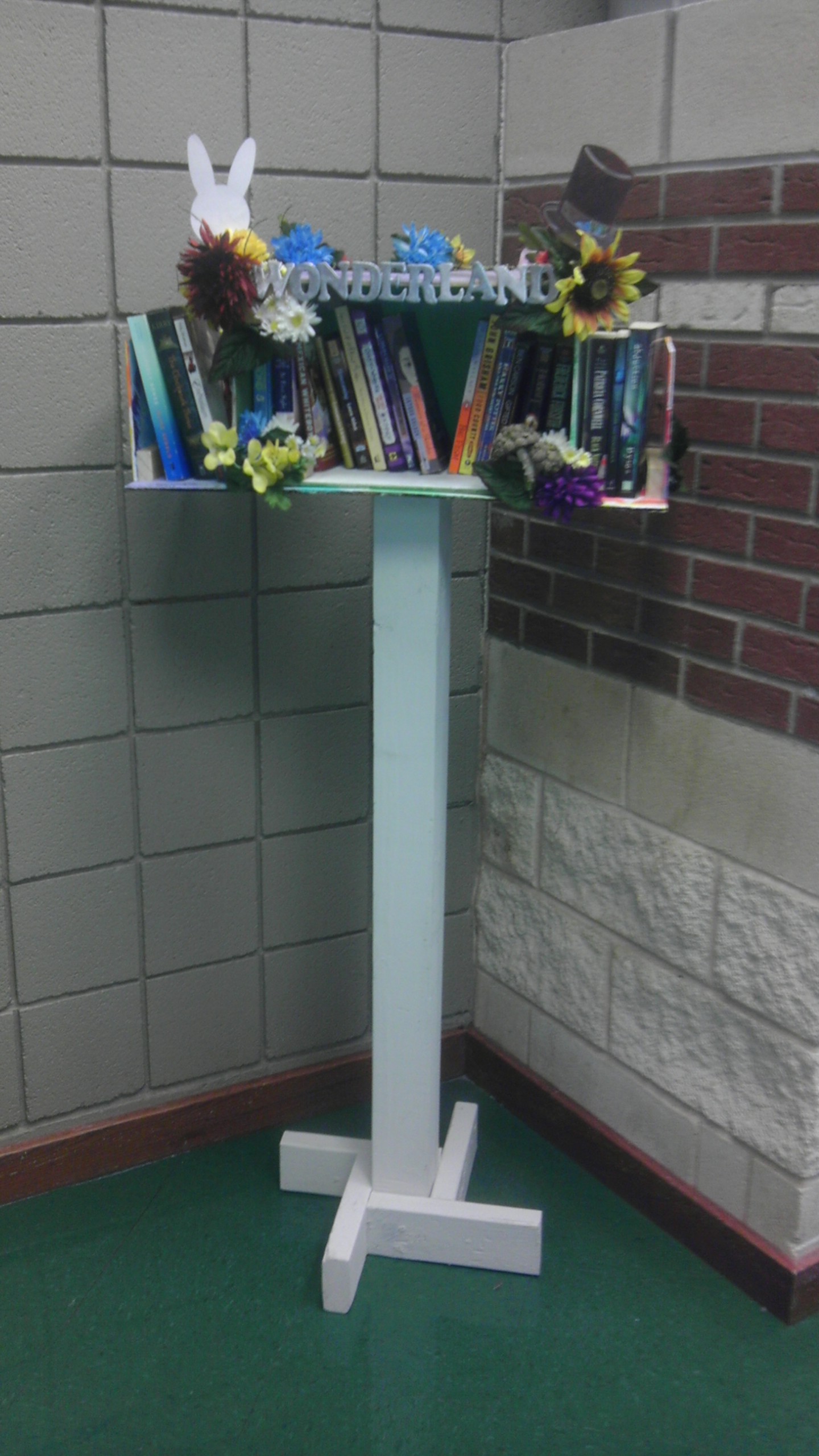
The theater tech class created the first five Book Nooks, as they are now called, from lumber and Slide2supplies donated by our community. In true theater style, the Nooks have flare – a shark, an Alice in Wonderland, a school bus, the Parthenon, and, of course, a book! All student created! All on pedestals in various niches in our halls. At our fall open house night, books poured in from parents who heard our call to promote literacy, and books continue to appear in my classroom like gifts from the Tooth Fairy.

Students in our advertising and marketing classes competed to create a campaign for the program. On World Read Aloud Day in March, we paused to read to our students, and we passed out bookmarks and talked books during lunches. Students have daily choice-reading time in math classes and business classes in addition to English classes. Another book drive is slated during our spring football game in May. A spring literacy night with former Hebron High School grad now YA author Lindsay Cummings is in talks.

alice


This is only the beginning.  

In my hopes and dreams, we will build more Book Nooks and litter the building with choices. We will continue the book drives until all classrooms have some sort of libraries. We will keep talking reading and promoting ideas via @hebronreads. And one day, when we are feeling pretty confident in our literacy push, we will make Nooks and take them filled with books to neighboring schools who need more stories in their lives too. Hebron High School is now a thriving community of readers, and it is truly glorious!

Parent quote:

“My son has always loved to read (‘loved’ is probably an understatement), so when he found these books in Hebron’s hallways, he was very excited.  He came home telling me what a neat thing this was — books for the taking, any book, all kinds. Once he understood the program, he commented on what a great idea . . . read a book, replace a book, or just bring it back. Great idea, Hebron!”    Carolyn Sherry

Donna Friend teaches at Hebron High School in Carrollton, Texas. She is making readers out of English III students and leads her department into the chaos of educational risk-taking. Currently, she is honored to be her campus as well as the Lewisville Independent School District’s Secondary Teacher of the Year, an accolade that, despite her 18 years of teaching, she doesn’t yet feel old enough to have earned! Her current favorite book is Jandy Nelson’s The Sky is Everywhere, and she is practicing being a regular reader and writer along with her students. She has a 9 year old son, a 6 year old daughter, a hubby, two cats, and a few fish. She once dreamed a young adult novel and still regrets not writing it down immediately after waking. Find Donna on Twitter @mrs_friend

Glory O’Brien’s History of the Future by A.S. King

17453303John Green says that “A.S. King is one of the best Y.A. writers working today,” and who doesn’t trust everything John Green says?  (Except for when you trust him for 246 entire pages, and then your trust is shattered, and you ruin a book with your tears, but I digress.)

Having fallen madly in love with A.S. King’s writing during Everybody Sees the Ants, I have been waiting for my students to return Glory O’Brien’s History of the Future to my library so I could read it.  Without ever having booktalked it, its catchy cover caught students’ eyes and enticed them to dive right in.

Finally, yesterday, I spotted it on the shelf and took it outside in the sun with my class to begin reading.  Surrounded by seniors mere weeks before their graduation, I was in the perfect setting to immerse myself in Glory’s story, which takes place over two weeks bracketing her high school graduation.  She’s a photographer for the yearbook, keeping herself distant from her peers by hiding behind a camera.  Her only “friend” is her neighbor Ellie, who’s lived beside her ever since Glory’s mother committed suicide thirteen years ago.  Ellie doesn’t understand the worry Glory has that she’ll end up like her mother–and Glory is terrified of, dreading, trapped by, her own uncertain future.

That all changes after a wild night, after which Glory and Ellie can suddenly see the future.  Glory begins to record these transmissions, in which, upon eye contact with anyone, she can see the actions of their distant ancestors and descendants.  The glimpses of the future reveal a future American Civil War, the complete reversal of feminism, and a tangled web of people she knows mixed up in all of this.

“We were fed onto the stage like machine parts.  We were a conveyor belt of future.  We were an assembly line of tomorrow.  We were handed our diplomas and stood to face the audience and they were asked not to clap until the end, but some did anyway. … I stood and faced the crowd and heard a static of epic proportions.  Chatter of a thousand infinities all at once.”

Deciding to chronicle her transmissions through a scrapbook modeled after one of her mother’s creation, Glory writes her own “History of the Future,” and it’s bleak.  As the novel progresses, the darkness of the future becomes more certain, but so does Glory’s understanding of herself–a trade-off she’s not sure how to handle.

With beautiful language, dark humor, powerful lessons, and themes of mystery, love, redemption, friendship, and foreboding–all set against the backdrop of high school graduation–I can see now why this book is never on my shelves.  I’ll be happy as it continues to remain in the hands of teens getting a refresher on feminism, individuality, and the pursuit of happiness.

“Sounds so convenient, right? Me not having a mom and my dad being all great about it and stuff.  But it wasn’t like that.  The air was tense.  We still had no oven.  My cobbler still tasted like radiation, no matter how much ice cream I piled onto it.  I could feel the secrets in the soil here. … Something was about to sprout and grow from that soil.  I could feel it the same as I could see the mourning dove into infinity.”

Reflection, Rejuvenation, Rebirth

May and June always bring sunnier skies, feistier students, and more hopeful days.  Like Amy, I enjoy the last weeks of school, and often spend many of them feeling proud of my students, making big plans for the next year, and reading a ton in order to ramp up my booktalks.  This time of year is my time for reflection, rejuvenation, and rebirth.

ReflectionFullSizeRender

This spring, I’m excited that I have the opportunity to participate in a National Writing Project course, which is uniting me with other English teachers from my area.  Talking with them has helped to energize me even more so than usual at this time of the year, and some of their words have really helped me reflect.

First, my notebook musings during our first class led me to a powerful play on words–listening is at the heart of our teaching.  I’ve written before about the value of talk, but I’m thinking long and hard now about the power of listening…truly hearing our students’ hopes and strengths and worries and wonders.  I’ve paid special attention to emphasizing listening in my lessons these past few weeks, because I know I won’t get to hear these wonderful students’ words after the year ends.

Later in the NWP class, while assessing some of our students’ written products, we were asked to identify the skill we had been aiming to teach, and then evaluate how well our students internalized that lesson.  Claire, an elementary teacher, said that it was impossible to look for just one thing–“Writing is so…big,” she said.  I couldn’t agree with her more.  As I read my own students’ work, I saw themes of my own pedagogical beliefs running through their writing.  They were using beautiful language, inspired by our daily poem or craft-study quickwrites, in all of their writing–nonfiction too.  They were writing strong pieces thanks to the risks they felt safe taking in their choice of topic, genre, and style.  They were producing prolifically, writing long, short, funny, serious, sad, exciting, fiction, nonfiction, poetry, prose–everything.  Their portfolios are thick with creation.  Writing is big, indeed.

IMG_8049Rejuvenation

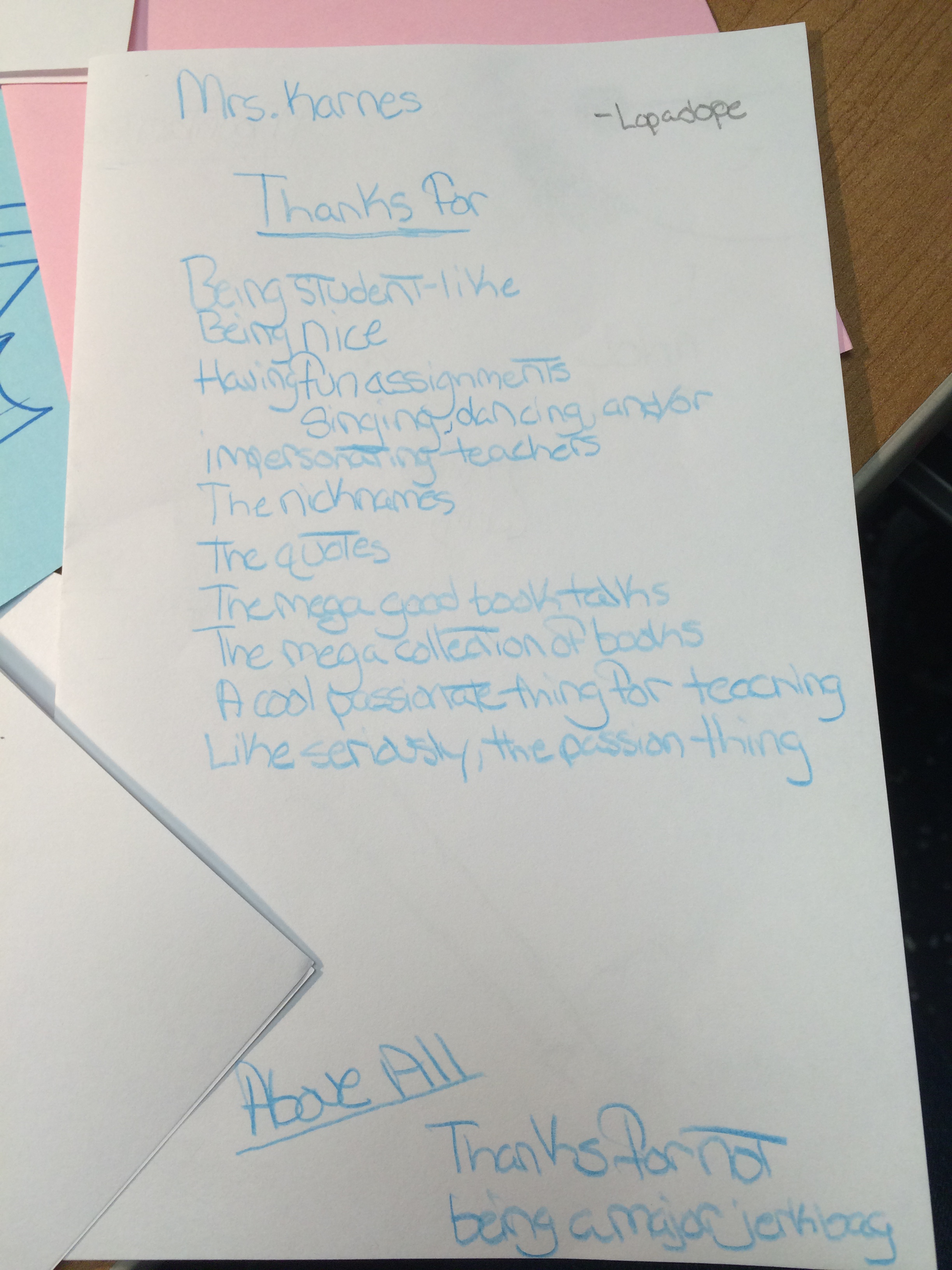
It’s Teacher Appreciation Week, and with that came some delightful thank-you notes from my students.  One student made a list of things he was thankful I did, and he repeated how thankful he was for my “cool passionate thing for teaching…like seriously, the passion thing.”  I recently read an article in the Chronicle of Higher Education that claimed the four properties of powerful teachers were personality, presence, preparation, and passion.  I like to think of passion as fangirling, which I do on a daily basis about books, student writing, authors, and all things bookish.  I’m never sure how much of that passion reaches students, but since this one specifically noted the “mega good booktalks,” I think it gets through to at least some kids.  This thank-you note really rejuvenated me, and now that I know my booktalks are working, I’ll keep at them with new gusto until June 12.

IMG_8027Rebirth

Continuing to revise and change my curriculum doesn’t stop because the year is nearly over.  I’m still wildly out of control on Amazon, buying titles as I get ideas for new units, themes, or genres (like the huge list of novels in verse I jotted down during our #poetrychat Monday night).  A new focus on science fiction, poetry, and nonfiction has been what I’ve noticed in my cart of late.  I am changing as a reader and a teacher, valuing those genres more than I once did, making a strong effort to transfer that new passion to my students.

My teaching philosophy is constantly shifting, evolving, being reborn.  Its biggest shift this year, I think, can be best summed up with a quote from another NWPer from my class last week.  While talking about meeting and learning from great teachers at NCTE, he said he felt like they were “the Wizards of Oz, but they were inviting me to peek behind the curtain.”  I love this analogy, because while great teaching may seem like unattainable magic, I now feel like I understand how to be effective.  I’ve studied living, breathing mentor texts like Penny Kittle, Tom Romano, Amy Rasmussen, Jackie Catcher, and Erika Bogdany, and am looking forward to learning from Tom Newkirk at UNH this summer.  In the past two years, I’ve been reborn as a teacher, whose confidence has grown as I’ve continued to strengthen my practice by dissecting and imitating the successes of others, just like my students do when we analyze mentor texts in class.

Springtime is a time for reflection, rejuvenation, and rebirth.  Nature is no different from my teaching as I think about this year and next, and about the beauty of its constant blossoming and change.  I know our last six weeks will fly by, so I’ll enjoy every moment of them before the luxurious summer begins!

What are you reflecting on this spring?  What has rejuvenated you as the year comes to a close?  What elements of your teaching will be reborn this year or next?  Share in the comments!