#FridayReads Top 10 Books that will Give You a New Perspective on Death

Back in November Shana and I talked about how to make our assessments more authentic. We seem to talk about assessment a lot. We talk and then write. We wrote about our semester exams and the thinking behind them in response to a query from a reader. One part of our exams included asking students to create top ten lists of books they had read. Shana and I find it beneficial to not only help students find books they will enjoy reading but to use information about our readers to help their peers. We’ve got several of these student-made top ten lists to share as models. Maybe they will help you match books to your readers, too.

_________________________________________________________________

Jessica was already a reader when she entered my AP Language class in the fall. She wrote about herself on the first day of school: “I consider myself to be creative and artistic. I love to draw and write. I wish I could be more prosperous.” I don’t know if writing will make her prosperous, but I think Jessica definitely has a future in it if she chooses to. She’s quirky and sharp. Her wit is a gem, and I love reading everything she writes. She named her blog “Giraffes Make Bad Co-pilots” after all.

“Top Ten Books that will Give You a New Perspective on Death” by Jessica Ortiz

The Book Thief by Markus Zusak

This book sits at number one on my list because of its unique way of portraying death; this story is told from Death’s point of view, recounting the younger days of a girl named Liesel Meminger, who is adopted by a new family in the midst of World War II. Death encounters her a number of times throughout his work, watching as her story unfolds amongst the several tragedies that follow her in her dreams.

Rotters by Daniel Krausrotters
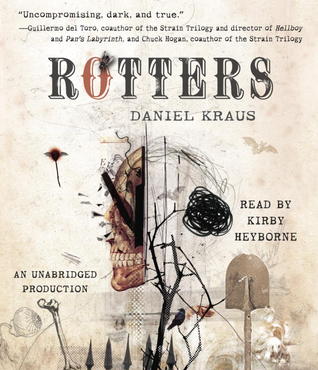
This book revolves around the strange life of Joey Crouch; a sixteen year old straight-A student whose father just so happens to be a grave robber. After a sudden turn of events take his mother from him, Joey is forced to live with the reclusive man that his mother somehow used to love, and must follow him into a world he would have been better off not seeing. I placed this book at number two on my list because of its thorough imagery, and its immersive walkthroughs detailing the art of burial and reburial.

If I Stay by Gayle Forman

Seventeen year-old Mia Hall is dead; or, at least, she gets to choose whether or not she is.  Facing the aftermath of a devastating car accident that claimed the lives of her entire family, Mia falls into a coma and has an out-of-body experience that leads her to a recollection of her past, reminding her that she still has someone left to live for. This book is third place in my opinion, because it centers on life, death, and how one girl overcame both.

The Death and Life of Zebulon Finch by Daniel Kraus

This story follows a young man named Zebulon Finch who is gunned down at age seventeen, only to be resurrected minutes later for reasons unknown to him. From that point on, he is unable to die; he must live through every era proceeding that one, and can only wish for death. I ranked this one at number four due to its use of historical accuracy and its original twist on the otherwise overused immortality-cliche.

The Lovely Bones by Alice Sebold

Susie Salmon was brutally murdered at age fourteen at the hands of her neighbor, and must now watch her family and friends struggle to overcome her disappearance. Susie herself has trouble moving on, and finds that Harvey’s other victims feel the same; she wasn’t the first one, but the father she left behind is determined to make sure she will be the last. I decided to rate this one at number five because of its unique perspective, and the author’s development of these two separate worlds that are parallel to each other.
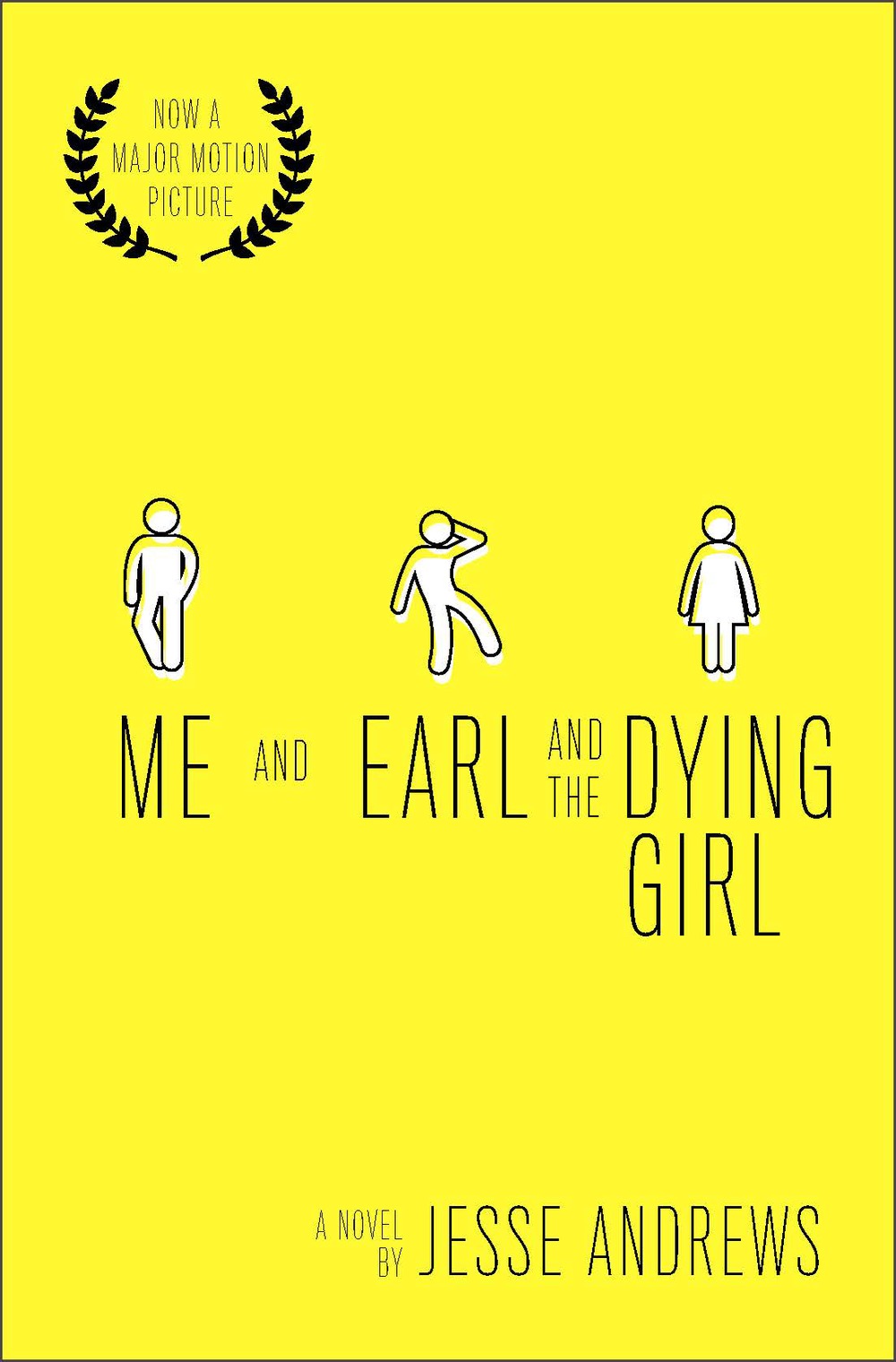
me and earlMe and Earl and the Dying Girl by Jesse Andrews

Social misfit Greg Gaines has only one real friend with whom to share his passion for film with; Earl Jackson. Together, these two spend their time concocting productions that are mediocre at best, and have mutually agreed to reveal them to no one. That is, at least, until Greg is forced by his mother to rekindle his old friendship with a girl named Rachel, who was recently diagnosed with leukemia. I rate this one at sixth  because its story depicts the struggles faced by those who support loved ones with cancer.

The Fault in Our Stars by John Green

This story is told from the point of view of a cancer patient named Hazel Lancaster,

describing her experiences in the ‘Literal Heart of Jesus’ support group, and a certain amputee whom she later fell in love with. The two bond over a shared interest in literature, leading them on a strange adventure that left them with more questions than answers. I chose this book for number seven on my list because despite the loss of the one she loved most, Hazel chooses to take her life into her own hands.

Heaven Looks a lot Like the Mall by Wendy Mass

After Tessa suffers an abrupt  accident in her high school gym class, she believes herself to now be in heaven, which seems to look exactly like the interior of her local mall. It is here where she begins to recall her entire life up to that point; both the good and the bad. This book is my number eight because of its interesting depiction of the afterlife, and the spunky attitude Tessa regards her past with.

Elsewhere by Gabrielle Zevinelsewhere

Liz is fifteen years old when she is struck by a taxi and killed, sending her into an afterlife she was not expecting in the least. When she wakes up on the deck of a strange ship called the SS Nile and is to be ferried to an island known as ‘Elsewhere’, she begins struggling to accept the fact that she has died; even as she watches her own funeral take place from the observation deck. I rank this book at number nine because it puts a twist on ideas of reincarnation, and sports a more original picture of the afterlife.

Before I Fall by Lauren Oliver

The very privileged Samantha Kingston lived a rather charmed life, that is, until it ended. She is however, given a second chance at saving herself; seven chances, to be exact, and Samantha has resolved to use them to aid her in unfurling the mystery that surrounds her death. I decided to leave this one for last, because it depicts an image of just what someone can find themself capable of doing in the face of a looming death.


Student Bio:  Jessica considers herself a reader and says, “I am constantly finding reasons to be bored with my otherwise uneventful life. Being the inactive person that I am, naturally, the only adventure that I can find within arm’s reach, lies waiting under a dormant paperback cover. (Always paperback, if possible; I’m too cheap for hardcover.)” She enjoys writing fictional stories, drawing, jamming out for no reason at all, and daydreaming until inspiration strikes her. Three words Jessica uses to describe herself: unconventional, imaginative, and comical

Making My Reading Visible by Catherine Hepworth

guest post iconI am the English teacher who may or may not have written on her teaching job applications and cover letters, “I love books” as the attention getter. My friends made fun of me, but I honestly did not care. How else was I supposed to communicate my passion for reading to people who are looking to hire an English teacher? My passion continues to burn bright, perhaps brighter than ever before.

Last spring, my students wrote their reflections about their progress about the books they read over the course of the year, and I did the same. As I filled several pages of my composition notebook, I realized I needed to be better at being a visible reader for my students. They saw me read occasionally when we calculated page goals or did speed dating with a book, but they did not see how much I read. I’ve been keeping track of the books I’ve read since 2005, but no one has ever seen these lists.

During the school year, when I talked to my students about the books I was reading, they thought I was crazy. “Oh Mrs. H, you love books, that’s why you read so much. You must not have a life.” I smiled pleasantly

I do have a life — a reading life.

IMG_20160309_180709682(I feel like I should make a metaphor about books and donuts because I love both…a lot…!)
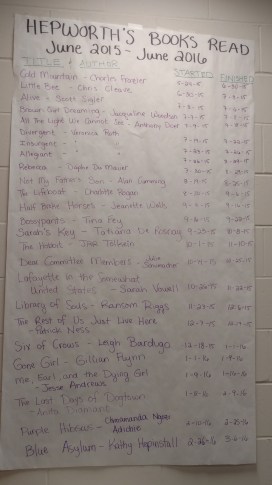
Fast forward to September 2015: New year, new energy. Making my reading life visible was my main goal. I wanted my kids and their families to see from the moment they walked into my classroom that books matter to me and that reading is what my soul needs to survive and thrive. Most days I can’t wait to get home, lay in bed, and read.

I hung two sheets of giant butcher paper on my walls by my desk. One was labeled “Hepworth’s To Read List” and the other “Hepworth’s Books Read June 2015 – June 2016.”  Students are tickled pink when they recommend a book to me and I put it on my “to read” list.  Already several times this year, I had to stop reading other books just so I could read this one book for this one students so we could talk about it.

IMG_20160309_180737760I love tracking when I start and finish a book because it has led to a lot of great conversations with students about the importance of meeting page goals and reading two hours every week. Many times, students and I compare our after school schedules and realize that we are very similar with very busy schedules.

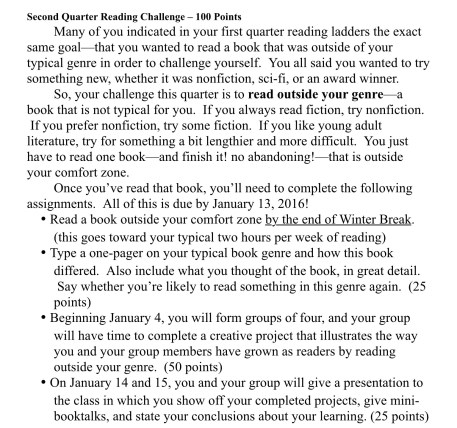
And yes—there is always time for reading. And no—I don’t read faster than them just because I’m older.

I also try to fill out my chart when kids are in the room so they know that my list does not magically grow. I am reading with them, one day at a time.

Catherine Hepworth has been teaching for 10 years; she currently teaches English and coaches Forensics at Franklin High School in Wisconsin. In the summer, when not reading books or frantically sewing historical clothing, she participates in living history events around the Midwest. Check out her living history/sewing blog at https://catherinetheteacher.wordpress.com/

Try it Tuesday: Book Talks on the Big Screen

A few months back, my family was featured on a commercial for a local furniture store. We got paid handsomely to sit on a couch and look happy (easy) and cute (easy for my toddler). No dialogue. No acting. Just…sitting. It was well within my wheelhouse.

When the commercial ran, my daughter Ellie would race up to the screen in our living room, point excitedly, and exclaim, “LOOK! It’s ME!” Anytime she heard the telltale voice of the announcer, she would drop whatever she was doing and run to see if she was “in the television” again.

Her reaction was adorable (I’m biased), and pretty typical for a little kid who loves smiling for pictures and seeing herself in videos, but it would seem that as we grow, our perception of ourselves on screen tarnishes a bit. I mostly noticed how painfully true it is that the camera adds ten pounds. How cruel.  Thankfully, others often aren’t paying attention to such trivialities (I hope).

What’s important is the content.

In our classrooms, content takes many forms, but no matter the medium, we’re looking for the message to come through loud and clear. For example,  I teach my students when we work with speaking and listening standards that if we keep the message on pointe (Hurry in for the one day sale…) and organized (Hurry in today; it’s a one day sale), our audience will hopefully focus on the content (Wow, I could save serious bank on a sofa…todayand not our appearance (Hey, she looks like she packed on a few pounds. Ten. It looks like she packed on ten pounds). 

So, let’s consider what this means for readers workshop in our classrooms.

Book talks are central to a readers workshop. As such, many of us do them each and everyday. Amy and Shana recently discussed how and why they book talk in class, and one of the most useful quotes I took away from that post was when Amy reiterated the essence of a book talk, saying, “The best book talks are short, energetic, and introduce the book in some insightful or clever way.”

It’s simple: We want to hook our audience. The content is clear (This book is fantastic and you’ll love it too! ) and so is our mission (Read this book!).

With all this in mind, I’m going to ask you to come with me to a place that might make some of your a bit uncomfortable. However, in terms of risk-reward for the promotion of choice reading, this will be well worth the effort.

Let’s take our book talks to the big screen! 

Just as Ellie loved seeing herself on screen, students of the digital age delight in the visual medium. So, to add to our book talk repertoire, and even broaden the audience for books that delight our reading communities, here are three simple ways to switch up book talks in your classroom and keep things fresh and clever (personal screentime optional!). 


  1. Guest book talks caught on tape! Several months ago, I read and delighted in Jackie’s post on ways to stir up book talks. One of the suggestions I got rolling with was the guest book talk. Jackie insightfully wrote that “students need positive reading role models in all of their educators.” How true!

    I grabbed my phone and went down to Señora Ovalle-Krolick’s room. She had been speaking passionately just a few days before about Richard Wright’s Black Boy. I have yet to read this classic and I knew that her enthusiasm for the text would captivate my students. Before she could say no, I handed her the book and told her that I needed her passion. I asked her to tell me a bit about the book, her reading of it, and why she was recommending it. Her video, captured in one take, spoke beautifully about the text and her connection to it.

    Due to scheduling, it wasn’t possible to ask Alejandra to come to each of my classes, but with the video below, I was able to share it with all of my students. I’ve been working on my Social Studies neighbor next. He’s set to book talk via video next week. And all we need is my phone to get recording!

    https://www.facebook.com/lisa.n.dennis.7/videos/10154184296661549/?l=2213863947109559232

  2. Go big or go home – book talks on our school’s student newscast. Each week, the fantastic video production students at Franklin High School produce The Saber Roar. In recent months, I’ve helped an amazing student, Tasha Kappes, start a segment entitled Saber Reads. Students, teachers, and administrators (even a few from the district office!) have signed up to book talk some of their favorite selections!

    Here is Jessica Lucht, one of my amazing AP students book talking  The Young Elites by Marie Lu right around minute 2:45.

    In this episode, zip to minute 3:40 to see a book talk I did with my colleague, bestie, and partner in crime, Erin Doucette on Kristin Hannah’s The Nightingale. 

  3. Borrow brilliance from the internet. I learned about Reel Reading from Amy. Book trailers combine all of the elements of a great book talk, with the added bonus of moving pictures, music, and sometimes analysis or quotes.  In a post from several years ago, Amy’s students came through with some wonderful book trailers.Jackie talked about using book trailers in this post from last year, and I used a few of her links when I was feeling stuck in supplementing my own book talks recently.

    Just last week I wanted to book talk the Pulitzer Prize winning book The Road by Cormac McCarthy. I found the book trailer below the hooked several students with its haunting music and connection to the movie that was made from the book.

What ideas do you have for taking book talks to the big screen? What questions do you have? Please feel free to leave your comments and questions below! 

Mini-Lesson Monday: Reading Challenges

On Friday, I shared Jak’s reading challenge essay about Patricia McCormick’s Cut.  Today I want to share how I framed the assignment that led to his writing such a piece.

Objective:  Using the language of the Depth of Knowledge Levels, students will assess their current reading comfort zone, compare their reading of their challenge book to their typical reading experience, and analyze in writing both kinds of reading.

img_0342Lesson:  With their first quarter reading ladders on hand, I’ll ask students to reflect on their goals from that ladder with their tablemates.  I expect that each table will arrive at the consensus that they wanted to challenge themselves in terms of genre or text difficulty.

With that goal in mind, I’ll booktalk several titles and explain how they might serve as challenge books–Chris Lynch’s Inexcusable might challenge a reader in terms of its topic (rape); Anthony Doerr’s All the Light We Cannot See might challenge a reader in terms of its length, multiple points of view, or vocabulary; or Bill Bryson’s A Walk in the Woods might challenge a reader in terms of its genre (nonfiction).  I’ll continue to booktalk potential challenge books throughout the quarter.

For the remainder of today’s lesson, though, I’ll ask students to hone in on what they’d like to learn as a reader in order to achieve growth through their challenge books.  In writer’s notebooks, students will list the skills they’d like to acquire, using their tablemates to help them brainstorm.  We’ll develop a shared list on the board to help give further inspiration, and students will try to find a book that might offer many of those skills (vocabulary acquisition, a new genre, organization, etc.) through booktalks, their own searches, or recommendations of friends.

Follow-Up:  Once students have selected their challenge book and completed it, they will complete three follow-up activities (listed on the handout).  Students will write a one-pager describing their reading of the text, work with a group to reflect on their growth as readers, and then present their learning, mini-booktalks, and a creative project that represents both.

How do you summatively assess your students’ reading growth?

Reading Challenges for Growth, Connection, and Reflection

My students complete a reading ladder at the end of each quarter, during which they reflect on their reading from that nine weeks, write about the texts they read, and set goals for the following quarter.  When I read first quarter’s reading ladders, almost every student said one of their goals was to challenge themselves either with a book in a new genre or a more difficult length/writing style/topic.

So, I challenged them formally during second quarter to read a book outside their comfort zone, then write an essay that showed me that process.  I love Jak’s essay about his chosen challenge book–Cut by Patricia McCormick.  While this text is short and not full of especially difficult vocabulary, it challenged him because of its topic–self-harm and depression.  His essay is full of voice, text evidence, and text-to-self connections.  It’s a strong piece of writing that helped Jak reflect on his reading of this book, and is just one of many authentic alternatives to a traditional method of reading assessment.


img_1999

“A Challenging Cut” by Jak McMillen

Ready, Tropics? 1, 2, 3! LET’S GET TROPI—actually, let’s get dark for a moment. Let’s talk about Patricia McCormick’s Cut, a challenging and rough look into the mind of a depressed teen named Callie. Cue synopsis mode! To get into this mindset, Callie cuts herself. Never too deep, never enough to die, but just enough to feel the pain. Because she cuts, she’s been placed in Sea Pines, a treatment facility where everyone has a problem in one way or another. The only problem with Callie here is that she doesn’t speak, and for the most part refuses to throughout the book. Okay, synopsis mode over.

Now, Karnes, I’m assuming you have grown tired of the banter and have asked, “Well, how does this challenge you?” I’ll answer that shortly. In my essay earlier typed this year Of Mice and Misery, I cited one particular moment of my life that still affects me to this day, that of which being my father’s unfortunate passing. Now, my shell opens up more through this essay to share some of the past that I hold back.

Throughout my schooling years, I’ve found myself growing more and more tired of everyday tasks, even so far as just waking up and dressing myself. I could even use yesterday as an example: I had already felt like nothing more than dust the night before, which carried over to the next day. After coming back from MTEC the feeling was still there and unexplained, just as Callie’s feelings through the first parts of Cut. For me this is a culmination of years upon years of dark and harrowing thoughts of self-harm, and unfortunately at some points, even thoughts of suicide. Over the years of therapy some of these thoughts are still here. Now… I know that you probably didn’t want, nor did you need, to read that information, but I had to be relatable somehow, right?

41jIgmsYB+LAfter breaking her silence to her therapist, in their time between pages 122-125, Callie exposes her scars and tells what she uses. At one point in this segment, she says “Guess I’ll never wear a strapless ball gown,” from which I related in my own thoughts as feeling like I would never be good enough. Callie’s thoughts—as well as my own, but not in the book of course—were at most unexplained until later in the text. Cut took a vast amount of effort to read, and for this I praise McCormick for putting the amount of effort she did into writing this title.
When I read this title, it hit very close to home, and still does. I guess that’s why it’s such a challenge for me to read. Also, for the love of all that is holy, please do not take this as a cry for help or a sob story. I’ve moved on mostly and do not need any more sympathy than I’ve already received. Do know that it is much appreciated though! In closing I would like to say something Callie said once: “I may not want to get rid of my scars. They tell a story.”


How do you encourage your students to make personal connections to their reading?

#3TTWorkshop — Assessing Student Work in a Workshop Classroom

What does assessment look like in a workshop classroom?  #3TTWorkshop Meme

Amy:  Interestingly, I just saw a tweet by @triciabarvia yesterday that said “Growth, when ss do something better than they did before (as a result of assignment/lesson, that’s success.” In away that’s really what assessment should be, right? We should be noting growth and improvement, and celebrating successes. I think we forget this sometimes, especially in regard to what we view as assessments and students call grades. Too often we overlook the learning and focus on the 78 or the C+. (That is all most of my students focus on.)

Assessment in my classroom drives my students crazy. I think they feel like I am that elusive balloon they cannot pin down and pop. Poor darlings. I refuse to give in to the grades routine. I want to see improvement. I want to see them take the skill I know I’ve taught and then apply it — better yet, go beyond and do something clever with it. So to answer the question, “What does assessment look like?” is kind of tricky. I think too often teachers spend time assessing student work in ways that is not meaningful. We can waste a lot of time.

But if we’d plan a little differently and make assessment a natural and moving part of our learning journey, we would save time scoring work and enjoy talking to our students more. At least that is always my goal.

In my classroom, assessment takes the shape of written work:  play in notebooks or on notecards, exit slip quickwrites, and sticky note conferences, plus, of course, major writing tasks with formal and informal conferences and oral and written feedback. Assessment also shapes itself into lots of student self-evaluation: “Look at the instructions, the model, the expectations, did you meet them, why or why not?”

If I didn’t have to take grades I wouldn’t, but I assess everything all the time.

Shana:  I go back and forth when it comes to how I value process vs. product vs. what Tom Romano always called “good faith effort.”  There are students who have mastered skills important for reading and writing, but who haven’t fully committed in terms of being vulnerable and trying to advance their skills.  Then there are those students who explore powerful themes and show amazing growth in their abilities, but still can’t spell or use commas to save their lives.

Because I wrestle so frequently with this dilemma, I end up grading not on where each student is at in relationship to our academic content standards, nor on where each student is at in relation to their peers, but rather how far they’ve come since the start of the unit/school year/week.  And I do this by doing what Kelly Gallagher does– “a lot of fake grades.”  🙂

Amy: Me, too!

How do you design assessments?

Shana:  I used a lot of scantrons my first year of teaching.  Those kinds of assessments were pretty easy to make, if time consuming–long, multiple-choice tasks that were topped off by a few essays.  After a year or two of fighting with the scantron machine and my conscience when I noticed that oftentimes a kid’s essay was much stronger than his multiple choice section (or vice versa), I threw tests out the window.  I haven’t given a test in five years.

Now, I focus on designing assessments that are as unique as the units we work through.  A unit of study revolving around the exploration of complex themes cannot be assessed, well enough, in my opinion, using a multiple choice test.  So instead of trying to gauge a student’s interaction with Macbeth that way, I use Socratic Seminars.  Or projects.  Or reflections.  Or presentations.

Amy:  Yeah, I tossed out the multiple choice tests at the same time I introduced choice-independent reading. Even the shorter texts we read together as a class are worthy of much more than a scan tran. Harkness discussions and writing about our thinking allow students room to stretch a bit and show us what they really know.

I design assessments by thinking through my end game. Of course, teaching AP Lang means I must prepare my students for that exam each spring. I know my students have to write convincing arguments, synthesize sources into their arguments, deconstruction other writer’s arguments, and read critically — sometimes some pretty old texts. To design assessments means to start there and then work backwards into the instruction.

For example, I know my students must be able to synthesize sources into their arguments. So I may decide on a couple assessments — say a Socratic Seminar where students discuss three related texts. They must come to the discussion armed with questions, annotated texts, and join the conversation. Then, I may challenge students to find three more texts related somehow to the first three. Now, we move into writing an argument in which they must synthesize at least three of the texts. That essay becomes another important assessment because all along the way I’ve taught mini-lessons:  academic research via databases, proper citation, embedding quotes, transitions between paragraphs, interesting leads, combining sentences, etc.

Everything I teach as a mini-lessons gets a matching mini-assessment somewhere along the line to learning. By the time I read those synthesis essays I have a pretty good idea of which of my students understands and can apply each of those skills. I’ve conferred with them and retaught as necessary, and when I read that final paper I rarely have any surprises.

I think maybe one of the reasons I love a workshop pedagogy so much is because of the grading. It is just not the same as it was when I taught in a traditional model — it is better!


Do you have topic ideas you would like us to discuss? Please leave your requests here.


Try it Tuesday: Quick and Easy Formative Feedback

Remember last week, when I was waiting for spring?

Yup. Still waiting.

Meanwhile, it’s snowing outside my classroom window, and let me tell you, my students are (brace yourself for sarcasm) delighted. Not only is it a Monday, but it’s the first day back from break and it’s November-esque gloomy outside. Add snow to the mix and I’m staring down an epidemic of crippling apathy.

Needless to say, we have our work cut out for us today.

And yet…I have hope.

Simrah walked into last period with a smile and said, “Ah…Home.” She sat down, opened a book, and started reading. I almost cried.

It reminded me first and foremost how lucky I am to work with such wonderful students every day. In addition, it reminded me that an overwhelming number of  students value the choice a readers workshop model affords. It reminded me too that most students value the time we devote to that reading every class period and many have even said they look forward to it.

And really, it comes down to value. Valuing our students, their insight, their commitment, their time, and their drive. As the article “The Top Five Reasons We Love Giving Students Choice in Reading”from English Leadership Quarterly suggests, students feel valued when given the choice to read what interests them, and in turn, as we talk with our students about texts they have enthusiastically read, the relationship between teacher and student deepens as does their connections to what they read.  I referenced the above article in a previous post and Amy and Shana just spoke beautifully about choice in their workshop through EdCollabGathering this weekend. In short, choice empowers students. Who couldn’t use a little empowerment as third quarter crawls into fourth? My snow weary kids certainly could.

So, I felt it necessary to offer some encouragement and praise to my students to welcome them back from break and push us forward with our independent reading. It came in the form of a super quick formative that I was able to turn around within the same class period, providing feedback to each and every student and a quick snapshot for me to move our conferences forward purposefully in the coming weeks.

I found students that I suspected needed a push, and I was able to request that they come see me during our resource period. I found students that crushed their reading goals over break, their reflections brimming with pride, and I was able to congratulate them and encourage them to keep up the great work. I found students struggling to settle on a book, and I was able to list a few recommendations.

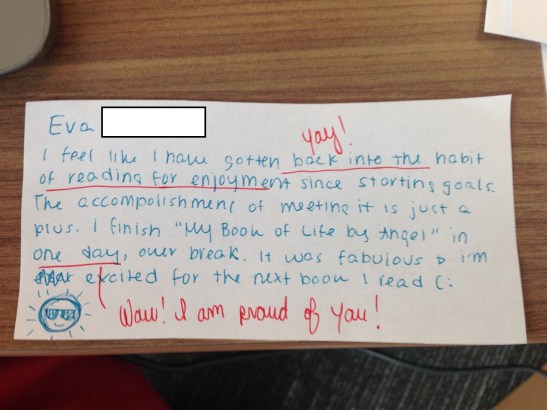
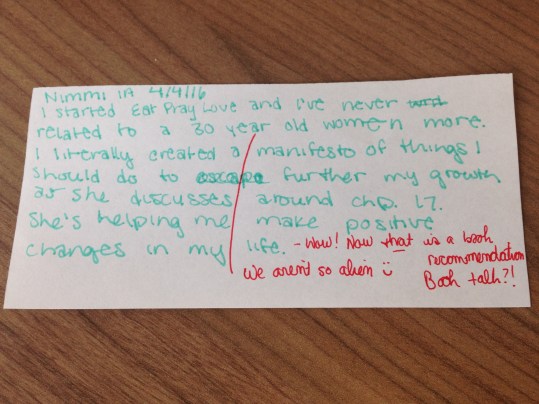
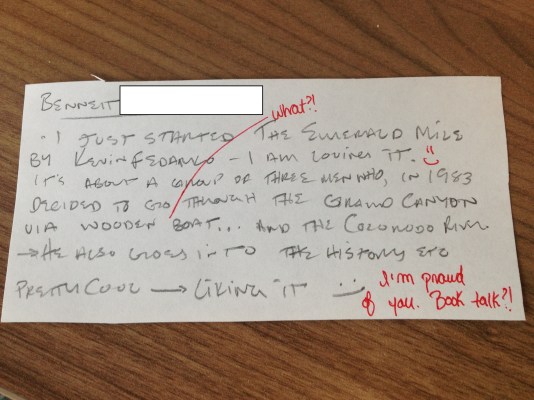
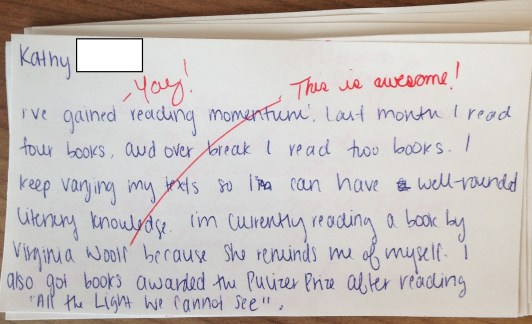
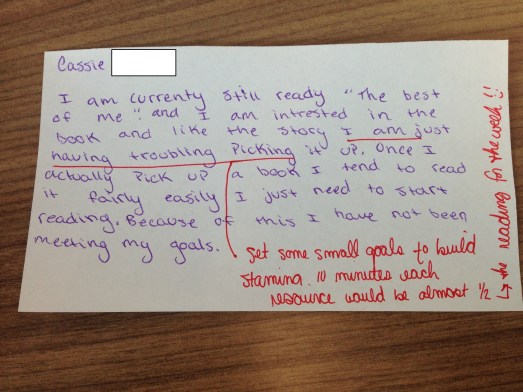
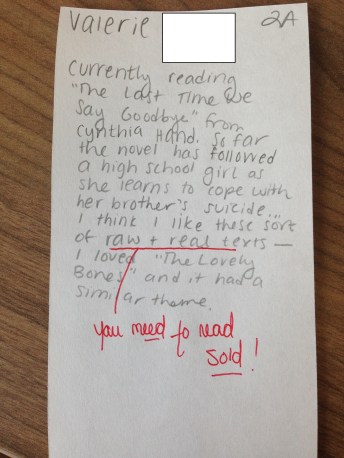
The prompt was simple: Give me a snapshot of your current independent reading life. What are you reading? How is it going? What do you need from me to help you be successful?

Below, you’ll see a few samples from students of varying abilities, interests, and commitments to independent reading. I am encouraged to see a number of students pushing themselves to meet the reading goals we are setting in class and so happy to be able to quickly intervene with those that need encouragement.

Bottom line: I was able to connect with each and every one of my students in only about ten minutes time. That is a huge win for the first day back from break. Bring on fourth quarter!

Formative 1

Eva often struggles to submit work on time. To see her excitement for My Book of Life by Angel made me smile. 

Fomrative 3

Nimmi cracked me up with this response. Apparently, it’s otherworldly to relate to someone as old as 30, but she’s making plans for her life based on her reading. Outstanding! 

Formative 6

Bennett is a brilliant (accelerated) student who admits that reading isn’t often his priority. I can’t wait to hear his thoughts on The Emerald Mile. 

Formative 5

Kathy is an extremely hard worker who tackles reading specifically to better herself and prepare herself for AP Literature. We read an essay from Virginia Woolf and it sparked Kathy’s interest. 

Formative 2

Cassie is a sophomore who struggles with analysis. I’ve requested her for resource tomorrow so we can talk through what might be holding her back with this book in order to help her move on and meet her goals. 

Formative 4

Several students responded with insights into texts they are loving, which afforded me the opportunity to recommend further reading. 

What are the quick formatives you use to provide feedback to and motivate students? Please leave your comments below! 


Choice as the Keystone in Secondary English Classes

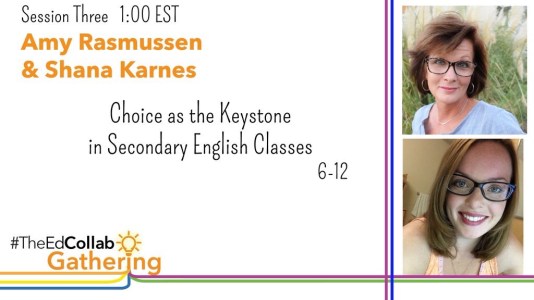
Shana and I were privileged to present a session during #TheEdCollabGathering on Saturday. If you joined us live, thank you! If you’d like to see our session, here it is. If you have questions we did not answer, leave them in the comments. We’ll do our best to answer.

Choice as the Keystone in Secondary English Classes

A big thank you to @iChrisLehman and the EdCollab Community.

Poetic Rhetoric — Spoken Word Poems in AP Lang

For a long while now, I’ve wanted to write spoken word poems with my students.

I use Sarah Kay’s “Hands” at the beginning of the year to start students thinking about their lives and the important moments that shape them. We draw hands in our notebooks and fill them with words that represent our memories. Like many of you, I first did this myself with Penny Kittle, and now I draw a hand in every notebook as one of the first pieces I write in it.

I use Shane Koyczan’s “To This Day” and ask students to write a response to it. Sometimes they tell me things that break my heart. Like the fall on the first day of school when two different girls in two different classes wrote about the abuse they experienced from their fathers at home.

These and other poems students find interesting and inspiring, and while they’ve always worked as never-fail quick writes, I wanted to challenge students to use all the skills we’ve focused on this year to write their own poetry. My student teacher, Zach, and I finally figured out how.

And students wrote some powerful poems with some perfectly poetic language.

We called the assignment:  Poetic Rhetoric. what-matters-most-in-life-are-quotes-and-stuff-that-tell-you-what-life-is-really-about_motto

The initial task read like this:  Craft a spoken word poem that addresses a personal conflict and/or a social issue, include rhetorical techniques and literary and rhetorical devices to convince your audience of the need for positive change. Perform your poem for the class live, or create an automated slide show with visuals, or a video recording as a way to digital.

Every day for a week we shared a different spoken word poem. Sometimes we wrote responses as a way to mine for our own ideas for topics. Sometimes we studied the lyrics, closely reading and analyzing structure, tone, and literary devices. We encouraged students to use the work of these poets as their mentors:  “Remember, we learn to write when we study good writing.”

We listened to “Paper People” by Harry Baker, and we talked about theme and sentences that hold the most weight, ones that might be his position statement.

We listened to “Education” by Aadil Malik, and we talked about evidence and examples that support the main idea.

We listened to “Touchscreen” by Marshall Davis Jones, and we talked about repetition, puns, and other literary devices that make language clever and meaningful.

We analyzed the structure of “To This Day,” and we talked about how Koyczan moves from self, to another, to another, to everyone as a way to finally get to his moving plea “to get a better mirror.”

Zach taught mini-lessons, reminding students how to use personification, puns, allusions, and fresh figurative language. We gave students time to write in class, and time to talk with one another, and time to talk with us about their process and their product.

We provided resources on how to write performance poetry like this and this and this.

And students wrote beautiful and meaningful arguments.

Most students performed their poems live in class. (I did allow for a teleprompter since I am the worst at memorizing myself.) We have a slam poetry night coming up on our campus in April. I hope many of my student will perform their poetry again there.

Here are the lyrics to some of the ones I personally enjoyed. I wish I had video of the performances. You’ll have to trust me — they were awesome.

Nefertiti Franklin:  WelcomeToStereotypesAA

Jennifer Melendez:  Find Your Charge, which includes an evaluation of her writing process

Kennedy Jenkins: Use Your Mind

Fabian Gutierrez: ADPoem

And here is an example of one of the poems published digitally. I love her language.

Jessica Ortiz:  People Love to Talk

Reminders to self for when I do this writing unit another year:

A. Take more time with topic selection. As with any writing, if students choose topics that are too broad, or they do not know enough about, the writing is harder to revise.

B. Meet with students more often. Conferring is essential to helping students find what they want to say. Too many students procrastinate and then think they can produce quality writing at the last minute. I must remember to confer at the beginning, the middle, and the end of the writing process. Schedule time for this.

C. Allow time for students to provide one another more targeted feedback. Although they met in small groups and talked about their writing, they did not use their time as effectively as they could have. If I will be more purposeful in modeling what a helpful feedback group looks like, students will be able to help one another more.

I love teaching students to write. I’m not sure there’s a better gift than reading their published work and seeing that they understand the power of their voices. Sometimes they blow my socks off with the force of their wisdom. I love it when they get it.

Have you used spoken word poetry in your writing class? How? What are your favorite poems?

Choice as the Keystone in Secondary English Classes

In a readers and writers workshop, everything comes back to choice.

Have you seen the movie You’ve Got Mail?  If so, you’ll recall the scene where Tom Hanks is giving Meg Ryan business advice.  “The Godfather is the answer to any question. ‘What should I pack for summer vacation?’ ‘Leave the gun, take the cannoli.’ ‘What day is it?’ ‘Maunday, Tuesday, Thursday, Wednesday.'”

It’s the same with choice.  “How will I know they’re reading if I haven’t read the book?”  They’ll be engaged, authentically, because they’ve chosen their books.  “How will I get them to want to revise their writing?”  They’ll want to strengthen the writing about topics and in genres they’ve chosen.  “How can I assess them if they’re all reading different books?”  You offer choice in ways for students to show their mastery–reflections, conferences, blogs, and more.

Choice is the keystone.img_1957

We have written about choice here and here and here.  It crops up again and again in our writing, thinking, and talking.

And we’re excited to talk more about choice with you all this Saturday, April 2, during The Educator Collaborative’s annual Gathering.  This amazing, free, inspiring day is the perfect way to spend a spring Saturday, as it will leave you energized, rejuvenated, and brimming with ideas.  It’s the modern PLC at its best, and the perfect way to help you finish the school year strong.

Tune in at 1:00 EST as we discuss choice as the keystone in English instruction.  We’ll share:

  • Research to support choice in literacy education
  • Strategies for teaching independent vs. small group vs. whole-class novels
  • Why conferring is at the heart of workshop
  • Writer’s workshop non-negotiables and the use of skills learned from independent reading

Please let us know in the comments, via Twitter (@amyrass or @litreader), or on our Facebook page what questions you have about choice as the keystone in secondary English classes.  We’ll be happy to answer them Saturday, and we can’t wait to see you there!