Writing Heals. Writing Assignments Do Not

Last week I learned a valuable truth:  Even when we think they are not listening, sometimes students get it.

Let me back up.

The week before last I attended a department meeting where our district ELA coordinator shared the National Writing Project’s Case for Good Instruction, information I learned at my National Writing Project Summer Institute in ’09. It details the differences between When Writing is Assigned and When Writing is Taught. The discussion around me was interesting and peppered with excuses. I left wondering how teachers would answer these questions if they were on a quiz. How would you?

In your ELA class, do students:

  • have opportunities to create topics that matter to them?
  • understand audience and purpose for papers because they are specifically identified in assignments?
  • see you spending time teaching writing skills and strategies?
  • get writing models, assignments, and strategies to guide each of the different writing tasks?
  • reflect on significant growth — or lack of it — in specific writing skills?
  • hear words of encouragement cheering them on to revise, edit, and improve — and to correct drafts and then resubmit?
  • think about what they write through brainstorming, free writing, role-playing, discussion, or other prewriting activities?
  • celebrate what they, and you, write and make efforts to display and publish it?

I think the biggest excuse we give for leaning on assignments rather than acting on instruction is TIME.

“I can’t let students choose topics because they don’t know what to choose.”

“I can’t teach this novel if it takes so long to write a paper.”

“I can’t do my research paper if I give them time to resubmit. It already takes so long to grade the finished product.”

Maybe you are right. Maybe we have to give up things that we think are best practices for things that are better practices.

Student choice in writing topics is better practice.

Writing instruction with effective models, strategies, time to talk, and time to write are better practices.

Helping students revise, edit, and improve their writing during the writing process with a keen sense of audience and purpose are better practices.
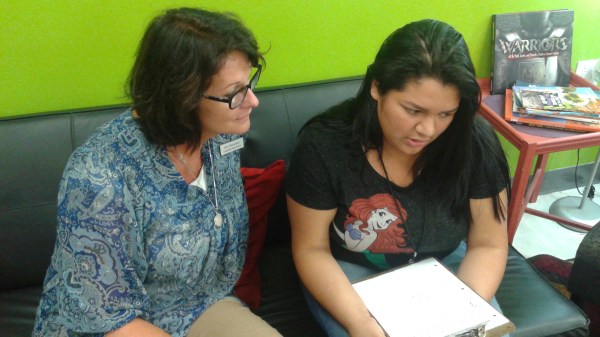
conferringwithjulyssaOur students need time. They need our time. They need our attention and our careful consideration about the things that matter to them. We may have to let some things go in order to give our students what they need.

We learn valuable truths when we do. Last week my students performed (or presented) their poetic arguments. We spent weeks choosing topics, watching video performances, analyzing lyrics for structure and craft, thinking, drafting, talking, revising, studying models, reading each other’s writing, giving feedback, practicing mini-lessons on concrete details and using abstract language to create jaw-dropping imagery.

We were a community of writers, united in a task uniquely our own.

And that is the difference between When Writing is Assigned and When Writing is Taught.

During all that time, I didn’t think Stephanie was listening. She sat at her table, barely talking, sometimes writing, always sad. Then right before Christmas break I sat down and we talked. She showed me her draft, and it scared me. I knew she’d been depressed — her grandmother died at the beginning of the year, and the light left Stephanie’s eyes. I listened to her share her sorrow, her anxiety, the weight of her world , and I gave her my cell phone number with the promise she would call if her boots got too heavy. Thankfully, they didn’t.

Every one of my students who presented their poems sparkled with pride as they faced their classmates, even the ones whose knees knocked in fear. They wrote from their hearts about issues that matter to them personally. They wrote the most important arguments about mistaken perceptionholding grudges, self-hate and self-love, parental control and uncontrolled parents, lying and how we’re programmed to labelBlack Lives Matter and dying white privilege. They wrote about better education and the stress of getting educated, absent fathers, loving fathers, and parentless children and alcoholics who should have put down that drink at 21.

They wrote about sticking together.

And they wrote about self-destruction and depression and monsters. So many of them wore grooves in the floor with the spikes that hold them in place until the sadness drags them down under. They broke my heart.

writing-heals-quote

Writing to heal is better practice.

Please enjoy Stephanie’s poem. She calls it “Smile.”


Many students chose video presentations over live performances. I published several this morning on the 3TT Facebook page. Take a look.

Please share your thoughts on teaching writing. Leave a comment.


Amy Rasmussen lives in north Texas and teaches AP English Language and English 3 to the Fighting Farmers at Lewisville High School. She adheres to the words of Emerson: “We aim above the mark to hit the mark,” and Jesus Christ: “Love one another.” Imagine a world if we all love higher and harder than we think we can. Follow Amy on Twitter @amyrass.


Remembering Why We Become Teachers

Last week, when I met with my new crop of Spring semester students for the first time, I asked them to write one sentence that told me how they’d come to teaching.

Do you know what almost every single student wrote?

“Because I love working with kids.”

It was a reminder, for me:  these young, idealistic, preservice teachers, on the very cusps of their careers…were here because of LOVE.  For children, for learners.

We will spend the next three years with them working on their teaching craft, their pedagogy, their educational philosophy.  We will offer classes in professional inquiry, classroom management, instructional design, content area methods, technology integration, special education, and more.

But we do not offer a class on why most of these students become teachers:  a class on caring for kids.

We cannot offer such a class, because what would we put in the syllabus?  It’s very simple:  just remember to love and care for each of your students, day in and day out.

And that, for me, is the key.  To remember we care for kids.  To keep our students at the center of our classrooms.

I don’t believe anyone can be a good teacher if they merely love their students.  Good teachers must, in addition to caring for their students, have mastery of content, pedagogy, and methods.

67685151d15291cb47b599262f7625a8Whether or not our instructional practices show our care for our students is a good acid test for teaching reading and writing.  Does assigning a book and then creating fifteen “gotcha” pop quizzes make students feel competent and confident as readers?  No.  Not a good practice.  Nor are so many of the worksheets, textbook curricula, or 1990s-designed unit plans I’ve seen employed by some teachers.

But those are boring, you say.  Well, what about something more fun?  When teaching high school English, does assigning a reading project of tracing your hand and making it a turkey on which you list five books you’ve read make students feel competent and confident as readers?  No.  Not a good practice, either.

You’ll notice I’m measuring good teaching and good learning by student competence and confidence, and not by some other measure of “students are having fun,” or “students enjoy themselves.”

There are five core human drives that apply across all societies, all classes, all ethnicities, all ages, all genders.  One of them is the drive to learn.  All students want to learn, to satisfy curiosity, to demonstrate mastery–both to themselves and to others.  Offering them learning opportunities to achieve and demonstrate this mastery show our love and respect for students, not our supreme wisdom or sublime control or smart strategies as teachers.

I’ve been troubled, lately, by how much talk there is in education about “fun” in the classroom, about how “students wouldn’t need grit if we made learning more fun,” and so on.  When we make things too easy on our students (and too hard, or too meaningless), we aren’t showing our love and respect for our students.

Teaching and learning are difficult, complex things.  They can rarely be boiled down to an algorithm, a strategy, or a single method.  Carol Dweck, coiner of the phrase “growth mindset” (the foundational principle behind books I’ve loved like Peter Johnston’s Opening Minds and Choice Words), recently gave an interview in which she expressed heartfelt regret that her work was being turned into an easy and fun strategy for teaching.  This “false growth mindset” essentially says that all you have to do to foster learning is praise kids for effort, whether or not that effort was successful.

When we focus too much on praise, or effort, or one simple strategy that will solve everything!!, we run the risk of teaching the strategy rather than the student.  Amy recently shared with me a piece that it took me about four reads to unpack:  “On Writing Workshop, Cognitive Overload, and Creative Writing.”   This excellent blog post reminded me that when we do something like book clubs, if we spend too much time teaching students how to do book clubs, we aren’t spending enough time getting kids to actually do the work of literacy.

That’s not to say I don’t find value in book clubs, or the multigenre project, or any other lens through which kids might read or write.  There is great value in using a few core strategies, again and again, to help students make sense of what they’re trying to understand.  The key word is a few–so that students keep their focus on literacy, not the strategy or the project or the assignment.  Keep it simple:  quickwrites, book talks, constant revision, constant talk, and a high volume of diverse reading and writing.  Period.

When we keep our classrooms simple, doing more with less and simplifying our instruction to include mostly reading, writing, and talk about reading and writing, we are keeping our care for our students at the forefront of our work.

As we launch into 2017, let’s remember why we became teachers in the first place:  because we care about our students.  Keep that love for learning at the heart of your work, and growth, competence, and confidence will be your rewards.


Shana Karnes lives in West Virginia and teaches sophomore, junior, and senior preservice teachers at West Virginia University.  She finds joy in all things learning, love, and literature as she teaches, mothers, and sings her way through life.  Follow Shana on Twitter at @litreader.

disclosure

10 Things We Did That Invited Initiative — and Growth

It is 6:00 am. I stayed up all night playing with this blog and our Facebook page and Pinterest and Instagram and exploring this app and that extension and whatever else called on me to click on it. I didn’t even realize I’d blown the night up until my Fitbit buzzed telling me to get up and workout. Thank God it is a holiday!

I cannot help but think (besides about how tired I will be all day) about engagement. I remember a while ago I read Danial Pink’s book Drive and then watched the RSA Animate video on motivation. We really will spend time, lots of time, doing the things we want to do be it reading, writing, learning a new skill, climbing a mountain, or sinking into the social-media–abyss. We just have to want to.

So how do we get our students to WANT TO do the things we know will make a difference in their lives, namely, read more, write more, communicate better, think more critically?

We keep trying.

i just finished a semester with my students. I wish I could say that every child read more than he ever has in his life, wrote better than she ever has since she held a pencil, learned to speak with ‘proper’ English and clear eye contact, and thought like a rocket scientist trying to get a man to the moon.

Some did. Some did, and honestly, the first few days of school, I didn’t think they would. But I kept trying.

Here’s a list of the top 10 things I kept doing, even when I was tired, even when I thought they weren’t listening, even when we all wanted to hide behind dark curtains and ring a bell for a cup of tea. (That will be me later today.)

We read at the beginning of class every day (almost — we had about six days throughout the semester when something somehow got in the way of that, i.e., fire drills, assemblies, wonky bell schedules, my car dying on the way to school).

We talked about books A LOT. Book talks, reading challenges, reading goals, tweeting book selfies, and more.

We wrote about our books enough to practice writing about our books. Theme statements, mirroring sentences, analyzing characters and conflict and plot — just enough to keep our minds learning and practicing the art of noticing an author’s craft.

We wrote about topics we care about. With the exception of the first essay students wrote, which was all the junior English teachers committed to as a pre-assessment, students chose their own topics or wrote their own prompts. Donald Murray in Learning by Teaching says the hardest part of writing is deciding on what to write about, yet we so often take that hard thinking from our writers. The worst essays my students wrote was the only one in which I gave a prompt, and before you think it’s just because that was their first essay, nope, I asked them. They just didn’t care — and that is the worst way to start off the year in a writing class.

feedback-on-prompts

feedback-on-owning-topics

feedback-on-self-selected-topics

We read mentor texts and learned comprehension skills and studied author’s craft. I chose highly engaging texts about current events in our society:  police shootings and being shot, taking a knee during the national anthem, race relations, our prison system, immigration issues — all topics that make us ask as many questions as the writers answer. Inquiry lived in our discussions.

feedback-on-writing-as-a-writer

We talked one-on-one about our reading and our writing. I conferred more than I have in the past, taking notes so I wouldn’t forget as students told me about their reading lives and their writing woes. We spoke to one another as readers and writers. We grew to like each other as individuals with a variety of interests, backgrounds, ideas, and dreams.

We shared a bit of ourselves — mostly in our writing — than we ever thought we would. Abusive mothers, alcoholic fathers, hurtful and harrowing pasts and how we grow up out of them. We talked about respect within families and how we can hurt the people we love the best when we ignore their love because it’s masked in fear and strict parenting.

a slice of Daniel’s semester exam essay

We celebrated our writing by sharing what we wrote, by performing spoken word poems, reading our narratives, or reading our quickwrites. We left feedback on sticky notes and flooded our writers.

We grew in confidence and that showed in our work. I held students accountable with high expectations — and lots of mercy. Most rose to the challenge, even those in their first AP class and those far behind who needed to catch up. Most exceeded their own expectations.

feedback-on-high-expectations

feedback-on-writing-as-a-writer

feedback-on-writing-confidently

We joined communities of readers and writers on social media, building a positive digital footprint that shows we are scholars, students who care about their literacy and want to go to college. We wrote 140 character book reviews and explored Goodreads and shared covers of the books we were reading. #IMWAYR #readersunite #FridayREADS #FarmersREAD

martina

rozlin

I will miss the juniors in my block class who are done with English for the year. They were a joy, although a challenge, pretty much every day. And my AP kiddos, they are ready for the kind of learning we will do to face down that exam come May.

We will keep doing what we do: Whatever it Takes to Grow as Readers and Writers (even if it means a lack of sleep.)

What do you do to motivate your learners? Please share your ideas in the comments.


Amy Rasmussen lives in north Texas and teaches AP English Language and English 3 to the Fighting Farmers at Lewisville High School. She adheres to the words of Emerson: “We aim above the mark to hit the mark,” and Jesus Christ: “Love one another.” Imagine a world if we all love more than we think we can. Follow Amy on Twitter @amyrass.

disclosure

On In Defense of Read Alouds. Please, do.

At the end of a post I wrote last August called “My Classes are Only 45 Minutes — How Do I Do Workshop?” a reader named Andy left this comment:  I am at kind of a roadblock mentally and could use a push…I teach 8th grade reading in a building that still has both “reading” and “language” classes. While I am slowly transitioning to more of a workshop approach, I am still getting stuck on a few things. For our second semester, we have always read a whole class novel, but I would love to get away from that. Have any of you done read-alouds in your classes? I am beginning to think that maybe a better option would be to have students vote on a novel with a certain theme and do a read aloud and work on certain aspects of reading. My one concern that I can hear being brought up by administration is making sure I have enough assessments and grades…

First of all, I love that Andy asks this question and recognizes his need for “a push” as he wants to do more to engage his students than just another whole class novel. Not that whole class novels are necessarily bad, but those of us who have seen what choice can do in our students’ reading lives know:   if we only choose whole class novels, we lose valuable time developing readers. Giving students a choice as to a book to read aloud might just be a good idea.

I heard Steven Layne, author of In Defense of Read Alouds speak at the Illinois Reading Council Conference this past fall. He quoted the research and the position statements from scholars of various grade levels on the benefits of read alouds:

  • Positive attitudes are fostered towards books.
  • Imagination is exercised.
  • Background knowledge is built.
  • Reading skills are improved and reinforced.
  • A model of prosody and fluency is provided.
  • Reading independence is promoted.
  • Interests in genres are broadened.
  • Cultural sensitivity is increased.
  • Listening skills are improved.
  • Exposure to a variety of text types is provided.
  • Reading maturity develops.
  • Reading happens.

Based on these statements, Andy, what do you have to lose?

stephenlaynequote

I offer a few suggestions though:  HOW you read aloud to children is as important as WHAT you read aloud. Layne suggests five key elements the teacher-reader must employ as he conveys an awareness of phrasing and word color:  diction, volume, pace, tone, and pitch.

To read aloud effectively, as to engage all listeners, the reader must be a performer.

Of course, what you read aloud matters, too. Offering students several choices and letting them vote is one way to foster trust in your classroom community. Students want to know we value their opinions. I’ve found with my AP English students, when I provide several choices for their Book Clubs, many students will choose to read the books not selected for their independent reading.

I would also suggest that you offer a choice of books that are not too long. I learned a few years ago when I read aloud with my 10th graders that even when they choose the book, attention spans are short. A full-length novel read aloud can cause the same negatives that a whole class novel study can. For this reason, I think it’s important to consider your main objective first and then plan backwards.

If I were doing a read aloud with those same 10th graders this spring, I would plan differently than I did before.

  1. I’d select several books with the same theme I want to build a unit around, and I’d plan to introduce the books by reading aloud from each of them.
  2. I’d think about the goals I can accomplish as we focus on the theme, and I’d think of several summative-type assessments in which students can choose to show they’ve accomplished these goals. Or I’d think about how I might invite students to create their own major assessments.
  3. I’d think about the skills my students need to master, and I’d pair mini-lessons with the ones I know will emerge through the reading. (These can serve as formative assessments.)
  4. I’d think about how I will get my students to apply these skills to their independent reading books, which could all be centered on the same theme (if I planned that well enough). (These can also serve as formative assessments.)

One of my goals with my AP students this spring is to do more read alouds. I’ve learned this fall that many of my students do not understand the different forms and structures stories can take. We are going to use children’s books to help with our understanding. The book Writers ARE Readers by Lester Laminack and Reba M. Wadsworth offers several suggestions on titles that will work with students of all grade levels.

So while I will not be reading aloud a whole novel, I will be performing read alouds and thinking through 1-4 above as I plan this unit.

Best wishes to you, Andy, as you read aloud with your students. I believe this poem by Steven Layne is an important reminder to all of us who work with children:

Read to them
Before the time is gone and stillness fills the room again.
Read to them.

What if it were meant to be that you were the one, the only one,
who could unlock the doors and share the magic with them?
What if others had been daunted by scheduling demands,
district objectives, or one hundred other obstacles?

Read to them
Be confident Charlotte has been able to teach them about friendship,
and Horton about self-worth:
Be sure the Skin Horse has been able to deliver his message.

Read to them
Let them meet Tigger, Homer Price, Aslan, and Corduroy;
Take them to Oz, Prydain, and Camazotz;
Show them a Truffula Tree.

Read to them
Laugh with them at Soup and Rob,
and cry with them when the Queen of Terabithia is forever lost;

Allow the Meeker Family to turn loyalty, injustice, and war
into something much more than a vocabulary lesson.

What if you were the one, the only one, with the chance to do it?
What if this is the critical year for even one child?

Read to them
Before the time, before the chance, is gone.

– Steven L. Layne, from The Reading Teacher Vol 48, No. 2 October 1994

Do any of you have other suggestions for Andy about how he might structure and/or craft assessments for his read aloud? Please leave your ideas in the comments.

Amy Rasmussen lives in north Texas and teaches AP English Language and English 3 to the Fighting Farmers at Lewisville High School. She adheres to the words of Emerson: “We aim above the mark to hit the mark,” and Jesus Christ: “Love one another.” Imagine a world if we all love more than we think we can. Follow Amy on Twitter @amyrass.


disclosure

The Seemingly Small by Jessica Paxson

url.jpgSometimes, in teaching, you just need a day.  You know what I’m talking about, right?  You have all of these beautifully planned lessons, but there are always scraps and pieces that don’t seem to quite fit perfectly into any single day.  Sometimes these tiny scraps need to get done, but cannot be just tossed anywhere for fear of interrupting that creative flow.  Creativity ebbs and flows, and so should lesson plans.  

It was the week before Thanksgiving and I needed a little of that ebb, so I planned a station day.  We began the day just like any other, with SSR followed by writing in our notebooks.  The rest of the period was intended to be spent tying up loose ends.  Here’s what I had on the docket:

  • Find a reading quote from the pile that speaks to you.  Glue in notebook and “write-around.”
  • Recommend titles for the Library of Paxsonia (classroom library).  Enter titles in the Google Form along with why this book stuck out to you.
  • Confer with Mrs. P./Reading Reflection: Mrs. P. will call you up individually.  Complete the reading reflection as you wait.
  • Writing Folders: Find graded work and organize neatly in your writing folder.
  • Reading Accomplishment Poster and Photo Booth: Make a page-sized poster detailing your accomplishment and growth as a reader this semester.  What makes you proud?  
  • Take a photo at the photo booth and send it to Mrs. P. for our Thank You Package.

As I began to circulate and chat with students, the conversations I heard were incredible.

Student 1: I’ve read an entire book for the first time in 4 years!

Student 2: I finally found a book I didn’t have to lie about reading.

Student 3: I finished a book in one weekend and asked for another one.

The day went on, and the students, of course, needed a bit of clarification.

Student: Mrs. Pax, if I haven’t finished a book, but I’m close, can I put that I finished a whole book?

Me: Remember, not what are you GOING to accomplish, but what HAVE YOU accomplished?

Student: Okay, can I put that I’m not finished yet, but can’t wait to get to the end?

Me: There you go!

Here are a few more of my favorites:

“I finished one and a half books in one semester!” -Sydney

“This is the first time I’ve finished a book and actually enjoyed it.  Thank you for such amazing books to read!” -Lacey

“I’ve finished one book in this semester and I’m proud!” -Dipo

“I finally finished the last three pages of a book.” -Edgar

“5 books down!” -Lauryn

“Mrs. Paxson helped me rediscover my love for reading.” -Zoe

In developing readers, it’s absolutely essential to remind them that it certainly doesn’t happen overnight.  Becoming a reader is a lifelong pursuit–as is becoming a writer, a leader, or someone who stands up for what she believes, for that matter.  

Unfortunately, there’s no TEK or Common Core Standard that says: Students will be able to celebrate the seemingly small accomplishments on the journey to becoming a better reader or writer, and recognize them as the big stinkin’ deals they truly are. (Disclaimer: If I wrote Standards, they’d have a bit more sass and spice.)

If we have to take a break from the “real stuff” to recognize the REAL STUFF–our growth as readers and learners–so be it.

This day turned out to be one of the most productive in all the ways that are not reflected in our daily objectives, but that are essential to building a reading culture in the classroom.

Jessica Paxson is an English IV and Creative Writing teacher in Arlington, TX. She also attempts to grapple with life and all of its complexities and hilarities over at www.jessicajordana.com. Follow her on Twitter or Instagram @jessjordana.

screen-shot-2016-11-29-at-7-46-57-am

Teaching and Planning with Purpose

It’s 2017, and I don’t know about you, but I’m ready for some optimism.

2016 was hard for me, though it shouldn’t have been, by society’s standards.  I left the high school classroom, became a new mom, and began a new career as a college instructor.

All great new things, right?  But, I didn’t deal with those changes very well.  I constantly worried and wondered about what could go wrong–would we have enough money to live once I quit teaching?  Would Ruthie be okay if she didn’t finish her bottle?  Would I have trouble with my students respecting me because I was so young?

I framed everything in the negative.  I constantly fretted, and I knew no joy in my life.  Amy noticed this when she said, “you know, I haven’t heard you sing your words in a long time.”

I didn’t sing much in 2016.

But, it’s a new year, and I’ve come to terms with some things.  I’ve stopped framing my identity as a woman whose life got sidetracked by motherhood, for one.  I’m a mom now, first and foremost, and the rest of my life distracts me from that identity.  And I love that: I think having some intellectual outlets that keep me busy–teaching, writing, reading, exercising–make me a better mother.  And I am happier.

I’ve been reading a lot about purpose vs. happiness, and I want to reframe my thinking and my teaching around this concept.  Purpose and meaning take a long time to foster, unlike happiness, which rewards us with instant gratification.  But that gratification is fleeting, in life and in learning.  It’s better to think longer.

51vcZ1QSrLL._SX380_BO1,204,203,200_.jpgI’m going to try to be purposeful in how I plan and teach my courses this spring.  My students and I will read Visible Learners by Krechevsky et al, which focuses on cultivating a learning environment that is “purposeful, social, representational, empowering, and emotional.”  I want to craft that kind of classroom, and I want my students to craft that kind of classroom, too.
So, in terms of planning my five courses this semester, I’m beginning my thinking by wondering how my preservice teachers, their students, and I can feel purposeful.  I’m structuring my courses to include lots of dialogue, writing, and low-stakes assignments.  Opportunities for talk, revision, and choice abound.

I want to approach this whole year–the semester, and 2017 as a whole in terms of being a mom–with a more positive perspective, thinking more about my purpose and less about the negative.  I’ll ask myself, with every lesson I teach or assignment I craft or text I select: how will this help my students, and their students, and me, be purposeful?

I’ll think long.  And I feel so optimistic about that.

How will you plan and teach with purpose this year?  Please share in the comments!


Shana Karnes lives in West Virginia and teaches sophomore, junior, and senior preservice teachers at West Virginia University.  She finds joy in all things learning, love, and literature as she teaches, mothers, and sings her way through life.  Follow Shana on Twitter at @litreader.

disclosure

What’s the most important thing you think you’ll ever write?

I am good at setting reading goals. Good at helping students set them, too.

But I never really thought about the importance of setting writing goals until I decided I wanted to write a book and struggled to get words on the page each day. (I still struggle.)

Even with this blog, my writing goals seem fuzzy. Sure, we have a 3TT posting schedule, and more often than not, I make my mostly self-imposed deadlines. But I haven’t really considered these deadlines writing goals.

Today I am wondering why not.

And I’m thinking that this is probably similar to how my students view the writing tasks I ask them to complete. They look at the calendar I provide. They consider the writing workshop dates, the revision workshop dates, the writing group dates. Maybe they pay attention to the learning goals I write on the board and review each day — all valuable parts of our writing class routines, but I doubt they actually set any goals. (Okay, maybe they set the goal to actually complete the assignment. Maybe.)

But I want them to set writing goals. I want to set writing goals for myself this year.

billygoal

a gem of a goal by my friend Billy

So today as we go back to school and get back into our routines, we will talk about writing goals, not just writing assignments. We will talk about the reasons we write and how practicing our craft can help us accomplish those reasons.

I think we’ll start with this poem:  The Writer by Richard Wilbur. And then read “The Daily Routines of 12 Famous Writers” and maybe “9 Weird Habits That Famous Writers Formed to Write Better.”

Then, maybe I’ll ask this question:

What’s the most important thing you think you’ll ever write? Why?

I don’t know where the conversation will go, but I am okay with that. I’ll let my students know how I feel about setting some personal writing goals. I’ll let them know how I think this may change, or challenge, my ability as a writer.

I’ll write my goals as they write theirs, and we’ll share.

If you need personal writing inspiration — or just want to find some excellent short mentors to use as you write with you students — read this: “Ten Texts That Will Get Teachers Writing.” And, of course, we share lots of writing inspiration on this blog.

I’d love to know your writing goals for the year. Please share them in the comments. (P.S. I hope one of them is to write a guest post here in 2017.)

Amy Rasmussen lives in north Texas and teaches AP English Language and English 3 to the Fighting Farmers at Lewisville High School. She adheres to the words of Emerson: “We aim above the mark to hit the mark,” and Jesus Christ: “Love one another.” Imagine a world if we all love more than we think we can. Follow Amy on Twitter @amyrass.

Survival Strategy: Return to Structure

The Google calendar that the Three Teachers share has us on a rotating schedule. Fixed days with suggested ideas around types of posts and the three of us cycle through clock_stockeach week. Today, my friends, the suggestion is “strategy,” and boy do I need one.

After this lovely break from school, my daughter’s sleep schedule is a mess, I think I’ve put on five-ish pounds of cookie related belly weight, and the house is an unmitigated disaster zone of new toys without homes, student papers I’m placing around the house in an effort to combat “out of sight, out of mind,” and the organized chaos that comes with putting away all the holiday decorations while my daughter yells, “But we CAN’T put the tree outside! It will be lonely!”

So, what I guess I’m suggesting with all of that is that, although it has been legitimately lovely, I need to return to some structure or I’m going to lose it. I can’t watch The Grinch one more time, or I might pop Cindy Lou Woo in her tiny little nose. Bah! Humbug!

Was it really only a little over a week ago that I sprinkled unbridled joy across the blog in my Holiday Poem? My…how the Merry has fallen.

handsPlease don’t get me wrong. I’ve had an amazing break from work. Many aren’t able to share in the blessing of having such a richly restorative holiday from their employment, and I am grateful. I spent time watching my three-year-old revel in the magic of the holidays. We shared time with family and friends, laughing, toasting, and just generally enjoying one another’s company. I stayed up late reading. I rediscovered the thrill of flying down a sledding hill, shrieking like a teenager and giggling with my daughter. I even had one day where everyone was out of the house. I napped. On my own couch. Without having to block out Dory telling me to “just keep swimming” for the six millionth time.

However, while summer affords one the opportunity to release from the stresses of work and still find plenty of time to get on a schedule of chosen activities, winter break is a whirlwind, from which, many feel they need a vacation.

So, here is my strategy. A strategy to shake off the crazies and get back to some workshop non negotiables to send us back to school with a renewed enthusiasm around structure:

Step 1. Get back to school. Easier said than done, I’m sure. That alarm is going to go off tomorrow at 5:15 a.m. and I am not going to be happy, but this past week has reminded me that without consistency, I start to lose it. I need more purpose than Netflix programming selection. Much like workshop, I need consistent components of purpose in my everyday. They give me a roadmap to achieve goals. Goal one, get out of bed for work tomorrow.

Step 2. Read with my kids and then talk with them about what they read over break. I’m guilty of getting away from reading/conferring with my kids in the past few weeks. In the flurry of planning, preparing for exams when we return, fifty meetings after school, PD time to plan for, and countless other distractions, I started to let the few precious minutes at the start of class slip back to menial task time. Check email, organize papers, finalize workshop activity, etc. Our first day back, I’m going to read with my students at the start of each class (Warning! Shameless plug for #3TTBookClub to follow: Perhaps I’ll choose East of Eden by John Steinbeck, Between the World and Me by Tah-Nehisi Coates, or  Assessing Writing, Teaching Writers: Putting the Analytic Writing Continuum to Work in Your Classroom by Mary Ann Smith and Sherry Seale Swain. All fantastic choices for the month of January). The next class period, and those that follow, I need to talk with my kids at the beginning of the hour. Their only homework was to read over break. I want to hear about it.

Step 3. Set reading rate goals with my kids (another practice I slipped away from over the weeks between Thanksgiving and Winter Break…talk about a need for resolutions. If the past paragraph didn’t indicate my own failings at upholding a major tenant of workshop, this one sure will. I never slip on giving my kids time to read. We have 82,793 things to work through in a class period, but I don’t take their reading time. It’s just that important. However, holding them accountable for their reading outside of class? That’s a never ending battle. I’m going to get back to students setting goals in their notebooks, then I’m going to employ my newly favorite technique: Have students snap a picture of the page and email it to me. Stacks and stacks of notebooks are occasionally necessary, but they also give me hives. An inbox full of messages is somehow a challenge, as opposed to a stack of notebooks which is somewhat of a burden, meaning I end up collecting them far less than I would really like to.

Step 4. Get back to writing. We religiously write in class each day. Over the weekend, I wrote thank-you cards and last Wednesday, I wrote down my Jimmy John’s order for a friend. On the drive home from my in-laws tonight, I looked out at the last of the Christmas lights on passing houses and smiled at the memory of the big, old fashioned lights on the bushes outside the house where I grew up. The memory was quickly followed by an ache to write about it. I miss writing when I let myself feel “too busy” to do it, so I need to take William Wordsworth’s advice: “Fill your paper with the breathings of your heart.” Tomorrow, we will write about what makes us ache.

Step 5. Reconnect with kids. In one of the many moments I allowed myself to be distracted from work today, I saw a Tweet from literacy specialist Shawna Coppola, who said, “Relationships with students are more important than any curriculum.” Please see step 2 above and repeat that daily during workshop, drafting, small group work, experimentation, last 30 seconds of class, time.

——————–

The New Year is a time to move forward with renewed vigor. My final exams this semester will ask students to reflect on their growth as thinkers over the course of the first half of the school year and discuss specific takeaways from our work. They will then be asked to make suggestions as to how they will apply that learning during second semester.

In much the same way, I’m reflecting on how a lack of structure makes me more tired than teaching, parenting, and living combined. I was certainly ready for a break, but I’m also ready to get back at it.

The strategy is simple: Get back into workshop WITH your kids, and refresh that commitment to do what works each and every day.

Happy New Year, All. Welcome back!

Lisa Dennis spends her school days teaching AP Language and Honors/Pre-AP Sophomores, while also leading the fearless English department at Franklin High School, just outside Milwaukee, Wisconsin. Though loathe to discuss herself in the third person, she does delight in hearing her daughter ask for ‘just one more chapter,’ dreaming about European vacations ala Rick Steves, and sitting in the snugs of authentic Irish pubs. She is a firm believer that a youthful spirit, a kind heart, a big smile, and a good book can ease most of life’s more troublesome quarrels.
Follow Lisa on Twitter @LDennibaum.

disclosure

Join the #3TTBookClub

We’ve probably all seen a ton of posts about the “best” books of 2016, and our To Read Next lists and wish lists and carts in numerous online book shops have grown like crazy. Thankfully, I have some grant money just itching to be spent on new books for my classroom library. Here’s a list all in one place, if you want to take a look. Thanks @shawnacopola!

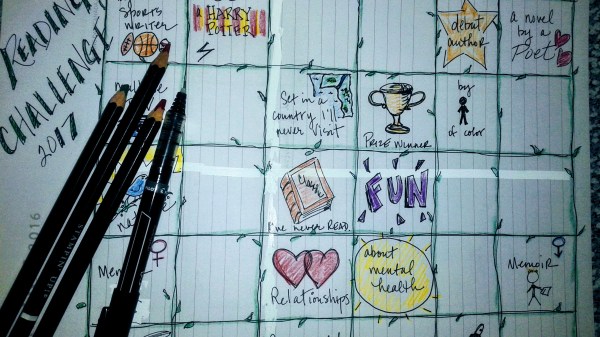
We’ve also probably set reading goals for ourselves. I played in my new planner, setting some goals that I will share with my students when I ask them to create their new challenges.

20170101_200237

If you are looking for a way to spice up your reading in 2017, consider this:

Join the #3TTBookClub on the Three Teachers Talk Facebook page.

Why #3TTBookClub?

In the introduction to her book Reading in the Wild, Donalyn Miller writes: “I want my students to enjoy reading and find it meaningful when they are in my class, but I also want them to understand why reading matters to their lives. A reading workshop classroom provides a temporary scaffold, but eventually students must have self-efficacy and the tools they need to go it alone. The goal of all reading instruction is independence. If students remain depends on teachers to remove all obstacles that prevent them from reading, they won’t become independent readers.”

How do we help our students become independent readers if we are not independent readers ourselves?

I am often surprised at how many English teachers I meet who admit to not reading. I wrote a bit about that in a post last year, and I extend the same invitation:  Are you walking the talk in your content? (The invitation to guest post on this blog stands as well. Every teacher’s voice matters. Your voice matters.)

How will #3TTBookClub work?

We batted this one about a bit, but it didn’t take long to decide that even when it comes to book clubs, choice matters. Each month Shana, Lisa, and I will choose a book. We will introduce our books on the Three Teachers Talk Facebook page and invite other readers to read along with us. Read one of the books, two of them, or all three (My personal goal, but, you know…time… and all that feedback to leave on all those papers.)

We will share ideas on how we might book talk certain books with our students, share insights from pedagogy books we read, share ways we might use excerpts to teach craft, and just overall share our deep and abiding book love.

What have you got to lose?

We hope you will join us in #3TTBookClub in 2017 — and please, use the #3TTBookClub hashtag and invite your friends. See you on the Three Teachers Talk Facebook page.

3ttbookclub


Follow Three Teachers Talk on Twitter @3TeachersTalk, on Instagram at 3TT.us, Pinterest at Three Teachers Talk, and Facebook @ThreeTeachersTalk. Oh, and remember to subscribe to the TTT blog, so you never miss a post.

Amy Rasmussen lives in north Texas and teaches AP English Language and English 3 to the Fighting Farmers at Lewisville High School. She adheres to the words of Emerson: “We aim above the mark to hit the mark,” and Jesus Christ: “Love one another.” Imagine a world if we all love more than we think we can. Follow Amy on Twitter @amyrass.

ftc-guideline-%22affiliate-links%22


Making it Easier to Be Smarter

I am always looking for ways to help my students write. Write more. Write more effectively. Write with more voice.

Not too long ago, I came across The Skimm, an online news source I read every weekday morning. It never ceases to make me smile. Witty and smart just about covers it.

In an effort to help my students stay tuned to what is happening in the world, I’ve asked them to sign up to receive the Daily Skimm. Besides learning the basics about what events headline the news, we will discuss author’s craft, effective summarization skills, using links to build our credibility in online writing, and what ever else we happen to notice in these daily news sound bites.

If you want, follow The Skimm on Twitter, but really, you will want to subscribe. It’s just that good, and like the Skimmers say “the Skimm makes it easier to be smarter.”

Who doesn’t want that?

screen-shot-2016-12-30-at-4-28-40-pm

Me every day during winter break.

Happy Reading, my friends.

And Happy New Year!