Remember Scantrons tests? The filling in of bubbles at semester’s end in order to prove your worth as a scholar? Many of my anxiety-cloaked memories of high school involve those hideous little forms, a No. 2 pencil, and hours spent hurriedly filling in bubbles to demonstrate my multiple choice understanding of the world.

Once upon a time, I took this type of test. Early in my career, I gave them. Currently, I hate them. Or rather, as this is a company name I certainly wouldn’t dream of defaming, I hate the concept of a test format that negates creativity, deep thinking, or conveyance of personal connection to learning. While admittedly easy to grade, I don’t recall the last multiple choice test that left me satisfied with the assessment in any way.
Now, before I get myself in hot water, both with Scantron and my fellow teachers, there are realities associated with multiple choice testing that are inescapable, and if we want students to be prepared for the high stakes testing they will certainly encounter as a means to pass AP tests, seek admission to college, and succeed on many college campuses, then we must do our part in preparing students for this type of assessment and thinking. Applied Practice tests, for example, challenge students to dig into a passage and deeply analyze the author’s craft and style. That skill development and demonstration is a wonderful tool.
However, this post is about the opportunities presented to us as educators as we look to the end of a grading term and search for ways to have students think critically about their cumulative learning, their growth as readers and writers, and the
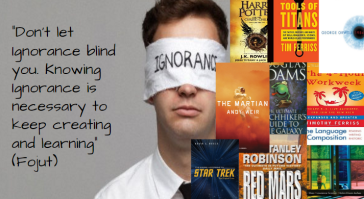
Bailey’s reading insight.
connections they’ve made throughout our time together that will move them forward as educated citizens.
Many of these thoughts started well before my work with workshop when several years ago, our administrative team organized a committee to discuss our practices around final exams. Scheduling, format, exemptions, and weighting were all on the table. My biggest takeaway from those reflections?
I wanted my final exams to be reflective of student thought, synthesis, growth, and accomplishment to this point. In other words, I didn’t want any part of our “final” exam to be final in any way except that it would happen to be our last assessment together.
In other words, a final exam should showcase rather than stifle.
It should be an opportunity.
In years past, a multiple choice test showed a student’s regurgitated knowledge of the texts we had read and the literary movements we had studied. A written portion challeneged skills in supporting claims, sometimes providing text evidence, and timed writing.
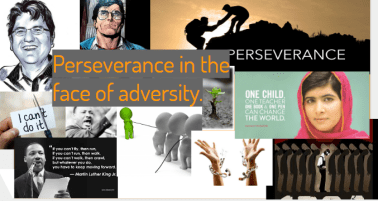
Amelia’s reading takeaway.
Again, these are valid and necessary skills to prepare students for future academic endeavors. Personally, however, I have grown to believe that if a paper isn’t going to receive some feedback, it’s power and purpose are lessened, or even negated.
We want students to grow as readers and writers throughout the year. This should include their final assessment opportunities as well.
 With that in mind, my colleagues and I have worked hard over the years to provide more authentic assessment opportunities for students to demonstrate their growth during final exams.
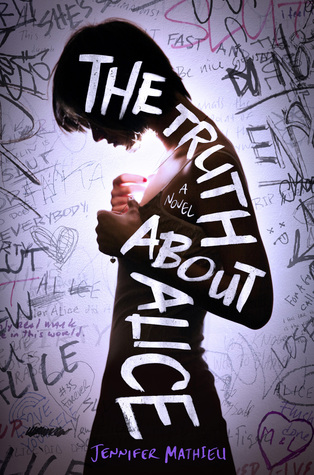
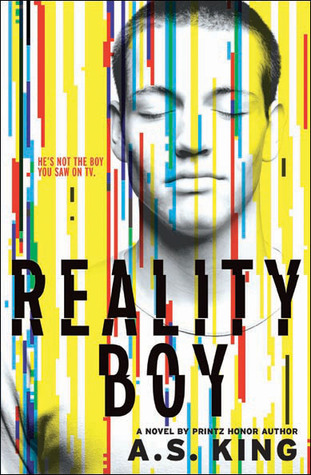
Portfolios have replaced timed papers. Graded discussions have replaced short answer questions. Reflective speeches, projects, and writing have replaced bubble tests. And, with the advent of workshop, choice reading reflection has become my go-to.
In January, the teachers in my Honors English 10 collaborative group, organized an opportunity for our students to share the insights gleaned from an entire semester of choice reading. I was so excited by the project that I added some additional symbolic and reflective elements to it and used it with my AP Language students as well.
Students reflect on the texts
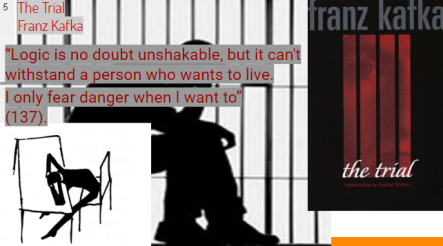
A reflection from Josh.
they have read throughout the course of the term, select meaningful passages from that reading (many had been marking key quotes in their notebooks throughout the year), and give a talk about how the reading changed, moved, and/or developed their thinking with the support of visual cues and quotes to provide context for their ideas.
Illustrations of such deep thought include:
- Abby learned that “we all struggle, but it’s how we handle those struggles that truly defines our character.”
- Errin suggested that “our world is only as vast as our perspectives allow it to be.”
- Tahseen claimed that “books help me solve the problems in my life.”
- Bailey, in his infinite wisdom buoyed by the most sincere character, pled with the class to not “let ignorance blind you. Knowing ignorance is necessary to keep creating and learning.”
- Rachel said we must “know yourself and use that knowledge to go out and know the world.”


Some student samples from Amelia and Josh
As the time for final exam planning in at hand once again, here is a link to the project. Use it as a springboard for your own great reflective projects and encourage kids to once again see the value of the choice reading they have completed this year.
How have your finals evolved? What will your students be doing to wrap up the year? Please share in the comments.
Lisa Dennis teaches English and leads a department of incredible English educators at Franklin High School near Milwaukee. She fondly remembers dabbing chapstick on her Scantron to try and fool the machine. This was during her rebellious streak, which lasted about four days. Follow Lisa on Twitter @LDennibaum










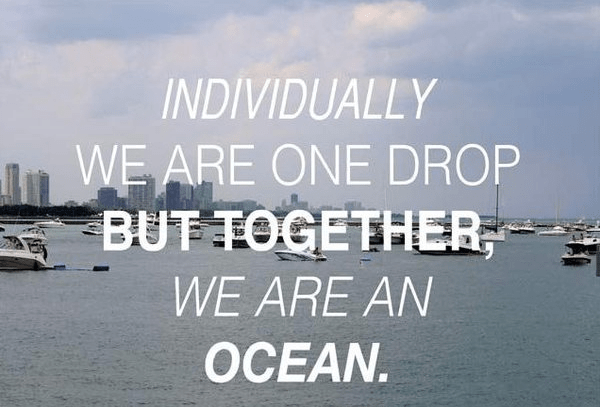

 of the class period, we used our essential question (What is the individual’s responsibility to the community?) to guide a discussion. I used PowerPoint slides to project a symbol and that group went to the front of the room to start talking. Other groups made notes on where they would take the conversation when they were called into the discussion.


 Three Teachers Talk