Category Archives: Strategies to Add Some Zip

Adopting a Persona as We Move to Adopting Workshop

I am committed and inspired to move into true Reader’s Writer’s Workshop after NCTE and a near semester under my belt in a new school.  I left for the conference in Houston with a plan to read The Great Gatsby in December, and as much as I wanted to totally scrap it and start with a routine inspired by Penny Kittle and Kelly Gallagher in 180 Days,  I didn’t.  

I paused.  

Although every classroom minute is precious and developing readers is the most timely need, I wanted to give myself time to process this shift, to think through how my classroom would run, and brainstorm how to help my students, who from my inquiries have only experienced the full class novel, navigate texts with more autonomy and independence.

Going from trained text regurgitation to full choice would have been a huge, potentially disastrous, shift for my students.  Since August, they have looked to me to create meaning, to judge whether their writing is “right” or “good,” asking what I think about the text versus presenting their own original idea.  These students will grow immensely from workshop, which makes me so excited for January, but I felt they first need scaffolding up to meaning-making and trusting their interpretation and ideas.

I created a Book Club atmosphere with students for our reading of The Great Gatsby, having students meet in “Discussion Tables” with their peers to process the text with each other.  As 180 Days suggests, I asked students to come with one question and one comment to their discussion tables.  Students were also responsible for close reading and annotating/sketchnoting key scenes of the text, commenting on development and language.  Their annotations served as a launch point for continuing and deepening the conversation. A Book Club-style approach allowed for a more structured release of responsibility to students while maintaining the shared experience of full class novels my students are accustomed to.  I stood back as an observer, listening in to their conversations, witnessing students make meaning together versus wait to be guided to a single answer or idea.

As the unit was primarily based on discussion and conversation, so was their culminating assessment, the “Persona Discussion.”  Students were given a choice of what character they wanted to embody, from the core characters like Jay Gatsby and Daisy Buchanan to more minor characters like Mr. Gatz or Meyer Wolfsheim, even “background” characters like the party goers were an option for students.  The core characters provided limited space for interpretation while added characters, like party goers, allowed for more creativity in the persona. Students signed up for a character and prepared by thinking through their characters in their journals.

IMG_0803.jpg

The discussion works like a Socratic Seminar, where students are the drivers of the discussion and can be adapted for both fiction and nonfiction.  I created this assignment for AP Language students who loved to debate and discuss in Chicago–they adopted the persona of Henrietta Lacks’ family, doctors, and author Rebecca Skloot after reading The Immortal Life of Henrietta Lacks.  For Henrietta’s Persona Discussion, the central question of the discussion was a quote about medical ethics. 

Students felt that the smaller characters were given a voice, an idea we discussed earlier in the passage when examining the wealth and marginalization of “the other” characters in efforts to disrupt the traditional text.  


Maggie, who played Myrtle, said she liked feeling immersed in the book:  “At first, I felt like Myrtle would only ask questions to Tom or George, but as we all started being our characters, I thought about how Myrtle and Gatsby were actually more alike and could have been friends, and I wanted to ask Daisy about her marriage more.”  Jordyn said the discussion was better for understanding the web of deception because “…it was like seeing the book as a play or real life and it made our group discussions more real or, like, meaningful.”  After discussing the text as a reader so much, Riley, a reluctant reader who has learned, as he admitted, to “fake it,” said, “It was more fun to prepare to play someone than to think about the big ideas for a regular seminar.  It made me want to do well and really know Tom.”  

As we build into full workshop mode in January, students have a foundation for how to enter a text, methods for creating meaning, and more confidence in their thinking.  Students were engaged with this type of discussion and reflected about their enjoyment, so I am going to incorporate it into next semester, perhaps jigsawing the characters from students’ choice reading or book clubs together from different realms or as a way to review major characters and texts before the AP Literature exam.   We’ll see what other “personas” develop!


Maggie Lopez is enjoying Utah ski season while re-reading 180 Days as she preps for second semester, American Girls: The Secret Life of American Teenagers before bed, and The Poet X in class.  She wishes you a very merry, restful holiday season!


Beginnings and Endings

Regarding leads, or “introductions,” my usual advice to students as they draft is NOT to start with the beginning. Many have difficulty doing so, but it’s ok — our revision process always includes a reconsideration of the lead and, by turn, the conclusion, so that the two are stylistically and thematically connected. I’ve turned to many mentors for showing students how it’s done. For the purposes of most readers of this blog, Beyond Literary Analysis by Allison Marchetti and Rebekah O’Dell offers practical and student-friendly approaches to leads & conclusions for analytical writing. I used these lessons with my sophomores, who are writing media reviews.

Today, though, I want to offer an approach to beginnings and endings in writing that I used in my Advanced Writing class — specifically for short-story writing — but I like it because I think it is highly adaptable for writing experiences in many genres and at many levels.

I borrowed the content from articles in The Writer’s Notebook II: Craft Essays from Tin HouseAfter students had a draft of their short story (many of which were sans endings), I presented the content from articles by Ann Hood and Elissa Schappell about beginnings and endings, respectively. In these essays, these two writers examine beginnings and endings in the short story genre and present their findings to readers — who, given this publication, are also writers. Here’s the slide we discussed in class about “Beginnings:”

3TT_beginnings and endings - Google Sl_ - https___docs.google.com_presentatio

Many of these beginnings I’m sure you will recognize, and so did several students! For our purposes, I asked students to experiment with three alternate beginnings that were different than the way their story opened in their drafts. Students then shared their options at their writing tables to determine which worked best.

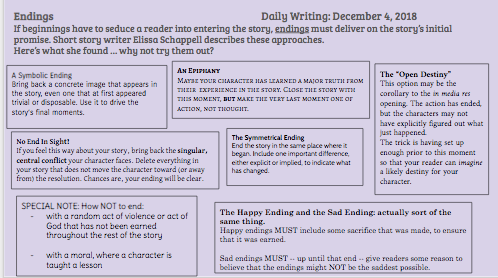
The “Endings” slide was a bit less specific in that it did not cite word-for-word examples. Still, as many (read: most) students hadn’t written any ending at all to their short story drafts, they found the suggestions useful. In a move that is contradictory to true workshop form, I required students to identify one of these approaches to the beginnings and endings of their short stories. And in keeping with the best paradoxes, these limitations have allowed their sense of choice to flourish rather than flounder among too many possibilities. (Mariana knows about my unapologetic “taking the ‘creative’ out of ‘creative writing’ approach this year). But in a school system that seldom allows choice, for many (read: most) students, I have found that “choice among several options” is more productive than choice that is infinite. And I’m more than ok with that.

3TT_beginnings and endings 2- Google Sl_ - https___docs.google.com_presentatio

So, I hope you find this framework useful.  You can find the Google Slides document here, if you would like to use my clumsy boxes and improve upon it for your own use. (I hope I did the sharing settings correctly — if you cannot access, let me know).  If I had it to do over again — which I will, because I plan to use this approach regularly — I might combine it with Marchetti and O’Dell’s sticky-note activity, in which students write several different beginnings and endings on sticky notes and stick them at the beginning and end of a printed essay. Then they can try out a few options next to each other, which even further reinforces the construction of a piece of writing as a series of conscious choices on the part of the writer.

Question Storming with Students

analysis blackboard board bubble

Photo by Pixabay on Pexels.com

Eighty percent of my teaching load is in the role of senior school teacher librarian and much of this aspect of my job is spent working on research skills with our middle years and graduation years students. One of the hardest tasks students face when starting with research is knowing where to start. Often times students will start with a topic that is significantly too broad and they lack the skills to narrow down their search focus, which leads to a frustrated student proclaiming they can’t find anything at all on their topic.

One technique I have used with my students to help them narrow their focus in their research and to guide them through the search process is a technique called question storming. Question storming is a technique I discovered in the educator section of The Right Question Institute website and I have used it with success in research lessons with Grade 6s all the way up to my Grade 10-12 AP students. Question storming is similar to brain storming, but instead of generating ideas or statements that come to mind, students are asked to generate questions. The following are the steps I take to guide my class through the question storming process.

Step One: I model the process of question storming by walking through the process with them. I love to use images as prompts to generate questions as I find students really become engaged with the images the more they ask questions about it. After I briefly explain what a question storm is, I project a thought provoking image on the screen. With my most recent question storming practice with my AP Capstone class, I used the viral image of the Palestinian protester in Gaza.

Step Two: After projecting the image, I ask students to generate as many questions as possible about the image. In my initial modelling with my students, I have them call the questions out and I record them on the board. I also remind my students that at this stage we are not trying to answer the questions and we are not judging the questions, we  are simply trying to generate as many questions as possible. The first questions generated are often rather surface level, things like why is the man holding a flag or where is he, but after the first few questions, I am always surprised at the depth that starts to emerge in the questions.

Step Three: After a few minutes of generating questions, we stop and review the difference between a closed question (one that can be answered simply) and an open question (one that is complex and has multiple possible perspectives) and we go through the list of generated questions and label each as being either an open question or a closed question. At this stage we talk about how it is the open questions we want to explore in our research, but the closed questions often help us in our research, as well because they help us explore what basic information we need to understand about the topic before we can delve into exploring the open ended questions.

Step Four: Once we have labelled our questions as being closed or open, we then select the one open question we want to explore as our main topic. Some of the open ended questions my students generated about the Palestinian protester photo included: To what extent are the Palestinian protests in Gaza affecting the conflict? How has the media coverage of the conflict in Gaza affected the conflict? To what extent has the media coverage of the conflict in Gaza affected the level of aid provided by other countries?

At this stage, students have a significantly more focused starting point for their research and have narrowed their focus with their open-ended questions. As well, they can use their close ended questions to help provide search terms to help narrow their research down even more.

When students start research or an inquiry with a powerful question they find the research process to be easier and more meaningful and question storming is a technique that helps make the challenge of coming up with the right question easier.

For some more practical teaching strategies, check out Shana’s post on some strategies she learned from the pre-service teachers she works with.

Pam McMartin is a Senior School Teacher Librarian, Senior English teacher and English department head at an independent school in Tsawwassen, British Columbia Canada. When she is not wading through storms of questions with her students, she is braving the perpetual winter stormy weather outside that comes with living in the Pacific Northwest. You can follow Pam on twitter @psmcmartin. 


Groundhog Day and Writing Conferences

ask blackboard chalk board chalkboard

3TT writers have shed a lot of (digital) ink about the benefits of conferencing with students about their writing – you can read about here and here. We love the conference.  And, I imagine that if you’re reading this, you love the conference too – or at least, you’re starting to love conferencing… or at the very least, you’re starting to love the idea of loving conferencing.

This is my first year really making the conference a centerpiece of my instruction, and I’m really starting to see the benefit in letting those conferences drive instruction. In the past, I would teach an essay and already know what follow-up instruction I would offer after the essay was over. I had November planned in June and felt so proud of myself for being so prepared. And I was, in a limited kind of way. I was prepared to talk about what I wanted to talk about, not prepared to meet my students where they were.

With conferencing, though, I find that I need to be prepared in a completely different way. I need to be able  to deliver all kinds of writing and craft instruction at the drop of a hat; I need a series of quick mini-lessons and questions that I can go to again and again . Some days, I find myself giving the same kind of feedback like I’m stuck in some Groundhog Day style purgatory. Others, I have to go deep into the well and pull out information I haven’t had occasion to use in years. Other-other days, I just have to admit that I need a night or two to think of a response to a question and agree to meet again later that week.

I take that Groundhog Day style feedback to heart – sure, it’s maddening in the moment to explain an idea again and again to a new student with a new piece of writing, but I VERY easily recognize what I need to reteach. This last week has been one of those weeks. I’m realizing that a majority of my students could all use more time and practice with adding warrant to their body paragraphs. Here are four methods I use to teach warrant:

  1. Slip or Trip – This clever little cartoon and accompanying activity created by George Hillocks is great for understanding the assumption/values part of warrant. I’ve seen it work in 8th grade classrooms and with juniors. I’ve seen it work with juniors who remembered working with it from their 8th grade years. It’s powerful in its simplicity. The premise is just to determine whether Queenie’s husband Arthur fell down the stairs or was pushed down the stairs. The instruction comes in helping students explain why their evidence supports their claims, in explaining the assumptions they are making.
  2. Toddlers and Teenagers – This is more of an analogy to help students understand the two parts of warrant
    1. The toddler – warrant addresses the question WHY – Why does this evidence prove this claim? Why did I chose this evidence? – Students ask WHY until they run out of answers – like little toddlers who just learned the magic of asking why.
    2. The teenager – warrant also address the question SO WHAT or what’s the IMPACT of this argument – So like an eighth grader decked out in blue eyeshadow and posted up by the Claire’s in a local mall, students ask the SO WHAT question for each of their WHY answers until they can’t think of any more responses. For some students, the SO WHAT question is enough. Others need the guidance of two more questions to really land the SO WHAT: Who is harmed and who is benefitted? Why should we care? What are the effects of this harm? You can further specify this harm/benefit question set to emotional/physical/economic/social/moral harm/benefit to help the students who still need a nudge in the right direction.
  3. The IF/THEN strategy – Full confession: I stole this idea from a blog post or a class website somewhere on the internet. So, unfortunately,  I can’t give appropriate attribution, but this teacher is an English goddess. She encourages her students to create IF/THEN statements working backwards from the warrant to the claim using a fill in the blank sentence. Here’s that sentence: If we assume (general rule, idea, belief, stance, assumption – WARRANT) and this matters because (IMPACT/SO WHAT), then [EVIDENCE] proves that [CLAIM]. Simple, quick, to the point. A clear way to look at a complex idea.
  4. 5 whys – Another full confession, I’m not sure why I call this the 5 whys, and the name is a little misleading for students – they don’t actually have to create 5 whys; 2-3 works just fine. (I think the name was actually a really bad joke: something about 5 Whys for 5 Guys, Cheeseburgers and Fries. Sometimes weird things just happen in the classroom.) This is an argument structure that helps students evaluate claims and allow their body paragraphs to be reason/warrant focused NOT evidence focused. So students start with a claim – their thesis- and ask why. The answer for that first why question becomes the topic sentence for the first body paragraph. From that first answer, students again ask why creating a second answer which becomes the topic sentence for their next body paragraph. This movement of asking why and answering creates an outline of reasons that often moves from a pretty specific start to a philosophical ending, allowing students to move away from the five paragraph essay which just repeats the same idea ad nauseum. Another benefit to the structure is that the questioning of their claims allows them to see when/where their claims are weak and they can revise accordingly.
    1. Here’s an example for a prompt about the value of civil disobedience
  • Thesis: Disobedience is necessary to advance society
    • Why? Because →  society tends to resist change,
      • it’s a large machine that is slow to stop and slow to start *so* we have to start it, nudge it, guide it
      • “Civil disobedience”
      • Objects in motion tend to stay in motion
    • Why? Because →  change is hard work – it can be violent or long or messy or complicated – *but* we have to keep working at it anyways
      • Length of struggles – I might trace the history of several different movements using disobedience as a motivating factor
        • American Revolution
        • Women’s Suffrage Movement
        • Civil Rights Movement
        • Black Lives Matter
    • Why? Because → humans as a species are discontent with being content – we crave betterment
      • Where do we see ourselves craving betterment?
      • WHY do we crave betterment?
      • Can I trace this historically or chronologically?
    • Therefore….conclusion stuff

Conferencing has made my students better writers individually through one conference at a time. However, it’s also improved my whole class instruction as well – allowing me to provide better guidance for my students as they need it. What insights are you gaining in your classroom through your conferencing practice?

Sarah Morris teaches AP Language & Composition and Film as Literature in Murfreesboro, Tn. She is rewatching Brooklyn Nine-Nine for about the third time. Nine! Nine! She tweets at @marahsorris_cms.


Incorporating Drawing into the Workshop Model so that Students can Show their Thinking

Teachers are adaptive. We are always ready, even when we feel never ready, and we approach new challenges with willingness and enthusiasm.

Even when the changes come as a surprise!

For the first time in many years, I am teaching middle school. I’ve taught high school exclusively for at least fifteen years, so it was quite a change to approach these students. I have been giving it my best attitude, attention, and effort, but somehow I knew it wasn’t enough. A few weeks ago I realized why: I was trying to teach my seventh grade students the same way as I was teaching my high school students, only changing the content.

While I realized that I have to approach middle school students differently, I wasn’t sure how. They aren’t just little high schoolers. They are in a different developmental stage, and I have to be attentive to that.

One of my classroom mantras has been don’t share your answers; share your thinking, and when it comes to talking to high school students about it, it seems like they “get it.” That’s not to say they always value the thinking and don’t look for the “right answers,” but they do seem to mostly understand what it means. share-your-thinking

With middle school students, I don’t always get that same feeling. I’ve experienced that they aren’t always sure how to show their thinking, but instead sometimes tend to want to parrot back my thinking, or the thinking of others.

When we’ve worked in our readers/writers notebooks, I’ve also seen that middle school students often ask if they can doodle and draw. I love it when my students get creative in their notebooks, no matter what grade they are in. I just noticed that my middle school students seem to especially enjoy this activity.

That led me to realize that middle school students can show their thinking through drawing, sketching, and illustrating, in addition to talking and writing.

I am introducing the Notice and Note fiction signposts this week, and instead of asking students to write about them, I’ve asked them to sketch and illustrate them.

middle school drawing

The buzz in the room while students were drawing, illustrating, and processing the different sign posts was fantastic. While circulating the room, I was able to interact with students in a fun and academic way. I learned that middle school students love to be creative, and I was able to get a window into their thinking. That was before I even saw their finished products.

Students have illustrated a couple of the signposts now, and I feel like I am on to something. Students are able to express their thinking through drawing, and even think about things more deeply than if they were only doing the discussing and writing. The illustrating has increased their processing, and I’ll keep using this strategy alongside the writing, reading, and discussing. Perhaps every other middle school teacher on the planet already understood this, but now I do, too.

I’m going to add more illustrating and drawing components to all of my classes now, no matter what level they are, from grade seven to AP Lang.

I’d love to hear how others have reached students who are in different grades and levels. How do your students show their thinking?

Julie has been teaching secondary language arts for twenty years, spending the first fifteen in rural Central Oregon, and the last four in Amman, Jordan. She’s thrilled to report that she and her family have moved across the world to Managua, Nicaragua this year, where a new adventure has begun.

Follow her on twitter @SwinehartJulie

On Writers’ Testimonies & Why We Need Them

If I want to call myself a writer, I better start writing. Seems simple enough, right? I’ve read tons of quotes from writers who say the best way to begin is just sit down and bleed on the page. But I struggle.

As I was trying to write this post, with my dogs barking incessantly at an invisible squirrel in the backyard, and The Walking Dead booming from the bedroom tv where my husband languished with flu-like blahs, I thought of all the tweets last week for the National Day on Writing (fantastic inspiration and ideas there).

tweet#whyIwrite

I thought of why I write:  to think, to feel, to clarify, to play with language, to vent and heal and commit to change. All the reasons that everyone else writes. I am not unique.

Or am I?

Recently, I’ve been reading and re-reading the writing of Donald Murray. (Learning by Teaching: Selected Articles on Writing and Teaching is my bible as a writing teacher. Huge thanks to my friend Penny K. for the recommendation!) But I’ve also delved into Murray’s Shoptalk: Learning to Write with WritersIt’s a collection on quote on writers about their craft. Murray states in the preface that he began collecting quotes on writing when in junior high, filling twenty-four three-inch-think notebooks with at least eight thousand quotations. His motivation? He just wanted to know how writers wrote. Murray explains the importance of writers’ testimony:

     Many people have the romantic notion, encouraged by those writers who feel comfortable in the magician’s robes, that writing is an instinctive matter of talent, an art, not a craft, and therefore cannot be explained.

     But writing is not an unintelligent act. Writing is a craft before it is an art, and writers can and do discuss their craft in terms we can understand. There are good reasons teachers and students of writing should hear what writers say about their craft.

     . . . I bring writers into my classroom through their written testimony. As writers of today and yesterday–female and male, young and old, poets and novelists and playwrights and nonfiction writers–talk about their feelings and their problems while writing, my students discover that their natural responses to writing are often the same as experienced writers.

     This is vital. Students facing a writing problem will often find they have to solve it by starting over and will fell they have failed. When they read the testimony of experienced writers, however, they discover that they too act like writers and this increases their confidence in designing their own solutions to their own writing problems. School often teaches unnatural, non-writerly attitudes toward writing–know what you want to say before you say it–and students need to see that their own instincts are the instincts of published writers.

     Students also need to see that writers are not looking back at a finished text but are in the act of confronting the blank page–or looking at the world before their is a page; trying to get started; trying to keep a text on tract or following it off track; working to make a text clear to themselves and to a reader. Writer’s counsel isn’t distant, detached from the act of making; it is immediate, speaking to the writer in the middle of making, a master sharing the tricks of craft with an apprentice at a common workbench.

I need these reminders–for myself and those I hope to take on the identity of writer, other teachers and students alike. Murray explains:

Too often we defend writing as a skill, saying writing should be taught so that students can fill our a job application or write a better letter asking someone to buy a cemetery lot. Writing is a skill on that level, but it also a craft and an art; it satisfies an essential need of the human animal.

So how do I share more writers’ testimonies? How do I help satisfy the essential need of the humans in my care daily?

10-768x384

Here’s some ideas:

  • Share some quotes on writing by writers. There’s lots of insights in that link and even some nice images like the one above.
  • Share Poets & Writers and follow on Twitter, too. I love their weekly update.
  • Read and share articles from NY Times Writers on Writing. This one by Amy Tan is a favorite and makes a fantastic mentor text to write beside.
  • Think, write, model, talk, share, and repeat with writers every single day. Let them know they are not alone in their pursuit of putting meaning on the page.

When I brought the barking dogs in, and before the tv went off and the zombies faded out in the bedroom, I heard a line that gave me pause. It went something like this: “This place is a canvas, and we are the paint. We were sent here to create. We did.”

I don’t know about you, but I think that relates to writing. I write to paint my world in the swirl of language, to create images and goals and imaginings, to figure out what I feel and think and know. I write because it feeds my need. I am human, so I write.

Amy Rasmussen writes most often sitting at her newest DIY project, a desk she repurposed from a vanity her paternal grandfather made for her grandmother over 70 years ago. She lights a candle and listens to Michael Bluble radio on Pandora. And when she gets stuck in her head or on the page, she reads. Follow her @amyrass

Taking a chance on reading aloud

One of the most prevalent memories I have from my childhood is being read to.  Every week, my mom would load my sister and I in the van and head downtown to the library where we would practice returning, renewing, and selecting new books.  I can still see the orange carpet in the children’s library, the shelves that stood only as tall as a seven year old, and hear the crinkle of the plastic covers that protected each precious story like shrink wrap.  During the week, my sister and I vied for places on her lap as she read aloud each book. I wouldn’t say she was a theatrical reader, I don’t recall her trying on different voices or even pausing to ask us what we thought, but it was her voice telling a story.  Isn’t that the magic of being read to?

Read alouds in K-12 classrooms have immense benefits, although their usage and popularity have ebbed and flowed overtime, as discussed by Steven L. Layne’s book In Defense of Read-Aloud which Amy writes about along with practical strategies for implementation.  This summer, I began to notice much discussion around reading aloud in the adolescent classroom and my interest was piqued.  My challenge to myself this summer was to try implementing read alouds, not just think alouds, in my classroom.

Admittedly, I got a little scared.  Then I chickened out. 

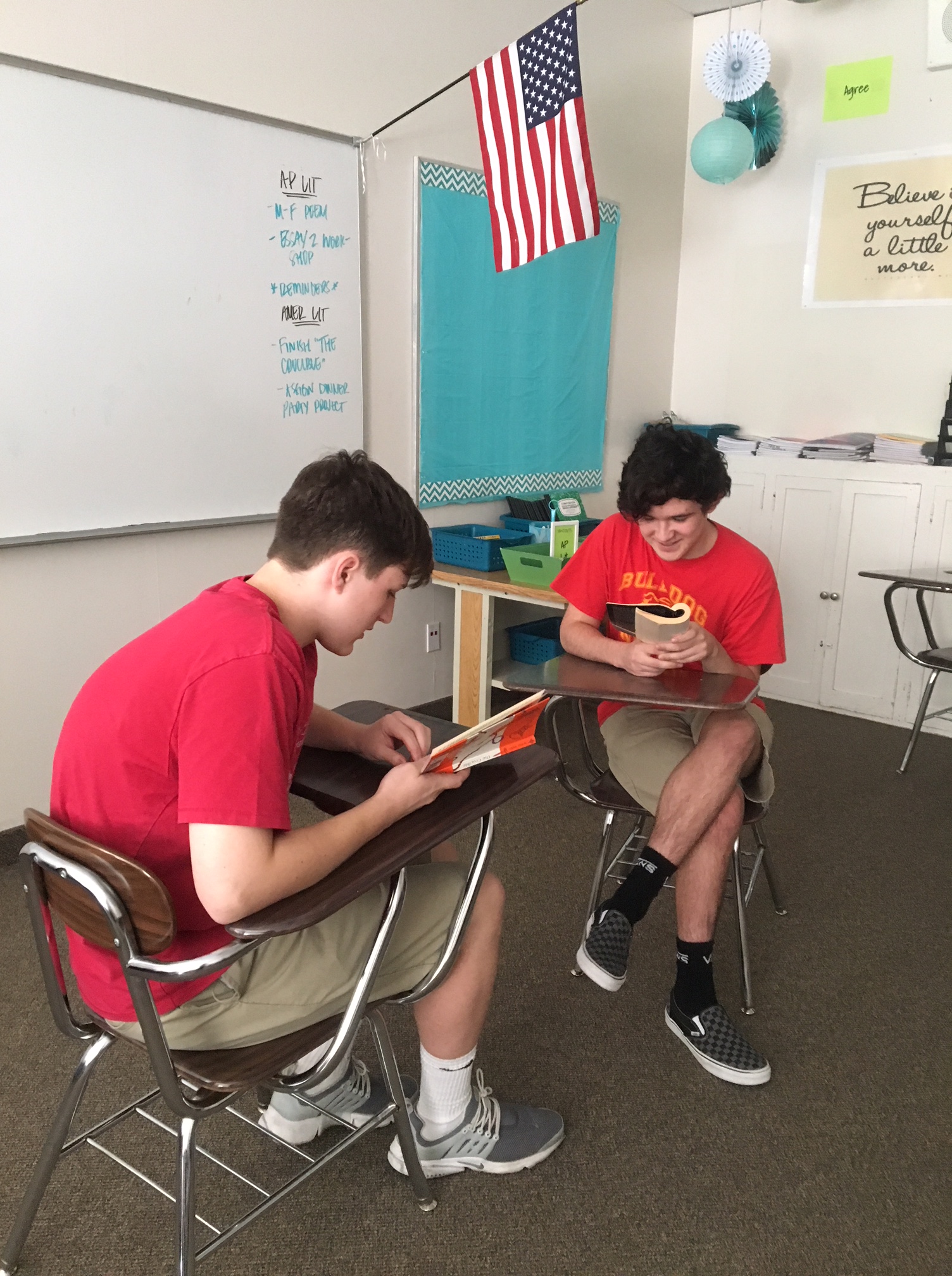
Having just hours to submit a book list to the department chair and having never visited the school I was about to teach at, I was unsure how a read aloud would be perceived by my new students and new colleagues.  So, I played it safe and opted to start the year with a full class read aloud using one of the required texts, The Crucible (I work with a curriculum that includes highly suggested texts for English 3, American Literature in the state of Utah, which has led me to a balance the requirements while choice).  I put students at the center of the read aloud, hoping they would embrace and take ownership of hearing a story versus reading it.

Did I fear a lack of student buy in?  Yep. Did I wonder if my pedagogical reasoning would be questioned?  At some points. Am I planning for a class-selected read aloud in the coming weeks?  Sure am!

Students loved it.  

I loved it.

We laughed, we questioned, we build community, and we worked on critical reading skills. We also enjoyed the story–there is power in students hearing a story, even when they’re 16 or 17 years old.

IMG_0312.JPG

6th period was so into reading, they literally begged me to read the deleted scene between John Proctor and Abigail Williams once they discovered it at the end of the play–how could I say no?  While we were all entertained with Sam and Noa’s reading, we were able to discuss how the scene adds to and takes away from the text as a whole, in addition to making inferences about Miller’s choices.

Building upon Layne’s research, here are the benefits I noticed in my classroom:

  • Students received a foundation of reading strategies to start the school year.  As a play is essentially a “think aloud,” with the narrator teaching students to make inferences about characters, conflict, and the social setting. Prior to starting, we discussed our reading voices, what Chris Tovani has labeled as “Interacting” and “Distracting” voices in Do I Really Have to Teach Reading?.  The interacting voice is what makes connections and predictions, asks questions, develops an opinion, and identifies confusion as we are decoding words.  The distracting voice is what pulls a reader’s attention away from the text (Tovani 63). For struggling readers, the narrated parts and asides modeled this “interacting voice” and we implemented “Fix Up Strategies,” as defined by Tovani, when our distracting voice overpowered our interacting voice, leading to muddled comprehension. We paused to recap the plot, ask questions, and make predictions during our full class reading.  Students had permission to pause the read aloud and we implemented these strategies together and practice themselves.
  • Students made connections between the false accusations and lies of Salem and our current world.  I never had to answer the age-old English question of “Why are we reading this?”  Big win when students understand the relevance of a common text to their world.
  • Students became comfortable reading and sharing–many began taking on the person of the accused, answering using “I,” demonstrating they were engaged in the text and thinking like the characters. This has created an environment where their voice and opinions matter.
  • Students dug into their choice reads in their own time because much our class time, aside from writers notebook time, was dominated by The Crucible.  Without realizing, students began to develop the habit of reading daily on their own time. Sa-weet!
  • I gained incredible insight into my students’ preferences, personalities, and habits.  I immediately learned who participates in the theater program and who only volunteers when the role is small.  I learned who needs to be engaged fully to keep on task and whose brain wanders thus requires reminders to “enter” the scene.  I learned who likes to lead, taking charge in the scene as the main character, or play the mother hen and keep everyone “on task” as a narrator. You learn who always brings their book and who always forgets, who annotates and who ponders.  It was like watching a collaborative group unfold.
  • We built rapport.  I believe beginning with a play set the tone that our classroom environment is one where we work together and discuss literature–what we love, what resonates with us, what we can connect to.  Our classroom is one where reading is an enjoyable experience.

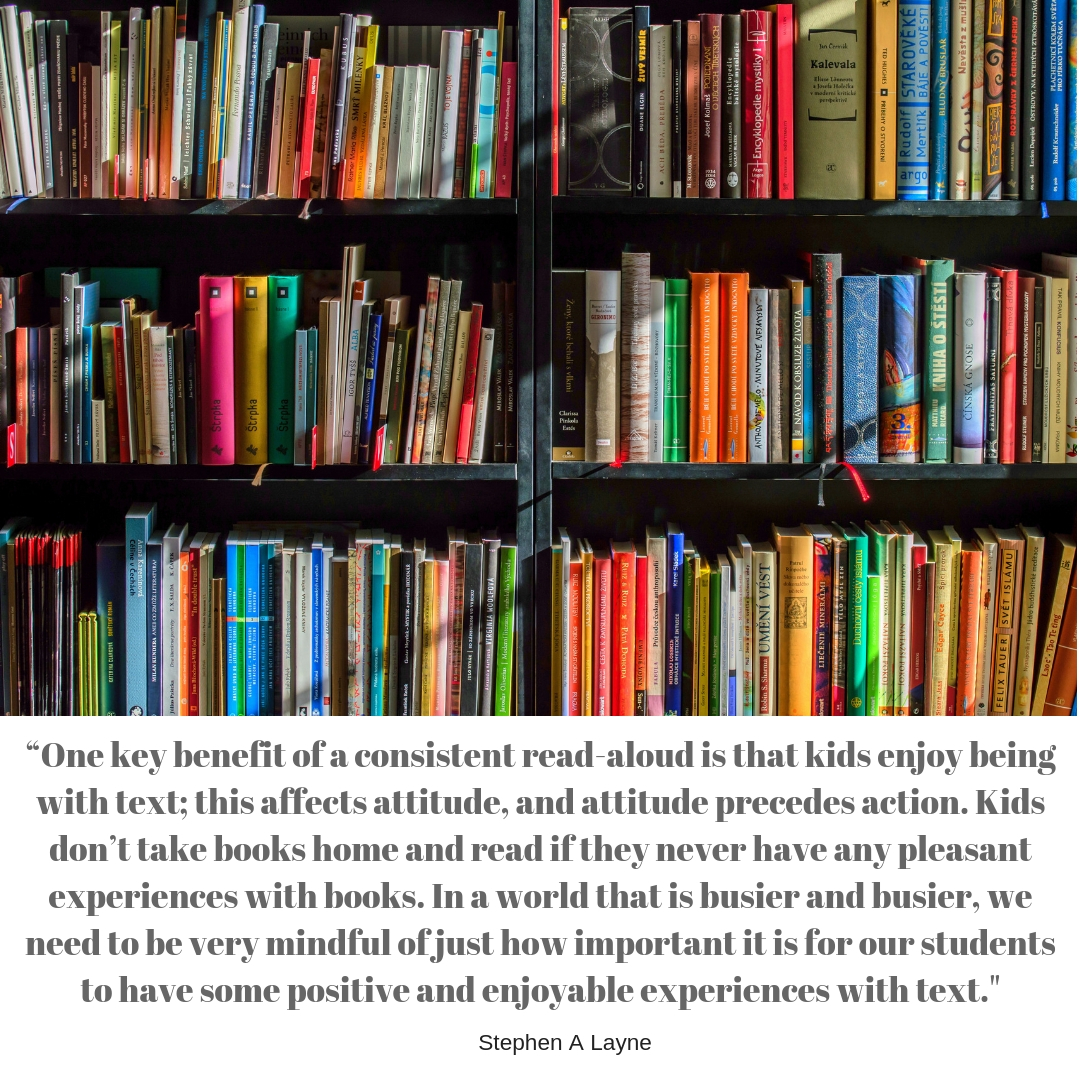
“One key benefit of a consistent read-aloud is that kids enjoy being with text; this affects attitude, and attitude precedes action. Kids don’t take books home and read if they never have any pleasant experiences w.jpg

I also wonder if their reading was deepened because we read together as a community, bringing 20+ backgrounds and ideas together to create a collective understanding.  Maybe the struggling students thought “I can do this” for the first time. Maybe the advanced student thought “Now I more time to read what I want at home” for the first time in a long time. Maybe other students simply thought “Huh, this wasn’t so bad.”

Part of a read aloud’s magic is its power to change student perceptions around books.  My goal, OUR goal, is to create and encourage readers. I encourage you to bring oral reading into your classroom.  I am going to be braver in the coming weeks and embrace a full class read aloud, so students can simply enjoy hearing a story for a few minutes each day.

Maggie Lopez has made the move west to Utah where the mountains are a gorgeous golden purple every day and ski season is around the corner.  She is indulging in promoting banned books this week with students and currently reading a student rec, Brain on Fire.  Follow her on Twitter at @meg_lopez0.

Quickwrite Mentor Texts for Writer’s Notebooks

img_6062I love going back to school for so many reasons, but one of the frontrunners is definitely that “second chance new year” feeling it provides. Teachers and students have the unique opportunity to have not just one fresh start at the beginning of a calendar year, but a second shot at goal-setting, changes, and achievements that the fall offers.
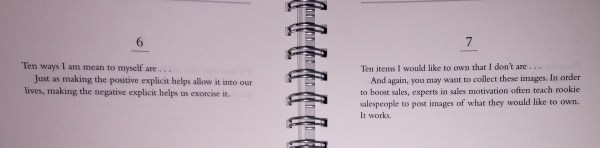
We all have our back-to-school rituals, and they are sacred: fresh notebooks, pens in all the colors of the rainbow (because we haven’t lost any yet), a well-organized classroom library that will be pilfered and picked through soon enough. One of the most important parts of establishing a workshop community is the routine that comes with setting up a writer’s notebook each fall: personalizing notebooks to make them our own, modeling a notebook’s possibilities, the establishment of quickwrite practices.

But now that the year has begun, and your notebooks are ready to go…what should you begin to fill them with? The writing in the beginning of my notebook always guides and inspires me as I continue to fill it, so I never want it to be uninspired, dull, or colorless. I crave fresh, exciting, dynamic things to fill up the first several pages of my notebook every time I start a new one, which is usually in the fall.

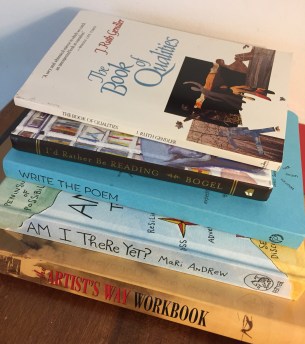
Here are my five favorite mentor texts that give me ideas and inspiration galore for those important start-of-the-year quickwrites–the first in a routine of creativity, agency, freedom, vulnerability, and engagement as a writer.

The Artist’s Way Workbook by Julia Cameron

This workbook is full of writing prompts for real writers: short exercises that encourage reflection, fluency, and the habit of writing vulnerably often.

img_6055.jpg

I love this workbook and its series of prompts, and use them often when I start my day with the #5amwritersclub each morning. They would be wonderful prompts for students to ease into vulnerable, personal writing in September.

img_6056

I’d Rather Be Reading by Anne Bogel

I first discovered Anne Bogel thanks to her “What Should I Read Next?” podcast, but she is also a writer and blogger, and just released a beautiful book yesterday. It’s a book about our reading lives, and provides a wonderful mentor text for writing about our reading without writing about a specific text.

img_6051

In addition to the lovely writing, I am obsessed with the illustrations: they would be wonderful to recreate in students’ notebooks with scraps of old magazines or dusty dictionaries.

img_6048

I visualize this mentor text as a wonderful one for helping students find a voice for writing about their reading lives during quarterly reflections, reading ladders, and self-assessments.

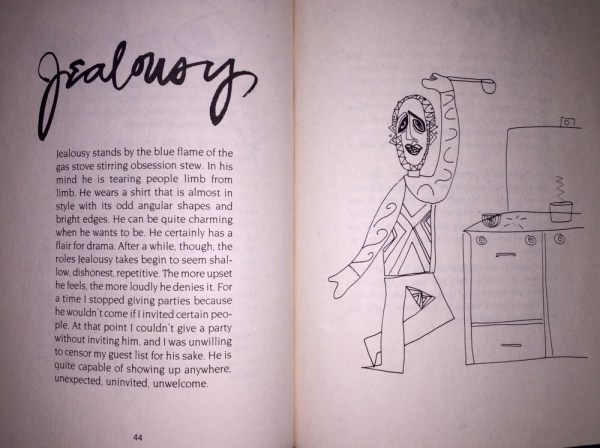
The Book of Qualities by J. Ruth Gendler

Writing about our own emotions is hard for all of us, but it’s especially hard for teens. I’ve found that writing about emotions in general, rather than our own, is a wonderful gateway for personal writing.

img_6049

In addition to being an amazing lesson in personification, this book provides gorgeous mentors for doodling, metaphors, and multigenre possibilities.

img_6050

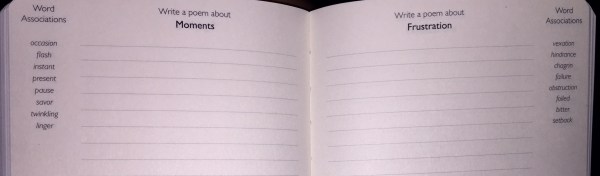
Write the Poem

Poetry can be intimidating, but a little guidance goes a long way, and this book provides just that.

img_6052

The combination of a prompt and keywords to incorporate takes some of the guesswork out of choosing a structure, a rhyme scheme, a title, and the myriad other decisions that go into crafting poetry.

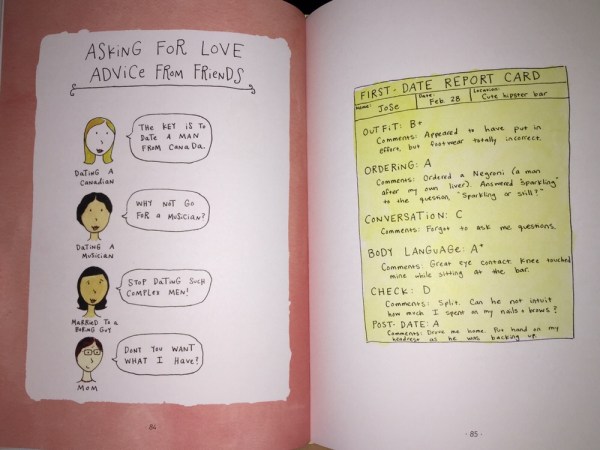
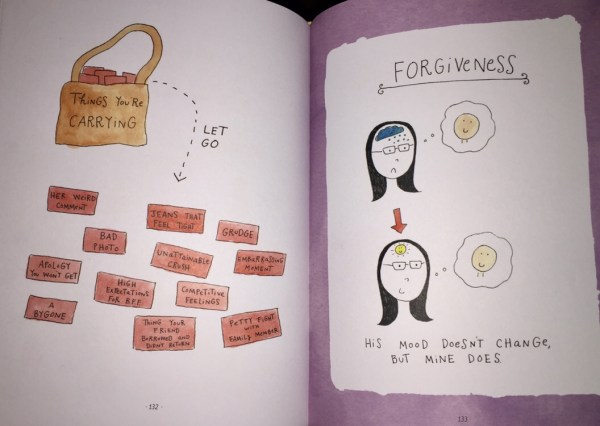
Am I There Yet? by Mari Andrew

Sometimes words are hard. They just are. Those days call for doodles, and this book is full of plenty of them–in addition to pages of plain old writing. I love this text because it tells stories beyond what we see on Mari’s Instagram and Twitter feeds, giving students a mentor text not just for writing but for the thinking and living behind it.

img_6053

Mari Andrew has long been a favorite of mine, but this book shows me how to play with writing and thinking in genres I wouldn’t have considered, and is super teen-friendly.

img_6054


I hope you’ll utilize one or more of these beautiful texts–many excerpts of which you can view on the Amazon preview pages linked above–with your students this fall. Their possibilities as entry points for writing topics and genres are powerful, and will lead to composition possibilities for the duration of your school year.

Happy writing! We’d love to know how you and your students utilize these ideas, or what others help you kick off your writer’s notebooks. Please share other quickwrite possibilities and ideas in the comments, on Twitter, or on Facebook!

Shana Karnes is a mom to two daughters, a daily reader and writer, and a forever educator. Her work with teachers in West Virginia is through the National Writing Project, West Virginia University, and the West Virginia Council of Teachers of English. Connect with Shana on Twitter at @litreader. 

Five Ideas that Beat the Dread

A few years ago I stopped reviewing class rules and smacking down my syllabus on the first day of school. I had been doing some research on chronic stress (mostly my own) and read extensively about the fight, flight, freeze response. One description glared at me and gave me pause:  “You have a sense of dread.”

I remembered what I had been taught as a first year teacher:  Set yourself up as the authority figure. Be kind but firm. Establish norms quickly so students know what you will and will not tolerate in your classroom.

Then, almost in the same breathe, I was told:  Develop relationships. Learn students’ names. Let them help develop class rules.

And I muddled through doing a combination of both the best I knew how. Those first few days of my first few years were rocky to say the least. And in hindsight, it’s clear:  there was dread. Lots of dread.

So when I read up on the fight, flight, and freeze response, I realized a big part of my problem:  With my seemingly simple attempt at outlining classroom expectations and detailing how ‘my class would run, chemicals danced a jig in students’ brains: fight, flight, or freeze. Now, I know my syllabus is not on the scale of major life trauma most often associated with this fff response theory, but many of my juniors and seniors didn’t want to be in school anyway. Why was I compounding it?

I learned a better way.

Wait.

Let every other teacher lay down the law. Lay out their plans. Run through the rules.

On the first day of school — maybe even the first five days of school — just write. And talk. Let students drive the discussion. Let them ask questions. Give them a chance to be seen and heard and welcomed.

“Community before curriculum” Angela wrote in her last post, and I love her thinking there. I also think we can merge the two on the first day of school and lay a firm foundation for thinking and talking every day thereafter. We can jump start community and begin our curriculum as we put pen to the page and write.

Here’s my top five sources that beg a response and invite students to write on the first day of school (or at least the first week or so):

  1. To This Day by Shane Koyczan.

Give every student a notecard and ask them to watch and listen and then respond to the poem as a whole or to a line they particularly like or relate to. (I’ve learned some pretty heavy stuff from students over the years. So many of them can relate to the themes in this poem.)

  1. How poetry can help kids turn a fear of literature into love by Jason Reynolds on PBS.

Give every student a sticky note and ask them to think about their reading lives. Then after they listen to Mr. Reynolds talk about reading, ask students to rate themselves. Are they readers eager for the pit bulls or for the puppies? Why? (I quickly find who my readers are and with whom I need to take on the challenge of helping them want to read.) Then for a little more of a challenge, on the flip side of the sticky, ask them to describe in poetic form their feelings about poetry. (You’ll learn even more.)

  1. Possibilities by Wislawa Szymborska. Or the version here where Amanda Palmer reads the poem.

Give every student a copy of the poem. Then read the poem aloud and ask students to write their own list of possibilities. Their list can be straightforward, funny, or interesting things they want the class to know. (I wrote about how I used this poem to practice imitation a couple of years ago. It’s a great lesson and a great poem to revisit.)

  1. Three poems:

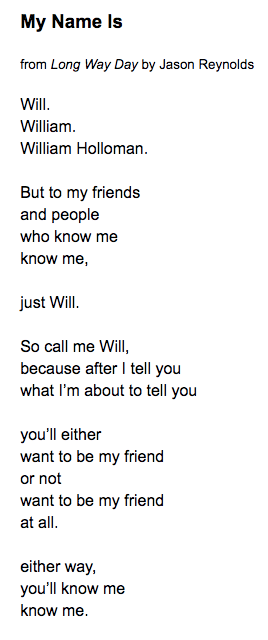
“My Name Is,” an excerpt from Jason Reynolds’ book Long Way Down. (If you haven’t read this book, oh, my goodness. It’s amazing!)

My Name Is by Jason Reynolds

“Instructions” by Rudy Francisco.

Instructions by Rudy Francisco

“Like You” by Roque Dalton, translated by Jack Hirschman

Give students copies of all three poems and a notecard or piece of paper. Read them aloud. Ask students to read them again and then to write a response. They can respond to just one of the poems, a line from a poem, or anything the poems make them think or feel. There is no right or wrong. Just write your thinking. (This is always an interesting response, and it tells me a lot about how to help my students. Many of them will begin to write an analysis of one of the poems — or all three. Others understand that I am asking for a different kind of thinking, one that leads them into ideas for their own poems, stories, or essays.)

  1. Author Bios!

Give students access to books that have clever, witty, or interesting author bios. YA authors like Julie Murphy, Jeff Zentner, Chris Crutcher, Libba Bray, and Gina Damico are great ones, but there are many with a bit of quirk that will draw students in and spark their interest in reading these author’s books. Ask students to explore the author bios and then make a list of the books they think they’d like to explore this semester. Have them write the author’s names on sticky notes for you to put in your conferring notes.

If you want to take this author bio idea further — (this is my favorite):

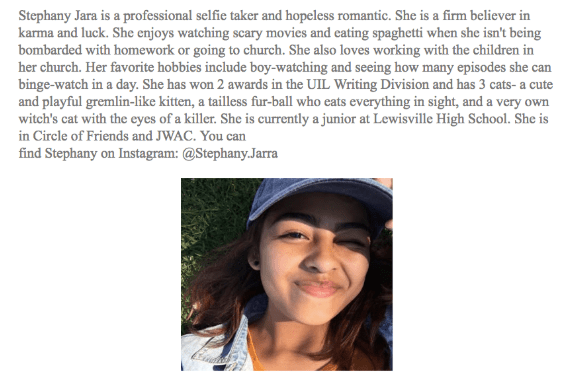
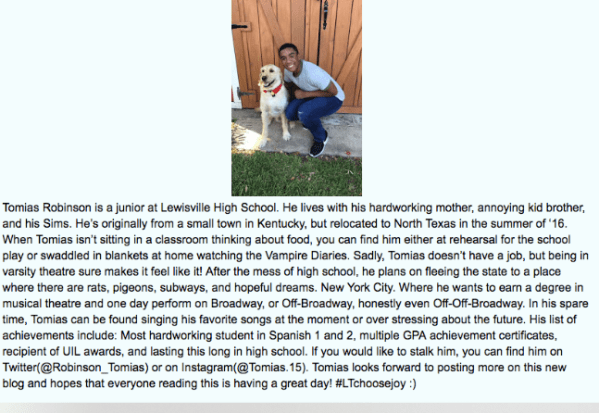
Read several professional author bios aloud. Ask students what information is shared and make a T-chart that lists the what on the left, e.g., name, personal hobbies, awards won, where the author lives, who the author lives with, etc. Then, ask students to describe how this information is shared and add these craft moves to the right. This is the how. For example, short and sometimes incomplete sentences, lists, 3rd person, the author’s name is first, witty word choice, etc. Finally, ask students to write their own author bio while you write yours as a model. Encourage them to try to craft their bio to include ideas from both the what and the how side of the T-chart. Below are two of my students’ bios from this past year.

Stephany author bio

Tomias author bio

(The author bio idea is Lisa’s baby, and she wrote about it here after I wrote about it here. It’s still the best idea I have ever heard to begin students on their journey into developing their identities as readers and as writers. I’ve used this idea in a model lesson for every workshop I’ve facilitated this summer, so if you were there, feel free to share the author bio you wrote this summer in the comments. My newest one is below.)

I wish you happy reading and writing with your students this year. Please share your go to ideas for inviting students to write and build your community.


Amy Rasmussen loves books, pretending to garden, adolescents, and coconut cream pie — not necessarily in that order. She lives in North Texas with her dashing husband of 33 years, their twin-terror Shelties Mac and Des, and a not so loving love bird named Colonel Brandon. Amy spent the summer leading professional development in several districts across Texas and has grown especially fond of the Houston area. If only she could move… Follow her on Twitter @amyrass — and if you are not already, please follow this blog.

Guest Post: Why I Want My Classroom To Run Like Zappos

I like shoes. Like many 20 something teachers, I want some variety in what I wear to 9d67eecb760e5f2da5199c53ffd5e85awork (heels, flats, boots, hand-painted Tom’s with Shakespeare’s quotes…) which means I’ve spent a lot of time perusing, purchasing, and inevitably returning some of those online shoe purchases. Hands down, their company is one of the easiest to return or exchange those shoes that don’t quite match that new blazer, I also bought online. All that aside, that isn’t why I want my classroom to run like their company.

For the last few years, Zappos has consistently shown up on the best places to work list. But why? This company has recently touted movement toward a “holacracy.”  This term, initially dubbed by the political writer, Arthur Koestler, focuses on the importance of individual autonomy and self-governance. Zappos prides itself on letting their employees be their own boss. Who hasn’t at one point or another dreamed of being their own boss?

Zappos’ move toward a holacracy is one that we’ve been slogging toward in the academic world for years. Author of multiple New York Times best-sellers and Ted-Talk Famous, Daniel Pink’s research on behavioral science, especially that on motivation, has verified what we as teachers have known for years; when we let the students be the boss, the quality of work often shows a shocking improvement in both output and originality.

Jumping on the Genius Hour bandwagon, with guidance from peers, I integrated this concept into my 12th grade English course. Once a week for twelve weeks, students researched and created a project that was their choice. In our district, people more powerful than me pushed for this concept to be a “real” part of our 12th-grade curriculum: the capstone of their high school experience. Through new curriculum development and alignment, this new course came to fruition. Relying heavily on Pink’s tenets for motivation, I’ve found that the level of work submitted to my “College Prep” English 12 classes often surpasses that of their Advanced Placement counterparts. Students have dazzled me by turning their ideas of starting a nonprofit organization into reality. Students who’ve written business plans for an online venture they want to begin in college.  Students who’ve created and launched their own drop-shipping companies and websites. Students who mastered specific aspects of Leonardo Da Vinci’s drawing style. Students who analyzed the psychology of repetition changing the neuroplasticity of brains. Students who completed a statistical analysis of data where they collected and disaggregated data on whether standardized test scores are representative of student GPA. Students who have designed and coded games of their own creation.

Students who don’t consider themselves “lovers of English” find success in this class. Students with special needs find success in this class. Why? Because, for once, they are their own boss.

Screen Shot 2018-07-01 at 10.53.17 AMWe start the trimester by exploring Pink’s research using excerpts from Drive and Dan Ariely’s book Payoff while also viewing Pink’s RSA Animate video. While my favorite part might be the Back the Future references, what we actually discuss are the ideas of companies like Skype, Wikipedia, and Atlassian. As a class, we dissect how each of these companies fulfills the concepts of purpose, autonomy, and mastery.

The conversation inevitably leads to the question: How are we going to do that in a class? From those big ideas (no, I don’t expect you to start a fully functional company), we scale back. What can students realistically complete in twelve weeks?

After brainstorming and project tuning, I become more of an instructor on educational pedagogy than the traditional English teacher. Each student is responsible for creating their individual learning plan and personal curriculum. Some days I slip on my curriculum boots and help kids write their own essential and guiding questions, explore (and explain) the Common Core State Standards, climb up Bloom’s Taxonomy and wade through Webb’s Depths of Knowledge. Students know these educational researchers and can articulate how their research and projects are fulfilling these expectations for curriculum. On other days, I tie on my English teacher tennis shoes and help students improve their research skills, encourage networking for action research, and determine the structure for research writing, revising, and editing.

Encouraged by the holacracy of their working environment, Zappos team members might set the record for longest and friendliest customer service calls. They might send you flowers when they make a mistake on your order. These employees go the extra mile not because they must, but because they want to.

In my classroom, I want students to go that extra mile: give an hour-long expert presentation on their learning, start a nonprofit, paint a mural in an impoverished community, teach their peers self-defense, create, design and 3-D print a new product. What does that mean for me as a teacher?

I compare it to watching my niece learning to tie her shoes. Even though it would be so much faster for me to tie her shoes for her, it is essential to explore the process and allow her to move at her own pace. Sometimes you’ve got to let her figure out if bunny ears or loop-swoop-and pull works best.

I want the same experience for my high school seniors. No matter the age, people learn best when they can be their own boss. Though it is easier said than done, we need to think about our identity as educators in an ever-shifting perspective. We need to continue to revise what it means to be a teacher. There are moments when you are needed to be the expert in English, literature, language and writing, but in a class that thrives on Genius Hour organization, you also have to accept that you are not the expert in every single avenue of research your students will take. As the teacher, you do your best to learn alongside your students and model what it means to be inquisitive and passionate about learning.  It takes time and a willingness on our part as educators to take a step back from being the “sage on the stage” and allow students to explore and engage in new content in a way that is meaningful to them.

Hayley McKinney is an English teacher in Birmingham Public Schools where she primarily teaches 10th and 12th grade English as well as public speaking classes.  She coaches forensic and debate in her spare time. She recently completed a Masters of Arts in Educational Leadership.