Category Archives: Mentor Texts

Quickwrite Mentor Texts for Writer’s Notebooks

img_6062I love going back to school for so many reasons, but one of the frontrunners is definitely that “second chance new year” feeling it provides. Teachers and students have the unique opportunity to have not just one fresh start at the beginning of a calendar year, but a second shot at goal-setting, changes, and achievements that the fall offers.

We all have our back-to-school rituals, and they are sacred: fresh notebooks, pens in all the colors of the rainbow (because we haven’t lost any yet), a well-organized classroom library that will be pilfered and picked through soon enough. One of the most important parts of establishing a workshop community is the routine that comes with setting up a writer’s notebook each fall: personalizing notebooks to make them our own, modeling a notebook’s possibilities, the establishment of quickwrite practices.

But now that the year has begun, and your notebooks are ready to go…what should you begin to fill them with? The writing in the beginning of my notebook always guides and inspires me as I continue to fill it, so I never want it to be uninspired, dull, or colorless. I crave fresh, exciting, dynamic things to fill up the first several pages of my notebook every time I start a new one, which is usually in the fall.

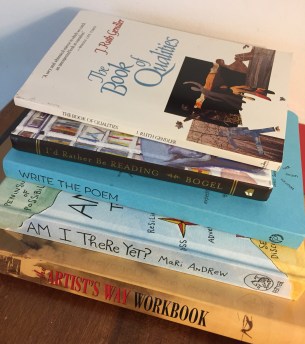
Here are my five favorite mentor texts that give me ideas and inspiration galore for those important start-of-the-year quickwrites–the first in a routine of creativity, agency, freedom, vulnerability, and engagement as a writer.

The Artist’s Way Workbook by Julia Cameron

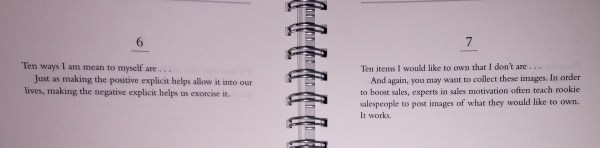
This workbook is full of writing prompts for real writers: short exercises that encourage reflection, fluency, and the habit of writing vulnerably often.

img_6055.jpg

I love this workbook and its series of prompts, and use them often when I start my day with the #5amwritersclub each morning. They would be wonderful prompts for students to ease into vulnerable, personal writing in September.
img_6056

I’d Rather Be Reading by Anne Bogel

I first discovered Anne Bogel thanks to her “What Should I Read Next?” podcast, but she is also a writer and blogger, and just released a beautiful book yesterday. It’s a book about our reading lives, and provides a wonderful mentor text for writing about our reading without writing about a specific text.

img_6051

In addition to the lovely writing, I am obsessed with the illustrations: they would be wonderful to recreate in students’ notebooks with scraps of old magazines or dusty dictionaries.

img_6048

I visualize this mentor text as a wonderful one for helping students find a voice for writing about their reading lives during quarterly reflections, reading ladders, and self-assessments.

The Book of Qualities by J. Ruth Gendler

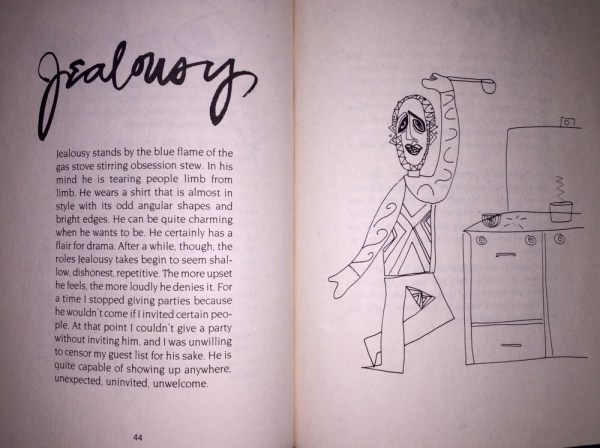
Writing about our own emotions is hard for all of us, but it’s especially hard for teens. I’ve found that writing about emotions in general, rather than our own, is a wonderful gateway for personal writing.
img_6049

In addition to being an amazing lesson in personification, this book provides gorgeous mentors for doodling, metaphors, and multigenre possibilities.

img_6050

Write the Poem

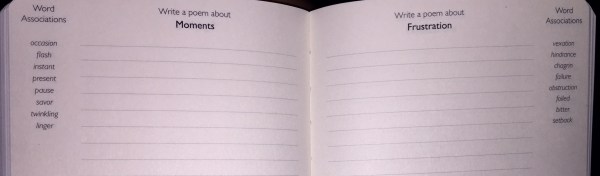
Poetry can be intimidating, but a little guidance goes a long way, and this book provides just that.
img_6052

The combination of a prompt and keywords to incorporate takes some of the guesswork out of choosing a structure, a rhyme scheme, a title, and the myriad other decisions that go into crafting poetry.

Am I There Yet? by Mari Andrew

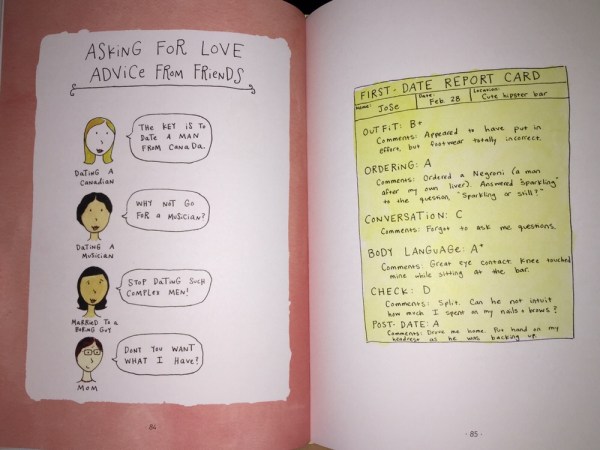
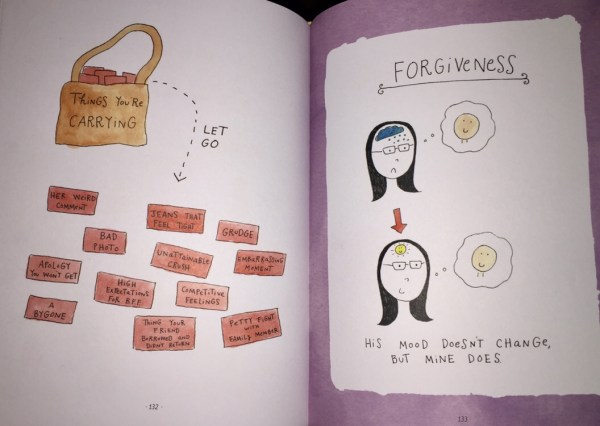
Sometimes words are hard. They just are. Those days call for doodles, and this book is full of plenty of them–in addition to pages of plain old writing. I love this text because it tells stories beyond what we see on Mari’s Instagram and Twitter feeds, giving students a mentor text not just for writing but for the thinking and living behind it.
img_6053

Mari Andrew has long been a favorite of mine, but this book shows me how to play with writing and thinking in genres I wouldn’t have considered, and is super teen-friendly.
img_6054


I hope you’ll utilize one or more of these beautiful texts–many excerpts of which you can view on the Amazon preview pages linked above–with your students this fall. Their possibilities as entry points for writing topics and genres are powerful, and will lead to composition possibilities for the duration of your school year.

Happy writing! We’d love to know how you and your students utilize these ideas, or what others help you kick off your writer’s notebooks. Please share other quickwrite possibilities and ideas in the comments, on Twitter, or on Facebook!

Shana Karnes is a mom to two daughters, a daily reader and writer, and a forever educator. Her work with teachers in West Virginia is through the National Writing Project, West Virginia University, and the West Virginia Council of Teachers of English. Connect with Shana on Twitter at @litreader. 

Writer’s Notebooks and other Little Big Things

I have a collection of writer’s notebooks I’ve filled since 2009 when I attended the a National Writing Project summer institute, and my life changed. It’s been a long while since I explored the thinking I penned there. I don’t know why. There’s some real gems.

my notebooks

In the front cover of a purple notebook I starting in the fall 2013, a couple months before my mother died, I found four quotes I’d written in different colored pens.

“If I waited until I felt like writing, I’d never write at all.”

Anne Tyler

“Start writing, no matter what. The water does not flow until the faucet is turned on.”

Louis L’Amour

“Write to the one or two people who would git it, not to “readers” or “the market.”

Avery Chenoweth

“Do not wait to strike till the iron is hot; but make it hot by striking.”

William Butler Yeats

You’d think I was planning on (and hesitating) writing a book or something. Guess I still am.

The first mentor text idea I noted as an idea to use with students is “Little Things are Big.” I couldn’t remember why I liked it but had written a question to the side: Why is this event important to the author? I looked up the title, and found this fantastic personal narrative by Jesus Colon. Watch the story here.

Then, I flipped a little further and found my own Little Things are Big. It’s ragged and pretty raw, but you’ll get the idea.

“Quick as a bunny.” It was written on a scrap of paper, tucked in the antique secretary my mother got from her grandmother. We found it the last evening I ever laughed with my mother.

My father slept in intensive care with a machine keeping him breathing, and every day I’d drive my mother to the hospital, so she could stay with him throughout the day. This was harder than it sounds.

My dad had covered my mother’s illness in platitudes. She was not doing “fine.” Her dementia had advanced to the point that she was often angry and unreasonable — so unlike my mother.

Alzheimer’s is a wrecking ball, leaving chaos and confusion, not just on the person who suffers from this illness but on entire families. So many days, trying to drive to the hospital, as she tried to open the door “to get there faster.” So many days, trying to coax a meal, a bath, or even sleep. My dad was the calming balm, the light in Mother’s darkness. And I became the enemy.

Then, one evening I wasn’t. For a hopeful moment, I saw my mother happy. Without prelude she walked to that old secretary, and then walked the sore hearts of my sisters and me through a journey of loving memories. She pulled out pictures and trinkets and old church magazines — all things that represented little parts of my mother’s huge and loving life. And we laughed as she laughed deep girlish giggles.

The funny thing? This silly, rambunctious, talkative woman — she wasn’t like my mother either. No, my mother was mostly demure — a lady in every sense of the word. Sure, she’d pitch in the occasional pithy line. She’d toy with her grandchildren, even tossing one or two in jest into the backyard pool, but she was never like this brash, loud, gregarious woman who laughed with us for a few precious hours.

When Mother passed away several months later, that disease had corrupted everything. Her language. Her love for those who loved her.

And I still grieve.

But I have this tiny note tucked away in the jewelry box my mother gave me, written in my mother’s hand, and that evening sealed in memory.

She held that scrap of paper in her soft papery hand and said, “My mother used to say that to Jody and me when it was our turn to do dishes:  ‘Get them done. Quick as a bunny.’ And we did. Mostly.”


What little big things do you have to write about? How will you invite students to write their little big things?

Note:  I think I will be revisiting my notebooks for awhile. More to come…

Amy Rasmussen just finished refinishing the perfect desk, and now she thinks she may have solved the problem of her writer’s block. She is the daughter of incredible parents and the mother of six incredible children. She loves sharing ideas that help move readers and writers, and she’s grateful to you for reading this blog. Follow Amy on Twitter @amyrass 

How We Built our First 3 Weeks of Workshop

Picture1

Look at Sarah’s room!

A classroom built around flexible seating is amazing for kids building their literacy.  Comfy chairs, tall stools, and bean bags take a student out of a “classroom” mindset and into a creative work space that encourages ideas to flow across boundaries that might have been impermeable with rows and rows of sterile desks.

It works just as well for teachers building a workshop from thin air. You can imagine how comfortable that tan couch felt on the last Friday morning before the start of school.

Sitting in that room for this much anticipated planning session felt as comfortable as if I’d been there for a decade.  Five teachers with a singular focus gathered their resources and experience to put together a plan that was student focused and built on the foundation of workshop.   I got to know this group well at the Literacy Institute but I’m still trying to learn the full extent of their individual and collective power.

It is important, on our team, to be intentional and explicit with our lesson design.  The kids should know exactly what we are doing and why we are doing it.  They should recognize the moves their teachers make and take comfort that those moves were selected specifically for them. There is no reason to keep the “why” and the “how” a secret.

On this team, we typically build lessons with an eye towards a learning focus that starts with something like: I want you to know that readers/writers ….. do something. (Thanks Amy, Billy, and the Lit Institute.)

For the first three weeks, though, we talked about using: I want you to know that members of a Reader/Writer Workshop….do…one of the six pillars.  You get it.

Our curriculum documents, designed by teachers, contain a section devoted to the six routines of workshop instruction and the following are the routines around which we built lessons:

The Reader’s/Writer’s Notebook

Lesson Focus: I want you to know that members of this Reader’s/Writer’s workshop use a notebook to explore thier literacy.

Our “notebooks” look very different teacher-to-teacher.  Some of our classes will use traditional composition notebooks and some will use Microsoft OneNote in our explorations.  Either way, the point of having a safe and personal place to plan, draft, revise, reflect, etc. remains consistent across our classes.  Its not enough for us to ask the kids to have a notebook, they need to know the importance of having it.  Some of the kids struggled with following my set-up instructions because they were intentionally vague.

Student: “Mr. Moore, what categories do you want us to use to track our reading this year?”

Me: “That’s up to you.  Its your notebook.”

Self-Selected Independent Reading:

Lesson Focus: I want you to know that members of this Reader’s/Writer’s workshop take ownership of their reading and writing experiences.

I remember back to last year, and how much the kids struggled genuinely connecting to a book. Maybe it was the hurricane sitting out in the Gulf or that they really only had one year of workshop leading up to their senior year.  What ever it was, we worked hard to take ownership of our reading, so much so that I wrote about it here and here. (Looking back at those words is like seeing the words of a different writer, but I digress…)

Mentor Texts:

Lesson Focus: I want you to know that members of this Reader’s/Writer’s workshop use mentor texts to guide their learning.

We use mentor texts to teach kids how to read and write like a writer. The students need to know that we looking at the writing of others with specific intentions in mind. Its important to delineate the separate lenses of craft and content and constantly reinforce the importance and interconnection of both.

We planned for ways to write beside them.  When I write in front of my students it invites them to connect to a writer from their community.  This connection is between a student and a person that shakes their hand every day and smiles when they make eye contact. That’s an incredibly deep connection and one that I’ll leverage every chance I get.

Mini-Lessons:

Lesson Focus: I want you to know that members of this Reader’s/Writer’s workshop look at specific skills that we want to learn and then apply those skills to their reading and writing.

The skills we choose to highlight are intentional and our students need to understand that they aren’t chosen at random.  Not only that, but we aren’t going to spend more than a few minutes in our mini-lessons before we move back into reading and writing, with an emphasis on those specific skills.

Collaboration:

Lesson Focus: I want you to know that members of this Reader’s/Writer’s workshop listen to others share and provide feedback that supports their growth.

I can’t teach all 30 of them all the time and maintain any level of effectiveness.  We have to build a supportive community that  allows me to widen the feedback cycle from one, typically confident student, to 30 who are confident to share with their confidants. They need to know that the days of me asking a question and calling on one person for the answer are far behind us.  We practice the routine over and over. Ask a question, discuss in group.  Ask a question, practice their thinking through written response. Rinse/Repeat.

Oh, and they have to be trained not to shoot up their hands or shout out an answer when they are asked to notice something.  Instead, they will learn to sit in the silence and let their thinking wash over them in waves. Or maybe the metaphor is to peel back the layers of their thinking like an onion. Whichever you prefer.

Conferring:

Lesson Focus: I want you to know that members of this Reader’s/Writer’s workshop take advantage of opportunities to talk one-on-one with the expert in the room.

The importance of regular one-on-one conferences can not be understated. I’m not just “checking-in” on them while they read and write.  I’m digging into their thinking for places I can provide support.  We will explain to our students how important it is for them to be honest and open when we confer.  They can’t hold back due to nervousness or fear. Like Jerry Maquire said, “Help me, help you!!!” with that typically creepy look on his face.


Based on our planning sessions, impromptu secret meetings, and the genuine happiness in which we approach each other, I know this year will be my best ever and it is because of the work this team will do together to move our freshman class forward in their literacy.

Now, in all seriousness, lets cross our fingers and hope nature and fate don’t hit us with the same intensity as last year.  We all need time to heal a little more.  Let’s do it together.

Charles Moore had a quiet Friday night and went to all four of his son’s soccer games this weekend.  He passed El Deafo by Cece Miller back and forth with his daughter this weekend.  He put more than two thousand words to the page this weekend between his grad classes and this blog post; a new record.  He can’t wait to get back into the classroom Monday morning and learn alongside the students.  And he wishes you the same happiness he’s enjoying right now. Visit him on twitter or instagram.


Poetry Matters (and not just in April)

Screen Shot 2018-08-23 at 5.10.47 PMPoetry is alive. It surrounds us, breathing life into our Instagram feeds, popping up as videos on Facebook, nestling into our daily lives. If you follow the conversation on Twitter around #teachlivingpoets you’ve likely been introduced to poems from writers like Sarah Kay, Clint Smith, and Rupi Kaur. According to a study released from the National Endowment for the Arts, 28 million adults said they read poetry last year — a 5% increase from just four years ago. According to the market research firm The NPD Group, poetry book sales are one of the fastest growing categories in publishing. Library shelves are full of novels in verse — Jason Reynolds’ Long Way Down, Elizabeth Acevedo’s Poet X are two of my recent favorites. Poetry is not just alive; indeed, it is thriving.

Too often, though, poetry in our curriculum continues to be relegated to a unit during National Poetry Month in April, after state-testing has passed and teachers feel like we can have “fun.” We must expand the space poetry occupies in our classrooms. In fact, Nancie Atwell, in her introductory letter in Lessons That Change Writers, explains that she uses poetry as one of the first units of her year, because “my students showed me that no genre can match poetry in teaching about the writer’s craft.”

Here are some of my favorite ways to use poetry in the writing workshop throughout the year:

“Rambling Autobiography” by Linda Rief

In the pantheon of “getting-to-know-you” poems, Linda Rief’s poem “Rambling Screen Shot 2018-08-23 at 4.56.03 PM.pngAutobiography” is one of my favorites. Students are captivated (and sometimes surprised) by how Rief jumps from idea to idea, creating rhythm and flow. They like that it doesn’t have to all “make sense.” Some of our best writing all year comes from this piece. Sometimes we write the poems towards the middle of the year. Sometimes we go back and write from a sentence. Sometimes we go back and mine the poem for other writing ideas. After writing from their own perspective, students could later try to write from someone else’s perspective. (note: please create space for students to write about themselves first! It builds confidence, fluency, and buy-in.)
You can find “Rambling Autobiography” along with other quickwrite possibilities in Linda’s latest book The Quickwrite Handbook (a quick google search turns up lots of poems written by students using Linda’s as a model).

“The Truth About Why I Love Potatoes” by Mekeel McBride

Reading like a writer, as Shana wrote about yesterday, is a powerful part of the work of a writer. Poems give us wonderful touchstones for being able to do this.

One of my favorite poems to share with students as we examine author’s craft is “The Truth About Why I Love Potatoes” by Mekeel McBride. I was first introduced to this poem when teaching with Tom Romano (he wrote about it how he uses it in his book Fearless Writing).

After drafting their own poems, I often invite students to gather research about their topic and add a layer of information to the piece. It’s great practice for weaving research among your own words. I also love how Amy Ludwig VanDerwater reminds us that poems reside within the world of informational writing.

“Possibilities” by Wislawa Szymborksa

Ever since I first saw Beth Rimer, co-director at the Ohio Writing Project, share this poem with teachers a few years ago, I’ve been amazed at how effectively it can be used as a launch pad for argument writing. We examine the way each line flows together, but also stands alone. Imagine having students create a list of things they prefer, then going back and revisiting for the claims that live in their lives. We can then infuse that writing with research, or even practice adding hyperlinked citations as evidence for a line. There are so many possibilities (groan…pun!).

So here are a few ways you might add poetry to your classroom. Maybe you already use these — we’d love to hear about it. Or we’d love to know about all the other ways we know you’re using poetry. Share your ideas (be sure to tag @threeteacherstalk). Together we can fill our rooms with poetry all year long.

Angela Faulhaber lives in Loveland, Ohio and is gearing up for another year of literacy coaching and teaching pre-service educators at Miami University. A version of this post appeared in the Ohio Journal of English Language Arts Summer/Fall 2018 issue in the Editor’s Note, where Angela has just finished up as editor. 


Taking a Chance with Mentor Texts

I was both relieved and inspired by Amy’s post on ways to “avoid the dread” and make the opening day or days of our reading-writing workshop classes feel less like just like everything else, forms and lists of rules and the reinforcement of the dread of yet another school year filled with being told exactly what to do and how to do it. I loved her idea about author bios, and my teaching partners and I plan to use it along with another mentor text idea I stole from Allison Marchetti at the blog Moving Writers: James Gulliver Hancock’s Artists, Writers, Thinkers, Dreamers: Portraits of Fifty Famous Folks & All Their Weird Stuff. This  mentor text worked really well last year with both sophomores and seniors. I only wish I had done more with it, so I plan to do so this year, which is actually less than a week away!

As teachers of reading-writing workshop and followers of this blog, we are so fortunate to have the benefit of so many tried-out mentor texts to use with our students. Our own colleagues are of course our best and most trusted source for anything we need from the most philosophical to the most concrete. So, thank you for everything this blog has provided for me to be constantly reflecting and improving on my practice to provide the richest possible experience for my students.

But in the second part of this short-ish post, I’d like to present a handful of mentor texts that are not yet tried-and-true but hold (I think) some potential for reaching our writers who have their own very personal reasons for their reluctance as writers.

Your_Black_Friend_coverA collection of Ben Passmore’s online comics has been published late this summer as Your Black Friend & Other StrangersYou can read one of the NYT reviews here — I read the book myself and was blown away. Race and equity is a critical element of our curriculum and professional development. Ben Passmore’s work, I think/hope, can be useful for opening a cross-racial dialogue in a way that is accessible for its down to earth portrayal of what cross-racial friendship looks like from the perspective of a person of color.
For this next one, Things I Never Said by Starlenie Vondora, I owe thanks to my Things I Never Saidcolleagues Mariana and Abdel: the same day I read Mariana’s review on GoodReads, lo and behold, Abdel had a copy of it just sitting in his classroom waiting for a reader. Disclaimer: This book is heavy, heavy stuff. I curated a few of the more neutral poems that might have potential as quick-write prompts or mentor texts. But I love the overall concept of putting down on paper “things I never said,” and I think teenagers might, too.

And so, we begin again. A friend of mine who recently left teaching was speaking wistfully about the cyclical nature of what we do, about the freshness of each new school year. It’s so true. Despite last year just about slaying me every day, I might be just about ready for this one. Aren’t we all? So let’s savor these early days, which for me will be the about the first five, just before it sets in that that I’m already behind, that there is never enough time and far too much to do. And we’re back to it, coming back and trying again every day. With a little help from mentors and friends.

Reading and Writing about TV

You’ve read before on TTT about how summer is that time for necessary rejuvenation, even if it comes with guilt.  

Summer is also the time for our best ideas to grow.  I just came back from the inspiring NCTE Summer Institute, where I made teacher friends from around the world and I maxed out my library holds in about twenty minutes of talking to fellow teachers.   And if that’s not enough to remind you that summers are important, I’ll remind you that Hamilton wouldn’t be a musical if it weren’t for summer.

LinManuel

One of the ways I am taking time for myself is by watching television.  Lots and lots and lots of television. And I’m not talking thoughtful, high-quality, content-rich TV: I’m talking vote-em-out reality shows where portmanteaus like “showmance” are frequently used.

swaleigh

Chris (Swaggy C) and Bayleigh found each other inside the Big Brother House this summer.   Will “Swaleigh” last or is one of them going home?  

I am not going to try to convince you that you should waste your time like me watch these TV shows.  However, I have noticed that I spend about as much time reading about TV shows and writing about TV shows as I actually spend watching the show.

Using myself as an example, I have some thoughts on how to bring this television into our classrooms for reading and writing.


Reading about TV — research and mentor texts:

  1. People, Entertainment Weekly, and Rolling Stone all have solid and consistent coverage of television shows with articles and interviews that are sufficiently detailed and not too sensational.
  2. For reality TV in particular: The New Yorker has this wild story about a failed reality TV concept.  Reality Blurred covers the underbelly of the TV shows and provides a glimpse into casting, productions, and trends.  My fellow Survivor friends would be disappointed if I didn’t include a link to Rob Has a Podcast.
  3. Medium is a good medium (ha!) between social media discussions about TV shows and something more professional.  You can do a search for specific shows or do a search by topic.


Writing about TV: prompts to get writers started in notebooks.

  1. What are five TV shows that other students/people should watch?  Why?
  2. If you’re a fan of a specific TV show, what’s the best/worst season?  Why?
  3. You are a producer of your favorite TV show.  What would you change/fix/add?
  4. What TV show was a big disappointment for you?  Why were you looking forward to it? Why didn’t it meet your expectations?
  5. How does where the TV show takes place influence what happens in an episode?
  6. What episodes do you rewatch?  Why?
  7. Who are some of your favorite characters?  Why?
  8. What’s a funny TV show for you?  What makes it so funny?
  9. How does this TV show portray race, class, gender, and relationships?  Does that portrayal line up with how you see your life?
  10. Reality television is often distorted by “the edit” – the snips and clips that make the final cut and represent a fraction of a percent of what a contestant does.  How might the edit differ from the real story?  Why?


Now that I’ve laid bare some of my passions — what are you up to this summer?  Do you think it will influence how you teach next year?


Amy Estersohn is an English teacher in New York. Her favorite season of Survivor for entertainment value, strong characterization, and sociological discussion is Marquesas (Season 4). 


Summer Time Writing Inspiration

Up here in Canada, we are not quite on summer vacation like many of my colleagues to the south, but we are firmly at that time of year where our minds are more in the next school year than the current one. As we are invigilating our year end exams and saying goodbye to our Grade 12 students, the minds of myself and many of my colleagues are already turned to planning for the next group of students we will be working with in the fall.

While an important part of summer is taking the time to relax, recharge, and delve into my growing pile of guilty pleasure books for reading, I always look forward to the time summer gives me to catch up on my professional reading.

IMG_0729

The Creativity Project – complete with a barcode from my school library!

One such resource that I am so excited to delve into over summer break is The Creativity Project written by Colby Sharp. Colby Sharp may be a familiar name to those of us who have embraced the works of Donalyn Miller’s The Book Whisperer and Reading in the Wild in our classroom practice as he is, among many of his other amazing contributions to the world of education, one of the co-bloggers on the Nerdy Book Club blog.

What has me so excited about this resource is that it combines two of my favourite things and two of the most magical elements of a creative writing class – exciting writing prompts and engaging mentor texts.

In The Creativity Project, Colby Sharp reached out to some of the best authors in the juvenile fiction and YA world – the ones our students are loving and reading- and asked them to create a writing prompt for his book. Contributors to his project include authors such as Kate DiCamillo, Mariko Tamaki, and Lemony Snicket to name just a few. He then shared the prompt of one author with another author and had them write a piece inspired by the prompt for the book. The end result is a book not only chock full of prompts, but also with mentor text gold. After the prompts themselves, the author who created the prompt provides a brief explanation for their inspiration for their prompt, which provides a lovely window into where authors get their inspiration from. The responses to the prompts are honest and raw, humorous and hilarious. There are short stories, poems, and graphic novel panels. What is most wonderful of all is the fact that the pieces are not the final polished pieces, rather they are evidence of published authors engaging in the very tasks we ask our students to do – take a prompt, run with it, and see where it takes you. For another great post on writing prompts, check this one out.

This summer I am hoping to use the Creativity Project to rekindle my own creativity and to use the prompts to get writing again. If I am feeling particularly brave in my next summer blog post, maybe I will share something I have written with you. The next school year, I am excited to see how this book can be used to inspire my students to write.

Pam McMartin is jealously reading the blog posts of her colleagues already on summer break and dreaming of the summer sun, which has been rather absent lately at her school just outside of rainy Vancouver, British Columbia. Her summer plans involve enjoying letting go of the daily schedule, slowing down and enjoying time with her family, and hopefully writing on prompt after prompt from Colby Sharp’s book. Find Pam on Twitter @psmcmartin.

Guest Post – Chronicles in Conferring

4

I was so excited when Charles Moore asked me to write a guest post for The Three Teachers Talk community.  After meeting Amy Rasmussen and reading posts like Writing Heals. Writing Assignments Do Not and How to Confer Like a Ninja, I continue to learn solid strategies for engaging my students in authentic writing activities that matter to them.  I am an avid reader and writer; so, it is no surprise that my favorite part of this job is conversing with students about their own reading and writing lives!

In the past, my conversations with students tended to be informal and sporadic; I would only focus on the more traditional feedback like formatting, conventions, and organization. But, with no end-goal or clear means to measure if these conferences were improving my student’s abilities to really think like writers, I would often feel lost and underwhelmed.

3

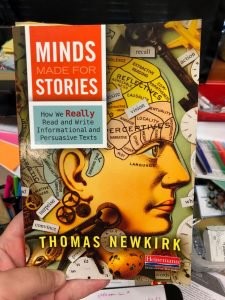
Luckily, I found some real direction after reading, Minds Made for Stories, by Thomas Newkirk and Writing with Mentors, by Rebekah O’Dell and Allison Marchetti.

Both books inspired me to weave together genuine writing advice with mentor texts the students could use as unique needs emerged during their writing journey.

I am so thrilled to share my experiences with other teachers because I love workshop now, and each day is a new opportunity to promote passion and purpose through writing. Charles Moore showcases some great resources for similar strategies in his post, Formative Assessment Works!!! 

A Look Inside My Classroom; Conferencing & Sharing Mentor Texts

Setting the Scene: Sarah, a music enthusiast, has been working on a song analysis essay for a few weeks and she started getting frustrated with her lack of progress. I met with her on several occasions, narrowing her choices in artists and songs, until she had a solid

2plan for her draft. Suddenly, she felt like “it just wasn’t going anywhere,” and she was ready to abandon the project entirely. I think we’ve all seen this before; it was a classic case of “I know what I want to say, but I don’t know how to say it.” She was also suffering from the mind-numbing effects of having more material than she could manage. What to do?
The Intervention: In response to Sarah’s crises and hearing similar angst from other students, I decided to have them all conduct a peer-to-peer conferencing activity. Students would read each other’s drafts and provided feedback that both praises the connections made and presses the writer to stretch a little more.

The Sharing Magic: Sarah decided to exchange her draft with another student who is really into writing poetry and has published several poems during Workshop this year. The two writers discuss, and Sarah is immediately rejuvenated by her partner’s comments and recommendations.  Her partner suggests that she use lines from the songs she has analyzed to write her own epic poem.

5

My Teachable Moment: As she is emphatically exclaiming her eureka moment, I turn to the bookshelf behind me and grab an annotated translation of Dante’s Inferno. I hand her the book, explaining how Dante created elaborate allusions in his poem that are illuminated by the translator’s detailed footnotes.

I never get tired of having moments like this with my students! Sarah now had a mentor text to help guide her through the treacherous depths of poetry composition and analysis.

The next day I brought her a copy of  Your Own, Sylvia by Stephanie Hemphill.  A portrait of the poet’s life told in a collection of verse. Each poem includes insightful footnotes that Sarah could use as a model for her own writing.

1

The Final Act: I was so happy to see a copy of Dante’s Inferno and Your Own, Sylvia on the desk of a student who had spent the entire first semester fighting me to read anything other than mystery novels. Not only is she growing as a writer, she is also growing as a reader. Funny how it works like that.


Jenna Zucha teaches English II Pre-AP at Clear Springs High school. She is currently reading Trevor Noah’s Born a Crime and is looking forward to spending more time with her dog, Scout, and devouring her summer reading list! Follow her on twitter @MsZucha and There’s a Book for That

Multigenre Magic

Teacher goosebumps. We’ve all had them: students are focused, consulting their Writer’s Notebooks, talking to each other, incorporating what they learned into their writing. It’s what we live for. No moment in the academic year ever evokes this synchrony more than the multigenre project.

Defining Through Experience

Like my students, you might be wondering what multigenre is. I learned about multigenre during my first year of teaching when I attended a workshop with Tom Romano, the godfather of multigenre. Dr. Romano has since become a mentor and colleague and his work continues to inspire my students 15 years later. Shana 

When we begin our multigenre unit, students have, at best, a vague notion of the vocabulary, but no experience.

Before class begins, I conspire with one of the orneriest kids; today it’s Jamal. Together, we quickly whisper a plan. As students finish up their vocabulary quiz, I look to Jamal, eyebrows raised.

“Jamal! I just saw that. You cheated,” I accuse heatedly. Suppressing a smile, Jamal shifts to fake outrage. We verbally spar a bit, ensuring all students tune in. They’re used to firm classroom management. Today it’s different.

Channeling all my inner drama queen, I huff and puff and toss my ID badge and keys to the floor. “Guess, what? I’m done!” I proclaim as I storm out of the door.

I wait a beat. Then before students can get too excited, I burst back in the door and high-five Jamal. Students are confused, excited, hyped. “You’re trying to figure it out, right? Well, before we talk about it, let’s write about it.”

Students grab their Writer’s Notebooks (WNB) as I pass out notecards. On each notecard is a genre of writing with which my students are familiar: Facebook post, text message conversation, letters, among them.

And students write. For three minutes their pens flow and they capture all the nuances — the questions, the perspectives, the layers. We share writing. We collaborate. We grow as a community.

“We’ve just created a multigenre,” I explain and share Romano’s definition of multigenre.Screen Shot 2018-05-03 at 2.31.22 PM

Multigenre Tasting

Once we define multigenre, the next step is to immerse ourselves in mentors. Using past projects, as well the ones I’ve curated at Multigenre Library, we participate in a multigenre tasting. We create lists of the qualities of multigenre, as well as a rubric and checklist for this kind of writing. After establishing guidelines, students go back to their notebooks and explore their writing territories, finding compelling topics.

Mini-lessons

The bulk of the time for this unit is spent workshopping, conferencing, writing. We spend time in three main ways:

  1. Genre minilessons
  2. Research minilessons
  3. Revision minilessons

In genre mini-lessons, I stand firmly on Katie Wood Ray’s shoulders, knowing that asking my students to notice things in a piece of text is the key to them reading like writers. So, when we are going to try a new genre, we start by looking at examples of that genre. We make a list of rules/guidelines for that kind of writing and then we write about our own topic. Together we explore double voice poems, recipes, and open letters. Katie wrote about one of my favorite genres to explore in this post last month.

Once students have tried out lots of different ways of writing, from lots of different perspectives, we talk about incorporating research into their writing in a purposeful way. Whether students are writing about personal topics, or more traditional research subjects, they need to know how to add a layer of research because it deepens the writing and builds their own knowledge.

I began to save the research step until later in the process after they’d generated plenty of writing about their topics. They write a bit, then conduct research, then weave that research into writing that already exists. This approach has cut down on plagiarism. More importantly, it’s made the writing and the research more authentic.

Publishing & Assessment

Next students publish. We discuss how important it is to remember that their writing is the engine of the multigenre project. A beautiful presentation falls flat if the writing doesn’t show evidence of craft. This is an English class, after all. Students conference with me and with each other about ways they might present their work. Some choose digital platforms, others create scrapbooks.  


I have tried many approaches to assessing student learning within this unit. I used to have a rubric that was so detailed you’d need a magnifying glass to read it (which means nobody actually read it). Now I use a simple rubric, one we create together. Students must have a certain number or pieces, and write in a set number of genres. There needs to be passion and voice. Mostly, though, I focus on feedback. I make notes on post-its and stick them on pages where their voice soars, where images pop. The assessment has already happened through conferencing and workshopping. In the end, we focus on celebrating the work and how far they’ve come.

Angela Faulhaber is a literacy coach in Cincinnati, working with teachers in all grade levels to move kids as readers and writers. She’s getting ready to introduce multigenre to 150 freshman next week while covering a 3-week sub position. She might be a little crazy (but also really excited).

Formative Assessment Works!!!

For those of you who haven’t taught Seniors, trust me on this:  Formative assessment during the second semester is challenging.

If you’ve taught seniors, then you might understand where I’m coming from:  Sometimes it’s hard to tell if they aren’t grasping a concept, or they are just too tired of school to have the energy to engage.

I hurts my heart to even consider that my precious learners are worried about bigger issues than Comparative Literary Analysis essays or finding examples of bias in their self-selected texts.  Prom looms five days away and graduation seven weeks after that.  They work, they compete in extra curriculars, they deal with the adults and peers in their lives.  I forget, sometimes, that their plates are filled with important thoughts.  I remind myself I’m not doing their stress levels any favors by point out that we still have important work to do before June 2nd.

Last Monday we reviewed an excerpt from Niel Schusterman’s Thunderhead as a mentor text for practicing literary analysis through all the lenses that should be crystal clear to these literate learners.  I needed to assess their understanding and thinking so that I could make decisions about the instruction leading up to the summative assessment.  That’s the point of formative assessment; to “form” a plan for instruction.

I read the short selection with them, and asked them if they would, please, mark their thinking on this first lap through the text.  They should, as they’ve done many times before, underline or highlight what they noticed about the words the author chose through the lenses of diction, bias, author’s purpose…literally anything they noticed within the realm of literary analysis. It’s the last nine weeks of their public education career. They should be able to look at a text through a variety of lenses.

Some of them made some marks on the page while others wrote notes next to highlighted lines or words.  Others, though, marked nothing.  [Alarms wiggle and stir in my head. Something’s not right.]

I asked them to share within their groups what they noticed.  Muted whispers of ethos, tone, and metaphor struggled out of some groups, but again, most said very little.  Very few connections were being made. For them and for me, the picture was as clear as mud. This, by itself, is important formative assessment. This wasn’t working. [Def Con 55- Full tilt klaxons at maximum volume!]

Yet, I refuse to blame them.  I fully believe that it is solely on me, the teacher, to facilitate engagement with the text.  Somehow I need to do a better job inviting them to take all those useful tools out of their tool belts and dissect this very meaningful text.

New England Patriots at Washington Redskins 08/28/09

I bear a striking resemblance to Tom Brady.  Photo by Keith Allison

In football parlance, I needed to call an audible in the middle of the game. What I had hoped they would do; they won’t or can’t.  It’s time for me to jump in and scaffold this concept to a place where they can see the connections they can make and I can assess their thinking.  I’m not going to put them in a position to fail on the summative assessment if I know they aren’t ready for it.

In a whole class mode, I read over the text, mark what I notice and verbalize my analysis.

Now I ask them to talk about what they notice.  There it is…an increase in discussion, an inflation in dialogue. The alarm volume turns down a notch, but it doesn’t turn off.

I wrap the class period up with an invitation to write about what moves the author is making and as they do I confer with a few students who seem completely flabbergasted.  The bell tolls, signaling an end to their literary torture session.


Thus was the source of my salvation:

book

I only saunter.

Jumping into this book reminded me of a few important tenets of writing instruction that I let myself forget:

  1. Give them choice- I was allowing no choice in the subject of their analysis.  I know better than to restrict their reading and writing experiences and I let my, and their, end of the year exhaustion affect my decision making.
  2. Show them, not tell them, what you want to assess.  I wasn’t showing them examples of literary analysis and again, I know better.  I was expecting, wrongly, that Senior English students would confidently engage in literary analysis and move forward with their thinking in a way that shows me they can write a response in essay form.

After school, I tore up my lessons plans for the next four days and re-wrote them to reflect what I SHOULD do to support my students in this exploration.

On page 5 of their amazing new book Marchetti and O’Dell introduce a mentor text written by Joe Fassler from The Atlantic.  His recurring series “By Heart” is a collection of responses from a diverse group of thinkers and writers and is an amazing resource.  A simple Google search returned a link to this series of essays. I scanned the list of the titles and discovered an article from September titled, “What Writers Can Learn From Goodnight Moon.”   In it, Celeste Ng describes her feelings of the children’s book and how it “informs” her writing.

Perfecto!!!

This checked so many of the boxes of what I was looking for in a mentor text.  And…I get to read a children’s book to “big” kids.  I know enough about my students to know they will love this.

Also, I used Marchetti and O’Dell’s five part descriptions of literary analysis on pages 11 and 12 to create a glue-in anchor chart for their readers’/writers’ notebooks that helped to clarify what exactly we should look for when reading and writing literary analysis.

Confidence restored! Disaster averted… kind of.

We Ng’s reflection and discussed how this was a perfect example of literary analysis.  They asked questions, we laughed about Goodnight Moon.  I saw their confidence grow and I knew we were back on track and ready to move toward our essay.

Thursday, we started the drafts and I hope to see many of them tomorrow.

Being responsive and intentional is a crucial part of the workshop pedagogy.  I can’t stress enough how this one piece can make our break my teaching.  My lesson planning skills have finally reached the point where I plan for and anticipate opportunities to change up what we are doing to match what the students need. This was an opportunity for which I hadn’t planned, but we made the adjustment and made it work.

Sometimes, that’s how it goes.

Let me know in the comments below when you’ve had to make big changes on the fly to support your students’ learning. I know I can’t be the only one.

Charles Moore is neck deep in Children of Blood and Bone.  He’s spending the day taking his daughter to school and then having lunch with her.  It might be the best day of his life.  His summer TBR list is growing uncontrollably; feel free to add to it in the comments.