Category Archives: Readers Workshop

#FridayReads: Books Boys Love

Bedtime_readingAt the conclusion of our course with Tom Newkirk at the University of New Hampshire Literacy Institutes, our class collaboratively created a list of books that boys love.

Please add your own suggestions for your male students’ favorite books in the comments!

  1. Into Thin Air, Into the Wild, and Where Men Win Glory by Jon Krakauer
  2. Peace Like a River by Leif Enger
  3. Unwind and others by Neal Shusterman
  4. Absolutely True Diary of a Part-Time Indian by Sherman Alexie
  5. Sleepers by Lorenzo Carcaterra
  6. Hellhound on His Trail by Hampton Sides
  7. Maze Runner by James Dashner
  8. Forgive Me, Leonard Peacock and BOY21 by Matthew Quick
  9. Mexican Whiteboy and others by Matt de la Pena
  10. I am the Messenger by Markus Zusak
  11. Start Something That Matters, Little Princes, and other inspiring memoirs
  12. Winger and 100 Sideways Miles by Andrew Smith
  13. Unbroken by Laura Hillenbrand
  14. A Child Called It by Dave Pelzer
  15. American Sniper, The Things They Carried, Ghost Soldiers, The Good Soldiers, No Easy Day, and other war books in general
  16. City of Thieves by David Benioff
  17. Boot Camp and others by Todd Strasser
  18. Stiff, Spook, etc. by Mary Roach
  19. Fight Club by Chuck Palahniuk
  20. Anything by Gary Paulsen or Jack Gantos
  21. Iron Man, Deadline, and others by Chris Crutcher
  22. The Discworld series by Terry Pratchett
  23. Warhammer novels by Ian Watson
  24. The First Stone, Running on Empty, and other books by Don Aker
  25. GRAPHIC NOVELS:
    • Walking Dead
    • Maus
    • Watchmen
    • A Dozen Demons
    • V for Vendetta
    • American Born Chinese
    • Chew 
    • Naruto
    • Pride
    • Persepolis
    • Burma Chronicles
    • My Friend Dahmer
    • Stitches
    • The Photographer: Into War-Torn Afghanistan With Doctors Without Borders
  26. Ice Time by Jay Atkinson
  27. Everything by Walter Dean Myers
  28. An Invisible Thread by Laura Schroff
  29. Crank, Rumble, and more by Ellen Hopkins
  30. 4021A by Joe Hill (Stephen King’s son)

Takeaways: Boys & Literacy

arts-graphics-2008_1128618aAt the conclusion of our course with Tom Newkirk at the University of New Hampshire Literacy Institutes, our class collaboratively created a list of implications from our learning.  Following a reading of Misreading Masculinity, a viewing of the documentary Raising Cain, and more, we used Google Docs to list the implications of our course for application in our classrooms.

Please add your own wisdom about boys and literacy in the comments!

  1. Provide choice: lots of options in topic, genre, etc. – Allow for different styles of storytelling
  2. Incorporate more visual literacy – Using mentor texts like Knucklehead, comics, etc.
  3. Encourage the writing of fiction as a fantasy outlet
  4. Acceptance of the content they bring/the choices
  5. Conversation: Ask about choices that seem uncomfortable – build trust
  6. Teachers: Recognize the difference between uncomfortable and threatening
  7. Respect that students can differentiate between fantasy and reality.
  8. Pay attention to the context of the violence in boys’ writing
  9. Encourage collaboration in writing and reading
  10. Make space for movement and conversation – too often, boys must sit and listen; reverse that
  11. Incorporate humor in the classroom and content/curriculum
  12. Grant students more autonomy in the classroom
  13. Use the note response method we used to have students respond to each other’s work
  14. Support social interactions between boys around literacy
  15. Question our own motives, preferences, and restrictions as we teach
  16. Create a place for non-fiction – demonstrate that non-fiction does not have to be boring
  17. Use technology as an alternative medium for both expression and sharing
  18. Learn the identities and passions of your students
  19. Recognize the importance of listening to students
  20. Realize that posturing is okay – it is “trying on a personality” in order to discover one’s own
  21. Provide positive role models of masculinity so male students don’t get caught in a bad one
  22. Encourage nurturing responsibilities in (ie, provide opportunities for) boys
  23. Have a wide diversity of types of male protagonists in available literature – celebrate the same strengths we applaud in female characters when we see them in male characters
  24. Be aware of the gender implications of language
  25. Open up the genre of analysis beyond literature, eg, new video game
  26. Allow and encourage drawing at all levels
  27. Expand your repertoire – having a team helps
  28. Encourage positive competition occasionally

Fart Jokes in 12th Grade

photo 2-2Three minutes into silent reading, someone farted. I have the band-aid colored desk-chair combos, which meant that one vibrating toot was magnified against the metal frame of the guilty student’s seat. The room stayed silent for half-a-minute and then erupted in laughter. The girls quietly chuckled, but there was no way the boys could settle back into their books, so we moved on to our minilesson and called it quits.

My boys can’t get enough of lowbrow humor. Their writer’s notebooks and fictional stories are full of crass humor—farts, sexual innuendo, embarrassing stories, and offensive humor. For years, I chalked up their obsession with these topics to immaturity. I love a good fart joke or sarcastic paper, but I never truly understand the point.

Newkirk argues that humor is a mode of exploration for students, particularly boys. Instead of chastising them for vulgar or lowbrow humor, teachers should capitalize on boys’ love for the weird, gross, and funny. He pointed out that classic literature is full of crass humor, citing Beowulf and Shakespeare as examples. Boys, he noted are inclined to read humorous literature and use these as mentors for their own writing.

Too often though, teachers either don’t understand boys’ humor or they fear that the silliness somehow undermines the assignment. This shouldn’t be the case. Just as we give girls the room to explore emotionally charged pieces about self-confidence or dating, we must also give boys the opportunity to investigate their own questions, which may very well include both humor and violence, as Shana discusses. In an excerpt Newkirk gave us from Boy Writers, author Ralph Fletcher notes that “some of the crass humor in their writing (burping, farting, dirty diapers) tries our patience, but many boys are simply making ‘text-to-text’ connections between their writing and the kind of humor they read in books.” These connections are invaluable when it comes to capturing the attention of our male students.

IMG_2367In turn, we must allow our boys a space to explore humor. Sometimes jokes are just funny, but other times, they soften heavy themes in literature. They open up deeper discussions that are otherwise inaccessible or uncomfortable. As Newkirk writes in Misreading Masculinity, “[Humor] provides a forum for negotiating and sustaining male friendships, and of making overtures to girls. It allows us all to laugh at the peculiarities of our bodies, as we escape, if only briefly, from our embarrassment at the sounds they involuntarily make and the smells they produce” (Newkirk 167). Will students toe the line between inappropriate and appropriate humor? Most likely. Will they take their jokes too far? Potentially. But learning is about testing our surroundings and studying voices to find our own. At the end of the day, I’d much rather my students explore their world through laughter than not, fart jokes and all.

The Consciousness of the Child: Another Thought on Conferring

Much has been written about conferring with younger students, but in the current professional literature, I find little that addresses the needs I have in my secondary classroom. I know when I talk to my students in one on one conferences, they grow more as individuals who engage in reading and writing more critically. I believe that if teachers will talk to their students more, teaching them as individuals instead of the collective, students will respond in ways that delight and surprise us (and often surprise themselves as well).

Teenager with parent

Teenager with parent

The topic of conferring consumes my reading life of late, and I find myself reading Misreading Masculinity with this guiding question:  How does this relate to my study and work on talking to students about their thinking?

The following lines from Newkirk’s book relate directly to what I believe must be our first step in helping our teenage readers and writers develop the sense of self needed to engage meaningfully with the material and skills we need them to in high school English:

“…the ability to think beyond the “logic” of normal school performance in order to inhabit the “logic” of the student (Newkirk, 12).”

. . . The linguist Basil Bernstein elegantly points out the centrality of this ethnographic stance for teaching:

If the culture of the teacher is to be part of the consciousness of the child, then the culture of the child must first be in the consciousness of the teacher…We should start knowing that the social experience the child already possesses is valid, and that this social experience should be reflected back to him as being valid and significant. (1966, 120)

As a credo for education in a multicultural society, I don’t think we can do better than that (Newkirk, 13).

Educators must relate to students as individuals with a variety of interests, passions, backgrounds, and literary histories. We must try to think like they do if we are ever going to develop relationships that engage the teenager in reading and writing experiences that invite them to take on the qualities of readers and writers. Our goal should reach far beyond the idea of school. It must reach into a student’s future life.

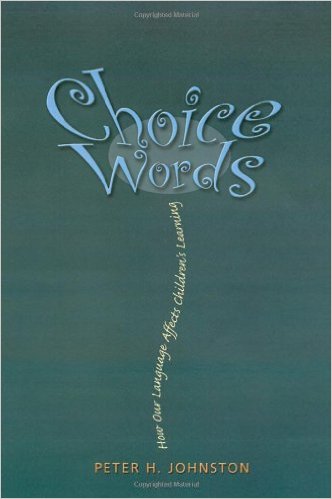
In the book Choice Words,  Peter Johnston discusses the importance of tapping into students’ literary Choice Wordshistories in order to give them a literary future. What experiences has the child had with reading and writing that have formed her belief about herself as a reader and a writer? We must learn of these experiences and then validate them if we ever expect to move our students from the starting places at which they come to us.

Regularly conferring with students is a vital part of getting into the “consciousness of the child.” However, many high school English teachers instruct their students as if they all experience the same culture and the same consciousness. No wonder groupthink is so prevalent in our communities and in our politics. It is a reflection of how students receive instruction. This whole class, one-size-fits-all, standardized teaching (not to mention the tests) is detrimental, not just to boys, but to all students who deserve to be instructed at an individual and personal level.

What are your thoughts?

©Amy Rasmussen, 2011 – 2015

Just Let Them Write: Boys and Autonomy

“Just let them be boys.”

This aphorism about dealing with boys is a long-standing one, but I learned last week in Tom Newkirk’s class on boys and literacy that it’s much easier said than done.

First, after reading a pretty fascinating article in The Atlantic, I realized that modern society doesn’t often let our boys be boys.  The economy, family structures, and workplaces of America have changed drastically in the past twenty years, and the traits and skills that used to make men successful and fulfilled have gone away.

Second, I listened to my fellow teachers discuss their classrooms this week at UNH, and I was struck by the language of control prevalent in teaching narratives:  “I make them;” “I let them;” “I shoot down their ideas;” “They have to;”…these were the words teachers used to describe their students’ activities.

These are phrases of division, of separation, of a differentiation of teacher and student, expert and learner, master and subject.  Having just read Daniel Pink’s Drive, the phrase “The opposite of autonomy is control” has been stuck in my mind.  It seems that even in the academically enlightened setting of the New Hampshire Literacy Institutes, many teachers still practice a teaching philosophy of control and compliance, rather than one of equity and autonomy.  Further, many of these speakers were women–so this was an issue not just of control, but of furthering the claims of the Atlantic article mentioned above regarding emasculation.

Our class talked about violence a lot, and whether it was acceptable in writing.  Ralph Fletcher’s Boy Writers taught me that violence in boys’ writing was as natural as the sunrise.  Newkirk addresses this issue as well, defining violence in general as “the intentional infliction of pain…on another,” and specifying that “writing would be a violent act if it caused pain to others…for example, if it caused readers to feel threatened or humiliated.”  Too many teachers in our class had a strict no-kill, no violence, etc. rule about writing topics–the opposite of autonomy.

Most reading and writing boys do doesn’t involve intention to inflict physical pain or harm.  Their topics may be provocative, but most of the time, it’s just boys working out things that are on their minds–huge issues like death, love, violence, and sexuality.  Adults do this all the time too–these are issues many of us haven’t quite worked out, so why should we deny children an opportunity to explore them through writing or other means?

Thanks to reading texts like Boy Writers, Misreading Masculinity, and Peter Johnston’s excellent Choice Words, I feel like I understand and enjoy many themes in my boy students’ writing. In fact, the first time I met my husband was in my freshman English class, where I wrote a story about a serial killer who stole college students’ identities and test scores by ripping off their faces and stitches them over his own. My professor asked me to share it in front of the class and I still recall the nervous giggling that followed my sharing, including Jon’s wide eyes. As a writer, I was just proud of creating a fictional voice so creepy and plausible, but the embarrassment of that experience shamed me to a degree that I’ve shied away from all fictional writing since.

As a teacher, I don’t want to quash a student’s creativity, violent or not. I love my boy writers and respect the sanctity of their writer’s notebooks, in which their fantasy lives can be explored and reflected upon in private. For them to grant me access to those fantasy lives through writing is a sign of respect and trust, and I wouldn’t want to violate that by censoring their thoughts, showing them to administrators, or asking them to share with the class.

But most of all, I want to distinguish between feeling “uncomfortable” and feeling threatened or unsafe.  Hearing me read my serial killer story probably made some of my freshman English students feel uncomfortable, but no one felt scared–I did not threaten anyone in the room, nor did my fictional narrator.  In fact, the end of the story revealed that the killer’s actions were mostly motivated by justice, revenge for his victims’ pervasive academic dishonesty.

Feeling uncomfortable, though, is something I believe is essential to learning.  Disequilibrium is the space in which our worldviews are challenged, where we achieve the Vygotskyan zone of proximal development.  We are confronted with new knowledge and are close enough to it to assimilate it into our existing schema.  An open, unfettered workshop classroom is one place where this kind of development can (and should) occur.  Rules like no violence, no swear words, no sex, no freedom, prohibit the opportunity for disequilibrium–and real social learning–to occur.  We cannot fear our students’ inner minds.  We must acknowledge the distinction between fantasy and reality in books, in writing, and in our kids.

Further, we must value that chasm, and respect our students’ varied and important processing strategies.  Writing these issues out is a way to come to understand them, so we must forsake this antiquated notion of creating control and compliance in classrooms.  Given choice, given autonomy, our students will read and write their ways toward understanding beyond our classes and into their adulthood, as we do.  We are the same as our students, grappling with concepts in writing (like I am here, now) and are no better than or superior to them.  Eliminate authority, cultivate autonomy, and just let them write.

#PoetryChat – Boys & Poetry – Monday, August 3 8ET

IMG_8888This week, the writers of Three Teachers Talk are together in Durham, New Hampshire at the UNH Literacy Institutes.  For five days now, we’ve learned with Penny Kittle and Tom Newkirk about strengthening our practice and our thinking.

Newkirk’s class, centered around his Misreading Masculinity (2001), is focused on boys and literacy.  We’ve read and discussed issues of violence, humor, personality, sexuality, power, and more–all surrounding boy readers and writers.

Join us to continue this conversation on the topic of poetry.  The four of us will be together in Portsmouth, ready to chat on Monday at 8ET.

1. How do you notice your boys responding to poetry in your classroom?

2. Should boys write poetry in an English class?

3. How is poetry uniquely valuable for boys?

4. How do you hook boys into poetry?

5. What are your best poems, poets, or poetry resources to engage your boys?

Poetry Chat August 3

#ShelfieShare – Growing Your Library

FullSizeRender[1]Yesterday was our last real day of school, and it was a busy one.  My students spent our last class periods together sharing their final multigenre writings with one another, clearing out their writing portfolios, and packing up their notebooks.

They also flooded me with classroom library books and sheepish smiles.

“Sorry,” Riley said, as she entered my classroom with a shopping bag full of books.  “I didn’t realize I had like 12 of your books at home.”

“I opened a cabinet and found like 20 of your books!” Emily said.

“If I bring back all your books, can I borrow like five for the summer?” Jordan asked.

“I found The Book Thief and almost just kept it, for the irony,” Hailey explained.

Now that all the books that are usually on kitchen tables, under beds, and piling on nightstands have begun to find their way back onto my bookshelves, things are looking a little crowded:

FullSizeRender

The five bookshelves in my classroom are mostly full of independent reading books–a class set of literature and grammar books, dictionaries, and book club collections provided by my department find their homes on the bottom shelves, but everything else has been a labor of love to build on my own.

FullSizeRender[4]I began building my library six years ago, and started with anything I could find at Half-Price Books.  I spent $20 a month in the clearance section, netting $1-2 finds that built my sci-fi and YA sections, and used my staff ID to get an extra 10% off.  During the holidays, HPB ran promotions for free $5 or $10 gift cards with the purchase of a $25 gift card, and I took advantage of those aggressively.

Next, I discovered Barnes & Noble‘s very generous 25% teacher discount, and shopped mainly in their clearance section, which was always well stocked with “former bestsellers.”  This was perfect, as a book had been out just long enough to generate buzz among my students.  I became a bit of a regular there, and began to ask the manager if he had any damaged, extra, or reject books he didn’t want.  He obliged, providing me with class sets of The Perks of Being a WallflowerWaiting to Exhale, and Tuesdays with Morrie–totally gratis.  I also got lots of hardcover books that were being replaced by paperback editions, again, for free.

Next, I discovered the generosity of my school’s PTA, which granted teachers up to $100 per year in classroom supplies.  Every year, my $100 was spent at Wal-Mart, Half-Price Books, or any other purveyor of cheap books.

FullSizeRender[3]By the time the summer of 2013 rolled around, my library was in decent shape–I had about 800 books, mostly paperback, mostly YA and general fiction.  I traveled to New Hampshire to take Penny Kittle’s course about informational writing, and fell in love with nonfiction.  I also met my amazing friends Amy, Jackie, Erika, and Emily, who told me about DonorsChoose.  I created, and funded, several projects–especially ones that helped me get lots of nonfiction–right away, which increased the number of books in my library up to about 2,000–all without a dime of my own money.

I also created DonorsChoose projects that were funded every October by U.S. Cellular, a partner of DonorsChoose.  Depending on your state, big businesses or even celebrities may fund your existing projects of up to $1000.  I used this partnership to fund two $1000 grants, growing my library up to about 3,000 books.

FullSizeRender[2]For my next brainstorm, I began to write letters to local big-box businesses, asking for donations of gift cards to purchase books.  Target, Sam’s Club, Kroger, and Wal-Mart all granted me gift cards, nearly monthly, of up to $50 per month.  Target in particular was wonderful, as their website offers a wide variety of books, especially great nonfiction finds, and free shipping on purchases of $50 or more.

When I finally got an iPhone in October of 2014, I joined Instagram and followed lots of bookish accounts.  Through these book fanatics, I learned about Book Depository, which offers discounted books with free shipping to anywhere in the world; Books-a-Million, which has a wonderful bargain section and an awesome used books market; and the glorious world of GoodReads giveaways, where free ARCs can be won by one and all.

This summer, I’ll take a week of rest, then begin to write book donation request letters, a DonorsChoose grant, and a variety of Morgantown-specific grants.  I’ll focus on replacing lost or stolen books, getting newly-paperback titles, and building shelves I think are a little weak.  I hope you’ll use this slew of resources to build your library, and your readers’ choices, too!

What are your favorite strategies for building your library?

Guest Post: The Case for Teaching Reading in High School

cherry-blossoms-from-our-bedroom-window-april-2014As spring arrives, the cherry blossoms start to bloom, the daffodils open their petals towards the sun, and high schools across the country begin their own feverish rite of spring, end of course test intervention and remediation. Schools will hold after school opportunities to help students prepare for a reading test that they must pass. In my state, Virginia, if students don’t pass the test, they don’t graduate, the school’s graduation rate is affected, and accreditation is considered. All this is not to say that schools don’t want to do what is absolutely best for students, because we do. We know that a high school diploma can make the difference between a mediocre job and a career. But we don’t grant a high school diploma unless a student passes the reading test. The irony is that, undoubtedly, when we sit down with these students to help them prepare, we will be doing little reading at all.

What are the costs of not reading well? The Alliance for Excellent Education, estimates the cost in terms of lost wages over a lifetime due to low literacy skills is around $335 billion per year. According to Reading at Risk, a survey conducted by the National Endowment of Arts, there is a sharp divide in reading skills of incarcerated adults versus non-prisoners. On the flip side, those who read more for pleasure exercise and volunteer more. They even vote more. And students are not going to read more, are not going to become avid readers, if they are not reading. Students should be engaged in what they are reading in order to become more competent readers. Not surprisingly, reading more makes us better readers. The Department of Education reports that frequency of reading for pleasure correlates strongly with better test scores in reading and writing. Students who read outside of school see more vocabulary, reading comprehension, verbal fluency, and background knowledge growth, all of which are skills students need in order to pass the reading test. Right now, there is a decline in voluntary reading rates among teenagers while at the same time reading skills in schools remain stagnant or worsen. A required reading test is not the problem. Students graduating from high school should have the skills and strategies to pass the test. The problem, instead, is that in this era of high stakes testing and accountability, schools, divisions, and states have lost track of the original goal of the test, to ensure that all students who graduate from high school in the United States are competent readers. Instead, we are focused on teaching for and to a test.

According to the most recent National Assessment of Educational Progress (NAEP), our country’s 4th grade reading scores are slowly moving up and are the highest they have been in the past 33 years. This is great news as it shows the achievement gap is shrinking with our elementary school population. Unfortunately, the numbers are much different for our adolescent learners. The 2013 average reading score for adolescents has gone down from the first assessment and remains unchanged since 2009. In Virginia, only 36% of eighth grade students scored at or above proficiency level on the NAEP reading test. Students with disabilities and English language learners are often struggling readers, and schools have a difficult time meeting accreditation as these subgroups continue to score poorly on state reading tests. In fact, the achievement gap among high school seniors with and without disabilities is growing.

In our current era of accountability, it is required for states to have a reading test in order to be accountable to the federal government. States need to show that students are making adequate progress in reading. These scores are not only used for accountability at a state level but also on a more local level. Community members look at these scores in an effort to understand the needs of a school or division. Unfortunately, when we look at the demographics of the students we are currently cajoling to stay after school for extra test preparation, we don’t see good results. Last year, although 90% of students in Virginia passed the end of course reading test, only 62% of students with disabilities and 70% of limited English proficient students passed. This, in turn, is affecting Virginia’s accountability score for the federal government, as students with disabilities and limited English proficient gap groups did not make adequate progress.

Instead of prepping students to pass a specific test, schools should focus on teaching students how to girl-reading1read better. Schools can do this by teaching students at the appropriate reading level and using explicit instruction while at the same time increasing teachers’ professional development on literacy. Students need to be reading high interest books that aren’t too difficult or they will give up and not read at all. English language learners may start school with little literacy preparation which, according to the NAEP study, results in only 3% of English language learners in the 8th grade scoring at or above proficient in reading. These students will not pass a test by having test prep. Instead, they should be reading, analyzing, and talking about books and passages that they can read so that they can do the rigorous work asked of them.

In Reading Next, a Carnegie Corporation report, researchers map out fifteen elements of effective adolescent literacy programs, none of which include test preparation. Instead, this report focuses on the importance of explicit instruction in comprehension, vocabulary, fluency, writing, and motivation for struggling readers. Schools should be providing these literacy interventions in the school day every day, not just after school as the test looms near. Time must be spent in class with texts in order to read and write effectively. Research suggests that these texts should ideally consist of good literature on and slightly above students’ reading level to grow as readers. Professional development should be provided for teachers so that students who struggle can work on strategic reading skills in all their content classes.

boy readingWe cannot better prepare students for the test by having them practice process of elimination in answering the multiple choice questions. Instead, we must require a shift in instruction to do the hard work of teaching students to be more strategic, aware, and yes, avid readers. We can do this by helping students where they are, providing support where they need, and allowing them time to read. Schools should shift our focus towards real reading in order to better prepare for the reading test. We need to prepare stronger readers to help them be successful both in their professional lives as well as in their community. So as spring is upon us, we cannot get caught up in the flurry of test prep remediation but instead should teach reading by having students read. What a better season for it? For surely, it is not a coincidence that a perfect way to enjoy this spring weather is to sit outside and read a good book.

References Pfautz article

Jeannie Pfautz is a reading specialist in Charlottesville, Virginia.  She loves the opportunities she gets to work on reading and writing every day with her students.

Book Clubs in AP English: Just let them talk

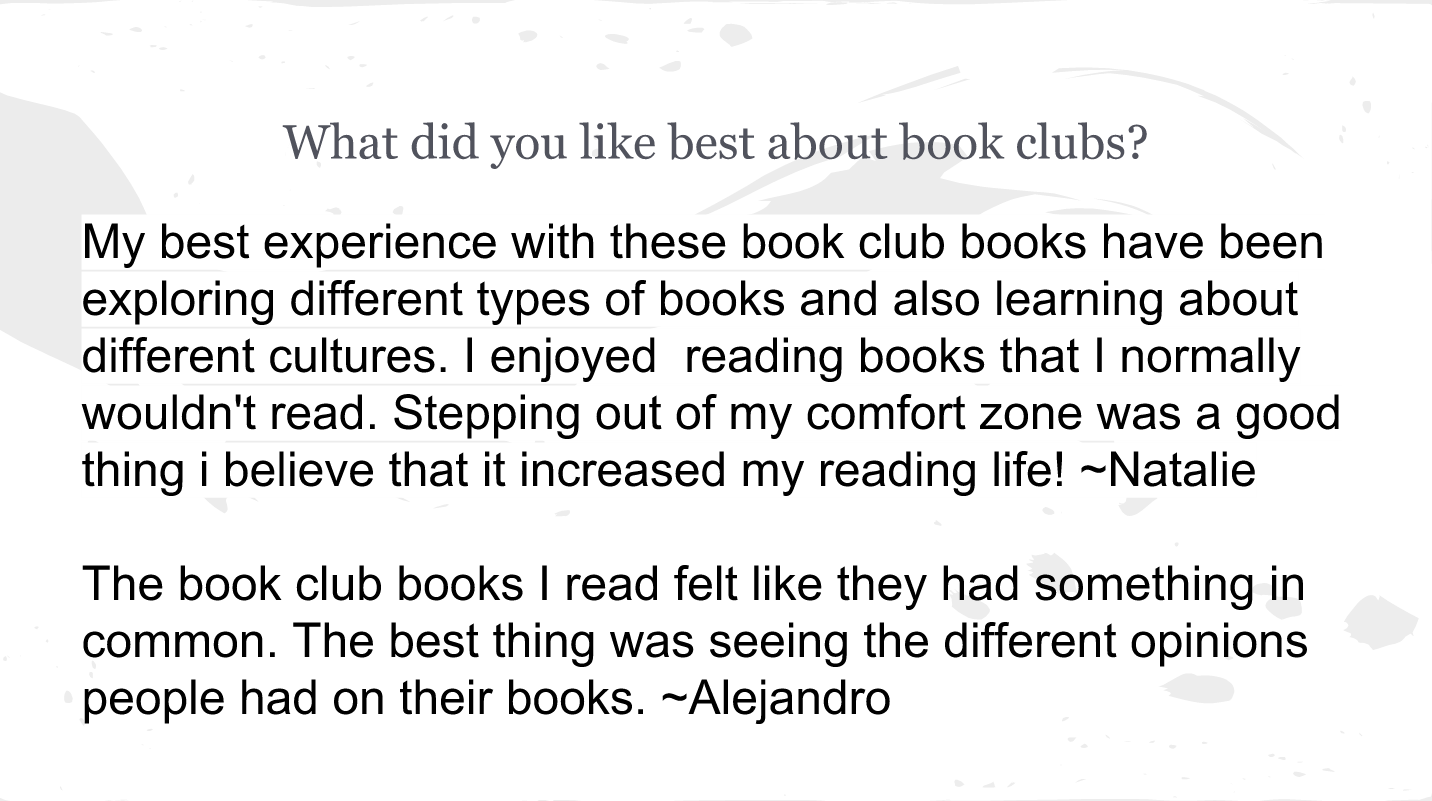
Some of it was great. Some of it not so much. I’m talking about the book clubs in my classroom this Screen Shot 2015-05-02 at 5.42.03 PMyear. The great was actually my students reading and talking to one another about that reading. The not so much — the way I did assessment.

This is what I learned and what I will change for next year:

Book Clubs serve as a way to challenge my readers into the more complex books that many of my students would never choose for themselves. Book Clubs also allow my readers to talk about books in an authentic way without the strictures of guided reading questions or anything else that might lead to Readicide. (‘Read-i-cide: noun, the systematic killing of the love of reading, often exacerbated by the inane, mind-numbing practices found in schools” –Kelly Gallagher) I wrote about the importance of balance literacy and how book clubs fit into that in this post.

I provide a short list of titles that I know contain fantastic stories of resilience, survival, hope, courage, and any other trait that prods readers to relate to the human experience. I introduce the books, usually with book trailers or video interviews of the author’s, and I include either on paper or a projected slide the synopsis and ratings from Goodreads or Amazon.

Students select their books, often talking with one another and making selections together. I ask students to purchase their own books, so they can annotate anything “interesting, intriguing, puzzling, contradictory, or you just plain do not understand.” Since most of my students come from less affluent families, we talk about the importance of libraries and surrounding ourselves with texts that can inform and influence our thinking. Often, students will purchase more than one of the books I introduce for book clubs. I also have a few copies of the texts in my room that students may check out if they cannot purchase their own. I always think my copies will be used more than they are, but I’ve learned that my readers like to buy books. Most feel the sense of ownership that I want them to feel.

Our first book club this year, I gave students a choice of the following titles, all centered around themes of family and parents and how they influence our upbringing and our choices:

Extremely Loud and Incredibly Close by Jonathan Safron Foer

Swamplandia by Karen Russell

The Curious Incident of the Dog in the Night Time by Mark Haddon

Girlchild by Tupelo Hassman

The Glass Castle by Jeanette Walls (literary non-fiction)

More students read The Glass Castle than any of the others, but every book was represented in at least one book club of three to six students. Students loved The Glass Castle, and they told me that they could relate to much of Walls’ upbringing.

Screen Shot 2015-05-02 at 5.42.19 PMAssessment:  For this first book club, I asked students to read with an eye looking for theme. They would work with their book clubs to craft a mind map that included numerous quotes from the book that contributed to the theme, and they would analyze these quotes as part of the mind map. They could create the mind map as a paper poster or online. As they read the book, they were to mark the text like I had taught with the short passages of text we’d read together in class, and they were to also look for sentences and phrases and passage that pointed to theme.

My students did not have a clue how to do that. Most did not mark their books, so when the project time rolled around, they ended up scouring through the book or searching for quotes on Goodreads or elsewhere to find enough quotes that they could plop into their mind maps. I needed to provide more guidance in annotating, and in reading for beautiful sentences, and in making thematic connections, and so much more.

Also, I allowed students to work in groups to create their mind maps. This did not work because no one in the group would rise up and be the leader. They were new in the class and new in their friendships with one another. Group work is a topic for another post, really. This time it failed, and I’ll need to do a lot more prep work before I spend as much class time on this kind of project ever again (if I ever do).

Our second book club, students choice a title from this short list, all centered around themes of culture and how these cultures influence us:

The Namesake by Jhumpa Lahiri

Little Bee by Chris Cleeve

Sarah’s Key by Tatiana de Rosnay

The Kite Runner by Khaled Hosseini

A Thousand Splendid Suns by Klaled Hosseini

More readers chose Sarah’s Key than any of the others. Students find stories of the Holocaust fascinating, and that shelf is a popular one in my classroom library. (Erika’s, too.)  Many students read The Namesake, and at least one book club read each of the others.

Assessment:  This one was even more lame than the first. Sometimes I feel the pull to get back to a Screen Shot 2015-05-02 at 5.42.33 PMmore traditional pedagogy. I am the only one on my campus who fully implements readers and writers workshop, so I listen in often to what other teachers have their students do. If you teach AP English, at some point, you have probably had students write a hexagonal writing over a piece of literature. (Hexagonal because student write thinking about their knowledge, comprehension, application, analysis, synthesis, and evaluation as it relates to the book. It sounds like a great assignment.)
It was the worst writing my students completed this year — if they completed it at all.

I know why. There was no authenticity in it. Follow the structure I gave you. Each paragraph should be about this… No wonder they didn’t care about writing well. I was their only audience, and I was making them write something worse than a book report.

We wasted a lot of time. (The grading policy in my district requires that I reassess major grades. Hey, let’s write this paper again since you cared so much about it the first time. Right.)
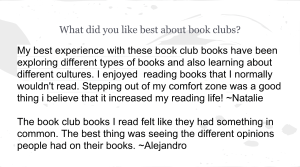
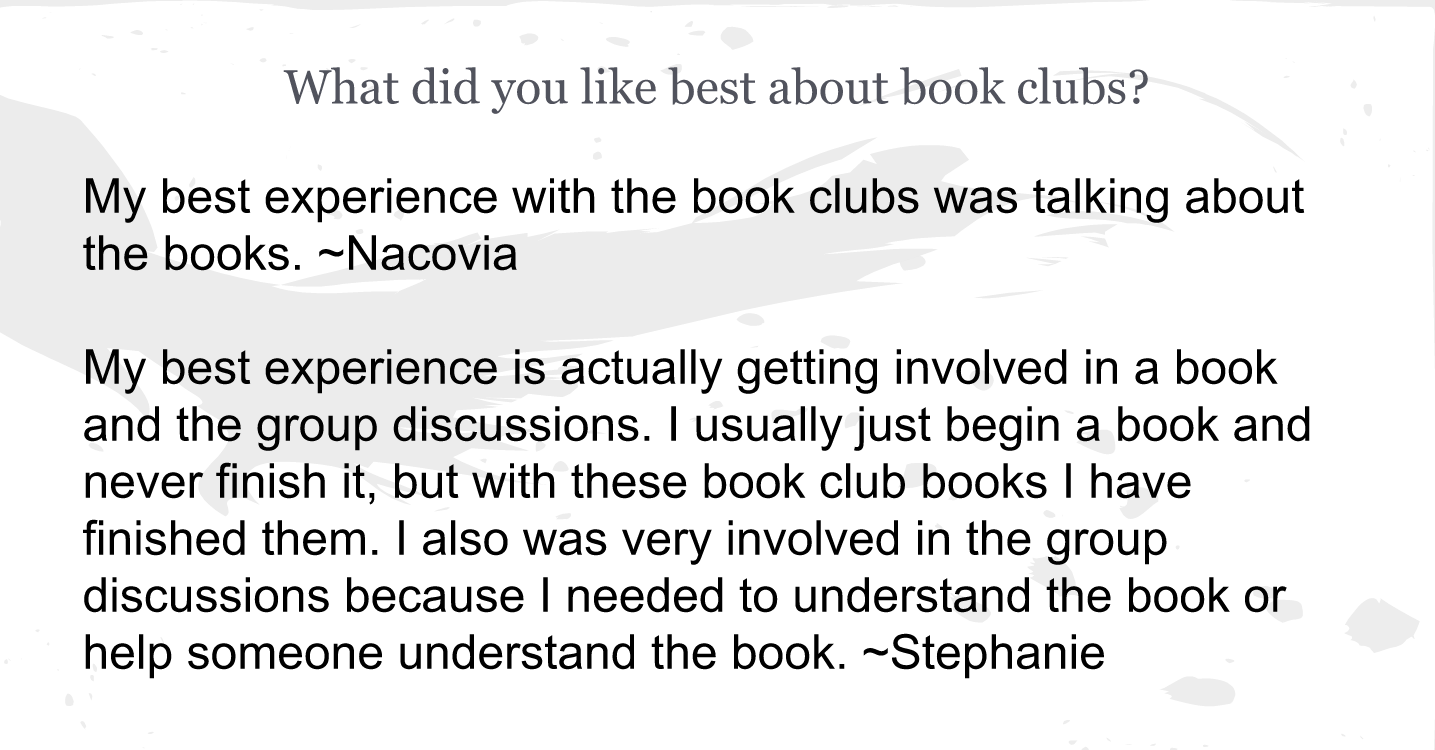
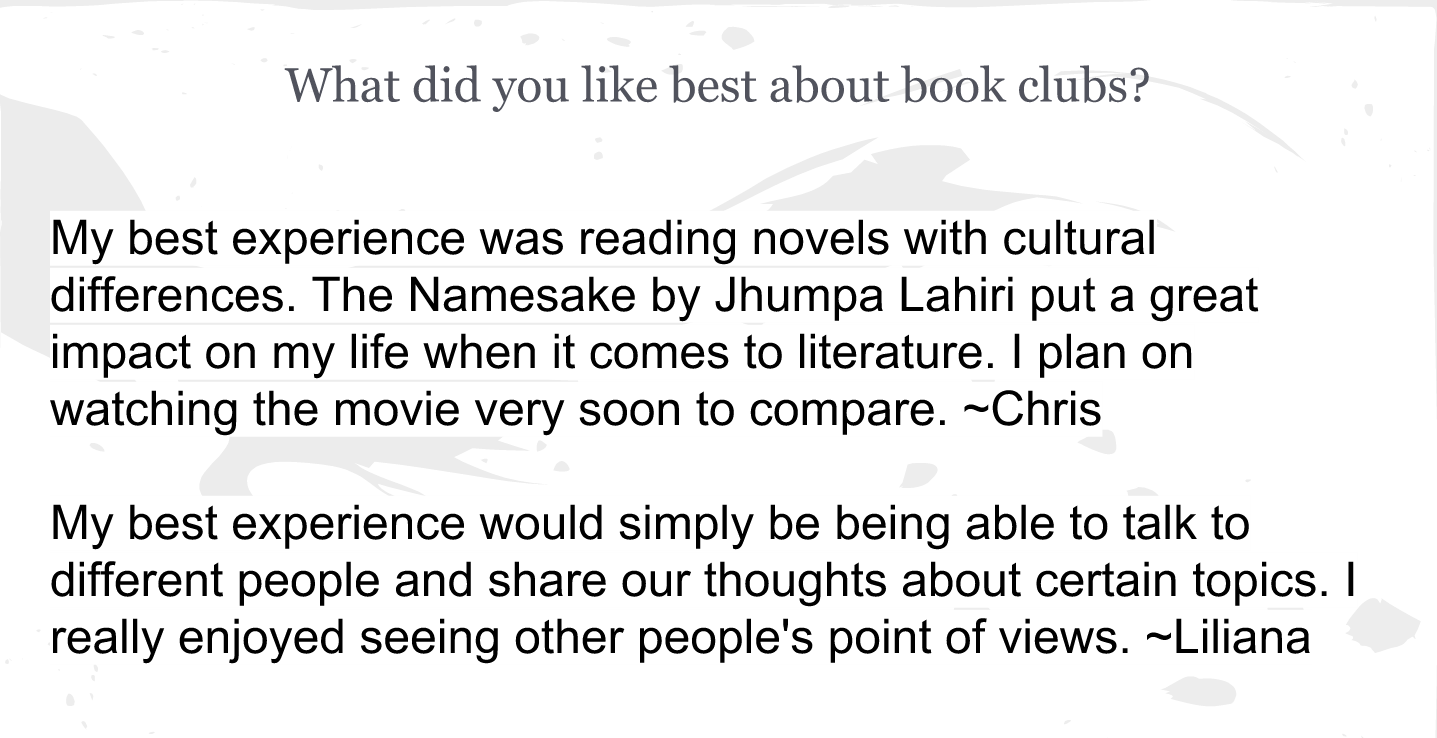
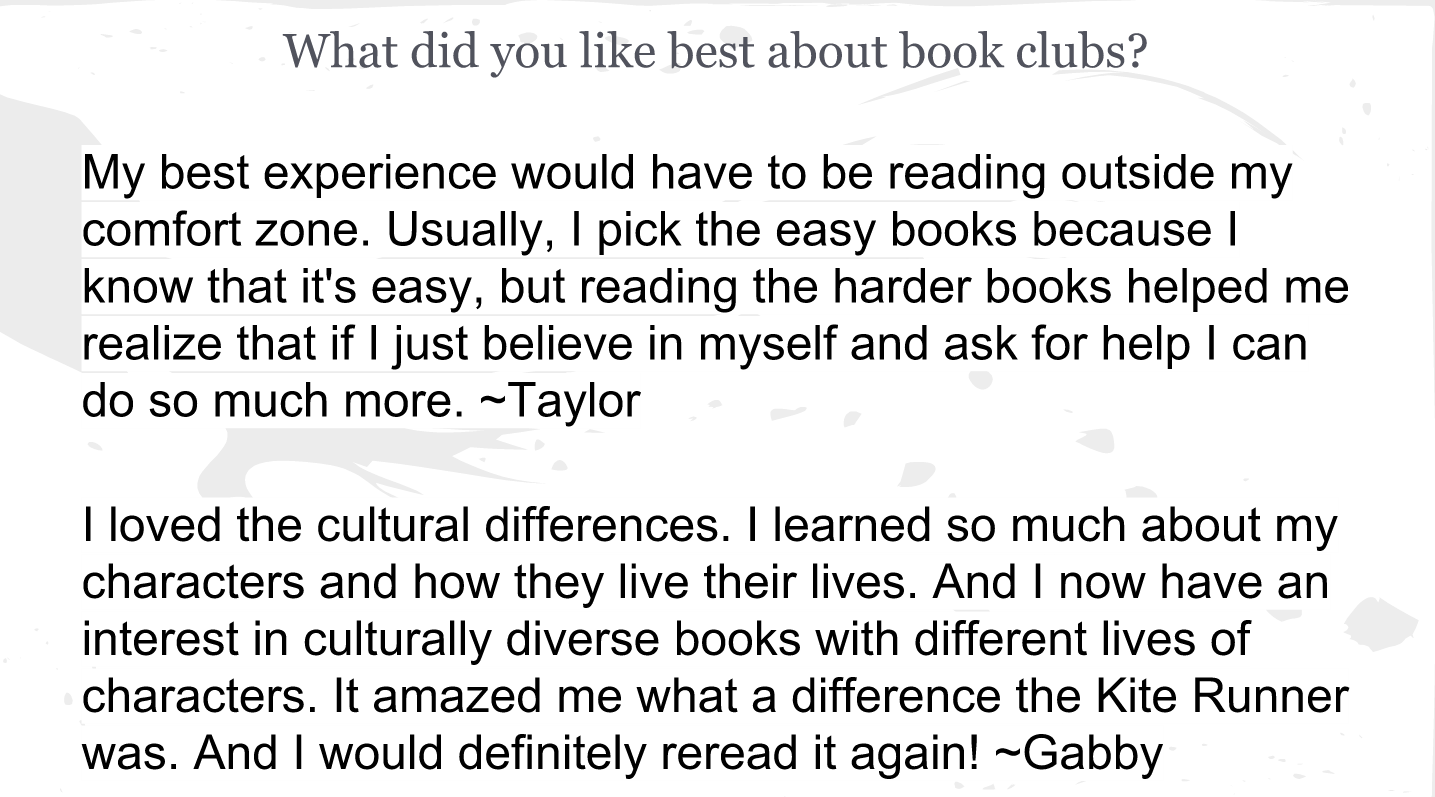
Screen Shot 2015-05-02 at 5.42.45 PMMy readers would have benefitted more from a gift of time to talk about the books more. Shana posted about the value of book clubs for talk earlier this year, and after two subpar experiences I began to agree:  “asking students to keep the conversation [about their books] going for 20 straight minutes provides valuable time for students to build relationships [around conversations about their reading.]”

I would just let them talk.

Our third book club students selected titles from this short list, all centered on war (or internal war) and its influences on individuals and humanity:

The Yellow Birds by Kevin Powers

Room by Emma Donoghue

Where Men Win Glory by Jon Krakauer (literary non-fiction)

The Bell Jar by Sylvia Plath

The Things They Carried by Tim O’Brien

The majority of my readers chose to read ROOM or The Bell Jar. They loved Room, and didn’t think The Bell Jar lived up to its hype.

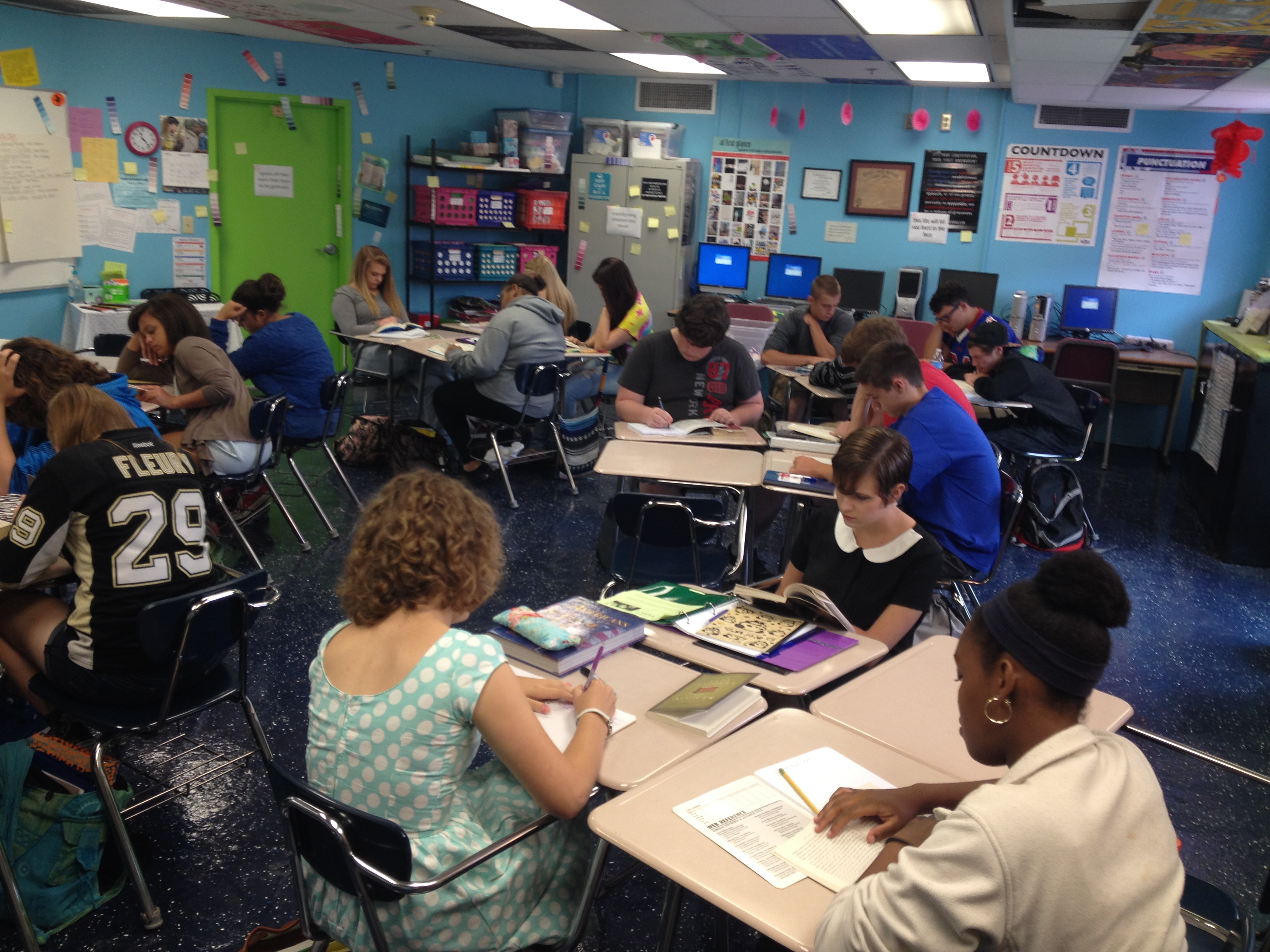
I scheduled more opportunities for students to talk about their books. I wandered the room, sitting at Screen Shot 2015-05-02 at 5.42.57 PMgroups and listening in as conversations circled in and out and back again. Often, I placed a stack of TableTopic cards for book clubs in the center of their table, and students used these to guide their discussions. (Looks like the book clubs version of TableTopics is no longer available. Sad.)

Next year, I will do this again. I might ask students to look for significant passages so they can practice analysis on a page they select for themselves. Here’s a post that I’ll probably show them with a sample passage for craft study.

I might have them create a found poem or a black out poem.

Or I might just let them read and talk and read and talk some more.

That’s what I do in my own book club.


If you have your own suggestions for improvement, please share them in the comments.


©Amy Rasmussen, 2011 – 2015

Our Year-In-Review

As we round out the 2014-2015 academic school year, I would like share our Year-In-Review from us here at TTT and dedicate it to all of our loyal and contributing teacher friends who share in our experiences throughout the year.  Playing with the Reading Writing Workshop model is always exhilarating and fresh and exciting and freeing and thought-provoking.  It’s always propelling us, as educators, to break through barriers and teach with our most authentic teaching souls.

So, to capture the essence of how we have all explored the model this school year; here are highlights that allow us to celebrate the risks, the questions, the stumbles, the ‘ah-ha’s, the setbacks, and of course…the successes.  As we are all still progressing through this last month of our current school year, we hope that resurfacing some of our favorite moments will ignite the fire that keeps us all educating with fierce passion, deep inquiry, and continual evolution.

The calm zen of the RWW in Texas.

The calm zen of the RWW in TX.

First up: The lovely Amy Rasmussen who never ceases to amaze all of us with her wit, wisdom, and wildly insightful thinking.  Here is a woman who has taken the RWW by storm and has not looked back; the only time she does is to pick up, dust off, and gently guide those who are trying to find their way through the process.  She is an excellent mentor and extraordinary educator who ensures that her Advanced Placement students are gifted the wonders of the RWW. Here is a collection of how Amy has guided us through the intricacies of customizing the RWW for our own learners:

A Feedback Protocol for Revision Workshop

5 Reasons Why Reading Conferences Matter — Especially in High School English

5 Ways to Enjoy the Last Month of School


A reminder of student movement and achievement.

A reminder of student movement and achievement in NH.

Next: Jackie Catcher’s name could not be more appropriate.  We know the catcher’s responsibility on the field is to guide the team to strategic success; Jackie does the same infield – in her classroom. She moves her students with her unyielding dedication through continual infused literacy by craftily customizing projects and lessons that engage students. She is a powerhouse who, through all the struggles and obstacles of a second year educator, never ceases to find innovative ways to educate and inspire.  Most importantly, she is always a learner first and shares her inquiry with others to not only think collectively, but to create success-driven solutions.  Here is some of her story:

Building My Library Around My Students

Unraveling the Mystery of Poetry

The Question That Changes My Students’ Writing


A bright and energetic learning environment in WV.

A bright and energetic learning environment in WV.

Thirdly: The always-invigorating Shana Karnes. Shana is a shining light to her students, yet her light shines brightly for the world of evolving educators as well.  She is open to sharing her passion, her innovative thinking, and the way she creatively customizes the RWW for her students in the throws of West Virginia.  Shana never loses sight of how vital piles and piles of literature are for the growth of her young readers and emerging writers.  She knows how to roll up her sleeves and do the work right beside her scholars.  It is through the sheer joy of all things literacy, that Shana explores the world of the RWW:

We Learn Facts from Fiction

Teach Readers, Not Books: A Case for Choice Reading in ALL Classes

The Value of Talk


The shelves where our identities are qualified, our ideas solidified, and our passion realized.

The shelves where our identities are qualified, our ideas solidified, and our passions realized in NY.

Rounding it out: Erika Bogdany.  Through the RWW I have challenged my students, and they in turn, have challenged me.  They push me continually with their own inquiries and want to be more fluid writers.  They challenge my writing by offering suggestions and insight that I have bestowed upon them; the gift of creating a safe community for all learners to read, write, risk, and share.  It is through the RWW that students find pride in their work, volume in their voice, crafted secrets in their writing, and beauty in themselves.  It is with passion and grace that students flutter and flop; yet learn how to fly:

All it Takes is a Tutu and Some Focus

Beyond These Four Walls

Today We Draw


We hope that our moment of reflection and celebration continues to provide you ideas and inspiration throughout the remaining time you have with your unique readers and writers this year.  We’d love to continue hearing your voices, feedback, and generous insight while we round out this school year…and look forward to the year ahead!