Category Archives: Readers Writers Workshop

Mini-Lesson Monday: Developing Social Imagination by Making Connections

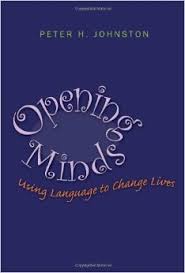
imgresI’ve been reading Peter Johnston’s excellent Opening Minds with my preservice teachers, and it’s a must-read.  One of the skills Johnston says the most open-minded students possess is that of social imagination, or being able to understand “what others are feeling, to read people’s faces and expressions, to imagine different perspectives, to make sense of abstract ideas, and to reason through this.”  In other words–empathy on all levels.  It strikes me that this is both a reading skill and a life skill.

To have your students practice social imagination, as well as grapple with a complex issue, try the following mini-lesson–which I believe I’d stretch out over two class periods.

ObjectivesDistinguish the differences between meaningfulness and happiness according to the article; Connect the concepts of meaningfulness and happiness to yourself, the characters in your independent reading books, and people in the world.

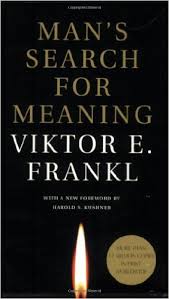
Lesson: First, I’ll emphatically booktalk Viktor Frankl’s 1946 classic, Man’s Search for Meaning.  This book, written in just seven days while Frankl was imprisoned in Auschwitz, argues that life is always worth living as long as one feels they have a purpose.

Next, I’ll distribute copies of The Atlantic‘s article “There’s More to Life than Happiness,” which pairs Frankl’s book with current research on happiness vs. meaningfulness.  To give students a purpose for reading, I’ll ask them to read the article with a pen in hand, noting the differences between a happy life and a meaningful life.  

To get kids synthesizing the information, I’ll ask, “Once you’ve finished the article, answer this in your notebook for a quickwrite: which do you think is more valuable–a happy life or a meaningful life?”

The article is lengthy, and I’ll allot 30 minutes for students to read and respond in writing before we debrief.  As a whole class, we’ll have a discussion in which we focus on what the article argues, what the students believe, and how culture may have nudged us to believe those things.
imgres-1The next day in class, we’ll refer back to the article before beginning independent reading time.  “As you read today, pay attention to the characters in your book–are their lives more happy, or more meaningful?”

When we wrap up silent reading time, I’ll ask students to turn to a neighbor and tell about the characters in their book, and whether they’re happier or more purpose-driven.  This time will double as peer book recommendations as well as a quick assessment of the text-to-text connection.

After asking students to share out any really great characters they heard about (to give the class more reading recommendations), I’ll ask students to open their notebooks and quickwrite about a text-to-self connection–“is your life right now filled with happiness or meaning?  Or both?  What do you want for the future–happiness or meaningfulness?  Freewrite about this issue in general.  These responses will stay private.”

After writing, I’ll ask students to grab a post-it note and make a text-to-world connection–from their parents to friends to public figures to entire communities, countries, or cultures.  I’ll collect the post-its for a quick assessment.

Follow-Up: I’d like to return to the idea of meaningfulness vs. happiness with a reading or writing unit on the issue.  We could collaboratively study almost any novel, poem, story, or article in reading workshop through the lens of identifying purpose vs. happiness, or explore the issue further in a writing workshop geared toward either narrative, informative, or argumentative pieces.

How might you have your students consider the issue of meaningfulness vs. happiness?


Using a “Traffic Light” System to Explore Readers’ Interests and Sensitivities by Amy Estersohn

9kThis summer my social media has been clamoring about content warnings and safe(r) spaces within an academic community.  To what extent do we as educators bear responsibility for how our students respond to the material we may present to them?

I’m sure some educators probably feel that such gestures are a product of an over-coddled generation at best or somehow reduce literature to mere plot points at its worst (spoiler alert: Johnny dies), but I decided that I wanted some way of understanding my students’ emotional lives and some understanding of what topics upset them or get them excited.

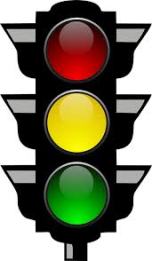
On the first day of school this year, I introduced and modeled a traffic light system in response to independent reading:

Green — topics I like to read about and topics that interest me.

Yellow — sometimes I like to read about these topics, and sometimes I don’t

Red — topics that upset me.  If I come across this topic in an independent reading book, I stop reading.

I modeled a response for my seventh graders, using touchy subjects that often come up in middle grade fiction.  I described divorce as a red topic for me, autism as a yellow topic, and illness as a green topic.  

Reader responses were fascinating.  Death and illness books were by far the most divisive, with some readers describing death as a green topic and others as a red topic.  Holocaust books were similarly divisive.  Many readers described enjoying books that were “sad, but not too sad.”  Some readers identified red topics that I would have never identified on my own as a potential tough topic (e.g. car accidents, physical disfigurement.)

imgresAlso interesting was that what I know about my readers’ personal lives didn’t always square with what they wrote about their reading topics.  Some of my readers seem to want to read books that mirror their real-life struggles.  Others want to veer far away from those topics.

Based on these responses, I adjusted some of my lesson plans slightly.  I had been planning to use parts of Lisa Graff’s phenomenal Lost in the Sun as a whole-class model for character, but based on these responses, I’m not sure all of my readers would appreciate reading about survivor’s guilt as much as I did.  Instead, I’ll use parts of Jason Reynolds’s As Brave As You to teach the same concepts.

I don’t see myself swooping in to warn a student before starting a book as lovely and potentially upsetting as Ms. Bixby’s Last Day by John David Anderson or The Seventh Wish by Kate Messner.  However, I want to continue the conversation about red, yellow, and green topics. As independent readers, we have a right to establish limits, and when we read a part of a book that approaches or goes over our limits, we have a right to put it down and talk to somebody about what’s upsetting us.


Amy Estersohn is a middle school English teacher in Westchester County, NY.   She also reviews comic books for http://www.noflyingnotights.com.   Follow her on Twitter at @HMX_MSE.

Try it Tuesday: Partnering Up for Reading Conferences

Sometimes inspiration strikes at the most opportune times.

One day last week I had the honor of hosting two small groups of teachers from a different high school as they observed my classroom, one class period in the morning and another in the afternoon. Many of the teachers on their campus have been exploring and practicing with the workshop model for a while now, and they wanted to see my workshop classroom in action.

After each lesson, we met to debrief and hold a kind of question and answer session. Talk about an awesome experience (except for the voice in my head that kept saying “When did you become the expert on workshop? Yikes.)

I think one of the best things we can do as teachers is invite others into our rooms to watch us teach. Talk about keeping on the A Game. That’s a Try it Tuesday suggestion all in itself.

Here’s another one:

During one of those debriefs, one teacher asked about the conferences I conducted as my students read for the first 15 minutes of class. “What questions did you ask?

I explained that it depends on the student.

If I go with “How’s it going?”

My students answer, “Fine.”

If I go with “What are you thinking?”

My students answer, “Nothing.”

So I usually lead with “Tell me a little something about …will ya?” And then I listen to see what direction the conference might take.

That’s pretty much the genesis of every conference with my readers.

Another teacher mentioned that she and a colleague had been thinking about asking students to bring a question, thought, or problem to their reading conferences. You know, kind of like we ask students to do when we meet with them about writing. I’d never thought about it for a quick reading conference though. She wanted to know if I thought it was a good idea.

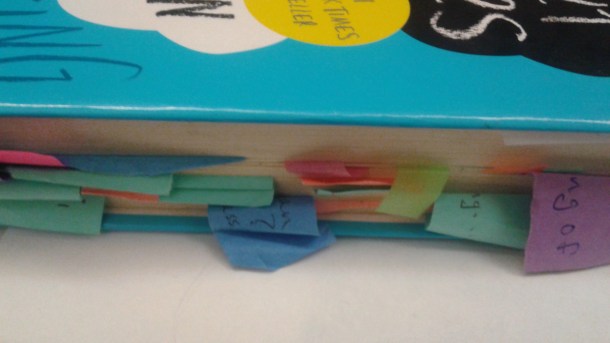
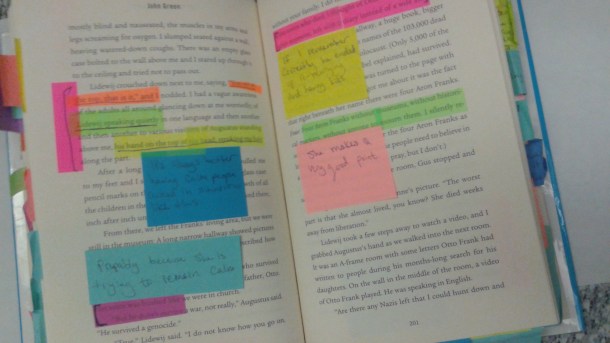
The image of this book came into my head. I found this copy of The Fault in Our Stars at a thrift store. It looked just like this:  plastered with sticky notes that reflect the student’s thinking. Now, I have no idea why this book is tattooed with notes, but I can imagine a not-so-great idea.

tfiosmarkup2tfiosmarkup

I hope a teacher didn’t assign this book and ask students to bring ideas to a reading conference. If that happened, I doubt this student got into reading flow. I doubt this student enjoyed this lovely, heart-wrenching book. I doubt she felt the beauty of the language and felt the loss of a beloved character. Maybe all that happened, but it wouldn’t have happened for me.

I want my students to love to read. I think we have to be careful with what we ask them to do with their independent reading books besides fall in love with the story and the language. Sure, they may recognize craft, they may recognize characterization. But the important thing is that they recognize that they are liking to read. That is so important to so many of my readers. They have to realize they like reading.

I do believe we can, and should, ask students to revisit passages — and maybe even the whole of a book — from time to time, even quite often. We can teach many important reading and writing skills that way, but we have to temper our desire to teach a book to death, even the books students choose to read themselves.

What I told my inquiring friend:  What if before independent reading time, on any given day, we ask students to read for a specific purpose.

Read to find interesting figurative language. Read to notice clever imagery. Read to discover how the writer shares an insight about a character. Read to find a beautiful or startling sentence. Or maybe a sentence that’s not really a sentence.

fabian

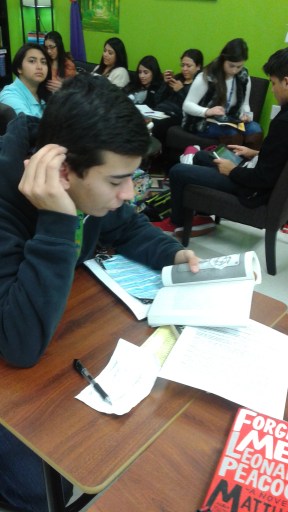
Fabian before class sharing his awe at the writing style of Jonathan Safron Foer in Extremely Loud & Incredibly Close

Isn’t this what readers do? I do. When I read a passage that strikes me in some way I want to share it. And let me tell you:  When my students start to do this on their own? That’s celebration time.

“What about the student who cannot find anything to share?” you might ask.

Well, that’s important information, isn’t it? I don’t know, maybe like the kind we might discover in a one-on-one reading conference.

Right?

I’d love to know your thoughts on this. What ideas do you have that work for your reading conferences? Please share in the comments.

Big thanks and shout out to @Sean_G_Hood and @mrs_friend and the inspiring teachers at Hebron High School!


Mini-Lesson Monday: Narrative Analysis with StoryCorps

We all have a story to tell.

In fact as writers, we have countless stories to tell. We tell of our experiences, fears, hopes, dreams, and even those trivial events that sometimes add up to more “life” than we could have imagined.

We tell the stories of others too. Real and imagined people that speak to us in words we’ve heard and sometimes, in the words we long to hear.

I wax poetic with my students like this often, but especially early in the school year. I want them to feel my passion for the power of stories and encourage them to develop their own passion for expression. As Morris (protagonist from one of my daughter’s favorite children’s books The Fantastic Flying Books of Mr. Morris Lessmore) beautifully states, “Everyone’s story matters.” 

With this in mind, my American Literature collaborative team (Shout out to Brandon, Catherine, and Erin!) worked this year to develop a unit of narrative writing that asks students to look at the stories they tell and how those stories can be interconnected. Everyone’s story matters, and in this case, they get to have even more meaning as students craft individual tales that relate to their chosen thematic focus.

Students, having already selected, listened to, and analyzed an episode of This American Life for elements of author craft in a narrative (hook, chronological/detail choices, and word choice), partnered up or formed a group of three, and selected a theme out of a hat (dangers of conformity, vanity as downfall, the power of choice, etc.) they would explore, both individually and in their groups.

The overarching assignment is to craft an individual narrative that fits the theme and ultimately orally record the stories in a podcast that highlights the interconnectedness of the individual work. Students are graded individually on their narratives, but the podcasts are a group effort and will be played for the class.

storycorps


Objectives — Students will listen to several examples of 2-3 minute stories from NPR’s StoryCorp in order to practice narrative technique identification and analysis one more time before drafting their own stories. Students will discuss and share their insights on narrative impact of what they heard in an effort to purposefully craft their own narratives.

Lesson  — According to their website the initiative of StoryCorp is to “preserve and share humanity’s stories in order to build connections between people and create a more just and compassionate world.” 

In class, we had spoken already about the power and purpose of stories and students had come up with some wonderful ways stories enrich and fulfill us. Stories:

  • explain, or attempt to explain, where we come from and/or why we are here.
  • allow us to express what we believe or hope.
  • reveal who we are or who we want to be.

I shared with students that we were going to listen to some short pieces that told unrelated stories on the surface, but each would link back to some of the reasons we tell stories at all. Students were asked to record what they heard in the hook, insights on which details were included and why, and word choice (all elements they will be scored on when writing their own narratives).

I started by playing a sample story and then walking them through my own analysis. “Traffic Stop” is a piece that details police brutality in 2009 against a black man who was raised by white parents. The piece pretty brutally (I did have to mute three or four seconds of the piece where a police allegedly uses a racial slur that is inappropriate for the classroom) relates the story of a young man who is pulled over by police, searched but cleared, and then is assaulted by police when he questions why the officers are searching his car.

After I played the piece, I projected some of my own analysis. The hook involved the young man’s mother saying that she never would have thought skin color would make a difference for her son, but she painfully learned she was wrong. Word choice vividly captured the pain, fear, and confusion of the young man who was beaten by police. The chronology includes context for the horror of the event, a play by play of the few moments of the traffic stop, and details about the young man’s mother seeing his injuries in the hospital. My analysis was that the elements chosen were specifically selected and organized to convey the disbelief that something like this could happen to an innocent person and the role that race played in the event.

We then listened to two more stories. Students wrote down their take-aways in their writer’s notebooks and discussed after each piece. We shared out ideas and pulled insights back to those class generated elements of why we tell stories.

Finally, I had students listen to one last piece, detail their analysis on a half sheet of paper and turn it in to me for some formative feedback.

Follow-Up — We are about to start mini-lessons on hook, chronology, word choice, and parallelism (thank you Common Core) in drafting these narratives. I plan to reach back to the insights shared during this class in order to help students make purposeful choices in crafting and revising their narratives.

Everyone’s story matters. 

What tools do you use to get students thinking intentionally about their writing craft? Please share your ideas in the comment section below! 

Using the Whole Book: A Nose-to-Tail #FridayReads

“Some books you read. Some books you enjoy. But some books just swallow you up, heart and soul.” 

I love this quote from Joanne Harris. I love her book, Chocolat, and truth be told, I really love the movie adaptation’s casting of Johnny Depp as Roux… for aesthetic reasons. Seems there’s a lot of love up in here.

Speaking of book love. It’s a rare and wonderful treat to see a student experience this type of consumption through reading, but it’s delicious when it happens in my own life as well.

My heart has been most recently consumed by Gloria Steinem’s new memoir My Life on the Road and this week it became a text I was sharing with everyone.
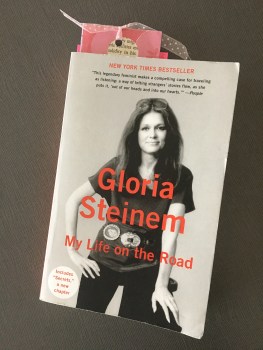
Now, don’t hurt me, but I’m a bit too young to have really appreciated Gloria Steinem’s political prowess, revolutionary movement for equality, and inspirational professional ascension to feminist icon firsthand. I had, however, heard the name and when I heard an interview with Steinem on NPR, I was immediately hooked by her candor.

Steinem was on All Things Considered, discussing the inspiration for her new book, and I caught the interview on my way home from work.

img_6045

Bookmark courtesy of one crafty Shana Karnes

Safety alert: I used the Amazon app on my phone to purchase the book while at a stoplight. Unwise, but enthusiastic. Book love makes you crazy.

Steinem’s explanation of her text as part analysis of family dynamics, part travel journal, part personal exploration of leadership, and honest look at how we all live, had me intrigued. The fluency of her voice had me convinced that her prose would float off the page as beautifully as her words were floating through my car radio. Her stories had me laughing and almost crying just in the course of a six or seven minute interview.

In short, I knew this would be a captivating book.

What I wasn’t prepared for was just how relatable, inspirational, and downright touching this memoir is.

And thus began my very public consumption of and by this text. In the course of a week, I have:

  • Book Talked this book to all my classes. I explained the above reading story to my kids and shared a passage with them where she talks about being a reader and writer. Perfect for my readers and writers! “Writing, which is solitary, is fine company for organizing, which is communal” (40). 
  • Shared several pages with my 9th grade colleagues working on character development in their classes. Steinem goes into rich detail about her father and the struggles her family endured at the whims of his wandering spirit. She then talks pointedly about how her own travel (detailed later in the book and familiar to those that know and devoured Eat, Pray, Love by Elizabeth Gilbert) was most likely inspired by her youth, even though she wanted nothing more as child then stability. Students could relate to those first few instances in life where we start to see our parents in our behaviors. (I’m personally turning into my father).
  • Used that same section on character as a mentor text with my sophomores to discuss narrative purpose. Steinem’s anecdotes about her father in this section are reminiscent of The Glass Castle by Jeannette Walls, but at the same time made several of my students laugh out loud when we were reading. The author’s voice here shows poignancy through her choice of heartwarming and heartbreaking stories about her youth. We analyzed each of the anecdotes that Steinem shares in this section by having students break up into groups and evaluate how the author might have intended to use that anecdote in her self-proclaimed purpose to show how she had long been embarrassed by her father.
  • Utilized a specific quote with my AP students for a quick write. We are currently studying education and focusing on an essential question of “To what extent do our schools serve the goals of a true education?” I projected Steinem’s quote of “When humans are ranked instead of linked, everyone loses”(44) on the board and asked students to quick write on their reactions to this in light of our unit essential question.

I have also raved about this book to my husband, colleagues, friends, and three-year-old daughter, to whom I’ve suggested that she must travel, embrace her power as a woman, and learn from everyone she can. She asked if we could play Candy Land. I may have a ways to go with that one.

But at the end of the day (and week, yay!), this is a book that tells the story of what it means to explore the world and find a home wherever you are and does so with a voice that will make you want to read, share, and repeat. As a bonus, it details the life of a budding writer. For students to read and digest the struggles, joys, and challenges involved speaks deeply to what we ask them to explore in our classrooms each day.

What texts have consumed you recently? How are you sharing them with your classes? Please comment below! 

Steinem, Gloria. My Life on the Road. Random House, 2015.

Booktalking Awards: Letting Students In On the Buzz by Amy Estersohn

downloadIf your readers have ever played fantasy sports or filled out a March Madness bracket, they’ve experienced the same feelings that book lovers do over awards announcements.   And just the way sports fans are making predictions about championship winners all season, readers spend all year making predictions about which books will win which awards.
The recently announced longlist for the National Book Awards’ Young People’s Literature category gives readers a lot to talk about.  When I introduced the list, I did a brief book talk on each title and added some color commentary as well.

Obvious picks: Pax by Sara Pennypacker, Raymie Nightingale by Kate DiCamillo, and Burn Baby Burn by Meg Medina are three of the best books I’ve read this year.  All three books have received heaps of critical praise from a variety of sources, including from Book Whisperer Donalyn Miller.   

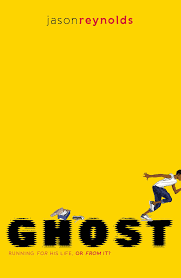
download-1Pleasant Surprises:  March: Volume 3 by John Lewis, Andrew Aydin, and Nate Powell, Booked by Kwame Alexander, and GHOST by Jason Reynolds.  These three books have tremendous teen reader appeal, and I was concerned that reviewers wouldn’t find them distinguished on their own merits.   

Unknown Quantities: When the Moon Was Ours by Anna-Marie McLemore, Sachiko: A Nagasaki Bomb Survivor’s Story by Caren Stelson, The Sun is Also A Star by Nicola Yoon, and When the Sea Turned to Silver by Grace Lin haven’t been released in bookstores and libraries yet, so it’s hard for me to weigh in right now.

Introducing these books to my readers was an effective way for books to gain exposure without my being the primary endorser.  I had five readers yelping for my two copies of Pax, I encouraged my graphic novel readers to check out March, and my World War II buffs are now deeply interested in reading about the United States’s aggressions in Japan.

I’ll continue to monitor the National Book Awards announcements for their finalist and winning books.  By then, I hope more readers will have a chance to read these books and chime in on how they feel about the results.

__

Amy Estersohn is a middle school English teacher in Westchester County, New York.  She  reviews comic books for http://www.noflyingnotights.com and is a judge for the CYBILS book awards this year.   Follow her on twitter at @HMX_MSE

Try It Tuesday: Book Pass

While writing about ways to hook readers a few weeks ago, I realized that while we’ve mentioned book passes several times on this blog, we’ve never actually written a post dedicated to how to do them.  So, here that post is!

Book passes are beautiful in their simplicity. Their purpose is to expose potential readers to a wide variety of books in just a few minutes. All you need are a number of books greater than or equal to your students, their writer’s notebooks, and the power of social capital.

img_5005

Victoria browses through Peter Johnston’s Choice Words, while Brianna tries to decide between a few choices herself.

When students enter the classroom the day of the book pass, I always have piles of books ready to go on their table groupings. They can’t help but pick them up right away (really, they can’t–sometimes it drives me nuts when they paw through materials we’re not ready to get to, but in this case, I LOVE watching them be drawn to a book), so the book’s contagion begins to spread immediately.

When we begin, I ask students to turn to their TBR pages in their notebooks. “Go ahead and grab a book that’s on the desk in front of you,” I invite, and wham, books are in the hands of readers. “Spend about one minute with this book–look at the front cover, the back cover, the inside flaps, the first page. Decide if you think it might be a good fit for you.” With my preservice teachers of all content areas, I ask them how they might use this book, or excerpts from it, in their future teaching.

img_5011

Habbiba gets excited about Will in the World, and nerds out with Alexis.

I set my timer on my phone for 60 seconds as kids flip through pages. Of course, book love is contagious, so some kids share with others what they find–the power of social capital is at work once again here.

When the timer dings, I ask kids to pass their book to the left. “But first,” I remind them, “write down that title on your TBR list if you think it’s something you might want to read.”

Now the students have new books in their hands, made more powerful if they’ve already watched their neighbor write that title down. I love to watch, after multiple passes, when one title gets written down by nearly everyone, and the students who’ve yet to get that book in their hands begin to practically salivate.

img_5010-1

Nick and Ryan thumb through The Double Helix and Moneyball, respectively

The book pass can go on for as many passes as you have time for–enough for every kid to see every title, or just five minutes’ worth, if you prefer. I do this activity multiple times at the beginning of the year, and then again sprinkled throughout the year when I get lots of new books in. It’s a wonderful way to expose students to several titles in a day as an alternative to the traditional booktalk. It’s also a great way to shake up the typical routine in the classroom with a hands-on activity that gets kids excited about books.

I often conduct book passes in this open-ended way–“see if this book is a good fit for you”–but sometimes I do them as a way to expose students to a “new” genre in particular (novels in verse, or graphic novels); a way to introduce the theme of a unit (by finding books all about that theme); or to introduce a reading challenge (read an award winner, or a book of nonfiction). Just passing books around and getting them in the hands of readers does wonders to grow students’ universes of what’s possible when we read.

How might you use a book pass in your classroom? Please share in the comments!

Mini-lesson Monday: Deeper Reading


I posted this on the TTT Facebook page on Saturday, but I think it also makes for a good mini-lesson, so here goes:

I went to a session by Kelly Gallagher at #IRC2016. He shared ideas from his book Deeper Reading, combining ideas he’s using with his students now. I was reminded of his thinking around thinking from a text: What does the text say? and What does the text not say?

Gallagher shared a few images from the news, a fact statement, an ad for a truck, and he modeled how he asks his students these two questions as ways to get them thinking about their reading.

I’d heard these same ideas before, but they resonated with me again. Critical thinking matters. We cannot get thoughtful writing, if we are not helping our students to think thoughtfully through texts.

Objective: Read a visual text, make observations and inferences that push critical thinking about a text. Draw conclusions and write your thinking.

Lesson:  Tell students that critical readers don’t just pay attention to what a text says, we also must pay attention to what a text does not say. This ties into the idea that everything is an argument — sometimes overt, sometimes covert. Bias also comes into play. So to get into some critical thinking today, we’re going to watch a short video about the refugee crisis.

Draw a T-chart. Label one column with “What does it say? and the other column “What does it not say?” As you watch the video make lists that answer these two questions.

Watch the video “Your phone is now a refugee’s phone.”

After students have time to do their own thinking and writing their lists (and maybe watch the video again), have them talk in pairs or small groups about the things they noted.

Hold a short whole class discussion about what it does for our thinking when we consider what the author, or in this case, the video creator, intentionally leaves out of a text.

Follow up:  Ask students to find their own text and apply this same thinking. Tell them they can find an advertisement, a chart or graph, an info graphic, another video — any text that they can answer the following questions:

What does the text say?
What does it not say?
Why does it matter?

Continue to ask students to consider these questions with a variety of texts throughout the year. This may also serve as a good exercise to help students find writing topics. Bonus!


Do you have any videos, ads, or short text suggestions that you use in similar ways to get students thinking critically? Please share them in the comments.


ftc-guideline-%22affiliate-links%22

Try it Tuesday:Workshop Thievery

Disclaimer: Theft is wrong. The end.

Steal is a strong word (pun very much intended). Borrow? Swipe? Thieve? Pinch?

That last one makes me feel like a 1930’s gangster, so we’ll go with that.

I’m here to confess that I’ve been pinching materials from this very blog, and I’m pathologically not remorseful.

Pilfering and plundering are practices most teachers subsist on, so it’s only natural that as the fearless English Department at Franklin High School begins its first official year of workshop instruction, we are lifting everything we can get our hands on.

And while the prospect of taking our fresh and shiny Understanding By Design curriculum templates and matching our standards based curriculum with the workshop delivery model is daunting (to say the least), it’s also afforded me an opportunity to look at countless new practices and bring added excitement to this new routine through new ways of helping students read and write everyday.

Amy.
Shana.
Faithful readers of the Three Teachers Talk blog.
I stand before you (or sit during my prep), a grateful swindler.

Today’s Try it Tuesday matches (snatches) Amy’s Blessings Cards (or an even more detailed and awesome Blessing Card Mini -Lesson here) with Shana’s Write-Around, and the reflections my students produced were fantastic.


  1. To support my belief that students preparing for in depth analysis, college/career readiness, the AP Language test, and life should know what’s going on in the world img_5673around them, part of my AP summer work is for students to sign-up for a news story as it breaks or develops over the summer.Students are to read several editorials about the topic and draw their own conclusions as to the impact this story has on a given community (either local, national, or international).As one of their first assignments of the year, they take their research on the topic and present a one minute speech to the class. The scores are formative, but they tell me a lot about students’ abilities in using text evidence to support a claim and the basic professional communication skills they do (or do not) possess.
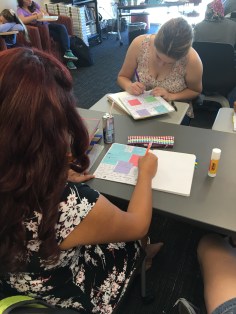
  2. As a positive form of peer assessment during our very first public speaking opportunity, I used Amy’s idea of blessings cards. Each table grabbed a card for each presenter (I split speeches up over several days) and put his or her name on the card.When the speaker was finished and I was hurriedly writing formative feedback on the rubric, students talked at their tables and bullet pointed blessings on the speaker’s img_5672card. We had reviewed the rubric before speeches began, so students could provide positive feedback directly related to their assessment criteria. When all the speakers were finished for the day, we showered our presenters with blessings.Lots of smiles.
  3.  Once all of our speeches were complete, I shared several pictures from Shana’s post about write-arounds. We took a look at how writing/reflection can be guided by objects that give permanence to our experiences.
    I had students glue their blessings cards to a page in their response section of their writer’s notebook and then reflect on the experience. They could write about what they felt went well, goals for their future public speaking adventures, and/or anything that came to mind in relation to the experience.As I peeked over shoulders, I knew my stolen ideas were paying off for this reflection with such statements as:

    “Mrs. Dennis says that some people fear public speaking more than death. I know what she means. But this class seemed to think I had my act together though, so that’s cool.”


    “I’m never going to like this. I know it. I am never going to like public speaking. But I can get better at it.


    “I almost passed out up there. For real. But I had a notecard and it kept me basically organized. Next time, I’ll try breathing while I’m speaking. Maybe that will help too.” 


Classroom community and comfort within that community are not givens. Both must be built with intentionality. Workshop demands that we take time and honor the process around building readers, writers, and in this case, speakers to, because many of our students are not initially comfortable with the roles we are asking them to take on.

By examining the process with a growth mindset,  we put value upon the feedback that comes from not only the teacher, but peers and self reflection as well.  This feedback serves to support and motivate students as they move forward and start to become the community that will serve to encourage, challenge, and motivate better reading and writing throughout the year.

Steal these ideas. Please.

How do you encourage community building for your readers and writers? We would be blessed to have you share some ideas in the comments below.


Mini-Lesson Monday: Low-Stakes Community Building With Post-It Blessings

I am always searching for low-risk ways to build community in my classroom during the first weeks of school.  In order to build norms of sharing our writing, responding to one another’s writing, and writing a whole lot in general, I like to combine some low-stakes activities like imitation writing and positive feedback protocols so students become confident members of a community of real writers.

Objectives — Create your own version of Langston Hughes’ “I, Too, Sing America,” Critique your peers’ poems positively.

img_4904

Lesson — I recently read Nancy P. Gallavan’s article “I, Too, Am an American: Preservice Teachers Reflect Upon National Identity” with my students.  The article includes a sample of students’ imitation poems of Hughes’ classic poem, which they wrote in the weeks after 9/11.  The poems sought to make students aware of the stereotypes each one faced, and to defy those stereotypes.

I asked students to read the article before coming to class, to write their own version of the poem, and to bring a copy to class because we’d be sharing it.

(It’s important to disclose to students before they write that a poem will be shared in order to build the norm of openness with their peers.)

With a pile of post-its waiting on each desk, I asked students to take out their poems.

“We’re going to share our writing today, and we’re going to practice giving each other positive, specific feedback.  To begin, pass your poem to the left, and then grab a post-it note.

img_4840“The feedback we’re going to give today is part of the Bless, Press, Address protocol by the NWP. Blessing the writing means to give specific feedback on what you like about the poem. Pressing the writer means pushing him or her to strengthen their piece in some way. Addressing an issue the writer asks you for help on means giving responsive feedback in order to help the writer achieve his or her goals. Today we’re just going to bless one another, since it’s the first time we’re sharing our writing.”

(I think it’s important to begin with positive feedback because it removes the stigma of “peer editing,” which is often vague or negative if not structured properly.)

“So, take a post-it and write a response to a line, or give a compliment about word choice, or discuss something you agree with.  When you finish, pass your poem on to give your neighbor a subtle nudge to keep things moving.”

The room hums with rustling paper and murmured conversation, and I have the students pass the poem five times.

Follow-Up — After giving feedback, students receive their original poems back and read their peers’ comments.  I ask them how it felt to receive this type of feedback, how this activity helps build community, and what other assignments they could use this feedback protocol with.  Their responses to the last question were so creative–DBQs, lab reports, narratives, essays, published works of literature, math activities, thesis statements, and more.

After our discussion, I ask the students to put their poems and post-its into their notebooks to remain a permanent artifact of their peer feedback.

How will you use the Bless, Press, Address protocol with your students? Please share in the comments?