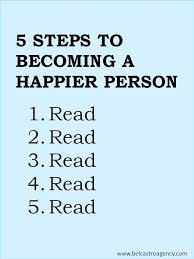
 All week, I’ve been thinking about Pernille Ripp’s exasperated plea, “Can we please stop grading independent reading?” (I imagine that she initially had an exclamation point at the end of that post, like, COME ON, people, but then deleted it to be nice.)
Still, I am one of those people she is exasperated with. Or I was while in the high school classroom, dedicatedly printing log sheets and grading reading every week for three years, using a complicated system of reading rates and conferences to give a number grade that reflected reading growth and sustained progress.
One year, I abandoned this system in the third quarter, just to see what would happen–would kids stop reading if I removed the accountability of a weekly reading grade?
Yes, yes they would–and they did. So I re-instituted weekly grades, which, combined with a quarterly assessment, combined to 20% of my students’ total grade. I was happy that this much of my course grade was dedicated to independent reading, but I didn’t realize that the grades I was mandating weren’t really creating independent readers at all. (In hindsight, I should have begun the year without reading grades and created an authentic community of readers who weren’t motivated by reading logs.)
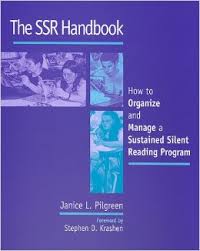 After I read Pernille’s post, while thinking about this idea (read: beating myself up for slaughtering kids’ love of reading), I pulled out one of the most memorable texts I read while in college–Janice Pilgreen’s The SSR Handbook. In the foreword, Stephen Krashen writes:
Free voluntary reading means reading what you want to read, with no book reports, no questions at the end of the chapter, and not having to finish the book if you don’t want to. Sustained silent reading provides children with an opportunity to do free voluntary reading in school. Is this a good idea? Yes.
Pilgreen lists eight components of a successful SSR practice:
- Access – to many reading materials (books, newspaper, magazines, comics)
- Appeal – the materials are interesting and appropriate for the students
- Conducive Environment – the space in which students may read is comfortable and welcoming
- Encouragement – teachers and peers encourage students to read through discussions, modeling, and more
- Staff Training – teachers should have practical approaches in place for helping kids become readers
- Non-Accountability – no records, no monitoring, no “task-oriented” attitudes toward reading
- Follow-Up Activities – thoughtful, creative, interactive ways in which students discuss their reading lives authentically
- Distributed Time to Read – a volume of time that consistently occurs during which students read freely in school
When I think now about these eight simple factors, I see them clearly through the lens of workshop teaching. To me, the components translated to my real-world readers workshop classroom look like this:
- a classroom library brimming with high-interest books;
- a reader-friendly community built not only into a welcoming physical space, but one in which daily reading, talk, conferring, and encouragement happen;
- a teacher-leader who is the best reader in the room, who can model fluent reading and recommend a wide volume of books to students;
- a lack of graded formative assessment and an emphasis on summative assessments for learning, not of learning.
This means no reading levels, no required number of books per year, no structured programs in place, no minimum number of minutes of reading done per week. This means relinquishing control. This means a lot of modeling, conferring, and progress monitoring to encourage student growth and lifelong learning.
This means thinking about independent reading as truly independent–independent of grades and of accountability. This means reframing independent reading in school as an authentic, student-centered activity in which the readers take the lead and teachers merely help provide coaching and guidance.
If these ideologies are in place, teachers will know if kids aren’t reading (by simple observation and conferring). We can adjust our instructional practices from there, without the damaging effects of punitive grades. We can still give a grade for summative student self-assessments of independent reading growth (student-led is the key, here) to satisfy those mandatory gradebook updates, but if students are to become real readers we, as teachers, cannot be the ones holding them accountable for their progress.
There are many other kinds of reading that happen in language arts classrooms in addition to independent reading: whole-class study of texts; small-group book clubs; close reading studies of poetry, articles, essays; explorations of mentor texts; analyses and syntheses of plays and novels and writing of all sorts. This is where the work of learning to become a better reader can come in (which can be very enjoyable!), which lends itself to skills-based reading assessments.
In contrast, independent reading and all its many joys and struggles and spaces for success and failure are not, as Pernille says, “gradeable skills but instead a child practicing habits to figure out how to get better at reading.” If we want to nurture this practice, we cannot keep grading it–and that’s the first step to reframing our thinking about independent reading.
Shana Karnes lives in West Virginia and teaches sophomore, junior, and senior preservice teachers at West Virginia University. She finds joy in all things learning, love, and literature as she teaches, mothers, and sings her way through life. Follow Shana on Twitter at @litreader or join her for the Slice of Life Writing Challenge here.



 This “problem” sort of took me by surprise. With my head hanging low, I must admit there was a time, not too long ago, when there were very few books in my classroom. There were very few books in my life period, besides the ones I “taught” year after
 lining the walls of my classroom and students clutching copies of countless titles to their bosoms. Ryan Gosling walked into the room and said, “Hey girl. I really love the work you’re doing for public education. Let’s get those kids reading more. Cool?” When I came to, I was blushing, but more importantly, I knew that my students needed more choice. More challenge. More access to books.
 by Patrick Rothfuss to our a class. A little bit here and a little bit there made the reading a habit again. I bought the book and handed it to one of his peers who flew through it too.
 . It was really good, but I might be over nonfiction for a while.”
 ). Have you read this one yet? Take a look at the reviews in the front from past readers. This is a great book.”
 last week, I put in his hands a copy of her incredible new release. He had asked for my copy a few days later when he finished his latest read, but it had already been checked out. He looked crestfallen. When I saw it yesterday on the new release cart in the library, I checked it out, and hunted JJ down during our resource period. “Wow. Thank you!“
 smile and/or a small purchase will secure some free or discounted books.
 by Angie Thomas,
  by Ibi Zoboi, and
  , the story of a school shooting told from various perspectives and written by 17 YA Lit. authors. Follow Lisa on Twitter @LDennibaum.


 Grading, grading, grading.
 Good, old-fashioned, print-it-out-and-bring-it-to-class-and-turn-it-in assignment submission.








 other worlds and become part of them for the time we are in that book,” although that interpretation is certainly vital to developing readers who love books and to gaining empathy.




 Three Teachers Talk