Category Archives: Community

10 Things We Did That Invited Initiative — and Growth

It is 6:00 am. I stayed up all night playing with this blog and our Facebook page and Pinterest and Instagram and exploring this app and that extension and whatever else called on me to click on it. I didn’t even realize I’d blown the night up until my Fitbit buzzed telling me to get up and workout. Thank God it is a holiday!

I cannot help but think (besides about how tired I will be all day) about engagement. I remember a while ago I read Danial Pink’s book Drive and then watched the RSA Animate video on motivation. We really will spend time, lots of time, doing the things we want to do be it reading, writing, learning a new skill, climbing a mountain, or sinking into the social-media–abyss. We just have to want to.

So how do we get our students to WANT TO do the things we know will make a difference in their lives, namely, read more, write more, communicate better, think more critically?

We keep trying.

i just finished a semester with my students. I wish I could say that every child read more than he ever has in his life, wrote better than she ever has since she held a pencil, learned to speak with ‘proper’ English and clear eye contact, and thought like a rocket scientist trying to get a man to the moon.

Some did. Some did, and honestly, the first few days of school, I didn’t think they would. But I kept trying.

Here’s a list of the top 10 things I kept doing, even when I was tired, even when I thought they weren’t listening, even when we all wanted to hide behind dark curtains and ring a bell for a cup of tea. (That will be me later today.)

We read at the beginning of class every day (almost — we had about six days throughout the semester when something somehow got in the way of that, i.e., fire drills, assemblies, wonky bell schedules, my car dying on the way to school).

We talked about books A LOT. Book talks, reading challenges, reading goals, tweeting book selfies, and more.

We wrote about our books enough to practice writing about our books. Theme statements, mirroring sentences, analyzing characters and conflict and plot — just enough to keep our minds learning and practicing the art of noticing an author’s craft.

We wrote about topics we care about. With the exception of the first essay students wrote, which was all the junior English teachers committed to as a pre-assessment, students chose their own topics or wrote their own prompts. Donald Murray in Learning by Teaching says the hardest part of writing is deciding on what to write about, yet we so often take that hard thinking from our writers. The worst essays my students wrote was the only one in which I gave a prompt, and before you think it’s just because that was their first essay, nope, I asked them. They just didn’t care — and that is the worst way to start off the year in a writing class.
feedback-on-prompts

feedback-on-owning-topics

feedback-on-self-selected-topics

We read mentor texts and learned comprehension skills and studied author’s craft. I chose highly engaging texts about current events in our society:  police shootings and being shot, taking a knee during the national anthem, race relations, our prison system, immigration issues — all topics that make us ask as many questions as the writers answer. Inquiry lived in our discussions.

feedback-on-writing-as-a-writer

We talked one-on-one about our reading and our writing. I conferred more than I have in the past, taking notes so I wouldn’t forget as students told me about their reading lives and their writing woes. We spoke to one another as readers and writers. We grew to like each other as individuals with a variety of interests, backgrounds, ideas, and dreams.

We shared a bit of ourselves — mostly in our writing — than we ever thought we would. Abusive mothers, alcoholic fathers, hurtful and harrowing pasts and how we grow up out of them. We talked about respect within families and how we can hurt the people we love the best when we ignore their love because it’s masked in fear and strict parenting.

a slice of Daniel’s semester exam essay

We celebrated our writing by sharing what we wrote, by performing spoken word poems, reading our narratives, or reading our quickwrites. We left feedback on sticky notes and flooded our writers.

We grew in confidence and that showed in our work. I held students accountable with high expectations — and lots of mercy. Most rose to the challenge, even those in their first AP class and those far behind who needed to catch up. Most exceeded their own expectations.


feedback-on-high-expectations

feedback-on-writing-as-a-writer

feedback-on-writing-confidently

We joined communities of readers and writers on social media, building a positive digital footprint that shows we are scholars, students who care about their literacy and want to go to college. We wrote 140 character book reviews and explored Goodreads and shared covers of the books we were reading. #IMWAYR #readersunite #FridayREADS #FarmersREAD

martina

rozlin

I will miss the juniors in my block class who are done with English for the year. They were a joy, although a challenge, pretty much every day. And my AP kiddos, they are ready for the kind of learning we will do to face down that exam come May.

We will keep doing what we do: Whatever it Takes to Grow as Readers and Writers (even if it means a lack of sleep.)

What do you do to motivate your learners? Please share your ideas in the comments.


Amy Rasmussen lives in north Texas and teaches AP English Language and English 3 to the Fighting Farmers at Lewisville High School. She adheres to the words of Emerson: “We aim above the mark to hit the mark,” and Jesus Christ: “Love one another.” Imagine a world if we all love more than we think we can. Follow Amy on Twitter @amyrass.
disclosure

On In Defense of Read Alouds. Please, do.

At the end of a post I wrote last August called “My Classes are Only 45 Minutes — How Do I Do Workshop?” a reader named Andy left this comment:  I am at kind of a roadblock mentally and could use a push…I teach 8th grade reading in a building that still has both “reading” and “language” classes. While I am slowly transitioning to more of a workshop approach, I am still getting stuck on a few things. For our second semester, we have always read a whole class novel, but I would love to get away from that. Have any of you done read-alouds in your classes? I am beginning to think that maybe a better option would be to have students vote on a novel with a certain theme and do a read aloud and work on certain aspects of reading. My one concern that I can hear being brought up by administration is making sure I have enough assessments and grades…

First of all, I love that Andy asks this question and recognizes his need for “a push” as he wants to do more to engage his students than just another whole class novel. Not that whole class novels are necessarily bad, but those of us who have seen what choice can do in our students’ reading lives know:   if we only choose whole class novels, we lose valuable time developing readers. Giving students a choice as to a book to read aloud might just be a good idea.

I heard Steven Layne, author of In Defense of Read Alouds speak at the Illinois Reading Council Conference this past fall. He quoted the research and the position statements from scholars of various grade levels on the benefits of read alouds:

  • Positive attitudes are fostered towards books.
  • Imagination is exercised.
  • Background knowledge is built.
  • Reading skills are improved and reinforced.
  • A model of prosody and fluency is provided.
  • Reading independence is promoted.
  • Interests in genres are broadened.
  • Cultural sensitivity is increased.
  • Listening skills are improved.
  • Exposure to a variety of text types is provided.
  • Reading maturity develops.
  • Reading happens.

Based on these statements, Andy, what do you have to lose?

stephenlaynequote

I offer a few suggestions though:  HOW you read aloud to children is as important as WHAT you read aloud. Layne suggests five key elements the teacher-reader must employ as he conveys an awareness of phrasing and word color:  diction, volume, pace, tone, and pitch.

To read aloud effectively, as to engage all listeners, the reader must be a performer.

Of course, what you read aloud matters, too. Offering students several choices and letting them vote is one way to foster trust in your classroom community. Students want to know we value their opinions. I’ve found with my AP English students, when I provide several choices for their Book Clubs, many students will choose to read the books not selected for their independent reading.

I would also suggest that you offer a choice of books that are not too long. I learned a few years ago when I read aloud with my 10th graders that even when they choose the book, attention spans are short. A full-length novel read aloud can cause the same negatives that a whole class novel study can. For this reason, I think it’s important to consider your main objective first and then plan backwards.

If I were doing a read aloud with those same 10th graders this spring, I would plan differently than I did before.

  1. I’d select several books with the same theme I want to build a unit around, and I’d plan to introduce the books by reading aloud from each of them.
  2. I’d think about the goals I can accomplish as we focus on the theme, and I’d think of several summative-type assessments in which students can choose to show they’ve accomplished these goals. Or I’d think about how I might invite students to create their own major assessments.
  3. I’d think about the skills my students need to master, and I’d pair mini-lessons with the ones I know will emerge through the reading. (These can serve as formative assessments.)
  4. I’d think about how I will get my students to apply these skills to their independent reading books, which could all be centered on the same theme (if I planned that well enough). (These can also serve as formative assessments.)

One of my goals with my AP students this spring is to do more read alouds. I’ve learned this fall that many of my students do not understand the different forms and structures stories can take. We are going to use children’s books to help with our understanding. The book Writers ARE Readers by Lester Laminack and Reba M. Wadsworth offers several suggestions on titles that will work with students of all grade levels.

So while I will not be reading aloud a whole novel, I will be performing read alouds and thinking through 1-4 above as I plan this unit.

Best wishes to you, Andy, as you read aloud with your students. I believe this poem by Steven Layne is an important reminder to all of us who work with children:

Read to them
Before the time is gone and stillness fills the room again.
Read to them.

What if it were meant to be that you were the one, the only one,
who could unlock the doors and share the magic with them?
What if others had been daunted by scheduling demands,
district objectives, or one hundred other obstacles?

Read to them
Be confident Charlotte has been able to teach them about friendship,
and Horton about self-worth:
Be sure the Skin Horse has been able to deliver his message.

Read to them
Let them meet Tigger, Homer Price, Aslan, and Corduroy;
Take them to Oz, Prydain, and Camazotz;
Show them a Truffula Tree.

Read to them
Laugh with them at Soup and Rob,
and cry with them when the Queen of Terabithia is forever lost;

Allow the Meeker Family to turn loyalty, injustice, and war
into something much more than a vocabulary lesson.

What if you were the one, the only one, with the chance to do it?
What if this is the critical year for even one child?

Read to them
Before the time, before the chance, is gone.

– Steven L. Layne, from The Reading Teacher Vol 48, No. 2 October 1994

Do any of you have other suggestions for Andy about how he might structure and/or craft assessments for his read aloud? Please leave your ideas in the comments.

Amy Rasmussen lives in north Texas and teaches AP English Language and English 3 to the Fighting Farmers at Lewisville High School. She adheres to the words of Emerson: “We aim above the mark to hit the mark,” and Jesus Christ: “Love one another.” Imagine a world if we all love more than we think we can. Follow Amy on Twitter @amyrass.


disclosure

What’s the most important thing you think you’ll ever write?

I am good at setting reading goals. Good at helping students set them, too.

But I never really thought about the importance of setting writing goals until I decided I wanted to write a book and struggled to get words on the page each day. (I still struggle.)

Even with this blog, my writing goals seem fuzzy. Sure, we have a 3TT posting schedule, and more often than not, I make my mostly self-imposed deadlines. But I haven’t really considered these deadlines writing goals.

Today I am wondering why not.

And I’m thinking that this is probably similar to how my students view the writing tasks I ask them to complete. They look at the calendar I provide. They consider the writing workshop dates, the revision workshop dates, the writing group dates. Maybe they pay attention to the learning goals I write on the board and review each day — all valuable parts of our writing class routines, but I doubt they actually set any goals. (Okay, maybe they set the goal to actually complete the assignment. Maybe.)

But I want them to set writing goals. I want to set writing goals for myself this year.

billygoal

a gem of a goal by my friend Billy

So today as we go back to school and get back into our routines, we will talk about writing goals, not just writing assignments. We will talk about the reasons we write and how practicing our craft can help us accomplish those reasons.

I think we’ll start with this poem:  The Writer by Richard Wilbur. And then read “The Daily Routines of 12 Famous Writers” and maybe “9 Weird Habits That Famous Writers Formed to Write Better.”

Then, maybe I’ll ask this question:

What’s the most important thing you think you’ll ever write? Why?

I don’t know where the conversation will go, but I am okay with that. I’ll let my students know how I feel about setting some personal writing goals. I’ll let them know how I think this may change, or challenge, my ability as a writer.

I’ll write my goals as they write theirs, and we’ll share.

If you need personal writing inspiration — or just want to find some excellent short mentors to use as you write with you students — read this: “Ten Texts That Will Get Teachers Writing.” And, of course, we share lots of writing inspiration on this blog.

I’d love to know your writing goals for the year. Please share them in the comments. (P.S. I hope one of them is to write a guest post here in 2017.)

Amy Rasmussen lives in north Texas and teaches AP English Language and English 3 to the Fighting Farmers at Lewisville High School. She adheres to the words of Emerson: “We aim above the mark to hit the mark,” and Jesus Christ: “Love one another.” Imagine a world if we all love more than we think we can. Follow Amy on Twitter @amyrass.
Survival Strategy: Return to Structure

The Google calendar that the Three Teachers share has us on a rotating schedule. Fixed days with suggested ideas around types of posts and the three of us cycle through clock_stockeach week. Today, my friends, the suggestion is “strategy,” and boy do I need one.

After this lovely break from school, my daughter’s sleep schedule is a mess, I think I’ve put on five-ish pounds of cookie related belly weight, and the house is an unmitigated disaster zone of new toys without homes, student papers I’m placing around the house in an effort to combat “out of sight, out of mind,” and the organized chaos that comes with putting away all the holiday decorations while my daughter yells, “But we CAN’T put the tree outside! It will be lonely!”

So, what I guess I’m suggesting with all of that is that, although it has been legitimately lovely, I need to return to some structure or I’m going to lose it. I can’t watch The Grinch one more time, or I might pop Cindy Lou Woo in her tiny little nose. Bah! Humbug!

Was it really only a little over a week ago that I sprinkled unbridled joy across the blog in my Holiday Poem? My…how the Merry has fallen.

handsPlease don’t get me wrong. I’ve had an amazing break from work. Many aren’t able to share in the blessing of having such a richly restorative holiday from their employment, and I am grateful. I spent time watching my three-year-old revel in the magic of the holidays. We shared time with family and friends, laughing, toasting, and just generally enjoying one another’s company. I stayed up late reading. I rediscovered the thrill of flying down a sledding hill, shrieking like a teenager and giggling with my daughter. I even had one day where everyone was out of the house. I napped. On my own couch. Without having to block out Dory telling me to “just keep swimming” for the six millionth time.

However, while summer affords one the opportunity to release from the stresses of work and still find plenty of time to get on a schedule of chosen activities, winter break is a whirlwind, from which, many feel they need a vacation.

So, here is my strategy. A strategy to shake off the crazies and get back to some workshop non negotiables to send us back to school with a renewed enthusiasm around structure:

Step 1. Get back to school. Easier said than done, I’m sure. That alarm is going to go off tomorrow at 5:15 a.m. and I am not going to be happy, but this past week has reminded me that without consistency, I start to lose it. I need more purpose than Netflix programming selection. Much like workshop, I need consistent components of purpose in my everyday. They give me a roadmap to achieve goals. Goal one, get out of bed for work tomorrow.

Step 2. Read with my kids and then talk with them about what they read over break. I’m guilty of getting away from reading/conferring with my kids in the past few weeks. In the flurry of planning, preparing for exams when we return, fifty meetings after school, PD time to plan for, and countless other distractions, I started to let the few precious minutes at the start of class slip back to menial task time. Check email, organize papers, finalize workshop activity, etc. Our first day back, I’m going to read with my students at the start of each class (Warning! Shameless plug for #3TTBookClub to follow: Perhaps I’ll choose East of Eden by John Steinbeck, Between the World and Me by Tah-Nehisi Coates, or  Assessing Writing, Teaching Writers: Putting the Analytic Writing Continuum to Work in Your Classroom by Mary Ann Smith and Sherry Seale Swain. All fantastic choices for the month of January). The next class period, and those that follow, I need to talk with my kids at the beginning of the hour. Their only homework was to read over break. I want to hear about it.

Step 3. Set reading rate goals with my kids (another practice I slipped away from over the weeks between Thanksgiving and Winter Break…talk about a need for resolutions. If the past paragraph didn’t indicate my own failings at upholding a major tenant of workshop, this one sure will. I never slip on giving my kids time to read. We have 82,793 things to work through in a class period, but I don’t take their reading time. It’s just that important. However, holding them accountable for their reading outside of class? That’s a never ending battle. I’m going to get back to students setting goals in their notebooks, then I’m going to employ my newly favorite technique: Have students snap a picture of the page and email it to me. Stacks and stacks of notebooks are occasionally necessary, but they also give me hives. An inbox full of messages is somehow a challenge, as opposed to a stack of notebooks which is somewhat of a burden, meaning I end up collecting them far less than I would really like to.

Step 4. Get back to writing. We religiously write in class each day. Over the weekend, I wrote thank-you cards and last Wednesday, I wrote down my Jimmy John’s order for a friend. On the drive home from my in-laws tonight, I looked out at the last of the Christmas lights on passing houses and smiled at the memory of the big, old fashioned lights on the bushes outside the house where I grew up. The memory was quickly followed by an ache to write about it. I miss writing when I let myself feel “too busy” to do it, so I need to take William Wordsworth’s advice: “Fill your paper with the breathings of your heart.” Tomorrow, we will write about what makes us ache.

Step 5. Reconnect with kids. In one of the many moments I allowed myself to be distracted from work today, I saw a Tweet from literacy specialist Shawna Coppola, who said, “Relationships with students are more important than any curriculum.” Please see step 2 above and repeat that daily during workshop, drafting, small group work, experimentation, last 30 seconds of class, time.

——————–

The New Year is a time to move forward with renewed vigor. My final exams this semester will ask students to reflect on their growth as thinkers over the course of the first half of the school year and discuss specific takeaways from our work. They will then be asked to make suggestions as to how they will apply that learning during second semester.

In much the same way, I’m reflecting on how a lack of structure makes me more tired than teaching, parenting, and living combined. I was certainly ready for a break, but I’m also ready to get back at it.

The strategy is simple: Get back into workshop WITH your kids, and refresh that commitment to do what works each and every day.

Happy New Year, All. Welcome back!

Lisa Dennis spends her school days teaching AP Language and Honors/Pre-AP Sophomores, while also leading the fearless English department at Franklin High School, just outside Milwaukee, Wisconsin. Though loathe to discuss herself in the third person, she does delight in hearing her daughter ask for ‘just one more chapter,’ dreaming about European vacations ala Rick Steves, and sitting in the snugs of authentic Irish pubs. She is a firm believer that a youthful spirit, a kind heart, a big smile, and a good book can ease most of life’s more troublesome quarrels.
Follow Lisa on Twitter @LDennibaum.

disclosure

Join the #3TTBookClub

We’ve probably all seen a ton of posts about the “best” books of 2016, and our To Read Next lists and wish lists and carts in numerous online book shops have grown like crazy. Thankfully, I have some grant money just itching to be spent on new books for my classroom library. Here’s a list all in one place, if you want to take a look. Thanks @shawnacopola!

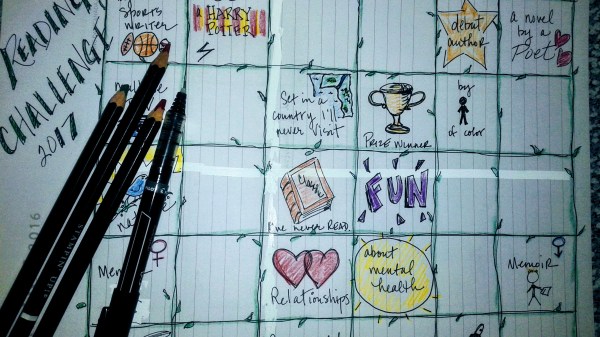
We’ve also probably set reading goals for ourselves. I played in my new planner, setting some goals that I will share with my students when I ask them to create their new challenges.

20170101_200237

If you are looking for a way to spice up your reading in 2017, consider this:

Join the #3TTBookClub on the Three Teachers Talk Facebook page.

Why #3TTBookClub?

In the introduction to her book Reading in the Wild, Donalyn Miller writes: “I want my students to enjoy reading and find it meaningful when they are in my class, but I also want them to understand why reading matters to their lives. A reading workshop classroom provides a temporary scaffold, but eventually students must have self-efficacy and the tools they need to go it alone. The goal of all reading instruction is independence. If students remain depends on teachers to remove all obstacles that prevent them from reading, they won’t become independent readers.”

How do we help our students become independent readers if we are not independent readers ourselves?

I am often surprised at how many English teachers I meet who admit to not reading. I wrote a bit about that in a post last year, and I extend the same invitation:  Are you walking the talk in your content? (The invitation to guest post on this blog stands as well. Every teacher’s voice matters. Your voice matters.)

How will #3TTBookClub work?

We batted this one about a bit, but it didn’t take long to decide that even when it comes to book clubs, choice matters. Each month Shana, Lisa, and I will choose a book. We will introduce our books on the Three Teachers Talk Facebook page and invite other readers to read along with us. Read one of the books, two of them, or all three (My personal goal, but, you know…time… and all that feedback to leave on all those papers.)

We will share ideas on how we might book talk certain books with our students, share insights from pedagogy books we read, share ways we might use excerpts to teach craft, and just overall share our deep and abiding book love.

What have you got to lose?

We hope you will join us in #3TTBookClub in 2017 — and please, use the #3TTBookClub hashtag and invite your friends. See you on the Three Teachers Talk Facebook page.

3ttbookclub


Follow Three Teachers Talk on Twitter @3TeachersTalk, on Instagram at 3TT.us, Pinterest at Three Teachers Talk, and Facebook @ThreeTeachersTalk. Oh, and remember to subscribe to the TTT blog, so you never miss a post.

Amy Rasmussen lives in north Texas and teaches AP English Language and English 3 to the Fighting Farmers at Lewisville High School. She adheres to the words of Emerson: “We aim above the mark to hit the mark,” and Jesus Christ: “Love one another.” Imagine a world if we all love more than we think we can. Follow Amy on Twitter @amyrass.

ftc-guideline-%22affiliate-links%22


Finding New Books: A Lesson from Rachel the Book Bandit

I have a lot of awesome students this year.

A LOT.

img_6200One of my preservice teachers is the hilarious Rachel, who, when she stopped by Allen Hall to turn in her writer’s notebook for the semester, was carrying a copy of Chimamanda Ngozi Adichie’s excellent book Americanah.
“Ooooh,” I said.  “That’s a great book.”

“It is, so far,” Rachel agreed.  “I’m only about 40 pages in.”

“Is it for one of your classes?” I asked.

Rachel laughed a little and said no.  “It’s on the African American Literature syllabus, though.”

Well, that was exciting to me for two reasons.  One was that the African American literature class was going beyond Ralph Ellison and Richard Wright and Zora Neale Hurston into the realms of contemporary.  And the other was that clearly, Rachel had been talking to others about books.

I love me some contagious book love!

“Do you have a friend taking the class?” I inquired.

imagesRachel looked sheepish.  “Well, you see,” she explained, “at the beginning of the semester I always go around to all the different English classes and just stay for the first class so I can get a copy of their syllabus.  Then I put all the titles in my Amazon cart and my mom sends me a few books every month!!”
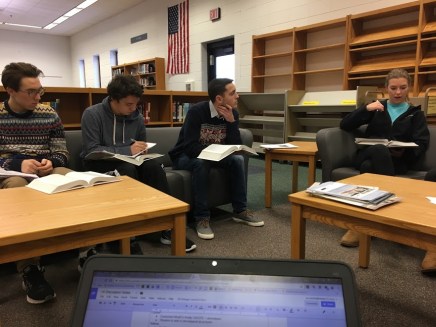
She was gleeful, and I was giddy.  Rachel was…a book bandit!

“Wow,” I said, impressed.  “So you discover all kinds of new titles this way.”

“Yeah,” she agreed.  “I don’t have time to take every single English elective offered, but I need to know a lot of titles if I’m going to be a good English teacher.  So I do this instead.”

I was so impressed that Rachel had discovered, and independently read, award-winning literature this way.

And, I was even more impressed that Rachel knew that to be a successful teacher of readers, you have to know lots of titles so you can match the right kid to the right book at the right time.

Now that winter break is approaching, I’m looking for some new books to read.  So I took a cue from Rachel and discovered the following amazing titles on the syllabi (found through the online university bookstore) for various English courses at our university.

Popular American Culture, ENGL 258:

  1. Do Androids Dream of Electric Sheep? by Philip K. Dick
  2. Fledgling by Octavia Butler
  3. I am Legend by Richard Matheson
  4. The Walking Dead, Vol. 1: Days Gone By by Robert Kirkman

Sexual Diversity in Literature, ENGL 288:

  1. Rubyfruit Jungle by Rita Mae Brown
  2. Fun Home: A Family Tragicomic by Allison Bechdel

Fiction for Adolescents, ENGL 405:  (this one was a gold mine!!)

  1. The Book Thief by Markus Zusak
  2. Fallen Angels by Walter Dean Myers
  3. The Absolutely True Diary of a Part-Time Indian by Sherman Alexie
  4. The Crossover by Kwame Alexander [I bought this, read it one sitting, and cried in public while finishing it]
  5. Simon vs. the Homo Sapiens Agenda by Becky Albertalli
  6. Brown Girl Dreaming by Jacqueline Woodson
  7. Bone Gap by Laura Ruby
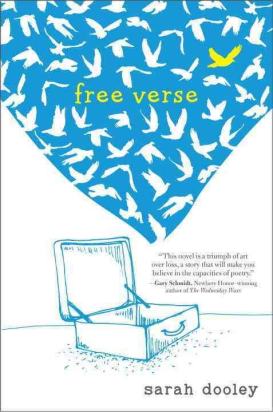
  8. Free Verse by Sarah Dooley [I bought this one ASAP; it’s set in a West Virginia coal mining town]
  9. We Are the Ants by Shaun David Hutchinson

Multiethnic American Literature, ENGL 255:

  1. The Namesake by Jhumpa Lahiri
  2. American Born Chinese by Gene Luen Yang
  3. Everything I Never Told You by Cynthia Ng
  4. Underground Railroad by Colson Whitehead
  5. Make Your Home Among Strangers by Jennine Capo Crucet

Thanks to Rachel for inspiring me with a way to find all of these great new titles!  I hope you’ll find some great new titles this way, too.  Please share them with us in the comments so we can all enjoy!

2 Ways to Prioritize Student Talk in the Classroom

Workshop affords so many opportunities to explore with the students in front of me as opposed to present a set curriculum to whomever happens to be seated in my classroom. It’s teaching through interaction, and in this case, it’s teaching straight from the kids themselves.

We see it in workshop all the time. Students given the tools to explore the world as readers and writers, and encouraged through personalized learning, quite often take their learning to places our old lesson plan books didn’t always accommodate.

One of the best opportunities for this classroom growth is having students do more and more of the talking. With the right modeling and specific expectations around that student talk, the classroom becomes a place students lead through inquiry, as opposed to follow through completion of teacher set tasks.

discussion-2

Morgan quotes Judy Brady’s “I Want a Wife” to analyze how the repetition supports the sarcastic tone and proves the point that since they do SO much, everyone should want a wife. LOL!

It happened yesterday morning, in fact. My AP students were participating in small group graded discussions. Just reading the last sentence makes me cringe (yes we use a rubric, no, the conversations don’t have to be formulaic as a result), but with choice in which readings from our unit they wanted to discuss and some guiding questions throughout the discussion, our conversation about gender and the implications of historical stereotypes on a modern world (their direction for the discussion, not mine) took an interesting turn.

“Mrs. Dennis…you’re smiling weird. What did I say?”

I stop furiously typing comments and look up. “I’m sorry?”

“You had a look. Did I say something wrong?”

“Sarah, you said nothing wrong,” I smile and glance around the table. Seven intrigued faces look back at me. “In the last few minutes this group has, largely unprompted, connected several essays through the lens of analysis, used terminology we’ve not discussed since September, Trinity uttered the words, ‘I don’t believe gender pronouns are even really necessary anymore,’ and then supported her opinion with specific text evidence, and several of you actually just murmured sentiments of excitement to shift the discussion to Judy Brady’s satirical 1971 piece ‘I Want a Wife.’ I’m smiling because I was just thinking about how I used to give short answer reading comprehension quizzes on these pieces.”

“Oh,” said Sarah, “This is way better.”

Yup.  This was a discussion they wanted to have. This was a discussion I wanted to hear. They took the lead, in fact one of our rubric bands demands that, and they came to the

discussion

Part of a small group discussing racial stereotyping colliding with gender stereotyping in the Brent Staples piece “Just Walk On By”

discussion prepared to drive conversation from the perspectives of authors like Brent Staples, Deborah Tannen, John and Abigail Adams, and Judith Ortiz. Perspectives that regard gender through stereotype, race, satire, narrative, an exchange of letters almost 250 years ago, and visual texts.

Did I just sit back and let them talk, free-for-all style? No. This conversation took practice, feedback, and correction over the past few months. Today, it took redirection on some occasions and additionally it took specific intervention for those students reluctant to participate. Additionally, had it been a lower-level class, I would have been a bit more actively involved to start. But as you well know, students at any level are capable of, and actually far more likely, to get actively involved if their efforts for comprehension are supported and their exploration of the text is encouraged. We work specifically on ways to communicate both agreement and polite disagreement, so students can help clarify the text as well as analyze it.

Like any solid workshop component, it involves careful teacher planning and modeling, but equal parts careful student leading as we gradually release them to own their own education. 

We assess students on their preparation for the discussion with visible notes and use of specific text to support their points and their leadership within the group. That leadership can be exhibited through meaningfully involving others to bring them into the discussion with a question, synthesizing ideas they have heard so far, and/or including insights from additional research on a particular topic to extend discussion beyond the reading.

I spend a whole class period for discussions, breaking the class into groups of 7-10 students so all voices have more opportunity to be heard. Students not in the discussion have specific work to complete, sometimes by the end of the hour. For feedback, I type comments and insights while the students are speaking, so I can quickly copy/paste them into the comment section of my feedback form (A Google form emailed directly to students with 2 Common Core based rubric bands as dropdown tabs so I can just click the score for each band, include specific typed feedback, and often get that feedback out to kids the same day).

Another opportunity for seriously impactful student talk, is handing over the daily book talk to the class.

One of the many benefits of this scenario is that I can tap into growing student enthusiasm about books and have my kids spread the book love directly with each other. Don’t get me wrong, my book talks are something to behold. Part forensics piece, part reader’s theater, and part screentest for the literary loony bin, I sell books much like I would envision the traveling vacuum salesmen of yore putting food on the table with a pitch of salvation not just for the home, but the soul. It’s not just going to clean your carpets, it’s going to change you life, Ma’am. Your life. 

But, let’s be real. Though I sprinkle my classroom with good will, good cheer, and good books, I’m not the best salesperson in the room. If you’re going to sell the vacuum with radial root cyclone technology (I Googled that), or the book with 389 scary looking pages on dystopian fantasy rooted in a chromed society, you need to know your audience. You need to relate to your audience. You need to be one with your audience.

There are plenty of reasons to get kids doing your book book talks, not the least of which is I can’t read fast enough these days to keep up with the need for the type of really passionate and informed book talks that come from having read the whole text (Books do sell themselves sometimes, just by reading the back cover and a page or two at the start, but I love to hook kids with a section from the middle to show the impact of the rising action or depth of character development).

book-talk

Priyanka book talking Stitches, a graphic novel by David Small, under the document camera.

  • Students trust one another’s opinions. Yes, often more than mine. I sell hard, but at the end of the day, I’m usually still the biggest book nerd in the room, and therefore I think I am occasionally regarded in much the same way  as the Dancing Grannies in a holiday parade: Enthusiastically adorkable, but a bit of an anomaly to be trusted only at a distance.
  • They find titles, authors, and series that aren’t yet on my radar. Despite my best efforts, I can’t read fast enough or comb enough best of lists to meet the recommendation needs of over 120 kids. But when the classroom experiences a new student perspective on reading each class, additional book talks at their tables after reading, speed dating with books,  and an invitation to help grow our classroom library with tax free, gluten free, guilt free donations of gently used books, everyone wins and the depth of our classroom repertoire grows.
  • Their enthusiasm is relatable and often focused on books that don’t speak to my own bibliophilic tendencies, but can ignite the reading sensibilities of their adolescent peers. For example, I took several YA Lit books home at the start of last summer. Two days in, I was already struggling with the voice. It grated on me (no offense scholars) after hearing it all day in person for 180 days. So when a student book talks The New Guy (and Other Senior Year Distractions) by Amy Spalding, and two sophomores in my class (who have struggled to meet reading goals week after week) add it to their “I Want to Read List”s, that’s another win, because we can’t push kids to deepen their reading if they aren’t reading. First hook them, then book them with more challenging pieces.
  • I offer up the option to produce their book talks digitally and for some students, this is what makes the entire experience meaningful. Students sell their books through book trailers, compilations of related imagery and voice over to meet the same requirements of a live book talk. I’ve had kids include clips of author interviews, live action fight scenes with voiced over dialogue directly from the text, and this year, I have a student who wants to read over the top of a mannequin challenge he plans to shoot to represent some of the major action in the text.

What results is growing book lists, renewed enthusiasm as students go back to books they’ve read and revisit their love for the text, and involving each and every single student as a valued reader in our classroom community.

We’d love to hear from you! What tips and tricks for student talk make their way into your daily workshop practice? Please comment below! 

Better Teaching: Please tell me your story

I already knew they were hard workers. This group of girls spent a lot of time in my classroom after school. They huddled together at the far table, speaking in a language I did not understand. They asked questions occasionally, afraid of being wrong.  

“Is this right?” one would say, timidly showing me her iPad where she’d written a few sentences in the Docs app. Returning to her table, she’d share my response with her friends.

They held on in AP English by decimal points as each grading period ticked by. Lucky for them, I scored on improvement, not on the AP writing rubric.

In class we watched the documentary “A Place to Stand,” based on the book by the same name by Jimmy Santiago Baca who became a poet while serving time in prison. Baca’s story captivated my students. They identified and analyzed the argument: “Education matters. Fight for it. Words matter. Learn them. Write them. They empower you..”

Some students understood that more than others. These girls, for sure.

We read several of Baca’s poems. Although mine is primarily a non-fiction course by nature of AP Language and my syllabus, I know that it’s through poetry that my students more easily grasp the beauty and intention in an author’s craft.

The task was to re-read Baca’s poem “As Life Was Five” and to write a reflective piece in response to it.

These girls were struggling, so I finally joined them at their table.

“Tell me what’s going on,” I said.

“We just aren’t sure,” Biak said. She spoke more often than the others, although her English was only a little better.

“Can I see what you’ve written?” I asked, and she timidly passed me her writing, carefully penned on notebook paper.

She quickly broke into explanation:  “I wanted to write my own poem. I don’t know how, and I don’t know…” Words tumbled out, and she lowered her head, waiting for me to read the page.

I looked, and before I could read anything, the words “Burmese!! STUPID and CRAZY!” shouted at me.

“Wait,” I said, “I thought you were from Burma.”

Five voices rose in chorus:  “Yes, yes, we are from Burma, but we are not Burmese. We are Chin.”

I needed them to teach me. I’d never heard of Chin, and my knowledge of Burma was limited to the first few chapters of Saving Fish From Drowning by Amy Tan I’d tried to read and abandoned years ago.

“Will you tell me your story?” I asked, looking closely into the small faces of these beautiful young women, similar yet so different in features and personality.

Biak began to talk.

“We are from the state of Chin in Burma. The Chin are the mountain people. The Christians. The Burmese hate the Christians.”

And then they all talk and tell me their story:

They fled Burma with their families, leaving grandparents and loved ones behind. Sometimes not getting to say goodbye for fear the secret of their journey would be told. They traveled in groups, mostly at night, walking, walking, walking, they said. Often barely eating food, and even then, mostly rice balls or an egg stirred into water.

Bawi told of a Buddhist monk who acted as their guide. “He wouldn’t let us pray,” she said. “Every time we tried to pray, he would knock away our food. ‘Pray to me,’ he’d say, ‘I’m the one who gave you food, not God.’ He was so scary!”

“I lost my shoes,” Biak said, “I walked for miles and miles with no shoes, and the.. What are those things?” she turned to her friends, motioning with her hands like claws, “…those things that stuck to my feets?”

“Thorns,” they said.

“Yes, thorns stuck in my feets, but I had to walk. Walk and walk.”

“Walk quickly and don’t let go,” Kimi said.

“There was a pregnant woman with us. She could not keep up. When we reached the border of Malaysia, she could not run. I do not know what happened to her.”

“I remember we heard the POW POW POW. We had to run as fast as we can to cross the border. I was so little. My legs short. I was so scared.”

Biak begins to cry. She bows her head and covers her face with her hands, “I don’t like to think about it. I remember my grandmother’s face. We barely got to tell goodbye. She cried so much.”

I look around the table. Their eyes shine with memories.

“You all left family behind, didn’t you?”

They nod, and I see Van’s chocolate eyes pool with tears.

“Did you travel together?”

“No! But we all have same stories. All Chin students do,” Duh says.

“Wow,” I say, “Just wow.” My heart throbs in my chest, heavy with the weight of these stories. Resilience takes on new meaning.

“So you must think it’s pretty lame when your classmates whine about having to work a three hour shift and that’s the reason they cannot do their homework.”

The tension breaks, and they laugh.

“What an amazing gift you’ve given me,” I say, “You need to write your stories.”

“I wanted to write a book,” Kimi says, “but I don’t know how.”

I smile. “We can work on that.”

My heart changed after that chat with my girls from Chin. I also felt chagrin. I waited three months into the school year to extend the important invitation:  “Tell me your story.”

I can come up with fourteen different reasons why. None of them matter.

Throughout the fall, I struggled with my classes because I focused on the skills needed to be successful in AP English instead of focusing on the individuals who needed to learn the skills to be successful in life. I forgot why I wanted to teach teenagers in the first place.

Perspective matters.

The most important conversation is the one that invites our students to tell us their stories.

Those young women from the state of Chin grew to trust me because I asked, and I listened. They told me later that I was the first teacher who asked them to tell me their stories — they had all attended U.S. public schools for at least four years.

I am sure other teachers assumed they knew. I thought I knew until I saw the emotion in five pairs of eyes. “We all have same stories,” Duh had said, but that is not true. They all have similar experiences. Their stories are uniquely personal, and they serve as cardinal prerequisites to the identities of each individual.

Identity matters.

How our students see themselves — as teenagers, thinkers, readers, writers, friends, students — matters, and to instruct the individual we must know what she believes about her abilities and her capabilities, both of which have been shaped in one way or another before she ever steps through our door.

Peter Johnston helped me understand the importance of identity in his book Choice Words. He reminds us, “[Children] narrate their lives, identifying themselves and the circumstances, acting and explaining events in ways they see as consistent with the person they take themselves to be” (23).


screen-shot-2016-12-03-at-8-45-20-pm

Trust and esteem are imperative to effective conferring. They are imperative to effective teaching. They are two cornerstones of conferences that allow for the relationships students need with their teachers, the relationships students need to learn.

If our goal is to help our students incorporate reader and writer into their identities, we must build foundations that allow them to take on the behaviors of those who read and write. Equity and autonomy create balance in this foundation and become the other cornerstones.

All students must feel that we meet with them fairly and without judgment. They must know our goal is to inspire independence as they become more effective readers and writers — and of course, literate citizens.

Really, it all begins with the invitation:  “Please, tell me your story.”

my-chin-girls

Graduates Lewisville High School Class of 2016


THAT DAY  THAT DAY
by Biak Par
Far from my Home, my Family
When looking at the sky they seem so happy
But me,
Thinking about that day
Every word they speaks, every looks, every smiles, every laugh
They tear me apart, the soul sing Be Strong
That day
Every word they talk, it burn my ears like Hell
Its torture me every night, in intimidate me every day
When I see those similar faces
That day
Those word, those eyes         
Tear my heart into two pieces.
Those words are as sharp as a razor
They call me foolish, Yea, I don’t know them
Burmese!
That day
My body fills with wound and remorse.
It like drawing into the water, I could not breathe nor talk,
Walking to class
All eyes on me,
Looking down with hope that there is a place I can conceal
But the room seems so small
As I take a step to the room, the room seems colder
Like I was at Antarctica,
Very Cold
Looking at the room I was isolated for this people,
This entire people are strangers.
That day
Standing still
People examine me, like I am from the others planet
That day…
My tremble body, drum in my blood
Eyes fill with water,
That day
The word of Burmese, such as STUPID, CRAZY echoed through my ears
Stupid, crazy,
My mouth wants to shout, but my mouth feels numb
And makes my throat feels tight like I am being choked,
Almost tearful
Wanting to run away can’t bear the exposes of feeling being hunted.
That day
Eyeing for a place to seat
But none of them invites me or speak,
It like I am walking into a room full of a babies Dolls,
They do not talks
But their EYES,
Their evil eyes talk, its say get out of this room
That day
Head down, looking at the floors as I walk toward to the edge of the room,
Seat alone,
The room feels so dark, so lonely and scary
Even, I was surrounding by those people
That day
My silent cry, wishing I can revisit to where I’ll be safe
Because every second, every minute, every hours this place seems so hazardous
That day…
Hopes and dreams are fading away like the wave of the cloud fade, little by little.
From that day the world is never the same
That day, change my life
Made me feels like a woman, made me realize
That because I am different from them (Burmese) and I only speak
CHIN,
They destroy and killed my hopes, my thought, my believe,
The thought of what might come next. I am Scared.
But,
My soul sing to me, be strong. BE Strong Biak Par. Be STRONG.


Opening a Space to Help Others and the Spirit to “Lean in”

I sat at the Heinemann breakfast at NCTE listening to those who knew and learned from him honor the legacy of Donald Graves. Penny Kittle began. She spoke of Don’s ever mindful mission to “open the space to help others” and how he had a “lean in” spirit. Everyone he spoke to knew he listened, knew he truly cared about who they were as people as well as who they were as teachers. Penny said Don had a “settle the soul” effect on those he encountered, even strangers in an airport on the way to NCTE after 9/11. In a time of turmoil, Don publicly read poetry.

Every individual who spoke that morning shared a credo, rooted in the influence of Donald Graves.

We listened, enthralled in the passion and purpose that bound us together as educators — all attending a conference intent on improving our practices to better instruct the children we teach.

I have only felt this kind of community two other times in my career:  once at the University of New Hampshire (UNH) Literacy Institute, the other at the North Star of TX Writing Project Invitational Summer Institute in 2009.

In class this week, my students and I read a poem that lead to a discussion about indelible moments, not just the ones that mark us with memories we cannot shake, but the ones that infuse us with new found understanding, new purpose, new hope. They change us for the better.

My experience with North Star changed me for the better. I owe a lot to this writing project.

I had only been in the classroom three years, and I was newly assigned to teach AP English Language and Composition. I didn’t have much of a clue. That summer I met other educators, who like Don Graves, had that “lean in” spirit. They knew how to “settle the soul.”

Dr. Carol Wickstrom lead with wisdom and wit and listened as I expressed frustration about my lack of preparation to teach an advanced writing class. Kip Nettles demonstrated daily routines of writing workshop instruction and modeled how these moves could have lasting effects on writers.

I grew to love the other teachers who attended that ISI with me that summer. We wrote. We shared. We worked hard to learn the meaning of authenticity in writing instruction. We cried as we read our writing, and we cried as we listened to the heartfelt writing of one another.

Heather Cato showed me how to “play” with technology and taught me how to effectively use it for instruction. She became my dear friend, thinking partner, and first writing collaborator, and along with Molly Adams, we started the blog Three Teachers Talk.

Few people know the history of Three Teachers Talk, but I tell it when I lead professional development, which thanks to an ever growing move to Secondary Readers and Writers Workshop has been quite a lot.  In that history are the roots of what Don Graves modeled so ardently:  How do we open the space to help others?

We started writing at Three Teachers Talk as a way to share how we internalized what we learned through our National Writing Project (NWP) experience. We wanted to help others welcome authentic choice writing practices into their instruction. We wanted to stay connected as friends and collaborators.

Molly and Heather have since moved to other great spaces in their careers. I am sure they write other places now:  Molly at her high school and with NWP and Heather as a curriculum and instruction leader in her district. I follow (stalk) them and celebrate their successes. I will be forever grateful for their listening hearts and “lean in” attitudes, especially Heather who shouldered me along at a time when I wore heavy boots to work each day.

It’s belonging to a community that brings out the best in who we want to become. When we surround ourselves with those with the same passion to learn and grow and share, we learn and grow and share passionately — or at least we learn how to open the spaces to do so.

Another North Star TC Amanda Goss opened a space for me when she told me about the UNH Literacy Institute and that I could take a class from Penny Kittle. I did, and my world shifted. My teaching took on new meaning as did my writing, and I met the friends who now write with me at Three Teachers Talk.

So many North Star TC’s have opened spaces for me that have helped me grow as an educator and as a human:  Audrey Wilson-Youngblood, Carol Revelle, Dr. Leslie Patterson, Marla Robertson, Juanita Ramirez-Robertson, and Holly Genova, Whitney Kelley, and Amber Counts.

Thank you for “leaning in,” “settling my soul,” and walking with me on my journey to become who I want to become.

In the summer of 2013, I sat in a class at UNH and listened to Penny Kittle and Thomas Newkirk talk about the influence of Donald Graves on writing instruction. They co-edited the book Children Want to Write, compiling his writing, research videos, and presentations to teachers and spoke warmly of their mentor, Don. In chapter one, they write:

“We used to joke that after a talk, a line of teachers would wait to speak to Don. And each one would say some version of, “I thought that you were speaking just to me.” That was his gift, an uncanny sense of empathy and understanding for the situation of teachers…Before the advent of No Child Left Behind, he saw the negative effects of mass testing — testing is not teaching, as he claimed in one of his book titles.

“But more significantly, he could articulate, and even dramatize, the reasons we all went into teaching in the first place — the challenge of monitoring the progress of students; respect for the decision making and reflection (even improvisation) of thoughtful practice; the rock-solid belief that student learning is tied to teacher learning; the need for focus on the key goals of learning (cutting through the curricular clutter); and his belief that no system or program — even those drawn from his own work — could predetermine the decisions a teacher must make. He stood like a rock in the face of anything that diminished this form of learning. It is a message more critical now than when he was presenting three decades ago.”

Ten years into my teaching career now, I embrace Don Graves message. I thank those of you who have helped me get here. I can only hope I can emulate his “sense of empathy and understanding for the situation of teachers” and stand “like a rock” as I teach my own students through the lens of Don Graves teachings:

“Teaching…[is] a form of research; it [is] real intellectual work” (6).

“…create the “conditions” for writing to occur and for students to become invested in their work” (11).

“Children want to write” (15).

“People want to write” (20).

“…when students cannot write, they are robbed not only of a valuable tool for expression but of an important means of developing thinking and reading power as well” (20).

“A democracy relies heavily on each individual’s sense of voice, authority, and ability to communicate desires and information” (20).

“Good teaching does produce good writing” (21).

“Writing is most important not as etiquette, not even as a tool, but as a contribution to the development of a person, no matter what that person’s background and talents” (21).

“Writing contributes to intelligence” (21).

“Writing develops courage” (22).

“Inane and apathetic writing is often the writer’s only means of self-protection” (22).

“Writing also contributes to reading because writing is the making of reading” (22).

“Auditory, visual, and kinesthetic systems are all at work when the child writes, and all contribute to greater skill in reading” (23).

“The ability to revise writing for greater power and economy is one of the higher forms of reading” (23).

“Children want to write before they want to read” (23).

“Neglect of a child’s expression in writing limits the understanding the child gains from reading” (24).

“…if writing is taken seriously, three months should produce at least seventy-five pages of drafts by students in the high school years” (26).

“Seldom do people teach well what they do not practice themselves” (27).

“Children may see adults read and certainly hear them speak, but rarely do they see adults write” (27).

“A single completed paper may require six or more conferences of from one to five minutes each” (29).

“Without information a student has nothing to write about” (31).

“Writing is the basic stuff of education” (35).

screen-shot-2016-12-03-at-6-01-08-pm

What is Your Teaching Everest?

I’m standing on my desk.

It’s dangerous, but exhilarating, and I probably look like a loon, but I don’t care. (Please see my post where I embrace my dorkdom in an effort to really get to know my students and move on happily with passionate living and teaching.)

oh-captain

High heels kicked off, channeling the spirit of Mr. John Keating and brazen pigeons everywhere, I’m perched on the edge of my desk during prep, looking around the room to try and gain gain a different perspective.

Oh, Captain, my Captain…Somebody call security. She’s lost it.

No, no. I’m all right. (Well, you know – Relatively speaking. Dear colleagues, if you hear a thud, please investigate.)

So, what caused this poetic exploration of my abandoned classroom? I was thinking about a quote I heard at NCTE 2016:

What is your Everest this year as a teacher?

No, my desk isn’t my Everest. I’m not that far gone. But, per Shana’s inspiration to start with a question, I was thinking about what needs my attention the most right now. With 86 minutes to plan, grade, create, and locate necessary motivation to do all of the roomaforementioned tasks, what should I start with?
There’s certainly a lot to chose from: stacks of papers, countless books to read, share, and sort, a department in need of collaborative time to plan, students flying under the radar.

Everything in front of me is important. I need to grade the narratives my sophomores wrote, to put some ending punctuation on that adventure. When She Woke by Hillary Jordan is calling to me too. That book is Hester Prynne meets Offred meets futuristic criminal justice system that injects offenders with a skin altering virus based on their crimes – I need several extra hours in the day to read. Truth be told, I should have started this post sooner too. Procrastination and exhaustion mix into a delightful little cocktail called Crippled Motivation. Bartender, I’ll take another when you have a minute.  

In all seriousness though, I return to my question (Yes, I’m off my desk, Mom), because answering it means I can get something done. I’m weird that way. Could I pick up a stack of papers and just start? Of course. But I have to mentally work up to it, know my plan, have a reward of some sort (read five papers, read When She Woke for five minutes). This time, the question, the task, the implication is much bigger.

What’s most important right now? When I could do a thousand things, what needs to be done right now because it will mean the most?  I know the answer. And not only because I was just standing on my desk :

My Everest this year is feedback.

Consistent, responsive, quick feedback that first encourages, and then focuses in on promoting growth. Remember the old saying about catching more flies with honey than vinegar? That’s the stuff right there.

I want to move my students forward. We all do. But now, more than ever,  I believe the way to do it is through sincere investment in the original thoughts and explorations of my students. Personal connections that, yes, take some time, but build relationships that have helped me to better recommend texts, suggest style moves students may need to make in their more formal writing, and encourage additional critical thinking beyond the classroom.

I used to stress about “finding something good” to include in my comments to my students. And I hate to say this, but it’s downright hard in some instances, isn’t it?

I really like what you did with the title there. 
Interesting transitional choice. 
Wow. So many words in that sentence.
Nice…font selection.

But now,  I’m thinking about feedback in new ways and delivering it in new ways too. To reach my Everest, I’m going to have to get creative and intentional. So, here’s what I did this afternoon:

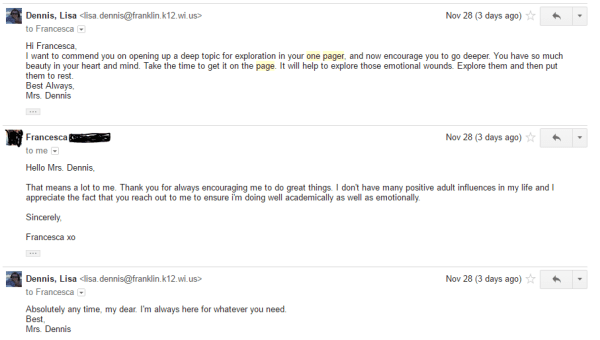
  • Read through a section of one pager submissions from my AP students. Check them in with the quick rubric for a formative score, and email five students per class with reactions. Not corrections, but reactions. Students are encouraged to explore in these writings and the best means of moving them forward in this case is to share additional insights, question, and encourage. I highlighted the students’ names in my gradebook to know I’ve contacted them and I’ll do the same with several more students next week. Writing feedback…check.

fran

  • I made a plan for conferring during reading later this week. Without a plan, it’s feeling random and I’m not doing it enough (the thousand things on my desk keep capturing my attention). So, I have a list. I know who I want to talk with based on quick writes students did today. They reflected on their progress toward their weekly reading goals and some students are struggling. Just by having them take a quick photo with their phones and email me the page, I got a literal snapshot of how each and every one of my students is doing with their independent reading, and I didn’t have to collect notebooks. Now, I’ve emailed a few students congratulations and made this plan. In the picture below, Alexis refers to her current read as “a beautiful romance of adventure.” Love! Reading feedback…check. 

    img_1012

  • Students will self-assess their latest practice AP argument essays. Feedback does not need to come from me to be beneficial. Using the AP rubric to help justify scores, students will take a sheet of paper, put a score and justification on the top, fold it over and hand it to the person next to them. Scoring will proceed in the same way around the table until everyone has his/her paper back. The table will then need to calibrate/norm and agree on a score. Self assessment and peer assessment…check
  • I am going to question and listen more. Long ago, I gave up on the idea that my imparting knowledge on others was the best way for them to learn. Everyone learns best when the are motivated to do so through personal connection to the work, interest in the material, and an understanding of how to improve. Workshop sets this up in a classroom, it’s now my job to remember to listen more and jump in less. During conferences, during book clubs, during discussion. Listen first, respond, encourage, and redirect/suggest later. This certainly doesn’t mean my presence in the room diminishes. It means I remember that my presence in the room is to guide my students, not steamroll them.

Gaining a new perspective feels like hitting the reset button to me. It provides clarity of mind and purpose. Skill development is my professional responsibility. Human development is my personal responsibility. They work hand in and hand and they are the Everest I will climb all year, every year, as I talk with, respond to, and gain insights alongside my students.

What is your teaching Everest this year? We’d love to hear from you! Please add your insights to the comments below!