Category Archives: Community

Books instead of Bullets

SF StrongIn my short time here as a regular contributor to Three Teachers Talk, this was the latest I’d waited before composing a post.  Though, that’s not really true.  I had a post mostly written last week where I reflected on this year we had and looked forward to a new start next year at a new school.  It would have been similar to this recent and amazing post by Sarah Morris.

Then Friday happened- 10 lives gone and countless others changed forever.

I struggled this weekend with how this post was going to go.  I’m not looking for sympathy here because obviously the 10 families who lost loved ones or the kids who watched their classmates be gunned down in front of them are truly the ones deserving of our hearts.

Like so many not directly affected by this tragedy, though, I struggled.

I struggled to stay composed when a student quietly sat down next to me at 7:55 am and said, “Coach, did you see this?” His phone showed a social media post about students being shot a high school not too far from us.

FullSizeRI struggled because I realized how comfortable I am using the term “active shooter” in a text message to my wife at 8:11 Friday Morning. This was the text message I sent her after I pulled up a local news website to see if it was true or anther false alarm.

I struggled because when my student council president told me she was scared walking down the hall at 1:00 that afternoon, the only response I could muster was, “I am too, and I think its going to feel like this for a while.”

msd

I struggled remembering that I wore my #msdstrong t-shirt to visit the Sequoias at spring break hoping to send a little bit of support to those in Parkland, Florida who lived through this earlier in the semester.

(Side note: I was at exactly this point in writing my post when my student council president called and asked if we can sell t-shirts to help support Santa Fe High School.)

I struggled because when my babies, a 2nd grader and a 5th grader, got off the bus at 3:30, I felt obligated to sit them down and tell them that a boy at a local high school decided he needed to kill his classmates. I couldn’t hold back the tears and my daughter, in her innocence, asked if my school had had to go into a “lock down.” She’s very familiar with what that means.

I struggled early Friday evening when, sitting in a colleague’s living room, myself and several other teachers celebrated the retirement of a woman who gave 44 years of her life to this profession.  I looked at the teachers sharing stories and laughs, at the sleepy dog on the floor, and the nine month old baby that kept stealing everyone’s attention. I wondered how I could balance feeling thankful to have spent the last 11 years working with this amazing person and at the same time think about how thankful I was to be alive.  I felt thankful that my school wasn’t the one to lose lives that morning, and that made me feel horrible.

I struggled when, an hour and a half later I was sitting in a quiet backyard celebrating the upcoming graduation of two of the most amazing people I’ve ever known. They are twins and I got to be the boy’s position coach in football for four years and the girl is my previously mentioned student council president.  Their parents are amazing too and as I sat there visiting with them, I couldn’t wrap my head around how our society can produce these kids and also produce a mass killer less than 13 miles away.  He took the lives of  innocent kids, like these, that morning.  Kids who who had so much to look forward to and didn’t do anything to deserve death.

I struggled because, once again, I had to think about whether or not I would be able to protect my students if bullets flew at my school.  I asked my self the questions: Am I doing the best I can to stop this from happening again? Is there really anything I can do?  Is there anything anyone can do?

I struggled because I knew we can’t take up all the guns and I’m not sure, if asked, that I would give up mine.  We can’t eradicate mental health issues.  We can’t hold schools inside of solid-steel sealed boxes.

I didn’t just struggle. I also hoped.

I hoped that instead of turning inward, we can turn outward.  That maybe we can intervene in these students’ lives in ways that goes beyond dress codes, GPAs and graduation rates. Perhaps we can instill a sense of urgency in our young people, our future, that causes a change in them where instead of acting out their demons on one another, they look to each other for acceptance, love, or even just help. Maybe we can be more like the players and coaches of the Clear Springs Baseball Team who dedicated their game Friday night to Santa Fe.

I hope that even though I’m not sponsoring student council at my next school, I can help build on what we did this year.  I was lucky enough to be chosen to present at our district’s upcoming Character Conference on June 6th. I’m sure there will be presenters at Clear Lake High School that day who can help make change. I won’t technically be presenting, just facilitating what I think might be the only student presenters at the conference.   The student council officers of Clear Springs High School will share their stories of reaching out to our elementary feeder schools in an effort to build leadership and pass on the lessons they’ve learned to the next generation.  Maybe more students like them can make connections that help prevent massacres.

I hope more teachers and administrators realize that our students can do amazing things when we give them the space and the resources they need.  When we keep them free of the burden the adults choose to carry.  But the adults can help too.  I can’t think this would have happened if shooter had more access to books and less access to guns.  I can’t help but wonder if we treat our students with more gravitas then they just might tell us when they think something like this is going to happen and maybe we can have the chance to stop it.

I hope the teachers at my new school get used to a man (who’s been mistaken for a grizzly bear) telling other peoples’ babies that he loves them.  I hope I’m not the last person to tell them that.

Charles Moore is a teacher in League City, TX.  He is enjoys welcoming his kids off the bus with a smile and a hug every afternoon and making sure the dishes, laundry and other household needs are met before his wife gets home from work. The student council he sponsors will, hopefully, be selling t-shirts these next two weeks to support the Santa Fe community. Please email him if you are interested in helping and follow his twitter @ctcoach for more information.


Fitting It All In: The Think-Aloud Book Talk Combo

One of the questions I often hear about the workshop model (and truth: that I have often had myself) is how do I fit it all in?

We are “supposed to do” quick writes, independent reading, notebook work, small group discussion, whole-class discussion, think-alouds, read-alouds, writing along with students, conferring, anchor charts, building writing stamina . . . the list goes on.

Oh, and we need to do that while mastering assessment literacy, fostering positive relationships with students, offering timely and relevant feedback, developing units beginning with the end in mind, finding time to do our personal reading and writing, participating in our PLNs, developing collegiality with our coworkers, and staying current with our own professional development and practices.

It’s overwhelming to look at the list of “musts” and think that teachers are expected to do it all. The good part is that we don’t have to do it all every day. However, there are two things I find non-negotiable on a daily basis.

One of the non-negotiables is time in class for independent reading.

We do this every class period after the book talk. It’s predictable to my students that I will say “If either of these books sound like something you’d like to read, put them on your next reads list.” And then they start their silent reading.

book talk lists

Every book talk title is written on poster paper so that students can look back at them later.

The above exchange between teacher and students implies that we always have book talks, and that is in fact the case. But I find that book talks take more time than I want to take when I do them justice . . . three to five minutes can go by fast. I tried to speed them up, but I felt less engagement from my students, and fewer books were being checked out. So then I decided that instead of speeding it up, I’d try to incorporate some other “musts” into the book talk time, thereby getting “more bang for my buck” when I spend important class time.

I decided to try doing a cold read-aloud/think aloud as a book talk, sharing my thinking, questions, connections, and wonderings as I read the inside flap, discussed the cover, and read the first paragraph or so aloud.

I started with statements like, “I picked up this book because the cover caught my eye, and I don’t know anything about this book.” Or, “I am wondering about this book because I know it’s written by an award-winning author, and I’d like to know more.” Then I would deconstruct the cover, noting any awards and/or endorsements it might mention on the front or back cover, along with graphics, pictures, and blurbs.

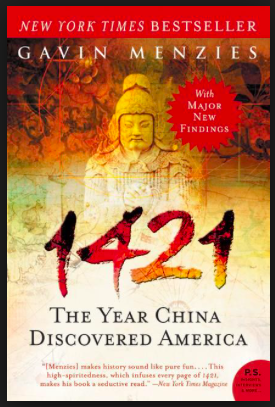
1421

1421 The Year China Discovered America by Gavin Menzies

Then I opened to the title page, checked the publication date, talked about the implications of the time during which it was published, mentioned any dedications, forwards, prologues, and prefaces.

1421 mapCharacter lists, timelines, family trees, and maps are also useful to talk to students about, and I would share my thinking as I went through these pages. (This is where the document camera is handy – projecting a larger image of some of these pages is quite helpful.)


Screen Shot 2018-05-02 at 6.17.49 PM

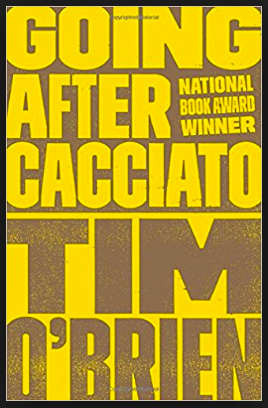
I read the first few paragraphs of Going After Cacciato by Tim O’Brian recently. I was able to explain to my students that while I know the author, I am not familiar with this particular text. I talked about what I know about the National Book Award since it is mentioned on the cover. I essentially just talked about what I can learn from the title, author, and cover before I even open the book.

My students liked the vulnerability I showed because I honestly didn’t know everything I should know about the book. But the exercise helped them to understand that they don’t need to know everything when picking out books, and that it’s okay to ask questions, be unsure, and to take risks.

Screen Shot 2018-05-02 at 6.17.12 PMAnother title I picked up was In the Long Run by Jim Axelrod. No one had picked it from the shelf all year, and it still sat there as a brand new book. I asked students what the cover could tell us, and we started to guess that it could be about marathons, cross-country running, or anything else. They didn’t realize that Axelrod is a journalist, but as we read the back cover together, we learned a lot. I had a student take it and read it that day.

Developing lesson plans has to be prioritized because the reality is that the kids will show up every day. When we prioritize book talks, we usually think we need to get ready for them, to prepare for them in advance. I assert that it’s not necessarily true each time we share books with our students.

It’s why I think the cold read-aloud/book talk combo is useful. Students have a window into the thinking of a “master reader” as we choose books and talk about them authentically.

***My one caution is that as teachers, we have to know a little bit about the book we are reading from (being careful not to learn too much in advance in order to stay authentic). But I will admit I recently had a small embarrassing mishap when reading the first few paragraphs of So Anyway . . . by John Cleese. Be forewarned.

Julie has been teaching secondary language arts for nineteen years, spending the first fifteen in rural Central Oregon, and the last four in Amman, Jordan. She’s thrilled to report that she and her family will be moving across the world to Managua, Nicaragua next year, where a new adventure will begin.

Follow her on twitter @SwinehartJulie

Where Do We Go From Here?: Rethinking Next Year

Today is my last day with my AP English Language students. They test tomorrow and then a variety of pre-senior activities keep them from my class for the rest of the week. For them, summer is right around the corner. One more day of class, a test, a few orientations and then freedom.

So, tomorrow, we will make the most of our time: reviewing any last minute questions, calming any overly stressed nerves, reminding them they’re prepared and ready, saying our goodbyes. In short, wrapping up this year. All in all, it’s been a good year, and I’m sad to see them go.

However, I’m almost a little happy to see them go as well. It would be weird if I wasn’t. Wednesday morning when they step into the gym to test, I’m going to step into my room and give myself three hours to just think about next year. Guys. I’m so excited to let loose all of my pent-up “this is how to make next year better than ever before” brainstorming energy.

pexels-photo-1043514.jpeg

I’ve been feeding that desire bit by bit with my PLC (like a valve letting off steam to keep from exploding writers notebook ideas everywhere). We’ve been slowly working our way through Kelly Gallagher and Penny Kittle’s 180 Days, and it has already started to influence some ground-level changes in our curriculums for next year – namely, a big step away from whole-class novels and more fully embracing student choice not just in their writing but in their reading as well.

Honestly, I think even without the push from 180 Days, we would have landed in this direction eventually. We’re all a little burnt out on the whole class novel. Too often the works are shared only from one perspective, the students aren’t really invested in the readings beyond receiving a grade, and the literature we teach doesn’t line up with the goals of our course. And, by my count, I’ve read Gatsby at least once a year for the last decade. This may be blasphemous, but that’s too much Gatsby.

We’ve been hesitant to move away from whole class novels entirely. After all, can a student make it in the “real world” without having read The Scarlet Letter? Those thoughts about how ‘we’ve always taught this book, so, we should just keep teaching it’ have dogged our conversations for years. However, we recognize that some of those novels aren’t that representative of our students or their interests.

So, we’re going to make a change, take the leap, see what happens.

First, we decided we wanted our units to revolve around books of choice; so, instead of trudging through a whole class novel, students would be asked to choose from a list of genres throughout the year. Right now, we know we want them to choose a modern work of fiction, something nonfiction, and a podcast. We’ll flesh out the rest of the requirements over the summer. We also decided that we don’t really care when the student reads their work of fiction or listens to their podcast. I think this part of their choice is important too. It recognizes and validates that sometimes students are ready for some texts at different times or that their schedules can accommodate different texts at different times. At every point throughout this process we want our actions and our assignments and our practices to validate our students’ voices and choices.

Then, we decided to let essential questions drive our units instead of the novel. In the past, we would just pencil in Gatsby and something vague about economy, gender, the American Dream (that ‘the’ has always been problematic to me, but that’s another conversation for a different day), and then move on. Now, we have a list of fourteen possible questions we could feasibly spend time answering throughout the year. Student choice in reading is nothing new. Our twist has been to ask our rising juniors what they want to talk about for next year.

We collated the fourteen questions into a Google form; then, we gave the form to the rising juniors and watched the results roll in. Here’s what we found:

Essential Question Average ranked score Ranking My random thoughts
Education: to what extent do our schools serve the goals of a true education? 3.36 5th I can’t WAIT to have this conversation with my magnet school nerd herd.
Community: what is the relationship of the individual to the community? 2.89 12th
Economy: what is the role of the economy in our everyday lives? 2.79 13th So surprised this wasn’t dead last.
Gender: what is the impact of the gender roles that society creates and enforces? 3.19 9th
Sports: How do the values of sports affect the way we see ourselves? 2.57 14th Thank goodness! I was NOT looking forward to discussing my intense dislike of LeBron 😉
Language: how does the language we use reveal who we are? 3.82 2nd Really surprised this was second – I have so many amazing essays in mind for this topic already.
Popular culture: to what extent does pop culture reflect our society’s values? 3.92 1st If we don’t use Childish Gambino’s “This is America” here, I will just be flabbergasted
Environment: what is our responsibility to the natural environment? 2.95 10th
Politics: what is the relationship between the citizen and the state? 2.92 11th
Work: how does our work shape or influence our lives? 3.31 6th
Science and Technology: how are advances in science and technology affecting the way we define our humanity? 3.5 3rd Yep, should have seen this ranking coming from a math and science magnet school
Government, Politics, and Social Justice: How do we decide what is fair? 3.6 4th Hmmm….are there any current YA novels or any current events that we could talk about with this question?? Gosh… YESSS!!!
Race and Culture: To what extent do these fulfill or limit us? 3.3 7th Surprised this one hit the middle of the pack
Arts and Literature: Are these still important? 3.2 8th This one too….

More and more, we want our class to reflect how much we value our students’ voices and choices. This is their space as much as it ours, maybe more so.Using this information, we can begin to plan our year, confident that students aren’t only reading books of high interest and value to them, but that those books are being read in service to answering questions that are important to them.

Sarah Morris teaches AP Language & Composition and Film as Literature in Murfreesboro, Tn. She has been bingewatching Buffy the Vampire Slayer and the title of this post comes from the musical episode “Once More With Feeling.” It’s a great episode ina great season (don’t @ me) and you can listen to the song here. She tweets at @marahsorris_cms.


3+ Ways to Help Writers Recognize and Celebrate Their Growth

The challenge?

I’ve always enjoyed our end-of-the-semester portfolio in College Prep Senior English. It’s where students typically celebrate their growth as writers. However, with a This-Is-the-Winter-That-Never-Ends leading to loss of instructional days compounded by fewer days for seniors in the spring, my colleague and I knew we couldn’t maintain the portfolio in its current form.

The solution?

So, we opted for celebration days for our writers to reflect on their writing journeys this semester. Their reflections will address the four key concepts of our course: process, purpose, audience, and collaboration. Inspired by Jennifer Serravallo’s The Writing Strategies Book and a few ideas of our own (sometimes constraints really do elicit creative problem solving!), we selected three ways to celebrate our writers, spread out over the last three classes. Each selection involves preparation and presentation (process and product, right?!).

Screen Shot 2018-05-09 at 10.34.19 PM.png

This chart contains the nutshell version of each day. On day 3, we’ll use FutureMe to have them craft their emails to their future selves. 

How will the celebrations go? Why will this matter, right now, in May?

Oh, I think that the students will benefit from feedback from an intended audience; I think they’ll laugh while they toast their pieces; I think making their process visible (as Shana discussed in Artifacts of Our Learning) will reinforce their learning; I think–given some of the relationships built in the classroom–that they’ll enjoy leaving their fellow collaborators love notes; I think that reflection at this threshold moment could help my seniors grasp the significance of their learning journey.

Why will this matter . . . in August?

I’m looking forward to this. Mostly. I’m also looking beyond it, thanks to Nathan. 

Through conferring with Nathan over the last two weeks, I realized that celebration–feeling happy about an occasion and engaging in fun related to it–is not enough. Nathan reminded me that my students also need recurrent recognition–admiration and respect for accomplishments. Yes, I recognize and celebrate strengths in student writing regularly via written feedback. Yes, I do recognize and celebrate application and growth while conferring. But not as consistently as I should. And, I’m certainly not doing a good job of prioritizing recognition and celebration as a whole class community of writers. If I recognized and celebrated successes more, would Nathan have said to me (while working on his final writing for the term), “Can you help me with this so I can produce the kind of writing you’re looking for?” Instead of the kind of good writing needed for the situation, he was still aiming to produce writing to please his teacher. What if I had shown greater recognition–with him while conferring–of progress before this moment? Would our impending celebration matter more? Yep. 

Through the rest of my conferences with Nathan, I tried to shift the conversation toward his audience. I pulled in mentor texts. I modeled some revisions I would make to voice and imagery. And over the next several days and a few conferences later, his piece began to transform, leading to this: “You know, Nathan, I think this has the possibility of being your best piece all year if you keep working at it.” I’m sure you might guess what I’m celebrating here: yes, Nathan sat up straighter, smiled wider, and, ultimately, revised more. He began really crafting. Later he reflected, “It’s like with the other pieces we really had to learn the basics. And this is getting into what really matters.” His words show his own recognition–his understanding and respect–for how his skills built in the course. There’s something to celebrate! And the genesis of this larger realization might be that small moment, that moment of affirmation.

Big celebrations are important. But life is made in the small moments. And, next year I want to consistently recognize and celebrate the good times (anyone else flashback to ’80’s weddings?)–big and small, in big and small ways.  

Next year I will . . . try to have students share lines from their notebooks more. I’ll probably need to schedule it!

Next year I will . . . try to make their successes visible. Maybe I’ll try Penny Kittle’s and Kelly Gallagher’s Beautiful Words Google Doc idea.

Next year I will . . . have my students reflect on and admire moments of growth during the celebrations portion of our weekly class meeting.

Next year I will . . .

It’ll be a dedication to celebration to last throughout the year (my apologies to Kool & the Gang.).

Kristin Jeschke’s life was made in the not-so-small moments of her children’s births. Happy Mother’s Day to mothers of all kinds, everywhere!  She also needs someone to get married soon so she can dance with her mom and her aunties to Kool & the Gang’s “Celebration.” Follow Kristin on Twitter @kajeschke. 

Do You Have A Date For Tonight?

You do now!

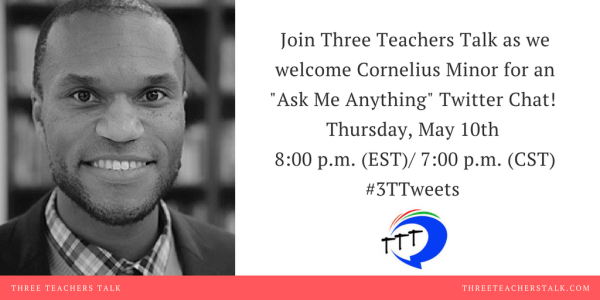
Join Three Teachers Talk tonight as #3TTweets with the incomparable Cornelius Minor. With his boundless enthusiasm, unparalleled generosity of spirit, and passionate drive in promoting equity across our nation’s schools, Mr. Minor will be tweeting with us tonight in an “Ask Me Anything” Twitter Chat!

If you missed our post with Mr. Minor, be sure to check it out!

Then, set a reminder for 8:00 P.M. Eastern tonight, jump on Twitter, search #3TTweets, and follow along, shout out, and/or ask your burning questions. We can’t wait to pick Corn’s beautiful brain and we hope you’ll join us.

3TT Corn Chat

Guest Post – Chronicles in Conferring

4

I was so excited when Charles Moore asked me to write a guest post for The Three Teachers Talk community.  After meeting Amy Rasmussen and reading posts like Writing Heals. Writing Assignments Do Not and How to Confer Like a Ninja, I continue to learn solid strategies for engaging my students in authentic writing activities that matter to them.  I am an avid reader and writer; so, it is no surprise that my favorite part of this job is conversing with students about their own reading and writing lives!

In the past, my conversations with students tended to be informal and sporadic; I would only focus on the more traditional feedback like formatting, conventions, and organization. But, with no end-goal or clear means to measure if these conferences were improving my student’s abilities to really think like writers, I would often feel lost and underwhelmed.

3

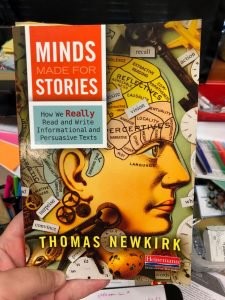
Luckily, I found some real direction after reading, Minds Made for Stories, by Thomas Newkirk and Writing with Mentors, by Rebekah O’Dell and Allison Marchetti.

Both books inspired me to weave together genuine writing advice with mentor texts the students could use as unique needs emerged during their writing journey.

I am so thrilled to share my experiences with other teachers because I love workshop now, and each day is a new opportunity to promote passion and purpose through writing. Charles Moore showcases some great resources for similar strategies in his post, Formative Assessment Works!!! 

A Look Inside My Classroom; Conferencing & Sharing Mentor Texts

Setting the Scene: Sarah, a music enthusiast, has been working on a song analysis essay for a few weeks and she started getting frustrated with her lack of progress. I met with her on several occasions, narrowing her choices in artists and songs, until she had a solid

2plan for her draft. Suddenly, she felt like “it just wasn’t going anywhere,” and she was ready to abandon the project entirely. I think we’ve all seen this before; it was a classic case of “I know what I want to say, but I don’t know how to say it.” She was also suffering from the mind-numbing effects of having more material than she could manage. What to do?
The Intervention: In response to Sarah’s crises and hearing similar angst from other students, I decided to have them all conduct a peer-to-peer conferencing activity. Students would read each other’s drafts and provided feedback that both praises the connections made and presses the writer to stretch a little more.

The Sharing Magic: Sarah decided to exchange her draft with another student who is really into writing poetry and has published several poems during Workshop this year. The two writers discuss, and Sarah is immediately rejuvenated by her partner’s comments and recommendations.  Her partner suggests that she use lines from the songs she has analyzed to write her own epic poem.

5

My Teachable Moment: As she is emphatically exclaiming her eureka moment, I turn to the bookshelf behind me and grab an annotated translation of Dante’s Inferno. I hand her the book, explaining how Dante created elaborate allusions in his poem that are illuminated by the translator’s detailed footnotes.

I never get tired of having moments like this with my students! Sarah now had a mentor text to help guide her through the treacherous depths of poetry composition and analysis.

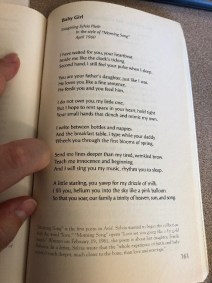
The next day I brought her a copy of  Your Own, Sylvia by Stephanie Hemphill.  A portrait of the poet’s life told in a collection of verse. Each poem includes insightful footnotes that Sarah could use as a model for her own writing.

1

The Final Act: I was so happy to see a copy of Dante’s Inferno and Your Own, Sylvia on the desk of a student who had spent the entire first semester fighting me to read anything other than mystery novels. Not only is she growing as a writer, she is also growing as a reader. Funny how it works like that.


Jenna Zucha teaches English II Pre-AP at Clear Springs High school. She is currently reading Trevor Noah’s Born a Crime and is looking forward to spending more time with her dog, Scout, and devouring her summer reading list! Follow her on twitter @MsZucha and There’s a Book for That

One Concept That Makes Me a Better Teacher: Tempo

Earlier in the Spring I spent a Saturday morning at the new football stadium in Katy, Texas listening to football coaches speak about various aspects of the sport.  That’s right, in January, high school football coaches get together to talk football… for fun.

The speakers presented their philosophies of offense or defense and talked about schemes and personnel.  I loved how, universally, they were: bright, confident, and eager to share their knowledge.

Just like with teachers, collaboration helps grow the profession. Coaches know the importance of sharing insight.  Its something I love and appreciate about the profession.

One speaker, from a school down here by us, presented on the topic of “Tempo.”

Tempo is the offenses ability to change how fast or how slow they snap the football.  In layman’s terms, its a way for an offense to give themselves an advantage over the defense and can be brutally effective when used to full effect.  Often times, tempo can dictate who is going to win or lose a contest.

The same can be true in our classrooms.

Often times, I find myself racing along, pushing the students through this concept or that; when necessary circling back around to re-teach when needed or tie-in an idea that supports our current work. I like to think of workshop pedagogy as weaving a tapestry made of many different threads of many different types and colors.  Sometimes we pull in this string or that one.  Whichever combination of threads that most effectively addresses our students’ needs.

I’m continuously amazed at how well the students facilitate this complexity in their learning.

Penny Kittle and Kelly Gallagher talked about their process in ” target=”_blank” rel=”noopener”>this amazing podcast. They explain it far better than I ever could.

Momentum

I am a big believer in using momentum in my instruction.  When the students see success in their literacy, I want to capitalize on those feelings of success by moving on to the next idea quickly. Any lull or pause in our movement forward is an opportunity to stop and lose focus. I don’t like “catch up days.”  Every day, in my mind, we should move our literacy forward.

Tempo

What I don’t do often enough, is take a deep breath and slow down.  I’ve found, this year, that I don’t take time to do the “fun” workshop activities. I’m talking about activities that build morale and allow the kids to laugh and, dare I say it…. play.

When they get to approach an activity as “play,” they can find success they haven’t found before:

Or they might find a fun way to learn its okay to come up a little short:

Either way, they are engaged in facilitating their own growth!!!

The assessments I’ve asked them to complete show me so many gaps in their skill sets that I can’t ever find enough time to address them all. But being hard-headed and driving forward without ever taking a moment to relax, we miss out on some of the fun that workshop can facilitate.

I have quantitative data that shows my students are reading and writing more than my previous senior classes and I have the anecdotal information they share with me about reading and writing more than any previous year in their education.  This is important to consider and it is valuable data to analyze as I work towards the end of this year and start thinking about next year.

The data tells me something else.  My students are burned out.  They are done; not just with their writing and reading, but with their thinking. Maybe I moved them too fast through our work in the fall and early spring.  Maybe the world they exist in is so far removed from the one I experienced at that age, that I have no real understanding of their stress levels.

I have to ask myself, what am I trying to accomplish and can I get that done operating the way I operate right now.

“Tempo,” I tell myself, “slow down.”

I have to do a better job keeping our tempo in mind as we finish out their high school education.

I’ll mix in more Poet Moments.  I’ll take more time to let them explore their own voices through narrative work that isn’t for a grade and is for fun.  I’ll change the mode from individual drafting of language to more group feedback. Generally, I’ll ratchet down the intensity of our work and lighten up on the speed with which we attack it.

What are some of the “fun” workshop activities that I can mix into my lesson plans that still hold value and have rigor?

Charles Moore is currently reading Before We Were Yours and The Glass Sword. He spends his newly freed up afternoons waiting to get his kids off the bus and tending to his beloved pool.  He just completed the GRE and hopes to start graduate school in the fall at U of H. One more thing, he recently took his Student Council class to a ropes course leadership facility and it was one of the best days of his teaching career.  Two of the many videos he took are included in this post.

Using Technology to Extend Reader’s Advisory

While I do teach one class of Senior English and one class of AP Capstone Seminar, the majority of my job is actually as the Teacher Librarian in our Senior School (Grades 6-12). As a Teacher Librarian, I spend a lot of time focusing on Reader’s Advisory as students stop by the library looking for a book to read.

Reader’s Advisory can take some time and is often about asking the right questions. While some students come to the library with a clear picture of what they want to read, more often than not, students have a vague notion of what they are looking for or have no idea at all. Sometimes when students enter the library they have a clear goal in mind, but more often I come across students mindlessly wandering the shelves because they want a book (or have been told they have to get a book), but really have no clue what they are looking for. These students may be in a reading rut and nothing is inspiring them. When I encounter these students, I always start with questions such as: what is the last thing you read that you really enjoyed? What did you like about that book? What didn’t you like about the book? Sometimes the questioning period is short and I have just the right book for the student, but sometimes the process can take much longer with every suggestion I give being turned down. While my role in Reader’s Advisory can be an important one, often the best advisors when it comes to helping students find their next great read is not me, rather it is their peers. While it is important that we as teachers and librarians are reading the books our students are reading and while it is important that we are able to recommend books to students, it is also equally as important that we are creating a culture of reading in our libraries and in our classrooms where our students are sharing the books they love with their peers and where they are engaging in Reader’s Advisory by recommending books to each other.

To read some more great ideas about creating a culture of reading in your school and your classroom, check out Melissa Sethna’s post on the first steps you can take in transforming a culture.

While some of the best Reader’s Advisory between students happens in the casual conversations in the library or in the classroom or in the excited moments when a student just has to share this amazing book he or she has been reading, technology can also help us extend our reading culture beyond the walls of the classroom and the school itself. At our school, we have been using technology in an exciting way to help extend the conversations around books beyond the school walls.

Over the past few years, our English department has been using Biblionasium and Goodreads to broaden our reading community and to help our students engage in discussions about reading and to connect to Reader’s Advisory moments in larger communities.

biblinasiumgood

Some of our Grade 6 and 7 students using Biblionasium to write reviews and recommendations about their favourite books.


With our Grades 6 and 7 students, we have introduced Biblionasium. Biblionasium is a free social book sharing platform for younger students (there is a paid version, but the only real added feature to this version is that it allows you to link your Biblionasium class with your library catalogue). It allows teachers to create online reading communities. At our school, our Grade 6 and 7 students all belong to our online Biblionasium community that has been set up by their English teachers and by myself. On Biblionasium, students can log the books they have read by placing them on their own virtual bookshelves, can write reviews of these books, can place books on the group’s virtual book shelf to allow other students to see them, and they can also recommend books to other students. As well, the teachers in the group can send book recommendations to the whole class or to specific students. Because it is a program designed for elementary students, Biblionasium confines students to the class that was set up by the teachers and students can not interact with other users on the site. This allows students to engage with their classmates in their Biblionasium group, but does not open them up to a larger community of strangers.

goodreadsgood

Page 1 of many (we have had this group going since 2014!) of our Grades 8-12 Goodreads reading group Recommended Reads bookshelf.

With our Grades 8-12 students, we have moved from Biblionasium to Goodreads, another free platform. While many teachers use Goodreads for their own reading, they may not realize that is also allows you to create groups that you can use in your classes. It is this feature we use with our students. We have created a private group for our Grades 8-12 students and for teachers at our school. Much like the Biblionasium group, this group is a place for our students to place the books they have read on their shelves, to share books on the group shelves, to recommend books to each other and to write reviews. The group itself if private, which means only our students and teachers can access it and our shared bookshelves. Unlike Biblionasium, however, the reviews that the students write on Goodreads are visible to the larger Goodreads community. While this may not be ideal for younger students, for our older students it has extended their Reader’s Advisory community in many profound ways. When they write book reviews for the Goodreads community, they are contributing to a larger global discussion about books and when they are looking for book recommendations, they can tap into the reviews and suggestions of a huge community of passionate readers. This not only gives them the experience of writing for a real audience, and access to many amazing mentor texts for book reviews written by other people in the Goodreads community, it also gives them membership into a vast group of people who love to talk about books. This year one of my Grade 11 students discovered that Emma Watson, her favourite actress, is extremely active on Goodreads and, in fact, runs her own feminist book club through the site. My student quickly joined this club and was soon reading her way through Emma’s reading list and engaging in amazing online conversations with other members of Emma Watson’s book club. She was soon bringing these conversations into the classroom and quickly had a whole crew of students – male and female- avidly reading Emma Watson’s recommended books and debating them every chance they could get. I tell you, there is nothing as exciting as walking into a classroom full of students planning their Alias Grace Netflix binge watching session because they just finished reading the book with Emma Watson’s bookclub and they need to watch the Netflix series to see if it did it the book justice in order to join in on the conversation going on in the Goodreads group on this very topic.

Using technology to extend the classroom reading community can have some challenges and does require a certain amount of work with students in regards to interacting with others in the digital environment. The use of technology through reading community sites like Biblionasium and Goodreads can be a powerful way to have students extend their reading community, explore new books and recommended reads, and share their recommendations and critiques with a larger community.

Pam McMartin is a Senior English Teacher, English Department Head and Senior School Teacher Librarian in Tsawwassen BC, Canada. She is also addicted to Goodreads and spends decidedly too much time stalking people’s virtual bookshelves in search of her next great read. She is always looking to expand her Goodreads family, so feel free to add her as a friend. Besides on Goodreads, you can follow her thoughts on Twitter at @psmcmartin.


Champions Finish Strong

pexels-photo-332835.jpeg

About this time, every year, I begin to feel that itch, that urge to chuck everything I’m working on right now and start planning for next year. Maybe it’s the feeling of spring in the air, but I always find myself frustrated with how I spent my time this year and wanting to start fresh and clean for next year. So, as I move into test review mode, I begin my wish list for this year and vow to do better in August. It goes something like this:

     I wish that I had conferenced more…next year I’ll conference and here’s how…

     I wish that I had done a better job with writer’s notebooks…next year those notebooks are going to be cute and organized and here’s how…

     I wish that I had frontloaded this idea more in August….next year I’m going to frontload so hard and here’s how…

     I wish that I had taught this title instead or offered more choice here…next year I’m going to revamp every lesson plan and here’s how…

I think it’s pretty easy to recognize the “I wish” road as a treacherous one to travel down. But, honestly, for me, that urge to start planning for next year in the middle of this year is the real danger.

See, all of the end of the year countdown clocks act as siren songs, pulling me into the excitement of planning for a new school year: new pens (because they help me plan better), PD books (I’m starting with 180 Days), Google Folders (because I’m nerd, this will never not make me happy). I’m getting antsy just thinking about it.

And so I find myself eased into bright, happy, shiny thoughts about how perfect next year will be. I look forward to the excitement of a brand new group of students, of a summer spent immersing myself in practice, of all of the hope a new year of school brings.

And I know these are dangerous waters. I also coach volleyball, and, in that context, I would immediately recognize this behavior as problematic. Whenever my team thinks about Tuesday night’s game before Monday night’s game, we have a rough night. We can’t think about the district tournament in October until we’ve handled August. I would put a clamp on that kind of thinking right away on the court. And so, I’m realizing I also have to lock down my mid-April urges to plan for next year.

Why?

Because, in a nutshell, champions finish the way they start.

I think we have to approach the end of the year the same way we started it – fired up, focused on the tasks at hand, bringing that same excitement and hope and enthusiasm to each LONG day of testing and test prep. Don’t our students sitting in our classrooms right now deserve that? Don’t they deserve to know that we’re happy to see them each day they enter our classrooms, not counting down the days until they leave? Don’t they deserve more than filler? Don’t we deserve to be present in the moment, enjoying where we are right now in our journeys together?

But what is there to be excited for during testing season?

Great question. I teach in TN – testing has been… rough… this week.

However,  I’m particularly excited about three activities between here and our AP Lang and Comp test. These are pretty common activities among AP Language teachers, so I’m not presenting anything new here or even my own ideas (good teaching is good stealing according to Harry Wong), but sharing some ideas that have worked for me. They are tried and true ways to keep students involved, interested and invested on this downhill dash to the test:

1. Rhetorical analysis – Role playing. We’re currently role playing as Abigail Adams writing a letter to her son John Quincy. Students pair up (one is Abby, the other is a dear friend there to offer advice) and craft a letter to her son, encouraging him to take advantages of all of his opportunities. Then we read and analyze her actual letter to him. This is a pretty common AP lesson, but it’s new to this class. The simple act of role playing really deepened our discussion of rhetorical analysis and provided lots of AHA moments along the lines of “You’re right! She DIDN’T sit down and think ‘I need four rhetorical questions and one use of asyndeton. She thought about her large and small goals and worked from there!’” Students left with a better understanding of what to notice in a RA and how to organize their essay around ideas instead of devices. Surprisingly, these letters also showcased an almost aggressive level of voice. It was productive and fun – the perfect way to spend a test prep day.

Here are some examples culled from today’s writings.


  1. Synthesis – Pinwheel discussion. Again, more role playing. Students jigsaw a few short texts related to a topic and then come to a center table to discuss a single question in front of the whole class. They are encouraged to identify the attitude of the author and then converse with that attitude as that author. Unsurprisingly, they really get into it. The activity has them intentionally synthesizing  multiple perspectives on the fly and on their own in front of an authentic audience, reinforcing the idea of synthesis as conversation and elaboration.

3. Argument  – Speed dating. Five to six thought-provoking prompts are posted on the board one at a time. Students have four or five minutes to brainstorm claims, evidence, organizational structures and a theses. We whip around the room, sharing insights and approaches, curating a list of universal nouns or excellent pieces of evidence, creating ideas that students can tuck away in their back pockets before the test. I love this activity. There’s such great community in the sharing of ideas while also mimicking the time crunch of the written portion of the test.

Hopefully, none of the ideas feel like test prep. Hopefully, it’s just more learning. Hopefully, we find ourselves excited to be in English, fully present in the moment, enjoying our productive time together. The thoughts and ideas for next year can percolate until the end of May.

Sarah Morris teaches AP Language & Composition and Film as Literature in Murfreesboro, Tn. She plans on watching two episodes of Buffy the Vampire Slayer for Friday’s Film as Lit lesson. She realizes how very lucky she is that this falls under the category of  “Something She Gets To Do At Her Job For Money!!!!” She tweets at @marahsorris_cms.

Story Generates Story, and More

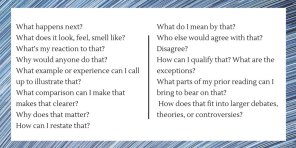
This past weekend, Tom Newkirk tweeted about writiNewkirk Self-Promptsng fluency and the value of “self-prompting,” and he included a list of a dozen+ prompts that foster such fluency. For Tom, these prompts “swirl in his head” as he writes. For our students, we need to build the habit of prompting questions into their process. Whether through daily writing, regular conferring, or sheer faith in the possibility, many students this year have discovered the true generative nature of writing — a sentence begets a sentence, begets a sentence, and so on. Alas, too many have not.

Our students hear from published poets and slam poetry veterans (our school librarians put on a magnificent Poetry Week every year) about lengthy revision processes. They view interviews with their favorite authors who explain the grueling evolution from idea to draft to revision to “finished” piece. They read lots of writers on writing about the toil of the work. Still, more students than I care to admit still believe in some divine inspiration behind the magic of words on a page, which one either receives or does not. And, to try to write without this inspiration (as in, every day in their Writer’s Notebooks) is a futile endeavor.

Tom’s recent tweet seemed divine in its timing. The day before, as an in-school field strip, 10th-grade English classes participated in a workshop with storytellers from Chicago’s 2nd Sstory_line_awk-e1523848925727.jpgtory, an organization that holds storytelling events, workshops, and education in the value of story — in both the telling and the listening — as the source of human connection. The name 2nd Story refers to the very nature of story as generative: one shares a story of their own experience, which inevitably reflects some aspect of the universal, and then invites others to do the same.

Presenters shared their own stories, which included universals such as losing our youthful belief in things magical, facing our greatest fears and living story_line_rightto tell, proving we’re capable of what others believe we are not. Then they got students up out of their seats in parallel lines or inside-outside circles, so humans faced other humans, screen-free. First, students shared one-sentence stories based on prompts like “I felt [insert emotion] when …” or “Tell about a time when you … broke or ruined something … told a lie … received a gift you really wanted (or not) …” Lines and circles shifted and rotated to maximize the quantity of faces in contact.
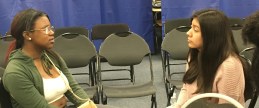
Sure, it was awkward and scary at first for many — if not most — of these 15- and 16-year-olds, who may or may not have met before. Gradually, though, as stories even as brief as one sentence were shared, it became less so.

In one of the two workshop rooms, students talked in pairs, sharing their stories by kelly_empathyjpg.jpgelaborating on one of the prompts from the first part of the exercise. I could hear the energy in the room even before I was fully in the door. Moving through pairs of students, I could hardly hear the stories themselves, but no matter. story_lean-in.jpgWhat mattered was that students were hearing them from their partners, many of whom started out as strangers (different classes were blended into one workshop). And not just hearing, but listening. They began, literally, to lean in, closing distances through shared stories and the natural empathy that results. When we return to our regular classrooms this week, students will begin recording their stories on FlipGrid, listening to and commenting on one another’s without the high stakes and vulnerability (even unfamiliarity) of face-to-face, real-time human interaction. Which reminds me …
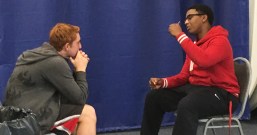
story_engagement.jpgI’d like to pause briefly to offer this qualifier: On-demand, face-to-face, forced interaction with strangers is not every 10th grader’s cuppa tea. (Heck, it’s not every adult’s cuppa, either.) In fact, several students literally waited it out on the sidelines. But even these reticent, reluctant, and even recalcitrant folks couldn’t help but listen — and be drawn into — the stories of others. And maybe even, as a result, classmates who were still strangers became less “other” than they had been 90 minutes earlier. I’m even holding onto the possibility that the stories heard that day will sustain their generative power and elicit even more — not only more stories, but more listening, more “leaning in,” more empathy, even more inspiration: not from any divine spirit, but from engagement with each other and with the work of writing — and speaking — their truth.