Author Archives: Amy Rasmussen

It’s Monday. What are You Reading? Late but not forgotten

Mon Reading Button PB to YA

Books I FINALLY finished this week:

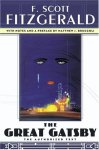
gatsby

The Great Gatsby

A mere five days before the movie comes out, I have finally finished the book! This is now officially my third time to read the classic story and I loved it just as much this time as I did the first two times. I’m not sure if the visual images that I had playing in my head as I read were tainted by the movie previews, but I really think the glitz and glam of this era is purely mesmerizing.

Books I am going to read this week:

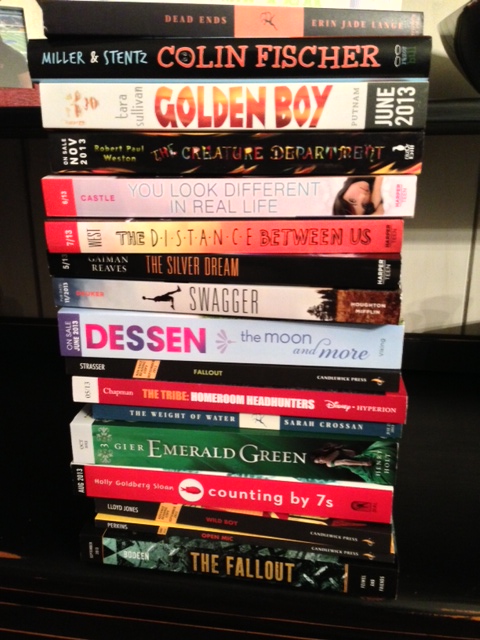
Texas Library Association Conventionphoto

Empty book bag in hand, a couple of weeks ago browsed the isles of the exhibit hall at the annual Texas Library Association Convention. While there I was able to snag some great books that I am so excited about reading. Of course I won’t get all of these read this week. In fact, most of them will move on to my to read pile for the summer, but none the less a new stack of books is always invigorating to a voracious reader. I think of all of these, I will probably start with Dessen’s latest. I can always count on Dessen to provide a nice story with great characters!

Reel Reading: The House of the Scorpion

20130207-190708I love to watch student-made book trailers, especially when the students are not mine, and I’ve already read the book. I guess I see with a teacher’s eye:  Did the student get the gist of the book? Did she love it and want others to read it as much as I did?

I felt a thrill when I watched this trailer for Nancy Farmer’s The House of the Scorpion. The images and music parallel one another nicely, adding that touch of intrigue, which parallels the adventures in the book. The few errors in writing make me smile– my students will do that, too.

My kids will soon start creating their own book trailers. They got to choose the books they read. They get to figure out how to format and create a trailer that will get others to want to read that book. Should be interesting to see what they come up with.

I cannot wait.

Stealing Second Base

Guest Post by Melanie Gonzales

navy-baseball_l

“Progress always involves risk; you can’t steal second base and keep your foot on first,” said Frederick Wilcox.  This quote spoke to me this week as I reflected on my role as Liaison, our Professional Development conversations, and the new season for the Rangers.

Taking the job as liaison was a risk. The role of the liaison is to support the work of the principal in improving instruction in every classroom, through coaching, consulting, collaborating, and co-teaching with teachers as well as to align professional learning with district and school goals. In order to take on this role, I had to leave my comfortable team, my comfort zone in teaching a grade level that I had been teaching for a long period of time, and a school that I have been at for more than a decade.  Has it been challenging? Yes! Has it been rewarding? Yes!  I was comforted at our last get together that we went over the research on change.  William Bridges’ “transitions of change” and Michael Fullan’s “implementation dip” assured me that it is normal to grieve an ending and maybe feel some discomfort as I move toward the new beginning.  It is normal to feel some disillusionment before finding rejuvenation.

I am also asking teachers to take risks.  This might involve letting go of a much-loved unit because it no longer matches the learners of today.  This might be trying new technology.  This might mean teaching in a new way.

If I want my teachers to take risks, I must model risk taking myself.  Recently, I used Nearpod in addition to a PowerPoint presentation that I had planned for my staff.  Of course I was a little nervous because I had never used it before.  I learned about Nearpod at the last “Appy Hour” hosted by GCISD digital coach, Sarra Smith.  What I loved was how the app allows participants or students to have their very own interactive presentation on their own iPad screen. It was very effective.  For my presentation, We used the app to view images, and to gain clarity about the design of our work.  We also used it to interact by taking a quiz to formatively assess how we plan and to poll the staff about the most important elements of PBL they wanted to discuss in our faculty discussion session at the end of the morning.  Yes, there were a few tense moments when loading took longer than anticipated and the transition between two of the slides did not work at first, but I feel that when the staff saw me taking risks and having my own uncomfortable moments, I became more “real” in their eyes.  I am not the “one who knows all”, or the expert, or the evaluator, but someone is who learning and taking risks right along side each of them.  I might just steal third base next.

I don’t know where the Rangers are heading this season, but it looks hopeful.  I am also optimistic about the new risks my teachers will take as I continue to create an environment where it is OK to steal second base.

What makes risk taking so difficult?  How can we support each other to take more risks?

Photo credit: U.S. Navy photo by Mass Communication Specialist 1st Class John Collins / Foter.com / Public Domain Mark 1.0

Reel Reading: If I Stay by Gayle Forman

20130207-190708For their final project my English I students are to create their own book trailers. We’ve watched enough of them this year that they should have a pretty good idea of what an effective trailer should do:  compel someone to read the book.

In a last ditch effort to get my kids to understand the task, we are watching student-made book trailers for the next little while. These are a couple that are done very well about the book IF I STAY by Gayle Forman.

In my experience, if you can get a kid to read just one of Forman’s books, she will read them all.


It’s Monday. What Are You Reading?

Mon Reading Button PB to YAToday I am reading something for me. All me.

I’m tired.

I’m tired of school and kids and teaching. I’m tired of testing (and my students’ tests has been over for a while now.)

I’m tired of reading YA novels about punk kids, drugs, gangs, and so much angst.

Get it? I’m tired.

So, this Monday? What am I reading? This inspiring book that has helped me see some things clearly for the first time in a very long time. I’ve written inside the front cover: “Stop trying to be God.”

It’s a start.

Reel Reading for Real Readers: SHIPBREAKER

20130207-190708Watching this book trailer, I am reminded of how much I loved this book when I first read it. I passed it off to my son who read it but also lost the book cover. Does anyone else have a difficult time getting kids to read hardback books that have no cover? Dark, thick, foreboding. I cannot get one kid to even try a book unless the cover is at least attempting to be cool.

So, a week ago I’m cleaning out closets, and I find the jacket to SHIPBREAKER by Paolo Bacigalupi, and I’m reminded of its protagonist Nailer and the beautiful girl who changes his life. I love these words in the front cover:

Even at night, the wrecks glowed with work. The torch lights flickered, bobbing and moving. Sledge noise rang across the water. Comforting sounds of work and activity, the air tanged with the coal reek of smelters and the salt fresh breeze coming off the water. It was beautiful.

There’s a mini-lesson on imagery in there, isn’t there?

Zombies and Test Prep–Who Knew?

Let me tell you about my Zombie Project.

It all started when I heard my husband and sons talking about that one episode of “The Walking Dead.”

“Oh, man, I didn’t expect that ending.”

“Sheesh, he got it out of the blue, didn’t he?”

“Merle just died. Died. And he was the tough guy.”

I didn’t have a clue what they were talking about, nor why they were so talkative. (I live with four men. It’s true: they usually use up their word allotment by lunch time.)

So, I slipped into my teacher hat and asked some book-chat type questions:  Tell me about this show that has you all riled up. Does this character remind you of anyone you know? Why do you think the show ended this way? Did the characters learn anything?

“Really, Mom?”

One thing led to another, and we were talking about how this zombie craze is a pretty good metaphor for our society.

Then, I talked to my friend Trista, and she told me she was doing this zombie project with her students.

Hmmm. I’m thinking.

Then, like a flailing limb, it hit me:  Standardized testing. Test prep. Zombies. Pretty good metaphor.

I teach English I to mostly non-readers. They are sweet kids with bright smiles and fun personalities, but they are below grade level when it comes to reading and writing. Many of them need a lot more help than I can give them. We have little time for one-on-one when my class size is 32.

Our state testing date is looming. I know I need my students engaged, and I need them thinking and reading critically, and I need them writing effectively. The Golden Question: HOW?

The creepy, undead, flesh eating answer:  ZOMBIES.

First, I made a list of the most pressing skills students needed to review, and then I became a zombie expert.

Did you know there are zombie poets and zombie poems?

Did you know there is an ongoing argument about which is more awesome zombies or unicorns? There’s even a Facebook page.

Did you know that a high school librarian, at a teacher’s request, can find 37 or so books that all have something to do with zombies?

Did you know that there are websites that “match” zombie-loving people to other zombie-loving people? and you can upload a picture and turn your image into a blood oozing zombie?

Really, now. Who knew?

So, I created this Zombie Project that included some pretty intense test prep and a whole lot of fun.

The video below is how I introduced it to my students. They watched it, and then on large poster paper at each table of four students, they did some silent thinking. I gave them each a different colored marker, and they had to write, based on the clues in the video, what they thought they’d have to do in the project.

You try it. Watch the video and see if you can come up with all the parts of the project. I’ll post more –handouts, articles, book lists, etc., as soon as I have a chance.

Mrs. Rasmussen’s Zombie Project
It’s Monday (or Tuesday). What are You Reading?

Mon Reading Button PB to YA

I’m fully aware that it isn’t Monday – The way I see it is it really is better late than never, right?

Books I read (or am still reading):

Scarlet scarlet

For those of you who have been following my posts, you know my feelings about sequels/trilogy/whatever, but I was drawn to continue reading this series because of the indirect relationship the series has with traditional fairy tales. In the first book Cinder, the author weaves the classic tale of Cinderella in a post-modern society. In the second book, Scarlet, the story of Cinder continues to unfold while at the same time a new character, Scarlet, is brought into the frame. Of course, Scarlet’s character is based of the fairytale Little Red Ridding Hood. It truly was fascinating to see how Marissa Meyer was able to intertwine both fairy tales all the while maintaining the futuristic story line. I am certainly curious to see how the series wraps up in the third book.

Books I’m reading (going to try to actually read) this week:

gatsby

The Great Gatsby

My goal this week is to get through Gatsby. The Great Gatsby is one of the very few books I have ever read more than once and the only book I ever loved being required to read in school. Clearly, I was excited when I saw that the book once again was coming to life on the silver screen. While I have no notion that the movie is going to be an exact replica of the book I am, once again, excited to see someone else’s interpretation of this book that I have enjoyed.

Reel Reading: Crackback

20130207-190708Brandon’s asked me every week if I had any books about football. Sadly, my classroom library is lacking in sports books. Then, while shopping at the EF book sale, I found this gem. I’d like to put Brandon’s name on it, but I won’t. I’ll show the trailer and let him beg for it in front of the class. I’m mean like that.

Crackback by John Coy

Prior Knowledge: Helping our Struggling Readers

book depository

Every day we must make decisions, and somehow, whether we realize it or not, we are accessing our prior knowledge to make these decisions.  For example, there is a restaurant that I will never eat at again. 15 years later, I still remember the time I got violently ill after consuming one of their calzones. Now, someone brings up that restaurant–I cringe.

Sometimes my prior knowledge doesn’t come from real life. Sometimes it comes straight out of a book. A few weeks ago I had to make a really tough decision. As I sat weighing the pros and cons of my choices, Beatrice, from the book Divergent, and the struggle she had making a difficult choice came to mind. I found myself relying on her experience because that in fact was exactly how I felt.

Prior knowledge can come from a multitude of places, but it is the experiences I have had–along with the books I have read– that fill my storehouse of prior knowledge.  So what about prior knowledge and our struggling readers? Their storehouse of prior knowledge is barren. In talking specifically about early literacy, Nancy Lee Cecil explains that, “What readers bring to the activity in terms of prior knowledge … determines how well they will be able to derive a rich meaning from the text,” (Cecil, 2003). So, what about our students who do not have a rich background of prior knowledge? Whether it be a lack of experiences or a lack of reading–my question is:

What are we doing as educators to support students creating a bountiful array of prior knowledge experiences?


The most important thing teachers can do to help equip their students with a wealth of prior knowledge is provide opportunities for them to read–and read a lot. It isn’t about assigning book after book as a whole-class novel. It is about Independent reading. “Independent reading is all about capacity building,” (Kittle, 2012). By allowing students the time to vicariously live through the lives of characters in books, we in turn are allowing them to store up experiences. As teachers it is our responsibility to, “pay attention to the quantity as well as the quality in their reading lives (Kittle, 2012).” If students are to truly live culturally rich lives, then we must be more intentional about how we are making this happen in our classrooms.

Cecil, N. L. (2003). Striking a balance: best practices for early literacy (2nd ed.). Scottsdale, Ariz.: Holcomb Hathaway, Publishers.

Kittle, P. (2013). Book love: developing depth, stamina, and passion in adolescent readers. Portsmouth, NH: Heinemann.

Photo credit: TunnelBug / Foter.com / CC BY-NC