Author Archives: Amy Rasmussen

Not Averse to Verse: Using Novels in Verse to Engage English Learners #ILA2019

This is a guest post by Dr. Helen Becker, and I owe her a big apology. I had agreed to run this post before her presentation at ILA. I have a million excuses:  None will do. So I publicly I say, “I’m sorry for not following through,” and if you are reading 3TT today, know this:  Helen is one of the smartest educators I know.   ~Amy

To understand the instructional power of novels in verse in the high school English classroom, you must first know a bit about my former school. Clear Creek High School, a comprehensive high school in Clear Creek ISD in southeast Houston, serves 2500 students in grades 9-12. According to Texas Academic Performance Reports (TAPR) published by the Texas Education Agency (TEA), in the last five years, the campus has experienced a steady rise in the number of English Language students. Many of these students have come from Latin American countries.

What you must also know is that our district advocates student choice reading in a reader/writer workshop setting. Furthermore, to provide students greater choice in reading material, the district invested nearly a million dollars to flood classroom libraries with high-interest books. Self-selected independent reading has become a constant in the changing school landscape at Clear Creek High School.

Fast-forward to my fifth period Reading class two years ago: a group of thirteen boys and one girl who, despite the best of intentions and instruction, had still not passed both End of Course (STAAR) exams in English. Enrollment in a Reading course, coupled with co-enrollment in grade level English class, was meant to close the gaps in their reading and writing lives. This is where the workshop model and classroom libraries intersected with my fourteen EL students. When the District ELA coordinator brought a stack of newly released novels in verse to my fifth period Reading classroom, the students devoured the books. Thanks, Billy Eastman.

And so began my quest to know more about the power of using novels in verse in the EL classroom. I knew I had found a topic that I needed to know more about – for not only my use in my classroom but use in the classrooms of others as well. While researching the topic further, I encountered a noticeable lack of research-based information about using novels in verse with EL students.

In fact, the only direct source of data I located was from Farish (2013) who writes based on her first-hand work as a librarian at a school with a large population of EL students. Farish writes in School Library Journal that the poetic form of novels in verse mimics folksongs and tales that are part of many foreign cultures. As a result, EL students feel comfortable with the novel in verse genre because of this similarity.  Farish (2013) adds, “Many who work with English-language learners and others who struggle with reading seek novels that promote fluency and a sense of competence in readers.” Verse novels accomplish just that. They can move fast and offer readers at any level a feeling of completion.

I broadened my research scope to consider the transferrable skills all students, not just ELs, could practice with novels in verse as an instructional medium. The arrangement of words and a sheer abundance of white space on the page makes these books, well, friendly and approachable. EL students have fewer words to decode. Furthermore, Young Adult novels in verse often involve a protagonist with the same issues the EL students themselves are encountering. In short, novels in verse promote student agency (Garud, Hardy, & Maguire, 2007; Oakeshott & Fuller, 1989; Tran & Vu, 2017), and self-efficacy (Bandura, 1977).

But my experience with novels in verse really concerns one Fifth period Reading student in particular: Emerson. Emerson moved to our community from Guatemala five years ago and had difficulty finding books in English to read in my class. He experimented with books at a lower Lexile (I, for one, feel that Lexile level hinder rather than encourage literacy. This Literature Review from ALA provides data to support my stance on Lexile levels), but he was quick to abandon them, shrugging and saying, “They are boring, miss.” When I put Booked by Kwame Alexander in his hands, I totally mean it when I say that I didn’t see Emerson’s nose for a long time…it was in his book the entire time. In fact, I’m pretty sure Emerson read the book several times over. When I asked him about the book and why he liked it so much, Emerson said, “It speak to me.”

I cried those tears you cry when a student finally connects with a book.

As a result of my experience with ELs, I authored and co-presented a workshop at TCTELA on using novels in verse to engage English Learners in the high school classroom. In the session, fellow teacher and now Instructional Coach Megan Thompson and I delved into ways to leverage this popular genre to encourage reading comprehension and improve writing craft. I reworked the presentation for the International Literacy Association (ILA) conference this month in New Orleans, and Megan and I and invited our fellow teacher and TCTELA High School Section chair, Charles Moore, to join the presentation team. Both Megan and Charles brought their expertise as literacy leaders to the presentation.

Helen Charles Megan at ILA2019

If you were not able to attend the presentation but want more information on novels in verse in the EL classroom, reach out to me at hbecker@ccisd.net. I’d love to share my learning with you.

P.S. I gave my copy of Booked to Emerson as his graduation present.

For research citation see here.

Helen Becker has taught all levels of English Language Arts as well as AP Capstone Seminar in her seventeen years teaching secondary English. Today, Dr. Becker teaches Senior English at Clear Brook High School in Clear Creek ISD. Any day now, a suitable replacement for her will be found, so she can transition to her new job in the CCISD Office of Assessment and Evaluation. Until then, every day is a workshop day. Which means every day is a good day in Room 406.

Listening & Speaking More and Better

Sometimes in the blur of teaching readers to read and write more — and better — we forget the importance of teaching them to listen and speak more effectively. At least I do. This is one of the reasons I love the workshop approach in my English class. Talk is a intregal part.

No doubt, I am an idealist. I tend to think if my students can orally communicate their speech-bubbles-303206_1280thinking and truly listen to one another, our society, and our country, have a chance. The bellowing from every side wears me down, and I think the classroom can be a tiny little microcosm of what communication in the world could be if we were all a little more well-versed in listening and speaking skills. Call me hopeful.

For this reason, my seniors and I are focusing on more talk than ever before. I am trying to remember to teach specific speaking and listening skills — not just telling my students to talk about issues. We worked up a list of norms for our discussions, and as a class, we are working to hold one another accountable. It’s becoming a group effort. It’s hard. And it’s challenging.

Every day we still talk about our reading. Right now, we are in our first round of book clubs. Most days we still talk about our writing. We just finished college application essays. Some days we talk about texts that help us be better at talking, listening, and having better conversations. There’s some interesting TED Talks here and here.

Every Friday we engage in whole class discussions around particularly “hot” topics, all with a focus on using the text to support and expand our thinking. So far, we’ve discussed racism, hacking, and the benefits, or not, of marijuana.

Soon, my students will be the ones choosing the texts and facilitating the discussions. They’ve already talked about issues that concern them, make them wonder, and ones they want to explore together. Here’s a few:  climate change, mental illness, vaping, teens and sleep schedules, cultural appropriation vs cultural appreciation, artificial intelligence and the workforce, biases in Hollywood, investing in the stock market, sex trafficking in the U.S., college and the expense of it, memes and what they say about the people who make them, four-day work weeks, Area 51, will Amazon control the world?

Young people are curious. I am curious. And I certainly do not want to do all the work in choosing texts and inviting students to talk about them. I just needed to get them started and model how to choose rich texts, how to write open-ended questions, and how to facilitate an engaging discussion. Now I just have to trust that they can do it.

I believe they can.

If you know of some interesting articles that would spark great discussions, I’d love it if you shared them in the comments. My students will be doing some flash research this week to locate texts for their turn leading our Friday discussions. We’d all appreciate the kick start.

Amy Rasmussen teaches senior English at a large suburban high school in North Texas. She’s excited to be back in the classroom after a year on hiatus. She thinks young people today are just the greatest. Follow Amy @amyrass

Maybe the Best #MentorText I’ve Found Lately

Don’t you just love to find mentor texts that make your head spin with ideas? Okay, maybe it’s just me.

But take a look at this one and see what you think:  The 25 Songs That Matter Right Now, published in the NY Times.

I’m not sure how I’ll use it yet — I’m still trying to get my head wrapped around teaching seniors everything they can possibly need to know to be successful as readers and writers beyond high school when I only have them in class one semester. (We are on accelerated block.) But this text is way cool, and I think most of my students will like it.

It’s got music and images and music started playing without me even doing anything.

It’s got analysis and commentary and reflection. It’s multi-modal!

As I begin thinking and planning for what comes next in my instruction, I’m moving this to the top of my mentor text stack.

I’d love to know your ideas on how students might write beside it. Please leave your ideas in the comments.


Amy Rasmussen teaches senior English at a large suburban high school in North Texas. She loves her school, her students, and adding mentor texts to her ever-growing lists of “We Could Do This to Learn That.” She’s a bit of a fanatic about matching readers to books and writers to whatever it takes to help them amplify their voices. Follow Amy @amyrass — and if you’re reading this, our team would love it if you follow this blog if you aren’t already.

Hope Thrives in Courage

Today is the third Friday with my senior English students. Yep, I did it. I’m back in the classroom, learning alongside some amazing young people.

I have a billion goals for myself — enough to weigh me down, certainly — but one that keeps floating to the top is this:  Thrive in hope. (Yeah, I don’t really know if that’s a goal, but stay with me here.)

When I left the classroom two years ago, I’d lost a lot of it. Personal struggles. Professional struggles. The state of the world struggles. All of it. But lots of self-reflection, rest, writing, paint, dirt, good friends, family, and growing things –probably most of all growing things — changed me. My hope is back. It’s thriving, just like the plants that add energy and life to my home and my new classroom.

And while I teach literacy skills to seniors in high school, what I really want to teach is hope. Hope in humanity and our ability to thrive — together and as individuals.

So, like you, I’ve started with relationships. Every text we’ve read together, every task WritingBesideDwyaneWadeI’ve asked students to complete, every book I’ve matched to a reader’s interest has given me insight into who these young people are as individuals with backgrounds, cultures, fears, failures, dreams and desires. Just like me, they cling and pounce and clamor after hope.

A few years ago, after a sniper killed five police officers in downtown Dallas, I read this commentary by Chequan Lewis. The last line still resonates: “My sights are simply set on what is possible when we are courageously human.”

Courageously human. That’s what I want for myself and for my students — to practice courage as a means of becoming better than we were when we walked in the door. So moving forward into senior English plans, I’ll invite students to step into the vulnerable spaces that require courage: reading texts that challenge the status quo, writing honestly about ourselves, our learning, controversies, and convictions; and communicating in ways that validate, clarify, empathize, and challenge.

I’ll step there, too, because the more I think about it:  Hope thrives in courage.

Here’s a few of the texts we’ve used thus far to write beside and spark our thinking on this journey. Perhaps you’ll find them useful as you begin your own.

My Honest Poem by Rudy Francisco

Famous by Naomi Shihab Nye; the poem here

“This Bud’s for 3” — Dwyane Wade

If you have ideas for more resources that fit our theme, please share in the comments.


Amy Rasmussen teaches seniors at a large high school in North Texas. She’s a #houseplantcollector, writer, reader, gardener, watercolor-artist wannabe, bicyclist, and grandmother to eight courageous little people, the newest little man born today! Follow her @amyrass and @3TeachersTalk

Becoming a Writer — Guest Post by Austin Darrow

On a late summer night, as the new school year looms on the horizon, my wife and I re-watch Heath Ledger’s comedic masterpiece A Knight’s Tale for the umpteenth time. As Ledger’s character William makes the decision to bravely follow his true calling and stand as a knight, knowing he will be arrested, Roland proclaims the old adage, “Well boys, all good things must come to an end.”

As all teachers oft do, I took this as a metaphor. It’s time for summer to come to an end, to don my armor, pursue my calling, boldly face the new year. In response, my wife said to stop being so melodramatic and watch the movie.

With her reminder, I did put an end to these flairs. Sure, summer–with its days of sleeping in, its weeks to simply and blissfully read for hours, catch up with old friends, its endless possibilities–would have to make way for something more structured. But I also felt a change this time around. The nervousness, the butterflies, the back-to-school nightmares (mostly) gave way to a new feeling: excitement. This would be a great year.

You see, last year, my second year in this profession, was a furnace for me.

industry-647413_1280

The Image by zephylwer0 from Pixabay

Conditions were just right: the heat was cranked up by my peer Charles Moore, who constantly challenged me to grow through conversations, mentor text wars, an anchor chart “hall of fame”, and an endless pursuit of authenticity in our shared love of teaching literacy; a mold was given to me by my mentor, Helen Becker, who showed me concrete strategies to make these things work while always reminding me to read, write, and cut out all the extra “stuff” that could allow impurities to ruin my work; Megan Thompson was the hand that guided the hammer, refining the techniques I tried, inviting me into her classroom and her thoughts, and modeling an unconditional love for students that requires a strong will; lastly, the students were the anvil, always giving me a sturdy base on which I could hone my edges and continue growing and shaping.

Without “further gilding the lily” as Chaucer would say in A Knight’s Tale, I learned and grew so much in this forge through the strong students, mentors, peers, colleagues, and I daresay friends that were willing to walk the walk with me.

Our North star–our central focus–at the heart of this growth was always learning how to make the literacy experiences for our students more authentic.

As I continue to reflect on these experiences, I realize that our greatest growth was in writing instruction. As our students walked in the door for the first time last year, we quickly realized many had gaps in their writing instruction. But perhaps a more alarming assessment was that most students, even those “proficient” by any state standards, had no love or purpose for writing.

And so our work began.

We tried many things–increasing the amount of formative data we would look at in team meetings to help guide our planning; shifting what and how we assessed and graded with rubrics and scales that would be more authentic; changing the pacing and length of our mini-lessons to get out of the way of these young writers; and so much more. Each of our adjustments were tried, refined, and often ditched and replaced, and I believe that each warrants further reflection. But one adjustment stood above the rest: when we as teachers became writers too.

In Kelly Gallagher’s Write Like This, he proclaims: “Of all the strategies I have learned over the years, there is one that stands far above the rest when it comes to improving my students’ writing: the teacher should model by writing–and think out loud while writing–in front of the class” (15).

Nearly all teachers of writing have heard something along these lines at some point in their career. Many have been brave and vulnerable enough to try it.

But this past year, I learned that there is a difference between writing in front of your students and becoming a writer.

A writer is a person who keeps journals and notebooks and endless Word documents, filled with ideas and drafts and revisions in a smorgasbord of conditions. A writer is an artist who pursues and experiments with their craft to get it just right. A writer is a dreamer filled with goals and purpose that can only be met through careful, meticulous, arduous effort.

With this working definition, I quickly realized that I was not a writer. Are you? I also questioned myself:  How could I authentically ask my students to become the writers that I have qualified here if I hadn’t become a writer yet myself? How could I expect them to give what I was not willing to give myself?

So I set out to become a writer. At first, I wrote the same essays and assignments that I tasked my students with. Then I said yes to sponsoring our school’s Poetry Corner and shared my own work at our weekly meetings. I wrote letters to family and friends, and love notes to my (at the time) fiancé. I wrote reviews of products I had purchased and services I had received, application letters to conferences I wished to attend, thank-you cards to wedding guests, and much more.

As I climbed each of these mountains of literacy, I shared my writing experiences with students. I wrote many of these pieces with them, inviting their feedback and giving mine in return. I became a writer and watched as my students became writers, too.

In a recent conversation with the aforementioned colleagues and friends, we created an anchor chart of reasons why everybody–students and teachers alike–benefit when the teacher becomes a writer:

  • Foresight to specific struggles students might have
  • Better understanding of what skills to teach in mini-lessons
  • Concrete conferring questions to ask student writers
  • Empathy for students struggling with the writing process
  • Equity in creating assessment scales and rubrics
  • Modeling vulnerability, struggle, and craft for the students
  • Modeling authenticity and purpose as a writer

I’m certain there is more to unpack here, but with these benefits alone, I am convinced: the most essential “tool” of writing instruction is when the teacher becomes a writer, too.

So as I glimpse into the year ahead, the usual back-to-school nerves have been replaced with sheer excitement. I am excited to step into the classroom, share my writing territories with students, and coach them as they create their own. I am excited to write alongside them, receive their feedback, and watch as they grow. I am excited for our next Poetry Corner meeting, where old students and new are so electrified by their literacy that they have to come and share. I have so much to learn still about writing instruction, and I am excited to step back into the furnace.

Austin Darrow has now begun his third year as a teacher and self-proclaimed literacy advocate. He teaches English I, AP Lit, and coaches the Academic Decathlon at Clear Creek High School. He is trying to grow and refine his voice of advocacy, so follow him on Twitter @darrowatcreek.

Guest Post: I’ve been thinking about Ghosts or What I’ve learned about the power of mentors…and time by Elizabeth Oosterheert

“That version of the story–that version of my life without my husband in it–is a ghost I carry around with me. It’s always there, beneath the surface of my real life. I feel…so grateful that this big, messy, joyous life isn’t a ghost life, but mine…”
Kate Hope Day for The New York Times
Joe and Toby

Joe & Toby after a performance of the 2018 play, Merlin’s Fire

If you’re like me, when the end of the school year arrives, you entertain the ghosts of what might have been. These lingering ghosts are questions like:  What if I had spent more time conferencing with that student? What if I had found this mentor text a little sooner? What if I had done more mini-lessons about . . .

And the list goes on.

I learned a few lessons during this past year I hope will have a positive impact on EVERY facet of my readers’ and writers’ workshop for next year. My teacher’s soul already knew this, but I recognized more powerfully than ever before that the right mentor texts at the right time, combined with enough space to explore craft moves and to write about things that matter, makes all the difference.

My students love what I call food literature (thanks to @KarlaHilliard for this amazing idea!),  a writing study we do after Christmas composed entirely of reflections about food. This takes the form of food narratives, poetry, listicles, or critical reviews.

We study mentor texts, and then students choose a direction based on the ideas they’ve developed in both handwritten and digital notebooks.  After discussing many mentors, and highlighting craft observations, students list powerful descriptive words, make notes about the writer’s voice,  and practice composing complex sentences based on passages in the mentor pieces.

I encouraged my students to consider food in the context of specific flavors and seasons. 

Childhood and adolescence have unique tastes. December has a far different flavor than July. What we quickly noticed is that food literature is about so much more than what is on our plates. It’s about savoring cherished memories.

Another frame that worked well for food narrative that is also very effective for other kinds of autobiographical writing is an idea adapted from Penny Kittle that I call Then and Now:

Then I thought, but now I know. . .

When we write Then and Now snapshots, we admit that our understanding of everything from food, to sports, to relationships evolves as we age and learn how difficult it is to be a human being.

Three new mentor texts spoke powerfully to my students. One was “Carrying the Ghosts of Lives Unlived,” published in the Ties section of The New York Times, written by Kate Hope Day. While this piece is NOT about food, it is about how, in Day’s words, “There are hinge points in time when life could be one thing, or another.” My students applied  this mentor to our food study, writing about different life seasons, and how sometimes seemingly small decisions have a BIG impact.

Another New York Times piece that was very helpful to us  was “Christmas Fudge and Misremembered Snow Cream” by Rhiannon Giles.  I composed a piece for my students based on this mentor about the flavors of my childhood.  An excerpt is linked here.  Students then wrote about their own life flavors, recipes, or memorable meals.

Finally, we studied “Ode to Cheese Fries” by Jose Olivarez. What I love is that my discerning, sensitive, wondering students used that poem to create beautiful reflections on some of their fears about adolescence and daily pressures assailing them. In his poem, “Pack of Ranch Sunflower Seeds,” Toby, one of my eighth grade authors, wrote:


What if I’m the small seed

With a big shell

Waiting in the bag

Pleading not to be eaten up

By the mouth

Called life

And my inner seed gets revealed

And my outer shell is thrown out and trampled

By reality


Maybe I should chew more bubble gum


The rest of Toby’s poem is linked here. 

Our food study is a ghost that haunts me, because I hope that I can continue to make it more authentic. For now, though, I have to remember to be grateful for the time and the writing that was — and in the words of Mary Oliver, give thanks for my “one wild and precious life” and the students’ lives that intersect with mine every day.


Elizabeth Oosterheert is a middle school language arts teacher and theatre troupe director at Pella Christian Grade School in Pella, Iowa. She loves writing, and sharing the stage with seventh and eighth graders. Her favorite stories are Peter Pan, The Outsiders, & Our Town. You can find her on Twitter @oosterheerte

Q & A: What are the essentials to making Readers-Writers Workshop work? #3TTWorkshop

Questions Answered

It can be overwhelming. We attend training sessions and conferences, read professional books and journal articles, search online and join Facebook groups, and try to figure out this thing called Readers-Writers Workshop. I did all of that for years. I still do. I suppose that’s one of the things I love best about this blog:  I get to share all my trial-and-error-years-of-learning-and-ongoing-ideas with all of you.

If I said I’ve got it all figured out, I’d be lying.

I think that’s the beauty of this model of instruction. While the routines might be the same: independent self-selected reading, quickwrites, craft study, time to talk and write, conferring… the texts we use to meet the needs of our students and the amount of time we spend on those routines vary, depending on the individuals learning with us in our classrooms.

So I’ve been giving a lot of thought to this question:  What are the essentials to making readers-writers workshop work? and while my answer might be different tomorrow or next week, here’s what I think the essentials are today:

  • We have to build and nurture a community of readers and writers who identify as such and who respect one another’s right to explore, express, and develop in their literacy skills.
  • We have to believe that it’s more important to teach readers and writers, speaking to them as such, than it is to teach books — even if they are books we love.
  • We have to push back at standardized tests that crush authenticity in reading and writing tasks — and give our students choice. Lots of choice!
  • We must be confident in our skills as literacy teachers. We need to walk our talk and continually work to grow our expertise. If we don’t know YA books and other literature our students will want to read, we need to read more. If we don’t know how to teach writers, instead of assigning writing, we need to learn what writers do to craft meaning — and model those things for our students.
  • And perhaps more than anything, we have to dedicate the precious time we have with students to the things that help them grow confident in their own literacy skills. Time to think, read, write, talk, listen, and celebrate. Everyday!

There is no one way to do all this. However, if we’ll keep these essentials in our focus, we will find the one way that works for us — and for our students.


Note:  This post is a part of a series. It’s based primarily on the most frequent questions about readers-writers workshop asked at our workshop trainings. For more see here.

Amy Rasmussen loves to learn. She reads a lot and writes a lot to figure things out. She loves her husband of 34 years and adores her kids and grandkids. Amy will be teaching senior English when school starts in just a few short days. Follow her @amyrass

Guest Post: Ways I Can Encourage More Students to Love Reading by Holly Dottarar

“People don’t realize how a man’s whole life can be changed by one book.”  -Malcolm X

At the beginning of each year, I spend close to a week talking about independent reading with my students.  To me, it’s worth investing the time because independent choice reading is the heart of my class.

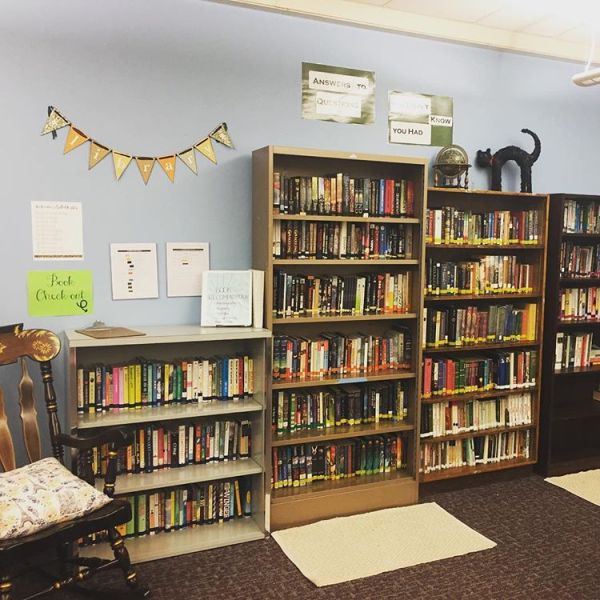
MSDottararBookshelves

How I frame choice reading during the first week:

  • discussing how to find a just-right book and how that is different for every reader, different genres and their definitions,
  • setting a weekly reading rate (from Penny Kittle’s book Book Love),
  • speed dating a variety of books to find potential novels to read,
  • going over My Top-15 Reading List (adapted from Kelly Gallagher’s book In the Best Interest of Students),
  • discussing how book conferencing works, and how to keep track of books read.

Even though I check in with each student monthly, share my Top 15 List with my classes, and book talk new books bi-monthly, there’s always a small percentage of students who refuse to read, or read very little.  My avid readers love the freedom to choose books, but my non-readers, emerging readers, and the reading-is-okay-but-currently-I-have-no-time readers need more of a nudge.  

How can I help all students be successful in creating and cultivating a reading habit? How can I help them look forward to diving into their book, to truly enjoy reading? How can I keep up the momentum for those who love to read?  

I whole-heartedly believe in the reader’s workshop model, but it is hard.  

Keeping track of 150 students all reading different books, and all at different places in their books, requires commitment and organization.  It is a daily, conscious decision to sit beside a student and recommend book after book, hoping something sparks an interest, or to try to find a new book for a student who has read 50 books in the last two months and isn’t sure what to read next.  (Yes, I have about 10 of these voracious readers each year.)  Up and moving around the classroom, talking with kids about books when sometimes all I want to do is sit at my desk and read my book too doesn’t help.  (And there are days that I just read alongside students, but it is few and far between.)

While there are times I want to throw in the towel, I am reminded that the hard work pays off.  Those tough days are just a bump in the road.  Students deserve to be confident readers.  They deserve to learn to think critically. They deserve a teacher who will not give up on them.   

As a reflective teacher, I’ve been thinking a lot about the reader’s workshop:  what worked in my classroom and what I want to make better.  These are ideas that I am going to incorporate this fall to build upon the love and joy of reading for all students.


1. Be consistent about my Book Talk Wall and teacher What-to-read-next list.

BookTalkWall

I have a wall in the back of the classroom where I post the book jacket of every book I book talk.  My goal this past year was at least one book a week, usually on a Monday, but I was not consistent.  This year I plan to continue book talking books I’ve done in the past, but really play on the books I just read and books that are new.  

Which leads to my What-to-Read-Next list.  Two years ago, I had on the board these titles MsDottararReadingListswith books:  What I just read, What I am currently reading, and What I plan to read next.  Next to each phrase I had an arrow and a copy of the book jacket so students could see my book list.  I didn’t do that this year because I didn’t have white board space.  
However, after reading students’ end of the year reflections and seeing if they met their book goals, my students two years ago read more than my students last year.  While I don’t think that each group of students should be compared, as each year we have different groups of students, I can’t help but think sharing what I read and talking often about it made a difference.  I’ll collect the data on that this year and then draw a conclusion.  


2. Student recommendation share outs

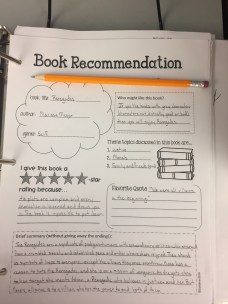
Book Recommendation SheetTwice a year, right before Christmas Break and right before school is out, I have students fill out a recommendation form on books they enjoyed and think others might like.  It goes in a binder organized by genre.  However, students do not share these recommendations prior to turning them in.  Why have I not done that? Not sure.  It was kind-of like checking something off my to-do list.  In this area, I plan to have students share out books they wrote down on that sheet of paper before turning in.Recommendations Binder
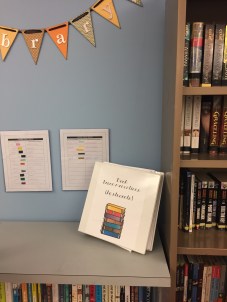
 

Even though this binder sits on top of one of the bookshelves, SO MANY students didn’t even know it was there.  I plan on referencing it often so if students need a book and don’t have one in mind, they can go to the binder and see what others have recommended.  (As that was the whole point of this activity anyway.)

3. Theme Topic Books

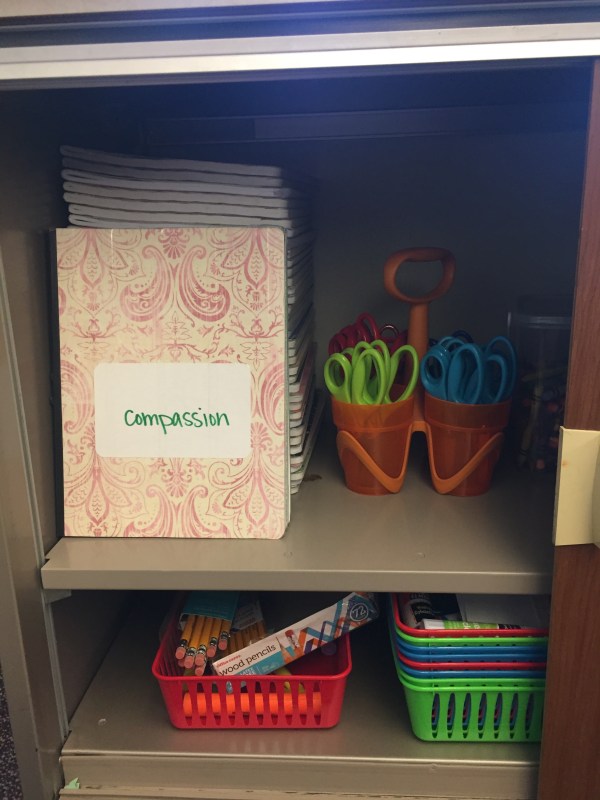
Penny Kittle has inspired me in so many ways.  Six years ago, over the summer, I took 42 composition notebooks (because that was the number of students in each class that upcoming year—yikes!), scrapbooked the covers, and wrote on 3×5 cards the theme topics.  (You can find more information about this in her book.) One of my goals was for students to write in them three to four times a year, thinking about how their book connects in some way to the theme topic.  And how cool is it for students to see what others have written years prior?  However, this past year, they only wrote in it once.  My goal is to incorporate this at least once a trimester.

Theme-Topic Notebooks

The other goal was if a student wanted to read a book about that theme topic, say compassion, they could look in the notebook and read what books others have read dealing with that topic.  However, these notebooks were filed in a cabinet with other supplies.  Not an easy way for students to find.  So, in this area, I am thinking about a good space to display these topic notebooks so more students can read what others have said.

4. Creation of Book Trailers

I am growing in the area of technology.  When I started teaching 16 years ago, I had an overhead projector and a chalkboard.  Phones were installed in December, and I couldn’t wait to pick up the phone to call the office instead of pressing the intercom button when I needed something.  When we went to white boards a few years later, I jumped up and down.  I no longer had chalk marks along the side of my right palm or somewhere on my back.  When our school installed projectors, I begged a friend in the history department—as they received a grant for document cameras shortly thereafter—to loan me an extra one so I could teach writing through a step-by-step process.  In terms of technology, this is the extent of my expertise.  A coworker had to show me how to use Google Classroom last year.  

With so many of our students interacting with technology, why not use that to our advantage? There have been some really good book trailers lately.  My favorite still is with the novel Salt to the Sea.  The music is haunting, which fits the book perfectly.  (You can check it out here.)

If I show professional book trailers for students on novels I think they’d like, why can’t they create their own and share on Classroom?  Something I plan to look into more and try this next year.

5. Virtual Book Stacks

Students keep track of books they’ve read on a sheet of paper titled My Top 15, but why not have a visual book stack at the end of the year to share and celebrate growth? I thought of a real book stack, as I’ve seen them all over Instagram, but to have students try to find each book they read and stack it up felt daunting to me, especially if students checked out books from the public library and not mine or the school’s library.  I plan to use Padlet for students to share their books and maybe even categorize it by their favorites.


If you are interested in more reading on this topic, I suggest the following books:

Nancy Atwell’s The Reading Zone

Carol Jago’s The Book in Question

Donalyn Miller’s The Book Whisperer

Lisa Donohue’s Independent Reading Inside the Box, 2nd Ed.

Penny Kittle’s Book Love

Teri Lesesne’s Reading Ladders

 
Holly Morningstar Dottarar is an 8th grade English teacher in the Pacific Northwest.  While she spent her adolescence as a reluctant reader, once she read The Hobbit—in college—she became hooked.  Now, she carries a book wherever she goes.  When she’s not reading, teaching, or spending time with her family, she can be found in her kitchen baking.  She blogs at www.hollybakes.com and www.hollyteaches.com.

Q & A: What are some good poems to write beside? #3TTWorkshop

Questions Answered (1)

I think I’ve mentioned before that I used to avoid poetry. Now, I’m really not pointing fingers at anyone — okay, yeah I am — but I blame it on my teachers. Not one of them shared poetry just for the love of poetry — of rhythm and words and images often cloaked in color and emotion. Not one. Not one used poetry as inspiration for other writing. It was always analyze this and write a paper on it. Bleh. My least favorite kind of writing.

Good poems have the potential to be great teaching tools. Sure, analysis but so much more. If we want students to love language or even play with it in their writing, we have to expose them to language worth loving — and encourage them to make paper swords and sequin-shiny shoes with it. Inviting students to write beside poems with us is one good starting place.

This month Shana and I attended the Poetry Foundation Conference for teachers in Chicago. We read, talked, listened to, and explored poems for a week. (And slept on the worst dorm beds possible.)

The thing about immersing yourself in poetry for a week is this:  You start seeing poetry

GiordanoPizza

Giordano’s Pizza — so good!

everywhere. Billboards, names on shops, menus in restaurants, bikers on the path along Lake Michigan, ceramic swans cuddling on the other side of a pane glass window, and pizza!!

Poetry is like an English teacher with a brand new set of 36 Flair pens. Color everywhere!

In my workshop classroom, we share a lot of poetry. Sometimes just for the love of it. Sometimes to talk about. Sometimes to inspire us to write.

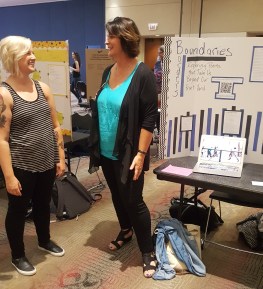
PoetryFoundationpresHere’s a few poems (and a lesson plan) my group and I collected for our project at the poetry conference. We titled our presentation Boundaries & Borders:  Exploring Poetry Beyond our Front Yard (That’s a shout out to Gwendolyn Brook’s “a song in the front yard.”) I’ll tell ya, we hashed around a topic for a long time and finally decided that reading poems that help us explore our personal and societal boundaries might make an interesting backdoor into exploring identity, which is a topic many of us develop out thematically using a variety of other texts in our courses. If nothing else, the images we collected (all found at Unsplash) might be interesting to use to prompt student thinking.

If you’re looking for other topics, take a look at the Poetry Foundation. There’s so much there! And if you like podcasts, you might like this one:  the Slowdown with Tracy K. Smith. It’s my first-ever podcast listen, and I’m hooked.

So, what are some good poems to write beside? You decide. And please share some of the poems you love in the comments!


Note:  This post is a part of a series. It’s based primarily on the most frequent questions about readers-writers workshop asked at our workshop trainings. For more see here.

Amy Rasmussen is a teacher, writer, artist, and house-plant enthusiast. She lives near Dallas, TX and is a believer in all things that make us better humans. Follow her @amyrass


I’ve Been Thinking…About Our Town (Or What I’ve Learned About Workshopping the Canon With Thornton Wilder…)–Guest Post by Elizabeth Oosterheert

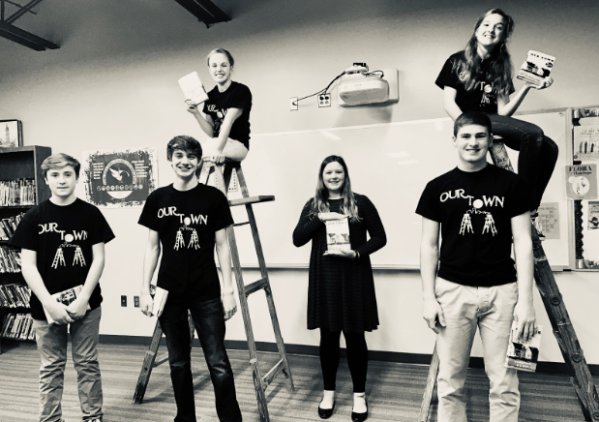
OurTowntheatertroupe

8th Grade Cast Members of Our Town by Thornton Wilder

Recently, I reread Amy Rasmussen’s post about defining what we mean by readers’ and writers’ workshop. I loved that Amy described workshop as  students doing the work of readers and writers, “engaged in intensive discussion and activity on a particular subject” — specifically related to growing as readers and writers. This work happens because teachers open spaces in their classrooms which allow for it.”

I confess. Our Town, Thornton Wilder’s 1938 Pulitzer Prize winner, is my favorite play. I read it obsessively. I find relevance in its pages time and again. Wilder said that he wrote the play to illustrate the value beyond price in every moment of our daily lives.

After spending more than twenty years with middle school students, and experiencing moments of deep joy and sadness, as well as tasting  my own mortality, the play resonates with me more now than it ever has…BUT, how do I workshop a canonical piece like Our Town? How do I make the pages sing for my students as they do for me?

Here are four ways that I changed my approach to the play this year to leave more space for student voice and choice.

Less is More: In Our Town, this meant placing students in small groups to reflect on specific scenes from the play. Rather than slogging through an entire act, and then replying to teacher generated questions, I asked students to journal with their groups and express their own thoughts, questions, and epiphanies after reading a few pages aloud and then viewing that scene. Thanks to @MarisaEThompson and @cultofpedagogy for encouraging me to try the TQE method.

Podcasts Rock!  is the most performed play in the United States, and that distinction 8thgradetheatermeans– a lot has been said about it! Students were invited to choose a podcast featuring an interview with a respected director, and then discuss observations from the podcast with their small group and share how those podcasts changed or enhanced their understanding of the text.

Music Matters: One of the fascinating things about Our Town is that Wilder designated a hymn, “Blessed Be the Tie That Binds,” to be played in each of the three acts. He was also very specific about the music that should be sung during the choir practice in Act I, and played for the wedding scene in Act II.  Music is a bridge from life to death, and beyond. Working with their small groups, students composed soundtracks for the play incorporating music from many different genres. They could also choose to write about Wilder’s musical selections and what difference his choices made.

Performance Deepens Understanding:  By the end of our study, my students recognized that George & Emily, the two main characters in the play, were allegorical. They could have been anyone, at any time, in any small town. We all grow up, most of us know what it is to love truly, and we all die. That is our story, and Our Town shows and tells it. My students did as well, performing some of their favorite scenes and exploring character motivations and emotions more deeply even than we did during our small group study times. Performing the scenes gave them a new appreciation for the nuances and poetry on page after page.

Our Town. Glorious in its simplicity, and relatable after more than eighty years, if students have the space to think and explore as readers, writers and speakers.


Elizabeth Oosterheert is a middle school language arts teacher and theatre troupe director at Pella Christian Grade School in Pella, Iowa. She loves writing, and sharing the stage with seventh and eighth graders. Her favorite stories are Peter Pan, The Outsiders, & Our Town. You can find her on Twitter @oosterheerte.