Tag Archives: Readers Writers Workshop

Yes, I’ll Share my Reading List

Awhile back I wrote Aim Higher™: A Case for Choice Reading and a Whole Lot More in AP English. I am pretty sure I thanked everyone individually for the comments. If not, thank you for helping me think through this pedagogy even more. One reader asked for my reading list, and I’ve been derelict in posting that. I am sorry.

Since my classroom instruction centers on helping students identify themselves as readers and writers, I being Readers and Writers Workshop on the first day of school. We read and workshop a short piece — sometimes my AP English Language syllabus one-pager. We write and usually do a short revision workshop. Students learn quickly that writing requires revision.

In years past I’ve even provided each students with a writer’s notebook — just so we could get started taking ownership of it on the very first day. (That was the year composition books were 10 cents. I haven’t seen them so low since.)

I give students the following list of books and tell them that at each quarter they will be responsible for getting their hands on one of the titles. They may purchase the book, borrow it from a library, download it to their device, or in extreme circumstances, check out one of the few copies of each title I keep in my room.

We are a classroom of readers, so reading is the only option.

Note:  I didn’t facilitate four book clubs this year. We only had time for three, and we never got to the first list of books below. It took me a long while to learn how to fit my instruction into the schedule at my new school:  a 90 minute period where I see my students every other day and then every other Friday. I lost some time figuring it out.

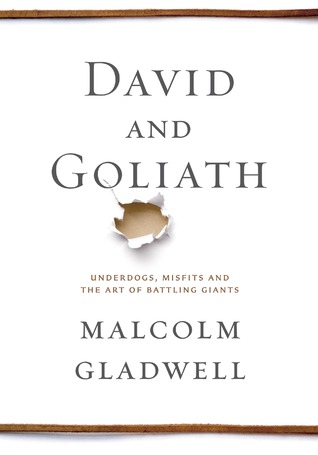
Next year, I am going to put this list first, and we will analyze author’s craft as we learn about argument. I’m also thinking of only introducing Gladwell’s books. I’ll add David and Goliath:  Underdogs, Misfits, and the Art of Battling Giants, and maybe What the Dog Saw: And Other Adventures after I read it this summer. That way students will still have choice as to which book they select, but all students will be reading books by the same author. This should work well as we study the moves of one writer, something I waited way to late to do this year.

Book Club One:

Outliers, the Story of Success by Malcolm Gladwell

Blink, the Power of Thinking Without Thinking by Malcolm Gladwell

The Tipping Point, How Little Things Can Make a Big Difference by Malcolm Gladwell

Freakonomics by Steven D Levitt and Stephen J Dubner

Quiet:  the Power of Introverts by Susan Cain


Book Club Two:

Extremely Loud and Incredibly Close by Jonathan Safron Foer

The Glass Castle, Jeanette Walls (non-fiction)

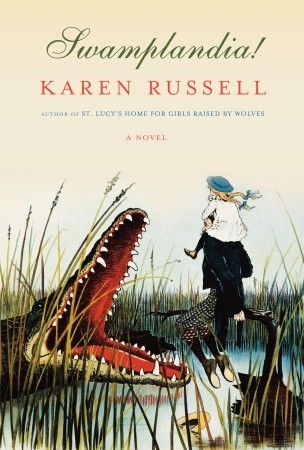
Swamplandia by Karen Russell

The Curious Incident of the Dog in the Night Time by Mark Haddon

Girlchild by Tupelo Hassman


Book Club Three:

The Namesake by Jhumpa Lahiri

Little Bee by Chris Cleeve

Sarah’s Key by Tatiana de Rosnay

The Kite Runner by Khaled Hosseini

A Thousand Splendid Suns by Klaled Hosseini


Book Club Four:

The Yellow Birds by Kevin Powers

Room by Emma Donoghue

Where Men Win Glory by Jon Krakauer (non-fiction)

The Bell Jar by Sylvia Plath

The Things They Carried by Tim O’Brien

Billy Lynn’s Long Half-time Walk by Ben Fountain

I am always reading some piece of compelling literature, always on the look out for the next book to add to these book club lists. My students did not enjoy The Bell Jar, although many students chose to read it, and no one chose to read The Things They Carried, even though I made as big a deal out of it as all the other titles. I just added Swamplandia this year, and then I forgot to talk about it, so it is still not vetted with students.

If you have any suggestions for compelling, complex, rich literature that engages adolescent readers, please share your titles in the comments. Thank you.


©Amy Rasmussen, 2011 – 2015

5 Ways to Enjoy the Last Month of School

Today we start a fun two weeks. Texas state exams and AP exams dual for the attention and time of most every student and teacher in the building.

Two weeks of juggling tests with students in and out of classrooms. Teachers putting on hats as proctors and hall monitors, shuffling to teach in different rooms so students can test in theirs. Stress can make cranky even the calmest souls.

Two weeks until the end of school after that. June 6 is our last day. Some days that sounds like the equivalent of enduring 12 long winters.

smart-goals1I must make the choice daily to be optimistic, to see the possible in all the end-of-year chaos.

5 Ways to Enjoy the Last Month of School:

1. Talk about Books. I will double the amount of time my students and I talk about books and reading. Summer slide is real, even for students in high school and AP English classes. I wrote some thoughts about summer reading here. I want my students to enjoy the reading they do this summer. Most have read double, some even triple, the number of books they read last year. I cringe thinking that many may not read even one book this summer. (The AP English Literature required summer reading holds little promise with Brave New World and Beowulf.) If we talk about books enough, and if my students write down titles that sound interesting enough, and if maybe I allow them to take enough books from my classroom library home for the summer — maybe even my most reluctant readers will read at least one book before they come back to school in August.

2. Sit and Listen. Last week a student tapped on my door during my conference period. “Mrs. Rasmussen, are you busy?” I was but I waved her inside. I shut my laptop and turned my chair, and Mikaila began to talk. She told me that she’d been in her business class when an idea for her writing project “burst in my brain, and I started writing it down, and the more I wrote the more I imagined and the more I began to cry, and then the teacher looked over my shoulder and got worried about what I was writing. I told her, ‘I’m okay, I just need to go see my English teacher.'” Grinning, she finally took a breath. Mikaila stood and talked with me for the rest of the period. She’s got a lot of hurt in her, and she needed someone to hear it. That is all I did. I listened. I still had essays to read and leave feedback on, but that afternoon with this sweet young woman was the best I have had in weeks. I felt needed. During the next few weeks I will try to be still, open my door, and listen. I doubt Mikaila is the only one who needs to talk.

3. Allow Students to Self-Assess. When my students care about their topics, their writing is always better, but after 11 years of school, so many of my writers care more about the grade they’ll get than about the quality of their writing. I’ve tried to change that all year. For the next few weeks, my students will read and revise their own work again and again. They will read one another’s writing and offer feedback, and then they will revise again. We have done two rounds of this already, and with the exception of just a few kids who put forth little effort and scored their work high, most everyone wrote an honest assessment of their writing process. They are thinking about the thinking they do as they write on the page. That’s the best kind of assessment possible.

4. Begin Planning for Next Year. Not full-on planning, mind you. That would make me crazy, but I have started a list of things I will change. I know I need to do a better job with organizing writer’s notebooks and teaching vocabulary. I know I want to read more poetry, although I added a lot in my primarily non-fiction AP English Language class this year. I know I need to do the lessons we did just last week early in the fall. I’ll add tabs in a writer’s notebook that I can use as a sample with my new students in the fall, and I’ll tinker in Drive as I make notes in my lesson plans. Planning gives me energy, so it makes sense to note changes I want to make now instead of hoping I remember them later.

5. Confer and confer and confer. Like you and your students, the relationships my students and I have built all year are strong and trustworthy. I want to utilize this trust and push my students further in their reading and writing than I would have been able to do earlier. The only way to do this is to talk with them more one-on-one. Every day as students read their self-selected books and write their self-selected projects, I will pull up a chair and we will talk. “What are you thinking?” I’ll ask, and they will open up and tell me. They know I will listen and offer feedback that they can take, or not. That’s the beauty of teaching students to take ownership of their learning.

©Amy Rasmussen, 2011 – 2015

Dumpster Diving for a Book Shelf

shelfieMy husband called, “Hey, there’s a book shelf by the dumpster. Do you want it?”

Funny that he asked. I know he knew I’d say yes.

I put the tall black shelf by the door to my room, which was pretty much the only open spot. But most of my classroom library sat cozy on the opposite side of the room. I did not know what books to put on this new shelf.

It sat empty waiting for three months.

There’s nothing quite so unsettling as an empty shelf in a bibliophile’s classroom, but my husband made me promise not to buy any more books. This is hard.

Finally, I got smart and labeled the shelves “1st period Suggests You Read,” “2nd Period Suggests You Read,” etc.

Slowly, I started moving books that students talked about, the ones they told me they liked. Then I Favorites book shelvesnoticed that a few students started returning their books to these shelves, and after we did Speed Dating with a Book a few weeks ago — we put all of our to-read-next titles on these shelves.

Now, instead of having most of our book choices on the bright green wall across the room, students walk past this shelf as they come and go.

Pretty good deal for a dumpster find.

©Amy Rasmussen, 2011 – 2015

Everywhere You Turn

Over the last three years, our Francis Gittens Memorial Lending Library has grown literally by thousands of books.  And, it’s a beautiful sight.  One in which provides comfort, challenge, and dialogue among students and educators.  It propels interest in reading and provides options and choice; students sometimes pull up a chair and use the edge of any given shelf to rest their Writer’s Notebook while they write and find inspiration.  It’s our staple here in room 382.

But, as more and more donations come through the door, I panic: Where will they all go?!  We are currently wall-to-wall with bookshelves (many that tower over us) and the remaining space is either wall-to-wall windows or full of technology.  So, I started to utilize every open surface: our computer cart, window sills, filing cabinets, my own desk.  Now, literally everywhere you turn, your gaze lands upon books…stacks and stacks of books.

Initially I felt overwhelmed by having books everywhere; I thought it felt chaotic.  But, the perceived chaos actually provides students even more choice and an innate awareness of their surroundings. Students have started to become even more in-tune with their reading journeys and have been feeling more compelled to explore.  For more reluctant readers they have access to books without it feeling as though there is the need for any sort of grandiose gesture; trekking across the room to the wildly overwhelming library.  It’s subtle yet powerful beyond measure.  Everything is within their reach.

IMG_20150421_093753

Books resting on technology…

Everything.  Even our mobile technology cart full of laptops. The books on top are stacked in four piles; they are our newest additions.  Because the cart find its way across the room, near different seats, and at various different spots depending on the day; it’s equivalent to an ice cream truck making its rounds – no one is to be missed.  These piles change as the new additions continue to stream through the door.  Many students, as they are accessing the cart for a computer, find themselves pausing for a moment because a book title…or cover…or piece they realized was on their next-to-read list…has caught their attention.  I love the irony that’s often captured here when a student is simply going to return their computer, hears the bell ring, and runs to their Writer’s Notebook to jot the title down; yet forgets to put the computer back!

IMG_20150421_094028

Here is one of three window sills adorned with literature – and some added nature.  During the winter months in room 382 the heat tends to be unbearable (hence the cactus) which is quite unfortunate.  Yet fortunately, students like to get a breath of fresh air.  So, while doing so they find themselves multi-tasking – breathing in the fresh city air while perusing through the new titles that greet them at the window.  Many times, a lesson or writing workshop will be interrupted with, “Miss Bogdany, I found another book about XXX!”

Books decorating ugly steel surfaces...

Books decorating ugly steel surfaces…

Many students have just recently begun to proudly embrace their love for graphic novels. Typically,they believe that they’re for ‘young kids’ because of ‘all the pictures and stuff’.  I whole-heartedly disagree.  So, in the vein of supporting students’ interest in visual literacy, many are found atop an industrial filing cabinet adding color, texture, and accessibility.  Because this surface is also used for additional supplies, students access it often.  Every time they are wanting to find their zen (see butterfly book box on the top left) they happen upon literature that excites them.  Many times, the zen garden and a new book escorts them back to their seat.     

IMG_20150421_093914

Exhibiting my literary interests. The left stack is comprised of pieces I want to read. The ones on the right are my absolute favorites. And, the ones in the middle are a fantastic mix of professional resources, gifts, and tools.

I know students will not produce work if they are not comfortable; both physically and in feeling safe within a community.  I create a visually stimulating space at my desk because it’s what fuels my passion for all things literacy. I also know, when a student needs their own unique space, they tend to gravitate toward wherever it is that I’ve set up shop.  It has been labeled ‘their corner office’ – and yes, they get right down to business!

There are other times when I conduct 1:1 conferences and ask a student to engage in dialogue in our bright back corner.  I watch their eyes drift from their writing to the options resting atop my wooden workspace.  Students will reach across the desk to pick up a piece they have never seen there before and while I try to get their attention refocused on our conference, sometimes the book they’ve chosen is much more convincing than whatever it is I’m trying to do.  I also think some of the intrigue is that students know that what they find there are pieces I can really talk about because I’m passionate about them.

So, as the year starts coming to an end and we start thinking strategically about how we are going to start minimizing our inventory and organizing it for our summer packing; please don’t!  Keep moving things around and keeping it fresh.  Put books in places you haven’t before – students will find them trust me.  Play around with what you have displayed in your area and invite students to engage in conversation wrapped around them.  But, most importantly, enjoy these remaining few months with our inquisitive and dedicated readers as they continue to look around our learning environments and find exactly what they didn’t even know they were looking for.

Where do you keep literature aside from your library shelves?  What successes have students found when they happen upon a book in the most unlikely of places?


Keeping Them Reading: Speed Dating with a Book

Confession:  I have never been speed dating.

I just love the idea of it.

In 2012 I wrote about an activity we did in my AP English class that got everyone talking as we prepared for the AP exam. I hadn’t even thought about that, until I started to write about our latest foray into the talkative world of speed dating with books.

Neydy and LauraI know many teachers have tried some version of this activity. I want to add my voice to theirs:  this is a F.U.N. way to get students talking about what they have read and what they might want to read — both important factors in helping students of all ages develop their identities as readers.

How to Speed Date with a Book

As students entered my classroom, I asked them to

1) find a book from the shelves that they had read and liked enough to share with another person,

2) find a second book that they thought they might like to read — maybe they liked the cover or the title; maybe they had heard someone talk about this book. Didn’t matter.

Everyone needed two book.

Then, we tried this “speed dating” thing.

First, we formed two circles, one inside the other. One circle faced outward. The other faced inward.
Students stood in front of one another, and I with the easy job stood with the timer and the camera.

“One minute,” I said, “You’ve got to stay on topic, and talk about one or both of the books in your hand for one minute. Your goal is to ‘sell’ the other person on why they want to read these books.”

GO!

 We talked books for as many minutes as it took for every student to talk one-on-one with every other student. It was exhausting. And wonderful.

After we completed all our rounds, we set all of the books out on one table, and students picked up their writer’s notebooks and turned to their “What Shall I Read Next?” lists, adding any titles they might want to read during the last two months of school. Every student wrote down at least one book. Some wrote down several.

Why Talking About Books Must Be a Constant

I teach juniors in high school. Before this year, most of my students did not consider themselves readers. They have had to learn what it means to

a. like books,

b. like to read books,

c. like to talk about books,

d. know how to find books they like.

The moment I stop holding up books at the beginning of class, reading a bit, and encouraging them to give it a try, many they stop reading.

They are one year and a couple of months away from graduating high school, and they are Baby Readers, fledglings not ready to leave the roost and fly off on their own. (In more ways than one, I know.)

I don’t know if my readers will be strong enough to keep reading when they leave me the first week in June.

I hope so.

In the mean time, I will keep up the talk and keep up the expectations:

You must read if you are a student in my class.

You are a reader who reads every single day.


What are some activities you do to keep your babies reading?


©Amy Rasmussen, 2011 – 2015

The Question That Changes My Students’ Writing

My first year of teaching I taught thesis statements as these grandiose sentences that establishedimages the entire infrastructure of a paper. I conducted minilessons and writing units just on how to write a three-pronged thesis, which would inevitably lead into a five-paragraph essay. While this technique was arguably successful in its own right, it was also highly limiting. Because the three-pronged thesis set students’ papers up with a distinct outline right from the beginning, it didn’t allow students to delve deeper into their topics. If anything, it actually limited their exploration of their topic or research because it set too stringent of guidelines.

It wasn’t until I read Kelly Gallagher’s Write Like This that I found one of the single-most valuable suggestions for student writers. Somewhere in this treasure trove of practical suggestions, Gallagher changed my approach to teaching theses with one question. Instead of asking what the point of the paper was, he questioned what the student wanted their reader to learn. Now during mini-conferences I ask students, “What do you want your reader to take away from this piece?” Not only does this question prompt them to acknowledge and think about their audience, but it also makes them recognize the value of their writing as a reputable, informative piece. As students answer this question, I jot down their responses, asking them additional questions to deepen my understanding of the subject. Eventually, when the point of the essay has become clear, I give them the notes I have taken and say, “This is your thesis,” showing them that the information we want our readers to take away is really the mission of our essay as a whole. From these notes, we formulate their thesis together to better address the overall message of their paper.

In the end, this approach oftentimes transforms students’ papers from flat, five-paragraph essays, to papers that delve deeper into the content. My freshmen recently finished their five-page research papers while my juniors and seniors completed eight-page TED talks. I used this approach during the initial conferences to help them hone in on the issues they wanted to research. After our conference, Emily’s essay transitioned from a simple history of prosthetic limbs to a deeper exploration of the rapid evolution of modern prosthesis and the technology needed to make them more lifelike. Sarah, on the other hand, found that her fascination with the Russian mafia also led into a deeper exploration of a lethal new drug called Krokodil, which is being trafficked through Russia. Each time students were able to isolate what they found to be fascinating about their topic and then ultimately use that as a jumping point for the rest of their paper. In the end, asking this one question helps students clarify an otherwise intimidating thesis while also helping them to polish their approach to the subject.

Hoping to See Some Damn Good Sentences

I am thinking about sentences.

For a few days now, I’ve been scoring stacks of essays. (If you teach English, I know you’ve been right here with me. Shana wrote about her disdain for grading and some solutions here.)

Reading student essays can be a joy or a chore. A really long never-ending chore. This time around, it’s like scrubbing the tub with a cotton ball after a team mud race.

With almost every essay, I’m scratching my head wondering how a student gets to be in 10th or 11th grade without learning how to write a clear, concise, complete sentence. Just give me one I want to say.

We could work with that.

So today, I am thinking about sentences and how to help students think about what they want to say before they ever lift their pens. And how talking about their thinking will help with their writing.

I am reminded of the importance of reading. Students must read and read a lot. We must teach them to notice how writers construct meaning by linking words into sentences. We must encourage them to talk about what they notice.

I’m thinking there’s more than one meaning here.

I am reminded of the value of mentor sentences. We must expose students to a variety of single sentences and help them talk through what moves the writer makes in each of them. Word choice, structure, details, figurative language: we must help our students understand how and why writers make intentional choices as they craft meaning.

Then, we must encourage them — and give them time — to practice crafting with intention on their own.

I am reminded of the need for conferences. We must make it a habit to talk with our writers one-on-one, regularly. The more we speak with them as writers, the more they will develop the identities of writers.

Writers take time to craft their sentences.

I recently read this post “5 Ways to Write a Damn Good Sentence,” and I am going to work these tips into my instruction the next few weeks as my students work on their final writing project. I am also going to find some mentor sentences that model each of the first four tips. We’ll practice the fifth one.

Next fall, I will not wait so long.

1. Insert facts.

2. Create images.

3. Evoke emotion.

4. Make promises.

5. Practice, practice, practice.

©Amy Rasmussen, 2011 – 2015

On Annotations and Assessment in Readers Workshop

If you’ve read this blog for a while, you know that I advocate for self-selected reading in all English classes. My students read stacks of books each year that they choose for themselves, and they read four titles for in-class book clubs that they select from my short stack of complex (mostly) contemporary titles.

The question I get the most from teachers who do not practice this choice pedagogy is “How do you know your students are reading?”

My initial response is usually:  “I ask them.”

But if you practice readers and writers workshop in your classroom, you know that it takes a bit more than that to know that students are developing as critical readers.

We do still have to teach.

Shana wrote a post recently about the value of talk in her workshop classroom, and I was intrigued by one of the comments:

I think we should consider what would be the best balance between between teacher and student talk. As the literacy expert in the classroom, I think the reading/language arts teacher’s voice needs to be heard often. While we all can be our own teachers, we will probably learn more with the wise guidance of a teacher.” 

But, of course.

Balance is key. So is authenticity.

These two ideals drive the choices I make in my workshop classroom.

My new friend, Lisa, sent me a question that got me thinking about both as I composed a response. I share her question here and how I replied to this dedicated teacher who is moving herself as she moves her readers.

Question:  Do you assess any annotations the students do with their reading? I’ve included a rubric we have been using to give students some feedback on their annotation of fiction. Their annotations in the text, and thereby their discussions about the texts, has greatly improved!! However, providing feedback on their annotations takes FOREVER. Just curious how you handle any sort of assessment related to students reading their chosen texts.” 

Response: Initially, when I read your question about annotations, I thought of these two questions:

1) Why do you need to leave feedback on the annotations in their books?

2) You said your discussions on the texts have improved. Are those discussions not enough of an assessment on their annotations?

Then I read your rubric, and it got me thinking.

I love the simplicity of the rubric, and I can see how students would notice more and be able to contribute to discussions more thoroughly and completely if they mark their books accordingly; however, I always use caution when it comes to interrupting a student’s reading flow — you know, reading for the sake of enjoyment.

In my own reading life, I rarely mark up a piece of fiction, unless it is for my own book club and I want to remember a significant passage that I loved, or didn’t understand, or a moment in the text that shocked or saddened me so much that I want to bring up in the discussion.

When I have my students engage in book clubs or self-selected reading, I want them to have authentic experiences and discussions about their books. (I quote Louise Rosenblatt on experiential reading at the end of this post.) That hope for authenticity is what drives what I have students do while they read.

And it is hard, and I have to trust that students notice the nuances and the complexities in the language and all the important literary aspects of their books. Sometimes they just don’t.  Sometimes they need to focus just on comprehension. I have to be okay with that.

Here’s how I try to facilitate learning:

1. Model my reading. I show students the books I’ve read for my book clubs and the kinds of passages I’ve marked so I can remember them for discussion. I encourage my students to mark their books in similar ways. Some will, and others never will. Some show me that they can think about their books without ever marking them. I have to let them learn the habits of readers that work for each of them individually, and I have to trust that they will.

This goes for writing, too. Every major writing task I ask my students to do, I do it first. I show them my process and later my product. For my ESL students, this is the single most effective strategy I do. I’ve asked them, and they’ve told me. I know that if this modeling helps my students who struggle with language, I know it helps all of my students.

2. Teach mini-lessons. Say I want students to focus on literary devices. I show them a variety of “beautiful sentences” from various texts; 51 Of The Most Beautiful Sentences In Literature was a perfect resource for this. I pulled several of these pretty slides and put them on a presentation in Drive. I projected them in the front of the room, and students and I talked through what we noticed in these sentences.

We discussed the craft in the sentence and why the author might have made the moves he or she did. This focus on the writing in a text often leads to greater critical reading of a text just as critical reading should lead to better writing.

Next, I asked students to go into their books and look for beautiful sentences. I gave them each a note card, and they had to find two sentences — one for each side of the card — where they could tell where the author did something interesting with language. I instructed them to write the sentence and the page number at the top, and then they were to identify the device/s, interpret the meaning of the sentence, and analyze the meaning, based on what they’d read in the book and what they believed the author was doing there as it related to the meaning as a whole.

What does this assess? A lot.

  • I know immediately if students know how to identify literary and rhetorical devices.
  • I know if students understand what they are reading, especially if the activity is during book clubs, and I’ve read all the titles in which students choose.
  • I know if students can analyze the author’s use of the device versus just summarizing the meaning of the sentence.
  • I know if students are reading their books. They are not going to choose a sentence on page 195, if they haven not read that far. They will not know how to tie their analysis into overall meaning

(The sentences I used for this mini-lesson lead to book talks, too, and I had one girl come in the next day with a copy of Anna Karenina that she’d bought for herself. Hooyah!)

Mini-lessons like this can be done over and over again — perhaps with a different skills focus each time, and the more students see that we are going to ask them to go into their books to focus on a skills, the more likely they are to start marking significant sentences and passages as they read. It becomes a natural move on the reader’s part instead of a mandate by the teacher.

3. Teach Notice & Note signposts. If you are not familiar with Notice & Note, Kyleen Beers and Bob Probst researched the patterns in story arcs and crafted six signposts around the moments in the text that appear the most often in a vast number of fictional pieces — short stories and novels. Students at all levels can apply the signposts as they learn to ask themselves questions as they read. In my experience, their understanding of theme improves dramatically.  If you Google Notice & Note signposts, or join the Facebook group, you’ll find many teachers who share their resources.

My students and I learn the signposts with short stories, and then throughout the year, we practice applying them to our full-length novels. Best thing I’ve done to help students analyze theme, which is SO HARD for some of them. I don’t quite understand why, but it is singularly the thing my students year after year struggle with the most.

For assessment, again, I do a lot with note cards. Quick, short writing snapshots where students can talk to me about what they know. I can grade these easily and leave feedback in the form of questions to direct students to look deeper, or closer, or whatever. I usually score these with check plus, check, or check minus and leave feedback in the form of one thing the student did well and one thing that might need improvement.

4. Write reader’s response. I have 35 composition notebooks that I labeled with thematic topics. I learned this strategy from Penny Kittle (Here’s a handout from 2013 that has a list of topics for notebooks in it.) I morphed her idea with Notice & Note, and it works well for reader’s response, another piece in holding students accountable for their reading and assessing their acquisition of skills.

At the beginning of the year, when composition notebooks are .50, I buy 35, and I label them with a variety of topics like Penny has on her list, plus some. I glue a handout of the signposts inside each one. Then, every once in a while, I’ll pull the notebooks out and set a handful on each table.

Students know to find a notebook that they can tie the thematic elements of their independent reading book to. We write for about 10- 20 minutes, depending on how in-depth I want students to go with their thinking, and then they share out what they wrote with their table mates. (This works as book talks, too, because students hear about what their friends are reading.) I wander the room and listen in. This is formative assessment. If a student has written about theme, shown that he is reading and understands how the book relates to that thematic topic, I know he is learning. Of course, the reverse is also true. I use check marks for grades of this kind of assessment, too.

Now, having told you all of this, I am not saying to ditch your rubric. I am just always trying to figure out how to put more of the responsibly for the learning (and the work) on the students, and probably most important to my sanity — the need to cut my grading time.

Regarding your rubric, I wonder:

A. How can you ask students to practice annotations with short stories?Then when you go to leave feedback on what they have marked, zero in on one or two slices of the rubric — never the whole thing. And be sure your feedback is something that will resonate. All too often students do not care about what we write, they only want to see their grade. I saw this great reminder in a tweet today:  “Put comments on my paper that begin conversations, not end them.”

B. Instead of trying to leave feedback on every students’ annotations for their whole books, how can you ask students to apply what they have learned from annotating?

For example, choose a slice of the rubric. Give students a half sheet of paper (or a notecard) and have them synthesize their annotations into a paragraph or two that answers a question. Something like :  Think about the things you’ve annotated about the characters in your book, how have the behaviors of the protagonist advanced the plot in the story?  Explain how any single or series of choices by the protagonist has surprised, unsettled, or shocked you.

C. How can you use the rubric to guide your conferences?Instead of checking their annotations, ask students to use their annotations as they talk with you about their books.

For example, choose a slice of the rubric. In a one-on-one conference, or in a small group conference if students are reading the same book, ask:  In regard to your annotations about literary elements, what have you noticed about how the author uses them? How do these elements help the author craft the story? Talk to me about some passages or sentences in the book that you’ve been particularly moved by.

You will know if students are paying attention as they read., and you’ll know so much more because your assessment shoots over the annotation itself and gets to the thinking behind why we want students to annotate in the first place.

Lisa and I would love to know your thoughts on annotations and assessment? Please leave a comment


©Amy Rasmussen, 2011 – 2015
Oh, the Learning in One Well-Chosen Sentence

51 Most Beautiful Sentences -- Buzzfeed

First, we read like readers. We talk about meaning. We talk about the story if any students have read the book. Many have. The Perks of Being a Wallflower never stays on the shelf for long.

I see several students flip to the back of their writer’s notebooks and write the title on their To Read Next lists.

Next, we read like writers. “The writer does a few things interesting in this sentence. What do you notice?” I ask.

We talk about starting a sentence with and, which leads to a discussion about sentence structure. We talk about the word infinite, which leads to a discussion about the word moment.

“What? That’s a contradiction,” someone says.

“Uh huh,” I nod and listen as little conversations bubble up around the room.

Then, from the back, a student says, “Do you see the three we’s in that sentence? Do you?”

I cannot help but grin.

You see it, don’t you?

Oh, sentences. Lovely sentences. Oh, the learning in one well-chosen sentence.

I cannot even imagine how much I would have learned TALKING about sentences all those years ago instead of diagramming them.

Do you have a favorite sentence you like to talk about with your students?

This Buzzfeed article has 51 Beautiful Sentences. I mention this piece in my post tomorrow, too. And if you haven’t visited Notable Sentences for Imitation and Creation, you’ll want to find some time to read it.


©Amy Rasmussen, 2011 – 2015

6 Ways to Confer in the Crowded Classroom

“My biggest struggle right now is that I have 36 students in each class (60 min periods). There’s not an empty seat in the room! Any ideas?”

Maybe this sounds like you. I’ve been there –trying everything to make workshop work in my over-flowing freshman and sophomore classes. Last year I had 38 sophomores in my 8th period. Talk about ending the day exhausted.

My principal said at the first of this year: “40 is the new 30” regarding class sizes. Most teachers I know deal with bulging class sizes every day. We have to adjust to the new normal.

In the Middle: New Understandings about Writing, Reading, and Learning. 2nd ed. Portsmouth, NH: Heinemann, 1998.

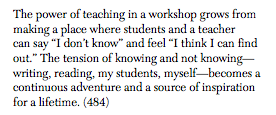
Last week I read this English Journal article from 2000 (timely with Nancie Atwell recently winning that awesome teaching award), and I was reminded of how Atwell talks about the tension in a workshop classroom.

I’ve said it many times before:   readers and writers workshop is constant motion, and sometimes the tension becomes a tight rope under my feet as I try to provide my students with the best instruction possible.

I believe it’s student conferences that steady the bouncing rope, but how do we confer with all of our students regularly when our classes are so large?

A few weeks ago, I wrote this post about reading conferences in high school. Mrs. Thompson wrote that plea at the top of the page in the comments. I’ve thought about it ever since.

These are black board speech bubble brooches. How cool is that? See gadgetsin.com

These are black board speech bubble brooches. How cool is that?
See gadgetsin.com

I am fortunate to have small classes this year, but balancing the tension is still not easy. Below I share six ways I confer with students. I had to be inventive to confer with those rowdy 38 sophomores. Maybe some of these ideas will help my friend Mrs. Thompson.

1. Start before the Bell. Several of my students enter my room two or three minutes before the bell rings. When I am behind in my conferences, which is more often than I’d like, I can talk to a few more students a day when I begin before the bell.

2. Go to Them. My students sit in small groups with their desks clustered in fours and fives. When I want to speak to students individually, I go to them and kneel beside their desk. We talk in hushed tones for a maximum of two and a half minutes. If a student wants to talk longer, before the end of class I pass her a sticky note with an invitation to come in during my lunch. Sometimes she does.

3. Bundle Them Up. Instead of speaking in hushed tones, when I know the topic of the conference will benefit all students in a small group, we speak a little louder. This way I can easily turn to the other three or four students and invite them into the conversation. “You might want to try that, too.”  or “Do you have a question similar to Mark’s?”

4. Make it Voluntary. I know I am not the only one with students who need to talk before they’ve really even started. When I begin conferences with an invitation — “If you’re having trouble getting started, meet me at the sofa, and let’s talk” I can spend five minutes with five to six students, often clarifying ideas or validating their thinking. Once I model how to talk about their work, students learn to effectively give one another feedback. I can leave them talking and confer with a few other students. Five to ten minutes later, I return to the couch. More often than not, these students are now ready to work on their own. They just needed some talk to get them started.

5. Group Them through Feedback. I learned this one from Penny Kittle. Say you are reading through student drafts, and you see the same trouble spots over and over again. Make a note on the bottom right corner, maybe a code like TH if you’re seeing not-so-powerful thesis statements. Then during conference time, ask everyone with a TH on their paper to meet you at the center table. You save time by re-teaching or doing a mini-lesson on thesis statements only with those students who need the refresher. (This works for reading conferences with my most resistant readers, too.)

6. Keep it Silent. Sometimes I get more information about what my students need when they write it out instead of talk about it. I’ve learned to give some of my quiet students the option to confer most often in silent conversations. I leave them notes. They leave me notes back. This is similar to Chris Tovani’s conversation calendars, which when I tried to do with the whole class, challenged my ability to be consistent. When I make the notes optional, those students who want this type of conference take advantage of it — and I can read student notes and respond after the class period.

Do you have other ideas for conferring with students in large classes? Please leave a comment.

©Amy Rasmussen, 2011 – 2015