In fifth grade, I attended a writing workshop with sportswriter Paul Daugherty at the helm. A columnist for the Cincinnati Enquirer, he encouraged we wee ten-year-olds to think about how we might revise more quickly and do our prewriting in our heads. He spoke about his experiences writing half a story while watching a game unfold, sometimes being tempted to write the ending before the ending had even occurred. At age ten, I found him eloquent, mysterious, and inspiring–I decided then that I wanted to be a journalist.
Although I dropped my journalism major after one year in college, I still enjoy Daughterty’s columns in the Enquirer and occasionally Sports Illustrated. And as an adult, I see his process in his product. The craft of Daugherty’s writing is one of the things that made me enjoy sportswriting, and now, strong pieces about America’s most-loved athletic pastimes are some of my favorite things to read.
So, when Tom Romano sent me this piece from the New York Times, I thought immediately of how students would love the “metaphorical, descriptive” writing “with quotes and assertions and a great final line.”

Tom Romano’s great description of this piece in the Times.
Objectives: Identify patterns in the author’s writing to characterize his voice; find where the author cites evidence that supports his claims; infer the writer’s process; apply concepts of writer’s voice and strong argument writing to your own nonfiction pieces.
Lesson: I’ll distribute copies of “Twitchy, Sweaty, but Triumphant” by Michael Powell for students to read, but I’ll also have the piece projected on the Smart Board so kids can see the great accompanying photography.
Because ’tis the season of moving past narrative and into nonfiction writing (in which we often harness the power of narrative, by the way) students will have already been immersed in a study of making claims supported by evidence, crafting a clear and purposeful structure, and maintaining a voice and style that defy the conventions of a five-paragraph you-know-what. This article will serve as a mentor text that features all three, plus some insight into that long-ago lesson I learned from Paul Daugherty: the speed of a sportswriter’s process.
“We’ve been studying a variety of nonfiction pieces that have great style as well as strong claims–commentaries, columns, and speeches. And here’s another example of those traits in this sports article.
“As you read it, look for the writer’s voice and the way the writer makes claims and supports them with evidence, as we’ve been doing throughout this unit,” I request.
We take ten minutes to read through the article, annotating quickly and noting writerly moves that jump out at us. I model on the document camera, noting what I see–the unnamed players throughout the first paragraphs of the piece, creating a universal scene; the sheer entertainment of his vocabulary (words like gluttonous, beatnik, facsimile that you wouldn’t expect in a sports article); his unique turns of phrase.
I then ask students to share in table groups what they noticed about craft and claims. After they share and we debrief, I return to the article.
“One of the things I find fascinating about sportswriting is how quickly it has to happen. The turnaround is so quick–we spend a few weeks polishing pieces of this length, but these writers only have a few hours.”
(In keeping choice central to my curriculum, students always get to choose either their process, genre, or topic. Because in this unit students are constrained to one genre–nonfiction–I will make an effort to help them choose their own topics and processes. That’s wisdom I gleaned from Writing With Mentors.)
“I want to consider the writer’s process, and I found some good evidence of it: let’s look at Powell’s tweets from during the game.”
I pull up Powell’s Twitter account and we scroll down to see his game-time tweets, many of which contain some of the same phrases in the article: the Dead End Kids, the Lackawanna freight train rolling through, the pitchers being gassed. Students notice these unique phrases immediately.
“What could you infer about Powell, given that this game ended at around 1:00 am and his piece ran at 9:00 am?”
I elicit students to share: “He was already writing a bit during the game.” “He writes sports all the time so he can already pull up a lot of the jargon quickly.” “He really loves his subject, since he’s up watching the game and tweeting and having fun with it.” “He’s knowledgeable about the history of these teams–maybe he did a lot of research beforehand or maybe he just knows it from writing about it a lot.”
Now, students have painted a picture of the piece’s author. We can go into the reading warm, not cold.
“So, let’s read again, and consider his process this time,” I ask. “Look now to see how his tweets–evidence of his prewriting–are in the article and what that teaches you about his process.”
We read the article again, a fresh purpose for reading helping us see the writer’s process come to life. Once we’ve finished, we talk in table groups and then debrief as a whole class about the evidence we see of Powell’s writing process based on his tweets and what we know about sportswriters as a group.
These two reads give us three things: another example of writer’s craft, more examples of claims with supporting evidence, and an example of process.

I love this great photo of the Cubs’ moment of triumph from the Wall Street Journal.
Follow-Up: After students read this piece, there are many opportunities for follow-up. One is to simply have them apply its writing lessons to their own nonfiction pieces. Another is to have a lengthy conversation on writing processes, and how they can be short yet incredibly effective–students can see that prewriting doesn’t have to take the form of a web or an outline, but that it can be tweets, too.
Daugherty’s work, the now-defunct Grantland, and The New York Times sports section are some of my favorite places to find great sportswriting. What are some of your favorite resources for finding great nonfiction for your students? Please share in the comments!

 I’ve been reading Peter Johnston’s excellent Opening Minds with my preservice teachers, and it’s a must-read. One of the skills Johnston says the most open-minded students possess is that of social imagination, or being able to understand “what others are feeling, to read people’s faces and expressions, to imagine different perspectives, to make sense of abstract ideas, and to reason through this.” In other words–empathy on all levels. It strikes me that this is both a reading skill and a life skill.
 The next day in class, we’ll refer back to the article before beginning independent reading time. “As you read today, pay attention to the characters in your book–are their lives more happy, or more meaningful?”



 “The feedback we’re going to give today is part of the Bless, Press, Address protocol by the NWP. Blessing the writing means to give specific feedback on what you like about the poem. Pressing the writer means pushing him or her to strengthen their piece in some way. Addressing an issue the writer asks you for help on means giving responsive feedback in order to help the writer achieve his or her goals. Today we’re just going to bless one another, since it’s the first time we’re sharing our writing.”
 a lot about your work ethic, experiences, values, and achievements, but once you put pen to paper, you are a writer, and your story might just help them see the real you and decide that you are far too good to pass up.”
 the back stories. We then head to


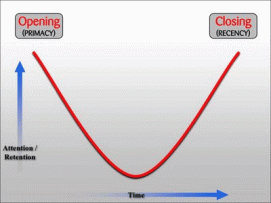 Lesson: “Have y’all learned about the concepts of primacy and recency in psychology yet? Who can refresh us?”
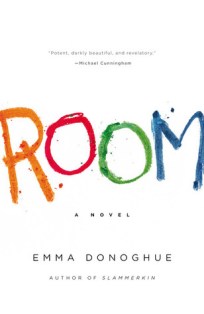 I quickly model with Room, whose plot is simply explained and well known from a recent booktalk. “I notice the sentence structure first–both lines are short, simple sentences. Then I get a sense of the narrator’s voice, as he is obviously five years old, and that shapes how I’m going to view the text. I also know that while they start out trapped in Room, they manage to escape somehow, either literally or figuratively, because of the last line. I’m intrigued by all of these things, and it sets me up for what sounds like a pretty good read.” As I talk, I note on the board the kinds of things I’m noticing–craft, tone, characterization, theme, plot, sentence structure.
 Lesson: I love to introduce students to each other’s notebooks through a shared bit of reading. Early in the year, we’d just finished
  We’ll take 6-7 minutes to write our initial letters, and I circulate the room as kids work to select and address a character.

 Three Teachers Talk