Tag Archives: Conferring

Are you noticing what matters?

I learned a valuable lesson when my children were young. I do not remember the speaker who said it, nor do I remember much of anything else he said. I do know that two words changed me as a parent.

Notice them.

Notice your child when he enters a room. Acknowledge him with a hello, a question, a compliment. Non-threatening. Kind. Seems rather simple, doesn’t it? I remember thinking: “Sure, I can do that. no big deal.”

Oh, but it is — a very big deal. It’s a big deal to the child who grows in confidence, knowing we are intently aware of him as a person — an individual who matters when he walks in the room.

While i’ve been thinking and writing about conferring with students, I’ve done a lot of thinking about what it means to notice, really notice, the students in my charge. Do I take the time to speak to every student individually? What about my body language — am I open and approachable? How about eye contact — am I making it?

Last week I collected my students’ writer’s notebooks. Marked with a sticky note for me to read and scrawled on the back of one student’s writing territories was an entry that gave me pause and broke my heart. It said something like: “I remember asking my grandma about why my mother left. All she would say was that my mom said she could always have other children.”

Just that morning I’d been short with this student for not completing yet another assignment. I bit out a plea to get the work done without once considering why she’d not done it. I made it about the assignment instead of about my learner. Sadly, I do this often and have to continually remind myself of what matters.

Noticing the girl with the dark brooding eyes matters.

And once again I vow to be better than I’ve been.

from BrainPickings.org


[student writing used with permission]

©Amy Rasmussen, 2011 – 2015

A What-to-Read Conference: Books on Bullying

Many of my reading conferences happen at the bookshelf, as students finish one book and begin the search for another.  Here’s one example I just can’t stop thinking about.

Yesterday, a former student of mine came down to my room to borrow a book.  This particular student didn’t start out as a reader, so I was really excited to see him seeking reading material independently a year later.

“Do you have Winger?” he asked me.  We walked to the bookshelf and looked for it–all my copies were checked out.

“Why are you interested in Winger?” I asked him.

“Christina told me about it this summer,” he explained.  I smiled–books were still going viral, beyond our classroom community and into the summer months.

“Well, they’re all checked out.  What is it about that book that interested you?”

“The bullying,” he said, looking away.  Bullying?  I was surprised for a moment that this particular student was curious about bullying–he was a popular kid.  He drove a cool car, had a boisterous and charismatic personality, and had a trail of lovesick girls whose eyes followed his every move.  But then my surprise faded–all high school students, no matter how popular, confident, or smart they seem, struggle with their peers’ meanness.

I had to decide–what do I teach into here?  This student as a reader, or as a vulnerable teen?  I am no longer his teacher–so I don’t have to teach him as a reader, right?

Wrong.  I chose to treat this as a reading conference…but in doing so, I knew I was giving this student the tools to deal with the issue of bullying.

411MJMpTseL._SY344_BO1,204,203,200_I began to suggest alternate books about bullying, and I promised him that I’d set Winger aside for him when it was returned.  He ended up leaving with Thirteen Reasons Why, but I also suggested Nineteen MinutesYaqui Delgado Wants to Kick Your Ass, Simon vs. the Homo Sapiens Agenda, The Truth About Alice, Speak, Wonder, Aristotle and Dante Discover the Universe, and By the Time You Read This, I’ll Be Dead. 

I knew that when that student finished Thirteen Reasons Why, he’d be back.  I knew that I could guide him toward more books about this issue he was curious about, and that our future conferences could help him climb a reading ladder about bullying.

“Reading ladders take students from one level of reading to the next logical level…We can help them stretch as readers by showing them books that mirror what they already like but that…will challenge them more,” says Teri Lesesne in Reading Ladders.  By continuing to guide this student toward more complex books about the same issue, not only would I be helping him to grow as a reader, I would be offering him more titles that could help shed more light on the difficult issue of bullying.

Penny Kittle is fond of saying “reading saves lives.”  My own classroom library is emblazoned with the quote “We read to know that we are not alone.”  This student was seeking salvation, solace, and information in books.  He wanted to know that he wasn’t the only one feeling the way he felt, and he hoped to find a story that showed him a triumph over bullying was possible.  That he sought this guidance in a library shows the power of teaching readers…not books.

How to Respond to All Writers–Students and Professionals Alike

In a workshop classroom, all authors are mentors.  They are teachers of the craft of writing, and the foundation of the workshop model is built on acknowledging and celebrating them as such.  All writers are apprentices of other writers–Stephen King notes this in On Writing, Katie Wood Ray points this out in Wondrous Words, and Penny Kittle champions this in Write Beside Them.

This week, we’ve practiced treating two types of writers as mentors in our classroom–published authors and student writers.

Once we set up our writer’s notebooks, we began filling them with all things personal to us.  Heart maps, important photos, our hands, lifelines, reading histories, and more.  Then, we turned to adding the words of other writers.

IMG_9251

My writing atop Jacqueline Woodson’s

I wanted to show students the power of other writers’ words.  I wanted to teach them to read poetry not to “torture a confession out of it…to find out what it really means,” as Billy Collins writes, but to celebrate the act of simply reading that poem.  So, we glued in an excerpt from Jacqueline Woodson’s Brown Girl Dreaming.  I modeled for students how to respond to Jacqueline as a real writer, to notice and note her craft moves, to be inspired by her ideas and write more about our own feelings on those topics.  We wrote atop her poem, prioritizing our responses, reactions, and ideas rather than some analysis or “dulling down” of her meaning.  Responding personally and authentically to published authors will become an important part of our daily routine in our writer’s workshop.

I invited students to enter into a written dialogue with the authors we read.  So, as I settled down this weekend to begin reading a tall pile of student writing that had been turned in, I knew I had to walk the talk, as Amy always reminds me I must.  I ask students to treat authors as real people worthy of critical response, so why would I treat my student writers any differently?  I’ve always struggled with how to grade/evaluate/respond to student writing, but I’m thinking about it in a new way this year.  I just want to have conversations with my students about their writing, whether it’s in the form of a writing conference or in a weekend session with a stack of papers.  I know that when these conversations occur, student growth will follow.  In the excellent Portfolio Portraits, edited by Don Graves and Bonnie Sunstein, Linda Rief writes in an essay IMG_9248titled “Finding the value in Evaluation:”

I have discovered that students know themselves as learners better than anyone else.  They set goals for themselves and judge how well they reach those goals.  They thoughtfully and honestly evaluate their own learning with far more detail and introspection than I thought possible.  Ultimately, they show me who they are as readers, writers, thinkers, and human beings.

My thinking aligns with Linda’s.  When I remove myself from the role of “grader” or “evaluator,” I become an authentic reader of my students’ writing.  I invite students to assess their own writing, which in the words of Linda Rief “shows the value in evaluation.”

So this weekend, I read my students’ writing like I read books.  I noted beautiful lines they wrote, jotted down spiffy words they harnessed, and responded to thought-provoking ideas I saw them getting at.  I asked them questions, wondered about their meanings, and looked very much forward to reading more of their words in the future.  I will confer with students as I return their papers, and we’ll talk about how they might move forward with some of the topics, ideas, and stories they’d begun in these early writings.

In our classroom, we consider our responses to published writing as important as the writing itself.  The value of reading and writing lies in the interaction between the reader and the words, as Louise Rosenblatt describes.  When I transfer that value from the way I want my students reading writing to the way I want to read my students’ writing, new and important opportunities for student learning occur.

My Classes are Only 45 Minutes — How Do I Do Workshop?

It’s a movement, you know — this instructional practice called Readers and Writers Workshop. More and more educators are catching the vision and clarifying their focus as English educators. (There’s also a lot of nay-sayers, which I think means they are afraid. Let’s be patient with them.)

I received an email that asked a question that I wish I would have had answered for me years ago when I made the leap into choice reading and the workshop pedagogy. It’s important, so I knew it needed to be a post on this blog:

English I teacher asked:  I have a question for you about classroom routine. I felt I needed to ask someone who can answer with authority about this because there is significant resistance from teachers on my campus to the whole idea of workshop, especially from my department chair. For various reasons that I won’t bore you with, we need to do a “by the book” implementation. We will be under a lot of negative scrutiny no matter what we do, but things will go better if we are following some sort of precedent on certain details.

I’ve found specific information about block schedule and the frequency of in-class silent sustained reading, but I haven’t found anything for non-block schedules. We are non-block with 45 minute periods. I think I read on your blog that you used to use Workshop in a non-block schedule. When you did that, how often did you do the in-class reading?

I am glad you asked about non-block scheduling for workshop instruction. Yes, it is doable! I taught class periods of 50 minutes five times a week prior to moving to my current school. When I was first trying to figure it out, the best advice I got was from Penny Kittle. She told me:  “You choose to do this, which means you choose not to do that.” Here’s how I interpreted that:

If I have 50 minutes with my students each day. Every minute matters, so I must be intentional in the choices I make. 

I used to choose whole class novels and read at least part of the novels in class. I used to assign students guided questions to help their understanding of those novels. I used to give lists of vocabulary words and ask students to define, write sentences, create images. I used to give writing prompts and writing homework. I used to expect students to read and write outside of class without ever showing them the messiness, the thinking, the discovering of ideas and emotions and writer’s moves on the page. I used to make all the choices, and I expected my students to go along for the ride.

Some did. Many did not. It finally started to dig at me that many was so much greater than some.

I choose not to do any of those things now.

Now, my students and I choose to read books we find interesting, engaging, and important to our lives. We read, discuss, and write about how the ideas inside these books are windows to the world outside our own, and how they are mirrors into the joys, aches, and heartbreaks we see inside ourselves and within our families.

I wrote about 7 Moves in My Workshop Schedule a while ago. These moves are non-negotiable:  read, confer, talk, write, revise, share, mini-lesson. 

To make these workshop moves work, we must also include these tools as non-negiotables:  writer’s notebooks, mentor texts, high interest books.

As you begin to plan for your 50 minutes, think about this:  How can you ensure that all students read, write, listen, and speak in every class period? (These are best practices for English Language Learner’s, which in my experience means they are best practices for all students.)

You specifically asked about the frequency of in-class independent reading in a class period of 45 minutes.

Read every day. Every day. Every day.

If you want students to become voracious readers, time is the greatest gift you can give them. Students need to know that you trust reading as your ally. If you believe that through reading students will grow in fluency, stamina, vocabulary acquisition, comprehension… and empathy, which has been written about here Scientific American and here Psychology Today you must make it a priority. So how might this look in your classroom:
She asked for a book that would help her learn science and accomplish her reading goals. Students will challenge themselves if we let them.

She asked for a book that would help her learn science and accomplish her reading goals. Students will challenge themselves. Really, they will.

Read at the beginning of every class period — 10 minutes. You do not need a bell ringer or any other focusing task when students know that the expectation is to come in the room and get to reading. The first chapter in Steve Gardiner’s book Sustained Silent Reading offers some great information — and quotes Nancie Atwell on the importance of choice. Encourage and challenge students to read outside of school. Help them create goals, and them help them hold themselves accountable to reaching them.

Confer when students are reading. Make this a norm. Conferring moves readers workshop instruction forward. And students want and need us talking to them about their reading, about their thinking, and about their lives. One-on-one instruction happens here, and it is through this teacher move that belonging, identifying, coaching, challenging, and empowering happens.

When you create a classroom culture of reading, discipline begins to care for itself. It’s a matter of setting expectations and then being consistent with them. If I have a student who refuses to read, which happens at times, especially early in the year, I make sure she knows that she has that right, but she does not have the right to interfere with anyone else’s right to read. Sustained Silent Silence instead of Sustained Silent Reading gets boring after a while.

You’ve read, and you’ve conferred. Now, you make other choices about what to include in your instruction. These are ideas that work for my students:

Write about their reading. Now, I’m not advocating for dialectic journals or questions about plot and setting, but it is important that students become reflective about their reading. Find a balance here. We do not want reading to turn to work, and demanding that students write about their reading way too much may turn them off to reading.  Think about the books you and I read. How often do we have to write an essay about a novel we read?
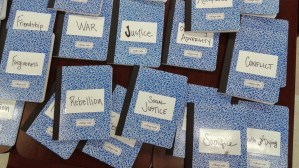
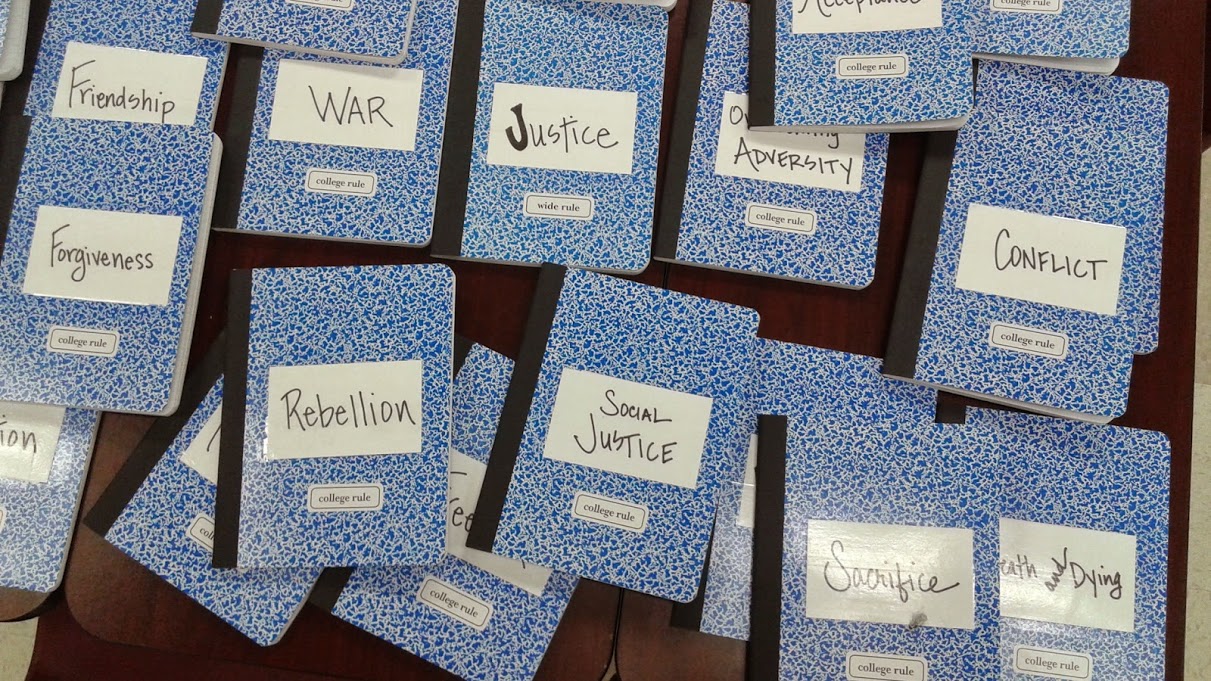
The topic notebooks in my classroom. We write in them about every three weeks. This is a fun way to share our thinking about our books.

Penny Kittle taught me about topic or “big idea” notebooks, and I’ve had a lot of success with these. (That link is to Penny’s Book Love handout, which has other great ideas for students to write about their reading.)

Teach skills in mini-lessons. I decide on mini-lessons based on two things: 1) my standards, 2) student needs based on what I learn in conferences.

Say I need to teach them about using the appeals in an argument, I may teach a mini lesson on logical appeal one day. Then I will ask students to do some flash research and find evidence of this appeal in either their independent reading, a news article, or an online text. We’ll share our findings and do a lot of talking — Why’d the writer use that appeal? How does it contribute to the argument? etc. Then, students will know I need to see them use that appeal in their own writing. We write (and confer) for the rest of the class period. Or, we share our writing in our writers’ groups.

Or, say I’ve conferred with half the class about their reading. I’ve found that half of those students are having trouble finding books with enough higher-level vocabulary to add to their personal dictionaries. I know I need to teach a mini-lesson on text complexity and what it means to challenge ourselves as readers. I may choose a few books with similar topics or themes and show my students a reading ladder:

Tears of a Tiger by Sharon Draper

Dopesick by Walter Dean Meyers

Homeboyz by Alan Sitomer

Tyrell by Coe Booth

The Absolute True Diary of a Part time Indian by Sherman Alexie

Letters to an Incarcerated Brother by Hill Harper

We’ll talk about why one book may be more complex than others. I might challenge students to read all of these titles and then tell me if I have the ladder right. (I may not, I haven’t read every one of these books, but I think I’m on the right track.) I’ll teach students about syntax and how that impacts text complexity as much, or more, than vocabulary. Then, I’ll challenge students to keep track of the complexity of the books they choose, not only by keeping their personal dictionaries up to date, but by adding codes to their reading lists. E – easy, C – comfortable, D – difficult. I show them my writer’s notebook and how this tracking helps me understand my reading habits.

Allow time to work. The greatest indicator that workshop works in my classroom is student engagement. When I allow students time to complete writing in class with me available to talk to and ask questions, they engage in the writing process more efficiently and effectively. I’ve let go of wanting a product, and now we enjoy the process of writing. We discover as we write. We revise because we know our writing improves as we revisit it. We share our writing because all voices in our classroom matter. The only way to accomplish these things is to build time to write right into the class schedule.

I wrote Choose to Become a Classroom of Writers a while ago. I still believe focusing on writing creates the smoothest transition to workshop instruction. Why? Because writers are readers first. Check out this post of 40 Inspiring Quotes about Reading from Writers. (Just a little proof.)

But that’s probably another post for another day.

Best blessings to you as you take off on this wonderful adventure with your students. Write any time: for support, for clarity, for whatever you might need. You’re blessing the lives of children. Our future –our society — needs educators like you.

Press forward (nay-saying department manager and all).

Warmly,

Amy

Dear reader, any advice you can offer our friend?

 ©Amy Rasmussen, 2011 – 2015

The Consciousness of the Child: Another Thought on Conferring

Much has been written about conferring with younger students, but in the current professional literature, I find little that addresses the needs I have in my secondary classroom. I know when I talk to my students in one on one conferences, they grow more as individuals who engage in reading and writing more critically. I believe that if teachers will talk to their students more, teaching them as individuals instead of the collective, students will respond in ways that delight and surprise us (and often surprise themselves as well).

Teenager with parent

Teenager with parent

The topic of conferring consumes my reading life of late, and I find myself reading Misreading Masculinity with this guiding question:  How does this relate to my study and work on talking to students about their thinking?

The following lines from Newkirk’s book relate directly to what I believe must be our first step in helping our teenage readers and writers develop the sense of self needed to engage meaningfully with the material and skills we need them to in high school English:

“…the ability to think beyond the “logic” of normal school performance in order to inhabit the “logic” of the student (Newkirk, 12).”

. . . The linguist Basil Bernstein elegantly points out the centrality of this ethnographic stance for teaching:

If the culture of the teacher is to be part of the consciousness of the child, then the culture of the child must first be in the consciousness of the teacher…We should start knowing that the social experience the child already possesses is valid, and that this social experience should be reflected back to him as being valid and significant. (1966, 120)

As a credo for education in a multicultural society, I don’t think we can do better than that (Newkirk, 13).

Educators must relate to students as individuals with a variety of interests, passions, backgrounds, and literary histories. We must try to think like they do if we are ever going to develop relationships that engage the teenager in reading and writing experiences that invite them to take on the qualities of readers and writers. Our goal should reach far beyond the idea of school. It must reach into a student’s future life.

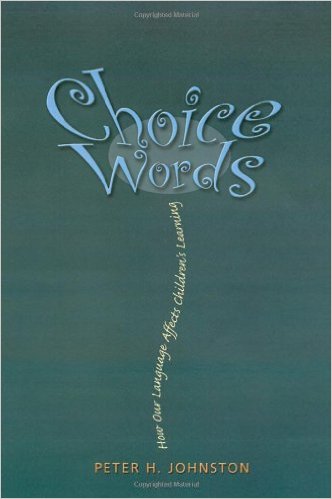
In the book Choice Words,  Peter Johnston discusses the importance of tapping into students’ literary Choice Wordshistories in order to give them a literary future. What experiences has the child had with reading and writing that have formed her belief about herself as a reader and a writer? We must learn of these experiences and then validate them if we ever expect to move our students from the starting places at which they come to us.

Regularly conferring with students is a vital part of getting into the “consciousness of the child.” However, many high school English teachers instruct their students as if they all experience the same culture and the same consciousness. No wonder groupthink is so prevalent in our communities and in our politics. It is a reflection of how students receive instruction. This whole class, one-size-fits-all, standardized teaching (not to mention the tests) is detrimental, not just to boys, but to all students who deserve to be instructed at an individual and personal level.

What are your thoughts?

©Amy Rasmussen, 2011 – 2015

To Confer is to Validate the Child

Question:  Do you have any tips or tricks for conferring for upper grade students

Answer:  Keep reading.

I love questions, especially questions about my practice and my passions. If you’ve been reading this blog for a while, you know that I’ve written quite a bit on conferring this past year. (Click the categories tab and go to conferring.)

Conferring with students is my on-going action research. He was the missing person in my workshop classroom for a long while. Then, he was the show-up-once-in-awhile, have a chat, and leave kind of guy. Later, he became a regular guest. Then, after my change and my constant focus, he finally moved in for good, and guess what? He transformed the learning in my classroom. i wish I would have invited him to stay much sooner. I missed a mountain of important talk time with my learners. Time I will never get back.

So, to answer the question I received in an email today, let me start with this:

Most of the strategies for younger grades work well for our older learners, too. Talk to elementary teachers. Use these experienced writing workshop teachers as a resource for your secondary writers workshop. They know how to talk to students, and we should follow their lead in many ways as we approach our writers.

Much of my study on workshop and conferring reveals similar approaches. I’ve found the work of Donald Graves, Nancie Atwell, Linda Reif, Penny Kittle and other workshop teachers rest on the same core principles of writing instruction:

1) students choosing what to write aboutt,

2) helping students discover ideas through writing,

3) talking to students regularly as writers,

4) modeling the struggle of writing,

5) using mentor texts to study the craft of writers.

Conferring fits into any and all of those principles, but it sits squarely at #3:  talking to students regularly as writers. This is different than talking to students about their writing.

So, I think the most important thing we have to do when we confer is validate the child as a writer (even if he is not a very good one — yet).

In his book Choice Words, Peter Johnston writes about the importance of helping students grow into the identity of readers and writers. In my experience teaching high school English, 9, 10, 11, on-level to AP Lang, most students do not put reader and writer as part of their identify. Few students will be successful readers and writers unless they do so.

This becomes my primary focus in conferences with my readers and writers: How can I help them have experiences where they can see themselves in these roles?

I find that getting students to talk to us about their thoughts, feelings, ideas, struggles, etc with their writing process is the same at every grade level. Perhaps the biggest difference is that teens do not always trust us like younger children tend to do — at least not at first. That is why validating positives with our writers has to come first — before any kind of one-on-one instruction. We have to remove fear and hesitancy. Let them write. Focus on what they do well.

This makes many red-penned teachers with a love of grammar crazy, but marking up a student’s paper is the worst kind of writing instruction — ever. We must respect the writer.

Today my friend and colleague Shana and I were discussing this very thing:

Conferring transforms differentiated instruction into individualized instruction.

So, as you think about conferring with adolescents, ask yourself:

How can I tap into the identity of the individual?

How can I help him see himself as a writer?

What writing experiences does he need to have to feel like he can be successful?

Start conferring there.

Dear reader, what are your thoughts on conferring? How do you answer my questions about conferring with adolescents?

 ©Amy Rasmussen, 2011 – 2015

Okay, I Will Share My AP Testing Data

A new friend asked me if I would share any AP testing data that I’ve gathered since embracing Readers and Writers Workshop. I had to think about it since I rarely think about it. I do appreciate the question though because it led to this post.

I need to tell you right up front:  While I appreciate the AP exam as a high-stakes test, I do not lay a lot of value on testing data for many reasons.

So many factors figure into how a group of students tests each year, and looking at figures from one year to the next, and trying to compare numbers with different groups of students has never made sense to me. The only real valid data is the growth I measure from the fall when students walk into my door until they leave me in the spring. However, I can tell you that the first year I implemented Readers and Writers Workshop and gave up whole class novels in favor of encouraging students to read books of their choice and taught skills with short, sophisticated, complex texts, my students’ scores were 12% higher than my students’ scores the year before.

The best I can do to respond to your question is to quote Stephen Krashen in the article “Free Reading:”  “. . .research strongly suggests that free reading is the source of our reading prowess and much of our vocabulary and spelling development, as well as our ability to understand sophisticated phrases and write coherent prose. The secret of its effectiveness is simple: children become better readers by reading.”

And…  “Research has . . .shown that SSR is at least as effective as conventional teaching methods in helping children acquire those aspects of reading that are measured by standardized tests, and pleasure reading provides a great deal that these tests don’t measure.”

The first two years I taught AP, I tried to do it like I learned at my APSI. I assigned the traditional novels taught in American literature: The Scarlet Letter, Huckleberry Finn, The Great Gatsby, The Awakening, The Grapes of Wrath — because the other AP teacher on my campus did. I can tell you, my students did not read. They even told me later that they didn’t — lots of joking about that on Facebook a few years after they left me. They knew how to play the fake-reading game perfectly.

I know Krashen’s research centers on much younger grades than our students in AP English; however, reading is reading, and students gain skills by doing it — skills that improve their lives far beyond those tested on one day in May as they sit for the AP English exam.

My students just wrote end-of-year reading evaluations on their blogs. Here’s a few of the highlights about reading this year in their own words. This is the kind of data I value:

“Being apart of a reading community has benefited me deeply within my entire life. Even though I didn’t read as much as I wanted to, the reading that I did do was very beneficial. Reading helped me expand my vocabulary a lot. Sometimes when I would speak to my mom I would use a word that I learned from the book I was reading and she would just look at me like she didn’t know who I was. Reading also helped me become a better writer. So many different books that I read helped me use different structures, understand how to use rhetorical devices, and use my upper level vocabulary.”  DeDe, currently reading Thirteen Reasons Why by Jay Asher

“Being part of a reading community as a student opened my mind how others thought of the book we were currently reading together. Occasionally, I’m an ostrich that’s always in the ground; thoughts to myself, ideas to myself, and the “this is what this means” mentality. I’ve slowly learned how to use the point of view of others by implementing it into my own work. In addition, this year’s English class did not feel like a burden compared to previous years. The freedom of choice we were given provided us with the decision to pick a book we enjoyed.” Doreen, currently reading The Goldfinch by Donna Tartt

“I believe the place I need to improve as a reader is being able to find the hidden meanings or putting everything together in order for me to understand a book. Sometimes without me noticing I just read to read and I forget what I read and have to read the paragraph or page again in order for me to understand it. I need to read and take everything under consideration and understand what it is that I’m reading and at the end put it back together. Maybe my problem is that I try to read too fast.” Johnny, currently reading The Alex Crow by Andrew Smith

“Being part of a reading community benefited me because I always felt like I needed to be reading a book. It felt splendid being a part of something, especially something I would of never thought I would be a part of.  I understood the importance of reading. The more you read, the better writer you will become. I realized what genre of books I liked and which ones I didn’t. Most importantly I explored a different variety of books and read a minimum of 12 books. Something I had never done before. Usually I would read a minimum of 3 books every year.” Lizbeth, currently reading Playing Dead byJulia Heaberlin

“My journey began with Escape From Camp 14. I moved through different genres and difficulty levels thereafter: Anna and the French kiss, Allegiant, High School Bites, The Glass Castle, The Curious Incident of the Dog in the Night-Time, Where’d You Go Bernadettte, The Art of Secrets, The Hot Zone, Little Bee, The Joy Luck Club, Down the Rabbit Hole, Room, Incendiary, The Wright 3, and most recently, Y. During this time, I abandoned The Kite Runner, The Thirteenth Tale, Ready Player One, Saving Fish From Drowning, Telegraph Avenue, and Station Eleven.   Even I find it odd, that out of the entire list, I enjoyed The Joy Luck Club more than any other. I say this because I’m not the patient type- I like constant action, fueled excitement. The Joy Luck Club almost counters that expectation, and if I had to describe it, I might even consider calling it boring.” Nawoon, currently choosing — just abandoned Station Eleven

This evaluation by Jasmine is too good to not share the whole of it. And this one by Shaniqua.

I just need to share one more thing, a little gift I got today as I read student reading evaluations. I know most teachers get these at one time or another.

It is the thing that keeps us going.

Laura wrote:

“I still need to improve on not judging a book by it’s cover. For us to GROW as people, we must get out of our COMFORT ZONE and pick up a shattered book because it needs someone to appreciate it’s language. As much as reading conference were sometimes nerve wrecking for me, they helped me get a second opinion on my progress in class as a human and not merely as a student. I can never thank Mrs. Rasmussen enough for dedicating chunks of her life to her students. Positivity in a world were criticism is many people’s issue is so rare and pure. She truly cares about each of us and sees past our struggles and attitudes and tries her best to help us understand it’s okay to have emotions and display them for others to see.  I’ve learned it’s more important to turn our conflicts into beautiful gifts instead of becoming a bitter person.”

Don’t you think that is better than any testing data?

©Amy Rasmussen, 2011 – 2015


Our Year-In-Review

As we round out the 2014-2015 academic school year, I would like share our Year-In-Review from us here at TTT and dedicate it to all of our loyal and contributing teacher friends who share in our experiences throughout the year.  Playing with the Reading Writing Workshop model is always exhilarating and fresh and exciting and freeing and thought-provoking.  It’s always propelling us, as educators, to break through barriers and teach with our most authentic teaching souls.

So, to capture the essence of how we have all explored the model this school year; here are highlights that allow us to celebrate the risks, the questions, the stumbles, the ‘ah-ha’s, the setbacks, and of course…the successes.  As we are all still progressing through this last month of our current school year, we hope that resurfacing some of our favorite moments will ignite the fire that keeps us all educating with fierce passion, deep inquiry, and continual evolution.

The calm zen of the RWW in Texas.

The calm zen of the RWW in TX.

First up: The lovely Amy Rasmussen who never ceases to amaze all of us with her wit, wisdom, and wildly insightful thinking.  Here is a woman who has taken the RWW by storm and has not looked back; the only time she does is to pick up, dust off, and gently guide those who are trying to find their way through the process.  She is an excellent mentor and extraordinary educator who ensures that her Advanced Placement students are gifted the wonders of the RWW. Here is a collection of how Amy has guided us through the intricacies of customizing the RWW for our own learners:

A Feedback Protocol for Revision Workshop

5 Reasons Why Reading Conferences Matter — Especially in High School English

5 Ways to Enjoy the Last Month of School


A reminder of student movement and achievement.

A reminder of student movement and achievement in NH.

Next: Jackie Catcher’s name could not be more appropriate.  We know the catcher’s responsibility on the field is to guide the team to strategic success; Jackie does the same infield – in her classroom. She moves her students with her unyielding dedication through continual infused literacy by craftily customizing projects and lessons that engage students. She is a powerhouse who, through all the struggles and obstacles of a second year educator, never ceases to find innovative ways to educate and inspire.  Most importantly, she is always a learner first and shares her inquiry with others to not only think collectively, but to create success-driven solutions.  Here is some of her story:

Building My Library Around My Students

Unraveling the Mystery of Poetry

The Question That Changes My Students’ Writing


A bright and energetic learning environment in WV.

A bright and energetic learning environment in WV.

Thirdly: The always-invigorating Shana Karnes. Shana is a shining light to her students, yet her light shines brightly for the world of evolving educators as well.  She is open to sharing her passion, her innovative thinking, and the way she creatively customizes the RWW for her students in the throws of West Virginia.  Shana never loses sight of how vital piles and piles of literature are for the growth of her young readers and emerging writers.  She knows how to roll up her sleeves and do the work right beside her scholars.  It is through the sheer joy of all things literacy, that Shana explores the world of the RWW:

We Learn Facts from Fiction

Teach Readers, Not Books: A Case for Choice Reading in ALL Classes

The Value of Talk


The shelves where our identities are qualified, our ideas solidified, and our passion realized.

The shelves where our identities are qualified, our ideas solidified, and our passions realized in NY.

Rounding it out: Erika Bogdany.  Through the RWW I have challenged my students, and they in turn, have challenged me.  They push me continually with their own inquiries and want to be more fluid writers.  They challenge my writing by offering suggestions and insight that I have bestowed upon them; the gift of creating a safe community for all learners to read, write, risk, and share.  It is through the RWW that students find pride in their work, volume in their voice, crafted secrets in their writing, and beauty in themselves.  It is with passion and grace that students flutter and flop; yet learn how to fly:

All it Takes is a Tutu and Some Focus

Beyond These Four Walls

Today We Draw


We hope that our moment of reflection and celebration continues to provide you ideas and inspiration throughout the remaining time you have with your unique readers and writers this year.  We’d love to continue hearing your voices, feedback, and generous insight while we round out this school year…and look forward to the year ahead!

7 Moves in My Workshop Schedule

Quite often teachers ask me what the daily schedule looks like in my workshop classroom.

This is a hard one. I think mainly because it is not about the schedule as much as it is about the routines, or manners, we start putting into place at the beginning of the school year.

I’ve had a lot of adapting to do this year. Moving to a new school and adjusting my lessons to fit 85 minute class periods where I see my students twice a week for sure and every other Friday — sometimes. This is quite a change from 50 minute class periods where I saw my students five days a week.

Our normal routines  — and these are non-negotiables that make workshop work — consist of reading, conferring with readers, talking about books, writing in our notebooks, revising in our notebooks, sharing a bit of our writing, and learning or reinforcing a skill, then….it all depends on our workshop task. That’s why writing about my daily schedule is hard.

Here’s the best I can do without going into a long explanation — that has to wait for my book (Penny keeps telling me that my book will never get written if I keep writing on this blog, and I know she is right. Only so much time.)

READ — 10 to 15 minutes. This is sacred and silent reading time. Students choose books that interest them. I CONFER with my readers, always with a specific focus, depending on my reader.

TALK about books. Sometimes I do a book talk, reading a few pages of the book, or holding a book interview like Erika does. Sometimes a student does a book talk, if I’ve talked to her first and know she’s passionate about the book she’s just read. Sometimes I ask my students to just talk about the books they are reading. Shana wrote about the Value of Talk, and I agree completely: “Talk is one of the most valuable tools at work in my classroom.”

WRITE in our writer’s notebooks. Everyday we need to have our students thinking on paper. When I forget, or think we do not have time, to open our notebooks and write — in response to a poem, or a video, or a story, or about the book students are reading, or about whatever — I regret it. Discussions are richer when we write first. Discoveries are more insightful when we write first. Writing is better when we write, just thinking about our ideas, first.

Then, something I learned from Penny Kittle, we always read what we wrote and REVISE. Penny modeled revising with a different color, and I ask my writers to do the same. I simply say, “Read over what you just wrote. How can you make your writing better? Maybe add a phrase or two that develops your thinking more. Maybe change a word or two that adds a punch. Maybe you can remove some words and make your thinking more concise. Where can you add figurative language or a list or an interesting style move?” (When I check writer’s notebooks, I always look for evidence of revision. We work on establishing the habit of revision, daily.)

SHARE some of our thinking. Sometimes we pair up and read our writing to a shoulder partners. Sometimes I ask for volunteers to share out their writing. Sometimes I randomly call on someone (and I usually allow them to opt out at least once if they are uncomfortable reading aloud). Sharing is an important part of our community, and from the first day of school we work on establishing a safe and respectful environment where we can all grow as readers and writers.

Learn or reinforce a skill via MINI-LESSON. (If I introduce something totally new, like one of the AP English Language exam prompts, obviously the mini-lesson will not be so mini. On these days, the mini-lesson time and the workshop time allotment swap places. Sometimes I need the focused direct instruction time because it saves time in the long run.)

Our routines usually take about 35 to 45 minutes. That leaves us about half the class period to hold a workshop. This might be a readers workshop if we are practicing close reading or if we are preparing for a Harkness discussion. This might be a writers workshop if we are composing a piece of writing or studying the moves of a favorite author.

Of course, if we are writing, I change my hat and confer with my writers.

I would love to know the workshop routines you establish with your readers and writers. Please share in the comments.

©Amy Rasmussen, 2011 – 2015


5 Ways to Enjoy the Last Month of School

Today we start a fun two weeks. Texas state exams and AP exams dual for the attention and time of most every student and teacher in the building.

Two weeks of juggling tests with students in and out of classrooms. Teachers putting on hats as proctors and hall monitors, shuffling to teach in different rooms so students can test in theirs. Stress can make cranky even the calmest souls.

Two weeks until the end of school after that. June 6 is our last day. Some days that sounds like the equivalent of enduring 12 long winters.

smart-goals1I must make the choice daily to be optimistic, to see the possible in all the end-of-year chaos.

5 Ways to Enjoy the Last Month of School:

1. Talk about Books. I will double the amount of time my students and I talk about books and reading. Summer slide is real, even for students in high school and AP English classes. I wrote some thoughts about summer reading here. I want my students to enjoy the reading they do this summer. Most have read double, some even triple, the number of books they read last year. I cringe thinking that many may not read even one book this summer. (The AP English Literature required summer reading holds little promise with Brave New World and Beowulf.) If we talk about books enough, and if my students write down titles that sound interesting enough, and if maybe I allow them to take enough books from my classroom library home for the summer — maybe even my most reluctant readers will read at least one book before they come back to school in August.

2. Sit and Listen. Last week a student tapped on my door during my conference period. “Mrs. Rasmussen, are you busy?” I was but I waved her inside. I shut my laptop and turned my chair, and Mikaila began to talk. She told me that she’d been in her business class when an idea for her writing project “burst in my brain, and I started writing it down, and the more I wrote the more I imagined and the more I began to cry, and then the teacher looked over my shoulder and got worried about what I was writing. I told her, ‘I’m okay, I just need to go see my English teacher.'” Grinning, she finally took a breath. Mikaila stood and talked with me for the rest of the period. She’s got a lot of hurt in her, and she needed someone to hear it. That is all I did. I listened. I still had essays to read and leave feedback on, but that afternoon with this sweet young woman was the best I have had in weeks. I felt needed. During the next few weeks I will try to be still, open my door, and listen. I doubt Mikaila is the only one who needs to talk.

3. Allow Students to Self-Assess. When my students care about their topics, their writing is always better, but after 11 years of school, so many of my writers care more about the grade they’ll get than about the quality of their writing. I’ve tried to change that all year. For the next few weeks, my students will read and revise their own work again and again. They will read one another’s writing and offer feedback, and then they will revise again. We have done two rounds of this already, and with the exception of just a few kids who put forth little effort and scored their work high, most everyone wrote an honest assessment of their writing process. They are thinking about the thinking they do as they write on the page. That’s the best kind of assessment possible.

4. Begin Planning for Next Year. Not full-on planning, mind you. That would make me crazy, but I have started a list of things I will change. I know I need to do a better job with organizing writer’s notebooks and teaching vocabulary. I know I want to read more poetry, although I added a lot in my primarily non-fiction AP English Language class this year. I know I need to do the lessons we did just last week early in the fall. I’ll add tabs in a writer’s notebook that I can use as a sample with my new students in the fall, and I’ll tinker in Drive as I make notes in my lesson plans. Planning gives me energy, so it makes sense to note changes I want to make now instead of hoping I remember them later.

5. Confer and confer and confer. Like you and your students, the relationships my students and I have built all year are strong and trustworthy. I want to utilize this trust and push my students further in their reading and writing than I would have been able to do earlier. The only way to do this is to talk with them more one-on-one. Every day as students read their self-selected books and write their self-selected projects, I will pull up a chair and we will talk. “What are you thinking?” I’ll ask, and they will open up and tell me. They know I will listen and offer feedback that they can take, or not. That’s the beauty of teaching students to take ownership of their learning.

©Amy Rasmussen, 2011 – 2015