Tag Archives: choice reading

How Conferring and a Book Solved the Tissue Issue, and Hopefully, Much More #FridayReads

You know the boys who cannot sit still? I’ve got a gaggle of them in my second period. Now, I’m not talking about elementary school kids, nor middle school. I’m talking about the juniors I teach in high school.

No sooner do I blink, and at least one of them is up walking to the tissue box. He’ll slowly take a tissue. Saunter on back to his seat (for about three minutes — I’ve timed it) and then waltz on over to the trash can to throw the tissue away and then mosey on back to his seat.

With eight of these guys, it’s constant motion. And I need Dramamine.

One class period. Five days. Two boxes of tissues. Gone.

At the end of that first very long week, I realized the reality. All kinds of memories flooded back from Tom Newkirk’s class “Boys, Literacy, and Popular Culture”at UNH Lit Institute the summer of 2015.  (If you haven’t read Tom’s book Misreading Masculinity:  Boys, Literacy, and Popular Culture, it’s insightful.)

My tissue-loving boys were posturing all over the place, and somehow I needed to stop the Tissue Issue.

It’s been easier than I thought. Really, it’s all about getting them into books they want to read.

On the first day of school, I’d prepped my room with stacks of colorful engaging books on every table. We did a book pass and wrote down titles we thought we’d like to read. I showed my passion for books and reading, and my students rolled their eyes at my request they read for three hours a week.

“No way,” I heard one young man mutter, “I ain’t reading.”

This attitude doesn’t deter me.

Even if they were faking it, after just a few days and lots of one-on-one mini-conferences, every kid in a class of 30 at least looked like they were reading. Except two.

I invited these two separately into the hall for private chats about their social PATT (party all the time) moves in the classroom.

“You know, they all follow your lead, right? I need you working with me to make this class work.”

Both agreed, and I asked them to shake my hand on it.

But old habits die hard.

Then, today — 13 days into the school year — gold.

Book gold.

“Hey, Mrs. Ras, can I talk to you in the hall?

“Do you think you could help me find a different book to read — one with music. You already know I like music.” I remembered his free verse rap at the end of class last Friday.

“So give me some ideas –”

“Well, something like that book JaBo’s reading…the long way one.”

A Long Way Gone?” (I’m trying to remember if there’s any music in this memoir about a child soldier.)

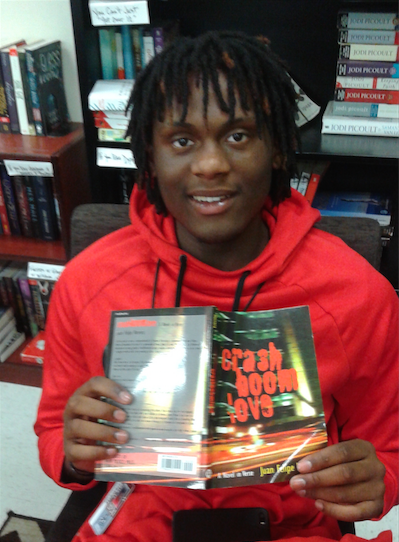
Both of my copies were checked out. I had to think fast. Crash Boom Love, a novel in verse by Juan Felipe Herrera, National Poet Laureate, flashed in the corner of my eye. (Thank you, poetry shelf just inside the door.)

We flipped through the pages, and I explained that it’s a book written in verse — all poems that make a complete story.

“You mean like one long poem?”

“Yep. Do you want to trade me this book for that one?” I said nodding at My Friend Dahmer, the graphic novel in his hand he’d been fake reading for 12 days. (I know he chose it for the pictures. “It’s weird” is all he could tell me in our first conference.)

Not six seconds after we’d entered the room, I saw Kameron flipping through the pages and showing his new book to JaBo.

That’s when you know you’ve got them — or at least got a chance at getting them to read — when they do a book talk to their friend before they’ve even read a page.

screen-shot-2016-09-08-at-11-05-01-pm

Meet Kameron. He may be a famous rapper one day.

I love this work with adolescent readers. I know we can change lives as we help young people grow in literacy skills, as we help them recognize themselves in books, and help them see others so different from themselves in the books they read.

It might be the only hope we have as a nation. Empathy, compassion, tolerance, justice, mercy, and love all wait for discovery like healing treasure and hope in the pages of the books we share with our students.

And when that book gold finally glistens — well, that’s when I have to cross the room for a tissue.


ftc-guideline-%22affiliate-links%22

Finding Solace in our Students

IMG_2666

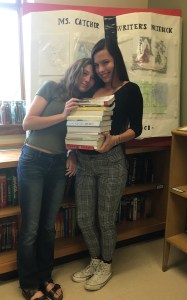
End of the year pics with friends and books.

The shooting in Orlando this weekend has weighed heavily on my mind for the past few days; it has settled into the back of my brain, penetrating my thoughts whenever I get a moment to rest between the hectic last days of school.  While I only know victims through six degrees of separation, I can’t help but see the images of friends, family, and students in the 49 faces of those murdered.

I’m not sure if it is the lockdown drills at school that make these tragedies feel all the more chilling and real, or if it’s the targeting of LGBTQ+ populations when I, oftentimes for the first time, watch young people finding their true identities in my classroom, but this time I feel nauseous and weak and powerless.

To think that this is the world my students are graduating into and growing up in, is frightening.

But as I scrolled through the profiles of the deceased, I found a statement from the father of victim Mercedez Flores.  He wrote, “We must all come together, we must all be at peace, we must all love each other, because this hatred cannot continue for the rest of our lives.”  That is what the workshop classroom allows me to share with my students—a corner of this peace and love.  It opens a door for me to connect with them on a personal level, allowing them to find not only acceptance but also stories, understanding, and success in their books.  Allowing them to open up to new literature and explore themselves as a reader sends the message that I not only value them as learners, but I value them as diverse people with a wide variety of needs, curiosities, and interests.  This avenue may only be minor, but in the wake of all the hatred and fear, I hope my classroom is a respite from the world.  A place where students can learn to at least respect one another’s differences without judgment or condescension, a place where we can explore the difficult themes and navigate challenging conversations in safety.

IMG_2693Everyday gives me a little more hope that this next generation has begun thinking about the innumerable struggles they will have to face.  As one of my students wrote about the universality of To Kill A Mockingbird, “For an innocent man to be found guilty is a miscarriage of justice, but for an innocent man to be found guilty for being black is a result of bigotry and prejudice, and shouldn’t happen…Sadly, as seen with Trayvon Martin, Mike Brown, and others, racism still does exist in this country. To Kill A Mockingbird is a constant reminder of how far we have come and how far left we still have to go when it comes to overcoming racism.”  Charlie’s words remind us that stories show us both the fallibility and overwhelming strength of the human condition.

Yesterday morning, as I prepared for my last day of classes (we still have three more days of exams), I reminded myself that teaching allows me to model a life of acceptance and love, of caring and compassion, of concern and advocacy.  It may not be much in the general scheme of things, but it is the most productive way I can handle the tragedies our country continues to face.  Between cramming in grading and pulling together final assessments, I spent invaluable time writing notes to my classes, collecting ice cream toppings for our last day parties and signing the backs of photos of my students with the books they read this year.

The best part is that the love is returned as graduating seniors from years prior show

IMG_2701

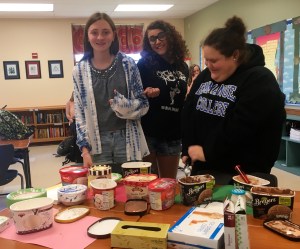
Ice cream parties to finish up our yearlong adventure together.

up at my door to hug me good bye and have me sign their yearbooks.  College students visit to update me on their lives, current students voluntarily help me pack up my room, and former students spend their first summer afternoon organizing my bookshelves for future students.  For all the hate that exists in this world, there is far more kindness, far more compassion, and far more love.  I know because my students remind me of this every day.


#3TTWorkshop — Teaching Students How to Thrive in Workshop

#3TTWorkshop Meme

We received the following request from our UNH-loving friend and inspiring educator Betsy Dye who teaches in Illinois. She got us thinking.

Betsy’s email:

What advice do you have for a teacher about introducing workshop to classes who are unfamiliar with it?  What are some of the effective ways to explain to students what they’ll be doing if they’ve never experienced a workshop classroom before?

While of course I’ve had students who have taken to and embraced the idea of workshop immediately,  I’ve had others who often fall into one or more of the following categories:

–students who have become so apathetic to what they’re doing because of no choice that they now prefer to be told exactly what to do which doesn’t require a lot of effort on their part
or
ninth graders who used to be enthusiastic readers and writers until middle school when whole class novels replaced independent reading and when whole class prompts were assigned for all writing and who’ve consequently lost their passion for reading  and writing
or
students who have been told they will have choices … but then have been pigeonholed when an actual assignment was given (‘you can write about anything you want as long as it happened in the 1700s in England’; you can read anything  you want as long as it’s a fictional historical novel’); these students don’t really trust me when I say I’m all about choice
or
seniors who have spent three years stuck in the whole class read/whole class discuss/whole class write essays cycle, and who have read only about 4 to 6 novels a year

I’ve also had a few colleagues ask how to get started and while I’ve been able to provide a few suggestions, I’d sure love some other input.

Amy:  First of all, I think asking ourselves how we get students, no matter their predisposition, to engage in a workshop-inspired classroom is something we should revisit often. Every year and every new group of students deserves our focus and best efforts so they have the best year of learning possible.

I have to remind myself that just because one group of kids understood and engaged well one year does not mean the incoming group of kids will the next. This year is a perfect example. I’ve wracked my brain, but I must have missed a core piece of the buy-in pie at the beginning of the year because many of the things that have worked in prior years have produced constant push back in this one. I’ve already got two pages of notes with what I want to do differently, or better, next year.

What advice do you have for a teacher about introducing workshop to classes who are unfamiliar with it?

Shana:  My strongest piece of advice is to make sure students know what they’re doing and why they’re doing it during each lesson segment in a workshop structure.  At the beginning of last school year, I had a student named Robert who was constantly angry with me for what he saw as workshop “catching him off guard.”  He didn’t know how to predict what we might do next after ten years of whole-class novel sameness.  He felt afraid that choice amounted to a trick, and that he wouldn’t be able to be as successful as he’d been in previous English classes.  

Robert reminded me that for many of our students, the workshop is wildly unfamiliar, and that for many teens, change is scary.  I had to be deliberate in my language, in our routines, and in my classroom organization in order to constantly reinforce for students what we were doing and why we were doing it.  I made sure to always have an agenda on the board, including a “what’s next” segment that showed how the day’s lesson related to the next class, and also made sure to review and preview during each day’s mini-lesson.  I found that once I reiterated to students that a day’s lesson was going to be used in a specific way, they began to make the connections between lessons that I only saw in my lesson design.

Lisa: Our district has been utilizing workshop for several years in the K-8 realm, but high school workshop is relatively new to our department, and completely new as the prefered delivery method. That said, I think the most important element to stress with teachers is that the enthusiasm they project has a huge impact on student willingness to buy in. This is true with or without choice, but when I am suggesting to my students that they be readers and writers, I need to model, live it, breath it, and love it.

Amy:  One of my first exposures to workshop instruction came from Marsha Cawthon who teaches in Plano, TX. She invited me to visit her classroom. Wow. The walls were painted deep inviting colors, and she’d moved out the ‘school-looking’ furniture and brought in home furnishings. The room welcomed something different. At that time, Marsha told me that when the room is different than what they are accustomed to — desks in rows and stereotypical school posters, etc — students know that the class and the instruction will be different. I started painting my walls, grouping my desks into tables, throwing a rug on the floor, and bringing in cast off furniture and book shelves.

Lisa:  Amy speaks about the impact the physical classroom has on this process. I think that makes a huge difference, too. Our enthusiasm shows in our classroom design. We as teachers know that we are selling a product. That means if we convey our enthusiasm through the way our rooms look, the level of excitement we project about a text through a book talk, and/or our sincere line of inquiry during conferences, students know if we really practice what we preach and use what we are selling. Let your enthusiasm for literature and writing, and in this case they are broad terms because they afford so many options, set the foundation for the year. Ask students a lot of questions, invest in their answers, and moving forward with confidence in what you have to offer them can, and in many cases will, empower them and change them for the better.  

What are some effective ways to explain to students what they’ll be doing if they’ve never experienced a workshop classroom before?

Amy:  Of course, I tell students on day one that the teaching I do and by extension the learning they will do will be different in my classroom. I know they don’t believe me. I teach 11th grade. Talk about kids that are set in their ways. Some checked out of school a long while ago, and they are just going through the motions. Most hope to go to college though — that’s a plus for the AVID program in which all of my students are a part of. I have taught 9th, and 10th grade before though — often the students at these younger grades are even harder to convince that workshop instruction differs from a traditional approach where the teacher makes all the choices in reading and writing. Sometimes kids do not want to make choices. It’s sad, but they are way too jaded already. I know everyone who’s taught for even a little while already knows this. So what can we do?

Rituals and routines. I think that’s at least part of the answer. We set up rituals and routines that we stick through like super glue, and we do not waver or change plans if at all possible. We practice, practice, practice until the routines become the norm. We help students recognize the moments that work and work well. For example, my students read at the beginning of every class period. The routine is set:  walk in the door, get out your books, begin reading. When I am on my game at the beginning of the year, and I welcome students at the door and remind them to sit down and begin reading, I have a much easier time than the daily reminder I end up resorting to. We save valuable reading and instructional time when we get right into our books. Then, when students read, I confer. This routine is the spokes in the wheel that keep my workshop instruction thriving. The more I consistently confer, the more students read and write in abundance and at high levels.

Lisa: I will echo what Amy says with wild abandon. Routine. Use the precious minutes for, as Penny Kittle says, what matters. Again, with our students entering high school with a workshop background, I think the biggest challenge for our official move to workshop next year will be for teachers to learn/grow through experimentation and for students to see what the accelerated expectations are at the high school level. Though, I think for all students, whether they have workshop experience or not, the routine provides a normalcy that quickly unifies the classroom. When students know what to expect every day (time to read, book talk, mini lesson, etc.), expectations have already been set. Then those routines can be built on to encourage consistent reading, deep analysis, focused revision of work, collaboration, and ultimately, the community of readers and writers forms.

Shana:  Again, we are in accord.  Routines and rituals are essential to the workshop.  Once those student-centered practices are made normative, and students know that their risk-taking within a workshop community will not result in punitive actions like bad grades, it is then that we can encourage the freedom and autonomy essential to advancement in a workshop classroom.  In addition to all this, I’ll say that after a few years teaching at my high school, my class established a reputation, and students entered the room trusting my practice rather than questioning it.  Students talk to one another about workshop classes, and those who’ve heard about the concept come in willing to try it out because they know the gist of what it’s all about.

How do you help inspire learning and engage those students who seem to prefer to be told exactly what to do?

Amy:  Everyone on the planet loves to have choices. This includes students who seem to be so apathetic they wait until we make the choice for them. Of course, Don Murray said something like this “Choice without parameters is no choice at all.” Sometimes too much choice looms too large for students. Lighten the load. Lower the stakes. Instead of saying “Read anything you want,” say things like “Why don’t you try a book from these interesting titles?” (and set down a stack of five or six) or “Let’s talk some more one-on- one. I bet I can make a reader of you yet.” This puts the challenge on you instead of on the student. Interesting how many non-responders will respond. Sometimes it takes awhile, but we can almost always win the challenge of engagement.

Shana:  I agree–all choice is no choice.  That’s why I like to consistently model what choice in literacy looks like.  When students see my example–I know the kinds of books I like, and I choose from within those genres, or I know the kinds of writing topics I’m interested in and write within those topic frames–they begin to understand what choice might look like for them.  Lisa’s colleague Catherine wrote about intentional modeling here, and I think that’s an essential part of the workshop.  When students see my passion for creating my own path of literacy advancement, they begin to see what theirs might look like, too.  Oh–and never relenting when kids ask for the easy path helps, too.  🙂

Lisa: What comes to mind immediately is how ironic that teenagers would ever want to be told what to do! In so many areas of their lives, like all human beings, we desire to forge our own path if we are truly given the resources and support to do so. Students often want to be told what to do when they are too afraid to take a risk or too trained to let other people think for them. Shana’s point about being a model is my strategy here too. Never be afraid to be geeky about your love of reading and writing.

Where I think I may have gone a bit wrong in the past is that I would try to translate my love of reading and writing through the texts that only I chose. This will hook some students, but without the ability to take a passion for reading and apply it to what they want to read, I was only ever hitting a few kids with each text. It’s like mushrooms. My husband, sweet as he is, has been trying to get me to like mushrooms for over a decade. Now, I do enjoy food, and I will gladly eat all day long, but I am never going to like mushrooms. In fact, when they appear, I am basically done eating (and yes, mushrooms just appearing is a real, hard hitting issue). Mushroom rants aside, we can’t take what we like and expect kids to invest.

We need to show them that we read and write, that reading and writing connects us to what it means to be humans (all humans), and we can all grow from it. Sometimes it takes a long, long, long time, but with the wide expanse of choice, we have a much better chance of reaching each and every student. And…bribe them. 😉

How do we reinvigorate a student’s passion for reading and writing?

Amy: I hesitate to lay all the blame on middle school, but I do think something happens during these years that can often dampen a love of reading and writing in our students. I remember reading a text by Alfie Kohn wherein he said something like “Just when students are old enough to start making wise choices, we take the choices away from them.” I know some would argue that sixth graders are not very wise, but I’d argue right back. Sure, they are. They are wise to the things they like to read and the topics they like to explore in their writing.

My twin sons had a workshop teacher in middle school — the only two of my seven children who did — I think it was seventh grade. Both Zach and Chase learned to like reading, something that did not happen in middle school. They also learned to write. They chose topics like football and winning the state championship like their older brother. They wrote hero stories about saving their friends as they imagined themselves as soldiers surrounded by gunfire. My boys are now close to 22. Chase has spent his first full week at Basic Training with the Army, and Zach plans on joining the Navy when he returns in a year from his mission in Taiwan. They are both masterful writers and eclectic readers. I owe a lot of thanks to that middle school teacher.

Lisa: Show them you care about what they care about, and you care enough to push them to care about a wider and wider world.  That means meaningful conversations (conferring), opportunities to explore student interests (choice writing/reading), passionately sharing your own ideas and insights (book talks, selection of mentor texts), and subscribing to the motto that variety is the spice of life.

I’ve read a lot in the past few months that I would have thought was out of my comfort zone. For example, I read my first graphic novel, Persepolis. Ahhh-mazing. I’ll be honest. I was judgey about graphic novels before, but now, I am hooked! Once hooked, I book talked the text and shared with students the story of how wrong I was about graphic novels. We talked then about books, genres, and experiences with reading that surprise us. I think it’s good for students to be nudged (shoved) out of their own comfort zones sometimes. At the same time, they aren’t going to jump back in the game without those experiences that come from a place of pure passion and joy. So…we must really get to know our kids, make suggestions that speak to them as best we are able, and then give them time. Time is precious to all of us, but to teenagers, it would seem, they have little to no time to read. We must make time for them in class (give them a taste) and then work with them to make the time (even ten minutes at a time) to keep coming back for more.

Shana:  Confer, confer, confer.  When we talk to kids and find out what they are passionate about, we can help them see the connections between their passions and literacy.  Further, we can introduce them to important links between success in their interests and how reading and writing can put that success within reach–my vocation-driven West Virginia students aren’t interested in the literacy skills that college might require, but they do care about being able to read or write a technical manual.

We can also help students discover new passions through reading–after reading Jon Krakauer’s Into Thin Air in tenth grade, I fell in love with Mt. Everest, and I still read anything I can get my hands on about it.

We’ll continue with part two of this discussion tomorrow. In the meantime, please add your comments. How would you answer Betsy’s questions? What did we leave out?
#FridayReads — A Book about Death to Teach Writing?

Last Saturday my niece and I attended the North TX Teen Book Festival.

Hundreds of teens stormed the book sales and stood in lines to get signatures from their favorite authors. Authors shared stories about their craft and their books while grouped in panels with interesting names like “‘Just a Small Town Girl’ Small towns — Big Stories,” and “‘The Book Boyfriend’ Sometimes Boys in Books are Better,” and “‘We’re Young and We’re Reckless, We’ll Take This Way Too Far’ Exploring mature situations in YA.

Raistlyn took notes. She is 14, a prolific poet, and is writing a novel.

Screen Shot 2016-04-26 at 9.09.01 PM

New books added to by to read next list.

For our last event of the day, we crowded in an overflowing room to listen to Holly Black, James Dashner, Sarah Dessen, Gayle Forman, Ruta Sepetys, Margaret Stohl talk about what it is like when books become movies. We oohed and aahed and laughed as they told of their experiences. (Margaret Stohl is funny!)

School busses lined the streets, and I cheered that so many teachers thought to bring their students. I did not. We were out of school the day before, and thanks to my poor planning, I never got around to getting a field trip approved.

I kicked myself after.

But I got a lot of great book recommendations, and my TBR tower is now named Eiffel.

I only bought one book. (Don’t tell. My husband and I have a bet to see who can resist 18883231buying books the longest.) I bought Denton Little’s Death Date by Lance Rubin because I heard the author talk with such excited wonder about this story and his experience writing it.

It’s the story of a boy who knows the date of his death. He knows because that’s the way it goes in his world — everyone knows the day they will die. Morbid, you say? Maybe.

But this is a comedy.

Hooked me. I need more books with laughs in my classroom library, and so far, this one does not disappoint. Here’s the excerpt I will share when I book talk this book:

Excerpt from Denton Little’s Deathdate by Lance Rubin p 66-67

I know different people and cultures have varying approaches to death, so in case you don’t know about the tradition of the Sitting, here’s the deal:  whilst waiting for death, you sit. You generally end up in a room of your house, probably the family room (ideally not the living room because the irony of that is too hilarious and stupid), where you’re joined by your immediate family and whoever else has been invited:  cousins, aunts, uncles, grandparents, girlfriends, best friends, and so on. Everybody communes and celebrates and waits for something to happen.

And something always happens.

Heart attack, stray bullet, seizure, fallen bookshelf or tree, stabbing, tornado, tumble down the stairs, strangling, drug overdose, fire, aneurysm. Not to mention the basics:  old age, cancer, pneumonia, other fatal illnesses. People have gone to great lengths to try and survive, but you just can’t. This guy, Lee Worshanks, in Pennsylvania, spent years working on what he called a Safety Room, the perfect place in which to spend his deathdate:  ideal temperature, rubber walls, dull-edged furniture, the works. When the Big Day rolled around, the room’s complicated security system somehow malfunctioned, and Lee found himself locked out. After hours of failed attempts to get inside his perfect room, he went a little nuts. He ended up electrocuted by some kind of circuit panel in the basement. So pretty much every possible variation on death in a house has happened to at least someone in the past few decades.

But you don’t know what the variation is, and you don’t know when in the day it will happen. That’s why the Sitting has always seemed insane to me. Who would ever want to be sitting in a room with their family for twenty-four hours straight? How is that anybody’s idea of a happy way to die?

Besides liking the narrator’s voice, I love how Rubin structures some of these sentences. This is a great passage to discuss syntax.  Look at that stand alone single sentence paragraph. Look at the lists and the use of the colon. And I love all those sentences that start with conjunctions. My students think that’s a grammatical error, and that leads to interesting discussions about why a writer might start a sentence with and or but or so.

I also love that example:  “This guy, Lee Worshanks, in Pennsylvania, spent years working on what he called a Safety Room, the perfect place in which to spend his deathdate. . .”

My students struggle with developing their ideas by using appropriate and convincing evidence. Here, right in a passage from a YA novel, is an example of an example I will use to illustrate examples with my writers. (My nerd factor is pretty high right now, isn’t it?)

Here’s the thing:  I loved attending that book festival with my niece. I loved listening to authors talk about their writing. I loved getting new ideas for books to share with my readers. And I really love that I found this one little passage in a pretty clever book about how we face and talk about death I can use with my students.

Reading is fun. Isn’t it?

*Note:  Did you know there’s a site that will predict the date you will die?

Choice as the Keystone in Secondary English Classes

Shana and I were privileged to present a session during #TheEdCollabGathering on Saturday. If you joined us live, thank you! If you’d like to see our session, here it is. If you have questions we did not answer, leave them in the comments. We’ll do our best to answer.

Choice as the Keystone in Secondary English Classes

A big thank you to @iChrisLehman and the EdCollab Community.

From John Green to Jane Austen: Student Choice and Motivating Non-Readers

Anyone who knows me knows I talk a lot about moving readers and writers by offering choice in the classroom. Without a doubt, the more I study the research on reading acquisition, the more I confer with my students and try to write about it, the more I immerse myself so I can immerse my students in engaging YA and award-winning literature, the louder my voice gets.

I am a full fledged advocate of readers and writers workshop at the secondary level.

And I’m not backing down.

This semester I have a student teacher who hears it from me every second of every day. Almost.

My ultimate goal is to tattoo Zach’s brilliant young mind with everything I’ve learned about teaching the past ten years. Everything that sent me to and cemented my pedagogy in workshop. And I think choice seals the ink that may change his teaching career forever.

But this pedagogy is not easy. Just like in a traditional classroom, students put up their fists and sometimes fight dirty. Sometimes they want to be told what to read and what to write and how to think. Sometimes too often.

And that is when this job gets hard.

Lately, it has been hard, and Zach has seen my frustrations. But he is smart, and he sees through student b.s with laser-like charm, problem-solving as I vent and complain.

I should be more controlled I tell myself every morning. Careful-what-you-say-Ame. But I can’t help it — my job is my sleeve. If I didn’t care so much about my students, their lives, their futures, I’d call it a day and tell Zach to take charge and have fun.

But I want him to learn. I want him to last in this profession that eats ’em up and spits ’em out. So I’ll share.

I’ll share what I’ve learned and how I’ve learned it. I’ll encourage. I’ll prod. I’ll challenge.

He’s a keeper I can already tell.

How do I know? Well, I asked if he’d write a post for this blog about reading YA literature for the first time. What does Zach do?

Oh, he writes, but he starts his own blog and tells me today: “I’ve got this friend who’s student teaching over in Northwest ISD, and she’s started blogging, so maybe we’ll start this new-teacher blog thing….”

You can still see my smile.

Here’s Zach’s post about his first adventure into YA literature. You’ll read it, and then you’ll want to hire him.

Yeah, I know.

4 Monthly Challenges to Beat the Winter Reading Slump

New England winters lend themselves to steamy mugs of cocoa, plush blankets, and chilly evenings curled around a book.  Despite the ideal environment, halfway through the year, some of my students hit a reading slump.  The initial momentum of the reading initiative subsides, leaving students a bit more lackluster come second semester.

In turn, here are four challenges I plan to integrate over the next three months to beat the winter slump and reinvigorate students’ passion for reading.

1. January: Reading Bingo and Challenge Lists

The New Year, or for us, the second semester lends itself to fresh reading goals.  Goal-setting and self-reflection aside, I love reading challenges that push students to step out of their reading comfort zone and delve into new genres.  This year I comYA-Reading-Bingo-Challenge-2014piled a variety of reading challenge lists that I’ll be printing out on bookmarks to provide to my students.
I personally love the #26BookswithBringingUpBurns challenge, which has readers fulfilling challenges like reading “A book set somewhere you’ve always wanted to visit” and “A book with a color in the title.”  I’m also enjoying Rebeccah Giltrow’s BookaShelf 2016 Reading Challenge, which has participants base their book choices on the alphabet.  For example, “A” stands for “a book with an apocalyptical theme.”  Finally, Random House’s “YA Reading Bingo” is the perfect way to get students reading through rows of books while competing with one another to fill in a bingo card.

2. February: Book Trysts and Library Dates 

February lends itself to romance with Valentine’s Day, so to celebrate our book love, students will set up blind dates for some of their favorite books.  They will cover their choices in brown packing paper and write “dating profiles” including intriguing qualities readers will hopefully fall for.

In addition, students will participate in a library “date” with a friend from class.  Inspired by this “date night at the library” post by The Dating Divas, I created a list of entertaining and useful tasks and challenges for students to complete.  From “finding a book authored by someone with the same name” to “finding a book that has been made into a movie,” this friendly competition will put books in students’ hands while also promoting conversations revolving their reading.

3. March: March Madness and the Literary Hashtag Challenge

As March Madness approaches, my basketball students will be building teams and taking bets.  I know little about basketball…but I do know about books, which is why I’m hoping to create a March Madness that looks similar to Shana’s last year.  For those looking to create student-based teams, Principal Justin Cameron’s “Fantasy Reading League” at Frederick W. Hartnett Middle School gets the entire school involved in the competition together.

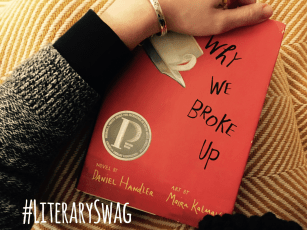
Finally, in March I will launch a new literary hashtag challenge that asks students to IMG_1801.PNGexhibit their reading lives outside of school.  Students will e-mail a Twitter or Instagram class account with literary images that include the following hashtags: #LiterarySwag (a hashtag for fashionistas who know books can serve as a stylish statement piece for any outfit), #Shelfie (a hashtag for beautiful bookshelves), #IReadEverywhere (a hashtag to highlight reading in unique places), and my favorite #BookFace (a hashtag that pushes people to be a bit more creative with their book covers).

By putting new books in students’ hands, I’m hoping to inspire a little competition, a lot of conversation, and a passion that will turn them into lifelong readers.


How do you reinvigorate students’ passion for reading?  What tips do you have to make it through the winter reading slump?


#3TTWorkshop — Making Workshop Work in AP English Part 2

This is a continuation of yesterday’s post — a conversation between Amy, AP Language teacher, and Jackie, new AP Literature teacher

Do you think it’s important that students read classic literature in an AP class?

Amy:  In an AP Literature class, yes. In classes leading up to AP Literature, yes, in sound bites and shorter texts. However, balance is key. Do we give students some say in what they read for our classes — not just what they may choose to read on their own? Are our students reading and growing as readers? Do we approach the text with the goal to help them do so, or do we approach the text and teach the book instead of the reader?

In a conversation the other day, one teacher said she likes to use classic literature because the conversations around the complexity help even her struggling students learn. Of course, that is probably true, but learn what? Those conversations will not help those students become better readers. The only way to become a better read is to read. If students are not reading the books we choose, we have to be okay with that. We have to admit that perhaps our goals for that specific unit, and that novel, are different than choosing the book because we know all students will read it. We have to decide we are okay will students not reading. I wrote a pretty long post about this whole debate here.

Jackie:  In AP Literature, yes, my students must read classic literature.  Because the AP Literature test Jackieclassroomboysis centered on the canon of “higher literary merit” books, I do teach set texts like Invisible Man by Ralph Ellison and Othello, but I stress from the beginning that in this course we are continuing to develop our reading lives as both academics and hobbyists.  Fortunately, many of my students arrive at my door with a passion for reading, but as I saw at the beginning of the year, far too many of them haven’t read a book for enjoyment since their freshman year.  Their lives become too busy and the first thing that seems to go is reading.

In turn, while I teach multiple whole class texts to fulfill the needs of the test, I also make space for independent reading.  The vast majority of my AP Literature students are seniors, and I know that this is their last English class before they move onto college.  In turn, my greatest goal beyond providing them with the necessary skills for deep critical thinking, is to reinvigorate their passion for literature and love of books.  

Where does teaching writing fit into your AP curriculum?

Amy:  I tell my students:  Ours is primarily a writing class. Before we even get settled in, students know they will write a lot — in all kinds of different modes and to a vast audience they build themselves. When I first changed my approach to teaching, I began with writer’s workshop. I’d heard Penny Kittle present, giving ideas from Write Beside Them, and that book became my curriculum guide. Today, I urge teachers who are thinking of shaking up their teaching, to take the first wobbly step into writer’s workshop. Depending on your book shelves and your library, it might be easier. Of course, it depends on your own confidence, too. If a teacher isn’t comfortable teaching writing, it’s probably because she hasn’t practiced being a writer herself. That has to be step number one. Write. Write beside your students so they see you struggle. Read articles and books on writing by writers. I’ve been reading the works of Donald Murray, a suggestion given to me personally by Penny Kittle. Murray’s books have enriched so many aspects of my writing life — and my teaching life. Try Learning by Teaching, and you will know exactly what I mean.

Jackie: It’s funny that you say your class is primarily a writing class; for me, AP Literature is primarily a reading class.  At the beginning of the year, I challenged my students to read 25 books…and I don’t just mean books of higher literary merit.  I wanted students to fall in love with reading again, which can be quite tricky when it comes to a class centered on analyzing books.  Even today during a mid-year progress presentation, a student talked about how he initially felt guilty picking up a YA book, but how this book helped him fall in love with reading again.  As you said, I too practice my craft alongside my students, only this year, it’s all about reading beside my students, which I do every year, but it’s fun to analyze many of the pieces for the first time with my students.  I don’t hold back when it comes to admitting my own questions about a text.  Learning beside my students makes the social process of the workshop model that much more authentic.  

Amy: Besides teaching my students to write arguments, since that is what the AP exam is all about, I also teach my students to write everything. We start with narrative, move into information, determine the difference between persuasive and argument, and practice research and synthesis as we go. My students write on their blog, usually about topics they read about in the news, although I’m going to try to mix this up in the spring and open their topics up to ones they find in their independent reading.

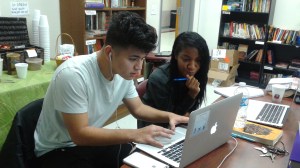
Diego and Tia deep into discussion around revisions.

Diego and Tia deep into discussion around revisions.

Blog writing is practice writing. I read as many posts as I can get to, and I try to leave feedback that helps the writer grown. The whole process starts out rough. Students think they they can pour out their thoughts on the page and then publish without doing much revision. We talk about this. We talk about audience, purpose, form. We even explore what Bloggers do to appeal to their audiences, and we try to build a readership (although I need to do a better job and take more time on this.) The whole point is to expand the classroom — to give my readers a reason to write that is other than Mrs. Rasmussen said so. Does every student buy in? No, but I get many more students to buy in to becoming writers, and many of them ask me if they can write on their blogs more than I require.

Of course, we also move through process papers, using mentor texts, studying the moves of writer’s, mirroring and modeling his or her craft, practicing revision and revision and revision before finally publishing. This year we’re writing about four of these essays a 9 weeks, which isn’t as much as I would like, but it’s a good amount for my writer’s this year.

Jackie: I am building from the bottom up this year.  With the help of a phenomenal mentor, Sheridan Steelman, I am learning how to marry the workshop classroom with the traditional AP Literature curriculum.  AP Lit is all about recognizing the beauty of language and the craft moves an author makes as they frame an idea or concept.  I’m that weird teacher that is so moved and excited by my students recognition of beauty in a piece that I jump out of my chair and cheer.  It’s okay though, I’m surrounded by word nerds!

During the first half of the year has involved analyzing writers’ craft to gain a better sense of the author’s goals and purpose.  We do write plenty of analysis essays, some being short timed pieces while others are lengthy explorations of deeper themes.  We also co-write papers in small groups, which forces students to rely on one another as they tackle the writing process.  Next semester I look forward to exploring more creative writing outlets as students mirror some of the craft within their independent novels.

Above all, my favorite writing my students do is the writing in their critical reading notebooks.  I love thumbing through the raw reactions to students’ YA literature and personal reading novels as well as the the pages of scribbled notes on characters and connections from their novels of higher literary merit.  
Join the conversation. What ideas do you have for a balance of choice and required in an AP English class? How do you manage the writing?

#FridayReads I Want All My Students to Experience This Kind of Reading

I’m always a bit nervous about how to introduce the volume of reading we will do in my AP Language class. Although students have heard that AP is “hard,” they don’t really know what that means until they start to see some of the texts they must read, understand, unpack, and analyze.

The biggest problem with all this reading:  most 16-year-olds are not readers. At least not when they come to me. (They do change.) Somewhere along their educational journey, the love of reading has gone by the wayside. Most tell me in our very first conference that they used to love to read. Few can tell with any specificity why they stopped. (I have my own theories.)

I’m constantly thinking of ways to help my readers fall in love again. If students are not reading, they are not growing as readers. It’s pretty simple logic.

And frankly, I want to live in a community of people who read. My current students will live on my street, work in the shops I patron, send their kids to my new grandson’s school. I want to be surrounded by families who enjoy literate lives because their lives will rub shoulders with mine.

Literature could change the world if we let it — if more people read it.

If we encourage what Louise Rosenblatt calls a sense of emotion, an aesthetic experience, in our young people, more of them would read. Rosenblatt explains how our readers need transactional experiences with the books they read:

“The transaction involving a reader and a printed text … can be viewed as an event occurring at a particular time in a particular environment at a particular moment in the life history of the reader. The transaction will involve not only the past experience but also the present state and present interests or preoccupations of the reader.” It’s like the letters on the page come to life, and the meaning of the words dance into the reader’s mind and heart. She has an experience with the text that remains long after she closes the book.

I want all of my students to experience this kind of reading.

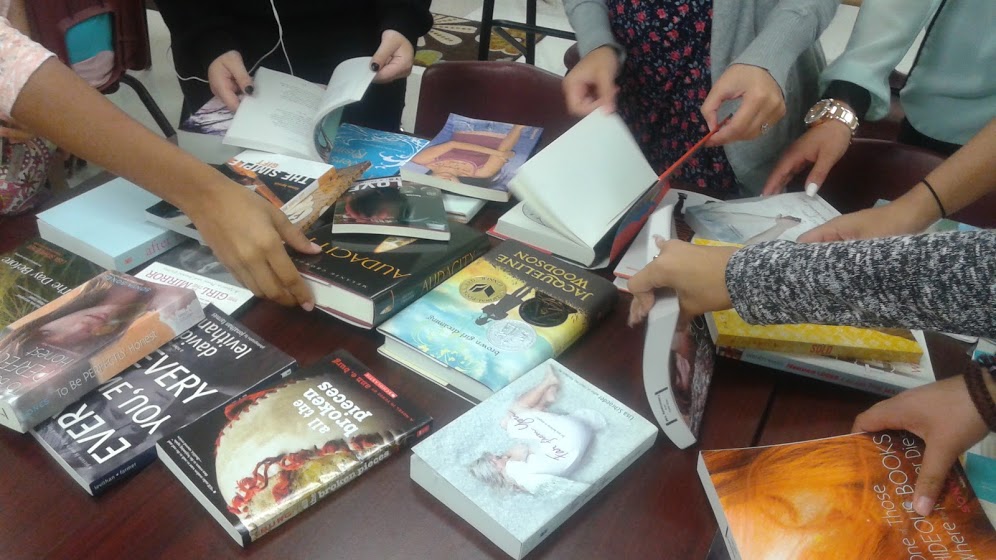
novels in verse 1So the first week of school I opened packages. Thanks to Donors Choose I had package after package arrive at my classroom. Each packaged filled with brand new novels for my brand new students. Most of them novels in verse — a powerful gateway back into reading with next to no stress. Few words on the page, and engaging story, vivid word choice, and a storyline brimming with emotion.

I book talked Chasing Brooklyn. It found a home in eager hands, as did To Be Perfectly Honest, The Crossover, Like Water on Stone,  My Book of Life by Angel, and many more.

If you’d like to build your Poetry shelf, or just add novels in verse to your classroom library, here’s a sampling of the books sweet donors gifted our classroom with this fall:

Like Water on Stone

The girl in the Mirror: A Novel

Audacity

Two Girls Staring at the Ceiling

The Red Pencil

The Vigilante Poets of Selwyn Academy

Perfect

October Mourning: A Song for Matthew Shepard

To Be Perfectly Honest: A Novel Based on an Untrue Story

What My Mother Doesn’t Know

The Simple Gift

The Secret of Me: A Novel in Verse

The Crossover

One of Those Hideous Books Where the Mother Dies

Every You, Every Me

Brown Girl Dreaming

I Heart You, You Haunt Me

Sold

Heaven Looks a Lot Like the Mall

Love, Ghosts, and Facial Hair

All the Broken Pieces

Geography of a Girl

Who Killed Mr. Chippendale?

(Note:  Shana’s the expert on building a classroom library by getting donations. Read about how she does it here. She’s got more ideas than just Donor’s Choose for books.)

Share your ideas on helping students have personal and meaningful experiences while reading…

©Amy Rasmussen, 2011 – 2015

Mini-Lesson Monday: What Will You be Book Talking?

IMG_20140903_204732

At the very beginning of the year, I relish in choosing the books that I want to expose students to via Book Talks to hook ’em, spark an interest, or at the very least; have them raise an eyebrow.  With over 3,000 books on our lending library, it can be a daunting and downright overwhelming process for reluctant readers to choose a book to kick off the year. To start their reading journey.  To be brave enough to try something they haven’t before. To simply engage in the process.

Sometimes a mini-lesson is about exploration; such is the case as students are trying to find their way through the minefields of endless books.  While it’s important to educate students on skills and techniques; it’s also just as beneficial to teach them how to authentically explore letting their interest and intrigue guide their process.

So, we pull back and take it slow…

Objectives – Using the language of the Depth of Knowledge Levels: Students will draw from their own interests and personal experiences to predict the literature that will capture their attention and support their literacy growth.  Students will assess their reading fluency and stamina through analyzing their reading rates, commitment to completing books, and data that supports their movement.

Lesson: To kick off the introduction to the library, I choose a few pieces to Book Talk – share an excerpt, a few paragraphs, sometimes a page or two…but nothing too long.  I keep it short.  To keep the energy high and interest levels peaking, I want the process to flow and be completely full with variety.  (After all, at the beginning of the year, I am unfamiliar with who many of my students are as readers.)  I ask students to jot down titles in their Writer’s Notebooks that have caught their attention as to keep them in mind – now or in the future.

Next, we physically tour the library where I expose students to the themes (not genres) that categorize our books.  Fun ones such as:  No Sleep Till Brooklyn (compliments of the Beastie Boys – books on our favorite borough), Behind Barbed Wires (Holocaust affiliated literature), A Day in the Life (stories of all kind)…  Along the way I show students where I grabbed the books that were Book Talked.  This is essential because, if students are interested in a particular piece, this process provides them with a focus.  With so many books to choose from, initially narrowing down their interest to a section or two makes the process manageable…and quite enjoyable.

Once we’ve toured our library, students are given time to explore.  They choose books that have caught their attention.  Eventually, stacks of books are taken off the shelves and brought back to our tables. Students are then given an opportunity to interview their books of choice by having time to explore them – covers, flaps, table of contents, page 107; whatever they are drawn to.

To guide students along in this process I also provide them with The Six Steps to an Effective Book Interview:

1. Jot down the title and author of the book.

2. Study the cover.  Jot down some of your thinking… What do you think this piece may be about?  What do the colors and visuals represent?  Does the cover alone capture your attention?

3. Read the back of the book or the inside flaps.  What is this book about?  What is intriguing or off-putting about this book?  What questions do you have?

4. Open the book to any page of your choosing.  Read three consecutive pages.  

5. What do you foresee being an obstacle when reading this book? (Language, vocabulary, author’s point of view, etc.)

6. Are you interested in reading this book either now or in the future? Will it be going on your Next-to-Read List?  Explain your rationale.

In the meantime, I am conferring with students all over the room: the ones at the library scoping things out, students who seem a bit disengaged, those who have chosen a piece at lightening speed, ones already interacting with The Book Interview and everyone in between.  There becomes a buzz in the room which signifies the learning process has begun!

Before class rounds an end, I ask students to bring at least one book home with them and read for 45 minutes.  This is a process.  Some students are psyched about their choosings and others are disappointed that they didn’t find ‘the one’.  We talk it through.  It’s imperative for each student to leave with literature, yet we also leave with an understanding that if it does not feel like a right fit after they’ve had time outside of class to ‘play with it’, then we go back to the drawing board again tomorrow – knowing just a bit more about why it wasn’t the one. And the cycle of collecting data on students’ interests and needs commences.

Follow-Up: As the year progresses and students and I learn collectively what they enjoy reading (and what they are willing to be challenged by), Book Talks become more tailored to student interest. Sometimes they are done with specific students in mind, other times they are presented based on big ideas/themes (love, injustice, the power to overcome, etc.).

The beauty of this process is that although Book Talks remain a constant all year, students do not bore of them; every day they are different.  And, students become more in-tune with what they enjoy, are curious about, want to challenge themselves with, etc.  Typically by mid-year, students are no longer needing to use the The Book Interview because, by that point, it has become an innate part of their process.

What initial strategies do you instill in your classroom to make the rest of the year’s learning fruitful?