Tag Archives: AP English

Mini-Lesson Monday: Learning Concrete Details with Independent Reading

More than any other writing, I love reading my students’ narratives. We start the year with narrative for many reasons, but my favorite is that I get to know my students faster than I can get to know them during one-on-one reading conferences or during group activities and discussions.

Here’s a short list of what I’ve learned from student stories just this week:

  • several of my male students wish they had a father who showed interest in their lives
  • a few of my girls live with their fathers because of their mothers’ poor choices
  • several boys and girls journeyed long and far, walking miles through jungles, so their families could escape oppression, rape, and murder
  • many of my teenagers have experienced heartache because of love interests, friends, and family members
  • a few are still grieving the loss of grandparents, aunts, uncles, and friends who died from suicide
  • at least one young woman still holds anger toward her mom because of the way she handled a brother’s addiction and abuse

Personal and powerful, all of these stories matter. My goal as a writing teacher is to help my writers harness the words so emotion reigns in the heart of the reader. The problem?

Abstract language.

Objectives — Using the language of the Depth of Knowledge Levels: Show understanding of the terms abstract vs. concrete; in your independent reading books, identify concrete details and figurative language; analyze the effectiveness of the author’s language; revise your writing to include fresh concrete details and figurative language as you create a text that evokes powerful emotions.


Lesson
— Before the mini-lesson, students have already drafted a few pieces, narratives or poems. I abstractconcreteusually do the mini-lesson after silent reading time, but for this lesson I begin before because I want to give students a specific purpose for reading.
First, I write on the board ABSTRACT and CONCRETE and we review what these terms mean when it comes to writing. I try to use only abstract words as they begin to discuss this with me.

“Awesome, you might get it,”

“Wonderful, I think you know what I mean,”

“Hey, that’s pretty good…”

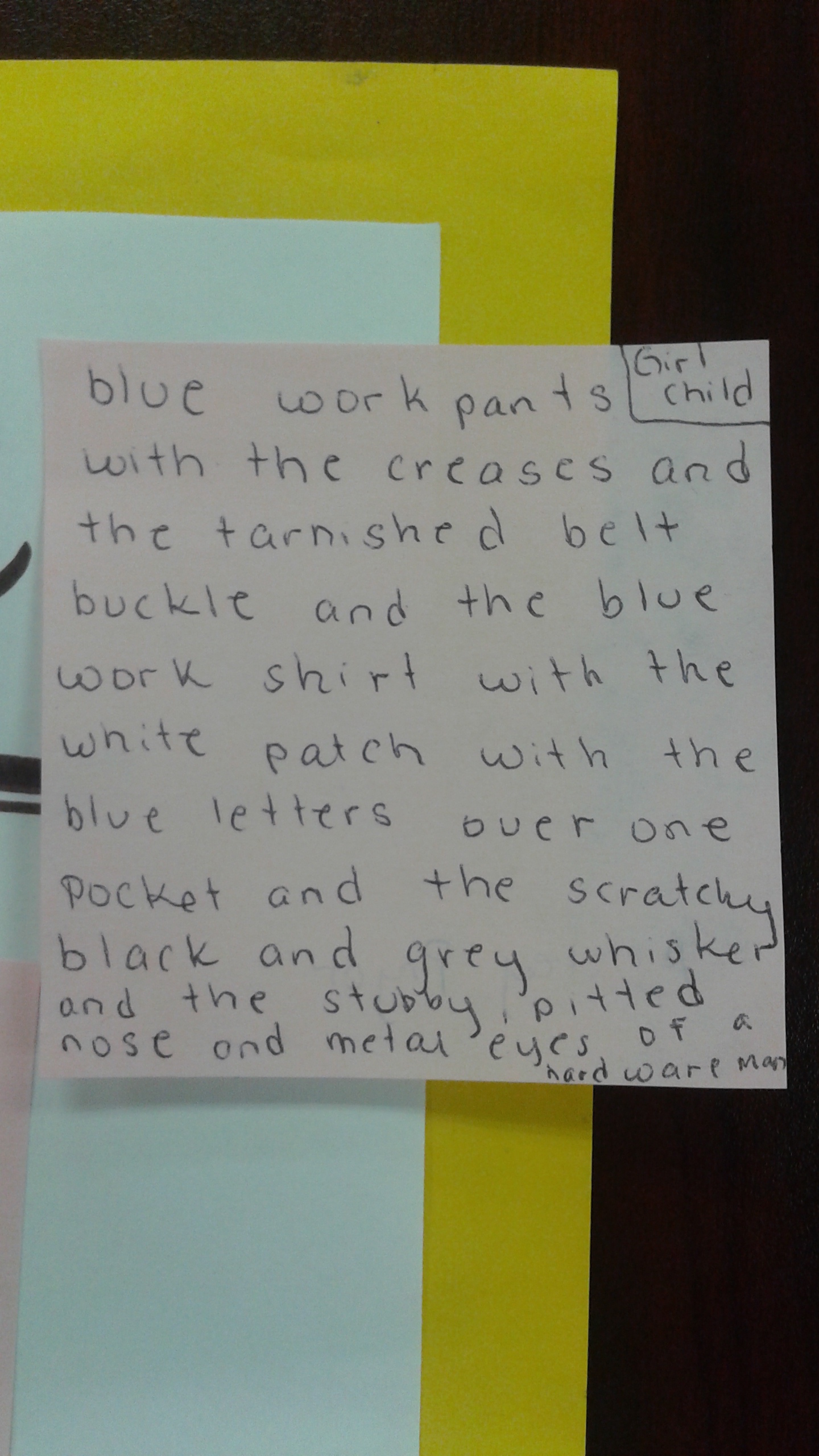
Eventually, they will pick up on what I’m doing, and we make a list of abstract words. Then I give each table-group a word and challenge them to come up with a concrete description that shows us that abstract word. They get 1-2 minutes, and then we share out as I write the concrete details on the board. We discuss the difference in how an author can create emotion.

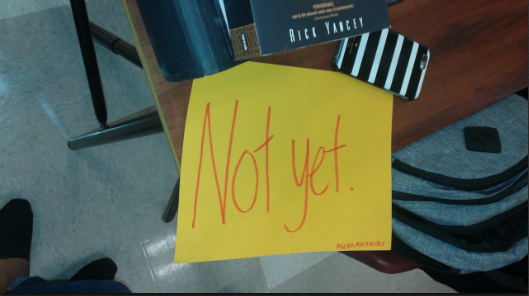
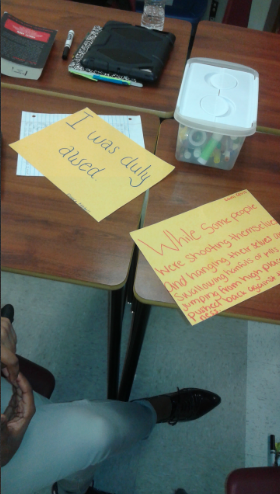
Next, I ask students to pay attention to the concrete details in the book they are reading, and I give them each a sticky note. “As you read today find at least one sentence where the author does something really clever with concrete details and/or figurative language,” I say.

Students read for 15 minutes, pen in hand, paying particular attention to the author’s craft. When time is up, I ask students to share their sentence in small groups and to analyze the effectiveness of the author’s word choice.
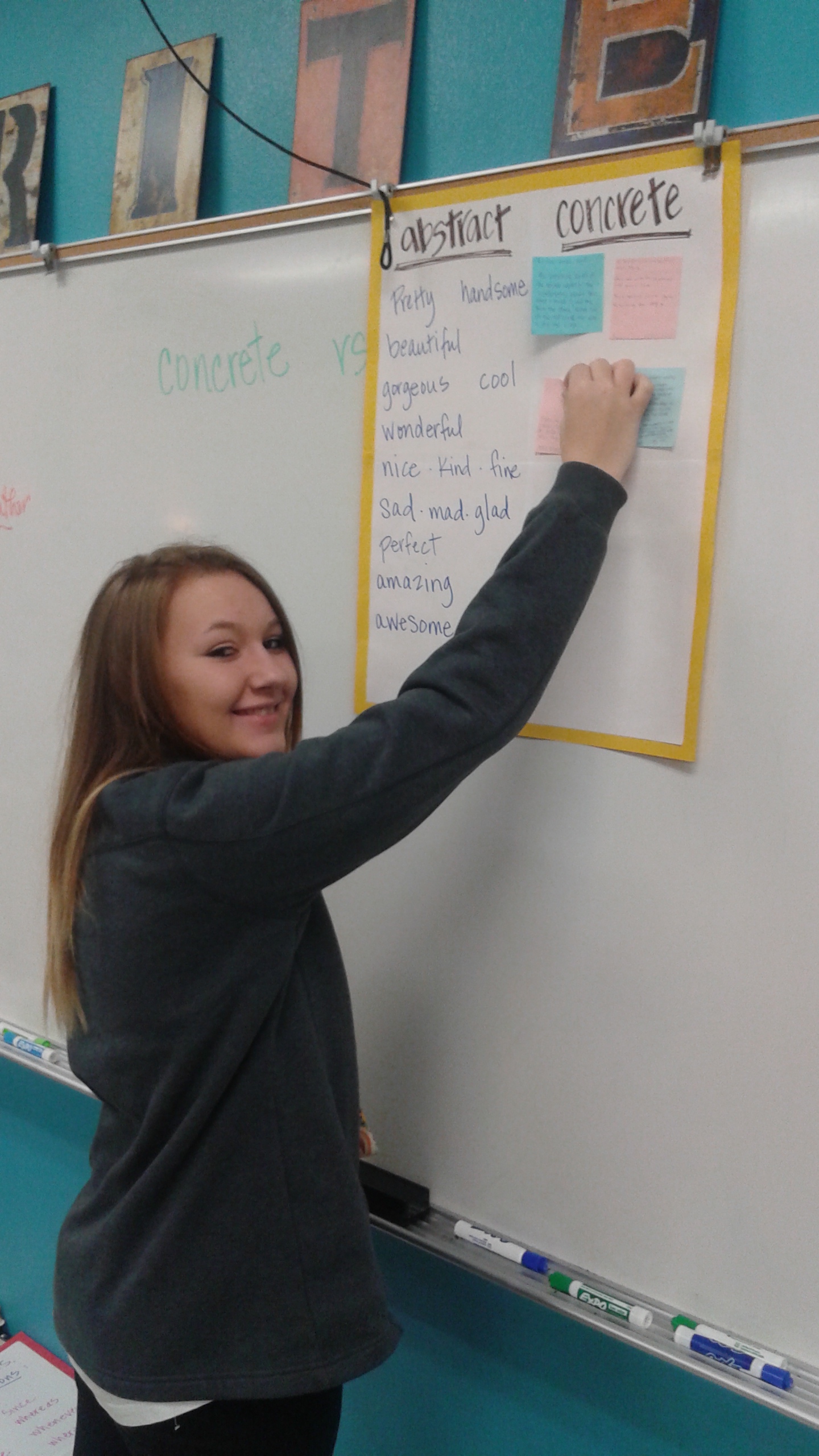
AllieTate“Think about what he’s trying to do there. Why did he mention the color of the sweater, or the smell of the breeze?” If they feel like the author’s accomplished creating emotion, they put the sticky on the board (or as in the photo here –poster).

Students need to not only recognize the details and know that they create some kind of imagery, they need to think about how effective the word choice is for what the author is doing at that moment in the story. If I can get them to start thinking about this, I can get them to begin making purposeful choices in their own writing.

Next, I ask students to search their own writing for concrete details that create images and to add a lot more. “Where can you add a phrase or line similar to what you found in the book you are reading? Is there somewhere you can add color or shape or texture?”

And we revise.

Follow-Up — When students immediately apply learning we’ve practiced using their personal reading materials, they begin to see the connections between becoming active readers and purposeful writers. This is the kind of lesson I do again and again with a different literary or grammar skills students to master. Next up:  subordinating conjunctions.

A few lines from students’ published narratives:

“Each body turned to watch as the green army, blurry, entered the gate. The ground only knew sadness and the sky transformed into a dark night, roaming like a lion.” –Tha Sung

“My first impression when I met Lucila:  petite, chunky, short red-velvet hair, wearing a sweater that covered her sins, mysterious face with a sealed silent mouth.” –Karina Rangel

“My brothers slept like angels with devilish grins.” –Geovanni Medina

Sharing Student Work — Making a Pledge to Do More

For some time now I’ve thought I needed to do more. I ask my students to write a lot. I ask them to take ownership of their process, practice their craft, take risks. I hope they will care about their audience, but unless it’s a post on their blogs (and sometimes even then) I don’t think they consider much about their readers.

My colleagues here at Three Teachers Talk and I had the idea a few years ago to publish student work on this site regularly. We planned it all out. We’d hope for student volunteers that might want to produce something like a mini-Nerdy Book Club but with student readers and student writers. Then I did a little research:

I found sites like Young Writers SocietyTeen Ink, Figment, Teen Lit, and of course, NaNoWriMo that publish the work of young writers and allow them to join online writing communities and learn about competitions, awards, scholarship, and more. This list of 40 of the Best Sites for Young Writers has even more resources.

I still want to do more, but what I need to do is introduce my writers to site like these and extend the invitation that they explore, discover, and get involved. I know a few will. Maybe many will.

In the meantime, here’s a sampling of the writing I’ve read this week. Not because I like the topic — it horrifies me on many levels — but because this writer shows heart, I want to share her work.  Read it. You’ll see why I know I need to do more to help my students write for audiences that will appreciate their craft.

Bruised-Knees by Alexia Alexander

It was a breaking point.

By the time my spoon scraped the bottom of the bowl, my face was wet with tears. I was sick, in part from eating, and in part from everything else. I had to cry quietly; I suffered silently in order to avoid questions, sometimes, even hidden behind smiles and laughter. The chocolate and caramel ice cream weighed my stomach down. I felt 200 lbs of milk, sugar, grief, loneliness, depression, cocoa, corn syrup, and artificial flavors. My entire 500 caloric intake itched in my throat. I felt heavy now. I felt worthless now. I felt defeated now. I ran as quickly up the stairs as I could, but voices, almost as loud as the screaming downstairs, followed me.

Why’d you eat that ice cream? You’ve already had enough. You’re just going to GAIN weight if you eat something like that. You can’t you even starve yourself right,” I told myself.

Staying up late reading about it, I prepared myself for chaos. Although I laid under two blankets and behind a locked door, I found little comfort. In fact, I hadn’t even kept the monsters out; they began to creep inside of my head. I spent the nights crying, reading pro-anamia blogs, drowning my ears out in Maria Mena, and looking up the most fabulous ways to destroy myself, self-esteem first.

Now getting a chance to test my research, I rushed to the bathroom, still crying. I looked at myself in the mirror; I cried even more. I was sobbing and choking, sounding like that one kid in elementary that always forgot his inhaler on mile-day. I dropped to my knees, as if I were about to pray, but I couldn’t remember what people were supposed to say to a divinity.I gripped the sides of bleach-white seats, as if my faith would be found there, and hung over the porcelain throne, like a sea-sick passenger. The bathroom became dizzy in my eyes, and the pink walls were a blur mixed in the leopard print bathroom curtain. The white tiles painted my knees black and blue and staring at them made the wave of sickness more intense. In the reflection of the toilet-bowl-water, I even looked green and sickly, but I can’t say my self-perception was quite accurate in those days.

I had screenshotted instructions on my cracked iPod screen on how to do it. I looked up everything. I needed all the how-to’s before I went through with anything. I knew I could use a toothbrush or two fingers. I knew I could make markers in my stomach. I knew how many seconds it would take. I knew that it would sting. I knew the long-term damage the acid could do to my teeth. I knew how deadly it was. I knew how sick I was.

But I continued, another event to add to my list of “First-Times.”

Slowly shoving a finger in between my lips, I danced it around trying to find the spot. I felt the tickling as I touched the dangling piece of skin. I added a finger, this time gagging slightly, but knowing no matter hard I cried, I couldn’t take my hand out. I gagged again,  bringing up the bile taste in my throat. I couldn’t choke. I had to keep going. I gagged another time, body split over the toilet as I heaved.

I had found the food that comes up almost as easily as it goes down. The ice cream coated my throat, for a second time, and it still felt cold. It masked the normal taste of vomit, gladly, and I finally felt lighter;I equated that to feeling better and didn’t think twice about why I was still crying.

Maybe you can be lovely now. See, you’re already feeling better,”  said the demons in my head, who told me things like this frequently. I tried to ignore them, but sometimes my own silent voice felt like a scream between my ears. I cried myself to sleep that night, still trying to convince myself I had done well.

I wish I had known then what I really was trying to rid myself of. I wish somewhere on that ground I really had some holy revelation, but wisdom like self-love and perseverance can only be taught from low moments like those. It took years to find what really weighed me down, more than food or fat. It took years to love myself and my body. It took years to get over the urge to skip a meal, and the shame after eating. It took years to face the demons and shut them up. But each moment that buckled me to my knees gave me strength, and brought me closer to where I am now. Moments I’d rather forget, have to remain real, so  I always remember my growth, and never repeat the past.


©Amy Rasmussen, 2011 – 2015

7 Reasons to Stop Asking about AP Test Scores

The question took me by surprise.

I’d just spent an hour or so sharing how I facilitate readers and writers workshop in my AP English Language classroom. I’d shared a video that showed my students testifying to how much they like having a choice in the books they read and why they feel like they will learn through choice reading this year. I’d shared a mini-lesson on how I teach skills using the books students choose to read, even when they are reading 30 different texts. I’d answered a variety of questions asked by pre-service teachers in Dr. Leavell-Carter’s master’s class at the University of North Texas and started to pack my things.

“What about your AP scores, did they go up?” one young woman asked, “I mean, I just think that would be a double benefit,” she said with a smile.

They say there are no bad questions, but I’ll go to the mat arguing that this is one we really need to stop asking.

I answered as honest as I could: “No. . .well, yes, when I began facilitating writer’s workshop, my scores increased double digits, but I don’t put much stock in AP scores, any standardized test scores, really, there are so many variables, you know; the students and their abilities differ from year to year, and since I’ve only taught in Title I schools where open enrollment is an invitation for all students to take AP classes with no prerequisites or even any preparation for the rigorous coursework, it’s difficult to prepare all students all the time at the same level of learning…”

Then I kicked myself all the way home. Why was I trying to justify my test scores? I’ve written about this before. I have much better proof that workshop works than any kind of testing data:

  1. Many of my students read more during the nine months they spend in my class than they do in

    from Joseph’s reading self-evaluation

    all of the 10 years of school they’ve had prior to coming to me.

  2. Almost all of my students read more books the year they spend with me than they read the year before.
  3. Many students read their first book cover to cover their junior year in my AP English class.
  4. Most students move into complex reading on their own because choice not only gets students reading; it gets them reading critically.
  5. Students tell me every year, “Thank you for allowing me to love reading again.”
  6. My readers learn to see themselves, and to see beyond themselves, by participating in book clubs with peers in non-threatening conversations about literature.
  7. My writers take ownership of their writing and compose beautifully and skillfully crafted texts.

There is no test that measures what my student come to appreciate as readers or what they come to realize as writers.

Sure, I want my students who choose to take the AP exam to do well, but I do not believe it shows what they come to understand about language. (And after scoring essays in Kansas City in June, I believe that even less.) Sure, I’ll keep encouraging my students to take the exam, but I believe most of them will benefit from taking freshman comp in college — even if they read and write well enough to score a 5. At least one English professor agrees with me:

“AP-credits are not always an accurate gauge of student learning. High AP scores in chemistry, for example, may indicate that students understand the basic concepts, but that doesn’t mean they know what to do at a laboratory bench.” (Bobby Fong, college dean and English professor).

I say what’s true for chemistry is also true for English. That doesn’t mean they know what to do when writing an essay for graduate school or a blog post for their employer or reading a report for their business or a decree in a divorce settlement.

Let’s focus on the skills our students need to be successful in the lives that lay before them.

For me, readers and writers workshop helps me do that.


©Amy Rasmussen, 2011 – 2015

Developing Habits of Mind Through Readers and Writers Workshop

Grades might be the death of me. Not grading — I can handle that. It’s my students’ obsession with grades that is beginning to break my already aching back.

Right after we’d spent 75 minutes of our 85 minute class period color-coding our best drafts and revising what we thought was pretty good writing to craft better writing, a student — we’ll call him JWP — asked me if I would read his essay.

I thought he asked for a writing conference.

Not quite.

“Sure, what would you like me to look for in your essay?”

“Um, I don’t know,” he said, “I just want to know what grade I’ll get on this.”

“But, you haven’t done anything with the ideas you got in the discussion today,” I said.

“Yeah, I know. But I really just want to know if this will get me a passing grade.”

I can feel my breathing change. I sigh.

“I am happy to read your essay,” I said taking the paper, noticing the green and red marks from our color-coding session but no blue, orange, or purple. I tried to think fast, not sure of the best way to bridge the obvious gap:  Writing for a grade versus writing to convey meaning because we care about our message and our craft.

I hope what I said to JWP made a difference. I thought of a million things to say but knew he wasn’t in a place to hear anything more that this:  “Are you proud of this piece? Does it represent what you’ve learned about the writing process?”

I guess I’ll know if what I said made a difference when JWP turns in his essay today.

How do we get students to care more about the learning than about the grades?

I believe it has to do with helping them change what they might believe about school. This is hard. My students are juniors in high school with 11 years that have shaped their beliefs. Somehow I have to get them to want more.

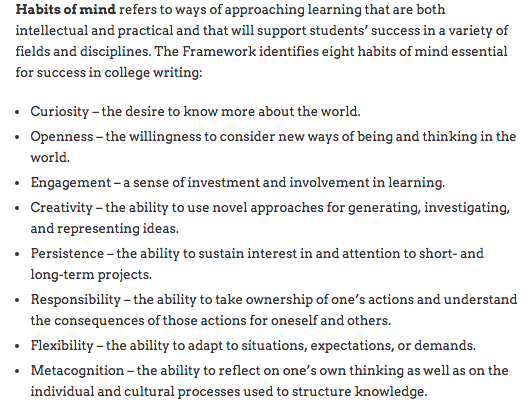
Searching the NCTE website for info unrelated to the topic of this blog post, I found this page, which discusses the Framework for Success in Postsecondary Writing, a collaborative piece by NCTE, NWP, and representatives from Council of Writing Program Administrators that details what it means for the 21 Century student to be “college ready.”

from Framework for Success in Postsecondary Writing

from Framework for Success in Postsecondary Writing

The aha hits me:  These habits of mind are what my readers and writers workshop instruction is all about:  a “way of approaching learning that is both intellectual and practical and that will support students’ success in a variety of fields and disciplines.” At least I try to make it so.

My students need these habits of mind. They need them so they can be successful in college and careers years after they leave my classroom. They need them if they are to be the change agents in the workplace and the world they inherit.

I am persistent. Little by little we embrace this thinking in my classroom. I keep inviting and encouraging.

“Make choices,” I say. “Choose the books you read and the topics you write about. Let’s think about issues that matter to us. Let’s experiment with risk.”

I meet with my learners to help them think through their thinking, conferring with every student as often as I can.

We explore different texts we can write and different authors we want to read. We talk about our reading experiences. We share our writing and our writing processes because everyone has a different way of practicing their craft. We discuss complex texts and practice complex thinking. We choose projects that challenge our comfort and lead to deeper learning.

Many students quickly adjust to the freedom and uncertainty of workshop. Others struggle. Like JWP.

He’ll get there — we have until June.

Do you have JWPs (Just Wanna Pass) or, on the other end of the spectrum, those students who grub for grades? How do you deal with the grades over learning conversations? Please leave a comment and join this conversation.

Cliché College Essays and Why I Hate the “Three Ds”

IMG_0040On the Monday their essay was due, I handed out a rubric. “I cannot and will not grade you on this essay,” I said to my AP Literature class.

In all honesty, I don’t care what they get for a grade on this piece. After days, weeks, and months of toil, a number cannot and will not determine the actual value of this paper: the college essay.

I have a love-hate relationship with the college essay. I love that students have the opportunity to express themselves through writing and that they are encouraged to provide personal stories. I especially love the emphasis on creativity that draws them away from the rigidity and structure of standardized tests and check-box-surveys. What I hate is the overwhelming weight that accompanies telling “your story,” the crowning piece of one’s 17 years of life.

My first year of teaching, I fretted over college essay advice. I told students to steer clear of the three Ds—death, disease, and divorce—and to instead explore a wider variety of ideas that included mundane moments. I wanted them to beware the standard cliché essays of human suffering.

What I found was in restricting these three topics, I also restricted the very stories that shaped these students’ identities. After all, our students are still teenagers; they have many more stories to live and we mustn’t undermine those stories of death, disease, and divorce that have framed their present reality.

Sarah’s essay on her father’s death and her inability to hold his hand during his last moments tears at my heart every time I read it, and I have been working with Sarah on this piece for a year. She writes:

It is nearly two years after my father has passed, and my inability to hold my father’s hand on his deathbed still haunts my dreams and consumes my thoughts. I am sixteen years old, I have done regretful things in my life, but the singular moment I regret most in my life is not holding my dad’s hand during the one time he needed it to be held by me.

Sammie’s poetic piece on coping with her best friend’s severe eating disorder and eventual hospitalization and rehabilitation has a place in Sammie’s college folder. Maddie’s experience meeting her mother’s boyfriend for the first time after the shock of her parents’ divorce belongs filed alongside her SAT scores.

Instead of limiting their stories or categorizing them as cliche, we, as teachers, must help our students explore these experiences through expert narration and craft. After all, doesn’t the beauty in literature rest in its familiarity? Its common story? Its trumpeting of empathy, underdogs, and resilience?

How do you approach college essays, and how do you help students who are struggling with essay topics?

Mini-Lesson Monday: Sentence Boundaries and Adding Some Variety

Sorry, I forgot to record the book’s title.

Even the students in my AP English class struggle with correct punctuation and varying their sentences. In one-on-one conferences, I’ve started to remind them more often to pay attention to how the author of their self-selected books craft meaning. I used to get glossy-eyed blank stares, but students are beginning to understand that writers make intentional moves to draw us in, and keep us within, the pages of their books.

“As a writer, you must do that, too,” I remind them.

This lesson grew out of a conferring conversation with a student who told me:  “I just do not understand all the comma and semicolon stuff, but I have a pretty good idea of what I want to say in my writing.”

Objective:  Using the language of the Depth of Knowledge levels, students will recognize the sentence boundaries and the variety of sentence structures in their self-selected books. They will make observations about the author’s use of punctuation in these sentences, assessing the writer’s effectiveness in crafting meaning. Students will then use their author as a mentor as they apply their knowledge of sentence boundaries and sentence variety and create, revise, and rewrite sentences in their own pieces of writing. Finally, through peer-to-peer conferring, students will evaluate the accuracy and effectiveness of one another’s sentences.

Lesson:  Every student needs their independent reading book. If a student is reading a book of poems, or a graphic novel without many sentences, you will want to supply a stand in book for this lesson or ask the student to find a book she’s previously read.

Tell students that you’ve noticed in their writing that they are ready to make their sentences more sophisticated. Correctness is one way to do this. Varying the length of sentences is another way. Instruct students to turn to a random page in their books, say page 51. Ask them to read the page in search of one long sentence and one short sentence. Give students sentence stips or blank paper and have them write out the sentences they find in their books. They should spell and punctuate the sentences exactly like the author does.

sentence boundaries lessonNext, in small groups, ask students to discuss with one another the structure of the sentences. They might put all the short sentences together and compare them. Then they might put the long sentences together and look at how the authors use commas to separate ideas. Some students will know more about grammatical terms than others, and that is okay. The idea is to get students noticing how writers compose within the boundaries of standard English and to get them to understand how punctuation works to craft meaning. Ask questions that help them discover why boundaries and variety work to produce effective writing.

You may choose to have students imitate the sentences they chose from their books. Imitation is a useful tool for many writers.

Using self-selected books, not just to practice wide reading, but to teach students to read like writers, adds an important element to the workshop classroom. Our writing improves when we take the time to notice and apply the skills of professional writers.

Follow up:  Have students review a piece of their own writing. The writing can be in any stage of the writing process. They should study their writing to evaluate their use of sentence boundaries and variety. Encourage students to revise their writing as necessary, remembering to use the author of their books as their mentors.

Extension:  This lesson works to have students study leads, similar to what Jackie wrote about in the mini-lesson Pick up Lines and Leads. It also works to have students search their books for sentences that include imagery.


©Amy Rasmussen, 2011 – 2015

#FridayReads — Oh, Mercy! Have I got a plan for this mentor text

Usually I read about four books at a time. This makes for a mess on the bedside table, the coffee table, the kitchen table. I rarely use bookmarks, which is a shame because I have quite a lovely collection.

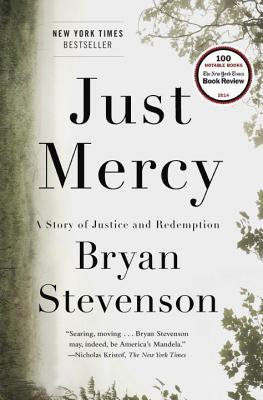
I end up leaving books split open and sound asleep right where I left them –sometimes just so I can remember the parts I know I want to use in class. I refuse to read on until I capture the sentence or passage that gives me pause. Such is the case with my new now bent-spine-copy of Just Mercy, a Story of Justice and Redemption by Bryan Stevenson. I’ve been stuck on page 18.

Here’s a portion of the passage I will use with my AP Lang students. You will, of course, find the rest of it when you buy the book, or here.

     When I first went to death row in December 1983, America was in the early stages of a radical transformation that would turn us into an unprecedentedly harsh and punitive nation and result in mass imprisonment that has no historical parallel. Today we have the highest rate of incarceration in the world. The prison population has increased from 300,000 people in the early 1970s to 2.3 million people today. There are nearly six million people on probation or on parole. One in every fifteen people born in the United States in 2001 is expected to go to jail or prison: one in every three black males babies born in this century is expected to be incarcerated.

     We have shot, hanged, gassed, electrocuted, and lethally injected hundreds of people to carry out legally sanctioned executions. Thousands more await their execution on death row. Some states have no minimum age for prosecuting children as adults; we’ve sent a quarter million kids to adult jails and prisons to serve long prison terms, some under the age of twelve. For years, we’ve been the only country in the world that condemns children to life imprisonment without parole; nearly three thousand juveniles have been sentenced to die in prison.

     We also make terrible mistakes. Scores of innocent people have been exonerated after being sentenced to death and nearly executed . Hundreds more have been released after being proved innocent of noncapital crimes through DNA testing. Presumptions of guild, poverty, racial bias, and a host of other social, structural, and political dynamics have created a system that is defined by error, a system in which thousands of innocent people now suffer in prison.

…..

     We are all implicated when we allow other people to be mistreated. An absence of compassion can corrupt the decency of a community, a state, a nation. Fear and anger can make us vindictive and abusive, unjust and unfair, until we all suffer from the absence of mercy and we condemn ourselves as much as we victimize others. The closer we get to mass incarceration and extreme levels of punishment, the more I believe it’s necessary to recognize that we all need mercy, we all need justice, and — perhaps — we all need some measure of unmerited grace. 


Before we ever read the text, and I did pull much more of it than I’ve posted here, we’ll spark our thinking with an image like this, posted at The Sentencing Project, and then write our initial responses in our writer’s notebooks:

Next, we will TALK. I know my students will want to share what they think about this graphic. Many will identify personally with it because they know a family member or a friend who’s served prison time.

When I introduce them to Stevenson’s text, I’ll give them a purpose for reading — besides just comprehending the message (identifying the purpose is a breeze since he tells us the reason he writes the book) — I want my students to notice the structure, the progression between ideas, the repetition and patterns they will see in the language. All the clues that build the tone.

I will ask them to mark the text, noting their thinking about these things. Without a purpose for reading, too many of my students struggle with the stamina they need to make it through even a page when I ask them to read critically.

Next, we will TALK. Talking will help some students understand what they read. It will help other students clarify their understanding. Some students will have noted what I asked them to notice as they read. I will rely on them to help the others — skill level is just one way my students are diverse.

I will also hand them a stack of questions that prepare them to write. They will read something like this:

What do you know about the writer based on what he writes?

What is the Stevenson’s purpose? Why does he come out and tell us so plainly?

What are the facts in this piece? What are opinions? How do you know?

What do you notice about the structure, any patterns, repetition? What do they do for the message?

How does Stevenson move between ideas?

And then we will write. Maybe I’ll give a prompt like this: Based on the text, and our discussion, is Stevenson’s opening argument effective, why or why not?  Maybe I’ll ask students to come up with their own analytical-style question to respond to. (I like this idea a lot.)  [see Talk Read Talk Write]

That’s probably enough for one class period, but my mind is still stirring:

  • What if I ask students to problematize the issue? Who are the stakeholders? Think all the way around the issue. Why do they care? Why do we care? What kinds of questions do we have about the claims Stevenson makes? What kinds of evidence do we need to convince us they are valid? How and when could anything regarding this issue change?
  • What if I ask students to identify just one of Stevenson’s claims and then research it? I assume the author provides support throughout the book. I’ll know when I keep reading. But what if students did a bit of research and then collaborated on substantiating Stevenson’s claims. Collaborative writing can be a powerful learning experience.
  • What if I ask students to brainstorm other issues Stevenson’s text suggests? We could probably create a pretty elaborate bubble map of ideas. These could lead to student choice in research topics.

What do you think? Any other ideas?

©Amy Rasmussen, 2011 – 2015

Are you noticing what matters?

I learned a valuable lesson when my children were young. I do not remember the speaker who said it, nor do I remember much of anything else he said. I do know that two words changed me as a parent.

Notice them.

Notice your child when he enters a room. Acknowledge him with a hello, a question, a compliment. Non-threatening. Kind. Seems rather simple, doesn’t it? I remember thinking: “Sure, I can do that. no big deal.”

Oh, but it is — a very big deal. It’s a big deal to the child who grows in confidence, knowing we are intently aware of him as a person — an individual who matters when he walks in the room.

While i’ve been thinking and writing about conferring with students, I’ve done a lot of thinking about what it means to notice, really notice, the students in my charge. Do I take the time to speak to every student individually? What about my body language — am I open and approachable? How about eye contact — am I making it?

Last week I collected my students’ writer’s notebooks. Marked with a sticky note for me to read and scrawled on the back of one student’s writing territories was an entry that gave me pause and broke my heart. It said something like: “I remember asking my grandma about why my mother left. All she would say was that my mom said she could always have other children.”

Just that morning I’d been short with this student for not completing yet another assignment. I bit out a plea to get the work done without once considering why she’d not done it. I made it about the assignment instead of about my learner. Sadly, I do this often and have to continually remind myself of what matters.

Noticing the girl with the dark brooding eyes matters.

And once again I vow to be better than I’ve been.

from BrainPickings.org


[student writing used with permission]

©Amy Rasmussen, 2011 – 2015

Part I. Blogging with My Writers and You Can, too.

“Mrs. Rasmussen, can we write on our blogs more than just for assignments for class?”

After we set up our personal blogs, I received a similar message from several of my students. Of course, I replied, “Yes.” (Inside I yelled “YAY!!” and danced around the room a few times.)

Students want to write other than when I assign it. Wow.

And we are off…

I doubt anyone would argue that digital writing is important. Most of our students do it anyway:  texting, tweeting, commenting on YouTube videos. We might as well help them do it well.

We might as well help them share their ideas, opinions, stories, and arguments in a way that allows them to show their learning — and build their credibility as citizen scholars. That’s what I want for my students anyway. I want them to know that their voices matter. Their writing matters.

They have to have an audience other than me to truly understand that. That’s why I blog with my students.

Every year I ask student to personalize an online writing space. I’ve blogged with students when we had to reserve the writing lab. I’ve blogged with students when I had 12 computers we shared in my classroom. Another year I had an ipad cart with 30 devices. Now I’m at a 1:1 ipad school. It is easier, but it is not necessary.

If you want students to blog, you can find a way to make it work. I urge you to not let the lack of technology prevent you from at least doing something with digital writing.

Every year I try something new to help students take ownership of their blogging.  I’ve learned a few things about setting up blogs and getting students to write on them.

blogwordle

Here’s my blogging basics in a nutshell:

  • Build a case for blogging. I read “Blogging is the New Persuasive Essay” a few years back, and it helped me wrap my head around the how and why blogging works for the 21C student. I’ve even used this text as a reading piece with my students. They read, determine the author’s argument, and then have to defend, challenge, or qualify it. I can see pretty easily if a student is climbing on my blogging training willingly.


  • Conduct a little inventory of the blogsospere. Simply ask students to type “most popular blogs” into Google. Then ask them to do a bit of light reading. They might find “Top 15 Most Popular Blogs,” and they might recognize a few. They might find “The Top 10 Top Earning Bloggers in the World,” and you might see some jaws hit the floor. They might find “The 10 Most Inspirational Bloggers in the World,” and if we give them time to explore and read and think and play with the idea of become a blogger, we might get lucky, and our students might think: Hey, I can do this. This could be me!


  • Choose a platform. I’ve use Edublogs and WordPress in the past, and this year I am using Blogger because in my new district all students have google accounts. I’ve had no trouble learning blogger. It’s a Google product, so I figure if I cannot figure something out — or if kids can’t — we “Google it.” There’s a handy chart in this article that compares different blogging platforms used in education. You can decide for yourself which will work best for you and your students.


  • Take the time to get everyone set up. In year’s past I’ve expected students to know more than they do about using technology. Not every student is confident on a computer. Texting, yes. Applications, not so much. This year we took it slow. I created my own Blogger account and then modeled creating a new blog step-by-step in front of each of my six classes. I talked them through every step of their set up. Then I shared these instructions in writing, which include how they will be assessed for creating their blogs and their first blog post.


  • Show off students’ initial work. Besides asking students to follow each other, I think it is important to project their blogs and let everyone see what the class has created. Many students decide to change titles or themes or add different gadgets after they see the work of their peers. Here’s a few of my students’ blogs:  Jessica Ortiz, Mary SassamanDianna Sosa, Beatriz Vargas, Allie Tate.  (I do have male students; however, I have many more young women this year than young men. I just haven’t managed to follow all my writers’ blogs yet.)


Watch for Part 2 soon. I’ll write about how my students and I decide what we’ll blog about and what those choices look like in our AP English Language class.

Please share your questions about student blogging in the comments section. I’ll do my best to answer.


©Amy Rasmussen, 2011 – 2015

A Writing Workshop Lesson: Inspirational Speech

Last week I posted a mini-lesson about using student sentences as models for writing. Katie Bills-Tenney left this Screen Shot 2015-09-13 at 6.12.39 PMcomment. And I asked if she would write a post about her lesson.

She did even better:  she wrote on her own blog, complete with a lesson outline and student writing.

I love what she does here — and what her students do here, too.

Thank you for letting us see inside your classroom Katie.

Follow Katie at @Katieswrite