Why Workshop? Because Kids Deserve It!

When I first watched the Rita Pierson TED Talk titled Every Kid Needs a Champion, I found myself shouting, “Yes! This lady gets it!”  Our job is to help kids feel connected at school- to ensure that kids feel safe and taken care of while also giving them the best educational experience possible.  This TED Talk catapulted me into thinking- How Screen Shot 2018-03-07 at 10.40.19 AMcan we do things even better? How can we reach more kids?  How can we ensure that every student feels connected to their school and their teacher? Don’t misunderstand me- I work with the best teachers around, who love kids and are passionate about the work they are doing in their classrooms.  However, we can always do more and get better, right?

I am a high school administrator, that is lucky enough to work with the English department.  We serve almost 3,000 students on a daily basis. It’s my job to ensure that every kid has a champion, someone they trust and feel has their best interest at heart.  It’s also my job to ensure that we are providing the best educational experience possible for our students because our students deserve that. James Comer said, “No significant learning can occur without a significant relationship.”  That’s where the workshop model comes in. The workshop model provides us with the opportunity to give students choice in what they read and an authentic environment to write about things that hold value to them. It provides an avenue for our teachers to get to know students on a deeper, more personal level because students are ingrained in work that matters to them.  Teachers are able to work one-on-one with students through reading and writing conferences. Teachers are able to have in depth conversations over current events through philosophical chairs and classroom debates. Students talk about what they’re reading on a daily basis. Students improve their writing because they have great mentor texts and a teacher who is writing with them and modeling writing for them.  In short, we know our kids better because we have implemented the workshop model.  We are also able to teach all the skills we need to through choice reading and providing authentic writing opportunities for our students.

I love Amy Rasmussen’s blog post, So You Don’t Think Workshop Works?  5 Reasons You are Wrong, because she makes key points about why the workshop model can and does work in classrooms everywhere.  I found that as we made the shift away from a more traditional classroom structure to the workshop model, we encountered some people that questioned its effectiveness and its validity.  Some questioned how it would impact our state testing scores (they’ve gone up and we are closing the gaps for our students), some questioned whether students would actually be reading and learning the required TEKS in our classes (they definitely do and on an even deeper level than before), some questioned whether or not you could teach a PreAP or AP class through the workshop model (I see it happen on a daily basis).  It’s important to know your why and your purpose. When you know and believe that the workshop model is what is best for students, because of the positive impact it has for them both academically and relationally, it’s easy to defend.

As the workshop model has become more pervasive, and people notice the positive results happening within our department and in our district, we have received lots of requests for campus visits (which we love!), and I get asked quite often about how and why we made the shift to the workshop model in our department.  I thought I’d share my top tips for implementing and sustaining the workshop model in hopes that it helps you carry on the great work.

  1. Teammates.  You need a team of people who “get it” and believe that building student relationships is the key to success in education.  You need a team that understands workshop and why it’s essential in the English classroom, or at least a team that is willing to learn.  Hiring and retaining the best teachers around will help make your workshop thrive.  If you have an administrator, or teachers, that don’t understand the value, send them the Three Teachers Talk blog!  Point them towards professional authors such as Kyleen Beers, Penny Kittle, Jeff Anderson, Donalyn Miller, Kelly Gallagher, etc.  Have them attend conferences so that they are able to immerse themselves in the work.  Take them on learning walks so they can see it in action, or utilize technology to view workshop from afar.  It has been my experience that you have to see it in action to truly understand the work.  You need to talk to students to understand the impact it is having on their educational experience.
  2. Professional Learning Communities.  Whether you have a team of 6, 3 or 1, PLCs play an essential role in getting the workshop up and running and then also sustaining the workshop model.  Teachers need to collaborate with others. We need to talk about the work we are doing, how our students are doing, what engages them, and even what frustrates them.  We have to learn from each other.  At my school, we team within our school, our district, and even with teachers in other districts.  Additionally, I love blogs and Twitter and consider them a vital part of my learning community. I strongly encourage you to connect with as many people as you can while you are navigating the wonderful world of workshop.
  3. Conferring. Andrea Coachman, a Three Teachers Talk guest blogger and also the English Content Coordinator in my district, wrote a post about Accountability Through Conversation which details our district’s journey of implementing the workshop through one of the most Screen Shot 2018-03-08 at 5.47.07 PMimportant aspects- talking with our students.  This area was a big learning curve for us.  The tendency is to think that having a teacher table or holding daily student conferences is an elementary concept, but in reality it’s what’s best for students at all levels.  The teachers I work with would say that conferencing with students has been a game changer.  They know their students strengths and weaknesses in reading and writing better than before, and they are able to target specific skills that each student needs.
  4. Money. Every school allots a certain amount of budget money to each department.  It really doesn’t matter if it’s a lot or a little, but you need to commit to spending your budget money on professional development for teachers and also books!  Teachers must have the training they need to run the workshop. It’s always a good idea to send them to professional development where they can learn from the experts. My teachers always come back and share with the department, so we all benefit from their learning.   If money is an issue, apply for grants and scholarships to help teachers attend professional development. There are also a plethora of professional books written to help teachers with workshop- check out 10 Pedagogical Must-Reads for Workshop Teachers.  Another important component of the workshop is having classroom libraries; they are a key component because our students must have a selection of books to choose from.  We have been lucky that our Media Resource Specialist has purchased many of our classroom libraries.  However, our teachers are also great about adding to their own libraries as well.
  5. GRIT.  Angela Duckworth wrote Grit which examines why some people fail and others succeed.  She defines grit as a combination of passion and perseverance for a singularly important goal.  It takes a lot of work to get the workshop up and running because the teacher is creating mini lessons based on their students needs, helping students find choice books, modeling writing with mentor texts, and conferencing with students.  We are in year 3 of implementation and are still learning and adjusting each day.  It’s a marathon, not a sprint.  

Workshop works and it’s worth it.  At 7:30 AM this morning, I was on hall duty, and a group of students came walking by, and said, “I love starting my day with English class.  It’s so fun- we read, we write, and we talk about it all. My teacher is the best! It’s the best way to start the day.”


4 Tools That Keep My Workshop Running Smoothly

When I started teaching workshop, I thought that my greatest gift to students was my vast stores of knowledge.   I had spent more years on this earth reading and writing, and therefore the best thing I could do for them was to impart all of the wisdom I had gained from my years of training.


Uh, no.


Really the best thing we can do is to keep our workshop, our classroom, and its routines economical and efficient.   We need to make it clear what we expect from students, we need to keep our own time organized, and we need to be less concerned with what we know and more interested in the tools we can share with students.

Here are 4 time-saving objects that help me give students work tools:

  1. Paper Mate Flair Pens
20180226_173634

So much love for the Flairs. 


A colleague introduced me to the magic of Flair Pens and these trusty buddies haven’t left my side since.  The colors are bold, expressive, and friendly – yes, even the red color has a nice zing to it.  They don’t bleed through paper, and I will use them directly in writers notebooks or occasionally on a post-it note to pop in to a writer’s notebook.


How I use them: I try to choose a different color flair pen for each day or I become fastidious about signing and dating my workshop comments.   It becomes easier to see what your feedback was 2-3 days ago and whether the student has reacted to that feedback or may need more coaching on a specific strategy.   For example, if I conferred with a student on revision for possessive apostrophes on Tuesday and I can see that they haven’t followed through with that on Thursday, then I know I need to give that student another tool.

  1.  “Brotato Chip”


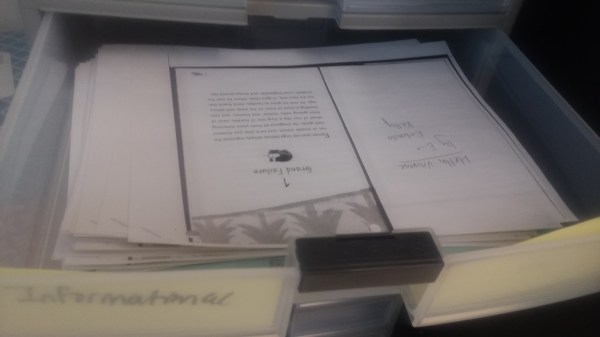
My beautiful gray organizer of mentor texts has a name.  I didn’t name it.  But here it stands, proudly and serenely, ready to offer mentor texts at a moment’s notice.

20180226_173712

Brotato Chip reporting for workshop service. 

I purchased Brotato Chip at The Container Store.  TCS isn’t cheap, but there is a teacher discount program. Brotato Chip is designed for the sole purpose of handling 8 ½ by 11” sheets of paper.  Watch this majestic being at work.

20180226_173724


How I use it: I feed Brotato Chip with unit-relevant mentor texts that I pop out at a moment’s notice during a writing or reading conference.  I’m sure other teachers have other systems of accessing mentor texts, whether it’s a binder or a pack the teacher has on person, but for me, I like the ability to float around my classroom without a bunch of STUFF at my hip, and I want to help students (and myself) minimize the clutter and noise around a whole binder full of mentor texts.


  1.  Checklists


The more open your workshop is, the more helpful checklists are to time management and self-management.  We customize our checklists week to week and give students ways to assess themselves on a specific task (not yet/getting there/met the goal.)  We’ve included independent reading goals like “I am in a book I can and want to read” as well as writing and work goals.


How I use them: Checklists are a terrific “status of the class” assessment, as long as you encourage honesty and maintain the routine of keeping and maintaining the checklists.  Then, during workshop, I can pop a peek at a checklist to get a quick sense of whether a student is in need of a book browse pile or whether a student is falling behind in another area.  It allows me to make my time and attention more fair to the students who might not necessarily indicate that they are in need of support in other ways.  I also sign and initial checklists with a Flair Pen.


  1. Screencastify (Google chrome extension)


This magical app has transformed me into a YouTube celebrity and has made my lesson plans for sub days glorious.  It allows me to “flip” my classroom easily by taking videos of my computer desktop.


How I use it: I use Screencastify for grammar and mechanics issues that aren’t relevant to whole class instruction and take several trials for student mastery.  Rather than re-re-re teach a lesson, I ask students to watch a video and then practice the technique in their own notebooks.  It saves my voice and it gains me subscribers.  

If you’re interested in what this could look like, check out my video on dialogue punctuation.

What are your indispensable tools?  Why?


Amy Estersohn is a middle school English teacher in New York.  She thinks this is a good area to note that this is not a sponsored post and the products mentioned here are from personal recommendations.  She received nothing in exchange for recommending these products. 

Three Ways of Looking at a YouTube Video

If your kids are anything like the ones in my life, both at home and at school, then they love YouTube. When I ask them what they watch, they list names of YouTubers.

At first, I scoffed at this medium that seems to absorb all their energy. Then I started noticing something.

IDEAS

It started last summer after I kicked my three kids outside to play. They were writing in their notebooks furiously. Being my nosy self, I peered over their shoulders.

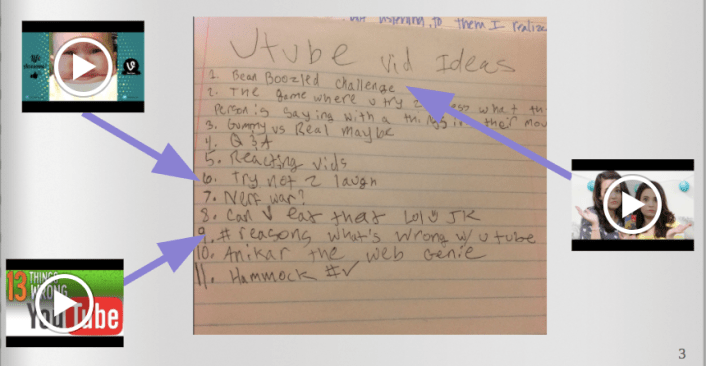
My kids, who are wonderfully, beautifully average, were planning their upcoming YouTube “projects”. They’d found an old digital camera and had been making videos (but not yet posting them anywhere). Upon further inspection, I noticed that many of these videos ideas were inspired by ones they watched endlessly on YouTube. They were using the texts they love as a way to generate ideas for their own composing. Further, they were using YouTube as a mentor text.

Screen Shot 2018-03-07 at 10.59.29 PM

They reminded me that often when I use mentor texts in my own instruction, I want students to use the mentors to generate their own ideas. Whether we read The Important Book by Margaret Wise Brown, or an essay about Hermione Granger in The New York Times, I want student writers to use those texts as launching pads for their own thinking around topics. I know that one of the most important things that writers do is choose topics that inspire them. I also know that doesn’t happen by accident or chance or magic. We have to teach students how to find their ideas and mentor texts can help us do that.

STRUCTURE

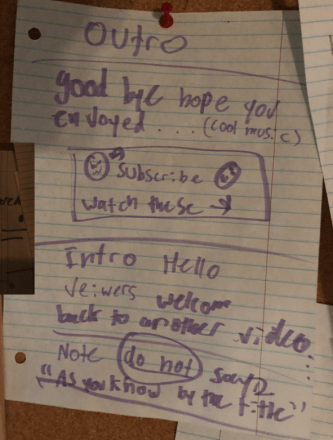
A few months later, my 10-year-old son started his own YouTube channel. One day I walked into his bedroom where I saw his bulletin board covered in notes. He had created a vision board about his channel where he posted a criteria list focused on what Screen Shot 2018-03-07 at 10.58.07 PMhe had been noticing in other videos. Upon further inspection, I noticed he had also created a template for a video. He was making note of the patterns in the videos, his mentor texts. He paying attention to the structure of a video, to the introduction (the intro) as well as the conclusion (the outro). He also made notes about what not to do.

Jacob’s work around structure reminds us that another way of looking at mentor texts is through the eyes of organizational patterns. When we ask students to notice how something is built, we invite them to create possibilities for their own writing. I want my students to read like writers and to make choices about the way they might structure a piece of writing. Mentor texts help us create a vision for doing that and they empower students to uncover those possibilities themselves.

CRAFT

As Jacob’s gotten better at making these videos, I’ve noticed that he’s also gotten better at the craft within the videos. He and his younger brother Justin decided to launch a series together (of which they’ve only made one episode). When I watch just the first minute of the video, I notice the way they use their voices and gestures. I notice the way they set the stage, displaying the title. I notice how they have clearly rehearsed what they’re going to say. These are all things they’ve picked up from watching their favorite videos, from studying the mentor texts. They identified nuances that add voice and flavor to the text, and then they tried it

Their attempts at incorporating these moves reminds me that another way to consider using mentor texts is to think about the ways we can teach students to read like writers. When we teach students to hone in on the craft moves a writer makes and to think about the purpose of the moves, they can start to think on a granular level about their own writing. The next step is to try those moves out in our own writing.

WHAT DOES THIS MEAN FOR OUR TEACHING?

As I notice the way my own kids have become immersed in these texts, I can’t help but think about how this relates to my own teaching using mentor texts. It’s not enough to show students a text and say, “Okay, now do this in your own writing.” We know that doesn’t work. Instead of becoming frustrated that kids don’t “get it,” I want to instead use  mentor texts with intention.

Using mentor texts is also a process. I can’t expect for students to be able to look at a text and consider ideas, structure and craft all at once. I have to carve out time for students to be able to work through the different ways mentor texts can support them as writers. I have to teach with intention so they can write with intention.

When I consider immersing students in the kinds of writing that will help them grow as writers, I want them to have the same kind of authentic experience as my kids did. As a teacher, I also want to lean in to exploring all the ways mentor texts can look in my classroom — anything from YouTube videos to essays to infographics can help nudge writers to think about how to generate ideas, how to make choices about structure and how to develop their craft.

If you’d like to learn more about finding mentor texts, you can check out this smart Mentor Texts Are Everywhere.


At the Heart of It All Is Literacy by Sarah Morris

The recent teachers’ strike in West Virginia has me thinking about my Grandmother, Mercia Dunmire. She taught in a one-room schoolhouse in Monongah, West Virginia, a community framed by mountains and mines, teaching the children of coal miners and subsistence farmers in a multi-grade classroom.

As family mythology tells it, after noticing children coming to school hungry, Grandma Mercia organized an effort to feed everyone every day. Parents who could do so donated from their gardens and pantries, and older students cooked lunch, learning to prepare food and sustain the group by working and eating together. In the guise of a daily home economics lesson, Grandma Mercia’s students learned service and community, caring for each other as an act of equity. She fed others’ children even while she struggled to feed her own, racking up debt for groceries on credit at Manchins’ store after her husband died, sealed in a fire-filled mine.

Grandma Mercia was like that–she saw opportunities out of need and struggled to help her students in ways beyond teaching them to write and read. She filled my shelves with books, but, more importantly, she influenced me to be aware in the world, to see and struggle against injustice, and to teach.

In 2007, I represented West Virginia as our state’s Teacher of the Year, attending several events and conferences where teachers from all US states and territories gathered together to learn from each other and raise our collective voice. At one of our events, we dressed to represent our home states. Given that so many recognizable costumes related to West Virginia are caricatures grounded in stereotype, I wanted to choose a memorable and impactful way of representing our heritage and history.

19141-004-41679953.jpg

Mother Jones

I dressed as Mother Jones. I pulled my hair in a bun and donned a black dress and wire rim glasses. I carried a sign marked with her words: “Sit down and read. Educate yourself for the coming conflicts.” I found myself explaining many times who she was, what she meant to miners, what she meant to West Virginia, and what she meant to me. Like Grandma Mercia, Mother Jones taught me through her legacy about how to be in the world.

Today, I’m thinking of Grandma Mercia, Mother Jones, and teaching in West Virginia. This week, teachers are picketing and rallying, closing down the schools, fighting to raise pay from 48th in the nation and for adequate healthcare for all public employees (myself included, since I’ve moved to the university classroom).

Today, our governor owes more in back taxes than a teacher will see in a lifetime, our state legislature refuses to pass a severance tax that could fund public health insurance, and a coal boss runs for senate with the blood of 29 miners on his hands; our world doesn’t look much different now than it did 100 years ago, echoing with injustice.

Today, it’s our teachers, red bandanas around their necks and holding signs, who are waging the fight, yet they are still caring for students, even out of the classroom: packing lunches, spreading word about how we can help through organizations like Morgantown’s Pantry Plus More who are feeding students while they’re out of school.

These are my thoughts and my experiences, but I know they resonate with other teachers. This is just my story, except when it’s not. I can see, in this moment, that West Virginia teachers are standing in the light of Grandma Mercia and Mother Jones. Whether she is a hellraiser heroine on the picket line or an everyday activist peeling potatoes for the soup, a West Virginia teacher is an agent of change and a fierce advocate for students.

download.jpgAnd, at the heart of it all, is literacy. Reading is revolution. Writing is power.

We must remember, as Mother Jones said: “reformation, like education, is a journey.”

Teachers do the work of progress every day, in and out of the classroom. Especially in this moment, our teachers are educating us: these strike days are readings in civic literacy, in social movements, in what it means to be a West Virginian. The teachers walk the line, writing the people’s history, and we are students, all.

NWP@WVU Co-Director Sarah Morris teaches undergraduate writing courses and is the associate coordinator for the Undergraduate Writing Program at West Virginia University. Her research interests include human science phenomenology, embodiment, writing process, and student-centered teaching. Follow Sarah on Twitter at @drcerelyn

The Battle of the Canon

I recently found myself entrenched on a familiar battlefield. After making what I thought was an innocuous statement about needing more texts that my AP Literature students would enjoy reading that would also represent “literary merit,” and noting some contemporary texts that would meet these criteria, another teacher began to lecture me on the necessity of requiring students to read canonical British literature.

Her unyielding tirade provided some insight into what it must feel like to be a student in that class – in which choice is something the teacher makes, books are taught (not students), and the teacher is the sole purveyor of knowledge.

Before I continue, let me say that I truly believe that this teacher truly believes that she is doing what is best for her students. Her primary argument, in fact, was that we are doing our students a disservice if we do not expect them to read “hard texts.”

To her, rigor means old. She explained that if students are not struggling to decode classic books such as Beowulf or Cantebury Tales, they are not being challenged enough. She said that any book they read that’s not canon is a waste of their time.

But herein lies the rub: many students from different English classes eat lunch in my classroom, and I listen to their honest conversations about school. I watch as they use Sparknotes to fill out question packets on classic texts. When the focus is on a specific book, and the assessments are designed to elicit responses about the plot, students do not have much incentive to read the book. Thus, they find answers they need online and wait for the teacher to tell them what they should have learned from the text.

While I held back from sharing such observations, I did agree that students benefit from reading challenging texts. MRIs have recorded all of the brilliant ways the brain lights up with activity when reading the works of Shakespeare! However, I offered the suggestion that students need not read full novels as a whole class to receive this benefit. I often pull excerpts from classic texts to analyze in class so that the focus is on the writing craft and on ourselves as readers. We explore passages in depth to build reader confidence, look for literary devices and discuss their functions, and connect to theme. I provide them with incentive to read other than “because it’s tradition,” and – more importantly – I encourage them to find their own reasons for connecting to texts.

Screen Shot 2018-03-05 at 9.10.07 PMAmy Rasmussen and I have engaged in numerous conversations about the magic that happens when students choose the books they read for our AP English classes. Sure, students will often choose a contemporary text if given the chance because it’s easier for them to read and it seems more relevant to them. What’s wrong with that? Books like The Kite Runner and Never Let Me Go have been referenced by the College Board on the AP Literature and Composition exam®, so why do some teachers still cling to the classics as if nothing written after the turn of the 20th century has merit?

My students regularly start with more contemporary books like The Help or The Road and then choose, for various reasons, to explore books from the canon. Often, they have built confidence due to the work we do together in class with shorter texts and from their own choice reading, and they feel comfortable taking on a challenge. Sometimes, they decide that they want to read books they’ve always heard about. I currently have students who have chosen to read Wuthering Heights, Oliver Twist, and Les Miserables on their own. When we have book talks and the students begin speaking with excitement about the books they’re reading, you better believe that others will want to read these books, too. I’ve seen it happen for several years in a row; students read more canonical texts due to choice than they ever would if the books were strictly assigned.

Many of us speak and write about the benefits of a workshop classroom, and the idea of choice in reading has been explored by leaders in education such as Kelly Gallagher and Penny Kittle. So why are some teachers so afraid to let go of their perceived control? What do they think will happen if a student walks out of high school without reading Beowulf? I would rather see my students leave my classroom having read several books they chose to read than having faked their way through a list of classics, and based on the honest feedback I get from my students, they prefer it this way, too.

I left the battle of the canon feeling that we had reached a stalemate. Until I can convince nonbelievers of the benefits of choice in the AP classroom, I will continue to provide a safe space for any students to come in and talk about books, even as some Sparknote and Google their way through the classics.


Amber Counts teaches AP English Literature & Composition and Academic Decathlon at Lewisville High School. She believes in the power of choice and promotes thinking at every opportunity. She is married to her high school sweetheart and knows love is what makes the world go around. Someday she will write her story. Follow Amber @mrscounts.

Research In Search of a Claim

Why do high schools feel compelled to create their own “headings” for how students should format their papers, in spite of an English curriculum that calls for teaching MLA style? Oh, never mind. Put like that, I can see that this contradiction is in line with what we are tasked with every day in our classrooms: to machete through convoluted curriculum standards so we can lead our students to some real learning. This particular contradiction usually preempts any teaching energy I might have at the beginning of “The Research Unit.” As I plan, I am haunted by images of students typing their research questions word-for-word into Google, scrolling aimlessly through search results based on what they are most likely to click through to infinity, and finally just quoting from Wikipedia or that first Google blurb (attributed to “Google” and a 400-character URL in a triple-spaced Works Cited page presented in a hodgepodge of fonts from the cutting and pasting). Sigh.

It’s not their fault. This work can be rather uninspiring. Last year I tried to shake things up by offering another option to the traditional research argument: Students could compose a “research narrative” by using story form to trace their process of developing a claim. I spent hours developing model texts and elaborate instructions, devoted precious class time to comparing the two forms and creating anchor charts. Students dutifully complied with this. They complied again by completing a traditional research paper filled with information they mostly already knew or will have quickly forgotten. I dutifully (and wearily) returned papers filled with equally uninspired feedback they may or may not read and a grade that left me feeling morally compromised. Sigh.

So … no. How can we get away from Google as a first-resort and turn instead to our own minds — and each other — as we develop topics? And how can we make use of all the writing work we have already done and blend it with the research “unit” so that it feels less like a “unit” at all? Where can we look for topics that might inspire some meaningful, lasting learning?

Instead of starting from scratch, I had students turn back to their “Writing Territories,” the areas in their lives and in the world they identified earlier this year as potential writing topics. (Nancie Atwell is a continued inspiration–“Writing Territories” comes from Lessons that Change Writers). I modeled using my own territories to extract 1-2 potential research topics, and students did the same. I wanted to develop a sense of community and investment in each other’s topics, so I adapted an activity from Kelly Gallagher’s Teaching Adolescent Writers: 

  1. Students write their topics at the top of a piece of lined paper and pass the paper to the person on their left.
  2. This person reads the topic and writes one open-ended question about it.
  3. Papers continue around the room until each student receives their own paper back.

Even just this movement was energizing. After some initial fumbling, papers began moving through the room (almost) smoothly. Even better, students began talking to each other about whose topic was whose, and competing to write obscure and original questions to “stump” each other. Students took their own papers home, and were tasked with thinking through the questions and deciding on a few focus points within their topic in order to move forward.

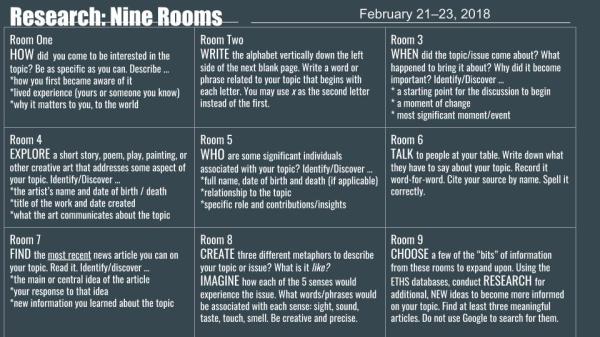
So, this was fun and students had a bunch of interesting questions to explore. But that vision of students typing those interesting questions into Google still loomed large. I felt they still needed more of their own entryways into their topics, entryways into authentic thinking beyond search engine results. And as usual, I borrowed. This time, I adapted a poetry exercise from Georgia Heard: the 9-Room poem. I asked students to move through “9 rooms” of preliminary research that I hoped would lead them to consider their topic in terms of themselves and their own worlds.

Research_NotebookPrompts

My intention was for students to move through the rooms to establish a basic foundation of information (rooms 1, 3, 5, 7) and to explore their topic through a more creative lens (rooms 2, 4, 6, 8). As with the question swaps, perhaps the most valuable outcome of this exercise was the conversation it generated around the room. Students are talking about their topics with each other, even excited about being quoted in each other’s work!

So, here’s where we landed for now. Stay tuned for student examples as we move through this process toward formulating a claim. And, of course, proper MLA format.

How to Confer Like a Ninja

NinjaConferring.

We all know it is the true Special Sauce in the workshop classroom.  Without conferring, it’s just Silent Sustained Reading, which ironically does little-to-nothing to actually SUSTAIN READERS.

However, we also all know #teacherlife.  When we get into the thick of things, it’s easy to lose our groove when it comes to consistently and effectively conferring with students about their reading lives. (Writing lives matter, too, but that’s another post.)

So, enter my new tutorial, How to Confer Like a Ninja.  I know many of you are imagining me in something resembling an all-black suit and stealthily skulking around whispering, “What are you reading? Why’d you abandon that book?”  I hate to disappoint you, but my students know I’m anything but graceful.  I regularly trip over Chad’s backpack with his tennis racket sticking out the top.  That thing is a weapon of mass destruction.

Instead of the stealthiness of a ninja in terms of moving about the room, I’m going to teach you how to ask questions that students would NEVER even know are conferring questions!!

For all other ninja-moves, please see Coach Moore, or maybe Lisa, or Shana’s daughter Ruthie.  They seem–stealthy.

Anyway.

Here are my four favorite questions for conferring like a ninja:

  1. How’s it Going?  I could write an entire book on this question alone.  Lucky for me–and you–Carl Andersen already did.  This is a completely low-stakes question that leaves room for the student understanding that you respect them as a reader–even if they are a struggling one–rather than feeling like they’re in the middle of a spotlight and interrogation room situation.  Ninjas are nice.  Ninjas are welcoming.  Ninjas just want students to become readers.  (Okay, so my analogy is breaking down a bit, but stay with me.)
  2. What’d you think?  This one I usually pull out in the hallway when a student runs to me in between classes to tell me they finished a book.  I usually get one of three responses: 1) “I’ll have to tell you later, I don’t have enough time!” 2) “Eh, it was okay.” 3) “Ugh!  Mrs. Paxson, I’m so mad!!” All three of these are great because it gives you an entrance–like a ninja–into a larger conversation.  Yes, even the “eh” response is perfect ground for finding them their next great read.
  3. Would you recommend this to a friend?  The answer to this question tells a lot about the journey of a reader.  If they would recommend it to a friend, that means they really do like it and they would risk being ridiculed by said friend if they thought it was boring, weird, etc.  Students don’t often risk that for just anything.  Also, if you can get a student to recommend a great book to one of your holdouts, they are scientifically about 83% more likely to actually read that book.  Yep.  That’s right.  I said SCIENTIFICALLY.
  4. Would you read it again?  Okay, be careful with this one.  I can feel you getting a little eager over there, and you can’t just pull it out of nowhere.  This is the perfect question to test the true level of a book in a reader’s mind.  But, THAT’S the ticket.  This question is for readers.  I would not pull this question out at the beginning of the year, or with one of my reading holdouts.  If I asked one of those students this question, they would stare at me, appalled that I would suggest such a thing.  However, real readers re-read.  It’s a true test of love for a book.  So use this one sparingly, but it will allow you to examine if a reader liked a book, or truly developed an undying love and will miss the characters long after the fact.  Our biggest nemesis in workshop teaching is time, and everything else that is competing for it in our students’ lives.  If they volunteer the information that they would be willing to spend MORE time reading something they’ve ALREADY READ, that means we’ve got ’em.  Take that, cat videos on YouTube.

All of these questions are part of my favorite aspect of a workshop classroom–the in-between.  Its difficult to quantify the leaps and bounds made within any given reading and writing workshop, but don’t let that distract you from the magic of the inconspicuous–or some people call it “normal”–conversation.  Getting to know our students, their reading tendencies, and their journey is part of what shows them that we are different.  We care about teaching them how to learn instead of just what to learn, and we are willing to support them on that journey as often as we can.  Even in the hallways, in transition time, and everywhere in between.

Happy teaching!


Jessica Paxson teaches English IV, AP Lang, and Creative Writing in Arlington, TX.  She runs on coffee and exaggeration, a deadly combination at 7 in the morning. Her students frequently describe her as “an annoyingly cheerful person who thinks all her students can change the world.”  Yep, pretty much. 

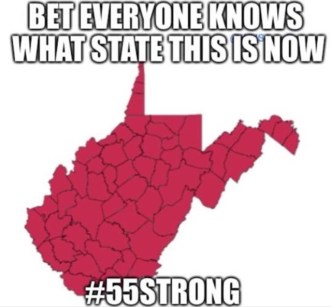
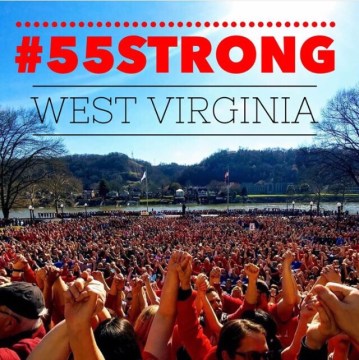
West Virginia Teachers are #55United: About the Strike

img_7280This week and last has seen my wild and wonderful state in the news quite a bit more than we’re accustomed to. Today marks the sixth day of a statewide teacher work stoppage brought about by decades-long frustration over legislative inaction to prioritize a long-term solution to problems with teacher benefits, salaries, and qualifications. As a result, every single school in all 55 counties of our state is closed.
Since I’m not teaching K-12 anymore, I’m a little removed from this strike, but as a teacher who is invested in public education, I’m very much aware of the reasons teachers are protesting.

A good place to get acquainted with the reasons behind the strike is this lovely post by Jessica Salfia, our West Virginia Council of Teachers of English president.

The skyrocketing insurance premiums Jessica mentions are a large part of teachers’ frustration. The proposed changes to the Public Employees Insurance Agency, known here as PEIA, would impact not just teachers but all public employees. The new premium and deductible schedule, created when state funding for PEIA decreased, would mean a huge increase in monthly insurance premiums, annual deductibles, and maximum out-of-pockets.

For my family, for example (PEIA is our only insurance option, since my husband and I are both state employees), our monthly premium would increase from $140 a month to $308 per month. Our annual deductibles would increase from $1025 per person to $2600 per person.

The legislature initially offered a 1% pay raise per year over 5 years–$404 per year, which is 1% of the average teacher salary, and is all they’re offering to every teacher, regardless of their salary or experience. Even over 5 years, that raise would not offset the proposed increases to PEIA costs. Educators–and all public employees–would effectively have their paychecks cut.

In addition, legislators had bills on the table to lower teacher certification standards to fill some of the 700+ teaching vacancies in our state, to remove seniority, and to reduce the power of unions in West Virginia. This is all on top of the fact that West Virginia teacher salaries rank 48th in the nation–the 3rd lowest in America.

img_7278It’s clear why teachers are frustrated, right?
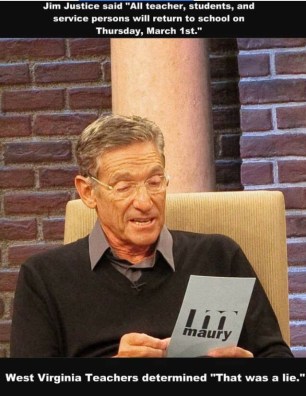
Fast forward to Tuesday of this week, when Governor Jim Justice announced that he would find the funds to offer a 5% raise immediately to teachers while a task force worked on a long-term solution to the PEIA problem. This article from The Atlantic details Justice’s expectation that with this solution, teachers would return to work this Thursday. (The article also does a wonderful job explaining the strike in more detail, with context given by my friend and colleague, Audra Slocum.)

Today is Thursday…and schools are still closed. As I drove to work this morning, teachers were still lining the major roadways with their signs waving in the cold rain. A chorus of horns drowned out my radio in support of the teachers’ efforts.

The strike continues.

My students and I will watch this video message from John Green in class today, and we’ll discuss what education might look like if Green’s vision of public education–a vision in which all citizens valued their right to a quality, free education and were willing to collectively fund it because they believed in its importance–were reality.

img_7279That is the heart of why teachers are protesting, in my opinion, and it’s why I support the #55United effort. Our students’ right to a high-quality education is of paramount importance. It is with that education that they can enact change, as the students of Parkland have this week. When we value education and educators, we show our faith in our young people. West Virginia seems to lack a commitment to high-quality education when it proposes to lower teacher certification standards, salaries, and benefits to an unrealistic, and damaging, level.

I became a teacher because I wanted to change the world for the better. I wish the taxpayer base, legislative bodies, and voting public who can influence the direction of public education in this country believed that of all teachers, so that our profession could be elevated to its full potential.

What are your questions about the West Virginia teacher strike? Please leave your questions or messages of support in the comments, on our Facebook page, or on Twitter!

Shana Karnes lives and teaches in West Virginia, whose students, teachers, and mountains are wild and wonderful. She works with preservice and practicing teachers at West Virginia University and is a proud member of the National Writing Project at WVU and the West Virginia Council of Teachers of English. Find Shana on Twitter at @litreader.

Why It Matters

An enormous part of my teaching philosophy is centered around teaching students to question the “why” of what we learn. Not necessarily why are we learning, but why does what we learn matter? How does what we do in our classroom apply to their lives? I sincerely believe that if students cannot walk away from my class each day able to answer those questions, then I need regroup and question the purpose of my lessons.


pasted image 0Kelly Gallagher, a high school teacher in California, is an advocate for getting students to think critically, read deeper into various texts, and along with several other educational rockstars, structures his classroom according to the workshop model.

In his book, Deeper Reading, he discusses the “Say/Mean/Matter” chart as a way to make any text relevant to students in addition to helping them become critical readers and thinkers.

 I regularly use this strategy in several ways in my classroom which consistently provides me with opportunities to keep my lessons meaningful to my students. What I love most about using it is that it provides students with an opportunity to focus on what they are learning and why/how it matters. This also shows them that EVERYTHING we read, write, discuss, etc., has a purpose.


I recently completed novel studies with my students and was able to implement the “Say/Mean/Matter” concept with all 3 of my grade levels. In my experience,  I learned that I needed to provide more scaffolding for my younger students versus my Juniors who were more equipped to take the concept and run with it. It seems like the older they get, the more eager they are to share their opinions and challenge what they read.

For my Freshmen

Earlier this school year, I was fortunate to have the opportunity to attend a professional development session that centered around Kelly Gallagher’s Say/Mean/Matter strategy. I was able to scaffold this lesson by targeting specific pieces of the novel, To Kill a Mockingbird, a few at a time in order for students to focus on examples of social injustice. Over a series of impromptu class discussions and informal reading/writing responses to various texts about inequity, I broke each section of Say/Mean/Matter down so that students were familiar with applying this idea to various forms of literature. Once we reached the pivotal point in the novel, we completed this with partners they chose (and some they didn’t), using sticky notes to frame discussion.

This slideshow requires JavaScript.

From there, we completed our graphic organizer together using our stickies from the day before. Students were asked to expand on the ideas they came up with together. After modeling my discussion notes and conferencing with students, their responses clearly showed that these examples of social injustice meant something to them. It became more than just an assignment to them, it was a chance for them to safely explore, discuss, and write about opinions that mattered to them.

This slideshow requires JavaScript.

Eventually, this led to a Socratic Seminar that took us 2 full class periods to complete. Every student was engaged and ready to share their ideas and ask questions because it was relevant to them. Not only was this a chance for their voices to be heard, but they truly cared about what each student had to say and remained open-minded throughout the process.

A Small Snapshot

This was just one of the incalculable ways to foster relevance and meaning to students that perfectly aligns with the benefits of teaching through the workshop model. Now more than ever, what we do as educators is of the utmost importance. By building these moments of discovery into our lessons, we allow students to create and develop meaning for themselves. The students are our purpose. Our profession centers around helping them develop and unleash their potential. Once students realize what we teach has applicability and value, there is no limit to what they can accomplish.

I would love to know other ways you make your lessons meaningful and relevant to students in your classroom in the comments!

Gena Mendoza currently teaches Freshmen, Sophomore PreAP, and Junior English in Texas. She is passionate about teaching her students to use their powers for good and not evil in her classroom. When not pouring over any written or spoken word by Jason Reynolds, or preparing her family for their next Disney adventure, you can catch her Tweeting/Retweeting at @Mrs_Mendoza3 on Twitter. 

What Does it Mean to Read like a Writer?

It’s a startling reality, but many of my seniors do not know how to read like writers. I spend a good part of the beginning of a semester helping students look at how an author crafts a text.

This still surprises me.

The seniors I have in class this spring have all passed their state mandated English exams. A big chunk of these Texas state exams, both English I and English II, ask questions in the reading portion about author’s craft. (I haven’t explicitly studied the question stems in a few years, but I am guessing at least half.) In trying to get students to talk about the writer’s moves, most of my students get stuck talking about meaning.

Of course, meaning is important — but not when we are using a text to help us move as writers. In workshop lingo, we call this using mentor texts.

How do we learn to write anything well if we don’t study the work of writers who write well?

When I was first asked to write recommendation letters, I studied well-written recommendation letters. When I begin to write a grant proposal, I study how to write an effective grant proposal. When I need to write a speech, I study well-written inspiring speeches. There are solid examples for every kind of writing.

I want my students to know this. If they learn anything from me this spring, I hope it is this:

We learn how to write well by studying effective writing. To quote Kelly Gallagher: “Before you can film a dogfight, you have to know what one looks like. Before our students can write well in a given discourse, they need to see good writing in that discourse”. (Read Gallagher’s “Making the Most of Mentor Texts” for an excellent detailing of how.)


Yesterday Charles wrote about scaffolding a reading lesson. The same type of lesson, but with an eye toward reading like a writer, worked recently with my seniors.

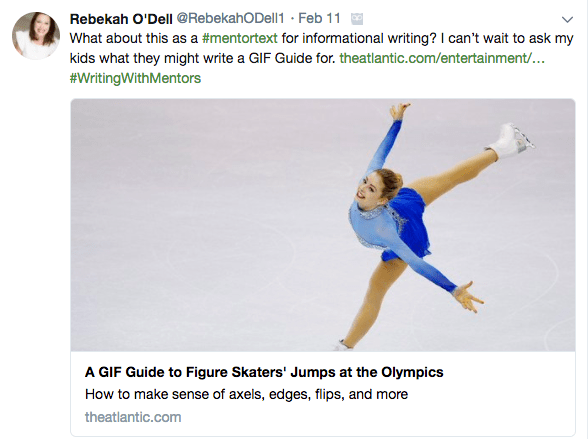
It all started when I saw this tweet: TweetofGIFGuide

I thought: “Okay, this may be a relatively painless way to get my writers into writing. We will use this text as a mentor and write our own GIF guides.” (Quick change in lesson plans on the drive to work.)

First, we started with a conversation about GIFs. This NY Times Learning Lesson has some good questions. We wrote our thinking in our notebooks and shared in table groups. Then, not quite as planned, the conversation shifted to how to pronounce GIF. “Um, it’s JIFF, Mrs. Rass, the creator of them said so.”

In case you are wondering:  I think the creator is wrong. But, does it really matter? I just wanted my students to use GIFs as an entry point into writing using mentors.

To help students understand how to study a text for a writer’s moves, I copied the text into a document, and removed the images, so students would focus on the language. Then I crafted a list of questions. Taking a cue from Talk Read Talk Write by Nancy Motley, I cut the questions up and gave a set to each small group. They spent the better part of a class period studying the text and using the questions as a guide.

Later, we brainstormed topics we thought would work, eliminating some that were too broad, and discussing ones that would lend well to a how-to or informational type of writing. Students then completed this document, so they could see my expectations for the writing task, and I could approve their topics.

Students talked. They wrote. I taught mini-lessons on introductions and sentence structure. Students revised. Some taught themselves how to make GIFS.

Most surprised me with their finished GIF guides. Here’s a sampling of a few. (Disregard the citing of sources — that’s still on the Need-to-Learn list.)


Students, no matter their age, will write when we give them the tools and the time they need to be successful writers.

Sure, not all of my students produced solid writing — yet. But I am hopeful. We are only a about a month into the course, and most students now have a writing success story.

That confidence matters.

For a great read on helping students write, read “Children Can Write Authentically if We Help Them” by Donald Graves.

I’d love to know the fun or interesting mentor texts you use to get your students to take a chance on writing. Please share in the comments.

Amy Rasmussen teaches English IV and AP Language at a large senior high school in North Texas. Go, Farmers! When she’s not skimming the news or her Twitter feed for mentor texts, she’s reading books to match with her readers or thinking about the rest she might get during spring break. Eight days, but who’s counting? Follow Amy @amyrass and @3TeachersTalk, and she invites you to follow this blog if you aren’t already.