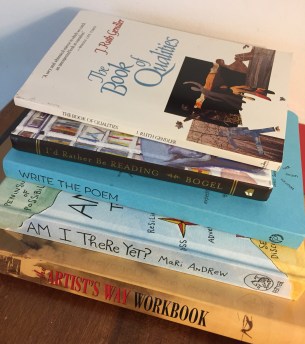
Quickwrite Mentor Texts for Writer’s Notebooks

img_6062I love going back to school for so many reasons, but one of the frontrunners is definitely that “second chance new year” feeling it provides. Teachers and students have the unique opportunity to have not just one fresh start at the beginning of a calendar year, but a second shot at goal-setting, changes, and achievements that the fall offers.

We all have our back-to-school rituals, and they are sacred: fresh notebooks, pens in all the colors of the rainbow (because we haven’t lost any yet), a well-organized classroom library that will be pilfered and picked through soon enough. One of the most important parts of establishing a workshop community is the routine that comes with setting up a writer’s notebook each fall: personalizing notebooks to make them our own, modeling a notebook’s possibilities, the establishment of quickwrite practices.

But now that the year has begun, and your notebooks are ready to go…what should you begin to fill them with? The writing in the beginning of my notebook always guides and inspires me as I continue to fill it, so I never want it to be uninspired, dull, or colorless. I crave fresh, exciting, dynamic things to fill up the first several pages of my notebook every time I start a new one, which is usually in the fall.

Here are my five favorite mentor texts that give me ideas and inspiration galore for those important start-of-the-year quickwrites–the first in a routine of creativity, agency, freedom, vulnerability, and engagement as a writer.

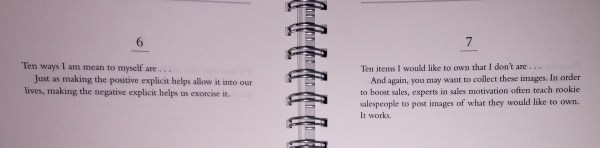
The Artist’s Way Workbook by Julia Cameron

This workbook is full of writing prompts for real writers: short exercises that encourage reflection, fluency, and the habit of writing vulnerably often.

img_6055.jpg

I love this workbook and its series of prompts, and use them often when I start my day with the #5amwritersclub each morning. They would be wonderful prompts for students to ease into vulnerable, personal writing in September.
img_6056

I’d Rather Be Reading by Anne Bogel

I first discovered Anne Bogel thanks to her “What Should I Read Next?” podcast, but she is also a writer and blogger, and just released a beautiful book yesterday. It’s a book about our reading lives, and provides a wonderful mentor text for writing about our reading without writing about a specific text.

img_6051

In addition to the lovely writing, I am obsessed with the illustrations: they would be wonderful to recreate in students’ notebooks with scraps of old magazines or dusty dictionaries.

img_6048

I visualize this mentor text as a wonderful one for helping students find a voice for writing about their reading lives during quarterly reflections, reading ladders, and self-assessments.

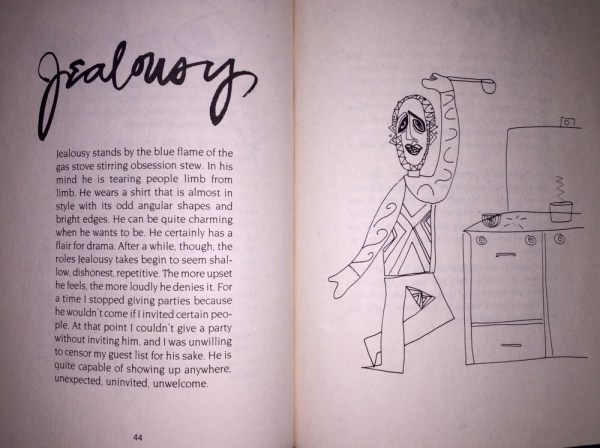
The Book of Qualities by J. Ruth Gendler

Writing about our own emotions is hard for all of us, but it’s especially hard for teens. I’ve found that writing about emotions in general, rather than our own, is a wonderful gateway for personal writing.
img_6049

In addition to being an amazing lesson in personification, this book provides gorgeous mentors for doodling, metaphors, and multigenre possibilities.

img_6050

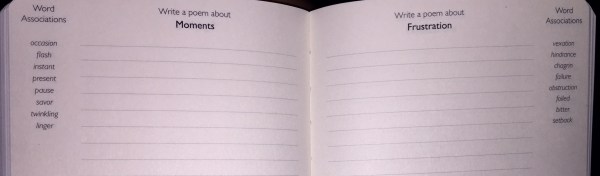
Write the Poem

Poetry can be intimidating, but a little guidance goes a long way, and this book provides just that.
img_6052

The combination of a prompt and keywords to incorporate takes some of the guesswork out of choosing a structure, a rhyme scheme, a title, and the myriad other decisions that go into crafting poetry.

Am I There Yet? by Mari Andrew

Sometimes words are hard. They just are. Those days call for doodles, and this book is full of plenty of them–in addition to pages of plain old writing. I love this text because it tells stories beyond what we see on Mari’s Instagram and Twitter feeds, giving students a mentor text not just for writing but for the thinking and living behind it.
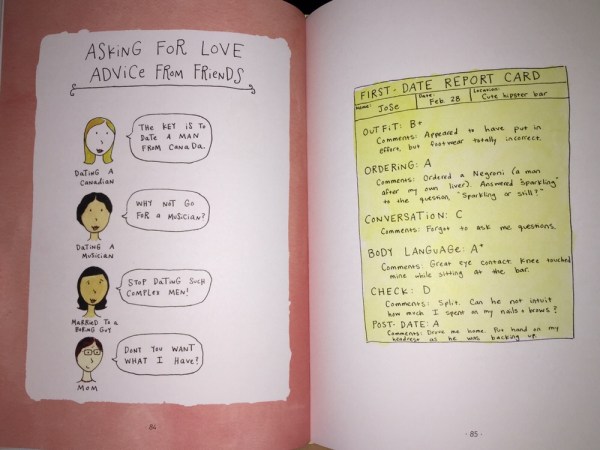
img_6053

Mari Andrew has long been a favorite of mine, but this book shows me how to play with writing and thinking in genres I wouldn’t have considered, and is super teen-friendly.
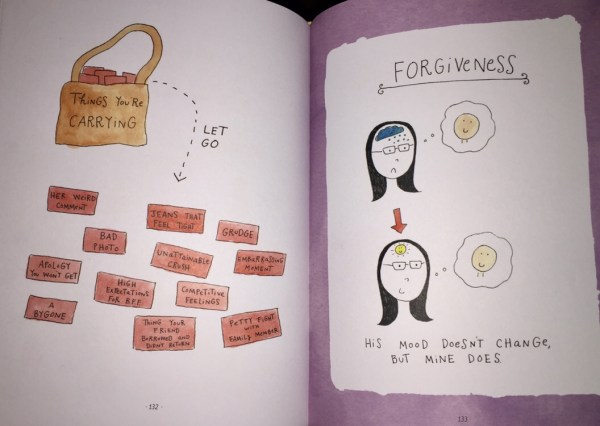
img_6054


I hope you’ll utilize one or more of these beautiful texts–many excerpts of which you can view on the Amazon preview pages linked above–with your students this fall. Their possibilities as entry points for writing topics and genres are powerful, and will lead to composition possibilities for the duration of your school year.

Happy writing! We’d love to know how you and your students utilize these ideas, or what others help you kick off your writer’s notebooks. Please share other quickwrite possibilities and ideas in the comments, on Twitter, or on Facebook!

Shana Karnes is a mom to two daughters, a daily reader and writer, and a forever educator. Her work with teachers in West Virginia is through the National Writing Project, West Virginia University, and the West Virginia Council of Teachers of English. Connect with Shana on Twitter at @litreader. 

Elvis had it wrong: a little MORE conversation

End-of-the-school-year-Sarah is so hopeful, so starry-eyed, so confident that this will be the summer that it all gets done. See, at the end of every school year, I make a giant list of all of the ways I want to improve for next year. I go through all of my chicken scratch post-it notes on old lesson plans, through the emails I’ve sent myself throughout the year (often-times labeled “this” as if that’s helpful or useful), and the articles I’ve saved to my feedly account. I shove all of this nonsense into a google doc and then start working my way through this mess of things that briefly inspired me last year but was marked as not important enough to look at or implement in the moment.

I wade through the torrent of ideas throughout June. I keep some of it. I toss a lot of it. I look for trends.

This year I noticed that a lot of my ‘save for laters’ focused on feedback and building community – so many of my post-its from past-Sarah (who really over-estimated present-Sarah’s with-it-ness) focused on how community improves feedback and how both of these are built through conferencing. Feedback, building community, conferencing: these aren’t new topics for this blog. I’m just looking to add on to the wealth of information you can already find here from these fine people, like here, and here, and here.

I’ve approached conferencing in two distinct ways this year.

First, introduction conferences. We’ve been in school for three weeks, and in this time, I’ve conferenced with 95 of my 96 students for about ten minutes. Our conferences were simple. Students came prepared to answer five questions I gave them in advance, and I came prepared to listen/pepper them with lots of questions. Here’s a quick run down of those questions.

Question Follow-ups Intentions Realizations
How would you describe yourself as a reader? What have you read lately? What did you read for your summer reading book of choice?

Oh, you like this (genre/book)? Have you read ___? I hated/loved that book, what did you like/hate about it?

This is a softball question – it’s a simple yes or no but there’s a lot of room for impromptu discussions. For some of my students, we spent almost our whole conversation talking about our shared love/frustration with The Kingkiller Chronicles. I liked the opportunity to low-key assess who had already finished their summer reading. Some of their insights also prompted interesting conversations as well. I also liked that this first question highlights one of the most important parts of our class: reading. A lot of my students labeled themselves as “avid middle school readers.” They were big readers until the time demands of high school forced them to make some tough decisions. This conference, honestly, reinforced for my why choice is so important for high school students.
How would you describe yourself as a writer? Have you written anything lately? What does it feel like when you write? What about in-class writing? Or writing for fun? What did you write last year that you were proud of? When you sit down to write do you have a lot of ideas but it’s hard to get them out or…? I teach AP English Language so the majority of our class is writing focused. This allowed me to see who already thought of themselves as writers. We also had interesting conversations about idea generation which wasn’t intentional but it was useful information. Students’ perceptions of themselves as writers are deeply ingrained. Their definitions of what a “writer” is are also often limited. It will be fun to change some of those perceptions as the year goes on.
How do you learn best? What kind of learner are you? (For example, I’m a visual learner.) Not very many follow-ups here. This is a quick question. I want to group them by kind of learner homogeneously and heterogeneously throughout the year. LOTS of visual learners and, oddly enough, a lot who go home and rewrite their notes.
Last year, typically, how much time did you spend on homework? Why that amount of time? What other demands do you have on your time? What does your schedule look like this year? Honestly, I wanted to see what all these kids have on their plates. Some were very full:4 or 5 AP classes, jobs, sports, clubs. Some were less full. This also opened the conversation to talk about their interests as well. I teach at a Magnet school, and while I know that it can be a demanding school, sometimes I forget how demanding it can be. This reminded me to check with the APUSH and APCHEM teachers and make sure that we’re not doubling up or tripling up major assignments with students.
Do you have any questions or concerns or anything else that you’d like to share? No follow ups- just tried to ease some anxieties. My class has a reputation for being “worth it, but difficult.” I wanted to get ahead of any anxieties or nerves. This was so helpful. One, it allowed me to talk over strategies with kids BEFORE the strategies were needed. Two, it allowed me to walk through several accommodations with students BEFORE their IEP/504 meetings.


This was a highly time consuming endeavor, but I’ll never go back to not having these conferences in person. They were investments that have already started paying off – students are more willing to ask questions, to participate, to follow-up on assignments.

Secondly, I’m changing the way I grade in-class essays. Previously, students would write, we would workshop, I would grade, they would revise and then we’d all move on with our lives. Inspired by Catlin Tucker’s discussions of station work, I’m differentiating between grading (with feedback) and scoring (just the grade) this year. Students will write two AP English Language prompts in a six week period in class. For the first prompt, students will sign up for conferencing times during station time or before or after school, and I’ll grade the essay in front of the student, verbalizing my thinking, offering suggestions, answering questions. I’ll hold off on the grade (which goes into the grade book as a formative grade) until they have their conference with me. This will be a lot of time – ten minutes give or take for 96 students. BUT, I won’t take home a single essay. Then, after everyone conferences and I reteach as needed, students will write a second in class essay which I will only score (summative grade). Just scoring without the feedback will make grading these essays faster, but I’m also hoping that sitting down one on one will mean that we’re doing more with less, that more of the feedback will transfer to the student, that growth happens sooner.

Good teaching is about good relationships, and conferencing definitely helps to build relationships. What have you tried that’s worked for you?

Sarah Morris teaches AP English Language & Composition and Film as Literature in Murfreesboro, Tn. She has recently fallen down the rabbit-hole of Fallout 4, and she tweets at @marahsorris_cms.

Saying Yes

Over the last several months, I’ve been learning how to say yes. I know, I know. I should be learning to say no, right? When I run a Google search for articles about just that, it returns 571,000,000 results. Pressure, amiright? But I’m not talking about the kind of yes that over-commits me and zaps my time and energy. I’m talking about the kind of yes that disrupts the status quo, altering the time space continuum of my classroom. Here’s the snapshot of HOW I’ll be saying yes. 

Day Structure Notes
Mon. Deep Dive (1) with Reading: 40 minutes free reading, 40 minutes deep reading instruction Maybe start with a thinking puzzle or something that gets their brains going for a Monday.
Tues.-

Thurs.

Typical: Individual Writing Goal Work; Notebook Time (2); Reading Instruction; Writing ML; Independent Writing (3)

Special: Watch/discuss Othello, reading assessments, etc.

This is flexible.
Fri. Deep Dive with Writing: 40 minutes of writing, 40 minutes of collaboration (4) and reflection, 10 minutes of celebration (5) Maybe start with a class meeting or something that sets the tone of reflection and looking ahead.

Specific Ways to Say Yes

(1). Independent reading is important in my classroom: student reflections indicate the time dedicated to this reading helps some of my seniors (and my AP Lang. and Comp. students!) fall into books again. Recently, though, my students have clamored for more time. While ten minutes daily can significantly impact students’ reading skills, it is difficult for students (for a variety of reasons) to get into a state of flow with their books.

The yes: So, this fall my colleague and I are saying yes to Deep Dive Reading Monday’s, where students read independently selected books while we confer with them. We believe this may help us improve reading conferences as well (where I’ll continue to practice yes by not looking for correctness but rather conveying openness. Tell me more about that, I’ll say.). Deep study of reading skills–like closing reading a text or looking for dissonance in the text–follows. We want their thinking to flow

(2). Since we teach on the block schedule, too many transitions in a block prevent students from reaching a state of flow on anything. It’s a reason why I’ve struggled to integrate notebook time meaningfully and consistently. Embarrassment and the Emotional Underlife of Learning by Tom Newkirk along with Gallagher and Kittle’s 180 Days and Linda Reif’s Quickwrite Handbook challenged us to invent a schedule that allows for both deep flow and quick bursts. In particular, Newkirk notes the importance of thresholds, moments where we can invite our students to enter into writing without worry. If we want our students to build writing and thinking skills, we need to write– sometimes quickly and without censor.  

The yes: consistently integrating notebook time into our class schedules (I’m trying this for the first time, too, in AP Lang. Maybe it will help them generate ideas for Question #3 on the AP exam.).

(3). Of course there’s extended time for writers to write and for us to confer. Of course! Typically, I feel satisfied with the nature of conferences. An early stage conference this past spring gave me pause, however. When conferring on this student’s topic, I challenged the student to demonstrate his authority and knowledge on the topic, wanting only for him to successfully grapple with it, but mostly thinking to myself NO, NO, NO. He pushed back (NO, NO, NO.). I relented and said yes. Conferring a few days later, the student confessed he was in over his head and began a more open dialogue with me about next steps.

The yes: saying try it, try it and see what happens. In this case, the student discovered for himself, testing for himself whether or not his idea would work. There’s so much more power in that.

(4) Feedback is a critical part of empowering my writers. Yet with class sizes swelling, providing that nourishment becomes a greater challenge. I need to help my students improve the quality of the feedback they provide one another.

The yes: Friday Feedback groups. I’ll place my students into writing groups where students will choose some work from the week to share, critique, and ultimately celebrate. Yes, my students will receive feedback from others and from me, yet I’m optimistic that this consistency of the grouping will lead to feedback that truly feeds writers.

(5). In my last post, I wrote about ways to celebrate writing and reflected that I needed to regularly celebrate the progress of student writers, especially in the small moments. I intend to verbal high-five my way through conferring with students this year, yet I also want them to celebrate each other. We’re a family of writers, after all.

The yes: celebration. On Friday’s we’ll have students celebrate their writing–their words, phrases, moments. We’ll recognize the power and beauty and vulnerability in what they share, appreciating their progress, hearing how it starts to come together, in concert. 

The biggest yes, though, isn’t visible in this framework. This year we’re asking our seniors to create a multi genre research project. That in itself isn’t novel, not a new way to saying yes to possibilities for our writers. What we are saying yes to is time on the calendar that is only loosely planned by us, time for us–as Allison Marchetti notes in this post–to listen to our students. This is time to help them ideate, to help them plan, to help them read, to help them write, to help them think, to help them grow. How could we say no to that?

Kristin Jeschke actually says yes a lot, too much, in fact. She’s working on that. In between, she teaches College Prep English to seniors (soon to be re-named English 4) and AP Language and Composition. Follow her on Twitter @kajeschke.  

Writer’s Notebooks and other Little Big Things

I have a collection of writer’s notebooks I’ve filled since 2009 when I attended the a National Writing Project summer institute, and my life changed. It’s been a long while since I explored the thinking I penned there. I don’t know why. There’s some real gems.

my notebooks

In the front cover of a purple notebook I starting in the fall 2013, a couple months before my mother died, I found four quotes I’d written in different colored pens.

“If I waited until I felt like writing, I’d never write at all.”

Anne Tyler

“Start writing, no matter what. The water does not flow until the faucet is turned on.”

Louis L’Amour

“Write to the one or two people who would git it, not to “readers” or “the market.”

Avery Chenoweth

“Do not wait to strike till the iron is hot; but make it hot by striking.”

William Butler Yeats

You’d think I was planning on (and hesitating) writing a book or something. Guess I still am.

The first mentor text idea I noted as an idea to use with students is “Little Things are Big.” I couldn’t remember why I liked it but had written a question to the side: Why is this event important to the author? I looked up the title, and found this fantastic personal narrative by Jesus Colon. Watch the story here.

Then, I flipped a little further and found my own Little Things are Big. It’s ragged and pretty raw, but you’ll get the idea.

“Quick as a bunny.” It was written on a scrap of paper, tucked in the antique secretary my mother got from her grandmother. We found it the last evening I ever laughed with my mother.

My father slept in intensive care with a machine keeping him breathing, and every day I’d drive my mother to the hospital, so she could stay with him throughout the day. This was harder than it sounds.

My dad had covered my mother’s illness in platitudes. She was not doing “fine.” Her dementia had advanced to the point that she was often angry and unreasonable — so unlike my mother.

Alzheimer’s is a wrecking ball, leaving chaos and confusion, not just on the person who suffers from this illness but on entire families. So many days, trying to drive to the hospital, as she tried to open the door “to get there faster.” So many days, trying to coax a meal, a bath, or even sleep. My dad was the calming balm, the light in Mother’s darkness. And I became the enemy.

Then, one evening I wasn’t. For a hopeful moment, I saw my mother happy. Without prelude she walked to that old secretary, and then walked the sore hearts of my sisters and me through a journey of loving memories. She pulled out pictures and trinkets and old church magazines — all things that represented little parts of my mother’s huge and loving life. And we laughed as she laughed deep girlish giggles.

The funny thing? This silly, rambunctious, talkative woman — she wasn’t like my mother either. No, my mother was mostly demure — a lady in every sense of the word. Sure, she’d pitch in the occasional pithy line. She’d toy with her grandchildren, even tossing one or two in jest into the backyard pool, but she was never like this brash, loud, gregarious woman who laughed with us for a few precious hours.

When Mother passed away several months later, that disease had corrupted everything. Her language. Her love for those who loved her.

And I still grieve.

But I have this tiny note tucked away in the jewelry box my mother gave me, written in my mother’s hand, and that evening sealed in memory.

She held that scrap of paper in her soft papery hand and said, “My mother used to say that to Jody and me when it was our turn to do dishes:  ‘Get them done. Quick as a bunny.’ And we did. Mostly.”


What little big things do you have to write about? How will you invite students to write their little big things?

Note:  I think I will be revisiting my notebooks for awhile. More to come…

Amy Rasmussen just finished refinishing the perfect desk, and now she thinks she may have solved the problem of her writer’s block. She is the daughter of incredible parents and the mother of six incredible children. She loves sharing ideas that help move readers and writers, and she’s grateful to you for reading this blog. Follow Amy on Twitter @amyrass 

How We Built our First 3 Weeks of Workshop

Picture1

Look at Sarah’s room!

A classroom built around flexible seating is amazing for kids building their literacy.  Comfy chairs, tall stools, and bean bags take a student out of a “classroom” mindset and into a creative work space that encourages ideas to flow across boundaries that might have been impermeable with rows and rows of sterile desks.

It works just as well for teachers building a workshop from thin air. You can imagine how comfortable that tan couch felt on the last Friday morning before the start of school.

Sitting in that room for this much anticipated planning session felt as comfortable as if I’d been there for a decade.  Five teachers with a singular focus gathered their resources and experience to put together a plan that was student focused and built on the foundation of workshop.   I got to know this group well at the Literacy Institute but I’m still trying to learn the full extent of their individual and collective power.

It is important, on our team, to be intentional and explicit with our lesson design.  The kids should know exactly what we are doing and why we are doing it.  They should recognize the moves their teachers make and take comfort that those moves were selected specifically for them. There is no reason to keep the “why” and the “how” a secret.

On this team, we typically build lessons with an eye towards a learning focus that starts with something like: I want you to know that readers/writers ….. do something. (Thanks Amy, Billy, and the Lit Institute.)

For the first three weeks, though, we talked about using: I want you to know that members of a Reader/Writer Workshop….do…one of the six pillars.  You get it.

Our curriculum documents, designed by teachers, contain a section devoted to the six routines of workshop instruction and the following are the routines around which we built lessons:

The Reader’s/Writer’s Notebook

Lesson Focus: I want you to know that members of this Reader’s/Writer’s workshop use a notebook to explore thier literacy.

Our “notebooks” look very different teacher-to-teacher.  Some of our classes will use traditional composition notebooks and some will use Microsoft OneNote in our explorations.  Either way, the point of having a safe and personal place to plan, draft, revise, reflect, etc. remains consistent across our classes.  Its not enough for us to ask the kids to have a notebook, they need to know the importance of having it.  Some of the kids struggled with following my set-up instructions because they were intentionally vague.

Student: “Mr. Moore, what categories do you want us to use to track our reading this year?”

Me: “That’s up to you.  Its your notebook.”

Self-Selected Independent Reading:

Lesson Focus: I want you to know that members of this Reader’s/Writer’s workshop take ownership of their reading and writing experiences.

I remember back to last year, and how much the kids struggled genuinely connecting to a book. Maybe it was the hurricane sitting out in the Gulf or that they really only had one year of workshop leading up to their senior year.  What ever it was, we worked hard to take ownership of our reading, so much so that I wrote about it here and here. (Looking back at those words is like seeing the words of a different writer, but I digress…)

Mentor Texts:

Lesson Focus: I want you to know that members of this Reader’s/Writer’s workshop use mentor texts to guide their learning.

We use mentor texts to teach kids how to read and write like a writer. The students need to know that we looking at the writing of others with specific intentions in mind. Its important to delineate the separate lenses of craft and content and constantly reinforce the importance and interconnection of both.

We planned for ways to write beside them.  When I write in front of my students it invites them to connect to a writer from their community.  This connection is between a student and a person that shakes their hand every day and smiles when they make eye contact. That’s an incredibly deep connection and one that I’ll leverage every chance I get.

Mini-Lessons:

Lesson Focus: I want you to know that members of this Reader’s/Writer’s workshop look at specific skills that we want to learn and then apply those skills to their reading and writing.

The skills we choose to highlight are intentional and our students need to understand that they aren’t chosen at random.  Not only that, but we aren’t going to spend more than a few minutes in our mini-lessons before we move back into reading and writing, with an emphasis on those specific skills.

Collaboration:

Lesson Focus: I want you to know that members of this Reader’s/Writer’s workshop listen to others share and provide feedback that supports their growth.

I can’t teach all 30 of them all the time and maintain any level of effectiveness.  We have to build a supportive community that  allows me to widen the feedback cycle from one, typically confident student, to 30 who are confident to share with their confidants. They need to know that the days of me asking a question and calling on one person for the answer are far behind us.  We practice the routine over and over. Ask a question, discuss in group.  Ask a question, practice their thinking through written response. Rinse/Repeat.

Oh, and they have to be trained not to shoot up their hands or shout out an answer when they are asked to notice something.  Instead, they will learn to sit in the silence and let their thinking wash over them in waves. Or maybe the metaphor is to peel back the layers of their thinking like an onion. Whichever you prefer.

Conferring:

Lesson Focus: I want you to know that members of this Reader’s/Writer’s workshop take advantage of opportunities to talk one-on-one with the expert in the room.

The importance of regular one-on-one conferences can not be understated. I’m not just “checking-in” on them while they read and write.  I’m digging into their thinking for places I can provide support.  We will explain to our students how important it is for them to be honest and open when we confer.  They can’t hold back due to nervousness or fear. Like Jerry Maquire said, “Help me, help you!!!” with that typically creepy look on his face.


Based on our planning sessions, impromptu secret meetings, and the genuine happiness in which we approach each other, I know this year will be my best ever and it is because of the work this team will do together to move our freshman class forward in their literacy.

Now, in all seriousness, lets cross our fingers and hope nature and fate don’t hit us with the same intensity as last year.  We all need time to heal a little more.  Let’s do it together.

Charles Moore had a quiet Friday night and went to all four of his son’s soccer games this weekend.  He passed El Deafo by Cece Miller back and forth with his daughter this weekend.  He put more than two thousand words to the page this weekend between his grad classes and this blog post; a new record.  He can’t wait to get back into the classroom Monday morning and learn alongside the students.  And he wishes you the same happiness he’s enjoying right now. Visit him on twitter or instagram.


Poetry Matters (and not just in April)

Screen Shot 2018-08-23 at 5.10.47 PMPoetry is alive. It surrounds us, breathing life into our Instagram feeds, popping up as videos on Facebook, nestling into our daily lives. If you follow the conversation on Twitter around #teachlivingpoets you’ve likely been introduced to poems from writers like Sarah Kay, Clint Smith, and Rupi Kaur. According to a study released from the National Endowment for the Arts, 28 million adults said they read poetry last year — a 5% increase from just four years ago. According to the market research firm The NPD Group, poetry book sales are one of the fastest growing categories in publishing. Library shelves are full of novels in verse — Jason Reynolds’ Long Way Down, Elizabeth Acevedo’s Poet X are two of my recent favorites. Poetry is not just alive; indeed, it is thriving.

Too often, though, poetry in our curriculum continues to be relegated to a unit during National Poetry Month in April, after state-testing has passed and teachers feel like we can have “fun.” We must expand the space poetry occupies in our classrooms. In fact, Nancie Atwell, in her introductory letter in Lessons That Change Writers, explains that she uses poetry as one of the first units of her year, because “my students showed me that no genre can match poetry in teaching about the writer’s craft.”

Here are some of my favorite ways to use poetry in the writing workshop throughout the year:

“Rambling Autobiography” by Linda Rief

In the pantheon of “getting-to-know-you” poems, Linda Rief’s poem “Rambling Screen Shot 2018-08-23 at 4.56.03 PM.pngAutobiography” is one of my favorites. Students are captivated (and sometimes surprised) by how Rief jumps from idea to idea, creating rhythm and flow. They like that it doesn’t have to all “make sense.” Some of our best writing all year comes from this piece. Sometimes we write the poems towards the middle of the year. Sometimes we go back and write from a sentence. Sometimes we go back and mine the poem for other writing ideas. After writing from their own perspective, students could later try to write from someone else’s perspective. (note: please create space for students to write about themselves first! It builds confidence, fluency, and buy-in.)

You can find “Rambling Autobiography” along with other quickwrite possibilities in Linda’s latest book The Quickwrite Handbook (a quick google search turns up lots of poems written by students using Linda’s as a model).

“The Truth About Why I Love Potatoes” by Mekeel McBride

Reading like a writer, as Shana wrote about yesterday, is a powerful part of the work of a writer. Poems give us wonderful touchstones for being able to do this.

One of my favorite poems to share with students as we examine author’s craft is “The Truth About Why I Love Potatoes” by Mekeel McBride. I was first introduced to this poem when teaching with Tom Romano (he wrote about it how he uses it in his book Fearless Writing).

After drafting their own poems, I often invite students to gather research about their topic and add a layer of information to the piece. It’s great practice for weaving research among your own words. I also love how Amy Ludwig VanDerwater reminds us that poems reside within the world of informational writing.

“Possibilities” by Wislawa Szymborksa

Ever since I first saw Beth Rimer, co-director at the Ohio Writing Project, share this poem with teachers a few years ago, I’ve been amazed at how effectively it can be used as a launch pad for argument writing. We examine the way each line flows together, but also stands alone. Imagine having students create a list of things they prefer, then going back and revisiting for the claims that live in their lives. We can then infuse that writing with research, or even practice adding hyperlinked citations as evidence for a line. There are so many possibilities (groan…pun!).

So here are a few ways you might add poetry to your classroom. Maybe you already use these — we’d love to hear about it. Or we’d love to know about all the other ways we know you’re using poetry. Share your ideas (be sure to tag @threeteacherstalk). Together we can fill our rooms with poetry all year long.

Angela Faulhaber lives in Loveland, Ohio and is gearing up for another year of literacy coaching and teaching pre-service educators at Miami University. A version of this post appeared in the Ohio Journal of English Language Arts Summer/Fall 2018 issue in the Editor’s Note, where Angela has just finished up as editor. 


We Can All Be Writers

Penny Kittle absolutely ruined reading for me five years ago.

You heard me. Destroyed it.

In the summer of 2013, at the University of New Hampshire Literacy Institutes, Penny taught me how to read like a writer. Our class studied short poems and discussed the deliberation of the author’s diction with a sense of wonder rather than through the lens of “what does this symbol mean?”. We read whole books in book clubs and gave a presentation about our texts on simply its craft. We wrote process papers at the end of the class that told the story of how we’d written our final essays.

Something about this made me absolutely unable to mindlessly read anythinganymore. Online articles, advertisements, tweets, and even beach-appropriate fiction just screamed CRAFT ANALYSIS!!!! at me. I couldn’t really relax and let go while reading anymore–instead, I was hypersensitive to the words I read, thinking constantly about what the author had lived, and done, to write such a work.

The total immersion in craft study of those two weeks has stayed with me, five years later. In every book I read, I have a new appreciation for the work of the writer–the work of writing.

writer.jpg

The craft of language, the power of literacy, is everywhere.

And seeing writing everywhere helped transform me from a lifelong reader into something more: a writer.

I start my day with the awesome Twitter crew at #5amwritersclub. Many participants are teachers, writing before they begin the day with their students, and many others are parents, writing before they begin the day with their children. I identify with both groups and love the sense of identity that comes from writing beside my tribe.

I feel the same way about writing in online communities like this blog. Every time a Three Teachers Talk post appears in my inbox, I think about not just what the post says, but also what my fellow teachers were thinking and doing as they wrote. I have watched Amy’s and Lisa’s thinking grow over time, since I’ve had the privilege of reading their writing. When Amy wrote about beating the dread, and when Lisa wrote about settling into summer, I read beyond the “I agree” part of my teacher brain. I thought about those women, both moms, cramming in some writing after their (grand)kids’ bedtimes, or in the early morning hours before school, or on their too-packed planning periods.

This is, in part, what helped me shape my identity as a writer. I saw my peers, my friends, my teaching neighbors writing. I saw their process, their thinking, their methods translate into writing. It showed me what was possible: that I, too, was a writer.

Our students need to see this.

As we kick off this school year, we need to make not only our own writing processes visible–from initial thinking, to drafting, to tinkering, to publishing–but our students’ processes visible, too. Students who see one another write understand that it’s not a one-track process; writing can look different from one kid to the next, and from one school year to the next. The possibilities are endless.

We can all be writers. We should all be writers. Viewing the world so differently has no doubt made my brain more tired, but it has made my life so much more rich.

Believing that I could become a writer took time, a shift in my mindset, and lots of work…but it transformed my identity and introduced me to a whole community of writers I wouldn’t have met otherwise, and for that, I am forever grateful. I can only hope that my students someday can feel this sense of gratitude to the writers–both the teachers and students whose words they read, and the published poets and authors whose craft we study to get better–that I feel for every writer, every human, that I know.

Please leave a comment and let us know how you plan to make the writing process more visible for your students this year, so you might all become writers!

Shana Karnes is a mom of two, an avid reader and writer, and someone whose life has been immeasurably bettered by literacy and all it entails. She is grateful to be part of the Three Teachers Talk community, and loves equally her NWP@WVU and WVCTE (where a version of this post appeared earlier) peers and pals. Connect with Shana on Twitter at @litreader. 

Taking a Chance with Mentor Texts

I was both relieved and inspired by Amy’s post on ways to “avoid the dread” and make the opening day or days of our reading-writing workshop classes feel less like just like everything else, forms and lists of rules and the reinforcement of the dread of yet another school year filled with being told exactly what to do and how to do it. I loved her idea about author bios, and my teaching partners and I plan to use it along with another mentor text idea I stole from Allison Marchetti at the blog Moving Writers: James Gulliver Hancock’s Artists, Writers, Thinkers, Dreamers: Portraits of Fifty Famous Folks & All Their Weird Stuff. This  mentor text worked really well last year with both sophomores and seniors. I only wish I had done more with it, so I plan to do so this year, which is actually less than a week away!

As teachers of reading-writing workshop and followers of this blog, we are so fortunate to have the benefit of so many tried-out mentor texts to use with our students. Our own colleagues are of course our best and most trusted source for anything we need from the most philosophical to the most concrete. So, thank you for everything this blog has provided for me to be constantly reflecting and improving on my practice to provide the richest possible experience for my students.

But in the second part of this short-ish post, I’d like to present a handful of mentor texts that are not yet tried-and-true but hold (I think) some potential for reaching our writers who have their own very personal reasons for their reluctance as writers.

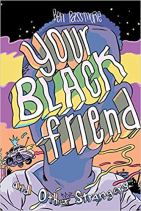
Your_Black_Friend_coverA collection of Ben Passmore’s online comics has been published late this summer as Your Black Friend & Other StrangersYou can read one of the NYT reviews here — I read the book myself and was blown away. Race and equity is a critical element of our curriculum and professional development. Ben Passmore’s work, I think/hope, can be useful for opening a cross-racial dialogue in a way that is accessible for its down to earth portrayal of what cross-racial friendship looks like from the perspective of a person of color.
For this next one, Things I Never Said by Starlenie Vondora, I owe thanks to my Things I Never Saidcolleagues Mariana and Abdel: the same day I read Mariana’s review on GoodReads, lo and behold, Abdel had a copy of it just sitting in his classroom waiting for a reader. Disclaimer: This book is heavy, heavy stuff. I curated a few of the more neutral poems that might have potential as quick-write prompts or mentor texts. But I love the overall concept of putting down on paper “things I never said,” and I think teenagers might, too.

And so, we begin again. A friend of mine who recently left teaching was speaking wistfully about the cyclical nature of what we do, about the freshness of each new school year. It’s so true. Despite last year just about slaying me every day, I might be just about ready for this one. Aren’t we all? So let’s savor these early days, which for me will be the about the first five, just before it sets in that that I’m already behind, that there is never enough time and far too much to do. And we’re back to it, coming back and trying again every day. With a little help from mentors and friends.

Five Ideas that Beat the Dread

A few years ago I stopped reviewing class rules and smacking down my syllabus on the first day of school. I had been doing some research on chronic stress (mostly my own) and read extensively about the fight, flight, freeze response. One description glared at me and gave me pause:  “You have a sense of dread.”

I remembered what I had been taught as a first year teacher:  Set yourself up as the authority figure. Be kind but firm. Establish norms quickly so students know what you will and will not tolerate in your classroom.

Then, almost in the same breathe, I was told:  Develop relationships. Learn students’ names. Let them help develop class rules.

And I muddled through doing a combination of both the best I knew how. Those first few days of my first few years were rocky to say the least. And in hindsight, it’s clear:  there was dread. Lots of dread.

So when I read up on the fight, flight, and freeze response, I realized a big part of my problem:  With my seemingly simple attempt at outlining classroom expectations and detailing how ‘my class would run, chemicals danced a jig in students’ brains: fight, flight, or freeze. Now, I know my syllabus is not on the scale of major life trauma most often associated with this fff response theory, but many of my juniors and seniors didn’t want to be in school anyway. Why was I compounding it?

I learned a better way.

Wait.

Let every other teacher lay down the law. Lay out their plans. Run through the rules.

On the first day of school — maybe even the first five days of school — just write. And talk. Let students drive the discussion. Let them ask questions. Give them a chance to be seen and heard and welcomed.

“Community before curriculum” Angela wrote in her last post, and I love her thinking there. I also think we can merge the two on the first day of school and lay a firm foundation for thinking and talking every day thereafter. We can jump start community and begin our curriculum as we put pen to the page and write.

Here’s my top five sources that beg a response and invite students to write on the first day of school (or at least the first week or so):

  1. To This Day by Shane Koyczan.

Give every student a notecard and ask them to watch and listen and then respond to the poem as a whole or to a line they particularly like or relate to. (I’ve learned some pretty heavy stuff from students over the years. So many of them can relate to the themes in this poem.)

  1. How poetry can help kids turn a fear of literature into love by Jason Reynolds on PBS.

Give every student a sticky note and ask them to think about their reading lives. Then after they listen to Mr. Reynolds talk about reading, ask students to rate themselves. Are they readers eager for the pit bulls or for the puppies? Why? (I quickly find who my readers are and with whom I need to take on the challenge of helping them want to read.) Then for a little more of a challenge, on the flip side of the sticky, ask them to describe in poetic form their feelings about poetry. (You’ll learn even more.)

  1. Possibilities by Wislawa Szymborska. Or the version here where Amanda Palmer reads the poem.

Give every student a copy of the poem. Then read the poem aloud and ask students to write their own list of possibilities. Their list can be straightforward, funny, or interesting things they want the class to know. (I wrote about how I used this poem to practice imitation a couple of years ago. It’s a great lesson and a great poem to revisit.)

  1. Three poems:

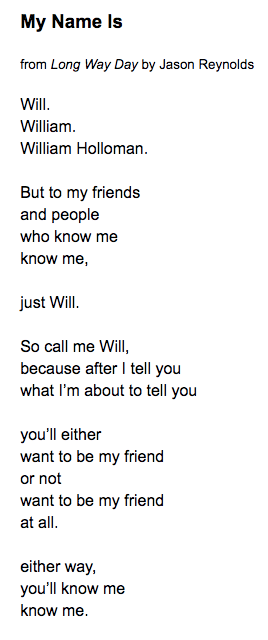
“My Name Is,” an excerpt from Jason Reynolds’ book Long Way Down. (If you haven’t read this book, oh, my goodness. It’s amazing!)

My Name Is by Jason Reynolds

“Instructions” by Rudy Francisco.

Instructions by Rudy Francisco

“Like You” by Roque Dalton, translated by Jack Hirschman

Give students copies of all three poems and a notecard or piece of paper. Read them aloud. Ask students to read them again and then to write a response. They can respond to just one of the poems, a line from a poem, or anything the poems make them think or feel. There is no right or wrong. Just write your thinking. (This is always an interesting response, and it tells me a lot about how to help my students. Many of them will begin to write an analysis of one of the poems — or all three. Others understand that I am asking for a different kind of thinking, one that leads them into ideas for their own poems, stories, or essays.)

  1. Author Bios!

Give students access to books that have clever, witty, or interesting author bios. YA authors like Julie Murphy, Jeff Zentner, Chris Crutcher, Libba Bray, and Gina Damico are great ones, but there are many with a bit of quirk that will draw students in and spark their interest in reading these author’s books. Ask students to explore the author bios and then make a list of the books they think they’d like to explore this semester. Have them write the author’s names on sticky notes for you to put in your conferring notes.

If you want to take this author bio idea further — (this is my favorite):

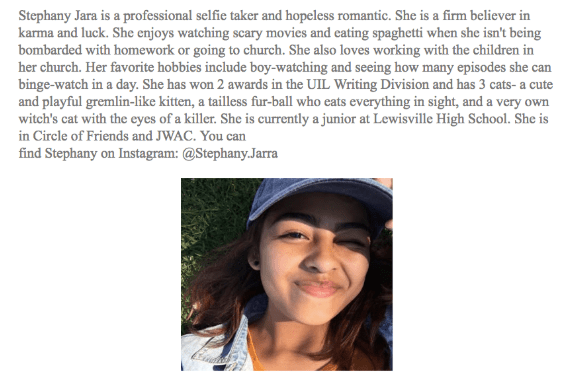
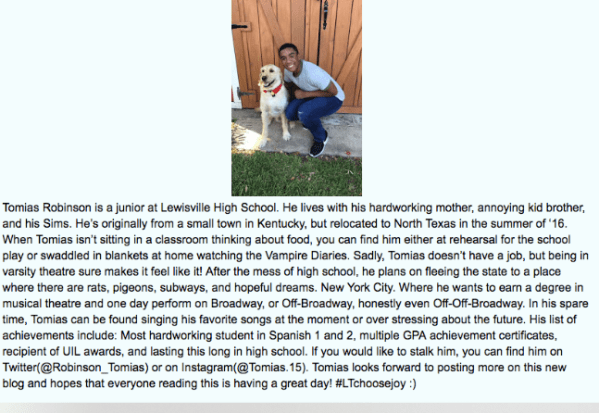
Read several professional author bios aloud. Ask students what information is shared and make a T-chart that lists the what on the left, e.g., name, personal hobbies, awards won, where the author lives, who the author lives with, etc. Then, ask students to describe how this information is shared and add these craft moves to the right. This is the how. For example, short and sometimes incomplete sentences, lists, 3rd person, the author’s name is first, witty word choice, etc. Finally, ask students to write their own author bio while you write yours as a model. Encourage them to try to craft their bio to include ideas from both the what and the how side of the T-chart. Below are two of my students’ bios from this past year.

Stephany author bio

Tomias author bio

(The author bio idea is Lisa’s baby, and she wrote about it here after I wrote about it here. It’s still the best idea I have ever heard to begin students on their journey into developing their identities as readers and as writers. I’ve used this idea in a model lesson for every workshop I’ve facilitated this summer, so if you were there, feel free to share the author bio you wrote this summer in the comments. My newest one is below.)

I wish you happy reading and writing with your students this year. Please share your go to ideas for inviting students to write and build your community.


Amy Rasmussen loves books, pretending to garden, adolescents, and coconut cream pie — not necessarily in that order. She lives in North Texas with her dashing husband of 33 years, their twin-terror Shelties Mac and Des, and a not so loving love bird named Colonel Brandon. Amy spent the summer leading professional development in several districts across Texas and has grown especially fond of the Houston area. If only she could move… Follow her on Twitter @amyrass — and if you are not already, please follow this blog.

3 Ways This Year Will be the Best Ever!!!

Can you feel it coming?  Do you smell new books and old desks?  Are you imagining the sounds of students shouldering their way through the halls and into your classroom like bees through long un-mown grass? (I’m a huge Oscar Wilde fanboy!)

Are you ready to hear a deep breath or quiet giggle interrupt a totally silent self-selected reading segment? Are you ready to mop up tears in buckets and heal emotional wounds with book bandages?

If not, you better get ready.  You may be starting school today, or maybe next week.  It doesn’t matter; time to get your mind right.

I’m ready to launch from the best summer of my life into the best teaching year of my life.  Happiness breeds happiness.

So here are three thoughts I have that will help me be the best teacher I’ve ever been.

  1. Book Talk like my teaching life depends on it…because it does.

If the number one tool in my belt is my classroom library, my number two is my ability to “sell” books.  We all know that we need to be able to sell books both informally and formally.

Informally, we confer with readers and talk about books with individual kids (and adults!) who are in the market for their next reading relationship.  This is the easy back and forth that comes with being a reader and contributing to a literacy rich classroom culture.

The formal moments, in my mind, are those points in time you carve out to stand in front of your class, or some group, and give them the hard sell on a book you’ve decided was worthy of their attention.

To me, these two different bookish scenarios require different thought processes and the latter is example is the one to which I plead my case.

Obviously we have to consider “how” we present the key information that we think will engender interest in deserving books.

But also, we have a massive burden to present books that offer a cultural variety of information that will allow our readers the “windows, mirrors, and doors” that Rudine Sims Bishop wrote about all the way back in 1990.

I took a step forward on the Sunday of the ILA conference and chose to attend a session featuring LGBTQ writers and their books.

Over and over, the panelists describe the point in their lives when they first encountered a character in whom they saw themselves.  Ashley Herring Blake, a primary grade teacher and middle grade writer from Tennessee talked about how she was 32 when it happened to her.  We have to be more pro-active when it comes to offering students windows, mirrors and doors.  Book talks are an opportunity in which we can’t afford to play it safe.

2. Love the kids like their learning lives depend on it…because it does.

I said it before: I will be 100% this year in telling my classes I love them before sending them out the door each period.  I’ve already been practicing with the Student Council kids that I hung out with at Fish Camp.  It was our first time to work together and as the day ended, I told them too. You never get a second chance to make a first impression.

But I’m not just going to say it to their backs as they sprint out of the room.  I’m going to say it to their faces as they enter and I’m going to write it on their papers.  Reading and writing culture revolves around love: of texts, but more importantly the readers and writers.

3. Empower the students to read and write in a massive volume like our world depends on it…because it does.

We know how important volume is in a student’s growth.  We have to let them read and write more than we can ever think about grading.

Also, we have to give them room to read and write in ways that let them explore their place in the world. Anything less than this, and I’ve failed. I will not fail.

Charles Moore will, for the first time in many years, teach Freshman English this year. His bleeding heart required him to volunteer to sponsor Student Council at this new school. You can follow his antics on twitter at @ctcoach