
Photo by Evie Shaffer on Pexels.com
About two months ago, I found myself crying in the maternity section of Target mere hours before a flight on Sunday to the AP Reading in Tampa. My bags were unpacked, the clock was ticking, and I was sobbing under the harsh fluorescent lighting, lost in a part of the store – a whole genre of clothing – I knew nothing about.
See, about three months pregnant, I’d finally run up against the inevitable clothing wall. Nothing I owned was comfortable any more; I was hoping to squeeze (literally) a few more weeks out of my clothes before I had to shop for new ones. After realizing that I still hadn’t packed at nine and then realizing that everything was awful and miserable around ten, I found myself an hour later in the clearance section of Target trying to find something cheap that could last me for a few weeks.
Extra smalls as far as the eye could see. Not what I needed.
I asked the worker on duty for help; she suggested I shop in the maternity section “even though you’re obviously not pregnant.” That comment broke me. I’m not a crier or one for public displays of any emotion beyond the Snoopy Dance, but there I was. Crying. In. A. Target.
Over clothes.
I bought my maternity pants and went home, determined to put the whole night behind me.
But I couldn’t. Days later, I realized what bothered me so much about the interaction: I was pregnant. I was, AM, lucky enough to experience a part of life that not every one else can. I was so thankful and excited about this journey that very few people knew about at that point. And I wanted people to know, to recognize and acknowledge that something really, really neat was going on – completely on its own, seemingly separate from my conscious self.
In short, I wanted all that was going on inside of me to be made manifest to the outside world; I wanted my inside self to be obviously reflected in my outside self. In the moment – right or wrong – I felt robbed of understanding, or acknowledgement, of something that had become essential to my sense of self. Big feelings for what, ultimately, was such a small moment.
I’ve been waiting to write this blog post since then.
This experience has stayed with me all summer as I planned for the school year; as with almost everything in my life I tried to apply this thinking to my classroom and found a fresh reminder that often so much happens under the surface or behind the scenes for my students that I may not see or know about. I wonder how many students have sat in my class, struggling because they know what they want to say, but can’t quite figure out how to say it. Maybe they wished they could just write an idea out instead of vocalizing it. I wonder how many times what’s going on inside of them longs to be made unmistakably apparent to the outside world. I wonder if in those moments they feel as frustrated or overwhelmed or alone as I did in Target.
I hope not, but I’m betting some do.
“What is your why?” This simple question is one the blog has posed before, and I love finding a why for my year every August. In addition to my why for this year, I want to remember in my instruction, my grading, my conversations, my interactions with students that they, like Whitman said, “are large … and contain multitudes” even when, especially when, those multitudes aren’t readily visible.
Sarah Morris teaches AP English Language & Composition, AP Seminar, and Film as Literature in Murfreesboro, Tn. She is currently reading The Shallows and suggests you read it too. Annoy (err…I mean, share joyfully with) all of your friends the interesting ways the internet is changing our society, whether they want to hear it or not! She tweets at @marahsorris_cms.


 Join us for a summer series revisiting our top posts from this school year, and please “turn and talk” with us in the comments section each week!
 Usually my own post-lesson, reflection phase is a litany of all that I could have, should have done. How refreshing, then, to reflect in a way that identifies value beyond what we’d hoped. What an affirmation that our practice recognizes beliefs we hadn’t even seen.

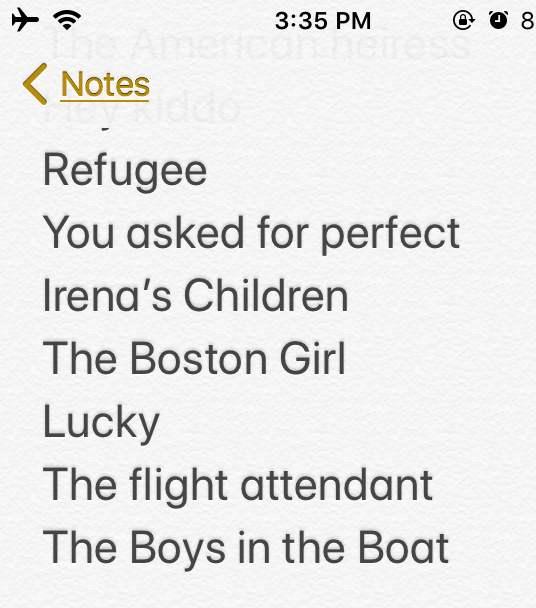 I’ve kept track in the Notes app on my phone, and it’s super easy to keep track this way. I could have added how many pages were in each book, genre, authors, etc, but those are easy things to look up later, so I just included the titles in my own list.


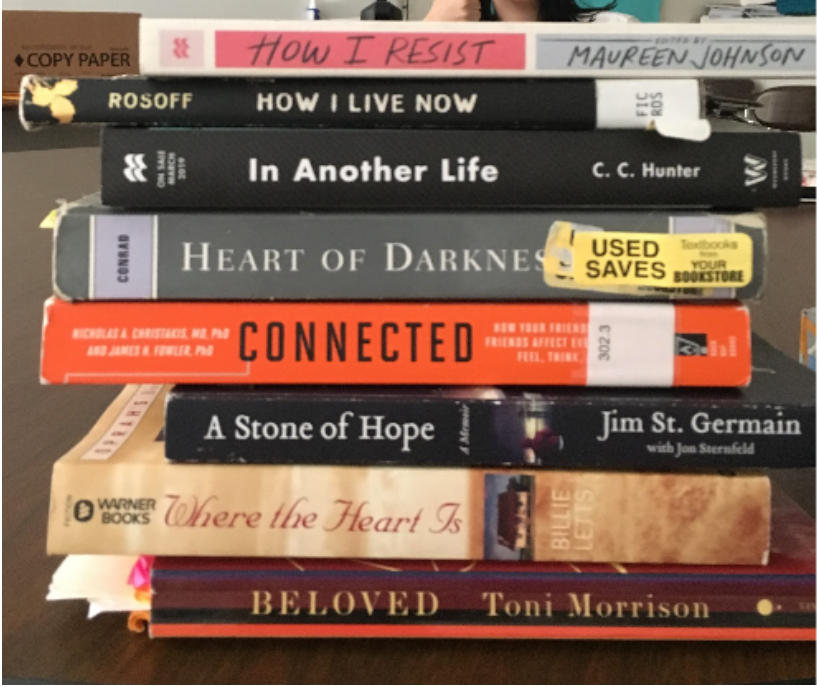



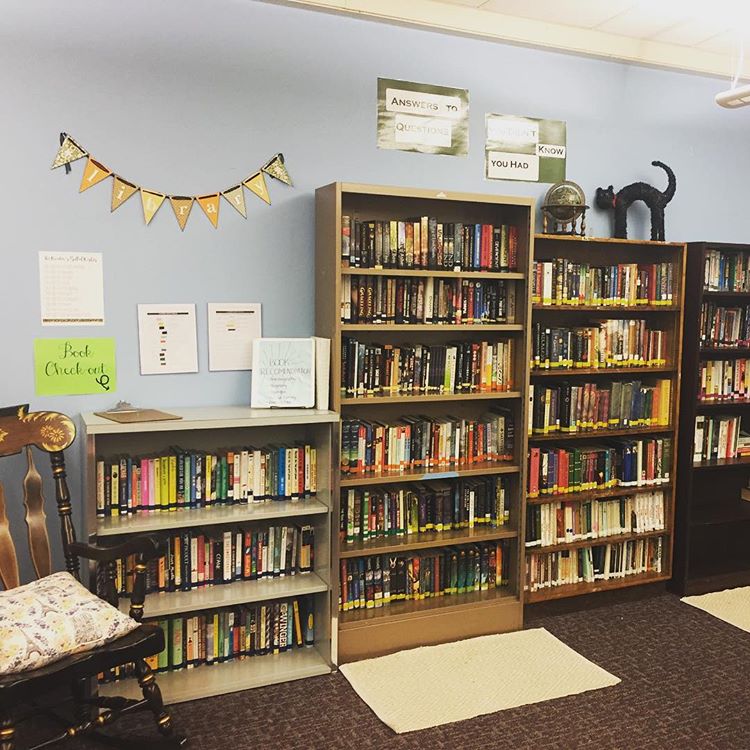
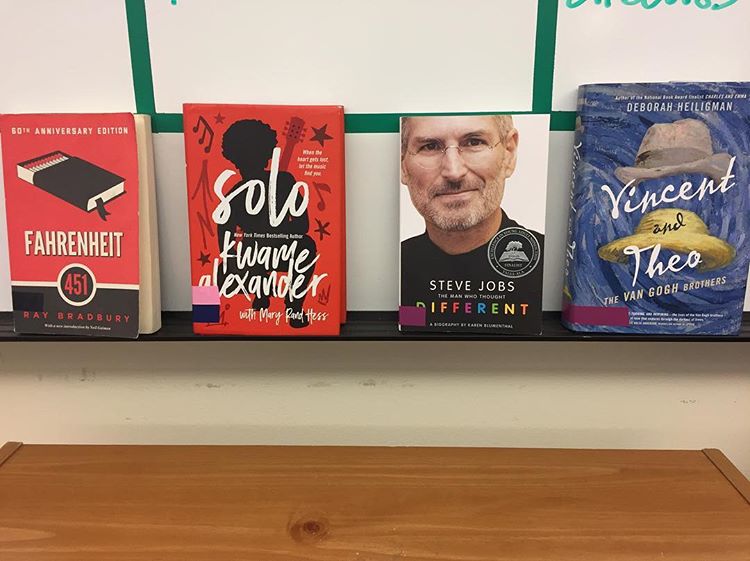
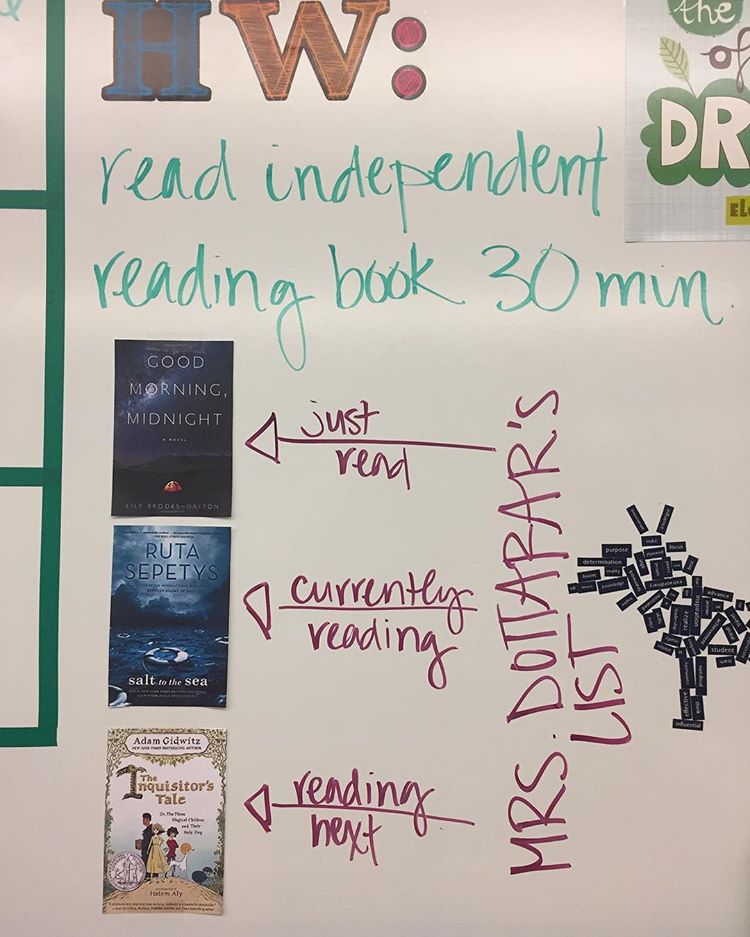 with books: What I just read, What I am currently reading, and What I plan to read next. Next to each phrase I had an arrow and a copy of the book jacket so students could see my book list. I didn’t do that this year because I didn’t have white board space.
  Twice a year, right before Christmas Break and right before school is out, I have students fill out a recommendation form on books they enjoyed and think others might like. It goes in a binder organized by genre. However, students do not share these recommendations prior to turning them in. Why have I not done that? Not sure. It was kind-of like checking something off my to-do list. In this area, I plan to have students share out books they wrote down on that sheet of paper before turning in.





 Here’s a
 Three Teachers Talk