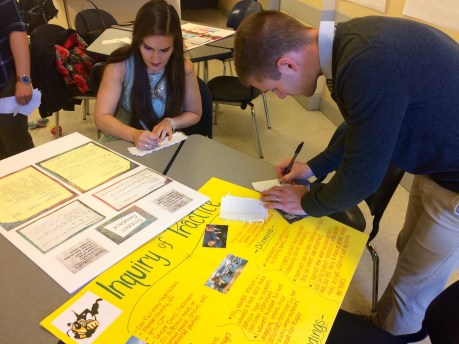
 I really don’t think there’s anything more invigorating than learning with other teachers, and this week, I’m doing just that.
I’m feeling lucky to be encamped in the mountains of southern West Virginia at Pipestem State Park, working with National Writing Project teachers on the College Ready Writers Program. This isn’t my first NWP workshop, but it’s my first time leading one, and the thinking and planning and writing that have surrounded our work has been absolutely energizing.
(“You’re like a wind-up toy,” my co-leader remarked yesterday as we planned over dinner. “You just never stop!”)
It’s true–all week, I haven’t stopped thinking, connecting, writing, reading, and wondering about our course topic, which is argument writing. One of our central reads, Joseph Harris’ Rewriting: How to do Things with Texts, has been inspiring and informative. Harris has gotten me to revise how I think of writing and its purpose in a classroom.
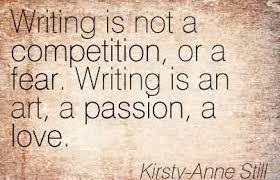
Writing, in my experience, is a process of discovery. We write to learn, to help us grow into ways of thinking.
When we frame writing this way for our students, the entire writing process as we usually approach it must be revised. There can be no more, “brainstorm an idea, then write a draft, then revise it, then turn in a final draft.

Make sure you show me you can do ______ throughout.”
Instead, the process needs to become one of starts and stops, of constant learning and revision of thinking, and a process that is never completely independent of other learning. What I mean by this is that we can never just write for writing’s sake–we will always be writing to learn about our topic: the reading we’re writing about, the questions we’re asking, or the craft moves we’re making.
Writing is never separate from its subject. It is always both art and craft, both structure and content, both phrasing and approach. When we rewrite our notions of what writing is, we see that the way we approach, assess, and value the writing process must reflect those beliefs.
Harris asserts that students are often asked to assume the roles of disciples as they write, adopting the moves and beliefs of another thinker (often the teacher or the author of whatever text they’re studying) rather than adapting them. “Little new knowledge is created. Instead the disciple simply shows that the master is correct,” (74) in this type of teaching. I’ve seen, and experienced, this kind of writing in classrooms.
How many of our students’ writing experiences have stifled their voices?
Just one is too many. Our students do enough of this posturing. They’re teens, for crying out loud, constantly adopting the moves and beliefs of others. We need to help them find their voices, and not just their writing voices–a voice in which to sing a song of themselves.
All this thinking only reaffirms my belief in a writers workshop approach: one in which a community of students can safely take risks, engage in high volumes of low-stakes, choice-driven, mentor-text-rich, craft-study-laden writing, confer with a practiced writer about their growth, and take on the identity of a writer themselves.
If you’re interested in working toward a classroom that values this kind of writing, I highly recommend reading Joseph Harris’ Rewriting, and continuing along with us on our readers-writers workshop journey here at Three Teachers Talk.
How might your classroom look this fall if you rewrite your definition of writing to match Harris’? Please leave us a comment and share!
Shana Karnes teaches sophomore, junior, and senior preservice teachers at West Virginia University. She finds joy in all things learning, love, and literature as she teaches, mothers, and sings her way through life. Follow Shana on Twitter at @litreader or read more of her writing on the WVCTE Best Practices blog.





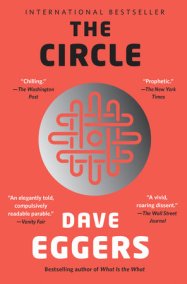
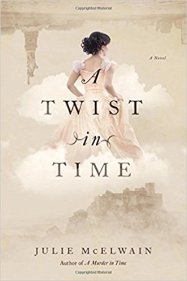
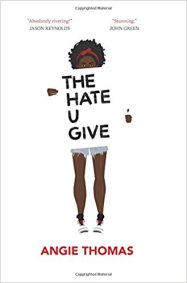

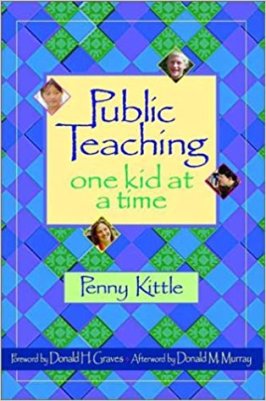 This week I tackled a title that’s long been on my to-read list:
  As we near the end of the school year, I hope you can find truth in one of Penny’s final statements: “In my experience, it isn’t the stress that’s left the greatest mark, it is the joy.”
 y helped my students grow as readers, too. Anna’s favorite book of all time became the award-winning A Constellation of Vital Phenomena, while Connor was blown away by Ta-Nehisi Coates’ Between the World and Me. These books and more were chosen, read, and evaluated independently, without the confines of assignments or the too-broad sea of “your choice” to hold them back.
 After completing self-assessments in

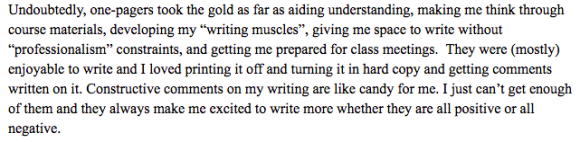
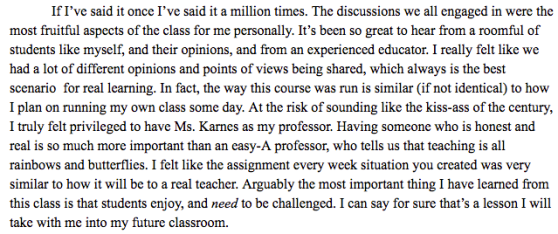


 Hanna began her self-assessment. Her ability to look back at her earliest writings as an artifact of who she was as a thinker 16 weeks ago allowed to her to launch into a detailed reflection on her growth over the course.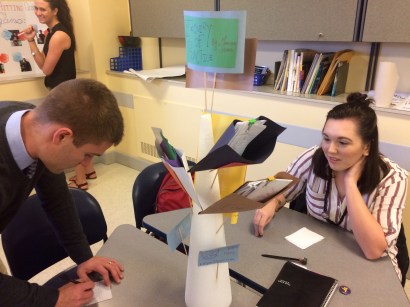

 I have so much hope for our profession, our students, and our society.
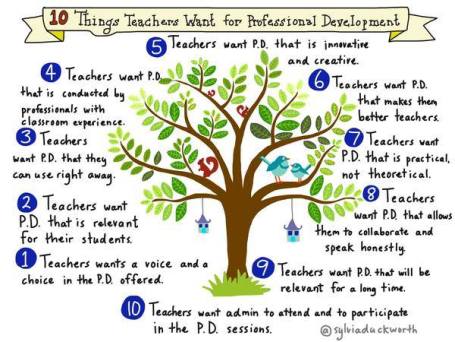


 Three Teachers Talk