Category Archives: Writers

Giveaway WINNERS!!

Thank you to everyone who entered our giveaway!  We’re so excited to award books to so many amazing teachers.

Without further ado, here are the winners:

  1. Andrea Anderson from Parkway Central High in Chesterfield, Missouri
  2. Hope Bobonick from Trumbull County Career and Tech Center in Warren, Ohio
  3. Melinda Buchanan from Sanger High School in Sanger, Texas
  4. Lindsey Cary from Peru High School in Peru, Indiana
  5. Janelle Christensen from Henry Sibley High School in Mendota Heights, Minnesota
  6. Karen Drake from Lee-Davis High School in Mechanicsville, Virginia
  7. Kopper Ernst from Riverheads High School in Staunton, Virginia
  8. Amanda Gaul from Waukee High School in Clive, Iowa
  9. Jill Gerber from Whitfield School in Creve Coeur, Missouri
  10. Amanda Graham from Latta High School in Dillon County, South Carolina
  11. Benjie Haugen from Monticello Middle School in Monticello, Illinois
  12. Colleen Kiley from Mount Abraham Union MS/HS in Bristol, Vermont
  13. Kimberly Kroll from Lapeer High School in Lapeer, Michigan
  14. Ashlee Kuhry-Larsen from Waukesha South High School in Waukesha, Wisconsin
  15. Kyla Louis from Hood River Middle School in Hood River, Oregon
  16. Anita Miller from Miami Trace Middle School in Washington Court House, Ohio
  17. Kyle Nelson from Lone Peak High School in Highland, Utah
  18. Tasha Rios from Grand Rapids Catholic Central in Grand Rapids, Michigan
  19. Paola Ruocco from Evanston Township High School in Evanston, Illinois
  20. Sarah Whitman from Collingswood Middle School in Collingswood, New Jersey

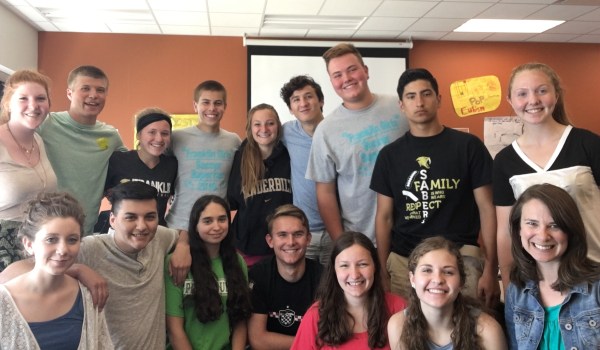
Be on the lookout for your books to arrive to your school addresses!  If you’d prefer for me to ship your books to your home address, please feel free to email it to me at shanakarnes@gmail.com.

Thanks to everyone who joined the Three Teachers Talk conversation!  Happy Summer!

Mini-Lesson Monday: First and Last Lines

In the spirit of all the books we’re giving away (winners announced tonight!), today’s mini-lesson is one of my favorites to do with independent reading books.  It celebrates the beauty and power of language, no matter the text–poetry, nonfiction, YA, award-winners, graphic novels, and more.  It also celebrates the pure joy of discovery; the launch into a new world attained only by opening to the first page of a new book.

Objectives:  Using the language of the Depth of Knowledge levels, students will identify patterns in opening and closing lines of texts, synthesize their noticings, and draw conclusions about a text’s craft and structure.

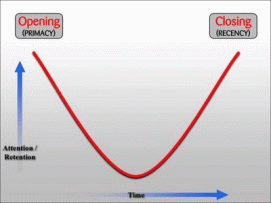
primcacyLesson:  “Have y’all learned about the concepts of primacy and recency in psychology yet?  Who can refresh us?”

A student reminds us that the concept says that the first and last items in a series are easier and more likely to be committed to memory.

“Well, this concept isn’t just for psychology.  It applies to books too.  The first and last lines of books are the most powerful, and the most likely to stick with us.  Let’s talk in our table groups about why the first and last lines are so powerful.”

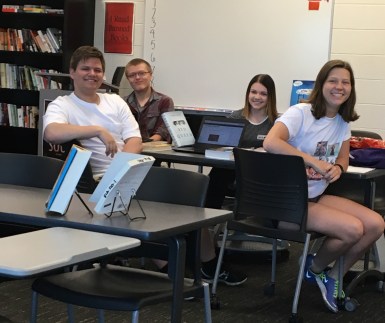
I wander the room for three minutes as students discuss, in groups of 3-4, these concepts.  They conclude that the first line often sets the tone, introduces a new world, or hooks the reader with some mystique.  The last line, they say, helps keep the reader wondering, or solves a lingering mystery, or even makes you cry.

I write these conclusions on the board, or elicit them from groups if necessary, so that we’re all on the same page.

“Okay, let’s take a look at some of our current reads and see how they can grab our attention.  Open up your independent reading book and read the first line again, and then read the very last line, too.”  (There’s always some anxiety about this, but I reassure them that last lines rarely contain plot giveaways.)

618698KrJJL._SX325_BO1,204,203,200_

(OMG, have you read this? It exploded in popularity the last few weeks of this school year. Read it!)

I ask a few students to give me examples:

  • Miss Peregrine’s Home for Peculiar Children begins with “I had just come to accept that my life would be ordinary when extraordinary things began to happen,” and ends with, “We rowed faster.”  
  • A Prayer for Owen Meany opens with “I am doomed to remember a boy with a wrecked voice—not because of his voice, or because he was the smallest person I ever knew, or even because he was the instrument of my mother’s death, but because he is the reason I believe in God; I am a Christian because of Owen Meaney,” and ends with, “I shall keep asking you.”
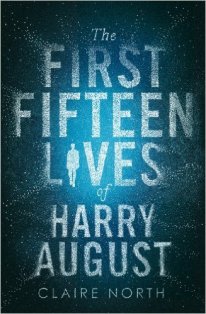
  • The First Fifteen Lives of Harry August begins with “The second cataclysm began in my eleventh life, in 1996,” and concludes, “Instead, for those few days you have left, you are mortal at last.”
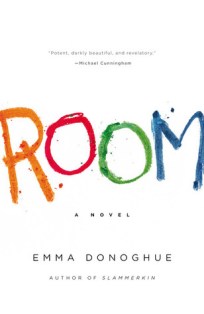
  • Room opens with “Today I’m five,” and ends with “Then we go out the door.”

I ask students to write for a few minutes about all that they can learn from the first and last lines, based on what they already know of the text from reading.  This is key–the lesson is much different than a simple craft study of a text they’re not already invested in, because they’re bringing lots more prior knowledge to their text analysis.

7937843I quickly model with Room, whose plot is simply explained and well known from a recent booktalk.  “I notice the sentence structure first–both lines are short, simple sentences.  Then I get a sense of the narrator’s voice, as he is obviously five years old, and that shapes how I’m going to view the text.  I also know that while they start out trapped in Room, they manage to escape somehow, either literally or figuratively, because of the last line.  I’m intrigued by all of these things, and it sets me up for what sounds like a pretty good read.”  As I talk, I note on the board the kinds of things I’m noticing–craft, tone, characterization, theme, plot, sentence structure.

Students write for five minutes about these topics.  Because they’re midway through these books, they have more knowledge of the text than just the first and last lines.  After a few minutes of writing about what they’ve noticed, I ask, “Now, how does revisiting the first line, and looking ahead to the last line, shape your reading of the text?  What do you find yourself thinking about?  What do you predict might happen?”

Follow-Up:  After students have written their reflections, I ask that they pass notebooks.  They’ll read all of their table mates’ entries, providing 2-3 mini-booktalks–a variation on speed dating.

This lesson could also be a great companion to Jackie’s mini-lesson on writing leads.

This lesson also acts as one of a series of lessons leading up to the students’ writing of a craft analysis of their independent reading books.

Try It Tuesday – The ‘Secret’ to Workshop Success

At this point in the school year, teachers do a lot of counting. Counting days, counting essays left to grade, counting books missing from a classroom library (Seriously people, it’s not cool to steal from teachers. Your growing passion for reading is the bee’s knees, but my own kid may have to pay her way through college at the rate I spend on books for you. Might you return them? Please? Thank you). At graduation this past weekend, I found myself counting seniors I had taught and I began imagining all the opportunities in front of them. Interestingly enough, this year, I looked at those seniors and saw…books.

Zak raved about Ready Player One early this year. It was one of my first workshop successes.
Zoey emailed me over the weekend a few months back about The Girl on the Train.
Jenna plowed through Brain on Fire recently, after Zoey’s recommendation.
Larissa swears that Walden will change your life.
Ellen blushed when she told me she absolutely loved The Sociopath Next Door.
I counted at least eleven kids that read and sobbed over A Monster Calls.

Birds singing and happy little clouds everywhere.

And now…for a moment of full disclosure in the opposite direction. As my department makes the transition to workshop, sometimes the numbers are overwhelming and scary. We are one of only a handful of high schools moving to this model in the entire country. The path before us is paved by K-8 workshop instruction, but the number of secondary schools already doing workshop is relatively limited. This makes the sheer volume of curriculum we’re creating staggering and models hard to find.

On top of those numbers we have extremely limited common prep time, surface level understanding of the best way to break up our 86 minute class periods most effectively, and hundreds of new classroom texts we are working to keep track of (not to mention read). All with three preps for most of my colleagues and a grand total of one hour of collaborative PLC time per week.

In short, this transition isn’t easy and it’s already had some pretty sobering/ugly/weep-worthy moments.

We’re wrestling with very real questions about how to hold students accountable for their skill progression, how to keep track of meeting student need most effectively, how to appropriately conference with all of our students in large classes throughout the school year, and how to balance a need for college/career readiness with our desire to afford students the choice that will fuel their passions for both reading and writing.

At the end of the day, and the end of school year in which we have all been working to

IMG_1112

AP Language Super Readers – Simrah discovered nonfiction, Louise (our school salutatorian) delved into the study of language, and Ellen and Kaley blew through Brain on Fire.

incorporate more and more workshop practice into our daily instruction (knowing we will be expected to operate in the workshop model to fidelity next year), we are tired. Tired, overwhelmed, and nervous.

However, the visual of an Escher-like hellscape I’ve just created for you, thankfully, isn’t the whole story. As I reflect back on this move to workshop, the overwhelming nature of the preparation involved ultimately pales in comparison to the positive feedback I’ve received from students.

I was sitting on the patio a few nights ago with my husband discussing the class-feedback forms my students had just emailed to me (What did you learn from this class? What did you enjoy? What should I work on for next year?) with the completion of our regular class work and impending exam week. I expressed to him how proud I was of the number of students who commented on reading more, enjoying writing more, and basically being more invested in English class than any other year I can remember.

It sort of dumbfounded me as I recalled the emails over the course of the year. The casual

IMG_1090

My 2A AP Language Crew – Dema read Black Boy after a book talk, Bennett read Ishmael and says it changed his life, and Larissa fell in love with American Classics.

conversations with kids that showed their deep thinking about topics they cared about. Countless peer to peer discussions with overheard snippets such as “Oh, I loved that book. You need to read it” and “Yeah, I just couldn’t put it down” and “This topic sentence is really good, but if you combine it with this idea, the paragraph will make more sense.”  The longer I talked with my husband, and the more I recounted the year in student snapshots, the more surprised I was to realize that my stories of the year had little to do with content I “taught” and everything to do with the students themselves – what they were doing with the content. The difference of 2015-2016 was choice and encouragement to be readers and writers. In short…workshop.

So with my recent numerical obsession (did you know it’s only two more sleeps until the last day of school?!), I compiled the following rundown of my first year of exploring the workshop model:


Workshop by the Numbers

1 – Teacher playing around with workshop. Discovering its benefits, its challenges, and its similarity to and differences from her current instruction. Exhausting in the way teachers love. Some call it masochistic. I call it professional development.

IMG_1100

We learned how to make paper cups on the last day with our seniors…a nod to the practicality of English class…then we read. 

3 – Teachers (Talk) who journeyed to the wild North during February to instruct the Franklin High School English department on the day to day of workshop instruction. Exhilarating.

11 – Colleagues opening their lesson plan books and starting almost from scratch to first play with and then make a full transition next year to the workshop model. Collaborative.

117 – Students who read for 10 minutes of every class period we shared, wrote and reflected during every period of second semester, and changed as readers and writers in ways I’ve not seen before in my 13 years of teaching. Thrilling.

180 – Days in the school year to remind students that they will grow as readers and writers with practice, passion, and a commitment to question, explore, and expand their views of the world. Daunting.

2088 – Hours of summer to read the 16,983 books on my “To Read” list (No time for love, Doctor Jones…or sleep for that matter). Delicious.


So many opportunities.

But now, I am going to be brutally honest once again. As previously stated, the move to workshop can be scary. It’s new. New to us, our students, and in a formal sense, it’s relatively new to secondary education altogether.

However, here’s the part that sort of sounds like cheating:

Though teachers, myself included, are very rarely afforded the opportunity to take it easy, there are few things easier than throwing open the doors on choice and seeing what happens. Of course, there are many systems that need developing in my classroom and so much of workshop requires routine and consistency, but the heart and soul of workshop is really

IMG_1116

1B AP Language and Composition – The seniors have left us, but this crew still has final projects to present

choice – choice, talk, and lots of writing – all of which mainly require simply being honest with, invested in, and responsive to student need. No, it’s not totally easy. It can’t be a free for all. It can’t be totally haphazard. But it can be trial and error. It can be learn as you go. It can be beautifully impactful.

To provide proof, here is a sampling of student reaction from my class-feedback form this year. I tried a lot of different things. I messed up a lot. We backtracked often. I sometimes forgot to book talk. I sometimes didn’t provide enough modeling or take the time to write every time they did, but we worked with choice, we wrote more, and we talked more than ever before.

Here are just a few reactions from my AP Language and Composition class:


Hello,
This year I really learned to be literate. AP Lang actually taught me that I can read books that I want to read and no matter what they are I can discuss them in a scholarly way because even if the book is something like poetry or a comic it is still a book. I’ve learned that all books have something to teach and that’s why they were written in the first place. I’ve read some amazing books this year and I’ve learned how to discuss my opinions on things using a higher vocabulary and assertions that are beyond the obvious. I’ve learned that you can look at anything in life a little deeper and you might just learn something. My tendencies to look deeper into things was fostered and practiced through books and reading so thank you Mrs. Dennis for helping me become a scholar. The first time you called us scholars I didn’t really think you were serious, but now I feel it. I feel like I want to spend my entire summer reading and I plan on trying to finish a large chunk of my I want to read page because reading truly and utterly makes one a better person. Reading makes you a better thinker, citizen and friend. Language is truly a beautiful thing. Also, you should know that coming into this class I was intimidated and almost dropped. English is not my strongest suit as I want to go into premed, but now I can be a poetic Doctor am I right??
Thank you also for always being a nice person and a smiling face to see in the morning.
Love,
Nimmi
Mrs Dennis,
I loved this class, a lot. I’ve never really felt like I’ve learned much from English classes, but in AP Lang this year, I’ve grown so much as a writer and a reader and a thinker. Part of that is the class itself, part of that is the practice work we’ve done throughout the year that forced us to think for ourselves (I actually like doing one pagers now), and a big part of that is you as a teacher. You made us want to be smart. I wouldn’t change a thing, and I think that I’ll probably look back on this class as one of the most valuable I’ve taken in high school. I’ll miss having you as a teacher next year!
Thanks for everything,
Maddie
Mrs Dennis,
I always thought becoming a man would require some sort of coming of age. Some sort of ‘killing the beast and dragging it home’ type situation…
I began this year as a boy and ended it as a man. Throughout the year I became increasingly disillusioned with being a dependent, in ideology and in living situation. I read books about Manliness, articles about what it “means” to be a man and looked far and wide for what the distinction was.
There is no amount of *physical contact*, “macho” rites of passage, or waking up one day transformed that made me into a man. Oddly enough, it was sharing my feelings that made me a man. The turning point was the day you told us “Feel free to share more feelings in your one pagers”.
“Sharing my feelings” translated to me having to figure out WHAT I felt and believed and WHY.
Instead of having some book tell me that I should be principled and have virtue (which is simple enough for me, and not only a manly thing) AP Lang and you made me feel like I had a SAY in my own life and thoughts. AP Lang made me no longer dependent on others for what I believe and why, giving me the ability to evaluate, challenge, qualify AND support things.
AP Language and Composition MADE A MAN OUT OF ME.
I am eternally grateful,
Bennett
Encourage everyone to read Walden, strongly encourage. It’s life-changing.
Continue teaching everyone to question ideas or anything at all; I think that was really fundamental in my growth as a student as well.
Larissa

And here, ladies and gentlemen, is the secret formula…

It’s no secret at all.

These are the simple changes I made to my daily practice. And though I have a lot of work to do in regards to running a true workshop classroom each and every day, the results this year have felt amazing. Give it a try!

  • Provide 10-15 minutes per class period for students to read books of their choosing. It’s time well spent. Best spent, actually. 
  • Conference with students during that reading time to better understand what, how, and why they read. This will assist you in recommending further reading and in determining mini lessons your students need to make them better readers and writers.
  • Have students write each and every day. Encourage them to write without stopping (building fluency), revise something every time they write (building capacity to internalize the writing process), share that writing (to build community), and take pride in that writing by choosing and developing ideas.
  • Use additional class time for more conferences with students around what they are reading and writing. Students can work individually, in pairs, or in small groups during this time, depending on the mini lesson for the day.

Of course, readers and writers workshop involves so much more, but this is where I started this year. This is what resulted in the student response above.

If my calculations are correct, I have roughly 25 years left in the classroom (holy, holy, holy). That’s 3000 students (conservatively) over 4500 days. Talk about an opportunity. Or rather, 4500 opportunities.

What books will they love?

What great stories will they tell?

Whose life will change by becoming a reader and a writer?

I can’t wait to find out. Because the secret to workshop success is no secret…it’s the students.

IMG_1352

3A Sophomores – Trevor said he read more than he ever has, Errin and I read Metamorphosis  together, Josh read (and loved) Moby Dick, and Lauren’s “To Read” list is two pages long. 

What moves have you made to workshop that have made a difference in your practice? Please feel free to leave your comments and questions below!


The Right Book May Be an Audiobook

headphones_bookMatching the right student to the right book is at the heart of the reader’s workshop, and lucky for one and all, there are plenty of great books to go around–even for the most reluctant readers.  As a reader’s workshop leader, teachers must be well versed in a variety of genres to do their jobs well:  young adult, nonfiction, and even the classics.  But what about audiobooks?

Admittedly…I’m a book snob.  I was dedicated to paper books for years, until I got married and my early-to-bed husband complained about my reading lamp’s brightness.  Enter my very first e-reader, with which I quickly fell in love.  I reasoned that even though I wasn’t reading a book, per se, I was still reading.  I still wasn’t on board the audio train, though; after all, listening isn’t the same as reading.

Enter my best friend’s move to Virginia Beach, then a 10-hour drive away from our native Cincinnati.  What was I supposed to do for 10 hours whilst driving to visit her?!  “Listen to an audiobook,” she suggested.  “Duh.”  So, I grabbed Thirteen Reasons Why on CD from our library, and (12 hours and a one-state detour thanks to being so caught up in the book that I wound up in Maryland later) I was hooked on audiobooks.

It’s important to note that listening skills are not the same as reading skills, but in the battle to build literacy, one is a scaffold to the other.  While decoding can only happen when a reader is looking at text, the analysis of universal themes, practice of reading strategies, and ability to make connections can happen with any text, written or oral.

“Understanding the message, thinking critically about the content, using imagination, and making connections is at the heart of what it means to be a reader and why kids learn to love books.” –Denise Johnson

Were it not for audiobooks, my own reading life would almost certainly be suffering right now, as I’m so busy and sleep-deprived with an infant, but I love listening to my favorite murder-mystery series in my spare moments.  In countless conferences with my student athletes, I’ve come to realize that their practice and travel schedules keep them incredibly busy on nights and weekends, and audiobooks have helped them remain readers in their busiest seasons, too.

I strongly believe that audiobooks can save, strengthen, and supplement any rich reading life, and as such, I take great pains to recommend this medium to my students, often in the following categories.

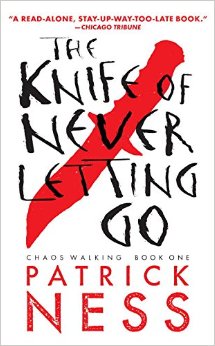
51NcMaqTCsL._SY344_BO1,204,203,200_Series – A great way to immediately get students hooked on audiobooks is to recommend a series they’ve already started.  Sequels to titles like The Maze Runner, The Knife of Never Letting Go, Percy Jackson, Harry Potter, Legend, Divergent, City of Bones, and more are great gateways to the world of audiobooks.

Books read by their own authors – Many writers read their own audiobooks, and it’s fascinating to hear the nuances of Michael Pollan’s or Malcolm Gladwell’s writing as he reads it aloud.  The likes of Maya Angelou, Neil Gaiman, Barbara Kingsolver, and even Barack Obama have deigned to offer themselves to readers in audio form.  It’s endlessly fascinating to me to add a new dimension to “reading like a writer” when I listen like one, too.

20910157Humor – Similarly, so many amazing essayists, comedians, and satirists read their own audiobooks.  Amy Poehler, Tina Fey, David Sedaris, Mindy Kaling, Neil Patrick Harris, and more are just a few of the folks whose movies or TV shows I’ve watched, and who’ve then joined me in my car or at the gym in audiobook form.

Challenge Books – Books that for one reason or another–length, difficulty, topic, multiple narrators–are challenging are great candidates for audiobooks.  I don’t think I could’ve made it through Unbroken, Behind the Beautiful Forevers, Thinking Fast and Slow, or other lengthy, difficult tomes had I not listened to them rather than read them.  Their tough topics and intimidating lengths would have been much too off-putting for me, and many students find themselves in similar situations.  Audio is my favorite way to scaffold students up to the level of a slightly too difficult text.

Whatever’s always checked out – No one could ever find Winger, Crank, Paper Towns, Because I Am Furniture, My Book of Life By Angel, Boy21, Red Queen, or The 5th Wave this year–they were just way too in demand.  Instead of waiting for those titles to be returned, many students opted to download the audio version instead.

What are your thoughts on the world of audiobooks?  Which titles are your favorite?

Imagining Our Ideal Bookshelves

My students are selfie experts; somehow, through practice, they have discovered the perfect angle, the right light, the exact method to fit ten people into one frame—while still managing to make their head look normal-sized.  In those fleeting snapshots, they capture the essence of who they are (or at times who they want to be), if only for a second.

I believe that the books we read can serve as small photographs of our hopes, dreams, desires, and curiosities.  They provide a  snapshot of who we were, who we are, or who we want to become.

FullSizeRender-2

Julia’s highly organized ideal shelf

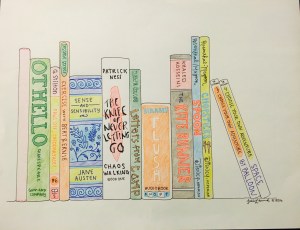
As a final project, my AP Literature and Composition students completed an “ideal bookshelf,” inspired by the book My Ideal Bookshelf and a quick write I completed in Penny Kittle’s summer class two years ago.  The assignment was relatively simple—create your own ideal bookshelf of the books that “represent you—the books that have changed your life, that have made you who you are today, your favorite favorites” (La Force xi).  Since this is an AP Literature class, I added a twist—I wanted students to stock their shelves with books that not only transformed them as a person, but also developed them as a reader.

As each student presented on their shelf, they transformed from self-assured seniors to wide-eyed children who relayed the story of the first book they had ever fallen in love with.  Many of them spoke of how they either found or developed their passion for art,

FullSizeRender-3

Max’s science-based book shelf

coaching, theatre, computers, and physics through books they had found over 18 years.  The books they listed did more than just challenge them as readers; these books had the power to inspire, entertain, and heal.  As Claudia wrote about The Sisterhood of the Traveling Pants, “I have no real idea what is so special about it, but I’m not going to question its magical powers when it does so much good for me.”


What I loved most is how these shelves found life through details; Julia’s shelf held her drawing notebook, Cam’s his favorite cookbook, and Payton’s was adorned with her grandmother’s locket, which she uses as a bookmark.  Some shelves were neat and orderly, perfectly stacked, while others, like Sammie’s were a bit more scattered.  As Sammie put it, “I don’t know what I want to do as a profession; I am still figuring it out.  That partially explains the disarray that is my bookshelf.  I couldn’t decide which would be more practical, stacking or leaning.  The result is a bookshelf with a little bit of both.”

FullSizeRender-1

Sammie’s slightly scattered ideal shelf

As my seniors complete the next three weeks and begin the process of preparing for college, I want them to walk away with the writing and analytical skills we’ve honed all year, but more than anything, I want them to remember why they fell in love with reading in the first place.  I want them to question why books are powerful and understand that the universality of a novel’s message can change readers.  I want them to read for knowledge and depth and challenges, but I also want them to accept that not everything needs to be analyzed, dissected or picked apart.  In fact, sometimes we read for escapism, for love, for adventure.  For many, this might be the last English class they take.  Hopefully, it is only the start of a lifetime of reflective reading and ideal bookshelves.


Letting Go: A Farewell to High School Teaching

IMG_0642

They bought me a microwave.

Do you remember your classroom management course?  You know, the one you took in college where you had to design a discipline plan, a seating chart, and a parent phone call log?

I remember mine.  I remember reading Harry Wong’s The First Days of School like it was a bible.  I remember clinging to its lessons my first year of teaching.  I remember trying to craft my “teaching persona,” which I was assured was not to be too friendly, or too close to my real personality (which was still developing–heck, I was 21).  If I just stayed cool–icy, in fact–I could prevent any misbehavior and ensure perfect lesson delivery any day of the week.

I remember well when teaching was as new and scary and overwhelming as parenthood is to me today.

Screen Shot 2016-05-30 at 6.29.32 PM

#nofilter

Fast forward to this school year, during which I did most of my teaching from a chair with my very swollen ankles propped up in front of me (very professional).  There were no filters–I shared so much of myself with my students–how I was feeling, what I was reading, how my writing was going.  I was vulnerable.  I cried.  I accepted their gifts.  I met them for coffee to talk about books.  I laughed with my students when they made jokes, cried with them when they wrote powerful stories, and celebrated with them when they achieved their reading and writing goals.  Our classroom was loud and chaotic and full of love.

I don’t know if Harry Wong is alive, but if he’s not, he’s definitely doing somersaults in his grave.

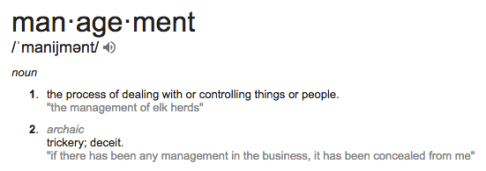
The old-school style of classroom management fits this definition:

Screen Shot 2016-05-30 at 5.41.51 PM

It’s all about control and discipline.  Desks in rows, students forward, no talking, just listening–the classic I teach, you learn method.  “Gotcha” is prevalent as pop quizzes, and cell phone confiscation, and standardization abound.  Harry Wong loves this.

In contrast, in a workshop classroom, “classroom management” is more in line with the business field’s definition of the word management:

Screen Shot 2016-05-30 at 5.41.38 PM

IMG_1470

They bought me a milkshake.

It’s a group endeavor to make the days run as smoothly as possible so we can accomplish our goals and objectives–namely, becoming lifelong readers and writers.  You want to make a joke?  Cool, go for it.  It builds community–a community of readers and writers.  A kid who feels comfortable joking feels comfortable recommending a book.  A kid who feels comfortable making suggestions feels comfortable making mistakes, too.

And so we have structures and routines in place–start with reading, then do some notebook work, revise and tinker, then consider a mini-lesson, then move into workshop.  It’s never quiet; there is a lot of talk in all of those parts of our routine.  The desks are in pods, not rows.  I learn with my kids and from them–I don’t “teach at” them.

The evolution of my first classroom to my last required a paradigm shift, some confidence, and most importantly, the release of control.

I’m thinking a lot about this as I navigate new parenthood, desperately seeking a playbook, wishing someone could just give me a pamphlet of answers.  But that’s not going to happen and I’ve got to just relax and know that if I keep the right structures in place–feed the baby, change the baby, love the baby–things will come together.

It’s the same with a workshop classroom.  When the teacher can let go of control, her students can flourish.

I’m so glad that as each year went by, I gradually let more go.  Teaching became learning, and my classroom became so much more authentic as a result.  I released more and more control.

Now it’s time to let go entirely.

And so, nine classrooms after my first, I’ll clean out my desk and my cabinets and my Karnes & Noble to move on to the next great adventure.  New parenthood awaits, as does an adjunct position working with preservice teachers at our local university.  But I’m leaving high school teaching behind, for now, and it’s heartbreaking.  It was nothing like what I imagined it would be.

It was so much more.

I met some of the most amazing people in the form of my students–people I still keep in touch with and consider friends, who send me poems and notes and emails and to whom I send book recommendations and doodles and musings.  I’ll leave high school teaching with memories, microwaves, and something akin to a middle finger for whoever had the idea that learning was something neat and orderly enough to be “managed.”

img_2708


Try it Tuesday: 44 Songs for Quickwrites

My students and I start writing on the first day of school. Our first quickwrite might be in response to a video or a poem or a short passage. For the past few years, I’ve shown To This Day by Shane Koyczan. I pass out notecards and ask students to listen to the message and then either write their thoughts to the whole of the video, or perhaps to a line in it.

I learn a lot about my students on the first day of school.

Then, three or four times a week, we write in response to other videos, poems, or passages throughout the year. Sometimes we return to these quick writing pieces, choose topics, and take the writing into full processed works. (Shana shares how she leads students into this mining his mini-lesson.) Sometimes we stop at just sharing our thinking with our table mates. Sometimes we use our thinking a springboards into texts we read together or in book clubs.

Writing responses is one of the best thinking strategies I know for engaging students in writer’s workshop. (Actually, I think asking students to write responses in any content area is good for thinking — I wish math and science teachers gave students more opportunities to write. I’m sure they wish I did more with math and science, but somehow I don’t think that’s really apples for apples. Is it?)


As this year winds down, I think of a million things to ask my students that might help me

Screen Shot 2016-05-30 at 4.48.59 PM

Lovelyn’s suggestions for songs to inspire writing.

reach more readers and writers the following year. This week I asked them to give me ideas on the songs they listen to — songs that might work well to get students thinking and responding in their notebooks.

They sent me lots. Some sent me lists.

(Disclaimer:  I have not listening to all of these songs yet, but I did start watching the music videos. Some have lyrics that might work well, but videos that might not. Some are a little too much… others are just weird. Some would work if we think of thought-provoking questions to include with the lyrics/videos. Should’ve had kids come up with those, too.)

Here’s a list of songs my students suggest would make for good quickwrites:

“Alive” by Kehlani

“Clarity” by Zedd

“Bright” by Kehlani

“Halo” by Beyonce

“Someone Like You” by Adele

“Be Alright” by Kehlani

“Lean On” by Major Lazer & DJ Snake

“Shark” by Oh Wonder

“Lights” by Vexents

“Thinking Out Loud” by Ed Sheeren

“Imagine” by John Lennon

“Run Away” by Kanye West

“Brother” by Need to Breathe

“Love Yourself” by Justin Beiber

“7 Years” by Lukas Graham  (I found this one before my students mentioned it. I actually saved the title to this song in my notebook after I heard it on the radio. It’s a great song for thinking about Our Stories.)

“Stronger” by Kelly Clarkson

“Humble and Kind” by Tim McGraw (Another song I already love and am tickled that a student suggested it. This is a message I know we all hope our students internalize. Studying the humanities makes the world –and the classroom — a better place.)

“50 Ways to Say Goodbye” by Train

“Apple Tree” by Erykah Badu

“Ain’t No Rest for the Wicked” by Cage the Elephant

“The Light That Never Fades” by Andra Day

“Rise Up” by Andra Day

“Hall of Fame” by the Script

“Cornerstone” by Hillsong

“Don’t Stop Believing” by Journey (Ohhh, Journey. I remember you well. Another student suggestion that made me smile.)

“The Middle” by Jimmy Eat World

“Heroes” by David Bowie

“What Would You Do” by Bastille

“Youth” by Troye Sivan

“Locked Inside” by Janelle Monae

“I Don’t Want to Be” by Gavin DeGraw

“Became” by Atmosphere

“Battle Scars” by Lupe Fiasco

“Not the Only One” by Sam Smith

“The Moon – The Swell Season, It Will Rain” by Bruno Mars

“Talking to the Moon” by Bruno Mars

“See You Again” by Charlie Puth

“Only One” by Kanye West

“Beautiful” by Eminem

“Heaven” by Troye Sivan

“Lose It” by Oh Wonder

“Don’t Let Me Down” by The Chainsmokers

“Never Forget You” by Zara Larson

First” by Laura Daigle

What about you — do you have some great songs you use to inspire your writers? Please share in the comments.


#FridayReads & Becoming (Twitter) Literary Critics

I am beat. My students are beat. I know you know exactly how that feels.

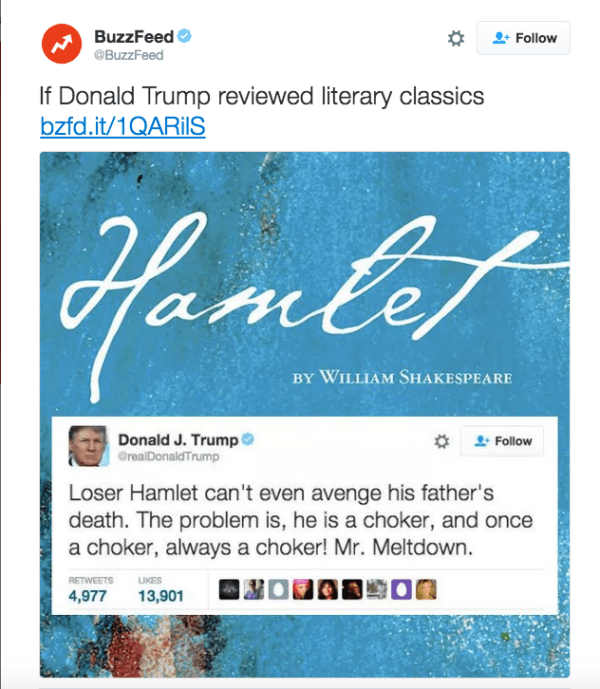
In an effort to lighten the mood but keep the idea of books and reading alive, my students and I had a little fun with Donald Trump. Now, it doesn’t matter what you think of the man or his politics, his tweets make pretty good mentor texts.

Screen Shot 2016-05-26 at 7.38.47 PM

I’m not the only one to think so — actually, I got the idea from someone Buzzfeed. Some clever writer put together a list of tweets, written as if Mr. Trump critiqued literature. Brilliant.

Screen Shot 2016-05-26 at 7.40.19 PM

So to have a little end-of-year fun, I asked my students to consider Trump’s sentence structure, and then write their own reviews based on the most recent books they’d read. Really, my only requirements:  a clear tone, but they didn’t have to be mean, and correct spelling and punctuation.

Here’s a few for your reading pleasure. Of course, the review makes the most sense if you are familiar with the books students refer to — I get that not everyone is as versed in YA like they might be the canon.

(Side Note:  To those who say students will never move beyond YA or ‘easy’ reading when it’s all about choice. Um, wrong again.)

What kind of end-of-year fun with books and reading — or anything else– have you had with your students? Please share in the comments.

Vulnerable Learning by Janet Neyer

My Writing Project colleague, Sharon Murchie, wrote about taking a risk in sharing her writing with her students on the CRWP Teachers as Writers Blog. Her post got me thinking about how I do the same in my own classroom.

guest post iconI am feeling nervous, insecure, and uncertain as my ninth graders start to file into class today. We just started the new trimester a week ago, and about half of my students are still new to me — having come from a different English teacher first term. I remind myself that I am the adult; I am the teacher. Nothing to worry about, right? What’s the worst that can happen?

You see, I am about to give a book talk and admit to my students that I have no clue what the book I am reading is about. Truly. I just don’t get it. The book is a title I was eager to read — The Buried Giant by Kazuo Ishiguro — but I am 30 pages from the end of the novel and I don’t know what the real story is. In fact, all I really know is that an elderly couple, Axl and Beatrice, have undertaken a journey to reunite with their son. As Axl and Beatrice travel across the countryside, they meet knights, Saxons, river boatmen, and frightened citizens, but all have one thing in common: they cannot seem to remember much. Axl and Beatrice worry that the loss of their memories will be their undoing: “But then again I wonder if what we feel in our hearts today isn’t like these raindrops still falling on us from the soaked leaves above, even though the sky itself long stopped raining. I’m wondering if, without our memories, there’s nothing for it but our love to fade and die.” The mist of this memory loss has the effect on me as a reader of clouding the truth in the story. In short, I find myself uncertain about what is real for the characters and what is fantasy.

I am about to reveal to these students that I don’t understand this book.

I don’t have the answers.

I don’t have a profound interpretation.

I am lost.

How will they respond?

The room settles in as I grab the book from my desk and turn to face them.

71yaTpRiJgL“I want to tell you about this book I’m reading…”


This is what I have been working on for the past several years in my practice as an English teacher: vulnerability. Through a great deal of reflection, professional reading, conversation with colleagues, and intention, I have been trying to practice what Antero Garcia and Cindy O’Donnell-Allen in Pose, Wobble, Flow: A Culturally Proactive Approach to Literacy Instruction, call “vulnerable learning: an inquiry-driven process that engages both intellect and emotion…” (34).  Garcia and O’Donnell-Allen explain that “Teachers who foster vulnerable learning create classrooms where “not-knowing” (Barthelme, 1997) is the norm…they create conditions in which students can claim and exercise their own power as learners, primarily because these teachers are vulnerable learners themselves” (36). I am trying to model for my students what a First Attempt In Learning (FAIL) means for me. I want to take a risk in front of them by acknowledging that I don’t have all of the answers, and, in fact, on any given day, I have many more questions than answers.

Every day when students enter my classroom, I want them to ask questions, to push back, and to wonder. I want to grow literate citizens who question what is happening in their communities and in the world. Students, however, often see school as a place where there is one correct answer, and in most cases, it is the teacher who has it. In addition, in most classrooms — despite teachers’ encouragement to the contrary — everyone knows that asking questions makes you look foolish. I understand this mindset, as I remember being one of those students as well. Though I wish I had, I did not take intellectual risks in my high school days. I let the teacher tell me how I might improve upon my writing or what meaning I should take from the novel. I wish something different for my students, though. I wish for them to acquire the tools needed to be independent learners — deep learners who are willing to take on challenges and see them through.

I recognize that I ask students every day to take risks and to be vulnerable in their learning. If they are to write something powerful and meaningful, they will have to risk putting it out there for their classmates and for me. If I am to find them the right book to appeal to them, they’ll have to risk telling me something about what matters to them.  If they are to grow as readers, writers, and thinkers, they will need to struggle and persevere. The reality, however, is that many of my students would prefer I just tell them the answer.  How can I expect them to be vulnerable if I am unwilling to take that risk?

It’s that simple…

And that scary.

In her short story “Eleven,” Sandra Cisneros writes in the voice of eleven-year-old Rachel, “…what they never tell you is that when you’re eleven, you’re also ten, and nine, and eight, and seven, and six, and five, and four, and three, and two, and one.” And even though I am well past eleven, today I still feel all of those layers. As I stand in front of my ninth graders, I am feeling 14. I am the vulnerable one, hesitating to reveal that I don’t understand. This is an uncomfortable feeling, but one that is so valuable for me to remember as a teacher of 14-year-olds.


“I want to tell you about this book I’m reading because I am only 30-pages from the end, but I do not know what this story is about.” I show the students the book and the place where my sticky note holds my spot. I explain that I have read other books by this author and that I have sometimes had to hang on for a while before I understood what was happening, but never for this long.

“This is an author I trust, so I want to keep going, but I’m frustrated.”

A student in the front blurts out, “What’s it about?”

“Well,” I say, “There’s an elderly couple on a search for their son. And there’s a knight and a dragon and a lot of battles. The story takes place in ancient England, but no one seems able to remember anything very clearly. I feel like nothing in this book is as it seems, like there is something else going on here.”

“Why don’t you look it up on the Internet?”

I admit that I had thought about that, but reading this book for me has become like solving a puzzle. I really want to figure it out on my own. I have the chance today to talk with them about perseverance, about my willingness to stick with a text even if I’m unsure about the pay-off, about my tolerance for uncertainty. Essentially, I have the opportunity to remind even my most reluctant readers of The Rights of the Reader (Pennac). Yes, I have the right to leave this book unfinished, but I won’t; in fact, I might even exercise my right to read the book again after I finish it.

When one student asks, “Why would you want to do that?” I have the opportunity to explain what I gain from a second reading of a text.

When another asks if he can borrow a copy so he can help me, I have to tell him that this is my only copy, but I promise he can have it when I finish. I know he is excited to meet this challenge — to help the teacher understand a book. What better boost for a ninth grader?

This is one of the best book talks I’ll give all year — mostly because it’s a reminder that my students need to see me struggle with books, just as they might. They need to know I am willing to be vulnerable in my learning, just as I ask them to be.

In fact, tomorrow, I think I’ll share a piece of writing I’m working on — a blog post about being a vulnerable learner.


Post Script: If you haven’t read The Buried Giant, I recommend it. In fact, I gave it five stars on GoodReads. It was absolutely worth the persistence. After I finished the novel, I did turn to the Internet, and was comforted to find this New York Times review from Neil Gaiman in which he says, “Not until the final chapter does Ishiguro unravel the mysteries and resolve the riddles.” Whew. I’m glad to know I wasn’t alone in my puzzlement.

Profile PhotoJanet Neyer (@janetneyer) teaches English and psychology at Cadillac High School in Cadillac, Michigan, where she is passionate about incorporating authentic reading, writing, and research experiences into all of her classes. She serves as a teacher consultant for the Chippewa River Writing Project in mid-Michigan, and she is a Google for Education Certified Trainer.  You can find Janet’s Google Apps resources as well as her thoughts about teaching at upnorthlearning.org.


References

Garcia, Antero, and Cindy O’Donnell-Allen. Pose, Wobble, Flow: A Culturally Proactive Approach to Literacy Instruction. New York: Teachers College Press, 2015. Print.

Ishiguro, Kazuo. The Buried Giant. New York: Knopf, 2015. Print.

Pennac, Daniel, Quentin Blake, and Sarah Adams. The Rights of the Reader. Cambridge, Mass: Candlewick Press, 2008. Print.

“Give me a speeding ticket…I am reading way too furiously to be within the law”

May can be a desperate time for teachers. We’re just…tired. Fall asleep on the couch after dinner, mainline coffee, bargain with the snooze button, barely recognize your own family, exhausted.

Just think, in the time that it takes to carry a human baby to full term (Baby Ruthie, I’m looking at you), most of us have carried somewhere around 150 (if you’re lucky) students through the year. To clarify this gestational metaphor – by carried, I mean taught. And by taught, I mean pushed. And by pushed, I mean (occasionally) dragged.

Amy wrote about it last week. The crack up. The point at which it all becomes too much and you start to question if you taught them anything. If they are better in any way. If you reached even one. If you’ve been talking to yourself for the last nine months. Because with the approach of graduation, and summer, and sweet, sweet freedom, the opportunities to make that difference seem to dwindle. Students are paying  less and less attention these days, to school anyway, and when coupled with the somewhat spent enthusiasm of teachers, the chances of academic magnificence begins to allude us. Which, unfortunately, makes us even more tired.

However, because we care, sometimes to our own detriment, we don’t give up. Amy, unwavering in her commitment to use every last moment, wrote about this too. It’s the moment where banging your head against the wall one last time means you break through instead of breaking down.

In my own effort to keep the spark alive, I have my students working on final projects that demand they keep reading and keep creating, right up to the end. Additionally, inspired by Shana’s brilliant use of former students as an engaging resource, I called in a heavy hitter.

Austin Bohn, graduate of Franklin High School in 2013, reached out to me a few months ago with the following email. What followed is an exchange of ideas that solidifies for me that our students often don’t truly see the impact that our classes can have on their lives, until after they’ve left us. Austin has always been inquisitive, insightful, and personable. As a college student, I see in Austin the exact type of young man that we hope our students become – thinkers who value where their reading lives can take them. 


Lisa, (because I get to call you Lisa now),

I just wrapped up a discussion post for my Philosophy 4336 course, “Applied Ethics for the Health Professions.” It was just one of those times when you feel as though you’ve hit all the right keys in just the right order. It reminded me of some of the reading and responding we used to do in your classroom. 
I’ve attached a short article and my—also short—post in response to it. In it, I draw on Saxton extensively so you’ll probably be able to navigate by just reading that one. There is another article (Connelly), but you’ll likely not need to read it unless you really want to. 
I hope that you’ll find it refreshing to read something from a former student, knowing you laid a great foundation that allows me to be able to crank these things out on a weekly basis. I really do appreciate your teaching—I’m only just beginning to grasp its value. You taught me how to think!
All the best,
Austin Bohn

Austin and I continued exchanging emails for several weeks, and when he expressed interest in coming to observe some of my classes and share ideas about college life, reading expectations at the collegiate level, and explore the possibility of teaching someday, I asked if he would like to come in and serve as a motivator for my AP classes,

IMG_0123

Austin book talking Ishmael 

post test. Austin had been in my AP class and knew well both the project that my students
are working on and the difficulty to focus when the end is so very near.

Two weeks ago, we made a plan for Austin to come in, share some of his insights and experiences as they relate to college level work, chat with students and provide ideas as they craft their final projects, and observe.

What turned out to be the added bonus, and one that’s already had an impact on my classes, was Austin’s book talk on Ishmael, by Daniel Quinn. I wasn’t familiar with the text, (a book that details a man’s encounter with a gorilla who has all and none of the answers about life), but the impassioned argument Austin made for reading the book and what it can teach you about thinking, struck a cord. Specifically, with another young man in my AP Language class.

Bennett Dirksmeyer is a thinker too. A quiet, careful, deep thinker. When he emailed me the day after Austin’s book talk and told me that he went right out and bought a copy of Ishmael,  I was excited for him. To be honest, whenever a book talk “works” I get a satisfied nerd-smile from ear to ear.

So, three days later, when I received the email below indicating that Bennett had already plowed through Quinn’s text, I was floored.

The email below made me cry. Like, A Monster Calls, breathless sobbing (not because I’m tired, or not only because I’m tired), but because this is what we all want. Out of workshop. Out of teaching. Out of life. Out of the end of a long, hard school year.

And no, I don’t mean we all want the email exactly (though I would be lying if I said that hearing a student’s gratitude doesn’t feel amazing), but we want students to grow in their thinking. Challenge themselves, push themselves, take risks, stay up late reading, and come away with new ways of processing this crazy life.

Here is what Bennett sent (with some enthusiastic bolding by yours truly):


Mrs Dennis,

I closed Ishmael at 3:35pm today. After reading, with unexpected vigor I might add, I began to wonder why I plowed through it so willingly. Throughout my reading I thought, and thought, “Why am I liking this?”, “What is making me do this?” It is an important text. It deals with issues leading to very serious implications. It deals with very political and personal questions with very divided answers. New-different-not my-ideas. Ideas I am not accustomed to.

The last book I truly read and loved and finished was Paper Towns by John Green. I read the text with so much vigor, surprising vigor, at that.

I felt that same vigor and that same ‘give me a speeding ticket because I am reading way too furiously to be within the law’-ness, and that same ‘I’m gonna have to stop and get an oil change

IMG_0223

Bennett – A “Pretty Cool Guy” 

for my head because the motor is running, but I’m not going to’-ality.

And I continued to wonder (sometimes aloud) – “What do I love so (expletive) much about this book?!”

I sat and thought about it.
And I thought.
And thought.

And it dawned on me.

I love this book. Not for its themes, or the author’s word choice, or the overall message contained between its covers. But for the reason that it caused me to start up that thing between my ears, and think.

I think I get it now.

And that’s pretty cool.

Thank You, for passing these skills on to me, so that I can do this with them.

I regret none of American Lit with you Freshman year (I read every word of The Scarlet Letter, and for me, that was scary-awesome), Brit/World Lit with Mrs Adelmann Sophomore year, and AP Lang with you this year. Thank you, you rock.

Books are cool.
I’ve always loved them.

But, now I appreciate them. And the pretty cool guy they’ve helped me become.

Bennett 


So let me try and instill (rejuvenate? invigorate? fuel?) a little hope in my worn and weary teaching partners around the world as this school year winds down and I know we could all benefit from a little love:

While we may be trying to merely survive until the end of the school year, to get through it in one piece in order to pick right back up and get ready for next year, teachers inspire. You, reading this, inspire students throughout the year. Even when we are tired, we inspire. With our passion for the written word, our desire to watch learners grow, and our commitment to allowing students choice in their exploration (with our guidance), we inspire.

Sometimes we are lucky enough to see it first hand, to hear about it, and literally embrace the students who let us know how they have been changed (I hugged Bennett on his way into class the next day. He seemed appropriately horrified). Other times, we never know for sure. But, as Quinn claims in Ishmael, we seek pupils to get them thinking, because careful thought can save the world.

The more we tell kids about the importance of reading, show them we are readers, put life changing books in front of them, and passionately share the experience through conferences and their written work, the more students we can reach on a deep and powerful level, because they know we care.

Yes, I’m tired. Really, really tired. But, Austin and Bennett (two pretty cool guys), have reminded me that all the work we’re putting in as a community of learners can really mean something. It can change, and maybe even save, someone’s world.

Most especially in May, when I might argue that many of us need it most.

What is helping fuel you at the end of this school year? Please comment below with your ideas on saving the world, one student (and teacher) at a time!