Category Archives: Writers

First Days of School: Listening Leads to Learning

‘Tis the season of back to school–that time of year that is ripe with fresh school supplies, empty notebooks, and an as-yet-un-ransacked classroom library.  This time of year always delights me, and I got to experience it early because today marks week two of having students for me.  I hope you’re one of the lucky ones who hasn’t seen students yet, but if not, cheers to being back already!

Untitled presentationI’ve been thinking carefully about what tone I’d like to set in the first days of school.  I didn’t want to leap into things with a review of the syllabus, a distribution of the many forms my preservice teachers will need to fill out, or a review of the big tests that loom large for them at the end of this school year.

I wanted to start with something, instead, that would build our community into one of support and anticipation, rather than one of anxiety and pressure.

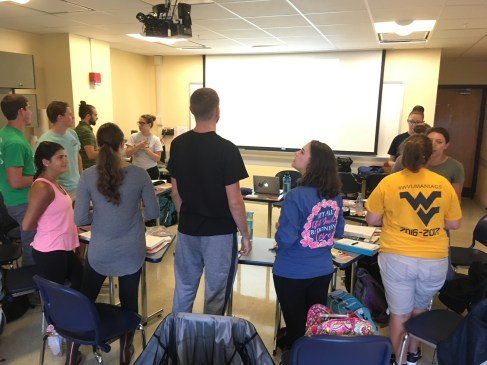
Naturally, we began with writing.  I asked students to brainstorm four questions they’d like every teacher to be able to answer.  We spent some time in our writer’s notebooks writing, then paired off to ask one another a few of our questions.

img_1627

After a few minutes of talk, which is always invaluable, I asked students this question to elicit some sharing:

Who heard a good response they’d like to share?

Students began their replies with, “I loved what Sara said,” or “I thought Sean made a great point,” or “Jake had an interesting answer.”  As many of our responses touched on the importance of building communities that were inclusive, we noted how simply shifting the way we shared responses to focus on listening rather than talking emphasized the former.

As we moved through our day, I returned again and again to this theme:  we selected critical friends to partner with who would read our work and provide feedback; we read an article about student-faculty partnerships before setting professional development goals we’d work toward in teams; we set up a Google Drive folder to encourage collaboration and negotiated feedback protocols and submission guidelines; we did some yoga to encourage the notion of disequilibrium and read an excerpt from Pose, Wobble, Flow about being teacher-writers.

My first day of school thinking around listening hearkens back to my work with the C3WP Institute I led through NWP this summer, which is focused on argument writing and how we can encourage students to consume, create, and negotiate real-world arguments more skillfully.

It also reminds me of a passage I read about compassionate readers in Disrupting Thinking this morning (a book I refer to as Interrupting Thinking, thanks to a certain 16-month-old in my life):

Compassion should sharpen the readers’ ability to see other points of view, other perspectives, and to imagine the feelings of those who hold them.  It should enable readers to take, if only momentarily, the perspective of someone else and thus understand motivations and thinking.

But to be willing to take on another’s perspective…you must be willing to enter into a dialogue with the text, to interact and not merely extract.  And through these transactions with texts, we might learn how to better enter into conversations with those in the real world who offer us another perspective.   (45-46, emphasis mine)

AAEAAQAAAAAAAAUQAAAAJDI2MTU1ZjY0LTdhNzgtNDdjNy04MmZiLTc4ZmNjY2YzMTczZQ.pngFar too much of the reading, writing, speaking, and listening that our students do is for the purpose of extraction, and not interaction.  Of course it is–what can be extracted is easier to measure than what can be inferred, experienced, or connected with.  We’ve taught students to read in order to answer a question; to listen in order to reply.

As a result, in our schools and in our self- and social media-saturated society, our students are all too practiced at speaking, and out of practice at listening.  If we want our students to learn, to engage with texts and peers and the world in a more authentic, dialogic way, we must teach them to listen.

This year, I will ask students to more thoughtfully listen to and engage with the ideas of others.  The teachers they’re observing, the authors they’re reading, the students with whom they’re working, all have notions my students will agree and disagree with–but they will learn nothing if they don’t slow down to listen.

How will you encourage your students to learn by listening on the first days of school, and beyond?  Please share in the comments, on our Facebook page, or with us via Twitter!

Shana Karnes teaches sophomore, junior, and senior preservice teachers at West Virginia University.  She finds joy in all things learning, love, and literature as she teaches, mothers, and sings her way through life.  Follow Shana on Twitter at @litreader or read more of her writing on the WVCTE Best Practices blog.

More Than a Coach, a Reader

Clear Creek ISD June 2017 (1)The following is a guest post from an inspiring teacher and football coach I met this summer. He sent it to me the day after my daughter got married, and I’ve been playing catch up with life and getting-ready-for-back-to-school ever since. Sorry, I am late in posting it, Charles. You have to know, this post excites me:  I’m excited for the PD experiences we had this summer. I’m excited for the students who will walk through your door this fall. I’m excited to know you will spread your love of books and reading far and wide — and I’ll be excited, and not at all surprised, when you share a few titles with your linebackers. (Have you read Twelve Mighty Orphans?)


It’s August 6th and my summer is effectively over. We start football camps Monday and I’ll work until 5pm most days making sure helmets are ready, tackling dummies are out of storage, and duties are clear. This isn’t a necessarily dreadful thing because I love coaching football, and this part of the year is rife with expectation and uncertainty.

It’s also, for me, a time of reflection. Did I make the most of my time away from the classroom? Did I find enough time to shower my own kids with love and affection? Did I make sure I did the dishes and laundry and kept the house in order so that my wife had time to relax when she got home from work? I hope the answer to all these questions is “yes,” but I fear it’s a “maybe,” at best.

I was at school most days. The first two weeks after graduation were dedicated to our very first CCISD Literacy Institute, and mornings spent with athletes at Strength and Conditioning camp consumed most of the rest. The Literacy Institute was an incredible experience in almost every way. I learned so much from my teaching partner, Meggie Willner, and we both fell head over heels in love with our group of STAAR Camp students. Working with our curriculum director, Billy Eastman, and Amy Rasmussen made this the most valuable professional learning I’ve ever experienced. Those two weeks will make a difference in the lives of students in my class and the time trade off was more than worth it. Strength camp is bittersweet because I didn’t get to sleep past 6:15, but my football players and my own kids were there for most of it, and seeing them learn and work was worth it. For better or worse, this physical connection to campus means that I never really stop thinking about teaching or coaching. I’m always there.

My summer was, for the most part, wonderful. Whether afternoon napping, writing, playing board games with my kids, or swimming in our new swimming pool, my family and I always found ways to fill our time with laughter and joy. This summer was, however, different, and not just because of our much deeper sun tans. This summer I read like a “real” English teacher should. I’ve always listened while my colleagues extolled the virtues of their summer reading regimen. Don’t get me wrong: I’ve been known to crack open a book on a hot summer afternoon while sitting in the cool air-conditioning, but it hasn’t been my habit. Reading during the summer always felt like “work,” and I shouldn’t be working during my break. I should be chasing my kids around the house, helping them build blanket forts or taking them to the trampoline park. Reading threatened to get in the way of all that fun, but I wasn’t going to use that excuse this summer.

This summer, I consciously committed to being an avid reader, and while I’m sure many of you read much more than I did, that felt like a success for me.
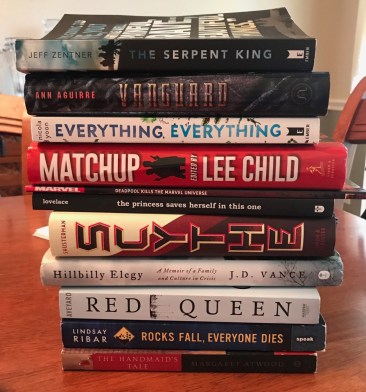
CharlesMoorebookstackI read so many amazing books and looking at my stack makes me realize what an eclectic collection it is. I read fiction, memoir, poetry, a thriller short story anthology, and even a graphic novel. I read the first book in a series, the fourth book in a series and a few standalone novels.

I’m proud of the volume that I consumed (remember I must spend SOME time thinking about inside linebackers). I’m proud of the variety and scope and I think it will make me a better teacher going forward.

These are the books in the order in which I read them:

The Handmaid’s Tale by Margaret Atwood

My teaching partner, Meggie, and our curriculum director, Billy, wanted to throttle me when I told them how I felt about this book. They both RAVED about it and I really didn’t care for it. I’m sure a second reading would do it justice because I was dealing with a lot personally and professionally at the end of the school year while reading it, but it just didn’t resonate with me. I hope this doesn’t make me an embarrassment to the profession.

Rocks Fall, Everyone Dies by Lindsay Rebar

They say reading is like a roller coaster and I went with an easy to read book for the Literacy Institute at the start of summer. A super straightforward, gently-paced book was exactly what I needed at the start of summer. I really enjoyed this book and for those seeking YA that appeals to both boys and girls, you can’t go wrong here.

Red Queen by Victoria Aveyard

I loved this book!!! It is a blend of Sci-Fi and fantasy with a strong female protagonist. I loved the author’s take on super powers and the surprisingly effective post-apocalyptic setting. I was tempted to read the second and third books in the series, but I want this world to be there for me when I want to revisit it.

Hillbilly Elegy: A Memoir of a Family and Culture in Crisis by J. D. Vance

This book spoke to my teaching soul. Vance examines a culture drowning in poverty and while it’s a reflection on his firsthand experiences, I felt like there was so much from his past that echoed in mine. I don’t think I realize how much our students’ home lives affect their school lives, but this book made me reflect on it again and again. This book coupled with a viewing of The Shack, directed by Stuart Hazeldine caused a sort of mid-summer epiphany that will change my teaching in the years to come. Another blog post, maybe?

Scythe by Neal Schusterman

I one-clicked this book the day Billy Eastman book talked it at the literacy institute and once I picked it up, I couldn’t stop. It’s original and well-written and even though parts of it were somewhat easy to predict, others still kept me guessing until the end.

the princess saves herself in this one by Amanda Lovelace

I read this poetry book under a shade tree in Wimberley, Texas, on our 16th annual summer camping trip. My mother-in-law noticed how fast I was turning the pages while reading this one and told me it wasn’t a real book. I handed it to her and she read it cover to cover. We didn’t talk about it, but I think we both knew how it affected us: deeply.

Deadpool Kills the Marvel Universe by Cullen Bunn and Dalibor Talajic

Determined to read a graphic novel, I picked up one about my favorite Marvel character. I’m not particularly experienced with graphic novels, having only finished George R. R. Martin’s graphic novels that are companions to his A Song of Ice and Fire. It was fun but not intellectually stimulating. Maybe this experience will help me with a reluctant reader or two or maybe give me some “street cred” with my Manga readers.

Matchup edited by Lee Child

Please don’t hate on my man crush on Lee Child. I’m obsessed with his Jack Reacher character and devour anything Child publishes. This book is produced by the International Thriller Writer’s Association and paired a dozen female authors with a dozen male authors to write a dozen short thrillers with varying success. There might be mentor texts here.

Everything, Everything by Nicola Yoon

This book was a quick read for me and it made me feel like an idiot because I didn’t see the plot twist until it was too late. I really enjoyed reading about how Yoon’s main character dealt with her problems the way a teenager would. I think this is an important book for our students to experience. To some, the main character’s relationship to her mother will be an eye-opener; to others, all too familiar.

Vanguard by Ann Aguirre

A vanity read if there ever was one. I love the Razorland trilogy and I couldn’t resist buzzing through this fourth book in the series. The love story made me uncomfortable at first, but I think books should do that sometimes. I enjoyed the happy ending in this book as my summer also draws to a happy ending. A modern Romeo and Juliet story? Maybe, maybe not.

The Serpent King by Jeff Zentner

This might be the top of the list of my summer reading. The story was incredible, the characters were deep and it is set in the same part of the country that J. D. Vance visits in his memoir from earlier in the summer. I love when books connect like that. This is one of the few books this summer that would keep me up late at night reading. I fell in love with this book and can’t wait to read Zenter’s Goodbye Days (if I can ever get it back from our freshman A.P. teacher).

Ah, the ones that got away…

Looking for Alaska by John Green

The Essex Serpent by Sarah Perry

Goodbye Days by Jeff Zentner

The Last Neandertal: A Novel by Claire Cameron

House of the Scorpion by Nancy Farmer

One of Us Is Lying by Karen M. McManus

and so many more…

So now I must start a list for the new school year. I don’t typically read a lot during football season. Working 80-hour weeks and trudging through months without a day off will take the motivation out of me. But maybe I can set a goal for the fall. Something to reach toward even when my knees and ankles are tired and my eyes won’t stay open.

Maybe I can get to school 20 minutes earlier and squeeze in some reading while the coffee percolates. I crush coffee.

Charles Moore is the senior English team lead at Clear Springs High School in League City, TX. He enjoys leisure swimming, reading, and coaching linebackers. Follow Charles on Twitter @ctcoach

What’s in a Notebook?

It’s that magical time of year when my writer’s notebook is almost full, and I get to start a new one.  I love setting up my notebook, personalizing it, giving it value.  But I love, nearly as much, to look back at a full notebook–and today I want to share mine with you.

I’ll preface this overload of snapshots with a caveat that my sharing is unusual in terms of the writer’s notebook.  Whether we ask our students to use these tools as playgrounds, workshops, or repositories, notebooks belong to students.  Ownership is key if our students are to take on the identities of writers.  This means that for some, a notebook is private, while for others, sharing is essential.

So, with that said, let’s take a walk through my notebook–and, so we can see many other examples, please share what your notebook is full of on Twitter with #whatsinanotebook!

First, personalization and inspiration are key.

The first few pages of my notebook always contain photos, a tracing of my hand with some goals, a heart map, or some other kind of writing territory or prompt.  Whenever I’m stumped about what to write, I return to these first few pages to remind myself of the topics I need to mine.

From there, the variety begins.

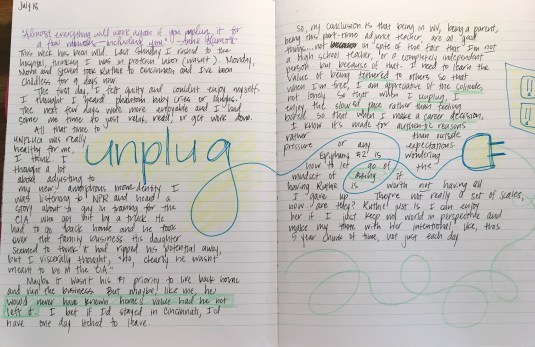
I always write beside my students, so my notebook is generally peppered with quickwrites or “write into the days” from NWP.

img_1056

These are often the roughest drafts of posts that land on TTT, like this page, which morphed into this post.  For my students, quickwrites are often seed prompts that lead to longer compositions.  Just as often, though, they remain untouched:  an essential part of building fluency and stamina and the identity of a writer with many starts and stops.

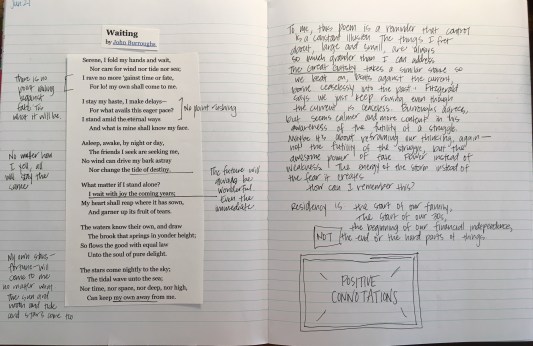
My notebook is also full of poetry that I write beside or around.

img_1058

I get my poems every day via email from the Writer’s Almanac.  In addition to just being inspiring and enjoyable to do, this active reading of poetry makes me more aware of wordplay, themes in literature and in my life, and a new perspective.

I also write in response to quotes from books, TED talks, poems, or anywhere.

img_1057

This helps me to unpack a quote that strikes me for its craft, content, or both–students, too.

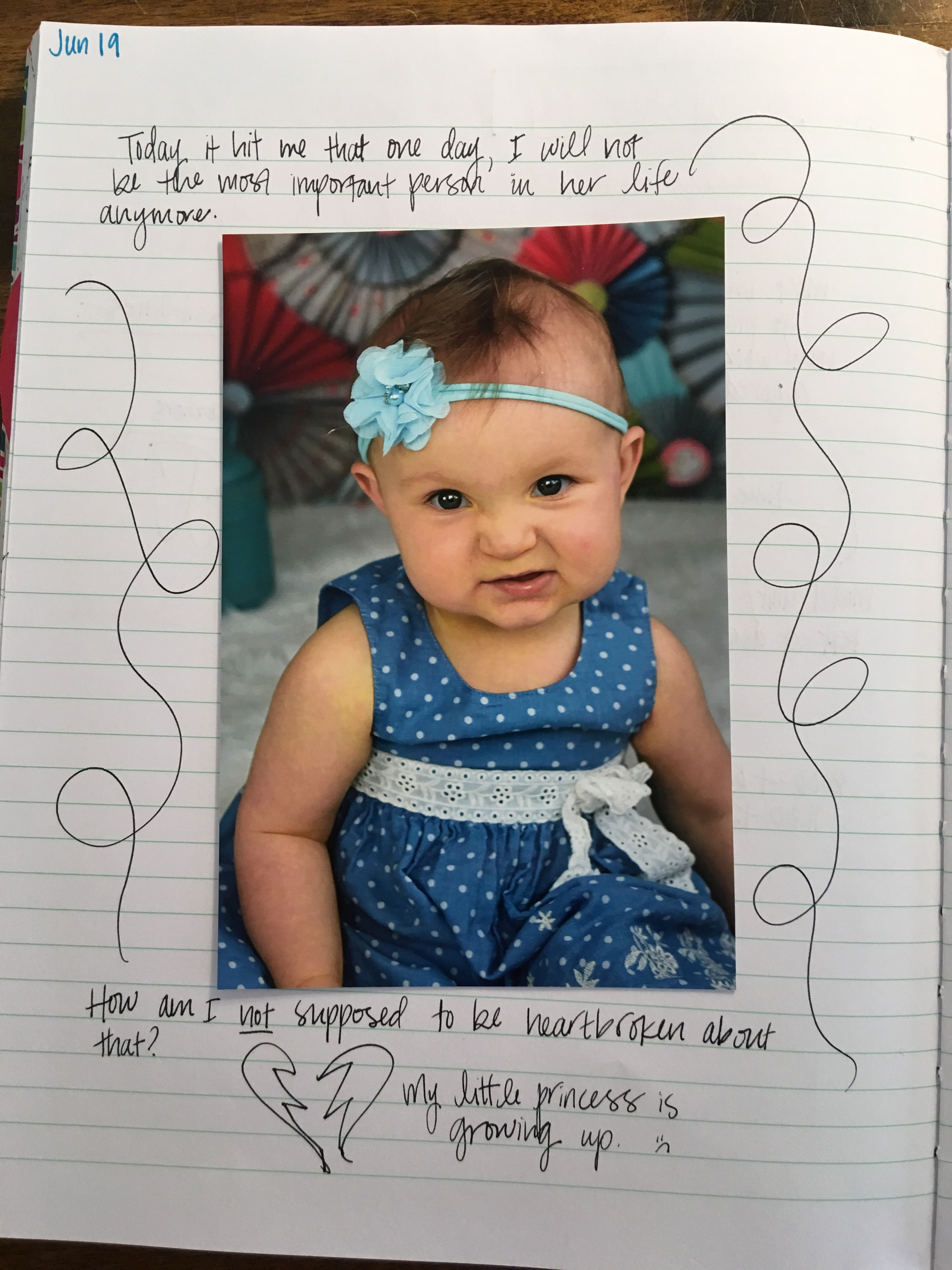
Gluing in artifacts to write beside is also powerful for me.


These serve not just as reminders of who and what is important to me, but a lovely time capsule to show me what was happening in my life at the time when I return to look at my notebook in future years.

There are also things I’m attempting to make connections between, but perhaps never do…

img_1062

(This might go under “things I abandon.”)

Rants that should probably be left in the dark…

img_1065

(You can tell by my handwriting that I was ticked, here.)

Things I abandon

img_1064

Sometimes I mean to write a bit more, and never do, so I add some squiggles and doodles to fill up the white space.

It’s important to remind students that it’s okay to abandon pieces of writing…we abandon books, don’t we?

…and random doodles, drawings, and in-the-moment jots and notes.

The last spread of my notebook is always my what-to-read page…

img_1071

(I keep my lengthy read, currently reading, and TBR list on GoodReads, so this page functions more as a ThriftBooks shopping list.)

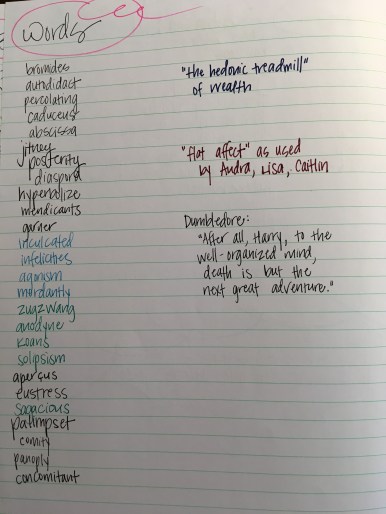
…and the very last page is always my list of words and phrases that strike me as unusual.

img_1072

I jot these as I find them in books, poetry, or conversation.  Sometimes I look up definitions of these words; sometimes I already know what they mean, but just like them.  I ask students to keep this page, and twice monthly we visit it and do something with our lists.


As you can see, there’s really no “order” to my notebook–no sections other than those crucial first and last pages–but that’s just what works for me.  I taught seniors most recently, and found that they didn’t require the structure of a multi-sectioned writer’s notebook, but when I worked with 8th graders, they most definitely needed a little guidance.

This is just a guide, an inspiration, and an invitation–to not judge me for my wonders about the woes of motherhood, my consternation about teaching topics, or my completely unhealthy obsession with expensive writing utensils (Precise V5 pens…thanks, Amy…and PaperMate Flair markers are my top picks).

Please use this to help you craft a vision for the possibilities notebooks afford in helping us build fluency, gain confidence, and take on the identity of WRITER, and feel free to reach out to any of us with questions or wonders you have about the magic of writer’s notebooks.

Share with us, please, what your notebook looks like on Twitter using #whatsinanotebook!

Shana Karnes teaches sophomore, junior, and senior preservice teachers at West Virginia University.  She finds joy in all things learning, love, and literature as she teaches, mothers, and sings her way through life.  Follow Shana on Twitter at @litreader or read more of her writing on the WVCTE Best Practices blog.

There’s Still Time to Get Lost (And Found)

The school supplies are coming! The school supplies are coming!

You’ve seen this, right? You walk around the corner, minding your own business with a cart full of summer clearance items (I know, I know…there’s a reason the summer items are on clearance) and BAM! Pencil themed signage and endless bins designed to heighten Copy of Three Teachers Talk(1)the appeal of protractors, highlighters, and color coordinated glitter glue. (That last one should sell itself, no?)

Don’t get me wrong. I love me some school supplies. I still get excited to line them all up, to organize them, to dream of a perfectly categorized school year when I can find everything I need, revolutionize my post-it note-taking system (They are everywhere. Every. Where.), and create the equivalent of a zen garden on my desk with pretty pen holders and file folders.

But, I’m not ready. Hear that, corporate America? I’m not ready to go back.

You’re stressing me out. Your Hello Kitty backpack pushing, pink eraser wielding, bento box my lunches mid-July attack on my summer is not welcome.

Truth be told, I need more time. I need more time for two very important things:

  1. To get lost. A few weeks back, I wrote about remaining calm through mindfulness and embracing summer by being kind to yourself. When I will actually get around to taking my own advice remains to be seen, but thankfully, I have great friends, and one of the best said something just this past week that reminded me of something I really needed to hear: “There’s plenty of time to get lost.” He is so right. There’s plenty of time to get lost in more books, lost in the garden, lost at the movies, lost in my writer’s notebook, lost on the patio with great friends, lost in thought about nothing at all.
  2. To be found. Despite everything I’ve written so far, or maybe because of it, I do get excited to get back to the classroom. Honestly, the rejuvenation I seek isn’t about checking out, it’s about checking back in with fresh eyes and a full heart for the coming year. I love to lose time on Twitter searching the ideas of amazing educators. I love the stack of pedagogy books I get to tackle, and after Shana’s post last week, I think I need to add Rewriting by Joseph Harris. I love learning alongside educators whose enthusiasm for choice, talk, and student voice will inspire me the whole year through.

So summer is a balancing act. A mix of letting go of school, to again embrace it as a teacher who is grounded in passion and emboldened by a capacity to grow, change, and reinvent myself. To be both lost and found, I return again and again to the possibilities presented to teachers and students when the classroom focus is to build readers and writers.

I find myself thinking this week, post emotional meltdown in front of a Target employee, about a piece I read from

“Our students need to be taught how to see, not what to say.”

Get LostThis thought has been ringing in my ears for days. In context, I found it to be a brilliant way to suggest a necessary departure from formulaic writing instruction. Beyond that, I find it resonating with my continued desire to be both lost and found during this blessing that we call summer vacation.

The duality of a “vacation” that often serves as just more time to work and prepare for the upcoming school year in the traditional (formulaic) sense, can also be a time to stop and look around at how experience, observance, and appreciation can mold our practice in the coming year.

The same duality exists in workshop. The rules for school (the guidelines, the philosophies for best practice, etc.) need to apply to all stakeholders in the literacy education of our students, not just to the students.  As Amy said a few weeks back, “Every Teacher of Reader. Every Teacher a Writer.” In this case, it’s every teacher a seer too.

I’m taking time this week to really see (and again, mindfully appreciate) the possibilities: The English Journal read out on the patio in the sunshine, the extra time to write about everything and nothing at all, the planning meetings at a coffee shop instead of deep in the windowless conference rooms many of us are familiar with. I want to really reflect on how these more relaxed approaches to learning can inspire some of what I will ask my students to do and how I want them to see getting lost and found in our time together. I want them to see reading, writing, and talking about their ideas as opportunities to lose themselves in reflection, and find themselves there too.

So, no. I am not ready to go back, but I am ready to see both the lost (escaping into some poetry writing inspired by Iron and Wine’s Endless Numbered Days album) and the found (I just read Anne Whitney’s piece on authenticity in the classroom in the July release of the English Journal – blew my mind in a thousand amazing ways) of this summer.

The school year may loom large, and in truth, much of what I want to work on the rest of the summer does have to do with school, but I’m not on anyone else’s timetable yet. The bins of washable markers can wait. I still have a stack of books to get lost in, moscow mules to sip, and animal-shaped clouds to count, and even that (at least the first one) will make me a better teacher come fall.

Breathe in. Breathe out. Enjoy. Again, you deserve it.

How are you leaving time to get lost and enjoy?  How are you ramping up for the start of school?

Lisa Dennis teaches English and leads a department of incredible English educators at Franklin High School near Milwaukee. This post was finished in front of a bonfire in our backyard, after a day spent reading at the pool. Cheers to summer. Follow Lisa on Twitter @LDennibaum 


Rewriting Our Definition of Writing

9780874216424I really don’t think there’s anything more invigorating than learning with other teachers, and this week, I’m doing just that.

I’m feeling lucky to be encamped in the mountains of southern West Virginia at Pipestem State Park, working with National Writing Project teachers on the College Ready Writers Program.  This isn’t my first NWP workshop, but it’s my first time leading one, and the thinking and planning and writing that have surrounded our work has been absolutely energizing.

(“You’re like a wind-up toy,” my co-leader remarked yesterday as we planned over dinner.  “You just never stop!”)

It’s true–all week, I haven’t stopped thinking, connecting, writing, reading, and wondering about our course topic, which is argument writing.  One of our central reads, Joseph Harris’ Rewriting: How to do Things with Texts, has been inspiring and informative.  Harris has gotten me to revise how I think of writing and its purpose in a classroom.

Writing, in my experience, is a process of discovery.  We write to learn, to help us grow into ways of thinking.

When we frame writing this way for our students, the entire writing process as we usually approach it must be revised.  There can be no more, “brainstorm an idea, then write a draft, then revise it, then turn in a final draft.

download.jpg

Make sure you show me you can do ______ throughout.”

Instead, the process needs to become one of starts and stops, of constant learning and revision of thinking, and a process that is never completely independent of other learning.  What I mean by this is that we can never just write for writing’s sake–we will always be writing to learn about our topic: the reading we’re writing about, the questions we’re asking, or the craft moves we’re making.

Writing is never separate from its subject.  It is always both art and craft, both structure and content, both phrasing and approach.  When we rewrite our notions of what writing is, we see that the way we approach, assess, and value the writing process must reflect those beliefs.

Harris asserts that students are often asked to assume the roles of disciples as they write, adopting the moves and beliefs of another thinker (often the teacher or the author of whatever text they’re studying) rather than adapting them.  “Little new knowledge is created.  Instead the disciple simply shows that the master is correct,” (74) in this type of teaching.  I’ve seen, and experienced, this kind of writing in classrooms.

How many of our students’ writing experiences have stifled their voices?

Just one is too many.  Our students do enough of this posturing.  They’re teens, for crying out loud, constantly adopting the moves and beliefs of others.  We need to help them find their voices, and not just their writing voices–a voice in which to sing a song of themselves.

All this thinking only reaffirms my belief in a writers workshop approach:  one in which a community of students can safely take risks, engage in high volumes of low-stakes, choice-driven, mentor-text-rich, craft-study-laden writing, confer with a practiced writer about their growth, and take on the identity of a writer themselves.

If you’re interested in working toward a classroom that values this kind of writing, I highly recommend reading Joseph Harris’ Rewriting, and continuing along with us on our readers-writers workshop journey here at Three Teachers Talk.

How might your classroom look this fall if you rewrite your definition of writing to match Harris’?  Please leave us a comment and share!

Shana Karnes teaches sophomore, junior, and senior preservice teachers at West Virginia University.  She finds joy in all things learning, love, and literature as she teaches, mothers, and sings her way through life.  Follow Shana on Twitter at @litreader or read more of her writing on the WVCTE Best Practices blog.

Want to RENEW! Get the book by @ShawnaCoppola

I have never written a book review. (Okay, maybe that’s not true. I think I remember writing one in 4th grade over a biography of Marie Curie, the first biography I ever read.)

I have never written a review of a teaching book. But I am going to try.

I am a teaching book junkie. I have stacks of them, but I rarely read the whole of them. I cannot even tell you why, and I admit there is great irony here because as I write this, I am also trying to write my own book for teachers (I have been for four years, sigh.) If I ever get it written, I hope you’ll read it.

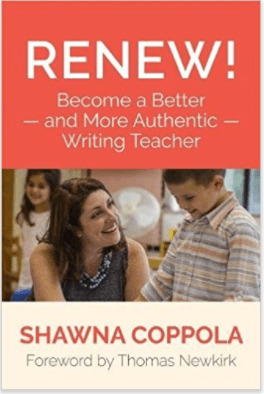
In the mean time, I have to tell you about Shawna Coppola’s new book RENEW!

I read the whole of this book in one afternoon! Thank you, Shawna, for writing so much of my own thinking about “Becoming a Better — and More Authentic — Writing Teacher.”

Shawna’s voice sings with passion and positivity. She paints the pages with possibilities! I know, I am gushing (and that’s probably too many p’s.) But here’s the thing —

I know so many ELA teachers who do know know how to teach writing. I know many more who are not confident teaching writing. I know even more who are not writers themselves, so it’s no wonder that teaching writing is difficult. Teaching writing is hard. A book like RENEW! not only gives us a starting place, it gives us desire.

desire-is-the-starting-point-of-all-achievement-not-a-hope-not-a-wish-but-a-keen-pulsating-desire-which-transcends-everything-napoleon-hill

I am doing a lot of thinking lately around the idea of transcending. How do we go beyond our limits into something more, something better, something real and sustaining?

Let me share with you some of the passages I marked in RENEW!. I think you’ll see why this book is a must read for any teacher who needs a bit, or a lot, of renewal when it comes to teaching students to write.

“. . . if we are truly willing to honor the individuality of our student writers, the RENEW!uniqueness of each community of learners, and the ever-changing nature of our global landscape, we must continually rethink, revise, and renew our practice. Otherwise — to paraphrase Dewey — we rob “today’s students of the tomorrow today’s students deserve” (10).

“Broadening our ideas about what writing “is” can be scary, as if we are opening up a Pandora’s box. But in all reality, continuing to teach our student writers through a narrow, outdated lens — one that, in overvaluing written composition, does not accurately tell a story about the world of writing beyond most schools and classrooms — harms their development as writers by limiting the kinds of composing they are exposed to and encouraged to practice” (51).

“Teaching our writers how to develop their own tools is infinitely more sustainable than using preexisting tools. Quick survey:  How many of you use the graphic organizer your sixth-grade teacher taught you to use to write a persuasive piece? That graphic organizer may have been helpful to you then (although I doubt it was helpful to 100 percent of your classmates), but how useful is it you now?” (62).

“What message or “story” are we sending our student writers with a single overall score? Not only does it imply that their worth as a writer can be whittled down to one letter or number (which itself can mean different things for different teachers and even within different units of study), but that the worth of writing itself can be whittled down this way” (73).

“. . . readers of writing are human, an done person’s response to a composition may not perfectly align with another’s (If it did, what a drab, boring world we’d be living in!)” (79).

“Which is more likely to help students learn:  offering them specific feedback about their work, behavior, or performance, or slapping a score on a piece of paper?” (82).

“. . .when we engage in a semi-regular habit of writing, we can much more genuinely speak to those incredibly fantastic moments that writers experience on occasion, like the amazing feeling of completing a particularly difficult draft or writing something that makes a reader spontaneously laugh out loud. Anyone who’s ever taught a group of students of any age knows that when we are faking our way through something, or at the very least “phoning it in” by only engaging on a superficial level with what we are purporting to teach, students can smell our lack of authenticity a mile away. They know, even subconsciously, that they are being sold a decidedly moldy bill of goods” (92).

That’s all well and good, right? But here’s the beauty of Shawna Coppola’s book — she gives us the research that supports each of her positions AND she gives charts and graphs and resources to help us rethink, revise, and renew our approach, instruction, and practice as we become better teachers of writing. This book is chock full of everything good when it comes to writing instruction. It is a book I will return to again and again.

I hope you’ll read it. I hope you’ll share it with every ELA teacher you know. Really, it is just that good.


Amy Rasmussen lives in north Texas and teaches AP English Language and English 4 (new prep in ’17.) She loves talking books, daughters’ weddings (two this year), and grandbabies (five). She also loves facilitating PD for other teachers making the move into a workshop pedagogy. Amy adheres to the words of Emerson: “We aim above the mark to hit the mark,” and Jesus: “Love one another.” Imagine a world if we all aim higher. Follow Amy on Twitter @amyrass. And she really hopes you will follow this blog!

Summer Alert! Educators, Remain Calm!

I was speaking with a friend yesterday about summer anxiety some teachers experience. How the “endless” expanse of summer gets eaten up by, well…work.

We agreed that “teachers have the summer off” is a dangerous myth, both politicallyimg_4296 (which I’d need 289 pages to dig into, so I’ll avoid that angle) and emotionally (which I will explore, but just a bit. My daughter and I are heading to the park, because I’ve been working on prioritizing). It’s a myth that was making me downright twitchy, because I thought I was “doing summer wrong.”

Summers of my youth were eternal. Swimming, biking, The Sandlot viewed from sleeping bags, vacations to Gettysburg and Colonial Williamsburg (my Dad was a history teacher), and reading countless books. Reading in my swing set fort, unless I saw a spider. Reading on my trampoline as I liked to imagine I was multitasking, because I was also tanning. Reading in the car, until I felt like puking – such a bummer for a bibliophile to get carsick from reading. Reading as a cliche, under the covers with a flashlight.

Stress was not a part of the equation. Various foods on a stick, mud up to my knees, and bicycle trips to pay for candy with a bag full of pennies, yes. Stress, not so much.

These days, summer days years later, I was finding myself legitimately nervous. Such anxieties include:

  • It’s already the Fourth of July! What have I done with the past four weeks?!
  • Each week of the summer has had at least one day (more likely two or three) on which I either went to school for a meeting/to work, or I worked several hours from home.
  • I’m reading, but not enough.
  • I’m writing, but never enough.
  • I’m spending time with my daughter, but…is that enough?
  • My list of to-do projects is largely unchecked.
  • I’ve burned once, but returned quickly to sickly Wisconsin pale.

In short, I’m doing a lot. However, I think my big mistake so far is that I’m still trying to balance being a teacher and taking time off. In other words, I haven’t actually allowed myself any vacation.

Today, the AP scores come out for the great state of Wisconsin. Awesome. No stress there.

Kelly Gallagher shared a tweet this morning, linking to a post from Diane Ravitch about research into AP courses and their impact on our school system. Basically, the courses are important. Rigor is important. However, what we’ve done with the courses (high stakes for class rank, stress on students who overload, etc.) is far from ideal. On extra stressful days like these, I am reminded each year of Amy’s post about what really matters in AP courses: creating readers and writers out of our students. Not hyper-focusing on the test and the scores.

In the same way, I need to stop hyper-focusing on school during the summer and remember what’s really important. If I don’t take some time to recharge, I am going to burn out by October.

There are ways to let go. There are ways to really embrace a little bit of summer.

And for those of you who are like me and aren’t so good at it, here is a list off the top of my head:

  • Read. Read under the covers with a flashlight if you are feeling nostalgic. Read exactly what you want, when you want. This one should be easy…it’s a part of being a workshop teacher.
  • Take the time you can. Maybe it’s a weekend or maybe it’s two/three weeks in a row, but no matter how much time, intentionally set it aside for you and for your family. No meetings, no planning, no curriculum work, no searching Twitter for ideas (save your Three Teachers Talk blog post from that time as something to look forward to later!).
  • Practice some mindfulness. I was introduced to this concept by a friend. As a teacher, I’ve lost a bit of “in the moment” thinking in favor of planning ahead and reflecting back. Resetting myself to return again and again to the moment I am in brings grounding and appreciation for what is right in front of me.
  • Grab some of your summers past youthful innocence back. My daughter just said from the other room that Belle and the Beast are finally loving each other now. I took a break. I went in to watch Belle throw snowballs at the Beast. Tale as old as time: you need to play more than you work sometimes.
  • Let yourself take a break. Good heavens…you know you deserve one.

How are you capturing summer? Please leave your comments below!

Lisa Dennis teaches English and leads a department of incredible English educators at Franklin High School near Milwaukee. She loves to count fireflies in her backyard, sip root beer floats through striped straws, and get so lost in a book that she loses all track of time. Follow Lisa on Twitter @LDennibaum 


Please respond: What do our students really need?

Dear Readers, would you help with something? I’d like to collect some informal data. All you need to do is read below, take the survey, and maybe leave a comment. Thanks in advance! (I #amwriting)


Sometimes when I conduct PD, we start with a discussion of the characteristics of the students we teach. I introduce this topic by discussing the differences between Millennials and Post-Millennials, also known as Generation Z. 

Of course, they are also called other names:  Homeland Generation, iGeneration, Gen Tech, Neo-Digital Natives, etc. (Wikipedia provides a good starting place for a bit of research with an impressive list of citations.)

What I think is even more interesting than the names marketers and researching are calling these young people are some of the descriptors used to define them:  cynical, private, entrepreneurial, multi-tasking, hyper aware, technology reliant; and the terms in which they self-identify: loyal, compassionate, thoughtful, open-minded, responsible, resourceful, determined.

What I really wonder though — based on our experiences with our students day in and day out — plus what we know about their tech savvy selves — what do our students really need from us as their educators?

Please take this poll and share it widely. I’d like to know what other educators, (actually all adults really) think. 

Also, if you have the time, I’d love to know you thoughts on the best ways to give our students what they need within our ELA classrooms. Please leave your thinking in the comments. (Maybe you’ll make it into this elusive book I’m trying to write.)

Thank you!

Amy


Are You a Reader, Darlin’? 

A few weeks back, I was on a flight home from Dallas to Milwaukee, my thumbs clicking away at my phone. Working to stifle my usual chatter in a effort to be a good fellow traveler to the woman I was sitting next to, I had been reflecting on the past few days of learning with fellow educators. However, it hadn’t taken me long to realize that I might be sitting next to an archetype wrapped in pink. My curiosity was piqued.

She was an older woman with white hair cut into a sassy pixie style, a pink shawl wrapped around her tanned shoulders and a pink Bible in her lap. I was Honey, Darlin’, and Sugar in the first 20 minutes I knew her, and she had even put her hand on my knee Are You A Reader, Darlin'- (1)to ask me to reach up and adjust the air vent for her, replying to my action on her behalf with a long and drawn out, “Bless you.”
Her slow, sweet drawl suggested that she was the one on a trip North, not headed home as I was, and when we ended up chatting, she confirmed she was headed to Milwaukee to visit a friend she met on a cruise almost 30 years ago.

After awhile, my new friend reached over with a long, manicured finger (you guessed it, pink nails) and tapped the book on my lap.

“Now, isn’t that an intriguing cover. The Nest,” she said, emphasizing the E with a smile and turning the word to Nast. “Do you like it?”

I smiled back, “I haven’t had a chance to get very far yet. Do you like your book?” I took a chance at a small joke.

She chuckled. “Darlin, I’ve read this one several times. It’s a bit different each time. Never read it in pink before though.”

We laughed and I asked if she read often.

“Oh, yes, (I love how E’s are A’s in the south) always been. How about you? Are you a reader, Darlin?”

I smiled inwardly at the revelation that the North needs to use more pet names and told her a bit about workshop.

“Then you are a reader,” she said, leaning over a bit and pausing. With a dropped voice she whispered, “Go make a lot more of ’em.”

I smiled broadly at 40,000 feet. Yes, Darlin. I’m a reader. 

An educational leader capable of professionally developing peers? Of that, I’m still not sure…

But a day earlier I had been in Dallas, sharing a two day workshop with Amy for about 40 educators. To say I was nervous would be a gross understatement. 3 years ago, I didn’t really know what workshop was. Now, I was walking into a library, full of expectant educators, to professionally develop them, like I had the necessary social capital (thanks for that new one, Amy!) to pull it off. 

As the training got underway, I felt like it was the first day of school. Ever. The very first day of my very first year, when my smile didn’t quite reach my eyes because I was actively trying not to vomit. However, as I think back on my first professional development experience, from the other side (and vomit free), I feel blessed.

I’m blessed because I was afforded the opportunity to teach other teachers about something I am truly passionate about. I am blessed because their questions and concerns not only helped clarify my own beliefs, but strengthened them. I am blessed because I was able to teach beside one of my workshop mentors, Amy Rasmussen. I’m blessed because I got to see the excitement and possibility that light up the eyes of fellow educators when they see how empowering choice and talk can be in their classrooms.

Then, this past week, our fellow writer Jessica asked a few questions in our ongoing Three Teachers WhatsApp conversation that took me right back to McKinney:

How do we prove workshop to our colleagues? How do we prove that it works? That we are doing the right thing? How do we prove that it can help make all the difference for our students and their futures as readers and writers?

The short answer? We do it.

We jump in and try it. Just as Amy and I asked the teachers in McKinney to do, you try it. You hold on to the core values of workshop (choice, student talk, time to read, mini lessons, conferring, writing with mentors) and you begin. A comment made by a veteran teacher during our McKinney training sums up this ironically simple, and yet seismic, shift quite pointedly. This rather stoic, obviously brilliant, and totally skeptical educator, leaned back in his chair on our final day of training and said to the group, “What the hell have I been doing all this time?” 

This gentleman’s astonishment at how limiting teaching English can be if we are trying to teach students to be English teachers, was moving. It does nothing to negate all of the amazing work he (all of us!) has done in his career to move students forward. The practices he implemented in good faith and with good reason were to benefit students.   But now, he was seeing that something could be added to benefit the young people in front of him, not only as students, but as people. Something could shift. Something meaningful needed to change if his ultimate goal was now different too . No longer was the fight to make students read a particular text (or to read/write at all), but to build a support system to show students all of the opportunity, benefit, and enjoyment that come from reading and writing, and the lasting impact if can have on their lives.

Ambition (1)

It’s not easy.  It will not be easy, but the right work rarely is. My move to workshop and my recent training work has reminded me that this is the good, hard work that I need to be doing. In order to do it, I need to remember the following:

  • Be vulnerable. This is hard. No kidding. But it’s about effort to be real with your students. They need to know you are a human writer, not some enlightened literary god/goddess who is there with the right answers and a perfect draft each time you put pen to paper. Write with your students. Share your work. Share your revisions. As Shana suggested earlier this week, share your writer’s notebook. Also, keep in mind, that vulnerability doesn’t have to be all or nothing. Students don’t need to know every little detail about you in order for you to share. Not comfortable detailing the deep dark secrets you only share with your therapist and your murky, tortured soul? Good! Being vulnerable means sharing your writing about dogs, because you love them, not your poetry about the loss of your innocence. Open up a little and you’ll get back a lot.


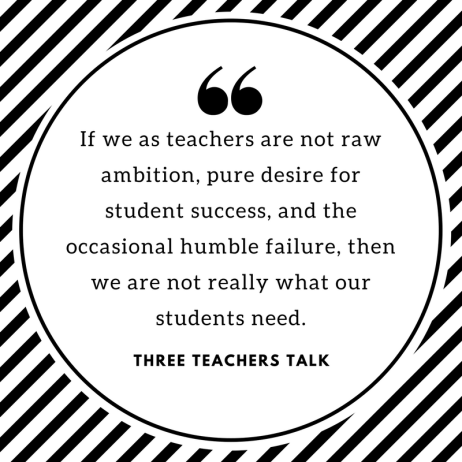
  • Be honest. There is little room in my classroom to connect with students on the level I need to in order to know them well enough to build them individually as readers and writers, if I am anything but myself. If we as teachers are not raw ambition, pure desire for student success, and the occasional humble failure, then we are not really what our need.  Tell your students which books you’ve loved, which you’ve abandoned, and which classics you haven’t read. I keep Don Quixote, with 258 pages read, on my desk for that very reason. I thought I should read it. I struggled so long, I grew to dislike it. I moved on. I haven’t read all of the classics. Who has? And who determines the classics?! Share the pieces that mean something to you in an effort to help students find pieces that mean something to and move them.


  • Be a reader and a writer (Darlin’). If we truly want to build readers and writers in our classrooms, we must be readers and writers ourselves. Listen, a few short years ago, I wasn’t a reader. I had always loved reading, but in the first few years of my career, I had allowed myself to read less, because I claimed to have no taste for it after reading so many student papers. This just can’t be. Of course we can share our love of books through the pieces that have touched us over a life of reading. But, how can we claim a life and love of reading, if we aren’t doing so voraciously now? The same with writing. It’s malpractice in my mind to promote reading and writing as transformative if we, the teachers, are not taking the chances and the time to transform ourselves in the same way. I want my doctor to love and practice medicine. I want my mentor to truly believe in the power of education and promote best practice through his own leadership. I want my students to know they can trust what I’m selling them, because I’ve bought in.

I’m a reader and a writer, Darlin’. Won’t you join me?

Lisa Dennis teaches English and leads a department of incredible English educators at Franklin High School near Milwaukee. As this summer rolls on, she looks forward to sharing more of the wonders of workshop next week with the awesome educators in Wiley, Texas. Follow Lisa on Twitter @LDennibaum. 


Thank You, Thoughtful Teachers

I’ve been really delighted this summer to see a great deal of teacher engagement in a variety of places.  From the participants in my National Writing Project summer institute, to the enthusiastic readers in the Book Love Summer Book Club, to the still-hashtagging tweeters on various ed chats, I love seeing so many teachers interested in refining their practice outside the school year.

I’m especially thankful for you, our thoughtful readers, for continuing to read and comment and engage with us in the summertime.  I love that you’re on this journey with us as teacher-writers, constantly reflecting on our practice, striving to improve it.

You deserve a thank-you gift!  How about some free books?

img_9794

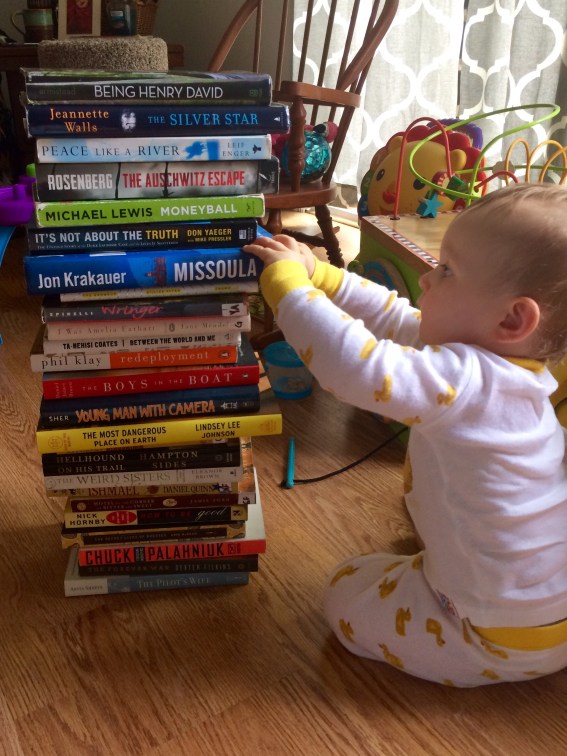
Yes, those are Eric Carle pajamas…

Ruthie and I are excited to give away another big box (or two or three!) of books to add to your classroom library.  You all helped me reduce my shelf load last year with a big book giveaway, but there’s still some more #booklove to dole out.

To enter to win, please help us engage more thoughtful teachers by spreading the word about the community we’re working to build here at Three Teachers Talk.  First, make sure you’ve subscribed to receive emails from us by signing up on the home page:

Screen Shot 2017-06-20 at 10.19.43 AM.png

Just click on the “Give Me More Posts Like This” button to get signed up.

Next, make sure you’ve liked our Facebook page, which you can do directly through Facebook or on the TTT home page as well:

Screen Shot 2017-06-20 at 10.20.05 AM.png

Next, follow us on Twitter at our official TTT account, @3teacherstalk, and consider finding us on our individual accounts, too:

Screen Shot 2017-06-20 at 10.43.29 AM.png

If you’ve already subscribed, liked, and followed, please invite others to do the same.  You can do this through a tweet, a Facebook post, or however you want.  Just help us grow this amazing community of thoughtful, engaged teachers!

Once you’ve done so, please leave a comment on this post that tells why you’re thankful for teachers, plus one way for me to contact you to get your mailing address if you win!

Best of luck winning books, and happy sharing!

img_9796

The books I’ll give away, with Ruthie for scale, of course

Happy Summer,

Shana