Category Archives: Writers

Reading and Writing When You’re Not Supposed To – A Guest Post by Amy Estersohn

Teachers, I’m stuck in a dilemma: How do you respond when members of your reading and writing community read and write when they’re not supposed to?

Those who sneak a book and read through a mini-lesson.Screen Shot 2017-05-01 at 8.44.22 PM

Those who slip a pencil in their hands to continue writing during whole class share.

My initial reaction is to monitor for compliance.  If I tell you to stop reading, you should stop reading.  If I can’t get you to stop reading, then you might do all sorts of other disruptive things, like, I don’t know.

My second reaction is that it’s impolite to broader community.  Attempting to sneak a book during a mini-lesson is not polite to me or to those around you.  Writing while somebody else is reading to you?  Your body language says “I am more important than you right now.”

But there’s a another lesson to consider here: reading and writing happens on its own schedule, and sometimes we get so far into what Nancy Atwell calls the Reading Zone that we don’t want to leave.  We won’t allow ourselves to leave.

I know firsthand what the reading and writing zone feels like, especially as an introvert who needs time and solitude (not necessarily silence, just solitude) to read, write, and think.  

And as educators and observers, we can appreciate that students who read and write even when they are not expected to are in the midst of lifelong lessons about reading and writing.  We’ve won over these teens for the big victory, the way I see it: their writing and reading is of importance to them beyond a grade, beyond what we think, and beyond what their peers think.  No teacher would ever complain that students were making up math problems to solve that weren’t assigned for homework.  No teacher would complain that students were fantasizing about science experiments they’d like to perform some day.

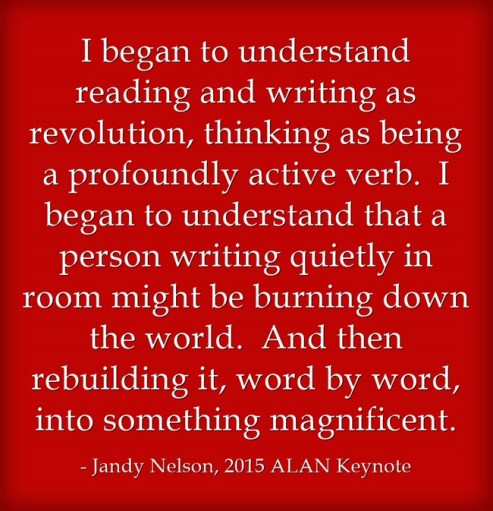
These students are engaged in a revolution of one:

I-began-to-understand

Rather than attempt to interrupt thinking in progress Because I Said So or Because It’s Polite, here are some of the questions I’m considering before I ask students to stop, look, and listen:

  1. Is the stealthy reading and writing intended to disrupt or undermine other student learning?
  2. Is the stealthy reading and writing coming from a student who never or rarely engages in enthusiastic reading and writing?
  3. When will I have an opportunity to measure student progress and understanding of a teaching point?

I adjust some classroom routines to accommodate this stealth, too:

  1. Daily sharing is optional; students can share with a writing partner or friend in small groups and move around the room to share or they may sit at their desks and continue working for more stealth time.
  2. I don’t reprimand students for writing during independent reading blocks, but I also don’t expressly encourage it.
  3. I respect that not all students will be enthusiastic about sharing their work with me, especially if their writing and reading feels private and part of a deeply personal journey.

But … but… there’s always that careful balance between the needs of the community and the needs of the individual, so I’m interested in hearing from you about how you manage this stealth in your classroom.


Amy Estersohn is an English teacher in New York.  She can be found blogging at Teaching Transition, No Flying No Tights, and other education and book review blogs.  Amy was a 2016 recipient of the NCTE/ALAN Gallo Grant and a panelist for the CYBILS awards.


Screen Shot 2017-05-01 at 8.44.22 PM

Care to join the conversation? We’d love to add your voice! Please email guest post ideas to Lisadennibaum@gmail.com.

Why English? – A Guest Post by Mitchell Nobis

Why English- (1)

I’ve had a weird year. Many of us have. For me, it has been kind of like a tornado blew my house off to Ontario but left the foundation behind. What do you do in a situation like that? You might first bask in memories and drive to the river to wave hello to your old house sitting in a field somewhere south of Sarnia. (Hello from Michigan!) But after a minute, you can’t keep shouting at your house telling it how much you miss it. No, eventually you go back and examine the foundation that’s still there.

We go to work and deal with one-size-fits-all state mandates. We check the education news and see grant after grant going to STEM courses. We go out with friends Screen Shot 2017-05-01 at 8.44.22 PMand hear a hundred citations to or shouts about “fake news.” But what’s the foundation that holds strong through all of this? 

As my main man Hamlet would say, “Words, words, words.” (Granted, he was in a different context when he said that, but then again, maybe not that different.) In the craziness of 2017, I keep thinking about thinking. I keep returning to the humanities. I keep coming back to English. Why English? Why humanities? Why liberal arts?

We might as well ask, why words? So let’s.

Why words? Why do we take and teach English classes in the first place? In the news media and conventional wisdom of the day, business leads the way. For so many of our students, making a million dollars is their goal and only sign of success. Ours is a society that does measure success with bank account commas, so that’s entirely understandable. But if you read interviews with wealthy thought leaders (say, the Bill Gates of the world) or look at a survey of CEOs, you see that they want to hire creative thinkers and collaborators. They want liberal arts majors. They want folks who are good with words. Why? Words are how we show thinking. We need thinkers.

Our work as English teachers is cut out for us and is more important–and harder–than perhaps ever before. Words build a mind. Words build a soul. Words build a sense of self in community. They build the community. Regardless of our students’ career goals, if they are to be successful and thoughtful human beings, they need the opportunities to think, to listen, to communicate, to write, and to speak that English classes can provide in ways that no other discipline can.

Sure, students read in science class but mostly with a goal of learning the difference between xylem and phloem. Yes, students write in history class but mostly with a goal of explaining the cause of—all too often—a war. English class allows the unique opportunity to read, write, and speak with a goal of greater understanding. Our goal boils down to a greater ability to think.

But that’s hard to do. Many people want a checklist approach to teaching English, but that’s not how literacy works in a real world democracy. We have to read information in live time, and we have to decode big ideas on the fly. This doesn’t happen when students can use only textbooks. We need to be okay with having hard conversations and using real-world texts, but how do we foster safe spaces for these discussions? By doing it. We can model for students by actually engaging in deep discussions in our lives and in our classrooms.

English teachers have rare opportunities to get to the deep, real work of an education. (No pressure, eh Teach?) The English department is often the home of the faculty’s most outspoken and deepest thinkers. This is no mistake because the very material we teach increases critical thinking and empathy. English teaches us to read deeply, to pause and think critically, and to empathize. If we embrace this role as teachers, we can help students change the face of America and the future. We need understanding. We need kindness. We need a viable, sustainable society. That is why English classes matter. That is why we study words. We need humanities because we need each other.


Mitchell Nobis (@MitchNobis) is the president of the Michigan Council of Teachers of English, a co-director of Red Cedar Writing Project, and a curriculum support teacher in Metro Detroit with over 20 years experience in the high-school English classroom. He recently co-authored Real Writing: Modernizing the Old School Essay, from Rowman & Littlefield, and for June 2017, he’s posting a poem per day at the Tupelo Press 30/30 Project website.


Screen Shot 2017-05-01 at 8.44.22 PM

Care to join the conversation? We’d love to add your voice! Please email guest post ideas to Lisadennibaum@gmail.com.

Why We’ll Read More Than an Article of the Week in Senior English

I wish I were kidding. I am still laughing, but this is not funny.

Last week was my first week back to school. We had five days of shifting classes; schedule changes like shuffling cards with every student vying for their winning hand, or at least two out of four classes stacked with friends.

This is my first year to teach senior English (I still have one section of AP Lang), and I felt a mixture of excitement and dread all summer. Twelve years of reading, or not. Twelve years of playing the game of school, or not.

How do I get students to want to read, want to write, want to explore and question and challenge when it’s possible they just want to be done with school? I am pretty sure that’s how I felt senior year. Granted, that was a loooong time ago, but I do not remember any teachers’ names, any books I read for school, anything I learned the year before I graduated.

I wonder if that’s normal. Somehow I don’t think it should be.

But I do not want my seniors to remember me. I want them to remember learning something that adds value to their lives. I want them to remember learning something that adds value to my life as they vote beside me for elected officials, move into my neighborhood, become my doctor, or perhaps teach beside in the classroom next door.

I know the routines of a workshop pedagogy will help me do that, of this I am certain.

We’ll read and think and write and talk. We’ll share our thinking and our writing in small groups and as a class. We’ll talk about books and the themes that resonate and why that might be so. And we’ll write about the things that matter in our lives.

We started all of this in five short days.

I also got a little panicky.

If you are familiar with Kelly Gallagher’s work, you’ve probably heard him talk about why he started Article of the Week. He said he’d given his students, seniors, an article to read, and while circling the room and checking in with small groups, he asked a couple of kids how their reading was going. “Okay,” they said, “except we don’t know who this Al Quaeda guy is.”

Uh huh, seniors. Seniors who had no idea what was happening in their world.

I’m not too sure mine do either.

2017 Face Palm Experience #1:

We’d just looked at images of the destruction from Hurricane Harvey. We’d done some thinking in our notebooks about how these images made us feel and what we could do to help in the efforts to aide our fellow Texans. I walked the room, listening in as students read from their notebooks. Then, I heard this:

“Can a hurricane happen on a lake?” Student A said, “I mean like would a hurricane ever happen on Lake Lewisville?”

I stopped. Wouldn’t you?

Student B answered, “Uh, hurricanes happen on an ocean.”

“So what ocean is by Houston?” said Student A.

“That’s the Gulf of Mexico,” said Student B.

And Student A asks “So what ocean is that, the Pacific?” as she reaches for her cell phone.

I wish I were confident she planned on looking up information about hurricanes and oceans and weather patterns. Somehow I doubt it. I’ve asked her to put her phone away 47 times in five days. (So far phones have not been an issue except with this student.)

Now, I am left wondering:  Will whatever we do in room E111 be enough to prepare my students for the world beyond the halls of our high school? The responsibility is a lead weight on my shoulder.

I sure hope I can carry it.


Amy Rasmussen is the mother of six amazing young adults, grandmother of five smart and sassy little people, and wife to a brilliant marketer, sales exec, life coach, and dog lover. She teaches readers and writers in AP Language and English IV in North TX and facilitates professional development on the workshop model of instruction at every opportunity. She loves God, her family, the U.S.A., and all humans everywhere. Follow Amy on Twitter @amyrass

Alternatives to Reading Logs

c5e2590b7277d0516b78e67e6021b540Ahhh, Labor Day weekend–that first glorious three-day respite from back to school, or the last vestiges of freedom before it begins.  Whatever this weekend is for you, I hope you’re using it to relax and recharge before we see bright, smiling faces (or sleepy ones) tomorrow.

I bet you’re using a book or two to help you enjoy this weekend–what are you reading?  I’m reading little bits of Bill Bryson’s The Mother Tongue whenever I can squeeze it in (usually as I fall asleep).  In longer chunks, I’m reading Scaachi Koul’s memoir, One Day We’ll All Be Dead and None of This Will Matter, which is a perfectly-sized series of essays for my busy days.

In quiet moments on long weekends like these, I wonder what our students are doing.  Do their reading lives mirror mine?  If the answer is no…what can I do to help them become readers?

And, more pressingly–is there something I’m doing that’s preventing them from becoming readers?

Reading homework, requirements, levels; book reports, assignments, due dates.  None of these are what I’m tying to the books I’m reading this weekend.

But is that true for our students?

This article from School Library Journal talks about the work done by librarians to match a person to a book.  They call it readers’ advisory.  Then, they lament that so many classrooms discourage the important work of “talking with a child, observing body language for clues, and walking together through the stacks while offering suggestions” and rely on leveled bins, assigned texts, or assessment-bound reading units to get kids to read.

How much of what goes on in my classroom is readers’ advisory–and how much damages that work?

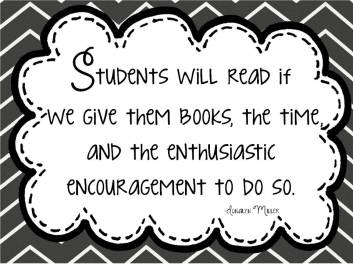
Slide2I’ve been thinking since last May about how we should stop grading independent reading.  The best and brightest in our teacher hive give us their advice and wisdom in books, blogs, and articles, with quotes like this one from Donalyn Miller.  Books, time, encouragement–these are themes we see repeated in what students need to blossom as independent readers.  Nowhere do we see that we need to measure, assess, or grade them.


To be sure, our kids need our instruction and guidance to grow as real readers.  Conferences, follow-up activities, book clubs, goal-setting, talk, and self-assessment are powerful tools to help move students forward.  How can we prioritize those things instead of more measurable (and infinitely less revealing, rewarding, or authentic) methods like reading logs, records, and quizzes?

Well, we really want to know.

Please share with us:  what are your alternatives to reading logs?  How do you approach a gradebook that must be filled, and fill it with meaningful activities tied to reading?


Screen Shot 2017-09-04 at 7.15.11 AM


In that Google Doc, we’ll work to compile a series of alternatives to reading logs, and share them here for everyone to benefit from.  You can also leave a comment on this post, write on our Facebook page, or tweet to us.  Together, we can create a repository of ideas and strategies for approaching independent reading in a way that’s authentic and helpful this school year.

Shana Karnes is mom to 1.5 spunky little girls and wife to a sleepy surgical resident.  She teaches practicing and preservice English teachers at West Virginia University and is fueled by coffee, chocolate (this week), and a real obsession with all things reading and writing.  Follow Shana on Twitter at @litreader or read more of her writing on the WVCTE Best Practices blog.

Get Your Story on the Page

Get Your Story on The Page (1)

Once upon a time, in a land of equality and compassion…

Attention! Do not open! Live snakes inside…

To the Love of My Life, It is with regret that I must inform you…

The power of the written word to change our perspectives, alter our actions, stir our hearts, and change our lives are just some of the reasons we all work to teach authentic writing with such passion, urgency, and unwavering commitment.

We reach out to our students with mentors, craft study, low-stakes writing, and the call to put their hearts on the page, because we firmly believe that writing can empower, enlighten, and embolden their lives as it has ours.

I am so proud to hold up as evidence, the guest posts on this blog from the past two days. If you’ve not had “beginning of the year, crazy teacher-presession days, I’m trying to learn 172 names, you’ll find me in a corner weeping” time to read those two posts, I cannot recommend that you take the time more highly.

Charles Moore and Megan Thompson, both teachers from flood-ravaged Houston, tell their stories of the start of a school year that will alter their lives and the lives of their students forever. The posts are honest, raw, vulnerable, and everything we ask out students to put on the page from day one. They are informative, persuasive, and narrative at its best, because they come from a place of true connection between content and humanity.

Often, especially at the beginning of the year, I will hear students say, “I just don’t know what to write.” And I hear that. In the face of powerful mentor texts about tragedy, inequality, injustice, and the raw realities of life, it can sometimes feel like my words on the page are very, very small in comparison.

However, this is where our students need the most support. They need to know that their words put on paper are uniquely theirs and that they are important. They fulfill the timeless desire of humanity to express, convince, and connect.

As we get to know our students this year, I think it’s equally important to get to know them well enough to intelligently hand them books to move their reading lives forward AND to get to know them well enough to coax out of them the true stories they have to tell.

We’ll work all year to fine tune the telling of those stories (mini lessons, craft study, feedback galore), but my goal very early in this school year is going to be to help my students get to know themselves right along with me as I get to know them and to help them see that the desire to communicate has always been within them. Regardless of their live experiences, the wonderings of their minds and the musings of their hearts are great voices we need to help students tune back into.

When I got home this past Tuesday, after a twelve hour day of pre-session and open house, my daughter Ellie (age four) was just getting tucked into bed. As I sat down next to her bed and soaked up her barrage of hugs, she smiled broadly and told me she had left something under my pillow that I needed to go get right away.

When I returned to Ellie’s room with the slip of paper below, my four-year old read me a story of about two minutes in length that explained all the markings on the page. It detailed her day img_5459while I was away, her desires to have me stay home so she could hug me whenever she wanted, several additional expressions of love, and a suggestion that we get ice cream this weekend with gummy bears on top. Signed with her name, it was one of the first pieces of evidence I have of her desire to tell her story on the page.

We learn first how to write our names. And when we learn this skill it’s to take ownership of our ideas. To take pride in the sharing of what we’ve created. We can’t let our students lose this. As their skills grow, and they learn all the additional letters to organize into words that tell what they feel, what they need, and what they want others to know, we must validate that exploratory writing in order to encourage it to continue.

It starts so early, this need to share ourselves with ideas and feelings that can’t always be said, and it is up to us as the teachers of these darling children coming of age, to remind them of the power that a page of their ideas with their name at the top can hold, if only they take the time to make those ideas deeply felt and deeply honest.

This school year, as we teach the particulars of the craft of writing, let us remember to encourage our students to share what they need to. Let us encourage them to share what they might not even know/remember is in their hearts and minds, and that it’s important.

We owe it to ourselves and to our students to make our writing instruction about more than answering the prompt, getting it over with, and/or filling a page requirement. Remember the deep desire humans have in expressing ourselves, putting our unique voices in print, and (should we chose) sharing that tiny piece of ourselves with others.

Students may hesitate, but their stories matter. Let’s get them on paper.


Lisa Dennis teaches English and leads a department of incredible English educators at Franklin High School near Milwaukee.  Follow her developing story on Twitter @LDennibaum 


Guest Post: Find the Light in the Darkness: My English Classroom Post-Harvey

I’m a teacher. My job is to teach children-teenagers-everything English. It is what I was Clear Creek ISD June 2017 (1)called to do 10 years ago. So as I sit here in the aftermath of Hurricane Harvey, I can’t help but think about what I will teach my students when we return to school and our new normal.

What can my English classroom offer a student who has possibly lost everything in a horrific storm? A student who is staying in a shelter wearing donated clothes because all he could carry out of his flooded house was a duffle bag and the clothes on his back? A student who has braved the tragic conditions to save others from their nightmare of rising water and tangible fear? A student who didn’t flood, but is watching his friends and family suffer the stress of life-altering devastation?

Staying indoors for 5 days straight offers ample time for reflection, so the answers to my questions have come. My classroom has not changed–it is quite possibly the one stable place that Harvey couldn’t touch. Not that he didn’t try. My classroom will remain a safe place for my students to write through the pain they feel. It will be a microcosm for the amazing unity we are seeing in our area. It will allow my students to talk to their peers about shared emotions. It will give students the opportunity to write to process, to share, and to unite. It will be a place where tears are shed and spirits are renewed. It will be a place where students can learn about compassion and what it means to be a community through real-world experiences right in our backyard.

I am not sure I could think of a stronger classroom than that.

And I will lead the way as I always do–through modeling with my own Harvey experience. And when I do, it will probably look something like this:

As I sit here writing these words, I am not even sure what emotions I’m feeling anymore. Fear. Shock. Disbelief. Fear. Sadness. Guilt. Fear.

I don’t think I will ever forget this storm. The fear I felt Saturday night as the rain and wind ripped through my neighborhood is indescribable. At one point, I just wrapped my arms around my sleeping three-year-old daughter and hugged her close to my chest- not to comfort her, but to comfort me. I needed stability because I had absolutely no control over what was ensuing outside my window.

Texts poured in throughout the night- friends and family checking in and reporting the surreal nightmare unfolding before our eyes. Water ferociously crawled up my yard, and I watched with panic. My Facebook newsfeed couldn’t refresh fast enough as I saw new friends reporting flooding with every second’s update. I finally fell asleep at about 4:00 in the morning as the howling wind died down to a soft roar, and the water stayed a few feet away from my house.

What I woke to on Saturday morning is what still sits in my gut. The national news channels- national, people- like CNN and The Weather Channel- were in a place so near and dear to my heart. The place where I went to elementary school. The place where I slept over at friends’ houses. The place my husband and siblings went to high school. The place that taught me what it means to be a teacher. The place I spent the first six years of my teaching career. The place where SO many of my friends and beloved former students live. The place that had been hit like a freight train by this natural disaster called Harvey.

There is something very eerie about seeing familiar places and faces on the national news.

I saw images of my friends on rooftops being rescued by more of my friends selflessly putting themselves at risk to save others. I saw even more of my friends and their babies, some only days old, riding in boats to their safety and riding away from the lives they had known before the storm. I commented on all that I could, but with each comment, my words felt less and less valuable. How many times can you say, “I’m so sorry. I’m praying for you.” before it means nothing?

I received more texts from friends and family far and wide.

“I saw Dickinson on the news. Are you okay? What can we do?”

The scenes I watched on TV and social media were shocking. But the weird thing was, I didn’t cry. All day, I held it together. Probably because I didn’t want to worry my daughters. And probably because I was numb to what was going on–I just kept saying that I couldn’t believe what I was seeing.

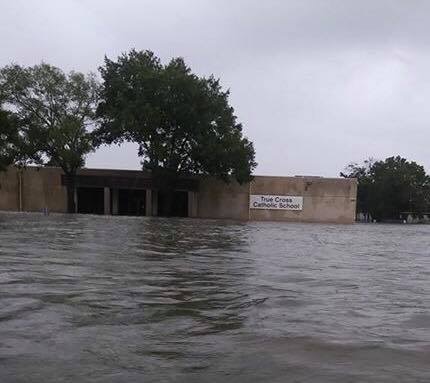
Until one picture came across a text. My childhood friend had been out all day on his boat rescuing people in Dickinson and knew I would want to know how our elementary school, the school my two daughters currently attend, fared in the storm. That’s when I lost it.

TrueCrossCatholicSchool

Once the tears started, it all came rushing forward. I cried for my girls who no longer have a school. I cried for my friends who no longer have a home. I cried for my former students who lost everything. I cried for my sister whose husband drove her suburban up on a trailer at 2am as the waters rose fast beneath his feet threatening to enter their home. I cried for my family who no longer has a church. I cried for my coworkers as I read their terrifying scenarios of rescues from rooftops. I cried at the thought of the stories I haven’t heard yet. I cried because I am stuck at home, flooding all around me, unable to get to those who need me–even if it is just to give a hug to say what my words can’t seem to express.

But behind the tears is an incredibly proud spirit that knows we will bounce back–as a community, as a state, as a nation. We will pick ourselves up and pick up those who can’t find the strength along the way.

It is very easy to let the guilt creep in as I think about why my house was spared in the flood. But I have chosen to focus on the answer instead of the question. I know why I was spared- so I can help.

I will help my students cope through reading and writing. I will listen to their stories and cry right alongside them, all the time reassuring them that we will get through this. I will teach them that through dark times, we must look for the light. I will be that light for them if they can’t seem to find it anywhere else.

I will help my friends clean up and start over. I will volunteer my time to tearing out soaked sheet rock and ripping up soggy carpet. I will offer my home to the ones who are now homeless. I will hug them and catch their tears on my shoulders as they try to pick up the pieces and move on.

I will help my daughters clean up their school and the teachers there (one of whom is my sister) replenish their classrooms. I will help the school rebuild and crawl out of the hole of destitution Harvey has created.

And through all of this, I pray that I will help the world see that there is hope for humanity. If you can’t see it, just come on down to my community and watch because it is in full force all around me.

Now move out of the way, Harvey, we have work to do.


Bio: Megan Thompson is the Department Head of English at Clear Creek High School. She teaches AP Literature and Composition and Pre-AP English I. When she isn’t teaching, she spends most of her time chasing around her daughters, Aubrey (5) and Maycee Jo (3), and spending time with her husband of 7 years. Follow Megan @teacher_mmt

Guest Post: A Houston Teacher’s Heart

What do you do when a hurricane slams you in the face after four days of school?Clear Creek ISD June 2017 (1)

This was the best first 4 days of school I’d ever had. Tuesday saw us independent reading with self-selected books for the first 10 minutes of class. A habit we will cherish through June. We were moving in and out of our notebooks by Wednesday. Groups were discussing and reporting their thoughts back to the whole class. A community was rising in all four of my senior English classes. My inclusion para-professional and I had worked through the mountain of paperwork and conferred about this student and that one. I had plans to video a class for a whole week to use for who knows what. Who could believe that senior English students could move so far so fast. Our potential was limitless.

My district sent out a message Thursday evening that school would be cancelled on Friday. Some coaches met up at school that evening to stow away hurdles, high jump mats, and benches. We lamented our missed football scrimmage and wondered when we would resume school.

The hurricane projections said it would hit hundreds of miles away and would only be a category 3. We knew the “dirty side” of a hurricane was not a fun place to live, but a few days of rain and maybe a little wind was all I mentally prepared for.

Friday, I went to school to grab my laptop and a couple of teacher books so I could finish my lesson plans, review the game plan for next week’s game against Pearland, and whatever else needed attention. Having been through hurricanes and heavy rain before, I thought maybe we would go back to school on Tuesday at the latest.

Our football staff has a group text that is mostly silly memes and rude jokes. Now it reads like a timeline of the storm.

As I look back on the text threads, there is a definite change in tone on Friday evening when the rain started. We went from making fun of each other to being seriously concerned for one another. The rain fell Friday night but none of us had water in our houses or were flooded in. I even got out of the house to drive around on Saturday. I went to the grocery store for eggs and drove around a bit to see what was what. We spent the day planning for our week one football game and watched the news as the storm worked its way closer.

Saturday night was when it started getting scary. A flood, a deluge of water fell on our city. My wife and I didn’t sleep. It was one of the scariest most nerve wracking nights of my life. 15 inches of rain fell in 3 hours and we were constantly up and down watching the water levels in the street rise and making sure our flooded pool wasn’t about to merge with our kitchen. The coaches’ group chat filled with pictures of rising water and reports from all over south and west Houston. I’m sure we are all too macho to admit it, but we felt that fear collectively and it was a relief for us to know that we weren’t alone in this storm.

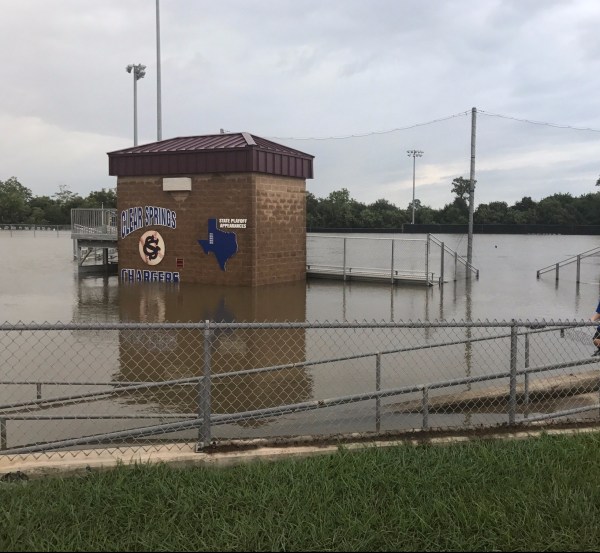
When the sun rose on Sunday, my house was still dry and the electricity was on. Others weren’t so lucky. Neighborhoods within a quarter mile of my house were completely flooded out and many of our students don’t have a home to go back to anymore. I’m sure you saw reports on TV of water rescues happening in League City. Those are our kids. I see those families at parent night and sub varsity football games. We shop at the same grocery store and order pizza from the same place. My twitter feed filled with images from our community of families who were rescued in boats and won’t see their houses for weeks.flood

Despite the destruction we endured this weekend, I can’t help but think toward the future. It will take some time, but the flood waters will abate and the roads will clear. At some point, we will reopen our schools. We will ask the students and teachers to come back and the process of building will resume.

Even those whose houses didn’t flood will bear the scars of this terrifying natural disaster. And those whose houses did flood will be consumed by it.

Where will that process even begin? What will I say to them? What can I reasonably expect them to produce?

I have no idea how to answer most of these questions. All I know is that I’m going to tell them that I love them over and over. My classroom will be a refuge from the aftermath of the storms. We can be safe together. We can write about our pain and share our fears. My Student Council class will work to bring some normalcy back to people’s lives whether through food drives, donations, or lending a hand to those who need it. I’m going to give my linebackers the biggest hugs they’ve ever gotten and I’m going to tell those boys, who think they are men, that I love them.

Harvey’s footprint will always be seen on this school year for these students and teachers.

Maybe we can learn about survival and community and love. I think my classroom is the perfect place for those lessons. I hope I’m up to it.

Charles Moore is the senior English team lead at Clear Springs High School in League City, TX. He enjoys leisure swimming, reading, and coaching linebackers. Follow Charles on Twitter @ctcoach

A Reader’s Manifesto

After a hectic summer of being well behind my fellow Book Love Book Club readers, I finally finished Kylene Beers and Bob Probst’s latest book, Disrupting Thinking.

giphy.gif

Yay for me!

Its ideas had been disrupting my thinking since page one.  I loved its premise, which centered around two questions the authors returned to again and again–what needs to change?  And in order to make those changes, what assumptions need to be challenged?

These questions are as good an acid test for our teaching as Louise Rosenblatt’s 1956 article of the same name.  Too much of education today rests on the status quo.  To disrupt that status quo, “good teaching sometimes feels like a rebellion,” as Penny Kittle wrote in our book club chat this summer.

img_1952

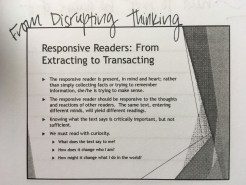
Sharon’s slide on transactional reading

Rebelling has always come naturally to me in teaching.  It’s no different now that I teach at the college level, but I’m lucky to have many like-minded peers to work alongside at WVU.

In our collaborative planning meeting last week, my friend Sharon shared her thinking about a different kind of reading and writing she really wanted our preservice teachers doing–the work of transacting.

448bf2b22af9be31dbc183a082a3f9fb.jpg

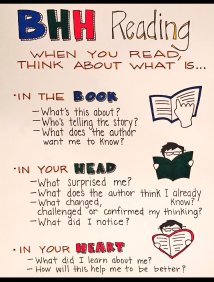
The BHH framework from Disrupting Thinking

“It’s from a book I read this summer,” she explained, and I exclaimed, “Yes!  I read it too!  I was just wondering how we could bring Book, Head, Heart into our weekly readings!”

Our students are proficient readers and writers, and it’s easy to assume that they don’t “need” a technique like BHH to help them interact with a text.  But to me, helping students of all skill levels become responsible, responsive, compassionate readers is the point of teaching reading.  Who cares about comprehension without understanding?  What’s the point of decoding if we don’t connect to the ink on the page?

Sometimes my college students forget that reading is more than a means to an end.  During my whole reading of Disrupting Thinking, I wondered how I could remind them about the aesthetic rather than the efferent purposes of reading from Rosenblatt’s transactional theory.

Because the truth is, the book, head, heart framework–or the aesthetic stance, or helping readers become responsible, responsive, and compassionate, or whatever you’d like to call it–is more than a guideline for students just learning to be strong readers.  It’s a manifesto for all readers.

img_1951

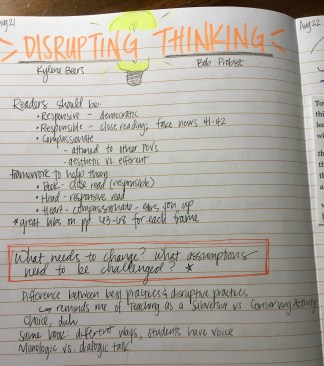
My notebook jots on the book

We’ve gotten away from teaching kids WHY we read and focus too often on simply HOW to read.

And that’s the problem–how to read is too simple a standard.  Yes, learning how to read is difficult.  Teaching kids how to read is hard, too.  But how to read, like so many standards we must adhere to, can be measured.  There’s a formula, an algorithm, a process:  first you decode, then you do the mental work of meaning-making, and sometimes in there you need some fix-up strategies to help you scaffold the story into your schema.  Just employ all those buzzwords and voila!  You’re a reader!

But when I shirk a pile of grading on a Sunday afternoon to finish a book, it’s not because I’m all about practicing my phonemic awareness.  And I didn’t spend an hour googling “Hurricane Harvey” at 4:00 this morning because I wanted to try out my word recognition skills, either.

Our highest standard is to help our students become real readers and writers.

It’s a standard that’s difficult to measure, but so are all of our most important, difficult goals–and it’s scary to teach all day, all week, all year, and feel like you can’t prove on paper that you’re making a difference.  The fear that we might be asked to offer evidence of our effectiveness might be what keeps teachers teaching novels and prevents them from teaching readers.  It might be why teachers persist in teaching essays instead of teaching writers.

Any good self-assessment will give you all the data in the world about how important and effective your instruction is, so if that’s what you need, again I say voila.  But if you’re searching for a way to make reading meaningful and engaging for your students, check out Disrupting Thinking, the book-head-heart framework, and their roots in Louise Rosenblatt’s work.  You’ll find a reader’s manifesto that truly shows you that why we read matters most–at every level, in every grade, across every content area.

How will you frame reading in your classroom this year?  Please share your strategies and ideas for helping students become engaged, authentic readers in the comments, on our Facebook page, or on Twitter!

Shana Karnes is mom to 1.5 spunky little girls and wife to a somehow-energetic surgical resident.  She teaches practicing and preservice English teachers at West Virginia University and is fueled by coffee, sugar, and a real obsession with all things reading and writing.  Follow Shana on Twitter at @litreader or read more of her writing on the WVCTE Best Practices blog.

Time Well Spent: Getting to Know Our Students as Readers and Writers First

Untitled presentation

Perhaps this school year is your very first as an educator. Maybe it’s your thirtieth. It could be that you’ve moved schools, or changed rooms, or will be teaching in a new subject area. Regardless of the circumstances, it isn’t unusual to have back to school dreams (flippin’ nightmares, if you ask me – driving to the wrong school again isn’t just embarrassing, it’s downright inexcusable fifteen years in), enthusiasm and optimism tinged with anxiety, and a bit of sheer panic that while you thought there wasn’t enough time to get ready at the start of August, now you are really, painfully sure.

However, the first day of school will come, as surely as the fireflies start to fade from warm summer evenings and the emails begin rolling in from panic-stricken students, who left somewhat less time than they probably should have to complete summer assignments.

And when that first day comes, all new outfits and nervous bellies, I’d like to ask that we all keep in mind something that I have come to see as very important in my classroom. I would ask that we all consider carefully how we spend out time.

A few weeks back, I came across a tweet from Danny Steele. He said,

I don't care

How true. How do I spend my time? How will I spend my time during pre-session? Drowning in data and prematurely exhausted by situations I cannot control, or physically and mentally preparing to welcome students to my class and the deep learning we will do?  During class, am I promoting books, writing in front of my students, talking with instead of at my students? Do I make time for my students beyond the class period? Beyond the class day, will I make time for my own reading and writing in order to live the life I sell to my students as essential?

For my students, we’ll need to discuss the very same concepts. For many, a case for becoming readers and writers will need to be airtight if it will successfully compete with loads of homework from other classes, endless hours of extracurricular practice/performance, and the responsibilities to after-school jobs, family, and friends. Thankfully, the most important job of an adolescent (discovering who he/she is and wants to be) is beautifully bolstered by time spend exploring experiences in a writers notebook and devouring the writing of great thinkers, explorers, and dreamers. My brief sermon to students very early in the year will repeatedly support good reading and writing habits by reminding them of the power of the choices they make in relation to these areas of their lives.

So, as workshop is dependent on the tenant of choice, teachers and students becoming writers and readers is reliant on choice as well, not just the choice of what to write/read, but how, when, for how long, and to what end.

This means, on day one, when I see each of my classes for only twenty minutes, I will be promoting the choice to become (continue as/make time for being/change a mindset around living a life as) readers and writers. I won’t be handing out my syllabus. I won’t be putting insane pressure on myself to know them all/love them all/build a community in one day. I will be giving students time to get acquainted with the idea that a life as a reader and a writer will be real in this class and my ultimate goal will be to make it real for them outside this class as well. In an effort to start this discussion, I’ll ask my students to write about the following:

What choices do you make as a writer and a reader?

In what ways do those choices lead you to becoming a stronger writer and reader?

When Sam suggests that his choice is not read, well, at least I’ll know. When Kara claims she wants to read but doesn’t have time, at least I’ll know. When Joe says he only reads science fiction no matter what, at least I’ll know. Because once I know, I’ll know better who and what I’m working with.

In the days that follow, my priorities will be to:

Continue to establish a workshop community that values reading and writing by talking about books, helping students select their first choice books of the year, writing with my students every day, talking about books every day, and using more pointed questions for reflection/conversation around getting to know my students as readers and writers specifically. For this purpose, I plan to use George Couros’s “5 Questions to Ask Your Students to Start the School Year” from his work at The Principal of Change: 

  • What are the qualities you look for in a teacher?
  • What are you passionate about?
  • What is one BIG question you have for this year?
  • What are your strengths and how can we utilize them?
  • What does success at the end of the year look like for you?

Strongly promote curiosity as a mainstay of our work together. More to come on this in a future post. Amy and I started talking about student curiosity when I was working with her in Texas earlier this month. Since then, I’ve been thinking about it as a mandatory component to my planning that has been on the back burner for awhile. Of course the work we all do each day is to pique student curiosity, but I want this back at the forefront of my teaching. How often have you had a student answer the question above about what he/she is passionate about with a response of “I don’t know” or “I don’t think I’m really passionate about anything”? Readers and writers embody curious spirits, therefore, we need students to locate that curiosity that our traditional education system has beaten out of them by second grade.

Reflect on, discuss, dive into, write about, and work to digest the current events, perspectives, conflicts, and life-altering chaos of this summer in order to promote civil discourse and debate about how to move forward. Easy, right? Yeah. I’m sure we’ll have this all solved by the end of quarter one. Sigh. This work is going to be some of the toughest of my career; however, it’s necessary work. For my students from all walks of life, experience, and personal bias, we need to work more than ever to build understanding, empathy, and support for one another in order to send these scholars off to a life beyond high school with both hearts and minds wide open to the truth, the history and current actions that mold that truth, and how to make this nation and our world better.

And that, friends, is no small undertaking for the first few weeks of school.

At the heart of everything we do though, the grounding feature to the start of my year will be to focus on how we spend our time. What will we spend our time talking about? What will we spend our time worrying about. What won’t we spend our time worrying about? What will we promote and what will we let go of in an effort to be better students, better educators, and better people?

We will spend our time talking, I know that, because the best source of data in my room is the collective and individual voices of my students. So while I am nervous for all we have to do and be, and I’m sad to let go of the summer I am currently living (I type this on the couch in my pajamas, with my beautiful daughter curled up next to me), it’s time to spend my time a bit differently. It’s time to spend it in one of the most influential places in life. The classroom.

What will you be tackling the first few days of schools? What are your major goals for those foundational days of the school year? Please share in the comments below! 


Lisa Dennis teaches English and leads a department of incredible English educators at Franklin High School near Milwaukee. Her first days of school will also involve an increase in caffeine, Kleenex for spontaneous weeping at the sound of the alarm at 5:00 a.m., and an insistence that her lovely husband consider saving her life by dinner. Follow Lisa on Twitter @LDennibaum 

Our Day One Writing: Personal User Manuals

I’ll be honest. I’ve started this post three times. At first bemoaning why I can’t believe summer is over. Then whining that I didn’t get enough done, and finally, justifying why I can’t seem to get in a writing groove. None of it matters. I started back to school yesterday. Kids come next Monday.

I will be ready. And I’ll love it.

I’ve spent hours working on my new room. It’s almost done (I’ll post photos soon), and I classroom culturefigure if I can get my room perfect, everything else will fall into place. Misplaced priorities? Maybe, but that’s how I roll. The aesthetics in my classroom matter to me, and if you’ve visited (and many teachers and admin from around TX did last year), you know what I mean. Book shelves just right. Colors and furnishings that invite. Places to chart skills taught and showcase students’ thinking. All of this matters to the culture I work hard to cultivate in my classroom.
And while I’ve worked, I’ve thought about the students whose names rest on my rosters. Who are they as readers and writers? Who are they as individuals with needs and wants and passions? How can I help them know of their potential and of the possibilities that await them not just this year but beyond?

I’m teaching seniors for the first time this fall. Since my school is on an accelerated block schedule, I will have these students for one semester. Just one. One semester at the end of their high school experience. One semester to create a community, build a culture, bridge gaps, shape literacy identities as individuals about to face the big wide world — hopefully as citizens unafraid to face their fears, and the frightening things in our society.

One semester to read and write and think — together. One semester with a dream for a lifetime.

I’ve read a lot about the importance of building community lately, and I’ve talked a lot about the first day of school in most of the pd I’ve facilitated. I used to think, especially with my AP Lang classes, I had to knock ’em dead with my syllabus the first day, list my expectations, explain my grading policy, discuss my plan for how and what they would learn. Scare them into understanding the complexities of my AP class. I blew a lot of opportunities over the years. That “my” got in the way a lot.

How can it be “our” learning community if I am the one laying out all the learning plans? If I am the only one talking about what the learning must look like?

I wrote this post Talking about the First Day of School in 2015. Funny because I’m in the same canoe this year, wondering about how I will welcome students on Day One. The last thing I want is to ignite the fear, flight, freeze response, which so often happens with that same ole same ole flood of student expectations. Students are already experiencing high levels of stress the first day of school. I do not want to accelerate it

I’ve thought about reading the poem “Possibilities” by Wislawa Szymorzska. I wrote about how my students and I used this poem to begin our understanding of rhetorical analysis last year. I’ll do that again, but it’s probably better as a week two activity.
TeacherAuthorBio

author bio, Linda Sanchez, Wylie ISD

I’ve thought about reading author bios and asking students to write their own. Lisa and I wrote about our successes with students writing author bios last year and even modeled writing author bios with our teacher friends during pd this summer. So many talented teacher writers! Author bios are a new favorite, but they’re probably not for day one.

I’ve thought about jumping right in and setting up our writer’s notebooks. I stocked up

composition notebooks

I bought 170. The cashier at Walmart scanned them one by one.

and have one for each student ready at the bell. Now, I’m wondering if setting the notebook up is as important as just writing down some thinking on the first day of school.

Susan Barber wrote about her First Day of Class activity, and the idea of beginning with reflection resonates with me. I just don’t know about a trek to the football field — our students graduate at the UNT Coliseum miles away, and TX weather means it’s still hot hot hot. I can already hear whining. I love Susan’s idea though and want to think about this more.

I keep coming back to community. And culture.

My instruction works because of the community we build as readers, writers, listeners, and speakers. Or is it a culture we create as readers, writers, listeners, and speakers? Is it possible to have one without the other?

When Lisa was in town, we sat in my car in a parking lot and talked about this very thing. Lisa shared her wisdom: “Community is the classroom. It’s more immediate.” Mentioning her teaching before her move to workshop, she said,  “I built community to help us get through the things students didn’t like — like Huck Finn.”

Interesting. So community is good — sharing likes, dislikes, working toward a common goal, getting along, respecting one another.

We talked about get-to-know you games, icebreakers, we’ve all used on the first day of school. Many of them good ideas for building community. Then Lisa asked: “Do we get-to-know for the get-to-know — or the value of learning who are students are as readers and writers?”

Ah, the beginnings of building a culture.

“Culture is more pervasive,” Lisa said, “A culture of learning in an English class values reading, writing, talking, and thinking that goes on — that has demands beyond the classroom.”

And now I’m wondering:  On the first day of school, how do I build a community that begins creating a culture, a culture that validates, shapes, and inspires my students’ identities as thinkers, readers, writers, citizens, and humans that goes beyond the classroom?

Not an easy feat. But maybe there’s an easy start.

I don’t know why I clicked on this headline, but I think I’ve found my first day of school: “Completing this 30 minutes exercise makes teams less anxious and more productive.”

I think we will write personal user manuals. It’s a task business leaders are using to help

user_guide

I’d like a better name than “user.” Any ideas?

their teams work better. Why not try it in the classroom?

The article states, “The user manual aims to help people learn to adapt to one another by offering an explicit description of one’s personal values and how one works best with others. This shortens the learning curve for new employees, and helps everyone avoid misunderstandings.” Since student talk and collaboration is central to my instruction, I think writing one-page user manuals about ourselves might put us on the fast track to better communication and the culture that fosters better learning.

Abby Falik, founder and CEO of Global Citizen Year, states: “My User Manual is one of the ways I practice leading out loud. It’s a living document that describes my innate wiring and my growing edge, while putting it out to the world that I know I am – and aim to always be — a work-in-progress.” And the article includes the structure Abby used to write her manual and a link to the manual itself. Mentor text, y’all!

Abby’s user manual centers around these six topics:

  1. My style
  2. What I value
  3. What I don’t have patience for
  4. How to best communicate with me
  5. How to help me
  6. What people misunderstand about me

I’m thinking of including prompts that probe other topics more specific to what I need to know about my students literacy histories — kind of like a reading/writing territory — and topics that can jump start connections and trust between students. Maybe things like:

Describe yourself as a reader.

What is your favorite book? Who is your favorite author?

Write a simile about your writing life. 

When it comes to English class, where do you feel you want to grow the most?

List ten things you like to do in your spare time.

Of all your memories, which three are the most indelible?

What five adjectives describe your disposition?

I also like these questions I read regarding building trust in Adolescents on the Edge by Jimmy Santiago Baca and ReLeah Cossett Lent, a book I just started and am already loving for content, stories, and ideas:

Have you experienced fair treatment, either by family or by the system?

How do you express appreciation? Do you often receive appreciation for your acts?

How important is it for promises to be kept, either those made to you or those you make to others?

Do you feel that you are a part of decision making that affects your life?

Are you dependable? Do you feel others are dependable?

How do you generally resolve conflicts?

How important is truthfulness to you?

Too much? Maybe. But students will have choice in what they answer — and how. And like any time we write like this, we will talk first. Talk matters in a writing classroom.

Of course, I will write my own user manual. If I get my act together, I’ll have it ready on Day One as a way to introduce myself to my students. Hopefully, I can write it in a way that lets them know that while I am intense, passionate, and purposeful in helping them grow as readers and writers, I am also pretty vulnerable, and an introvert on a stage cast in the role of extrovert.

I’m thinking we will use our user manuals a lot. I’ll include a copy of each students’ in my conferring notebook for easy access and review when I meet with them. We’ll share with our table mates. We’ll share in our book clubs and in our writing groups. We’ll share when we do group projects or collaborate on writing.

We will use our manuals like leaders in business do because “the ability to share your thoughts and ideas openly, honestly, and without fear of judgment—has been repeatedly proven the key to innovative, happy teams. Whether you’re a manager or young employee, writing and sharing a user manual has a clear business payoff. The better a team knows one other, the easier it will be for them to navigate conflict, empathize with one another, and feel comfortable sharing, critiquing, and building upon one another’s ideas.”

What do you think? How will you (or did you, if you’ve already gone back) start building your classroom culture?


Amy Rasmussen is the mother of six amazing young adults, grandmother of five smart and sassy little people, and wife to a brilliant marketer, sales exec, life coach, and dog lover. She teaches readers and writers in AP Language and English IV in North TX and facilitates professional development on the workshop model of instruction at every opportunity. She loves God, her family, the U.S.A., and all humans everywhere. Follow Amy on Twitter @amyrass