Category Archives: Writers

Imitating Poetry: A Return

Three Teachers TalkJoin us for a summer series revisiting our top posts from this school year, and please “turn and talk” with us in the comments section each week!

Shana’s post in 2015 is a mini-lesson how-to for introducing writers to the process of imitating poetry.


Reading more poetry with my students has been a goal of mine these past few years, and it’s been a goal I feel has been readily achieved with ideas like creating Heart Books or reading novels in verse.

But writing poetry–well, that’s a different story.

Students who aren’t accustomed to writing poetry need a scaffold before they can leap into free verse composition without a topic, genre, or form prompt.  For this scaffold, I use imitation.

Objectives — Using the language of the Depth of Knowledge Levels:  Identify patterns of language, structure, and punctuation in a given poem; Modify the style of the given poem to suit your purpose; Create a poem in the style of a given poem.

41KeFnbnPfL._SX330_BO1,204,203,200_Lesson — Before the mini-lesson, I will have already booktalked two of Mary Oliver’s books–A Poetry Handbook and Dog Songs, which is always a favorite with my students.  As the mini-lesson begins, I’ll read to them from Oliver’s chapter on imitation.

“You would learn very little in this world if you were not allowed to imitate,” Oliver begins. “Before we can be poets, we must practice; imitation is a very good way of investigating the real thing.”

“I have some poems here today for us to imitate and investigate,” I follow up.  I pass out the following options, lately garnered from my incredible poetry seminar with Mary Ann Samyn:

“Read over these quickly, and choose one you’d like to imitate.  Then open to a fresh page in your notebook.”

“I’m going to write with you, and I’m going to choose ‘A Display of Mackerel,’” I say.  “It seems long, but look how short the lines and stanzas are.”  I put my chosen poem under the document camera.  “Now, this poem is about a display of fish, and I want to imitate it and write about a display of something.  There’s a pretty big display of colorful objects in my room…” I trail off.

“Your library!” Nathan helpfully supplies.

“Yep,” I agree.  “I’m going to imitate this poem and write about my bookshelf.  I’m just going to change a few words per line, but I’m going to keep all the punctuation and the numbers of words the same.  It’s so easy to write poetry this way.”

On the document camera, I begin my imitation next to Doty’s original:

They lie in parallel rows,                   They rest in slumped rows,

on ice, head to tail,                           on shelves, spine to spine,

each a foot of luminosity                   each a sheaf of wisdom

“See how easy that is?  I keep Doty’s structure, punctuation, and even some of his words.  I just change a few to make the poem about my display of books, rather than his display of mackerel.  Now you take a few minutes to give this a start.”

We set about writing together.

After 10-15 minutes, we each have a full imitation poem.  We break into small groups, working with others who imitated our same poem.  We read our poems aloud.  Feedback is given on what we notice–similarities to and diversions from the original, and the effects of both.

Follow-Up — We’ll practice imitation a few more times before we leap into writing poetry independently.  When we do, I’ll ask, as always, that my students create a small anthology of their work on that genre–some samples of their early forays into poetry through imitation, as well as a few examples of their own independent attempts.  I’ll definitely include my “A Display of Books” in my own anthology, as I find it a lovely description of my library that I’d like to preserve.

My Imitation Poem: “A Display of Books”
by Shana Karnes & Mark Doty

They rest in slumped rows,
on shelves, spine to spine,
each a sheaf of wisdom

creased with cracked spines,
which divide the plots’
most gripping sections

like bands of color
in a double rainbow.
Vibrant, luminous

prismatics: think indigo,
the wildly rainbowed
spectrum of a springtime rain,

think sun spearing through clouds.
Wonder, and wonder,
and all of them in every way

unique from one another
–everything about them
a onetime blend of letters. Thus,

they’re all creative expressions
of a million different souls,
each a tenuous effort

of the soul’s footprint,
writer’s essence. As if,
after a lifetime of drafting

at this printing, the author’s
taken irreversible steps,
each as permanent

in its inked completion
as the one next door
Suppose we were shoulder-to-shoulder,

like these, the same but different
from our universe
of neighbors—would you want

to be yourself only,
unduplicatable, doomed
to be in print? They’d prefer,

plainly, to be award winners,
forever honored. Even now
they seem to be straining

forward, heedless of their lifelessness.
They don’t care they’re ink
and simple paper,

just as, presumably,
they didn’t care that they were imagined:
all, all for all,

the rainbowed shelf
and its acres of brilliant words,
in which no verb is singular,

or every one is. How eager they seem,
even on shelves, to be different, selfish,
which is the price of publication.

Q & A: What are the essentials to making Readers-Writers Workshop work? #3TTWorkshop

Questions Answered

It can be overwhelming. We attend training sessions and conferences, read professional books and journal articles, search online and join Facebook groups, and try to figure out this thing called Readers-Writers Workshop. I did all of that for years. I still do. I suppose that’s one of the things I love best about this blog:  I get to share all my trial-and-error-years-of-learning-and-ongoing-ideas with all of you.

If I said I’ve got it all figured out, I’d be lying.

I think that’s the beauty of this model of instruction. While the routines might be the same: independent self-selected reading, quickwrites, craft study, time to talk and write, conferring… the texts we use to meet the needs of our students and the amount of time we spend on those routines vary, depending on the individuals learning with us in our classrooms.

So I’ve been giving a lot of thought to this question:  What are the essentials to making readers-writers workshop work? and while my answer might be different tomorrow or next week, here’s what I think the essentials are today:

  • We have to build and nurture a community of readers and writers who identify as such and who respect one another’s right to explore, express, and develop in their literacy skills.
  • We have to believe that it’s more important to teach readers and writers, speaking to them as such, than it is to teach books — even if they are books we love.
  • We have to push back at standardized tests that crush authenticity in reading and writing tasks — and give our students choice. Lots of choice!
  • We must be confident in our skills as literacy teachers. We need to walk our talk and continually work to grow our expertise. If we don’t know YA books and other literature our students will want to read, we need to read more. If we don’t know how to teach writers, instead of assigning writing, we need to learn what writers do to craft meaning — and model those things for our students.
  • And perhaps more than anything, we have to dedicate the precious time we have with students to the things that help them grow confident in their own literacy skills. Time to think, read, write, talk, listen, and celebrate. Everyday!

There is no one way to do all this. However, if we’ll keep these essentials in our focus, we will find the one way that works for us — and for our students.


Note:  This post is a part of a series. It’s based primarily on the most frequent questions about readers-writers workshop asked at our workshop trainings. For more see here.

Amy Rasmussen loves to learn. She reads a lot and writes a lot to figure things out. She loves her husband of 34 years and adores her kids and grandkids. Amy will be teaching senior English when school starts in just a few short days. Follow her @amyrass

Guest Post: Ways I Can Encourage More Students to Love Reading by Holly Dottarar

“People don’t realize how a man’s whole life can be changed by one book.”  -Malcolm X

At the beginning of each year, I spend close to a week talking about independent reading with my students.  To me, it’s worth investing the time because independent choice reading is the heart of my class.

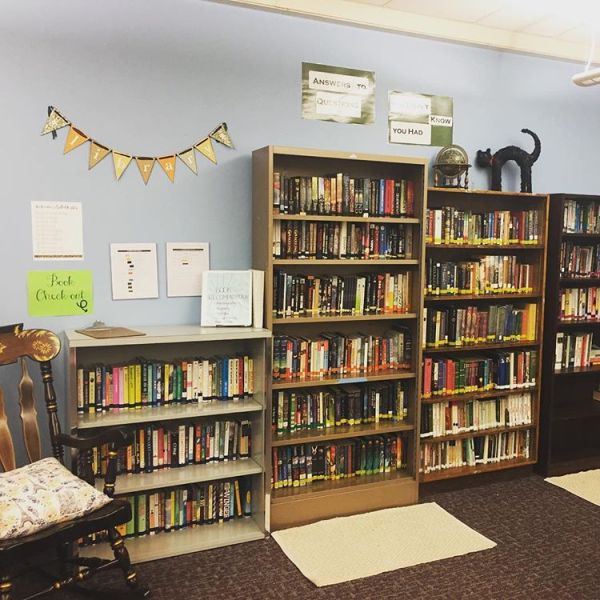
MSDottararBookshelves

How I frame choice reading during the first week:

  • discussing how to find a just-right book and how that is different for every reader, different genres and their definitions,
  • setting a weekly reading rate (from Penny Kittle’s book Book Love),
  • speed dating a variety of books to find potential novels to read,
  • going over My Top-15 Reading List (adapted from Kelly Gallagher’s book In the Best Interest of Students),
  • discussing how book conferencing works, and how to keep track of books read.

Even though I check in with each student monthly, share my Top 15 List with my classes, and book talk new books bi-monthly, there’s always a small percentage of students who refuse to read, or read very little.  My avid readers love the freedom to choose books, but my non-readers, emerging readers, and the reading-is-okay-but-currently-I-have-no-time readers need more of a nudge.  

How can I help all students be successful in creating and cultivating a reading habit? How can I help them look forward to diving into their book, to truly enjoy reading? How can I keep up the momentum for those who love to read?  

I whole-heartedly believe in the reader’s workshop model, but it is hard.  

Keeping track of 150 students all reading different books, and all at different places in their books, requires commitment and organization.  It is a daily, conscious decision to sit beside a student and recommend book after book, hoping something sparks an interest, or to try to find a new book for a student who has read 50 books in the last two months and isn’t sure what to read next.  (Yes, I have about 10 of these voracious readers each year.)  Up and moving around the classroom, talking with kids about books when sometimes all I want to do is sit at my desk and read my book too doesn’t help.  (And there are days that I just read alongside students, but it is few and far between.)

While there are times I want to throw in the towel, I am reminded that the hard work pays off.  Those tough days are just a bump in the road.  Students deserve to be confident readers.  They deserve to learn to think critically. They deserve a teacher who will not give up on them.   

As a reflective teacher, I’ve been thinking a lot about the reader’s workshop:  what worked in my classroom and what I want to make better.  These are ideas that I am going to incorporate this fall to build upon the love and joy of reading for all students.


1. Be consistent about my Book Talk Wall and teacher What-to-read-next list.

BookTalkWall

I have a wall in the back of the classroom where I post the book jacket of every book I book talk.  My goal this past year was at least one book a week, usually on a Monday, but I was not consistent.  This year I plan to continue book talking books I’ve done in the past, but really play on the books I just read and books that are new.  

Which leads to my What-to-Read-Next list.  Two years ago, I had on the board these titles MsDottararReadingListswith books:  What I just read, What I am currently reading, and What I plan to read next.  Next to each phrase I had an arrow and a copy of the book jacket so students could see my book list.  I didn’t do that this year because I didn’t have white board space.  
However, after reading students’ end of the year reflections and seeing if they met their book goals, my students two years ago read more than my students last year.  While I don’t think that each group of students should be compared, as each year we have different groups of students, I can’t help but think sharing what I read and talking often about it made a difference.  I’ll collect the data on that this year and then draw a conclusion.  


2. Student recommendation share outs

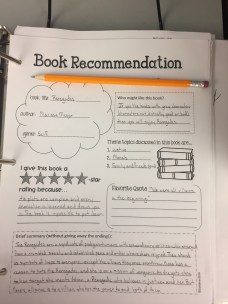
Book Recommendation SheetTwice a year, right before Christmas Break and right before school is out, I have students fill out a recommendation form on books they enjoyed and think others might like.  It goes in a binder organized by genre.  However, students do not share these recommendations prior to turning them in.  Why have I not done that? Not sure.  It was kind-of like checking something off my to-do list.  In this area, I plan to have students share out books they wrote down on that sheet of paper before turning in.Recommendations Binder
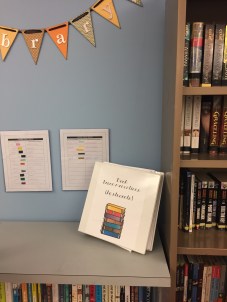
 

Even though this binder sits on top of one of the bookshelves, SO MANY students didn’t even know it was there.  I plan on referencing it often so if students need a book and don’t have one in mind, they can go to the binder and see what others have recommended.  (As that was the whole point of this activity anyway.)

3. Theme Topic Books

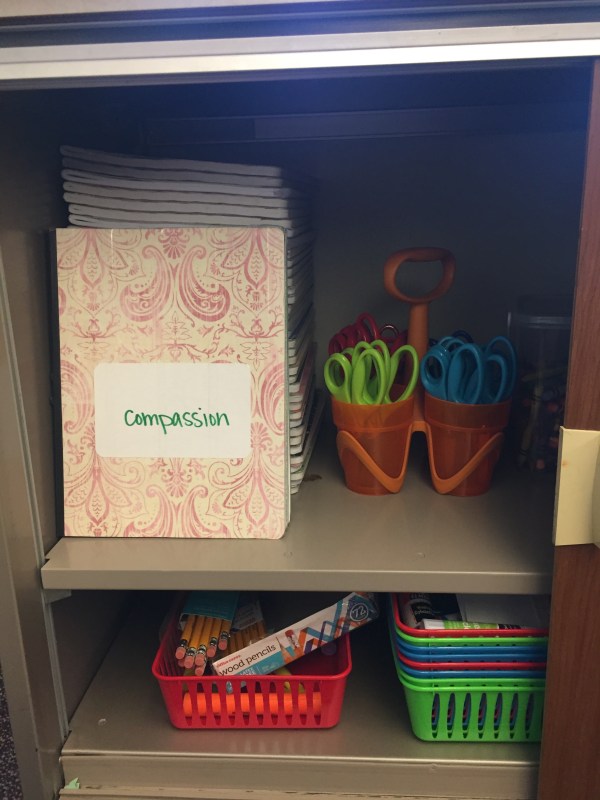
Penny Kittle has inspired me in so many ways.  Six years ago, over the summer, I took 42 composition notebooks (because that was the number of students in each class that upcoming year—yikes!), scrapbooked the covers, and wrote on 3×5 cards the theme topics.  (You can find more information about this in her book.) One of my goals was for students to write in them three to four times a year, thinking about how their book connects in some way to the theme topic.  And how cool is it for students to see what others have written years prior?  However, this past year, they only wrote in it once.  My goal is to incorporate this at least once a trimester.

Theme-Topic Notebooks

The other goal was if a student wanted to read a book about that theme topic, say compassion, they could look in the notebook and read what books others have read dealing with that topic.  However, these notebooks were filed in a cabinet with other supplies.  Not an easy way for students to find.  So, in this area, I am thinking about a good space to display these topic notebooks so more students can read what others have said.

4. Creation of Book Trailers

I am growing in the area of technology.  When I started teaching 16 years ago, I had an overhead projector and a chalkboard.  Phones were installed in December, and I couldn’t wait to pick up the phone to call the office instead of pressing the intercom button when I needed something.  When we went to white boards a few years later, I jumped up and down.  I no longer had chalk marks along the side of my right palm or somewhere on my back.  When our school installed projectors, I begged a friend in the history department—as they received a grant for document cameras shortly thereafter—to loan me an extra one so I could teach writing through a step-by-step process.  In terms of technology, this is the extent of my expertise.  A coworker had to show me how to use Google Classroom last year.  

With so many of our students interacting with technology, why not use that to our advantage? There have been some really good book trailers lately.  My favorite still is with the novel Salt to the Sea.  The music is haunting, which fits the book perfectly.  (You can check it out here.)

If I show professional book trailers for students on novels I think they’d like, why can’t they create their own and share on Classroom?  Something I plan to look into more and try this next year.

5. Virtual Book Stacks

Students keep track of books they’ve read on a sheet of paper titled My Top 15, but why not have a visual book stack at the end of the year to share and celebrate growth? I thought of a real book stack, as I’ve seen them all over Instagram, but to have students try to find each book they read and stack it up felt daunting to me, especially if students checked out books from the public library and not mine or the school’s library.  I plan to use Padlet for students to share their books and maybe even categorize it by their favorites.


If you are interested in more reading on this topic, I suggest the following books:

Nancy Atwell’s The Reading Zone

Carol Jago’s The Book in Question

Donalyn Miller’s The Book Whisperer

Lisa Donohue’s Independent Reading Inside the Box, 2nd Ed.

Penny Kittle’s Book Love

Teri Lesesne’s Reading Ladders

 
Holly Morningstar Dottarar is an 8th grade English teacher in the Pacific Northwest.  While she spent her adolescence as a reluctant reader, once she read The Hobbit—in college—she became hooked.  Now, she carries a book wherever she goes.  When she’s not reading, teaching, or spending time with her family, she can be found in her kitchen baking.  She blogs at www.hollybakes.com and www.hollyteaches.com.

Quick Writes That Work: A Return

Three Teachers TalkJoin us for a summer series revisiting our top posts from this school year, and please “turn and talk” with us in the comments section each week!

This post from Lisa in 2017 gives us a variety of quickwrite ideas that work well for all writers. 


QUICK WRITE

It appears daily on my agenda and often sparks great writing, discussion, and even revision. My bestie Erin said it beautifully: “Quick writes produce pure honesty and they’re a good place for me to “talk” with my students.” The writing is low stakes, the creativity can be high, and we can “talk” with our kids and provide feedback on issues and ideas, over syntax and conventions. Plus, it helps with the endless struggle for volume, volume, volume.

But sometimes, quick writes can end up feeling a bit routine, which is not cool as I am trying to keep writers excited about their writing and producing more and more of it.

writers-block

So, because I’m sometimes known to Google my life (last weekend my foot hurt after a run and the Mayo Clinic suggested I might have cancer, so there’s that), I often head to the internet for curricular inspiration.

There are countless sources online that will lead you to quick write topics, if that’s what you are in the market for, and I am often in the market for someone’s fresh thinking to get my students writing when I haven’t left enough time to plan or the same old quick write feels bland.

graves

For example, I was inspired to write this post after I saw our friend Gary Anderson tweeting a journal topic of the day on Twitter. I’ve used several, and loved writing along with my students on his thought provoking prompts.

Here are a few reflections I have on quick writes. The process, their power, and providing writing opportunities to our kids every day.

  1. Link your quick write to what you’re work on in class that day, an essential question you’re studying, or relevant topic to your study. Or don’t! Quick writes can lead naturally into a mini lesson. They can also put that mini lesson on hold as students take off into small group and then passionate/uproarious/contentious whole class discussion. I’ll often have my students go back into their notebooks after discussion to add to their thinking, so even if they didn’t share, they are working with the ideas that class is chewing on and writing more.
  2. Let students write about what inspires them. At the beginning of the year, many students balk at the “opportunity” to write about whatever they like, but by the time you’ve established a rapport and let your students know that they belong to a community of writers, many are excited to be given time to get their thoughts on paper. And when you have them take some time to revise at the end of the writing and share their ideas or powerfully written lines with others, they take more seriously the production of that work.
  3. Give limited choice to guide writing toward a necessary discussion for that day’s mini lesson or topic of discussion. When I do want the quick write to lead into the mini lesson, I try not to lead too much. I want kids to write and discover. I don’t want to slip back into old habits of guiding students to a fixed answer. They feel duped, I feel cheap, the whole thing is a mess. So, when I am heading in a specific direction, I really try to give choice in these instances. Our mini lesson in American Literature the other day was on bias for our argument writing unit. I could have had them write about where they see bias and how it impacts an argument’s credibility. Totally fine. Instead, I asked them to choose:
    • Write on any topic from the perspective of someone who is heavily biased toward a particular outcome. Then, write the same appeal from the opposing viewpoint.
    • Consider the bias of an author you’ve read or a story you know well. How did the bias serve the author? How did the bias impact the story?
    • Defend, challenge, or qualify the idea that media bias is detrimental to a functioning democracy.
  4. Early on, I stole something I heard Amy say during the professional development she and Shana ran at Franklin last year. I always remind my students to “write as much as you can, as fast as you can, as well as you can.”Amy taught me that kids need to outwrite their inner critics, and I’ve coupled that with the discovery that, often times, a student’s inner critic sounds an awful lot like…a teacher. We need to help retrain kids to see the first quick draft of anything as just that, a quick draft. I scrap half of what I write when I consider it for revision. This is something new to most kids, who train themselves to pour writing out on a page and see that as the first, last, and only draft. We work to write quickly, revise in the moment, and later, choose some pieces for further expansion, refinement, and polishing. But in the six or seven minutes I am giving them to write, their job is to write in that moment and to keep moving.
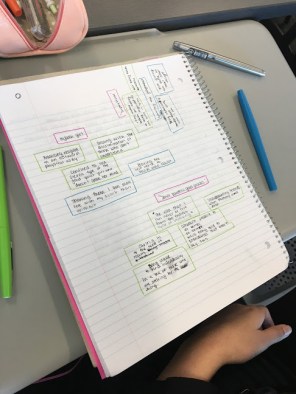
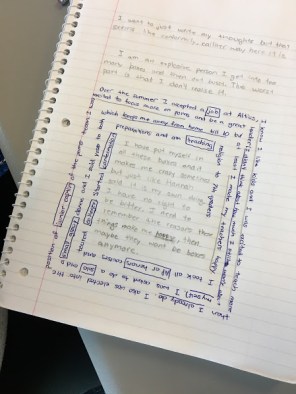
  5. Remind students to write and respond as they see fit. Students can write, jot, draw, change colors, compose a poem…Students often limit themselves unconsciously by the “rules” they have been taught over the years. Quick writes are a place to explore, not fit in the lines or a box. Unless you want to write in boxes.quick-write-1quick-write-2
  6. Have students respond to quotes, images, poems, videos, their own writing (we are doing this today!), the writing of other students, current events, lists, song lyrics, letters to the editor, overhead conversations…You get the idea. Students can creatively explore just about anything and should. Their opportunities for creative expression are often too few and far between. We can be the place where questions, emotions, fears, innovations, and discoveries find a safe place to take root.

Some of my recent favorite topics are below. These are quick writes that generated some fantastic discussion in small groups and whole class debriefs.


From Gary Anderson a few weeks back, I had students choose one and write:

Today…
I am concerned about…
I am upset about…
I do not understand…
I wish I could change…
I am grateful for…


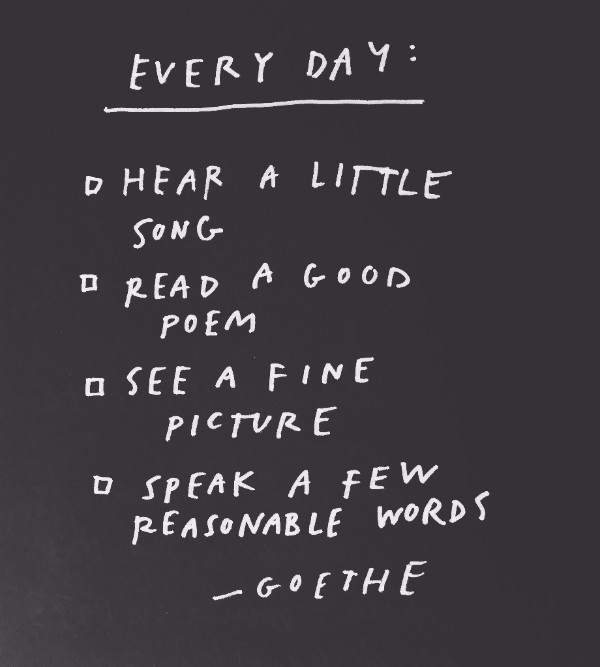
From Austin Kleon’s blog that I started following last week, students took this image in a thousand directions and one class even had a collegiate level discussion on the implications these suggestions (directives? nudgings?) could have for society:

goethe


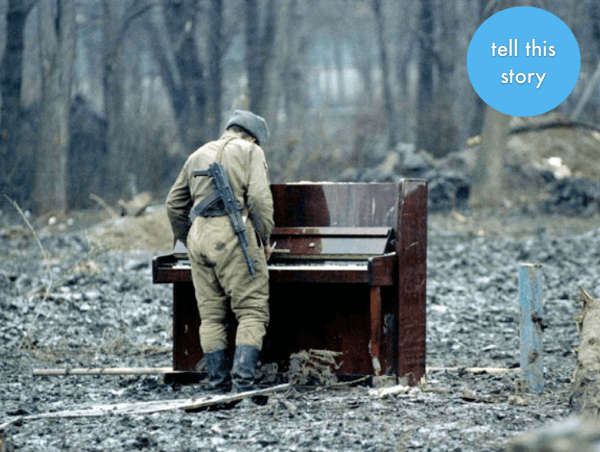
I will sometimes choose several images and have my students respond to one, or try to tie them together, or imagine they are the photographer, or…whatever best suits our purpose for that day. The exploration of the human condition is reason enough to put pen to paper. “Tell this story” is a great search term to yield a wide variety of results.

tell-this-story-2


Quick writes can even be 2-3 minute reflections on the simplest of reading adventures. At the start of the new calendar year, I had my kids search for what their lives would hold in 2017, according to their independent novels.

quick-write

Have a favorite quick write topic that gets the pens moving in your classroom? Please share your ideas and insights in the comments below! 

Lisa Dennis teaches English and leads a department of English educating gods and goddesses at Franklin High School near Milwaukee. She has no fewer than six quick write journals going at once, mostly due to her inability to settle on spiral vs. bound. She added to Goethe’s list that we should smile at the thought of someone each and every day. Follow Lisa on Twitter @LDennibaum. 

Q & A: What are some good poems to write beside? #3TTWorkshop

Questions Answered (1)

I think I’ve mentioned before that I used to avoid poetry. Now, I’m really not pointing fingers at anyone — okay, yeah I am — but I blame it on my teachers. Not one of them shared poetry just for the love of poetry — of rhythm and words and images often cloaked in color and emotion. Not one. Not one used poetry as inspiration for other writing. It was always analyze this and write a paper on it. Bleh. My least favorite kind of writing.

Good poems have the potential to be great teaching tools. Sure, analysis but so much more. If we want students to love language or even play with it in their writing, we have to expose them to language worth loving — and encourage them to make paper swords and sequin-shiny shoes with it. Inviting students to write beside poems with us is one good starting place.

This month Shana and I attended the Poetry Foundation Conference for teachers in Chicago. We read, talked, listened to, and explored poems for a week. (And slept on the worst dorm beds possible.)

The thing about immersing yourself in poetry for a week is this:  You start seeing poetry

GiordanoPizza

Giordano’s Pizza — so good!

everywhere. Billboards, names on shops, menus in restaurants, bikers on the path along Lake Michigan, ceramic swans cuddling on the other side of a pane glass window, and pizza!!

Poetry is like an English teacher with a brand new set of 36 Flair pens. Color everywhere!

In my workshop classroom, we share a lot of poetry. Sometimes just for the love of it. Sometimes to talk about. Sometimes to inspire us to write.

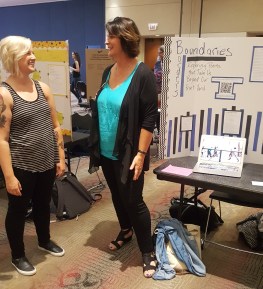
PoetryFoundationpresHere’s a few poems (and a lesson plan) my group and I collected for our project at the poetry conference. We titled our presentation Boundaries & Borders:  Exploring Poetry Beyond our Front Yard (That’s a shout out to Gwendolyn Brook’s “a song in the front yard.”) I’ll tell ya, we hashed around a topic for a long time and finally decided that reading poems that help us explore our personal and societal boundaries might make an interesting backdoor into exploring identity, which is a topic many of us develop out thematically using a variety of other texts in our courses. If nothing else, the images we collected (all found at Unsplash) might be interesting to use to prompt student thinking.

If you’re looking for other topics, take a look at the Poetry Foundation. There’s so much there! And if you like podcasts, you might like this one:  the Slowdown with Tracy K. Smith. It’s my first-ever podcast listen, and I’m hooked.

So, what are some good poems to write beside? You decide. And please share some of the poems you love in the comments!


Note:  This post is a part of a series. It’s based primarily on the most frequent questions about readers-writers workshop asked at our workshop trainings. For more see here.

Amy Rasmussen is a teacher, writer, artist, and house-plant enthusiast. She lives near Dallas, TX and is a believer in all things that make us better humans. Follow her @amyrass


How a Bullet Journal Baby-stepped me Back to Writing

I know that it is most important to write when dealing with the very adversity in life that makes us run from writing. I know that. And yet, I have not written much in the past year. I dabbled a bit while writing with my students – mostly during poetry club – but I enjoyed neither the process (it felt forced) nor the products (I lacked the passion to see the potential in my pieces). I felt worse than I did prior to embracing workshop as a teacher because now, I knew better. I felt like a fake. I could hear myself encouraging students to write as a form of catharsis, but I wasn’t walking the walk. It is hard to admit that I felt this way for almost the entire school-year.

I remember how great my muscle memory was in marching band. Even when I didn’t feel well, even when I was not in the mood to play “If My Friends Could See Me Now” one more time, even when I was completely distracted by the cute tuba player in my peripheral vision (we’ve been married 27 years now), my finger knew which holes to cover and keys to hit. I knew when to breathe. I knew when my foot should hit the yard-line. Luckily, that same type of “muscle memory” applies to teaching. Though I secretly struggled, I engaged my students in writing and offered them choice, whenever possible, in their medium of expression, topics, genres, etc.

This is how one of my students came to show me her bullet journal. For several years, I have assigned some variation of a “senior autobiography project.” Students have wowed me each time with introspective pieces and astounding creativity. I do assign some parameters because I want students to include writing, of course, and their final entry requires them to find a major theme in their work (and life), but some of the project types I have received include:

  • a video game walkthrough with text pop-ups and a voice-over
  • scrapbooks (with written pieces)
  • a choose-your-own adventure video game to solve a mystery (and get to know the student)
  • memory boxes
  • a bird’s nest constructed of rolled-up notes and pictures (the theme was written on a beautiful paper bird)
  • a full CD with 12 original songs that capture elements of the student’s life
  • PowerPoints
  • videos
  • infographics
  • traditional journals
  • and recently, bullet journals

I check in with my students at the mid-point to see what format they are considering for their project and to see what written pieces they’re thinking of including. One of my students told me that she was crafting a bullet journal. I had to ask her what that was. I know; I was slacking on my Pinterest-perusing! She looked at me with the most somber expression and said, “Mrs. Counts, you have GOT to check out bullet journaling! You would LOVE it! I know you would!”

Screen Shot 2019-07-11 at 10.09.51 PM

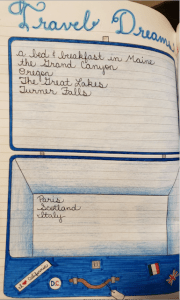
Instead of travel dreams, students could set post-graduation goals or high school bucket lists!

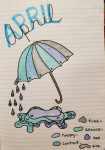
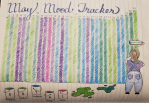
So…several Pinterest-hours later (they have got to start counting that as professional development), I had several pages in my writer’s notebook: travel dreams, reading list, spring-cleaning list, weight-loss goal cough, mood trackers, a list of what I could do if I’m bored or feeling down, a gratitude page, and a list of things I can control. They’re just lists, but I was writing, and writing is never really just a list. The mood trackers have allowed me to gain insight into patterns and how different events affect me. Thinking about what I can control empowers me to do those things and let the others go. My spring cleaning list – well, that’s still not done, and neither is my summer list, but I can reflect on that and set new goals, too! I also create to-do lists for my classes, take notes during training courses, and even have an expanding summer Netflix binge-watch list!

I have always thought that a lot of my best lesson ideas come from my students, so when Screen Shot 2019-07-11 at 10.10.11 PM

Screen Shot 2019-07-11 at 10.10.30 PM

Mood trackers are a valuable self-assessment tool.

I teach creative writing this fall, I plan to incorporate some of the bullet journal ideas into the course. I would love to look at possibilities together and let students choose what areas to explore in their lives. My student’s suggestion got me writing again – first by lists, then by taking ideas or phrases from those lists to create something new. I know that magic can work for some of the more reluctant writers in my class.

Screen Shot 2019-07-11 at 10.11.51 PM

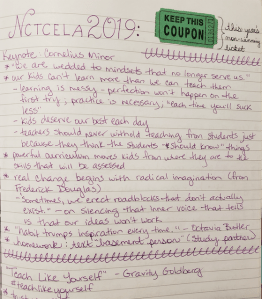
I take “real” notes in my journal, too. I even glued in my annual non-winning convention door prize ticket for laughs 😀

I know that none of these ideas are new. Most of us already use writer’s notebooks with our students for quick-writes, pieces modeled on mentor texts, and much more, but some of the bullet journal templates are quick, non-threatening, adaptable, and fun! Please comment with any fun resources you find on the topic. I’m off to add to my Netflix page…

Screen Shot 2019-07-11 at 10.12.20 PM

Students can visualize concepts before writing about them. This small entry in my journal has somehow reminded me to do these things daily!


A few resources:


Amber Counts teaches AP English Literature & Composition and Academic Decathlon at Lewisville High School. She believes in the power of choice and promotes thinking at every opportunity. She wants her students to know that language is power – one that she hopes they will be able to wield for Good. Someday she will write her story. Follow Amber @mrscounts.

Alternatives to Reading Logs: A Return

Three Teachers TalkJoin us for a summer series revisiting our top posts from this school year, and please “turn and talk” with us in the comments section each week!

Shana’s post from 2017 sources readers’ ideas for alternatives to reading logs. The ideas are here, and the document is still open for your additions.


Ahhh, Labor Day weekend–that first glorious three-day respite from back to school, or the last vestiges of freedom before it begins.  Whatever this weekend is for you, I hope you’re using it to relax and recharge before we see bright, smiling faces (or sleepy ones) tomorrow.

I bet you’re using a book or two to help you enjoy this weekend–what are you reading?  I’m reading little bits of Bill Bryson’s The Mother Tongue whenever I can squeeze it in (usually as I fall asleep).  In longer chunks, I’m reading Scaachi Koul’s memoir, One Day We’ll All Be Dead and None of This Will Matter, which is a perfectly-sized series of essays for my busy days.

In quiet moments on long weekends like these, I wonder what our students are doing.  Do their reading lives mirror mine?  If the answer is no…what can I do to help them become readers?

And, more pressingly–is there something I’m doing that’s preventing them from becoming readers?

Reading homework, requirements, levels; book reports, assignments, due dates.  None of these are what I’m tying to the books I’m reading this weekend.

But is that true for our students?

This article from School Library Journal talks about the work done by librarians to match a person to a book.  They call it readers’ advisory.  Then, they lament that so many classrooms discourage the important work of “talking with a child, observing body language for clues, and walking together through the stacks while offering suggestions” and rely on leveled bins, assigned texts, or assessment-bound reading units to get kids to read.

How much of what goes on in my classroom is readers’ advisory–and how much damages that work?

Slide2I’ve been thinking since last May about how we should stop grading independent reading.  The best and brightest in our teacher hive give us their advice and wisdom in books, blogs, and articles, with quotes like this one from Donalyn Miller.  Books, time, encouragement–these are themes we see repeated in what students need to blossom as independent readers.  Nowhere do we see that we need to measure, assess, or grade them.

To be sure, our kids need our instruction and guidance to grow as real readers.  Conferences, follow-up activities, book clubs, goal-setting, talk, and self-assessment are powerful tools to help move students forward.  How can we prioritize those things instead of more measurable (and infinitely less revealing, rewarding, or authentic) methods like reading logs, records, and quizzes?

Well, we really want to know.

Please share with us:  what are your alternatives to reading logs?  How do you approach a gradebook that must be filled, and fill it with meaningful activities tied to reading?


Screen Shot 2017-09-04 at 7.15.11 AM


In that Google Doc, we’ll work to compile a series of alternatives to reading logs, and share them here for everyone to benefit from.  You can also leave a comment on this post, write on our Facebook page, or tweet to us.  Together, we can create a repository of ideas and strategies for approaching independent reading in a way that’s authentic and helpful this school year.

Shana Karnes is mom to 1.5 spunky little girls and wife to a sleepy surgical resident.  She teaches practicing and preservice English teachers at West Virginia University and is fueled by coffee, chocolate (this week), and a real obsession with all things reading and writing.  Follow Shana on Twitter at @litreader.

Q & A: How do book clubs work in a Readers-Writers Workshop classroom?

Questions Answered

Book clubs, or literature circles as some like to call them, can be a real bonus when it comes to not only getting some students to read, but in helping students talk about books in meaningful ways and learn about literature through discussion.

I like to think of Book Clubs as discovery:  Students lead the learning. They choose the books they’ll read (often within parameters I give them) set their reading schedules, generate questions about their books, and engage in small group discussions. Each group discovers something, or a series of somethings, that strikes them as readers. Book Clubs by nature are collaborative, yet they can be powerfully personal.

“I really liked being able to just read the book and discuss it like a real book club would, not with any assignment. It gave me the freedom to enjoy the book and not have to focus on finding anything specific.”  Emily, 11 grade

When I first started doing Book Clubs with my students many years ago, I didn’t have a clear purpose or direction, and that often created a bit of chaos for me and my students. Although most students did the reading, I didn’t have a plan on how to teach into the reading or any notion of how to authentically assess learning.  I knew I didn’t want to teach books but to teach readers, and I knew what that meant when it came to self-selected independent reading — but not for book clubs.

I’ve learned that to have success with the negotiated choice of book clubs, I must do some heavy thinking before I ever choose the book titles. (My hope this coming year is that my students will choose the titles. I’ve never trusted myself enough to try trusting them to choose. I’m learning.)

Here’s a little list of questions I try to answer in order to clarify my purpose and to make a plan for accelerating learning within student book clubs:

  • What are my goals for my readers? What are my goals for my writers?
  • How can I help my readers and writers set their own goals?
  • What books can I offer as choices that will help students meet these goals? Do I include a variety of books that will meet the various reading levels of my students?
  • How will I help students set expectations for their reading and discussions?
  • How will I know if students are really reading? How can I help my students hold one another accountable?
  • What whole-class, skills-based mini-lessons might I teach when students are engaged in book clubs?
  • How might my students collaborate with other students who may be reading different books?
  • How might my students collaborate with other students, perhaps on a different campus, who may be reading the same books?
  • How will I assess student learning, based on the instructional goals I set for book clubs?

The answers to these questions guide my planning. Many of the answers look the same when applied to self-selected independent reading and student choice in writing. The routines of workshop remain the same:  We read, talk, write, and talk — every day. And I do a whole lot of listening.

There’s so much to say about book clubs, and I don’t think there’s a one-size-fits-all way to make them work. We have to know our students. We have know their needs and align those needs with instructional goals and practices that best meet them. I think book clubs are one good option for doing so, and I can’t wait to get them started in the fall with my seniors. I’m thinking we’ll do at least two rounds: memoirs and something social sciences, but fiction with multiple or unique perspectives could be interesting.

I’m still thinking.

Amy Rasmussen just spent a week in Chicago at a conference on poetry, hosted by The Poetry Foundation. Her notebook now sings with melodic musings and personal poems. In a few weeks, Amy will start a new position, teaching senior English at Hebron High School in Lewisville, TX. She’s excited about learning with young people again everyday. Follow her @amyrass

Guest Post: Culturally Relevant Texts and Striving Readers By Lauren Nizol

screen-shot-2017-05-01-at-8-44-22-pmI’ve been thinking about culturally relevant texts and how they encourage striving readers to reach for increasingly complex texts. 

Gloria Ladson-Billings, a pioneer in the field of culturally relevant pedagogy, believes that students need opportunities to find themselves in the books they read and be held to “high expectations.” To build strong readers, we need to expose all students to complexity and nuance, not just those who we consider advanced. 

pexels-photo-1759524

Photo by Luis Quintero from Pexels

I work as a literacy interventionist in my district with teachers and students to close literacy gaps. This year, I had an eye-opening experience with a freshman who reads at an intermediate level and selected Born a Crime, by Trevor Noah, as his lit circle book. 

If you aren’t familiar with this book, it is often a summer read for some of our juniors going into AP Language. Noah, comedian and anchor of The Daily Show, masterfully recalls his childhood in apartheid South Africa, all while interspersing his trademark humor and rich historical details. Despite its levity, it’s a hard book, dense with context that even strong readers may find challenging in places. 

And yet, this freshman thrived with this book. Even though he didn’t grow up in South Africa, he grew up in an area that he describes as “the projects”.

After working with me one day to develop a text-response strategy, this young man excitedly ran back to his teacher and told her about “this sticky note annotation strategy” that both his teacher and I had been modeling all year for him. He had a great sense of pride and engagement in his reading that we had never seen before. And when the time came for discussion, he had a great deal to contribute to his group.

This book transformed him as a reader. 

This had me thinking… what if instead of assigning the “appropriate” leveled text to striving readers, we focus more on finding a text relevant to them?

Often reading intervention programs focus on simplistic texts. Overtime, students who read at a lower than grade levels may miss out on context-rich literacy experiences. 

Literacy is about building equity, and if we aren’t giving striving readers the same opportunities as thriving readers, then we are limiting their access to diverse and timely ideas. 

All readers, but especially those who are striving, need books that mirror their reality.

At the heart of a strong reading intervention lies a teacher’s ability to connect readers to texts that engage, excite, and encourage them as readers. It’s about the just-right-text, not the just-right-level. 


Lauren Nizol (@CoachNizol) is a literacy interventionist, ELA 9 teacher and co-director of the Wildcat Writing Den, a campus writing center in metro-Detroit. You can find her laughing easily with her husband and three sons while spending time in the great outdoors this summer. Visit her blog at www.learningonramps.org

What’s My Non-negotiable? Conferencing.

photo of yellow light bulb

Yesterday, my amazing English department met to discuss Why They Can’t Write. (If you haven’t read it, I highly recommend it.) We spent the morning discussing and questioning the text, our practices and ourselves as teachers before breaking up to think about how the ideas from our morning conversations could be applied in our classrooms. It. Was. Amazing. PD.

See, I crave these conversations in my professional life; I’m constantly having them with myself in my head – especially when I’m driving by myself – and I’m lucky enough to have a fabulous PLC who are willing to indulge in these wide-ranging deep dives into our practices almost at the drop of a hat. However, the more I have, the more I want. So to be able to have such a thoughtful conversation with such intentional educators was so inspiring. I left with so much to think about, so much to question; in fact, one of our final takeaways inspired me to change the content of this blog post. I was planning on writing about using station rotations in large classrooms. However, after we asked ourselves to use the last few weeks of summer to think about our non-negotiables when it came to the instruction we offer and the relationship-building we crave, I wanted to reexamine my non-negotiables.

After some reflection, I realized the biggest sacrosanct practice is conferencing with students. A few weeks ago, we reposted an excellent piece by Angela Faulhaber; she included an image that quoted Carl Anderson: Conferring is not the icing on the cake; it IS the cake. And, man, does that hit the nail on the head.

Regular conferencing improves student performances and my relationships with my students and, honestly, their relationships with each other unlike any other practice I’ve ever tried. After trying conferencing for a year, I can’t see myself ever teaching without it. It’s a staple of the 3TT world as well: we’ve written about it here and here and here.

Even with all of the value that I find in conferencing, I have to admit that the first conferences last year went… well… poorly. They were super awkward and sometimes stilted. The kids hadn’t bought in yet, and, really, I probably just seemed like a weird lady who wanted to know about their reading habits a little too intensely. I’m also an extreme introvert, so I’m always worried that the conferencing – which doesn’t come naturally to me – is made more uncomfortable for everyone because those early one on one conversations are so out of my wheelhouse. It takes a while to draw reluctant students out of their shells and for both of us to become more comfortable with each other, but the end results are so worth any early awkwardness.

Here’s how this first conference runs: 

  • I created a Signup Genius form, and students chose a time that works for them. I scheduled ten minutes per conference. I set a timer and tried really hard to stay within the ten minute time frame; I wanted to be respectful of their time. 
    • This year, I think I might extend the sessions to 12 minutes. 
  • Students prepared answers to a series of questions before they came to the conference, so no one was put on the spot. I wrote about those questions and their results last year
  • This year, I’m revamping those questions just a little. Last year, students responded to each question. I think this year, I might allow them to choose two or three questions to respond to, hopefully allowing us to get to the ‘meat’ of the conversation a little faster.
    • Instead of asking what students have read lately, I want to draw a distinction between reading for pleasure and reading for class. So I am asking students to discuss one on one with me their aha/agree/disagree moments from their summer reading selections, and then I’ll follow up with a question about how they see themselves as a reader/what they read for pleasure. I thought some of them seemed guilty or ashamed when they said they didn’t read for pleasure last year. I want to try to avoid that feeling for them. 
    • Instead of just asking them to talk about themselves as writers, I’m toying with the idea of asking them to bring a piece of writing that showcases how they feel about themselves as a writer. Last year, I realized that students didn’t really view themselves as writers really – but they had very firm impressions of themselves as a ‘good’ writer or a ‘weak’ writer, but they couldn’t really articulate WHY they felt that way. Hopefully, changing this question will lead to more celebrations of what they already are or have accomplished.
      • I do think it will be interesting to see who goes the reader route and who goes the writer route and try to tease out why they chose that particular question in the conference. 
    • I’m getting rid of the how do you learn best question entirely; that’s right out. We ended up spending a lot of time on this question, but I didn’t use it to change my instruction that dramatically. I just need to remember to vary my instruction for different learner types throughout the year.
    • I’m also getting rid of the homework question from last year. It’s ok if I don’t know that they turned in homework on time or turned in homework late when they were sophomores. In reality, I actually ended up using this question to discuss their current schedule, trying to suss out how much they had on their plates. I can just run a report in our grade book to figure this out.
    • I’m keeping the last question, which is designed for students to ask questions or bring up concerns, unchanged. This one led to some very rich, necessary conversations and allowed me to calm nerves, change seating charts, and offer strategies BEFORE they were needed. I’m hoping that I’ll have more time for this question after revising the other questions.

I’m excited to see what these changes will bring to my new set of students. Last year, I noticed an immediate uptick in class participation, discussion and a willingness to ask questions and seek out help and understanding after students had their conference. I’m hoping for more of the same this year as well. 

If you offer introduction conferences, what do you do that works for you?

Sarah Morris teaches AP English Language & Composition, AP Seminar,  and Film as Literature in Murfreesboro, Tn. She is currently wondering if Steve Harrington’s name was chosen before or after the casting team saw Joe Keery’s impressive head of hair. (It’s summer, and these are summer thoughts!) She tweets at @marahsorris_cms.