
Photo Credit: Jennifer
At NCTE last week, Penny Kittle reminded me of the need to consistently share beautiful language with my students. If I ever want them to be able to read it, understand it, and use it in their own writing, I must make conscious choices about voicing that which is lovely. I do a fine job of this right until my students choose their own topics and begin their compositions. Then the room gets stale, and the feeling of “what a chore” begins.
No wonder. I stop sharing short texts and poems. I stop having students respond in their notebooks. I stop allowing them to share their thinking.
While in Boston, I stole a moment with Penny and asked her about my problem, and she simply said, “I keep sharing beautiful language every day.” I must do this, too.
I made a list in my notebook of the things I need to do better when I return to the classroom. Continuing to share poetry and short passages that students can respond to sits at the top of my list, but I want to try to multi-task this activity.
My students are in the process of writing a feature-length article. They chose topics and began drafting before the break. I want them to think about ways to make what they are writing pop into 3D on the page; I want them to see vivid verbs and colorful word choice, and all kinds of devices that they might include in their own writing. My goal is to use poems and passages from now on that will serve several purposes:
1) rhythms of beautiful language,
2) models for sentence structure,
3) examples of figurative language,
4) built-in book talks,
5) questions that aid student thinking about things that matter in their lives.
We will read, and we will respond. We will notice author’s craft as we craft ourselves.
I know, I know, I am slow on this boat. Good planning would make this possible with all my quick writes. I get that. Thus far, I’ve been a bit disjointed because I struggle with doing it “all:” Independent reading time, quick writes, mini-lessons on craft, grammar, mechanics, student-to-student reading response, reading and writing conferences, book talks. . . I keep most plates spinning, but more and more are crashing lately. My #nerdulation is to do better. (Search that hashtag on Twitter if you don’t have a clue.)
Here’s the passage I will use today. I think it’s appropriate to read a beautiful passage about books since I got a ton of new ones at NCTE. My classroom library welcomes them, but it’s screaming “crowded.” I gotta get a new shelf.
From Broken by C.J. Lyons: 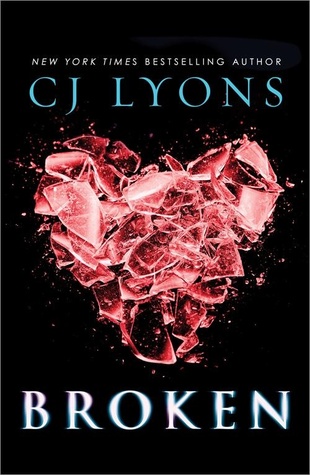
Kids fill the hall from wall to wall. Despite the unfamiliar press of bodies, I don’t panic. Instead, I let them steer me, like running with a herd of wild, untamed horses. At the end of the corridor, the herd separates into two, leaving me alone in front of a high glass wall.
The library.
Footsteps and lockers banging and voices colliding barrage me. Then I open the door, cross over, and step inside. I’m greeted not by silence, but instead by a hushed burble, relaxing, like the sound of a water fountain. I stand, enjoying the sensations, and take a breath.
School smells so much better than the hospital. And the library smells the best of all. To me, a good book is hot cocoa on a stormy winter day, sleet battering the window while you sit inside, nestled in a quilt.
A room filled with books?
I inhale deeply, a junkie taking her first hit. Sweet, musty paper. Ebony ink so crisp it threatens to rise off the pages and singe my nostrils. Glue and leather and cloth all mixed together in a menage a trois of decadence.
Another breath and I’m drunk with possibilities. Words and stories and people and places so far from here that Planet Earth is a mere dust mote dancing in my rearview mirror.
Hugging myself, containing my glee, I pivot, taking in books stacked two stories high, couches and chairs strategically positioned to catch the light from tall windows lining both sides of the corner, like the bridge of a battle cruiser, broad, high, supremely confident, and comforting. In here, I dare to imagine that I might just survive high school after all.
Respond in your notebook: Describe a place where you find peace or refuge?
How do you revision your instruction when you know something isn’t working?
 Last week during #titletalk on Twitter someone mentioned that she’d been trying to read Shiver but couldn’t get into it. I responded that Shiver is my niece’s all time favorite book — she is obsessed. Someone else chirped in saying that of Maggie Stiefvater’s books, she loved The Ravenwood Boys and Scorpio Races best. I, too, loved those Ravenwood boys, but I’d yet to read the other. I think about five different people joined the chorus, tweeting about Stiefvater’s books. Quite the popular recommendations.


 York in the 1980s, a time when vagrants and panhandlers were as common a sight in the city as kids on bikes or moms with strollers. The nation was enjoying an economic boom, and on Wall Street new millionaires were minted every day. But the flip side was a widening gap between the rich and the poor, and nowhere was this more evident than on the streets of New York City. Whatever wealth was supposed to trickle down to the middle class did not come close to reaching the city’s poorest, most desperate people, and for many of them the only recourse was living on the streets. After a while you got used to the sight of them–hard, gaunt men and sad, haunted women, wearing rags, camped on corners, sleeping on grates, asking for change. It is tough to imagine anyone could see them and not feel deeply moved by their plight. Yet they were just so prevalent that most people made an almost subconscious decision to simply look the other way–to, basically, ignore them. The problem seemed so vast, so endemic, that stopping to help a single panhandler could feel all but pointless. And so we swept past them every day, great waves of us going on with our lives and accepting that there was nothing we could really do to help.
 who murdered people. They only know of serial killers from TV and the movies. I get the “pleasure” of introducing them to a real life psychopath. It creeps me out a bit that this is such a popular book, but students love to read it.


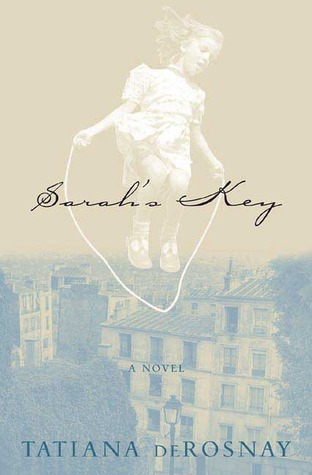 Sarah’s Key by Tatiana de Rosnay. Tess called my room to see if I had another copy. Sadly, I did not– then.
 I mentioned before that I gave a Pulitzer Prize winning novel to one of my AP English students recently. He gave it back to me three days later.

 Three Teachers Talk