Category Archives: Strategies to Add Some Zip

Saying Something, Not Just Anything: Student Talk – A Guest Post by Margaret Lopez

Written in the spring of 2017, Margaret Lopez reflects on the value of purposeful communication and strategies to get kids to create questions that get at the heart of a topic and generate meaningful discussions. 

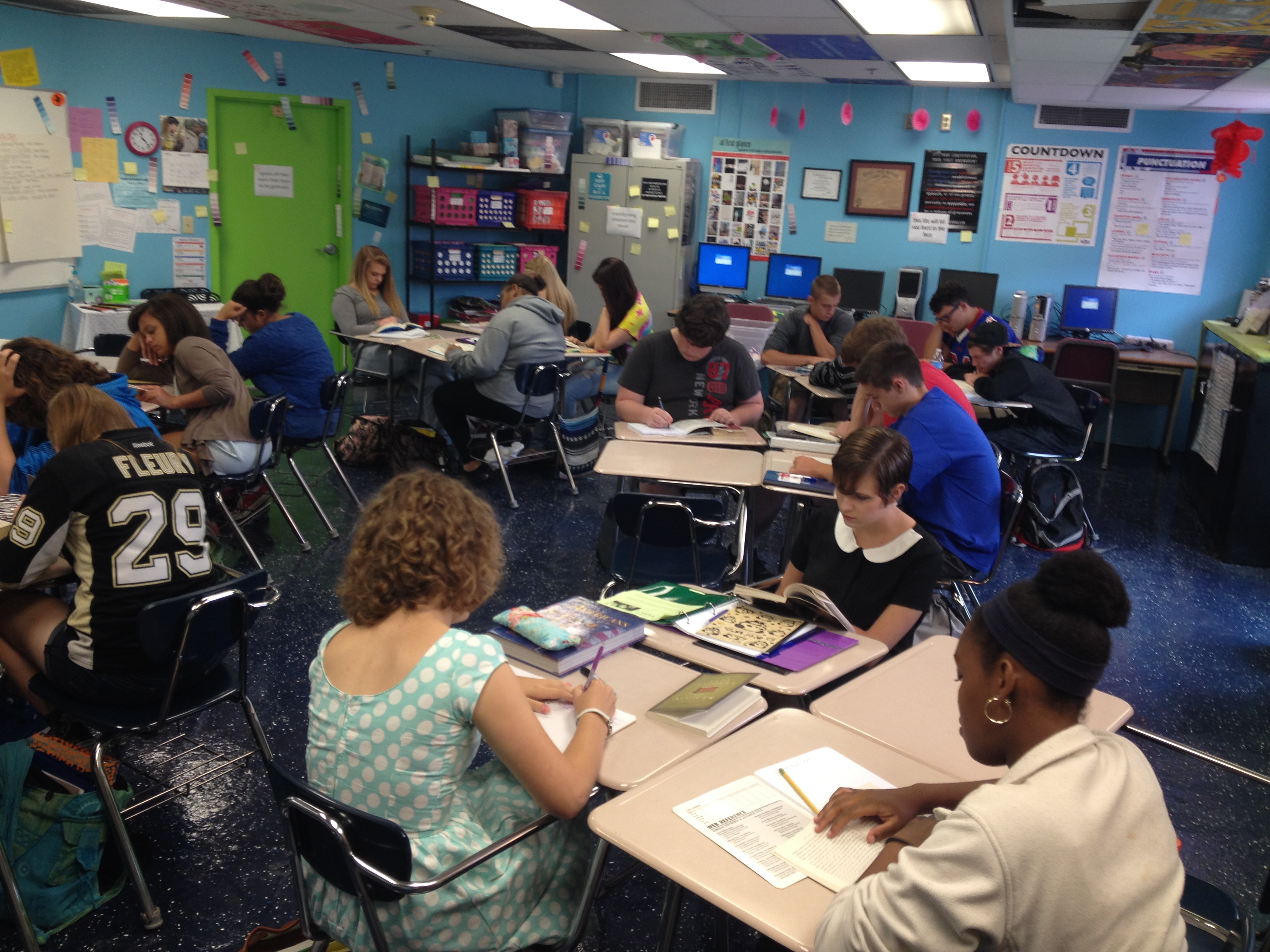
All year, my juniors and I have been workshopping writing and reading different texts for a range of purposes, pairing fiction and nonfiction for some whole class studies (Death of a Salesman and Outliers–a hit!  1984 and current events surrounding fake news and government–loved it!).  I realized a skill I hadn’t closely instructed, we had just “done,” was intentional classroom discussions.  As my juniors prepare to be seniors, Screen Shot 2017-05-01 at 8.44.22 PMcollege students, and individuals in the workplace, they need to speak purposefully and ask intentional questions.  I want them to be able to say something, not just anything  From this reflection, and students’ interest in recent protest movements and community issues in Chicago, a social justice unit based mainly on speaking and listening with low stakes writing was born.

I selected three books for students to chose from, and those choices became their lit circle groups.  Students could chose from Half the Sky which discusses female discrimination across the world, Ghettoside which examines policing in a predominately African American community outside of LA told by a reporter who spent years reporting on crimes in the area, or Hillbilly Elegy, a memoir about growing up in Appalachia.

Throughout the unit, we have followed the same routine:  

Mondays are for lit circles, Tuesdays are for extension activities with nonfiction, and on Wednesdays, we discuss all three texts together in a Socratic Seminar.  My goal was a lot of low stakes writing and fruitful discussion.

I think there is a reason that discussion is a central component of the English classroom, as it builds community, facilitates deeper or new thinking on a topic resulting from other perspectives, and is a college and job skill we have the duty to foster and refine in our students.  However, students need to speak, listen, and ask purposefully.  My students know how to talk–at my small school, where classes can be between 6 and 16 students, class stalls if they don’t have anything to say.  The awkward silence lingers.  Then someone says any random thought they have just to break the silence.  But there is difference between saying anything and saying something.  To elevate students to say something about the injustices across the texts, not just anything so that awkward silence doesn’t linger too long, I began with questioning skills.

Magnifying Glass - Questions

It is challenging students to take the idea they’re wondering about and want their peers to contemplate and thinking about it backwards, writing a question that doesn’t give away their opinion, lead peers right to the answer, or simply confuse others.  

We began by running through the list of essential questions from this school year and reviewing their quick writes on the topics from throughout the year.  I asked students what they noticed about the questions, many came to the conclusion that the questions are BIG, meaning they have more than one answer, but those answers aren’t definitive or “right.”  From there, we looked at a list of plot-based questions I made about the first chunk of their reading to compare the lists of questions.  They easily noticed these questions were the opposite of essential questions, meaning they had a limited scope of what response could be correct or on the right track.

Great, they can notice the difference.  Now to teach them to apply this to their own questions. Thank the teaching gods and goddesses for Jim Burke’s What’s the Big Idea?.  I used his entry points into teaching questioning around three types of questions:  Factual, Inductive, and Analytical, having students label their own questions as one of the three types.  Then, we worked on revising after I modeled some examples.   I challenged students to move beyond the factual so we could get to the big ideas and scale up Bloom’s Taxonomy.

Jacely revised her questions to get to the heart of her concern, which was why law enforcement doesn’t seem to care about women that are in trouble:

  • Factual:  On the very first page of chapter 2, what does Nick ask the Officer about regarding trafficked girls?  
  • Inductive:  Kristoff asks an Officer about what exactly they look for and then mentions if they look out for trafficked girls and the officer mentions there isn’t much to do about them. Why do you think these officers seem to not care about this huge issue?   
  • Analytical:  What implications does this have on the community?  Women’s futures?  Are there issues with law enforcement in the communities in your books?

Mishawn revised to include more perspective and connection:

  • Factual: Why is the crime rate so high in Watts?
  • Inductive:  What allure do gangs have for the young people in the community?  How does this create a cycle of violence and crime?
  • Analytical:  What factors, both historically and recently, have lead Watts to become a breeding ground for criminal activity?  In your opinion, which factor is/has been the most detrimental?

I also provided students with question stems as a guide and encouraged students to use these until they felt comfortable framing their questions.  By the end of the unit, student questions were synthesizing the three texts and major ideas.  I noticed students would lead with a question geared more towards their text, then extended the question to the other two text, thus inviting in more conversation and fluidly moving between inductive and analytical questioning.  The discussions moved from inner to outer, from focused on one book to all three books.

Jordan:  How does Leovy expect the reader to believe in the good homicide detectives while at the same time giving examples of racist and uncaring detectives?  What contradictions exist in your book’s community?  Do these lead to an imbalance of power or other injustices?

Ben: Isolation is discussed by Vance as one reason leading to a disconnected, stalled hillbilly society.  How are the people in your text isolated, whether by location, proximity, cultural norms, or otherwise?  Does this perpetuate the problem or is it a solution that hasn’t been capitalized on?

To springboard Wednesday’s seminars, we often pre-thought through the big ideas for that chunk of reading as a way to anchor thinking and create a common entry point into the seminar, and also, so students had something to say.

  • Google Doc Quick Collaboration:  I posted some initial questions on the google doc to get students thinking, then watched the entire class collaborate on 1 document–so cool!  I limited this pre-thinking to about 3 minutes so students didn’t type all of their discussion points.  I also left this projected during the seminar, serving as an anchor chart and inspiration for more questions.  So easy. Minimal prep.  Great results!
  • Discussion Tables:  I made three table tents at three different tables in my classroom, each with a common idea and thread that occurred during that chunk of reading.  I gave students two minutes to discuss how each topic related to their book.  After two minutes, they moved to a new table and could shuffle up their group.  Again, minimal prep and 6 quality minutes of pre-thinking.
  • Essay Highlights:  Students wrote for 20 minutes about the central injustice in their novel, justifying why that, out of all the intersected issues, is the most pressing for the community in the book.  I then typed the major argument from each student’s essay and used it as an entry point into a Wednesday seminar.  Students were able to see the something their peers had to say, understand how perspective and perception shade one’s reading, and make connections across the three texts.
  • Pass Around:  I asked students to write a line from their book that really just hit them in the gut and explain why.  Then, students passed them around the room, spending a few seconds reading what their peer had been most impacted by and why.  I actually couldn’t stop students from talking. Across the table, students were making “OMG” eyes at each other, whether it was a connection with their lit circle peer or shock over what a peer had written about from another text, the conversation was immediately started.

As I have listened to each small group discuss the same texts, it was amazing to hear how the conversation differs from class to class.  I wanted students to experience that, to give them a chance to expand each others’ thinking.  I assigned two digital seminars using our school’s digital platform, and while this is nothing crazy innovative, students posted and responded, I noted many benefits from this type of “discussion”:

  • Students experienced new perspectives and interpretations of the text from their peers in other classes, and I found more students sharing personal anecdotes–students were sharing their personal experiences with discrimination and inequalities.
  • Shy students or those that need more process time were the space to contemplate, revise their thinking, or deepen their response by not having to think on the spot as they would during an oral discussion.  I have many exchange students from around the world (China, Spain, Thailand, and Italy), who have the extra task of interpreting, decoding, and thinking in two languages  By writing, students had more time to think and contribute at their pace.
  • Students were more thoughtful in their responses and more likely to use text evidence to support their argument or open their classmates’ eyes because they aren’t so “on the spot.”  Students used evidence from the book, as well as other articles we had read, thus adding rich context to the discussion.
  • Students had another opportunity to practice practical writing for college.  Many college courses require blog post or digital contributions, and the reality is that most of my students will take an online course at some point in their academic or professional lives, too.  
  • Students received real time feedback on their questions.  If no one responded, maybe the question was unclear, too narrow, or too broad.  Student-led formative assessment–a new trend?
  • Students had a time and space to learn about digital etiquette and practice, something very important as Snapchat and Twitter become accepted means of communication.  As students move into their post-secondary endeavors, they may be communicating with bosses or professors via email and must communicate clearly, without a misinterpreted tone.  We discussed how to politely disagree and how to ask a follow up question instead of answering with bias, as well as the time and place for proper mechanics.
  • I made time to write beside them, contributing to the discussions, too.

Although these strategies were successful in moving my students beyond saying anything at all to fill the void, the best part was how moved my students were by the injustices that exist in our world.  They spoke with such compassion and concern for those suffering they no longer seemed to be kids, but young adults.


Maggie Lopez has six years of teaching experience at large public high schools in Louisville, Houston, and now Chicago.  A graduate of Miami University, she had the pleasure of learning from the workshop masters and is on a continual quest to challenge, inspire, and learn from her hilariously compassionate juniors and seniors. 


Screen Shot 2017-05-01 at 8.44.22 PM

Care to join the conversation? We’d love to add your voice! Please email guest post ideas to Lisadennibaum@gmail.com.

Learning from One Another – Professional Development is Everywhere

As high school cliques go, I was never a part of the “cool kids” group. I loitered around the exterior, occasionally granted access to view what went on behind the curtain, but knowing people who know people didn’t really make much of a difference in terms of obtaining a season pass to all things elite.

I was a somewhat lovable dork, voted most compassionate of my high school class (please read this amazing post about being nice vs. being kind, because I was far too nice in high school), content to spend time laughing with my band geek friends and the ever flexible crowd made up of people who really tried not to care what went on at the “totally awesome” parties thrown by people too important to acknowledge the existence of 92% of their graduating class.

Now, in retrospect, I was saved from many things:  painful experiences that would have blown my sheltered innocence far before I could handle it, drama related to pecking order and perceived slights over social class, Gatsby-esque flaps fueled by alcohol and beautiful shirts.

These days, in the professional world, having a collaborative group that functions supportively, creatively, cohesively, also has many benefits reminiscent of those true friends from years past who helped get me through, helped raise me up, helped make me better. The teachers in my department are simply amazing, and I am lucky to have a season pass to be a part of their cool.

Across the profession, some of us meet weekly (or more often) in PLC meetings. Some of us meet in spare moments after school, chance encounters in the hallway, and Google hangout planning sessions. Some of us befriend the teacher next door and talk shop at all hours. It’s about growing as professionals, even when it’s sometimes just about what we’re all “doing tomorrow.”

pd1

However, growing as a professional, these days, can also mean connections that are far from the traditional and learning that comes from very surprising places. In these trying professional times, to be a teacher requires hits of rejuvenation whenever and wherever we can get them.

Take, for example, Shana’s post from last week on her professional development enthusiasm and the message she shared with 3TT. I listened to her message and hurriedly wrote down two ideas I wanted to try right away.

That is the magic of connecting with other professionals: learning (or reviewing) what can bring back (or sustain) the spark that every classroom teacher needs in order to weather the slings and arrows of our craft.

Those sessions where you fill up page after page of quotes, insights, lesson ideas, tips, and tricks. Where you are the cool kid, not because you’ve adjusted who you are in any way, but because you have built up who you are and what you do.

Over the course of this year, I have come to see professional development as something that is happening every surprising moment, from all possible angles. pd2

Below, some reminders (that I myself needed this year) of how empowering learning is. If we forget about, resist, or otherwise close ourselves off to new ideas, review of what works, or even the very basics of our craft (Let me hear you : teachers must be readers and writers or we are in the business of false advertising) what unfortunate hypocrisy we make of what we purport to do each and every day.

Embracing PD Opportunities Based on Your Needs

Whether it’s to pursue an advanced degree, get continuing education credits, fulfill a district initiative, or to explore a topic of interest, professional development can be hugely invigorating to daily practice (It can also be a flop and/or downright insulting, but that’s for another post).

For example, I am typing this blog post today, because I was in need. I needed support to help make the move to workshop and to lead my department through that move. I Google searched “readers and writers workshop,” started reading the 3TT blog, emailed Amy to ask her a million questions, and then insisted to my district that 3TT needed to come for professional development in Franklin. It was some of the most authentic PD I’ve received in fourteen years of teaching.

photo2

Sometimes, it can feel like professional development gets overwhelming. We have professional development opportunities at staff meetings, during mandatory extra hours outside of the school day, and in order to fulfill countless professional expectations of record keeping, curriculum development, and reflection.

However, through professional development organized by and for teachers, we learn from those who know best and know now because they are in the trenches. Seek out professional development for yourself that speaks to the needs you feel need to be met in your classroom.

Creating a PLC with Students 

Sheridan lingered after class yesterday. She’s actually the inspiration for this entire post.

Shyly, she asked if it would be alright to share an article with me. “I ran across this article yesterday while I was looking for something else and it intrigued me so much that I read it.”

With a smile on my face I said, “What were you looking for?”

She laughed, “I don’t even know. I never found it! But I think you’ll like this, so I’ll send it to you.”

What arrived was a link to a Washington Post article from a few years back. Alexis Wiggins, the daughter of Grant Wiggins (of Understanding By Design fame), is also an educator and had shadowed a student for several days. Her takeaways in this article about what students experience every day hit home with me in a big way.
Not because her insights were new or because they would change everything I do on a daily basis, but for two reasons.

The ideas were a reminder of a perspective that often falls away in the face of daily routine and that reminder was shared with me by a student of my own.

Sheridan in no way was looking to make me feel bad, but she did exactly what I tell my kids that reading, sharing, and reflecting should do : remind us of what we need to make a priority each day.

Wiggins research on students needing to feel valued, engaged, and physically and mentally present isn’t new to me, but the article was the best kind of professional development: Kid centered, kid inspired, immediately applicable to my classroom.

Look for, solicit, or otherwise beg students to share with you what is making them think. Direct them to places like Austin Kleon’s newsletter or Arts and Letters Daily, so they can study new and unique ideas, talk about those insights in class, connect them to current learning, and expand your repertoire of resources, insights, and enthusiasm.


Hanging with the Cool Kids

Expanding our definitions of professional develop can also be hugely beneficial.

You’re doing it already, you know. Reading this blog. Reading other blogs, following educational news, getting active in political topics that weigh on our schools, our kids, and our jobs.

Go even further:

  • Follow the English rockstars on social media– Kittle, Gallagher, Newkirk, Morrell, Miller, Anderson, just to name a few.
  • Like the Facebook pages of authors your students love – I’ve had Angie Thomas and Matthew Quick like posts my students and I wrote just in the past few weeks.
  • Tag big names in your posts – Opening your insights or questions up to a wider pd3audience.
  • Jump on Twitter chats –  You don’t ever even need to comment, if you don’t want to. You can just read, click on links to other great articles/insights/lessons, and remain anonymous. You can watch a chat as it’s happening, or follow a hashtag back to a conversation that’s already happened and read through what was said. Here is a link to scheduled Twitter chats that educators might find value in.

Keep learning intentionally.

Not only will you open yourself to an even wider world of resources, insights, opinions, and discussion, but sometimes, you’ll hear personally from these teaching megastars, and let this fangirl tell you, that discipleship can take you all the way back to that thrilling peek behind the curtain of the cool kids.

What professional development opportunities have you found most beneficial to your career? Whether it be attendance at a national conference or stalking a Twitter chat, we’d love to have you join the conversation in the comments below! 


Lisa Dennis teaches English and leads a department of incredible English educators at Franklin High School near Milwaukee. Her favorite pens for note taking during professional development are Paper Mate Flair pens in a variety of colors. Follow Lisa on Twitter @LDennibaum 

Learning from Other Teachers

5054c4145eaf8a4c41c3bbd1d1954cdd.jpgI have so much hope for our profession, our students, and our society.
In a pretty pessimistic world, want to know why I’m so optimistic?

Because I believe in our future teachers.  After an entire school year of working with preservice educators, I have seen so much energy, excitement, and engagement from every single one of my students.  Every challenge that comes their way–whether in the form of an assignment, a tough reading, or grappling with a seemingly unsolvable education issue–only reaffirms their desire to help their students.  They just careso much.

A fantastic conference I attended last week was a wonderful reminder of all of that hope I have for teachers and teaching and learners and learning.  We’re here because of love–love for who and what and how we teach.  Yesterday, I shared my learning from the morning sessions of that conference, and today I’d like to share the ideas, quotes, and joy I heard in my afternoon sessions.

Session Three:  On Teaching Writing & Knowing Our Students

This amazing session was led by three preservice teachers who interned in high school ELA classrooms in our community.  Each of them spoke about their struggles and successes with so much passion that I was left feeling proud to be a teacher by the end of their talks.

Idea:  Audio Recording Peer Feedback–I absolutely loved Katie N.’s idea of having students record their feedback to peers.  After a semester of struggling to get her students to view themselves and one another of being capable and worthy of giving authentic, valuable feedback, she hit upon the idea of having students read one another’s papers ahead of time, prepare some comments, and then record a few minutes of thoughts, responses, suggestions, and connections.  I can’t wait to have my students try this idea!

Quote:  “When I conferenced with my students, so many of them really surprised me!!”  Danielle focused on looking for patterns in her students’ extracurricular involvement and how it might connect to their engagement, motivation, and success in schools.  She had lots of preconceived notions about how her athletes, club members, or student body leaders might act in the classroom, and many of them were wrong.  She loved the experience of being surprised by her students when she took the time to confer with each of them multiple times.

Just Joy:  Katie P. was interested in taking a whole class novel study far beyond the book.  While reading A Separate Peace with her students, she encouraged her students to read the novel through a critical literacy lens, identify social issues they could connect to their own school community, and then take action to improve the state of those issues.  As a result of her teaching, the students in her class created a club focused on improving mental health by participating in mindfulness activities like meditation, yoga, and deep breathing.

As she spoke about this new awareness of mental health issues in a school that had been plagued by student suicides, Katie teared up–as did many of us in the room listening to her speak.  I was so impressed and inspired by the power this young teacher realized she had to change a school community.

Session Four: On Evaluating Ourselves

In this session, led by a mix of teachers and school leaders, speakers presented on ways in which they looked at their own teaching, their whole classroom, or their entire school community; identified a problem; and then attempted to fix their issue.  Many of their inquiries resulted in some amazingly ambitious goals–one principal wanted to find a way to improve her students’ poor attendance, which was often caused by factors stemming from a community plagued by poverty; a group of teachers formed a committee to implement more responsive, sensitive discipline into their elementary school; and an academic coach shared ways she’d aggressively procured free technology into her school for teachers and students to use to improve learning.

I loved all these school leaders’ ideas, but I found one presenter’s approach to strengthening pedagogy incredibly effective and easy to implement.  Josh Karr, a high school math teacher, simply emailed his colleagues and invited them to form an informal PLC to evaluate themselves.

Idea:  Record Your Teaching–Josh invited his whole faculty, via email, to video record one of their lessons, watch it alone, and then bring a small clip to share with a partner in their mini-PLC after school.  Thirteen teachers agreed to participate, and showed up, quite nervously, with their recordings.  They paired up, regardless of content area or grade level, and worked together to analyze their videos, give and get feedback, and talk through some questions they had.  I loved this super easy, low-stakes idea to self- and peer-evaluate our teaching in such a welcoming way.

Quote:  “We laughed at how many teachers didn’t even have students in their videos.”  Josh told a funny story about how several of the teachers’ video cameras had only been pointed at the teachers themselves, and how they didn’t realize this narrow-minded view until they started talking with colleagues.  It was a real revelation for many of these teachers to realize that, wow, their worldview wasn’t very student-centered.  I was so uplifted by hearing Josh speak about how this simple activity prompted these teachers to stop looking at themselves for evidence of good teaching, and to begin looking at their students instead.

Just Joy:  Josh talked about what an inspiring thing it was to be part of this tiny community of teachers within his school, which included teachers from all content areas, and even the band director.  He gave me such hope when he shared how the teachers’ video recordings had evolved over the weeks to include more students, more difficult class periods, and more and more vulnerable learning.

I loved hearing how teachers of all levels of experience and expertise were willing to open themselves up to their colleagues for the sake of improving their students’ learning opportunities.  It’s a hard thing, in this profession, to invite criticism of our teaching when our  work can sometimes be thankless.  I can’t wait to try this idea with my students and colleagues alike.


Check out Part I of this post from yesterday, and then please leave us a comment:  what strategies, ideas, or frames of mind might you try out in your classroom?  Will you share some fantastic lessons you’ve gleaned from good conferences in the comments?

Shana Karnes lives in West Virginia and teaches sophomore, junior, and senior preservice teachers at West Virginia University.  She finds joy in all things learning, love, and literature as she teaches, mothers, and sings her way through life.  Follow Shana on Twitter at @litreader.

Mini-Lesson Monday: Developing Social Imagination by Making Connections

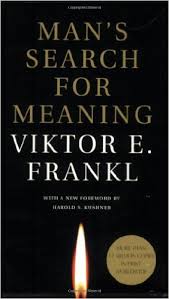
imgresI’ve been reading Peter Johnston’s excellent Opening Minds with my preservice teachers, and it’s a must-read.  One of the skills Johnston says the most open-minded students possess is that of social imagination, or being able to understand “what others are feeling, to read people’s faces and expressions, to imagine different perspectives, to make sense of abstract ideas, and to reason through this.”  In other words–empathy on all levels.  It strikes me that this is both a reading skill and a life skill.
To have your students practice social imagination, as well as grapple with a complex issue, try the following mini-lesson–which I believe I’d stretch out over two class periods.

ObjectivesDistinguish the differences between meaningfulness and happiness according to the article; Connect the concepts of meaningfulness and happiness to yourself, the characters in your independent reading books, and people in the world.

Lesson: First, I’ll emphatically booktalk Viktor Frankl’s 1946 classic, Man’s Search for Meaning.  This book, written in just seven days while Frankl was imprisoned in Auschwitz, argues that life is always worth living as long as one feels they have a purpose.

Next, I’ll distribute copies of The Atlantic‘s article “There’s More to Life than Happiness,” which pairs Frankl’s book with current research on happiness vs. meaningfulness.  To give students a purpose for reading, I’ll ask them to read the article with a pen in hand, noting the differences between a happy life and a meaningful life.  

To get kids synthesizing the information, I’ll ask, “Once you’ve finished the article, answer this in your notebook for a quickwrite: which do you think is more valuable–a happy life or a meaningful life?”

The article is lengthy, and I’ll allot 30 minutes for students to read and respond in writing before we debrief.  As a whole class, we’ll have a discussion in which we focus on what the article argues, what the students believe, and how culture may have nudged us to believe those things.

imgres-1The next day in class, we’ll refer back to the article before beginning independent reading time.  “As you read today, pay attention to the characters in your book–are their lives more happy, or more meaningful?”

When we wrap up silent reading time, I’ll ask students to turn to a neighbor and tell about the characters in their book, and whether they’re happier or more purpose-driven.  This time will double as peer book recommendations as well as a quick assessment of the text-to-text connection.

After asking students to share out any really great characters they heard about (to give the class more reading recommendations), I’ll ask students to open their notebooks and quickwrite about a text-to-self connection–“is your life right now filled with happiness or meaning?  Or both?  What do you want for the future–happiness or meaningfulness?  Freewrite about this issue in general.  These responses will stay private.”

After writing, I’ll ask students to grab a post-it note and make a text-to-world connection–from their parents to friends to public figures to entire communities, countries, or cultures.  I’ll collect the post-its for a quick assessment.

Follow-Up: I’d like to return to the idea of meaningfulness vs. happiness with a reading or writing unit on the issue.  We could collaboratively study almost any novel, poem, story, or article in reading workshop through the lens of identifying purpose vs. happiness, or explore the issue further in a writing workshop geared toward either narrative, informative, or argumentative pieces.

How might you have your students consider the issue of meaningfulness vs. happiness?


Mini-Lesson Monday: Narrative Analysis with StoryCorps

We all have a story to tell.

In fact as writers, we have countless stories to tell. We tell of our experiences, fears, hopes, dreams, and even those trivial events that sometimes add up to more “life” than we could have imagined.

We tell the stories of others too. Real and imagined people that speak to us in words we’ve heard and sometimes, in the words we long to hear.

I wax poetic with my students like this often, but especially early in the school year. I want them to feel my passion for the power of stories and encourage them to develop their own passion for expression. As Morris (protagonist from one of my daughter’s favorite children’s books The Fantastic Flying Books of Mr. Morris Lessmore) beautifully states, “Everyone’s story matters.” 

With this in mind, my American Literature collaborative team (Shout out to Brandon, Catherine, and Erin!) worked this year to develop a unit of narrative writing that asks students to look at the stories they tell and how those stories can be interconnected. Everyone’s story matters, and in this case, they get to have even more meaning as students craft individual tales that relate to their chosen thematic focus.

Students, having already selected, listened to, and analyzed an episode of This American Life for elements of author craft in a narrative (hook, chronological/detail choices, and word choice), partnered up or formed a group of three, and selected a theme out of a hat (dangers of conformity, vanity as downfall, the power of choice, etc.) they would explore, both individually and in their groups.

The overarching assignment is to craft an individual narrative that fits the theme and ultimately orally record the stories in a podcast that highlights the interconnectedness of the individual work. Students are graded individually on their narratives, but the podcasts are a group effort and will be played for the class.

storycorps


Objectives — Students will listen to several examples of 2-3 minute stories from NPR’s StoryCorp in order to practice narrative technique identification and analysis one more time before drafting their own stories. Students will discuss and share their insights on narrative impact of what they heard in an effort to purposefully craft their own narratives.

Lesson  — According to their website the initiative of StoryCorp is to “preserve and share humanity’s stories in order to build connections between people and create a more just and compassionate world.” 

In class, we had spoken already about the power and purpose of stories and students had come up with some wonderful ways stories enrich and fulfill us. Stories:

  • explain, or attempt to explain, where we come from and/or why we are here.
  • allow us to express what we believe or hope.
  • reveal who we are or who we want to be.

I shared with students that we were going to listen to some short pieces that told unrelated stories on the surface, but each would link back to some of the reasons we tell stories at all. Students were asked to record what they heard in the hook, insights on which details were included and why, and word choice (all elements they will be scored on when writing their own narratives).

I started by playing a sample story and then walking them through my own analysis. “Traffic Stop” is a piece that details police brutality in 2009 against a black man who was raised by white parents. The piece pretty brutally (I did have to mute three or four seconds of the piece where a police allegedly uses a racial slur that is inappropriate for the classroom) relates the story of a young man who is pulled over by police, searched but cleared, and then is assaulted by police when he questions why the officers are searching his car.

After I played the piece, I projected some of my own analysis. The hook involved the young man’s mother saying that she never would have thought skin color would make a difference for her son, but she painfully learned she was wrong. Word choice vividly captured the pain, fear, and confusion of the young man who was beaten by police. The chronology includes context for the horror of the event, a play by play of the few moments of the traffic stop, and details about the young man’s mother seeing his injuries in the hospital. My analysis was that the elements chosen were specifically selected and organized to convey the disbelief that something like this could happen to an innocent person and the role that race played in the event.

We then listened to two more stories. Students wrote down their take-aways in their writer’s notebooks and discussed after each piece. We shared out ideas and pulled insights back to those class generated elements of why we tell stories.

Finally, I had students listen to one last piece, detail their analysis on a half sheet of paper and turn it in to me for some formative feedback.

Follow-Up — We are about to start mini-lessons on hook, chronology, word choice, and parallelism (thank you Common Core) in drafting these narratives. I plan to reach back to the insights shared during this class in order to help students make purposeful choices in crafting and revising their narratives.

Everyone’s story matters. 

What tools do you use to get students thinking intentionally about their writing craft? Please share your ideas in the comment section below! 

Try It Tuesday: Book Pass

While writing about ways to hook readers a few weeks ago, I realized that while we’ve mentioned book passes several times on this blog, we’ve never actually written a post dedicated to how to do them.  So, here that post is!

Book passes are beautiful in their simplicity. Their purpose is to expose potential readers to a wide variety of books in just a few minutes. All you need are a number of books greater than or equal to your students, their writer’s notebooks, and the power of social capital.

img_5005

Victoria browses through Peter Johnston’s Choice Words, while Brianna tries to decide between a few choices herself.

When students enter the classroom the day of the book pass, I always have piles of books ready to go on their table groupings. They can’t help but pick them up right away (really, they can’t–sometimes it drives me nuts when they paw through materials we’re not ready to get to, but in this case, I LOVE watching them be drawn to a book), so the book’s contagion begins to spread immediately.

When we begin, I ask students to turn to their TBR pages in their notebooks. “Go ahead and grab a book that’s on the desk in front of you,” I invite, and wham, books are in the hands of readers. “Spend about one minute with this book–look at the front cover, the back cover, the inside flaps, the first page. Decide if you think it might be a good fit for you.” With my preservice teachers of all content areas, I ask them how they might use this book, or excerpts from it, in their future teaching.

img_5011

Habbiba gets excited about Will in the World, and nerds out with Alexis.

I set my timer on my phone for 60 seconds as kids flip through pages. Of course, book love is contagious, so some kids share with others what they find–the power of social capital is at work once again here.

When the timer dings, I ask kids to pass their book to the left. “But first,” I remind them, “write down that title on your TBR list if you think it’s something you might want to read.”

Now the students have new books in their hands, made more powerful if they’ve already watched their neighbor write that title down. I love to watch, after multiple passes, when one title gets written down by nearly everyone, and the students who’ve yet to get that book in their hands begin to practically salivate.

img_5010-1

Nick and Ryan thumb through The Double Helix and Moneyball, respectively

The book pass can go on for as many passes as you have time for–enough for every kid to see every title, or just five minutes’ worth, if you prefer. I do this activity multiple times at the beginning of the year, and then again sprinkled throughout the year when I get lots of new books in. It’s a wonderful way to expose students to several titles in a day as an alternative to the traditional booktalk. It’s also a great way to shake up the typical routine in the classroom with a hands-on activity that gets kids excited about books.

I often conduct book passes in this open-ended way–“see if this book is a good fit for you”–but sometimes I do them as a way to expose students to a “new” genre in particular (novels in verse, or graphic novels); a way to introduce the theme of a unit (by finding books all about that theme); or to introduce a reading challenge (read an award winner, or a book of nonfiction). Just passing books around and getting them in the hands of readers does wonders to grow students’ universes of what’s possible when we read.

How might you use a book pass in your classroom? Please share in the comments!

Talking About What Matters by Catherine Hepworth

guest post iconWe’ve all been there. The conference room is crowded. It’s too hot. Every third person is clicking away on their laptop, answering emails or checking their phone, answering their kid’s plea to bring their forgotten gym socks to school. The presenters drone on, flipping through slide after slide on a fairly average power point. At the front of our minds, a constant throbbing pulse: how will I ever use this in my classroom?
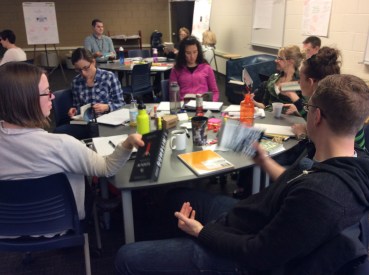
There is no interaction between presenter and audience. There is no spark. All of us wonder: is it too soon to take another bathroom break?

Fortunately, this is the exact opposite of what we experienced when Amy and Shana came to teach us how to implement the workshop model at Franklin High School on two dreary days in February. The time working with them inside our little classroom was anything but dreary.

And teach is the key word here. The most important realizations I came to at the end of the second day were:  I can do this…and, I was treated as both a student and a teacher.

It invigorated me.

img_0327

I’m in the plaid, exploring a possible independent reading book during “speed dating with a book”

We were exposed to a variety of activities for getting students to think, write, and talk about what they read and wrote. To really know how something will work in the classroom, you have to try it out for yourself. A big idea in the workshop model is that you must read books and write stories and essays alongside your students. As part of our two-day workshop instruction, we were reading and writing as if we were the student, so we could feel how each activity might go from the student perspective. Then we were allowed ample time to discuss and reflect on these activities as professionals.

Amy and Shana’s presentation modeled everything a teacher is supposed to do with a class of students.

Objectives were evident right from the start.

  • They gave clear directions.
  • They listened intently and attentively when we spoke.
  • They circled among us so they gave ample time to each group during small group discussion.
  • Their enthusiasm was palpable.
  • They made me feel like I mattered. They made me want to go out into the world and be somebody.

At the end of the day, isn’t this what we all wish for our students?

The best reading workshop strategy Amy and Shana taught us was one that engaged students in reflecting on their independent reading as well as talking with a friend about what they read. It all took less than 10 minutes.

First, students grab a post-it and write one insight they had about a character and provide a quote from the book that helped them achieve this insight. Then, students find someone else in the room (preferably someone they have not talked with recently), and share their post-it with that new student. The listener paraphrases what the student says and then they switch roles. The teacher collects the sticky notes from everyone, comments on the sticky notes, and hands them back (either within the hour or the next day).

As a “student,” this activity was really fun for those of us who like to talk about what we read. Because we are seeking a peer instead of being forced to talk to someone, it makes talking about what we read fun too. Lastly, each student must practice active listening skills. I especially like that Amy and Shana explicitly stated that the listener must paraphrase what they hear. I’ve already tried this activity with my students, and when we were done, several of them exclaimed, “Wow – it’s so nice to talk to others about what we’re reading; we need to do this again!”

For anyone who wants to change things up in their classroom and get kids more engaged, switching to workshop is it. The best way is to start small – dedicate 10 min of your class time to reading. Don’t think of it as “we have to read,” instead, think of it as “we get to read.” (This was an old trick used at Girl Scout camp. We didn’t tell campers “You have to collect firewood; rather we’d say, “You get to collect firewood.” It seems sneaky, but it’s not; it’s just a lot more appealing).

So teachers, think of it this way: you get to talk to your kids about the books and writing that matter to them, and those conversations will matter to both of you. Keep reading this blog for ideas and inspiration — it definitely helped me and my colleagues at Franklin. If you have the opportunity to invite Amy and Shana into your classroom/district, make it happen. We’re glad we did.

Catherine Hepworth has been teaching for 10 years; she currently teaches English and coaches Forensics at Franklin High School in Wisconsin. In the summer, when not reading books or frantically sewing historical clothing, she participates in living history events around the Midwest. Check out her living history & sewing blog at https://catherinetheteacher.wordpress.com/.

Our Year-In-Review

As we round out the 2014-2015 academic school year, I would like share our Year-In-Review from us here at TTT and dedicate it to all of our loyal and contributing teacher friends who share in our experiences throughout the year.  Playing with the Reading Writing Workshop model is always exhilarating and fresh and exciting and freeing and thought-provoking.  It’s always propelling us, as educators, to break through barriers and teach with our most authentic teaching souls.

So, to capture the essence of how we have all explored the model this school year; here are highlights that allow us to celebrate the risks, the questions, the stumbles, the ‘ah-ha’s, the setbacks, and of course…the successes.  As we are all still progressing through this last month of our current school year, we hope that resurfacing some of our favorite moments will ignite the fire that keeps us all educating with fierce passion, deep inquiry, and continual evolution.

The calm zen of the RWW in Texas.

The calm zen of the RWW in TX.

First up: The lovely Amy Rasmussen who never ceases to amaze all of us with her wit, wisdom, and wildly insightful thinking.  Here is a woman who has taken the RWW by storm and has not looked back; the only time she does is to pick up, dust off, and gently guide those who are trying to find their way through the process.  She is an excellent mentor and extraordinary educator who ensures that her Advanced Placement students are gifted the wonders of the RWW. Here is a collection of how Amy has guided us through the intricacies of customizing the RWW for our own learners:

A Feedback Protocol for Revision Workshop

5 Reasons Why Reading Conferences Matter — Especially in High School English

5 Ways to Enjoy the Last Month of School


A reminder of student movement and achievement.

A reminder of student movement and achievement in NH.

Next: Jackie Catcher’s name could not be more appropriate.  We know the catcher’s responsibility on the field is to guide the team to strategic success; Jackie does the same infield – in her classroom. She moves her students with her unyielding dedication through continual infused literacy by craftily customizing projects and lessons that engage students. She is a powerhouse who, through all the struggles and obstacles of a second year educator, never ceases to find innovative ways to educate and inspire.  Most importantly, she is always a learner first and shares her inquiry with others to not only think collectively, but to create success-driven solutions.  Here is some of her story:

Building My Library Around My Students

Unraveling the Mystery of Poetry

The Question That Changes My Students’ Writing


A bright and energetic learning environment in WV.

A bright and energetic learning environment in WV.

Thirdly: The always-invigorating Shana Karnes. Shana is a shining light to her students, yet her light shines brightly for the world of evolving educators as well.  She is open to sharing her passion, her innovative thinking, and the way she creatively customizes the RWW for her students in the throws of West Virginia.  Shana never loses sight of how vital piles and piles of literature are for the growth of her young readers and emerging writers.  She knows how to roll up her sleeves and do the work right beside her scholars.  It is through the sheer joy of all things literacy, that Shana explores the world of the RWW:

We Learn Facts from Fiction

Teach Readers, Not Books: A Case for Choice Reading in ALL Classes

The Value of Talk


The shelves where our identities are qualified, our ideas solidified, and our passion realized.

The shelves where our identities are qualified, our ideas solidified, and our passions realized in NY.

Rounding it out: Erika Bogdany.  Through the RWW I have challenged my students, and they in turn, have challenged me.  They push me continually with their own inquiries and want to be more fluid writers.  They challenge my writing by offering suggestions and insight that I have bestowed upon them; the gift of creating a safe community for all learners to read, write, risk, and share.  It is through the RWW that students find pride in their work, volume in their voice, crafted secrets in their writing, and beauty in themselves.  It is with passion and grace that students flutter and flop; yet learn how to fly:

All it Takes is a Tutu and Some Focus

Beyond These Four Walls

Today We Draw


We hope that our moment of reflection and celebration continues to provide you ideas and inspiration throughout the remaining time you have with your unique readers and writers this year.  We’d love to continue hearing your voices, feedback, and generous insight while we round out this school year…and look forward to the year ahead!

Keeping Them Reading: Speed Dating with a Book

Confession:  I have never been speed dating.

I just love the idea of it.

In 2012 I wrote about an activity we did in my AP English class that got everyone talking as we prepared for the AP exam. I hadn’t even thought about that, until I started to write about our latest foray into the talkative world of speed dating with books.

Neydy and LauraI know many teachers have tried some version of this activity. I want to add my voice to theirs:  this is a F.U.N. way to get students talking about what they have read and what they might want to read — both important factors in helping students of all ages develop their identities as readers.

How to Speed Date with a Book

As students entered my classroom, I asked them to

1) find a book from the shelves that they had read and liked enough to share with another person,

2) find a second book that they thought they might like to read — maybe they liked the cover or the title; maybe they had heard someone talk about this book. Didn’t matter.

Everyone needed two book.

Then, we tried this “speed dating” thing.

First, we formed two circles, one inside the other. One circle faced outward. The other faced inward.
Students stood in front of one another, and I with the easy job stood with the timer and the camera.

“One minute,” I said, “You’ve got to stay on topic, and talk about one or both of the books in your hand for one minute. Your goal is to ‘sell’ the other person on why they want to read these books.”

GO!

 We talked books for as many minutes as it took for every student to talk one-on-one with every other student. It was exhausting. And wonderful.

After we completed all our rounds, we set all of the books out on one table, and students picked up their writer’s notebooks and turned to their “What Shall I Read Next?” lists, adding any titles they might want to read during the last two months of school. Every student wrote down at least one book. Some wrote down several.

Why Talking About Books Must Be a Constant

I teach juniors in high school. Before this year, most of my students did not consider themselves readers. They have had to learn what it means to

a. like books,

b. like to read books,

c. like to talk about books,

d. know how to find books they like.

The moment I stop holding up books at the beginning of class, reading a bit, and encouraging them to give it a try, many they stop reading.

They are one year and a couple of months away from graduating high school, and they are Baby Readers, fledglings not ready to leave the roost and fly off on their own. (In more ways than one, I know.)

I don’t know if my readers will be strong enough to keep reading when they leave me the first week in June.

I hope so.

In the mean time, I will keep up the talk and keep up the expectations:

You must read if you are a student in my class.

You are a reader who reads every single day.


What are some activities you do to keep your babies reading?


©Amy Rasmussen, 2011 – 2015

On Annotations and Assessment in Readers Workshop

If you’ve read this blog for a while, you know that I advocate for self-selected reading in all English classes. My students read stacks of books each year that they choose for themselves, and they read four titles for in-class book clubs that they select from my short stack of complex (mostly) contemporary titles.

The question I get the most from teachers who do not practice this choice pedagogy is “How do you know your students are reading?”

My initial response is usually:  “I ask them.”

But if you practice readers and writers workshop in your classroom, you know that it takes a bit more than that to know that students are developing as critical readers.

We do still have to teach.

Shana wrote a post recently about the value of talk in her workshop classroom, and I was intrigued by one of the comments:

I think we should consider what would be the best balance between between teacher and student talk. As the literacy expert in the classroom, I think the reading/language arts teacher’s voice needs to be heard often. While we all can be our own teachers, we will probably learn more with the wise guidance of a teacher.” 

But, of course.

Balance is key. So is authenticity.

These two ideals drive the choices I make in my workshop classroom.

My new friend, Lisa, sent me a question that got me thinking about both as I composed a response. I share her question here and how I replied to this dedicated teacher who is moving herself as she moves her readers.

Question:  Do you assess any annotations the students do with their reading? I’ve included a rubric we have been using to give students some feedback on their annotation of fiction. Their annotations in the text, and thereby their discussions about the texts, has greatly improved!! However, providing feedback on their annotations takes FOREVER. Just curious how you handle any sort of assessment related to students reading their chosen texts.” 

Response: Initially, when I read your question about annotations, I thought of these two questions:

1) Why do you need to leave feedback on the annotations in their books?

2) You said your discussions on the texts have improved. Are those discussions not enough of an assessment on their annotations?

Then I read your rubric, and it got me thinking.

I love the simplicity of the rubric, and I can see how students would notice more and be able to contribute to discussions more thoroughly and completely if they mark their books accordingly; however, I always use caution when it comes to interrupting a student’s reading flow — you know, reading for the sake of enjoyment.

In my own reading life, I rarely mark up a piece of fiction, unless it is for my own book club and I want to remember a significant passage that I loved, or didn’t understand, or a moment in the text that shocked or saddened me so much that I want to bring up in the discussion.

When I have my students engage in book clubs or self-selected reading, I want them to have authentic experiences and discussions about their books. (I quote Louise Rosenblatt on experiential reading at the end of this post.) That hope for authenticity is what drives what I have students do while they read.

And it is hard, and I have to trust that students notice the nuances and the complexities in the language and all the important literary aspects of their books. Sometimes they just don’t.  Sometimes they need to focus just on comprehension. I have to be okay with that.

Here’s how I try to facilitate learning:

1. Model my reading. I show students the books I’ve read for my book clubs and the kinds of passages I’ve marked so I can remember them for discussion. I encourage my students to mark their books in similar ways. Some will, and others never will. Some show me that they can think about their books without ever marking them. I have to let them learn the habits of readers that work for each of them individually, and I have to trust that they will.

This goes for writing, too. Every major writing task I ask my students to do, I do it first. I show them my process and later my product. For my ESL students, this is the single most effective strategy I do. I’ve asked them, and they’ve told me. I know that if this modeling helps my students who struggle with language, I know it helps all of my students.

2. Teach mini-lessons. Say I want students to focus on literary devices. I show them a variety of “beautiful sentences” from various texts; 51 Of The Most Beautiful Sentences In Literature was a perfect resource for this. I pulled several of these pretty slides and put them on a presentation in Drive. I projected them in the front of the room, and students and I talked through what we noticed in these sentences.

We discussed the craft in the sentence and why the author might have made the moves he or she did. This focus on the writing in a text often leads to greater critical reading of a text just as critical reading should lead to better writing.

Next, I asked students to go into their books and look for beautiful sentences. I gave them each a note card, and they had to find two sentences — one for each side of the card — where they could tell where the author did something interesting with language. I instructed them to write the sentence and the page number at the top, and then they were to identify the device/s, interpret the meaning of the sentence, and analyze the meaning, based on what they’d read in the book and what they believed the author was doing there as it related to the meaning as a whole.

What does this assess? A lot.

  • I know immediately if students know how to identify literary and rhetorical devices.
  • I know if students understand what they are reading, especially if the activity is during book clubs, and I’ve read all the titles in which students choose.
  • I know if students can analyze the author’s use of the device versus just summarizing the meaning of the sentence.
  • I know if students are reading their books. They are not going to choose a sentence on page 195, if they haven not read that far. They will not know how to tie their analysis into overall meaning

(The sentences I used for this mini-lesson lead to book talks, too, and I had one girl come in the next day with a copy of Anna Karenina that she’d bought for herself. Hooyah!)

Mini-lessons like this can be done over and over again — perhaps with a different skills focus each time, and the more students see that we are going to ask them to go into their books to focus on a skills, the more likely they are to start marking significant sentences and passages as they read. It becomes a natural move on the reader’s part instead of a mandate by the teacher.

3. Teach Notice & Note signposts. If you are not familiar with Notice & Note, Kyleen Beers and Bob Probst researched the patterns in story arcs and crafted six signposts around the moments in the text that appear the most often in a vast number of fictional pieces — short stories and novels. Students at all levels can apply the signposts as they learn to ask themselves questions as they read. In my experience, their understanding of theme improves dramatically.  If you Google Notice & Note signposts, or join the Facebook group, you’ll find many teachers who share their resources.

My students and I learn the signposts with short stories, and then throughout the year, we practice applying them to our full-length novels. Best thing I’ve done to help students analyze theme, which is SO HARD for some of them. I don’t quite understand why, but it is singularly the thing my students year after year struggle with the most.

For assessment, again, I do a lot with note cards. Quick, short writing snapshots where students can talk to me about what they know. I can grade these easily and leave feedback in the form of questions to direct students to look deeper, or closer, or whatever. I usually score these with check plus, check, or check minus and leave feedback in the form of one thing the student did well and one thing that might need improvement.

4. Write reader’s response. I have 35 composition notebooks that I labeled with thematic topics. I learned this strategy from Penny Kittle (Here’s a handout from 2013 that has a list of topics for notebooks in it.) I morphed her idea with Notice & Note, and it works well for reader’s response, another piece in holding students accountable for their reading and assessing their acquisition of skills.

At the beginning of the year, when composition notebooks are .50, I buy 35, and I label them with a variety of topics like Penny has on her list, plus some. I glue a handout of the signposts inside each one. Then, every once in a while, I’ll pull the notebooks out and set a handful on each table.

Students know to find a notebook that they can tie the thematic elements of their independent reading book to. We write for about 10- 20 minutes, depending on how in-depth I want students to go with their thinking, and then they share out what they wrote with their table mates. (This works as book talks, too, because students hear about what their friends are reading.) I wander the room and listen in. This is formative assessment. If a student has written about theme, shown that he is reading and understands how the book relates to that thematic topic, I know he is learning. Of course, the reverse is also true. I use check marks for grades of this kind of assessment, too.

Now, having told you all of this, I am not saying to ditch your rubric. I am just always trying to figure out how to put more of the responsibly for the learning (and the work) on the students, and probably most important to my sanity — the need to cut my grading time.

Regarding your rubric, I wonder:

A. How can you ask students to practice annotations with short stories?Then when you go to leave feedback on what they have marked, zero in on one or two slices of the rubric — never the whole thing. And be sure your feedback is something that will resonate. All too often students do not care about what we write, they only want to see their grade. I saw this great reminder in a tweet today:  “Put comments on my paper that begin conversations, not end them.”

B. Instead of trying to leave feedback on every students’ annotations for their whole books, how can you ask students to apply what they have learned from annotating?

For example, choose a slice of the rubric. Give students a half sheet of paper (or a notecard) and have them synthesize their annotations into a paragraph or two that answers a question. Something like :  Think about the things you’ve annotated about the characters in your book, how have the behaviors of the protagonist advanced the plot in the story?  Explain how any single or series of choices by the protagonist has surprised, unsettled, or shocked you.

C. How can you use the rubric to guide your conferences?Instead of checking their annotations, ask students to use their annotations as they talk with you about their books.

For example, choose a slice of the rubric. In a one-on-one conference, or in a small group conference if students are reading the same book, ask:  In regard to your annotations about literary elements, what have you noticed about how the author uses them? How do these elements help the author craft the story? Talk to me about some passages or sentences in the book that you’ve been particularly moved by.

You will know if students are paying attention as they read., and you’ll know so much more because your assessment shoots over the annotation itself and gets to the thinking behind why we want students to annotate in the first place.

Lisa and I would love to know your thoughts on annotations and assessment? Please leave a comment


©Amy Rasmussen, 2011 – 2015