Category Archives: Writers Workshop

3 Ways to Help Students Tell a Story They’ve Never Told

This morning, with the new audiobook release of Don Graves’ Children Want to Write (narrated by two of our teacher heroes, Penny Kittle and Tom Newkirk!), I’m thinking about that true fact: children do want to write. We all do. Our minds are, after all, made for stories.
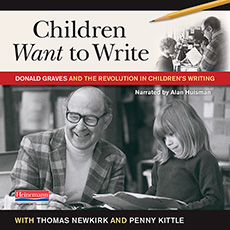
Children Want to Write (Audiobook)

But to tell our stories is a challenge in so many ways. We live in an age of distraction, many of us are often silenced by society, or we struggle to find an audience we trust.

But most of all, many of us don’t know how to tell a story if we’ve never seen a story like ours told before.

Stop and think about this concept, etched in my mind by Dr. Rudine Sims Bishop with her concepts of books as windows, mirrors, and doors. I’ve spent a good deal of my planning time outside of school finding books that can act as windows, mirrors, and doors for my students to either see through, see themselves in, or walk beyond.

But I’m interested today in the way we go further with that discovery. Once you find yourself in a story, how can you tell your own? I realized years ago that I wasn’t just reading voraciously to find my own story; I was looking for a storyteller with whom I could identify: a living, breathing mentor text. I found it when I met Penny Kittle at the New Hampshire Summer Literacy Institutes, a teacher-writer-mother who counseled me on sustainable ways to balance my young children with the work of teaching well.

Until I met Penny, and was bolstered by her support and willingness to share her own story of struggling to be a mom-slash-teacher, I didn’t know how to tell my story. And until I did, I couldn’t be a living, breathing mentor text for my own students, who were thirsting to tell their own stories.

As English teachers, we are blessed to have the opportunity to be that mentor text for our students: teacher-writers who practice, every day, finding and telling stories that resonate. It’s my favorite part of this work, the joy of getting to read and write powerful stories alongside our students. We can offer space for storytelling in our classrooms in three key ways–with vibrant mentor texts, opportunities for playing with genres, and the time to tinker and devote our study to narrative.

  • A well-stocked classroom library, frequent and varied book talks, and mentor texts that flood our students with diverse voices and stories offer our students windows, mirrors, and doors through which they can discover empathy for others and themselves. Seeing a range of stories disrupts the concept of “normal” and helps students see the world in shades of grey, rather than just black and white.
  • Quickwrites and mini-lessons that allow students to play with genre offer possibilities for storytelling they may not have considered: poems, lists, fiction, memoirs, vlogs, podcasts, and multimodel texts show how we can allow the concept of story to flourish in any medium.
  • Time to write: every day, in quickwrites and in workshops, but also over time–when we devote more than just a unit, or a quarter, or a set of standards to the idea of story. We put our money where our mouths are when we return to story again and again, through concepts of argument, informative writing, or creative fiction and nonfiction.

When we offer our students these ingredients, we create a recipe for storytelling that brings authenticity, relevance, and power to our classrooms. A community of readers and writers can be transformed into a workshop of storytellers, who speak and listen through the powerful lens of narrative.

We invite you to share in the comments how you bring story into your classroom!

Shana Karnes loves to read, write, and find stories everywhere in Madison, Wisconsin alongside her two young daughters, hardworking husband, and inspiring teacher friends. Connect with Shana on Twitter at @litreader.

A Life Full of Revision

I saw one in early August this year, winging its way over our Fine Line Buckthorns, past our Red Maple tree, through our verdant yard. Transfixed, I hoped it would land on one of our scarlet day lilies just like the first time I beheld one (back when I held Ingrid and held Jonas’ hand). But this Tiger Swallowtail–golden-winged and delicate–floated away, on its own journey of transformation. And while I once marveled at its beauty with my children, this year I marveled at the metamorphosis the butterfly endured in order to take flight. 

Even as that caterpillar egg (where, if you look closely, the caterpillar inside is visible) becomes a caterpillar; even as that caterpillar decimates leaves and sheds its skin several times to grow; even as that caterpillar forms a chrysalis and, as it begins its transformation, actually digests itself, using highly organized groups of cells to redirect its creation; even as there is seemingly destruction–something new emerges. And, after all this, the butterfly must hang upside down to allow its wings to harden before it takes flight. A butterfly in its colorful splendor is the culmination of a life full of revision.

Maya Angelou once noted that “We delight in the beauty of the of the butterfly, but rarely admit the changes it has gone through to achieve that beauty.” She’s right, of course. We reduce the complexity of the transformation in the same ways many of our students reduce the complexity of revision in writing. The beautiful butterfly doesn’t exist without significant change just as beautiful writing doesn’t suddenly and artfully emerge. So many of our students need to learn that once an idea is born into the world, this idea can and will transform–many times!–given the right conditions. This learning can transform the possibilities they see for themselves as writers, possibilities often limited by the misconception that some people are good writers while others are not. 

So, what do we do as teachers? How do we provide the right conditions, the ones that nurture (to help grow, develop, or succeed) destruction that leads to transformation? And, how can we help them look inside their work to see the special parts that hold the potential for splendor?

  1. The pitch: Have students pitch their ideas for writing projects to one another (Liz Prather’s Project Based Writing is an excellent resource for this). This lets ideas live, born into the world by sharing with peers, providing time and space for growth and development. And, sometimes, necessary destruction. 
  2. Feedback: Share this video with students about the nature of offering and receiving feedback. This may transform their understanding of the power of their responses to one another. 
  3. Modeling and practicing revision: Consistent practice in small ways in notebooks allows students to internalize the ways to direct their revision. Ask them to add, delete, rearrange, or substitute in their writing. Kelly Gallagher and Penny Kittle speak to the importance of this, especially with writing that is generative. More importantly, as teachers, we can and should model this, making it visible how and why we transform our writing. 
  4. Showing: Use the work of other students, snagging Google History screenshots to make visible the kinds of revision that occurs. Discuss these together. Show them our own, too. This is like looking inside the chrysalis! Whoa!
  5. Conferring: The questions we ask and the micro lessons we offer during this time can both trigger transformation and call attention to the parts already bright with meaning. Celebrating with students where a move works may prove a catalyst for more revision. 
  6. Destruction: Encourage students to print drafts and cut them apart. All the parts may be there, but they may need to be rearranged or to be developed further. 
  7. Letting students create their own analogy: Engage students in creating their own analogies about revision. They create meaning while we glimpse their thinking.
  8. Managing their creative process: This video from Tiffany Shlain helps writers think about their own processes. One of the most important aspects it focuses on is time. Writers need time to hang upside down with their ideas before they take flight. 

Of course, the limitation of comparing the nature of revision to metamorphosis is that it likens writing to a cycle. But writing is and must be recursive for our writers to successfully transform their writing. When our writers embrace this, then we can stand back with wonder and appreciation and watch them take flight.

Kristin Jeschke is an Instructional Coach for Waukee High School in Waukee, Iowa (where she spent time prior as an English teacher). She’s standing back, watching her colleagues write in their writer’s notebooks, wondering about the potential in each. What ideas will take flight? Follow her on Twitter @kajeschke. 

New Learning Territories and a Growth Mindset

I’ve mentioned before that I have two new “preps” to which I’m slowly adjusting. I’ve had a tendency to shoulder forward into new experiences with mixed results.  HulkSometimes enthusiasm and energy carry me through the learning part at the beginning. Other times, I’ve made mistakes caused by my straight-line approach that could have been avoided. Perhaps I’ve trended more towards the Hulk, when a more intentional, Bruce Banner style might have served me better.

Patience, I’ve learned in my old age, is truly a virtue.

Moving into the realm of an advanced class that focuses on rhetoric is a challenge all to itself. Couple that with a move to sophomore English where students have different literacy needs than the freshman I worked with last year, and I’ve gotten myself into a situation that demands open-mindedness, near constant reflection, and growth.

While these classes appear to diverge completely in content, I would argue that they have something important in common: an environment where workshop works.  In one class we learn about building narrative, in the other we explore the rhetorical situation. For me, success lies in the “invitation.” I can’t drag them towards a greater understanding of reading and writing anymore than I can make my daughter move faster when we are headed out the door in a hurry.

Examining the structure of a Rhetorical Precis recently, I took the risk of holding back the “notes” and letting the students tell me what they thought the elements of an effective rhetorical precis might be.  I had MY notes, of course, but the students built the anchor chart that we use. Unsurprisingly, each of the three classes noticed elements that the other classes didn’t, providing me valuable data and helping me understand the learners even better.

As I shared my writing with them, I had to be vulnerable. When they asked me about my writing decisions, I needed to have answers. This held true across both levels.

Our sophomores learned about creating effective characters, and it was their search through the mentor texts that informed their understanding, and those elements found their way into the writing.

We read self-selected books and utilize reader’s/writer’s notebooks in all my classes. They may diverge in content, but the importance in those connections remains paramount.

Conferring with readers and writers dominates the time before and after mini-lessons.  The effectiveness of one-on-one instruction doesn’t change because one student might read or write better than another.

One size does not fit all, and I know that teachers deserve autonomy.  The autonomy afforded me empowers our workshop to work in two totally different environments with totally different sets of students.  Their needs, however, are the same. They need to move forward in their literacy; be better tomorrow than they were today. The skills are different, but that’s where my work comes in.

This journey can not be survived alone.

I’ve learned, in a few short weeks, that the only path to success this year runs through a few very specific places: the office of our instructional coach, the room of my department head (from whom I’m learning how to teach rhetoric), and the room in which our sophomore team gathers as we plan our units and our lessons. It’s going to take a village to raise this learner.

I remain steadfastly committed to a workshop that centers on readers and writers, and the first five weeks of this school year have only strengthened that resolve.

Many of our readers at 3 Teachers Talk have brilliant ideas, and I hope to learn from our writers and our readers.  If you want to collaborate, email me at mooreliteracy1@gmail.com.


Charles Moore loves watching his son play football for the first time ever.  He loves to read, write, and learn along side readers and writers. Check out his twitter at @ctcoach.  If you headed to ILA, come see us at 11 on Saturday October 12th for our presentation on novels in verse. Our clothing will coordinate… I promise.

Mentor Texts: Lifting Lines and Elevating Self

When working with mentor texts in notebooks, lifting a line–pulling a line or phrase or sentence for its aesthetics and using it as a launching point to generate writing–remains such an important strategy, as Ralph Fletcher notes here. Of course, we want our writers to work with parts of a text that will help them learn to not just write their ideas but to craft.  But I think these lines, these (where appropriate writer-selected) lines, can also elevate the writer somehow. These lines just might move writers in ways where they’re compelled to study themselves just as closely as the craft.  These lines can tug writers into the stratosphere. 

I felt myself lifted as I read Sara K. Ahmed’s Being the Change this summer (This book about how to teach social comprehension offers numerous mentor texts.). One line in particular heightened my summer reflection: “Understand that everyone’s identity is at stake.” Whoa. 

The urgency of this challenged me to think and write and think and write and ultimately create; the best lines to lift should compel writers to create! In this case, my co-coach and I worked to plan professional development for our returning teachers. In Ahmed’s words, we wanted to “make way for the voices, emotions, and experiences of others,” so we centered our time on identity–individual and the staff’s, the students’, the building’s. And then, in our efforts to use story to promote digital literacy, we used America Ferrera’s Ted Talk My Identity Is a Superpower Not an Obstacle. As staff watched, we encouraged them to respond in their notebooks, ultimately suggesting that they choose a line and reflect on how they can carry it into the year with them. 

My hope is that as staff scans their notebooks during our next professional development, they will see this line. They will consider themselves and others, identities at stake. And this line will lift them toward possibility. 

Kristin Jeschke is an English teacher turned Instructional Coach in Waukee, Iowa. After nineteen years as an English teacher, she’s currently re-imagining her identity. But she’s excited for all that’s possible.  Follow her on twitter @kajeschke.

Hope Thrives in Courage

Today is the third Friday with my senior English students. Yep, I did it. I’m back in the classroom, learning alongside some amazing young people.

I have a billion goals for myself — enough to weigh me down, certainly — but one that keeps floating to the top is this:  Thrive in hope. (Yeah, I don’t really know if that’s a goal, but stay with me here.)

When I left the classroom two years ago, I’d lost a lot of it. Personal struggles. Professional struggles. The state of the world struggles. All of it. But lots of self-reflection, rest, writing, paint, dirt, good friends, family, and growing things –probably most of all growing things — changed me. My hope is back. It’s thriving, just like the plants that add energy and life to my home and my new classroom.

And while I teach literacy skills to seniors in high school, what I really want to teach is hope. Hope in humanity and our ability to thrive — together and as individuals.

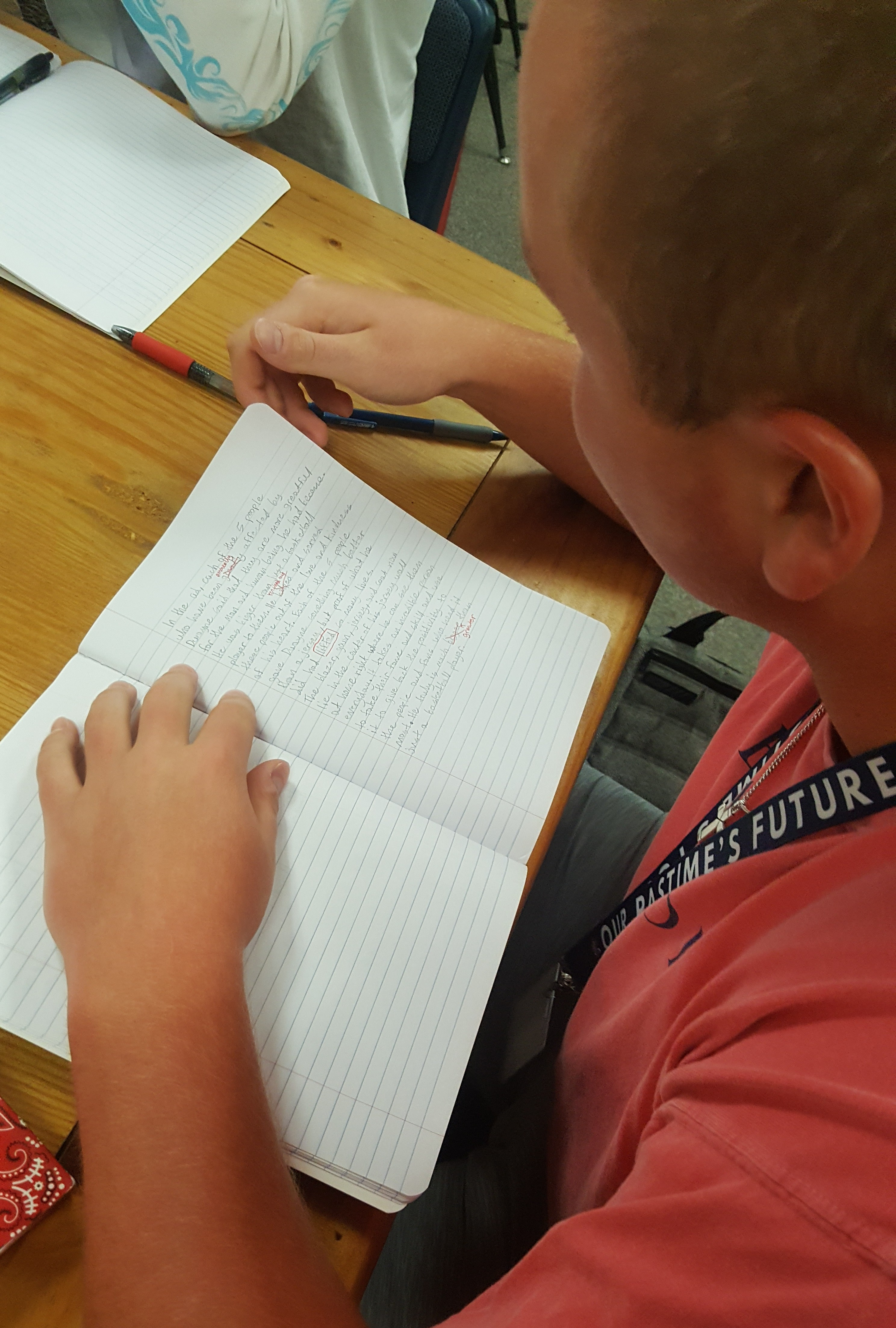
So, like you, I’ve started with relationships. Every text we’ve read together, every task WritingBesideDwyaneWadeI’ve asked students to complete, every book I’ve matched to a reader’s interest has given me insight into who these young people are as individuals with backgrounds, cultures, fears, failures, dreams and desires. Just like me, they cling and pounce and clamor after hope.

A few years ago, after a sniper killed five police officers in downtown Dallas, I read this commentary by Chequan Lewis. The last line still resonates: “My sights are simply set on what is possible when we are courageously human.”

Courageously human. That’s what I want for myself and for my students — to practice courage as a means of becoming better than we were when we walked in the door. So moving forward into senior English plans, I’ll invite students to step into the vulnerable spaces that require courage: reading texts that challenge the status quo, writing honestly about ourselves, our learning, controversies, and convictions; and communicating in ways that validate, clarify, empathize, and challenge.

I’ll step there, too, because the more I think about it:  Hope thrives in courage.

Here’s a few of the texts we’ve used thus far to write beside and spark our thinking on this journey. Perhaps you’ll find them useful as you begin your own.

My Honest Poem by Rudy Francisco

Famous by Naomi Shihab Nye; the poem here

“This Bud’s for 3” — Dwyane Wade

If you have ideas for more resources that fit our theme, please share in the comments.


Amy Rasmussen teaches seniors at a large high school in North Texas. She’s a #houseplantcollector, writer, reader, gardener, watercolor-artist wannabe, bicyclist, and grandmother to eight courageous little people, the newest little man born today! Follow her @amyrass and @3TeachersTalk

Becoming a Writer — Guest Post by Austin Darrow

On a late summer night, as the new school year looms on the horizon, my wife and I re-watch Heath Ledger’s comedic masterpiece A Knight’s Tale for the umpteenth time. As Ledger’s character William makes the decision to bravely follow his true calling and stand as a knight, knowing he will be arrested, Roland proclaims the old adage, “Well boys, all good things must come to an end.”

As all teachers oft do, I took this as a metaphor. It’s time for summer to come to an end, to don my armor, pursue my calling, boldly face the new year. In response, my wife said to stop being so melodramatic and watch the movie.

With her reminder, I did put an end to these flairs. Sure, summer–with its days of sleeping in, its weeks to simply and blissfully read for hours, catch up with old friends, its endless possibilities–would have to make way for something more structured. But I also felt a change this time around. The nervousness, the butterflies, the back-to-school nightmares (mostly) gave way to a new feeling: excitement. This would be a great year.

You see, last year, my second year in this profession, was a furnace for me.

industry-647413_1280

The Image by zephylwer0 from Pixabay

Conditions were just right: the heat was cranked up by my peer Charles Moore, who constantly challenged me to grow through conversations, mentor text wars, an anchor chart “hall of fame”, and an endless pursuit of authenticity in our shared love of teaching literacy; a mold was given to me by my mentor, Helen Becker, who showed me concrete strategies to make these things work while always reminding me to read, write, and cut out all the extra “stuff” that could allow impurities to ruin my work; Megan Thompson was the hand that guided the hammer, refining the techniques I tried, inviting me into her classroom and her thoughts, and modeling an unconditional love for students that requires a strong will; lastly, the students were the anvil, always giving me a sturdy base on which I could hone my edges and continue growing and shaping.

Without “further gilding the lily” as Chaucer would say in A Knight’s Tale, I learned and grew so much in this forge through the strong students, mentors, peers, colleagues, and I daresay friends that were willing to walk the walk with me.

Our North star–our central focus–at the heart of this growth was always learning how to make the literacy experiences for our students more authentic.

As I continue to reflect on these experiences, I realize that our greatest growth was in writing instruction. As our students walked in the door for the first time last year, we quickly realized many had gaps in their writing instruction. But perhaps a more alarming assessment was that most students, even those “proficient” by any state standards, had no love or purpose for writing.

And so our work began.

We tried many things–increasing the amount of formative data we would look at in team meetings to help guide our planning; shifting what and how we assessed and graded with rubrics and scales that would be more authentic; changing the pacing and length of our mini-lessons to get out of the way of these young writers; and so much more. Each of our adjustments were tried, refined, and often ditched and replaced, and I believe that each warrants further reflection. But one adjustment stood above the rest: when we as teachers became writers too.

In Kelly Gallagher’s Write Like This, he proclaims: “Of all the strategies I have learned over the years, there is one that stands far above the rest when it comes to improving my students’ writing: the teacher should model by writing–and think out loud while writing–in front of the class” (15).

Nearly all teachers of writing have heard something along these lines at some point in their career. Many have been brave and vulnerable enough to try it.

But this past year, I learned that there is a difference between writing in front of your students and becoming a writer.

A writer is a person who keeps journals and notebooks and endless Word documents, filled with ideas and drafts and revisions in a smorgasbord of conditions. A writer is an artist who pursues and experiments with their craft to get it just right. A writer is a dreamer filled with goals and purpose that can only be met through careful, meticulous, arduous effort.

With this working definition, I quickly realized that I was not a writer. Are you? I also questioned myself:  How could I authentically ask my students to become the writers that I have qualified here if I hadn’t become a writer yet myself? How could I expect them to give what I was not willing to give myself?

So I set out to become a writer. At first, I wrote the same essays and assignments that I tasked my students with. Then I said yes to sponsoring our school’s Poetry Corner and shared my own work at our weekly meetings. I wrote letters to family and friends, and love notes to my (at the time) fiancé. I wrote reviews of products I had purchased and services I had received, application letters to conferences I wished to attend, thank-you cards to wedding guests, and much more.

As I climbed each of these mountains of literacy, I shared my writing experiences with students. I wrote many of these pieces with them, inviting their feedback and giving mine in return. I became a writer and watched as my students became writers, too.

In a recent conversation with the aforementioned colleagues and friends, we created an anchor chart of reasons why everybody–students and teachers alike–benefit when the teacher becomes a writer:

  • Foresight to specific struggles students might have
  • Better understanding of what skills to teach in mini-lessons
  • Concrete conferring questions to ask student writers
  • Empathy for students struggling with the writing process
  • Equity in creating assessment scales and rubrics
  • Modeling vulnerability, struggle, and craft for the students
  • Modeling authenticity and purpose as a writer

I’m certain there is more to unpack here, but with these benefits alone, I am convinced: the most essential “tool” of writing instruction is when the teacher becomes a writer, too.

So as I glimpse into the year ahead, the usual back-to-school nerves have been replaced with sheer excitement. I am excited to step into the classroom, share my writing territories with students, and coach them as they create their own. I am excited to write alongside them, receive their feedback, and watch as they grow. I am excited for our next Poetry Corner meeting, where old students and new are so electrified by their literacy that they have to come and share. I have so much to learn still about writing instruction, and I am excited to step back into the furnace.

Austin Darrow has now begun his third year as a teacher and self-proclaimed literacy advocate. He teaches English I, AP Lit, and coaches the Academic Decathlon at Clear Creek High School. He is trying to grow and refine his voice of advocacy, so follow him on Twitter @darrowatcreek.

A Poem to Start Your Notebook

Each morning, I receive two poems in my email inbox: one from The Poetry Foundation, and one from The Writer’s Almanac. One morning in July, I received “More of Everything” by Joyce Sutphen, read it, and thought, wow. That would be so powerful to write beside with students.

As it turns out, some pretty brilliant thinkers receive these same poems in their inboxes, and they took the same poem and ran with it in a beautiful direction:

I often have my students write beside poetry inside our notebooks, but Linda Rief and Penny Kittle have inspired me to bring poetry to the personalization process. I love the idea of having students glue this poem into their personal photos and collage pages we create: it prioritizes an individual, emotional response to literature that is valued in the workshop classroom…and the results of the thinking around this text are beautiful, too.


As you and your students begin the school year and personalize your writer’s notebooks, perhaps you’ll consider adding a text to the start of your journals. Will you share any poems or short texts you frame your year with in the comments?

Shana Karnes lives in Wisconsin with her husband, daughters, and cats. She is teaching and learning alongside amazing teachers through the Greater Madison Writing Project this year. Connect with Shana on Twitter at @litreader.

Guest Post: I’ve been thinking about Ghosts or What I’ve learned about the power of mentors…and time by Elizabeth Oosterheert

“That version of the story–that version of my life without my husband in it–is a ghost I carry around with me. It’s always there, beneath the surface of my real life. I feel…so grateful that this big, messy, joyous life isn’t a ghost life, but mine…”
Kate Hope Day for The New York Times

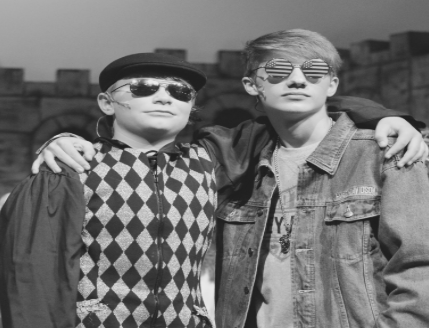
Joe and Toby

Joe & Toby after a performance of the 2018 play, Merlin’s Fire

If you’re like me, when the end of the school year arrives, you entertain the ghosts of what might have been. These lingering ghosts are questions like:  What if I had spent more time conferencing with that student? What if I had found this mentor text a little sooner? What if I had done more mini-lessons about . . .

And the list goes on.

I learned a few lessons during this past year I hope will have a positive impact on EVERY facet of my readers’ and writers’ workshop for next year. My teacher’s soul already knew this, but I recognized more powerfully than ever before that the right mentor texts at the right time, combined with enough space to explore craft moves and to write about things that matter, makes all the difference.

My students love what I call food literature (thanks to @KarlaHilliard for this amazing idea!),  a writing study we do after Christmas composed entirely of reflections about food. This takes the form of food narratives, poetry, listicles, or critical reviews.

We study mentor texts, and then students choose a direction based on the ideas they’ve developed in both handwritten and digital notebooks.  After discussing many mentors, and highlighting craft observations, students list powerful descriptive words, make notes about the writer’s voice,  and practice composing complex sentences based on passages in the mentor pieces.

I encouraged my students to consider food in the context of specific flavors and seasons. 

Childhood and adolescence have unique tastes. December has a far different flavor than July. What we quickly noticed is that food literature is about so much more than what is on our plates. It’s about savoring cherished memories.

Another frame that worked well for food narrative that is also very effective for other kinds of autobiographical writing is an idea adapted from Penny Kittle that I call Then and Now:

Then I thought, but now I know. . .

When we write Then and Now snapshots, we admit that our understanding of everything from food, to sports, to relationships evolves as we age and learn how difficult it is to be a human being.

Three new mentor texts spoke powerfully to my students. One was “Carrying the Ghosts of Lives Unlived,” published in the Ties section of The New York Times, written by Kate Hope Day. While this piece is NOT about food, it is about how, in Day’s words, “There are hinge points in time when life could be one thing, or another.” My students applied  this mentor to our food study, writing about different life seasons, and how sometimes seemingly small decisions have a BIG impact.

Another New York Times piece that was very helpful to us  was “Christmas Fudge and Misremembered Snow Cream” by Rhiannon Giles.  I composed a piece for my students based on this mentor about the flavors of my childhood.  An excerpt is linked here.  Students then wrote about their own life flavors, recipes, or memorable meals.

Finally, we studied “Ode to Cheese Fries” by Jose Olivarez. What I love is that my discerning, sensitive, wondering students used that poem to create beautiful reflections on some of their fears about adolescence and daily pressures assailing them. In his poem, “Pack of Ranch Sunflower Seeds,” Toby, one of my eighth grade authors, wrote:


What if I’m the small seed

With a big shell

Waiting in the bag

Pleading not to be eaten up

By the mouth

Called life

And my inner seed gets revealed

And my outer shell is thrown out and trampled

By reality


Maybe I should chew more bubble gum


The rest of Toby’s poem is linked here. 

Our food study is a ghost that haunts me, because I hope that I can continue to make it more authentic. For now, though, I have to remember to be grateful for the time and the writing that was — and in the words of Mary Oliver, give thanks for my “one wild and precious life” and the students’ lives that intersect with mine every day.


Elizabeth Oosterheert is a middle school language arts teacher and theatre troupe director at Pella Christian Grade School in Pella, Iowa. She loves writing, and sharing the stage with seventh and eighth graders. Her favorite stories are Peter Pan, The Outsiders, & Our Town. You can find her on Twitter @oosterheerte

Q & A: How do you grade the writer’s notebook?

Questions Answered

For all the years of my teaching career, my students have always kept writer’s notebooks. We personalize our covers and create our own book lists and dictionaries, practice writing, sketching, and glue-ins to make every writer feel at home, and then go about the work of filling those empty pages with ideas, practice, drafts, and beauty throughout our time together. I do this work beside my students, and we inspire each other–the same way I see my teacher mentors do this.

Because of this framing, students are invested in their individual writer’s notebooks, and they are carefully and creatively cultivated. As a result, when I collect the notebooks, it’s not for the purpose of accountability: it’s for the purpose of students sharing something they’ve chosen with me, and for me to gather some information about where my students might need more instruction.

Just as students have their choice reading books lying open on their desks when we talk about their reading lives, they have their own writer’s notebooks lying open when we confer about their writing lives. I can see, and guide, students’ work in the notebook on a daily basis, so when I collect notebooks, most of what I’m seeing isn’t new to me.

Students select two pieces of writing they would like feedback on and flag them with post-it notes, then turn in their notebook every two weeks. I browse through their writing, have a look at their TBR lists and personal dictionaries, and write back on the pieces they’ve noted.

Once per quarter, I ask students to do a “journal harvest,” in which they revisit their writing from that quarter, assess their growth as a writer, set new goals going forward, and choose one piece they may have abandoned to harvest, revise, and polish.

If my classroom were gradeless, that would be that: daily conferences, biweekly turn-ins, quarterly harvests. That gives students a variety of feedback types and times, and gives me, the teacher, enough information to help move individual writers and the class as a whole in their writing growth. Because I have always been required to enter grades weekly into an online gradebook, I make turn-ins worth 20 points and quarterly harvests worth 60 points.

Students who do the work with fidelity and demonstrate growth earn the full points possible. Daily conferences are filled with self-assessment, which informs my “grading”–it’s easier to help award points to students when they’ve already set their own goals and assessed their progress during our conversations during the week.

As always, I treat the notebook as “workshop, playground, repository,” via the guidance of Tom Romano in Write What Matters. It is a place for students to “think, ruminate, speculate with the pressure off and the stakes low” (16), and as such, our grading should reflect that.


Note:  This post is a part of a series. It’s based primarily on the most frequent questions about readers-writers workshop asked at our workshop trainings. For more see here.

Shana Karnes lives in Wisconsin and teaches writers, educators, and her own small children how to improve their lives with literacy. As a new resident to the Dairy State, she’d love your recommendations about things to do. Connect with Shana on Twitter at @litreader.

Summer Reading Recommendations : what to read and how to go public

As summer winds down and I am heading back to school, I am taking time to reflect on my own summer reading.

Summer is always busy: our family travels from our home in Nicaragua back to our home in Oregon to visit family and friends, and we don’t really have a “home base” throughout the summer. We are always so happy to spend this precious time with our loved ones, and we end up visiting late into the night quite often. This means I’m not reading as much before bedtime, and in the afternoons when I might normally be reading, I’m visiting and playing and participating in summer activities.

But just because I’m not reading on my regular schedule doesn’t mean I don’t value reading and books like I always do, and when my students return to school in a couple of weeks I want to be able to demonstrate to them that it’s important for me and for them to all have healthy reading habits.

I’ve written before about how important it is to be public with our students regarding our reading habits and values. I just don’t think it can be said enough — showing our students how much we value and appreciate reading is perhaps more important than telling them. But the questions is how… so I have come up with a few more ideas this summer about how to share with my new students in the fall.

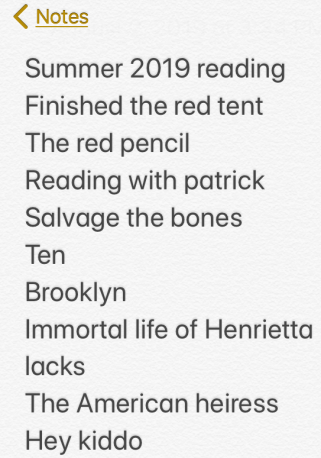
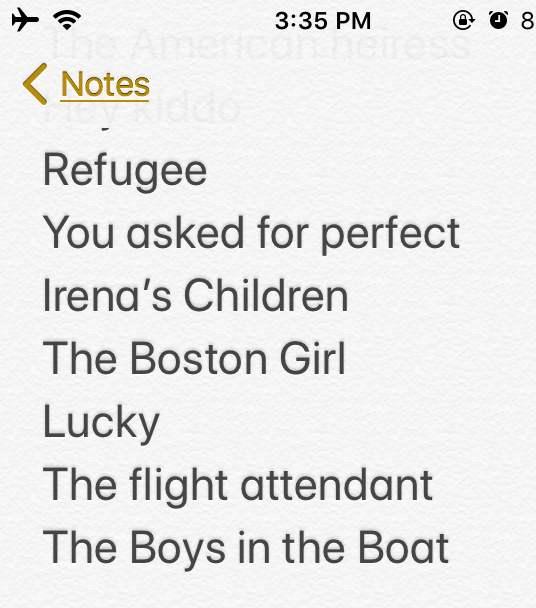
  1. First of all, I will show them my own list of books I’ve read over the summer.IMG_5385IMG_5386I’ve kept track in the Notes app on my phone, and it’s super easy to keep track this way. I could have added how many pages were in each book, genre, authors, etc, but those are easy things to look up later, so I just included the titles in my own list.

I’ll share this list with my students, and then talk with them about the diversity of the list — books in verse, graphic novels, nonfiction, middle school level, young adult, etc. My reading life isn’t just about reading “on level” books; it’s about reading what I like, reading to learn, and reading for fun. I want to both model this and be explicit with my students about this fact.

  1. Secondly, I’ll share with my students that I’ve been public all summer long. I’ve shared many of my current reads on twitter and instagram, and while I don’t have a huge following on either of these platforms, I have gotten good feedback from others, and it feels good to have a conversation starter about books.

ILHLInsta

A screenshot of one of my posts on Instagram this summer. Not only am I sharing what I’m reading, but I’m sharing that I read and it’s important to me. This leads to conversations that happen face to face!


My students can share their current reads in many ways – they don’t necessarily need social media, but they do need to see that a willingness to start a conversation about books and about reading is beneficial in creating a community of readers.


As an aside, I can heartily recommend all nine of the books pictured above. Actually, I can recommend all of the books on my list above — it was such a great summer of reading! 

  1. Thirdly, I’ll share with my students that while I wasn’t reading, I was often shopping for books for our classroom library. I shopped our local thrift shop, the Goodwills in my area, the St. Vincent de Paul, and some other local new/used bookstores. I even found a few copies in some little free libraries around town. I found treasures without having to spend too much money. Most of my book purchases were fifty cents apiece, and I made it a rule not to go over three dollars a book unless it was something I had to have. Even then I only went over the three dollar mark about three times, and most of my books were under a dollar.


I purchased multiple copies of the same titles so I could organize book clubs and book partnership units and activities, and so some of my students can organically decide to read the same titles together. (I was so happy to find about ten copies of Seabiscuit, for example, and I didn’t pay more than two dollars per copy.)

I understand that it’s not feasible for every teacher to purchase books, but that’s not the point. The point is that I want my students to see that I value reading, books, and their access to books. As teachers, we can demonstrate that priority in countless ways. In fact, last year, I built my classroom library from scratch with no money out of pocket at all. I just needed to make sure that I could immediately put books into the hands of my students, and I’ll keep doing what I can to make that happen.

I wonder how other educators will model their values as they get to know their students this fall? Please share in the comments, as I know there are some really good ideas out there, and I oh-so-selfishly want to hear them!

Julie has been teaching secondary language arts for twenty years, spending the first fifteen in rural Central Oregon,  four in Amman, Jordan, and the most recent school year in Managua, Nicaragua. 

Follow her on twitter @SwinehartJulie