Category Archives: Readers Workshop

Adopting a Persona as We Move to Adopting Workshop

I am committed and inspired to move into true Reader’s Writer’s Workshop after NCTE and a near semester under my belt in a new school.  I left for the conference in Houston with a plan to read The Great Gatsby in December, and as much as I wanted to totally scrap it and start with a routine inspired by Penny Kittle and Kelly Gallagher in 180 Days,  I didn’t.  

I paused.  

Although every classroom minute is precious and developing readers is the most timely need, I wanted to give myself time to process this shift, to think through how my classroom would run, and brainstorm how to help my students, who from my inquiries have only experienced the full class novel, navigate texts with more autonomy and independence.

Going from trained text regurgitation to full choice would have been a huge, potentially disastrous, shift for my students.  Since August, they have looked to me to create meaning, to judge whether their writing is “right” or “good,” asking what I think about the text versus presenting their own original idea.  These students will grow immensely from workshop, which makes me so excited for January, but I felt they first need scaffolding up to meaning-making and trusting their interpretation and ideas.

I created a Book Club atmosphere with students for our reading of The Great Gatsby, having students meet in “Discussion Tables” with their peers to process the text with each other.  As 180 Days suggests, I asked students to come with one question and one comment to their discussion tables.  Students were also responsible for close reading and annotating/sketchnoting key scenes of the text, commenting on development and language.  Their annotations served as a launch point for continuing and deepening the conversation. A Book Club-style approach allowed for a more structured release of responsibility to students while maintaining the shared experience of full class novels my students are accustomed to.  I stood back as an observer, listening in to their conversations, witnessing students make meaning together versus wait to be guided to a single answer or idea.

As the unit was primarily based on discussion and conversation, so was their culminating assessment, the “Persona Discussion.”  Students were given a choice of what character they wanted to embody, from the core characters like Jay Gatsby and Daisy Buchanan to more minor characters like Mr. Gatz or Meyer Wolfsheim, even “background” characters like the party goers were an option for students.  The core characters provided limited space for interpretation while added characters, like party goers, allowed for more creativity in the persona. Students signed up for a character and prepared by thinking through their characters in their journals.

IMG_0803.jpg

The discussion works like a Socratic Seminar, where students are the drivers of the discussion and can be adapted for both fiction and nonfiction.  I created this assignment for AP Language students who loved to debate and discuss in Chicago–they adopted the persona of Henrietta Lacks’ family, doctors, and author Rebecca Skloot after reading The Immortal Life of Henrietta Lacks.  For Henrietta’s Persona Discussion, the central question of the discussion was a quote about medical ethics. 

Students felt that the smaller characters were given a voice, an idea we discussed earlier in the passage when examining the wealth and marginalization of “the other” characters in efforts to disrupt the traditional text.  


Maggie, who played Myrtle, said she liked feeling immersed in the book:  “At first, I felt like Myrtle would only ask questions to Tom or George, but as we all started being our characters, I thought about how Myrtle and Gatsby were actually more alike and could have been friends, and I wanted to ask Daisy about her marriage more.”  Jordyn said the discussion was better for understanding the web of deception because “…it was like seeing the book as a play or real life and it made our group discussions more real or, like, meaningful.”  After discussing the text as a reader so much, Riley, a reluctant reader who has learned, as he admitted, to “fake it,” said, “It was more fun to prepare to play someone than to think about the big ideas for a regular seminar.  It made me want to do well and really know Tom.”  

As we build into full workshop mode in January, students have a foundation for how to enter a text, methods for creating meaning, and more confidence in their thinking.  Students were engaged with this type of discussion and reflected about their enjoyment, so I am going to incorporate it into next semester, perhaps jigsawing the characters from students’ choice reading or book clubs together from different realms or as a way to review major characters and texts before the AP Literature exam.   We’ll see what other “personas” develop!


Maggie Lopez is enjoying Utah ski season while re-reading 180 Days as she preps for second semester, American Girls: The Secret Life of American Teenagers before bed, and The Poet X in class.  She wishes you a very merry, restful holiday season!


3TT Talks Gifts: What books will you give this season?

If you know me, you know I live by lists. I make them. I collect them. Sometimes I even stick to them. I raised seven children, you know. I had to keep track of who needed to go here, there, and everywhere and who needed what and what and what just to survive and thrive in our robust and rowdy family. Christmas shopping, often on a bone of a budget, gave me hives.

Gift-giving has never been my strong suit. Perhaps my practicality, and my history of stretching dimes into dollars, gets in the way of thoughtfulness. (Not even kidding, my kids got socks and underwear wrapped in cute paper. To their credit, they never complained–at least not to me.) I know it is possible to be both practical and thoughtful, but I am still working on that balance.

So what does any of that have to do with a blog about teaching readers and writers? Not a lot — except, I asked my fellow writers to help me craft a list for literacy teachers. Maybe you’ll find something to gift yourself, a colleague, a friend, or a perfect stranger. (I like the idea of gift-wrapping a book and giving it to one of the Salvation Army bell-ringing volunteers and saying, “This is for you.”)

Part 1 of this literacy teachers’ list is below. I’ll post about professional books, and favorite writer’s notebooks, pens, and other clever things for literacy lovers over the next few days.

BOOKS. What are the top titles students love in your classroom library right now? (Remember, we work with a range of readers from middle grades to AP Lit. There’s old and new, non-fiction, YA, and just some really good recommendations here, in no particular order, that would make great gifts for any reader or want-to-be reader or you-want-them-to-be a reader in your life. )

The Poet X by Elizabeth Acevedo
Long Way Down Track Series (Ghost, Patina, Sunny, Lu) by Jason Reynolds
Ready Player One by Ernest Cline
The Hate You Give  by Angie Thomas
American Street by Ibi Zoboi
Graphic novels (Ghosts, Smile, Babysitters… by Raina Telgemeier
Love that Dog/Hate that Cat/Moo by Sharon Creech
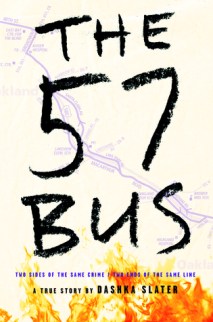
The 57 Bus:  A True Story of Two Teens and a Crime that Changed Their Lives by Dashka Slater
Love, Hate, and Other Filters by Samira Ahmed

331553252034261734647324

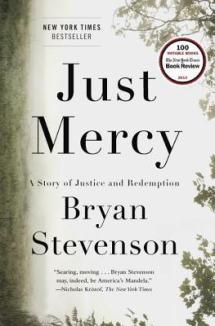
Just Mercy  by Bryan Stevenson & the version adapted for YA
Lies My Teacher Told Me by James W. Loewen
The Handmaid’s Tale by Margaret Atwood & the graphic novel version by Nan A. Talise
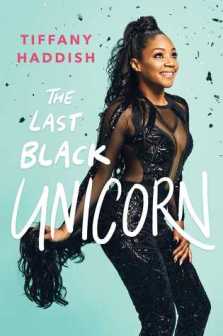
The Last Black Unicorn by Tiffany Haddish
The Nightingale by Kristin Hannah
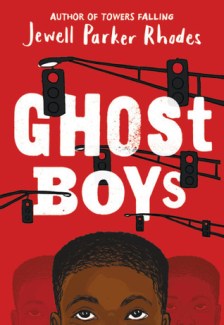
Ghost Boys By Jewell Parker Rhodes
The CrossoverBooked & Rebound by Kwame Alexander
Children of Blood and Bone by Tomi Adeyemi
The Greatest Stories Never Told:  100 Tales from History to Astonish, Bewilder, and Stupefy by Rick Beyer

249749963497431033830437

An Ember in the Ashes by Sabaa Tahir & the whole trilogy
Looking for AlaskaTurtles All the Way Down by John Green
My Bloody Life: The Making of a Latin King by Reymundo Sanchez
Twisted by Laurie Halse Anderson
Dear Martin by Nic Stone
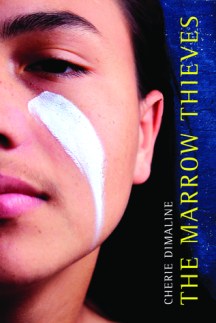
The Marrow Thieves by Cherie Dimaline

NOTE: Get this book free with a donation to Book Love Foundation

We Should Hang Out Sometime:  Embarrassingly, a True Story & Love and First Sight by Josh Sundquist
I am Not Your Perfect Mexican Daughter by Erika L. Sanchez
Because I was a Girl:  Trues Stories for Girls of All Ages by Melissa de la Cruz

346493482901039534608062

Between the World and Me by Ta-Nehisi Coates
The Martian by Andy Weir
1984 by George Orwell
The Lovely Bones by Alice Sebold
The Road by Cormac McCarthy
#NotYourPrincess: Voices of Native American Women by Charleyboy (editor)
All the Broken Pieces by Ann E. Burg
The Astonishing Color of After by Emily X.R. Pan
Far from the Tree by Robin Benway

For more book-gifting ideas, check out the Goodreads Choice Awards for 2018; 15 Life-Changing Middle-grade Books; and here’s the School Library Journal list of best children and YA audiobooks of 2018.

Reading without Words

Too often, the purpose of reading in school is about grammar, vocabulary acquisition, organization, structure, mechanics, conventions, punctuation, figurative language, imagery, etc, etc, etc . . . There’s always a standard, a clear purpose, a takeaway for students when they read . . . but that doesn’t always have to be the case.

There is another important purpose for reading.

Reading is about stories, about discovering and creating our own identities, about realizing that others share in the same struggles as us. Reading is about being human, and being able to touch something on a page that tells our human experience when we are unable to find the words to tell it ourselves.

Reading is about stories, about discovering and creating our own identities, about realizing that others share in the same struggles as us. Reading is about being human, and being able to touch something that can tell our human experience when we are unable to find the words to tell it ourselves. 

Some of our students haven’t discovered this yet, and the reason is often because of the accessibility and relevance of books. We’ve all struggled with finding texts that are age and level appropriate for some of our students — readers who struggle don’t want to read what they deem to be “baby books” for a variety of reasons that are fair and legitimate. They need books that they can read and books that they want to read.

Recently I’ve discovered that there are some beautiful, poignant, relevant illustrated books that are decidedly not perceived as baby books, and which take a lot of thinking and reading in order to understand. But they are wordless, or at least almost wordless.

While I’m not giving up on teaching words and all of their beauty, I also know that wordless stories have a place in my classroom.

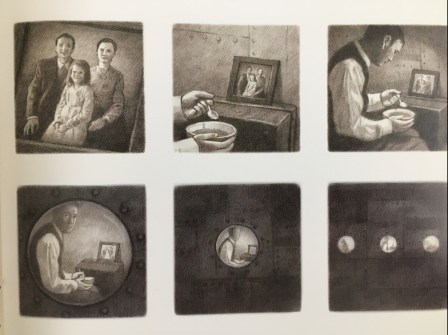
The book I’ve recently fallen in love with is The Arrival by Shaun Tan. It’s a wordless graphic novel, and it tells the story of a person who leaves his family behind in order to create a better life for them all. arrival cover

It’s the kind of story all sorts of people can relate to: Character endures separation, loneliness, and heartache because of hope, optimism, and desperation.

It’s beautifully complex and requires some attention to detail, some hard thinking, and some rereading in order to really understand and analyze it.

I’ve book talked it to several of my classes, and I’ve gotten some puzzled looks when students try to understand how a book can be both complex and wordless.

They struggle to understand how they could find fiction signposts, discover characterization, etc, in a wordless book, that is, until they get the book in their hands.

Students who don’t always have easy access to complex texts have found success with finding the Beers/Probst Notice and Note Fiction Signposts in this complex and detailed story.

IMG_2042

For example, this Again and Again signpost is an easy one to spot – the main character carries a picture of his family as he travels from his home country to his new land, and the photo pops up in many of the frames. It’s significant because students realize quickly that this man’s family is the most important thing to him, which is why he carries the photo everywhere.

Both boys and girls have read this book, and I’ve overheard conversations about what it might be about as they wonder and struggle through their thinking. This is the kind of talk I love to hear.

This morning, I discovered four boys reading choice books on a bench: one was reading this wordless graphic novel, another was reading one of the Harry Potter books for the first time, another was reading The Crossover, a novel written in verse, and the last one was reading a humorous graphic novel. All different forms of books, but all legitimate books that “count.”

The point is, all of these students had texts that were accessible to them. They were curious about their own reading, and were enjoying their books. Their brains were engaged, they were talking to each other about what they were reading, and most importantly, they were fostering a community of reading as well as their own healthy reading lives.

Graphic novels, with or without words, can be excellent bridges between teacher, student, and healthy reading habits. Students can learn valuable reading skills and strategies with all kinds of books – even the “extreme” examples that don’t have words. It’s not a place where I want my students to “live” — but I don’t want my students to “live” in any one genre or form anyway. They should build skills, stretch their brains and habits, find familiar and easier books, and then stretch some more. The wordless book have a place in their learning, and will always have a place in my secondary language arts classroom.

A few wordless/nearly wordless books that are complex and relevant to secondary students:

  • The Arrival by Shaun Tan
  • The Marvels by David Selznick
  • Unspoken by Henry Cole

One final idea: It’s a bit like teaching reading strategies with the Pixar short films. My grade sevens practiced finding fiction signposts in the short film Partly Cloudy last week, and they were able to point out signposts even though the movie does not have dialogue.

Studying and reading wordless books and silent films can build confidence and skills in our readers who struggle with more complex texts, and while we can’t ignore their decoding skills, we can also allow them to grapple with the complexities of stories that are developmentally appropriate for their growing identities as readers and human beings.


Julie has been teaching secondary language arts for twenty years, spending the first fifteen in rural Central Oregon, and the last four in Amman, Jordan. She’s thrilled to report that she and her family have moved across the world to Managua, Nicaragua this year, where a new adventure has begun.

Follow her on twitter @SwinehartJulie

What are we going to do?

Attending any professional conference always leaves my brain buzzing with new ideas and a Christmas-morning-esqe excitement about delivering my learning to students.  NCTE was no different–it is a convention of crusaders that feels like the best (only?) staff meeting you never want to end.

And I needed it this year.

This year has been different, difficult at times, as I navigate a new school and new expectations, balancing between very traditional American Literature and AP Literature curriculums with the workshop work I know is impactful for students. Truth be told, I have been more of a good employee than an inspiring educator.  I have made choices that didn’t rock the boat and those choices often cut student voices. When I wrote about not being there, in retrospect, it is because I haven’t been fully committed to workshop this year.  Thus, students haven’t been fully committed to it either.

Chris Emdin, spoken word-educator-scientist,  asked, “Are you a good employee or an educator?

Penny Kittle, workshop Goddess, asked, “What are we going to do?

“Balance” won’t work any more. There is urgency to the work we are doing.  I have to make choices between what builds authentic literacy and what makes me a good employee.

My juniors are leaving for their post-secondary endeavors, majority of them to four years institutions, soon.  The end of their adolescent education is upon them and they face down daunting tasks. During her presentation, Penny shared a graphic featured in 180 Days: Two Teachers and the Quest to Engage and Empower Adolescents (Heinemann 2018) which showcases the urgency of student literacy.

From a survey of college syllabi for freshmen English done by reDesign (2014) shows first year students will encounter:

  • 5,000 pages of reading
  • 75 text-based discussions
  • 20 argumentative or research essays
  • And 90-100 polished essay pages

A semi-stunned “Wow” is what I thought to myself as the sweet sophomore teacher from Texas audibly gasped as the data was shown, then unpacked through Kittle’s high school to college transition.

What am I going to do in relation to how much students read and write in my classroom versus how much they need to read and write to be prepared for the rigors of post-secondary school?  Am I going to be a good employee and assign The Adventures of Huckleberry Finn before The Great Gatsby because that is what the curriculum guide says? Am I going to educate or follow?    

As Ms. Kittle discussed, we have to shift our thinking from one of victimization to one of urgent empowerment, from “Welp, what are we going to do?” to “What are we going to do?  What CAN we do?”

So much.

It is not too late to save the year.

I will say no (politely).  I will return to what works, listen to what students want, and make time for what kids need.  I will read with students and write alongside them.  I will use my voice and research to justify what many perceive as an “alternative path” to personalized literacy.  My duty is to get students on the road to being successful after K-12 by giving them the tools, stamina, and skills to navigate 5,000 pages of reading, text-based discussions, and various writing demands.

Chris Emdin defined teaching as being “the art of the remix.”  So come Monday, I am going to remix my approach and re-define literacy in my classroom, and be, first and foremost, an educator.

Maggie Lopez is currently hiking through the arches and right to the edge of cliffs in beautiful Moab, Utah while re-reading 180 Days. She is always grateful for the educators in her life, including the Three Teachers Talk community. You can find her @meg_lopez0.

NCTE: Sparking Hope, Equity, and Voice

Like so many educators who attended the 2018 NCTE conference, I am still reeling from the wealth of information and inspiration provided by some of the brightest and most compassionate people in the world. I listened with awe and determination as strong speakers like Chimamanda Ngozi Adichie and Elizabeth Acevedo stressed the importance of what we do as ELA teachers, and I carry with me a renewed sense of urgency about literacy instruction that empowers all students. No – not “empowers” – even that word has been transformed, as I now understand that it’s not my place to give them power; rather, it is my job to help students recognize and harness the power they already possess.1

The universal message of the conference did not so much present new ideas as it did combine them and clarify that we cannot wait any longer to act. We must reach each of our students where they are, provide them with the representation they need and deserve, and encourage them to add their own voices to the world. We have embraced diversity, equity, and representation in a variety of ways, but the time for the best practices to coalesce into purposeful change across schools is at hand.

Screen Shot 2018-11-19 at 10.38.29 PM

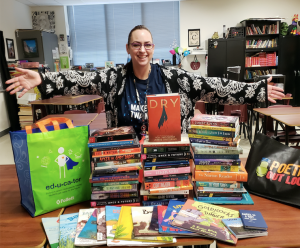
My book haul from NCTE 2018 – I can’t wait for my students to read these!

As I walked through the exhibit hall, admittedly searching for free books to take back to my students, I heard two main ideas – to quote Kylene Beers and Bob Probst – “again and again.” By absorbing the voices around me over the four days of the conference, I was able to discern what teachers, who attended a wide variety of sessions, thought. One of the most common ideas expressed was that NCTE presenters were “preaching to the choir.” Of course, this is true to a great extent. Teachers who love learning, who support choice, who engage their students in meaningful instruction, who believe in the power of writing workshop: these are the teachers most likely to attend the conference, and, more specifically, the sessions that explore these ideas. Teachers who believe in the humanities love the young humans we teach, and we will always seek to improve for their benefit and the benefits to society. This is no way diminishes the power of these workshops or their presenters, for they offer the keenest insight and carefully collected research to support best practices in teaching, and though I admittedly enter sessions predisposed to agree with much of what I hear, I always leave with new ideas scrawled in the margins of my notes. Like many others, I always leave feeling renewed, reinvigorated, and inspired, and I wish every ELA teacher could feel this way.

This brings us to the second most common idea expressed throughout the exhibit hall lines: how do we take these ideas back to our schools and inspire those who weren’t at the conference? I heard several teachers – both in sessions and while milling about – who said things like “I wish [so-and-so] from our department could hear this.” The truth is: we all know teachers who need to hear the messages from the conference, and the difficulty lies in how to offer the essence of what we have gleaned in a palatable manner. Some ideas are not well-received by teachers entrenched in established practices, and we must balance the urgency with which shifts need to occur with the tact and professionalism that our well-meaning colleagues deserve. I had the opportunity to speak with Amy Rasmussen about The College Board’s stance on shifting away from a focus on the canon to include more contemporary and diverse texts, and she offered an analogy that I wish all could hear: we don’t expect doctors to ignore research in favor of the practices they personally prefer, and when one of their primary research-based organizations like the American Medical Association or the New England Journal of Medicine offers guidelines, those are adopted as best practices. Can you imagine if they didn’t? We’d still have doctors bleeding us for pneumonia.

So, as I continue to synthesize all I learned at the conference and develop my own lines of inquiry, I leave you with these questions: why don’t we expect all ELA teachers to follow the research and vision of NCTE? Why can’t we confidently return to our campuses as ambassadors of ELA and NCTE and share what we’ve learned with our peers? Will we let the established system and soft bigotry continue to deny true equity to our students, or will we carry the spark of progress back to our campuses? I, for one, plan to stoke the fire.

1 I would love to offer due credit to the speaker who discussed the problematic idea of “empowerment,” but I cannot find the connection in my notes. If you can offer proper attribution, please add it in the comments.

Amber Counts teaches AP English Literature & Composition and Academic Decathlon at Lewisville High School. She believes in the power of choice and promotes thinking at every opportunity. She is married to her high school sweetheart and knows love is what makes the world go around. Someday she will write her story. Follow Amber @mrscounts.

NCTE 2019 Pregame- Gearing up our Action Plan!!!

Why am I so nervous?

The lights and the stage don’t scare me.  The topic of our presentation is something I’ve lived, day in and day out, for a few years now.  The faces in the crowd, the silence begging to be filled, the words I’ve rehearsed over and over…none of that scares me.

Is it because I want so badly for ears to hear our message? Is it because I’ve been afforded this massively important opportunity to share this message?

Late this afternoon, at the NCTE Conference, I will share the stage with some very important teachers.  These women, like me, believe that inclusivity is something that we must address intentionally.

I’ll spend every second of my allotted time sharing how I’m moving my classroom library from something that reflects traditional, mainstream texts to one that is more inclusive.  One that invites students to read books that give them a better opportunity to see themselves on the pages and a better opportunity to see themselves in this world.

Please join us this afternoon at 4:15 in 361 C.

NCTE 2018- shared slides

Stick to It: Reading Goals with Staying Power

In the world of Readers Workshop, I am still working to strike a balance between the promotion of reading for the sake of enjoyment, and my capacity to hold students accountable for that reading on any consistent and meaningful basis.

In the past, I tried (and liked) Google Forms to have students reflect on and make reading goals, the use of their writer’s notebooks to track current and past reading throughout the year, and of course conferences with students to see who and where they are as readers.

However, my capacity to consistently track the reading lives of 142 students (which is far fewer even than many of my colleagues) often feels daunting, if not completely crippling. I rarely feel like I’m giving enough attention to, or celebration of, the ever-evolving reading lives of my students, at least early in the year. As the year progresses, regardless of the method, we get to know our students well enough that their reading lives come into focus, but the before Thanksgiving days are far too murky for my taste.

My goal this year was to figure out a way early in the year that I could take manageable snapshots of my students’ goal progress in order to both celebrate the success that would fuel reading momentum and to get a handle on who among my students would need the most encouragement.

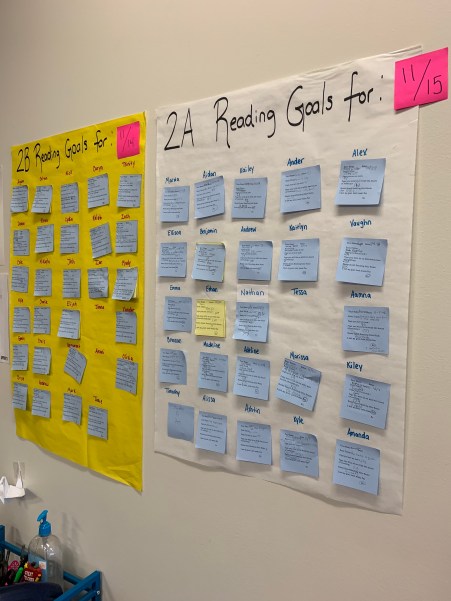
For this purpose, I’ve worked to make our goals more visible, easy to check in on, hard to ignore, and readily accessible for quick conferences.

img_0031

  1. I started the year with my Reading Goal posters prominently displayed for my 9th grade classes. Each week, students would set a goal after calculating their reading rate, let me know the progress they would be working to make in their books, and how long they had spent reading. Not surprisingly, for the first few weeks of 9th grade, my projected sample of a Post-It didn’t necessarily (consistently) get us a clear picture of what we were looking for. Numbers weren’t labeled, titles weren’t always included, etc.
  2. I decided to take out the guesswork and use a Post-It template I found and photocopy quick reflections each week that would make it easy for both students and teacher to see:
  • What book are you reading?
  • What page are you on now?
  • What page will you be on based on your current calculation of reading rate?
  • How long have you been with this text?
  • Did you meet your goal for last week?

As I hand back slips to each child each week, I can do a quick check-in to see how on target, or not, my students are. This quickly prioritizes conferences for later in the week.

How do you keep track of students’ reading goals? Please leave a comment below!

Lisa Dennis spends her school days teaching AP Language and English 9, while also leading the fearless English department at Franklin High School, just outside Milwaukee, Wisconsin where she lives with her husband Nick, daughter Ellie, and beagle Scout.  She is a firm believer that a youthful spirit, a kind heart, a big smile, and a good book can ease most of life’s more troublesome quarrels. Follow Lisa on Twitter @LDennibaum.

Incorporating Drawing into the Workshop Model so that Students can Show their Thinking

Teachers are adaptive. We are always ready, even when we feel never ready, and we approach new challenges with willingness and enthusiasm.

Even when the changes come as a surprise!

For the first time in many years, I am teaching middle school. I’ve taught high school exclusively for at least fifteen years, so it was quite a change to approach these students. I have been giving it my best attitude, attention, and effort, but somehow I knew it wasn’t enough. A few weeks ago I realized why: I was trying to teach my seventh grade students the same way as I was teaching my high school students, only changing the content.

While I realized that I have to approach middle school students differently, I wasn’t sure how. They aren’t just little high schoolers. They are in a different developmental stage, and I have to be attentive to that.

One of my classroom mantras has been don’t share your answers; share your thinking, and when it comes to talking to high school students about it, it seems like they “get it.” That’s not to say they always value the thinking and don’t look for the “right answers,” but they do seem to mostly understand what it means. share-your-thinking

With middle school students, I don’t always get that same feeling. I’ve experienced that they aren’t always sure how to show their thinking, but instead sometimes tend to want to parrot back my thinking, or the thinking of others.

When we’ve worked in our readers/writers notebooks, I’ve also seen that middle school students often ask if they can doodle and draw. I love it when my students get creative in their notebooks, no matter what grade they are in. I just noticed that my middle school students seem to especially enjoy this activity.

That led me to realize that middle school students can show their thinking through drawing, sketching, and illustrating, in addition to talking and writing.

I am introducing the Notice and Note fiction signposts this week, and instead of asking students to write about them, I’ve asked them to sketch and illustrate them.

middle school drawing

The buzz in the room while students were drawing, illustrating, and processing the different sign posts was fantastic. While circulating the room, I was able to interact with students in a fun and academic way. I learned that middle school students love to be creative, and I was able to get a window into their thinking. That was before I even saw their finished products.

Students have illustrated a couple of the signposts now, and I feel like I am on to something. Students are able to express their thinking through drawing, and even think about things more deeply than if they were only doing the discussing and writing. The illustrating has increased their processing, and I’ll keep using this strategy alongside the writing, reading, and discussing. Perhaps every other middle school teacher on the planet already understood this, but now I do, too.

I’m going to add more illustrating and drawing components to all of my classes now, no matter what level they are, from grade seven to AP Lang.

I’d love to hear how others have reached students who are in different grades and levels. How do your students show their thinking?

Julie has been teaching secondary language arts for twenty years, spending the first fifteen in rural Central Oregon, and the last four in Amman, Jordan. She’s thrilled to report that she and her family have moved across the world to Managua, Nicaragua this year, where a new adventure has begun.

Follow her on twitter @SwinehartJulie

Guest Post by Amanda Penney: The Workshop Classroom and YOU!!!

Note: This post signifies quite a milestone for the ELA 1 team I had the privilege of joining this year.  As of this morning, and thanks to the graciousness of this blog’s creators, the entire team has now published on this site.  To see a post by our department chair Megan, click here. Austin posted this summer, here. Sarah, our team lead posted a few weeks back, and my one year anniversary as a regular contributor is in January. This agency affords us power.  It gives us a voice in our fight for literacy.  To the creators of this blog, Thank You.

The workshop classroom is undoubtedly overwhelming to embrace at first. It is difficult to find information on how to properly implement this pedagogy, and there are many misconceptions of what workshop actually looks, for instance, on sites like TeachersPayTeachers. It’s a lot of work to be a workshop classroom. You actually have to read and write yourself if you want your students to benefit from this structure. You need to learn how to identify a solid mentor text from a variety of works and know what you can do with them successfully.

But the work pays off. It gives you, the teacher, so much more than you could ever have imagined. To keep your students engaged in their choice reading, you have to keep up with the never-ending influx of newly published works. You are forced to venture into genres of writing that you would not normally reach. For instance, I read Matt de la Pena’s We Were Here, and I can assure you, it is not historical fiction (my typical go-to). My students were writing about their foster care experiences and retelling their mishaps that placed them in alternate schools. Matt de la Pena provided an avenue for me to better understand these students, who in turn, helped broaden my reading interests.

For me, this shift has been monumental. As a workshop teacher, I actually get to read what I want to read and have picked up books I wouldn’t normally and enjoyed them! I get excited when I stumble upon a passage that might as well jump off the page and into my computer, so I can begin identifying my mini lesson and therein construct my fantastic lesson cycle. It is fun and exciting, and I have such a unique opportunity in my profession to be creative each and every day.

Writing has been the most exciting shift for me personally. I had lost a lot of confidence in my abilities as a writer when I entered college. I will never forget attending Texas A&M’s orientation for new students and the very blunt speech we were given. Simply put, the speaker stated that the five-paragraph-essay would lead to nothing more than a failing grade, so we better learn something new now or “See you later!” I was terrified, of course, because I had been taught nothing other than the five-paragraph-essay. The only piece I had ever written that did not follow that god-awful structure was my college admissions essay. Little had I known, I had “workshopped” my most proud piece of high school writing to which my first line stated “I am crazy.” However, one piece did not shake the terror I felt upon beginning my first day of classes the following week.

As a transfer student my sophomore year, I took an Advanced Composition course and a Shakespeare course. I held a solid A in my Advanced Composition class with helpful pointers and typically positive feedback from my professor. Yet, I could barely hold a low C in my Shakespeare class where I was regularly criticized for my writing style. I spent most of my time in the writing center, and at one point, the graduate assistant was so baffled by my C- paper over Shylock’s speech “I am a Jew” that he asked for the opinion of his “boss” who returned with a shrug and said, “I’m sorry, I don’t know why you got a C…. it looks like he just dislikes how you write and is grading you accordingly. Good luck.”

I spent the rest of my English degree pursuit frustrated and confused. I concluded that writing was a painful process, which would typically yield disappointment from my readers. I would never truly be able to improve because I, unfortunately, did not and would not inherit the mutant skill of mind-reading from Professor Xavier or Gene Grey.

Then, I began to teach. My first year, our campus did not have workshop at all, and teaching was painful day in and day out. My students really did not benefit from The Odyssey or the tragedy of Romeo and Juliet, and to be honest, neither did I. My second year began with the introduction of workshop, which was difficult to understand, considering I not only had never taught this way with my meager one-year experience under my belt, but I also had not learned this way. So, I struggled through what I learned and still could not get my students to engage. They always referred to their “I give up” phrase of “I don’t know what to write about,” and it left me frustrated and exhausted each day.

I had heard about writing along with my students, but I was afraid to do this. I did not identify as a writer and had long since decided I wasn’t very good at it. My students could never know this of course… But I was getting nowhere, and it was time for a shift.

So, one day, half-way through my second year of teaching, I tried something new. I chose to write with my students. I had been flipping through the pages of Kelly Gallagher’s Write Like This and stumbled upon his “1 to 18 Topics” lesson cycle. I embraced my fears of writing with my students and took the dive head-first the next day.

I started safe with soccer and intended to choose a new topic to expand each class period. To my astonishment, every single student had their pens to their papers and were scribbling madly as if they had been starved of this freedom for too long. Conferring revealed a vulnerability I had not anticipated, and I became inspired to show my own vulnerability as the day continued. I realized I had a lot to say, and I wanted to “say” it through my writing. I had starved myself of this freedom for far too long, and I was eager to continue writing.

My third-year of teaching is when workshop really kicked off in my classroom. I was searching for an engaging mentor text that utilized simple sentences as my students struggled (and still do) with sentence boundaries.  An excerpt from Dune stood out to me and I was eager to write beside it with my students in class. The excerpt is as follows:

penny1

Each student wrote for 10 minutes and were asked to begin their piece with “I must not __.” We then pulled a Penny Kittle and revised it to ensure it was only constructed of simple sentences. My students wrote some incredible pieces, and I am convinced their success is a result of my own enthusiasm for the lesson itself. Their writing inspired my writing and in turn began to reconstruct my identity as both a writer and teacher. I was embracing myself as a writer, and my students, in turn, began to embrace themselves as writers.

Workshop has transformed my perspective of writing and provided a unique platform for me to embrace myself as a writer. It has exposed a variety of genres to read but also has provided a variety of genres I can choose to write.

Prior to workshop, I used to hate poetry. Yes. I used the word “hate” … as an English major and teacher…. It was this daunting task and an awful entity that lurked in the dreary school hallways. My teachers never taught me to write beside a poem and always found the most difficult poetry to “interpret” in class. In Ohio, my freshman English teacher appeared to enjoy watching us squirm in confusion and insisted we leave his classroom never ever knowing what the author’s message actually was. I despised poetry’s very existence because of this and determined its purpose was a cruel joke on the reader.

Workshop completely shifted this perspective of poetry for me. I would never had guessed in a million years that I would currently be reading not one, not two, but THREE poetry books at once. The thought of writing my own poetry was a complete joke as well. Yet, here I am, writing beside poetry in my classroom and encouraging my students to do the same. It has a completely different purpose now than it ever did before. Its purpose is no longer to torment my being but to excite my creativity and provide an avenue for expression I never would have known existed if it wasn’t for workshop. The first poem I wrote beside was a Rudy Francisco piece and it looks like this:

Mentor Text:

When people ask how I’m doing

I want to say,

my depression is an angry deity, a jealous god

a thirsty shadow that wrings my joy like a dishrag

and makes juice out of my smile.

I want to say,

getting out of bed has become a magic trick.

I am probably the worst magician I know.

I want to say,

this sadness is the only clean shirt I have left

and my washing machine has been broken for months,

but I’d rather not ruin someone’s day with my tragic honesty

so instead I treat my face like a pumpkin.

I pretend that it’s Halloween.

I carve it into something acceptable.

I laugh and I say,

“I’m doing alright.”

-Rudy Francisco, Helium


My Version:

When people ask how I’m doing

I want to say,

leave me alone, please, now and forever while

my anxiety leaps and jumps throughout my body

and makes me cringe.

I want to say,

standing here is an allusion of sanity,

a trick I feel I will never truly perfect.

I want to say,

this fear is my only possession I have ever had

and I want someone to destroy it so it cannot return,

but I’d rather not burden someone’s day with the demon that encircles me

so instead I treat my face like a canvas.

I paint with bright colors.

I create something mundane.

I smile and I say,

“I’m doing alright.”

-Ms. Penney


I felt so freed of my previous misconceptions with this one piece, and as a result, my class and I enjoy our daily “Poet Moments” inspired by my colleague Charles Moore. I revel in this peace and tranquility and am grateful for workshop with each and every poem I have the privilege to write with my students. This joy has completely altered my initial definition of poetry, and I will forever be indebted to workshop and this genre of writing.

Workshop has given me the opportunity to grow as a reader and writer. It has given me a purpose and a drive to find new and exciting ways to engage not only my students but myself. I no longer feel as if writing is a painful process and the nagging frustration of how my invisible readers expect me to write has long since passed. I have a voice and a means of expressing that voice, as do you, every single day.

Amanda Penney is a bit of a perfectionist and is grateful for the patience that her colleague, Charles Moore, has for her and her ever-changing blog post. She plays soccer whenever she can and loves exploring nature with her only child (her dog who she considers her child) Shanti. She is a complete nerd when it comes to anything comic book oriented and is currently exploring the possibilities of her favorite series, The Uncanny X-Men from the late 1960’s, becoming an exciting and invigorating mentor text. She hopes this will be the topic of her next guest post, that is of course, if Charles is willing to embrace another bought of Penney and her procrastinating-perfectionism.

Lesson Cycle: How to Teach Collaboration

When I wrote several weeks ago about how we went about building a reader/writer workshop, one of the traits we focuses on was “Collaboration.” Our Lesson focus for that day was, “I want you to know that members of this workshop community…”

We started our 55 minute class with reading, briefly visited a poet moment, and then dove into three practical rotations with texts where we explored ways collaboration can help us be better readers and writers. We used three short excerpts that we had already explored in building other parts of our workshop.

First Rotation: Talking is rehearsal for writing.

Text: You Don’t Know Me excerpt from Sherman Alexie

1st Move: Read the following excerpt and think about what the author does that you don’t do.

2nd Move: Starting with desk 1, take one lap around your group, sharing what you noticed.

3rd Move: Find a place in your notebook near this piece and write about what you shared with your group.

4th Move: Think about how hearing from others before you write serves as rehearsal for your writing. 1 or 2 students share out to the class.

img_4627.jpg

A poet moment from one of the texts

Second Rotation: Writing is a rehearsal for talking.

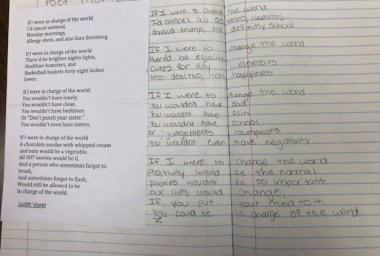
Text: If I Were in Charge of the World

1st Move: Read the following poem and think about something in it that surprised you.

2nd Move: Find a place in your notebook near this piece and write about what you noticed in this poem that surprised you.

3rd Move: Starting with desk #2, take one lap around your group sharing the ideas about which you wrote.

4th Move: Think about how writing about something serves as a rehearsal for you to share. 1 or 2 students share out to the class.

IMG_4625

A different poet moment

3rd Rotation

Text: Ready Player One excerpt

1st Move: Read the following excerpt and think about how the last line of the third paragraph makes you feel.

2nd Move: Starting with desk #3, take one lap around your group sharing how the words in the third paragraph affected your feelings in relation to the piece.  Share in the opposite direction this time.

3rd Move: As a group, construct a sentence using Earnest Cline’s sentence as a model, that mimics the complexity of the feelings.IMG_4626

4th Move: Think about how working together can take us further than we can go by working alone.


Quick Write:

Write about how you can use collaboration to support your growth as a reader and writer.  Write so fast that your inner critic can’t slow you down.

This lesson cycle was all about teaching the students about collaborating, a crucial skill in a workshop.  Eight weeks later, they can zip around their groups, sharing their thoughts, asking questions, blessing each other’s writing, and they do so effectively and efficiently. This may not be the best way to accomplish our goal, but it worked for us.

Please comment below if you’ve had success teaching collaboration or if you just want to chat.

Charles Moore loves working with his students in their reader’s/writer’s workshop.  His divides his time between school, home, and his son’s robotics practices which are three days a week for a total of 11 hours.  He is currently doing a terrible job keeping his grass cut and his pool pristine.  He promises to work harder.  If you’d like to see his somewhat nicely written book reviews check out his book review blog and if you want to see his numerous and random tweets, check out his twitter.