Category Archives: Readers Workshop

Reel Reading– Zombie Lovers Beware

20130207-190708I hate a love/hate relationship with zombies. I love the man and boys in my house who love “The Walking Dead;” I kind of hate that the whole zombie deal has infected their thinking as to what makes good entertainment on Sunday night. Nevertheless, my guys love it, and I spend the evenings on the downstairs couch with a good book, usually about anything but zombies. Usually.

Then, I got this zombie-project idea from a colleague, and I must admit, I am a bit fascinated. My students are, too. Two book trailers that got our attention this week? The Enemy by Charlie Higson and Rot and Ruin by Jonathan Maberry.

http://www.schooltube.com/video/84a36b25d5924352a77c/

Do you know of other zombie books students love?

Reel Reading– Todd Strasser Books for Reluctant Readers

20130207-190708.jpgEvery Friday I show book trailers in class with the hope of getting kids interested in a weekend read. Sometimes I am more successful than others. I hit paydirt today with these book trailers for two of Todd Strasser’s books: Can’t Get There From Here and Give a Boy a Gun. I showed the trailers, one right after the other, and I sat the books on the whiteboard rail. Both were signed out within five minutes–one by a boy who “hates to read.”  Me = smiling.

Join us in Reel Reading for Real Readers:

What:  Weekly posts of book trailers of our favorite and most student-engaging YA books.
 
Why:   Visual images can intrigue the most reluctant and even hostile readers.
 
When: Thursdays so you can find the book in preparation for showing the trailer on Fridays. (We might get some traction with weekend readers here.)
 
How:  We’ll post ours. You post yours, using the meme Reel Reading for Real Readers. Leave us a comment with your blog link, so others can add to their book trailer libraries.
 
 
Mini-lesson Tip:  tone, setting, characters
 
 
Mini-lesson Tip: notice the last frame; make connections to real events
 
Have you read these or other books by Todd Strasser? Tell us about them.

It’s Monday. What are You Reading, Love?

582396_10100174944782984_1347535788_n

When my children were young, I started a tradition during the week of Valentine’s Day, and we celebrated LOVE WEEK. The children got new books that centered on loving thoughts and themes. They got little treats that were meant to remind them to Be Sweet. They delighted at the pink milk and the pink mashed potatoes and the pink everything foods we ate.

Now, my children are all grown. The last of my seven turned 18 last October. I can hardly stand it. It really is true: they grow up so fast. I am learning to deal.

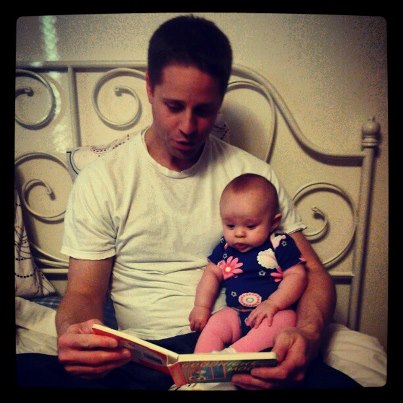
While I am dealing, I am focusing my mothering on being grand– the grandmother of one tiny little girl named Linden.

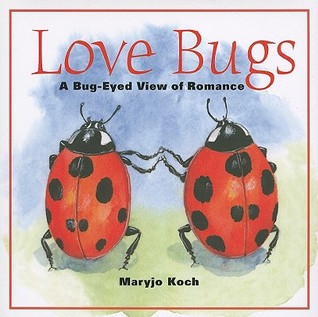
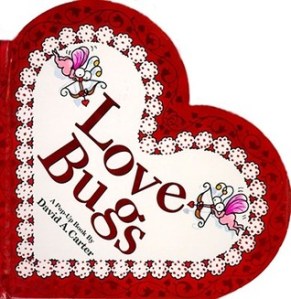
So, what am I reading during the week of love? Books on love that are perfect for this Little Miss.

11134463

273718

380710


 756247

Reel Reading – The Fault in Our Stars

ReelReading2


What?! You chose The Fault in our Stars to kick off our Reel Reading for Real Readers meme? Heather, my friend, you read my mind once again. Now, let’s share our thinking with other like-minded book-loving teachers and invite them to share along.
 _____________________________________________________________________
What:  Weekly posts of book trailers of our favorite and most student-engaging YA books.
Why:   Visual images can intrigue the most reluctant and even hostile readers.
When: Thursdays so you can find the book in preparation for showing the trailer on Fridays. (We might get some traction with weekend readers here.)
How:  We’ll post ours. You post yours, using the meme Reel Reading for Real Readers. Leave us a comment with your blog link, so others can add to their book trailer libraries.
_____________________________________________________________________


Have you read this book? Leave us a reflection on it and a suggestion as to what we should read next.

It’s Monday. What are You Reading?

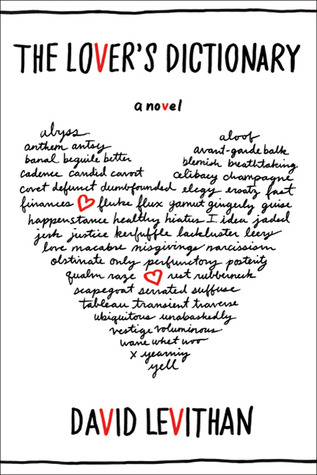
Mon Reading Button PB to YAI just want you to know that I love love stories. I especially like to read about love as we get closer to my Favorite Holiday– Valentine’s Day! So, with that in mind, I asked my sweet school librarians to find me David Levithan’s book The Lover’s Dictionary. I found it on my desk this morning. I know nothing about this book except:

1) It has an awesome cover.

2) It is written with page headings like dictionary entries.

3) It has me hooked with this on page 3:

abyss, n.

There are times when I doubt everything. When I regret everything you’ve taken from me, everything I’ve given you, and the waste of all the time I’ve spent on us.

9279177

Whew! It’s (Still) Monday! What Are You Reading?

Heather and I talk a lot about our work, and we talk a lot about what to write on this blog. We set goals. We schedule posts. Sometimes we do okay, and sometimes we simply (or not so simply) let the demands of school and home and family get in the way of what we really want to do here. In an attempt to DO BETTER, we are going to join the It”s Monday! What Are You Reading? meme.

If you look at the Book Journey blog, you can see the original idea, but really, it’s all about sharing books and outlining a weekly plan for reading. Our stacks of To-Be-Read Piles rival any of yours, but this is a little different. We’re actually going to commit to what we are reaching to read during any given week. By doing so, we can show our students that readers have a plan. Readers know what they will read next. It’s not just a willy-nilly wandering through the stacks of a library. (My students think this is the same as having a plan.)

Our friends over at Teach Mentor Texts host their own version of It’s Monday! What Are You Reading? with their focus on #kidlit — book reviews and suggestions for children’s literature from pictures books to all things YA. We’re going to tag along here for a while.  So. . .

Mon Reading Button PB to YA

I love dystopian novels:  Fahrenheit 451, 1984, The Handmaid’s Tale, and this is a genre that lots of teens enjoy reading. Of all YA books, I’ll choose dystopian over any other. Three of my favorites, all of which are the first in a series (added bonus with kids and reading) and have been around awhile:

Delirium by Lauren Oliver

Matched by Allie Condie

Divergent by Veronica Roth

This past week I read the ARC of Revolution 19 by Gregg Rosenblum. Interesting. Not quite 13667361as engaging as some others. The concept is I-Robot–ish. Robots have taken over society in an attempt to save humans from themselves. The character development was pretty good:  three siblings and a couple of friends. I guess the thing that weakened the appeal was the dialogue. I thought it was boring–real as in what kids actually say to their parents and one another but boring. Overall, I give it three of those five gold stars.

This week I am reading another ARC:  The Different Girl by Gordon Dahlquist. I am not positive it’s dystopian, but I have a pretty good idea based on these last few sentences from chapter one:

15721645“We heard Irene and stopped whispering. She came in, turned out the light, and bet over each of our cots in turn. First Isobel, then Caroline, then Eleanor, then me, leaning close to my face and whispering. ‘Go to sleep, Veronika.’

Then she pushed the spot behind my ear, with a click, like always, and I did.”

What’s next? I plan on tackling the pile of dystopian books I haven’t read yet. Some students are helping me sort and categorize the book shelves in my classroom. For now, we have labels taped around the whiteboard rails around the room and stacks of books beneath them. The dystopian stack is the tallest right after Teen Angst. I’d rather not tackle that stack for a while, but that’s just me rebelling against the teen angst I deal with every single day.

I’d love to know your favorite dystopian reads. Please leave your book suggestions in the comments.

New Year’s Resolutions

New Year 2

I’ve never really been much for writing New Year’s Resolutions (or keeping them for that matter), but I decided I would start this year off a little differently by trying my hand at writing a few. Obviously, I’m not off to a great start because it is more than a week into the new year and I’m just now sitting down to write them. Also, having never really done this before I decided to stick with some of the more traditional resolutions. Never the less, I think I’m actually quite satisfied with what I cam up with. I do caution you that you will want to read my resolutions carefully because I have put my own little slant on them. Hopefully, in reading my resolutions you will decide to adopt one or two of them for yourself!

1) Eat healthy and exercise regularly
   I encourage others to take in a healthy regimen of reading daily, but I often fail to find the time for me to read. I resolve to make reading a priority and commit time daily for my own reading pleasure.

2) Spend more time with family and friends
It seems like every time I book talk a book with students there are at least three or four a class period that want to take the book right then and start reading it. I resolve to spend more time with others talking about books in hope that it will continue to inspire others to read.

3) Lose weight
I have so many books. In fact, I am sure I have several thousand pounds of books! I resolve to drop my excess book weight by sharing my books with others.

4) Improve my education
I love learning and I love improving my craft. I resolve to continue my learning by reading several professional books this year.

5) Be more positive
I am positive that reading is the single most important factor it ensuring the educational success of all our students. I resolve to get books in the hands of our students and continue to encourage them to read.

6) Volunteer to help others
For any inexperienced readers a library or a bookstore with too many choices can be quite overwhelming. I resolve to help make these places more accessible for students by book talking and suggesting books for them to read. I further resolve to help them to develop a confidence in their reading tastes so that they will be confident when selecting their own books.

7) Save money
A teacher trying to continue to keep his/her classroom library up to date can be quite expensive, but I resolve to take advantaged of my Half Priced Book Sales, Scholastic book club points, Scholastic Books Warehouse sales, and even asking donations from my students.

8) Get organized
My bookshelves are a nightmare. I can hardly find a book I am looking for much less expect anyone to do the same. Whether it be by genre or some other means, II resolve to organize my endless shelves of books.

9) Travel more
There are so many places in the world that I am dying to visit. For every book I have yet to read there is a journey I have yet to take. I resolve to take a trip every time I open a book and go places I never thought I would.

10) Finish my “to-do” lists
My stack of books to read is falling over it is so tall. In fact, it seems like every time that I take one book off the stack I am adding two or three more. While I know that this stack is one that will never completely be finished, I do resolve to make every attempt to make a noticeable dent in the stack.

Who Needs Books?

I have a book addiction. I admit it. I am addicted to books. Of course, I read them, but I’ve come to the conclusion that I also collect them.

I think I need to stop.

Yesterday, I invited my colleague to bring her class to my room, where I could chat to them about books. I’d just returned from NCTE in Las Vegas where I shipped home five boxes of books I’d collected from the exhibition hall. Five boxes. I also had two tote bags full of the books I got at ALAN, special ones with author signatures.

Book Addict Heaven.

When my friend’s class arrived, I had them sit around my eight tables, which I’d piled high with 6 to 8 new books, mostly ARCs. First, I book talked a few of my favorite YA titles: Divergent, The Fault in Our Stars, Delirium. I asked these 9th graders what they liked to read. They told me, and I explored shelves and unopened boxes for books that would match interests. One kid asked for fantasy. Another asked for paranormal. Surprise endings? More copies of The Fault in Our Stars? Others like it?

I had each student choose one book from the stack on the table.

“Just one that you think might interest you.”

Then I set a timer and had them read for three minutes.

“Stop. What do you think? Do you like the narrator’s voice? Do you want to keep reading?”

Students could keep reading that book or choose another they thought looked more interesting. Again, they read for three minutes. We did four rounds of this. Each in-between-time talking more books, and what kids liked or didn’t like. The pace was quick.

I heard comments like:

“I read that one. It’s good.”

“Mrs. M. has that one on her shelf. I want a different one today.”

“If you liked that, you might like this.”

“I’ll finish this over the weekend, I hope I can come back Monday.”

I am pretty sure every student found a book to read–most found two. My friend created a sign out sheet that she’ll keep track of for me. I hope I get my books back, especially the signed ones, but it’s okay if I don’t. The books were free to me (I don’t even mind the shipping fee.) See, I love books; my bookshelves are bulging and cluttered, and the books my friend’s class took didn’t even make a dent. I really have become more of a collector than anything. Sure, my own students read books. We read and talk books all the time. But I only have so many students, and they can only read so many books.

Why do I have so many just sitting there? Wouldn’t they be of better use in the hands of other readers?

I had some interesting discussions with my students this week as we got started on a global issues project. We talked about literacy, and I shared these statistics:

  • More than eight million students in grades 4-12 read below grade level. Most are able to sound out words—the challenge isn’t to teach them to decode text but, rather, to help them comprehend what they read.
  • Only 31% of America’s 8th-grade students—and roughly the same percentage of 12th graders—meet the National Assessment of Educational Progress standard of reading “proficiency” for their grade level.
  • Among low-income 8th graders, just 15% read at a proficient level.
  • On average, AFrican-American and Hispanic 12th-grade students read at the same level as white 8th-grade students. (This one made my kids mad.)
  • The 25 fastest-growing professions have far greater than average literacy demands, while the fastest-declining professions have lower than average literacy demands.
  • Roughly 23% of high school graduates are not ready to succeed in an introductory-level college writing course.
  • About 40% of high school graduates lack the literacy skills employers seek.
  • Male and female students with low academic achievement are twice as likely to become parents by their senior year in high school compared to students with high academic achievement.
  • High school dropouts are 3.5 times more likely than high school graduates to be arrested in their lifetimes. (From Alliance for Excellent Education: http://www.all4ed.org/publications/FactSheets.html)
 Why am I holding on to books, if I know that reading can make a child’s life richer and more complete? Pretty selfish of me really.
I think it’s time I overcame my addiction, broke my book-collecting habit, and learned to share my books. No longer will I boast of having a great classroom library. I’d rather boast of having gifted books that helped create life-long readers.
Guess what my students are getting for Christmas? colleagues, too.
medium_6175154545

Want to teach a kid to write?


Want to create successful writers?  Want to raise them from seedlings, make them strong and resilient and capable of writing oak trees of essays, not saplings of deadwood?  The key has nothing to do with writing.  If a teacher wants to help their students to become successful writers, they must make their students into successful readers.  If a student isn’t a reader, they’ll never be a writer – no way, no how.  The reading should be both academic and for pleasure: students need to bask in the glow of words for fun, and struggle with a snarling sentence when needed.  They should delight in diction and syntax, but never be quite satisfied with them as-is – every student should always ask, “why this way?” and “why not like this?”.  And no, they probably don’t need to know what “diction” and “syntax” mean: we don’t need to understand the nuclear reactions of the sun or the tidal effects of the moon to enjoy a sunny day at the beach, and they don’t need to know anadiplosis or synecdoche to appreciate a well-written paragraph.  If we don’t put words in their hands and in front of their eyes, we’ll never get the words into their heads … and if we can’t get the words into their heads, they’ll never put those words onto paper.  So … want to teach a kid to write?  

Teach her to read.

~Tess Mueggenborg, Professor


The Reluctant Reader

I know it’s not a contest or anything, but I bet that when I began teaching language arts I had read fewer books of any kind than any other language arts teacher in the history of public education.  I never liked reading as a kid, but I can vividly remember the first time I took my students down to our antique, two-sizes-too small library to check out books.  With the signatures on my diploma still wet, I was excited to begin working with my students on all of the great teaching strategies that I had learned in college to improve their reading skills.

Once we got to the library the students mechanically slipped into a chair at one of the tables in the room to await further instructions.  Eagerly I explained that they could pick any book they wanted to read; they didn’t have to read something just because I told them they had to.  I guess I was thinking I would get a standing ovation from the students because I had just liberated them from the reading tyrants that had enslaved their whole educational career, making them read boring and uninteresting books.  I was surprised when I received a series of moans and rolling of the eyes as students unenthusiastically got up to select a book.

As the students aimlessly roamed around the library I began to realize that they didn’t know what book they should pick.  What’s worse is I realized I did not know what to encourage them to read.  I, a non-reader myself, was a fraud. How could I recommend books when I hadn’t read any? Well, I’d read maybe 8 in junior high that I could tell them were great, or at least not half bad, but that was almost ten years ago.  Would these students actually find those books interesting? Read More