Category Archives: Readers Workshop

Writing My Wrongs: How I’m Learning From My Mistakes

FullSizeRender

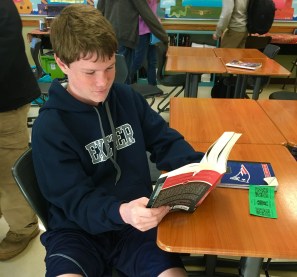
A student caught sneaking his independent reading book into his lit circle novel…this is a first.

Every year I arrive at the second quarter with a new approach, idea, or plan.  This will be the solution! I think.  This will sustain momentum.  This will help us make it through the slump.  This will be the difference between dreading quarter two and praying for quarter three, but year after year, I am wrong.  For the past three years I’ve convinced myself it is the book—Lord of the Flies is too boring; they can’t appreciate Bradbury’s language in Fahrenheit 451.

The problem isn’t with my students though—it’s with me.  I am doing it wrong, and while I am ashamed to admit the honest truth, I realize now the error of my ways.

I “gave up” traditional teaching three years ago, when I transitioned to a workshop model of education.  I carved out time for reading, instated notebooks, poured over workshop guides, and asked countless questions of my mentors and colleagues.  The bare bones were in place, and I was convinced that I had the structure necessary to shift from a teacher-centered classroom to a student-centered classroom built on choice.  In many cases I did; every start of the school year began smoothly with excited readers and passionate writers.  We told stories, read poetry, shared quick writes, and analyzed craft, but I dreaded quarter two, the quarter when together, we would read our first of three required whole class novels.

Quarter two was when I lost their voices, their attention, and their passion.  With whole class novels, our focus shifted from “who are you and what are you thinking?” to “who is your author and what is he thinking?” 

Under the weight of scaffolding, curriculum standards, core competencies, and competency based rubrics, my mini-lessons focused on literary terminology instead of literary exploration.  To me, reading mini-lessons meant teaching the same terms I’d grown up with: symbolism, Freytag’s pyramid, direct and indirect characterization, round and flat characters, etc.  This meant my lessons shifted from writing-centered lessons that started with the question, “What do you notice about the author’s craft?” to terminology-centered lessons, that started with, “Apply your understanding of (fill in the blank) to the book.”  The latter produced significantly less empowering results.

So, I asked and probed my students.  I peppered them with questions during study halls and extra help; I snuck in questions with the straggling Writer’s Club members after meetings, gave out surveys, and chatted at lunch with colleagues.  And while I was convinced that it was because I was “forcing” them to read unrelatable classics, I couldn’t shake the fact that I was missing something bigger.

By the time I sat down with my living mentor Linda Rief at a coffee shop in Exeter, I realized I was doing it wrong in quarter two.  The pieces gradually added up—I knew the three reading options I had given them for literature circles weren’t choices at all.  I was hoping they would read the books in their entirety, but I knew that this year would lend itself to additional groans, frustration, and abandonment.  At the end of the day, I was a workshop teacher defaulting to a traditional methodology or worse, was I a traditional teacher pretending to run a workshop?

The two greatest pieces of advice came first via my special educator mother, who asked, “Why not just teach them good writing?  Isn’t that what classics are?” And second through Linda Rief, who pointblank asked me why I needed to teach plot triangles anyways.

Were there successes in my literature circle unit? Most definitely.  Sure, the vast majority didn’t fall in love with Golding, and it breaks my heart that they couldn’t revel in the beauty of Bradbury’s language, but in final surveys, nearly every student appreciated the time they had to discuss the novels in small groups.  They enjoyed talking about the stories with peers, and while not all of them loved the books, many pointed out that this was the first time they engaged in authentic conversations about literature without a teacher moderating the discussions.  They learned; they just didn’t learn the way I had hoped.

Part of me feels like I lost four weeks that we could have spent more effectively growing together as readers and writers while looking at the beauty of craft in book clubs centered on young adult lit of their choosing.  The other part of me feels like I failed my students in providing this idealized version of what I hoped our class would be and then slamming them back to reality with the same sort of stock analysis I question.

I am impatient when it comes to growth, particularly when it comes to my teaching.  While I understand my students’ needs as developing readers and writers, I am quick to judge my own struggles.  Even as an intern, one of my personal goals was “to be at the level of a second year teacher.”  I repeated this mantra knowing full well that the only way to be at the level of a second year teacher was to be a second year teacher.

All I can promise my students is that I will continue to reflect, move forward, and become the teacher they deserve.  But alas, growth takes time, trial, and error.  It requires me to unravel years of traditional education, analyze what works, what doesn’t, what I should carry with me, and what I can discard.  It will take time for me to unwind my own brain just as I ask my students to unwind theirs.  I am still learning to be a writer, a reader, a student, a teacher, and that takes time, time that sometimes feels all too precious when I only have one year with my kids.  Fortunately, teaching is like writing.  Every day, I begin the process of drafting a new story, and every year, I get the chance to revise my work.

Mini-Lesson Monday: Plot Pyramids in Reading and Writing

2000px-Freytags_pyramid.svgThis year I experimented with literature circles to not only explore four of the popular whole class reads associated with our ninth grade curriculum but to also inject some choice into the required reading.  This was my first time attempting literature circles and while I recognized the potential struggles, my hope was to inspire open conversations about these complex and challenging texts.  In the past, class conversations with my students were dead and lackluster.  They were oftentimes reduced to leading plot-based questions. This year though, I couldn’t take a second quarter of policing reading, empty conversations, and painful silences, which meant I opened class time to small group conversation and taught reading skills through mini-lessons.  My classroom shifted from teacher-centered lessons on books to student-centered conversations on reading.

Objectives: Using the language of the Depth of Knowledge Levels, students will draw, identify, and label the multiple components of Freytag’s Pyramid.  They will construct a plot pyramid using class notes and apply the concepts learned within the mini-lesson to construct their own plot pyramid based on their literature circle’s chosen book.  Students will summarize the moments within the book that coordinate with the various points on the plot pyramid, citing evidence from their book to support their analysis.  Finally, using guiding questions, students will discuss and critique the author’s use of plot to move the story forward.

 Lesson:  I began class with a recap on Freytag’s Pyramid.  Many of my students had seen this traditional plot triangle in sixth grade but hadn’t revisited the concept since then.    They understood that plot provides the backbone of the story, yet to them, plots looked rather one-dimensional, rising perfectly at a 45-degree angle, peaking smack in the center of the story through one climax, then cleanly declining at the same 45-degree angle.

Avid readers know this is far from the case: if every book had the stereotypical plot-triangle-shape, there’d be no sense in reading.  It would be as perfectly predictable as Hallmark’s line of holiday movies (although I admit I love them just the same).  Good readers understand that plots are messy; they jut out at multiple angles, taking longer to rise in some cases or providing a false climax only to plateau and eventually rise farther.

IMG_1288I typically like to use novels I am currently reading and/or studying to model my analysis of plot.  This year I discussed Invisible Man by Ralph Ellison as an episodic novel since I am studying it with my AP Literature students.  Other options include previously studied short stories, whole class reads, or popular novels-turned-films.

I then provide students with time and guiding questions to draw and create their own plot triangle that they will then present to the class.  As they chart their plots providing explanations and evidence, they must also answer the following: What makes your plot shape distinctive? How might it differ from other books you’ve read?  What is the climax? How did your group decide on the climax? Why do you think the author decided to place the climax where they did?  How did the structure impact your personal reading of the piece?  Did the structure create suspense or the did the rising action last too long?

The conversation part of this is key; my students’ success derived directly from their ability to sit with their peers and draw out the plot’s structure.  In the end, many students struggled with distinctly placing the climax.  This gave me time to sit with groups and help guide their understanding.  They had deep conversations over the artistic choices of their authors, arguing that Golding could have decreased his rising action in Lord of the Flies or that Steinbeck’s decision to place Lennie’s death at the end of Of Mice and Men had the greatest impact.

Some students claimed that there were multiple climaxes in their novels while others were adamant that only one existed.  These discussions culminated in consensus, which students then shared with their peers. In the end, each group arrived with a firmer understanding of how plot can guide readers through suspense, excitement, and tragedy.

Follow-Up: This mini-lesson is two-fold.  It serves as a basis for deeper literary analysis, but it also provides a starting point for my next free writing unit.  Over the next couple weeks, students will harvest an idea from their writer’s notebooks, workshop the pieces, and finalize them prior to the holiday.

Using their knowledge of plot from our literature circles, they will apply these concepts to their own stories, completing exercises from The Plot Whisperer Workbook by Martha Alderson to help structure their narratives, fiction, and poetry.  I’m hoping that this recycled mini-lesson and common concepts will reinforce the interconnectedness of reading, writing, and craft.

How do you approach plot with your students? What mini-lessons do you make a point of revisiting throughout your year?

#FridayReads: 7 Author-Talks Students Love

IMG_0473

This week’s author-talks

As my students and I returned from a full nine days of Thanksgiving break this week, getting back into the groove of workshop was tough–for all of us.  I was totally whacked out from frantically finishing NaNoWriMo, and the kids were all out of sorts from too much turkey and not enough routine.

I needed something that would hook them back into the magic of reading and writing workshop–wonderful books, but more than that…wonderful authors who write those books.  So this week and next, my booktalks are all author-talks…book pairings by high-interest authors students love, whose stories captivate and amaze and inspire.  Here are seven book pairings by the same author that are insanely popular with my readers.

Rainbow Rowell, Fangirl & Carry On Fangirl goes over well with my seniors for two reasons–one, it was drafted during NaNoWriMo, and two, it begins on the first day college for the main character, Cath.  Cath is an unabashed fangirl who writes her own fanfiction–and that’s where Carry On comes in.  Carry On is the fanfic that Cath spent most of Fangirl writing.  For a generation who grew up reading as many alternate-ending fanfics for Harry Potter as they did, this unique pairing is a instant hit.

Inside-Countdown-2

Inside Countdown

Deborah Wiles, RevolutionCountdown – Penny Kittle has been singing the praises of Revolution for two years now, first at UNHLit and then again this year at NCTE.  It’s a brilliant multigenre novel that blends photos from the sixties with the narrative of a girl struggling to deal with that tumultuous time in history herself.  Countdown, the first book in the series, is even more popular with my students than Revolution is.  The series helps bring to life something they study in history class again and again, all in a unique, compelling format.

Chris Lynch, Freewill & Inexcusable – The award-winning Inexcusable tells a story of sexual violence from the perpetrator’s point of view.  Kids are compelled by this tale’s unique presentation of a controversial event, and it helps boys and girls alike gain a new perspective on an act that is often discussed but rarely experienced.  After they read Inexcusable, I recommend the Printz-nominated Freewill, the story of a boy who is oddly compelled to create totems in his wood shop class after a rash of local teens begin committing suicide.  Themes of grief, guilt, and creative outlet make this one a hit with my students too, as does the unique fact that it’s told in second person point of view.

wintergirls

Inside Wintergirls

Laurie Halse Anderson, The Impossible Knife of Memory & Wintergirls – Most students at our school read Speak in ninth grade, and they begin to appreciate Laurie Halse Anderson even more when they read Wintergirls, the story of a teen who battles bulimia and anorexia.  The writing in this book is stunning, and the plot is compelling.  When kids finish this un-put-down-able book, I recommend The Impossible Knife of Memory, in which a teen girl struggles with her father’s PTSD after his return from Iraq.  The novel hooks both boys and girls, as it follows both the father and daughter’s struggle.

Matt de la Pena, The Living The Hunted – In The Living, Shy is excited to get a job on a cruise liner…until “The Big One”–a major earthquake on the Pacific coast–hits.  Most of the passengers and crew aboard the cruise ship are killed, save for a few, including Shy, and a few people also on the dinghy he clings to for life.  When Shy learns a secret that people will kill for, he goes from just being one of the living to being one of the hunted.  This believable suspense series hooks my students.

Screenshot 2015-12-03 at 4.18.48 PM

Inside Symphony for the City of the Dead

M.T. Anderson, Feed & Symphony for the City of the Dead – I learned about Symphony for the City of the Dead, a powerful book detailing the siege of Leningrad during World War II, while standing in line to register for ALAN.  Kim McCollum-Clark told a few of us teachers and librarians about this amazing story, which pairs gripping exposition with historical photographs from the time period.  Amid brutality, Dmitri Shostakovich wrote a symphony for his dying city that uplifted both its citizens and the Allied forces working to free them.  The spies and death and music of the book intrigue my students, and I recommend to them Feed when they finish.  Feed is eerily plausible, the story of a future in which smartphones aren’t in our hands, they’re in our heads.  The feed contains advertisements, social media, news, sports, and anything we currently look at on our phones–all behind your retinas.  When an accident disables Titus’ feed, he struggles with life beyond the feed, and it’s a haunting cautionary tale my students are compelled by.

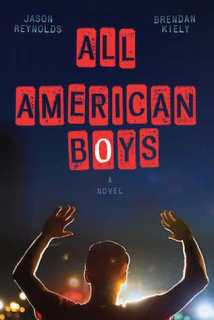
Jason Reynolds, The Boy in the Black Suit & All-American Boys (with Brendan Kiely) – I picked up The Boy in the Black Suit last year at ALAN, and this year I scored All-American Boys after Amy’s recommendation.  In Black Suit, the main character wears a black suit every day for his job at a funeral home, although his peers think it’s some weird tribute to his mother’s recent death.  Matt feels like he is barely getting by until he meets Lovey, who is a model of strength despite dealing with even more tragedy than he.  All-American Boys is a timely novel that alternates between points of view of Rashad and Quinn as both boys–one black, one white–deal with an incident involving Rashad, a fist-happy cop, and Quinn as a witness.  It is haunting and beautifully written and incredibly eye-opening for my readers.

What author-talks are guaranteed to engage your readers?  Please share in the comments!

#FridayReads A Must-Read Book: All American Boys

I saw a tweet last week that read something like this:  “What if you look like the people others are afraid of?”

The context was the Syrian refugees, I’m sure. The terrors in Paris blasted the news. So many dead. So many injured.

So many with no place to go.

My heart hurt, and I am not sure about the timing, but I’m quite 25657130sure God told me to read the book All American Boys by Jason Reynolds and Brendan Kiely, the story of two American teens who attend the same high school:  one white, one black. Both with families who love them. Both caught in a situation that represents many we’ve heard over and over again:  “the repercussions of a single violent act that leaves their school, their community, and, ultimately, the country bitterly divided by racial tension.”

For the past couple of weeks my students and I have read some of the writing of Leonard Pitts, Jr. We read his work to learn to become better writers. Among others, we read “We need a better plan to probe police shootings,” and “We don’t want to watch police — but we have to.” We talked about Pitt’s message, and we analyzed his craft.

We questioned what we know has happened way too often, and we shared ideas and opinions about how the actions of some affect the lives of many.

We sat in a circle: Black and White and Chin and Mexican. We talked. And listened. We tried to understand.

All American Boys is a story for every classroom library. It’s a story for every classroom teacher. Every administrator. Every parent. Every police officer.

We must invite candid stories and candid conversations about race into our learning environments. How else will we ever learn to see past color into hearts and minds and hope?

Booklist Starred Review states: “. . .this hard-edged, ripped-from-the-headlines book is more than a problem novel; it’s a carefully plotted, psychologically acute, character-driven work of fiction that dramatizes an all-too-frequent occurrence. Police brutality and race relations in America are issues that demand debate and discussion, which this superb book powerfully enables.”

If you add one book to your reading list this fall, I hope it is All American Boys. It ranks right up there with Forgive Me, Leonard Peacock for books that will stay with me forever.

I need about 10 copies for my classroom library.

#3TT Workshop — Digital Reading in the Reader’s Workshop

Three educators. Three states. Three demographics. All practicing Readers and Writers Workshop in our Secondary Classrooms. Read more about us here.

We are the Modern PLC, and every Wednesday, we share our behind-the-scenes collaboration as we talk about the most urgent moving parts of our classroom pedagogy.

Despite the proliferation of e-readers, tablets, and digital reading and writing technology, recent research is making digital texts look a little less appealing.  This article discusses the slow reading, complex-text, and comprehension literacy skills we just can’t get from reading electronically.  This one has lots of great links to the reasons digital reading “fail[s] to adequately recreate certain tactile experiences of reading on paper that many people miss and, more importantly, prevent people from navigating long texts in an intuitive and satisfying way.”

As Shana’s school in West Virginia is increasingly making the move to one-to-one technology, digital learning, and an increased emphasis on electronic reading and writing, she wondered how this shift would impact readers’ literacies.  Her discussion with Amy follows.  Please join the conversation in the comments!

digireadWhen much of the research points to poorer reading comprehension and lower rates of retention in electronic reading, why are some schools moving toward digital reading?

Shana:  My school recently adopted a new textbook series across multiple content areas that contains a small print book and a massive digital one.  This online textbook features texts, activities, tests, and quizzes that can only be accessed digitally.  By and large, my students have reported immense dissatisfaction with their reading experiences in this digital format–in history class, English, and math.  I wondered if that was because they just weren’t used to reading digitally, but during our reading conferences, they disagreed.  They use e-readers, they read articles on their phones constantly, and they have become accustomed to taking their state tests on computers.  Most students reported that they were more tired after reading digitally, that they didn’t retain the information well in that format, and that they were frustrated by their inability to interact with a physical text by annotating, highlighting, etc.  

After talking with students and experimenting with digital vs. print reading myself, plus reading the articles linked above (and many more), I felt really frustrated about the de-emphasis of print reading in schools.

Amy:  Interesting question. I haven’t seen this move toward digital reading myself. My district does have 1:1 iPads, and I know there was a big technology push just prior to me moving to my school, but I’ve never heard that students should be reading digitally instead of reading in print. I’d probably throw a bit of a fit if I did. Personally, I love paper. I love everything about print on the paper page. I’ve moved to digital in a lot of ways — my students create and write on their own blogs, and they turn most of their drafts in using Google docs, but when I sit down to confer with them, I’d much rather have a look at the printed page. It seems easier to zero in on skills that shine brightly or those that need some work — but that is probably just preference.

It’s an interesting argument though, and really, if I believe so much in the importance of digital writing — and I most definitely do — shouldn’t I also believe in the importance of digital reading? Hmm. Now, you’ve got me thinking.

Shana:  I love paper reading and writing, too, Amy.  This is probably why my desk is currently cluttered with books, notebooks, and stacks of paper.  Certainly electronic reading would be cleaner…but it lacks the tangible presence of print that shows me my progress through a book, a student’s writing process, and physical thinking on a page.

Why are physical textbooks, literary anthologies, and notebooks being phased out of our students’ educational routines?

Amy:  I don’t know much about how this might look in other teachers’ classrooms, districts, or states, but I have not used a literature textbook or anything like an anthology in several years. I find them cumbersome. When my students and I read short passages for analysis, I make copies. I need readers writing on the page. If a text is too long, I give them QR codes, and they all know how to annotate digitally with an app on their iPads (I didn’t teach this. They learned it last year or the year before.) I use a lot of texts that can easily be found online, e.g., columns by Leonard Pitts, Jr., and articles from The New Yorker. For full-length texts, we read in book clubs where my students all purchase their own books, or borrow one of mine. Annotating is a valuable skills, and using a textbook makes doing that quite difficult.

Shana: I love the QR code idea for a longer text!  I’ve always felt that it sucks a bit of the joy of learning reading skills out of students when receive a thick, copied packet that I ask them to read and annotate.  I’m with you on providing print copies of columns, articles, or books to students for teaching specific reading skills.  I love when students check out a book from the classroom library that was previously annotated during a book club reading.  They always ask who read the book previously, and their notes become part of that new reader’s experience with the book.  That experience of seeing a prior reader’s interaction with text on a page is just not possible with textbooks or digital reading.

What are your thoughts on digital vs. print reading?  Join the conversation in the comments, and check back tomorrow as we discuss digital vs. print writing.

I think reading may not be all that important — What?!

I am not often speechless. But it’s not often I hear statements like this — from teachers no less:

“There are so many other ways for students to get information. I think reading may not be all that important to students today.”

We were into the second hour of a three hour workshop on conferring. We had already brainstormed and charted what we believe are the needs of our students:

  • trust in authority
  • time and attention from adults
  • a caring teacher who is a listener and is consistent with discipline and classroom management
  • technology to learn and communicate
  • critical thinking skills
  • a context for what we want them to learn
  • positivity and discernment
  • a focus on what matters/ability to ignore “the noise” of unnecessary information
  • the opportunity to freely think and to take risks
  • the ability to communicate in ways that are socially acceptable and responsible

We had just read research on reading as detailed by Nancy Motley in the book Talk, Read, Talk, Write. I share it here:

Literacy skills for the twenty-first century are far more complex than in previous generations (Goldman, 2012). In addition to the basics of reading comprehension, today’s students must also know how to read with purpose, integrate new information, resolve conflicting content in different texts, and identify the writer’s perspective (Biancarosa & Snow, 2006). Students can only learn these skills by reading. Because many students enter the classroom with underdeveloped literacy skills, we often replace reading tasks with lecture and interactive activities to ensure that students stay engaged and learn the content, Hoyt (1999) explains.

“…expository reading for many students is often a listening experience. Well-meaning teachers, concerned about textbooks that are too difficult, often create situations where one student reads from the text and others listen or attempt to follow along in the book. This situation does little to build conceptual understandings, and it can actually deter from the learning process as the listeners are engaging in very little reading.”

When teachers “deliver” the curriculum to students, students lose the opportunity to construct meaning for themselves (Tovani, 2000). According to the Reading Next (2006) report (a meta-analysis of adolescent reading), three of the most statistically significant practices for increasing the academic achievement of middle and high school students included:

  1. direct, explicit comprehension instruction
  2. reading and writing skills embedded in content area classrooms
  3. text-based collaborative learning

Put simply,

“When we routinely model and make explicit the methods adults use to read, think, and make connections, students learn to do it, too. Furthermore, they will see that such close, insightful reading is within their reach — that they can do such reading and thinking, which is central to an education.” (Schmoker, 2011).

I am not often speechless. But this teacher’s comment left me chewing my lip. Did he read the research? Did he understand what it meant? Does he really believe that reading is not important?

“If I gave my students The Canterbury Tales and expected them to read it, that just wouldn’t happen. I read it to them, and they get a lot of information, and they come to like it,” this teacher continued.

And I countered, embracing my inner Penny Kittle, as I facilitated another hour of professional development:  “What is your purpose for ‘reading’ The Canterbury Tales — or other texts you choose for your students? What skills are you teaching with that book? How do you know your students are learning them? How are you helping your students develop as readers — because that is our job as English teachers. If we are not helping students become better readers than they were when they came to us, we are not doing our job.””

“Today’s students must … know how to read with purpose, integrate new information, resolve conflicting content in different texts, and identify the writer’s perspective.  Students can only learn these skills by reading.” 

They must also know how to discern viable information from the barrage of biased and unreliable information. And know how to understand a rental agreement when they sign a lease, a sales contract when they purchase a car, a speeding ticket when they get one, a ballot in a voting box when they are standing in line next to you and next to me.

Students can only learn to read by reading.

benefits of reading

What do you think? Is reading important to the students we teach? How would you have responded to my teacher friend?

#FridayReads: 14 Titles My Students Always Re-Read

NCLast week, Dylan looked at me with utter dismay when I told him that I still didn’t have the third book in the Maze Runner series.  Then, he brightened.  “I was actually kind of confused about some things that happened in The Scorch Trials.  Can I re-read it while I’m waiting for the third book to get returned?”

“Of course,” I agreed.  Musing, I jotted down some titles in my notebook that I wanted to re-read–my usual favorites, of course, but also books I’d only read once and had just loved–The Night Circus, Station Eleven, Zeitoun.  It made me wonder about what other books students wanted to re-read, so this past week, I asked them about it during conferences.  Lots of titles emerged, and I soon saw a pattern emerge–there were four reasons why they wanted to read particular books again and again.

HPSeries.  It quickly became apparent that if a new book in a series was coming out, re-reads were necessary.  “I’ve read the whole Harry Potter series three or four times,” Ryan told me.  “I understood all the hidden references and more about the characters the second and third times.”  Olivia agreed: “Those books are so complex there’s no way to understand everything in them the first time you read them.”

Anna read the whole Percy Jackson series twice “because I was in middle school and the struggle was real in finding books I enjoyed.  So I just re-read ones I knew I enjoyed!”

Shailyn read the Twilight series twice, and is reading it again now for the third time since the 10th anniversary editions were just released.  “I just loved the story,” she said.

Books that were being made into movies.  Mylana was adamant about this category: “I had to re-read Paper Towns really quick before the movie came out so I could tear it apart with how it didn’t compare to the book.”

Kaylee laughed and agreed: “I re-read The Fault in Our Stars for the same reason!!”

EPReally gripping stories.  “American Sniper was tough to re-read, but I did, because the story was so powerful.  I just wanted to experience it again,” Ryan said.

Eleanor and Park was the most beautiful love story I’ve ever read,” Olivia said, “so I’ve read it three times!”

“I re-read All the Bright Places, because it was probably the best book I’ve ever read,” Shailyn said.

“I read The Giver and The Help twice because I wanted to pay more attention to the moral story line and internal struggle in all of us that was portrayed so candidly in those books,” Anna said.

AFBooks they were assigned in school.  Mockingbird was popular in this category: “I’ve read To Kill a Mockingbird numerous times because it’s my favorite, it’s a classic, and because I discover new details about the trial and Boo and Atticus each time I re-read it,” Olivia said decisively.

“I re-read The Diary of Anne Frank because I read it first as an assignment, but then re-read for fun because I wanted to think more about her time period vs. ours,” Mylana said.

“I had to re-read The Book Thief after it was assigned to me because I just wanted to focus on the storytelling the second time through,” Jonathan agreed.

What titles do your students (and you) love to re-read?  Share in the comments!

#3TTWorkshop–Individualizing our Students’ Study of Vocabulary

FullSizeRender-1

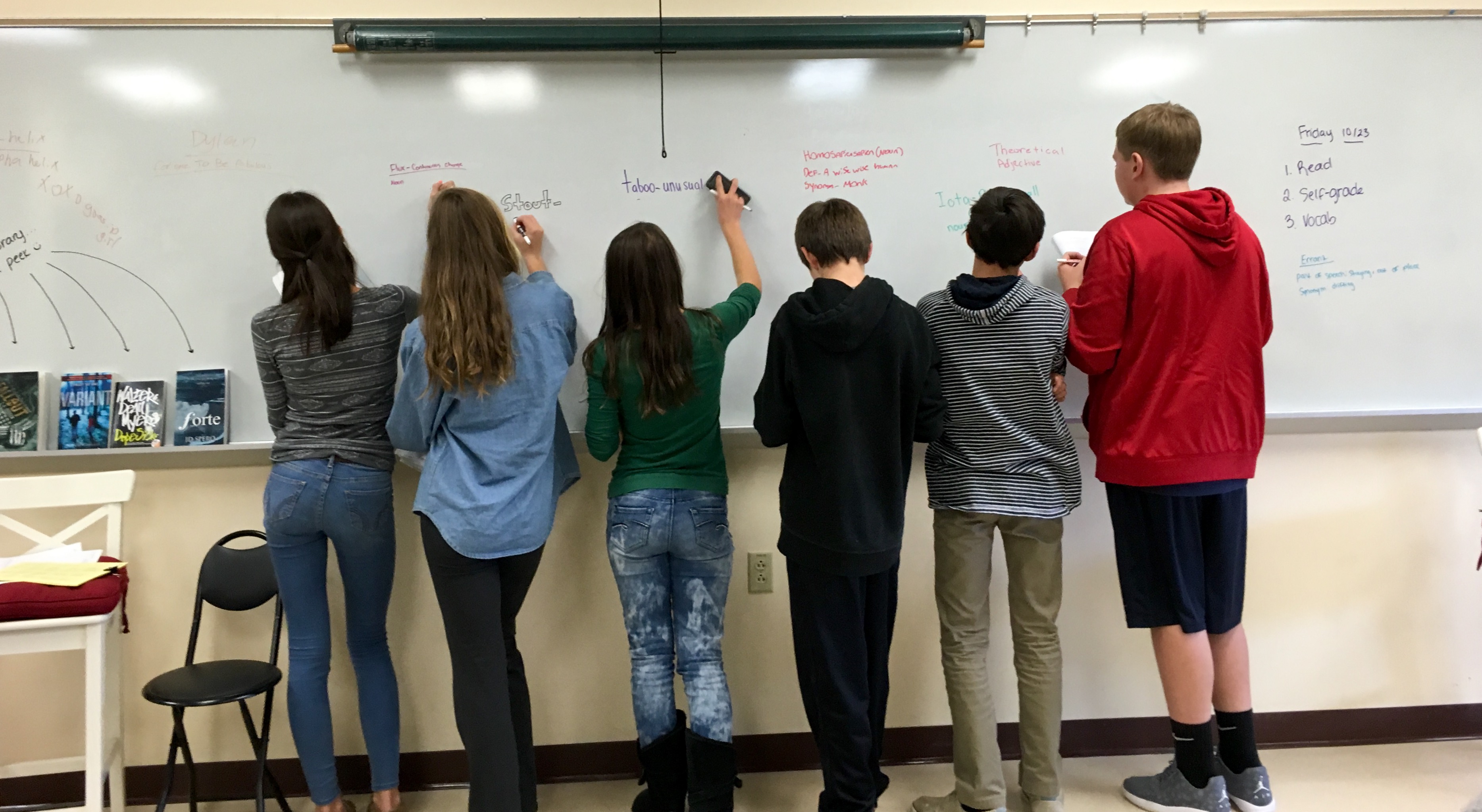
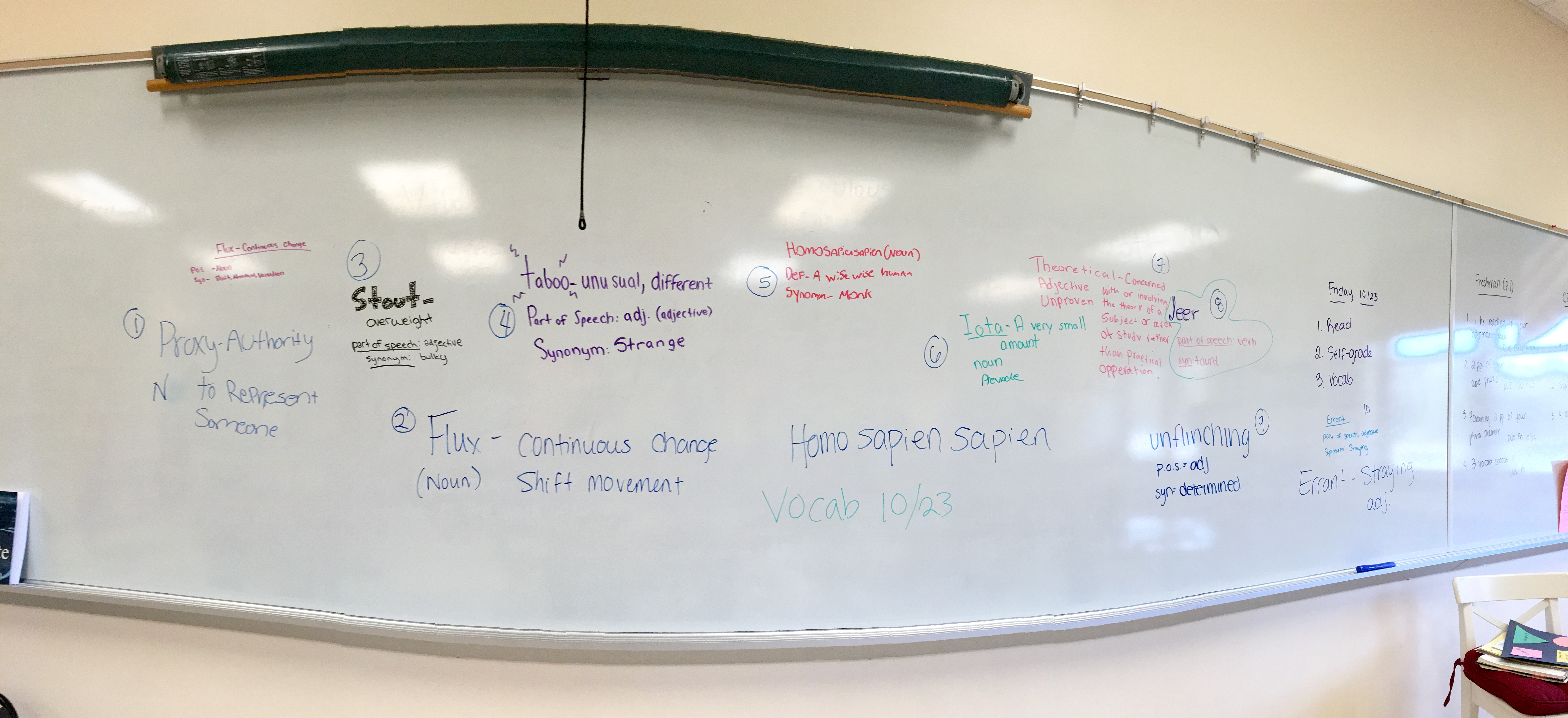
Students in Jackie’s class write their vocabulary words on the board.

Three educators. Three states. Three demographics. All practicing Readers and Writers Workshop in our Secondary Classrooms. Read more about us here.

We are the Modern PLC, and every Wednesday and Thursday, we share our behind-the-scenes collaboration as we talk about the most urgent moving parts of our classroom pedagogy.

Today is the second and last installment of this week’s conversation between Jackie and Shana on vocabulary instruction.  Please join the conversation in the comments!

What are your best vocabulary activities?

Shana: For me, best practices surrounding vocabulary all happen in the writer’s notebook.  Curating a personal dictionary in that particular section, sharing those words with friends, and doing fun, in-class follow-up activities with those words seem to work best to get my kids authentically reading to find new or interesting words in their books.  We do things like write a poem using ten of our words, create a pass-it-along story in which your sentence has to contain a word used contextually, or create an illustration of a particular word and hang it up.  The more play there is involved in our study of words, the more my students actually begin to pay attention to vocabulary in both their reading and writing.

FullSizeRender-2

A list of vocabulary words students found in their independent reading books.

Jackie:  For the past couple of years I have wanted to integrate vocabulary instruction into my curriculum, but it wasn’t until this year that I moved forward with the process of carving out a specific section of students’ writer’s notebooks.  As Linda Rief says in Inside the Writers Readers Notebook, “We also need to ask them to pay attention to words in their own reading and their own listening, to notice words that they don’t quite have a grip on as writers and speakers but which they come across fairly often” (Rief 23).  As Linda Rief suggests, my students collect four words from their independent reading book or whole class reads per week.  They record these words as well as the parts of speech, synonyms, and the sentence in which they found the word under a separate dictionary section in their Writer’s Notebook.  

At the beginning of the year I was worried about summative assessments and meeting the needs of my students through our new competency-based grading system.  I “assessed” my students on their vocabulary by having them first memorize the words and then complete whatever the task-at-hand was for that day.  I’ll admit that a quarter into the school year I have already abandoned this method after growing frustrated with the results.  Naturally, students chose easier words when there were higher stakes assessments at hand.  They sacrificed learning for grades and in turn, asked fewer questions, instead focusing more on grades and less on word acquisition.

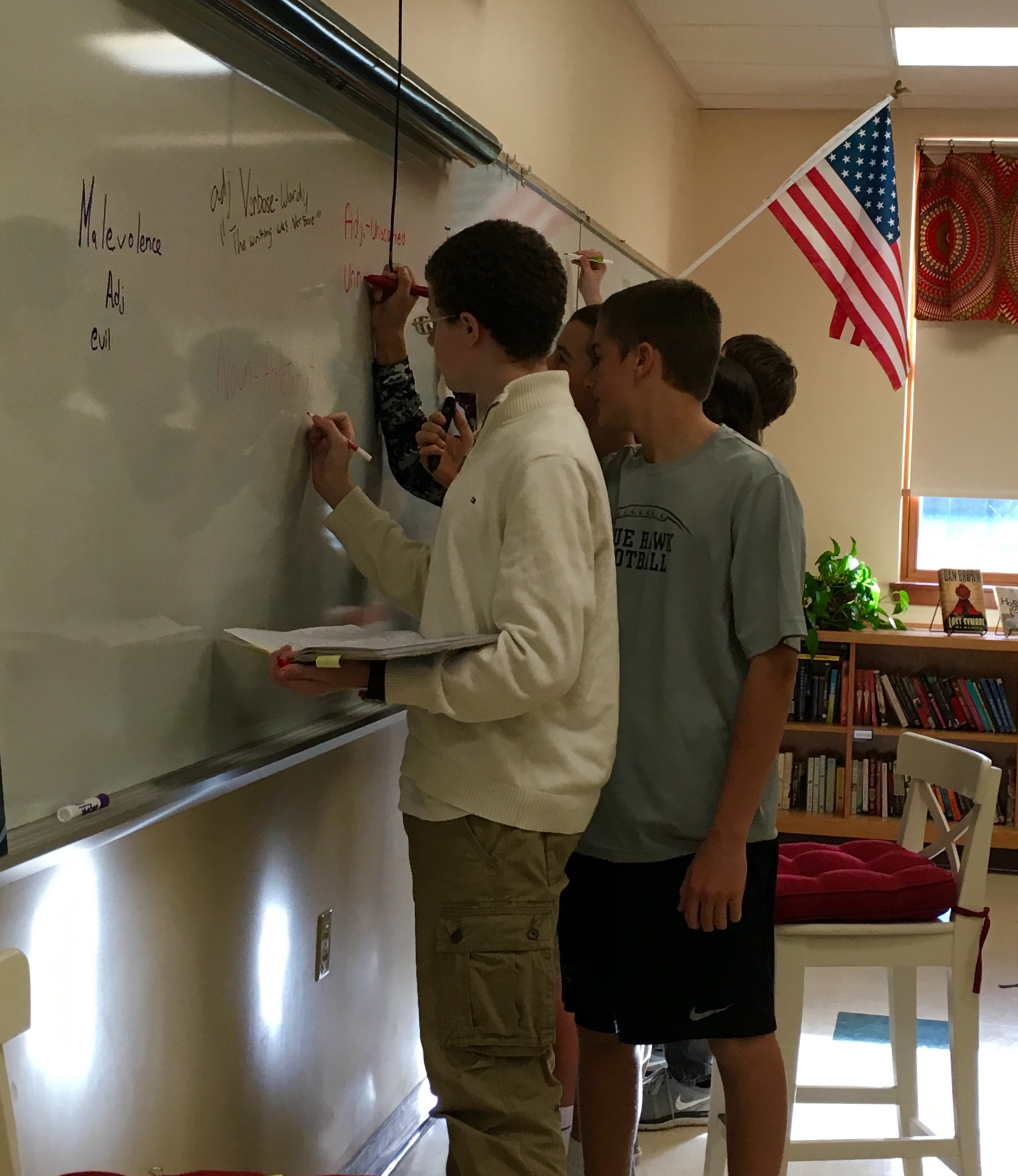
This is where you helped me most, Shana.  After tossing aside the summative assessments, I had students compile a dictionary of their words on the board, and we spent 15 minutes simply playing with the words and writing stories and poetry.  These biweekly activities breathed life into an otherwise stressful vocabulary lesson.  Soon my students were asking questions about how to use the words through context clues, and I was giving minilessons on integrating words into sentences based on the parts of speech.  For the first time, students began playing with vocabulary instead of trying to find shortcuts around the system.
Do you use independent vocabulary instruction? What activities do you use to help familiarize students with new vocabulary?

#3TTWorkshop–Teaching Vocabulary Through Independent Exploration

FullSizeRender

Students in Jackie’s classroom write vocabulary words on the board.

Three educators. Three states. Three demographics. All practicing Readers and Writers Workshop here.

We are the Modern PLC, and every Wednesday, we share our behind-the-scenes collaboration as we talk about the most urgent moving parts of our classroom pedagogy.  This week’s conversation between Jackie and Shana explores the value of shifting away from the more traditional modes of rote memorization and more toward wordplay.

1. Why do you integrate vocabulary study into your classroom, and how do you approach it?

Jackie:  This is my first year integrating vocabulary into my freshman classes.  Previously I had taken a traditional approach, relying on the Oxford-Sadler books in my junior/senior Advanced Composition classes.  The problem was that by the end of the year, many of my students would forget the twenty or so words we had memorized every other week.  I knew something had to change, so I returned to the words of my mentors, Penny Kittle and Linda Rief, to gain a better understanding of how they approached vocabulary.  Now instead of having my students memorize lists of prescribed vocabulary, they find four words per week and store them in the dictionary section of their writer’s notebooks.

Shana: I love the study of words, so one of the things I always find myself noticing about an author is the type of vocabulary he or she employs.  Diction makes up a great deal of a writer’s style, so I think it’s important to study it.  I am fortunately not required to adhere to a certain program or set list of words, so I tend to approach the study of vocabulary more along the lines of noticing words that are in our reading and writing.  I don’t have a formula or routine for vocabulary study, although as a general rule I try to set aside mini-lesson or quick-write time about every two weeks.

IMG_1333

Ryan’s words for this week include “nebulous,” “jettison,” “inchoate,” “unnerving”, and “aphorism,” all of which he found from his independent reading book Little Brother by Cory Doctorow.

2. What is the inherent value of vocabulary study?

Shana: Something I’ve been thinking a lot about is the inherent value of vocabulary study.  Vocabulary acquisition is just one little piece of the puzzle that makes up literacy, but it seems to get so much attention from the powers that be.  For example, last year our school had two schoolwide goals–one of them was “vocabulary.”  What does that even mean?  Do we want our teachers teaching more “vocabulary words?”  Do we want our students memorizing more “vocabulary words?”  What is the difference between academic and non-”academic vocabulary?”  I’m just not sure that vocabulary acquisition is as big a piece of the literacy puzzle as our testing/curriculum planners believe.

Jackie: I agree wholeheartedly with you, Shana.  I am not required to teach vocabulary, but every year I tell my students that reading helps build one’s vocabulary.  The more I thought about it though, the more I wondered how these skills translated, how my students would develop their own lexicons if they never actually stopped to think about the words they were reading.

Unlike your school, though, my school’s major initiative has been towards Common Core-based instruction.  Fortunately, part of the College and Career Readiness Anchor Standards for Language requires students to “also have extensive vocabularies, built through reading and study, enabling them to comprehend complex texts and engage in purposeful writing about and conversations around content.”  I believe vocabulary study shouldn’t be about isolated memorization; instead, it should allow students the freedom for wordplay.  When students are given the freedom to not only pick their own vocabulary words but also share them with their peers, they are more likely to explore definitions, find connections, and play with usage.  I receive more questions about context clues, Latin roots, and parts of speech during bi-weekly vocab lessons than I have at any other point in my career.

#FridayReads: Hot Non-fiction for High School Readers

I still have non-readers. We are ending the ninth week of school, and usually by this time each fall, my Hold Outs experience a shift. They start reading. I haven’t pinpointed exact reasons for the resistance this year — I think I’m doing as many book talks, conferring sessions, and cheerleading-moments-about-books that I have in the past, but something is up with a good number of my students.. They just do not want to read.

I asked Bryan about his reading yesterday. He said, “I only read when I have to.”

“What can I do to help you want to read?” I asked.

“I don’t know.”

This is where it gets tough. I get to be a magician and a mind reader.

Or, I just need to know books and keep talking about them. I just need to keep encouraging my students to read and surround them with books they will find interesting.

A few weeks ago, Jackie wrote Top Books for Reluctant High School Readers, and I remembered Ready Player One, Gone Girl, and Perks of Being a Wallflower. I need to book talk those!

About two months ago, I wrote about the novels-in-verse I got for my classroom. Many of my students who had never read a book have read two, three, and four of those titles now.

I know many boys will read non-fiction when they won’t read “make believe.” Seems it’s time for an infusion of hot non-fiction books that might add some intrigue to my classroom bookshelves. I need books that students like Bryan will want to read.teen_school_boys_reading

I posed this question to my writing partners:

What are the hottest non-fiction titles in your classroom library?

Here’s our master list:

Jackie’s List

Ghost Soldiers by Hampton Sides

I’m Staying with my Boys by Jim Proser

Jarhead by Anthony Swofford

The Glass Castle by Jeannette Walls

Half-Broke Horses by Jeannette Walls

Sickened: The True Story of a Lost Childhood by Julie Gregory

The Devil’s Highway by Luis Alberto Urrea

Hellhound on His Trail by Hampton Sides

Kick Me by Paul Feig

Shana’s List

Pretty Little Killers by Daleen Berry (two girls murdered their best friend at the other high school in our county…kids cannot put this book down)

Columbine by Dave Cullen

Zeitoun by Dave Eggers

Five Days at Memorial by Sheri Fink (about Katrina; pairs well with Zeitoun)

Missoula by Jon Krakauer

…anything by the great sportswriter John Feinstein (The Punch, Next Man Up, A Season on the Brink)

Stiff by Mary Roach

Smoke Gets in Your Eyes by Caitlin Doughty (similar to Stiff; about working in a crematory)

…my War shelf, featuring Lone Survivor, American Sniper, Redeployment, or any other autobiography of a soldier

Erika’s List

Lucky by Alice Sebold (account of her rape and healing)

The Prisoner’s Wife &  Something Like Beautiful: One Single Mother’s Story  both by asha bandele

No Choirboy: Murder, Violence, and Teenagers on Death Row by Susan Kuklin

Inside: Life Behind Bars in America by Michael G. Santos

Orange is the New Black: My Year in a Woman’s Prison by Piper Kerman

Yummy by G.Neri (graphic novel based on a true story)

Shaq Talks Back by Shaquille O’Neal

Raising My Rainbow by Lori Duron

I Am Malala by Malala Yousafzai (Adult and YA)

A Child Called It, The Lost Boy, The Privilege of Youth, A Man Named Dave by Dave Pelzer (four part series, but each piece can be read independently)

Enrique’s Journey: The Story of a Boy’s Dangerous Journey to Reunite with his Mother  by Sonia Nazario

The Pact: Three Young Men Make a Promise & The Bond by Sampson Davis and George Jenkins

Destined to Witness: Growing up Black in Nazi Germany by Hans J. Massaquoi

Girlbomb: A Halfway Homeless Memoir & Have You Found Her by Janice Erlbaum

Amy’s List

A Stolen Life by Jaycee Dugard

Little Princes by Conor Grennan

Letters to My Young Brother by Harper Hill

The Sociopath Next Door by Martha Stout

Heaven is For Real by Todd Burpo

American Sniper by Chris Kyle

Just Mercy by Bryan Stevenson

The Glass Castle by Jeannette Walls

David and Goliath by Malcolm Gladwell

Exactly as I Am by Shaun Robinson

The Good Soldiers by David Finkel

Enrique’s Journey: The Story of a Boy’s Dangerous Journey to Reunite with his Mother  by Sonia Nazario

Life without Limits by Nick Vujicic

Do you know of any titles we left out?

©Amy Rasmussen, 2011 – 2015