Category Archives: Readers Workshop

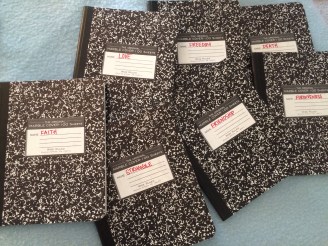
Try It Tuesday: Red Thread Notebooks

img_3173-1So much of a workshop philosophy centers on the assumption that reading and writing are forever intertwined.  Vocabulary, grammar, poetry–they’re all pieces of the puzzle that make up literacy and a passion for words, too.  It was with this in mind that I created Red Thread Notebooks.

The idea came from two places–one was Penny Kittle’s “big idea books” (found on page 8-9 of those handouts), which are reading response notebooks  centered around themes in literature.  The other was Tom Romano‘s “red thread” assignment, in which teachers had to write about which parts of our teaching philosophy would run through all of our teaching, like a red thread.

img_3177

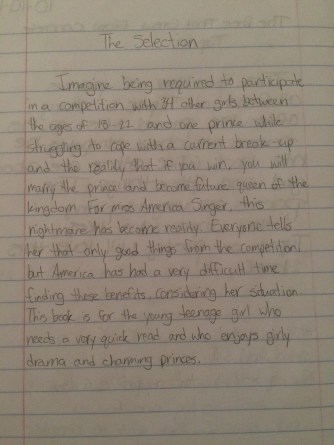
This student booktalks The Selection in the “STRUGGLE” notebook.

So, when composition notebooks are just a nickel in the summer, I buy 60 of them each year.  My students and I begin the year by brainstorming themes and topics that are important to us–love, cell phones, faith, music, family, video games, death, high school, forgiveness, four wheelers.  We label our notebooks and use them all year long.

There are a variety of ways I invite students to write in these notebooks:

  • Vocabulary practice: list related words, synonyms, word associations, etc. similar to the notebook title
  • Skill practice: write dialogue, revise sentence structure, practice figurative language, craft descriptive writing, about the notebook’s title
  • Book talks: write about how the book you’re currently reading might add to a conversation about the notebook’s title
  • Grammar instruction: revise a sentence, imitate a paragraph, tinker with style, while writing about the notebook title
  • Free writing: write your thoughts and musings on the notebook title
  • Poetry: find an existing poem, craft your own poem, or create a found poem about the notebook’s title
img_3179

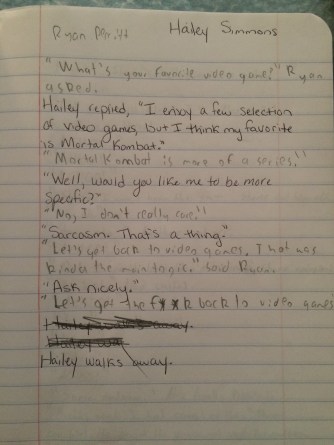
Hailey and Ryan practice dialogue in the “VIDEO GAMES” notebook after I teach a mini-lesson on its conventions.

Because these are shared notebooks, I ask students to refrain from using profanity in them or writing about any of their peers.  I don’t require names, but many students like to sign their writing.  Those are the only rules.

Once the notebooks have begun to fill up, students can refer to them to find book recommendations, writing topic ideas, or vocabulary words to add to their personal dictionaries.  They can also look for examples of skills practice, craft studies, or grammar lessons that we’ve done for additional guidance.  One year students even selected multigenre topics based on our red thread notebooks.

These notebooks are a lovely way to make permanent a yearlong conversation about literacy.  The topics change every year–Michael Jackson had his own notebook my first year of teaching, and this year Lebron James had one–but the opportunities to write, reflect, and make connections remain the same.

Do you think you’ll try Red Thread Notebooks next year?  Do you do something similar?  Please share in the comments!

The Right Book May Be an Audiobook

headphones_bookMatching the right student to the right book is at the heart of the reader’s workshop, and lucky for one and all, there are plenty of great books to go around–even for the most reluctant readers.  As a reader’s workshop leader, teachers must be well versed in a variety of genres to do their jobs well:  young adult, nonfiction, and even the classics.  But what about audiobooks?

Admittedly…I’m a book snob.  I was dedicated to paper books for years, until I got married and my early-to-bed husband complained about my reading lamp’s brightness.  Enter my very first e-reader, with which I quickly fell in love.  I reasoned that even though I wasn’t reading a book, per se, I was still reading.  I still wasn’t on board the audio train, though; after all, listening isn’t the same as reading.

Enter my best friend’s move to Virginia Beach, then a 10-hour drive away from our native Cincinnati.  What was I supposed to do for 10 hours whilst driving to visit her?!  “Listen to an audiobook,” she suggested.  “Duh.”  So, I grabbed Thirteen Reasons Why on CD from our library, and (12 hours and a one-state detour thanks to being so caught up in the book that I wound up in Maryland later) I was hooked on audiobooks.

It’s important to note that listening skills are not the same as reading skills, but in the battle to build literacy, one is a scaffold to the other.  While decoding can only happen when a reader is looking at text, the analysis of universal themes, practice of reading strategies, and ability to make connections can happen with any text, written or oral.

“Understanding the message, thinking critically about the content, using imagination, and making connections is at the heart of what it means to be a reader and why kids learn to love books.” –Denise Johnson

Were it not for audiobooks, my own reading life would almost certainly be suffering right now, as I’m so busy and sleep-deprived with an infant, but I love listening to my favorite murder-mystery series in my spare moments.  In countless conferences with my student athletes, I’ve come to realize that their practice and travel schedules keep them incredibly busy on nights and weekends, and audiobooks have helped them remain readers in their busiest seasons, too.

I strongly believe that audiobooks can save, strengthen, and supplement any rich reading life, and as such, I take great pains to recommend this medium to my students, often in the following categories.

51NcMaqTCsL._SY344_BO1,204,203,200_Series – A great way to immediately get students hooked on audiobooks is to recommend a series they’ve already started.  Sequels to titles like The Maze Runner, The Knife of Never Letting Go, Percy Jackson, Harry Potter, Legend, Divergent, City of Bones, and more are great gateways to the world of audiobooks.

Books read by their own authors – Many writers read their own audiobooks, and it’s fascinating to hear the nuances of Michael Pollan’s or Malcolm Gladwell’s writing as he reads it aloud.  The likes of Maya Angelou, Neil Gaiman, Barbara Kingsolver, and even Barack Obama have deigned to offer themselves to readers in audio form.  It’s endlessly fascinating to me to add a new dimension to “reading like a writer” when I listen like one, too.

20910157Humor – Similarly, so many amazing essayists, comedians, and satirists read their own audiobooks.  Amy Poehler, Tina Fey, David Sedaris, Mindy Kaling, Neil Patrick Harris, and more are just a few of the folks whose movies or TV shows I’ve watched, and who’ve then joined me in my car or at the gym in audiobook form.

Challenge Books – Books that for one reason or another–length, difficulty, topic, multiple narrators–are challenging are great candidates for audiobooks.  I don’t think I could’ve made it through Unbroken, Behind the Beautiful Forevers, Thinking Fast and Slow, or other lengthy, difficult tomes had I not listened to them rather than read them.  Their tough topics and intimidating lengths would have been much too off-putting for me, and many students find themselves in similar situations.  Audio is my favorite way to scaffold students up to the level of a slightly too difficult text.

Whatever’s always checked out – No one could ever find Winger, Crank, Paper Towns, Because I Am Furniture, My Book of Life By Angel, Boy21, Red Queen, or The 5th Wave this year–they were just way too in demand.  Instead of waiting for those titles to be returned, many students opted to download the audio version instead.

What are your thoughts on the world of audiobooks?  Which titles are your favorite?

“Give me a speeding ticket…I am reading way too furiously to be within the law”

May can be a desperate time for teachers. We’re just…tired. Fall asleep on the couch after dinner, mainline coffee, bargain with the snooze button, barely recognize your own family, exhausted.

Just think, in the time that it takes to carry a human baby to full term (Baby Ruthie, I’m looking at you), most of us have carried somewhere around 150 (if you’re lucky) students through the year. To clarify this gestational metaphor – by carried, I mean taught. And by taught, I mean pushed. And by pushed, I mean (occasionally) dragged.

Amy wrote about it last week. The crack up. The point at which it all becomes too much and you start to question if you taught them anything. If they are better in any way. If you reached even one. If you’ve been talking to yourself for the last nine months. Because with the approach of graduation, and summer, and sweet, sweet freedom, the opportunities to make that difference seem to dwindle. Students are paying  less and less attention these days, to school anyway, and when coupled with the somewhat spent enthusiasm of teachers, the chances of academic magnificence begins to allude us. Which, unfortunately, makes us even more tired.

However, because we care, sometimes to our own detriment, we don’t give up. Amy, unwavering in her commitment to use every last moment, wrote about this too. It’s the moment where banging your head against the wall one last time means you break through instead of breaking down.

In my own effort to keep the spark alive, I have my students working on final projects that demand they keep reading and keep creating, right up to the end. Additionally, inspired by Shana’s brilliant use of former students as an engaging resource, I called in a heavy hitter.

Austin Bohn, graduate of Franklin High School in 2013, reached out to me a few months ago with the following email. What followed is an exchange of ideas that solidifies for me that our students often don’t truly see the impact that our classes can have on their lives, until after they’ve left us. Austin has always been inquisitive, insightful, and personable. As a college student, I see in Austin the exact type of young man that we hope our students become – thinkers who value where their reading lives can take them. 


Lisa, (because I get to call you Lisa now),

I just wrapped up a discussion post for my Philosophy 4336 course, “Applied Ethics for the Health Professions.” It was just one of those times when you feel as though you’ve hit all the right keys in just the right order. It reminded me of some of the reading and responding we used to do in your classroom. 
I’ve attached a short article and my—also short—post in response to it. In it, I draw on Saxton extensively so you’ll probably be able to navigate by just reading that one. There is another article (Connelly), but you’ll likely not need to read it unless you really want to. 
I hope that you’ll find it refreshing to read something from a former student, knowing you laid a great foundation that allows me to be able to crank these things out on a weekly basis. I really do appreciate your teaching—I’m only just beginning to grasp its value. You taught me how to think!
All the best,
Austin Bohn

Austin and I continued exchanging emails for several weeks, and when he expressed interest in coming to observe some of my classes and share ideas about college life, reading expectations at the collegiate level, and explore the possibility of teaching someday, I asked if he would like to come in and serve as a motivator for my AP classes,

IMG_0123

Austin book talking Ishmael 

post test. Austin had been in my AP class and knew well both the project that my students
are working on and the difficulty to focus when the end is so very near.

Two weeks ago, we made a plan for Austin to come in, share some of his insights and experiences as they relate to college level work, chat with students and provide ideas as they craft their final projects, and observe.

What turned out to be the added bonus, and one that’s already had an impact on my classes, was Austin’s book talk on Ishmael, by Daniel Quinn. I wasn’t familiar with the text, (a book that details a man’s encounter with a gorilla who has all and none of the answers about life), but the impassioned argument Austin made for reading the book and what it can teach you about thinking, struck a cord. Specifically, with another young man in my AP Language class.

Bennett Dirksmeyer is a thinker too. A quiet, careful, deep thinker. When he emailed me the day after Austin’s book talk and told me that he went right out and bought a copy of Ishmael,  I was excited for him. To be honest, whenever a book talk “works” I get a satisfied nerd-smile from ear to ear.

So, three days later, when I received the email below indicating that Bennett had already plowed through Quinn’s text, I was floored.

The email below made me cry. Like, A Monster Calls, breathless sobbing (not because I’m tired, or not only because I’m tired), but because this is what we all want. Out of workshop. Out of teaching. Out of life. Out of the end of a long, hard school year.

And no, I don’t mean we all want the email exactly (though I would be lying if I said that hearing a student’s gratitude doesn’t feel amazing), but we want students to grow in their thinking. Challenge themselves, push themselves, take risks, stay up late reading, and come away with new ways of processing this crazy life.

Here is what Bennett sent (with some enthusiastic bolding by yours truly):


Mrs Dennis,

I closed Ishmael at 3:35pm today. After reading, with unexpected vigor I might add, I began to wonder why I plowed through it so willingly. Throughout my reading I thought, and thought, “Why am I liking this?”, “What is making me do this?” It is an important text. It deals with issues leading to very serious implications. It deals with very political and personal questions with very divided answers. New-different-not my-ideas. Ideas I am not accustomed to.

The last book I truly read and loved and finished was Paper Towns by John Green. I read the text with so much vigor, surprising vigor, at that.

I felt that same vigor and that same ‘give me a speeding ticket because I am reading way too furiously to be within the law’-ness, and that same ‘I’m gonna have to stop and get an oil change

IMG_0223

Bennett – A “Pretty Cool Guy” 

for my head because the motor is running, but I’m not going to’-ality.

And I continued to wonder (sometimes aloud) – “What do I love so (expletive) much about this book?!”

I sat and thought about it.
And I thought.
And thought.

And it dawned on me.

I love this book. Not for its themes, or the author’s word choice, or the overall message contained between its covers. But for the reason that it caused me to start up that thing between my ears, and think.

I think I get it now.

And that’s pretty cool.

Thank You, for passing these skills on to me, so that I can do this with them.

I regret none of American Lit with you Freshman year (I read every word of The Scarlet Letter, and for me, that was scary-awesome), Brit/World Lit with Mrs Adelmann Sophomore year, and AP Lang with you this year. Thank you, you rock.

Books are cool.
I’ve always loved them.

But, now I appreciate them. And the pretty cool guy they’ve helped me become.

Bennett 


So let me try and instill (rejuvenate? invigorate? fuel?) a little hope in my worn and weary teaching partners around the world as this school year winds down and I know we could all benefit from a little love:

While we may be trying to merely survive until the end of the school year, to get through it in one piece in order to pick right back up and get ready for next year, teachers inspire. You, reading this, inspire students throughout the year. Even when we are tired, we inspire. With our passion for the written word, our desire to watch learners grow, and our commitment to allowing students choice in their exploration (with our guidance), we inspire.

Sometimes we are lucky enough to see it first hand, to hear about it, and literally embrace the students who let us know how they have been changed (I hugged Bennett on his way into class the next day. He seemed appropriately horrified). Other times, we never know for sure. But, as Quinn claims in Ishmael, we seek pupils to get them thinking, because careful thought can save the world.

The more we tell kids about the importance of reading, show them we are readers, put life changing books in front of them, and passionately share the experience through conferences and their written work, the more students we can reach on a deep and powerful level, because they know we care.

Yes, I’m tired. Really, really tired. But, Austin and Bennett (two pretty cool guys), have reminded me that all the work we’re putting in as a community of learners can really mean something. It can change, and maybe even save, someone’s world.

Most especially in May, when I might argue that many of us need it most.

What is helping fuel you at the end of this school year? Please comment below with your ideas on saving the world, one student (and teacher) at a time! 

Try it Tuesday: Teacher Readers Share the Love

Love what you read and read what you love.

Is this not the life force behind workshop? Behind teaching English? Behind becoming a reader?

Personally, I’m pretty sure my love for reading started in utero. My parents (both educators themselves) read to me and read to me often. The first real memory of a book I have is Disney’s The Penguin that Hated the Cold. Pablo the penguin wanted out of the Arctic. I connected with his desire to swing in a hammock and travel the high seas in a bathtub.

 Next came The Boxcar Children. I used to run out into the backyard of my comfortable suburban home and pretend to be an orphan living in a boxcar. Logical, right?

Soon after, I was devouring the Little House on the Prairie books, the early  Baby-sitters Club books (only those before #100…sorry Ann M. Martin, a girl has her limits), and The Nancy Drew Mystery Stories.  I read under the covers with a flashlight, swinging from the tire swing in my backyard, and sometimes under the dinner table. I only drew the line at reading in the car. Still can’t do it. It makes me vomitous.

The common thread to this early reading, was my love of stories. I chose what I wanted to read and I read voraciously because I was in charge of where I could travel, the conflicts I could watch unfold, and the people I could meet through books. I know my dad wanted me to read more Robert Louis Stevenson, but that was a journey of his childhood. The journeys of my childhood were with Roald Dahl, Beverly Cleary, R.L Stine, and C.S. Lewis.

So where is the balance that we, as English teachers, can bring to our classrooms when it comes to teaching the books we love (or the books we think students “should” read), and our understanding that choice fosters a connection to what we read? A connection that can far outweigh the legitimate literary merit of works we would choose for our students? Where do cultural literacy and passion for literature meet?

Well…I don’t really know. Yet.

What I do know, is that I need to provide opportunities for my students to choose texts that appeal to them. But my job can’t end there. I then need to help them move to more complex and challenging works. Classics included.

How to do that…I don’t really know. Yet. But I am learning.

Here is what I do know – If I am going to build a community of readers, I need to be a reader. If I am going to build a community of writers, I need to be a writer. Lead by example and beautiful things are sure to follow.

Easy, right? Of course we, as teachers, are often readers. The beauty of language, the study of what it means to be human, and the opportunity to live countless lives through reading is what led me to the high school English classroom. But somewhere along the way, I started reading more student papers than novels. More formative assessments than poetry. More parenting books than bestsellers (though I will contend that Oh, Crap! Potty Training is a necessary text for parents with kids of a certain age – Shana, this is the book –  trust me ). But with the advent of workshop, I have read more in the past few months, since Amy and Shana came to Franklin High School for professional development work, than I had in longer than I’d care to admit. And as such, I am able to broaden my repertoire of texts and my students now see me reading. A lot.

In fact, the students at Franklin High School are seeing their teachers read more and more. Not that we weren’t reading before, but as fellow colleague and reader Catherine Hepworth wrote in her guest post, we are now, as teachers working within the workshop model, making our reading far more visible. As a result, I wanted to share some recent reads from my colleagues. Teachers who are fired up about reading, because we love it and want to share the love.


The English Teachers at Franklin High School highly recommend these recent reads:

DemianDemian by Hermann Hesse – recommended by Karin Adelmann

Demian is a coming of age novel. Sinclair, the protagonist, is trying to find his way to what is true and real as he encounters different mentors and situations. The book frequently challenges more conventional ways of thinking.


The Handmaid’s Tale 
by Margaret Atwood– recommended by Lisa Dennis handmaid

As a pretty progressive woman, I can’t believe I haven’t read this book until now. I work; I share a household with my husband; I cook but also know how to shingle a roof, I vote; I raise my daughter to trust herself and know her own mind. And yet, I’ve never read this cautionary tale full of sardonic humor and striking dystopian visions that suggests all that Artwood feared about 1980’s “Morning in America.” The Handmaid’s Tale carefully unfolds the story of Offred, a woman living in the fictional future world of The Republic of Gilead. In a world of declining birth rates, fertile women are assigned to existing families, solely to bare children. Through Offred’s memories of her life before, an American life most of us would recognize, the reader discovers the sharp contrast between the freedom we currently enjoy and the very real limits placed on life when that freedom is lost. Like so many great dystopian novels before and after it, The Handmaid’s Tale is a testament to upholding the values of personal freedom in the face of what life might be like if we forget how precious those freedoms really are. I can’t put it down.

me before youMe Before You by Jojo Moyes– recommended by Erin Doucette

I was hooked on this book from the first page. The book is set in England, so I really enjoyed the voice of the narrator as well as some of the words she chose to incorporate. Me Before You chronicles the sometimes confusing, frequently tumultuous, and always touching relationship between a funny, eccentric, secret-hiding Louisa and formerly adventurous, formerly ruthless, and currently angry, quadriplegic Will. Quirky, unqualified Louisa becomes his care-giver for the 6 months he has left before his pre-planned assisted suicide.

I loved this book. It make me laugh. It made me cry. It made me angry, but best of all, it really made me think about the impossibility of some of the choices we face and the importance of standing by the people we love.

Eleanor by Jason Gurley – recommended by Richard Gould

This is a story of a young girl, Eleanor, whose twin sister dies in a horrible accident. After that, the entire family crumbles. At the age of 14, Eleanor has an experience that she cannot explain, but it seems that someone is trying to contact her in an unimaginable way. As these experiences happen more and more often, Eleanor begins to see a way to repair all the damage to her and her family’s lives. I recommend this book for several reasons. Fist, it features two strong female protagonists. The writing is authentic and the Eleanorcharacters are complex and not without fault. The story delves into “other dimensions” and would appeal to any fan of existential writing. The book is organized through a series of flash backs, flash forwards and time travel, which can be a bit confusing if a reader is trying to quickly read the story; however, this is a book to be enjoyed slowly with frequent pauses to think, not only about the story itself, but about the reader’s own perception of reality. There is a bit of romance, but not too much as the story stays focused on the protagonists’ objectives. The conclusion is satisfying but is not obvious or formulaic. When all is said and done, this book stays with the reader for a long time after it is put down.

Not My Father’s Son by Alan Cumming – recommended by Catherine Hepworth

not my father's sonAlan Cumming, Scottish actor extraordinaire, presents us with two parallel stories about the men in his life and their influence on him. While he is preparing for and filming a genealogy show, he is learning about his maternal grandfather’s escapades in WWII, while at the same time dealing with his own abusive father. It is a very honest and open memoir about one particular moment in his life that is at the same time about his entire life. He is my favorite celebrity and a wonderfully talented writer. I especially enjoyed his memoir because it’s rare that a celebrity gives you this type of glimpse into their heart breaking childhood. When I finished reading, I wanted to rush to NYC and give him a hug.

One More Thing: Stories and Other Stories by B.J. Novak – recommended by Amy Menzel one-more-thing

I like reading short story and essay collections because it mixes things up. It’s like what Mark Twain said about the weather in New England — to paraphrase, “If you don’t like it now, just wait a few minutes.” I can do that. And I’m pretty good at having the memory of Dory when reading story or essay collections. If I read something I don’t like, I forgive, I forget and I swim–I mean, read on. What I really like about Novak’s collection is his thinking. You might know of Novak from The Office fame. He wrote, directed, and starred in the hit sitcom. In this book, he uses his creativity to ponder some what if questions. “What if John Grisham’s publisher mistakenly published one his books with the place holder title of ‘The Something’?” “What if there was one man behind the creation of the calendar?” “What if there was a ‘Best Thing in the World’ Award?” I like how Novak thinks, and I really like that I get to follow his creative thinking in this collection.

WingerWinger by Andrew Smith – recommended by Leah Tindall

I absolutely loved this book because Smith uses real language, humor and other great writing techniques that will truly appeal to all teens, boys especially. I thought I would take about a month to read in between grading and planning. However, once I started on a Tuesday, I finished it the following Friday evening. I could not stop reading it! I laughed almost every page, and then I cried in the end! I began reading it aloud in a few classes and this inspired several of my students- 3 girls and 4 boys, to be exact- to read it! One of the boys I don’t even have as a student- I was talking to him about it in resource. He didn’t read any books last year and finished this book and loved it! P.S. I love Andrew Smith.

Ready Player One by Ernest Cline – recommended by Sarah Sterbin and Brandon readyWasemiller

Sarah says: I love reading books that are being made into a movie so I can compare them. Ready Player One is hitting the BIG SCREEN in 2017 (I’m really on top of my game). It was an awesome read about living in a world where you can “plug in” to the virtual world. I have recommended this to a lot of my students who are into video games (and those who, like me, like to be harsh critics on the movies based on books), but it is a great story for ALL to read!

Brandon says: This is a book that I could not put down, and when I did I was trying to figure out the next time I could dive back in. Ready Player One was all that I could talk about for the week that I was reading it, and I suggested it to colleagues, family members, and students. This book has everything. A mystery, an dystopian future, life inside of a video game, undying friendship, 80’s references, solid characters, and a real look at how much video games affect our life–and more importantly how they could RUN our lives in the years to come. There is no a single person that I would not suggest this book to. It is unlike anything you have read before, and I highly suggest it to everyone.

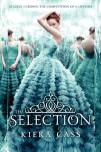
selectionThe Selection by Kiera Cass – also recommended by Sarah Sterbin

This books is a mash up of The Bachelor and Hunger Games. Dystopian feel while seeing the inner workings of a Bachelor type show (with some “ROYALTY”!) I have recommended this to a lot of my students who talk Bachelor/ette with me (guilty pleasure alert), and those who love reading Dystopian stories.

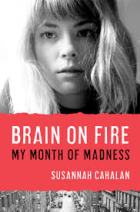
Brain on Fire by Susannah Cahalan – recommended by Brandon Wasemiller brain on fire

I grabbed up this book because I can be a window shopper when it comes to books, and I really liked the cover art on this novel. However, after I read the first page I was hooked, and spent much of my weekend reading through the entire thing. This is a book that takes you into pure madness and back again, and it is great for that reason. Going on a journey with someone as they go insane is a hard journey to take, but Susannah, a writer for the New York Post, brings her story to life. You will find yourself reading just ONE more chapter just to see if things get better.

challenger deepChallenger Deep by Neal Shusterman – also recommended by Brandon Wasemiller

I bought this book on Amazon because I saw that it had a five star rating, and really awesome art on the book jacket–I am so happy I did. The amazing quality that this book has is that it really makes you care about Caden, the main character, and the problems he is going through. Caden is in the real world, but also finds himself on a boat on its way to the deepest part of the ocean, Challenger Deep. You, the reader, are unable to help Caden who is starting to confuse dreams with reality. This book brought me back to the days when my grandma would read James and the Giant Peach to me and do all the different voices as she read, and like James and the Giant Peach, Challenger Deep is a journey of a young man who lives in one world, but escapes to another to work things out, but as a reader you worry that Caden will never come back. What if he is never “himself” ever again?

Columbine by Dave Cullen– Brandon’s passion for books cannot be contained. columbine
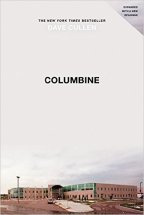
This was a book that I could not put down. Each chapter builds on the last, and you feel connected to the school, its students, and the tragedy that took place more than a decade ago. I never realized how much I did not know about Columbine. This book expertly tells the story of two very misguided young men, but more importantly, the teachers, administrators, students, and families that were all affected on that day and beyond. I would suggest this book to anyone looking for a great non fiction book, and a really solid look into what great investigative journalism looks like.


Thank you to the enthusiastic teacher readers at Franklin High School for sharing their recommendations. Each new text our students see us reading expands their field of choices and also lets them know that we truly, and gladly, practice what we preach. Because we love it.

What are you reading? What recommendations can you share? Can’t wait to grow our “to read” lists together with your suggestions in the comments below! 
 

#FridayReads — A Book about Death to Teach Writing?

Last Saturday my niece and I attended the North TX Teen Book Festival.

Hundreds of teens stormed the book sales and stood in lines to get signatures from their favorite authors. Authors shared stories about their craft and their books while grouped in panels with interesting names like “‘Just a Small Town Girl’ Small towns — Big Stories,” and “‘The Book Boyfriend’ Sometimes Boys in Books are Better,” and “‘We’re Young and We’re Reckless, We’ll Take This Way Too Far’ Exploring mature situations in YA.

Raistlyn took notes. She is 14, a prolific poet, and is writing a novel.

Screen Shot 2016-04-26 at 9.09.01 PM

New books added to by to read next list.

For our last event of the day, we crowded in an overflowing room to listen to Holly Black, James Dashner, Sarah Dessen, Gayle Forman, Ruta Sepetys, Margaret Stohl talk about what it is like when books become movies. We oohed and aahed and laughed as they told of their experiences. (Margaret Stohl is funny!)

School busses lined the streets, and I cheered that so many teachers thought to bring their students. I did not. We were out of school the day before, and thanks to my poor planning, I never got around to getting a field trip approved.

I kicked myself after.

But I got a lot of great book recommendations, and my TBR tower is now named Eiffel.

I only bought one book. (Don’t tell. My husband and I have a bet to see who can resist 18883231buying books the longest.) I bought Denton Little’s Death Date by Lance Rubin because I heard the author talk with such excited wonder about this story and his experience writing it.

It’s the story of a boy who knows the date of his death. He knows because that’s the way it goes in his world — everyone knows the day they will die. Morbid, you say? Maybe.

But this is a comedy.

Hooked me. I need more books with laughs in my classroom library, and so far, this one does not disappoint. Here’s the excerpt I will share when I book talk this book:

Excerpt from Denton Little’s Deathdate by Lance Rubin p 66-67

I know different people and cultures have varying approaches to death, so in case you don’t know about the tradition of the Sitting, here’s the deal:  whilst waiting for death, you sit. You generally end up in a room of your house, probably the family room (ideally not the living room because the irony of that is too hilarious and stupid), where you’re joined by your immediate family and whoever else has been invited:  cousins, aunts, uncles, grandparents, girlfriends, best friends, and so on. Everybody communes and celebrates and waits for something to happen.

And something always happens.

Heart attack, stray bullet, seizure, fallen bookshelf or tree, stabbing, tornado, tumble down the stairs, strangling, drug overdose, fire, aneurysm. Not to mention the basics:  old age, cancer, pneumonia, other fatal illnesses. People have gone to great lengths to try and survive, but you just can’t. This guy, Lee Worshanks, in Pennsylvania, spent years working on what he called a Safety Room, the perfect place in which to spend his deathdate:  ideal temperature, rubber walls, dull-edged furniture, the works. When the Big Day rolled around, the room’s complicated security system somehow malfunctioned, and Lee found himself locked out. After hours of failed attempts to get inside his perfect room, he went a little nuts. He ended up electrocuted by some kind of circuit panel in the basement. So pretty much every possible variation on death in a house has happened to at least someone in the past few decades.

But you don’t know what the variation is, and you don’t know when in the day it will happen. That’s why the Sitting has always seemed insane to me. Who would ever want to be sitting in a room with their family for twenty-four hours straight? How is that anybody’s idea of a happy way to die?

Besides liking the narrator’s voice, I love how Rubin structures some of these sentences. This is a great passage to discuss syntax.  Look at that stand alone single sentence paragraph. Look at the lists and the use of the colon. And I love all those sentences that start with conjunctions. My students think that’s a grammatical error, and that leads to interesting discussions about why a writer might start a sentence with and or but or so.

I also love that example:  “This guy, Lee Worshanks, in Pennsylvania, spent years working on what he called a Safety Room, the perfect place in which to spend his deathdate. . .”

My students struggle with developing their ideas by using appropriate and convincing evidence. Here, right in a passage from a YA novel, is an example of an example I will use to illustrate examples with my writers. (My nerd factor is pretty high right now, isn’t it?)

Here’s the thing:  I loved attending that book festival with my niece. I loved listening to authors talk about their writing. I loved getting new ideas for books to share with my readers. And I really love that I found this one little passage in a pretty clever book about how we face and talk about death I can use with my students.

Reading is fun. Isn’t it?

*Note:  Did you know there’s a site that will predict the date you will die?

#FridayReads: Poetry as a Gateway into Reading

Before I started reading novels in verse, I had no idea how important they would be to the readers in my classroom. So many of my students who say they hate reading will read these books of poems that tell a story. (Chasing Brooklyn is one of the girls’ favorites. The Crossover, of course, is one of the boys’.)

This week, Sung, one of my quiet students from Myanmar, asked for a recommendation for her next book. She reads far below that of an 11th grader in an AP class, but she’s tenacious and determined to catch up to her peers. She and I have focused on her fluency since the beginning of the year when in our first conference I learned she could read all the words in a novel, but she understood little of the meaning. (Similar to my ELL student who read every word of The Great Gatsby last year without comprehending any of it. This was before I clued in to her need to save face with their peers.)

“I am reading,” Sung said, “but I don’t know what’s going on.”

I’ve heard this before, and I always celebrate when my readers let me in on this secret. (It takes guts to be vulnerable, especially at 16.) In talking with high school students who struggle with reading, I’ve learned they usually have no idea why. Most of them think they are slow or dumb — or they simply claim reading is boring or dumb because it’s easier to say that than admit reading is hard.

The hard part for me is teaching them to read. My degree is in literature after all, and my Masters in Secondary Ed did little to prepare me for the adolescent reading crisis I face every day. So I teach reading by getting students to read. I talk to them about their reading and get them talking to me about their thinking.

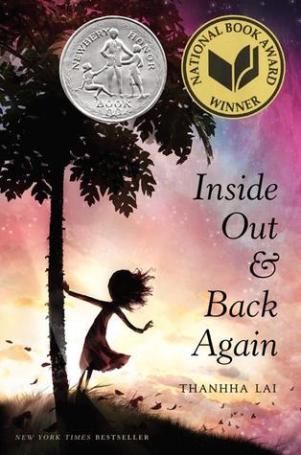
8537327Sung had just finished her 8th novel in verse, her favorite so far, Inside Out and Back Again. As I conferred with this reader, she told me she wanted to try something more challenging that was a ‘real’ novel. What she meant was a story with more words on the page. (Last year I caught one of my ELL students at the book shelf flipping through books. When I asked him why, he said he could tell if he could understand it depending on the “thickness of the words.”)
I walked to my “Explore: It’s Your World shelf” and pulled a few books I thought Sung might like:  Chains by Laurie Halse Anderson, In Darkness by Nick Lake, Copper Sun by Sharon Draper, Letters from Rifka by Karen Hesse, a book of short writings by various authors about human rights, published in association with Amnesty International, and several other titles I cannot remember now.

Then, I gave her time to explore.

A few minutes later, Sung held two books in her hands and quietly told me she wanted to read them both. She left the room with Karen Hesse’s award-winning book and the anthology of stories by writers like these: Paulo Coelho, Yann Martel,  Chimamanda Ngozi Adichie, Ishmael Beah, and more. These are not difficult books. They are not complex. They are way too easy by most high school standards. But they are exactly what this young woman needs to not only grow in confidence as a reader, but to grow as a citizen of her world.

And an interesting insight? Quite often it takes more inferencing skills to understand the story in a novel in verse than it does with a story written in prose.

_________________________________________________________________

For a list of other novels and verse, see this post.

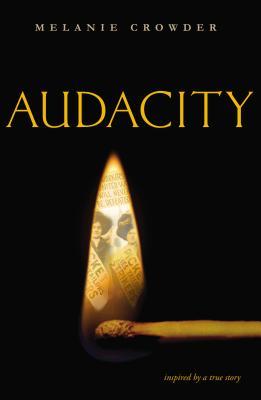
Here’s a highlight from my most recently read novel in verse, Audacity by Melanie Crowder. I think it will make a nice quickwrite at the beginning of the year as we build a reading community:

alight  22521938

I passed my Spelling

and Mathematics exams!


I hurry after work

to the free school

to check the schedule

for the next round:

Geography

History

And Trigonometry.


The thing that separates

rich from poor

in this world

is knowledge.

A person can rise up


if she can read

if she can think

if she can speak.


I cannot attend

every class

every lecture

but if I share what I learn

with the girls in my shop

in between bites

during lunch


ff Pauline shares

with the girl in her shop

in between bites

during lunch

it is as if we all

Were there together.


I see

these lunchtime lessons

spreading like fire

skipping from one box of tinder

to the next

across the shops

through the slums

until the entire city is alight

with small

fierce-burning flames.

Try it Tuesday: 15 Minutes to Make Time For Reading

My students don’t have time to read.  Just ask them. They’ll tell you.
In reflections, on their goal cards, to my face.

They’re sweet about it, mostly:
“I really wish I had more time to read, Mrs. Dennis. I’m just super busy.”
“The musical is just taking up all my time. I’ll get back at it soon. I promise.”
“AP tests are coming up and every time I sit down to read, I can’t stop thinking about the more important things I have to do.”

Ouch. That last one was like a swift kick to the shin. Or my soul.

But regardless of the reason, medium of delivery, or general sentiment, all of the excuses amount to the same end result: I need to keep reading at the forefront of every class period, or these kids are going to completely fall off the wagon.

As Amy alluded to yesterday in her post about personal reading challenges, we can’t always win the competition between getting our students reading and other homework, extracurriculars, or spring sunshine, but we can work to spark their interest and show them ways to make reading possible in their own lives.

Here’s what I tried at the end of last week and it took all of 15 minutes to create a buzz about setting goals, making time to read, and exploring a few new texts to capture student interest:

  1. I reminded my students how two hours of reading per week is the expectation, not just a cute suggestion. So, we started off a bit more serious. I reminded kids that I purposefully don’t give as much homework as I used to in order to help them have more time to read. We had an honest conversation (sort of one sided) about what it means to prioritize other things over reading and how it short changes their writing and their development as readers.I reminded them too that I’m busy, but I’m also a part of our classroom of readers. As specific examples can really help hit home a point (and including humor doesn’t hurt either), I shared with them that I read Columbine by Dave Cullen last week in six days (It’s honestly riveting. Unbelievably good), all while keeping my toddler entertained and alive, finding a few consecutive minutes to spend with my husband, trying to keep up with the recent release of Catastrophe on Amazon, preparing meals, doing laundry, cleaning up the house, and continuing to change their lives with my teaching each and every day (chuckle, chuckle).

    Then we took a look at this brilliant graphic from Tricia Ebarvia2 hours of reading

    I think it really helped kids to see that 2 hours of reading can be accomplished in a variety of ways depending on how they can work it into their schedule. I see my kids every other day on the block schedule, so I asked them to imagine establishing their 35 minute base either in resource period or through the 10 minutes we get to read at the start of each class.

  2. We then did a modified version of speed dating with booksMy district has really come through in recent weeks with a surge of funding for classroom libraries and as a result, I have a delicious variety of new and enticing titles.
    IMG_0684

    Allison investigates Little Princes by Conor Grennan

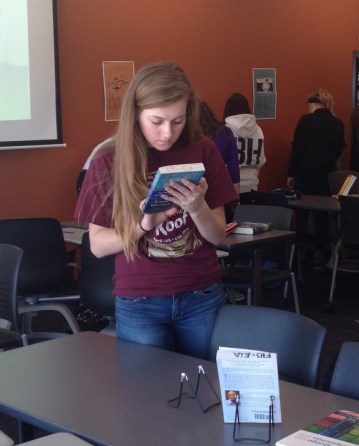
    In place of our book talk, I asked students to take a “field trip” around the room and judge some books by their covers. Students were asked to take two or three books back to their seats based on interest in the title, a connection to the text (someone recommended it and curiosity was stirred), or any criteria that caught their attention. I asked students to spread the books out across the table and follow these simple steps:

    • Talk about the books! What do you know about any of the books on the table? Have you read it? Heard about it? Why did you bring a certain text to the table? Students chatted for 3 or 4 minutes and comments varied from “So many people are talking about this book” to “I picked it because the cover looked interesting.” Students were also making some great connections between authors. Several students picked up The Knife of Never Letting Go and The Crane Wife  because of previous experiences with Patrick Ness and one student specifically said she chose a text because it had a recommendation from John Green on the front.
    • Next, I asked students to choose a book from the table and read it for four minutes with a directive to look over the cover, search out accolades, read the back, and flip open the book to get a sample of the author’s style. When I called time, students who were interested in their books were asked to raise the book up over their heads so others could get a look.
    • The next round of reading went the same way, with students choosing books from their tables (either something they brought over or a text a peer put overhead).
    • For the final round, students could go swipe books from other tables. I told them to keep their eyes out for texts that had been put in the air by more than one person.
IMG_0689

I told them to act natural.

In 15 minutes we reconnected about making time for reading and explored our classroom library in search of a spark or two that could move us forward as readers. Students said they really enjoyed “shopping” for texts by looking at covers and then stealing books from other tables. They added to their “I Want to Read” lists, made some notes in their planners about scheduling time to read, and several books were checked out each class period.

15 minutes very well spent.


Making My Reading Visible by Catherine Hepworth

guest post iconI am the English teacher who may or may not have written on her teaching job applications and cover letters, “I love books” as the attention getter. My friends made fun of me, but I honestly did not care. How else was I supposed to communicate my passion for reading to people who are looking to hire an English teacher? My passion continues to burn bright, perhaps brighter than ever before.

Last spring, my students wrote their reflections about their progress about the books they read over the course of the year, and I did the same. As I filled several pages of my composition notebook, I realized I needed to be better at being a visible reader for my students. They saw me read occasionally when we calculated page goals or did speed dating with a book, but they did not see how much I read. I’ve been keeping track of the books I’ve read since 2005, but no one has ever seen these lists.

During the school year, when I talked to my students about the books I was reading, they thought I was crazy. “Oh Mrs. H, you love books, that’s why you read so much. You must not have a life.” I smiled pleasantly

I do have a life — a reading life.

IMG_20160309_180709682(I feel like I should make a metaphor about books and donuts because I love both…a lot…!)
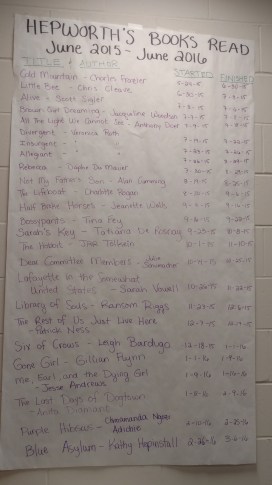
Fast forward to September 2015: New year, new energy. Making my reading life visible was my main goal. I wanted my kids and their families to see from the moment they walked into my classroom that books matter to me and that reading is what my soul needs to survive and thrive. Most days I can’t wait to get home, lay in bed, and read.

I hung two sheets of giant butcher paper on my walls by my desk. One was labeled “Hepworth’s To Read List” and the other “Hepworth’s Books Read June 2015 – June 2016.”  Students are tickled pink when they recommend a book to me and I put it on my “to read” list.  Already several times this year, I had to stop reading other books just so I could read this one book for this one students so we could talk about it.

IMG_20160309_180737760I love tracking when I start and finish a book because it has led to a lot of great conversations with students about the importance of meeting page goals and reading two hours every week. Many times, students and I compare our after school schedules and realize that we are very similar with very busy schedules.

And yes—there is always time for reading. And no—I don’t read faster than them just because I’m older.

I also try to fill out my chart when kids are in the room so they know that my list does not magically grow. I am reading with them, one day at a time.

Catherine Hepworth has been teaching for 10 years; she currently teaches English and coaches Forensics at Franklin High School in Wisconsin. In the summer, when not reading books or frantically sewing historical clothing, she participates in living history events around the Midwest. Check out her living history/sewing blog at https://catherinetheteacher.wordpress.com/

Reading Challenges for Growth, Connection, and Reflection

My students complete a reading ladder at the end of each quarter, during which they reflect on their reading from that nine weeks, write about the texts they read, and set goals for the following quarter.  When I read first quarter’s reading ladders, almost every student said one of their goals was to challenge themselves either with a book in a new genre or a more difficult length/writing style/topic.

So, I challenged them formally during second quarter to read a book outside their comfort zone, then write an essay that showed me that process.  I love Jak’s essay about his chosen challenge book–Cut by Patricia McCormick.  While this text is short and not full of especially difficult vocabulary, it challenged him because of its topic–self-harm and depression.  His essay is full of voice, text evidence, and text-to-self connections.  It’s a strong piece of writing that helped Jak reflect on his reading of this book, and is just one of many authentic alternatives to a traditional method of reading assessment.


img_1999

“A Challenging Cut” by Jak McMillen

Ready, Tropics? 1, 2, 3! LET’S GET TROPI—actually, let’s get dark for a moment. Let’s talk about Patricia McCormick’s Cut, a challenging and rough look into the mind of a depressed teen named Callie. Cue synopsis mode! To get into this mindset, Callie cuts herself. Never too deep, never enough to die, but just enough to feel the pain. Because she cuts, she’s been placed in Sea Pines, a treatment facility where everyone has a problem in one way or another. The only problem with Callie here is that she doesn’t speak, and for the most part refuses to throughout the book. Okay, synopsis mode over.

Now, Karnes, I’m assuming you have grown tired of the banter and have asked, “Well, how does this challenge you?” I’ll answer that shortly. In my essay earlier typed this year Of Mice and Misery, I cited one particular moment of my life that still affects me to this day, that of which being my father’s unfortunate passing. Now, my shell opens up more through this essay to share some of the past that I hold back.

Throughout my schooling years, I’ve found myself growing more and more tired of everyday tasks, even so far as just waking up and dressing myself. I could even use yesterday as an example: I had already felt like nothing more than dust the night before, which carried over to the next day. After coming back from MTEC the feeling was still there and unexplained, just as Callie’s feelings through the first parts of Cut. For me this is a culmination of years upon years of dark and harrowing thoughts of self-harm, and unfortunately at some points, even thoughts of suicide. Over the years of therapy some of these thoughts are still here. Now… I know that you probably didn’t want, nor did you need, to read that information, but I had to be relatable somehow, right?

41jIgmsYB+LAfter breaking her silence to her therapist, in their time between pages 122-125, Callie exposes her scars and tells what she uses. At one point in this segment, she says “Guess I’ll never wear a strapless ball gown,” from which I related in my own thoughts as feeling like I would never be good enough. Callie’s thoughts—as well as my own, but not in the book of course—were at most unexplained until later in the text. Cut took a vast amount of effort to read, and for this I praise McCormick for putting the amount of effort she did into writing this title.
When I read this title, it hit very close to home, and still does. I guess that’s why it’s such a challenge for me to read. Also, for the love of all that is holy, please do not take this as a cry for help or a sob story. I’ve moved on mostly and do not need any more sympathy than I’ve already received. Do know that it is much appreciated though! In closing I would like to say something Callie said once: “I may not want to get rid of my scars. They tell a story.”


How do you encourage your students to make personal connections to their reading?

What Janitors Can Teach Us About Getting Kids Into the Reading Zone by Amy Estersohn

guest post iconI love pop-psych self-help books.  I love books written by professors.  This book, by University of California professor Sonia Lyubormisky, happens to be both.  I love this book so much I bought a second copy because my first copy had too many post-it notes on it.

Lyubomirsky claims that happy people often achieve a state of “flow” and understand how to make flow happen.   We are in flow when we are absorbed in an activity that is not too challenging and not too easy for us.  In flow, we lose our sense of time completely: we are not bored, we are not anxious, we are not thinking about whether Trader Joe’s will have our preferred frozen meal in stock by the time we get there.  

IMG_0492If you’re like me, you read this description of flow and thought, “Oh, that’s just another word for the reading zone, only made more general for activities that aren’t reading.”

It’s easy to assume that flow experiences are reserved for avid tennis players, chess enthusiasts, artists, musicians, doctors, athletes, and others who have been able to live a lifestyle that caters to their interests.  However, research shows that even janitors can experience flow at work.  

“Other [janitors], in contrast, transformed the job into something grander and more significant.  This second group of hospital cleaners described their work as bettering the daily lives of patients, visitors, and nurses.  They engaged in a great deal of social interaction (eg. showing a visitor around, brightening a patient’s day), reported liking cleaning, and judged the work as highly skilled.  It’s not surprising that these hospital cleaners found flow in their work.  They set forth challenges for themselves– for example, how to get the job accomplished in a maximally efficient way or how to help patients heal faster by making them more comfortable” (Lyubomirsky 188-189).  Original research here.

Lyubomirsky believes that habits of mind like these are teachable and trainable.  Here’s what developing them can  look like during a reading conference:

The conference move: Critical Shopper

How I do it:  I’ll ask a student if she would recommend the book she is reading for a classroom library or book club set purchase.

How it supports “flow” or “reading zone”: It gives readers a reminder that reading can have a larger social purpose, and the more engaged they are in their reading lives, the better they can improve the reading lives of their classmates.

What I learn about the reader:  I learn about how a reader can engage critically with a text and can provide text-based evidence for a claim about whether a book would or would not make a suitable classroom library investment.


The conference move: Younger Sibling/Cousin

How I do it:  I ask a student what their younger sibling or cousin would say the book is about were he or she to read the book that the student’s currently reading.  Then I ask the student what he or she thinks the book is really about.

How it supports “flow” or “reading zone”:  It reminds readers that there are more ways than one to read a story, and that good stories beg to be shared with family, friends, and loved ones.

What I learn about the reader:  I learn about a reader’s ability to grasp themes and ideas in a text.  When I start off with, “What would your younger sibling say?” I expect the reader to give me plot summary and basic character traits.  Then, when I ask them for what they think the book is really about, it subtly lets the reader know that there are additional ways to answer this question.


The conference move: Goal-setting

How I do it: I ask students to set a goal, and I ask how I can help the student achieve that goal.

How it supports “flow” or “reading zone”: Just as the janitors who experience flow play an active role in setting their own goals, allowing a reader to set his goal gives him an additional purpose and meaning to his reading.

What I learn about the reader: I learn about a reader’s assessment of her own reading strengths and weaknesses.  Often the goal a student sets for herself is the same goal I would have chosen for her were I asked to make one.


The conference move: Remember when?

How I do it: I ask students to recollect a time when they were in “the reading zone.”  Sometimes I will use their reading log or my memory of their reading to jump-start this conversation.

How it supports “flow” or “reading zone”: By noticing and naming the characteristics that are associated with the reading zone — everything from body positioning while reading, the feeling of “Just one more chapter!”, the sensation of the pages flying by — we can celebrate the reading zone and try to make it happen more often.

What I learn about the reader: I learn about a reader’ self-awareness, and I learn what books got them in the zone, so I can recommend more books just like them!


Amy Estersohn teaches in New York.  Her classroom overlooks the parking lot where she learned how to drive.  She tweets about books at @HMX_MsE.