Category Archives: Readers Workshop

Stop Teaching. I’m reading.

SCENE: My classroom


AMY is holding onto a clipboard and attempting to drink from a thermos of coffee while still Looking Important.  She surveys the room of readers and stops at a student who has read an uncharacteristically large amount from the past day.  She stops at the student’s desk.


AMY: How’d you do that?


STUDENT looks up from book.


STUDENT: Do what?


AMY: You know, how did you read 50 pages since the last time I saw you?


STUDENT (shrugs): I don’t know.  I just did.


STUDENT returns to book.


Some teachers might find exchanges like these evidence of an unsuccessful conference with an uncommunicative student. Some teachers might want to go into further questioning: “Well, when did start reading?  How long did you read?  Where were you? Are you on your way to achieving a reading goal?” but it’s easy for that kind of reading conference to quickly turn into an episode of Law and Order: Minors After Midnight pretty quickly.


Instead, I tend to find conferences like these home run victories.  This student is looking to end this conversation so that he can get back into reading.  Isn’t that the best compliment of all?

When-do-we-need-to-stop

Granted, if every interaction with the student went like the above, I’d probe further.  However, I look for three key ingredients when I evaluate these kinds of exchanges:

  1. Is this student reading at an increased volume than he or she usually does?  
  2. What’s the student’s body language like before the conference?  Is it a “please don’t talk to me right now” vibe?
  3. Does the student act unsurprised by the idea that he or she read a lot?  


If the answer to the three above questions is “yes,” I score that conference as a major reading victory, because:

  1. I already de-incentivize book volume and page count.  Students gain no reward for claiming they have read 20 pages when really they have read 2.  This way, I trust when I see students reading more that that reading is their honest performance.
  2. Students should like reading more than they like talking to us.
  3. The student might not be able to accurately recall his or her extended reading period because he or she entered a state of flow.  I don’t know how I managed to watch three episodes back-to-back of Survivor over the weekend.   Students who don’t know how they managed to read a lot might not know because they entered a state of flow.


Okay, so where do you teach this reader in future conferences?  They can’t all be this non-verbal.


  1. Use this book as a benchmark of reading excellence for that student.  Ask that student in a few months, “How does the book you are in right now compare to your experience of reading book XYZ?”
  2. Help the student find more books like it using tools like Amazon.com, goodreads, or by talking to other readers. I am always amazed at how few students know how to look up another book by the same author.
  3. Ask the student what mattered to them most about the experience of reading the book.  Ask about the book, but ask about their feelings while reading, too.  Keep in mind that for some readers a distinctive literary pattern emerges across their reading — say, books about kids with cancer, books about troubled homes, books about the apocalypse, books with strong female characters battling high school drama.   For others, it might be about feelings — they liked or disliked a character, they enjoyed the world the author built for them, etc.

Amy Estersohn is a middle school English teacher in New York and a 2016 recipient of the NCTE Gallo Grant.  And she hates being interrupted in the middle of a good book.  Follow her on twitter @HMX_MsE.

3 Ways to Offer Choice and Challenge in Reading

Yesterday I got the opportunity to write for our state NCTE affiliate, the West Virginia Council of Teachers of English!  Their best practices blog is full of great stuff–definitely check it out, and follow @WVCTE on Twitter for more ideas and resources.

Here’s my offering for their blog–and I’d love to know how you offer your students choice and challenge in their independent reading.  Please share in the comments!


I can be a bit of a lazy reader.

I get impatient while reading, waiting for the plot to pick up, and abandon books with gusto.  I leap from mystery to mystery, romance novel to short fiction, and toss in the stray nonfiction book when I’m feeling curious.

When I first began making choice reading a priority in my classroom, many of my students were lazy readers, too.  They gobbled up YA fiction in droves, but balked when I booktalked a classic, or an award-winning piece of fiction, or any nonfiction.  Some of them refused to move beyond their genre of choice for a whole year.

I knew, when I committed to choice reading, that it went far beyond just YA.  I knew that all kids were capable of reading sophisticated texts, making complex choices about when and how and what to read, and that all readers have a hunger for a challenging, engaging read.  But I wasn’t seeing my students living out those expectations, so I built in some structures to help them get there.

Reading Challenges — I began scaffolding students up to more difficult reading choices with reading challenges.  I read about these in Book Love by Penny Kittle, but wanted to put my own spin on them as far as making very specific challenges went.  So, the first reading challenge involved picking a book outside your comfort zone (which required a fun day of work identifying our own reading zones); the second challenge involved reading a nonfiction book, the third involved reading an award winner, and so on.

By working as a whole class to try new books out simultaneously–me reading along with my students–everyone felt comfortable getting uncomfortable.  We were all struggling along together, trying to decipher the vocabulary in a new book, or the structure of a new genre, or the style of a new kind of writer.  I built in mini-lessons on these things, but I think it was most helpful that we talked about these issues in the light of being real readers–not “struggling” readers.

Authentic Writing about Reading — When I first joined GoodReads many years ago, I realized how much my reading life was improved by just quickly taking the time to rate what I’d thought of a book.  Before that, I’d start and finish books and never really think about them again.  Soon, I began writing short book reviews, and then long ones, first just for myself, and then for the benefit of other readers.  I began reading more book reviews to get a sense of what I might talk about other than writing and characters.

I wanted my students doing something similar, so we began studying book reviews–popular, funny ones on Goodreads and Tumblr; professional ones in the New York Times and the New Yorker; even famed reviewers like Roger Ebert, whose writing moves about film we applied to books.  Students began tweeting at authors, writing reviews informally in their notebooks and formally for our school paper and giving their own booktalks to one another.

Nurturing a Real Reading Life —  No longer were kids feeling confined to books I handed them.  They began to choose books more independently, armed with information about their tastes, their peers’, and what was popular in general.  I began to see more students reading books that didn’t come from my classroom library, more students talking to one another about books, and a bigger variety of books being read in general.

In my own reading life, I modeled these challenges.  I read The Great Gatsby, Walden, and a few other classics for the first time in years, and truly appreciated them more during these second reads.  I wrote book reviews on Goodreads, the Nerdy Book Club, and Three Teachers Talk.  I tracked my reading in my notebook, on GoodReads, and on Twitter, setting goals and trying to take a moment to jot down, in quick review form, WHY I liked or didn’t like a book.

These practices not only helped me become a better reader; thePicturey helped my students grow as readers, too.  Anna’s favorite book of all time became the award-winning A Constellation of Vital Phenomena, while Connor was blown away by Ta-Nehisi Coates’ Between the World and Me.  These books and more were chosen, read, and evaluated independently, without the confines of assignments or the too-broad sea of “your choice” to hold them back.
Shana Karnes teaches sophomore, junior, and senior preservice teachers at West Virginia University.  She finds joy in all things learning, love, and literature as she teaches, mothers, and sings her way through life.  Follow Shana on Twitter at @litreader.

Where Dioramas Go to Die

I picked up my first pedagogy book of the year this week and I can’t put it down. Disrupting Thinking by Kylene Beers and Robert Probst is living up to its name. It’s 1950’s Louise Rosenblatt Reader Response Theory meets a desperate modern need to educate kids to be responsible consumers of information in order to compassionately embrace the viewpoints of others.

The first few chapters have felt like the perfect “Now what?” for someone that has recently made the move to workshop.

My kids are choosing what they read. Now what? 

I’m devoting class time for students to build this habit. Now what? 

My students are reading more and more. Now what? 

The “now what” is to really think about the how and why we read. The text details insights on building responsive, responsible, and compassionate readers who will interact with a text, rather than just extract from it, question the text, and open themselves up to the text in order to see other points of view.

Cue the angelic choir and parting clouds. I’m ready.

But, I am also guilty of not always facilitating this type of reader response. Not on purpose, of course, but just out of difficulty in dealing with the daily grind.

We read. We talk. We mini lesson. We write. We rearrange the order. We repeat.

However, somewhere in there, we also lose a lot of readers. The once enthusiastic elementary kids, with their literal cartwheels about books, often come to us as vacant vessels of readicide. How does this happen? Beers and Probst suggest that “we have made reading a painful exercise for kids. High-stakes tests, Lexile levels, searches for evidence, dialogic notes, and sticky notes galore – we have demanded of readers many things we would never do ourselves while reading. We have sticky-noted reading to death” (46).

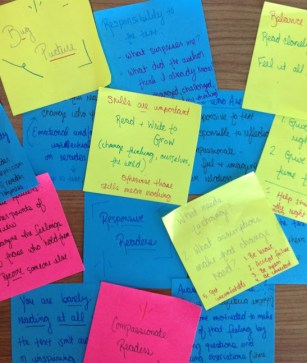
Now, ironically, I’ve written quite a few sticky notes around the insights in this book…postitI like to organize my thoughts this way. And, in no way am I suggesting that pulling ideas from a text is malpractice. At the end of the day, of course we need students to think deeply about their reading and demonstrate that thought through talk, written reflection, and/or analysis of some kind.

But what is appropriate? What is too much? What kills a desire to read as opposed to igniting it?

In search of some renewed inspiration, Disrupting Thinking had me laughing out loud as it got me thinking about why and how I interact with texts:

Seriously, as you finished the book you most recently enjoyed, did you pause, hold the book gently in your hands and say to yourself, ‘This time, this time, I think I’ll make a diorama’?…Do you write summaries of what you read, make new book jackets, rewrite the ending, take tests over every text? Any text? Do you want your reading level put on a bulletin board for all to see. Do you even know your damn reading level? (Beers & Probst 46)

So, how do we balance professional responsibility, a love of content, a desire to build up students as readers and writers, and the knowledge that a lot of what we’ve done (or still do) in our classrooms actually exhausts, irritates, and/or alienates our students from reading?

Unfortunately, I don’t have all the answers. This is a reflective process in action.

What I do know, is that Disrupting Thinking has me…thinking about it. A lot. It also has me vowing to put a few things into practice and promote a few others in my classroom:

  1. Promote Responsive Readers through more and more opportunities to talk about choice books. I’m guilty of still trying to “make sure kids are reading,” when in fact, most often, they are cutting corners in that reading if we are trying to “catch” them. Book clubs, conferring, and talk through reflective notebook writing promote low stakes opportunities to share insights on texts.  With mentor texts to support skill instruction, the thinking can be applied to choice reading, but doesn’t necessarily mean that I should be looking to choice reading as a summative data point.
  2. Promote Responsible Readers by working to find a balance between supporting/celebrating reading and “holding students accountable.” This is an imperfect science to be sure. I find that the more I talk with students one on one, the more they have to say, and the more I can directly intervene to move them forward to more challenging books, deepen their understanding of why I want them to keep reading in the first place, and celebrate their successes as independent readers. Save the evaluation for skills based cold reads when the curriculum demands the assessment we as teachers need, while keeping in mind that many students don’t see those assessments as their responsibility to reading, and I would argue, nor should they.
  3. Promote Compassionate Readers, again, through talk. When I read something that is changing my perspective on the world, myself, or life in general, I want to share that with someone. I want to share that with many someones. I also know, that to grow in my reading life, I need to read a wide variety of books…books that challenge my long held beliefs and understandings (or misunderstandings) of the world. Again, this is where helping students to diversify their reading lives is so very important.
  4. Talk, Talk, Talk! I’ve been asking my students two questions this week to drive their book club discussions: How is this changing me? How is this changing my view of the world? These two questions invite personal connection and reflection. I can’t wait to hear my AP students’ book club discussions!

Lisa Dennis teaches English and leads a department of incredible English educators at Franklin High School near Milwaukee. Her thinking has been disrupted and she’s loving it. Follow Lisa on Twitter @LDennibaum 

ruBRICKS Part II – A Follow-Up Guest Post by Julie Swinehart

Blogging, writing, talking, being part of the conversation about what it means to be an educator in 2017, it’s all easier to do than to actually live it and breathe it and teach it. We can talk about theory, we can read our guiding texts, we can attend professional development conferences around the world, participate in twitter chats, and we can all talk the talk.

Walking the talk is the hardest part.

Theory doesn’t always meet practice. But we try. I try.

I recently wrote about the idea of rubrics – that they should serve more as a foundation than a weight or a wall pinning students in. That they should allow for creativity rather than limiting imagination.

One way that I have tried to allow for student voice and creativity is with the most important thing I can help my students learn.

The topic is the habits of a healthy reading life.

If my students learn to read literary nonfiction, classic novels, and short stories, it will be fantastic. But it’s fantastic only if they actually choose to read these texts on their own. Most importantly, they need to have a habit of reading, to discover the reader within themselves.

This winter I realized that I wasn’t sure that my students knew what the endgame was. So we talked about it. We talked about what it looks like to have a healthy reading life, and we brainstormed the attributes of a healthy reading life.

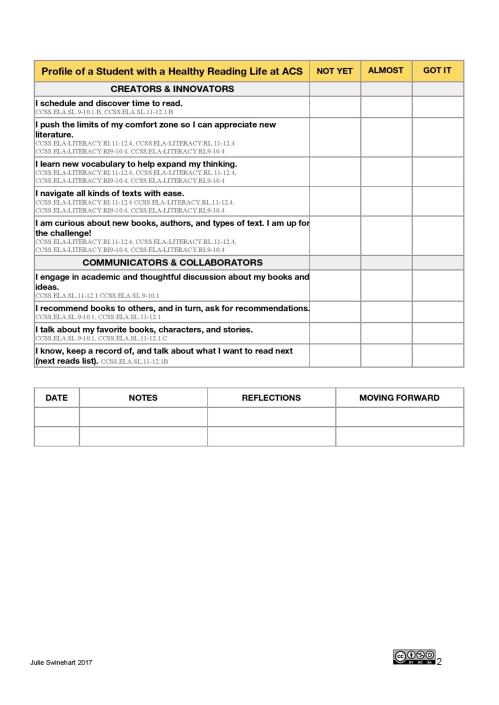
I did my best to organize their ideas into categories and indicators that made sense. I used our school’s student profile to help with the organization. The six categories are Respect and Integrity, Global Awareness, Reflective Thinking, Critical Thinking, Creators and Innovators, and Communicators and Collaborators.

From that, I created a rubric.

I think the process for this rubric can be re-created with other standards and goals, and can be simplified to a simple yes/no checklist, or a one point rubric for student self-reflection.

healthyreadinglifeprofile-page-001

healthyreadinglifeprofile-page-002

I know, I know… There are still problems with the document. But I think the point is that the ideas in it originally were theirs. The ideas belonged to the grade nine students.

While it’s an intimidating double-sided checklist in its entirety, it is easy to split into the six sections, which means we can examine just one section of a student’s reading life at a time. At that point it becomes smaller and quite manageable, and it’s not a brick wall of text.

I can print just one section at a time, and use it as an exit ticket or as a prompt for a reflective quick write. It doesn’t weigh students down when they simply examine only two or three indicators about their habits of reading.

The document still needs to be refined, and maybe all of the Common Core standards I’ve attached to the indicators aren’t exactly right; it’s still a draft, a work in progress. But this rubric, one that could be revised to a simple yes/no checklist, has been the catalyst for some seriously authentic and relevant conferences with my students.

Because I used their criteria and ideas, it’s not a brick wall, and it doesn’t confine my students between narrow rails. Instead, it’s a conversation starter, a tool for goal-setting while conferring, and it’s something that shows my students what to strive for.

It shows them what this readers workshop is all about: healthy reading lives.

I think the takeaway here is that teaching is always a work in progress, as is learning. Setting goals is important for students and for teachers. Creating authentic scoring guides continues to be one of my goals. This year I created one about the topic that I think is the most important of all – the healthy habits of reading. Next year we will tackle the habits of being a writer.

I will keep talking the talk – that means I am learning and reflecting on my practice. I will also keep trying to walk the talk, which I think has to include student input, because student voice is so essential to readers workshop, and is of course essential to building the habits of healthy reading lives of students.

We can’t weigh them down with our “help” – our rubrics and scoring guides should serve as foundations for growth, which is what I think this one does.
Nothing’s perfect, and we teachers have to be okay with that. We will continue to read, learn, discuss, and to walk the talk. Walking it and living it is a work in progress, and our students are better because we keep trying.


Julie has been teaching secondary language arts for eighteen years, spending the first fifteen in rural Central Oregon, and the last three in Amman, Jordan. A recent convert to the workshop model, she likes to blog about and share her learning and experience with others.

Follow her on twitter @SwinehartJulie

Follow her blog https://adventuresinhighschoolworkshop.wordpress.com/


iconCare to join the conversation? We’d love to add your voice! Please email guest post ideas to Lisadennibaum@gmail.com.
Learning from Other Teachers

5054c4145eaf8a4c41c3bbd1d1954cdd.jpgI have so much hope for our profession, our students, and our society.
In a pretty pessimistic world, want to know why I’m so optimistic?

Because I believe in our future teachers.  After an entire school year of working with preservice educators, I have seen so much energy, excitement, and engagement from every single one of my students.  Every challenge that comes their way–whether in the form of an assignment, a tough reading, or grappling with a seemingly unsolvable education issue–only reaffirms their desire to help their students.  They just careso much.

A fantastic conference I attended last week was a wonderful reminder of all of that hope I have for teachers and teaching and learners and learning.  We’re here because of love–love for who and what and how we teach.  Yesterday, I shared my learning from the morning sessions of that conference, and today I’d like to share the ideas, quotes, and joy I heard in my afternoon sessions.

Session Three:  On Teaching Writing & Knowing Our Students

This amazing session was led by three preservice teachers who interned in high school ELA classrooms in our community.  Each of them spoke about their struggles and successes with so much passion that I was left feeling proud to be a teacher by the end of their talks.

Idea:  Audio Recording Peer Feedback–I absolutely loved Katie N.’s idea of having students record their feedback to peers.  After a semester of struggling to get her students to view themselves and one another of being capable and worthy of giving authentic, valuable feedback, she hit upon the idea of having students read one another’s papers ahead of time, prepare some comments, and then record a few minutes of thoughts, responses, suggestions, and connections.  I can’t wait to have my students try this idea!

Quote:  “When I conferenced with my students, so many of them really surprised me!!”  Danielle focused on looking for patterns in her students’ extracurricular involvement and how it might connect to their engagement, motivation, and success in schools.  She had lots of preconceived notions about how her athletes, club members, or student body leaders might act in the classroom, and many of them were wrong.  She loved the experience of being surprised by her students when she took the time to confer with each of them multiple times.

Just Joy:  Katie P. was interested in taking a whole class novel study far beyond the book.  While reading A Separate Peace with her students, she encouraged her students to read the novel through a critical literacy lens, identify social issues they could connect to their own school community, and then take action to improve the state of those issues.  As a result of her teaching, the students in her class created a club focused on improving mental health by participating in mindfulness activities like meditation, yoga, and deep breathing.

As she spoke about this new awareness of mental health issues in a school that had been plagued by student suicides, Katie teared up–as did many of us in the room listening to her speak.  I was so impressed and inspired by the power this young teacher realized she had to change a school community.

Session Four: On Evaluating Ourselves

In this session, led by a mix of teachers and school leaders, speakers presented on ways in which they looked at their own teaching, their whole classroom, or their entire school community; identified a problem; and then attempted to fix their issue.  Many of their inquiries resulted in some amazingly ambitious goals–one principal wanted to find a way to improve her students’ poor attendance, which was often caused by factors stemming from a community plagued by poverty; a group of teachers formed a committee to implement more responsive, sensitive discipline into their elementary school; and an academic coach shared ways she’d aggressively procured free technology into her school for teachers and students to use to improve learning.

I loved all these school leaders’ ideas, but I found one presenter’s approach to strengthening pedagogy incredibly effective and easy to implement.  Josh Karr, a high school math teacher, simply emailed his colleagues and invited them to form an informal PLC to evaluate themselves.

Idea:  Record Your Teaching–Josh invited his whole faculty, via email, to video record one of their lessons, watch it alone, and then bring a small clip to share with a partner in their mini-PLC after school.  Thirteen teachers agreed to participate, and showed up, quite nervously, with their recordings.  They paired up, regardless of content area or grade level, and worked together to analyze their videos, give and get feedback, and talk through some questions they had.  I loved this super easy, low-stakes idea to self- and peer-evaluate our teaching in such a welcoming way.

Quote:  “We laughed at how many teachers didn’t even have students in their videos.”  Josh told a funny story about how several of the teachers’ video cameras had only been pointed at the teachers themselves, and how they didn’t realize this narrow-minded view until they started talking with colleagues.  It was a real revelation for many of these teachers to realize that, wow, their worldview wasn’t very student-centered.  I was so uplifted by hearing Josh speak about how this simple activity prompted these teachers to stop looking at themselves for evidence of good teaching, and to begin looking at their students instead.

Just Joy:  Josh talked about what an inspiring thing it was to be part of this tiny community of teachers within his school, which included teachers from all content areas, and even the band director.  He gave me such hope when he shared how the teachers’ video recordings had evolved over the weeks to include more students, more difficult class periods, and more and more vulnerable learning.

I loved hearing how teachers of all levels of experience and expertise were willing to open themselves up to their colleagues for the sake of improving their students’ learning opportunities.  It’s a hard thing, in this profession, to invite criticism of our teaching when our  work can sometimes be thankless.  I can’t wait to try this idea with my students and colleagues alike.


Check out Part I of this post from yesterday, and then please leave us a comment:  what strategies, ideas, or frames of mind might you try out in your classroom?  Will you share some fantastic lessons you’ve gleaned from good conferences in the comments?

Shana Karnes lives in West Virginia and teaches sophomore, junior, and senior preservice teachers at West Virginia University.  She finds joy in all things learning, love, and literature as she teaches, mothers, and sings her way through life.  Follow Shana on Twitter at @litreader.

Getting Invigorated by Good PD

11863319_864585353577385_5354103936493098384_n.jpg

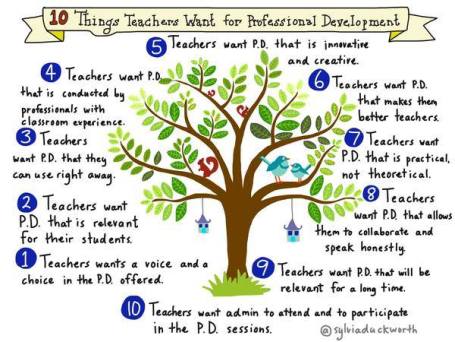
I love this accurate graphic about PD by Sylvia Duckworth.

Last Friday, I was fortunate enough to attend some of the best professional development I’ve been to in a while–and it was free!

At the end of the day, I left my 3TT friends a seven-minute WhatsApp message of out-of-breath enthusiasm, describing my day’s learning.  That’s how you know it’s been a good day.

The conference I attended is held annually to celebrate our Masters’ students’ impending graduation and entry into the field of teaching.  The all-day event features presentations by both preservice and practicing teachers, academic coaches, and principals.

Before the conference, speakers are invited to conduct an inquiry into one aspect of their practice, then present on their methods, findings, and insights.  I attended four absolutely wonderful sessions, and filled up six pages in my notebook with ideas and quotes and just joy–and I’d love to share them with you all.  Today I’ll share ideas gleaned from my morning session, and tomorrow I’ll share what I learned from the afternoon portion of events.

Session One:  On Independent Reading

In my head, I called this session “What you do after you’ve read Book Love,” because it was full of amazing ideas that I’m certain would be Penny Kittle-approved.  One presenter, Andy Patrick (@MrPatrickELA), absolutely blew my mind with the ways he’s clearly innovated independent reading.

Idea:  Reverse Reading Rates–Andy explained that when students chose a challenge book, they took a new reading rate and then used their findings to determine how long it would take them to finish the book.  The students could set a completion goal, Andy could touch on this goal in his conferences with them, and when the book was finished, students reflected on their reading process.  Since I’ve struggled with reading rates and accountability, I just loved this idea.

Quote:  “I never let them off the hook” when they tell me they don’t like reading.  Andy followed this fantastic one-liner up with his philosophy that they just weren’t reading the right books, and it was his job to help his students find them.

Just Joy:  I left this session absolutely impassioned thanks to Andy’s flurry of ideas.  He tossed out strategies like using quotes about the joy of reading as quickwrite prompts, his determination to get colleagues on board with teaching reading across the curriculum, and how great teachers of reading cannot excel unless they are real readers themselves.  YAAAAAAAASSSSSSS was the prevailing word in my notebook after that session!

Session Two:  Strategies for Reading, Writing, and Grammar

After leaving the first session, I had no idea how any other speakers could top that.  Luckily, I was just as inspired by three preservice teachers who’d done their internships in middle school ELA classrooms, and who shared their optimism for our profession in the form of their research.

Idea:  Say Something Journals–Sierra shared that many of her seventh graders weren’t engaged in reading independently or as a whole class, and she wanted a way to spark their interest in their texts.  She created journals, simply folded out of notebook paper, in which students could practice recording their internal reactions to something while reading during class.  When they were reading shared texts, she had students trade journals and giggle about the similarities and differences in their reactions.  The journals culminated in getting the reader to “say something” about the “something” they believed the writer was trying to “say.”  I loved Sierra’s emphasis on the transactional nature of reading, rather than a linear interpretation of a book’s message.

Quote:  “Why don’t they just capitalize their i’s?!” said Tori, who struggled with getting her 8th graders to use grammatical conventions in their writing, even after conferences and practice sessions in which students proved they knew what they were supposed to be doing.  Tori’s presentation was characterized by her sheer love of grammar and her bewilderment about why the heck kids could study mentor texts, send flawless text messages, and yet still refuse to obey the conventions of standard English.

One student’s response?  “Well, I just think capital I’s aren’t very cute.”

Just Joy:  Charity brought sophistication and high expectations to her 8th graders by teaching them about what critical literacy is and then working with them to practice it when reading nonfiction texts.  She focused on helping students develop discussion skills to practice thinking, reading, writing, and speaking within a critical literacy framework, all while reading place-based texts they helped her select.

I think my jaw was on the ground throughout the whole of this brilliant young teacher’s presentation–I want my daughter in her classroom someday, I kept thinking to myself.  What a treat to end my morning by feeling so hopeful about the new talent entering our profession!

Stay tuned for Part II of this post tomorrow, and please share with us in the comments–what have you learned from strong PD sessions you’ve attended?

Shana Karnes lives in West Virginia and teaches sophomore, junior, and senior preservice teachers at West Virginia University.  She finds joy in all things learning, love, and literature as she teaches, mothers, and sings her way through life.  Follow Shana on Twitter at @litreader.


None of the Above: A Bubble-Free Final Exam

Remember Scantrons tests? The filling in of bubbles at semester’s end in order to prove your worth as a scholar? Many of my anxiety-cloaked memories of high school involve those hideous little forms, a No. 2 pencil, and hours spent hurriedly filling in bubbles to demonstrate my multiple choice understanding of the world.

exam 9

Once upon a time, I took this type of test. Early in my career, I gave them. Currently, I hate them. Or rather, as this is a company name I certainly wouldn’t dream of defaming, I hate the concept of a test format that negates creativity, deep thinking, or conveyance of personal connection to learning. While admittedly easy to grade, I don’t recall the last multiple choice test that left me satisfied with the assessment in any way.

Now, before I get myself in hot water, both with Scantron and my fellow teachers, there are realities associated with multiple choice testing that are inescapable, and if we want students to be prepared for the high stakes testing they will certainly encounter as a means to pass AP tests, seek admission to college, and succeed on many college campuses, then we must do our part in preparing students for this type of assessment and thinking. Applied Practice tests, for example, challenge students to dig into a passage and deeply analyze the author’s craft and style. That skill development and demonstration is a wonderful tool.

However, this post is about the opportunities presented to us as educators as we look to the end of a grading term and search for ways to have students think critically about their cumulative learning, their growth as readers and writers, and the

exam11

Bailey’s reading insight.

connections they’ve made throughout our time together that will move them forward as educated citizens.

Many of these thoughts started well before my work with workshop when several years ago, our administrative team organized a committee to discuss our practices around final exams. Scheduling, format, exemptions, and weighting were all on the table. My biggest takeaway from those reflections?

I wanted my final exams to be reflective of student thought, synthesis, growth, and accomplishment to this point. In other words, I didn’t want any part of our “final” exam to be final in any way except that it would happen to be our last assessment together.

In other words, a final exam should showcase rather than stifle.

It should be an opportunity.

In years past, a multiple choice test showed a student’s regurgitated knowledge of the texts we had read and the literary movements we had studied. A written portion challeneged skills in supporting claims, sometimes providing text evidence, and timed writing.

exam 7

Amelia’s reading takeaway.

Again, these are valid and necessary skills to prepare students for future academic endeavors. Personally, however, I have grown to believe that if a paper isn’t going to receive some feedback, it’s power and purpose are lessened, or even negated.


We want students to grow as readers and writers throughout the year. This should include their final assessment opportunities as well.

exam 1With that in mind, my colleagues and I have worked hard over the years to provide more authentic assessment opportunities for students to demonstrate their growth during final exams.
Portfolios have replaced timed papers. Graded discussions have replaced short answer questions. Reflective speeches, projects, and writing have replaced bubble tests. And, with the advent of workshop, choice reading reflection has become my go-to.

In January, the teachers in my Honors English 10 collaborative group, organized an opportunity for our students to share the insights gleaned from an entire semester of choice reading. I was so excited by the project that I added some additional symbolic and reflective elements to it and used it with my AP Language students as well.

Students reflect on the texts

exam 8

A reflection from Josh.

they have read throughout the course of the term, select meaningful passages from that reading (many had been marking key quotes in their notebooks throughout the year), and give a talk about how the reading changed, moved, and/or developed their thinking with the support of visual cues and quotes to provide context for their ideas.

Illustrations of such deep thought include:

  • Abby learned that “we all struggle, but it’s how we handle those struggles that truly defines our character.” 
  • Errin suggested that “our world is only as vast as our perspectives allow it to be.” 
  • Tahseen claimed that “books help me solve the problems in my life.” 
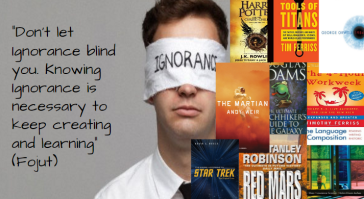
  • Bailey, in his infinite wisdom buoyed by the most sincere character, pled with the class to not “let ignorance blind you. Knowing ignorance is necessary to keep creating and learning.”
  •  Rachel said we must “know yourself and use that knowledge to go out and know the world.” 

exam 4

exam 6

Some student samples from Amelia and Josh

As the time for final exam planning in at hand once again, here is a link to the project. Use it as a springboard for your own great reflective projects and encourage kids to once again see the value of the choice reading they have completed this year.

How have your finals evolved? What will your students be doing to wrap up the year? Please share in the comments. 


Lisa Dennis teaches English and leads a department of incredible English educators at Franklin High School near Milwaukee. She fondly remembers dabbing chapstick on her Scantron to try and fool the machine. This was during her rebellious streak, which lasted about four days. Follow Lisa on Twitter @LDennibaum 

6 Gut-Punchers to Read After You Binge-Watch 13 Reasons Why

I got a Netflix subscription just so I could watch the 13 Reasons Why miniseries.13-reasons-why_0

The series is graphic and unsettling and leaves a lot to be talked about.  I haven’t even finished the series yet, but I bet my Scholastic Bonus Points that I have a few students who watched it over spring break and now are itching to read this book and others like it.

Here are a few books to steer readers to now…

friends for life

Friends for Life by Andrew Norriss

This book covers similar topics to 13 Reasons Why, but the plotting, pacing, and development of the topics is catered towards a younger teen audience.  Francis and Jessica become close friends quickly, but there’s a problem: Jessica’s a ghost, and Francis can somehow see her.  As readers learn how Francis can see Jessica, readers are also invited to consider the importance of friendship and reaching out to loved ones in times of need.

backlash

Backlash by Sarah Darer Littman


I find myself returning to recommend this book over and over again because it hits so many teen sweet spots.  Once upon a time, Lara and Bree were best friends.  Then Bree started to cyberbully Lara, pushing her to attempt suicide in a highly publicized manner.  Readers watch characters recover from trauma and hear the voices of others who were affected by the ongoing cyberbullying.


optimists die first


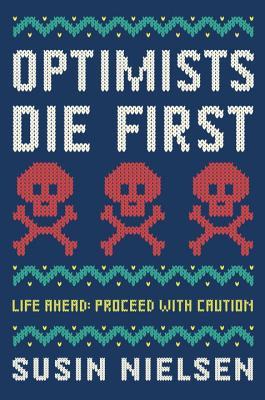
Optimists Die First by Susin Nielsen


Relevant information for adult readers: Susin Nielsen wrote for Degrassi.  If that’s not enough to pique your interest in her books, I don’t know what is!  (Unless, that is, you’ve never seen an episode of Degrassi.  Fix that!)  Nielsen’s book follows Petula, who feels burdened by guilt over a sibling’s death.  Her healing process involves Jacob, a boy who just moved to town who is keeping some secrets of his own.


truth alice

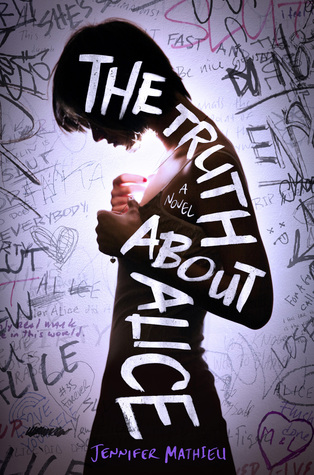
The Truth About Alice by Jennifer Mathieu


Have you heard about Alice and what she did at that party?  With not one guy, but two?  This fast-paced, multilayered story makes readers think more about empowered female sexuality and the pernicious power of the school rumor mill.


gerald faust

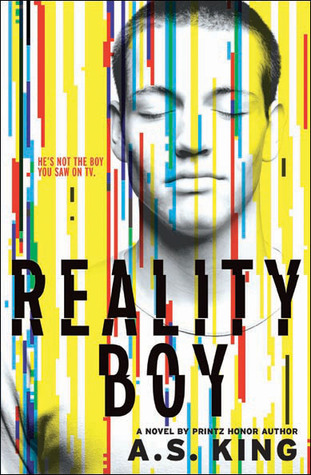
Reality Boy by A.S. King


From the files of deliciously messed up A.S. King comes a book about Gerald Faust, a boy better known to his high school classmates for his early-childhood antics on a reality TV show.   Gerald can’t escape his well-publicized past, and his parents might as well live in a fictional universe.   A.S. King’s talent as an author is developing some of the cruelest family dynamics known to contemporary literature, and this book ranks right up there for unkind parents.

bang lyga

Bang by Barry Lyga


Sebastian, at age four, shot his baby sister Lola by accident.  Now, Sebastian is immersed in homicidal/suicidal ideation.  When a new girl, Aneesa, joins the neighborhood and is unaware of Sebastian’s burning guilt, Sebastian has a chance to remake himself.


What books would you recommend to students who enjoyed watching 13 Reasons Why?


Amy Estersohn is a middle school English teacher in New York.  She is a 2016 recipient of the NCTE/ALAN Gallo Grant.  She laments the loss of the cassette tape.


Want to Be a Better Teacher? Pick up a Book.

teacher

Confession time. Who is with me?

Not long ago, only a few years I’m ashamed to say, I was not the reader I once had been.

I was not really a reader at all.

In that respect, I think I was much like many of our students. A formerly voracious reader with vague intentions of spending more time with good books, but I never quite found that time. I found excuses instead.

I didn’t want to read because “I read all day. All I do is read. Paper after paper after paper. I don’t want to read one more word.” 

I didn’t want to read because “There are far more important things I need to do now. Plan, grade, have a life. If I get half a second to myself, reading isn’t top on my list.” 

I didn’t want to read because “I have plenty of time to read over the summer.” 

I was burned out by work. I was betrayed by years of being told what was important for me to read. I was shackled to loving the books I was teaching.

I had become a reluctant reader.

In this way, it would seem, I was also a complete fraud.

Every day, I would walk into my classroom with genuine passion for my role as an educator. I wanted my students to learn. I wanted them to be inspired by great stories and turns of phrase. If only they would connect with language in the way that made my heart flutter, they too would see the great romantic quest that is English. 

A noble pursuit, to be sure…if one is aiming to enlist 200 some students per year into the ranks of English teachers, the chances of which are as dismal as they are ridiculous.

It wasn’t until I pulled my head out of my well meaning behind that I looked around and really saw what I was creating:

A classroom set to run on my love of a select number of texts. A failing endeavor for countless kids in my classroom.

Trust me. If enthusiasm and/or passion for certain texts was capable of making life long lovers of the written word, I humbly submit that I would have been able to do it.

Daisy’s love of Gatsby’s beautiful shirts, pales in comparison to my love of the irony presented in Nick’s claims not to judge.

Pip’s love of Estella pales in comparison to my love of the tragedy that is Miss Havisham’s crushed soul and engulfed bridal gown.

Two roads diverging in a yellow wood present endless possibilities…to me.

The Lady of Shallot is my patroness.

But which kids does this really hook? The students who are likewise entertained and thereby worthy of my continued energy? The students who will “become something” because they “get it”? The students who are compliant? The students who can successfully fake compliance?

love the books I taught, year in and year out, but you can’t make someone love you, I mean the books you teach (flashback to college there, please excuse me), you can only share your love and encourage your passion for the texts. My passion for the whole class novels we worked with was legitimate, palpable, and just not enough to reach all of my students.

Not unless I helped them see themselves as readers first.

I was far too narrowly focused on the texts I had been told were important and had set about making it my job to make students believed in the importance of those texts too.

And along the way, I stopped reading everything else. Well, not completely. Of course, I still read, but I was no longer a reader. I talked with my students about the difference in those two terms, but I was no longer living it.

I wasn’t until workshop and choice became a big part of my daily practice, that I really returned to my life as a reader. Students would need recommendations for books, which meant I needed to have a lot more under my belt that The Scarlet Letter.

However, this is only part of what it means to improve your teaching by reading.

Our students deserve teachers who understand and live the belief that teaching students to read is vitally important, but so is living the life of a reader and being that model of just how many books, genres, conflicts, poems, and symbolic representations of universal themes (sometimes old school dies hard) can be found beyond the canon.

And that making time to read changes who you are in so many powerful and meaningful ways.

These days, the books I know, love, and share are still classic, in some respects, but they are far more broad than that as well.

I’ve learned the following:

Taking time to read is not cheating

If you are grading so many papers that you can’t imagine picking up a book in your freetime, you are grading far too many papers. Small changes in practice can lift that burden and provide much needed time to connect with texts that you can then share with students.

The tried and true are a springboard

Workshop does not mean abandoning all of the texts you’ve worked with over the years. It means making pointed decisions about your belief in the value of whole class novel work, selecting authors to study for craft through mentor text work instead of reading the whole text together, and moving students to some of the more challenging and classic pieces when they are ready. Build readers and then lay the likes of Bronte, Tennyson, and Plath on them. As options. As texts to achieve, rather than endure.

Without a book(s) in your hand and heart, you are cheating

You are cheating yourself and you are cheating your students. I get so excited to book talk new texts, share audiobook snippets with my students, sit down and read next to them, and even to tell them their summative essays will be returned one day later, because I couldn’t put down The Underground Railroad. Students get excited to then share their own reading, in a way that is only really ever achieved because it’s their reading.

When we share our vast and varied reading life, as opposed to saying these are the few books that matter, we are giving students the opportunity to build the love of reading that captures their hearts and minds with high interest material. Yes, we English teachers find Keats to be a master. Many students, with little reading background, find him infuriating and a reason to suggest that “reading is stupid.”

We must give our students time to read every day.

We must talk about books every day.

We must talk with our students about books everyday.

We must read alongside our students.

We must be readers…otherwise, we are in the business of false advertising.


Lisa Dennis teaches English and leads a department of incredible English educators at Franklin High School near Milwaukee. She is currently reading A Man Called Ove by Fredrik Backmanlistening to At the Water’s Edge by Sara Gruen, and regretting never having read 13 Reasons Why by Jay Asher. She’ll be taking care of that later this week. Follow Lisa on Twitter @LDennibaum 

A Question/Response to Whole Class Novels: This time for ESL

Recently, I found this in my inbox:

Hi Amy –

We exchanged messages a couple of years ago when I was at a different school, discussing largely AP students, if I recall.

Last summer, my husband and I moved, and I am in a new district with new “clientele,” so to speak. We are finishing Neverwhere, which went over better than I thought it would with this extremely reluctant bunch of readers. I won grant money and purchased a class set of Billy Lynn’s Long Halftime Walk Home, largely because I remembered that you recommended it.

Here is what I’m up against: I have regular seniors, most of whom are ESL. Most of my little darlings are low level and struggle with reading. Because I only have one class set for three classes of kids, we do some independent reading in class, and then we take turns reading it out loud. I pause them A LOT because I have to “interpret” what we read – especially when we read Othello, and even with Neverwhere. They have reading projects and journal prompts, we have class discussions.

But I feel like I’m failing them somehow. That I’m not doing enough.

If you have any resources for Billy Lynn that you can share, I would appreciate it. I’m questioning whether this is the right book to read with them, but since I have a good number who want to go into the military upon graduation, I think maybe I can grab those kids and then others will follow.

Thank you so much for any guidance you can provide.


A while ago, I wrote about Billy Lynn’s Long Half Time Walk in two different posts. Once about how I added it to my book club list and loved the author’s craft and the other an excerpt for a craft study. I have never read this book with students as a whole class novel. I’ve never even been very successful in getting a lot of students to read it for their book clubs.

Just because I love a book, bless it, use a passage out of it, doesn’t mean my students will want to read it, too. That is the beauty of choice. It is also sometimes the struggle.

Am I surprised more students do not choose this book? Yes. Dallas Cowboys after all. But I get why they don’t — many of my students do not want to read books that are set so close to come — they cannot wait to get out of here. But that’s a post for another day.

This is my response to my teacher-friend’s email:

Hello,

Thanks for reaching out. I hope your move has proved a positive one. I know it is hard to change districts and schools.

Regarding Billy Lynn’s Long Halftime Walk:  While I loved the book when I read it and found several passages I could use to study author’s craft with my students, I have never taught it as a whole class novel. So — I do not have any resources that go along with this book. I do have a few ideas that may help liven up your students experience with it though.

Teaching second language learners can be hard, especially seniors who want to check out of the learning so early. Pulling from my ESL training and my own experiences with students similar to those you describe, I’d probably do a few things, which you may already be doing.

1. Small discussion groups. Just like I do book clubs, I’d divide my students up into small groups. I’d give each group a short list of open-ended questions that relate to my skills-focus for choosing this book (theme, plot, characterization, etc), and I’d model how a discussion about literature might go — similar to how my friends and I talk about books in our book club. We would talk a lot. You mentioned that you already do journal prompts. I’d be sure that students write their thinking in response to these prompts before these discussions. Activate the thinking power.

2. Quickwrites. Besides journal prompts, I’d ask students to think about and write in

dallas_cowboys_stadium_05_by_jonzicow

jonzicow.deviantart.com

response to topics thematically related to the book. I might show a photo of Dallas Cowboys Stadium and ask students to think about attending a game there. What does it look like on the inside, what does it smell like during a big game, how many people work there? I may find data about how much the stadium cost, how many seats it has, something about the huge jumbotron. I might find a sports interview clip filmed within the stadium and ask students to watch it and respond to some component of the interview. Maybe I’d find a video of the Dallas Cowboy Cheerleaders (try outs, community service — not just game shots) and ask students to respond somehow. All these things will helps students understand and visualize the setting.

iraq-war

contempissues.wikispaces.com

3. Other Visuals. ESL students needs lots of them. And if we want students to understand more complex texts, we must give them the background knowledge needed to stick the new learning to. (I often forget this.) So — I’d use photos of young soldiers in war zones, as buddies, delivering first aid. I’d be sure my students know where Iraq is on a world map. I’d help them understand the idea of a “reality TV show” so they could visualize what this company of soldiers is dealing with at the stadium that day. This ties in to the multiple conflicts the book addresses:  Billy’s individual conflict — “Should I stay or should I go” and the conflict with the TV show and the “rich” businessmen-type attitudes.

4. Movie clips. I am not always a fan of using movies in class, but this might be a great opportunity to compare scenes in the book with scenes in the film. What is similar? What is different? Why do the makers of the movie make the choices they do? Do they keep the integrity of the book?

5. Craft studies. I’d pull significant passages from the book to study for specific reading and writing skills — again trying back to why I chose this book for a whole class read in the first place. If my focus is theme, I’d find passages we can read and determine themes that relate to the over-all theme. If I’m using the novel to become better writers, I’d pull passages where the author does something interesting with language. We’d study the passage. Maybe write our own passage, mirroring what the author did.

Finally, I’d be okay with not reading the whole of the book. When I plan lessons, I focus on the skills [needed to get to the endgame whatever that may be for the unit.] Once I’m sure I’ve covered the learning targets, and students have learned what they needed to by reading this book, I’d be okay giving students the option to read the rest of the novel on their own.

When we focus on teaching a book instead of teaching the reader/writer, we can often get bogged down. I am in no way saying this is you, but it is a whole lot of teachers on my own campus and in schools where I conduct PD. We must focus on the learner and not the book. The best way I know how to do that is with a focus on skills:  modeling, mini-lessons, reading, writing, talking. A lot.

I hope you find these ideas helpful. I would love to know how your experience with Billy Lynn plays out.

Best blessings,

Amy

What ideas would you add to help a class of primarily English Language Learning students read and comprehend a whole class text? Please add your comments.

Amy Rasmussen teaches AP English Lang & Comp at Lewisville HS in North TX. She’s enjoyed the semester watching her student teacher face Teenage Angst, but he is good, very, very good, and will be a great teacher. Her next adventure is helping Mr. G build his classroom library. Follow Amy on Twitter @amyrass or @3TeachersTalk