Category Archives: Pedagogy

Choice Doesn’t Necessarily Mean Personal Connection: A reflection for a do-over


I have started this post four times, and I cannot think of a pithy way to begin. You know, some clever opening, some hook to get the reader’s attention — some startling statement.

My creativity got swallowed by analysis. Well, kind of.

I figure I must be doing something wrong because my students cannot analyze to save their lives. They can talk around a text and say absolutely nothing quiet well though.

So all afternoon and into the evening I’ve thought about thinking. I’ve thought about my students’ thinking.

And I’ve determined the problem: Many of my students are not doing it.

They sit and wait, looking around the room, waiting for someone else to speak up and do the thinking for them. It’s like a Mexican standoff, and something’s gotta give.

105997-clint-eastwood-mark-wahlberg-s-jkzn

Last week I listened to Dr. Margaret Hill talk about the importance of connections and how standards must include opportunities for students to make both efferent connections and aesthetic ones. The only way to truly learn is to make personal connections, Peg reminded me, citing Louis Rosenblatt’s Transactional Theory.

How can I provide more opportunities for students to connect to the learning?

Yesterday I read an article about mindfulness and how when it’s practiced in schools it is helping children’s well-being. Some experts say the practice of mindfulness is even an essential —  a way to reduce depression, extend focus, truly learn.

How can I help students get and stay in the present?

This morning I watched the TED Talk by Shonda Rhimes “The Year I Said Yes to Everything,” and how playing again has helped her find “the hum,” the thrill and joy in her life and in her life’s work.

How can I introduce more play into my classroom?

Today in class most of my students crashed into a brick wall of higher-thinking they could not go through, over, or around. Many didn’t even try. I came home from school worn out and weary.

Then I read this post by Tricia Ebarvia, and I stalked her blog until I read the post “Steps toward an Inquiry-based Classroom,” and a missing piece walked right into my puzzle.

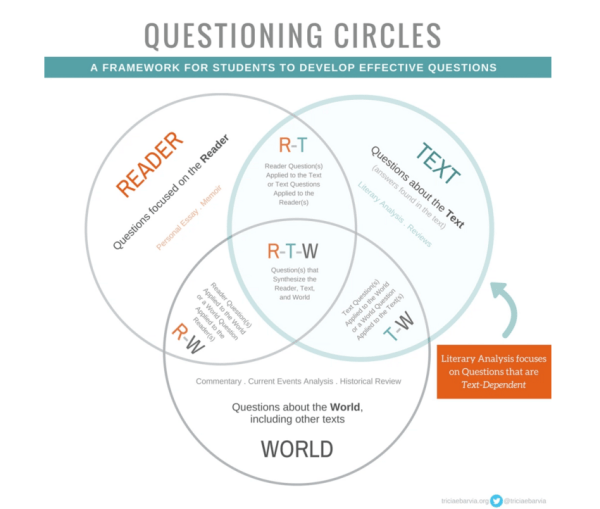
Tricia made me think about the on-going need for curiosity and student-generated questions. The ongoing need for purposeful and personal inquiry. She shared the chart below, citing the work of Christenbury and Kelly, NCTE, and Jeff Wilhem. And I got it.

Screen Shot 2016-02-18 at 7.18.15 PM

My students do not care enough about the books they’ve chosen to read. They do not care enough about the topics they’ve chosen to write about. I haven’t been paying enough attention, or I would have realized this sooner:  Choice does not necessarily mean personal connection.

I am glad I have time this year for do-overs.

It’s time to back up a few steps, so we can step into better opportunities for engagement, growth, and learning.

Maybe we’ll mediate.

Maybe we’ll play.

But we will certainly play with developing effective questions.

An Honest Reflection: No Ugly Crying Required

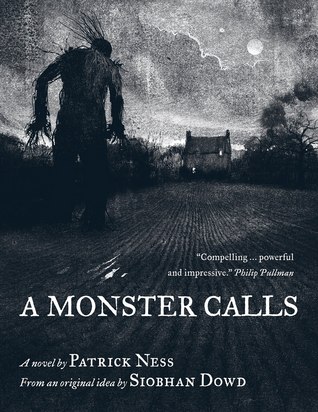
I just finished an ugly cry. You know, the kind where you sob until your eyes close so tightly that you wonder if you might hurt yourself? The delicious, exhausting, purge of a cry that leaves you breathless and wholly satisfied at the same time? In my humble opinion, it’s the type of weep-fest that only great writing can deliver, and I am delighted to report that I just slobbered my way through another story’s end that left me wanting to pick up the book and start right over again. On the recommendation of colleague, I picked up A Monster Calls on Friday afternoon during last period and finished it by Sunday afternoon.

Though I could go on for pages about how amazing this book is, and how excited I am to 8621462book talk this story tomorrow, and how transformative I think this text could be for some of my kids, it’s what led me to this text that I find really important right now. As a result,  approximately eight minutes after finishing that book, seven minutes after shoving a copy of it into my husband’s hands and insisting he “Read this. Read this immediately” (thankfully we’ve been married long enough that he can recognize a literary induced meltdown and not fear for his own safety), five minutes after texting half my department to tell them of my ugly-cry recommendation, and three minutes after blowing my nose one more time and pulling myself together enough to see the screen clearly, here I am. Counting the minutes until school starts, so I can tell students about this text. It’s the best feeling and it’s fueled by what I have deemed A Workshop Whirlwind.

A Workshop Whirlwind. And that’s not just cutesy alliteration either. It’s representative of an urgent and necessary flurry in my teaching career. And I, for one, could not be more excited. You see, it was this past week that Workshop came to knock on the door of the Franklin High School English Department in a real and meaningful way. And this is the story of how we’ve started down a path that I believe will change our practice and lead our students to see themselves as both readers and writers in a way we would not have thought possible.

Our journey with workshop is a unique one. We are going to be moving to this new delivery method as a whole group in one glorious leap. Thankfully, by a bit of divine intervention, we have had the support of the lovely and overwhelmingly talented ladies at Three Teachers Talk. It was TTT that gave us a place to land and see that workshop is not only possible at the high school level, but it can make a world of difference for our kids. And it was a little over a year ago, with the knowledge that my department was being asked to drastically change our day to day practice, that I pored through post after post on this blog searching for guidance. How to plan, how to assess, how to hold kids accountable, and how to organize, but most importantly…how to inspire our students. How to help them see that reading and writing could be so much more than an assignment. That our study of English could be a study of what it means to be. What it means to feel.

Now, change is rarely easy. In fact it sometimes leads to a brand of ugly-crying that is reserved for just these circumstances, where you feel the happy ship you’ve been sailing on has hit something substantial and the band has already started playing “Nearer My God to Thee.” Everyone find a lifeboat! We’re never going to make it out of here alive! I liked this boat a lot better before you put this big hole in the side.” And that, my friends, is what change does to a person. What change can do to an English department. Like the seven stages of grief, change too has its stages, and I’ve both felt these stages and watched my department try to stay afloat as this major shift comes our way. See, we aren’t individual contractors, coming at this move to workshop only out of our own desire to do so. This is a district level move that has led to the following:

Shock They want us to do what? I can’t even. I just…can’t.
Denial This isn’t happening. This isn’t happening. This isn’t happening.
Anger Nope. Just nope. You people are crazy. We should just set  the place on fire, while we’re at it.
Bargaining I can still teach __________ right? I’ll do this workshop thing, but only if I can still    teach ________.
Depression Whatever. It’s fine. More change. Not like we aren’t used to it. What does it matter, anyway? What does any of it matter? I’ll be in my room, reading __________ (please see stage above).
Testing Well, I guess I could give them time to read at the start of class. That makes sense to me. I love books too, so, natural move.
Acceptance I too am a reader and writer. I can do this.

And now, I am happy to report an eighth and amazing stage to this move – genuine enthusiasm.

In the last week, since Amy and Shana came to lead our department in two incredible days of professional development, I have felt a surge of excitement at everything I want to do in my own classroom and I’ve seen my entire department rally around this initiative in a way I would not have thought possible. In the last week, the halls of Franklin High School have echoed with book talks, students are curled up in corners with texts, and  teachers are chatting about trying out new strategies and putting together mini lessons. In the last week, the Wisconsin  “Bleak Mid-Winter February” has been anything but.

The teachers I am privileged to work with have been doing phenomenal work for years, since long before I joined their team. Their skill and passion, which has long fueled their sincere desire to help students learn, makes this an incredible place to work. And so, while my team would collectively injure me if I announced that everyone feels totally relaxed and ready to hold hands and sing Kum Ba Yah, I can confidently say that our journey has begun. We are poised and now also excited, to continue learning with and inspiring our students in new ways.

No ugly crying required.

Lisa Dennis is the English Department Manager at Franklin High School in Franklin, WI. Her energetic leadership and insight leads her department into the wonderful world of workshop instruction. TTT appreciates Lisa’s candor and drive to do right by her colleagues — and all their students. We thank God for teachers like Lisa!

#3TTWorkshop: Asking Good Questions When Making the Move into Workshop

IMG_1279

Book talks about NF like Columbine by Dave Cullen and talking about the writer’s research process capture many readers

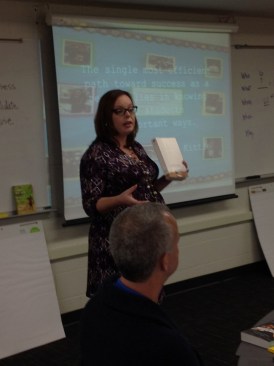
Shana and I recently conducted a two-day professional development workshop in Franklin, WI — such inspiring teachers in Franklin!

Franklin administrators asked that we help their teachers move into a workshop pedagogy, which is, of course, a favorite topic at Three Teachers Talk. We shared the background of workshop, which stems from the work of Don Murray and Don Graves, and from the work of our mentor Penny Kittle, whose ears had to be ringing and ringing since we said her name a million times throughout those two days.

Franklin teachers caught the vision and the value of letting loose the reins and opening their hearts to choice reading and writing. They just needed to experience it themselves from the seats of their students.

The discussion covers five of the pressing questions teachers asked during our pd.

They:  Where are some great places where I can get resources for books and materials for my classroom library?

Us:  The good news for Franklin teachers is the buy-in from their insightful administrators who have reserved funds to begin building classroom libraries. Not all teachers who catch the vision for choice independent reading, and the need for engaging, well-curated classroom libraries, are so fortunate. We weren’t. But finding resources and is certainly possible. Shana wrote this great post awhile back about grants she’s been awarded and the many businesses that give funds to buy books. Amy’s had great success with Donor’s Choose, one of the options Shana mentions. Three grant projects funded there so far! Lewisville Education Foundation has also been a great resource for Amy’s students and the books they love. Be sure you check out the grants offered through your own EF.

Other resources besides books are important, too. We spent time watching and responding to spoken word poetry with our new friends, modeling quickwrites, and studying the craft moves of these poets. Some of our favorite spoken word poets are Shane Koyczan, Sarah Kay, Phil Kaye, Marshall Jones, and Amy’s new favorite Harry Baker. Search online, and you’ll find YouTube videos and posts with the texts.

Engaging non-fiction articles are an essential in workshop instruction. Mentor texts, craft studies, and pairings with literature all make for authentic engagement with thought-provoking non-fiction. Find interesting articles at NewsELA, Izzit.org, Essay5W, and The Learning Network at the NY TImes. And, of course, the excellent mentors curated by our friends at Moving Writers.

They:  How can I design units that foster inquiry-based outcomes for my students?

Us:  We lead teachers in a gallery walk activity where they explored ideas of what authenticity, modeling, dialogue, inquiry, and other workshop essentials look like from both a teacher and the students’ points of view. It was interesting for us to see the many iterations of inquiry these teachers listed and how closely they overlapped with authenticity. Yes, they should.

However, getting students curious about learning does not always happen instinctively — especially when they come to us hardened by years of sit ‘n git classroom instruction. We must provoke inquiry, pique imaginations, inspire curiosity.  Of course, the move to choice opens doors to many of these needs. Providing, introducing, and talking about highly engaging literature helps. But so does allowing students to decide how they want to read it and what they want to do with it to show they are learning from reading it.

Teachers have to let go of control. We have to trust that students want to learn. We have to stop doing all the hard thinking for them. What if we let them find the mentor texts that best suit their needs as writers? What if we give them chances to determine themes they want to study, and then let them take those themes into other genres and ideas?

Let’s invite students into authentic and on-going research, so we move far far away from the one-unit-one-major-research-paper. Shana’s multi-genre project and my students’ engaging in our multi-modal feature article unit are good examples of how we apply this thinking in our own classrooms.

They:  I write every day for my job, but I have never written a “persuasive essay” for my job. How do I design authentic instruction that mirrors what my students might have to write in the future?

Us:  Read like a writer. Look for mentors everywhere. And know your kids. 

We know, if the answer was really that easy, everyone would do it. Although we do believe every teacher could. One way we’ve found to incorporate authentic instruction is to conduct regular craft studies of a variety of texts. We read a lot, and we look for texts in which we can discuss with our students topics like structure, literary and rhetorical devices, tone, etc. We call this reading like writers.

Shana and I agree, we first learned the value of reading like writers from Katie Wood Ray in her book Wondrous Words. Here’s a great Pinterest board to get you started. Shana and I will post the craft studies we find and use with our students more often. You’ll find several we previously posted when you search the “craft study” category.

They:  How do we hold students truly accountable?

Us:  In a word, conferring. We must talk to our students often and with purpose. 

sticky conferences

Modeling Silent Reading Conferences

Amy remembers when she first started moving students into self-selected texts how her conferences revolved around the books students read. Eventually, she realized that if she wanted to truly move readers, she needed to talk more to the student — as a reader — than about the book she was reading. This is an important shift in mindset and practice.

If we only encourage students to talk about the plot, summarizing this or that, maybe describing the characters, we miss out on valuable opportunities to help the reader stretch and grow in the skills she needs to mature as an independent reader. Identity matters.

Teachers foster a love of reading not by focusing on the books but by focusing on the reader of those books and helping those students identify themselves as readers. If you need ideas on conferring, Amy and Jackie discussed conferring in this #3TTWorkshop post, Amy wrote about conferring in a crowded classroom here, and Shana wrote about a what to read conference here.

Another important thing to remember about accountability:  We can ask students to write about their independent reading. Shana and I both ask students to evaluate their reading lives — several times a year. We consider these summative assessments, and students provide thoughtful commentary on how they struggle, grow, and succeed as readers. Amy quotes many of her students’ evaluations here. They are honest and insightful.

img_0331

Speed dating with books increases student talk about books, which increases students reading good books

When we ask students to write about their reading, it must be a task they see as worthwhile — and one we see as a support to our ultimate goal:  developing life-long readers. Too often, we read about teachers who punitively assign tasks to “catch their students not reading.” If this is you, please stop.

They:  How do I create engagement not compliance due to grades?

Us:  Choice. Choice leads to engagement. Engagement leads to autonomy. Autonomy leads to independence. Independence is engagement.

Trust the process, and see for yourself.


10 Pedagogical Must-Reads for Workshop Teachers

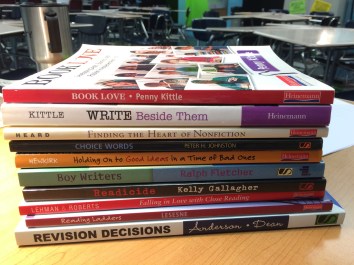
IMG_0650I met with my new student teacher a few weeks ago, and he asked me to borrow any books that might help him get going on the readers-writers workshop–the “theory” version of Jackie’s starter kit.  He’s been in my classroom before, so he knows the general routine and character of our work, but he wanted to know the ins and outs of how I thought and planned and conceptualized the whole thing.

I sat at my desk and looked at all of the titles I had on hand, remembering how influential reading them for the first time had been.  As a result, it was hard not to just dump my entire professional bookshelf onto a cart for him, but I managed to pick out a few titles that have guided me most adeptly in one aspect or another of my current classroom practice.

  1. Book Love by Penny Kittle – This was the book that helped to solidify my vision of an ideal classroom.  Before I read it, I had already been doing many of the best practices Penny mentions–writer’s notebooks, choice reading, personalized writing.  But I didn’t know how to bring it all together until Book Love.  As such, this is my #1 recommendation for any teacher looking to jump-start their individualized workshop curriculum.
  2. Write Beside Them by Penny Kittle – This book introduced me to the concepts of mentor texts, reading like a writer, and best draft/publication of writing.  I learned about quickwrites, constant revision, writing conferences, and a great deal more of what are now standard routines in my classroom.  This is the book for anyone curious about the big picture of writing instruction.
  3. Finding the Heart of Nonfiction by Georgia Heard – I was raised in the tradition of literature as containing mostly fiction and poetry, but Penny’s books helped me see the great value of nonfiction.  I wanted to know how to integrate it well into my thematic units, and this book helped me do that.  Georgia’s book is full of wisdom about finding the soul of good nonfiction writing and matching it to your students’ needs.
  4. Choice Words by Peter Johnston – This book taught me how to talk to students.  It is my #1 recommendation for anyone looking to address those pesky Speaking and Listening standards in the Common Core–this book teaches you about the delicate, volatile power of a few choice words between you and your students.  I re-read it every year, and it might be the most important book in this stack.
  5. Holding On to Good Ideas in a Time of Bad Ones by Tom Newkirk – This book is subtitled “Six Literacy Principles Worth Fighting For,” and Tom Newkirk certainly made me want to engage some of my former teachers in fisticuffs when I finished it.  This text is full of common-sense brilliance that will transform the way you think about why we teach reading and what kinds of texts we teach.
  6. Boy Writers by Ralph Fletcher – Why do my students keep writing about violent gun battles?  Why do they always ask if they can swear in their writing?  What’s up with the complete unwillingness of my boys to be vulnerable?  If you’ve asked yourself these questions…this book is for you.  Ralph writes about everything you ever wondered about boy writers and how to move them forward in their writing.
  7. Readicide by Kelly Gallagher – Schools have been killing reading for many years, Kelly argues, and then presents ways you can stop the slaughter.  He fires away at pop quizzes, assigned chapters, multiple-choice tests, and all the practices that steer our students toward SparkNotes.  Then he reveals ways to get students authentically engaging in literature in a way that doesn’t kill their love of reading.
  8. Falling in Love with Close Reading by Chris Lehman and Kate Roberts – After finishing Readicide and wanting to abandon the eight or so whole-class novels I once felt chained to, I wasn’t sure how to teach close reading skills.  This book answered that question for me, and more.  Chris and Kate reveal how to use poems, articles, short stories, and selections from novels to get kids interacting with the beauty and power of language in all kinds of texts.
  9. Reading Ladders by Teri Lesesne – When all of your students have finally found a book they will actually read–then what?  Teri Lesesne taught me how to help students climb a reading ladder of text complexity with this book.  It’s a tough battle to get all kids reading, but it’s even tougher to get them to all challenge themselves once they are.  Reading ladders are the solution to the increasing complexity question–now they’re a consistent part of my instruction.
  10. Revision Decisions by Jeff Anderson and Deborah Dean – After reading the first nine books on this list, I still wasn’t sure where grammar instruction fit in.  I knew to have students read like writers and learn from language and sentence structures that way, but I wasn’t sure how to structure my mini-lessons, until I read this book.  Jeff and Deborah helped me find strong craft study lessons and bring them into the classroom in a way that appealed to students and also benefited them immediately in their writing.

This is by no means an exhaustive list–That Workshop Book by Stephanie Harvey, Read Write Teach by Linda Rief, The Book Whisperer by Donalyn Miller, and many other integral titles were simply not on my shelf when I gave this stack to Mike.  But these top ten are ones I wouldn’t be the same teacher without.

What other titles are essential to your practice?  Please share in the comments!

Update:  Here are must-read folks that readers have suggested via Twitter and Facebook, as well as in the comments:

  1. Lucy Calkins
  2. Nancie Atwell
  3. Linda Rief
  4. Katie Wood Ray
  5. Donalyn Miller
  6. Don Graves
  7. Donald Murray
  8. Peter Elbow
  9. Ariel Sacks
  10. James Moffett
  11. Louise Rosenblatt

Starting with Why

“People don’t buy WHAT you do, they buy WHY you do it” ~Simon Sinek, Start With Why

I first heard of Simon Sinek from my son Zachary. He came home from work one day excited to share a TED Talk he’d listened to during his break. I had not seen my youngest son so animated in months. Zach had big dreams, but he made some poor choices that led to him having to wait a while after high school to start making those dreams a reality. This young man needed some inspiration. Simon Sinek gave it to him.

At Zach’s request, I watched Sinek’s TED Talk “How Great Leaders Inspire Action,” and talked with my son about Sinek’s message:

“There are leaders and there are those who lead. Leaders hold a position of power or influence. Those who lead inspire us. Whether individuals or organizations, we follow those who lead not because we have to, but because we want to. We follow those who lead not for them, but for ourselves.”

Zachin Taiwan

Elder Zachary Rasmussen

Zach watched that TED Talk multiple times, and my husband pulled Sinek’s book from a shelf in our hallway. “You ought to read it,” he said.

“I want to be that kind of leader, the one who inspires,” Zach told me, and he began to make choices based on his drive to help people instead of what he thought he would get out of helping people. As I write this, Zach is in Taiwan. He gave up his cell phone and his friends and jumped into learning Mandarin Chinese. His 6’4” frame dons white shirts and ties everyday as he rides a bike through Taipei, serving a full-time two year Mormon mission.

My son found the WHY that Sinek inspires, and it changed the direction of his life.


Sinek’s book is about identifying why some leaders are able, not just to sell a product, but to create a movement. He explains his purpose: “to inspire others to do the things that inspire them so that together we may build the companies, the economy, and a world in which trust and loyalty are the norm and not the exception” (7).

That reads like a nice idea for educators, too, doesn’t it? I do not know a teacher who does not want “to inspire [students] to do the things that inspire them.” However, according to Sinek many in business go about it backwards. By extension, I argue that many in education do, too. We focus on the WHAT and the HOW– like making learning relevant, engaging our students, teaching them grit, focusing on achievement, calculating grades, teaching a specific book, giving them a quiz — instead of WHY we teach our students in the first place.

Sinek says, “All the inspiring leaders and companies, regardless of size or industry, think, act and communicate exactly alike. And it’s the complete opposite of everyone else.” They start with WHY. Instead of a focus on the WHAT they produce or sell, or HOW they produce or sell it, they focus on WHY they produce and sell it in the first place. Apple, for example, obviously sells computers. That is their WHAT, but their WHY is to challenge the status quo. It always has been. Stay with me here with Sinek’s explanation:

“A marketing message from Apple, if they were like everyone else, might sound like this:

We make great computers.

They’re beautifully designed, simple to use and user-friendly.

Wanna buy one?

When we rewrite the Apple example again, and rewrite the example in the order Apple actually communicates, this time the example starts with WHY:

Everything we do, we believe in challenging the status quo. We believe in thinking differently.

The way we challenge the status quo is by making our products beautifully designed, simple to use and user-friendly.

And we happen to make great computers. Wanna buy one?

Apple doesn’t simply reverse the order of information, their message starts with WHY, a purpose, cause, or belief that has nothing to do with WHAT they do” (40-41).

Now, let’s think about this as educators:  Most of the time, we think and talk about WHAT we do. “I teach English,” or “I teach high school,” or even “I teach kids.” Sometimes we talk about HOW we do it. “I teach readers and writers in workshop,” or “I advocate for choice independent reading,” or even “I teach To Kill a Mockingbird, ” or “I teach Hamlet.” These are different from WHY we teach and have nothing to do with what motivates us to greet our students each morning, armed with carefully crafted lesson plans, and a smile.

According to Sinek, when we focus on WHAT we do instead of WHY we do it, we are like most of the businesses and companies in the world that drive their work with manipulations and punitive rewards, which might work in the short-term, but do not breed loyalty and long term change. We see this in education all the time:  threats of in-school suspension and failing grades, mandatory tutorials, new test-prep programs, increased numbers of safety nets designed to keep students from failing, changes in grading policies, and more. “There are only two ways to influence human behavior: you can manipulate it or you can inspire it,” writes Sinek. Most decisions we make to motivate students are based on manipulation, and we fail to inspire long-term change. No wonder we see the same students in the same trouble year after year. When we define ourselves, or our schools, by WHAT we do, that’s all we will ever be able to do (45), and that is not enough “to inspire [students] to do the things that inspire them,” or to build a world where trust and loyalty are the norm. We need what Sinek calls “inside out thinking.” To inspire lasting change, we must start with WHY.

Let’s take that example of Apple from before and apply it to our schools. If we are like everyone else, we might talk about our school like this:

We teach high school.

Our school culture is spirited and sound. Our curriculum is rich. Our test scores are high.

Wanna come here?

When we rewrite the example again, and rewrite the example in the order an inspiring school leader actually communicates, this time the example starts with WHY:

Everything we do, we believe in challenging our students’ thinking. We believe in genuine and individual inquiry.

The way we challenge our students is by making our school safe and innovative, with passionate and knowledgeable teachers who are caring and compassionate, who cater to the needs of all students.

And we happen to graduate honorable and educated citizens. Wanna come here?

Does that example make you feel a little different?

As I read Sinek’s book, I kept imagining what his argument looked like when applied to education, but more specifically, I kept imagining what it would look like applied to me as a literacy leader in my classroom. The way I talked about teaching was like everyone else I knew; I focused on what I did as an educator instead of WHY I did it.

I taught AP English Language and Composition. I taught skills to pass a test. I taught students to love books and to like reading. I taught students to write.  Although I had changed my instruction from when I first began teaching, from whole class novel studies with little writing instruction, to readers and writers workshop with choice, modeling, and mentoring, I still struggled. I struggled until I turned my thinking inside out. I took that example Sinek uses to explain what makes Apple such an innovative force in the market and applied it to my belief about myself as an educator and how I make that belief happen in my classroom.

See how I start with WHY:

WHY:  Everything I do as a teacher, I believe in helping my students identify as citizens, scholars, and individuals whose voices matter. I believe our world is better when individuals understand their value, believe in their capacity to cause change, and take action to better the world around them.

HOW:  The way I challenge my students is by making my classroom safe and inquisitive for my individual learners, with instruction that centers on trust, esteem, equity, and autonomy. Through the rituals and routines in my workshop classroom, students gain a sense of belonging, identify themselves as readers and writers, develop their voices, advance in literacy skills, and take risks that have the potential to change their worlds and the world around them.

WHAT:  And I happen to teach English by modeling my reading life and writing life.

It works.

My readers and writers advance because they know we are in the business of learning about ourselves and our world — together.

Simon Sinek is right:  “[Students] don’t buy what we [teach], they buy why we [teach] it.”

My challenge for you:

Follow Sinek’s model like I have above, and write your WHY. Please share it in the comments.

4 Questions We Answer about Exams #3TTWorkshop

We read this tweet, and first of all, let me just say how honored we are to be included with the likes of Screen Shot 2015-12-22 at 10.44.35 AMPenny Kittle and Kelly Gallagher. The link took us to this post:  Reading (R)evolution post where we read about three high school English teachers much like us who are committed to independent reading and working hard to do right by their students. They asked about semester exams, and since Shana and I recently had a conversation that answered many of their questions, we jumped on the opportunity to share that discussion. We think our friends at Mamaroneck High School will find it helpful– maybe you will, too.

#3TTWorkshop Meme

Do you have topic ideas you would like us to discuss? Please leave your requests here.


What are your thoughts on mid-terms/finals and what should be on them?

Shana:  By their very nature, a lengthy exam of any sort measures a student’s fluency with reading and writing, and that’s one of the reasons I like them.  I’ve been thinking a lot this year about sustaining length of thought and what that looks like–not just thinking about one subject for a long period of time, but continuing to read and write and experiment with that subject for a long period of time.  Thus, I’ve tried to create routines that foster fluency, and a lengthy exam is one way to measure whether or not I’ve been successful with that goal.

As for the exam itself, I believe the format matters most.  If we never do worksheets with multiple-choice answers during class time, why start now?  I try to make my exam mirror our daily routines in class–there is a section for independent reading, for sustained writing, for critical reflection, and for goal setting.

Amy:  Like you, I like the idea of measuring fluency with a lengthy exam — and while I do not think one exam on any one day can give an accurate measure of a student’s knowledge, I do think that sometimes it can give us a clear picture of a student’s growth. The exam itself is only one part though. Really, it all comes down to our alignment. How tightly do we align our standards and the skills we need students to master to our lessons and to our assessments, both formative and summative, within our unit cycle? Our semester and final exams should be another extension of that alignment. Too often, it is not.


What does a 2-hour exam look like?

Shana:  My written exams all start with a message from me to my students–a missive that this is not an exam one can or should study for, but rather one where students have the opportunity to demonstrate growth, effort, risk-taking, and clear thinking.

From there, I separate the exam into options by subject, and for each subject, I give students a choice of three tasks to complete.  For example, subject one is independent reading, and option one is creating a video booktalk, option two is creating a themed top ten list, and option three is creating a book trailer.

Amy:  When I first moved to a workshop pedagogy, the thing I had to learn is the idea of skills-based instruction and helping students form habits of mind that relate directly to improving as readers and writers. I was no longer teaching a book. Thinking about the skills helped me choose mentor texts and design mini-lessons that would move my readers and writers. Since my instruction changed, I knew my exams had to change as well. And my exams never look the same from year to year.

In my previous district, and especially for grades 9th and 10th, which take the Texas state assessment, half of the semester exam was a common assessment created by the district. It mirrored the state assessment and could be used as a diagnostic tool to measure student growth as they prepared for the end-of-course exam. The other half of the assessment we created in grade-level teams. The second half was difficult because I was the only workshop teacher devoting time to independent reading and writing on my campus. I was able to convince my team to assess skills rather books, but even then, it was difficult to craft an assessment that reflected the practices in my classroom instruction when I was the only teacher with those practices.

A two-hour exam needs to give students the opportunity to show what they have learned about reading and writing, and I absolutely agree:   it needs to mirror the practices we do in our daily instruction, but I also think it needs to give students the opportunity to show how their mastery of those practices help them tackle the kinds of critical reading and writing they must do in their lives beyond my classroom. For example, my students read independently and for sustained periods of time throughout the semester because I want them to learn to appreciate both the efferent and aesthetic value of books –we discuss this a lot as I conduct book talks, and they discuss books with each other. We read to enjoy but we also read to learn. My students write arguments on their blogs weekly, so one option for at least part of their semester exam is to write an argument about their reading. They marry what they’ve gleaned from their independent reading with the skills they’ve learned about writing. (I often give this portion of the exam in advance since it takes time for me to read and assess, but I’ve also given it as a timed writing on exam days. Students know the specifics of what I am looking for in their writing — this ties directly to the AP writing rubric I use to assess their blog posts — so I am able to score these holistically. And quickly.)


What should major assessments like an exam measure?

Shana:  What makes a good reader or writer is not necessarily comprehensively covered in any set of curricular standards that I know about.  Instead of feeling obligated to adhere strictly to the Common Core standards, or our WV Next Generation standards.  Because what we value in our classroom is the process of becoming a strong reader and writer, my exam highlights process as well as product.

In addition, some things I really value, like students’ ability to talk to me and one another about their learning using specific academic vocabulary and evidence-based claims, are not measurable by a written exam.  Thus, I assess those things at other times, like during conferences, rather than during exam week.  I don’t feel obligated to try to assess “everything” on one exam–it’s simply impossible to do so.

Amy:  Ideally, an exam should allow students the opportunity to show they have learned the material, right? If our exams are cumulative, and test the acquisition of skills, students should be able to earn credit by showing mastery — or at least growth — as indicated by their exam scores. This goes back to what I said before about alignment. It also represents a big problem in what I see with “grades.” Too often students receive scores on tasks that have more to do with their responsibility (or lack thereof) than on what they have actually learned. Take this scenario:  say a student does not complete x, y, and z assignments for whatever reason. By nature of many grading policies, she receives zeroes for not doing the work instead of not being capable of doing the work. A major assessment should be an assessment that evaluates a student’s ability as it relates to what we have taught, and if she didn’t do x, y, and z, the final assessment should be a last stop measure to show she’s learned what we needed her to learn that semester.

Shana:  I completely agree with the gap between grades and ability.  The whole grade-feedback-evaluation-assessment-ability conundrum has been frustrating us for a while, I know.  Some of my students did not finish the exam by the end of the week, but I won’t hold that against them–they will take it home over break and return it to me in the New Year.  I’m not sure, really, if I ever feel confident “grading” an exam item by item.  Instead, I consider the urging I give at the beginning of my exam–deep thought, strong effort, and time spent–and give a letter grade based on how well it is apparent that the student did those things well.


What would your ideal semester-ending assignment look like?

Shana:  I usually end the first semester with a series of activities like I described above, but I always end the second semester with a multigenre project of some sort.

For my first semester exam, Amy and I brainstormed together how to preserve student choice, our values of having students create products rather than just complete tasks, and how to allow for the showcasing of learned skills rather than a “gotcha” mentality with new material.  In our notebooks, we jotted down ideas and I wrote this up.  I made it available to students the Monday before finals week, so they’d have about a week and a half to work on it.  I think what’s important is that the last activity is reflection and goal-setting–looking back on 2015, and looking forward to 2016.

For this year’s end-of-course assignment, I’m excited to do a spin on Tom Romano’s literature relationship paper, in which students create a multigenre series of writings focusing on their relationship with and reading of a text.  I hope to have students re-read a favorite independent reading novel and write in many genres that include reflection, craft analysis, narrative, poetry, and more.  With that end goal in mind, I have designed more written product assignments that deal with narrative and analysis than I usually do.

Amy: My midterm exam is much different than my end-of-course exam. I loved how we talked through what our exams would look like when we were together at NCTE. As you know, what you wrote up will work well for me. Thanks for sharing that and saving me the time of having to write my own. I did a few revisions, and mine looks like yours, except with one less choice of options — and it is only for 50% of the test. Students will work on it in class the week or so leading up to the end of the semester. We have a week and a half after winter break.

The other 50% will be practice for the critical reading part of the AP exam. The 90 minute block will be enough time to take a full-length practice test, important for stamina, and then talk through a few of the passages. Of course, the second portion of the exam will be more diagnostic for me than anything — although we have analyzed texts in much the same way the exam asks students to do.  I haven’t decided how, or if, I’ll take a grade on it yet — my students are all over the place in terms of their critical reading abilities, so no doubt there will be a curve somewhere. I thought about taking a grade on the level of thinking I see in their annotations, but that isn’t fair. Not everyone needs to annotate the same way to truly think about a text. What I may do is have students write a one page reflection about that critical reading test after they take it, maybe set some goals for how they want to continue to grow as a reader during the spring semester. If they are honest with themselves, this reflection would be more specific about tackling complex texts than the reflection they write about their independent reading for the first portion of the exam. (And now I am just thinking as I write.)

Like yours, my students do a complex writing piece at the end of the year, which combines several different genres of writing. For the past few years, we’ve studied multi-modal feature articles and then written our own. On exam day we present our favorite parts to the class. Here’s a few examples of students’ published work from last year. Anthony wrote “Current and Future Sources of Energy,” Maribel wrote “Beauty Unlimited and Undefined,” Bryan wrote his immigration story. These types of assessments are my favorite.

Students take ownership of their writing and take pride in their finished products. They also evaluate their writing process and give themselves their own grade. After all, they do all the work:  thinking, planning, researching, drafting, revising. They are the ones who know if they’ve accomplished what they set out to do.

Please join the conversation:  What are your thoughts on exams in a workshop classroom?

#3TTWorkshop–Tackling the Challenges of Conferring

Three educators. Three states. Three demographics. All practicing Readers and Writers Workshop in our Secondary Classrooms. Read more about us here.

We are the Modern PLC, and every Wednesday, we share our behind-the-scenes collaboration as we talk about the most urgent moving parts of our classroom pedagogy.

This week’s conversation took root over a year ago in a hotel room at NCTE in Washington D.C.  As with many of our TTT get togethers, we threw out a question from our classrooms and began discussing our struggles, questions, and ideas.  This time it was Amy, asking about conferring.  The three of us mutually agreed that one of the greatest challenges we face as workshop teachers includes conferences, yet while they take time, practice, and diligence, they are one of the most necessary and rewarding components of the workshop classroom.

In this week’s conversation, Amy and Jackie discuss the the value of conferring within the reader’s writer’s workshop.  

Make sure to visit the first installment of our conversation, and please join the conversation in the comments!

How do you meet with every student when your class sizes have 30 or more students?13b04fad-66ef-4eca-83df-3f0c7412bd48

Amy:  I come back to that word — purposeful. If we plan to meet with students in conferences, and we craft lessons that allow for students to work independently for a time, we can meet with students one-on-one. Yes, when our classes are large, we may not get around to meeting with each of them as often as we like, but consider the alternative — never talking face-to-face with our students. The more I talk with my students about their needs and what would help them learn more in school the more they tell me they crave conversations with adults who will listen to the things they care about and believe in. They want adults to validate them.

Say we have a class of thirty students, and we only meet with each one of them three times in the semester — that is three times more one-on-one contact with a caring adult they would have had otherwise. Every bit of time matters.

I wrote a post with ideas for conferring with students when our class sizes are large here. My favorite is the bundle conference — no, I really like the one in the hallway. Really, any chance to talk to a reader about her reading is one I cherish.

Jackie: I am fortunate that I do not have classes over 30, but like Amy says, there are ways to reach such a large group of students.  It isn’t easy, but it’s possible.  I advise Writers Club and Government Club, so I know I can reach at least a couple students during that time.  I also have a handful of students who stay in my room during my prep, duty, lunch, or after school to work on homework and reading.  This means that I see anywhere between six to ten students in alternative settings where we can chat about books.  

I  also use workshop time to meet with table groups, which consist of four students each, just the right amount of students to chat about books while still gaining some more individualized attention.  Furthermore, as Amy mentioned, I rely on bundle conferences when discussing writing.  Just last week, I managed to conference with my twenty AP Literature students about their essays in just over an hour of workshop time.  Today, one of my students approached me after class, thanking me for the conferencing time and the additional one-on-one tutoring time during a study hall.  He said that he felt significantly more confident approaching his essay this past Friday after having such individualized feedback.

Amy:  I forgot to add — sometimes I schedule conferences with students. If I notice that I haven’t met with someone for a long time, or if I notice he’s stuck in the same book for too long a time, I’ll invite him to confer during lunch or after school. Personal invitations mean a lot to students who for whatever reason “I haven’t got a round to yet.”

Just last week I tapped Tony on the shoulder and asked that he meet with me during lunch. I’d noticed that he rarely checked out books from my classroom library, yet his record of his reading kept getting longer. I really thought this students was fake reading and calling it good, and since Tony has a lot of social capital I feared he was sending a negative message to his classmates. Tony sat with me for about five minutes during lunch tutorials. I asked about his reading, and he told me enough to know that he really was reading. He told me he thinks he needs to try harder books. So we talked about what books might interest him. I then asked if he knew how much of an example he is with his peers. His eyes started to glow and he smiled a little. “Yeah, I guess so,” he finally said. We talked about the kind of leader he wants to be, and when Tony left my room, we both felt better about what he is accomplishing in class this year. That is the kind of conference I love to have with students, and it provides the one-on-one attention often missing when students share classroom space and one teacher with twenty-nine other students.

What are your best conversation starters?

Jackie: Amy, I’m curious about your most successful conversation starters, particularly the ones you use with those tougher students who struggle to stay engaged.  I know that many of my struggling readers love learning from their reading.  They enjoy “getting something” out of their books, which means that I tend to talk to them about their hobbies and how it relates to their book.  One of my self-defined “non-readers” has been working on a hockey book since the beginning of the year.  I love hearing about what he has learned and why it is valuable to his only success as a hockey player.  I also enjoy hearing about why a student chose the book they did.  Their responses can be unexpected and even surprising.  It reinforces the fact that they have a choice in their education.

cdbf4b4e-bd86-48eb-8f05-004647b7396aAmy: I tried to keep track of what I say to start a conversation, thinking I’d realize I say something like Carl Anderson suggests in his book “How’s it Going?” Sure, sometimes I say that, but really, my conversation starter depends on the student. It changes all the time. The important thing to remember is to get our students talking about their reading experiences. Our role is to listen. If we do not listen, we do not have a chance to assess where our students might need help, where the gaps in comprehension are, or how we may encourage them to take risks and try something more challenging so they grow. We need to remember to let the student direct the conference. I still struggle with this sometimes.
Suppose I say: “Tell me what you’re thinking about this book.” Depending on the student, he’s likely to say “It’s good” or “It’s okay.” That just means I have to ask another question to get the student talking. But if I ask something specific about the student and/or the book, I can usually spark a conversation immediately. For example, I love to ask questions about book covers, especially if I can tell a student is about half way through the book.

I’ll say something like: “I can see you’re about halfway through. I wonder if you’ve thought about the book cover design at all. You know, most people judge a book by the cover. How well do you think the cover represents the book so far? Based on what you’ve read, why do you think that?” This lead works well for book titles, too. Of course, I want my students to talk about their books in a way that I know they are actually reading them, but more importantly, I want my students to be able to talk to me about what they are thinking about their books as they read. This is difficult for many students, but the more I encourage and validate and stay consistent with conferring, the easier it gets for them.

Jackie: You are right–there is no scripted answer to asking the right question, but as you said, some promote more discussion than others.  I also enjoy having students compare their current reading books to the ones they’ve read previously.  After picking up The Compound  at the urging of his friends, one student said, “I actually think Dopesick [by Walter Dean Myers] is better than this book.”  His willingness to state his opinion led the same friends who recommended The Compound to turn around and read Dopesick.

What do you do if you figure out a student isn’t reading during your conversation?

Amy:  I wish I didn’t have to answer this question. I wish I could say all my students read. Just isn’t true. I’ve written a few times already this year about how I still have non-readers. I mentioned it in my #FridayReads post last week. I’ve found the two major reasons my students tell me they do not want to read: 1. I’m too busy, 2. I don’t like reading. Not necessarily in that order.

When I discover in a conference that a student is stuck in his book — bored with it, or just flat out flipping pages — we talk. I try to get him talking about his passions.

Most of my boys love soccer. “Why do you love that sport?” I’ll ask, and usually, he will describe the friendships with the guys on the team, the love of being outdoors, the competition. I want him to show me emotion about something he loves.

Then, I’ll say something like:  “I don’t know much about soccer. I’ve never played. How can you help me love it?” And he’ll go off talking about exercise and health and having fun. I listen and nod.

Then, I’ll ask: “What do you suppose that has to do with reading?”

And sometimes he gets it, and he’ll say, “You mean like if I never read I may never know if I like it?”

Of course, then I pile him up with book choices and encourage him to try a book he thinks looks interesting. We talk about the importance of reading the first several pages, hopefully in one sitting, to give the author enough time to draw us into the story. And then I monitor this reader closely. I do not wait to talk with him in a week or two. I talk with him as soon as I see him again and ask what page he is on and if he likes the book. These are the students we tenderly nurse along until they can get up and run on their own.

Jackie: It’s funny that states away we use the same comparison.  I am constantly talking with my students about how reading is like exercising and how our brains are muscles that require nurturing as well.  I remind myself of this metaphor every time I go to the gym, everytime I try a new exercise class I loathe, and every time I look at the ridiculously jacked woman next to me who is jogging at my breakneck speed.  

Reading requires patience; we do not become readers overnight.  I think what shocks my students most though is my resilience to find a book they will enjoy.  I go through a similar process as you, Amy.  Asking what about the book is tedious or boring, helping them make time by offering my classroom before and after school.  I will stop at nothing to find a book that catches their interest, even if that means devoting shopping trips to that one kid who hasn’t read a whole book since the start of the year.  For those tougher kids, I know that one book can change them.  The trickiest and most exhilarating part is finding that book to transform their outlook.

Amy:  Tricky and exhilarating = absolutely. I love this work, and I know the value of students building stamina, growing in confidence, and challenging themselves into more complex texts. Of course, all those things happen as a result of regular and consistent conferring practices. Every time I feel like my reading workshop gets stuck, or kids are not reading like I think they should be, I pick up the notebook with my records and start conferring more. It might not work magic, but it’s close.


#3TTWorkshop — Conferring with Our Readers

Three educators. Three states. Three demographics. All practicing Readers and Writers Workshop in our Secondary Classrooms. Read more about us here.

We are the Modern PLC, and every Wednesday, we share our behind-the-scenes collaboration as we talk about the most urgent moving parts of our classroom pedagogy.

This week’s conversation took root over a year ago in a hotel room at NCTE in Washington D.C.  As with many of our TTT get togethers, we threw out a question from our classrooms and began discussing our struggles, questions, and ideas.  This time it was Amy, asking about conferring.  The three of us mutually agreed that one of the greatest challenges we face as workshop teachers includes conferences, yet while they take time, practice, and diligence, they are one of the most necessary and rewarding components of the workshop classroom.  

In this week’s conversation, Amy and Jackie discuss the the value of conferring within the reader’s writer’s workshop.  Part one of this conversation delves into why conferring matters and how we find time in our classrooms to sit down with each student one-on-one.

Please join the conversation in the comments and check back for the second installment tomorrow!

Conversation Starter:  Why must we confer with our readers?IMG_9734

Amy:  Conferring regularly is what makes a readers’ workshop classroom work. Simple as that. If a teacher says to me “I tried allowing students to read what they want, and it didn’t work — they still won’t read,” I know I have to ask something about how he confers with his students. How often? What do you talk about? How do you make them feel about reading?

I learned about the importance of conferring just like everyone else who makes reading workshop her pedagogy:  If I do not purposefully sit down and talk with students one-on-one and face-to-face on a regular basis, many of them will not read. They are too used to playing the game of high school English. They know how to flip the pages, move their eyes across the page, and lie to my face about how they liked, or did not like, a story. I teach 11th grade. Some students have done this for years.

The only way to create readers is to get them reading. The only way to get many students to even give reading a try is to talk with them in non-threatening conversations about their lives, about what they are interested in, and why this or that book might be something that matters to what they want to know or feel or do. Conferring is conversing about what matters to my students and talking to them as if they are already readers — until they begin to call themselves readers, too.

I also think this applies to every content area. If math teachers spoke to their students like mathematicians, and science teachers spoke to their students as if they were scientists, maybe we’d have many more students interested and invested in math and science. Every teacher should hold regular and consistent conferences with her students. Even if those students never come to like reading or math or science, they will become more engaged in the learning environment because the teacher has shown personal interest in the life of the learner. Face-to-face leader and learner conferences make for genuine and consistent engagement in the learning process. And teacher and student both benefit.

Jackie:  I love the process of conferring with students, particularly at the beginning of the year when students aren’t quite as used to having their teacher sit beside them just to chat.  Even now as I pull up my mini-folding-conferring chair, I enjoy the shift from awkward first interactions to excited chats about their reading.

Reading conferences aren’t just about accountability, although that is one of the many perks.  During these conferences I get a better sense of what books to recommend to students, how their past history affects their reading practices, what they’re coping with on a daily basis, and what they think about when they crack open a book.  As Don Graves writes about his most formative teachers in The Energy to Teach, “All of these teachers expected more of me and we had a strong personal connection that I did not want to disappoint them.”  Reading conferences allow me to connect with my students on a level that not only shows them that I am committed to their reading journey, but it that I am invested in their life and education.

Amy:  I love how you pull up a mini-folding-conferring chair! I used to have a single yellow chair that I invited students to come and sit in — the special chair. I had to leave it at my old school. I saw this nifty rolling stool at a thrift store and almost bought it. I could have rolled from table to table to confer. I talked myself out of it, but there are days a roll-about-the-room would be handy.

Jackie: It’s the best purchase I’ve made all year! Mine looks similar to this one.  What I love most about it though is I sit at the same height as my students, so I can easily set up next to their desk or join in group conversations.

When do you confer?

Amy:  I’d like to say I confer every day. In my heart I want to have a regular system, and on paper I do. In reality, so much administrivia gets in the way. When I am purposeful, I meet with one to three students every day during our independent reading time (usually 15 minutes.) I try to be consistent because I only see my students every other day. If I am not careful, weeks will go by without me talking to some of them.

I have a binder where I keep conferring notes, and I place sticky note reminders to help me remember to get back to certain students who need a quicker follow up time than me making it around the room again. I’ve also started charging my readers to be advocates of their follow up with me. It’s important that juniors in high school take ownership of their learning. If a reader and I discuss a certain skill, and she decides to complete X, I ask her to be the one to remember to come in and confer. Many of my readers remember, and they are the ones who are gain skills and mature as critical readers much faster. Sometimes these conferences happen between class periods or during lunch or at the end of class when students are working on their writing, and sometimes I let them slip into my normal conferring routine. I’ll never turn a reader down who wants to have a quick chat about her book or what she learned.

Jackie: I agree with Amy–my goal every year is to become better at conferring.  I want to make sure to meet with as  many students as possible, but as the year progresses I struggle with the administrative tasks.  That being said, I typically meet with two students within the ten minute reading time we have daily.  On block days when I allow for twenty minutes, I can get around to four.  

My freshmen enjoy the process of chatting about their books, their interests, and their reading.  They enjoy using new vocabulary we’ve learned in class, and I love picking their brain about writer’s craft.  I also try to focus on reflective questions with them so they look at their reading progress holistically.  With my AP Literature students, I focus more on their depth of analysis within their independent challenge books.  I also take this time to check their critical reading journals as well as to discuss whole class novels.

In terms of logistics, I have a cubby where I keep stacks of conferring forms paper-clipped together and sorted in alphabetical order by first name. At the beginning of every period during reading time, I pull out that class’ papers, clip them into my clipboard, and start with the last student I conferred with.  This allows me to quickly keep track of who I met with last and what we discussed.  

Sometimes I can’t keep track of everything and I will reflect back on my notes, jotting down conversations I know I had on Monday when I collected pages or during passing time.  Every minute offers a moment to conference, and while these conferences aren’t always formal, they show students that not only do I hear them but also I am interested in what they have to say.

Amy:  Most days I feel like I do more spontaneous conferences than planned ones. A students needs a new book, so we meet for a chat by the bookshelves. A student finished a book, so we chat for a few minutes in the halls. I almost wrote that these were my favorite kinds of conferences, but that’s not true — I like all conferences. I do like the joy I recognize so readily when my students start identifying themselves as readers though.

Do you have topic ideas you would like us to discuss? Please leave your requests here.

Writing My Wrongs: How I’m Learning From My Mistakes

FullSizeRender

A student caught sneaking his independent reading book into his lit circle novel…this is a first.

Every year I arrive at the second quarter with a new approach, idea, or plan.  This will be the solution! I think.  This will sustain momentum.  This will help us make it through the slump.  This will be the difference between dreading quarter two and praying for quarter three, but year after year, I am wrong.  For the past three years I’ve convinced myself it is the book—Lord of the Flies is too boring; they can’t appreciate Bradbury’s language in Fahrenheit 451.

The problem isn’t with my students though—it’s with me.  I am doing it wrong, and while I am ashamed to admit the honest truth, I realize now the error of my ways.

I “gave up” traditional teaching three years ago, when I transitioned to a workshop model of education.  I carved out time for reading, instated notebooks, poured over workshop guides, and asked countless questions of my mentors and colleagues.  The bare bones were in place, and I was convinced that I had the structure necessary to shift from a teacher-centered classroom to a student-centered classroom built on choice.  In many cases I did; every start of the school year began smoothly with excited readers and passionate writers.  We told stories, read poetry, shared quick writes, and analyzed craft, but I dreaded quarter two, the quarter when together, we would read our first of three required whole class novels.

Quarter two was when I lost their voices, their attention, and their passion.  With whole class novels, our focus shifted from “who are you and what are you thinking?” to “who is your author and what is he thinking?” 

Under the weight of scaffolding, curriculum standards, core competencies, and competency based rubrics, my mini-lessons focused on literary terminology instead of literary exploration.  To me, reading mini-lessons meant teaching the same terms I’d grown up with: symbolism, Freytag’s pyramid, direct and indirect characterization, round and flat characters, etc.  This meant my lessons shifted from writing-centered lessons that started with the question, “What do you notice about the author’s craft?” to terminology-centered lessons, that started with, “Apply your understanding of (fill in the blank) to the book.”  The latter produced significantly less empowering results.

So, I asked and probed my students.  I peppered them with questions during study halls and extra help; I snuck in questions with the straggling Writer’s Club members after meetings, gave out surveys, and chatted at lunch with colleagues.  And while I was convinced that it was because I was “forcing” them to read unrelatable classics, I couldn’t shake the fact that I was missing something bigger.

By the time I sat down with my living mentor Linda Rief at a coffee shop in Exeter, I realized I was doing it wrong in quarter two.  The pieces gradually added up—I knew the three reading options I had given them for literature circles weren’t choices at all.  I was hoping they would read the books in their entirety, but I knew that this year would lend itself to additional groans, frustration, and abandonment.  At the end of the day, I was a workshop teacher defaulting to a traditional methodology or worse, was I a traditional teacher pretending to run a workshop?

The two greatest pieces of advice came first via my special educator mother, who asked, “Why not just teach them good writing?  Isn’t that what classics are?” And second through Linda Rief, who pointblank asked me why I needed to teach plot triangles anyways.

Were there successes in my literature circle unit? Most definitely.  Sure, the vast majority didn’t fall in love with Golding, and it breaks my heart that they couldn’t revel in the beauty of Bradbury’s language, but in final surveys, nearly every student appreciated the time they had to discuss the novels in small groups.  They enjoyed talking about the stories with peers, and while not all of them loved the books, many pointed out that this was the first time they engaged in authentic conversations about literature without a teacher moderating the discussions.  They learned; they just didn’t learn the way I had hoped.

Part of me feels like I lost four weeks that we could have spent more effectively growing together as readers and writers while looking at the beauty of craft in book clubs centered on young adult lit of their choosing.  The other part of me feels like I failed my students in providing this idealized version of what I hoped our class would be and then slamming them back to reality with the same sort of stock analysis I question.

I am impatient when it comes to growth, particularly when it comes to my teaching.  While I understand my students’ needs as developing readers and writers, I am quick to judge my own struggles.  Even as an intern, one of my personal goals was “to be at the level of a second year teacher.”  I repeated this mantra knowing full well that the only way to be at the level of a second year teacher was to be a second year teacher.

All I can promise my students is that I will continue to reflect, move forward, and become the teacher they deserve.  But alas, growth takes time, trial, and error.  It requires me to unravel years of traditional education, analyze what works, what doesn’t, what I should carry with me, and what I can discard.  It will take time for me to unwind my own brain just as I ask my students to unwind theirs.  I am still learning to be a writer, a reader, a student, a teacher, and that takes time, time that sometimes feels all too precious when I only have one year with my kids.  Fortunately, teaching is like writing.  Every day, I begin the process of drafting a new story, and every year, I get the chance to revise my work.

#3TTWorkshop — How to Hold Students (and Ourselves) Accountable for Reading

Three educators. Three states. Three demographics. All practicing Readers and Writers Workshop in our Secondary Classrooms. Read more about us here.

We are the Modern PLC, and every Wednesday, we share our behind-the-scenes collaboration as we talk about the most urgent moving parts of our classroom pedagogy.

Reading accountability and grading our students’ reading goes hand in hand. Both are parts of a workshop classroom that can seem daunting, and sometimes we have to be flexible until we figure out what works well for our students and for us. Let’s start the conversation with accountability.

How do you hold students accountable for their reading?

Amy:  More than any other year, holding students accountable for their reading is driving me crazy. I’ve tried passing a clipboard like I learned from Penny Kittle. Many of my students cannot get their heads wrapped around a simple “Write down the page number you are on” and then “tally your reading for the week.” I see my students for half a class period on Mondays and then every other day the rest of the week. Seems if they miss the chart at the first of the week they never get it caught up.

Last year I tried an online reading chart. Each student had a page in a spreadsheet that I asked them to keep updated. I gave them a couple of minutes in class right after independent reading time. That worked a little better, but it was more difficult for me to access at a glance. I really like to get a true state of the class.

The past few weeks, I’ve started walking around on Mondays and recording page numbers myself. I decided to try this since my students were moving into book club reading. I can see if they are on target with the reading goal for their groups. It’s worked better, but this is not the kind of accountability I want to inspire in my readers. I’ve made myself the accountable one, and I am outnumbered.

Jackie: I’ve had a love-hate relationship with accountability like you, Amy.  The initial passing-around-the-clipboard method did not work for me either.  I shifted to checking individually two years ago.  I have a spreadsheet in which I enter their page numbers and reading rates on Mondays.  The spreadsheet then immediately calculates the percentage they completed and whether they fulfilled their reading rate for the week.  It isn’t a perfect system and I would much rather be conferencing with students instead of checking page numbers, but there are both pros and cons.

On the bright side, I do like checking in with every student on Mondays, and with a class of 24, it takes me about 13-15 minutes to record pages for the entire class.  The other benefit is that I also immediately know when students didn’t complete the number of pages they were capable of reading for that week.  Instead of telling them they didn’t complete the assignment though, we have a conversation about their reading overall.

Honestly, for my freshmen, this form of accountability is key.  It is less important for my AP Literature students, but I enjoy walking through the class every Monday, touching base with every student, and ultimately starting my week off by acknowledging their reading successes.

Amy:  Like you, Jackie, I do enjoy checking in with every student on Monday morning. The time is a trade off though, since I try to hold reading conferences when students are silently reading. I just don’t feel like I have the time to really talk to my students who are not getting their reading time in (That might be the crux of my frustration — I have too many students still not doing enough reading), and now meeting with each student for a longer reading conference on a regular basis takes that much longer. Seems like time eats my lunch every day.

I ask my AP Language students to read three hours a week in their self-selected books each week. Some students read voraciously, and I find these readers don’t necessarily like keeping track of the pages they read each week. I love that they read because they want to — something I hope for all my students, so I do not want to penalize them for not marking an accountability chart.

Besides just noting how many pages students read each week, what other accountability structures do you have in place?

Amy:  In our writer’s notebooks, we keep track of the books we start, abandon, and finish. We also pull vocabulary words –5 words a week — from our independent reading to put in our personal dictionaries. I know you and Shana just discussed vocab last week.

This year as another accountability piece,  I started asking students to complete an occasional reading one-pager. I have mixed feelings about this because I know the value of reading for reading’s sake, but marking the reading chart wasn’t working, and I have a difficult time conferring as often as I’d like. I also need my students to practice writing about literature. All they want to do is summarize, and the one-pager is one way to help them move beyond that.

I hope to get my students to think about accountability as self-evaluation. We talk a lot about the reason for reading:  We build fluency, acquire vocabulary, gain empathy, and learn information. “How has your reading this week helped you do that?”

Jackie: We also keep track of the books we start, abandon, and finish.  Students add to their “Books Read” list at the beginning of their writer’s notebook and they check off the books they complete.  Students also pull four words per week from their independent reading and log them in their WNB dictionaries.

Like you, I tried one pagers from Kelly Gallagher two years ago, but they were difficult to track and my strongest readers oftentimes slowed down their reading to avoid the one pagers.  I believe they can work, but I haven’t found a perfect fit just yet.  My AP Literature students do keep a critical reading journal (CRJ), which I started using this year thanks to Sheridan Steelman’s help.  Sheri is a phenomenal AP Literature teacher I met at UNH Literacy Institute.  Her structuring of CRJs has helped me gain even further insight into my AP Lit students’ needs and successes.

At the end of the day, my greatest source of information comes from the conferences I have with my students.  Students want to talk about their books, and it is a pleasure to sit beside them and learn every day.

So how do you grade your students on their reading?  

Jackie:  My school has competency based grading, so I file reading initiative grades under “formative assessments.”  I look at reading time as purely formative in the sense that it is necessary practice time for students to explore their interests while also building reading stamina.

Students in my CP Freshman English class must read two hours in their independent reading books while students in my AP Literature class must read three hours.  Each student has an individual reading rate, which they calculate and recalculate throughout the year. I adjust their reading times based on whether or not students are completing whole class or literature circle novels.  Students then receive a weekly reading initiative grade out of 20 points.  At the end of the day though, this structure is in place to help students carve out time for reading.  

One of the greatest complaints from my AP Lit students at the beginning of the year was that they didn’t have time to read anymore.  They loved it but it had been a long time since they’d picked a book on their own.  After a quarter of independent reading, Jessica said, “I love independent reading.  It gives me a break from everything” while Claudia said, “I have read more this quarter than I have in the past year.”

Amy:  I wish I didn’t have to give a grade for reading. I wish I didn’t have to give a grade for a lot of the work we do in class, but that is a topic for another day. All my little reading checks equate to a reading grade, all formative, except for a self-evaluation of their reading lives students complete about every nine weeks — that’s a summative assessment I model after a reading ladders assignment I learned from Penny Kittle.

Really, when it comes to grades, if my students show me growth and improvement, the grading is easy. It’s all about moving as readers. Eventually, most students come to realize that — and they thank me for making reading matter again.

How do you handle reading accountability and reading grades in your workshop classroom? Please add to the conversation by making a comment.

Do you have topic ideas you would like us to discuss? Please leave your requests here.