Category Archives: Readers Writers Workshop

Top 10 Books That Will Drastically Change Your Mood

img_1534I don’t know about the weather where you live, but it has been raining cats and dogs for a week here in West Virginia.  Baby Ruth and I are dying to go out for a walk, a coffee, a Target run–anything!!–but the rain is keeping us indoors and we’re feeling rather glum.

Luckily, I have a solution–reading.  It can transport us to other worlds, brighten our days, and alter our moods for the better.  Her little bookshelf is full of great titles by Shel Silverstein, Eric Carle, and other children’s greats, and mine is full of great titles like the ones my awesome student Giulia recommends below.

Giulia made a Top 10 List of books to drastically change your mood when reflecting on her semester’s reading last winter.  She realized that no matter what she was embroiled in–school, work, friends–these ten books could rip her away from reality and change her mood.  So if you’re looking for something to sweep you away, check out Giulia’s list below…and make sure you have these titles in your classroom library!

Giulia’s Top 10 Books That Will Drastically Change Your Mood

71VBpx0qsmLThe Glass Castle by Jeannette Walls

This is one of the few non-fiction books I’ve read. I was more interested in this non-fiction book because the events that took place in The Glass Castle were completely insane so it seemed more like a fiction book. I think this is why I was more intrigued. This girl went through the majority of her life with the most ridiculous parents. They traveled America and went on all these adventurers that most people would consider insane. One part of the book that really stuck out to me was when this girl was little, she was boiling hot dogs on the stove, BY HERSELF, and something happened where the boiling water spilled down the front of her body and she had third degree burn and scars for the rest of her life.

The Book Thief by Markus Zusak

This is one of the rare books where I’ve seen the movie first then read the book, and come to find out that the book was way way way better than the movie. Both the movie and the book made me cry like a baby, but the book was more interesting, obviously. The book is based around a little girl who is growing up in Germany during the Holocaust. She begins to find that she is fascinated with books and does anything she can to get as many books as she can. Her family also faces the fears of hiding a Jew in their basement. Everything that happens in this book seems so fragile to me because I basically get to see this little girl grow up and face the world.

The Sky is Everywhere by Jandy Nelson

This book was recommended to me by a friend and usually I like to discover good books on my own, but I decided to read it. It was a nice love story mixed with humor. I love when authors do that. This girl is in high school and her older sister just died so she’s living with her crazy grandma and uncle. She and her sister’s dead boyfriend begin to fall for each other, but they both know it’s a big no no. They finally start to come back to reality and realize that they aren’t actually falling for each other, they are just trying to find comfort in one another. Throughout the entire book, this girl is STRUGGLING to find her way out of a hole she fell in when her older sister died. It’s touching and humorous and I loved every single bit of it.

sun_375wI’ll Give You the Sun by Jandy Nelson

This book and the previous book both have the same author, Jandy Nelson. I’m assuming Jandy either grew up with a rather odd family or she has a rather odd imagination because both the families in each of these books are not your typically family. This is one of the first books I’ve read where one of the main characters is gay. It was definitely interesting, but not weird at all. The two main characters are a set of twins, both struggling with the divorce of their parents. One child is a boy and the other is a girl. Basically, they are both trying to get into this really nice art school, but the boy is trying harder than the girl. Throughout their childhood they are super close, like best friends, but as they grow older, there are a couple specific events that happen that tear them apart. This book, while wildly outrageous, was fun to read. It may seem confusing and slow at the beginning, to the point where you might contemplate finishing it, but it was totally worth finishing.

Everyday by David Levithan

I just recently read this book so it is fairly fresh in my mind. I was crazy about this book in the beginning, like I thought this was my favorite book of all time, and then it ended. It was maybe one of the worst endings I’ve ever read, but besides the ending, this book was ridiculously amazing. There were some things that were never answered, but then I keep thinking of how awesome the beginning of the book was and all I can do is fantasize about it. There is a boy and he is currently sixteen, and he wakes up in a different body every day. But there’s a catch. He only wakes up in sixteen-year-olds’ bodies, and it only happens in Maryland. It’s a little more complicated than that, but that’s the gist of it. On top of all that, he begins to fall for this girl that he only meets one day. He then continues to spend the rest of his “life” trying to find the girl he fell in love with all while trying not to harm any of the bodies that he inhibits. Crazy book, but ridiculously intriguing.

5152478Wintergirls by Laurie Halse Anderson

This book actually disgusted me in so many ways, but it was sooo good. These two girls have been best friends for a while, then one of them dies. Before the one girl dies, they make a pact to be skinner than the other… gross. The girl that’s still alive is literally insane. She starts hearing/seeing her dead friend. This girl continues to be as skinny as humanely possible. At one point I think her weight was a little less than 90 pounds, which is extremely poor for your health. She’s just having a hard time dealing with her friend’s death, so she is trying to feel better about herself by working out and eating basically nothing to reach her desired weight. The ending seemed a little rushed, but the rest of the book made up for it. I’ve never, in my life, read a book that seemed so realistic like this before. I didn’t know people like these girls actually existed or that it was so extreme.

Ugly Love by Colleen Hoover

I began to start reading books by Colleen Hoover because I wanted to take a break from some of the harsher books I’d been reading, so any of Colleen’s books are a nice book to read if you want to chill. The majority of them are all romance books, but not the cheesy kind. The main character is a girl who just moved into an apartment with her brother because she has a new job and is attending college at the same time, so she needed some help. Come to find out, her brother’s friend is insanely good-looking, so she is attracted to him immediately. There is something that this boy is hiding from her, but every time she tries to pry it from him, he immediately closes up. Warning: there is an EXTREMELY heart-breaking part in this book where I cried for a good ten minutes before continuing on with the rest of the book. The best part is that the movie is coming out in 2016 and I didn’t even know there was supposed to be a movie! So I’ve already made plans to go see it and determine if it will be as good as the book.

Dark Places by Gillian Flynn

I read this book shortly after I read Gone Girl, and this book was an intense, short read. I have always been intrigued with the most profuse, disgusting, murderous books I can find, and this book definitely hit that level. This family is based on a girl whose family was murdered when she was a little girl. Everyone in her family is dead except for her, her brother, and her deranged father. She lives by herself because her father fell off the face of the earth and her brother is in prison for supposedly murdering the rest of her family. Ever since she was young, this girl was told to believe that her brother was responsible for the murder of her family, but as she grows older, she begins to wonder whether or not her brother was actually capable of something so insidious. She starts to dig deeper into the history of the murder and discovers the real murderer, along with her family’s mysterious past. This book was simultaneously disgusting and captivating and I love how Gillian Flynn writes.

Gone_Girl_(Flynn_novel)Gone Girl by Gillian Flynn

Everything I’ve ever read up until the point of reading Gone Girl didn’t matter to me (until I continued reading other books). This book was that good. I mean I’ve never read any type of thriller like this before in my life and I will never forget this book. It wasn’t the shortest book, but I finished it in two days, and that’s quick for me. The book is centered around this man whose wife goes missing and of course, he is the main suspect. He begins to find clues to lead him to his wife’s whereabouts, which become more gruesome as the “scavenger hunt” goes on. I REFUSE to watch the movie because I know nothing can beat the book. It was excruciatingly hard for me to set this book down. While some of the book was rather sexually descriptive and intense, I still loved it. The ending made me mad, but a good kind of mad.

Sharp Objects by Gillian Flynn

I read this book after I read Dark Places and while I liked this book a little less, it was still amazing. I don’t know how Gillian Flynn comes up with all the insane, nasty events that occur in her books, but it’s all brilliant. This girl is a journalist and lives by herself, but she just heard about a good story to write about back in her hometown, where her deranged mother, father, and younger sister. So she travels back to her hometown and is temporarily living with her family. As she does some research about the murders in town, she starts to link them back to her family. This girl is also not the most stable, so she has a terrible habit of making her body a canvas, and by this I mean she is constantly carving words into her body with any sharp object she can find. While the girl may seem somewhat crazy, it is nothing compared to her mother. One part of the book sticks out to me where the girl was spying on her mother who was taking care of a friend’s baby. When her mom thought no one was looking, the mom bit the baby’s cheek hard enough to draw blood. Obviously, the mother is crazy as well, but everything ties in at the end. The ending is the best part.


What titles do you and your students love that drastically alter your mood?  Please share in the comments!

3 Mentor Text Mini-Lessons

I am the worst at successfully locating mentor texts when I need them (even though Amy gave me great advice on how to do so here), but I do far better at tripping over mentor texts in life and designing subsequent lessons around them.  Recently I found three mentor texts that inspired me to create mini-lessons in which my students could write beside their authors.  Their written products could be cultivated as stand-alone pieces, but because May means multigenre in my classroom, I’d envision these mini-lessons as possible genres for a longer MGP.

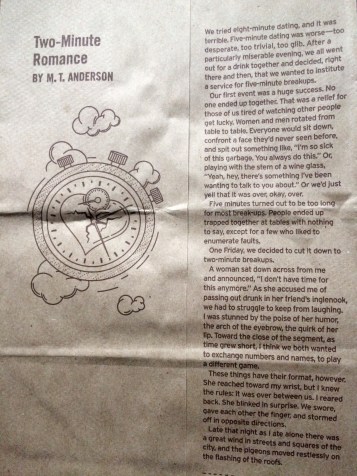
img_2531Mentor Text #1:  Microfiction on a Chipotle Bag
I love Chipotle for a variety of reasons (did you get your free burrito yesterday for Teacher Appreciation Week?), but one surprise I love encountering is whomever is published on my bag.  On my latest visit, I spied one of my favorite new authors on my heavenly-scented bag of burritos–MT Anderson.  This phenomenal author of Feed and Symphony for the City of the Dead is already a favorite in my classroom, so I know his work will go over well.

His story is a piece of microfiction, or a short short story, or flash fiction.  Whatever you call the genre, it’s a highly useful one for the multigenre research paper, which seeks to tell the story of its topic using a variety of genres.  This year, my students are focusing on their relationships to literature in their MGPs, and re-reading one of their favorite books from the year with an eye for telling the story of how they interacted with, learned from, and grew because of the text.

This piece of microfiction is, as a result, a great mentor text.  MT Anderson’s story leaps into the action without directly establishing setting, employs minimal but highly effective dialogue, and uses extremely precise diction.  These skills could easily be practiced during a quickwrite, which could then be revised into an MGP piece.

Screen Shot 2016-05-04 at 7.39.17 AMMentor Text #2:  Annotations in Books

Billy Collins’ great poem “Marginalia” has always been one of my favorites, and I thought it’d be a wonderful genre for this year’s MGP.  On a re-read, there’s plenty to say in the margins, plenty to preview on the inside cover, and plenty to exclaim about after the afterword.  For the project, I asked students to purchase their own copies of their favorite books they’d read this year so they could marginalia the heck out of them.

The creation of marginalia could be done, in part, in two separate class periods–one day for the preview note at the beginning, and one day for the review note at the end, with the remaining marginalia being written while the student was re-reading at home or during independent reading time.  Many of my students relish the idea of writing in books and enjoy encountering previous readers’ marginalia, so I know they’re excited to create a new text by adding to their favorite book.

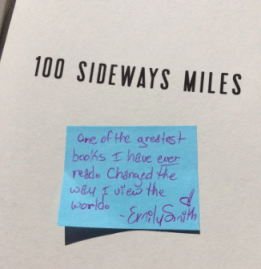
img_2536While I’ve been wanting to have students try this genre for a while, I was inspired by two mentor texts I stumbled upon–a note left in Andrew Smith’s 100 Sideways Miles, and the notes my students wrote in a copy of Shel Silverstein’s The Giving Tree, which they presented to me as a gift for Baby Ruth.  (Yes, it made me sob, and it wasn’t just the postpartum hormones!)
Mentor Text #3:  Biography Picture Books

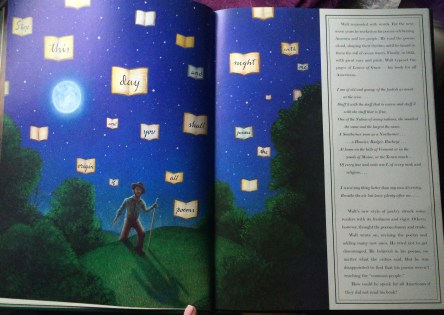
With the arrival of little Ruthie, I’ve found my taste in literature skewing to a decidedly younger set of titles.  One of my favorites is a beautiful, lyrical biography of Walt img_2535Whitman. As my students work to reflect on and engage with their favorite books, I want them thinking about the books’ authors as well–and writing about them, too.  This book is a wonderful mentor text for showing how an author came to be a writer.
Walt Whitman, written by Barbara Kerley and illustrated by Brian Selznick, is a gorgeous text that tells the story of Walt Whitman’s upbringing and eventual discovery of his love for writing.  Kerley intersperses lines of his poetry into the story, and they’re paired with beautiful illustrations by Selznick.  My students could easily create short biographies focused on how their authors became interested in writing, then pair them with an illustration for a children’s book genre to add to their MGP.


What writing lessons have you designed after stumbling upon random mentor texts?  Please share!

Try it Tuesday: Thesis Statement Dissection

Buttering someone up is an idiom that has long made me smile. Perhaps it is my deeply rooted devotion to butter (the dairy state doesn’t play…you can’t live here if you dislike butter) or the visual of someone taking a stick of butter and applying it like deodorant, but either way, I buttered up my students the other day and it worked deliciously.

Basically, I slathered it on like this:

  • Remind students of how awesome they are at writing thesis statements because they have been doing it for years.
  • Have students apply their reviewed knowledge of quality thesis statements to their own papers in order to double check their awesomeness at this skill.
  • Elevate them to the role of “expert” in the area of thesis writing in order to have them make suggestions to their peers about clarity and depth of their awesome thesis statements. 

Underlying all of this was my firm knowledge, butter in hand, that many of their thesis statements were currently far from awesome. However, this certainly wasn’t because my students lacked the skills to clearly convey their ideas, it was most likely because they had procrastinated in writing their drafts, checked out to the warmer temperatures and sunshine, or hadn’t taken the time to really carefully reflect on what they had written in favor of working on something for just about any other class.

So basically, the issues of every paper written by a high school student in May.

In order to encourage some honest reflection and move their work forward, I employed the following strategy:

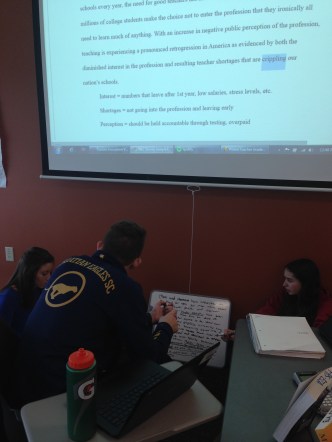
1. First, I shared with students a thesis statement I wrote to accompany an informative paper I was writing along with them. We talked about the different elements present in my sample and how they matched up with what students knew of writing complex thesis statements. One area we worked through together was my struggle with a negatively connotated word that was pushing my informative thesis statement in the direction of argument. Having students help me change the word, demonstrated what I was going to ask them to do in small groups shortly. (Much praise here and reminders of how awesome they already are at writing thesis statements.)

IMG_0611

Students work on their thesis statements in small groups, under the projection of the sample paper I wrote along with them

2.  Next, we reviewed the non-negotiable elements of effective thesis statements. I asked students to highlight their inclusion of those elements and/or comment on their papers with what was missing so they could return and revise. We included that an informative thesis statement needed to present non-debatable facts, organization of those facts into a logical roadmap for the paper, and inclusion of a “so what?” element to clarify purpose for their audience on the specific elements of the topic the paper would cover.  At this point, we circled back to my thesis statement and looked one more time with theses specific elements in mind. (Again, more buttering up in the form of high praise to their identification skills and encouragement to now apply that thinking to their own work)

3. I then asked students to spend ten minutes or so, writing their thesis statements on our mini whiteboards, revising as they went. They were to write notes on the side to indicate areas they needed help on or questions they had about the effectiveness of their statements.

4. With markers in hand, students then gathered in small groups, “presented” their thesis statements to their group members by reading aloud and asking questions, and then worked collaboratively to strengthen their sentences. (Before they got to work, I reminded them of how highly qualified they all were to assist others and how as a classroom of writers, each student could provide insight to his/her peers on improving the work)

Honest conversations around the room included such statements as:

“I see what you mean. That part made sense in my head, but it needs to move over here.”

“I like it, but I’m still asking ‘so what?’ Like, what’s your point about stereotypes?”

And my personal favorite, “Dude. That thesis is awesome. Can I steal that idea to have a dependent clause first? My audience needs to think about historical examples of Congressional corruption before they can really understand how bad it’s gotten.”

Dude. Did you just reference syntactical choices to more appropriately orient your audience for your paper? Mic drop.


While students worked in small groups, I was able to conference with several members of the class one-on-one. In addition, I noted a few kids I would need to pull into a small group during the following class period to continue guiding their work on these statements.

With the messiest looking whiteboards I have seen in quite some time, students returned to their seats and kept working on both their thesis statements and the necessary adjustments to their papers to reflect their revisions.

I could have easily reviewed the parts of an effective thesis statement and walked around to take a look at what kids had already written. But by helping students see each other and themselves as resources, most of the class improved their clarity and complexity significantly and my involvement was minimal.

In a community of writers, everyone is a resource. Sometimes it just takes a little grease, er butter, to get the parts moving and the collaboration started.

What are your ideas for helping students see themselves as writing resources in the classroom? Please leave your comments below! And, Happy Teacher’s Day! 


#FridayReads — A Book about Death to Teach Writing?

Last Saturday my niece and I attended the North TX Teen Book Festival.

Hundreds of teens stormed the book sales and stood in lines to get signatures from their favorite authors. Authors shared stories about their craft and their books while grouped in panels with interesting names like “‘Just a Small Town Girl’ Small towns — Big Stories,” and “‘The Book Boyfriend’ Sometimes Boys in Books are Better,” and “‘We’re Young and We’re Reckless, We’ll Take This Way Too Far’ Exploring mature situations in YA.

Raistlyn took notes. She is 14, a prolific poet, and is writing a novel.

Screen Shot 2016-04-26 at 9.09.01 PM

New books added to by to read next list.

For our last event of the day, we crowded in an overflowing room to listen to Holly Black, James Dashner, Sarah Dessen, Gayle Forman, Ruta Sepetys, Margaret Stohl talk about what it is like when books become movies. We oohed and aahed and laughed as they told of their experiences. (Margaret Stohl is funny!)

School busses lined the streets, and I cheered that so many teachers thought to bring their students. I did not. We were out of school the day before, and thanks to my poor planning, I never got around to getting a field trip approved.

I kicked myself after.

But I got a lot of great book recommendations, and my TBR tower is now named Eiffel.

I only bought one book. (Don’t tell. My husband and I have a bet to see who can resist 18883231buying books the longest.) I bought Denton Little’s Death Date by Lance Rubin because I heard the author talk with such excited wonder about this story and his experience writing it.

It’s the story of a boy who knows the date of his death. He knows because that’s the way it goes in his world — everyone knows the day they will die. Morbid, you say? Maybe.

But this is a comedy.

Hooked me. I need more books with laughs in my classroom library, and so far, this one does not disappoint. Here’s the excerpt I will share when I book talk this book:

Excerpt from Denton Little’s Deathdate by Lance Rubin p 66-67

I know different people and cultures have varying approaches to death, so in case you don’t know about the tradition of the Sitting, here’s the deal:  whilst waiting for death, you sit. You generally end up in a room of your house, probably the family room (ideally not the living room because the irony of that is too hilarious and stupid), where you’re joined by your immediate family and whoever else has been invited:  cousins, aunts, uncles, grandparents, girlfriends, best friends, and so on. Everybody communes and celebrates and waits for something to happen.

And something always happens.

Heart attack, stray bullet, seizure, fallen bookshelf or tree, stabbing, tornado, tumble down the stairs, strangling, drug overdose, fire, aneurysm. Not to mention the basics:  old age, cancer, pneumonia, other fatal illnesses. People have gone to great lengths to try and survive, but you just can’t. This guy, Lee Worshanks, in Pennsylvania, spent years working on what he called a Safety Room, the perfect place in which to spend his deathdate:  ideal temperature, rubber walls, dull-edged furniture, the works. When the Big Day rolled around, the room’s complicated security system somehow malfunctioned, and Lee found himself locked out. After hours of failed attempts to get inside his perfect room, he went a little nuts. He ended up electrocuted by some kind of circuit panel in the basement. So pretty much every possible variation on death in a house has happened to at least someone in the past few decades.

But you don’t know what the variation is, and you don’t know when in the day it will happen. That’s why the Sitting has always seemed insane to me. Who would ever want to be sitting in a room with their family for twenty-four hours straight? How is that anybody’s idea of a happy way to die?

Besides liking the narrator’s voice, I love how Rubin structures some of these sentences. This is a great passage to discuss syntax.  Look at that stand alone single sentence paragraph. Look at the lists and the use of the colon. And I love all those sentences that start with conjunctions. My students think that’s a grammatical error, and that leads to interesting discussions about why a writer might start a sentence with and or but or so.

I also love that example:  “This guy, Lee Worshanks, in Pennsylvania, spent years working on what he called a Safety Room, the perfect place in which to spend his deathdate. . .”

My students struggle with developing their ideas by using appropriate and convincing evidence. Here, right in a passage from a YA novel, is an example of an example I will use to illustrate examples with my writers. (My nerd factor is pretty high right now, isn’t it?)

Here’s the thing:  I loved attending that book festival with my niece. I loved listening to authors talk about their writing. I loved getting new ideas for books to share with my readers. And I really love that I found this one little passage in a pretty clever book about how we face and talk about death I can use with my students.

Reading is fun. Isn’t it?

*Note:  Did you know there’s a site that will predict the date you will die?

Try it Tuesday: Thinking Outside the Bubble

Testing season is upon us. Heaven help us all.

ACT, SAT, AP – insert your high stakes, hive-inducing, pencil-sharpening acronym here.

As students sit down to demonstrate, in bubble form, their proficiency as scholars (and sometimes in their own estimation, as human beings), we as educational professionals hold our collective breath.

Have we balanced real world application of skills and test prep as we should?
Will students be able to develop their ideas in the limited time provided? 
Do they know the specific language necessary to decode the test? 
Will they demonstrate growth reflective of the hard work of both teacher and student? 
What will these scores mean for my daily practice? My salary? My job security? 

It can sometimes feel desperately difficult to maintain the freedom, choice, and empowerment that workshop affords in the face of district expectations for test performance. Afterall, students aren’t given choice when it comes to test prompts or format, or taking the test at all. However, at the end of the day, the skill focus of both readers and writers workshop speaks pointedly to preparing students for whatever they might encounter on such tests, as learner investment in choice materials in often much higher. So if we work to illustrate key skills in mini lessons and have students work with those concepts utilizing texts they are enthusiastic about, research would suggest a solid return on investment, both scholars and the tests used to measure their “proficiency.”

For example, Greene and Melton’s book  Test Talk: Integrating Test Preparation into Reading Workshop stresses that successful test takers must be smart readers.

Many test taking strategies are simply good reading strategies, so as we work to build student skills in close reading, we are also building their test-taking skills. In this way, test review isn’t an isolated unit, but rather a daily practice that teachers can refer students back to as test time approaches. And because better reading means better writing, the need to develop students as careful readers is paramount.

So while the beauty of workshop is choice, our world of standardized tests demands the development of specific reading and writing skills; however, those two worlds can have more in common than we might initially think.

To illustrate, I took my AP Language students through a prompt review that challenged them with timed writing, analysis of student samples, self-assessment of their work, peer-assessment of their work, and then collaboration to arrive at a final score.

Obviously, part of the written test is one’s ability to write an argument, but in the case of this synthesis prompt, if students aren’t careful readers of the materials provided, they struggle to effectively incorporate the evidence. This specific test prep went way beyond the test in terms of skill development and it went down like this:

  1. Students wrote an AP Language Synthesis essay in class. This required 15 minutes to look at sources and 40 minutes to write an argument essay utilizing those sources to support their claims. AP Synthesis essays ask students to write an argument and incorporate at least three of the provided sources. Students must quickly read through the source material to locate information they want to use in support of their claims and then plan, organize, and write their essay.
  2. The following class period, we looked at student samples and the AP scoring guide from the College Board website. This gave students an idea of what the prompt looked like in action and the actual scores those students received. I divided the class into groups, had each group look at one sample essay and its score. They then had to justify how AP scorers came up with that score. We shared as a class that lower essays lacked organization and analysis, middle scoring essays were adequate in all areas but could be improved with more specifics and developed analysis of included source material, and the top scoring essays blend style and content in a mature fashion.
  3. Students then pulled out a clean sheet of paper and self-assessed using the provided rubric by giving themselves a score and justifying it.
  4. Here’s where I tried something new. Students folded over the top of their assessments and handed their synthesis essays and the reflection (without their score visible) to the person next to them. Peers read through the essay, scored it, and wrote several suggestions for improvement. We went around our tables of four until each student had his or her essay back.
  5. We then unfurled their feedback and engaged in collaborative discussion. I asked students to talk about what they saw in each other’s essays and to arrive at a final score. I recorded this in the gradebook as their formative score for the exercise. Anyone that was dissatisfied with what the table decided, could come and share their concern with me, which I am pleased to report, did not happen.
  6. Students stapled their feedback form to the essay with a final score on top, along with their thoughts on the exercise.

In the end, students said it was hugely helpful to compare their work to that of others and in doing so, realize what they could do to improve their own responses on the actual test.

Eva said she found the activity, “Really, really helpful. It’s good to get perspective and to be able to reflect from that feedback. 10/10 :)”

Sam suggested that it was helpful because he finds it “hard to critique” his own work. Having published student samples from AP and peer samples from his group, he was able to compare and contrast against concrete scored examples and try his hand at assigning a score on his own, with his tablemates to help justify that score at the end.

And Daaman said she, “enjoyed this activity as we were able to see others’ interpretations of the prompt and also see ways we can improve.”

I’m glad they feel more prepared for the test, but beyond that I am most impressed that in just two class periods they demonstrated skills in both reading and writing, analysis, synthesis, reflection, and collaboration. By analyzing student samples as mentors and applying that knowledge to their own work, students walked away with several examples of what to do, what not to do, and where to take their writing for the next argument we write. No bubbles or number two pencils required.

How do you bring workshop and standardized testing together? Please leave your ideas and comments below! 

#FridayReads: Poetry as a Gateway into Reading

Before I started reading novels in verse, I had no idea how important they would be to the readers in my classroom. So many of my students who say they hate reading will read these books of poems that tell a story. (Chasing Brooklyn is one of the girls’ favorites. The Crossover, of course, is one of the boys’.)

This week, Sung, one of my quiet students from Myanmar, asked for a recommendation for her next book. She reads far below that of an 11th grader in an AP class, but she’s tenacious and determined to catch up to her peers. She and I have focused on her fluency since the beginning of the year when in our first conference I learned she could read all the words in a novel, but she understood little of the meaning. (Similar to my ELL student who read every word of The Great Gatsby last year without comprehending any of it. This was before I clued in to her need to save face with their peers.)

“I am reading,” Sung said, “but I don’t know what’s going on.”

I’ve heard this before, and I always celebrate when my readers let me in on this secret. (It takes guts to be vulnerable, especially at 16.) In talking with high school students who struggle with reading, I’ve learned they usually have no idea why. Most of them think they are slow or dumb — or they simply claim reading is boring or dumb because it’s easier to say that than admit reading is hard.

The hard part for me is teaching them to read. My degree is in literature after all, and my Masters in Secondary Ed did little to prepare me for the adolescent reading crisis I face every day. So I teach reading by getting students to read. I talk to them about their reading and get them talking to me about their thinking.

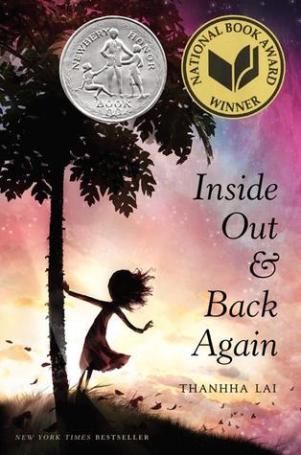
8537327Sung had just finished her 8th novel in verse, her favorite so far, Inside Out and Back Again. As I conferred with this reader, she told me she wanted to try something more challenging that was a ‘real’ novel. What she meant was a story with more words on the page. (Last year I caught one of my ELL students at the book shelf flipping through books. When I asked him why, he said he could tell if he could understand it depending on the “thickness of the words.”)
I walked to my “Explore: It’s Your World shelf” and pulled a few books I thought Sung might like:  Chains by Laurie Halse Anderson, In Darkness by Nick Lake, Copper Sun by Sharon Draper, Letters from Rifka by Karen Hesse, a book of short writings by various authors about human rights, published in association with Amnesty International, and several other titles I cannot remember now.

Then, I gave her time to explore.

A few minutes later, Sung held two books in her hands and quietly told me she wanted to read them both. She left the room with Karen Hesse’s award-winning book and the anthology of stories by writers like these: Paulo Coelho, Yann Martel,  Chimamanda Ngozi Adichie, Ishmael Beah, and more. These are not difficult books. They are not complex. They are way too easy by most high school standards. But they are exactly what this young woman needs to not only grow in confidence as a reader, but to grow as a citizen of her world.

And an interesting insight? Quite often it takes more inferencing skills to understand the story in a novel in verse than it does with a story written in prose.

_________________________________________________________________

For a list of other novels and verse, see this post.

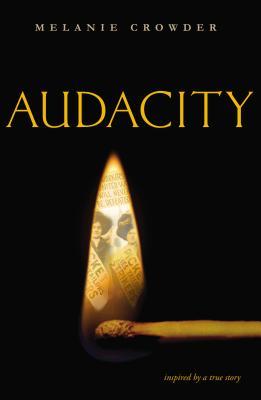
Here’s a highlight from my most recently read novel in verse, Audacity by Melanie Crowder. I think it will make a nice quickwrite at the beginning of the year as we build a reading community:

alight  22521938

I passed my Spelling

and Mathematics exams!


I hurry after work

to the free school

to check the schedule

for the next round:

Geography

History

And Trigonometry.


The thing that separates

rich from poor

in this world

is knowledge.

A person can rise up


if she can read

if she can think

if she can speak.


I cannot attend

every class

every lecture

but if I share what I learn

with the girls in my shop

in between bites

during lunch


ff Pauline shares

with the girl in her shop

in between bites

during lunch

it is as if we all

Were there together.


I see

these lunchtime lessons

spreading like fire

skipping from one box of tinder

to the next

across the shops

through the slums

until the entire city is alight

with small

fierce-burning flames.

#3TTWorkshop — Some Thinking on Feedback and How We Use It


Did you know there are 167 synonyms for feedback? reaction, response, answer, reply, assessment, comeback . . . criticism . . .

By definition, feedback in the business world means: Process in which the effect or output of an action is ‘returned’ (fed-back) to modify the next action.

In the mini-lesson I posted Monday, I mentioned that I’d asked my students to write for five minutes in response to this:  Think about your reading growth and improvement this year. Can you honestly say you are better now than you when you walked in the classroom in the fall?

TTT reader Leigh Anne commented:  “I love this idea. . . I do wonder though, what were some of their responses to how they grew as readers this year. I only teach 6th grade, but answering this question seems to be a struggle for them. I can’t image how junior AP students would answer it.”

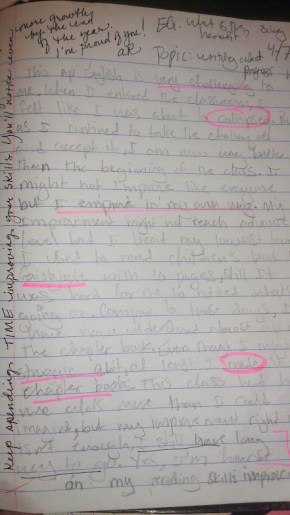
So I took snapshots of four students’ writer’s notebooks and transcribed what they wrote.

notebook response

For quickwrites, I ask students to write as much as they can as fast as they can as well as they can. Then, we always read over our writing and try to revise.

Before you read (in their own quickwrite language), I’d like to suggest that while this simple writing exercise served as self-evaluation for students and set up the personal reading challenge activity, more importantly, it served as valuable feedback for me. We spend an awful lot of time self-selecting books and reading them. One way I know if the investment in time is worth it is to ask my readers. As a result, I now know how my students feel about their progress, and I have ideas on how to “modify the next action.”

“This AP English is being challenging to me. When I entered the classroom, I felt like I was about to collapse. But as I continued to take the challenge and accept it, I am now way better than the beginning of the class. I might not improve like everyone but I improve in my own way. My improvement might not reach advance level but I beat my lowest level. I used to read children’s book, fairytale with 10 pages , still it was hard for me to notice what is going on. Compare to those days, I have now understand almost all the chapter books. This class had helped me more than I could imagine, but my improvement right now isn’t enough, I still have long way to go.” ~Sui

Next action:  Sui said she now understands “almost all the chapter books.” I’ll talk to Sui and find out what she thinks might help her understand all the chapter books. She may be able to tell me where she gets confused. If she does, I will be able to offer strategies and support so she will continue to improve.

“I haven’t done all the required reading in a timely manner, however, I have grown slightly as a reader. My pace has increased with some books, but also slowed down due to difficulty of certain books. That happens to everyone, hopefully, because it could just be me. I still have a focus issue with reading, but it has improved within the time frame of this year. I’m not where I should be as a junior in high school, but it could be worse.” ~ Cerin

Next action:  I’m curious to know if Cerin truly believes she might be the only one who has to slow down when reading more complex books — and I didn’t know she has “a focus issue.” I need to talk with Cerin and find out what she means by this and determine how I might help. I know she’s abandoned several books this year. Maybe she’s one of those expert fake readers, or maybe she still hasn’t found any books she likes enough to finish.

“Honestly, I can say that my reading has improved since the beginning of the school year. I can say this because before I lacked motivation when it came to picking up a novel. It might have had something to do with lack of interest with the topic. Also, I found myself skimming through the text and not critically annotating the pages, but now looking forward this semester my book is tattooed with my thoughts, and each word read one after another.” ~Unity

Next action:  First, I must tell this girl how much I love that “tattooed” bit! I know Unity spent a lot of time reading and annotating the non-fiction book she chose for our research mentors. She shows me here how proud she is of that, and I need to recognize and celebrate her efforts. Our next one-on-one conference may turn into a discussion on the notes she made in her book and why. I need to see her critical annotations.

“I can honestly say that I got so much better at my reading in English classroom. When I enter this year I could not tell if the book is non-fiction or fiction, but after Mrs. Rasmussen talked to me one on one I can tell which one is non-fiction and fiction. I am currently reading the book that is challenge on me but I really want to catch up with my classmate on reading skill and level. I improve so much this year and like reading now. I never like reading in my freshman year or sophomore because I thought reading is useless and it take all of my time. But now I like reading fiction book because I see myself in the book and it get into my head.” ~Siang

Next action:  Siang’s challenged herself for a while now. I need to be sure she is not stuck reading a book that bogs her down too much. She’s been frustrated with reading in the past, and she finally found success with some fairly easy reads. Fluency means comprehension, and that is where the story is. By saying she likes to read fiction, Siang is really saying she likes good stories. I need to make sure she finds another one.

_________________________________________________________________

Were all student responses quite so encouraging? No. These are juniors in high school after all. I’ll say this for them though: they are usually brutally honest when I ask them for this kind of response.

One student wrote that he has not improved as a reader this year, and he does not think he needs to. He feels like he’s as good as he ever needs to be. (I wish this was satire — we are in the middle of that right now.) Alas, it is not. This young man does the bare bones minimum to show he’s learning anything — just keeps his head above passing, goes through the motions. But his response is valuable feedback, too.

“Hey, kid, we have about seven more weeks of school. I’m not done with you yet.”

And that’s the thing, isn’t it? They enter our rooms, and we give them our all. In my case, my all gets charged by the hope I have. I hope my students will grow as competent, confident, intelligent, and compassionate citizens. They can energize the world.

I believe reading more and reading well is the fast track to all of that.

Please share your ideas on getting  — and giving feedback.

Try it Tuesday: 15 Minutes to Make Time For Reading

My students don’t have time to read.  Just ask them. They’ll tell you.
In reflections, on their goal cards, to my face.

They’re sweet about it, mostly:
“I really wish I had more time to read, Mrs. Dennis. I’m just super busy.”
“The musical is just taking up all my time. I’ll get back at it soon. I promise.”
“AP tests are coming up and every time I sit down to read, I can’t stop thinking about the more important things I have to do.”

Ouch. That last one was like a swift kick to the shin. Or my soul.

But regardless of the reason, medium of delivery, or general sentiment, all of the excuses amount to the same end result: I need to keep reading at the forefront of every class period, or these kids are going to completely fall off the wagon.

As Amy alluded to yesterday in her post about personal reading challenges, we can’t always win the competition between getting our students reading and other homework, extracurriculars, or spring sunshine, but we can work to spark their interest and show them ways to make reading possible in their own lives.

Here’s what I tried at the end of last week and it took all of 15 minutes to create a buzz about setting goals, making time to read, and exploring a few new texts to capture student interest:

  1. I reminded my students how two hours of reading per week is the expectation, not just a cute suggestion. So, we started off a bit more serious. I reminded kids that I purposefully don’t give as much homework as I used to in order to help them have more time to read. We had an honest conversation (sort of one sided) about what it means to prioritize other things over reading and how it short changes their writing and their development as readers.I reminded them too that I’m busy, but I’m also a part of our classroom of readers. As specific examples can really help hit home a point (and including humor doesn’t hurt either), I shared with them that I read Columbine by Dave Cullen last week in six days (It’s honestly riveting. Unbelievably good), all while keeping my toddler entertained and alive, finding a few consecutive minutes to spend with my husband, trying to keep up with the recent release of Catastrophe on Amazon, preparing meals, doing laundry, cleaning up the house, and continuing to change their lives with my teaching each and every day (chuckle, chuckle).

    Then we took a look at this brilliant graphic from Tricia Ebarvia2 hours of reading

    I think it really helped kids to see that 2 hours of reading can be accomplished in a variety of ways depending on how they can work it into their schedule. I see my kids every other day on the block schedule, so I asked them to imagine establishing their 35 minute base either in resource period or through the 10 minutes we get to read at the start of each class.

  2. We then did a modified version of speed dating with booksMy district has really come through in recent weeks with a surge of funding for classroom libraries and as a result, I have a delicious variety of new and enticing titles.
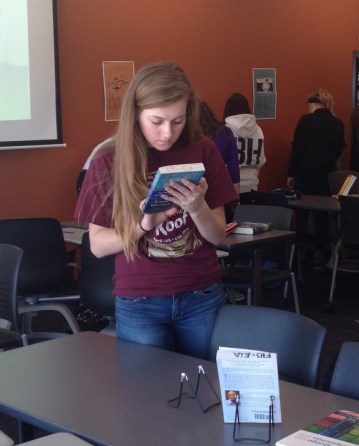
    IMG_0684

    Allison investigates Little Princes by Conor Grennan

    In place of our book talk, I asked students to take a “field trip” around the room and judge some books by their covers. Students were asked to take two or three books back to their seats based on interest in the title, a connection to the text (someone recommended it and curiosity was stirred), or any criteria that caught their attention. I asked students to spread the books out across the table and follow these simple steps:

    • Talk about the books! What do you know about any of the books on the table? Have you read it? Heard about it? Why did you bring a certain text to the table? Students chatted for 3 or 4 minutes and comments varied from “So many people are talking about this book” to “I picked it because the cover looked interesting.” Students were also making some great connections between authors. Several students picked up The Knife of Never Letting Go and The Crane Wife  because of previous experiences with Patrick Ness and one student specifically said she chose a text because it had a recommendation from John Green on the front.
    • Next, I asked students to choose a book from the table and read it for four minutes with a directive to look over the cover, search out accolades, read the back, and flip open the book to get a sample of the author’s style. When I called time, students who were interested in their books were asked to raise the book up over their heads so others could get a look.
    • The next round of reading went the same way, with students choosing books from their tables (either something they brought over or a text a peer put overhead).
    • For the final round, students could go swipe books from other tables. I told them to keep their eyes out for texts that had been put in the air by more than one person.
IMG_0689

I told them to act natural.

In 15 minutes we reconnected about making time for reading and explored our classroom library in search of a spark or two that could move us forward as readers. Students said they really enjoyed “shopping” for texts by looking at covers and then stealing books from other tables. They added to their “I Want to Read” lists, made some notes in their planners about scheduling time to read, and several books were checked out each class period.

15 minutes very well spent.


#FridayReads Top 10 Books that will Give You a New Perspective on Death

Back in November Shana and I talked about how to make our assessments more authentic. We seem to talk about assessment a lot. We talk and then write. We wrote about our semester exams and the thinking behind them in response to a query from a reader. One part of our exams included asking students to create top ten lists of books they had read. Shana and I find it beneficial to not only help students find books they will enjoy reading but to use information about our readers to help their peers. We’ve got several of these student-made top ten lists to share as models. Maybe they will help you match books to your readers, too.

_________________________________________________________________

Jessica was already a reader when she entered my AP Language class in the fall. She wrote about herself on the first day of school: “I consider myself to be creative and artistic. I love to draw and write. I wish I could be more prosperous.” I don’t know if writing will make her prosperous, but I think Jessica definitely has a future in it if she chooses to. She’s quirky and sharp. Her wit is a gem, and I love reading everything she writes. She named her blog “Giraffes Make Bad Co-pilots” after all.

“Top Ten Books that will Give You a New Perspective on Death” by Jessica Ortiz

The Book Thief by Markus Zusak

This book sits at number one on my list because of its unique way of portraying death; this story is told from Death’s point of view, recounting the younger days of a girl named Liesel Meminger, who is adopted by a new family in the midst of World War II. Death encounters her a number of times throughout his work, watching as her story unfolds amongst the several tragedies that follow her in her dreams.

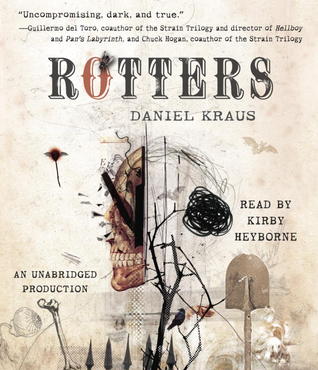
Rotters by Daniel Krausrotters

This book revolves around the strange life of Joey Crouch; a sixteen year old straight-A student whose father just so happens to be a grave robber. After a sudden turn of events take his mother from him, Joey is forced to live with the reclusive man that his mother somehow used to love, and must follow him into a world he would have been better off not seeing. I placed this book at number two on my list because of its thorough imagery, and its immersive walkthroughs detailing the art of burial and reburial.

If I Stay by Gayle Forman

Seventeen year-old Mia Hall is dead; or, at least, she gets to choose whether or not she is.  Facing the aftermath of a devastating car accident that claimed the lives of her entire family, Mia falls into a coma and has an out-of-body experience that leads her to a recollection of her past, reminding her that she still has someone left to live for. This book is third place in my opinion, because it centers on life, death, and how one girl overcame both.

The Death and Life of Zebulon Finch by Daniel Kraus

This story follows a young man named Zebulon Finch who is gunned down at age seventeen, only to be resurrected minutes later for reasons unknown to him. From that point on, he is unable to die; he must live through every era proceeding that one, and can only wish for death. I ranked this one at number four due to its use of historical accuracy and its original twist on the otherwise overused immortality-cliche.

The Lovely Bones by Alice Sebold

Susie Salmon was brutally murdered at age fourteen at the hands of her neighbor, and must now watch her family and friends struggle to overcome her disappearance. Susie herself has trouble moving on, and finds that Harvey’s other victims feel the same; she wasn’t the first one, but the father she left behind is determined to make sure she will be the last. I decided to rate this one at number five because of its unique perspective, and the author’s development of these two separate worlds that are parallel to each other.

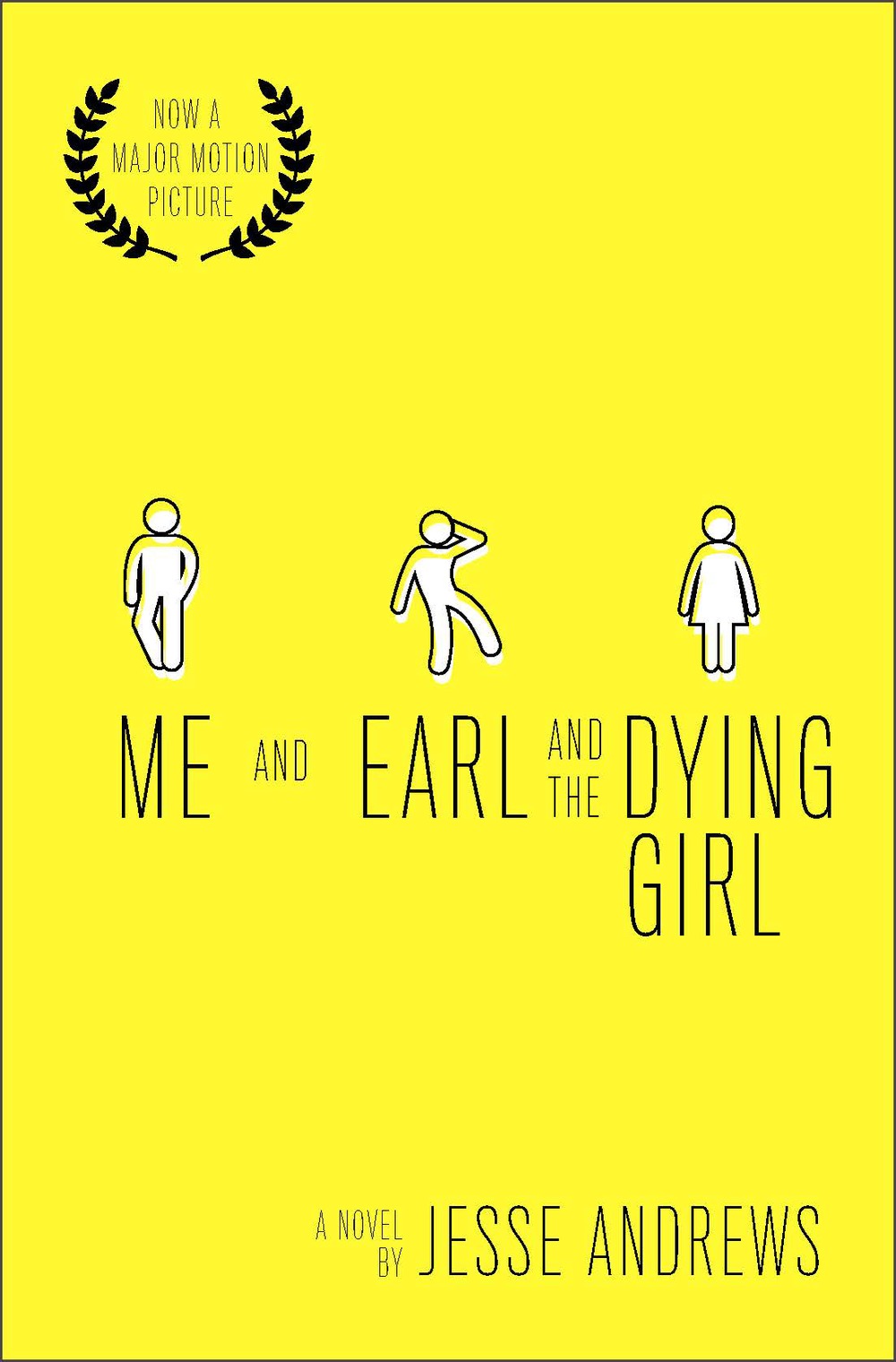
me and earlMe and Earl and the Dying Girl by Jesse Andrews

Social misfit Greg Gaines has only one real friend with whom to share his passion for film with; Earl Jackson. Together, these two spend their time concocting productions that are mediocre at best, and have mutually agreed to reveal them to no one. That is, at least, until Greg is forced by his mother to rekindle his old friendship with a girl named Rachel, who was recently diagnosed with leukemia. I rate this one at sixth  because its story depicts the struggles faced by those who support loved ones with cancer.

The Fault in Our Stars by John Green

This story is told from the point of view of a cancer patient named Hazel Lancaster,

describing her experiences in the ‘Literal Heart of Jesus’ support group, and a certain amputee whom she later fell in love with. The two bond over a shared interest in literature, leading them on a strange adventure that left them with more questions than answers. I chose this book for number seven on my list because despite the loss of the one she loved most, Hazel chooses to take her life into her own hands.

Heaven Looks a lot Like the Mall by Wendy Mass

After Tessa suffers an abrupt  accident in her high school gym class, she believes herself to now be in heaven, which seems to look exactly like the interior of her local mall. It is here where she begins to recall her entire life up to that point; both the good and the bad. This book is my number eight because of its interesting depiction of the afterlife, and the spunky attitude Tessa regards her past with.

Elsewhere by Gabrielle Zevinelsewhere

Liz is fifteen years old when she is struck by a taxi and killed, sending her into an afterlife she was not expecting in the least. When she wakes up on the deck of a strange ship called the SS Nile and is to be ferried to an island known as ‘Elsewhere’, she begins struggling to accept the fact that she has died; even as she watches her own funeral take place from the observation deck. I rank this book at number nine because it puts a twist on ideas of reincarnation, and sports a more original picture of the afterlife.

Before I Fall by Lauren Oliver

The very privileged Samantha Kingston lived a rather charmed life, that is, until it ended. She is however, given a second chance at saving herself; seven chances, to be exact, and Samantha has resolved to use them to aid her in unfurling the mystery that surrounds her death. I decided to leave this one for last, because it depicts an image of just what someone can find themself capable of doing in the face of a looming death.


Student Bio:  Jessica considers herself a reader and says, “I am constantly finding reasons to be bored with my otherwise uneventful life. Being the inactive person that I am, naturally, the only adventure that I can find within arm’s reach, lies waiting under a dormant paperback cover. (Always paperback, if possible; I’m too cheap for hardcover.)” She enjoys writing fictional stories, drawing, jamming out for no reason at all, and daydreaming until inspiration strikes her. Three words Jessica uses to describe herself: unconventional, imaginative, and comical

Making My Reading Visible by Catherine Hepworth

guest post iconI am the English teacher who may or may not have written on her teaching job applications and cover letters, “I love books” as the attention getter. My friends made fun of me, but I honestly did not care. How else was I supposed to communicate my passion for reading to people who are looking to hire an English teacher? My passion continues to burn bright, perhaps brighter than ever before.

Last spring, my students wrote their reflections about their progress about the books they read over the course of the year, and I did the same. As I filled several pages of my composition notebook, I realized I needed to be better at being a visible reader for my students. They saw me read occasionally when we calculated page goals or did speed dating with a book, but they did not see how much I read. I’ve been keeping track of the books I’ve read since 2005, but no one has ever seen these lists.

During the school year, when I talked to my students about the books I was reading, they thought I was crazy. “Oh Mrs. H, you love books, that’s why you read so much. You must not have a life.” I smiled pleasantly

I do have a life — a reading life.

IMG_20160309_180709682(I feel like I should make a metaphor about books and donuts because I love both…a lot…!)
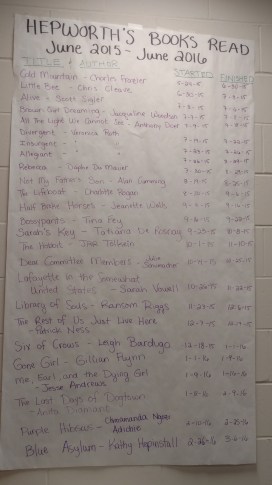
Fast forward to September 2015: New year, new energy. Making my reading life visible was my main goal. I wanted my kids and their families to see from the moment they walked into my classroom that books matter to me and that reading is what my soul needs to survive and thrive. Most days I can’t wait to get home, lay in bed, and read.

I hung two sheets of giant butcher paper on my walls by my desk. One was labeled “Hepworth’s To Read List” and the other “Hepworth’s Books Read June 2015 – June 2016.”  Students are tickled pink when they recommend a book to me and I put it on my “to read” list.  Already several times this year, I had to stop reading other books just so I could read this one book for this one students so we could talk about it.

IMG_20160309_180737760I love tracking when I start and finish a book because it has led to a lot of great conversations with students about the importance of meeting page goals and reading two hours every week. Many times, students and I compare our after school schedules and realize that we are very similar with very busy schedules.

And yes—there is always time for reading. And no—I don’t read faster than them just because I’m older.

I also try to fill out my chart when kids are in the room so they know that my list does not magically grow. I am reading with them, one day at a time.

Catherine Hepworth has been teaching for 10 years; she currently teaches English and coaches Forensics at Franklin High School in Wisconsin. In the summer, when not reading books or frantically sewing historical clothing, she participates in living history events around the Midwest. Check out her living history/sewing blog at https://catherinetheteacher.wordpress.com/