Category Archives: Community

Assigned Reading Works as well as Assigned Flossing

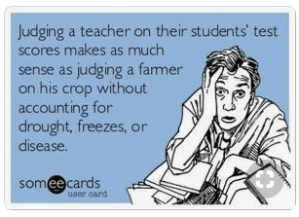
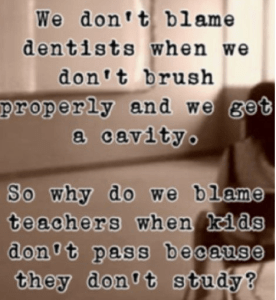
Every few months, I notice a meme recirculate with some variation of “Judging teachers on their students’ test scores makes as much sense as judging farmers on their crops without accounting for drought, freezes, or disease.” Still reflecting on my students’ lackluster AP scores as I sat down in the dentist’s chair this morning, I considered this meme. Then, like most teachers I know, I still wracked my brain trying to figure out what I could do differently to help my students score higher on that exam. As I mused, and chastised myself for taking their scores harder than I should, I endeavored to distract myself a bit by trying to remember the other meme out there that connected the professions of dentistry and teaching based on clients’ results. Ultimately, I looked it up when I got home, and it reads: “We don’t blame dentists when we don’t brush properly and we get a cavity. So why do we blame teachers when kids don’t pass because they don’t study?” Or read enough prior to twelfth grade, I thought.
Screen Shot 2018-07-24 at 1.57.38 PMMy cleaning ensued – painfully, I might add, as my technician was unnecessarily rough, and I wanted to ask her if she remembered that a person was attached to those teeth, but I found it too difficult to ask such questions with someone’s hands in my mouth. I waited for the post-cleaning check-up with the dentist, knowing the only question I had for him was about the dark staining I’ve been experiencing lately despite my careful brushing and (sometimes) flossing regimen.

During the 3 minutes he spent with me (I see why he earns the big bucks compared to me, I thought cynically) he responded to my question with one of his own.

“Do you drink a lot of tea?”

“Well, I guess so. I gave up soft drinks a couple of years ago, and tea became my go-to beverage.”

“Well then, that’s why your teeth are stained. You should expect that if you drink tea. It’s the worst thing you can do to stain your teeth. It’s worse than drinking coffee for stains.”

I didn’t hear the rest of what he said because it devolved into chastisement. I didn’t Screen Shot 2018-07-24 at 1.55.01 PMexpect him to congratulate me on the steps I’d taken for my overall health in giving up on sodas, and I didn’t expect him to have sympathy for how hard that habit must have been to break, and I didn’t even expect him to think logically about how much less acid was wearing away at my enamel now that I don’t drink soft drinks, but I also didn’t expect to feel as though I had done something so very wrong.
That’s when my English teacher brain went back to thinking about what we do (or fail to do) for our students. I thought about how many students have been made to feel “less than” when they want to read a YA book instead of a classic text. Just as my dentist was so set on his vision of how I should live solely focused on the effects on my teeth that he forgot about the person attached to them, how many well-meaning English teachers are so hyper-focused on their well-chosen texts that they forget about their students’ needs? How many forget or do not understand what can be gained with YA or self-selected books?

Screen Shot 2018-07-24 at 1.58.46 PMMy teeth will continue to stain, I guess. I’ll brush with baking soda once a week to combat that. But I’ve gained better health and energy. I’ve lost the migraines I used to get when I drank colas all the time. And if we allow our students to read what they want and need to read, they might lose content knowledge of some of the classics that we read (or fake-read) in high school, but they will gain an authentic love of reading. They will find connections with characters in their books. They will connect with each other as they enthusiastically discuss their books. They will feel empowered and in control of their lives as readers. Their reading levels will improve. And yes, the test scores will follow.

Prescribing all the texts our students read, even when doing so comes from a place of good intentions, works as well as prescribing flossing. Everyone does that at least twice a day, right?

Amber Counts teaches AP English Literature & Composition and Academic Decathlon at Lewisville High School. She believes in the power of choice and promotes thinking at every opportunity. She is married to her high school sweetheart and knows love is what makes the world go around. Someday she will write her story. Follow Amber @mrscounts.

Guest Post: Why I Want My Classroom To Run Like Zappos

I like shoes. Like many 20 something teachers, I want some variety in what I wear to 9d67eecb760e5f2da5199c53ffd5e85awork (heels, flats, boots, hand-painted Tom’s with Shakespeare’s quotes…) which means I’ve spent a lot of time perusing, purchasing, and inevitably returning some of those online shoe purchases. Hands down, their company is one of the easiest to return or exchange those shoes that don’t quite match that new blazer, I also bought online. All that aside, that isn’t why I want my classroom to run like their company.

For the last few years, Zappos has consistently shown up on the best places to work list. But why? This company has recently touted movement toward a “holacracy.”  This term, initially dubbed by the political writer, Arthur Koestler, focuses on the importance of individual autonomy and self-governance. Zappos prides itself on letting their employees be their own boss. Who hasn’t at one point or another dreamed of being their own boss?

Zappos’ move toward a holacracy is one that we’ve been slogging toward in the academic world for years. Author of multiple New York Times best-sellers and Ted-Talk Famous, Daniel Pink’s research on behavioral science, especially that on motivation, has verified what we as teachers have known for years; when we let the students be the boss, the quality of work often shows a shocking improvement in both output and originality.

Jumping on the Genius Hour bandwagon, with guidance from peers, I integrated this concept into my 12th grade English course. Once a week for twelve weeks, students researched and created a project that was their choice. In our district, people more powerful than me pushed for this concept to be a “real” part of our 12th-grade curriculum: the capstone of their high school experience. Through new curriculum development and alignment, this new course came to fruition. Relying heavily on Pink’s tenets for motivation, I’ve found that the level of work submitted to my “College Prep” English 12 classes often surpasses that of their Advanced Placement counterparts. Students have dazzled me by turning their ideas of starting a nonprofit organization into reality. Students who’ve written business plans for an online venture they want to begin in college.  Students who’ve created and launched their own drop-shipping companies and websites. Students who mastered specific aspects of Leonardo Da Vinci’s drawing style. Students who analyzed the psychology of repetition changing the neuroplasticity of brains. Students who completed a statistical analysis of data where they collected and disaggregated data on whether standardized test scores are representative of student GPA. Students who have designed and coded games of their own creation.

Students who don’t consider themselves “lovers of English” find success in this class. Students with special needs find success in this class. Why? Because, for once, they are their own boss.

Screen Shot 2018-07-01 at 10.53.17 AMWe start the trimester by exploring Pink’s research using excerpts from Drive and Dan Ariely’s book Payoff while also viewing Pink’s RSA Animate video. While my favorite part might be the Back the Future references, what we actually discuss are the ideas of companies like Skype, Wikipedia, and Atlassian. As a class, we dissect how each of these companies fulfills the concepts of purpose, autonomy, and mastery.

The conversation inevitably leads to the question: How are we going to do that in a class? From those big ideas (no, I don’t expect you to start a fully functional company), we scale back. What can students realistically complete in twelve weeks?

After brainstorming and project tuning, I become more of an instructor on educational pedagogy than the traditional English teacher. Each student is responsible for creating their individual learning plan and personal curriculum. Some days I slip on my curriculum boots and help kids write their own essential and guiding questions, explore (and explain) the Common Core State Standards, climb up Bloom’s Taxonomy and wade through Webb’s Depths of Knowledge. Students know these educational researchers and can articulate how their research and projects are fulfilling these expectations for curriculum. On other days, I tie on my English teacher tennis shoes and help students improve their research skills, encourage networking for action research, and determine the structure for research writing, revising, and editing.

Encouraged by the holacracy of their working environment, Zappos team members might set the record for longest and friendliest customer service calls. They might send you flowers when they make a mistake on your order. These employees go the extra mile not because they must, but because they want to.

In my classroom, I want students to go that extra mile: give an hour-long expert presentation on their learning, start a nonprofit, paint a mural in an impoverished community, teach their peers self-defense, create, design and 3-D print a new product. What does that mean for me as a teacher?

I compare it to watching my niece learning to tie her shoes. Even though it would be so much faster for me to tie her shoes for her, it is essential to explore the process and allow her to move at her own pace. Sometimes you’ve got to let her figure out if bunny ears or loop-swoop-and pull works best.

I want the same experience for my high school seniors. No matter the age, people learn best when they can be their own boss. Though it is easier said than done, we need to think about our identity as educators in an ever-shifting perspective. We need to continue to revise what it means to be a teacher. There are moments when you are needed to be the expert in English, literature, language and writing, but in a class that thrives on Genius Hour organization, you also have to accept that you are not the expert in every single avenue of research your students will take. As the teacher, you do your best to learn alongside your students and model what it means to be inquisitive and passionate about learning.  It takes time and a willingness on our part as educators to take a step back from being the “sage on the stage” and allow students to explore and engage in new content in a way that is meaningful to them.

Hayley McKinney is an English teacher in Birmingham Public Schools where she primarily teaches 10th and 12th grade English as well as public speaking classes.  She coaches forensic and debate in her spare time. She recently completed a Masters of Arts in Educational Leadership.


My Number 1 Tip for Moving Readers and Writers

My go-to question for readers and writers who don’t know where to go next is: What have you been thinking about lately?

thinker

Whatcha thinkin’ about?

That’s it.  That one question works just as well on adults as it does on kids.  It makes people think about who they are and where they are in their thinking.  Whether it’s a theme, issue, or struggle, I can go to my library and present a handful of books to meet almost every reader’s needs. Struggling writers need to examine themselves in that same way.

This very blog, for instance, has so many posts about the importance of making connections with kids.  Look here, here, and here, for just a few examples.  There shouldn’t be any argument about prioritizing the hearts and minds of our students.

Take me, for example: I’m addicted to YouTube.  My subscription list is a mile long and the list of topics is a mile wide.

When I really look at it though, it turns out most of my channels connect thematically..  My feed is full of builders and makers and I look forward to their progress videos like I do the next Game of Thrones episode. It’s not exactly “appointment TV,” but it’s pretty close.

Some of my favorites:

I love this channel produced by April Wilkerson (a Texan!) where she designs and builds everything from Adirondack chairs to her own gigantic workshop!!!  This woman is an inspirational creator that shows me that I could learn how to do anything I put my mind to. Maybe this speaks to my need to build literate people.

TheCorvetteBen channel documents the restoration of cars, mostly C3 corvettes. As an owner of a 1970 Corvette, a family heirloom, I love watching a regular guy work on cars and save them from the trash heap.  It’s cool to me that he works cars like the one I work on.  Maybe this speaks to my need to save as many kids as I can.

Pure Living for Life shows the lives of a couple who sold everything, moved to Idaho, and started the process of building a timber frame house from scratch.  A lot of this channel is about “grit” and “problem solving.”  It reminds me of a major theme from our district’s Literacy Institute: the privilege to struggle.

Those are just three of the several dozen channels I watch, but the themes repeat themselves over and over.

Questions:

What do you watch? What types of media attracts you and appeals to your interests?

Do we need to be aware of the media our students consume? Could deepening our awareness help us make stronger connections to the issues in which our students are interested?

I think so.

Charles Moore is struggling to get his grandfather’s corvette to drive.  He is struggling to get in a summer reading rhythm because he can’t put down his iPad and he can’t convince himself to focus on reading One of Us is Lying.  He wants to go sit in that river in Wimberley, TX already!!!

Let’s Talk Summer Reading–Without the Pressure

Summer is one of my favorite times of year for reading. I love lying out in the sun with a light paperback, curling up in the corner of the couch with a classic, or falling asleep with my e-reader in my hand under a whirring fan.

Summer reading should be fun for everyone, but especially for teachers and students.

Instead, it’s become such a controversial topic–a buzzword laden with hidden meanings and tensions and polarizing sides. Much of the discourse around reading, and education in general, feels exhausting to me lately. Banned books, mandated books, and everything in between can spark vitriol in teachers who profess to love our students, profession, work.

summer-reading_xs.jpgBut, as ever, reading is the great escape.

And we need that escape–I feel like I never get a break from teaching, and when I do, I don’t know how to seize it. But one thing I love doing in the summertime is reading a book without looking for craft mini-lessons, or thinking about a booktalk I’ll give, or which kid I’ll recommend that title to. That kind of reading can wait until August.

So let’s talk about summer reading, without the pressure. I don’t want to argue with anyone about whether students should be assigned books, or required to participate in book clubs, or the danger of the summer slide or the 20 minutes of reading per day.

I just want to talk books.

Here are some genres and titles I’ve loved so far this summer, and I would love desperately need your recommendations. Please leave them in the comments!

download-1.jpgMurder-Mystery

Still Life is the first in the Inspector Armand Gamache series by Louise Penny, and I’ll forever remember reading it in beautiful Canaan Valley, WV during an anniversary getaway. This beautifully written murder-mystery is set in a small town in Canada, and our hero, Gamache, is a quiet observer of human nature, which helps him solve mysteries. I adore the way Penny crafts his thoughts about what he sees, and how many lovely backstories are woven through each mystery in this series.

Page-Turners

download.jpgThe Word Exchange was completely, compulsively, un-put-down-able. Alena Graedon is a new author for me, and her tale of a world that loses its grip on language once a massive tech company monopolizes and commoditizes words was, for me, perfectly timed–I’ve been a little unsettled lately by my observations about how addicted to technology everyone is, and how afraid I am of what it’s doing to my students, and could potentially do to my children. This book spurred me to action in terms of deactivating my Facebook and Instagram accounts and making a conscious effort to leave my phone in another room–to make space to just be, and be bored, and have time to think and wonder and ponder.

download-2.jpgThe Power by Naomi Alderman was just wonderful. It had all the elements of a gripping adventure story, along with a powerful message about what corrupts us. In this novel, women develop an electrostatic power and a society shifts from patriarchal to matriarchal in the space of a few generations as a result. The effect of women suddenly becoming more physically powerful than men leads to widespread revolution in everything from interpersonal relationships to world leadership. It’s beautifully written, too.
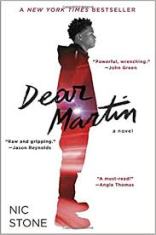
download-3.jpgDear Martin was a book I’d been recommended a thousand times, it seemed, but after reading so many books that felt similar–The Hate U Give, Long Way Down, etc., I just couldn’t pick it up–but I’m so glad I finally did. Nic Stone crafts this novel as a series of letters from young Justyce McAllister to Martin Luther King, interspersed with transcripts of news reports and first-person narrative. It’s complex and thoughtful and plausible and readable and powerful. I loved it.
images.png

Nonfiction

When: The Scientific Secrets of Perfect Timing is Daniel Pink’s latest offering, and as usual, he has an insightful book that has applications for me as an individual, a parent, and a teacher. Pink discusses all the elements of timing that govern our lives, from being a “morning person” to a “night owl,” to the power and importance of building in breaks, taking naps, and seeking out social and alone time. He frames this all in the usual compelling narrative style that makes his writing so readable and interesting to me.

download-4.jpgTeaching Books

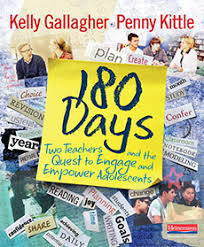
180 Days is proving difficult for me to get into. I’ve had it on my desk for over a month, but every time I pick up this collaboration between Penny Kittle and Kelly Gallagher, I feel like I’m having an emotional battle. My former classroom teacher self wars with my preservice teacher professor self wars with my currently nonteaching summer self when I read about the decisions that go into planning for a packed, skill-building, book-loving, writing-doing, meaningful, 180-day school year. I think it just contributes to that overall feeling of exhaustion I have, so maybe I just need to pick it up when I’m a little more rested.


What are you reading this summer? What books and places help you take a break from teaching? Please share in the comments or on Twitter via @3teacherstalk.

Shana Karnes is enjoying summer reading in West Virginia with her two daughters. She spends lots of time at the public library, the university rec center, and Target–because books, running, and iced coffee while shopping are joyful things. Shana works with practicing teachers through the National Writing Project and formerly taught preservice educators and high school students. Let’s talk reading on Twitter–I’m @litreader for a reason!

The End is the Beginning

EDIT: Five minutes after scheduling this post last night I got the email from the Book Love Foundation informing me that I won a Book Love Grant. So….didn’t sleep much last night. Too full up with excitement to write this into the post in a more elegant way. My apologies.

Hello Friends,

Today is the 4th of June and this year, my sixteenth yearly journey through teaching, came to its inevitable conclusion. This “end” though is not only about the end of the school year, but the end of a major part of my life. It was a difficult year, full of hard realizations and tough decisions, floods of water and floods of bullets. Yet…I look forward to a new opportunity in August.

If you traced the path from my house to my school you’d see the tracks my tires have worn in the pavement.  For the past 11 years I’ve driven to the same address every morning and traced that route home every night.  For more than a quarter of my life Clear Springs High School felt like home.  Change, I’ve learned, is/was necessary.  Thankfully, I’ve been given the opportunity to transfer to another high school in our district and  i I eagerly anticipate building a new beginning with a new team.

This is a season of change for me as I’m not just leaving the safety of the only high school in which I’ve ever taught-  I’m leaving coaching.  I can’t begin to list all the reasons why I’ve made that decision, but I will share that time with my family is no longer a commodity upon which I’m willing to negotiate.  Its not a matter of letting go of “the dream” of coaching.  I lived the dream, invested time helping so many boys grow into men, and felt the heat under the lights on Friday nights.  Coaching was like poetry.  Poetry can be happy or sad…devastating or celebratory.

While so much will change, a lot will not. I won’t forget where I came from.  The thousands of hours I spent sweating on the grass still inform my instruction just like the classroom helped me be better on the grass.  I’ll still watch football like a coach; I’ll just do it from the stands holding hands with my daughter or with my arm around my wife.

I’m still insatiably hungry; more eager to learn and grow than ever before.  I’ll continue to seek out opportunities to meet people more knowledgeable than I am and who know a better way of doing things that I do. There are so many of those people out there. From national conferences, to team planning periods, its all new to me and couldn’t be more excited.

I will continue seeking the most effective means of maximizing the power of my instructional practices.  I will continue devouring professional texts and building collaborative relationships with the teachers around me.  I’ll keep applying to present at every possible venue from the campus level to the national level.  I will spread the gospel of literacy and hope to help make a small change in this big world.

I will find ways to empower those around me to love what they do as much as I do. I’ll also seek those that already love it as much as I do and can empower me to share in their energy.

I will read and write because it makes me a better teacher of reading and writing.

What stands out when I look back?

  1. Our “Rooted in Reading” tree is one of the most successful moves I’ve ever made in the classroom.  My students BEAMED when we talked about how many books they recorded on the leaves of that tree. Even when it was transplanted at semester, it continued to grow.
  2. I poured my heart into the kids more than ever before.  The other evening when I asked a colleague when he was going to write his book, he replied: “I don’t know, but its going to be about how it is to build strong relationships with kids.”  I couldn’t agree more.  I would guess that I had a 97% success rate of telling each class that I loved them as the bell rang to release them to their next class.  Next year = 100%.
  3. We all moved as readers and writers.  Some more than others.  Some of us (me) had further to move than others.
  4. Sponsoring Student Council was a massively formative experience for me.  I could write a book about our year and how much we accomplished.  Working with kids that signed up for the class, rather than other reasons, was incredible. These kids changed the world for the better.  They changed me too.

What stands out when I look forward?

  1. The CCISD Literacy Institute!!! I can’t wait to get started (this morning) on this very important work.  Cohort 2 gets to stand on the shoulders of giants.
  2. Life Changes: Not just the song by Thomas Rhett (which is great, btw) but I’ve made some big decisions about what is important to me and who are the people that I want to learn from and grow with.
  3. Making changes in this profession that give young people the tools to stave off the yoke of tyranny. (too idealistic?)
  4. Teaching Pre-AP classes.  I’ve never taught anything but on-level classes so I’m thrilled for this opportunity.

The best stories are the stories of discovery.  Its time to write Act II of my story.

Charles Moore is excited to join the faculty of Clear Creek High School.  He recently discovered the joy of writing curriculum.  He loves going to the movies with his wife, driving his classic Corvette and hates building gates (Its the worst). He just finished reading Ten Things We Did (and probably shouldn’t have).

Thank you…

Reading the posts over the last week or so have completely filled my work cup. Shana is gifting, Amy is reminiscing, Katie is contemplating summer reads… I hadn’t realized how heavily I have come to rely on this blog. The advice, the ideas, the questions have given me a community that is excited about innovating the English Language Arts classroom. It is a place I can come and get lost in what others are doing to change how we ELAR.

Thank you! Thank you to everyone who has posted and to everyone who is reading the posts. Thank you for wanting more for our students.

I am 21 days (max) from giving birth to our first child, and I’ve found my thoughts wandering to what school will be like for him. Granted, I’m at least five years away from my first-born stepping into a classroom, but it doesn’t stop my hope for what those classrooms will look like. My husband and I are both in education and there is a lot of edu-speak in our house. We talk about where our son will go to school; my district, his district, our zoned district. We talk about involvement in his school community. We talk about who our favorite teachers have been and why. It makes me hope that our son is fortunate enough to get ELAR teachers like you. ELAR teachers who want to inspire reading and writing. Teachers who want to teach students to think and ask questions and know how to navigate the world after they leave us. And, maybe it’s the hormones that have me all sentimental, or that it’s the end of another school year, but the overwhelming feeling I just can’t kick is gratitude. I am BEYOND fortunate to work with teachers and administrators that have a common goal when it comes to teaching English, and for that my hope burns bright. My son will fall in love with reading and writing because of YOU.

I hope summer gives you what you need, so when August comes around you are ready to get back to the trenches. Our students need teachers like you.

IMG_0785

3 Ways to “Wrap Up” Your School Year

I am an unabashed gift giver.

I love tangible ways to express my appreciation for friends, students, family, colleagues, and anyone else I count as important.

…I also love shopping.

But with an impending move to Wisconsin on the horizon, I don’t love clutter in my home–so I am gifting left and right. That was part of the inspiration this year for how I wanted to finish the semester with my students–students I’ve been with for multiple years, in some cases, and others who I’ve only gotten to know and learn with for one semester.

Like any ending, this one tended to color the ups and downs of our school year into a tone more rosy than reality may have painted. With two kids under two, a hectic semester of required assignments, and the ever-present student mood swings offered by snow days, spring break, and finals week, we all struggled at times to stay committed to our work. No school year is ever smooth, or perfect, or simple–but I still like to celebrate its end annually with something tangible. As such, I give each of my students a gift at the end of every year, and have every year since I began teaching.

Here are three ways I “wrapped up” the ending of this school year–literally.


The Gift of Reading

Two groups of my students and I have been together for two years now, and in those two years, I’ve gotten to know these kids (I mean, they’re adults, but I will always refer to my students as “kids” when I think of them) incredibly well. They will be teaching in all content areas, in all grade levels, but still–I can’t seem to turn off my English teacher brain long enough not to say, hmmm, I know exactly what book that forward-thinking history teacher would like.

So this year, I pulled from my own bookshelves one or two books for each of my students–for their personal reading, for their classrooms, or both. In each book, I wrote the student a note, then wrapped each book individually. This time-intensive gesture has been rewarding in spades as my students contact me to tell me they’ve read and loved their books.

The Gift of Writing

We use Google Docs quite frequently, and one of my favorite activities to have students work on is to respond to a writing prompt on a collaborative Google Doc and proceed to write, think, and argue together on one page.

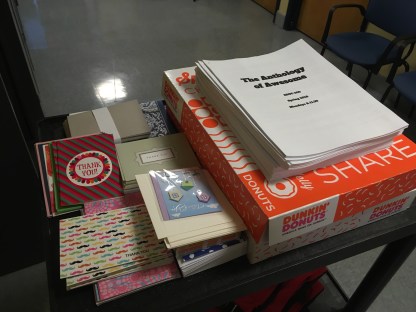
So this year, I printed out every collaborative Google Doc, group-written book review, team-created list of strategies, or class-crafted series of ideal classrooms, social justice non-negotiables, and pedagogically challenging teaching moves that we’d created and bound them together into a class “Anthology of Awesome,” which each student received.

On our last day of class, we shared the anthologies with donuts and coffee. I also brought thank-you notes for students to write to one another–personal messages they hand-wrote and hand-delivered to their critical friends, who had helped read and respond to their work all semester long.

With these pieces of writing in their pockets, my students left class with tangible reminders of the intellectual portion of our time together.

The Gift of Family

For better or for worse, with the end of each school year together, a class is like a family. Some members are dysfunctional, some are estranged, but in general, we’re a bunch of former strangers who now love, appreciate, and respect one another more than we did four quarters ago.

To help us remember this time together, I wrote my classes each a letter that highlighted each student by name, and comprised some of our memories together, our shared goals, and our funny moments. I added this letter to the beginning of our class anthology to serve as a reminder of our Screen Shot 2018-05-30 at 7.11.46 AM.pngstudents’ names and personalities. For my future teachers, I created our ideal school, in which we’d all teach and get to work together forever. In past years, I simply wrote a letter of well-wishes to my kids, and included each student’s name and a little compliment toward them all.


As we wrap up this school year, these simple gifts are things you might consider crafting to help end your year with students on a high note. It’s easy to get caught up in the end-of-semester hubbub of grades, exams, and packing up classrooms, but I hope you’ll pause to commemorate a year of learning as a group in some way with your students, as well.

Please share how you “wrap up” the school year meaningfully with your students! We’d love to know in the comments, on Facebook, or on Twitter!

Shana Karnes will soon be leaving the wild and wonderful mountains of West Virginia for the great lakes of Wisconsin. She is excited to continue her involvement in Appalachian education by leading institutes with the National Writing Project at West Virginia University this summer, but will otherwise be relaxing and devouring as many books as she can during her two daughters’ nap times. Connect with Shana on Twitter at @litreader.

What’s Your Book?

I spent most of Monday trying to organize my books. It’s a bigger deal than it sounds. I love books. My husband loves books. Together we have a massive book-loving marriage. And a problem:  Room.

Recently, we moved across town into a space that is just a tad bigger than the one room apartment we lived in as newlyweds almost 33 years ago. So, today we’ve sorted, remembered, donated, and pledged.

“I read more when the books are our in front of me,” my husband said as he put his favorite sales and marketing books on the shelf. “These are the ones I read again and again.”

“I think you should read this book,” he said, showing me Paradigms. “It’s a fundamental

Toberead

Just one of my to-read-next towers. I’ve also got the AP Lit and Book Love Summer Book Club towers.

book for anyone who is an innovator.”

It’s now atop my to-read-next tower.

“What’s the one book that hooked you as a kid?” he asked as I tried (and failed) to narrow my children’s book collection.

Anne of Green Gables. Easy. ” I said, “Yours?”

My Side of the Mountain.”

Most readers know that one book.

And isn’t it a treat that by definition of our jobs we get to help kids find their books — the ones they want to read, the ones that helps them fall in love with reading — if they haven’t fallen yet?

Today, I’d like to ask you:  “What is your book, the book that made you want to read?”

Our books

Amy Rasmussen lives and works in North Texas. Her classroom library is home to books, books, and more books — all selected to help inspire a love of reading in every single student. Btw, she and her husband have had numerous conversations about the books that made them readers. It was pretty much a first date prerequisite.

Saying Goodbye

Today is the last day of school in my system, and as always, we have had a busy week of celebrating the seniors who are graduating and heading off to college or military service or to careers. It’s hard to believe that these young people who (it seems) just needed so much help and guidance at the beginning of the year are about to walk through our doors and out into the world as adults.

GraduationHatsThrownIntoTheAir-1400x891

This particular group of seniors are near and dear to my heart. I taught them for two years–Sophomore year and Junior year–and half of them call me Mom once a week. I’m the one they come to when they’re sad or when they have good news to share or when they need a safety pin or a band-aid or when they just need a place to hang out. (I’m not the only one–our school is blessed with many amazing teachers. These kids just seem to be especially MINE. 🙂 ) I’m not sure how we bonded so much–maybe it’s because as Sophomores many of them didn’t drive and needed a place to hang out while they were waiting for practice or their parents or whatever. Maybe it’s that I was their only female teacher Junior year and 1 of 2 female teachers Sophomore year. Maybe it’s because about half of them have been on our school/youth group trip to Washington, DC, for the past 3 years. Any of those reasons could be the reason or part of the reason. The bigger reason, though, I think, is that as an English teacher, I’m talking about life. Whatever we’re reading, I’m working to help them connect it to their lives. Because we share our thoughts and our feelings and our loves and our concerns, I think that we also share our hearts, and these kids got two years of that with me. So we’re bonded. (If you’d like to read more about the bonding we do with our kids, check out these posts from Gena and Pam.)

Every year, our seniors choose a speaker for their Senior Day celebration, and this year they chose me. I joked with them that they just wanted to see me cry in a big public way because, you see, I cry at them a lot. I cry about happy stories and about sad stories. I lost it when we read “Richard Cory” and again when we read Brian Doyle’s “Joyas Voladoras .”   It’s what I do–it’s the Irish in me. 🙂 They know me so well now that, whenever there’s something emotional going on, they all turn to look at me to see if I’m crying yet. On Monday, there was apparently a pool going to see when I’d start crying during the Senior Day festivities. Ha! If you’ll indulge me, I’d like to share a little bit about what I shared with them on Monday. I managed to make it through without ugly-crying, but there were certainly moments when I had to stop to compose myself and quell the rising emotion. 🙂

Some of you are nervous to be leaving the familiar and stepping out on your own—how will you fare in a new environment with brand new people—not the same kids you’ve been in school with since K4 or 7th grade or even freshman year? What will it be like on a campus of 1500 people or 5000 or -gulp- 30,000? It’ll be awesome. It will—it’ll be awesome. And sometimes, it’ll be awful. Sometimes you’ll long for those moments when you’re with the people who have known you since First Communion or who watched you through those awkward Middle School years. Sometimes it’ll be sad and lonely and scary. 

Here’s what I know, though. You—and only you—are in control of all of that. No, you can’t control the environment around you. You can’t control when bad things or even good things will happen to you. Sometimes bad things will happen and you’ll feel lost or confused or sad or worried. What I know is that you will always have a choice. Your choice lies not in some magical ability to keep the bad things away but in the manner in which you choose to handle things. You can choose to let the hard things crush and crumble you or you can use them to learn something  and grow. When rocks start to pile up around you, they can either bury you or you can use them as a foundation for the next step forward. That choice is up to you. That doesn’t mean that it’ll always be easy, but you can find something positive in every experience, even if you can’t see it at the time. 

As you say goodbye to your students this school year, celebrate those successes that you had–the little moments of growth and the big steps forward. Celebrate the student who found a new favorite author and the non-reader who has begun to turn the corner. Celebrate the student who moved from barely writing a full paragraph to writing a full essay and the one who comes to you excited about the new poem she’s working on. Celebrate the perpetual student who is always looking for ways he can improve his work and that student who comes to school just because it’s better than sitting outside cold and alone. But what if you have had a year of struggles–maybe you had a tough course load with lots of preps or maybe you had a particularly difficult group of students or maybe you had some tough circumstances in your own private life that sometimes made teaching hard. We don’t live in a bubble–all of these things affect us and inform our teaching and our interactions and who we are. What if that was your year and you don’t feel much life celebrating?

Well, just like I told my seniors…when the boulders start crashing down all around you and when it feels like you’ll be crushed by the weight of life, that’s when you have a choice. You can either let these experiences bury you…or you can find a way to dig through that rubble and start again and use the experiences of this year as a starting point and a foundation to grow upon. That’s the beauty of education. Even though this school year is over and everything is coming to a close, that doesn’t mean that we have to stop and close up, too. Once we have rested and recovered a little bit (thank God for Summer Break!!), we’ll dust ourselves off, shake off the debris, and figure out what we’ll use for building blocks for next year. And then we get to do it all over again.

Happy Summer, friends. You deserve it!

(And for those of you who are still in session for several weeks, please know that I’ll be thinking about you! We go back in mid-August, so our time will come, too. Hang in there–you can do it!)

What Should I Read Next? – How to Further Fuel Your Bibliophilic Ambitions

Hypothetically, this post will offer upwards of 387,993 book recommendations for your ‘To Read Next List.” Honestly, I’m terrible at math, so that number may be a bit hyperbolic, but I bet it got your attention. Realistically, you may be cursing me by the end, because summer is NOT going to be long enough to explore all of these texts, even the mere fourteen I’ll link up to below may give me a run for my money (not in number, but I already have a lengthy “to read” list!), but oh my, my, did I hit the book recommendation jackpot.

My gal Shana who texted me just a few days ago suggested a podcast that has quickly become my latest obsession. Shana knows what’s what. She’s up writing at 5:00 A.M. almost daily, has rearranged her extensive personal book collection in a color-coordinated bliss that reminds me of High Fidelity, and is moving her family to Wisconsin to be closer to me. Ok, she may be moving to Wisconsin because of her lovely husband’s medical career, but she will be in the same state as I am. In short, she’s all kinds of awesome and I trust her recommendations implicitly. When she told me I needed to listen to this podcast, because it reminded her of me, I was tickled.

My husband is likely glowering as he reads this, knowing he has been trying with little success to get me hooked on podcasts for nearly a decade, but Shana’s suggestion that I check out the What Should I Read Next? podcast with Anne Bogel has my book list laden with enough literary lovelies that I’m going to need to take a sabbatical.

what should i read

Ms. Bogel is the author of the hugely successful, and likewise entertaining, blog Modern Mrs. Darcy, that explores countless angles to life as a modern woman.

Readers Beware If you click on the above link, you will land down a delcious rabbit hole of reading guides for book clubs, summer book lists, links to works of major authors, not to mention over one hundred podcast episodes talking about books and reading. It’s a biliophiles delight for sure.

After listening to only one episode of her podcast,  I wanted to someday be able to claim to have known Anne Bogel for years and chatted with her about books over a big bowl of Chex Mix with Peanut M&M’S, and I had a list of fourteen books that I want to check out. That’s a book recommendation every four minutes in a fifty-two-minute podcast. (My list from the followup episodes I’ve digested is likewise lengthy).

On this episode (one of four I have listened to in just the past three days), Annie Jones, owner of The Bookshelf bookstore in Thomasville, Georgia, chats with Bogel about recommendations for summer reading and the joys and trials of reading for a living.

As my workshop teacher senses apparently never go off, I not only mentally cataloged a lengthy list of book recommendations, but some advice I wanted to share with my students next year as we set reading goals and look to the future of our reading lives in the 2018-2019 school year: Never allow your reading life to be bogged down by a number. Whether you feel overwhelmed because your goal is so lofty that you end up flying through books instead of relishing them, or you nervously look at your elbow partner’s number and yours is nowhere near the depth, breadth, or drive of his/her reading life, don’t get discouraged.

Reading is all about finding balance.

The balance of goals with other parts of our lives.
The balance of genres.
The balance of what we feel we should read vs. what we want to read.

So, without further ado, here are a few suggestions from episode 132, “The books we can’t wait to read this summer”:

  1. I’m a huge fan of historical fiction. Last Christmas break it was America’s First Daughter by Stephanie Dray and Laura Kamoie (and their latest, My Dear Hamilton). In episode 128, Tracie Haddock recommends I Shall Be Near to You by Erin Lindsay McCabe. A woman disguising herself as a man to fight in the American Civil War? I’ll raise the flag for that!
  2. I often feel like I’ve got to read what’s hot. Well, what about what was hot a few years ago? Jump back a few years and check out these biographies of some seriously awesome women. Abigail Adams by Woody Holton and Wrapped in Rainbows by Valerie Boyd.
  3. Looking for a super hot memoir?  Educated by Tara Westover fits the bill. I had a student scoop this one up, but I am going to make sure to get it back and read it myself over the summer.
  4. Looking for last year’s super hot memoir? Try The Sound of Gravel by Ruth Wariner.
  5. That Kind of Mother by Rumaan Alam was named one of the most anticipated books of 2018 by everyone from Buzzfeed to Vogue. A text classified as “Women’s Fiction” that’s written by a man and recommended by Celeste Ng. I feel like name-dropping, in this case, is what it’s all about.
  6. The Royal We by Heather Cocks is the ultimate Kate Middleton fanfiction. So…yeah. Beach read, anyone? This is a quick downhill on the Penny Kittle reading roller coaster for sure.
  7. Station Eleven by Emily St. John Mandel was one of my favorite reads this year and disappeared from my classroom the day I book talked it with the quote “Hell is the absence of the people you long for.” Post-apocalyptic symphony, pandemic flu, and multiple plotlines make this a truly powerful read.
  8. For musicians, lovers of music, and those that buy books based on their covers comes The Ensemble by Aja Gabel.
  9. A Place for Us by Fatima Farheen Mirza arrives in June and introduces Sarah Jessica Parker’s new imprint, SJP for Hogarth.
  10. Tangerine by Christine Mangan is a delicious Gone Girl type historical mystery. And to take it up a notch…
  11. Social Creature by Tara Isabella Burton is apparently the R-Rated version coming out this summer.
  12. The Hazel Wood by Melissa Albert will most definitely be in my classroom library next fall as a YA fairy tale about fairy tales.
  13. The Widows of Malabar Hill by Sujata Massey follows a young lawyer in 1920’s Bombay as she tries to execute the will of a man who leaves behind three young wives. This book is a multicultural adventure that introduces a sharp new sleuth for mystery lovers.
  14. Coming in July, The Incendiaries by R.O. Kwon which is a “powerful, darkly glittering novel about violence, love, faith, and loss, as a young Korean American woman at an elite American university is drawn into acts of domestic terrorism by a cult tied to North Korea.”

There is certainly something here for everyone, and the few episodes of this podcast that I’ve listened to would suggest that there is something for everyone at What Should I Read Next? too. It’s quickly become my go to as I twiddle my thumbs and wait for my Libby library holds to catch up with my ambitions.

Happy listening and happy reading, friends! Summer IS just around the corner.

What’s on your summer reading list? Have you read any of the books in the recommendation list above? What did you think? Please comment below!


Lisa Dennis teaches English and leads a department of incredible English educators at Franklin High School near Milwaukee. Her current read is A Gentleman in Moscow by Amor Towles and she’s eagerly awaiting her next Libby hold, Stephen King’s On Writing.  Follow Lisa on Twitter @LDennibaum.